Home Blog Page 924

Breakbulk revival as box shipping prices itself out of the market

0

Container shipping’s capacity crunch has priced some agricultural and chemical commodities out of the market – in favour of breakbulk.

And the de-containerisation trend could spread to other cargo categories, according to Estonia-based freight forwarder CF&S.

The company recently loaded 700 tons of fertilisers, feed, and chemicals from Xingang to Hamburg in big bags on a multipurpose vessel.

“Due to the huge rise in prices for container sea freight from China to Europe, and the lack of container equipment, we recently tried an alternative,” explained Andrej Katrecko, CEO of CF&S Lithuania.

“Going bulk was two-and-a-half times cheaper than current prices for containerised cargo.”

And, noting the current freight rate situation “probably won’t change until April or May,” he added that CF&S had three more shipments planned, totalling 3,500 tons, including 500 tons of general cargo in boxes.

The move is a continuation of the modal shifts seen last year on the back of the rollercoaster freight markets. Large swathes of capacity were removed from air and ocean, as forwarders switched to rail and road on occasions throughout the year.

Mr Katrecko said: “We check what is better and available for particular cargo and customer needs – the problem is that rail is overbooked at least one month ahead, for example.”

Signs that breakbulk could see a resurgence emerged as early as last March, when the chaos at Chinese container ports led to more use of conventional reefer vessels to circumvent the logjam.

And more recently, while not ditching the container, major ocean freight forwarders, including DSV and Geodis, have chartered multipurpose vessels to avoid the increasingly frequent delays and lack of capacity on mainline services.

Commodities such as steel, timber and forestry products made the shift to containers around a decade ago, when freight rates were low and shipping lines were desperate for cargo, according to multipurpose carriers, but the changing market appears to have prompted a reversal.

Mr Katrecko told The Loadstar: “The main decisive factor is that cargo must be stackable, or in boxes, or big bags. We are receiving inquiries about many different cargo types and commodities from customers looking for cheaper shipping options.”

The inland logistics costs work out cheaper, too, he added.

“Deliveries in tented trucks are also cheaper than for containerised cargo. So, even with longer distances for door-to-door delivery, it can be better math. This cargo is mainly consigned to customers in Belgium, the Netherlands, Germany, Poland and Czech Republic.”

Port of Tripoli selected as terminal by CMA CGM

0

The Port of Tripoli (PoT) has been selected as a main terminal in the Eastern Mediterranean for two of the sea routes of CMA CGM, one of the world’s largest shipping companies, starting in February. This will boost the number of containerships calling on PoT each month by 83 percent to 22 vessels, according to the Tripoli Port Authority. It said that CMA CGM will use the port for local cargo and for transshipment operations.

The trajectory of ‘Med Express’, one of the routes, includes the ports of Hamad (Qatar), Jebel Ali (UAE), Jeddah (Saudi Arabia), Piraeus (Greece), Genoa (Italy), and Karachi (Pakistan), in addition to Malta and two ports in India. The second route, ‘Middle East Gulf East Med’ (MEGEM), includes the ports of Jebel Ali, Hamad, Mersin (Turkey), and Port Said (Egypt), along with the three Saudi ports of Dammam, Jubail, and Jeddah.

Ahmad Tamer, Director General of PoT, said that MEGEM has the potential to play a crucial role in the export of local goods as it links Lebanon to major Arab markets. The two routes are not being diverted to Tripoli from the Port of Beirut. According to Tamer, this is the first time that CMA CGM includes Lebanon in these two routes. Following the massive explosion in the Port of Beirut last August, CMA CGM said it will set up a logistics hub in Tripoli.

Tamer said they will start this year the expansion project of PoT which is financed by a loan of $86 million from the Islamic Development Bank.

Marseilles-based CMA CGM serves 420 ports worldwide and operates a fleet of 502 vessels. It was founded by the late Jacques Saadé, who was a Lebanese-French businessman.

The “myth” of nefarious blank sailings

0

Given the current container shipping market, with record-high freight rates, container and vessel capacity shortages, terminal and port congestion, and record-low schedule reliability, it is quite understandable that shippers are getting increasingly frustrated. In stakeholder discussions we have increasingly seen the suggestion, that part of the current rate spike has been manufactured by the carriers, through a “nefarious” use of blank sailings, despite an acute shortage of capacity.

In issue 497 of the Sunday Spotlight, we looked at the hard data to see if this was indeed the case. Using a running 4-week average to eliminate weekly spikes in capacity, which only serves to add noise to the data, figure 1 shows the Asia-North America West Coast blank sailing as a share of planned capacity, versus the Y/Y capacity change. We can clearly see from the figure that the number of blank sailings was extremely high during the Chinese production impact phase of the pandemic in February-March, as well as during the global spread of the pandemic in spring and early summer 2020.

download 2 The “myth” of nefarious blank sailings

We can also see that briefly, the blank sailings went to zero in late summer, but since then the number of blank sailings has increased again. There was a new spike in blank sailings in late 2020, and early 2021 as well. So there has been increased in the number of blank sailings, despite the current bottleneck problems, but this does not mean that the carriers have also reduced capacity, compared to a year earlier.

As can also be seen in figure 1, the Asia-North America West Coast trade has seen a positive Y/Y capacity injection every month since July 2020. In other words, since July, the amount of capacity brought in through larger vessels and extra loaders has more than exceeded the amount of capacity removed through blank sailings. There have been periods where the growth in capacity injection was pushing 30% Y/Y, despite some sailings being blanked.

We see a similar pattern on Asia-North America East Coast, with a net positive capacity injection since July 2020, while Asia-North Europe has seen a net positive injection of capacity since August, and Asia-Mediterranean since October. The data is thus clear: The carriers have not reduced deployed capacity, despite having blanked some sailings.

Atma Nirbhar to an eye on 50% of the Global R&D Services Market – India Aims High

7560a Atma Nirbhar to an eye on 50% of the Global R&D Services Market - India Aims High

NEW DELHI: The O/o Principal Scientific Adviser to the Government of India and the Department of Commerce took the initiative through the Federation of Indian Export Organisations (FIEO) to organise, over video conference, the 1st Roundtable on the “Promotion of R & D Services Exports from the country”. The Roundtable had participation of over 180 scientists, government and private research organisations. Senior officials from the Department of Commerce, Department of Economic Affairs, Ministry of External Affairs, Reserve Bank of India, Department of Science & Technology, Department of Bio Technology, Department of Telecom, MEITY, CSIR, ICMR, members of the trade, academia, start-ups and veteran exporters and many other government and private organisations.

Addressing at the Roundtable Mr Sharad Kumar Saraf, President, FIEO appreciated the Government’s decision to more than double the investment in the R&D sector to around 2% of GDP. He said that this will help the R & D services sector to grow and also double its exports in the coming years. He urged the state governments also to come up with larger participation and extend support to the R&D services sector. Presently, he added, it is more of the central government driving the promotion of R&D services exports. Mr Saraf requested the Government to incentivize the R&D services exports through schemes like SEIS etc., enable the right infrastructure and ecosystem in the country, provide right regulatory regime, streamline taxation etc., to provide encouragement and ensure growth of the sector and also provide a level playing field in the international market. He added that R&D is extremely important to change the profile of India’s exports to put more focus on high technology exports.

Prof K VijayRaghavan, Principal Scientific Adviser to the Government of India delivering the keynote address said that COVID-19 pandemic has many lessons for the future. One striking lesson is that countries need to step up their investment in R&D in order to prevent such a crisis. Investment in R&D also needs to be undertaken through global collaboration and coordination. This has underscored the importance of exchange of R&D services across the globe. R&D exports are more relevant today than ever.

He added that the attention of policy makers so far has been on high-tech merchandise exports as a country’s engagement in high technology exports (HTX) reflects the sophistication of its economy, level of productivity and future capabilities. Government appreciates the need to propel growth in the services sector and boost its exports in the R&D sector. India’s scientific manpower has been doing exceedingly well globally and they have already created a niche in the global R&D sector. And, the developed countries acknowledge the fact and recognizes Indian talent and their technical expertise. Prof VijayRaghavan said that a sort of India brand for the R&D sector has already been established in the global market.

He said that we need more FDI to flow into the sector, more enterprises to come in and set up their R&D facilities in the country. India has targeted an FDI investment of US$ 500 mn in the coming year. It is important to align with “Atmanirbhar Bharat” mission of achieving self-reliance. Prof K VijayRaghavan highlighted the business opportunity on R&D services offered by FIEO through its mobile app Niryat Mitra, wherein global Technology requests, technology offers and also global R&D collaboration opportunities are covered.

Dr Arabinda Mitra, Scientific Secretary; Mr Bidyut Behari Swain, Special Secretary, Department of Commerce; Dr Ajay Sahai, DG & CEO, FIEO, Mr Siva Prasad, NASSCOM and others shared their views on promoting R&D Services exports from India. Industry leaders from Philips India Ltd, Deki Electronics Ltd, Siemens Ltd, Cyient Ltd, Robert Bosch Engineering & Business Solutions Ltd, Electra EV, General Electric India, Landisgyr shared the challenges faced by them in the exports of R&D services from the country.

On the occasion, Prof K VijayRaghavan, Principal Scientific Adviser to the Government of India launched a prototype of the R&D Services Exports eCommerce Portal which will enable the interested Indian parties to create their eStore on the Portal with ease, go global and also transact business.

In order to encourage and also acknowledge the R&D Services exporters Prof K VijayRaghavan, Principal Scientific Adviser to the Government of India also announced the institution of National Awards, along with FIEO, for the sector starting 2021-22.

JNPTsigns MoU with CIDCO for development of infrastructure at port area

he Jawaharlal Nehru Port Trust (JNPT) on Wednesday announced that it has signed a Memorandum of Understanding (MoU) with City and Industrial Development Corporation (CIDCO) for allotment of land under the 12.5 per cent scheme to JNPT Project Affected Persons (PAPs).

As per the MoU, JNPT will transfer over 111 hectares of its land to the state government for allotment of land to the PAPs and CIDCO has agreed for the PMC charges at 5 per cent of the project cost. The MoU states that JNPT would pay CIDCO, actual amount incurred by CIDCO towards cost of development of the said land. CIDCO has agreed to complete the entire work within 36 months.

In addition to the transferring the said 111 hectares of the JNPT land, CIDCO will develop the required amenities and infrastructure as per the finalised layout which will be allotted to the JNPT PAPs.

JNPT will release the funds in instalments based on actual utilisation certificate issued by CIDCO from time to time. It has also been agreed that till the infrastructure is handed over to local authority, CIDCO will be special planning authority for the area and the cost of maintenance of the infrastructure will be borne by CIDCO.

The fishermen of Sheva Village claimed that the port authority was misleading. Ramesh Koli, one of the aggrieved fishermen from PAPs families claimed, “The allotment of land is to the 12 villages that affected due to port development. However our resettlement issue does not come under this benefit.” Meanwhile, he asserted that the strikes have been called-off after JNPT officials requested for more time.

Taxation may be Global Shipping’s upcoming game changer : WSJ

NEW YORK: The Organization for Economic Cooperation and Development recently released a blueprint for an internationally-coordinated minimum tax for multinational enterprises, and aims to reach a global agreement on this in 2021.

It is not certain that any agreement would cover global shipping. If it does, however, the plan would affect longstanding preferential tax treatment that has become one of the financial foundations of maritime business and reach across the international freight sector.

The proposal for a minimum tax is an attempt to address the issue of tax avoidance.

The practice, in which multinational companies take advantage of tax havens to lower their taxes while their business operates in another country, is known in bureaucratic terms as base erosion and profit shifting. The OECD estimates the practice costs countries between $100 billion and $240 billion in lost revenue, or the equivalent of 4% to 10% of the corporate tax revenue globally.

The OECD plan aims to take away the tax incentives by making it possible for tax authorities in the places where the multinational is headquartered to impose a tax to make up for the avoidance through a tax haven. This would in essence create a global minimum tax.

The current proposal leaves it open if the global minimum tax also applies to the shipping sector.

Shipping lobbyists have lobbied for a carve-out and have been at least partially successful, as some countries have supported their case. Some countries have argued against a special exception, however.

Subjecting shipping to a global minimum tax would reverse decades of tax avoidance by the sector. Governments have supported the practice by allowing their shipowners to register their vessels in tax havens. They then sought to recoup lost revenue through measures such as taxes on cargo volumes carried on ships, called a tonnage tax, that are generally very favorable to shipping companies.

As a result, many shipping companies pay no corporate income tax. On average, the effective corporate income-tax rate is 6% for bulk transport, 3% for the tanker sector and 0% for cruise shipping companies.

That is well below the average corporate income-tax rate for other parts of the freight transport sector. The average rates for freight forwarders, for instance, is 27%.

A minimum tax rate of 12.5% of earnings would bring in an additional $2.5 billion a year of tax revenues from the shipping sector alone. Most of these additional tax revenues would likely flow to states in Europe and Asia.

Part of this would translate into lower profits for shipping companies, and part would be transferred to customers and result in higher maritime supply-chain costs. As shipping costs represent a very small part of the import value of most goods, however, the effects on the broader commercial sector that uses maritime trade would likely be marginal. But the effects on freight transport as a whole could be significant.

Various shipping companies are active in other parts of the freight transport chain: they operate port terminals, own trucking companies and act as freight forwarders. Regulation in various countries has stimulated this vertical integration.

A 2019 International Transport Forum report on maritime subsidies noted the European Commission approved several tonnage tax schemes in member countries that allowed shipping companies to bring the revenues of their terminal, forwarding and even trucking operations partly under the tonnage tax.

In other words, the non-shipping activities from these firms could benefit from the very favorable tonnage tax scheme.

Recent research shows that port terminal operators that are part of a larger shipping group have an effective tax rate of 14% while independent, nonintegrated terminal operators have an effective tax rate of 21%. The market share of terminal operators that are part of shipping groups has doubled over the last decade and stands now at around 40%.

Applying a global minimum tax rate to the shipping industry would help resolve this competitive distortion and could stop the trend toward vertical integration in maritime logistics.

It would also change the institutional landscape for shipping.

Currently, most ships are registered through international registries, also called flags of convenience. The convenience here is for shipowners, as they guarantee no corporate taxes and limited requirements related to labor or transparency.

But this structure is problematic for the enforcement of global shipping regulations as it depends to a large extent on the oversight of a small number of states that are favored registration locations. The largest flag states are Panama, Marshall Islands and Liberia. These flag states carry large leverage within the International Maritime Organization, the arm of the United Nations that is shipping’s global regulator, as they pay the lion’s share of its contributions.

Applying a global minimum tax to the shipping sector would likely reduce the importance of these flags of convenience. This could also rebalance power within the IMO, with the leverage on decision-making and implementation likely to shift to trading and ship-owning nations with stronger capacity to enforce regulations.

Mawani launches new shipping route from Jeddah port

Saudi Ports Authority (Mawani) has announced the launch of a new shipping service from Jeddah Islamic Port, complementing its strategic partnerships with some of the largest shipping companies in the world, such as Hapag Lloyd, CMA CGM, COSCO and ONE. The introduction of the new service reflects the confidence of global shipping lines in Mawani’s capabilities and the prominent position of Jeddah Islamic Port in global trade through the Red Sea, connecting the Middle East to Europe and North Africa, the Mediterranean and the Indian subcontinent, and covering key ports like Port Tanger in Morocco and Algeciras in Spain.

The new shipping line is a major step forward by Mawani, taken as part of its initiatives launched under the National Industrial Development and Logistics Program (NIDLP), building on its achievements during the past year with the support of the Saudi logistics sector and the guidance of Saudi Minister of Transport Saleh Al-Jasser. The effort has been to enhance the international connectivity of ports and attract major shipping companies in line with the strategic objectives of Vision 2030 to enhance the Kingdom’s position in the investment and logistics arena.

The new line (IO3) will link Jeddah Islamic Port with the Indian Ocean and northern European ports. The service will consist of seven vessels with a capacity equivalent to 8,500 standard containers per vessel, approximately 48 vessels per year, which will allow a greater cargo capacity.

Through the launch of the new line, Mawani aims to enhance the status of Jeddah Islamic Port as a direct point of connectivity between the ports of the East and the West, enabling the port to benefit from its strategic location between three key continents. It will also help strengthen the Kingdom’s position as a leading hub for logistics services and a facilitator of global supply chains, contributing to increased transshipment levels and attracting the largest number of ships operating on the Red Sea coast. Besides, it will make available additional shipping lines for local and international importers and exporters, raising the competitiveness of Saudi ports services and improving their operations. The new line will also help establish attractive logistics centers for investors in the ports sector.

Jeddah Islamic Port has gained historical significance due to the fact that Jeddah is the main gateway to the holy cities of Makkah and Madinah. It is the largest port in terms of volume and cargo handling capacity, as it handles more than 65 percent of all cargoes imported through Saudi ports. The port covers an area of 12.5 square kilometers.

MSC earns Maritime Sustainability Certificate

logo msccargo rgb bk 2017 highres MSC earns Maritime Sustainability Certificate

GENEVA: MSC has been awarded the Maritime Sustainability Passport certificate and seal by the North American Marine Environment Protection Association (NAMEPA), recognising the company’s responsible business operations and approach to sustainability.

The certificate is awarded to companies, organisations and individuals who meet the requirements of NAMEPA’s CSR/ESG Maritime Sustainability Program which encompasses each of NAMEPA’s six transparency pillars in its Corporate Social Responsibility and Environmental, Social and Governance metrics.

Stefania Lallai, Vice President Sustainability, MSC stated: “We are proud to have received this important recognition from NAMEPA. As a global company led by strong values, MSC has a longstanding commitment to sustainability. For us at MSC, operating responsibly and supporting sustainable global trade is key. Through our business operations, we link global supply chains and facilitate access to markets. We continue investing in innovative, scalable solutions focused on creating positive impact on people, communities and environment.”

The goal of NAMEPA’s CSR/ESG programme is to evaluate an entity’s corporate governance, the environment and the human element activities. It provides resources to the maritime industry as a whole and to specific companies and individuals who strive to engage in industry best practices and play a role in creating a sustainable global environment, society and economy. Its six transparency pillars are used as a basis for assessing the sustainable practices.

“By qualifying for NAMEPA’s Maritime Sustainability Passport, MSC has demonstrated its commitment to stewardship of the environment, care for its employees, and responsible corporate governance,” stated NAMEPA’s Co-Founder/Executive Director Carleen Lyden Walker. “It comes as no surprise that MSC has qualified for our certification, as they consistently project best practices in their operations and areas of engagement. We offer them our sincerest congratulations.”

Global business leaders believe trade to recover quicker now than after 2008 financial crisis : DP World survey

0
wc41738dp world vector logo 1 Global business leaders believe trade to recover quicker now than after 2008 financial crisis : DP World survey

DUBAI: A survey of senior executives involved in their firms’ international trade decisions and transactions has shown widespread optimism for trade bouncing back in the wake of coronavirus.

The study, commissioned by DP World and conducted by The Economist Intelligence Unit, found that 70 percent of businesses predict trade will recover to pre-pandemic levels more quickly than recovery after the financial crisis of 2008, which took two years and two months. Nearly a third thought the recovery would be twice as fast, with trade returned to pre-pandemic levels within a year.

The data also showed that the pandemic has brought lasting change to the way companies do business. Eighty-three percent of executives indicated that they are in the process of reconfiguring their supply chains by switching or adding new suppliers, using different logistics providers; and/or changing production or purchasing locations.

During the early stages of the pandemic, shutdowns and disruption to production exposed vulnerabilities such as over-dependency on single geographies and a lack of transparency on the movement of cargo. Many of the world’s major economies were in lockdowns of varying severity, international travel had come to an almost complete stop and supply chains for essential goods were complicated by demand and supply shocks they were not prepared for.

Yet despite the widespread economic impact of the pandemic, 42 percent of respondents stated that their firm’s international revenues expanded in the first half of 2020. Nineteen percent reported no change from the previous year. These figures are encouraging at a time when only one of the world’s major economies, China, is registering economic growth.

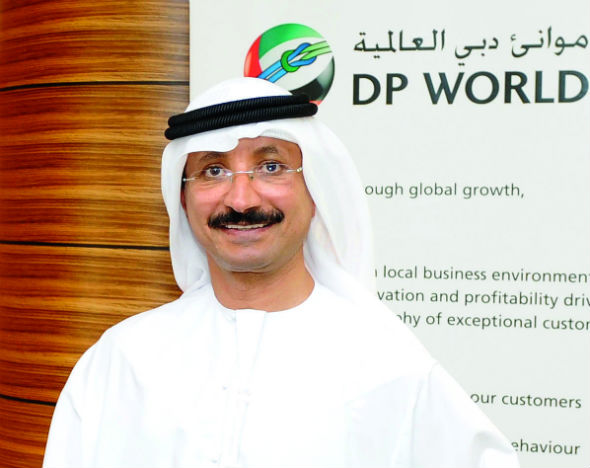
Sultan Ahmed Bin Sulayem, CEO and Chairman of DP World, said: “The impact of the COVID-19 pandemic has redefined how the world stays connected, and companies conduct business.

Moments of crisis have historically served as a powerful impetus for innovation. The effects of the pandemic have accelerated the transformation of the supply chains and prompted rapid adaptation to ensure resiliency in international trade. The global business community has risen to the challenge, and taken strong and decisive action to make supply chains more robust and agile – the benefits of which will be reaped in future years.”

DP World is a global logistics company that moves nearly one in ten of the world’s containers through its strategically located network of ports and marine terminals, spanning operations on six continents. The company has accelerated innovations digitising logistics and building online marketplaces during the pandemic.

The study carried out also found that:
• Only 8% of businesses believe that recovery to pre-pandemic levels will take more than five years and fewer than 2% believe trade will never recover
• On average, firms said they are reallocating a third of their revenue from the first half of 2020 to remodelling their supply chains. A fifth said they will spend more than 50% of H1 revenues
• 65% of respondents said the reconfiguration process would be complete within one year—no easy task given the intricacies involved in changing supply chains, which are the products of years of investment, relationship-building; education and training among a host of other factors.

Ports review meeting to deliberate on future action plan

A three-day ports review meeting will be conducted from Thursday 21st to deliberate on a future action plan, including development of satellite ports by all major ports, the Ministry of Ports, Shipping and Waterways said in a statement on Wednesday.

Chairpersons of India”s all major ports and senior officials of the ministry will participate in the brainstorming conference to finalise the road map of the ”Maritime Vision 2030”, the ministry said in the statement.

It added that Ports, Shipping and Waterways Minister Mansukh Mandaviya will chair the meeting named ”Chintan Baithak” at Dhordo, Gujarat.

The Chintan Baithak includes sessions on exploring new vistas of urban transportation, effective implementation of SAROD-Ports (Society for Affordable Redressal of Disputes-Ports), and issues related to international arbitrations, the statement added.

The future action plan for the development of satellite ports by all major ports will also be deliberated.

A satellite port can either be one that is already existing or is created near a port which is reaching its capacity.

“Discussion on opening up more new routes for Ro-Ro, Ro-PaX (roll-on/roll-off passenger) ferry, and seaplane services across the nation, and on ways and means for increasing volume and movement of coastal cargo will also take place,” it said.

Mandaviya stated that the basic purpose of holding this Chintan Baithak is to evolve out-of-the-box ideas for improving the performance and efficiency of our major ports, setting up of world-class infrastructure facilities at ports, enhancing connectivity, and ease of doing business.

All the ideas emerged out of the extensive discussions during this Chintan Baithak are going to be dovetailed in the Maritime Vision 2030 to fulfil Prime Minister Narendra Modi”s vision of Atmanirbhar Bharat with his key mantra of ”reform, perform and transform, Mandaviya said.