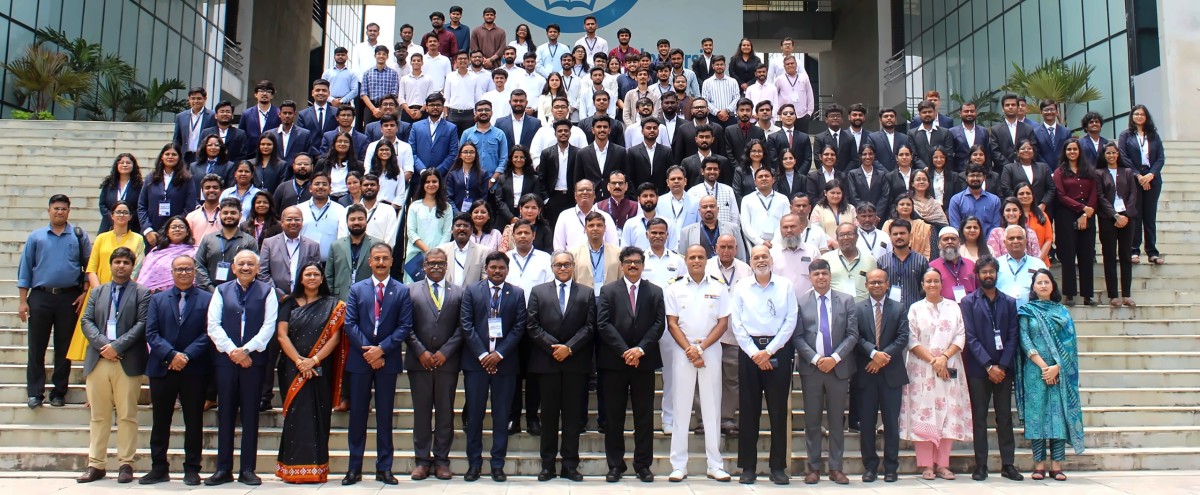



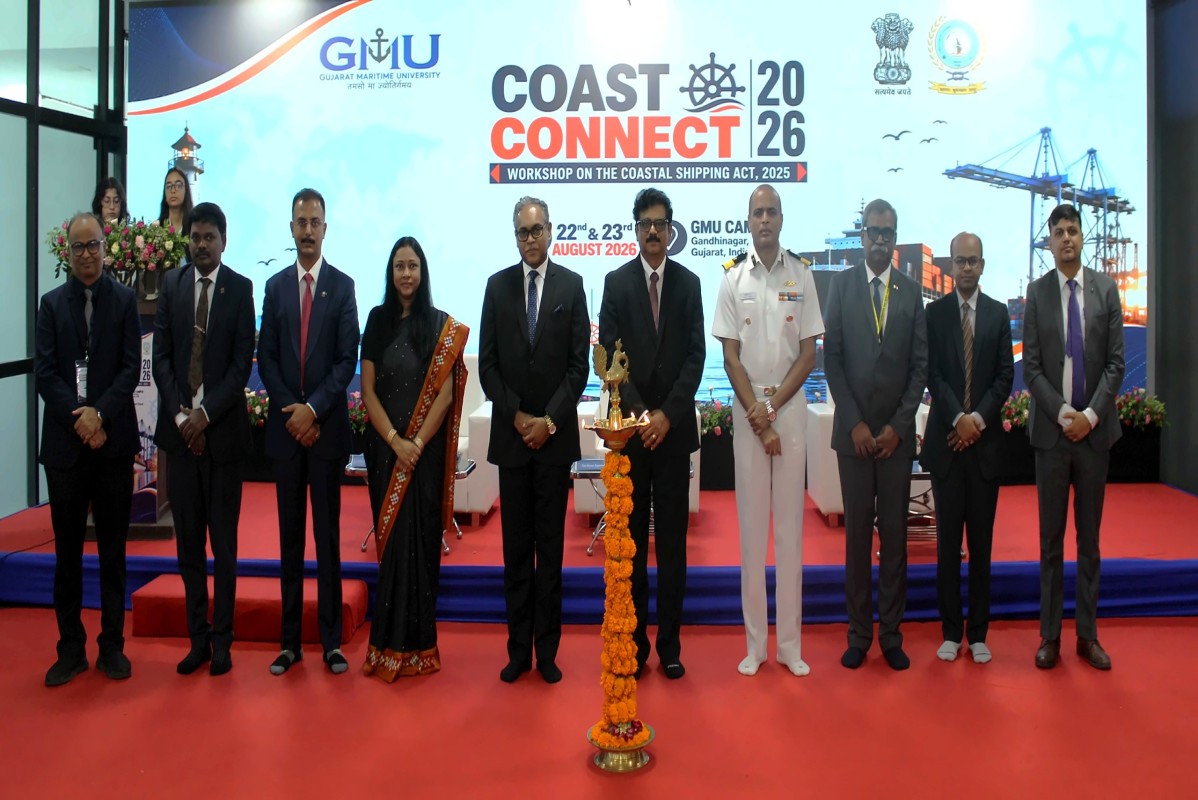
GANDHINAGAR: Gujarat Maritime University (GMU) organised a two-day workshop, “Coast Connect 2026,” in collaboration with the Directorate General of Maritime Administration (DGMA), Government of India, and the Centre for Social Knowledge and Action (SETU). The workshop was dedicated to the Coastal Shipping Act, 2025, and the future of India’s coastal shipping ecosystem.
The workshop brought together participants from across India’s maritime ecosystem — including shipping companies, port authorities, logistics and supply chain professionals, policymakers and regulators, academics and researchers, technology providers, marine insurers and financiers, and fishing communities — to deliberate on the opportunities, challenges, and practical pathways for implementing the new legislation.
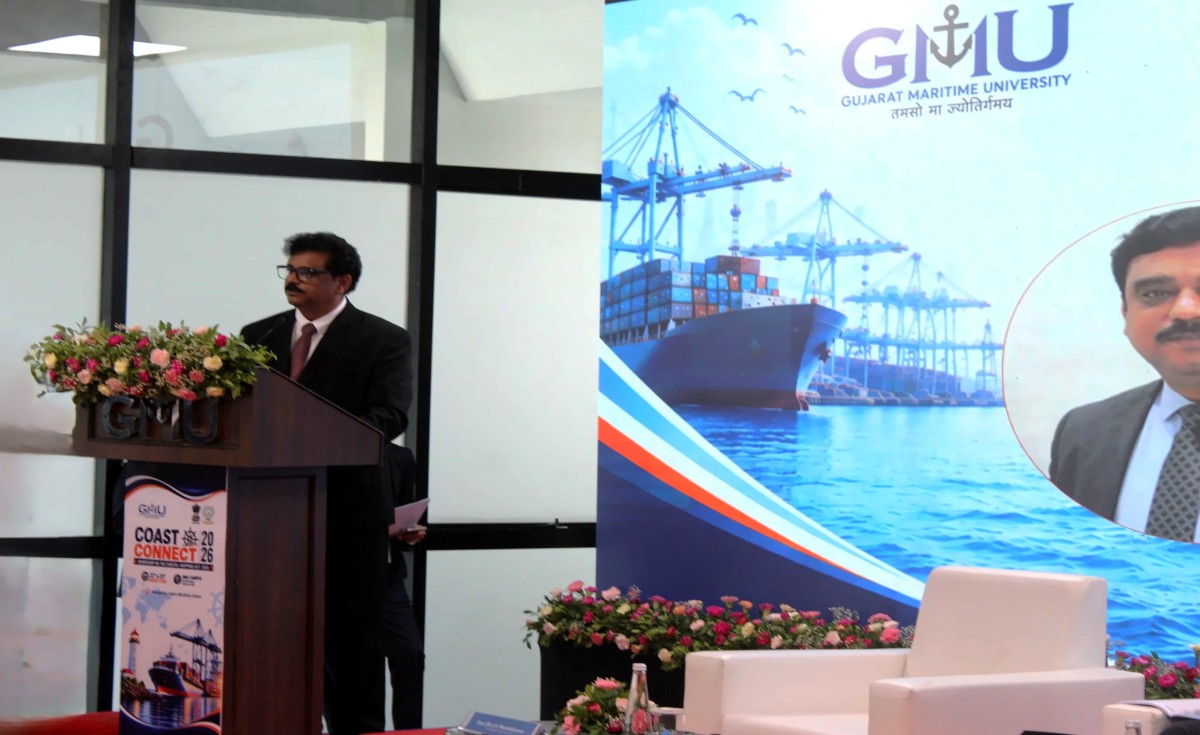
Inauguration by the Director General of Maritime Administration
The workshop was inaugurated by Shri Shyam Jagannathan, IAS, DGMA, as Chief Guest, in the presence of Shri Aniket Singh, Deputy Inspector General, Indian Coast Guard; Prof. (Dr.) S. Shanthakumar, Provost, Gujarat Maritime University; along with senior officials, maritime professionals, academics, experts, faculty members, and students.
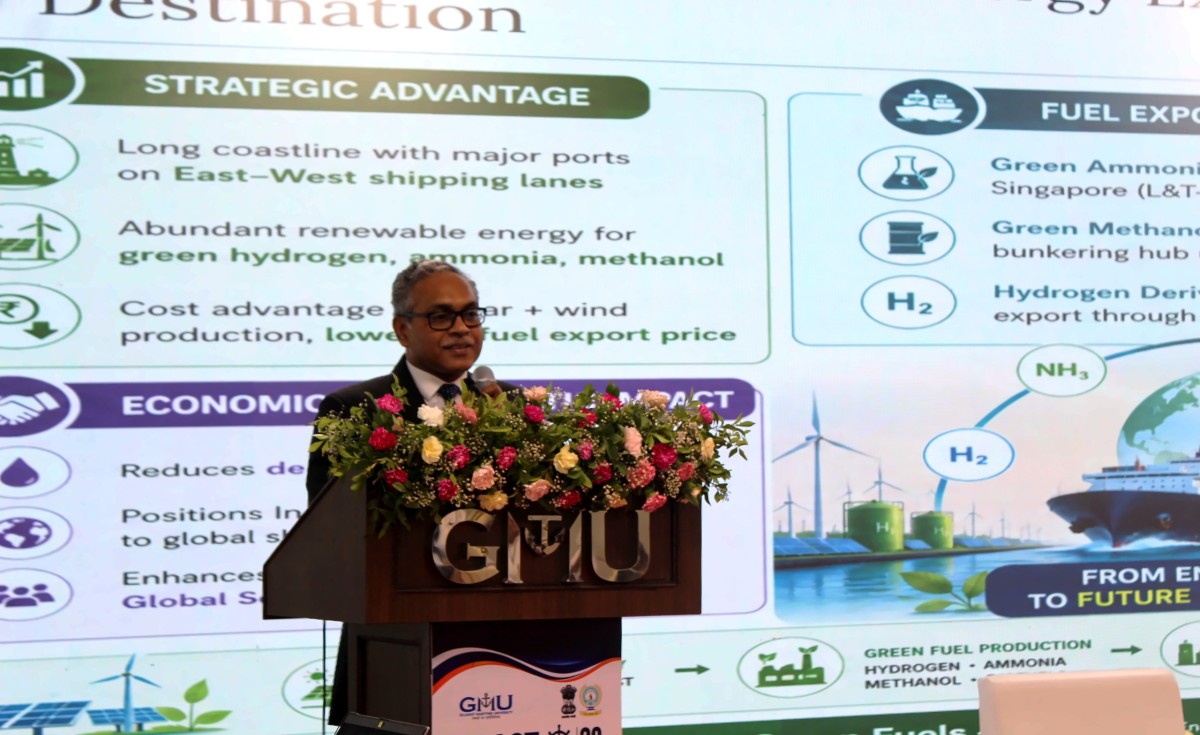
Delivering the keynote address, Shri Jagannathan emphasised the role of universities in generating research and policy dialogue to inform effective maritime regulation, while drawing attention to port development, ship recycling, workforce welfare, and India’s transition towards green ports, green ships, and maritime decarbonisation.
Indian Coast Guard DIG Shri Aniket Singh highlighted the complementary relationship between maritime security and maritime commerce, and outlined the Coast Guard’s role in law enforcement, search and rescue, pollution response, and environmental protection.
GMU Provost Prof. (Dr.) S. Shanthakumar highlighted the potential of coastal shipping as a cost-effective, energy-efficient, and environmentally sustainable mode of transportation. He emphasised its potential to reduce logistics costs, strengthen connectivity, and contribute to the vision of Aatmanirbhar Bharat and Viksit Bharat.
Four Thematic Tracks
The workshop’s deliberations were organised around four thematic tracks, offering a comprehensive examination of the economic, regulatory, technological, and social dimensions of coastal shipping:
Track A – “Logistics Cost Crisis & Port Infrastructure”
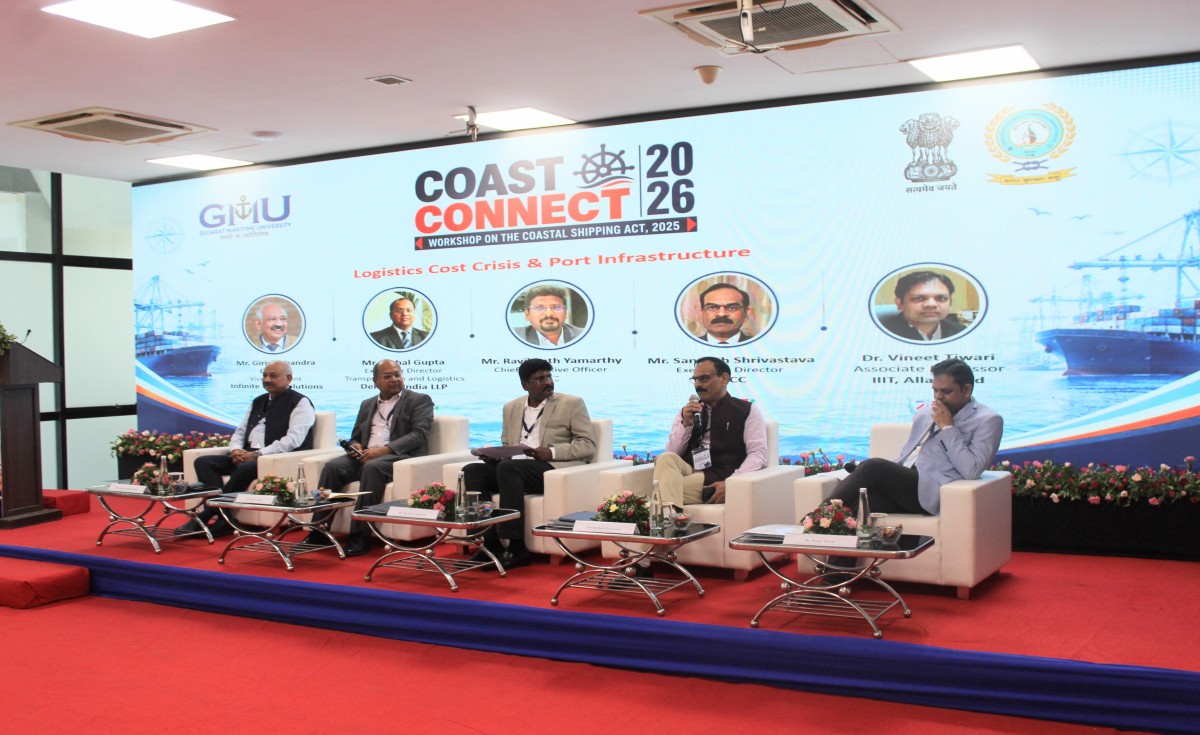
This track examined the infrastructure and commercial ecosystem required to make coastal shipping a viable component of India’s multimodal logistics network, covering port readiness, cargo aggregation, multimodal connectivity, Dedicated Freight Corridors, coastal terminals, last-mile connectivity, PPP models, investment, and workforce development.
Panellists emphasised that coastal shipping cannot operate as an isolated transport mode — effective integration of ports with rail, road, and inland waterways is essential to achieving meaningful reductions in end-to-end logistics costs — and highlighted the importance of specialised maritime and logistics skills to support the sector’s expansion.
The track featured Mr. Ravi Kumar Moka, Ship Surveyor-cum-Deputy Director General (Tech.) (Coastal), Directorate General of Maritime Administration; Mr. Ravikanth Yamarthy, Chief Executive Officer, Logistics Skill Council; Mr. Vishal Gupta, Executive Director – Transportation and Logistics, Deloitte India LLP; Shri Sandesh Shrivastava, Executive Director, DFCC, New Delhi; Mr. Girish Chandra Gandhi, Vice President, Infinite Civil Solutions Pvt. Ltd.; and Dr. Vineet Tiwari, Associate Professor, Indian Institute of Information Technology, Allahabad.
Track B – “Multi-Regulatory Complexity”
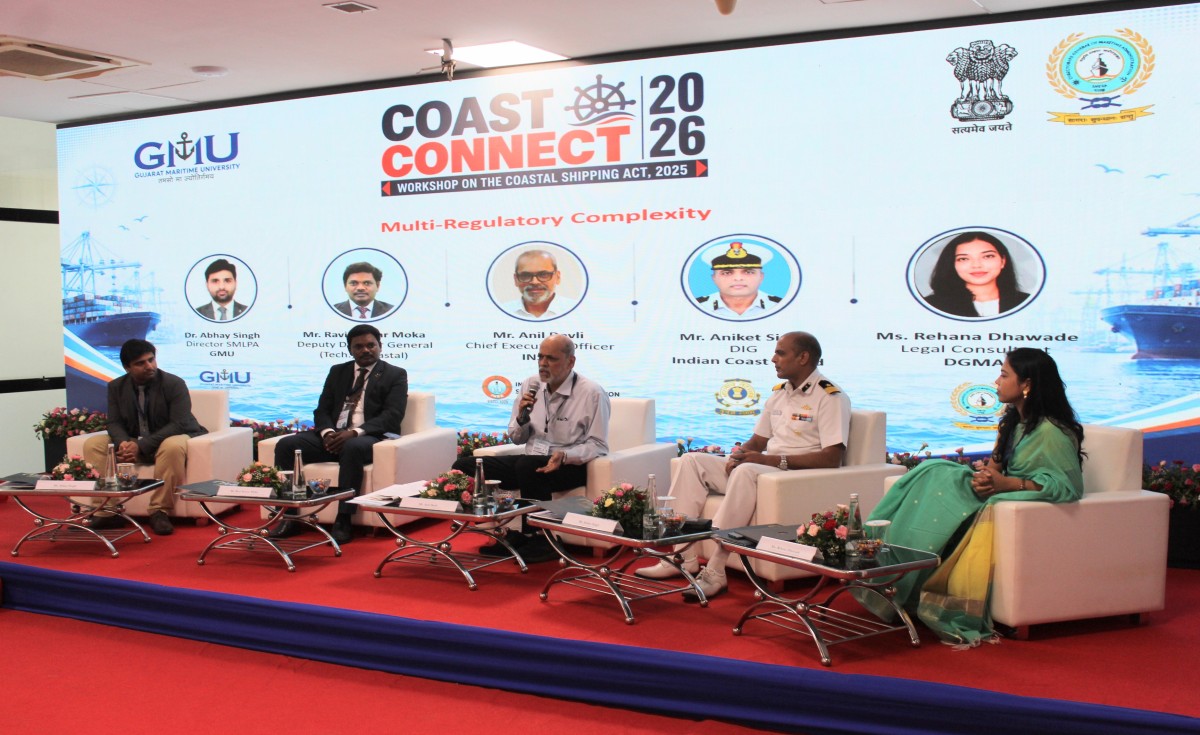
This track addressed the legal and regulatory architecture of the Coastal Shipping Act, 2025, including cabotage, licensing, jurisdiction, regulatory compliance, and the interaction of the new legislation with existing maritime laws and international frameworks. Panellists placed particular emphasis on regulatory clarity, predictable timelines, and streamlined processes as essential to ease of doing business and investor confidence, and examined the complexities arising from the application of different laws across India’s maritime zones.
The track featured Mr. Anil Devli, Chief Executive Officer, Indian National Shipowners’ Association (INSA); Mr. Ravi Kumar Moka; Mr. Aniket Singh, DIG, Indian Coast Guard; Dr. Abhay Singh, Director (I/c), School of Maritime Law, Policy & Administration, GMU; and Ms. Rehana Dhawade, Legal Consultant, DGMA.
Track C – “Digital Infrastructure Gap”
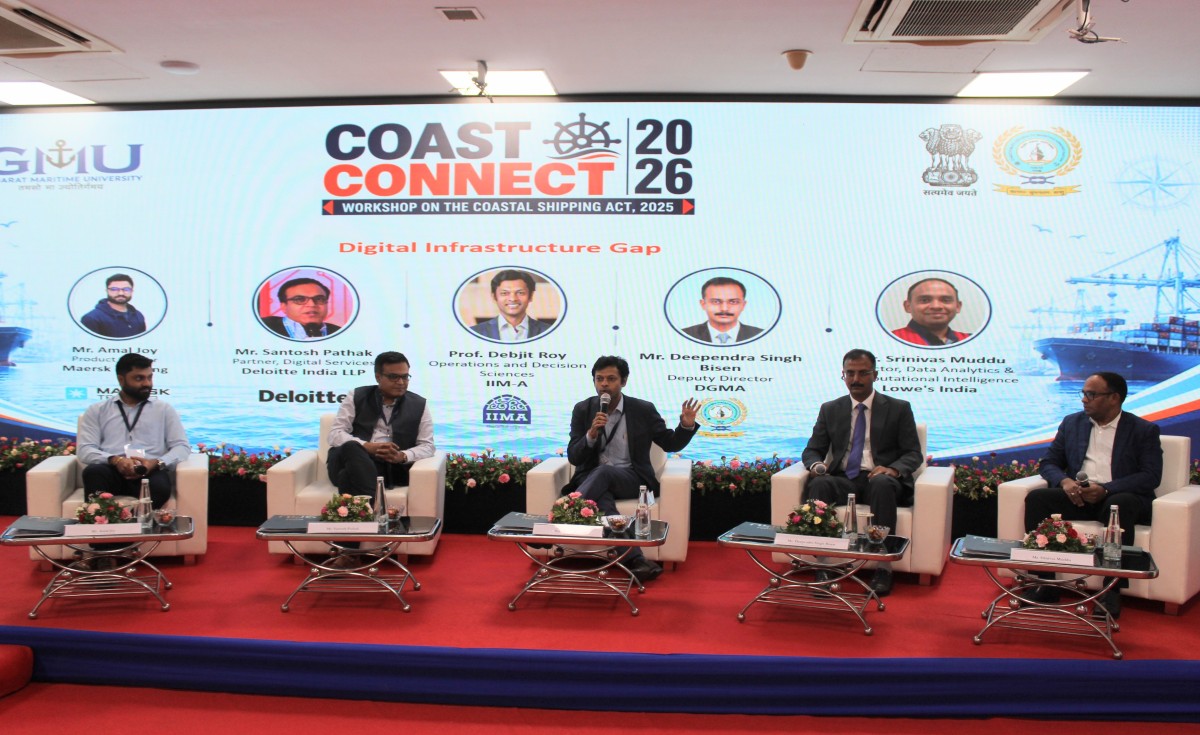
This track focused on the technological foundations required for effective implementation of the Act and the future growth of coastal shipping, covering digital infrastructure, data integration, AI, cybersecurity, AIS/VMS, national databases, and technology-enabled regulatory systems. A key point of discussion was the proposed National Database for Coastal Shipping, which seeks to integrate information across multiple platforms and organisations to improve real-time visibility, transparency, regulatory compliance, and data-driven decision-making.
The track featured Prof. Debjit Roy, Operations and Decision Sciences, IIM Ahmedabad; Mr. Deependra Singh Bisen, Deputy Director, Directorate General of Maritime Administration; Mr. Srinivas Muddu, Director, Data Analytics & Computational Intelligence, Lowe’s India; Mr. Santosh Pathak, Partner, Digital Services, Deloitte India LLP; and Mr. Amal Joy, Product Owner, Maersk Training.
Track D – “Fisheries & Livelihood at Stake”
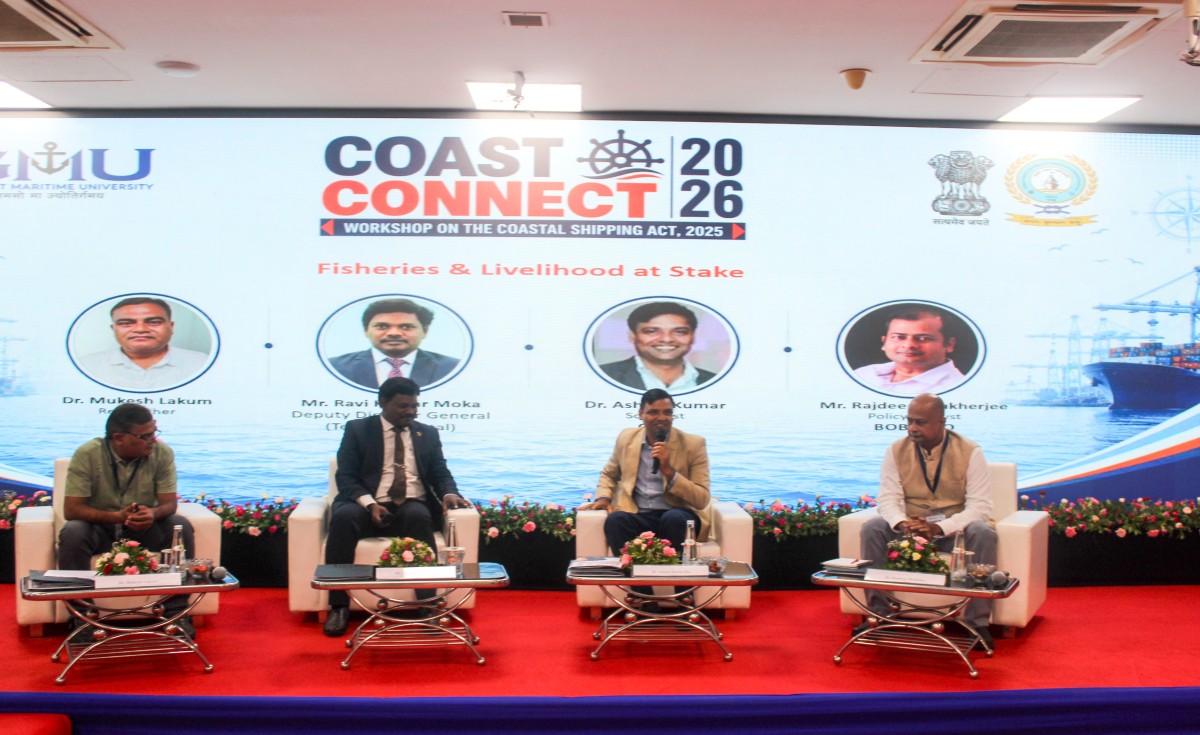
This track brought the concerns of coastal communities into the wider policy dialogue, examining the relationship between commercial maritime activity and fisheries, traditional livelihoods, access to fishing grounds, and safety — underscoring the need for maritime development to remain sensitive to the communities dependent on India’s coastal waters.
The track featured Dr. Rajdeep Mukherjee, Policy Analyst; Mr. Ravi Kumar Moka; Dr. Ashish Kumar Jha, Scientist, CIFT, Veraval, Gujarat; and Dr. Mukesh Lakum, Researcher, SETU: Centre for Social Knowledge and Action.
A dedicated coastal community panel, moderated by Dr. Dharmesh Raval, Director, School of Maritime Management, GMU, brought together representatives of coastal communities, providing an important platform for direct community perspectives.
Across the four tracks, the workshop underscored that the success of the Coastal Shipping Act, 2025 will depend on more than legislative reform. Integrated infrastructure, regulatory predictability, digital systems, skilled human resources, maritime security, environmental sustainability, and protection of coastal livelihoods will all be critical to translating the potential of coastal shipping into tangible economic and social outcomes.
Coast Connect 2026 reaffirmed Gujarat Maritime University’s commitment to fostering meaningful government–industry–academia–community engagement and to contributing to a contemporary, responsive, and inclusive maritime regulatory framework for India’s coastal shipping sector.