Home Blog Page 115

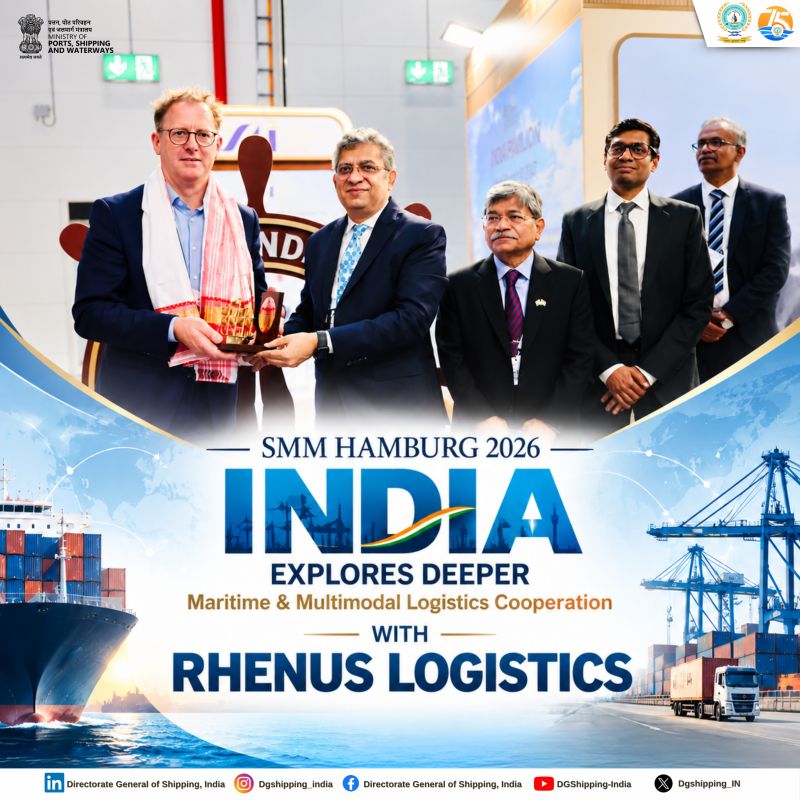
DGMA and Rhenus Logistics explore deeper collaboration in maritime and multimodal logistics at SMM Hamburg 2026

HAMBURG: India’s maritime and logistics sector explored new avenues for international collaboration during SMM 2026 in Hamburg, as Secretary, Ministry of Ports, Shipping and Waterways, Shri Vijay Kumar, along with representatives of the Directorate General of Maritime Administration (DGMA), engaged with Mr. Michael De Reese, CEO, Port Logistics, Rhenus Logistics.

The discussions focused on opportunities for deeper cooperation across India’s rapidly evolving maritime and logistics ecosystem, with particular emphasis on multimodal logistics, inland waterways and maritime connectivity.

The engagement reflected the growing opportunities emerging from India’s efforts to develop an integrated, efficient and sustainable logistics network. As the country continues to strengthen connectivity between ports, inland waterways, railways, road networks and logistics hubs, global expertise and commercial partnerships are expected to play an increasingly important role in advancing next-generation logistics infrastructure.

The discussions also highlighted the potential for cooperation in facilitating seamless cargo movement and improving supply-chain efficiency. Enhanced multimodal connectivity and greater utilisation of inland waterways could further contribute towards reducing logistics costs, promoting sustainable transportation and strengthening trade links.

The interaction at SMM Hamburg 2026 underscored the strong potential for India–Germany collaboration in the maritime and logistics sectors. With Germany’s advanced logistics capabilities and India’s expanding port, shipping and infrastructure ecosystem, such partnerships could help create new opportunities for innovation, investment and knowledge exchange.

As India places greater emphasis on building a modern and integrated logistics ecosystem, engagements with leading global logistics players are expected to support the country’s vision of developing efficient, sustainable and globally competitive supply chains.

The meeting reflected a shared interest in exploring future opportunities and strengthening India–Germany cooperation in building the next generation of maritime, multimodal and logistics infrastructure.
India and Norway explore new opportunities for maritime and shipbuilding collaborations

MoPSW Secretary Shri Vijay Kumar leads Indian delegation to Norway, strengthening cooperation in specialised shipbuilding, deep-sea fishing and green maritime technologies

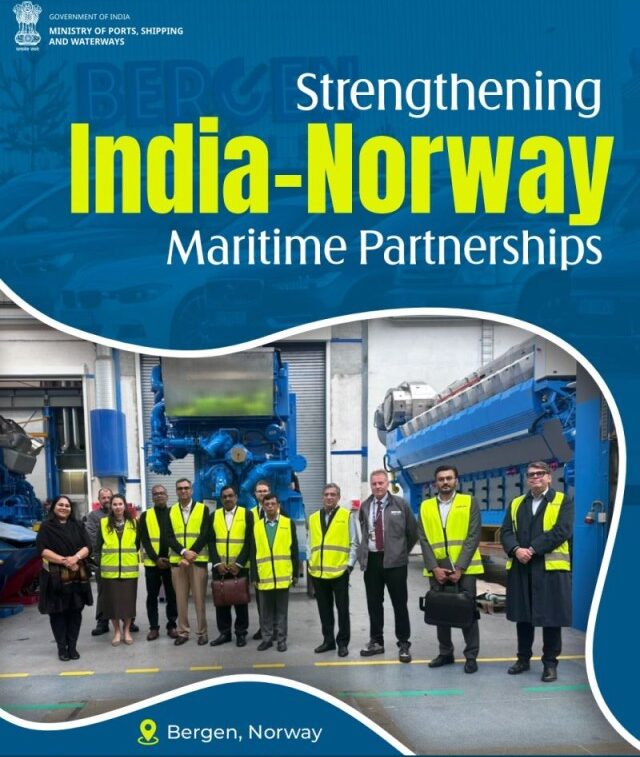
BERGEN: Strengthening the growing maritime partnership between India and Norway, Shri Vijay Kumar, Secretary, Ministry of Ports, Shipping and Waterways (MoPSW), Government of India, led an Indian delegation to Norway, engaging with leading maritime companies, shipowners, designers and shipbuilding organisations to explore new avenues for cooperation.

During the visit, the Indian delegation toured the Bergen Engines factory, gaining insights into advanced marine propulsion technologies and engineering capabilities. The discussions explored opportunities for technological collaboration and the potential role of advanced propulsion and energy-efficient solutions in supporting the modernisation and future growth of India’s maritime and shipbuilding ecosystem.

The delegation also held interactions with the Bergen Shipowners Association and its member organisations, including Wilson and Stenersen Chartering. The discussions focused on strengthening cooperation in the development and operation of specialised and short-sea vessels, while exploring opportunities for collaboration between Indian shipyards and Norwegian maritime companies.

As part of the visit, the delegation toured the Liaskjæret dock facilities, providing an opportunity to understand Norway’s advanced maritime infrastructure, vessel servicing capabilities and shipbuilding ecosystem.

A key focus of the engagements was the development of deep-sea fishing vessels in India. Discussions were held with Salt Ship Design, Babord Group and Stadyard Shipbuilding to explore cooperation in the design, engineering and construction of modern deep-sea fishing vessels.

The proposed collaboration could bring together Norwegian expertise in vessel design, technology and maritime operations with India’s expanding shipbuilding capabilities and manufacturing ecosystem. Such partnerships have the potential to support the development of specialised vessels tailored to India’s operational requirements while contributing to the growth of domestic shipbuilding capacity.

The interactions also highlighted opportunities in green maritime technologies, energy-efficient vessel designs, sustainable propulsion systems and environmentally responsible maritime operations. These areas are increasingly important as the global shipping industry accelerates its transition towards decarbonisation and sustainable growth.

The visit reflects India’s continued focus on strengthening international partnerships to advance its maritime ambitions, promote indigenous shipbuilding and develop a technologically advanced and globally competitive maritime ecosystem. Norway’s strong capabilities in maritime technology, specialised vessel design and sustainable shipping offer significant opportunities for mutually beneficial cooperation.

The discussions reinforced the shared commitment of India and Norway towards building a resilient, innovative and future-ready maritime ecosystem. By combining India’s growing maritime market, shipbuilding potential and skilled workforce with Norway’s technological expertise and maritime innovation, the partnership can open new opportunities across specialised shipbuilding, deep-sea fishing, green shipping and sustainable maritime development.

The engagements are expected to further strengthen the India–Norway maritime partnership and support collaborative initiatives aimed at advancing innovation, sustainability, capacity building and long-term growth across the maritime sector.

The visit marks another important step towards deepening bilateral maritime cooperation and unlocking new opportunities for a stronger, greener and more future-ready maritime partnership between India and Norway.

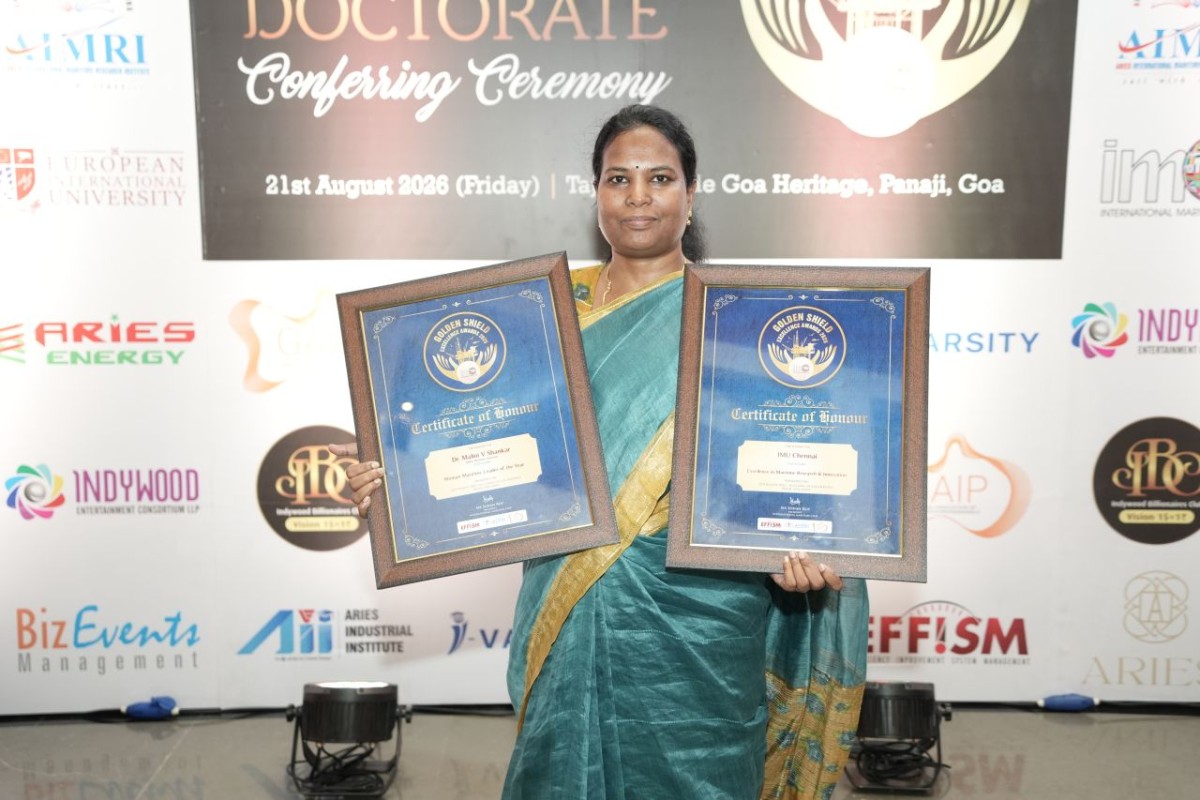
Dr. Malini Shankar honoured with ‘IMC Golden Shield Excellence Award 2026 – Woman Maritime Leader of the Year’

CHENNAI: The International Maritime Club (IMC) has conferred the IMC Golden Shield Excellence Award 2026 – Woman Maritime Leader of the Year upon Dr. Malini Shankar, in recognition of her distinguished leadership and significant contributions to India’s maritime sector.

The award celebrates leadership that extends beyond professional positions and creates a lasting influence across maritime institutions, industry and the wider professional community.

Dr. Shankar has had a distinguished career spanning public administration, shipping, economic policy and institutional leadership. Over the course of her professional journey, she has held several significant responsibilities, including serving as the Director General of Shipping.

She currently serves as the Vice Chancellor of Indian Maritime University (IMU) and Chairperson of the National Shipping Board, continuing to contribute towards the advancement of India’s maritime ecosystem.

Her professional contributions have extended across several important areas, including maritime policy, education, international engagement and institutional development. Through her leadership and experience, she has played an important role in strengthening institutions and supporting the development of maritime professionals and the wider industry.

The recognition was represented by Dr. Krishnakumari Aharamuthu, Associate Professor, IMU Chennai Campus, reflecting the strong academic and professional community associated with Dr. Shankar’s wider contribution to maritime development.

The International Maritime Club expressed pride in recognising leadership that contributes to the advancement of maritime institutions, professionals and the industry as a whole.

The IMC Golden Shield Excellence Award 2026 recognises Dr. Malini Shankar’s distinguished leadership and her enduring contribution towards strengthening India’s maritime sector and its future generation of professionals.

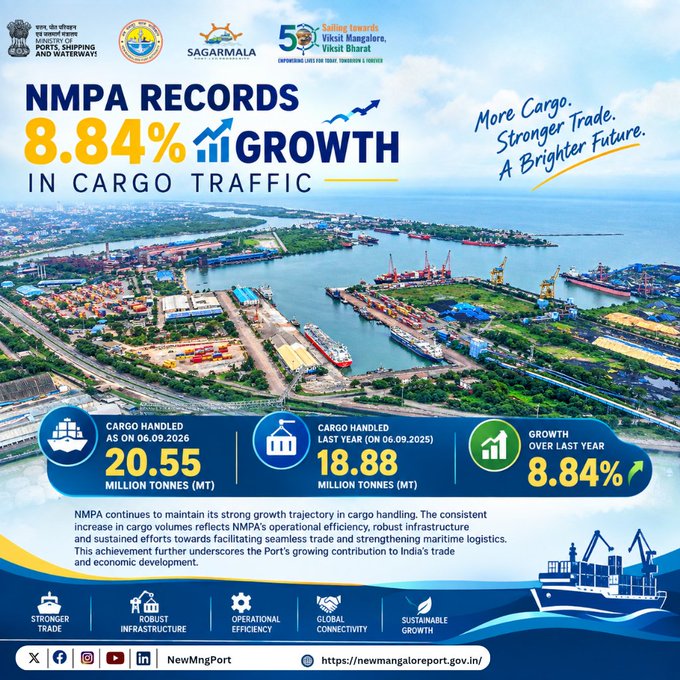
NMPA records 8.84% growth in cargo growth in cargo traffic, handles 20.55 million tonnes as of September 6

MANGALURU: New Mangalore Port Authority (NMPA) has continued its strong growth trajectory in cargo handling, recording an 8.84% increase in cargo traffic as of 6 September 2026.

The port handled 20.55 million tonnes (MT) of cargo during the current financial year up to 6 September 2026, compared to 18.88 MT handled during the corresponding period last year. The growth reflects an increase of nearly 1.67 million tonnes in cargo throughput and highlights the port’s sustained operational momentum.

The consistent rise in cargo volumes demonstrates NMPA’s focus on operational efficiency, infrastructure development and improved cargo handling capabilities. Through strengthened port operations and seamless connectivity, the port continues to facilitate the efficient movement of cargo and support the growing requirements of trade and industry.

NMPA’s strategic role on India’s western coastline makes it an important gateway for a diverse range of cargo, serving key industrial and commercial centres in its hinterland. The continued growth in traffic also reflects the confidence of trade and shipping stakeholders in the port’s infrastructure, service capabilities and operational performance.

The achievement further underscores NMPA’s commitment towards enhancing maritime logistics, improving supply-chain efficiency and supporting India’s broader vision of developing world-class port infrastructure.

With cargo volumes continuing to maintain a positive growth trajectory, New Mangalore Port Authority remains focused on strengthening operational capabilities, facilitating seamless trade and contributing to India’s economic growth and maritime development.

NMPA’s continued cargo growth reflects its growing role as a key maritime gateway and an important contributor to India’s trade and logistics ecosystem.

VOCPA and GSV discuss proposed satellite skill development centre

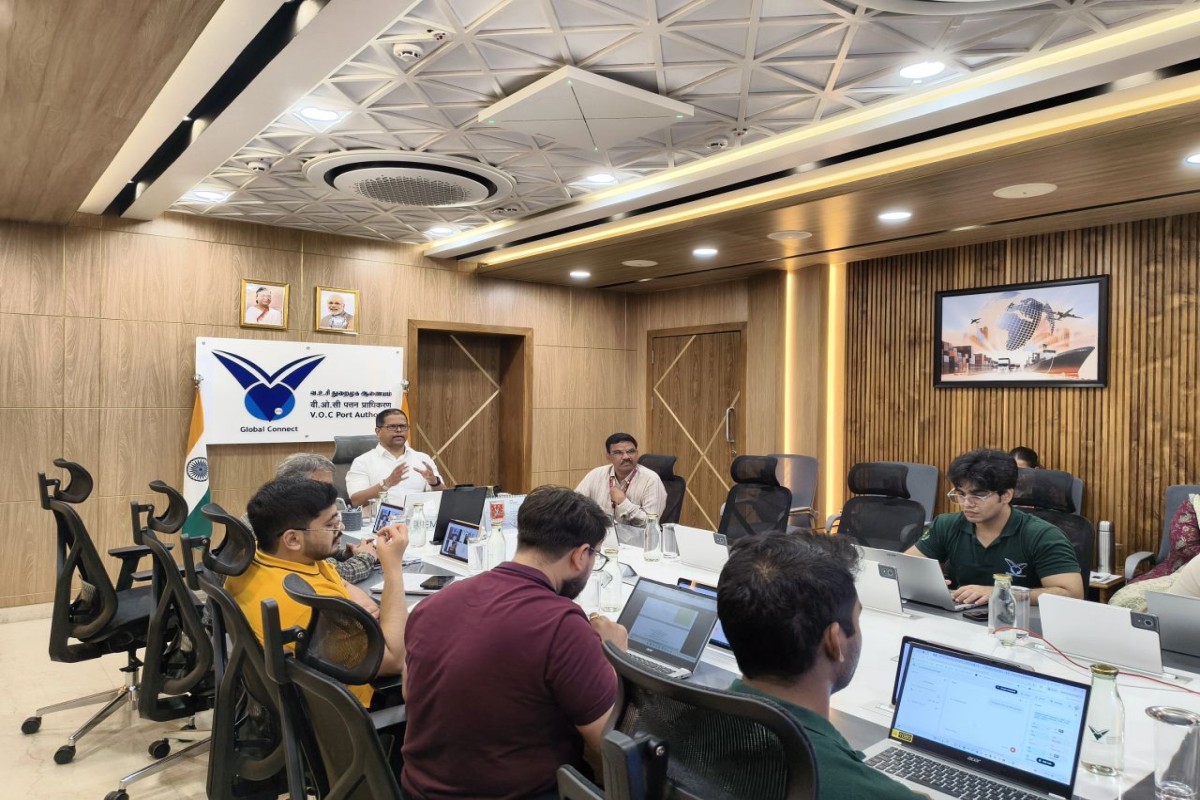
TUTICORIN: Shri Susanta Kumar Purohit, IRSEE, Chairperson, V.O. Chidambaranar Port Authority (VOCPA), held a meeting with Dr Manoj Choudhary, Vice Chancellor of Gati Shakti Vishwavidyalaya (GSV), to discuss the establishment of a proposed Satellite Skill Development Centre at VOC Port under the existing Memorandum of Understanding between VOCPA and GSV.

The discussions focused on finalising industry-oriented courses and specialised training programmes for working professionals, particularly in areas relevant to the maritime, logistics and transportation sectors.

Key aspects of the proposed initiative, including programme delivery, implementation modalities and operational arrangements, were also discussed during the meeting. The proposed centre is expected to provide a platform for structured skill development, professional training and capacity building aligned with the evolving requirements of the maritime and logistics industries.

The initiative reflects the growing importance of developing a skilled and future-ready workforce to support India’s expanding port, shipping, multimodal logistics and supply-chain ecosystem.

By bringing specialised academic and professional training closer to the maritime industry, the proposed Satellite Skill Development Centre aims to create new opportunities for professionals to upgrade their skills and acquire industry-relevant knowledge.

The collaboration between V.O. Chidambaranar Port Authority and Gati Shakti Vishwavidyalaya is expected to further strengthen the link between industry and academia while supporting the development of skilled human resources for India’s rapidly growing logistics and maritime sectors.

The proposed centre represents an important step towards building professional capabilities and creating a stronger talent pipeline for the future of India’s maritime and logistics ecosystem.

UK–India Defence Partnership enters a new phase of strategic collaboration

25th UK–India Defence Consultative Group meeting reviews industrial cooperation, R&D, maritime security and future defence capabilities

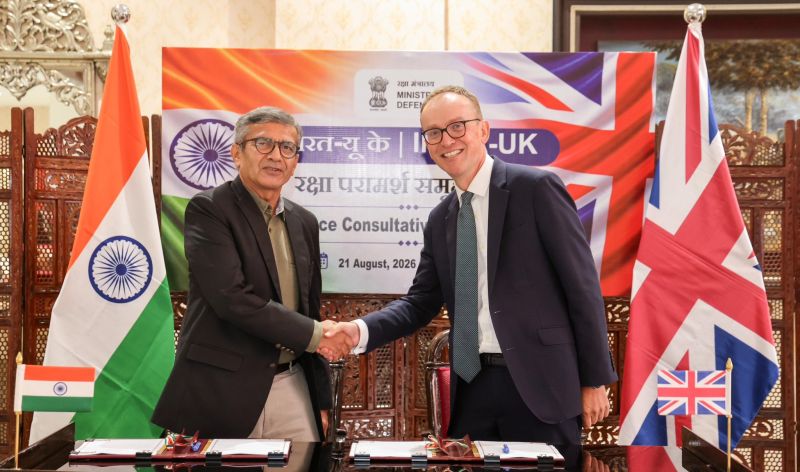
NEW DELHI: The defence and security partnership between India and the United Kingdom is set to enter an exciting new phase of collaboration, with senior officials from both countries reaffirming their commitment to strengthening cooperation across defence industry, research and development, future capability development and maritime security.

The discussions took place during the 25th UK–India Defence Consultative Group Meeting held recently in New Delhi. The meeting was attended by UK Ministry of Defence Permanent Secretary Jeremy Pocklington and India’s Defence Secretary Rajesh Kumar Singh.

During the meeting, the two sides reviewed the progress of ongoing defence industrial cooperation and explored new opportunities to deepen collaboration between the armed forces and defence industries of both countries.

A key focus of the discussions was the growing cooperation in research and development under the UK–India Vision 2035, as well as the implementation of the 10-year Defence Industrial Roadmap, which aims to provide a long-term framework for enhanced industrial collaboration and defence technology partnerships.

The meeting also highlighted the expanding scope of engagement across the Indian and UK Armed Forces, including opportunities for cooperation in future defence capabilities, technology development, innovation and industrial partnerships.

Maritime security emerged as another important area of cooperation, reflecting the shared interests of India and the United Kingdom in promoting a secure, stable and rules-based maritime environment. Enhanced collaboration in this area is expected to further strengthen bilateral engagement across the wider Indo-Pacific and Indian Ocean regions.

The discussions underlined the growing strategic importance of the UK–India defence partnership and its role within the broader bilateral relationship between the two countries.

With both nations focusing on defence modernisation, technological innovation and industrial cooperation, the partnership is expected to create new opportunities for collaboration involving governments, armed forces, research institutions and the private defence sector.

The 25th UK–India Defence Consultative Group meeting reaffirmed the shared commitment of India and the United Kingdom to building a stronger and more future-ready defence and security partnership, delivering mutual benefits to both countries and contributing to regional and global security.

The meeting marks another significant step in the deepening India–UK strategic partnership, with defence, technology, maritime security and industrial cooperation continuing to emerge as key pillars of bilateral engagement.

India’s Export Basket to Algeria diversifies, opening new opportunities for Indian Businesses

NEW DELHI: India’s exports to Algeria are witnessing increasing diversification, creating new opportunities for Indian businesses across a wide range of sectors, including engineering, manufacturing, pharmaceuticals and agricultural products. Engineering goods, machinery, automobiles, pharmaceuticals and agri-food products emerge as key growth segments in the Algerian market

According to the Department of Commerce, machinery, electrical equipment, automobiles and pharmaceuticals are emerging as important segments of India’s growing export presence in Algeria, reflecting the expanding scope of trade between the two countries.

The evolving export basket highlights increasing opportunities for Indian manufacturers and exporters to expand beyond traditional product categories and establish a stronger presence in new and high-potential segments of the Algerian market.

Engineering and manufactured products are gaining greater prominence, supported by India’s growing capabilities in industrial machinery, electrical equipment, automotive products and other value-added manufacturing sectors. These areas offer significant potential for Indian companies seeking to strengthen their commercial footprint in North Africa.

The pharmaceutical sector is also emerging as an important area of opportunity, with Indian companies well positioned to support the growing demand for affordable and quality healthcare products. India’s globally competitive pharmaceutical manufacturing capabilities could further contribute to expanding trade engagement with Algeria.

Meanwhile, food and agricultural products continue to strengthen India’s export basket, offering opportunities for Indian exporters across agri-food commodities and processed food segments. The diversification of agricultural exports can help Indian businesses access a broader consumer and industrial market in Algeria.

The expanding product mix provides Indian exporters with greater scope to deepen their market presence, diversify into new product categories and build long-term commercial partnerships in Algeria.

Algeria’s strategic location in North Africa also presents wider opportunities for Indian companies looking to strengthen their engagement with regional markets. Greater trade connectivity and business-to-business collaboration could support the expansion of Indian products across the broader African region.

The growing diversity of India’s exports reflects the increasing competitiveness of Indian industry and the potential for stronger trade partnerships across manufacturing, healthcare, engineering and food sectors.

As India continues to expand its global trade footprint, Algeria is emerging as an important market with significant opportunities for Indian exporters to diversify their product offerings, strengthen commercial linkages and explore new avenues for long-term growth.

The evolving India–Algeria trade relationship underscores the growing potential for deeper economic engagement and a more diversified and resilient bilateral trade partnership.

DGFT introduces open API facility for certificate of origin on the Trade Connect e-Platform

NEW DELHI: The Directorate General of Foreign Trade (DGFT), Ministry of Commerce and Industry, has introduced an Open Application Programming Interface (API) facility for the issuance and verification of Certificates of Origin (CoO) through the Trade Connect e-Platform. The facility is now available for use by eligible exporters and their systems.

The Open API facility enables exporters to integrate their Enterprise Resource Planning (ERP), accounting or other business software directly with the DGFT’s CoO system. At present, exporters are required to enter CoO-related details separately on the DGFT platform, even when the same information is already available in their business software. The new facility enables electronic transfer of application data from the exporter’s system to the DGFT platform, thereby eliminating repetitive data entry, reducing errors and expediting the application process.

The facility supports both Preferential and Non-Preferential Certificates of Origin. Preferential CoOs are issued under Free Trade Agreements (FTAs), Regional Trade Agreements (RTAs) and Preferential Trade Agreements (PTAs), enabling exporters to claim applicable tariff concessions in the importing country. Non-Preferential CoOs are issued for customs clearance, compliance, trade remedy and other trade purposes without providing tariff benefits.

Under the facility, exporters can obtain API credentials through the API Management section of the CoO Portal and register the IP addresses from which their systems will connect. Three APIs have been made available, namely the Authentication Token API for secure login, the CoO File API for submission of applications and receipt of certificates, and the Certificate Verification API for verification of issued certificates.

A transaction ledger is maintained for each application, providing details of the status of the application, including Draft, In Process, Approved, Certificate Issued and Rejected. The ledger also captures the acknowledgement ID, file number, file date and certificate number, enabling exporters to track their applications electronically.

The Open API facility incorporates multiple security safeguards to ensure secure and reliable exchange of information. All requests and responses are digitally signed using SHA-256 RSA digital signatures with 2048-bit X.509 certificates to ensure data integrity, authentication of the sender and non-repudiation. Passwords are protected using PBKDF2 hashing with a dynamic salt, while access is restricted to IP addresses whitelisted by the exporter. Each access token remains valid for 60 minutes.

The framework covers major trade agreements and certification schemes, including India–Japan CEPA, India–Korea CEPA, SAFTA, SAPTA, ASEAN–India FTA, India–Singapore CECA, India–Malaysia CECA, India–Chile PTA, India–Mercosur PTA, India–UAE CEPA, India–Australia ECTA, India–Oman CEPA, India–EFTA TEPA, India–UK CETA, the Generalized System of Preferences and the Non-Preferential CoO Scheme. The system automatically applies the relevant fields, origin criteria and validation rules based on the agreement or certification scheme selected by the exporter.

A step-by-step help manual has also been annexed to the Trade Notice.

Exporters, Export Promotion Councils, designated CoO issuing agencies and trade bodies may contact the DGFT Helpdesk through the toll-free numbers or e-mail for queries, suggestions and feedback relating to the eCoO module.

Further details are available in Trade Notice No. 25/2026-27 dated 07 September 2026, issued by the Directorate General of Foreign Trade.

MP targets $1 billion in private investment through ADB-backed renewable energy projects

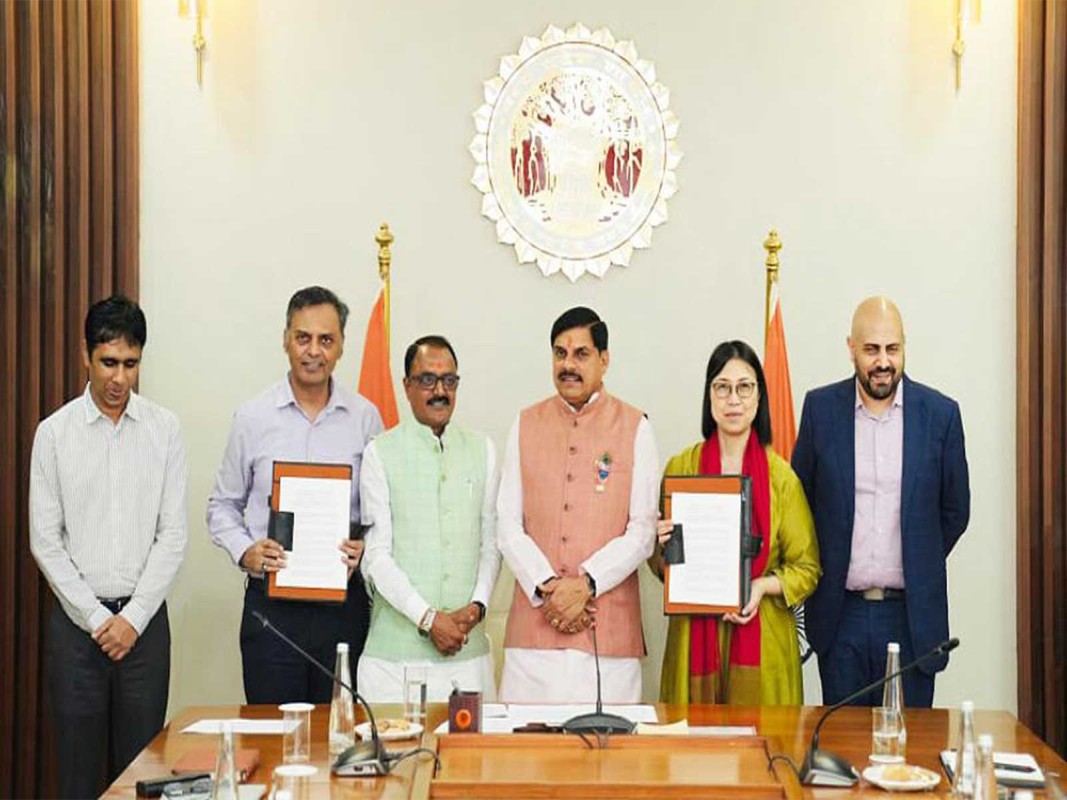
BHOPAL: Madhya Pradesh is expected to attract up to $1 billion in private investment with support from the Asian Development Bank (ADB), following the signing of its first transaction advisory services (TAS) agreement in India.

In a press release, ADB said that, under an agreement with the Madhya Pradesh Government in Bhopal, it plans to support the development of three renewable energy projects. Under the public-private partnerships (PPP) agreement, ADB will serve as a transaction advisor. The projects include the development of solar and a battery energy storage facility at Shajapur to cater to the state’s peak electricity demand and enhance grid stability.

The projects are expected to strengthen grid stability by supporting peak-hour electricity supply and improving power reliability during periods when solar generation is unavailable. The projects support Madhya Pradesh’s Renewable Energy Policy 2025, which aims to expand the state’s renewable energy and storage capacity so that renewable resources can meet 50% of its electricity demand by 2030.

The projects support Madhya Pradesh’s Renewable Energy Policy 2025, which aims to expand the state’s renewable energy and storage capacity so that renewable resources can meet 50% of its electricity demand by 2030.

Understanding Madhya Pradesh’s RE Policy 2025
Under Madhya Pradesh’s Policy, it seeks ₹50,000 crore in investment by 2027 in the renewable energy generation sector. As part of the state’s plan, the policy envisions investment in renewable energy equipment manufacturing, with ₹10,000 crore in investment by 2027 and ₹4,000 crore by 2024. Moreover, the policy intends to incentivize the repowering and technology upgrades of renewable energy projects.

With the latest partnership, Madhya Pradesh joins the portfolio of renewable energy PPP projects supported by ADB across diverse markets in Asia and the Pacific. ADB’s TAS helps governments develop bankable projects by applying international best practices in project preparation, structuring, and procurement.

Under the latest partnership, ADB has worked with Madhya Pradesh for more than 25 years across multiple sectors and continues to support the state’s development priorities, including investments in energy infrastructure.

ADB Country Director for India Mio Oka signed the agreement in the presence of Madhya Pradesh Chief Minister Shri Mohan Yadav. The latest initiative seeks to mobilize private investment to meet the state’s growing energy needs.

Emphasizing this, ADB Country Director for India Mio Oka said, “Public resources alone cannot meet India’s growing energy needs. Private capital exists, but markets need to be made investable.”

Mio Oka explained, “By helping Madhya Pradesh to structure bankable PPP projects, ADB is helping to crowd in private investment, demonstrate what works, and create scalable models for clean energy infrastructure across the state.”

Lokayan 2026 – INS Sudarshini concludes Port call at Barcelona

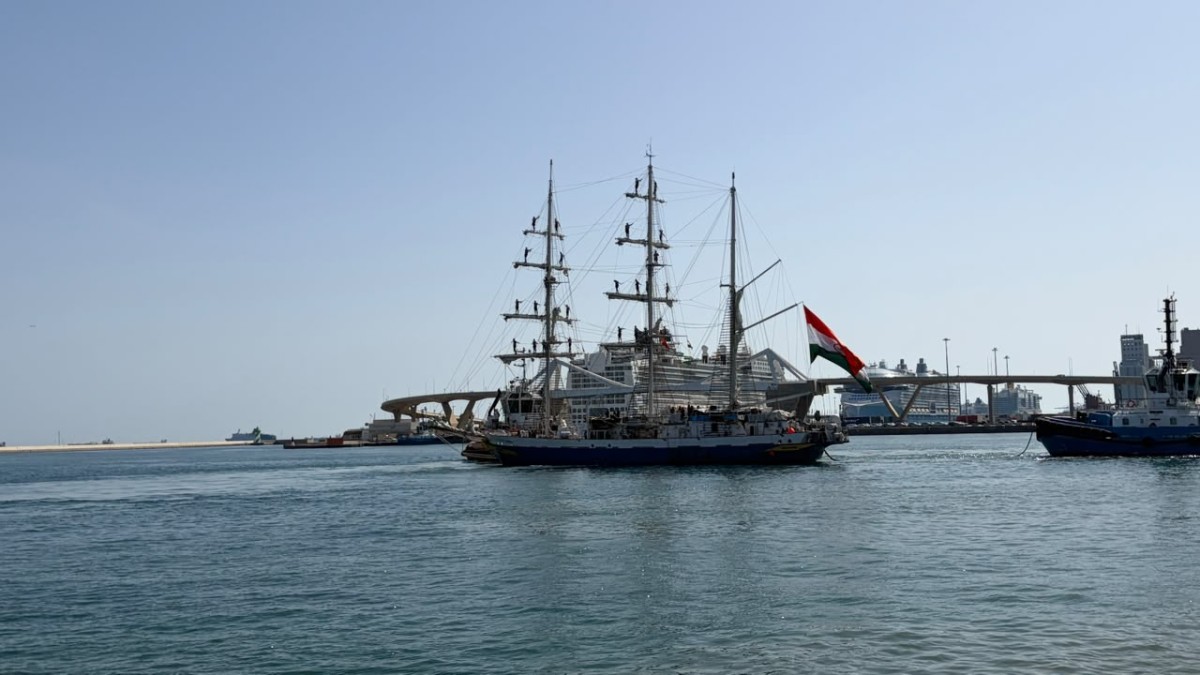
BARCELONA: Indian Navy‘s sail training ship, INS Sudarshini concluded her port call at Barcelona, Spain, on 06 Sep 2026, as part of the ongoing Lokayan 26 expedition.

INS SUDARSHINI BARCELONA Lokayan 2026 – INS Sudarshini concludes Port call at Barcelona

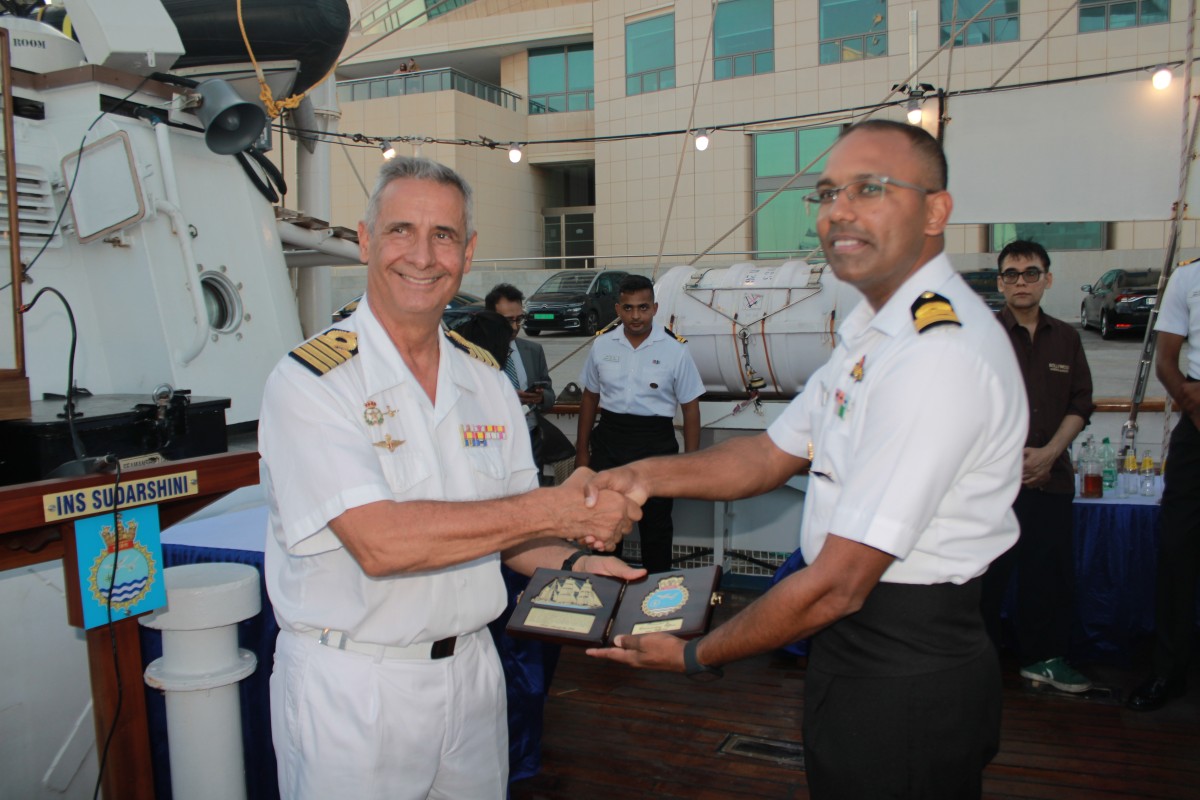
During the visit, the Commanding Officer held professional exchanges with senior officials of the Spanish Navy and maritime authorities. A deck reception was held onboard, which was attended by senior naval officers, diplomatic representatives, civil authorities and distinguished guests.

The ship was open to visitors enabling members of the Indian diaspora and local residents to interact with the crew and trainees. The port call reaffirmed the enduring maritime ties between India and Spain and provided an opportunity for professional and cultural engagement, further strengthening bonds of friendship and cooperation between the two countries.