Home Blog Page 12

57% of Organisations expect AI to make more than a Quarter of Warehouse Operational Decisions Autonomously by 2028, MIT CTL–Mecalux Study finds

A global survey of nearly 2,000 supply chain professionals shows at least moderate improvement in 87% of GenAI use cases, though most deployments are less than a year old.
90% of companies expect to increase AI investment over the next two to three years.

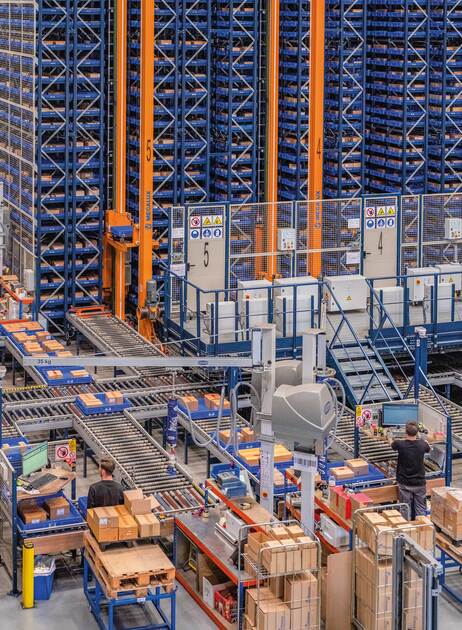
CAMBRIDGE:  More than half of organisations (57%) expect AI to make or execute more than a quarter of their operational warehouse decisions autonomously by 2028, and 90% expect to increase their AI investment over the next two to three years. These are among the findings of The state of generative and agentic AI in warehouse operations, a new global report from the Intelligent Logistics Systems Lab at the Massachusetts Institute of Technology (MIT) Center for Transportation & Logistics (CTL) and Mecalux. Drawing on responses from nearly 2,000 experienced supply chain and warehousing professionals across 21 countries, the study examines where generative and agentic AI are deployed, which applications deliver results, and how businesses manage autonomy and oversight as adoption grows.

Adoption is already high, with 61% of organisations reporting use of GenAI at large-scale deployment or full integration, compared with 56% for agentic AI. Most applications are still young, however, as about three in four have been at their current deployment stage for less than a year. Reported value is also widespread but not yet well documented. Among the use cases respondents described in detail, 87% of GenAI and 81% of agentic AI applications show at least moderate improvement in their target metrics, yet only 39% of GenAI and 36% of agentic AI use cases have significant gains that have been quantified and documented. Where respondents could estimate the gain, the typical figure was around 20% on their main target metric.

AI Agents Gain Authority Within Limits

As for autonomy, companies are giving AI agents real authority, but within clear limits. Agents most often make decisions without human approval on inventory movements (51% of agentic use cases) and data corrections (42%), while only 22% are permitted to make customer-facing commitments and 12% to make financial decisions. The most common oversight model is “human-on-the-loop”, in which AI operates within defined limits while employees monitor and can step in. “The objective is to move beyond general sentiment and to provide practical guidance on where these technologies are delivering operational value today and where they remain experimental,” said Matthias Winkenbach, Director of the Intelligent Logistics Systems Lab.

Strong Governance Supports Better Results

When comparing the organisations that document results with those that do not, governance and integration appear to separate them. Businesses with comprehensive, actively enforced AI governance are about twice as likely to report significant, documented improvements: 51% versus 26% for GenAI and 46% versus 23% for agentic AI. The pattern holds after controlling for deployment status, region, industry and budget, though the report notes that this reflects association rather than proof of cause. The largest obstacle to companies’ use of GenAI remains integration. Forty percent of respondents name legacy-system integration as the top constraint to scaling GenAI, and 54% say better integration with warehouse management and ERP systems would make the biggest impact to accelerate adoption.

Investment and Autonomy Expected to Grow as Roles Evolve

Looking ahead, nearly a third of organisations (29%) expect to raise their AI investment by more than 25% over the next two to three years. The share expecting any increase (90%) is in line with last year’s study (87%). Among companies that have fully integrated these technologies, 70% expect agentic AI to make or execute more than a quarter of their operational warehouse decisions autonomously by 2028, compared with 57% overall.

For the workforce, the report finds that AI is changing jobs more than eliminating them. Fifty-six percent of organisations say AI has mainly shifted employees towards higher-value tasks, while 11% report reduced headcount and 9% report increased headcount. Seventy-three percent are upskilling warehouse-floor staff, and 61% are creating new technical roles.

For companies still deciding where to begin, the report recommends establishing clear governance before expanding adoption, treating data quality and system integration as core work rather than side tasks, and reviewing results over the first 12 to 24 months before assessing whether to expand or stop an application. “Warehouse decision-makers need AI they can measure. This research gives our clients a clear map of where the technology is working today and what it takes to prove it,” said Javier Carrillo, CEO of Mecalux.

The full report is available for download at www.mecalux.com/mit/report-ai-warehousing-2026-pdf

About the MIT Center for Transportation & Logistics

The MIT Center for Transportation & Logistics (MIT CTL) is a world leader in supply chain management research and education, with over 50 years of expertise. The centre’s work spans industry partnerships, cutting-edge research and driving supply chain innovation into practice through three pillars: research, outreach and education. ctl.mit.edu

About Mecalux

Mecalux is a warehouse technology and intralogistics software enterprise. With over 60 years of experience, the company develops automated storage solutions, warehouse management software and metal racking systems for all sectors. The Mecalux Group has an extensive worldwide distribution network, 12 manufacturing plants, seven R&D centres for technological development, and a workforce of more than 5,500 employees. www.mecalux.com

About the study

The state of generative and agentic AI in warehouse operations was produced by the Intelligent Logistics Systems Lab at the MIT Center for Transportation & Logistics and Mecalux. Data was collected online between 14 August and 1 October 2026, from 1,967 valid responses across 21 countries. Respondents were C-suite executives and senior managers at organisations with at least 100 employees and their own warehouse operations.

How SaveFromIns makes Instagram Media access More Convenient across Devices

The way people use Instagram is not always tied to one screen. Someone might browse Reels while commuting, open a creator’s profile on a tablet at home, and later revisit the same content from a laptop. The device changes, but the interest in a particular piece of media remains.

This creates a small inconvenience that is easy to overlook. A tool installed on one device may not be available on another, and transferring content between devices can introduce extra steps. For people who occasionally need to save Instagram media, relying on a dedicated application is not always the most practical arrangement.

Browser-based services offer a different approach. Instead of making users commit to a particular operating system or installation, they provide access through a website. SaveFromIns follows this model, bringing several Instagram downloading options together in an online environment that can be accessed from different compatible devices.

The Screen Changes, but the Task Stays the Same

A smartphone is usually the first place people encounter Instagram content. Its camera-oriented interface and vertical layout make it convenient for browsing Reels, checking Stories, and following updates from creators. However, not every task is best completed on a phone.

Someone preparing a presentation might prefer to review visual material on a larger computer display. A social media enthusiast may browse Instagram on a tablet but prefer to keep downloaded files on a laptop. Even a simple change of device can become inconvenient when the required tool is only available as an installed application.

This is one reason browser-based utilities deserve attention. They separate the service from the device on which it is accessed. As long as a compatible browser and internet connection are available, users can visit the same website without looking for a separate version of the application.

For an occasional task, that distinction can make the overall experience considerably simpler.

Why Another App Is Not Always the Answer

Mobile application stores offer tools for almost every imaginable activity. Yet installing an application is not automatically the best choice for something that users may only need from time to time.

An additional app occupies storage, may request permissions, and creates another item to maintain. Users also need to consider whether it is compatible with their device and whether updates affect its availability or functionality.

A website-based tool avoids much of this installation overhead. There is no separate desktop program to set up, and users do not have to look for different application versions when switching between supported devices.

SaveFromIns takes advantage of this arrangement. Its core downloading experience is available online, allowing users to access the service through a browser rather than depending on a dedicated Instagram downloader installed on every device.

This does not mean browser tools are automatically better in every situation. Applications can offer useful features such as offline interfaces or deeper operating-system integration. The difference is that a browser-based service can be a more convenient choice when the task is straightforward and does not require permanent software installation.

SaveFromIns: One Website for Different Instagram Media Needs

Instagram content is not limited to one format, and the tools used to access it should reflect that variety.

SaveFromIns provides separate options for several types of Instagram media, including videos, Reels, photos, Stories, carousel posts, and profile pictures. Someone looking for an online instagram video downloader can use its video-related feature, while users with different requirements can access the corresponding options on the same platform.

This matters because the purpose of visiting Instagram changes from one session to another. A user might want to save a Reel on Monday, a collection of photographs later in the week, and a carousel post when researching something for a personal project.

Rather than switching between several websites, users can find these different functions within SaveFromIns. The platform brings them together without requiring every type of content to follow exactly the same downloading process.

The distinction between these formats is also important from a practical perspective. A carousel may contain multiple visual items, while a Story or a regular video has a different structure. Dedicated options make it easier to select the relevant function instead of treating every Instagram URL as interchangeable.

A Link-Based Process Keeps Things Straightforward

One advantage of browser-based downloading is that the process does not need to begin with a software installation.

SaveFromIns uses a URL-based workflow. Users locate the supported Instagram content, copy its link, open the appropriate feature on SaveFromIns, and paste the URL into the provided field. The service then processes the submitted link when the content is supported and available.

This approach is particularly useful when moving between devices because the basic interaction remains familiar. There is no need to learn a completely different interface simply because the user has switched from a phone to a computer.

The resulting media can be handled according to the device’s available download and file-management options. On a smartphone, it may be stored in the device’s download folder or another supported location. On a computer, users can choose where to save the file and access it later through their preferred applications.

The exact storage location depends on the browser and device settings, but the general process remains easy to understand.

What Cross-Device Convenience Looks Like in Practice

Consider a small digital marketing team working on a campaign that draws inspiration from Instagram trends. One team member finds a relevant Reel on a phone, while another reviews visual references on a desktop computer.

If both need to access a suitable downloading utility, a browser-based service provides a consistent starting point. They can visit the same website without having to check whether a particular application has been installed on each device.

A similar situation occurs with independent creators. Someone collecting references for a video project may discover material while browsing on a tablet and later continue working on a computer. Having an online tool available across compatible devices makes that transition less dependent on the software installed on either machine.

There is also a practical benefit for people who use shared or secondary devices. They may not want to install another application simply to complete an occasional task. Opening a website can be a more suitable alternative, provided they use a trusted device and manage their downloaded files carefully.

These examples illustrate a broader point: convenience is not only about how quickly a link gets processed. It also concerns how easily a user can access the same service within an existing digital routine.

Accessibility Still Has Its Boundaries

A browser-based interface does not guarantee that every Instagram post will be downloadable. The availability of content, account privacy settings, media restrictions, and changes to Instagram’s technical environment can all affect whether a submitted link can be processed.

Device compatibility also depends on the browser and operating system. Different browsers may handle downloads, file permissions, and storage locations in different ways. Users should therefore check the available options on their own devices rather than assume that every device will behave identically.

There is also a distinction between accessing media and having permission to reuse it. Downloading a creator’s photograph or video does not transfer ownership. Anyone planning to republish content or use it commercially should obtain the necessary permission and respect the original creator’s rights.

These limitations do not diminish the usefulness of browser-based tools, but they help set realistic expectations about what cross-device accessibility actually means.

A More Flexible Way to Access Instagram Media

People rarely organize their digital routines around a single device anymore. The same person may use a phone for discovery, a tablet for casual browsing, and a computer for more focused work. Tools that remain accessible across these environments can fit naturally into that pattern.

SaveFromIns brings this flexibility to Instagram media downloading through a browser-based service with support for multiple content formats. Its link-based workflow avoids the need to install a separate downloader on every device, while its dedicated options cover more than just regular video posts.

For users who want a convenient way to access supported Instagram media without tying the process to one particular application or device, SaveFromIns offers a straightforward alternative.

DP World cuts 50,000 Tonnes of UK Freight Emissions with Rail Programme

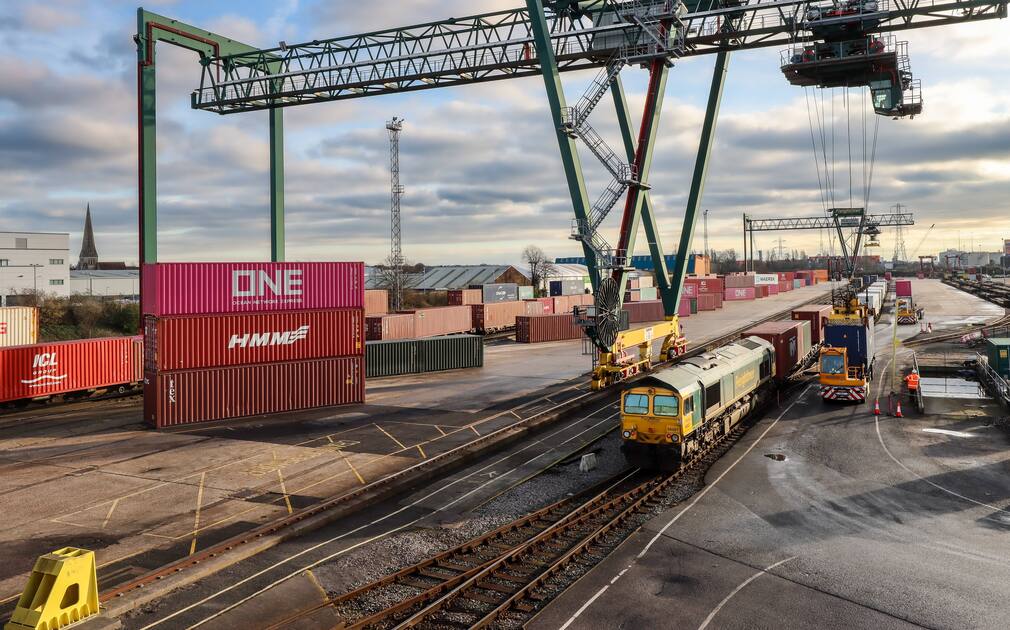
LONDON: Three years after launching a pioneering Modal Shift Programme at Southampton, DP World has helped avoid an estimated 50,000 tonnes of CO₂e emissions by encouraging cargo owners to shift from road to rail.

This financial incentive scheme has helped move more than 220,000 additional containers by rail from DP World Southampton since its launch in 2023, avoiding an estimated 18 million miles of road transport.

The programme has also helped increase rail’s share of container movements from Southampton from 21% to 29%, while supporting the introduction of five new rail services connecting the port to Birmingham, Cardiff, East Midlands Gateway, Doncaster and Northampton. Together, these developments are strengthening rail connectivity at the UK’s third-largest container port, giving customers greater choice in how they move goods inland.

Kris Adams, CEO, UK Ports and Terminals, at DP World, said: “Decarbonising supply chains requires practical solutions that make commercial sense for customers. Our Modal Shift Programme shows what can be achieved when we work with our partners to make lower-emission transport options more accessible and attractive.

“Too often, the conversation around supply chain decarbonisation pits rail against road, but the Modal Shift Programme shows how DP World is using bespoke trials that work to deliver on both sides of UK supply chains. We’re delighted with the success of the trial and look forward to new opportunities to expand it further across our operations in the UK.”

Building on the programme’s success, DP World is now expanding its incentive structure to include Rail Freight Terminal Operators (RFTOs), creating new opportunities to increase rail freight volumes from Southampton. Under the new arrangements, eligible operators will be able to receive performance-based disbursements for each import laden-container moved by rail within the programme’s incentive zone, subject to meeting quarterly targets.

Originally launched as a six-month trial in 2023, the Modal Shift Programme provides financial incentives to customers moving import-laden containers by rail from Southampton to destinations within 140 miles of the railhead. The programme is funded through a flat £10 fee applied to all import-laden containers arriving at the port.

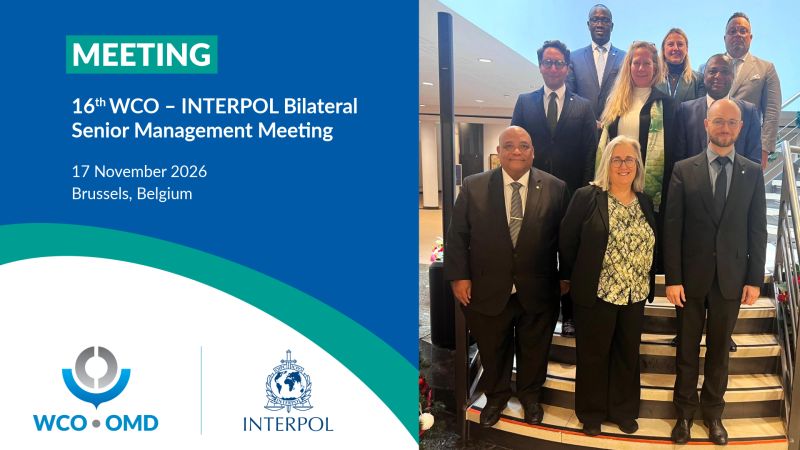
WCO and Interpol hold 16th Bilateral Senior Management Meeting to strengthen Global Security Co-operation

BRUSSELS: The World Customs Organization (WCO) and the International Criminal Police Organization (INTERPOL) have convened their 16th Bilateral Senior Management Meeting to strengthen strategic cooperation and review future priorities for addressing the growing challenges posed by transnational organised crime.

The high-level meeting brought together senior representatives from both organisations to discuss the strategic direction of their longstanding partnership, with particular attention to emerging security threats, evolving criminal networks and the need for stronger international coordination.

Against the backdrop of increasingly sophisticated and interconnected criminal activities, discussions focused on the changing global criminal landscape and the challenges faced by customs and law enforcement authorities in identifying, preventing and responding to cross-border illicit activities.

Participants exchanged perspectives on emerging threats and explored opportunities to enhance cooperation through improved information exchange, intelligence sharing and closer operational coordination. The discussions also highlighted the importance of strengthening institutional collaboration and developing more effective approaches to address complex and evolving security challenges.

Strengthening International Cooperation Against Organised Crime

The meeting reaffirmed the importance of the WCO–INTERPOL partnership in supporting coordinated international efforts to combat transnational organised crime. By combining the WCO’s global customs network and expertise with INTERPOL’s international law enforcement capabilities, the two organisations contribute to strengthening border security and improving cooperation among national authorities.

The continued partnership is particularly important in addressing cross-border criminal activities that exploit international trade and transport networks, requiring customs administrations and law enforcement agencies to work together through timely information sharing and coordinated operational responses.

Through the 16th Bilateral Senior Management Meeting, the WCO and INTERPOL reiterated their shared commitment to advancing strategic dialogue, strengthening operational cooperation and enhancing collective capabilities to respond to emerging threats.

The engagement marks another step in reinforcing international collaboration towards a safer and more secure global trading and transport environment.

Sallaum Logistics opens inland customs bonded compound in the Port of Limburg, Genk

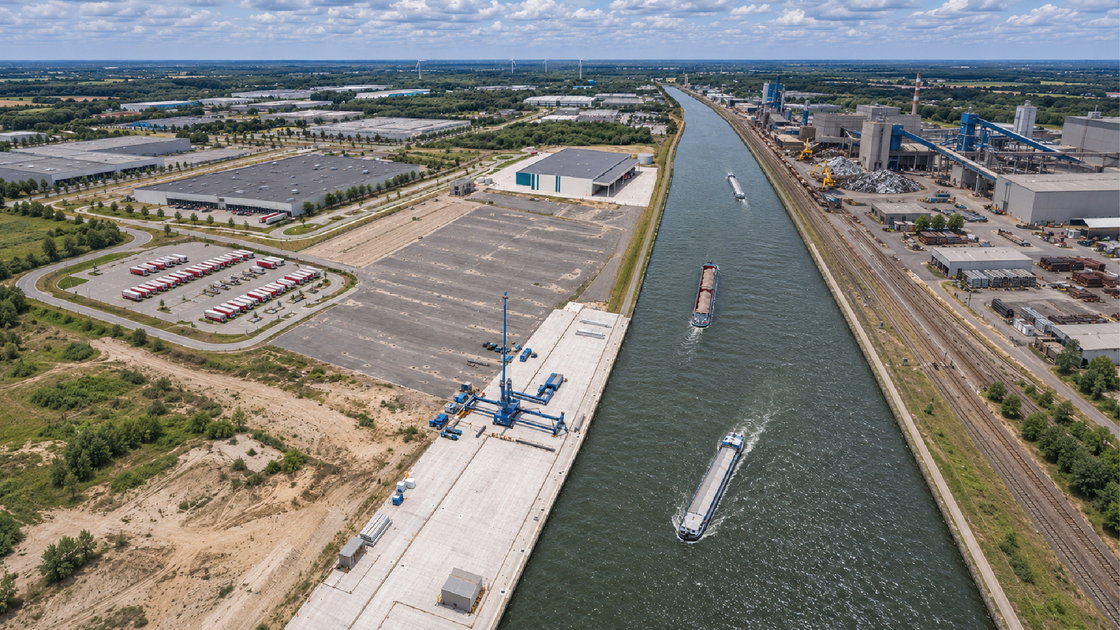
GENK: Sallaum Logistics is opening an inland customs bonded compound in the Port of Limburg in Genk, extending the Sallaum Terminal in the Port of Antwerp into the Limburg hinterland. Cargo owners can hold goods under customs control and complete customs handling in Genk rather than at the quayside in Antwerp. 

This reduces pressure on terminal capacity and lets them choose when and how cargo moves on to its destination. This strengthens overall terminal capacity while giving customers greater flexibility in deciding where their cargo is received, stored and released.

As part of the Sallaum terminals network, Genk provides an additional inland gateway for vehicle movements, allowing cargo to reach the facility directly from factories or other locations by road, river or rail. This gives customers greater choice in planning their logistics flows, managing customs procedures and coordinating onward distribution.

Genk lies on the Albert Canal, which gives the customs bonded compound a barge connection to Antwerp, and the site is near rail access with ability to handle 2 block trains simultaneously. With road transport from the Sallaum Logistics fleet alongside, customers can select barge, rail or truck for each shipment according to timing, volume and destination. The customs bonded compound opens in November with 57 000 sqm.

For finished vehicles owners, OEMs, importers the main change is where cargo waits

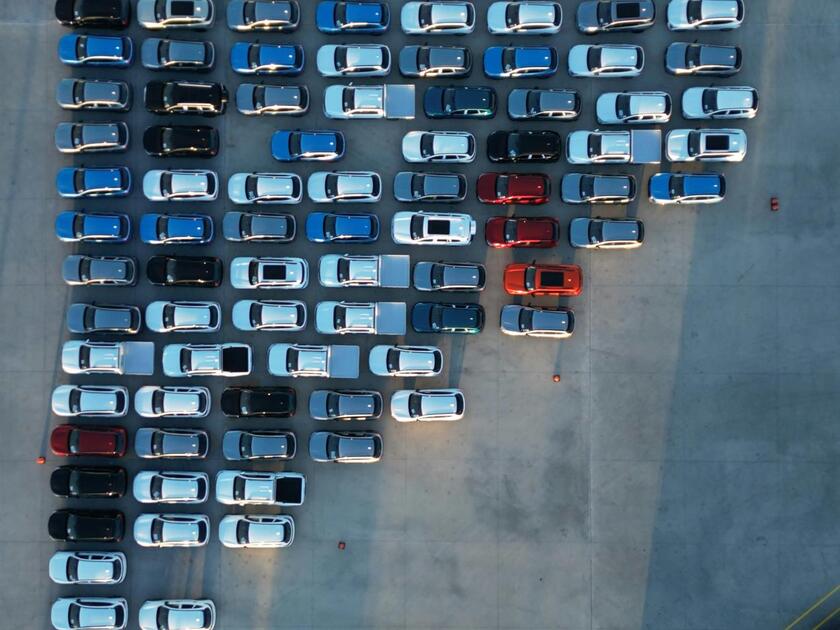
Vehicles can move from the Antwerp terminal to Genk, Port of Limburg compound under customs control and stay in bond until the consignee is ready to take delivery, with import duties suspended in the meantime. 

Customs formalities can be completed in Genk, close to the buyer, instead of in the port. Vehicles that would otherwise stand at the terminal can be cleared from Antwerp earlier, which frees quay space. Customers who need to time releases to a production schedule, a dealer delivery window or a sales campaign gain flexibility without losing customs control. 

CEO Edvinas Rybelis of Sallaum Logistics said: “The opening of our Genk Port Customs bonded compound represents an important step in strengthening our integrated logistics network across Europe. By expanding our inland presence, we are giving customers greater flexibility in how they receive, store and distribute their cargo, supported by a range of transport options, including road, rail and river.

Beyond the operational benefits, providing access to multimodal transport solutions allows us to support more sustainable supply chains. Greater use of rail and inland waterways can help reduce transport-related CO₂ emissions while improving the efficiency of cargo movements. This investment reflects our commitment to developing logistics infrastructure that responds to our customers’ evolving needs while supporting a more efficient and sustainable European logistics network.”

The compound also adds a step to Sallaum’s existing European network
Sallaum Lines delivers vehicles by sea, Sallaum Terminal receives it in Antwerp, and Sallaum Logistics moves it onward by road, rail, or barge with Genk now providing an inland point in between.  Limburg’s position close to the Dutch and German borders gives customers a base for distribution into those markets, where Sallaum Logistics already operates alongside Belgium, France, Spain, Switzerland, Austria, the Czech Republic, Slovakia and Hungary. Customers already using the Antwerp terminal can route through Genk without changing operator or contract structure.

Lloyd’s Register introduces new notation to tackle EV fire risks on car carriers

FIRE (EV) notation sets dedicated design requirements to help detect, contain and prevent the spread of electric vehicle fires on car carriers, RoRo and RoPax vessels

LONDON: Lloyd’s Register (LR) has introduced new ship design requirements aimed at containing electric vehicle fires before they can spread through car carriers and RoRo vessels, addressing the particular safety challenges associated with transporting lithium-ion batteries at sea.

The new FIRE (EV) special feature notation sets requirements covering fire detection, structural fire protection, ventilation, suppression and firefighting equipment and systems for ships carrying electric vehicles. It applies to RoRo and RoPax ships, Pure Car Carriers (PCCs) and Pure Car and Truck Carriers (PCTCs).

The requirements focus on reducing the risk of an EV fire spreading beyond the space where it starts. A key hazard comes from lithium-ion batteries, where malfunction can result in thermal runaway and severe fires that can be difficult to control. Lithium-ion battery fires can also release toxic and corrosive gases, creating additional risks for people on board and the marine environment.

As increasing numbers of electric vehicles are manufactured, shipped and transported by sea, LR’s new notation provides ship designers, shipyards and owners with dedicated requirements for incorporating EV fire safety measures into vessel design.

Gabriele Sancin, Fire & Safety Team Lead – Specialist Vessels, LR, said: “Electric vehicles are an increasingly important part of the cargo carried by vehicle carriers and RoRo ships, but lithium-ion batteries present specific fire risks that need to be considered from the design stage.

“FIRE (EV) gives designers, shipyards and owners clear requirements covering detection, structural protection, ventilation, suppression and firefighting arrangements. The objective is to ensure vessels are designed with effective measures to manage these risks and support the safe carriage of electric vehicles.”

FIRE (EV) applies specifically to ship design, including vehicle-space arrangements and the systems and equipment serving those spaces. Operational measures, including crew training requirements, fall outside the scope of the notation.

The new notation is included in Chapter 6 of Part 6 of LR’s July 2026 Rules and Regulations for the Classification of Ships.

PM Modi heads to Manila for ASEAN and East Asia Summits; Maritime security, trade and Indo-Pacific Cooperation in focus

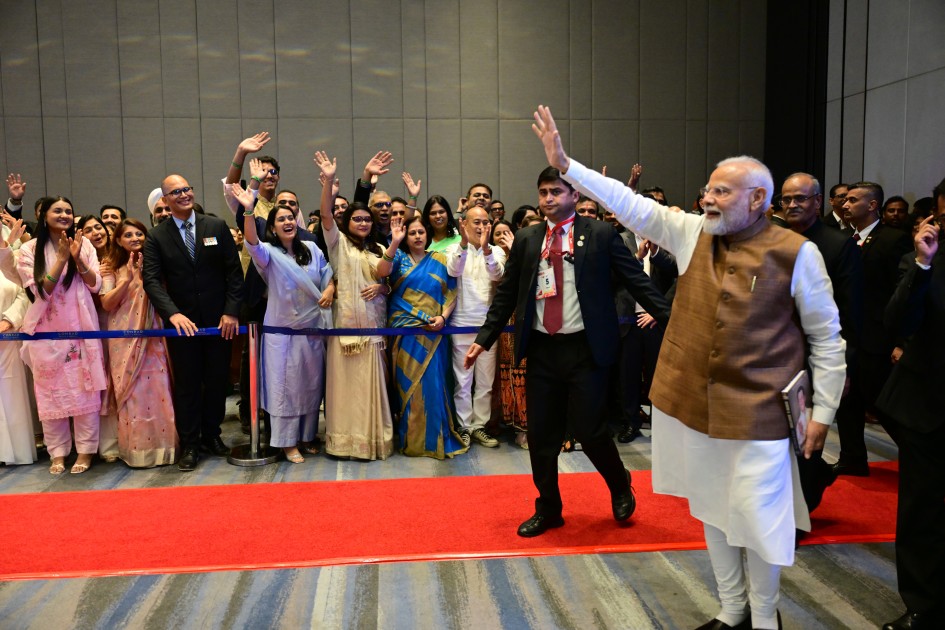
MANILA: Prime Minister Shri Narendra Modi is participating in two major regional diplomatic engagements in Manila, the Philippines, with maritime security, trade cooperation and regional stability emerging as key priorities in India’s engagement with Southeast Asian nations and the wider Indo-Pacific region.

During his November 16–18 visit, Prime Minister Modi is attending the 23rd ASEAN-India Summit and the 21st East Asia Summit on November 17. The meetings provide an important platform for India to strengthen its strategic and economic partnerships with ASEAN member countries and other key regional powers amid evolving geopolitical and maritime security challenges.

Maritime security is expected to feature prominently in India’s discussions, particularly in the context of maintaining peace, stability and freedom of navigation across the Indo-Pacific. With major international shipping routes and critical maritime trade corridors passing through the region, closer cooperation on maritime domain awareness, regional connectivity and secure sea lanes remains an important shared priority.

Economic cooperation and trade connectivity are also central to the discussions. India is seeking to expand commercial engagement with ASEAN countries, strengthen regional supply chains, encourage investment and explore new opportunities across infrastructure, logistics, manufacturing and other strategic sectors. The development partnership agenda is expected to further reinforce India’s commitment to deeper regional integration and sustainable economic growth.

The visit has also attracted attention due to the expected participation of US President Donald Trump, Japanese Prime Minister Sanae Takaichi and Australian Prime Minister Anthony Albanese in a proposed Quad Leaders’ Summit on the sidelines of the Manila meetings. US Assistant Secretary of State Dylan Johnson indicated that Washington was working to formalise the summit, highlighting continued efforts to strengthen coordination among the four Quad partners.

The proposed leaders’ engagement is significant for advancing cooperation on maritime security, regional resilience and a free and open Indo-Pacific. The Quad brings together India, the United States, Japan and Australia, with maritime cooperation forming an important dimension of its regional engagement.

On Monday evening, Prime Minister Modi attended a gala dinner hosted by Philippine President Ferdinand R. Marcos Jr. in Manila. The occasion reflected the diplomatic engagement accompanying the summit, with Modi wearing the traditional Filipino formal attire, Barong Tagalog, in a gesture of cultural appreciation and friendship.

India’s participation in the ASEAN-India and East Asia summits underscores its commitment to strengthening regional partnerships, promoting secure maritime trade routes and advancing a stable, inclusive and prosperous Indo-Pacific. The engagements are expected to provide further momentum to India’s Act East Policy and its growing strategic and economic engagement with Southeast Asia.

Sarbananda Sonowal pitches $10 billion shipbuilding opportunity to Global Maritime Leaders

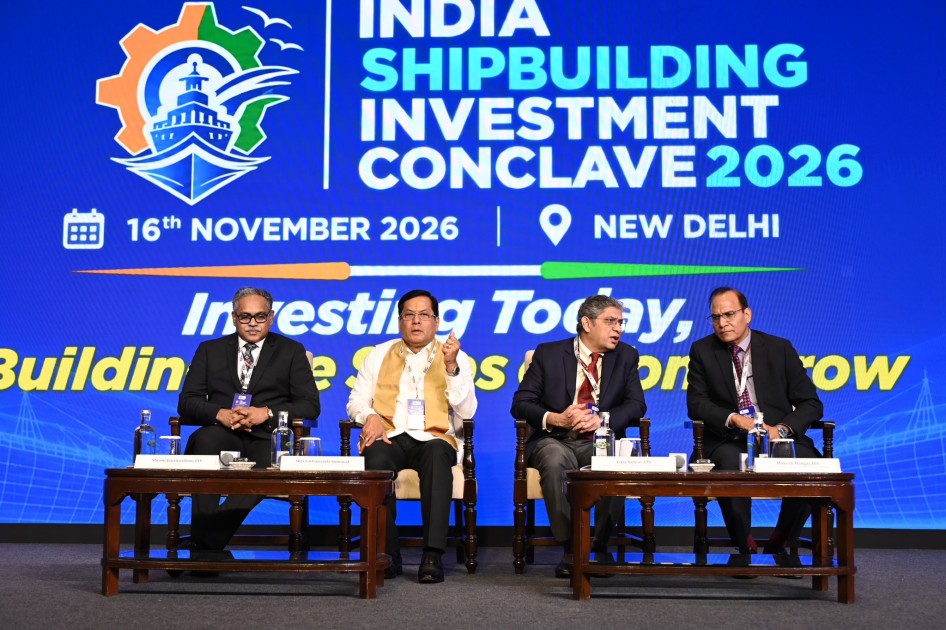
NEW DELHI: Union Minister of Ports, Shipping and Waterways (MoPSW) Shri Sarbananda Sonowal invited the global shipbuilders, shipping lines and financiers for investment as projections estimate nearly $10 billion of investment in the five new Greenfield coastal shipbuilding clusters, saying India aims to rank among the world’s top 10 shipbuilding nations by 2030 and the top five by 2047.

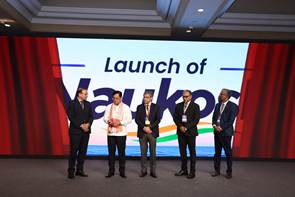
Sonowal made the pitch at the India Shipbuilding Investment Conclave 2026, hosted by the MoPSW here on Monday. He also launched Naukosh, a digital portal for the shipbuilding and ship repair industry, and the conclave saw Damen Shipyards and Cochin Shipyard sign a memorandum of understanding to collaborate on future shipbuilding projects.

“India is ready to build the ships of the world,” Sarbananda Sonowal said. “Build in India, for India and for the world.” The conclave builds on the $8 billion shipbuilding financial package the government approved last year under Prime Minister Shri Narendra Modi.

Union Minister Sarbananda Sonowal cited domestic and export demand as the case for investors. Identified domestic demand covers more than 400 vessels, representing an investment opportunity of nearly $24 billion, the minister said. The active order pipeline holds more than 150 vessels valued at over $1.7 billion, and export orders account for more than 80% of that value.

The investment push centers on five greenfield clusters that officials described as ready to build: Dugarajapatnam in Andhra Pradesh, Kuchhadi in Gujarat, Dighi in Maharashtra, Kendrapada in Odisha and Thoothukudi in Tamil Nadu. Central and state teams took investors through available land, supporting policies and joint Centre-state backing for shipyards, component makers and allied marine businesses.

Sonowal said the clusters would open opportunities in manufacturing, technology, employment and exports. “Under the dynamic leadership of Prime Minister Narendra Modi, cooperative federalism is powering the next chapter of Make in India. Andhra Pradesh, Gujarat, Maharashtra, Odisha and Tamil Nadu have shown that India’s coastal states are partners in this mission, not just hosts. We move this as Team India so that investors get land, approvals and policy support without delay,” Sonowal said.

Executives from 30 international shipyards joined shipping companies, equipment makers, banks, investors and diplomatic missions, along with Indian industry leaders. Among those taking part were HD KSOE, Samsung Heavy Industries, Hanwha Ocean, Fincantieri, Meyer Werft, Damen, Royal IHC, Everllence, Mitsui Engines, Wartsila, Kongsberg, Drydocks World Dubai, Maersk, MSC, CMA CGM, MOL and DP World.

The Korean Ambassador to India also led a large delegation after Union Minister Sarbananda Sonowal’s recent visit to South Korea. HD KSOE, Samsung Heavy Industries and Hanwha Ocean are South Korea’s three largest shipbuilders; shipping company HMM also attended. Their participation builds on VOYAGES, short for Vision for Operation of Yard Assisted Growth with Efficiency and Scale, the partnership PM Narendra Modi and South Korean President Lee Jae Myung signed April 2026 to pair Korean shipbuilding expertise with India’s Maritime Amrit Kaal Vision 2047.

Naukosh, developed by the ministry’s Directorate General of Maritime Administration (DGMA), brings policies, approvals and investment opportunities onto one digital platform, which Sarbananda Sonowal said would promote transparency and ease of doing business. It serves shipyards, repair facilities, equipment makers, design agencies, classification societies, research and training institutions, financiers, insurers and regulators.

Its modules cover an industry directory, shipyard capability data, a collaboration hub, finance and insurance information, a technical library, an innovation centre, training and certification, and regulatory guidance. A public homepage dashboard will show shipyard and capacity indicators, ships delivered and on order, and sector updates.

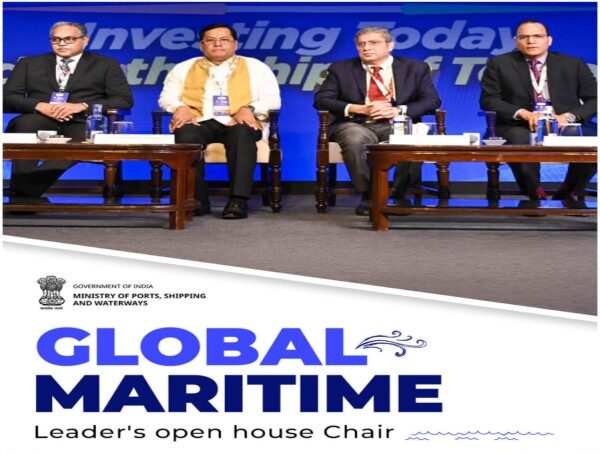
At a Global Maritime Leaders’ Open House, executives gave government officials direct feedback on policy and long-term plans. Delegations then held one-on-one meetings with state cluster teams, central ministries and financial institutions to work toward specific deals. State governments have arranged site visits tomorrow (Tuesday on Nov. 17), for 10 international delegations to inspect the cluster locations.

“The participation of global leaders today reflects growing confidence in India as a shipbuilding destination,” Sonowal said. “With assured demand, strong policy support, dedicated financing and five ready coastal clusters, India offers a compelling case for long-term investment. Our priority now is to convert today’s discussions into projects on the ground.”

Sonowal tied the effort to PM Modi’s leadership, saying shipbuilding had become a pillar of the Aatmanirbhar Bharat and Viksit Bharat journey. He said growth in the sector would create opportunities for Indian industries, enterprises and young people.

Vijay Kumar, Secretary, MoPSW said the discussions were “focused and practical.” He further added, ”Each investor now has a clear point of contact across the cluster special purpose vehicles, state governments and the ministry, and we will follow up closely on every engagement in the weeks ahead.”

Union Minister Sarbananda Sonowal was also joined by the Secretary, along with senior officials from central ministries, state governments and major ports.

Sarbananda Sonowal chairs Global Maritime Leaders’ Open House to strengthen international partnerships in India’s shipbuilding sector

NEW DELHI : Union Minister of Ports, Shipping and Waterways Shri Sarbananda Sonowal chaired the Global Maritime Leaders’ Open House during the India Shipbuilding Investment Conclave 2026, organised by the Ministry of Ports, Shipping and Waterways (MoPSW), bringing together global shipbuilding leaders, marine equipment manufacturers and key maritime industry stakeholders to explore opportunities for strengthening India’s shipbuilding ecosystem.

Shri Vijay Kumar, IAS, Secretary, MoPSW, also participated in the interaction and engaged with representatives of international shipbuilding companies and marine equipment manufacturers. The Open House provided a dedicated platform for direct dialogue between the Government of India and global industry leaders on investment opportunities, technological collaboration, capacity development and the future direction of India’s shipbuilding industry.

The discussions focused on identifying potential areas of cooperation with international shipbuilders, encouraging greater participation in India’s expanding maritime sector and exploring opportunities to establish strategic partnerships for domestic shipbuilding and marine equipment manufacturing. The interaction also provided an opportunity for global industry representatives to share their perspectives, industry experience and expectations regarding India’s emerging shipbuilding landscape.

Particular emphasis was placed on strengthening India’s domestic shipbuilding capabilities through technology transfer, localisation of marine equipment, development of specialised vessels, modernisation of shipyards and enhanced participation of Indian manufacturers in global maritime supply chains. Collaboration with established international players is expected to support the adoption of advanced shipbuilding technologies, improve manufacturing capabilities and facilitate the development of a competitive domestic maritime industrial base.

The Open House forms part of India’s broader efforts to attract global investments and establish the country as a preferred destination for shipbuilding, ship repair and marine equipment manufacturing. With its growing maritime infrastructure, skilled workforce, strategic geographic location and expanding domestic demand, India is seeking to strengthen its position in the global shipbuilding market.

The initiative is aligned with the vision of Maritime India Vision 2030 and Maritime Amrit Kaal Vision 2047, which envisage transforming India into a leading global maritime nation through infrastructure expansion, technological advancement, indigenous manufacturing and international partnerships.

The engagement reaffirmed the Government’s focus on working closely with global maritime stakeholders to translate investment interest into meaningful industrial collaborations, accelerate shipbuilding development and position India as a major global hub for shipbuilding and maritime manufacturing.

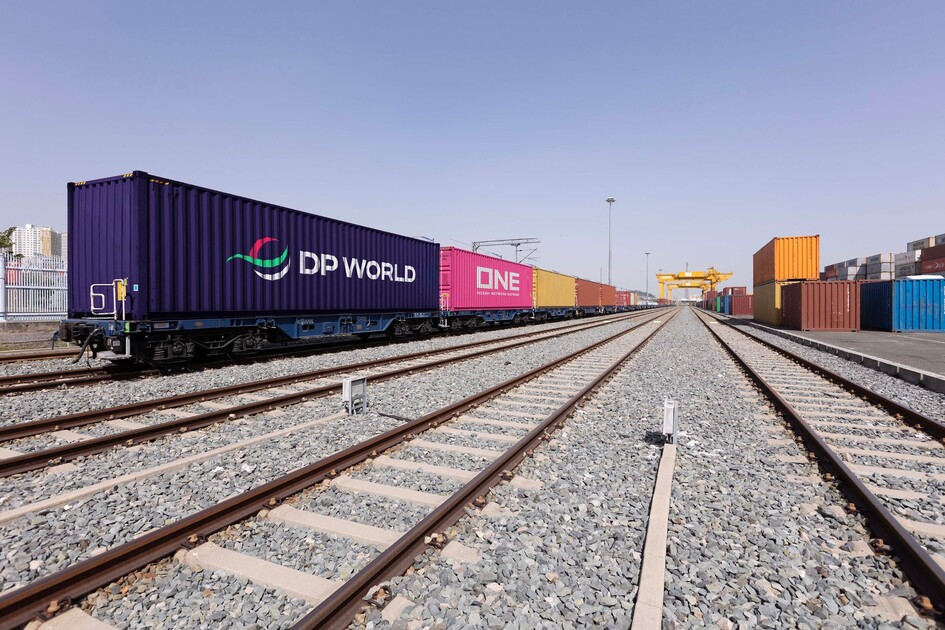
DP World launches dedicated export rail service for ONE, connecting NCR to Mundra Port

Twice-weekly service strengthens inland-to-port connectivity, offering exporters dedicated rail capacity and more predictable access to international markets

NEW DELHI: DP World has launched a dedicated export rail freight service for Ocean Network Express (ONE), connecting exporters in the National Capital Region (NCR) to Mundra Port, one of India’s key export gateways.

Operating on the Dedicated Freight Corridor (DFC), the service provides scheduled rail departures with a capacity of up to 180 TEUs per run. By linking inland cargo hubs directly with the port, the service enables exporters to move cargo more efficiently, improve planning and gain more predictable access to global markets.

The service provides ONE with dedicated rail connectivity between the NCR and Mundra Port through DP World’s inland container depots at Panipat, Pali and Modinagar. The twice-weekly export service from the NCR to Mundra is aligned with vessel schedules to provide better coordination between inland cargo movements and ocean shipping services, helping exporters manage shipments with greater confidence and flexibility.

Hemant Kumar Ruia, Country Manager, Subcontinent (India), DP World, said, “Reliable and efficient connectivity is fundamental to strengthening India’s trade competitiveness and unlocking new opportunities for growth. As a key manufacturing and export hub for automotive, auto components, industrial goods, FMCG and textiles, the NCR region requires seamless access to global markets. Through our dedicated rail service for Ocean Network Express, we are strengthening the link between inland manufacturing centres and international shipping networks, offering customers greater reliability, flexibility and efficiency in moving their cargo. This initiative reflects our continued commitment to building integrated, multimodal logistics solutions that simplify trade, enhance supply chain resilience and support India’s growing role in global commerce.”

Masahiro Sakikubo, Managing Director – India at Ocean Network Express (ONE), said, “This partnership brings together ONE’s global shipping network and DP World’s inland logistics capabilities to deliver a more connected experience for customers. Dedicated capacity, scheduled rail departures and alignment with vessel schedules will help enhance supply chain reliability while supporting seamless cargo movement between inland markets and international trade routes.”

The service supports multiple commodities within a single rake, providing customers across the connected regions with dedicated rail capacity.

The launch reinforces DP World’s commitment to strengthening India’s trade connectivity through integrated, end-to-end logistics solutions. By connecting its inland terminals and rail network with ports, warehousing and freight forwarding capabilities, DP World continues to build more efficient supply chains that connect Indian businesses with global markets.