Home Blog Page 13

Allcargo Global Reports 270% QoQ EBITDA Growth in Q2FY27

Revenue rises 23% QoQ to ₹4320 crore; EBITDA grows to ₹122 crores; Profit After Tax turns positive at ₹32 crore; Volumes grew across all products QoQ

MUMBAI: Allcargo Global Limited, the international supply chain business of the Allcargo Group and the world’s largest LCL consolidator, on Sunday announced its financial results for the quarter ended September 30, 2026. This marks the Company’s second quarterly result following its listing on the BSE and NSE, reflecting its continued progress as an independently listed company following the Group’s restructuring and demerger.

  • On a consolidated basis, Q2 FY27 revenue stood at ₹4,320 crore, registering a 23% sequential growth over ₹3,522 crore in Q1 FY27.
  • Gross Profit increased 14% QoQ to ₹837 crore, reflecting an improvement in the Company’s business performance.
  • EBITDA increased to ₹122 crore, compared with ₹33 crore in Q1 FY27, registering a sequential growth of 270%, supported by the Company’s continued focus on yield improvement, cost management and operational efficiencies.
  • Staff and Admin cost remained largely flat QoQ and YoY with companies focus on Cost control.
  • LCL volumes grew 3% over the previous quarter, while FCL and Air volumes increased by 1% and 16%, respectively.
  • The company reported PBT of ₹62 crore during Q2FY27 as against a loss during Q1FY27 and Q2FY26
  • The Company reported a Profit After Tax of ₹32 crore in Q2 FY27, compared with a loss of ₹28 crore in Q1 FY27, marking a return to profitability.

The company’s enhanced performance is an outcome of focused business initiatives and industry tailwinds. There has been focus on improving gross profit through volume growth in long-haul trade lanes, cutting back on loss-making routes, and significant improvements in container utilisation and the use of 40 ft boxes, which are more profitable than 20 ft boxes. Further, automation, outsourcing, and global processes and systems have helped control staff and admin costs, ensuring that the entire increase in gross profit flows down to the bottom line.

Adarsh Hegde, Managing Director, Allcargo Global Limited, said, “We are pleased to report an improved performance this quarter, marking a positive turnaround following a challenging period over the preceding quarters. While improving market conditions and freight rate movements have provided some support, we believe the results also reflect the impact of several focused initiatives undertaken across the organisation over the past few quarters.

We have been consciously working towards strengthening our business fundamentals in a changing market environment, with a sharper focus on cost optimisation, greater pricing discipline, improved yield management, and a more rigorous approach to addressing operational inefficiencies. Alongside this, we have continued to accelerate our technology and automation initiatives to improve process efficiency, enhance productivity and strengthen the overall sustainability of our business.

We see this quarter’s performance as an encouraging indication that these efforts are beginning to translate into tangible results. While there is still more work to be done, the progress reinforces the importance of staying focused on the fundamentals, maintaining financial and operational discipline, and continuing to build a stronger and more resilient business.”

About Allcargo Global Limited

Allcargo Global Limited (AGL) (NSE: AGL) (BSE: 544602) is an international supply chain company of the Allcargo Group, formed following the demerger of the Group’s International Supply Chain business. The company is the world’s largest global LCL consolidator and one of the leading players in multimodal transport across the world, with a global network covering markets that account for over 90% of global trade.

With over 30+ years of industry expertise, AGL operates through 200+ own offices across 60+ countries, complemented by a franchise network across other geographies. The Company combines deep logistics expertise with technology-enabled solutions, including ECU360, its digital freight booking platform that enables seamless shipment bookings across global trade lanes. AGL remains committed to strong ESG practices across its operations.

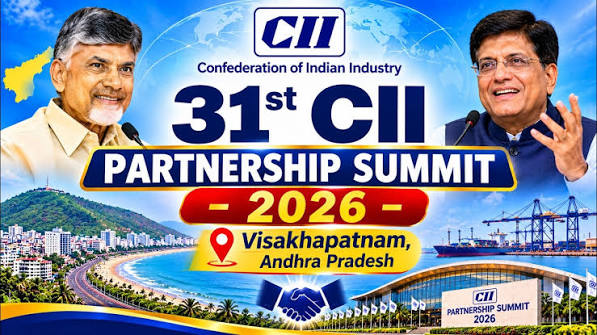
NICDC showcases AP’s industrial progress and investment opportunities at 31st CII Partnership Summit 2026 in Visakhapatnam

VISAKHAPATANAM: The Confederation of Indian Industry (CII) organised the 31st edition of the CII Partnership Summit 2026 on 12–13 November 2026 in Visakhapatnam, Andhra Pradesh, under the theme “Navigating the New World Order: Trade | Technology | Trust | Thought Leadership.” Organised in association with the Department for Promotion of Industry and Internal Trade (DPIIT), Ministry of Commerce and Industry, Government of India, and hosted by the Government of Andhra Pradesh, the Summit brought together policymakers, international delegates, global business leaders and investors to deliberate on emerging opportunities in trade, technology and economic cooperation.

The inaugural session was attended by Union Minister of Commerce and Industry Shri Piyush Goyal; Chief Minister of Andhra Pradesh Shri N. Chandrababu Naidu; Deputy Chief Minister of Andhra Pradesh Shri Konidala Pawan Kalyan; and Union Minister of Civil Aviation Shri Kinjarapu Ram Mohan Naidu. Shri Nara Lokesh, Minister for Human Resources Development, IT, Electronics & Communication and RTG, Government of Andhra Pradesh, also delivered a special address.

The inaugural session also witnessed the participation of several senior leaders, Union and State Ministers, overseas trade ministers, senior government officials, policymakers and prominent industry representatives from India and abroad, reflecting the strong participation in efforts to strengthen international trade, investment, industrial cooperation and strategic partnerships.

The Summit provided a platform for deliberations on international trade, global value chains, resilient supply chains, advanced manufacturing, defence technology, critical minerals, artificial intelligence, quantum technologies, smart manufacturing, green energy, future mobility and emerging technologies. Discussions focused on strengthening international partnerships, attracting investments and positioning India as a competitive destination for global manufacturing and innovation.

During the Summit, Union Minister of Commerce and Industry Shri Piyush Goyal and Chief Minister of Andhra Pradesh Shri N. Chandrababu Naidu visited the National Industrial Corridor Development Corporation (NICDC) pavilion. Shri Rajat Kumar Saini, CEO & MD, NICDC, briefed the dignitaries on the development and progress of NICDC’s three Greenfield Industrial Smart City nodes in Andhra Pradesh: Krishnapatnam, Orvakal and Kopparthy.

The NICDC pavilion showcased India’s evolving industrial infrastructure landscape and investment opportunities through various initiatives and digital platforms. Key highlights included the development of Greenfield Industrial Smart Cities, BHAVYA (Bharat Audyogik Vikas Yojana), the Industrial Corridor Land Platform (ICLP), which enables investors to discover and compare verified industrial land opportunities across India, and Koyla Shakti, a Smart Coal Analytics Dashboard. The pavilion also featured a 360-degree Virtual Reality (VR) Tour, offering visitors an immersive overview of NICDC’s industrial corridor projects.

Shri Rajat Kumar Saini apprised the dignitaries of the development progress of the three industrial nodes. The updates highlighted the progress of infrastructure development across the projects and NICDC’s continued efforts towards creating investment-ready industrial destinations in the State.

The pavilion also showcased Andhra Pradesh’s industrial potential, highlighting the three nodes’ combined project area of 7,223 acres, investment potential of ₹31,360 crore and employment potential of 2 lakh. The three nodes are being developed under different industrial corridors and are envisaged as integrated industrial ecosystems supported by world-class infrastructure and connectivity. Their development is aimed at facilitating large-scale investments, strengthening manufacturing capabilities, generating employment and accelerating industrial growth in Andhra Pradesh.

Through these displays and interactions, NICDC highlighted investment opportunities across manufacturing and emerging sectors, positioning Andhra Pradesh as an attractive destination for domestic and international investors.

During the Japan Country Session, H.E. Mr Keiichi Ono, Ambassador of Japan to India, highlighted the growing India–Japan economic partnership, noting that 31 Japanese companies across three cities in Andhra Pradesh have generated over 8,000 local jobs. He also highlighted opportunities for collaboration in steel, pharmaceuticals, clean energy and semiconductors.

Shri T. G. Bharath, Minister for Industries & Commerce and Food Processing, Government of Andhra Pradesh, highlighted the State’s industrial infrastructure, strategic ports, sectoral opportunities and focus on translating investment commitments into project implementation.

Shri Rajat Kumar Saini delivered the opening remarks, outlining five key areas for deeper cooperation: manufacturing and industrial corridor development, resilient supply chains, advanced technologies, sustainable industrial development, and MSME partnerships and skill development. He emphasised the need to translate investment opportunities into actionable partnerships, highlighting Japan’s commitment to facilitate investments of JPY 10 trillion in India over the next decade.

Mr Kiyotaka Doho, Director General, JETRO Chennai, highlighted the growing interest among Japanese companies in India and Andhra Pradesh, with over 80 per cent of surveyed companies planning to expand their operations. Mr Rajesh Mittal, President & MD, Isuzu Motors India, underscored the importance of Japanese manufacturing practices, quality standards, skill development and local supplier ecosystems.

Through the development of Greenfield Industrial Smart Cities across various industrial corridors, NICDC is working towards strengthening India’s manufacturing ecosystem, enhancing logistics efficiency and creating investment-ready industrial destinations. Its initiatives aim to attract domestic and international investments, generate employment and facilitate the integration of Indian industries with global value chains.

Other distinguished dignitaries present at the event included Shri T. G. Bharath, Minister for Industries and Food Processing, Government of Andhra Pradesh; Shri B. C. Janardhan Reddy, Minister for Roads and Buildings, Infrastructure and Investments, Government of Andhra Pradesh; Shri G. Sai Prasad, Chief Secretary to the Government of Andhra Pradesh; Shri R. Mukundan, President, CII and Managing Director & CEO, Tata Chemicals Limited; and Shri Chandrajit Banerjee, Director General, CII.

NICDC’s participation in the 31st CII Partnership Summit 2026 provided an opportunity to showcase the progress of its industrial corridor projects, engage with global stakeholders and highlight investment opportunities in Andhra Pradesh. These efforts contribute to the Government of India’s vision of strengthening domestic manufacturing capabilities and achieving Viksit Bharat @2047.

National Industrial Corridor Development Corporation Limited (NICDC), under the Department for Promotion of Industry and Internal Trade (DPIIT), Ministry of Commerce and Industry, Government of India, is mandated to develop world-class Greenfield Industrial Smart Cities across the country. Through integrated industrial infrastructure and digital initiatives, NICDC aims to enhance manufacturing competitiveness, attract investments and promote sustainable economic development.

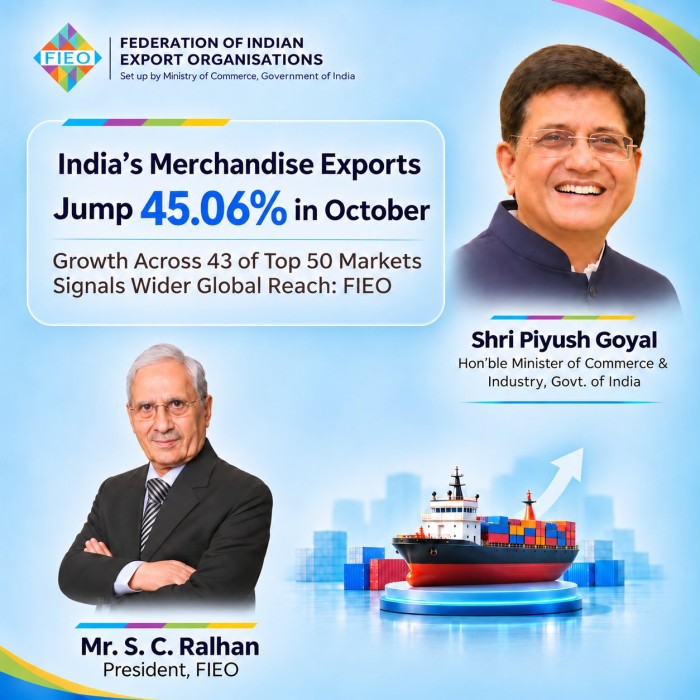
India’s Merchandise Exports jump 45.06% in October; growth across 43 of top 50 markets signals wider global reach : FIEO

NEW DELHI : India’s Merchandise Exports surged 45.06% to US$49.47 billion in October 2026, with shipments expanding across 43 of the country’s top 50 export destinations, underscoring strong momentum and widespread market gains. Overall exports, comprising merchandise and services, are estimated at US$89.99 billion, up 29.90%, according to data released by the Ministry of Commerce and Industry.

Welcoming the performance, Mr S C Ralhan, President, Federation of Indian Export Organisations (FIEO), said: “October’s performance is encouraging both for the pace of growth and its geographical spread. Expansion across 43 of our top 50 markets reflects the resilience of Indian exporters and their ability to seize opportunities despite global trade uncertainties. The priority now is to translate this strong momentum into sustained export growth.”

Merchandise exports increased from US$34.11 billion in October 2025 and US$44.40 billion in September 2026. Growth was supported by engineering goods, petroleum products, electronics, chemicals, drugs and pharmaceuticals, gems and jewellery, textiles and apparel, rice, and plastics and linoleum.

Exports to the United States grew 39%, China 48% and Japan 45%, while shipments to the United Kingdom, Taiwan and Kenya rose by more than 50%. Spain recorded growth of 352%, while exports to Malaysia, Togo, Singapore and Egypt more than doubled. Shipments to West Asia also remained positive, increasing by 3.98%.

“The gains across established and emerging markets underline the importance of market diversification. Exporters must build on these opportunities through stronger buyer relationships, competitive products and greater utilisation of preferential access under India’s Free Trade Agreements,” Mr Ralhan said.

Cumulative merchandise and services exports during April–October 2026–27 reached an estimated US$568.84 billion, registering 16.66% growth over US$487.59 billion in the corresponding period of the previous financial year.

“The sustained growth in the first seven months strengthens confidence in India’s export capabilities and provides encouraging momentum towards the US$1 trillion export aspiration. Maintaining this trajectory will require consistent competitiveness across manufacturing and services,” the FIEO President observed.

FIEO noted that the combined merchandise and services trade deficit narrowed to US$20.09 billion in October, from US$25.15 billion a year earlier. However, the merchandise trade deficit widened to US$39.88 billion, reflecting higher merchandise imports.

Mr Ralhan emphasised that affordable export credit, lower transaction costs and efficient logistics would be critical to sustaining the momentum, particularly for MSME exporters.

“Continued government–industry collaboration, timely facilitation and effective utilisation of trade agreements can help turn October’s strong performance into durable gains in global market share,” he concluded.

India and Egypt hold ministerial-level 7th Joint Trade Committee Meeting to strengthen bilateral economic ties

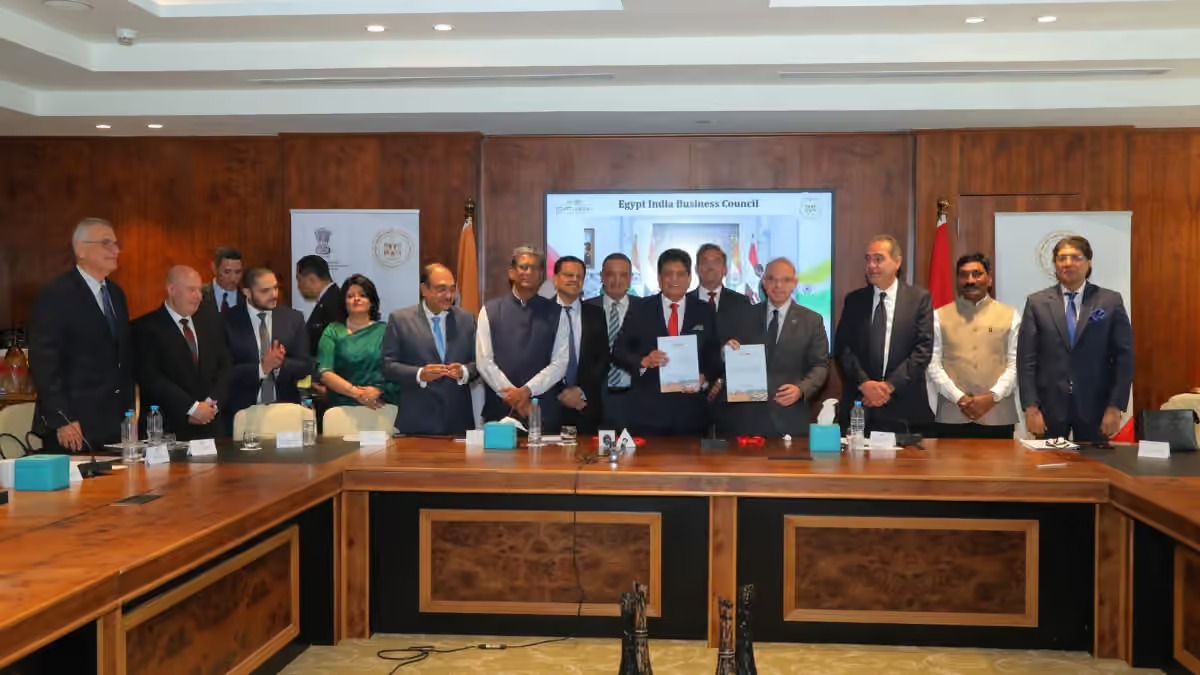
NEW DELHI : Union Minister of Commerce and Industry Shri Piyush Goyal and H.E. Dr. Mohamed Farid Saleh, Minister of Investment and Foreign Trade of Egypt, co-chaired the 7th session of the India–Egypt Joint Trade Committee (JTC) in Egypt’s New Administrative Capital day. The meeting marked the first occasion on which this important bilateral institutional mechanism was convened at the ministerial level, underscoring the priority both governments attach to strengthening the economic dimension of the India–Egypt Strategic Partnership.

Both sides reaffirmed their commitment to expanding bilateral trade, with a target of USD 12 billion. They emphasised the need to diversify trade, promote value-added exports and address trade-related challenges. As a key outcome of the 7th Joint Trade Committee meeting, both Ministers agreed to establish a Joint Working Group to explore the Terms of Reference for a Preferential Trade Agreement or Free Trade Agreement to facilitate stronger bilateral trade, improve access to both markets and promote investment linkages between the two countries.

The meeting was preceded by bilateral discussions between the two Ministers on expanding trade, facilitating investments and developing long-term industrial and commercial linkages. The JTC provided an opportunity to review existing trade ties, assess challenges faced by businesses and identify new areas for closer collaboration.

The Committee reviewed the growth in India–Egypt trade, which increased by 35% to reach USD 6.5 billion in FY 2025-26 (April 2025–March 2026). Trade during April–September 2026 also grew by 65% to reach USD 5.04 billion, compared to USD 3.08 billion during the corresponding period in 2025. The increase reflects the growing momentum in commercial exchanges and the potential for further diversification of the trade basket. Significant complementarities exist for enhanced trade in industrial goods, energy and fertilisers, chemicals, pharmaceuticals, engineering, textiles and agricultural products.

The discussions primarily focused on expanding trade, developing supply chains and establishing predictable trade pathways. Both sides considered measures to address non-tariff barriers, facilitate customs processes, strengthen standards and conformity assessment, and improve market access. They also discussed practical issues affecting business operations, including product registrations and trade-related regulatory procedures.

Discussions also focused on strengthening business exchanges and encouraging joint manufacturing and investment. Priority sectors included pharmaceuticals and medical devices, engineering and electrical equipment, fertilisers, textiles, renewable energy and emerging technologies. Opportunities for Indian investment in Egyptian industrial zones, as well as Egyptian investment in India’s expanding manufacturing and services sectors, also formed an important part of the agenda.

Both sides expressed interest in strengthening the framework agreement between Invest India and Egypt’s General Authority for Investment and Free Zones, including a proposed digital platform for sharing investment information and facilitating business linkages.

Egypt’s proximity to the Suez Canal and its connectivity with African, Arab and European markets make it a valuable partner for export-oriented manufacturing and regional supply chains. India, in turn, offers Egyptian investors and exporters a large and dynamic market, increasingly competitive infrastructure and opportunities for technology and production partnerships.

Speaking at the Joint Trade Committee meeting, Shri Piyush Goyal highlighted five areas of strong complementarity between India and Egypt: pharmaceuticals and healthcare, leveraging India’s strengths in affordable medicines, vaccines and medical technology; engineering and automobiles, covering machinery, auto components and industrial manufacturing; agriculture and food processing, including food security, fertilisers, irrigation and cold-chain infrastructure; digital and fintech, through UPI linkages, local currency trade and India’s Digital Public Infrastructure; and culture and museums, through proposed collaboration between the Grand Egyptian Museum and India’s upcoming Yuge Yugeen Bharat National Museum in conservation, curation and digitisation.

The ministerial-level JTC is an important step towards advancing the economic priorities of the India–Egypt Strategic Partnership. It was held against the backdrop of the meeting between President Abdel Fattah El-Sisi and Prime Minister Shri Narendra Modi during the BRICS Summit in India in September 2026. The JTC seeks to translate this political momentum into stronger trade flows, new investments, joint manufacturing, greater market access and more resilient supply chains connecting India, Egypt and wider regional markets.

The next JTC meeting was agreed to be held in New Delhi in 2028, or earlier at a mutually convenient date.

The India–Egypt Business Forum brought together more than 300 companies from India and Egypt today, providing a platform to strengthen business engagement under the India–Egypt Strategic Partnership. Union Minister of Commerce and Industry Shri Piyush Goyal and H.E. Dr. Mohamed Farid Saleh, Minister of Investment and Foreign Trade of Egypt, addressed the Forum, which was attended by industry leaders and senior business representatives from a wide range of sectors.

The Forum was organised on the sidelines of Shri Piyush Goyal’s official visit to Egypt from 15 to 16 November 2026. The opening session was addressed by Dr. Mohamed Awad, Chief Executive Officer of the General Authority for Investment and Free Zones (GAFI); Mr. Vijay Sankar, President of the Federation of Indian Chambers of Commerce and Industry (FICCI) and Chairman of Sanmar Group; and Mr. Ahmed ElWakil, President of the Federation of Egyptian Chambers of Commerce.

Addressing the session, Shri Goyal proposed a four-point action agenda ahead of the 80th anniversary of India–Egypt diplomatic relations in 2027. The agenda included resolving identified trade barriers within a time-bound framework; encouraging Egyptian investments in Indian states and industrial clusters, with Invest India facilitating opportunities; bringing suppliers of large companies into the partnership to create opportunities for smaller businesses; and institutionalising annual reviews to track progress and translate business discussions into concrete contracts.

Underscoring the ambition of the partnership, Shri Goyal said, “Years from now, when someone studies this decade, let them find factories with labels that say: Made in Egypt, with India. Made in India, with Egypt.”

A dedicated session on investment opportunities in Egypt brought together senior representatives of GAFI and the Suez Canal Economic Zone (SCZONE), who presented the country’s industrial and investment opportunities. Egypt’s strategic location linking the Mediterranean and Red Seas, its expanding ports and logistics infrastructure, and its access to African, Arab and European markets offer opportunities for Indian businesses seeking to establish manufacturing and export-oriented operations.

The Forum also featured a session on the experiences of Indian companies operating in Egypt, including TCI Sanmar, Galaxy Chemical and Abdos. Their presence illustrated the potential for Indian investments to contribute to Egyptian industrial production, employment, technology development, exports and integration into regional supply chains. Representatives of the two business communities explored areas of cooperation in engineering and electrical equipment, chemicals and fertilisers, pharmaceuticals, textiles, food processing, automotive components, renewable energy and logistics.

A special panel on the digital economy brought together stakeholders from Egypt’s digital technology and transformation ecosystem and leading Indian startups and technology companies. Moderated by Eng. Ayman El Gohary, Chairman of Global for Smart Solutions, the panel included experts and industry leaders from both countries. The Egyptian participants included Eng. Mahmoud Sofrata of the Information Technology Industry Development Agency (ITIDA), Mr. Fady Ismaeel of AGX, Dr. Kareem Hamza of National System and Dr. Sideek Ahmed of Eram Holding. Indian industry representatives included Mr. Rajesh Ranganathan of Zoho and Mr. Pradeep Gilbile of Datamorphosis. The discussions focused on opportunities in enterprise technology, digital solutions, innovation and industry partnerships.

Earlier in the day, the 6th India–Egypt Joint Business Council (JBC) meeting was held at the New Administrative Capital. Shri Goyal and Minister Saleh addressed the Council. The Council was co-chaired by Mr. Ganesh Kumar, Executive Vice Chairman, TCI Sanmar Chemicals SAE, on the Indian side, and Mr. Khaled Aboul Makarem of Makarem Tex on the Egyptian side. Mr. Vijay Sankar, President of FICCI, also addressed the Council.

The Joint Business Council provided a platform for focused discussions on priority sectors, including chemicals and petrochemicals, pharmaceuticals and healthcare, food processing and agri-business, renewable energy and green hydrogen, infrastructure, ports and logistics, information technology and digital services, textiles and automotive manufacturing. The Council also examined ways to strengthen institutional links between business organisations, including the possibility of establishing sectoral working groups, customs and trade facilitation, business visas and a calendar of reciprocal trade missions for 2026-27.

The two engagements highlighted the complementarities between the Indian and Egyptian economies. India offers a large and growing market, competitive manufacturing, engineering and digital capabilities, while Egypt offers an established industrial base, strategic connectivity, skilled human resources and access to markets in Africa and the wider region. Bilateral trade exceeds USD 6.5 billion, while Indian investments in Egypt already exceed USD 5.5 billion. Both sides see significant potential for deeper two-way investment, joint manufacturing, technology partnerships and the development of supply chains serving domestic and international markets.

Shri Goyal’s visit follows the meeting between President Abdel Fattah El-Sisi and Prime Minister Shri Narendra Modi during the September 2026 BRICS Summit in India. The high-level visit, the India–Egypt Business Forum involving more than 300 companies and the India–Egypt Joint Business Council engagements reflect the shared ambition to further strengthen economic engagement under the India–Egypt Strategic Partnership.

Shri Piyush Goyal held a bilateral meeting with H.E. Dr. Mohamed Farid Saleh, Minister of Investment and Foreign Trade of Egypt, to review bilateral trade and investment relations and explore avenues for further economic cooperation. Discussions covered trade expansion, market access, investment opportunities, pharmaceuticals, fertilisers and challenges faced by Indian businesses in Egypt, including visa-related issues. Shri Goyal emphasised the importance of facilitating Indian investments and strengthening bilateral supply chains and business-to-business linkages.Shri Piyush Goyal also held a bilateral meeting with H.E. Eng. Khaled Hashem, Minister of Industry of Egypt, to discuss opportunities for strengthening industrial cooperation, promoting manufacturing partnerships and enhancing investment linkages. Both sides discussed potential cooperation in industrial development, technology partnerships, MSME development, industrial automation and advanced manufacturing.


CSL sign MoU with Damen Shipyards to explore shipbuilding co-operation and vessel localisation in India

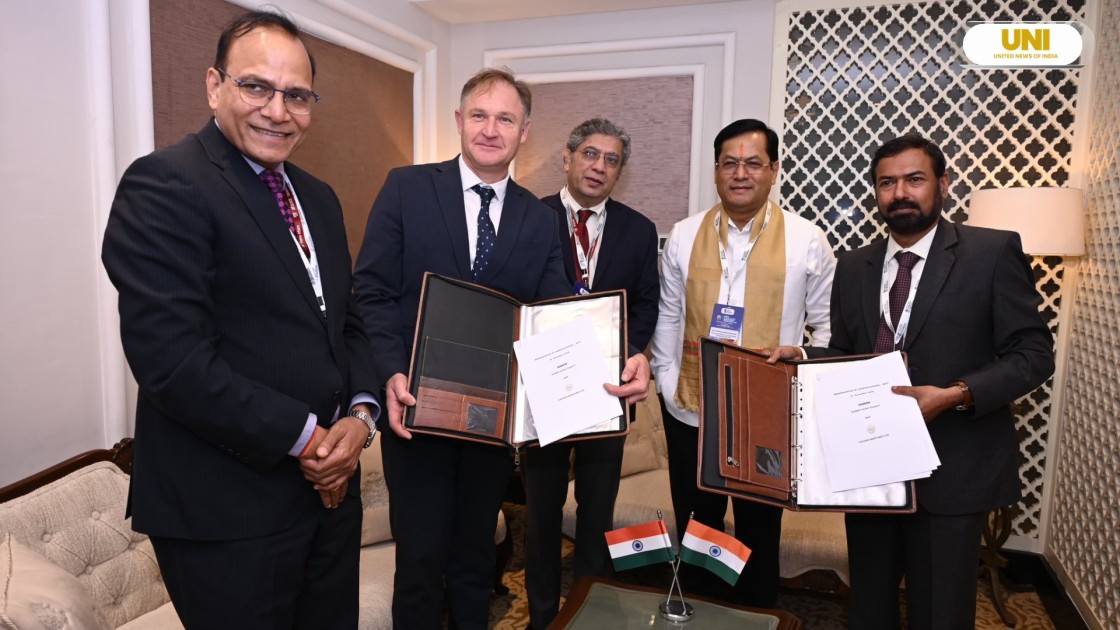
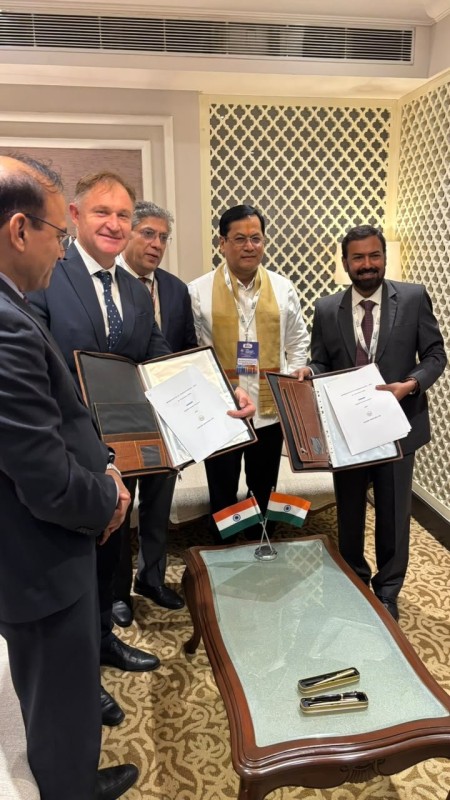
NEW DELHI : Cochin Shipyard Limited (CSL) and Netherlands-based Damen Shipyards Group have signed a Memorandum of Understanding (MoU) to explore opportunities for strategic cooperation in shipbuilding, with a particular focus on the localisation and construction of specialised vessels in India.

The MoU was signed during the India Shipbuilding Investment Conclave 2026, organised by the Ministry of Ports, Shipping and Waterways (MoPSW). Shri Jose VJ, Chairman and Managing Director, Cochin Shipyard Limited, and Mr. Dingeman Van Woerden, Regional Sales Director – Asia, Damen Shipyards Group, signed the agreement in the august presence of Shri Sarbananda Sonowal, Union Minister of Ports, Shipping and Waterways, and Shri Vijay Kumar, IAS, Secretary, MoPSW.

The proposed collaboration aims to explore opportunities for the development and construction of specialised vessels, including tugs and other technologically advanced vessels, through greater localisation and cooperation between the two organisations.

The partnership is expected to leverage CSL’s shipbuilding capabilities and Damen’s international experience and expertise in specialised vessel design and construction. It will also explore avenues for technology collaboration, knowledge sharing and strengthening domestic manufacturing capabilities in the Indian shipbuilding sector.

The initiative aligns with the objectives of Maritime India Vision (MIV) 2030 and Maritime Amrit Kaal Vision 2047, which seek to enhance India’s shipbuilding capacity, promote indigenous manufacturing, encourage technology partnerships and position the country as a competitive global shipbuilding hub.

The MoU marks another step towards strengthening international industry partnerships and accelerating the development of India’s specialised shipbuilding ecosystem, while supporting the country’s broader ambitions for maritime growth and self-reliance.

Indian Rupee rises 6 paise to 94.13 against US dollar during early trade

NEW DELHI : The Rupee rose 6 paise to 94.13 against the US Dollar in early trade on Monday amid declining crude oil prices and positive domestic markets.

However, a robust dollar and rising US Treasury yields amid uncertainty between the US and Iran capped the upside. Iran attacked a US military base in Bahrain on Sunday.

At the interbank forex market, the domestic unit opened at 94.22 against the greenback. It touched a high of 94.13 and a low of 94.25.

On Friday, the rupee depreciated 7 paise to close at 94.19 against the dollar.

“We expect the rupee to trade with a negative bias on an overnight surge in the dollar and rising US Treasury yields. However, softening of crude oil prices and foreign inflows may support the rupee at lower levels.

“At the domestic markets, traders may take cues from the Empire State manufacturing index data from the US and Fed Chair Kevin Warsh’s speech,” said Anuj Choudhary, Research Analyst, Mirae Asset Sharekhan.

Meanwhile, the dollar index, which gauges the greenback’s strength against a basket of six currencies, was at 103.44, higher by 0.03 per cent.

Brent crude, the global oil benchmark, was trading 1.03 per cent lower at $94.85 per barrel in futures trade.

On the domestic equity market front, Sensex jumped 414.36 points to 82,010.15 in early trade, while the Nifty rallied 102.10 points to 25,252.50.

Foreign institutional investors (FIIs) purchased equities worth ₹5,736.55 crore on Friday, according to exchange data. Meanwhile, India’s forex reserves increased by $2.49 billion to $719.547 billion during the week ended November 6, according to the RBI data released on Friday.

In the previous week, the forex reserves had dropped by $2.691 billion to $717.056 billion.

India will respect duty concessions on Scotch whisky imports from UK: Commerce Secretary

NEW DELHI: India will honour the duty concessions offered on bulk Scotch whisky imports from the UK under its trade deal, and the issue will be resolved in the next few days, Commerce Secretary Shri Rajesh Agrawal said. The Department of Revenue in the finance ministry is engaged with the stakeholders.

The Department of Revenue in the finance ministry is engaged with the stakeholders on the issue, he said. Ambiguity has arisen as to whether bulk Scotch should be classified under Chapter 22, Heading 2208, which specifically covers spirits and whisky, or Heading 2106, relating to food preparations not elsewhere specified or included.

The India-UK trade agreement, implemented in July this year, provides lower customs duties on whisky, including bulk Scotch whisky imported in containers of more than two litres. The duty has been reduced from 150 per cent to 75 per cent when the agreement came into force on July 15, 2026, and will be further cut to 40 per cent over 10 years.

Replying to reporters, the Commerce Secretary said there are certain technical issues which are involved in the import of Scotch whisky.

“I think Department of Revenue is very closely engaged with the stakeholders, and they are trying to resolve it. It is largely a classification issue as the duties in three potential lines where the Scotch can come in are very different… But I am sure it will be resolved very soon,’ Agrawal said.

Bulk Scotch imports, if classified under a different customs code, such as Heading 2106 (for food/alcoholic preparations), would require importers to pay the full 150 per cent duty.

The industry maintains that bulk Scotch remains whisky, whether imported in retail bottles or larger containers for subsequent blending and bottling.

“That concession which we have given will be respected…we are very hopeful it will be resolved in the next few days. There is nothing much to worry about,” said the Secretary while interacting virtually from Kolkata.

As per industry estimates, the issue has implications as about 80 per cent of Scotch whisky imports from Scotland by volume comprise bulk shipments.

Indian companies use these imports for blending and bottling operations, including producing Indian-made whiskies using proprietary recipes.

The alcoholic beverage industry is seeking clarity on how bulk Scotch whisky imports are classified and whether they qualify for duty concessions under the India-UK trade pact.

It wants the government to confirm that bulk Scotch imported for blending and bottling in India qualifies under the tariff commitments of the Comprehensive Economic and Trade Agreement (CETA), subject to applicable product and origin requirements.

Source : PTI

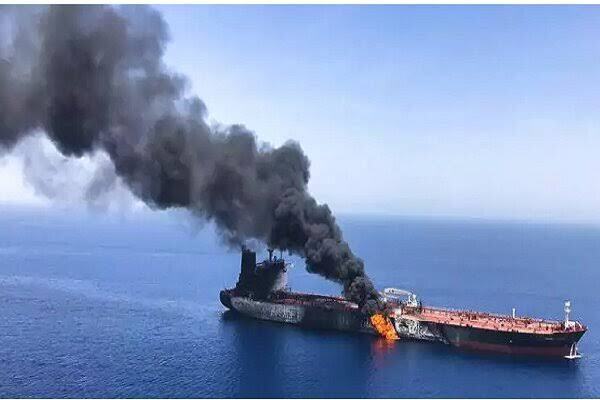
Fourth oil tanker catches fire in Hormuz after hitting naval mine, says Iranian Navy

TEHRAN: At least four oil tankers have been damaged in and around the Strait of Hormuz in the past 24 hours, with the Iranian Navy reporting that a fourth tanker caught fire after hitting a naval mine, while the UK Maritime Trade Operations (UKMTO) agency separately reported an attack on another tanker off the coast of Oman.

According to the Iranian Navy, the tanker caught fire after colliding with a naval mine in the eastern Strait of Hormuz. The Navy alleged that the vessel was navigating through a restricted maritime zone with its navigation systems switched off.

In a statement carried by Iranian state broadcaster Islamic Republic of Iran Broadcasting (IRIB), the Iranian Navy’s Public Relations department said, “The offending tanker, which was travelling in the restricted area east of the Strait of Hormuz, had turned off its navigation systems.”

The Iranian Navy also issued a warning to shipping operators, cautioning vessels against entering restricted maritime areas without coordination with the country’s armed forces.

“The result of any illegal movement, without coordination with the armed forces, and against regulations, is encountering mines and fires,” the statement added, as Al Jazeera reported.

The Iranian Navy further said that the tanker had sustained significant damage in the incident.

“Safe passage requires adherence to maritime regulations and coordination with the armed forces of Iran,” the statement said, adding that security “cannot be ensured through empty rhetoric and lies,” Al Jazeera reported.

The latest incident comes after Iranian naval forces reported that three oil tankers had exploded and caught fire after striking naval mines in and around the Strait of Hormuz on Saturday.

Separately, the UKMTO reported that a tanker transiting the Strait of Hormuz had been attacked seven nautical miles off Khasab in Oman.
In an advisory, the UKMTO said a third party had reported the incident and confirmed that all crew members were accounted for.
However, the agency said the extent of the damage to the vessel remained unknown.

The incident comes amid heightened maritime security concerns in the strategically important Strait of Hormuz, a key shipping route for global oil transportation.

Source: ANI

How Starlink Works for Business

WASHINGTON: Enterprise connectivity often combines continent-wide fibre, above-ground wireless and in-building infrastructure successfully. But above in the skies, LEO satellite networks like Starlink are becoming part of the WAN stack, which means new architectural challenges.

This article explores how Venn Telecom integrates Starlink into your managed services layer – dealing with different environments, mixed technology and messy business realities – across many goals, from primary access at remote sites to a failover path for diversity policies and backhaul for data-heavy workloads. Here’s how it works in practice.

What is Starlink and why does it matter for enterprise connectivity?

SpaceX-owned Starlink is a constellation of Low Earth Orbit (LEO) satellites designed from the start for internet connectivity.

Being far closer to Earth than geostationary networks (550km versus 35,786km) and in far greater numbers (10,000+ versus under 1,000), these smaller, cheaper satellites deliver superior latency, bandwidth, coverage, and redundancy – with pings as low as 20ms making real-time applications and even primary connectivity workable.

Coupled with a competitive cost case, it’s changing the calculus on how satellite fits into an enterprise WAN … with the outlook increasingly positive.

How does Starlink work?

The basic flow is straightforward: a proprietary dish on-site connects to a satellite overhead, which relays traffic to a ground station (connected to the internet backbone) and then to its destination address. Return paths reverse the same hops. The low orbital height makes latency due to distance negligible; that 20-60ms comes from other factors like on-satellite routing and the ground station handoff.

In practice, this means Starlink can now support data-intensive cloud DBaaS, VoIP, video streaming and SaaS sessions that would be unusable on geostationary uplinks. It’s this architecture that makes Starlink a genuine contender for your WAN transport.

What does Starlink architecture look like in enterprise networks?

The Starlink architecture has specific characteristics, with direct implications for how it behaves in an enterprise network. Three points matter: in space, on the ground, and at the user.

The space segment: packets in the sky

Low Earth Orbit and the constellation’s sheer density allow many optimisations. A single dish can see many satellites at once for multiple uplink options, and smooth handoff between satellites avoids dropout and packet loss.

While newer Starlink satellites “talk” to each other in space, routing traffic between themselves with high-bandwidth laser links to reach the best land-based connection point.

The ground segment: coming back to Earth

Data from the satellites – the downlink – goes not to the customer’s dish, but to ground-station Points of Presence (PoPs) linking the constellation to the internet backbone.

This detail is critical for enterprise routing policy and data sovereignty compliance – if EU traffic must exit at an EU ground station (often by law) that architectural choice needs to be integrated with other connectivity. And different regions have equivalent rules, to be applied case-by-case.

The user terminal: bringing it to your door

The client connection – a satellite dish on-site – uses a phased-array antenna, pointed at the sky on installation, then manages satellite handoffs (switching from sat to sat as they pass overhead) automatically.

Business-grade dishes, such as the V4, offer a 140° field of view – wider than the 110° field of the residential-grade unit, allowing it to see four times more satellites. It’s also weather-resistant to the IP56 standard (against heavy snow and debris) for an excellent service life. Its connector is normal Ethernet, letting it drop into existing network infrastructure without pain.

For mobile or moving services, Starlink’s Mini has the same future-proofing in a smaller package. This compact and robust option could be a better choice for some businesses.

Where does Starlink fit into an enterprise network?

In most scenarios, Starlink deploys in one of three ways: a primary WAN link at sites without other connectivity choices, a failover path behind an existing circuit, or a bonded augmentation layer aggregated via SD-WAN. In practice, platforms like Peplink with SpeedFusion handle failover, bonding, and traffic policy across links.

An architectural constraint: like most ISPs, Starlink uses CGNAT to assign IP addresses to nodes by default, meaning there’s no publicly routable static IP address out of the box (although it can offer dynamic ones). This causes problems for inbound VPN tunnels, remote access, and direct monitoring. As always, there’s a solution: Venn Telecom provisions public static IPs as part of the managed service, therefore your VPN and SD-WAN will work as normal.

What changes when Starlink is managed by Venn?

The difference: deploy Starlink yourself and you get a web connection. Deploy with Venn Telecom, and you get a managed services layer that makes it a circuit in your WAN. It’s this architecture – developed over years as a Starlink partner – that makes your Starlink connectivity enterprise-grade and production-ready.

It includes an upgraded router with SD-WAN integration, policy-based routing, and VPN termination with static IPs, which precisely what today’s network practices demand. A diverse overlay to the router (cellular SIM, normal WiFi, or even another satellite network) maintains monitoring even if the Starlink-based connection drops.

There’s “single pane of glass” visibility over your infrastructure with the Venn Portal. No need to manage at-user terminals one by one.

When should you use Starlink for your business?

Starlink makes sense anywhere the case for Earthbound infrastructure is hard. Think remote areas without fibre, resource extraction sites where vehicles are the nodes, or transitional infrastructure outside 5G coverage.

Venn Telecom has experience with construction projects where layouts change shape, maritime and offshore operations where assets suffer harsh conditions, and critical sites where diversity needs assurance. And of course, with managed bonding, Starlink can add capacity where bandwidth is squeezed.

Any circuit has some ideal contexts and some non-ideal. For extreme latency-sensitive applications like high-frequency trading, or SCADA in mission-critical industrial infrastructure, or deep in the rainforest with no clear sight of the sky, or even in dense urban locations where fibre and 5G are plentiful and cheaper, satellite may not be a good option.

Whatever your use case, Venn Telecom can help you decide.

What to check before integrating Starlink into your network?

Like any physical infrastructure, site-level factors matter.

Finally, think critically about managed service versus self-install – multi-site rollouts and sites without on-site IT benefit from a Managed Service Layer

Is there a sky view? Obstruction from trees, buildings, or geography – even partial – means a performance hit.

Confirm power availability. The business-grade terminal draws up to 150W continuously, sometimes problematic at off-grid sites.

Check your edge router supports satellite as a WAN input and can handle failover or bonding logic – plus, of course, your provision for VPN tunnels.

Set realistic expectations for throughput: 40–220 Mbps is a normal downlink on business plans, varying by conditions and location.

INTERCARGO re-elects John A. Xylas as Chair and welcomes two new Vice-Chairs

LONDON:INTERCARGO, the International Association of Dry Cargo Shipowners, has re-elected John A. Xylas, President and CEO of Ariston Navigation Corp., as its Chair for 2027 and 2028.

At the Association’s Annual General Meeting in Rome on 11 November, Full Members also re-elected Metaxia Psalti, Chief Operating Officer of Neda Maritime Agency Co. Ltd., as Vice-Chair. They elected Paolo Tonon, Technical Director of Berge Bulk, and Capt. Ranvijay S. Rana, Product Director, Dry Cargo Operations at Fleet Management Ltd., as new Vice-Chairs.

The Chair and Vice-Chairs will begin their two-year terms on 1 January 2027, bringing together continuity, fresh perspectives and broad international representation.

The elections closed INTERCARGO’s Autumn Meetings, held in Rome for the first time. The Technical Committee met on 10 November, followed by the Executive Committee and the AGM on 11 November. The meetings were hosted with the support of INTERCARGO member d’Amico Shipping.

The meetings took place at a time of strong growth for the Association, with INTERCARGO’s membership surpassing 500 for the first time, representing companies operating over 5,100 dry cargo ships. The Association has continued to welcome Full Members and Associate Members, broadening both the scope and the international representation of the membership.

John A. Xylas, INTERCARGO Chair, said: “Dry bulk shipping feeds and builds the world quietly, and people notice it mostly when it stops. Since we met in Singapore in May, INTERCARGO has continued to grow and further expand international reach. We passed 500 members for the first time. From January, our three Vice-Chairs will be based in three of the world’s top shipping centres: Piraeus, Hong Kong and Singapore. For a truly international association, I can think of no better compass.”

Over the past year, INTERCARGO’s STS Transfer Guidelines for Bulk Carriers, developed through its Technical Committee, have sold more than 1,000 copies. The Association has also launched a new website and digitalisation initiatives, and expanded the work of its Quality Panel, dealing with vetting issues, Australian Ports, Cargo Panel, Bulk Carrier Design and Advisory Associate Panel working groups. In addition, two new working groups focusing on AI, digitalisation and crew welfare have been approved for launch in early 2027.

Members approved revisions to the INTERCARGO Constitution, which take effect from 1 January 2027, including the establishment of the new INTERCARGO Technical and Operations Committee (ITOC). The committee will bring together the Association’s technical work with operational and vetting matters affecting dry bulk shipping, under the Chairmanship of Rethymnis & Kulukundis’ Dimitris Monioudis, supported by Cesare d’Api of d’Amico and Neda’s Metaxia Psalti, Chairs of the Technical and Operations Sub-Committees respectively.

Priorities for the next two years include making that structure fully operational, setting up new working groups and expanding existing ones, and establishing DryBMS and DBCE as reference points for the sector. INTERCARGO will also continue to grow its membership and reach, deepen engagement with members and strengthen its advocacy of members’ views amongst maritime stakeholders.

Metaxia Psalti, INTERCARGO Vice-Chair, said: “I am honoured to have been re-elected as Vice-Chair and grateful for the continued trust of our members. As INTERCARGO continues to grow, I look forward to strengthening industry collaboration and ensuring the practical challenges faced by dry bulk shipowners are addressed, while maintaining our commitment to safety, quality and continuous improvement.”

Paolo Tonon, INTERCARGO Vice-Chair, said: “It is a privilege to serve INTERCARGO as Vice-Chair. Technical excellence underpins safe and efficient dry bulk operations, and I look forward to supporting members as the Association strengthens its technical and operational work.”

Capt. Ranvijay S. Rana, Vice-Chair of INTERCARGO, said: “My career at sea and in ship management ashore has given me a clear view of how important good practice and common standards are to keep our vessels operating safely and efficiently. I thank the members for the confidence they have placed in me. I look forward to working with the Chair and my fellow Vice-Chairs to build on INTERCARGO’s work for the dry bulk sector.”

Discussions in Rome also covered security and geopolitical developments affecting dry bulk shipping, decarbonisation, and operational priorities including safe carriage of dry bulk cargoes, incident data sharing and port and terminal reporting. A panel discussion asked “Set Up to Succeed? How Systems Shape Human Performance in Bulk Carrier Operations”.

Capt. Uttam Kumar Jaiswal of Pacific Basin Shipping (HK) Ltd. will step down as Vice-Chair at the end of 2026, having served the maximum three consecutive terms since 2021. INTERCARGO extends sincere thanks for his six years of dedicated service and contributions to the Association.

INTERCARGO’s next meetings will take place in Hong Kong from 19 to 21 April 2027.