Home Blog Page 125

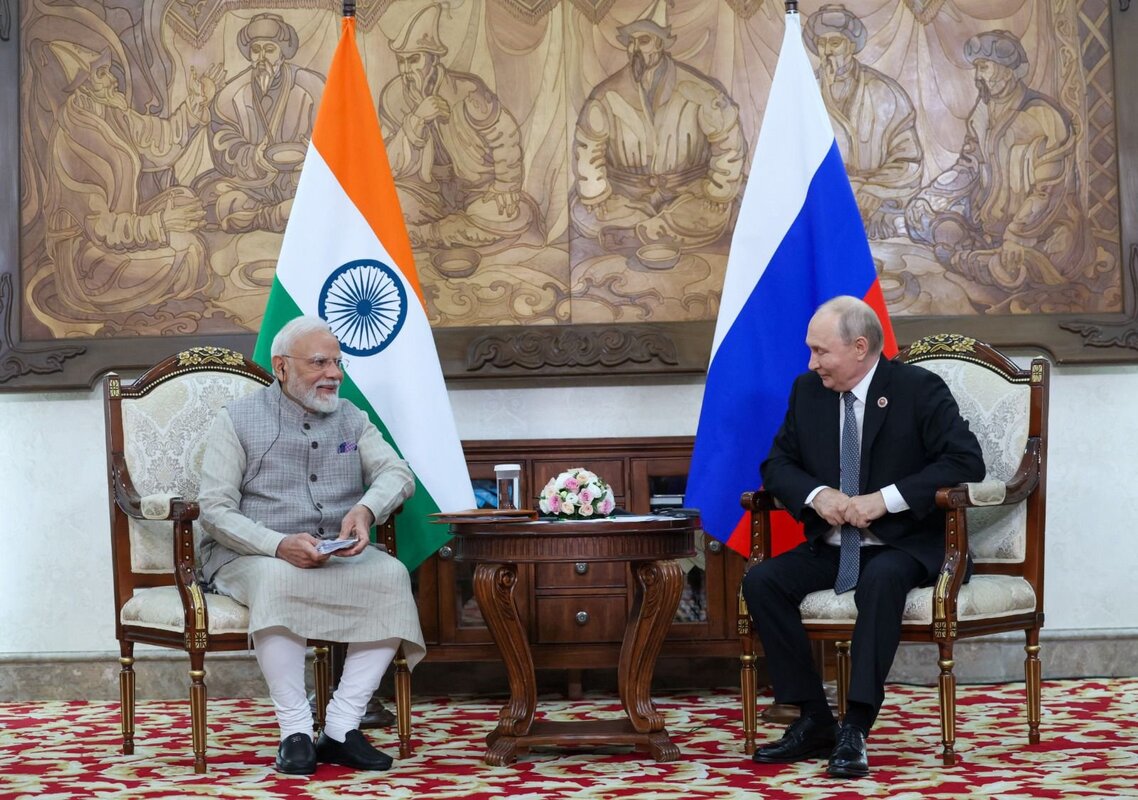
PM Modi meets with Russian President Putin at SCO Summit sidelines in Bishkek

BISHKEK: Prime Minister Shri Narendra Modi on Monday met with Russian President Vladimir Putin on the sidelines of the summit in Bishkek, where he delivered a powerful message of peace, asserting that the world must transition from an era of “endless wars” to the “end of war.”

The high-level meeting reaffirmed the enduring strength of the India-Russia strategic partnership, with both leaders discussing bilateral cooperation and pressing global developments. Visuals from the meeting showed both the leaders sharing a hug.

“We must move away from endless war towards an end to the war,” Prime Minister Shri Modi told the Russian President.

Looking ahead to the diplomatic calendar, PM Modi extended a formal invitation to the Russian President for the upcoming BRICS Summit in New Delhi. “We are eager to welcome you to India for the BRICS Summit in New Delhi this September,” PM Modi said, adding that the visit would “further strengthen India-Russia relations.”

Responding to the Prime Minister’s remarks, President Vladimir Putin expressed his gratitude for India’s consistent diplomatic engagement.

“I’m very grateful to you for your personal attention to the Russia-India relationship,” President Putin said, acknowledging the Prime Minister’s role in maintaining the momentum of the bilateral ties.

The two leaders were seen sharing a hug and a handshake upon their meeting.

The duo also deliberated on matters pertaining to bilateral partnership and cooperation.

Notably, the last India-Russia Summit was held in New Delhi during President Putin’s State visit to India from 4-5 December, 2025.

During the Summit, a Joint Statement titled “India-Russia: A Time-Tested Progressive Partnership, Anchored in Trust & Mutual Respect ” was adopted. A total of 21 Announcements were made including the signing of 16 MoUs/ Agreements in the fields of Mobility, Fertilizers, Health, Food Safety, Maritime Cooperation, Customs, Commerce, Academic and Media Collaboration etc, according to the Ministry of External Affairs.

So far, 23 Annual Summits have taken place alternately in India and Russia.

Later this year, President Putin is scheduled to travel to New Delhi for the BRICS Summit in September.

Russia has been a longstanding and time-tested partner for India. Development of India-Russia relations has been a key pillar of India’s foreign policy. Since the signing of the “Declaration on the India-Russia Strategic Partnership” in October 2000, India-Russia ties have acquired a qualitatively new character with enhanced levels of cooperation in almost all areas, including political, security, defence, trade and economy, science & technology, culture, and people-to-people ties. During the visit of the Russian President to India in December 2010, the Strategic Partnership was elevated to the level of “Special and Privileged Strategic Partnership,” according to MEA.

Prime Minister Modi arrived in Bishkek on Sunday to participate in the 26th Shanghai Cooperation Organisation (SCO) Summit, marking the next leg of his two-country visit after concluding his state visit to Uzbekistan. PM Modi arrived in the Kyrgyz capital at the invitation of Kyrgyz President Sadyr Zhaparov.

The 26th SCO Summit will bring together leaders of member states to deliberate on regional and international issues and ways to further strengthen cooperation within the grouping.PM Modi’s participation is expected to further strengthen India’s engagement with the SCO and its Central Asian partners as the organisation marks 25 years of its existence.

The grouping was established in 2001 by China, Russia, Kazakhstan, Kyrgyzstan, Tajikistan and Uzbekistan. India and Pakistan joined as full members in 2017, followed by Iran in 2023 and Belarus in 2024. Turkmenistan is the only Central Asian country outside the SCO. Afghanistan and Mongolia have observer status, while dialogue partners include Turkey, Azerbaijan and Saudi Arabia.

Source: ANI
PM Modi meets with the President of Iran on the sidelines of SCO Summit

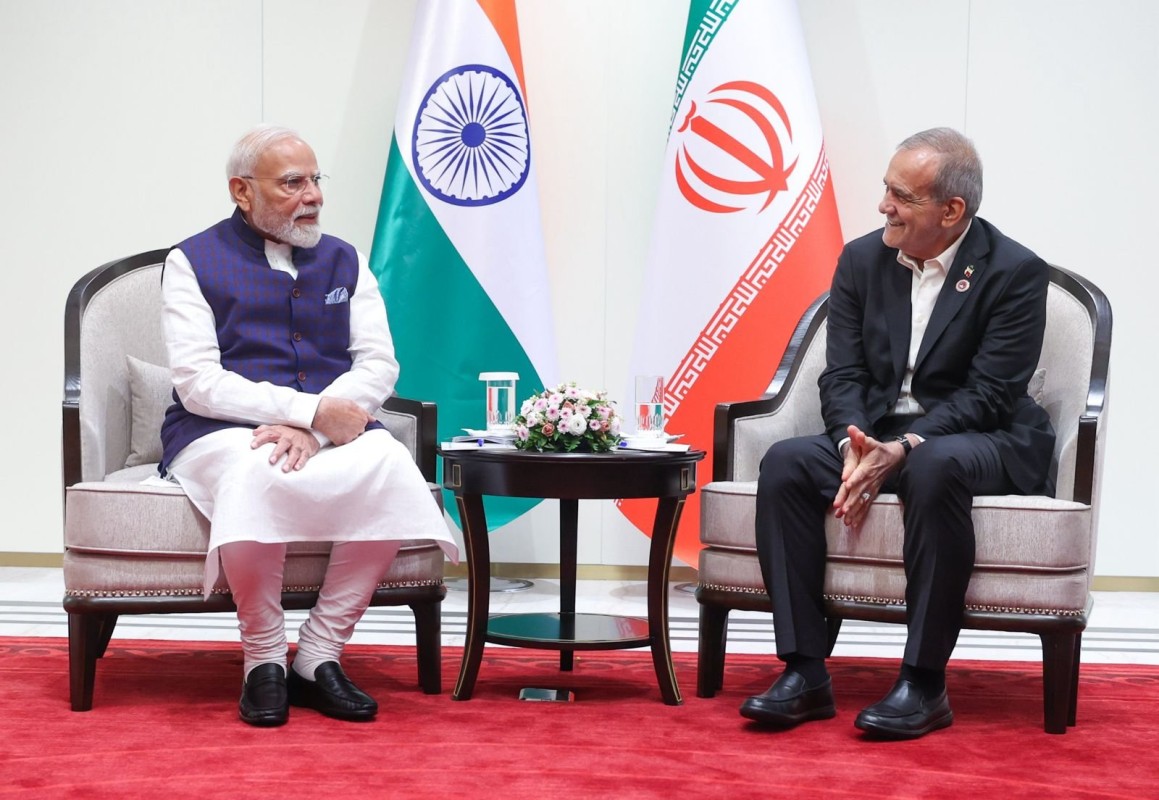
BISHKEK: Prime Minister Shri Narendra Modi held a bilateral meeting with the President of the Islamic Republic of Iran, H.E. Dr. Masoud Pezeshkian on the sidelines of the SCO Summit in Bishkek.

The two leaders discussed bilateral ties. They also discussed the recent developments in the West Asia conflict and shared perspectives on the evolving situation. Prime Minister expressed concern at the escalation of tensions in the region and reiterated India’s consistent position that all issues must be resolved through dialogue and diplomacy.

Prime Minister also reiterated the need for continued efforts to ensure lasting peace and stability in the region. Calling for safeguarding the freedom of navigation and commerce, he emphasized that civilians and civilian infrastructure, including commercial shipping and seafarers must not be harmed under any circumstances.

Reiterating India’s readiness to closely cooperate with Iran in multilateral organizations, including BRICS and SCO, Prime Minister conveyed that he looked forward to welcoming President Pezeshkian to India for the BRICS Summit.

Gujarat CM Bhupendra Patel invites Global Investors at Vibrant Gujarat Curtain-Raiser

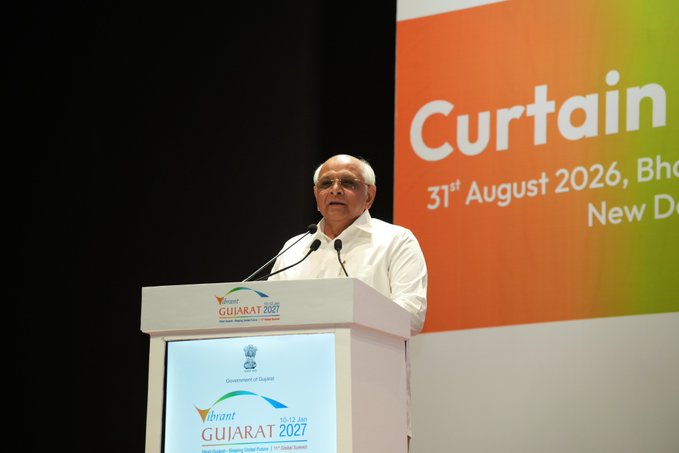
NEW DELHI: Chief Minister Shri Bhupendra Patel on Monday invited domestic and global investors, entrepreneurs and business leaders to invest in the state, highlighting opportunities in manufacturing, new technologies and green energy ahead of the 11th Vibrant Gujarat Global Summit, scheduled in January next year.

CM Patel said while addressing the curtain-raiser event that, Gujarat offered investors a combination of policy stability, a skilled workforce, effective governance, scale and transparency. He urged businesses to participate in the state’s development by setting up new manufacturing capacities, investing in emerging technologies and exploring opportunities in green growth. Gujarat had established itself as a global investment destination, attracting $74.6 billion between January 2000 and March 2026.

The state is now looking to build on its industrial base while expanding into technology-intensive and energy-transition sectors. Patel said Gujarat was also prepared to contribute to Prime Minister Narendra Modi’s seven-point ‘Sapta Dhara’ framework aimed at accelerating India’s journey towards becoming a developed nation by 2047.

The framework focuses on manufacturing, agro-food production and food processing, technology and innovation, logistics, defence, the green and blue economy, and soft power. Gujarat’s expanding semiconductor ecosystem is expected to play a key role in its technology and manufacturing push. Deputy Chief Minister Shri Harsh Sanghavi said six of the 12 semiconductor plants approved in the country are coming up in Gujarat, while three have already started production.

Sanghavi said the Gujarat government would work as a partner with investors and described investments in the state as “safe and secure”.

The investment push comes ahead of Gujarat’s wider international outreach for VGGS 2027, aimed at attracting global capital, technology and strategic partnerships.

The summit is being positioned as a platform to connect Gujarat’s industrial ecosystem with emerging opportunities in technology, clean energy and advanced manufacturing, while strengthening the state’s links with global supply chains.

Chief Secretary M K Das stated that the VGGS initiative has played an important role in giving Gujarat’s development model a new identity at the global level. He stated that as a result of the Gujarat Government’s development-oriented policies and sustained economic growth, the state’s GSDP in rupee terms has increased approximately 20-fold over the last 20 years. Gujarat’s current economic growth rate is around 10 to 11 per cent, and the pace of development is expected to remain stronger in the current financial year.

Gujarat targets processing incentives for 500 applicants daily next year: Dy CM Harsh Sanghavi

NEW DELHI: Gujarat is targeting the processing of industry incentives for 500 applicants every day in the coming year, up from 395 files a day currently, as the state looks to speed up incentive approvals for investors.

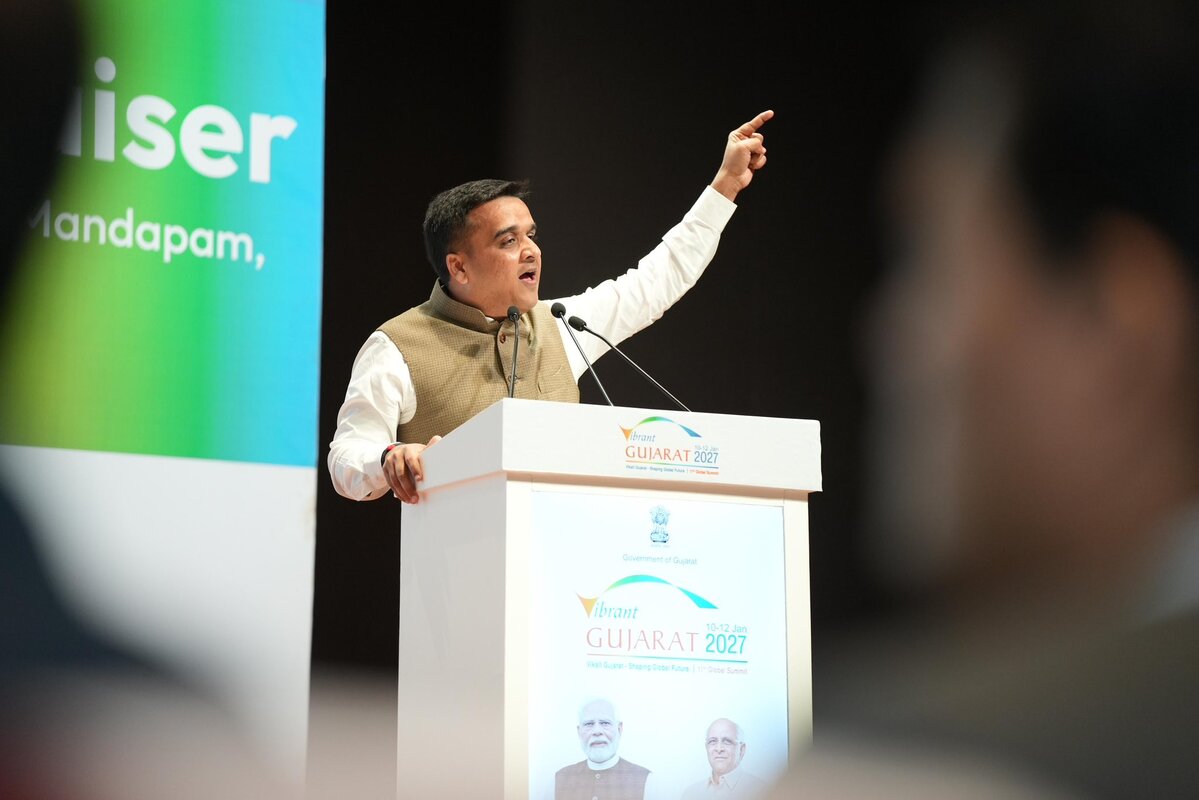
Addressing the gathering at the curtain-raiser event for the Vibrant Gujarat Global Summit 2027 in New Delhi on Monday, Deputy Chief Minister Shri Harsh Sanghavi said the Industries Department had already more than doubled the pace of processing incentive files this year.

“This year, the Gujarat Industries Department has ramped up the processing speed for incentive files from 160 per day to 395 per day. In the coming year, we aim to process incentives for 500 applicants daily; we are moving forward with this specific target in mind,” Sanghavi said.

Seeking to assure businesses about investing in the state, Sanghavi said Gujarat had maintained a track record of honouring incentives promised to investors under its policies.

“Over the past 25 years, not a single investor who came to Gujarat has had the experience of being denied the incentives promised under the state government’s policies,” he said.

Sanghavi also sought to address concerns around the safety of investments, saying investors generally look at both security of capital and returns while deciding where to put their money.

“As the Home Minister of Gujarat, I guarantee you that every single penny invested in Gujarat will remain secure, not just for you, but for the next seven generations,” he said.

Union Minister Shri Mansukh Mandaviya, who also addressed the gathering, said Gujarat’s long association with entrepreneurship and trade had helped the state develop a strong investment ecosystem.

“Gujarat has always been a state deeply connected to entrepreneurship and trade; that’s why a robust investment ecosystem has developed here,” Mandaviya said.

Highlighting India’s economic performance amid global disruptions, Mandaviya said the country had maintained relatively strong growth despite successive crises, including the COVID-19 pandemic, the Russia-Ukraine conflict and the West Asia crisis.

“While the world was still recovering from the pandemic, and economic growth rates in the US, China, and Europe were hovering around 2% to 4.5%, India’s economic growth stood strong at 7.5% to 8%,” he said.

Shri Mandaviya also pointed to changes in the country’s tax system, saying, “We have seen a continuous reduction in the tax burden, moving from VAT to GST and subsequent GST iterations.”

Gautam Adani calls for broader Credit Framework to recognise value of Integrated Infrastructure reforms

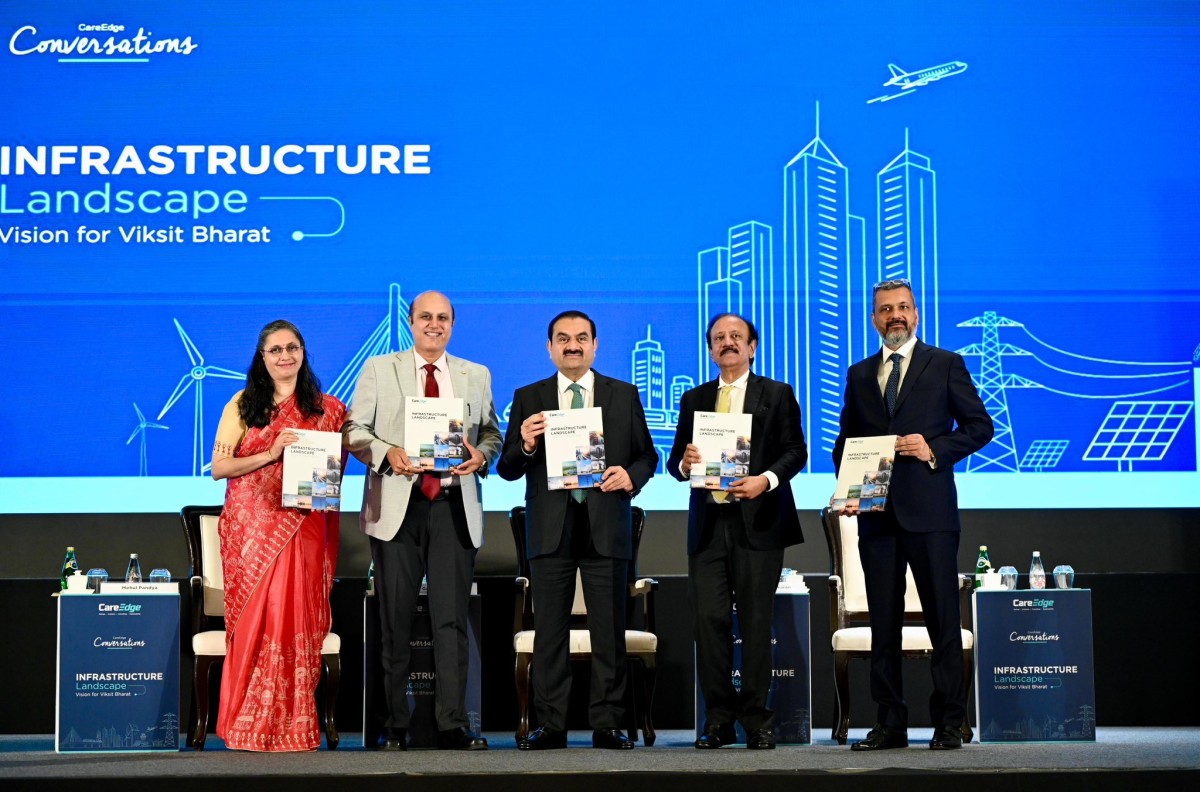
AHMEDABAD: Gautam Adani, Chairman of the Adani Group, has called on rating agencies to adopt a broader and more dynamic approach to assessing infrastructure, arguing that conventional credit models may not fully capture the wider economic, strategic and ecosystem value created by integrated infrastructure platforms.

Speaking on Monday, August 31, 2026, Adani urged the CareEdge Group to develop what he described as the world’s first comprehensive Credit Framework for Integrated Platform Infrastructure.

“We do not need lower standards, but we need wider lenses,” Adani said, emphasising the need for credit assessment models that can recognise ecosystem multipliers, strategic resilience and the broader economic value generated by interconnected infrastructure platforms.

Adani said the proposed framework should move beyond the conventional practice of assessing infrastructure assets solely on a standalone basis. Instead, it should take into account the additional value created across the wider ecosystem, including economic linkages, operational integration and strategic importance.

According to Adani, modern infrastructure platforms increasingly function as interconnected ecosystems rather than isolated assets. Ports, logistics networks, airports, energy infrastructure, industrial facilities and digital systems can create significant multiplier effects when integrated, generating economic benefits that may not always be reflected adequately through traditional credit assessment methodologies.

He clarified that the proposal was not aimed at seeking easier ratings or reducing the level of scrutiny applied by rating agencies. Instead, Adani stressed the importance of developing more sophisticated and comprehensive models capable of distinguishing between projects driven by unviable ambition and genuinely integrated infrastructure platforms that create sustainable long-term economic and strategic value.

The proposed framework, he said, could help rating agencies better evaluate the resilience and value creation potential of large-scale infrastructure ecosystems, particularly as countries increasingly invest in integrated platforms designed to strengthen supply chains, industrial development, energy security and economic competitiveness.

Adani’s call highlights the growing need for credit assessment methodologies to evolve alongside the changing nature of global infrastructure, where interconnected assets and integrated platforms are playing an increasingly important role in driving economic growth and strategic resilience.

The proposed Credit Framework for Integrated Platform Infrastructure could potentially mark a significant shift in the way large-scale infrastructure ecosystems are assessed, moving beyond standalone asset evaluation towards a more comprehensive understanding of their wider economic and strategic impact.

JNPA facilitates first GS-17 BLCS rail rake from Ludhiana to Dadri, strengthening Hinterland export connectivity

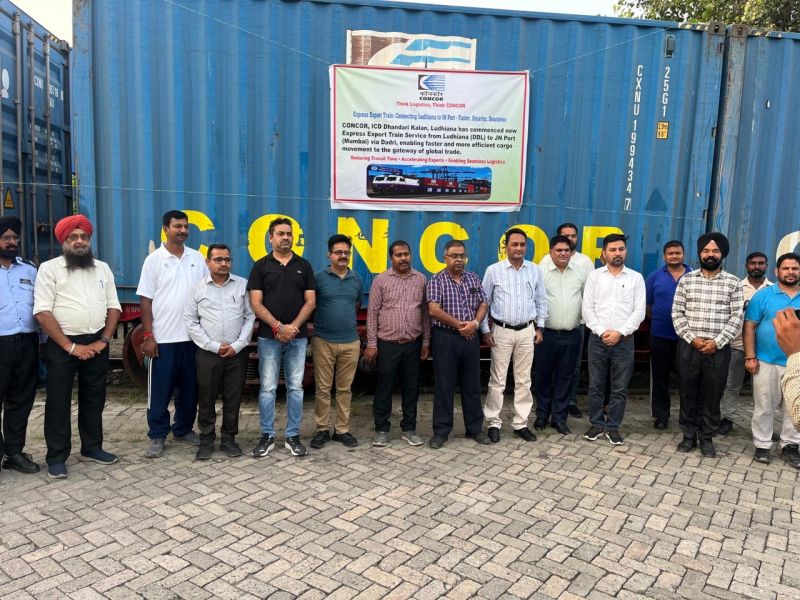
MUMBAI: Jawaharlal Nehru Port Authority (JNPA), in collaboration with the Container Corporation of India (CONCOR), Indian Railways and Customs authorities, has facilitated the successful movement of the first GS-17 BLCS rake from DICD Ludhiana to ICDD Dadri, carrying export containers destined for JNPA.

The landmark rail movement marks another significant step towards strengthening multimodal connectivity between India’s key industrial and manufacturing centres and the country’s premier gateway port.

The introduction of the GS-17 BLCS rake is expected to provide exporters with a more efficient, predictable and reliable logistics solution by facilitating the seamless movement of containerised cargo through the rail network. By improving connectivity between Ludhiana, Dadri and JNPA, the initiative will help streamline export cargo flows and enhance supply chain efficiency across the northern hinterland.

The rail-based movement also supports the national objective of promoting a greater shift from road to rail, reducing congestion on highways, lowering logistics costs and contributing towards more sustainable and environmentally responsible freight transportation.

With stronger coordination among JNPA, CONCOR, Indian Railways and Customs, the new movement is expected to enhance cargo predictability and provide exporters with improved planning capabilities, while ensuring smoother integration between inland container terminals and port operations.

JNPA continues to focus on strengthening its extensive multimodal logistics network by expanding rail connectivity, improving inland cargo evacuation systems and facilitating seamless integration between ports, railways, inland container depots and logistics hubs.

The successful facilitation of the first GS-17 BLCS rake reflects the collective commitment of all stakeholders towards building an efficient, resilient and future-ready logistics ecosystem for India’s growing trade.

Connecting the hinterland. Moving exports smarter. Strengthening JNPA’s multimodal network.

The initiative reinforces JNPA’s vision of enabling faster, more reliable and sustainable cargo movement while strengthening its position as a key gateway for India’s international trade and exports.

A Quarter-Century of Trade. One Unbroken Connection

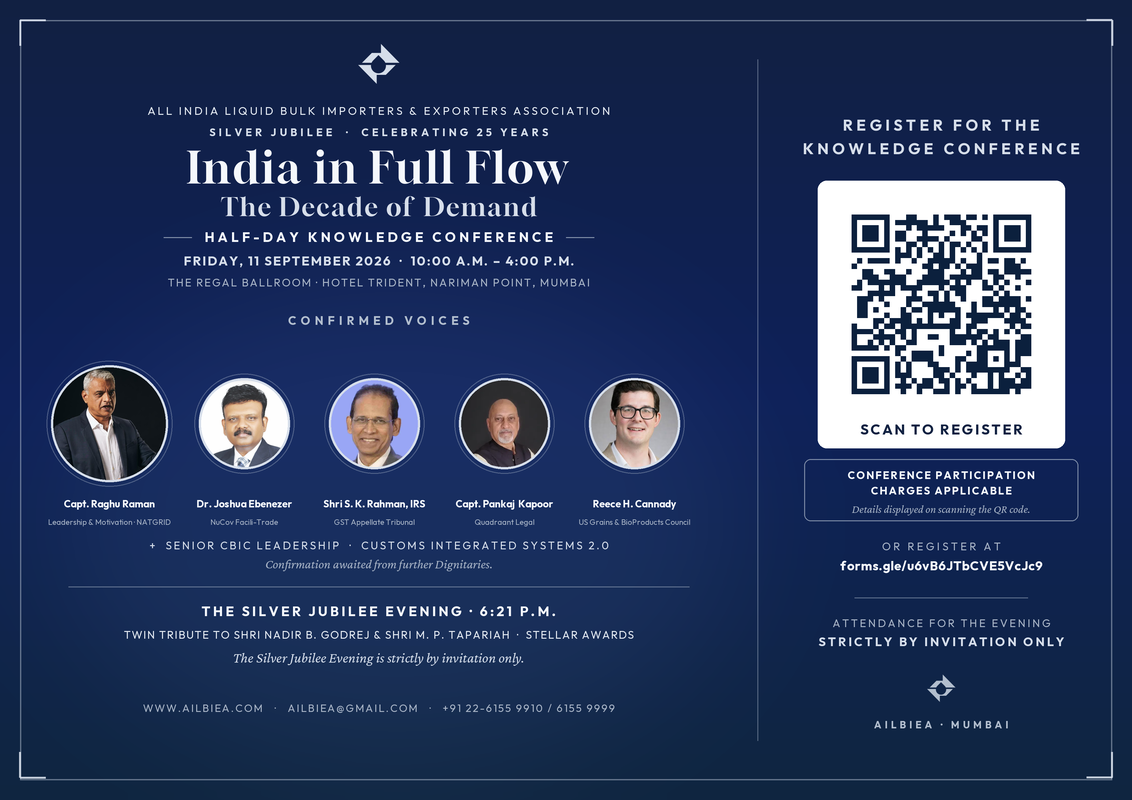
AILBIEA celebrates its Silver Jubilee on 11 September 2026 in Mumbai — a full day of trade dialogue, tributes to Shri Nadir B. Godrej and Shri M. P. Tapariah, and the Stellar Awards

MUMBAI: The All India Liquid Bulk Importers & Exporters Association (AILBIEA), the apex national body for India’s liquid bulk trade, will celebrate its Silver Jubilee on Friday, 11 September 2026 at Hotel Trident, Nariman Point, Mumbai — a Knowledge Conference from 10:00 a.m. to 4:00 p.m., followed by the Silver Jubilee Evening at the Regal Ballroom from 6:21 p.m. onwards, featuring special tributes to Shri Nadir B. Godrej and Shri M. P. Tapariah, and the AILBIEA Silver Jubilee Stellar Awards.

Founded in 2000, AILBIEA is the unified voice of India’s liquid bulk ecosystem — chemicals, petrochemicals, solvents, edible oils, petroleum products and LPG — with leading member organisations, anchored by founding members and key partners Godrej Industries Ltd, Hindustan Unilever Ltd, Aegis Logistics Ltd, Supreme Petrochem Ltd and VVF India Ltd. For twenty-five years, it has served as a trusted bridge between industry and Government, engaging the Ministry of Finance, CBIC, the Ministries of Commerce & Industry and of Ports, Shipping & Waterways, Port Authorities and Customs Commissionerates nationwide.

The Knowledge Conference — India in Full Flow: The Decade of Demand

Themed “India in Full Flow — The Decade of Demand”, the Knowledge Conference (10:00 a.m. – 4:00 p.m.) brings together industry leaders, top CEOs and CFOs, senior Ports, Revenue and Customs officials, and key policymakers across focused masterclasses and a flagship supplier-centric panel:

  • Global Trade Facilitation & the AEO Advantage — Dr. Joshua Ebenezer, Founder & Principal Consultant, NuCov Facili-Trade.
  • Customs Integrated Systems 2.0 — senior CBIC leadership on India’s next-generation customs technology backbone.
  • Safeguarding the Enterprise in the GSTAT Era — Shri S. K. Rahman, IRS, Technical Member (Centre), GST Appellate Tribunal, on customs and GST dispute preparedness.
  • Geopolitics & Maritime Risk — Capt. Pankaj Kapoor, Managing Partner, Quadraant Legal, on the Middle East crisis and India’s sea-borne trade.
  • Flagship Supplier Panel — global suppliers of edible oils, chemicals and petrochemicals, featuring Reece H. Cannady, U.S. Grains & BioProducts Council (USA), and Indrajit Vishwanath, Abacus Chemie (UAE); further Panelists to be announced.

The conference culminates in an inspiring leadership session by Capt. Raghu Raman, whose talks have been viewed over 100 million times. His four decades career, spans the hierarchy-driven culture of the Armed Forces, incentive-led organisations such as Mahindra, Reliance, Adani and the process-oriented world of bureaucracy. He was handpicked by the Government of India as the founding CEO of the National Intelligence Grid, created after the 26/11 attacks, at the rank of Secretary to GOI.

The Silver Jubilee Evening (6:21 p.m. onwards, The Regal Ballroom) features a twin tribute to Shri Nadir B. Godrej, Chairman Emeritus, Godrej Industries Ltd., an icon of Indian industry, and Shri M. P. Tapariah, Managing Director, Supreme Petrochem Ltd., a stalwart of India’s petrochemicals story — followed by the AILBIEA Silver Jubilee Stellar Awards.

The occasion will also mark the official India launch of AGS 360 — India’s first integrated Digital Maritime Information & Intelligence Application, bringing key port information, vessel tracking, port call estimates and maritime intelligence onto one platform. Atlantic Global Shipping (AGS) is the Digital Partner for the Silver Jubilee celebrations. Media Partners: Daily Shipping Times, EXIM India, and friends from the Logistics & Media Ecosystem.

Guests of Honour & Distinguished Dignitaries

AILBIEA is proud to welcome Shri R. Venkataramani, Attorney General for India as our Most Valued Guest of Honour. Confirmation is awaited from Hon’ble Union Ministers and further senior dignitaries. Also gracing the celebrations, the leadership of India’s customs and port administration:

  • Shri Yogendra Garg, IRS, Special Secretary (GoI) & Member (Customs), CBIC*
  • Dr. M. Angamuthu, IAS, Chairman, Mumbai Port Authority
  • Shri Gaurav Dayal, IAS, Chairman, Nhava Sheva (Jawaharlal Nehru) Port Authority
  • Shri Sushil Kumar Singh, IRTS, Chairman, Deendayal Port
  • Shri Anupam Prakash, IRS, Joint Secretary (Customs), CBIC
  • Shri Mayank Kumar, Principal Chief Commissioner of Customs, Mumbai Zone I
  • Shri Vimal Kumar Srivastava, Chief Commissioner of Customs, Mumbai Zone II

They will be joined by senior officials from the Mumbai, Nhava Sheva and Kandla port and customs ecosystem, industry leadership and international trade partners. (* – tentatively confirmed, awaiting final confirmation)

Advocacy That Delivers

The Silver Jubilee caps a defining year: AILBIEA led a joint inter-ministerial engagement on port congestion before the Hon’ble Union Ministers of Commerce & Industry and of Ports, Shipping & Waterways; deposed before the Parliamentary Standing Committee on Commerce; was privileged to participate and speak at the National Symposium on Customs Reforms; and remains an active voice in the Customs Consultative Group.

Shri Jayant Lapsia, President, AILBIEA, said: “For twenty-five years, AILBIEA has stood on a simple conviction — when industry and Government speak with trust, trade moves faster and the nation gains. This Jubilee belongs to everyone who built that trust with us. We gather to celebrate the past and chart the next twenty-five years — together.”

Register for the Knowledge Conference

AILBIEA QR.jpeg A Quarter-Century of Trade. One Unbroken Connection

Scan to register your interest in the Knowledge Conference. The AILBIEA Secretariat will revert with participation details. Or register at forms.gle/u6vB6JTbCVE5VcJc9. The Silver Jubilee Evening is strictly by invitation only.

Allcargo Board approves appointment of Pranav Choudhary as MD Allcargo Terminals

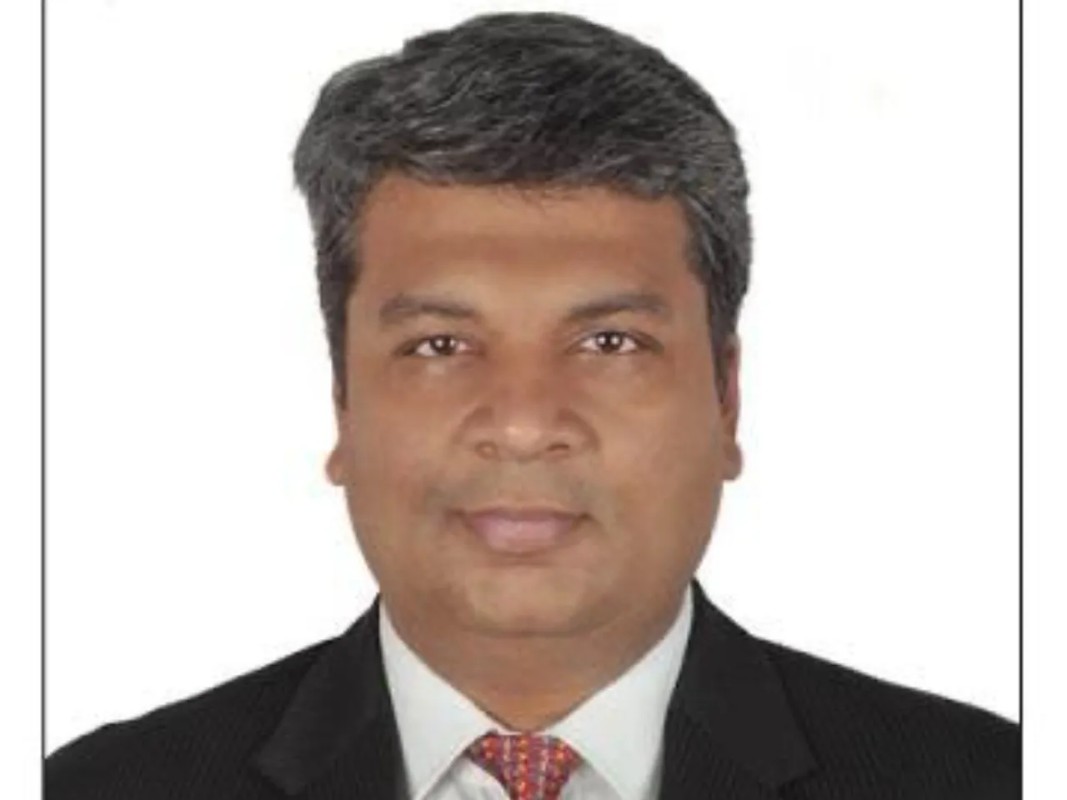
MUMBAI: Allcargo Terminals Limited (ATL), an Allcargo Group company and a leading operator in India’s largest CFS-ICD network has appointed Pranav Choudhary as Managing Director with effect from September 01, 2026. Suresh Kumar Ramiah concludes his tenure as Managing Director on August 31, 2026, upon superannuation.

Over the course of his career, Mr. Choudhary has led large-scale infrastructure businesses and projects, with experience spanning business strategy, infrastructure development, capital allocation, project execution, corporate finance, policy advocacy, stakeholder engagement, and governance. His appointment is expected to further strengthen ATL’s capabilities as it expands its network and enhances its value proposition for customers.

Mr. Shashi Kiran Shetty, Founder & Chairman, Allcargo Group said, “On behalf of the Board, I would like to acknowledge the valuable contribution of Suresh Kumar towards the Group. Under his leadership, Allcargo Terminals strengthened its CFS-ICD network, deepened customer trust, and reinforced its position at key gateways such as JNPT and Mundra. He played a pivotal role in laying a robust foundation for sustainable progress. As we move forward, I welcome Pranav to the Allcargo family. His extensive experience across ports and infrastructure will be invaluable as we accelerate our digital-first growth strategy, expand our national footprint, and unlock the next phase of value creation for our customers and stakeholders.”

Mr. Suresh Kumar Ramiah, Managing Director (former), Allcargo Terminals, said, “It has been a privilege to lead Allcargo Terminals and contribute to its growth journey. I am proud of what the team has achieved in strengthening our CFS and ICD capabilities and building lasting customer relationships. I sincerely thank Mr. Shashi Kiran Shetty, the Board and the entire ATL team, for their support. I am confident that Pranav’s experience and leadership will take the company to greater heights, and I wish him and the team continued success.”

Commenting on his new role, Mr. Pranav Choudhary, Managing Director, Allcargo Terminals said, “Allcargo Terminals has built a formidable presence in India’s CFS and ICD landscape, backed by a strong operational foundation and an ambitious growth vision. I am excited to join a stage where the company is poised to scale further. I look forward to working with the Board, leadership team and management to further strengthen our customer-centric approach, deepen our digital capabilities, and unlock the next phase of value creation. I would like to thank Mr. Ramiah for his stewardship and continued guidance.”

About ALLCARGO TERMINALS LIMITED
Allcargo Terminals Limited (ATL) demerged from Allcargo Logistics, an India-born global leader in multimodal logistics solutions and is an independent entity listed in the Indian stock exchanges in August 2023. ATL offers India’s widest CFS networks and specializes in Container Freight Stations (CFS) and Inland Container Depots (ICD), operates at the strategic locations of Nhava Sheva JNPT, Mundra, Chennai, and Kolkata. Its best-in-class digital app and portal, myCFS enables contact-less CFS services. ATL adheres to unparalleled safety and security standards, including OHSAS, ISO and GSV (C-TPAT-compliant). ATL is dedicated to meeting diverse logistical needs and is well positioned to explore opportunities in terminals, including multimodal logistics parks and other ventures. Allcargo Terminals Ltd listed on the BSE Limited and The National Stock Exchange of India Limited .

Can India become the next strategic hub in Global Liner Networks?

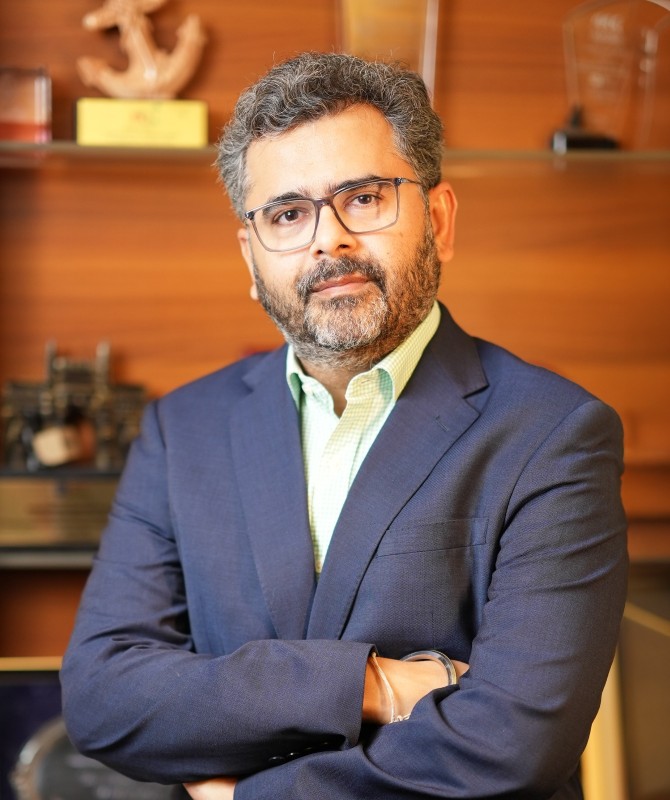
By Mr. Brijesh Parekh, Director, Parekh Global

Why India Is Suddenly on Every Shipping Map

For years, global liner networks have tilted towards China, Southeast Asia, and established European hubs. Today, India is quietly but steadily moving into that conversation. With rising export volumes, deeper ports, and a maturing ecosystem of shipping companies in India, the question is no longer “if” but “how fast” India can claim a more central position in liner servicing.

At the heart of this shift is scale. India now handles hundreds of million tonnes of cargo annually across its major ports, with container volumes growing faster than many traditional markets. As manufacturers diversify away from single-country sourcing, India’s combination of labour, market size, and improving infrastructure makes it a natural candidate for more direct mainline calls rather than relying only on transhipment through other hubs.

Ports, Policy and Predictability

Container terminals at ports like Mundra in Gujarat are already on the radar of large global liners. Looking ahead, the upcoming Vadhvan Port on Maharashtra’s west coast, north of Mumbai, is expected to further strengthen India’s position. Planned as a deep-draft port, Vadhvan will be capable of accommodating the world’s largest container vessels that many existing Indian ports cannot handle efficiently. This could enable more direct mainline services, reduce reliance on foreign transhipment hubs, and enhance India’s attractiveness as a strategic node in global liner networks.

Policy support has started to align with these ambitions. Initiatives such as the National Logistics Policy and PM Gati Shakti aim to synchronise ports, rail, road, and inland waterways into a more coherent network. When coastal shipping, dedicated freight corridors, and multi-modal logistics parks begin to operate in sync, liner networks get what they value most: reliability.

Role of Logistics and Freight Forwarders

Ships alone do not create a hub; the ecosystem around them does. The rise of integrated logistics in India and specialised freight forwarders in India has made cargo handling more seamless across first mile, port interface, and last mile. Exporters now expect one window for documentation, customs interface, and cargo movement rather than juggling multiple agencies.

The presence of experienced players in Logistics Company in India segments, especially in Mumbai and key gateway cities, has made liner servicing more attractive. When lines know that containers will arrive at the terminal on time, cleared and compliant, they can confidently expand services and consider India for more direct loops rather than feeder-heavy models.

Data, Demand and Direction

Several trends point in the same direction:

  • India’s merchandise exports have crossed the 400 billion dollar mark in recent years, with a rising share of containerised cargo.
  • Manufacturing clusters in Gujarat, Maharashtra, Tamil Nadu, and Andhra Pradesh are pushing more finished goods and higher-value cargo into global trade lanes.
  • The government has set clear targets to reduce logistics costs as a percentage of GDP, which matters to liner economics and long-term network planning.

These numbers tell liners that India is not just a large market but one with sustained demand and policy intent behind it.

What Will Decide India’s Hub Status?

India’s path to becoming a strategic hub in global liner networks will depend on three things: how quickly ports keep upgrading capacity, how efficiently hinterland connectivity improves, and how consistently service standards are maintained across shipping services India offers today. If those pieces fall into place, mainline carriers will have strong reasons to anchor more of their regional network design around Indian gateways.

For exporters and importers, that would mean shorter transit times, more direct services, and more negotiating power on routes and rates. For the broader economy, it would mark a shift from being just a large participant in global trade to being one of its organising centres.

Author:

Mr. Brijesh Parekh, Director, Parekh Global

PM Modi hails India’s exemplary 7.8% GDP growth in Q1 FY27

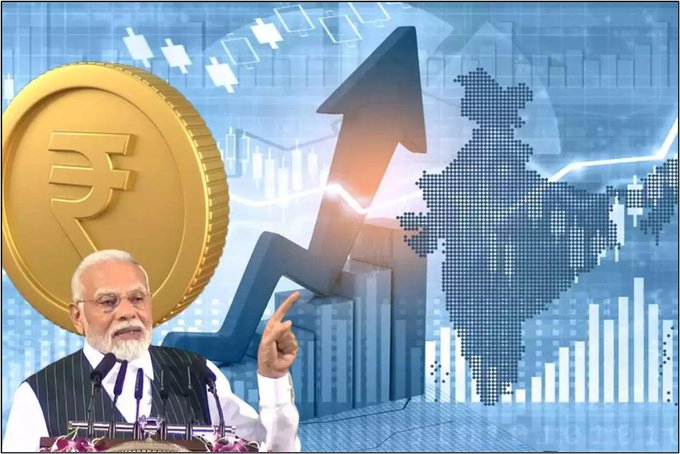
NEW DELHI: Prime Minister Shri Narendra Modi credits the collective strength of 140 crore Indians as economy outperforms expectations despite global headwinds. India’s economy has delivered a strong and encouraging performance in the first quarter of FY 2026-27, with the country’s Gross Domestic Product (GDP) expanding by an exemplary 7.8 per cent, underscoring the resilience, strength and sustained momentum of the Indian economy amid continuing global uncertainties.

PM Modi hailed the robust growth performance as a “herculean feat”, saying that India’s economic progress had once again proved the pessimists wrong.

Reacting to the latest GDP figures, the Prime Minister said, “India’s exemplary GDP growth of 7.8% during Q1 of FY 2026-27 is a herculean feat.”

In a strong message reflecting confidence in India’s economic trajectory, Prime Minister Modi added: “Doomsayers were doomed and India bloomed…yet again!”

The growth performance has surpassed the Reserve Bank of India’s earlier estimate of 7 per cent for the April-June quarter. India’s GDP growth was also significantly higher than the 6.9 per cent recorded during the corresponding quarter of the previous financial year.

According to the latest estimates, India’s Real GDP, measured at Constant Prices, stood at Rs 81.36 lakh crore in Q1 FY 2026-27, compared with Rs 75.46 lakh crore during the same quarter last year, registering a growth rate of 7.8 per cent.

The Ministry of Statistics and Programme Implementation (MoSPI) said that the Indian economy had continued to sustain its growth momentum despite global headwinds, reflecting the underlying strength and resilience of the country’s economic fundamentals.

Services and Knowledge Economy Drive Growth

The strong performance was supported by key sectors including financial services, real estate, information technology and professional services, highlighting the growing strength and diversification of India’s economy.

The robust expansion across these sectors reflects the continued transformation of India into a major global economic and services powerhouse, supported by expanding domestic demand, digitalisation, infrastructure development and policy reforms.

India’s Nominal GDP, which measures the value of goods and services at current prices, also recorded an impressive growth of 10.3 per cent in Q1 FY27, compared with 8.1 per cent growth during the corresponding period of the previous financial year.

Nominal GDP during the quarter was estimated at Rs 88.27 lakh crore, further demonstrating the scale and continued expansion of the Indian economy.

Finance Minister Credits the People and Reforms

Union Finance Minister Smt. Nirmala Sitharaman attributed the strong economic performance to the hard work and determination of the people of India, along with the impact of sustained economic reforms and effective policy management.

“The credit for this strong performance goes to the people of India and their hard work. Reforms undertaken by the NDA Government, together with an agile management of the economy, are bearing results,” the Finance Minister said.

She reaffirmed the government’s commitment to expanding economic opportunities and ensuring that the benefits of India’s growth reach every section of society.

India Sustains Momentum Amid Global Uncertainty

The latest GDP numbers reinforce India’s position as one of the world’s fastest-growing major economies at a time when several economies continue to face the impact of geopolitical tensions, trade disruptions and uncertain global economic conditions.

The strong first-quarter performance reflects the resilience of domestic consumption, the growing contribution of services, sustained public investment in infrastructure and the continuing impact of reforms aimed at improving the business environment and strengthening India’s long-term growth potential.

Prime Minister Modi’s remarks underline the government’s confidence that India’s economic rise is being driven by the collective strength, enterprise and aspirations of its people. With the Indian economy continuing to demonstrate resilience and growth despite global headwinds, the 7.8 per cent expansion in the first quarter of FY 2026-27 sends a strong message that India’s economic momentum remains firmly on course — proving once again that the nation’s growth story continues to bloom with confidence, capability and conviction.