Home Blog Page 126

Industry leaders hail India’s robust 7.8% Q1 GDP growth, call for sustained investment push

NEW DELHI: Industry leaders and economists have welcomed India’s latest gross domestic product (GDP) numbers, terming the 7.8 per cent expansion in the first quarter (Q1) of the fiscal year (FY27) a reflection of resilient domestic activity, while highlighting the need for higher investment rates to sustain the growth momentum amid global uncertainties.

Industry representatives and economists observed that the first-quarter expansion outperformed market estimates and reflected healthy domestic underlying economic strength.

Speaking to ANI, Secretary General of the Associated Chambers of Commerce and Industry of India, Saurabh Sanyal, noted that the growth trajectory matched industry projections made earlier in the year.

“We had already predicted that the growth, as compared to Q4, will continue to grow and we had given this statement in April 2026 that it will be more than 7 per cent and as expected, the growth rate today, which has been achieved in Q1 in the GDP, is 7.8 per cent,” Sanyal said.

He noted that the current pace remains sustainable due to wide-ranging reforms initiated by the government.

“Yes, it is the private sector which has come now for investments, looking at the streamlining of the reforms and policies, very proactive and progressive policies, which have been announced by the government of India in the recent parliamentary sessions, as also in the past one year. And therefore, the domestic investments have started pouring in,” Sanyal added.

Chief Economist at Infomerics Ratings, Manoranjan Sharma, stated that the GDP numbers confirmed strong underlying economic fundamentals.

“These are very welcome numbers and are in line with our expectations. Real GDP growth has risen to 7.8 per cent from 6.9 per cent last year. Now, this kind of growth is particularly encouraging, suggesting that the expansion reflects a genuine improvement in economic activity rather than merely price effects,” Sharma told ANI.

Sharma pointed out that maintaining this level of expansion over the medium term would require focused domestic interventions.

“Going forward, sustaining a growth of almost in the region of 8 per cent will require stronger private investment, productivity growth, manufacturing momentum, exports, and employment generation,” he said.

Highlighting the structural policy requirements, former part-time member of the Economic Advisory Council to the Prime Minister, Surjit Bhalla, told ANI that bridging the growth gap and unlocking an additional 2 per cent GDP potential hinges primarily on raising investment levels.

“So right now our investment-to-GDP ratio is close to 28-30 per cent of GDP. That will give us on a long-term basis a 6.5 per cent growth. If you want to raise it, then you need to raise the investment rate to somewhere around 34-35 per cent of GDP in order to accelerate the rate of growth,” Bhalla said.

Bhalla added that external factors also dictate investment requirements, noting that the effectiveness of investment is a function of global conditions.

“If global conditions are very favorable, then you may find that you can achieve a higher growth rate with a lower rate of investment. But if the global conditions are as they are now, and expected to not improve much and may even get worse, then you definitely need to step up the investment rate,” Bhalla observed.

Speaking to ANI, Chief Economist at CareEdge, Rajani Sinha, noted that the robust performance in the opening quarter had prompted an upward revision of the full-year outlook despite expectations of some moderation in subsequent quarters.

“We were expecting Q1 at around 7.3 per cent and the actual data has turned out better than expectations. But going forward, we are expecting some moderation in the GDP growth number in Q2 and Q3. But overall, we are still expecting the growth for the full year to be quite healthy. We were expecting growth of around 7 per cent but now with Q1 number better than what we were expecting, we feel now the growth can go as high as around 7.3 per cent,” Sinha said.

Source: ANI

DP World Global Trade Observatory unveils India Country Report 2026

Indian Businesses diversify Supply Chains and build Inventory as Resilience becomes a Growth priority

NEW DELHI/MUMBAI: Indian businesses are actively redesigning their supply chains to strengthen resilience and capture new growth opportunities, with supplier diversification, strategic inventory and digitalisation emerging as key priorities, according to new research from DP World’s Global Trade Observatory.

The India Country Report 2026, based on a survey of 451 senior supply chain and logistics executives, finds that Indian businesses are placing greater emphasis on resilience than their global counterparts. Supplier diversification is the leading priority, followed by increasing inventory and friend-shoring. Technology adoption and entry into new markets are also key drivers, with more than half of Indian businesses having fully digitalised customer-facing services, compared with fewer than four in ten globally. AI is already improving route optimisation, documentation and customs efficiency, strengthening supply-chain resilience.

India’s evolving trade landscape is reinforcing this shift. The PLI scheme is strengthening domestic manufacturing, while expanding trade relationships are creating new sourcing and market opportunities. Since 2022, India has concluded trade agreements with the UAE, Australia, the UK, EFTA states, Oman, New Zealand and the European Union, with negotiations underway with the GCC and Israel. FTAs emerged as the top policy priority for further trade growth, cited by nearly half of executives, ahead of digitalisation and trade facilitation. Access to trade finance is also stronger in India, with 57% reporting reasonable availability, compared with 39% globally.

As businesses diversify sourcing and expand into new markets, positioning inventory closer to customers is becoming increasingly important. DP World’s integrated trade and logistics network in India spans ports, warehousing, freight forwarding and multimodal connectivity. It serves around a quarter of India’s EXIM container market through five container terminals with a combined annual capacity of 6 million TEUs, supported by three Free Trade Warehousing Zones, 5 million sq. ft. of warehousing space, five container freight stations and eight inland rail terminals. Its network also includes 16,000+ owned containers, an express logistics network covering 15,000 pin codes, digital freight forwarding and trade finance solutions, helping businesses trade more efficiently and build more resilient supply chains.

Commenting on the findings, Rizwan Soomar, CEO & MD, Subcontinent, Central Asia, Levant and Egypt, DP World, said: “India’s trade story is entering a new phase, with businesses redesigning their supply chains to build resilience and unlock growth. Diversified sourcing, strategic inventory, digitalisation and access to new markets are becoming increasingly important in navigating disruption. At DP World, we help businesses trade with greater flexibility and efficiency by connecting ports, inland markets, logistics and technology, strengthening India’s competitiveness and role in global value chains.”

As trade volumes grow, 46% of logistics executives identify road networks as a priority, while businesses are increasingly turning to multimodal solutions including rail and coastal shipping. DP World’s multimodal network is helping connect ports with inland markets, improving efficiency and resilience while supporting efforts to reduce logistics costs and emissions. For customers in India, this means greater choice, more reliable connections and greater flexibility to move goods efficiently across domestic and international markets.

The next phase of India’s trade growth will be defined by resilience, connectivity and the ability to adapt to a rapidly changing global trade environment. By investing in integrated infrastructure, digital capabilities and trade facilitation, India can strengthen the competitiveness of its businesses and unlock new opportunities across emerging global trade corridors.

AM/NS India secures 30-Year concession at Paradip Port for mechanised dry bulk cargo handling

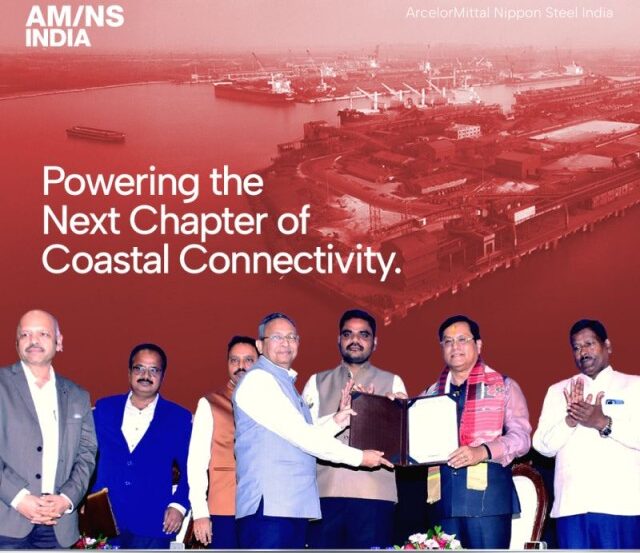
PARADIP: AM/NS India has further strengthened its integrated logistics and supply chain infrastructure with a significant development at Paradip Port.

AMNS Paradip Logistics Private Limited (APLPL), a Special Purpose Vehicle of AM/NS India, has been awarded a 30-year concession by Paradip Port Authority for the mechanisation and captive use of the CQ-III berth, which will have a handling capacity of 10 million tonnes per annum (MTPA) for dry bulk cargo.

The concession represents an important step towards developing a modern, efficient and fully mechanised cargo-handling ecosystem at Paradip. The project is expected to enhance logistics efficiency and provide seamless cargo movement through an integrated infrastructure network.

A key feature of the development will be the handling of iron ore pellet shipments through a dedicated conveyor system directly connecting AM/NS India’s pellet plant complex to the CQ-III berth. The direct connectivity is expected to improve cargo handling efficiency, reduce dependence on road-based transportation and support faster and more reliable movement of bulk commodities.

The mechanised berth infrastructure will also strengthen the use of coastal shipping, providing an economical and environmentally sustainable alternative for the transportation of bulk cargo along India’s coastline. Greater integration of coastal shipping into the company’s logistics network is expected to contribute to reduced road congestion, improved supply chain efficiency and lower environmental impact.

The long-term concession further demonstrates AM/NS India’s strategic focus on building robust and future-ready logistics capabilities to support its expanding operations. The development is also aligned with the broader objective of modernising India’s port infrastructure and promoting efficient multimodal transportation.

With a capacity of 10 MTPA, the mechanisation and captive utilisation of CQ-III berth are expected to play an important role in strengthening cargo evacuation and handling capabilities at Paradip Port, while supporting the growth of industrial and maritime logistics in the region.

The project reinforces the commitment of AM/NS India towards developing integrated, sustainable and technology-enabled supply chains, while contributing to greater efficiency, reliability and competitiveness across India’s logistics and maritime ecosystem.

The development marks another significant step in AM/NS India’s journey towards building efficient, resilient and future-ready supply chains through modern port infrastructure, mechanised cargo handling and sustainable logistics solutions.

TransBridge Global FZCO completes inaugural limestone fixture from Salalah to Hazira

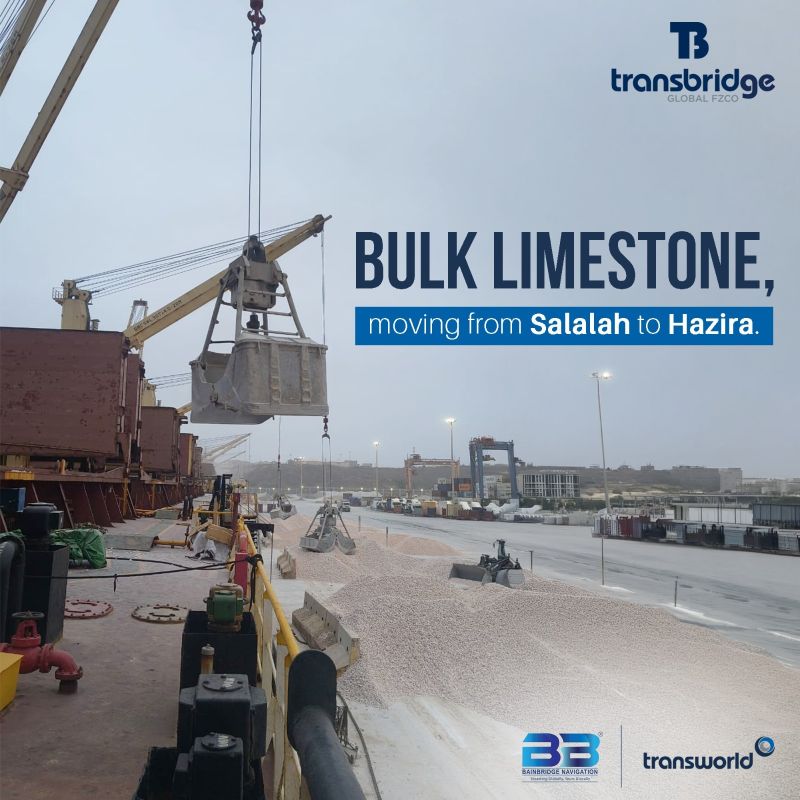
SALALAH: TransBridge Global FZCO has achieved an important operational milestone with the successful completion of its inaugural limestone fixture from Salalah, Oman, to Hazira, India, marking a strong beginning for the company’s bulk cargo operations.

The milestone voyage involved the transportation of limestone cargo from Salalah to Hazira, demonstrating TransBridge Global FZCO’s capability to coordinate and execute specialised bulk cargo movements across international maritime trade routes.

The cargo was efficiently loaded at the Port of Salalah using a combination of the vessel’s own cranes and shore-side handling support. Following the completion of loading operations, the vessel sailed onward to Hazira for the discharge of the cargo.

The successful execution of the inaugural fixture reflects effective coordination among the vessel operators, port teams, cargo handlers and other stakeholders involved throughout the operation. The movement also highlights the importance of vessel capability, reliable cargo-handling arrangements and seamless operational planning in ensuring the efficient transportation of bulk commodities.

The completion of this maiden limestone shipment represents a significant first step for TransBridge Global FZCO as it continues to build its presence in the dry bulk and commodity logistics sector.

With growing trade links between the Gulf region and India, the successful Salalah–Hazira movement provides a strong operational foundation for the company’s future cargo fixtures and maritime logistics activities.

A strong beginning for TransBridge Global FZCO—built on coordinated execution, vessel capability and dependable bulk cargo handling.

The successful completion of the company’s first limestone fixture reinforces its commitment to delivering efficient, reliable and professionally coordinated maritime cargo solutions while creating a foundation for future growth in regional and international bulk trade.

Ashwini Vaishnaw unveils six pillars of Semicon 2.0

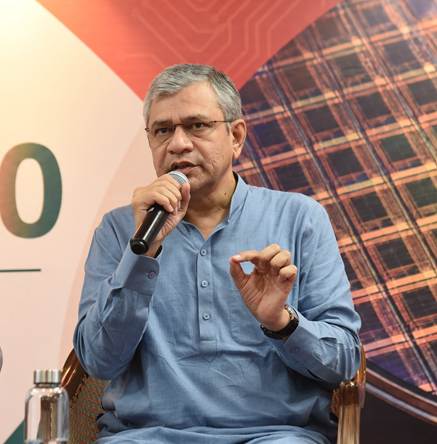
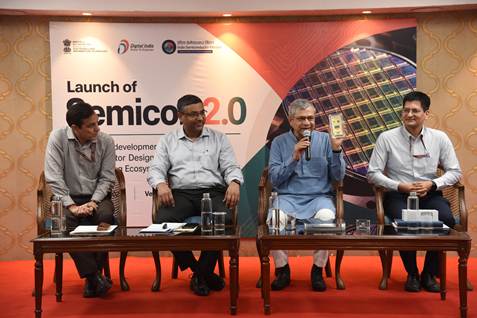
NEW DELHI : Union Minister for Electronics and Information Technology, Railways and Information & Broadcasting, Shri Ashwini Vaishnaw, addressed the media and outlined the Government’s vision for taking India’s semiconductor ecosystem to the next level. On the occasion, notifications for all six pillars of the Semicon 2.0 Scheme were issued, marking a significant step towards strengthening India’s semiconductor design and manufacturing capabilities.

The scheme builds on the momentum generated by the first Semicon India Programme and provides fiscal and infrastructure support across the semiconductor value chain from chip design, fabrication and packaging to equipment, materials, research and development, and talent development.

ASHWINI VAISHNAV Semicon 2.0 Ashwini Vaishnaw unveils six pillars of Semicon 2.0

The scheme aims to strengthen India’s economic growth and national security by improving semiconductor supply-chain resilience and establishing technological leadership in critical sectors. It will operate through six pillars covering 10 categories.

The six pillars under Semicon 2.0 are:

  • Pillar 1 – Design
  • Pillar 2 – Machines and Materials
  • Pillar 3 – Setting up more Fabs
  • Pillar 4 – Further strengthening the ATMP/OSAT industry
  • Pillar 5 – Research and Development
  • Pillar 6 – Talent Development

Pillar 1 – Design: Categories: Design of Semiconductor IPs, Chips, System-on-Chips (SoCs), and Modules for National Importance and Strategic Priorities; Design of Semiconductor IPs, Chips and SoCs for the Commercial Sector; and Deployment-Linked Incentive (DLI) for Semiconductor IPs/Chips/SoCs for deployment.

Pillar 2 – Machines and Materials: Category: Semiconductor manufacturing ecosystem.

Pillar 3 – Setting up more Fabs: Categories: Silicon Semiconductor Wafer Fabs; Compound Semiconductors/Photonics/Sensors (including MEMS) Fab/Discrete Semiconductors Fab; and Display Fabs.

Pillar 4 – Further strengthening the ATMP/OSAT industry: Category: Semiconductor Assembly, Testing, Marking and Packaging (ATMP) / Outsourced Semiconductor Assembly and Test (OSAT) Facility.

Pillar 5 – Research and Development: Category: R&D for advanced semiconductor technologies.

Pillar 6 – Talent Development: Category: Talent Development.

During the event Shri Ashwini Vaishnaw said “India achieved its target of developing 85,000 semiconductor engineers over a period of 10 years in just four years, and has now set a new target of developing one lakh more engineers. In the coming years, close to 10% of the global semiconductor industry’s market is expected to be in India. Students from Tier-II and Tier-III cities have already designed more than 250 chips. In one case, commercial production commenced within just 13 months of the groundbreaking, while approvals were granted within 200 days, 150 days and even 90 days in multiple cases. The semiconductor ecosystem being developed in India is also expected to create 50,000–60,000 direct jobs.”

Projects supported under Semicon 2.0 will generally have a duration of up to six years, while the scheme will initially remain open for applications for three years.

The India Semiconductor Mission (ISM) will be the nodal agency for Semicon 2.0. It will invite applications, undertake technical and financial appraisal, recommend applicants and oversee implementation. ISM may implement the design and deployment categories with the assistance of C-DAC. The mission may also announce semiconductor deep-tech awards from 2026 to promote niche innovation.

The Ministry of Electronics and Information Technology will make budgetary provisions for fiscal support, with disbursements undertaken by the nodal agency in accordance with approved conditions. A mid-term assessment will be conducted after three years of implementation, or as required, to evaluate the scheme’s impact and consider modifications or continuation.

Commerce Secretary co-chairs India-Brazil 8th Trade monitoring mechanism meeting

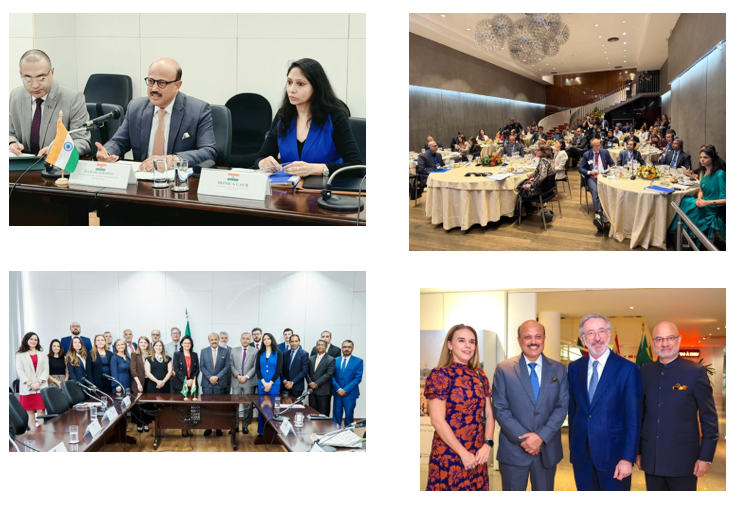
NEW DELHI : The 8th Meeting of the India-Brazil Trade Monitoring Mechanism (TMM) was held in Brasília, Brazil. The meeting was co-chaired by Commerce Secretary, Ministry of Commerce & Industry, Shri Rajesh Agrawal, and Secretary of Foreign Trade, Ministry of Development, Industry, Commerce and Services (MDIC), Ms. Tatiana Lacerda Prazeres. The meeting, building on the strong political momentum led by Hon’ble Prime Minister Shri Narendra Modi and President Luiz Inácio Lula De Silva, reflected on the strong institutional framework underpinning the India-Brazil Strategic Partnership and the shared commitment of both sides to deepen strategic and economic ties.

Commerce Secretary also met Minister of Development, Industry, Commerce and Services, Government of Brazil, Mr. Marcio Elias Rosa, to discuss further deepening bilateral trade and investment ties and enhancing economic cooperation in priority sectors. Bilateral trade between India and Brazil has shown consistent growth, reaching USD 15.07 billion in 2025–26. Recognising the complementarities between the two economies, both sides reaffirmed their shared objective of expanding bilateral trade to USD 30 billion by 2030 through a more diversified, balanced and sustainable partnership, particularly in pharmaceuticals, chemicals, engineering goods and machinery.

During the meetings, both sides reviewed progress on the India–MERCOSUR Terms of Reference. The India–MERCOSUR Preferential Trade Agreement offers considerable scope for expansion and modernisation. With India-MERCOSUR bilateral trade reaching USD 20.84 billion in 2025, both sides committed to early finalisation of the Terms of Reference.

Significant progress was also made in facilitating market access for Indian pharmaceutical products. The CDSCO–ANVISA MoU signed in February 2026 provides an important institutional foundation for deeper cooperation in health and pharmaceuticals. India emphasised the need for supporting more predictable regulatory pathways and facilitating greater market access. India can contribute to the availability of affordable, quality medicines and strengthen efforts towards more accessible healthcare.

On agriculture, the discussions advanced work on priority phytosanitary requests on key products of interest, while laying out a clear agenda to take forward the technical processes towards reciprocal market access concessions in a time-bound manner. The discussions also noted the encouraging progress on mutual recognition of Electronic Certificates of Origin and on Cooperation in MSMEs, Entrepreneurship and Crafts, terming them significant steps towards greater trade facilitation and easing barriers to trade for business-to-business engagement.

Both sides reaffirmed close coordination on multilateral issues, including under BRICS, the G20 and the WTO, in support of an open, inclusive and development-oriented multilateral system. India appreciated Brazil’s engagement in advancing the Strategy for BRICS Economic Partnership 2030 and the GVC Action Plan 2026–2030. Brazil congratulated India on its work during its BRICS Presidency, particularly initiatives such as the BRICS Startup Knowledge Hub and BRICS Business Incubator.

As a part of the bilateral engagement, an India-Brazil High Level Business Reception was also organised in Brasilia with participation from leading business representatives and industry stakeholders from both countries. Commerce Secretary led the Indian business delegation comprising over 25 Indian businesses, including representatives from Kirloskar Group, UPL, Aditya Birla Group, amongst others. The Business Reception served as an important platform for exploring new avenues of collaboration in sectors such as critical minerals, renewable energy, agri-business, infrastructure, pharmaceuticals, digital services, logistics and advanced manufacturing. Both sides also welcomed the establishment of ApexBrasil office in New Delhi which will strengthen business-to-business linkages and greater flow of Brazilian investment in India. India and Brazil have a long-standing relationship characterised by mutual trust, democratic values, and growing economic engagement. The visit further boosted the momentum in bilateral ties and reaffirmed the shared commitment of both countries towards building a stronger and future-oriented economic partnership.

In a first, Railways to build 6 freight lines with private firms, hybrid funding

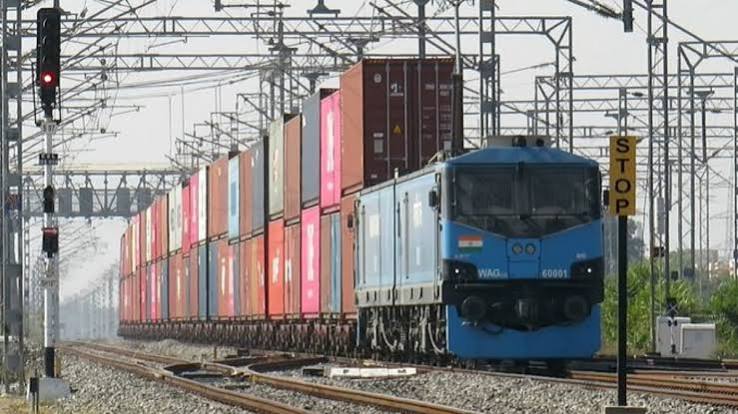
NEW DELHI: These are to be developed under the Hybrid Annuity Model (HAM) — similar to the model used in the highways sector wherein the government and the private builder split the project costs and risks. Giving a push to private investment in Indian Railways, the Public Private Partnership Appraisal Committee (PPPAC) under the Ministry of Finance, earlier in August, approved six railway lines spanning 647 km along freight corridors. These are to be developed under the Hybrid Annuity Model (HAM) — similar to the model used in the highways sector wherein the government and the private builder split the project costs and risks.

Of the six proposed railway projects, four are in Odisha: 49.58-km Balaram-Putgadia-Tentuloi (Inner Corridor), 112.56-km Budhapank-Tentuloi-Luburi (Outer Corridor), 101.26-km Jajpur-Keonjhar Road-Aradi-Dhamara Port and 48.96-km Tikiri Station to Waltair Bauxite Mines. The other two projects are the 207.80-km Manuguru-Ramagundam line in Telangana and the 126.52 km Pakur/Nagarnabi to Godda line in Jharkhand.

The project will now be sent to the Union Cabinet for final approval, before the bids are invited. This will be the first time the Indian Railways is implementing a project under HAM, a variant of Public Private Partnership (PPP).

The total bid project cost of six lines is Rs 15,976 crore and the total capital cost covering the entire concession period (which is 17-19 years) is Rs 40,866 crore. The key commodities on these routes are primarily coal, along with iron ore, bauxite, coke, chemical manure, cement and food grains.

The PPPAC had earlier accorded in-principle approval to these projects under the Design, Build, Finance, Operate, and Transfer (DBFOT) model. Later, based on market feedback, the ministry switched to HAM. Under this, Indian Railways will pay 40% of the bid project cost as grant during the construction period and the private party will finance the remaining 60% of the cost.

“Subsequently, based on market feedback, the Ministry of Railways (MoR) revisited the project structure and proposed their implementation under the HAM. Under the proposed HAM structure, MoR would bear the traffic and tariff risks and provide 40% of the bid project cost as grant during the construction period,” say the minutes of the meeting held on August 1.

The construction of all six projects is proposed to commence from April 2028.

Once the line becomes operational, Indian Railways will pay back the remaining 60% through annuity or instalments, plus interest on annuity. Apart from this, it will also make regular payments to the concessionaire for maintenance of stations, tracks and other assets. Railways will operate trains and collect all freight revenue. It will also bear traffic and tariff risks – which means that if freight-loading or revenue is lower than what’s targeted, the private party will not be penalised.

“The RFP (bid document) would specify the applicable conditions including the minimum tenure of the agreement, the roles and responsibilities of the EPC (Engineering, Procurement and Construction) contractor, and the circumstances in which such arrangements would be permitted,” the Indian Railways said.

A senior railway official said the bidding for the projects is likely to take place in the next financial year, 2027-28. Apart from these six projects, there are 49 other projects in the pipeline for execution under PPP mode. The total cost of these projects are around Rs 1.80 lakh crore.

The official added that a total of 18 projects worth Rs 16,686 crore have been completed through the PPP model in the Indian Railways and seven projects worth Rs 16,362 crore are under implementation, including coal and port connectivity projects.

The Indian Railways recently added HAM, along with Development Partner (DPM), in its participative policy. The transition to newer models like HAM is its attempt at overcoming financial bottlenecks and attracting long-term private sector capital in infrastructure development.

US strikes Iranian rocket launchers on the Strait of Hormuz in first military action in weeks

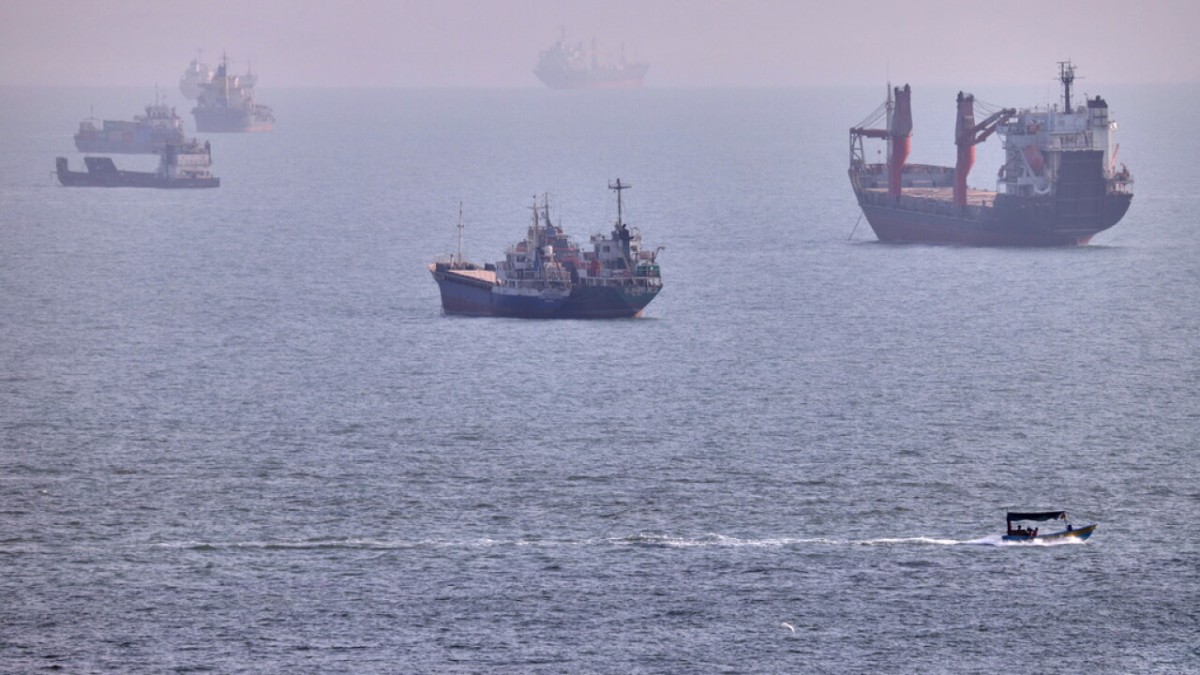
WASHINGTON: U.S. forces struck Iranian rocket launchers on the Strait of Hormuz in their first military action in a month on Sunday, breaking a lull in fighting during an intermittent war that has lasted more than six months. Vowing to retaliate for what it called a deadly attack, Iran later said it had launched missiles at U.S. sites in Jordan.

Forces with the Revolutionary Guard Corps were observed preparing to launch rockets with sea mines into the strait, according to Tim Hawkins, a spokesperson for the U.S. Central Command. The U.S. military last week completed clearing sea mines from the strait’s international shipping routes.

Semiofficial news outlets in Iran reported sounds of explosions near Larak island on the strait. The Guard in a statement carried by Iran’s state broadcaster noted “the martyrdom and injury of several of our fighters and compatriots.”

Later, Iranian state television showed what it said were ballistic missiles being fired by Iran at U.S. bases in Jordan in response to the American strikes. Jordan’s armed forces said they intercepted eight missiles that penetrated the country’s airspace early Monday in the Mideast.

U.S. military officials disputed Iran’s claim that the latest American strikes were an act of aggression, calling them a “limited, precise action” against what they said were minelaying forces. Sunday’s attack was a “fatal mistake by the Trump regime during the economic war” and the enemy will pay the consequences militarily and economically, a Guard spokesperson, Gen. Hossein Mohebi, said in a statement carried by Iranian media.

The U.S. turn to using sanctions came as the administration weighs diminished munitions stockpiles after months of war, sparking concerns that the prolonged conflict could undermine U.S. military readiness in other parts of the globe.

As the conflict grinds on, Trump’s talk of finding a quick end to the war also appears to be fading. He stressed last week that he’s “not in a hurry” to get Iran back to the negotiating table, and he continues making the case that the Islamic Republic’s leadership is on the ropes.

Appointments to Iran’s senior security leadership in the past month, however, have signaled Tehran’s defiance after weathering decades of sanctions as well as a lack of tolerance for dissent at home.

Trump has consistently emphasized that the U.S. and Israeli campaign has been devastating for Iran’s navy and air force. Iranian officials have said the country has suffered $270 billion in direct and indirect damage. Israeli military strikes in the first weeks of the war wiped out much of the theocratic government’s leadership structure.

Iran leans on the strait for leverage

But Iran has found leverage through its strikes against vessels on the Strait of Hormuz, where relatively few ships carrying oil and liquefied natural gas are risking passage. Iran still has enough drones and missiles to fire at vessels transiting the waterway through which 20% of the world’s oil normally flows.

Crude oil prices rose Sunday in response to the U.S. attack. The price for a barrel of U.S. oil went up 1.8% to $84.94, while the price for a barrel of Brent crude, the international standard, rose 1.9% to $89.79.

Tehran continues to assert that even after it works out a management plan for the strait with Oman, its neighbor on the other side of the waterway, the U.S. can’t use it until it fulfills its obligations under the memorandum of understanding the countries signed in mid-June.

Trump has repeatedly declared that the “Strait of Hormuz is open,” saying 24 vessels passed through last week. But that’s a fraction of the roughly 130 vessels that transited daily before the war began.

Earlier on Sunday, a multinational coalition overseen by the U.S. Navy said commercial traffic through the strait remained at “reduced levels.”

And a monitoring agency run by the British military said an unknown projectile struck a tanker ship on Saturday north of Khasab, Oman, in the strait. The United Kingdom Maritime Trade Organization said no casualties or environmental impact had been reported, and cited unspecified military authorities. There was no immediate claim of responsibility.

The U.S. military said that as of Sunday, it had redirected 83 commercial vessels and disabled three under its blockade of Iranian ports.

Source: AP News

AI Adoption reaches 37% in Supplier Risk and Sustainability, but widespread Integration remains Limited: Achilles Survey

ABINGDON (UK): Achilles, a global leader in supply chain risk and performance management, has released new sector-specific data highlighting increasing AI adoption in supplier risk management.

The findings form part of Achilles’ latest supply chain risk and sustainability survey, which gathered responses from 2,805 organisations across Australia, Brazil, France, Germany, Italy, the Middle East, Norway, Spain, Sweden and the UK. According to the data, organisations are increasingly turning to artificial intelligence to strengthen procurement, supplier risk and sustainability management, but most remain in the early stages of adoption.

Among organisations that answered questions on AI adoption, 37% are already piloting, operationalising or widely deploying AI in procurement, supplier risk or sustainability. Just 2%, however, report that AI is widely deployed or fully integrated across their organisation, a stark gap between early experimentation and mature implementation.

These findings indicate that AI is moving from theory into practical application, with organisations looking to the technology to improve efficiency, reduce manual work and sharpen decision-making. However, adoption remains uneven as many organisations are still working through the data, skills and systems challenges that effective deployment demands. For many organisations, the quality of underlying supplier and sustainability data remains the key determinant of whether AI delivers meaningful risk insights.

Sentiment is broadly positive, with 45% of organisations holding a favourable overall view of AI in procurement, against just 7% who view it negatively. This optimism demonstrates that companies see clear potential for AI to support procurement transformation, supplier risk management and sustainability performance, even where full integration remains some way off.

Adoption also varies sharply by sector. Among sectors with at least 25 respondents, Information Technology led on active adoption at 62%, some 24 percentage-points above the all-sector average of 37%, followed by Marine Transport at 56%. Ground Transport recorded the lowest rate among larger sectors at 26%, leaving a 36 percentage-point gap behind the leaders.

The most common AI use cases are practical and operational, such as process automation, virtual assistants and chatbots, and supplier management and risk mitigation. The benefits organisations report most often are similarly focused on operational improvements, led by greater process efficiency, freeing employees from repetitive work, and better decisions drawn from data.

The barriers to adoption are as much about readiness as technology. Organisations point to a shortage of internal skills and data science capability, integration difficulties with legacy systems and ERP platforms, poor or unclean data, and AI not yet being treated as a strategic priority.

However, increased AI adoption does not replace the core disciplines of supplier risk management. While the uptake of AI software has accelerated, its effectiveness still depends on reliable data collection, supplier validation, and continuous monitoring. AI can help analyse large volumes of information and flag potential issues, but it cannot compensate for incomplete or inaccurate data, or remove the need for human expertise to interpret findings and investigate emerging risk.

Commenting on the findings, Adam Whitfield, Head of Global Compliance and ESG at Achilles, said:

“AI is no longer a talking point in procurement; it is being put to work. With more than a third of organisations surveyed already piloting or using AI in supplier risk and sustainability, the question has shifted from whether to adopt, to how to do it well.

“The harder truth in the data is that full deployment is still rare. AI delivers value in supplier risk management only when it sits on trusted data, clear governance and the ability to fit into existing procurement processes. If the foundations are wrong, AI simply scales the problem.

“AI can help organisations spot risk faster, strip out manual effort and see further into complex supply chains, but it does not replace robust supplier data or human judgement. The organisations that gain the most will be those that pair AI with strong supplier validation, reliable sustainability data and continuous monitoring, to allow for a more holistic understanding of supply chain networks.”

The findings come as organisations face mounting pressure to improve supply chain visibility, strengthen supplier resilience and meet increasingly complex sustainability and non-financial reporting requirements. Achilles’ wider research indicates that only 6% of organisations have full visibility beyond their Tier 1 suppliers, underlining how far many still have to go to understand risk more broadly in their supply chains.

As teams look to scale AI, the reliability of supplier data will be decisive. Applied to incomplete or inconsistent information, AI risks amplifying existing blind spots rather than closing them, limiting its value in supplier risk management and sustainability performance.

Achilles helps organisations across complex, highly regulated sectors collect, validate and manage supplier data, supporting greater visibility, stronger risk management and more resilient supply chains.

SMM 2026: Strong Order Flow, Shifting Agenda

LONDON: Clarksons Research, the data and analytics arm of the Clarksons, will be attending the bi-annual shipbuilding and marine equipment trade fair SMM in Hamburg 1st-4th September (Stand B1.OG.303).

Reviewing the market backdrop to this year’s SMM, Steve Gordon, Global Head of Clarksons Research, commented:

“This week, 50,000 industry participants will gather at the biannual SMM trade fair in Hamburg, a key event for yards and suppliers. In this week’s Analysis we review trends since the last SMM (orderbook +33% to 405.5m GT and $666 bn), position in the long-term shipbuilding cycle (global output nearing previous peak) and key discussion themes (geopolitics, order “boom” duration, yard capacity, fleet renewal, “net zero”). 

  • Global newbuilding orderbook up 33% to 405.4m GT and $66bn in the two years since previous SMM
  • Underlying shipping markets at exceptional levels supported by geo-political disruption events, with ClarkSea Index at over $40,000/day
  • Very strong order intake levels for container, tanker and gas carriers
  • Consensus on emissions regulation “stalled” and drop in share of orders alternative fuelled
  • European shipyards have a 96% share of near record $72bn cruise ship orderbook

SMM 2026 …

Two years on from the last SMM, the shipbuilding and marine equipment sectors return to Hamburg in “rude” health. The global newbuilding orderbook is up 33% ($666bn, with ~60% of this to flow through to suppliers) and the average backlog is ~4 years (2030 ordering typical in some segments). Underlying shipping markets are “stellar” with our cross-sector day rate index the ClarkSea, “turbocharged” by Hormuz disruption, north of $40,000/day (its highest ever position prior to SMM). And while newbuild prices have been more stable in the past two years, average second-hand asset pricing has jumped 17% (~30% in crude tankers). Ship repair also seems well positioned for now with tailwinds including an ageing “wave” of vessels reaching 3rd and 4th special surveys.

Back to Peak …

In our 2024 SMM review, we charted phases in the long-term shipbuilding cycle, including (i) 2008 to 2016: Boom to Bust (SMM 2008 weeks before Lehman, the orderbook was >50% of fleet) (ii) 2016-2022: Recovery (SMM 2016 held during a 20 year ordering low, then gradual recovery and post Covid container led “bounce”) (iii) 2024 Strong Order Flow (container, gas and product tankers were strong). With strong order flow sustained in 2025 (brief “Liberation Day” / USTR pause but record 800 / 5.3m teu container orders) and now in 2026 (50yr high in VLCC, record VLGC orders, container record could be surpassed?), output continues to rise and we project that peak production will be exceeded in 2027. Compared to 2010 however, Chinese output is +39% and rest of world ‑38%. Although shipbuilding (and shipping) has become politically strategic (e.g. India, US), China dominates order intake (70% share) and capacity growth (75% of the ~300 projects we track). European yards retain their lead in cruise (96% share of near record $72bn orderbook).    

Shifting Agenda …

Four years ago at SMM 2022, “green” transition dominated discussion (emission regulation seemed to be accelerating towards a global carbon price, LNG-methanol-ammonia was the conference debate of choice). It is clear the agenda has shifted. Shipping is firmly at the “frontline” of extreme global geo-political dynamics, and the related “disruption” is helping drive an extended run of exceptional cross-segment cashflow. Order volumes are near record levels in several sectors and order backlogs for suppliers and yards (especially in China) are robust. With the green consensus “stalling”, alternative fuel investment share has dropped to 25% of orders by tonnage (from 50% four years ago albeit in part reflecting tankers return to orderbook mix) but adoption of Energy Saving Technologies (fuel economics plus emission economics) remains strong (longer-term perspective on net zero, understanding its importance as an underlying trend seems sensible). A balanced view in other areas is also important: an understanding day rates in some segments have become “heroic”, some orderbooks look “toppy” (although overall orderbook is 22% of fleet not the 50% of ‘08), yard capacity is ramping up, fleets are still ageing and fleet renewal is needed, the world needs more ships per tonne of cargo moved today but quantifying is tricky, energy security and energy transition, tech is moving apace, geo-political disruption will throw up both more opportunities and more risks to manage. Enjoy SMM and hope to see you there.”

The full report, and underlying data is available on request.

World Fleet Register (WFR) is the marketing leading data and intelligence platform from Clarksons Research providing data and analysis around the world fleet, vessel equipment and technology, companies, shipbuilding, emissions regulations, fuelling transition and alternative fuels.

Shipping Intelligence Network (SIN) is Clarkson Research’s market leading digital platform and the most comprehensive source of data on shipping and trade. The system provides immediate access to uniquely powerful data and analysis tracking and projecting market supply / demand, freight, vessel earnings, vessel values and macro-economic data around trade flows and global economic developments.

Clarksons Research, the data and analytics arm of Clarksons, are the market leaders in the provision of independent data and intelligence around shipping, trade, offshore and the maritime energy transition. Millions of data points are processed and analysed each day to provide trusted and insightful intelligence to thousands of stakeholders across maritime. Better data for better decisions.