Home Blog Page 128

India–Brazil strengthen trade and investment partnership at 8th TMM Meeting

BRASILLIA: India and Brazil convened the 8th Trade Monitoring Mechanism (TMM) meeting in Brasília, reaffirming their shared commitment to expanding bilateral trade, investment and economic cooperation.

The meeting was co-chaired by Commerce Secretary Shri Rajesh Agrawal, Ministry of Commerce & Industry, Government of India, and Ms. Tatiana Prazeres, Secretary of Foreign Trade, MIDC, Government of Brazil.

The deliberations focused on strengthening the institutional framework for bilateral trade and addressing key issues that can facilitate greater market access and business opportunities for enterprises in both countries.

Key areas of discussion included:

Resolving non-tariff measures and addressing market-access challenges
Enhancing reciprocal market access for Indian and Brazilian businesses
Facilitating greater business-to-business engagement and integration
Expanding opportunities for trade and investment flows
Strengthening cooperation across emerging and strategic sectors

Both sides identified agriculture and agro-commodities, pharmaceuticals, renewable and clean energy, digital technologies, and critical supply chains as priority areas offering significant potential for deeper collaboration.

The discussions also emphasised the importance of strengthening supply-chain linkages, promoting greater participation of businesses from both countries, and creating an enabling environment for sustained trade and investment.

India and Brazil share a strong and growing economic partnership, with considerable scope to diversify and deepen bilateral commerce across traditional as well as emerging sectors. The TMM provides an important institutional platform to review trade-related issues, facilitate solutions and identify new areas of cooperation.

The meeting reaffirmed the commitment of both nations to turn challenges into opportunities, strengthen economic resilience and build a more diversified and sustainable trade partnership.

India–Brazil Building stronger trade ties, expanding opportunities and charting a resilient roadmap for long-term economic partnership.

India–Chile CEPA to deepen trade and investment ties; Negotiations targeted for conclusion by year-end

SANTIAGO: Commerce Secretary Shri Rajesh Agrawal met Ms. Paula Estévez Weinstein, Vice-Minister of International Economic Relations of the Republic of Chile, on 26 August 2026 in Santiago, Chile, to advance negotiations on the India–Chile Comprehensive Economic Partnership Agreement (CEPA).

India reiterated its commitment to openness, sustained engagement and a balanced approach in strengthening the India–Chile economic partnership, with a focus on creating meaningful opportunities for businesses and people in both countries. The shared identity of India and Chile as members of the Global South, along with their common strategic vision, provides a strong foundation for deepening bilateral economic cooperation and advancing shared prosperity.

Both sides emphasised the importance of building on the strong and growing India–Chile relationship and ensuring that the CEPA translates shared objectives and aspirations into concrete and commercially meaningful opportunities for businesses on both sides.

The Commerce Secretary highlighted the immense potential for enhanced economic cooperation in sectors including healthcare, pharmaceuticals, energy, minerals, agriculture, machinery and engineering. The successful conclusion of the CEPA negotiations would provide further momentum to the growing bilateral trade and economic partnership between the two countries.

India remains committed to concluding the CEPA negotiations within this year, with the aim of delivering a balanced and mutually beneficial framework that provides equitable and commercially meaningful outcomes for businesses on both sides.

The CEPA is expected to open new avenues for greater trade and investment, while fostering cooperation in technology, talent and resilient supply chains, thereby creating stronger foundations for long-term economic cooperation between India and Chile.

Indian Railways 4-track push: 7 major routes covering 11,000 km to get capacity boost

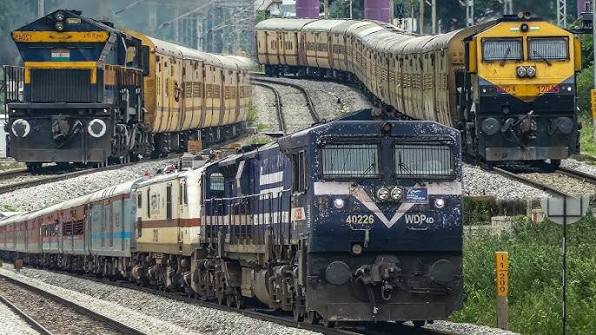
NEW DELHI: Indian Railways is planning a major capacity expansion across seven of the country’s busiest railway routes, with around 11,000 km of high-density network being expanded to four tracks.

Railway Minister Shri Ashwini Vaishnaw has outlined the plan as part of efforts to increase capacity on routes carrying a large share of passenger and freight traffic. The seven routes account for around 41% of railway traffic while covering about 16% of the total rail network.

The expansion is aimed at easing congestion and creating additional capacity for passenger and freight services on these heavily used corridors.

Which 7 railway routes will get four tracks?

The seven high-density routes identified for the four-tracking programme are:

  • Delhi-Howrah
  • Howrah-Chennai
  • Chennai-Mumbai
  • Mumbai-Delhi
  • Delhi-Chennai
  • Mumbai-Howrah
  • Delhi-Guwahati

These corridors connect major cities and important industrial, commercial and economic centres across northern, western, eastern, southern and northeastern India.

Why is Indian Railways expanding these routes?
The seven corridors carry a disproportionately large share of railway traffic compared with their share of the overall network.

Adding tracks will increase capacity on sections that already handle heavy passenger and freight movement. It will also give railway operators greater flexibility in managing different services as demand continues to rise.

The additional capacity could also help railways manage periods of high demand, including festivals and holiday seasons, when passenger traffic rises significantly.

Delhi-Howrah route
The Delhi-Howrah corridor connects the national capital with major centres across Uttar Pradesh, Bihar, Jharkhand and West Bengal.

Important locations on the route include Delhi, Aligarh, Kanpur, Prayagraj, DDU, Gaya, Patna, Dhanbad, Asansol and Howrah.

Howrah-Chennai route
The Howrah-Chennai corridor runs through several important centres along India’s eastern and southeastern railway network.

Major locations include Kharagpur, Balasore, Bhubaneswar, Visakhapatnam, Rajahmundry, Vijayawada, Nellore and Chennai.

Chennai-Mumbai route
The Chennai-Mumbai corridor links southern and western India through key railway centres.

The route includes Arakkonam, Renigunta, Guntakal, Raichur, Wadi, Kalaburagi, Solapur, Pune and Mumbai.

Mumbai-Delhi route
The Mumbai-Delhi corridor is a major rail link between western India and the national capital.

Key locations include Surat, Vadodara, Ratlam, Kota, Sawai Madhopur, Mathura and Delhi.

Delhi-Chennai route
The Delhi-Chennai route connects northern and southern India through major centres including Agra, Gwalior, Jhansi, Bhopal, Itarsi, Nagpur, Ballarshah, Warangal and Vijayawada.

Mumbai-Howrah route
The Mumbai-Howrah corridor connects western India with eastern India.

Major locations include Kalyan, Igatpuri, Bhusawal, Akola/Badnera, Nagpur, Gondia, Durg, Raipur, Bilaspur, Rourkela, Tatanagar, Kharagpur and Howrah.

Delhi-Guwahati route
The Delhi-Guwahati corridor provides an important rail connection to the Northeast.

The route includes Moradabad, Bareilly, Lucknow, Gorakhpur, Chhapra, Hajipur/Muzaffarpur, Barauni, Katihar, New Jalpaiguri, New Cooch Behar, New Bongaigaon, Kamakhya and Guwahati.

What it means for passengers and freight?
The main objective of the expansion is to create additional capacity on India’s busiest railway corridors. More tracks can allow passenger and freight services to be managed more efficiently and help the rail network accommodate rising demand. The move is also expected to support smoother freight movement along important economic corridors.

The four-tracking work is being undertaken in phases, with different sections at different stages of planning and implementation. The programme is part of Indian Railways’ broader effort to strengthen capacity and improve the efficiency of its high-density network.

Chhattisgarh signs two MoUs to boost PM GatiShakti, integrated logistics planning

RAIPUR: The Chhattisgarh Government has signed two Memoranda of Understanding (MoUs) with BISAG-N and National Logistics Data Services Ltd (NLDSL) to expand the use of geospatial technology and integrated logistics data for infrastructure planning in the state.

The agreements were signed in Raipur on August 20 during the PM GatiShakti and LEADS 2025 Dissemination Workshop, jointly organised by the Chhattisgarh Department of Commerce and Industries and the Department for Promotion of Industry and Internal Trade (DPIIT).

The workshop brought together officials from DPIIT, NLDSL and representatives of seven states, including Bihar, Odisha, Maharashtra, Goa and Uttar Pradesh, which participated in person. Madhya Pradesh and Jharkhand also joined the discussions.

Chhattisgarh Maps 600-Plus Data Layers
Chhattisgarh has onboarded more than 35 government departments onto its PM GatiShakti platform and mapped 41 mandatory and more than 600 additional data layers, according to the state government.

The state has also developed 45 use cases and 30 tools aimed at using geospatial data for infrastructure and public service planning. More than 80 projects have been supported through the Annual Action Plan.

Among the applications highlighted by the government is the use of GIS technology to identify road black spots and target interventions aimed at reducing accidents. The platform is also being used to identify villages with inadequate banking access and optimise bus routes under the Mukhyamantri Majhi Gram Bazar Yojana (MMGBY).

The government said 600 mobile towers have been installed to improve connectivity at tourism locations, while 700 acres in Nava Raipur have been finalised under the Bhavya Scheme.

Chhattisgarh Chief Minister Vishnu Deo Sai said the use of PM GatiShakti was helping the state improve infrastructure planning and identify gaps in connectivity and logistics.

“PM GatiShakti is strengthening data-driven decision-making in Chhattisgarh, enabling us to plan infrastructure more effectively, identify connectivity and logistics gaps, and support better-aligned industrial development,” Sai said.

Focus on Logistics and Industrial Growth
The state has been recognised as a high performer among landlocked states in DPIIT’s LEADS 2025 assessment, with the government positioning PM GatiShakti as a tool not only for infrastructure planning but also for industrial and logistics development.

The Chhattisgarh GEO Portal, developed by the Chhattisgarh Infotech Promotion Society (CHiPS), includes a Department GIS Scorecard, predictive analysis of infrastructure gaps, a GIS-enabled no-objection certificate system and AI-based planning tools.

The Forest Department’s Gaj Sanket application, which is aimed at reducing human-elephant conflict, was also cited as an example of the use of geospatial technology to address problems based on their geographic distribution.

The state government said it now plans to link this digital infrastructure more closely with its industrial economy, including the development of integrated logistics and cargo aggregation hubs around the Raipur-Bhilai-Durg industrial belt.

The two new MoUs are expected to strengthen the state’s use of geospatial and logistics data as Chhattisgarh seeks to make infrastructure development more integrated and data-driven.

GRSE strengthens its partnership with WBTDCL by driving Green Mobility & Connectivity

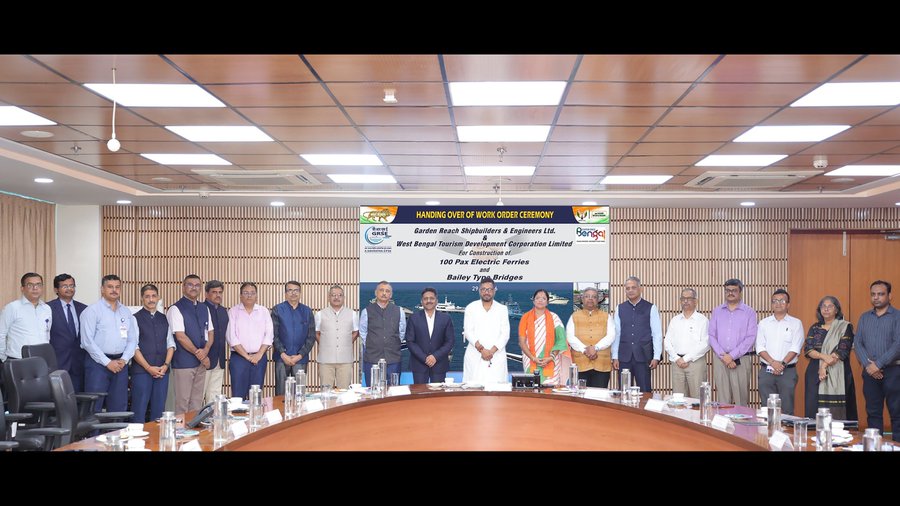
KOLKATA: Garden Reach Shipbuilders and Engineers (GRSE) Ltd, a Navratna Defence Public Sector Undertaking under the Ministry of Defence, further strengthened its partnership with the Government of West Bengal with the receipt of work orders from the West Bengal Tourism Development Corporation Ltd. (WBTDCL), for the construction of two hybrid diesel-electric ferries and construction of two Bailey Bridges.

The ‘Formal Work Order Handing Over’ event was attended by Dr Shankar Ghosh, Hon’ble Minister-in-Charge, Department of Tourism, Government of West Bengal, Smt Purnima Chakraborty, Hon’ble Minister of State, Department of Tourism, Government of West Bengal, Cmde PR Hari, IN (Retd), Chairman and Managing Director, GRSE, along with senior officials from GRSE and the WBTDCL.

The ferries will each be 24 metres long and 8 metres wide, with a passenger capacity of 100 persons and a draft requirement of 1 metre. Designed for efficient and eco-friendly inland water transportation, the vessels will be capable of achieving speeds of up to 9 knots in hybrid diesel-electric mode and 7 knots in fully electric mode.

Equipped with advanced propulsion systems comprising batteries and diesel generators, the ferries will significantly reduce operational costs and carbon emissions while ensuring reliable performance in Indian inland waterways. The vessels will be classed by the Indian Register of Shipping (IRS) and are expected to offer enhanced passenger comfort through lower noise and vibration levels.

Recognising GRSE’s proven expertise in modular bridge construction, the Government of West Bengal has also placed orders for two sets of Standard Width Bailey Bridges of 70R Road Class. GRSE is a market leader in the design and manufacture of modular steel bridges, having supplied over 5,900 bridges to the Indian Army, Border Roads Organisation, various state governments, central agencies and friendly foreign countries.

Having delivered Dheu, West Bengal’s next-generation Zero-Emission Electric Ferry, in 2025, GRSE has emerged as a key partner in the state’s green mobility initiatives. With these latest contracts, the shipyard is currently building 13 hybrid diesel-electric ferries for the Government of West Bengal.

The fresh orders underscore the confidence reposed in GRSE’s engineering excellence and execution capabilities. They also reinforce the company’s commitment to advancing the national vision of Aatmanirbhar Bharat through indigenous solutions that promote sustainable transportation, strengthen connectivity in remote regions, and contribute to inclusive economic development across the country.

India’s merchant fleet to get 100 ships, but ageing fleet remains a hurdle

NEW DELHI: India plans to add 100 vessels to its merchant fleet over the next five years. Union Minister for Ports, Shipping and Waterways Shri Sarbananda Sonowal said the government is seeking to increase Indian tonnage through measures including reflagging of foreign-owned vessels and support for shipbuilding.

This comes at a time when a large part of the existing fleet is already ageing. Data in the ‘Indian Shipping Statistics 2025’ report by the Ministry of Ports, Shipping and Waterways show that nearly half of India’s registered vessels are more than 20 years old.

As of December 2025, India’s shipping fleet comprised 1,592 vessels with a total gross tonnage (GT) of 14.02 million, up 3.04 per cent from a year earlier. Of these, 129 vessels were up to five years old, with a gross tonnage of 342,683 GT, while 131 vessels in the 6-10 years category had 598,235 GT, according to the ministry’s statistics.

The 11-15 years category comprised 261 vessels with 3.07 million GT, while 327 vessels aged 16-20 years accounted for 4.57 million GT. The oldest category, vessels above 20 years, had 744 vessels with 5.44 million GT, making it the largest age group by both vessel count and tonnage.

This means 1,071 vessels, or 67.27 per cent of the fleet, are either already above 20 years old or are in the 16-20-year age bracket and could cross the 20-year mark over the next five years. Together, they account for about 10.01 million GT.

The Directorate General of Shipping (DGS) has also imposed additional scrutiny on older vessels. Its rules require prior technical clearance for acquisition of vessels aged 25 years and above. DGS also has specific age-related requirements for older tankers.

Overseas fleet faces bigger ageing challenge
The ageing problem is particularly significant in the overseas fleet, which accounts for the bulk of India’s merchant fleet tonnage.

India had 503 vessels with 12.32 million GT deployed for overseas trade in 2025. Of these, 207 vessels, or 41 per cent, were above 20 years old, accounting for 4.52 million GT.

The fleet also had 151 vessels in the 16-20-year category. Together, vessels aged 16 years and above accounted for 358 of the 503 overseas vessels.

The concentration of older tonnage is also visible across several vessel categories in the overall Indian fleet. Among the overall Indian fleet, oil tanker (crude) vessels above 20 years accounted for 13 vessels and 1.09 million GT, while oil tanker product carriers in the same age group accounted for 55 vessels and 1.23 million GT. Dry cargo bulk carriers had another 41 vessels with 0.80 million GT in the above-20-year category.

By number, dry cargo liners and tugs also have sizeable old fleets, with 80 and 184 vessels, respectively, above 20 years.

100 new ships may not mean 100 net additions
The ageing profile is important because India’s fleet has expanded steadily, but the pace of net growth has been modest compared with the scale of the existing fleet.

The Indian fleet stood at 1,246 vessels in 2015, rising to 1,592 in 2025 — a net increase of 346 vessels over 10 years, or about 35 vessels a year. Tonnage increased from 10.51 million GT to 14.02 million GT over the same period.

For the 100-ship target to translate into a meaningful expansion of India’s merchant fleet, new additions will will need to outpace vessels that leave the fleet as they age or become commercially unviable.

Source: Business Standard

Hormuz crisis adds $22 bn to India’s fossil fuel import costs : CREA

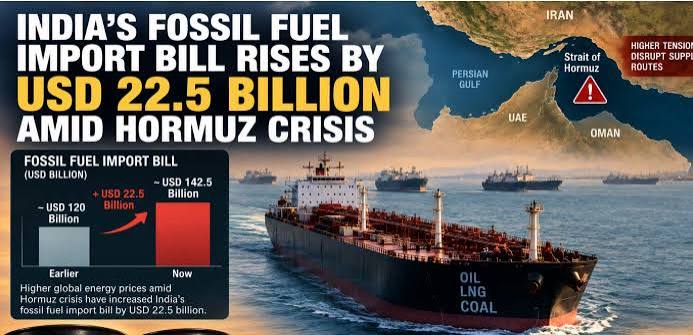
NEW DELHI: India incurred an estimated $22 billion in gross additional fossil-fuel import costs between March and August 2026, following the energy-price shock triggered by the Hormuz crisis, making it the second-most affected importing country after China. According to an analysis by the Centre for Research on Energy and Clean Air (CREA), India’s net additional cost for crude oil stood at $20.5 billion.

How big was the economic impact?

In terms of economic impact, India’s net additional cost across all fossil fuels was estimated at $14.4 billion, equivalent to 0.38 per cent of its gross domestic product (GDP), or about 1.4 days of national income.

India’s additional cost between March and August was the third-highest among major fossil-fuel importers, after the European Union at $78 billion and China at $35 billion, according to CREA’s analysis of seaborne crude oil, oil products and liquefied natural gas (LNG). The figures measure the additional amount importers paid over what futures markets had expected before the strikes.

According to CREA, fossil-fuel importers paid a gross extra cost of $330 billion for seaborne crude oil, oil products and LNG in the six months following the US-Iran war, compared with what pre-war futures markets had expected they would pay over the same period.

Crude oil accounted for the largest share at $164.1 billion, followed by diesel and gasoil at $73.8 billion, gasoline at $35.7 billion, LNG at $38 billion across the two basins, and jet fuel at $20 billion. The estimated gross additional cost to importers does not account for additional earnings by countries that also export fossil fuels.

The US-Iran war has caused the largest sustained oil price shock since the 1990 Gulf War. Among importers, the typical low- or middle-income country paid about twice as much relative to GDP as the typical high-income country. The cost of the crisis to fossil-fuel importers was equivalent to all global investments in renewable power in 2025, on a per-month average basis.

How sharply did crude oil prices rise?

Brent crude oil prices peaked at almost twice their pre-strike level in the weeks after the strikes and have averaged 38 per cent above that level since. Of the major supply shocks of the past three decades, only the 1990 Gulf War recorded a larger increase.

Oil traded above its pre-strike level on 94 per cent of trading days. Brent crude briefly fell below pre-strike levels in late June 2026, before spiking to $105 a barrel on July 23 and then easing. The July average stood at $84 a barrel. Brent spot prices averaged $93 a barrel between March and August 2026. No six-month period has recorded an average Brent price that high since the price spike that ended in December 2022, when markets were still absorbing the impact of Russia’s full-scale invasion of Ukraine.

Fuel price pressures persist

The pressure on refined fuels has proved more persistent than on crude. CREA said the crude premium over pre-war expectations roughly halved from 50 per cent in May to 22 per cent in August.

In contrast, diesel was 57 per cent above expectations in March and 65 per cent higher in August. European gas prices rose from 44 per cent above expectations in June to 76 per cent in August, while Asian LNG prices increased from 64 per cent to 98 per cent above expectations over the same period.

LPG shock reaches India’s cooking fuel market

The Hormuz crisis also affected India’s LPG imports. According to CREA estimates, India paid 29 per cent more per tonne for imported LPG than the market had expected during the six months following the strikes, while import volumes were 26 per cent lower.

India’s LPG import bill during the six months was about $4.7 billion, of which roughly one-fifth represented the additional cost caused by the price shock. CREA estimated the additional LPG import cost at $1.1 billion over the full six months. The disruption was sharpest in March, when India’s LPG imports fell 49 per cent from the average level of the previous two years. Volumes subsequently recovered to 86 per cent of that benchmark by June.

At the same time, the share of US-origin LPG in India’s imports increased from 8 per cent in February to 16 per cent in March and 32 per cent in April, partly replacing lost Gulf supplies.

The increase in import-parity costs was also significant. CREA estimated that a standard 14.2-kg domestic LPG cylinder cost about $8.1 at import parity during March-August, compared with $6.28 under pre-war expectations. That represents an increase of about $1.8 per refill, or 29 per cent. These figures are before subsidies, taxes and distribution margins and therefore do not represent the retail price paid by households.

Clean energy cushions the shock

The CREA analysis also highlights the role of India’s and other countries’ expansion of clean power in reducing exposure to the fossil-fuel price shock.

Clean-power generation capacity added since 2020 is estimated to have saved importing countries $36 billion in coal, gas and oil imports during the first five months of the crisis. Of this, $22 billion came from avoided gas imports, $10 billion from coal and $5 billion from oil.

China recorded the largest absolute saving at $7.9 billion, followed by Japan at $4.9 billion. Spain, France, Italy, the Netherlands, Brazil and India were among the other countries with the largest savings. For India, the analysis uses national daily power-generation data from POSOCO.

Poorer economies bear a larger burden

The impact of the energy shock was uneven across economies. CREA estimated that the typical low- or lower-middle-income fossil-fuel importer paid an additional amount equivalent to 1 per cent of GDP, compared with 0.45 per cent for the typical high-income importer.

Among the 20 largest payers, Egypt faced the highest burden relative to its economy at 1.33 per cent of GDP, followed by Chile at 0.79 per cent and Thailand at 0.74 per cent. China had the highest absolute net cost at $31.7 billion, but this amounted to only 0.17 per cent of its GDP. India’s $14.4-billion net cost represented 0.38 per cent of GDP.

CREA said its estimate is conservative because it excludes several costs associated with the crisis, including pipeline gas, coal, fuel oil, naphtha, freight rates, war-risk premiums and other components that feed into consumer prices. It also measures the additional cost of fuel actually purchased and does not quantify the economic cost of fuel that consumers or businesses could no longer afford because of higher prices.

The report compared actual prices and seaborne fuel arrivals between March and August with the futures curves prevailing during February 16-27, the 12 days before the strikes. August prices and some trade volumes were partly modelled because the month had not fully settled when the analysis was completed.

Source: Business Standard

DP World launches express ocean freight services ahead of peak shipping season

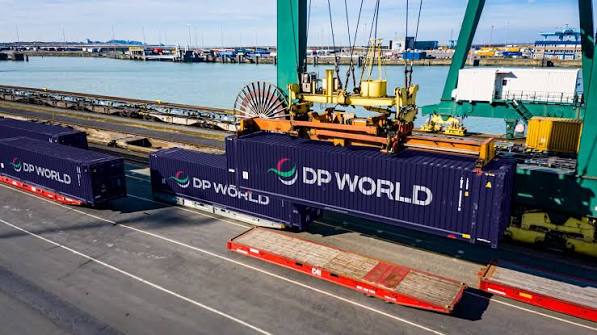
DUBAI: DP World has launched two new Express Less-than-Container Load (LCL) ocean freight services to help businesses move time-sensitive cargo more quickly and reliably between Asia, Europe, and North America as they prepare for peak shipping season.

Designed for customers shipping smaller volumes, the new services combine the cost advantages of ocean freight with faster transit times, consistent weekly departures, and integrated inland transportation, providing a reliable alternative as businesses navigate elevated freight rates, constrained capacity, and ongoing supply chain uncertainty.

The new offerings include:

Express LCL Asia–USA, connecting key manufacturing hubs in China, Vietnam, Thailand, and Cambodia with Los Angeles before expedited inland delivery to any commercial address across the United States, supported by DP World’s extensive inland logistics network.
Express LCL Europe-USA, providing weekly bi-directional service between major consolidation hubs in Antwerp, Southampton, and Cork and gateways in Chester, PA and Wilmington, NC with onward inland distribution to any commercial address across Europe and the United States.

Together, the services offer weekly departures with transit times door to door of approximately 16–24 days between Asia and the U.S. and 18–24 days between Europe and the U.S., helping customers improve speed and predictability for priority shipments.

Joseph Fordney, Senior Vice President of Freight Forwarding for DP World in the Americas, said: “Businesses need supply chains that can respond quickly without sacrificing cost efficiency. Our new Express LCL services provide customers with faster ocean freight options, dependable weekly schedules, and extensive inland connectivity, helping them move priority cargo more efficiently while avoiding the higher costs associated with air freight.”

Both services are supported by dedicated consolidation facilities (Container Freight Station (CFS)-to-CFS handling), optimized routing, and extensive inland transportation networks, providing customers with reliable end-to-end cargo movement from origin to destination.

The launch further expands DP World’s integrated logistics offering, combining contract logistics, freight forwarding, ports and terminals, warehousing, and inland transportation through a single provider, giving customers greater visibility, flexibility, and control across their supply chains.

APM Terminals begins construction of $550m Laldia terminal

CHATTOGRAM : APM Terminals, a subsidiary of Danish shipping giant AP Møller–Maersk, recently began construction of the Laldia Container Terminal (LCT) in Chattogram’s Patenga, raising hopes of greater efficiency in port services.

The $550 million LCT project, which is expected to be operational in 2030, will handle one million TEUs of containers annually, adding nearly one-third to Bangladesh’s current container-handling capacity.

“This would open a new horizon in logistics and trade facilities and support the country’s development,” said Bangladesh Finance and Planning Minister Amir Khosru Mahmud Chowdhury at the inauguration of construction of the greenfield project at Laldia Char, at the confluence of the Karnaphuli River in Patenga.

The project would be a significant milestone in the country’s journey towards a trillion-dollar economy by 2034, he added.

Under the public-private partnership, APM Terminals will develop and operate the facility under a Design, Build, Finance, Operate and Transfer (DBFOT) model. It will operate the LCT for 30 years, with an option to extend the period by a further 15 years.

APM Terminals CEO Ramesh David said that once fully operational, the terminal would handle close to one million TEUs of containers annually. APM Terminals is building the LCT on 49.15 acres of land along the Karnaphuli River.

He added that the facility would feature a 616-metre-long jetty, seven ship-to-shore cranes, 32 electric rubber-tyred gantry cranes and 41 electric terminal tractors.

The project has been in the pipeline for several years. Bangladesh and Denmark signed a memorandum of understanding in June 2021 to facilitate cooperation on the project under the PPP framework.

Later, the Chattogram Port Authority (CPA) and APM Terminals BV signed an agreement on November 17, 2025, paving the way for the terminal’s development through 100 percent foreign investment.

CPA Chairman Rear Admiral SM Moniruzzaman said the terminal would accommodate vessels carrying up to 6,000 TEUs, roughly double the capacity of ships that currently berth directly at Chattogram Port.

The use of electric equipment and modern cargo-handling technology will support greener port operations, while the ability to accommodate larger vessels directly will reduce vessel waiting times and cargo turnaround at the country’s premier seaport.

Road Transport and Bridges, Railways and Shipping Minister Shaikh Rabiul Alam also attended the event.

MSC suspends Russian Port of Novorossiysk’s bookings after attack on MSC Ulsan III

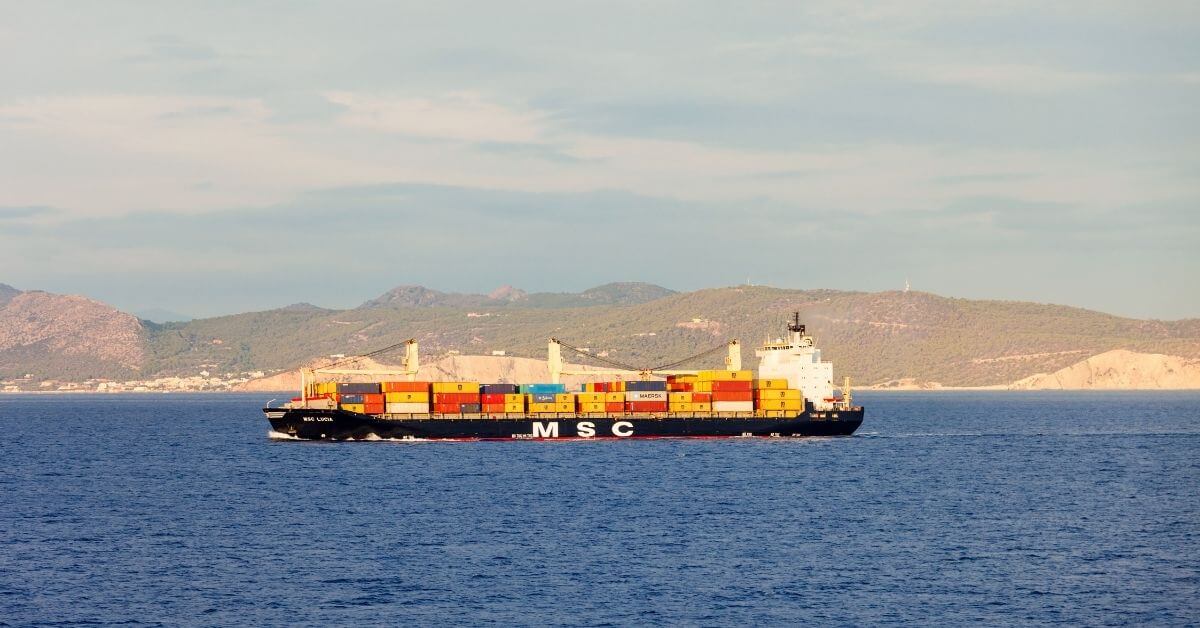
GENEVA: MSC the World’s Largest Shipping Firm, has stopped new cargo bookings to and from Novorossiysk, Russia, after a drone hit its container ship MSC Ulsan III.

The ship was hit while sailing from Novorossiysk to Tekirdağ, Türkiye. MSC said it is watching the security situation and will restart its weekly service when it is safe.

MSC has asked customers to contact its Russian office about other options for moving cargo. The company still operates through other Russian ports, including St. Petersburg. Martin Kelly, who heads advisory at EOS Risk Group, said the ship was hit on Aug. 25 after leaving Novorossiysk.

No injuries were reported, and the ship continued sailing.

AIS data showed the ship later entered the Sea of Marmara and was off Tekirdağ. The damage is not known. No one has officially said who carried out the attack.

Attacks on commercial ships

The attack on MSC Ulsan III follows other attacks on commercial ships in the Black Sea.

On Aug. 21, RMS Team was hit by a drone while heading to Novorossiysk, the Ukrainian News Agency reported.

The Turkish vessel can carry about 1,100 TEUs and has a deadweight of 12,968 tonnes. The vessel caught fire, and one seafarer was missing.

Earlier this month, the Fesco-operated containership Yanina was hit by two drones about 130 miles from Novorossiysk and sank. The ship had a deadweight of about 13,000 tonnes.

Fesco and Turkish operator Kalyon then stopped all Black Sea sailings.

Ukraine has also said that it attacked five grain carriers at Novorossiysk and Tuapse on Aug. 17-18.

The attacks came after Russian strikes on ships in Ukraine’s Black Sea ports. Russia said it was targeting vessels carrying military supplies.

Oil and grain operations also affected

Other activities around Novorossiysk have also been affected.

Ukraine struck an oil terminal earlier this month. It later agreed to stop attacking international tankers heading to or loading at the Caspian Pipeline Consortium’s offshore terminal near Novorossiysk.

Some grain terminals at the port have also stopped operating.

Attacks on Black Sea ports and commercial ships have increased since July.

MSC continues to serve other Russian ports

MSC still has limited operations in Russia after reducing its presence following Russia’s full-scale invasion of Ukraine in 2022.

International shipping companies that still serve Russian ports mainly carry goods such as food, clothing and medicine.

An employee at MSC’s St. Petersburg office confirmed that the company had stopped its Novorossiysk operations.

Shipping to Ukraine also disrupted

Maersk said on July 22 that it was temporarily stopping its service to Chornomorsk because of security concerns at the port. It said ships would be sent to Romania and that it was looking at land routes for deliveries.

Hapag-Lloyd followed on July 31, saying its feeder operators had temporarily stopped services to ports in Ukraine’s Black Sea region.

Container shipping to Ukraine resumed in 2024 after being halted when the war began.

MSC Ulsan III

MSC Ulsan III is a Panama-flagged container ship built in 2004. It can carry about 2,700 TEUs and has a deadweight of 39,611 tonnes.

MSC has operated the ship since 2022. It was carrying cargo from Novorossiysk to Tekirdağ when the drone hit it.

The ship continued sailing and later reached the Sea of Marmara.

MSC has not said when its Novorossiysk service will restart. Customers can contact its Russian office for other shipping options.