Home Blog Page 14

NorthStandard growth and diversification underpin positive 2027–28 renewal outlook

LONDON: NorthStandard has announced a positive pre-renewal outlook for the 2027–28 marine insurance year, underpinned by continued growth and diversification as it builds long-term financial resilience.

The outlook comes as global shipping continues to navigate geopolitical uncertainty, trade disruption, sanctions, economic volatility and pressure on supply chains.

“The Club has supported shipping like never before through an extraordinary period, when cover for special classes of risk is increasingly important,” said Cesare d’Amico, Chair of NorthStandard. “Events this year have reinforced the critical role we play in protecting ships, the people working on board and the global trade they support.”

NorthStandard’s overall premium income is set to reach US$1.17bn for the current insurance year, up from US$938m in 2025/26 and exceed the US$1bn target set when North P&I and The Standard Club merged to form NorthStandard in 2023. “Revenues are well ahead of projections this year, reflecting growth across all lines of business, and in particular our ability to step up and provide the cover the shipping industry has needed to continue to trade in areas affected by war, supported by the necessary reinsurance protection,” said Paul Jennings, Managing Director, NorthStandard.

Elsewhere, despite expectations that the P&I policy-year combined ratio will exceed 100%, favourable development in prior-year pool claims and strong performance across NorthStandard’s diversified Specialty lines continue to support the overall result. The Club expects a financial-year combined ratio of 95%, down from 105% in 2025/26, reinforcing its financial resilience despite investment market volatility, higher large claims and a number of International Group pool claims so far this year.

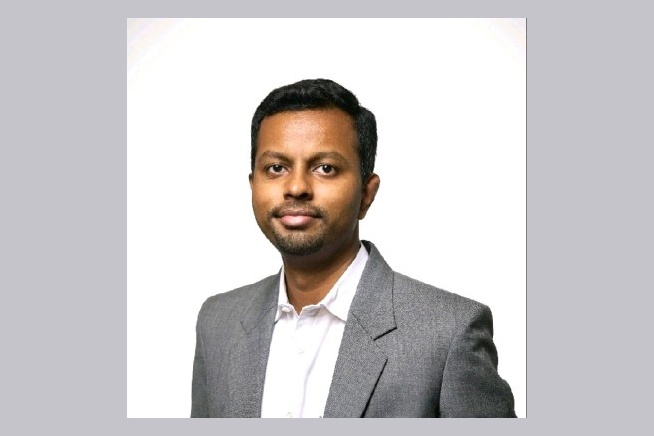
Thya Kathiravel, Chief Underwriting Officer, NorthStandard, said: “Our strategic investments in diversification continue to deliver results, with rapid growth across our Specialty businesses. As well as strong growth in our recently-launched Upstream Energy and Marine and Energy Liabilities portfolios we have seen additional income from our Hull & War offering, which is backed by comprehensive reinsurance programmes – some of this is likely to be non-recurring, depending on future geopolitical developments.”

“Members are highly positive on our diversification strategy, which reduces our reliance on any single part of the portfolio and gives us greater capacity to invest in service delivery while managing the volatility inherent in P&I,” said Jeremy Grose, Managing Director, NorthStandard. 

Investment earnings are lower, with inflationary pressures and rising interest rates cited as behind a fall from a 9.5% investment return for 2025/26 to 0.8% seven months into 2026/27. Last year, investments contributed US$161M to income; the forecast for 2026/27 is US$10M.

Despite this, taken together with the positive underwriting result, NorthStandard’s free reserves are currently projected to increase by US$55M to US$978M by 20 February 2027, maintaining the Club’s surplus capital position to support its S&P ‘A’ (stable) financial strength rating and AAA capital strength. 

“We approach the 2027 renewal from a position of strength, with our capital position robust, our underwriting performance improved, and our diversified portfolio ensuring resilience across market cycles,” commented Grose. 

“However, we are in a period of extraordinary geopolitical risk and investment market volatility. Record levels of newbuilding deliveries are also expected in the period ahead, and this will bring elevated levels of premium churn across the market.”  

As a result, NorthStandard would seek to apply a prudent General Increase of 3% to its P&I premiums for 2027/28, and a 3% increase for FD&D, said Jennings.
NGOs urge UN Shipping Body to adopt Crucial Climate Agreement before Year End

LONDON: Ahead of an upcoming meeting of the International Maritime Organization’s (IMO) Marine Environment Protection Committee (MEPC 85, November 30-December 4), the Clean Shipping Coalition is calling on member states to back adoption of the Net-Zero Framework (NZF) – the UN shipping body’s proposed mechanism for reducing shipping emissions. Discussions on the NZF, which have taken place through the year, are expected to culminate at the IMO in December, when member states have a crucial opportunity to adopt the postponed framework

“In order to fulfil the goals of the IMO’s GHG Strategy and to protect our global climate, the IMO and all its member states must adopt the Net-Zero Framework ‘as is’, without further diversion”, said Lukas Leppert, President of the Clean Shipping Coalition. “The product of years of negotiations, the Net-Zero Framework reflects findings from the IMO’s Comprehensive Impact Assessment, is a long-negotiated compromise that brings together a multitude of interests and positions, and is supported by a broad majority.”

“The IMO, as the UN’s shipping agency, has already committed to a greenhouse gas strategy, approved a regulatory framework – the NZF – to deliver on its goals, and prepared its adoption”, added Leppert. “It is the shipping sector’s best shot at reducing climate warming emissions, and is a crucial step forward that can become more progressive in the future.”

In his November 11 speech to the COP31 Leaders’ Summit, UN Secretary-General António Guterres said that “fossil fuel interests keep making a killing… while killing our planet”, and called on leaders to “speed a just transition away from fossil fuels”, that fossil fuels must go the way of the dinosaurs” and that “it’s time to kick the habit – and end the fossil-fuel addiction.”

Adoption of the NZF has been stalled since October of 2025, when a handful of countries, led by the United States and Saudi Arabia blocked adoption. Several delegations supportive of the deal received intimidation and threats from US officials representing the Trump Administration.

While the US political landscape is changing, it remains unclear whether the US will return to the IMO with the same brash tactics. Countries that supported the NZF when originally approved, but subsequently came under pressure to object to its adoption in October 2025, will now likely be reassessing their positions and wondering if they can again stick to their principles by standing firm in support of the NZF. 

“Threats of sanctions or tariffs will likely ring hollow”,
said Leppert. “Other member states should back them up – a closing or ranks against the naysayers is needed, to render irrelevant those who wish to undermine the inevitable mark of progress towards cleaner shipping and decarbonisation.” 

“Since October 2025, when IMO member states voted to adjourn the adoption session for one year, various alternative proposals to the NZF were introduced and intensively discussed, but were neither able to demonstrate a comparable reduction in emissions nor gather sufficient support”, added Leppert. “These alternative proposals aimed at supplanting or distracting from the NZF have fallen away, proving the NZF as the best course ahead.”

“In the more than 12 months delay in adoption of the NZF, the world has seen increased climate impacts: floods, droughts, heatwaves, and wildfires”, said Leppert. “While UNEP’s Limiting Overshoot Spotlight Report shows the consequences of global inaction – that global warming is expected to cross 1.5°C, this can be reversed by getting on an ‘overshoot, peak, and decline’ pathway and the shipping sector must take the lead in doing so.”  

“There is no longer time for going in circles;. every IMO member state must get behind the Net-Zero Framework and adopt it before the year ends”,
concluded Leppert.

Background:
The shipping sector makes up 2-3% of global greenhouse gas emissions – pumping 1 billion tonnes of GHGs into the atmosphere every year, comparable to the world’s fifth biggest emitting country, Japan. The IMO has committed to achieving its GHG Strategy goal, including its long-term goal of decarbonisation by 2050, its interim targets of a 30% reduction in absolute emissions by 2030 and 80% by 2040, and its commitment to a just and equitable transition.

Approved during MEPC 83 in April 2025, the NZF includes a “global fuel standard” (GFS), which requires ship operators to gradually decrease the amount of greenhouse gas emitted by shipping fuels – or pay penalties. The framework also introduces a mechanism that puts a price on a portion of greenhouse gases ships emit, giving the industry a clear financial incentive to reduce emissions in line with the global fuel standard. Adoption of the NZF, planned for October 2025’s MEPC/ES.2, was postponed for over a year, due to pressure from IMO member states such as the US and Saudi Arabia.

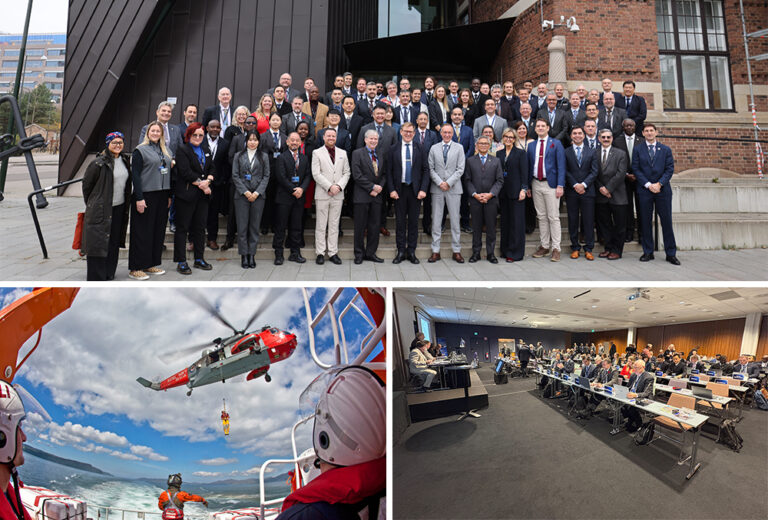
IMO and ICAO SAR experts finalize updates to international search and rescue manual

LONDON: The ICAO/IMO Joint Working Group on Harmonization of Aeronautical and Maritime Search and Rescue has finalized updates to the International Aeronautical and Maritime Search and Rescue Manual (IAMSAR).

The IAMSAR Manual provides international guidelines for a common aeronautical and maritime approach to organizing search and rescue (SAR) services. It includes three volumes: Volume I on Organization and Management; Volume II on Mission Coordination; and Volume III on Mobile Facilities, which are updated approximately every three years.

During its thirty-third meeting held in Malmö, Sweden (9-13 November), the Joint Working Group finalized draft amendments to all three volumes of the IAMSAR Manual for its 2028 edition. Among other issues, the draft amendments finalized by the Joint Working Group covered elements such as:

psychology of emergencies, highlighting the risk of adverse psychological impacts on both SAR personnel and the persons they rescue;
submarines and passenger submersible craft, providing additional guidance on SAR aspects involving underwater craft;
two-way communication service, providing guidance for Rescue Coordination Centres (RCCs) on the newly introduced COSPAS-SARSAT two-way communication service for Emergency Position-Indicating Radio Beacon (EPIRBs);
SAR locating devices, adding updates and additional information concerning the use of different SAR locating devices, such as radar SART, AIS-SART, AIS-MOB and EPRIB-AIS; and
aerodrome emergency plans, to facilitate the integration of national SAR plans and aerodrome emergency plans, including coordination responsibilities.
These amendments will be submitted for endorsement by the IMO’s Sub-Committee on Navigation, Communications and Search and Rescue (NCSR), with a view to adoption by the Maritime Safety Committee.

Other matters
The Joint Working Group also discussed other SAR issues, in particular:

the development of additional guidelines for the operation of EPIRBs that implement the two-way communication service;
the removal of information concerning ship reporting systems for SAR from the IAMSAR Manual; and
 other editorial amendments/improvements.
A half-day workshop at the World Maritime University on 12 November 2026 brought together SAR experts and students for an open discussion on recent developments in search and rescue.

The 33rd meeting of the ICAO/IMO Joint Working Group was co-organized by the IMO and ICAO Secretariats and supported by the Swedish Transport Agency and the Swedish Maritime Administration. 

About the ICAO/IMO Joint Working Group
Established by the International Civil Aviation Organization (ICAO) and IMO in 1993, the ICAO/IMO Joint Working Group on Harmonization of Aeronautical and Maritime Search and Rescue is composed of both aeronautical and maritime experts working to harmonize international maritime and aeronautical search and rescue (SAR).

It provides an active interface between IMO and ICAO for harmonization of maritime and aeronautical SAR plans and procedures in accordance with the 1985 memorandum of understanding between IMO and ICAO, and with resolution 1 of the 1979 International Conference on Maritime Search and Rescue. The ICAO/IMO JWG has been meeting regularly since 1993. 

India moves to strengthen shipbuilding ecosystem through ‘India Shipbuilding Investment Conclave 2026’

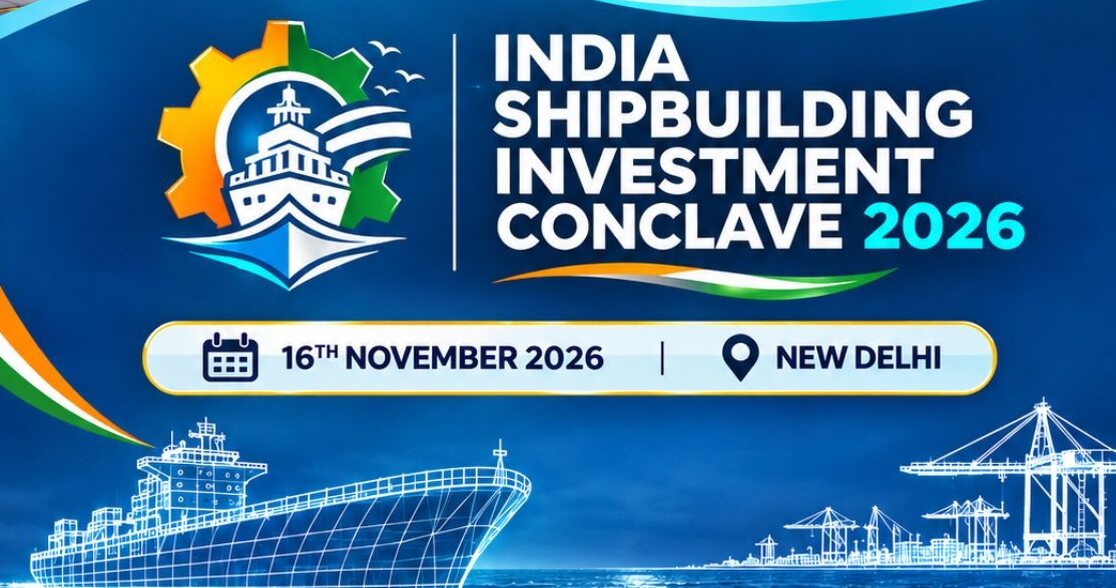
NEW DELHI : India has taken a significant step towards transforming its domestic shipbuilding industry into a globally competitive maritime manufacturing hub with the commencement of the India Shipbuilding Investment Conclave 2026 in New Delhi. The two-day conclave, being organised under the aegis of the Ministry of Ports, Shipping and Waterways (MoPSW), brings together global shipbuilding leaders, international investors, technology providers, industry stakeholders and representatives of maritime states to explore investment opportunities and accelerate the development of India’s shipbuilding ecosystem.

India Shipbuilding Conclave 2 India moves to strengthen shipbuilding ecosystem through 'India Shipbuilding Investment Conclave 2026'

The conclave, scheduled for November 16–17, is designed to provide a dedicated platform for strategic investment discussions, technology partnerships, industrial collaborations and the development of world-class greenfield shipbuilding clusters. It aims to connect international shipbuilding expertise with India’s growing manufacturing capabilities and emerging investment opportunities.

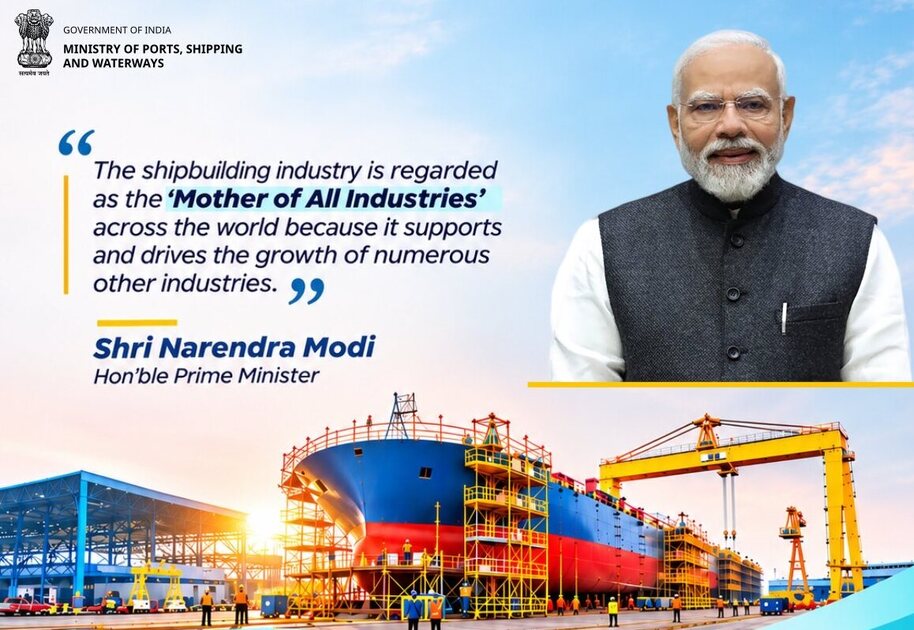
The initiative aligns with the vision of Prime Minister Shri Narendra Modi to position India among the world’s leading shipbuilding nations, with an ambition to become one of the Top Five global shipbuilding countries by 2047. The Government is working towards expanding domestic shipbuilding capacity, attracting global investments, strengthening maritime manufacturing and developing a robust network of supporting industries.

₹69,725 Crore Shipbuilding Package to Drive Industry Transformation

A major pillar of India’s shipbuilding transformation is the Government’s comprehensive shipbuilding support package of approximately ₹69,725 crore, aimed at expanding domestic shipbuilding capacity, improving financial competitiveness and encouraging investment in new shipyard infrastructure.

The package includes the Shipbuilding Financial Assistance Scheme (SBFAS), with an outlay of ₹24,736 crore, the ₹25,000 crore Maritime Development Fund (MDF), and the ₹19,989 crore Shipbuilding Development Scheme (SBDS). These initiatives are designed to provide financial assistance, long-term investment support, infrastructure development and capacity expansion across the domestic shipbuilding industry.

The Shipbuilding Development Scheme places particular emphasis on establishing greenfield shipbuilding clusters and expanding existing shipyard facilities, creating an integrated industrial ecosystem supported by common infrastructure and modern manufacturing capabilities.

Five Greenfield Shipbuilding Clusters to Attract Global Investments

A key focus of the conclave will be the development of five proposed greenfield shipbuilding clusters across Gujarat, Andhra Pradesh, Tamil Nadu, Maharashtra and Odisha. The proposed locations include Kuchchadi in Gujarat, Dugarajapatnam in Andhra Pradesh, Thoothukudi in Tamil Nadu, Dighi in Maharashtra and Kendrapara in Odisha.

These clusters are envisioned as integrated shipbuilding and maritime manufacturing destinations, offering opportunities for global shipbuilders, marine equipment manufacturers, engineering companies and technology providers to establish or expand their operations in India.

The development of these clusters is expected to encourage investments in ship construction, ship repair, marine engines, propulsion systems, specialised equipment, engineering, research and development, and other supporting maritime industries.

Global Partnerships and Technology Collaboration

The conclave will feature focused investment dialogues and discussions on India’s shipbuilding opportunities, policy framework, financing mechanisms and investment incentives. Global industry leaders will have opportunities to interact with Indian shipyards, maritime public sector undertakings, port authorities, state governments and cluster development agencies.

Dedicated discussions will also explore collaboration in marine engines, equipment manufacturing, engineering, advanced ship technologies, supply-chain development and skill enhancement. Business-to-business meetings and direct interactions with representatives of the proposed shipbuilding clusters will help prospective investors evaluate project opportunities and identify potential partnerships.

The second day of the conclave, November 17, will include visits to proposed greenfield shipbuilding cluster locations, enabling participating investors and industry representatives to assess infrastructure, logistics connectivity and investment potential.

Building a Globally Competitive Maritime Manufacturing Hub

Beyond attracting investments in shipyard infrastructure, India’s shipbuilding ambitions extend to developing a comprehensive domestic maritime manufacturing ecosystem. Greater participation from international shipbuilders and technology companies is expected to facilitate technology transfer, strengthen domestic supply chains, improve manufacturing capabilities and create new opportunities for skilled employment.

The initiative also supports the broader objectives of Maritime India Vision 2030 and Maritime Amrit Kaal Vision 2047, which envisage a stronger, self-reliant and globally integrated Indian maritime sector.

With focused policy support, dedicated financing mechanisms, greenfield infrastructure development and international industry partnerships, the India Shipbuilding Investment Conclave 2026 marks an important step towards translating India’s shipbuilding ambitions into concrete investment opportunities and long-term industrial growth.

The conclave is expected to strengthen India’s position in the global maritime value chain while laying the foundation for a new phase of growth in domestic shipbuilding, ship repair and marine equipment manufacturing.

India and US agree on preferential market access for Indian goods in America: Piyush Goyal

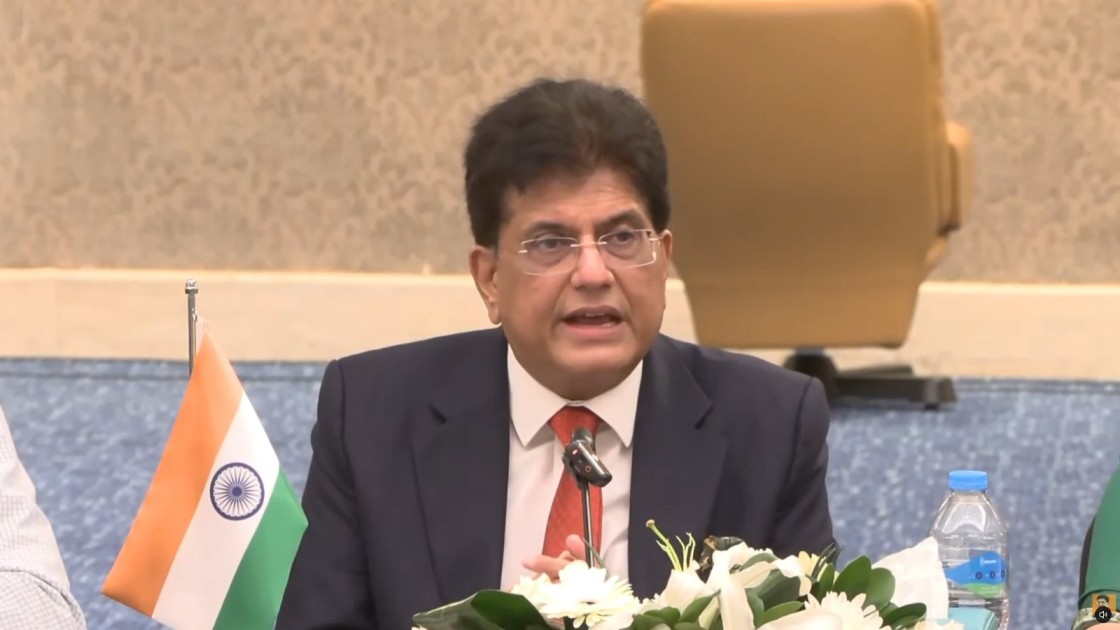
CAIRO: India and the US have already agreed that Indian goods in the American market will receive preferential market access compared to competitor nations, Union Commerce and Industry Minister Shri Piyush Goyal said on Sunday.

India and the US finalised the framework for the first phase of the bilateral trade agreement in February. The deal was to be signed earlier, but changes in the US tariff landscape have led to further negotiations on the agreement.

“This was already agreed between the leaders – President Donald Trump and Prime Minister Shri Narendra Modi when they announced that we have both come to a broad framework agreement a few months ago and it has been acknowledged that India will get preferential trade access in the US with lower duties than our competitor countries,” Goyal told reporters here.

He is here on a two-day visit to discuss ways to boost trade and investment between India and Egypt. The minister was replying to a question about the US assurance that Indian goods will get preferential market access.

An official has recently stated that the US has assured India of a comparative tariff advantage over competing countries under the proposed bilateral trade agreement (BTA), with both sides working to conclude the first tranche by the end of the current financial year.

“We will have to see how the tariff framework unfolds. We are working towards closing the first tranche by the end of this financial year. Talks are going for the first tranche and the broader BTA,” the official said last week.

The extent of the advantage to Indian goods, however, will depend on the tariff framework eventually agreed upon.

After the US Supreme Court struck down the Trump’s reciprocal tariffs that were the basis of negotiations, the US is using alternate mechanisms to put up a new tariff architecture in place using provisions of the Trade Act.

Piyush Goyal arrives in Cairo, Egypt, on an official visit to strengthen bilateral economic and commercial ties

CAIRO: Union Minister of Commerce and Industry Shri Piyush Goyal arrived in Cairo, Egypt, on 14 November 2026, for an official visit aimed at strengthening the India–Egypt Strategic Partnership, deepening bilateral trade and investment relations, and exploring new opportunities for industrial and commercial cooperation between the two countries.

India and Egypt share a longstanding relationship rooted in historical, civilizational and people-to-people ties. Over the years, this relationship has evolved into a multifaceted partnership encompassing political, economic, security and cultural cooperation. Under the leadership of Prime Minister Shri Narendra Modi, India–Egypt relations have gained renewed momentum, culminating in the elevation of bilateral ties to a Strategic Partnership, with a shared commitment to enhanced cooperation, including in the economic domain.

At the beginning of his visit, Shri Piyush Goyal paid homage to Indian soldiers at the Heliopolis War Cemetery in Cairo, honouring their sacrifice and contribution. Of the 4,000 soldiers buried or commemorated at the cemetery, 3,727 were Indian soldiers. Nearly 2,000 of them lost their lives during the First World War and around 1,700 during the Second World War.

The Minister also addressed an Indian community event organised by the Indian Community Association in Egypt. The interaction provided an opportunity to engage with members of the Indian diaspora and acknowledge their role in strengthening economic, cultural and people-to-people ties between the two countries.

Speaking on the occasion, Shri Piyush Goyal highlighted the strength of India–Egypt relations, noting that bilateral trade of around US$6.5 billion represents only the beginning of the partnership between the two ancient civilisations. Describing the Indian community as a living bridge between the two countries, he underscored the contribution of nearly 70 Indian companies operating in Egypt, with investments exceeding US$5 billion and generating direct and indirect employment for Egyptians.

The Indian community in Egypt continues to serve as an important bridge between the two nations, contributing to commercial exchanges, professional cooperation and the broader India–Egypt relationship.

The visit will feature the 7th Session of the India–Egypt Joint Trade Committee (JTC), the India–Egypt Joint Business Council (JBC) Meeting and the India–Egypt Business Forum. The 7th Session of the India–Egypt Joint Trade Committee will be co-chaired by Union Minister of Commerce and Industry Shri Piyush Goyal and Minister of Investment and Foreign Trade of Egypt H.E. Dr. Mohamed Farid Saleh on 15 November 2026 in Cairo.

The programme will also include bilateral meetings with senior Egyptian Ministers, interactions with leading business representatives and meetings with the African Export-Import Bank (Afreximbank), the Egyptian Junior Businessmen Association and the Egypt–India Startups Forum. These engagements are expected to provide platforms for reviewing bilateral economic cooperation, addressing trade and investment-related issues, and identifying new avenues for business partnerships, while giving fresh impetus to bilateral trade, investment, industrial cooperation and innovation linkages.

MoPSW Secretary Vijay Kumar Reviews Infrastructure Development and Operational Efficiency at Chennai Port

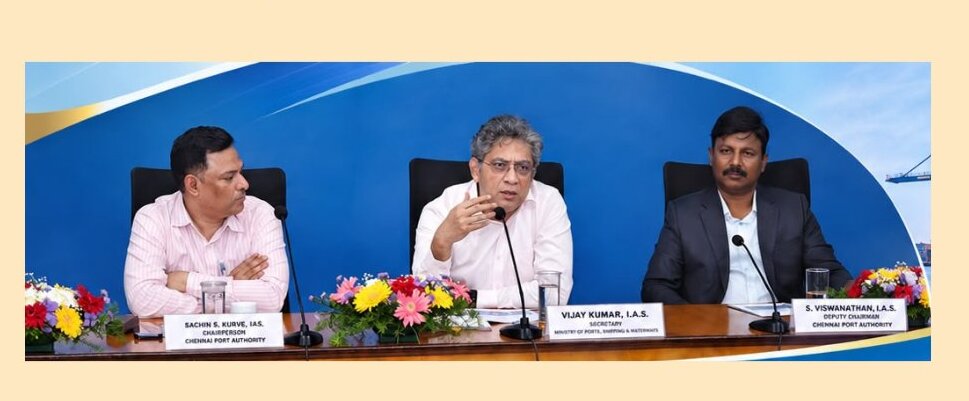
CHENNAI: Strengthening India’s maritime infrastructure and improving port-led logistics connectivity, Shri Vijay Kumar, IAS, Secretary, Ministry of Ports, Shipping and Waterways (MoPSW), visited Chennai Port Authority on November 13, 2026, to review ongoing infrastructure development projects, assess operational requirements and engage with industry stakeholders on measures to enhance trade facilitation.

During the visit, Shri Kumar was received by Sachin S. Kurve, IAS, Chairperson, Chennai Port Authority, and S. Viswanathan, IAS, Deputy Chairperson. The delegation also included J.P. Irene Cynthia, IAS, Managing Director, Kamarajar Port Limited, and Anugraha P, IAS, Chief Vigilance Officer, Chennai Port Authority.

During the visit, the Secretary reviewed key infrastructure initiatives and assessed the port’s preparedness to handle growing cargo volumes and evolving logistics requirements. The discussions focused on capacity augmentation, modernisation of port facilities, improved cargo evacuation, digitisation and strengthening multimodal connectivity.

As part of the inspection, Shri Vijay Kumar visited several important operational and infrastructure locations, including Jawahar Dock, EXIM sheds, the Marshalling Yard, internal road infrastructure and Bharathi Dock-II. He also inspected the proposed Outer Harbour Project area, which is expected to play an important role in enhancing the port’s long-term capacity and accommodating future maritime trade requirements.

Stakeholder Consultation Focuses on Infrastructure and Trade Facilitation

A stakeholder consultation meeting was organised during the visit, bringing together representatives from shipping lines, container train operators, terminal operators, logistics companies, trade associations and other port users.

The interaction provided an opportunity for industry representatives to highlight operational challenges, infrastructure requirements and opportunities for improving the overall efficiency of port operations.

Key issues discussed included the development of additional cargo storage facilities, dedicated berthing infrastructure for iron ore fines, expediting the proposed Outer Harbour Project and extending digitisation initiatives to import operations. The importance of seamless coordination among port authorities, terminal operators, shipping lines and logistics service providers was also emphasised.

Focus on Capacity Expansion and Digital Transformation

Chennai Port Authority continues to prioritise infrastructure modernisation, operational efficiency and technology-driven port management. Digitisation of cargo-related processes, improved road and rail connectivity and enhanced coordination with logistics stakeholders remain important elements of its development strategy.

The visit by the MoPSW Secretary reaffirmed the Ministry’s focus on strengthening India’s port infrastructure through sustained investment, coordinated planning and active industry participation.

With infrastructure expansion, improved cargo-handling capabilities and greater integration of multimodal logistics networks, Chennai Port is working towards reinforcing its position as a major maritime gateway on India’s eastern coast and supporting India’s growing international trade ambitions.

ChPA signs three MoUs to strengthen Dry bulk, BIMSTEC Container Services and Rail Connectivity

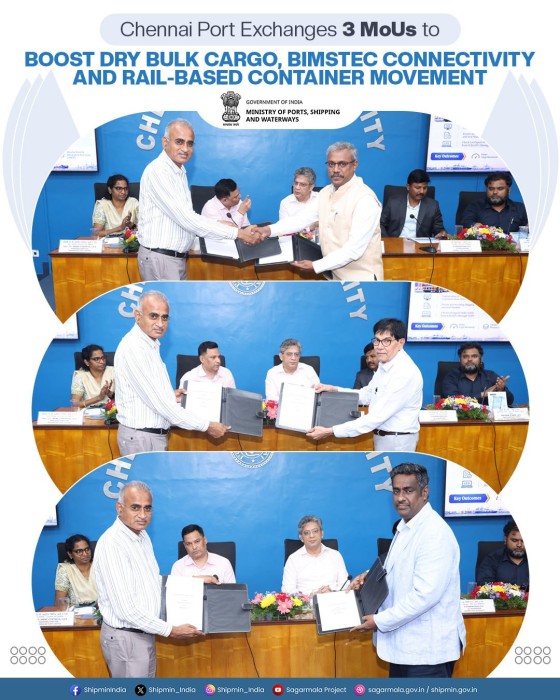
CHENNAI : Chennai Port Authority has signed three Memoranda of Understanding (MoUs) with MinSotrans, TCI Seaways and Central Warehousing Corporation (CWC) to strengthen cargo handling, expand regional maritime connectivity and promote multimodal logistics through enhanced rail-based container transportation.

The three agreements mark an important step towards expanding Chennai Port’s role as a major maritime gateway for domestic and international trade. The partnerships are aimed at diversifying cargo streams, improving logistics efficiency and developing stronger linkages between maritime, road and rail transportation networks.

Three Strategic Agreements to Drive Cargo Growth
The three MoUs cover distinct areas of cargo development and logistics connectivity:

  1. MinSotrans – Strengthening Dry Bulk Cargo Handling

Under the agreement with MinSotrans, Chennai Port Authority has committed to handling approximately 1 million metric tonnes of dry bulk cargo over a three-year period under its Non-Containerised Cargo Incentive Scheme (NCCS). The arrangement is expected to attract sustained cargo volumes, encourage greater utilisation of port infrastructure and strengthen Chennai Port’s position in the dry bulk cargo segment.

  1. TCI Seaways – BIMSTEC Regional Container Connectivity

The MoU with TCI Seaways will facilitate a proposed container shipping service connecting Chennai Port with Ranong Port in Thailand under the BIMSTEC framework. The proposed service is expected to strengthen maritime trade between India and Thailand, improve regional shipping connectivity and create additional opportunities for trade with neighbouring BIMSTEC countries.

  1. Central Warehousing Corporation – Promoting Rail-Based Container Movement

The agreement with Central Warehousing Corporation (CWC) focuses on improving railway connectivity and jointly promoting rail-bound container traffic through Chennai Port. Greater utilisation of rail transportation is expected to improve cargo evacuation, facilitate smoother movement of containers between ports and inland markets, and support more efficient multimodal logistics operations.

Secretary (Shipping) Reviews Port Development and Infrastructure

The MoUs were exchanged during the visit of Shri Vijay Kumar, IAS, Secretary, Ministry of Ports, Shipping and Waterways (MoPSW), to Chennai Port Authority on November 13, 2026. During the visit, he reviewed the port’s operational performance, ongoing infrastructure development initiatives and requirements for enhancing cargo-handling capabilities.

He also inspected key port facilities, including Jawahar Dock (East and West), EXIM sheds, the Marshalling Yard, EC Landing, internal road infrastructure and Bharathi Dock-II. A tug ride to the proposed Outer Harbour Project area was also undertaken.

A stakeholder consultation meeting was subsequently held with representatives from shipping lines, container train operators, terminal operators, logistics companies, trade associations and other port users.

During the discussions, industry representatives highlighted the need for additional storage facilities, dedicated berths for iron ore fines and accelerated development of the proposed Outer Harbour Project to meet future cargo requirements. Stakeholders also emphasised extending digitisation initiatives to import operations, building on the port’s fully digitised container export processes.

Strengthening Chennai Port’s Role in India’s Maritime Trade

The three agreements represent a significant step towards diversifying cargo operations, attracting new business opportunities and strengthening Chennai Port’s regional and hinterland connectivity.

By bringing together shipping companies, logistics operators and warehousing stakeholders, Chennai Port Authority aims to improve operational efficiency, enhance cargo evacuation and provide more integrated logistics solutions to the EXIM trade.

These initiatives are aligned with India’s broader vision of developing efficient port infrastructure, strengthening regional maritime partnerships and promoting multimodal transportation to support the country’s growing trade and economic activities.

With new cargo commitments, a proposed international container service and stronger rail connectivity, Chennai Port is taking further steps towards reinforcing its position as a key maritime gateway on India’s eastern coast.

Geromic George IAS appointed as Managing Director of Vizhinjam International Seaport Limited

Kerala Government Formalises Key Administrative Appointment; George to Continue as CEO of Kerala Maritime Board

THIRUVANANTHAPURAM: In a significant administrative development for Kerala’s maritime sector, senior IAS officer Geromic George has been appointed Managing Director of Vizhinjam International Seaport Limited (VISL), the company responsible for developing and operating the strategically important Vizhinjam International Seaport.

According to reports, the Kerala Government has placed his services at the disposal of the Ports Department to enable him to formally assume charge as Managing Director of VISL. He will also continue to discharge the additional responsibilities of Chief Executive Officer (CEO) of the Kerala Maritime Board (KMB), ensuring continuity in the administration of the state’s maritime institutions.

George, a 2015-batch IAS officer of the Kerala cadre, was earlier serving as Additional Secretary in the Finance (Expenditure) Department. He was initially entrusted with the additional responsibilities of Managing Director of VISL and CEO of KMB in June 2026, following the transfer of Divya S. Iyer IAS. The latest administrative decision now formalises his appointment to head the state-owned port company.

Vizhinjam Port Enters a Crucial Growth Phase

George’s appointment assumes added significance as Vizhinjam International Seaport advances its ambitions of becoming a major transshipment and maritime logistics hub in the Indian Ocean region.

Strategically positioned close to the busy international East-West shipping route, Vizhinjam is India’s first deepwater transshipment port of its kind and is designed to strengthen the country’s position in global maritime trade. Its natural deepwater characteristics and proximity to major international shipping lanes provide considerable advantages in attracting large container vessels and facilitating international cargo movements.

The port has already commenced commercial operations, while direct Export-Import (EXIM) operations began in August 2026, marking an important milestone in its evolution from a transshipment-focused facility into a broader gateway for India’s international trade.

The ongoing capacity augmentation programme is another major development. According to the Government of Kerala’s project-related order, the expansion is expected to increase the port’s annual container-handling capacity from 1.5 million TEUs to 5.7 million TEUs by December 2028. The project also envisages the development of two multipurpose berths with a combined length of 1,220 metres.

Strengthening Kerala’s Maritime Ambitions

With Geromic George assuming the leadership of VISL while continuing as CEO of the Kerala Maritime Board, the state government is expected to maintain administrative continuity across two important maritime institutions.

His leadership will be significant as Kerala seeks to leverage Vizhinjam’s strategic location, attract greater international shipping activity, strengthen port-linked logistics infrastructure and expand its participation in global supply chains.

The port’s growing capabilities are also expected to create opportunities for shipping lines, container operators, freight forwarders, logistics companies and exporters and importers, while strengthening India’s efforts to reduce its dependence on overseas transshipment centres.

As Vizhinjam moves into its next phase of expansion and operational growth, the appointment of a dedicated Managing Director marks an important administrative step in supporting the port’s long-term strategic objectives.

Govt Notifies Commodity Trading as Financial Service Under IFSCA Act, Paving way for Global Trading Operations at GIFT IFSC

Landmark regulatory move expected to attract global commodity trading firms to GIFT City, strengthen India’s position in international trade and generate fresh opportunities for the shipping and maritime sector

NEW DELHI/GANDHINAGAR: In a significant policy development that could reshape India’s position in the global commodity trading landscape, the Ministry of Finance, Government of India, has officially notified commodity trading as a financial service under the International Financial Services Centres Authority (IFSCA) Act, 2019.

The notification, issued by the Department of Economic Affairs on November 13, 2026, through Gazette Notification S.O. 6195(E), marks an important step towards enabling entities operating from the Gujarat International Finance Tec-City (GIFT City) International Financial Services Centre (IFSC) to undertake international commodity trading activities.

The move is expected to strengthen GIFT IFSC’s attractiveness as an emerging international hub for commodity trading, potentially drawing global trading companies, multinational corporations and other participants seeking to establish or expand their international trading operations from India.

Regulatory Recognition Opens New Opportunities

Through the notification, the Central Government has exercised its powers under Section 3(1)(e)(xiv) of the IFSCA Act, 2019, to recognise commodity trading as a financial service.

The notification defines commodity trading as the trading of commodities under a commodity trading contract by an IFSC unit, involving the shipment of goods from one country to another or within a foreign country, irrespective of whether the shipment passes through Indian ports.

It covers a broad range of deliverable and tradable goods, subject to specified exclusions, including money, currency, securities, certain endangered species and items covered under the Government’s Special Chemicals, Organisms, Materials, Equipment and Technologies (SCOMET) list.

Importantly, the activity will remain subject to applicable laws in force in India.

A parallel notification, S.O. 6196(E), issued on the same date, separately recognises a commodity trading contract as a financial product under the IFSCA Act. Together, the two notifications establish an important regulatory foundation for developing a dedicated commodity trading ecosystem within GIFT IFSC.

IFSCA Framework: The Next Important Step

The Government’s notification is expected to pave the way for IFSCA to formulate and introduce the operational regulatory framework governing commodity trading activities within the IFSC.

Once the framework is notified, eligible IFSC entities will have a structured regulatory route to undertake international commodity trading operations from GIFT City.

The development is particularly significant for companies engaged in global sourcing, procurement, trading and distribution of commodities, as it could enhance the ease of conducting cross-border transactions through an India-based international financial centre.

The proposed framework is also expected to improve GIFT IFSC’s competitiveness against established international commodity trading destinations such as Singapore and Hong Kong.

Potential Boost for Shipping and Maritime Trade

Beyond the financial services sector, the notification could have important implications for India’s shipping, maritime and logistics industries.

Since the notified definition specifically encompasses commodity transactions involving the movement of goods between countries or within foreign countries, the proposed ecosystem could create additional demand for international shipping, vessel chartering, cargo transportation, maritime insurance, trade finance and associated logistics services.

The provision allowing shipments to take place without necessarily touching Indian ports is particularly noteworthy, as it enables the contemplated trading activity to encompass international cargo movements beyond India’s geographical boundaries.

GIFT IFSC already has an emerging framework for international shipping and related maritime financial services. The integration of commodity trading with these capabilities could create opportunities for a more comprehensive maritime and commodity trading ecosystem.

For India’s shipping and logistics industry, this could open new avenues for participation in international supply chains and strengthen the country’s ambition to become a significant global maritime and financial services hub.

Strengthening GIFT City’s Global Position

The latest move represents another important milestone in the Government’s efforts to position GIFT IFSC as a globally competitive international financial centre.

With an enabling regulatory framework, attractive tax incentives and access to a growing ecosystem of financial, maritime and professional services, GIFT City could emerge as a preferred destination for international commodity trading businesses.

The successful implementation of the proposed framework will be crucial in translating this regulatory recognition into actual business activity, attracting global participants and generating new opportunities across India’s financial, shipping and logistics sectors.

The notification is therefore not merely a regulatory development for the financial services industry; it could also become an important catalyst for expanding India’s participation in global commodity trade and strengthening the country’s maritime and logistics ecosystem.