Home Blog Page 15

APSEZ strengthens Inland Rail Connectivity as ICD Virochannagar Flags Off First GHCL Rake to ICD Patli

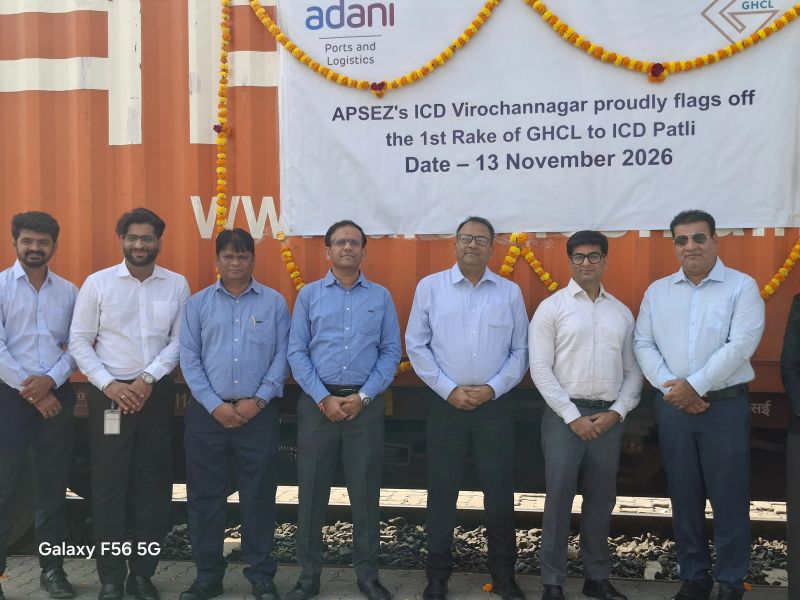
AHMEDABAD: In a significant development aimed at strengthening rail-based logistics operations and enhancing connectivity across India’s inland freight network, Adani Ports and Special Economic Zone (APSEZ), through its ICD Virochannagar facility, has successfully flagged off the first-ever rake of GHCL to Inland Container Depot (ICD) Patli.

The flag-off ceremony, held on November 13, 2026, marked an important operational milestone for APSEZ’s ICD Virochannagar and GHCL, reflecting their continued efforts towards expanding rail-linked logistics capabilities and facilitating more efficient freight movement.

The commencement of this new rail movement represents a positive step towards strengthening the transportation network between the two inland logistics facilities. It also underscores the growing importance of integrated rail infrastructure in supporting seamless cargo movement, improving supply chain connectivity and offering businesses more efficient logistics solutions.

The introduction of the GHCL rake from ICD Virochannagar to ICD Patli is expected to further reinforce rail-based freight transportation as an important component of the country’s evolving multimodal logistics ecosystem.

The milestone also highlights APSEZ’s continued focus on developing integrated logistics infrastructure and expanding the reach of its inland container depots to facilitate efficient cargo transportation beyond traditional port operations.

With rail connectivity playing an increasingly important role in India’s logistics transformation, such initiatives are expected to contribute towards improving supply chain efficiency, strengthening inland transportation networks and supporting the country’s broader vision of building a cost-effective and integrated logistics ecosystem.

The successful flag-off of the first GHCL rake is therefore not just an operational achievement but also an encouraging step towards deeper logistics collaboration and stronger rail connectivity.
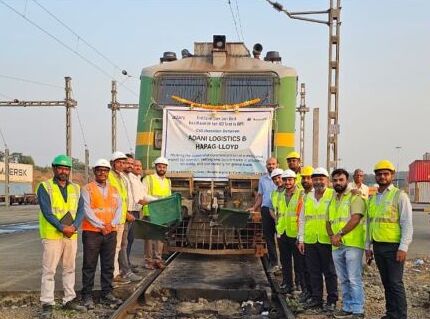
Adani Logistics and Hapag-Lloyd Flag Off First Export Store-Door Block Train from ICD Tumb to JNPT, Strengthening Door-to-Ship Logistics

VALSAD (GUJARAT): Adani Logistics Limited (ALL) a wholly-owned subsidiary of Adani Ports and Special Economic Zone Ltd. (APSEZ), in collaboration with global container shipping major Hapag-Lloyd, has achieved a significant milestone in strengthening India’s export logistics ecosystem with the flag-off of the first Export Store-Door Block Train from Inland Container Depot (ICD) Tumb to Jawaharlal Nehru Port (JNPT).

The initiative marks another important step in APSEZ’s efforts to develop integrated, end-to-end logistics solutions that seamlessly connect exporters’ facilities with international shipping networks. By bringing together first-mile cargo pickup, inland container depot operations, rail transportation and port connectivity, the initiative aims to simplify export movements while enhancing operational efficiency and supply chain integration.

The newly introduced Door-to-Ship solution is designed to provide exporters with a more streamlined logistics experience by integrating multiple stages of cargo movement under a coordinated service framework. Instead of managing different transportation and handling arrangements independently, customers can benefit from a connected logistics chain extending from the point of cargo origin to the gateway port.

According to APSEZ, the integrated solution brings together four critical components of export logistics — first-mile pickup, ICD operations, rail transportation and port connectivity — creating a more efficient and coordinated movement of export containers.

The maiden block train movement from ICD Tumb to JNPT also underscores the growing importance of inland logistics infrastructure and multimodal transportation in supporting India’s international trade ambitions.

Strategically located in Gujarat’s industrial belt, ICD Tumb serves important manufacturing and industrial clusters, including Vapi, Silvassa, Daman, Umbergaon and Sarigam. Its connectivity with JNPT provides exporters in these regions with access to a major international maritime gateway. APSEZ’s logistics network includes multimodal logistics parks, container rail services, warehousing and road transportation capabilities.

The collaboration with Hapag-Lloyd further strengthens the integration between inland logistics operations and global maritime transportation. By aligning inland cargo movement with port connectivity and shipping services, the initiative is expected to offer customers greater coordination, improved connectivity and enhanced convenience in managing export shipments.

Strengthening India’s Integrated Export Logistics Network

The launch reflects the increasing emphasis on integrated logistics solutions that extend beyond conventional port and terminal operations. Efficient coordination between first-mile transportation, inland container handling, rail connectivity and maritime services is becoming increasingly important for exporters seeking reliable, cost-effective and predictable supply chains.

For the export community, such integrated solutions can help simplify cargo movement, improve coordination across different logistics touchpoints and provide a more connected route to international markets.

The partnership also reinforces the importance of collaboration between port-led logistics operators and global shipping lines in developing customer-centric supply chain solutions.

With this maiden Export Store-Door Block Train, APSEZ and Hapag-Lloyd have taken another step towards bridging the gap between inland cargo origins and maritime gateways, strengthening India’s multimodal logistics capabilities and supporting the country’s expanding export trade.

The initiative is a further reflection of APSEZ’s vision of building a comprehensive logistics ecosystem that connects businesses, infrastructure and global trade networks through seamless, integrated transportation solutions.

JSW Infrastructure Subsidiary secures ₹60 Crore DFCCIL Project for Gati Shakti Cargo Terminal in Punjab

NEW DELHI: In a significant development for India’s rail logistics infrastructure, JSW Minerals Rail Logistics Private Limited, a step-down wholly-owned subsidiary of JSW Infrastructure Limited, has secured a major infrastructure project from the Dedicated Freight Corridor Corporation of India Limited (DFCCIL) for developing and operating a Gati Shakti Multi-Modal Cargo Terminal in Punjab.

The company has received a Letter of Allotment (LoA) from DFCCIL, an undertaking under the Ministry of Railways, for the proposed project, involving an estimated investment of approximately ₹60 crore. The terminal will be developed at New Shambhu Station, near Rajpura in Punjab, marking another important step towards expanding modern, rail-linked cargo handling infrastructure in the region.

Under the terms of the allotment, JSW Minerals Rail Logistics will undertake the planning, construction, development and subsequent operation of the multi-modal cargo terminal. The project is expected to be completed within 18 months from the applicable approval or land-handover date, in accordance with the stipulated conditions.

The allotment carries a long-term contract period of 35 years, providing an opportunity to establish and operate a dedicated cargo-handling facility that can support the evolving freight transportation requirements of industries and businesses in the region.

The proposed terminal is expected to strengthen rail-based logistics capabilities by facilitating efficient cargo movement and improving connectivity between industrial and commercial centres. Its development also aligns with the broader objectives of the PM Gati Shakti National Master Plan, which seeks to promote integrated infrastructure development and seamless multimodal connectivity across the country.

The project further underscores the growing role of private-sector investment in India’s railway logistics ecosystem, particularly in the development of dedicated cargo terminals and supporting infrastructure to enhance freight efficiency and encourage a greater modal shift towards rail transportation.

For JSW Infrastructure, the latest allotment represents another opportunity to expand its presence in the integrated logistics and transportation segment, complementing its broader infrastructure and supply chain capabilities.

With a 35-year operating horizon, the proposed Gati Shakti Multi-Modal Cargo Terminal at New Shambhu is expected to emerge as an important addition to Punjab’s logistics infrastructure, supporting regional freight movement and contributing to India’s ongoing efforts to build a more efficient, integrated and competitive logistics network.

CBIC amends ATA Carnet Rules to allow Additional Time for Temporary Imports

NEW DELHI: The Central Government has amended the existing customs exemption provisions to provide additional flexibility in the temporary import of goods under the ATA Carnet system. Under the latest Notification No. 36/2026-Customs dated 13 November 2026, the Principal Chief Commissioner or Chief Commissioner of Customs has been empowered to extend the prescribed four-month period for re-export of goods, subject to specified conditions.

The amendment is expected to provide relief to businesses, exhibitors, professionals and other entities that temporarily bring goods into India under an ATA Carnet but require additional time beyond the existing four-month period.

The Ministry of Finance, through the Department of Revenue and the Central Board of Indirect Taxes and Customs (CBIC), has amended Notification No. 4/2018-Customs dated 18 January 2018.

The amendment introduces an additional proviso under condition (vi) of the original notification.

Under the newly inserted proviso, the Principal Chief Commissioner of Customs or Chief Commissioner of Customs may extend the existing four-month period if satisfied that such an extension is necessary in the public interest.

However, the extension cannot go beyond the validity period of the relevant ATA Carnet.

Understanding the ATA Carnet System

An ATA Carnet is an international customs document that allows goods to be temporarily imported into a country without payment of customs duties and taxes, subject to prescribed conditions.

It is commonly used for the temporary movement of:

  • Exhibition and trade fair goods.
  • Professional equipment and tools.
  • Commercial samples.
  • Goods used for demonstrations and promotional activities.

The system simplifies cross-border movement of goods by reducing the need for separate customs documentation and duty payments in participating countries.

The amendment gives customs authorities the discretion to grant additional time beyond the existing four-month period.

For example, if goods are temporarily imported into India under an ATA Carnet and the prescribed four-month period is insufficient, the importer may seek an extension from the competent customs authority.

The authority may grant the extension if it considers the request necessary in the public interest.

However, the extension is not automatic. It remains subject to the satisfaction of the Principal Chief Commissioner or Chief Commissioner of Customs, and the extended period cannot exceed the validity of the ATA Carnet.

Why Is This Amendment Important?
The earlier four-month timeline could create practical difficulties where goods required to remain in India for a longer period due to business requirements, exhibitions, professional assignments or other circumstances.

The newly inserted proviso provides greater administrative flexibility by allowing customs authorities to consider requests for additional time.

The key benefit is that eligible cases can now receive an extension without being restricted to the original four-month period, provided the extension remains within the ATA Carnet’s validity.

Effective Date and Legal Reference
The amendment has been issued under Section 25(1) of the Customs Act, 1962, through Notification No. 36/2026-Customs dated 13 November 2026.

It amends Notification No. 4/2018-Customs dated 18 January 2018 by inserting an additional proviso under condition (vi).

Conclusion
CBIC’s latest amendment provides much-needed flexibility for temporary imports under the ATA Carnet system. By empowering senior customs authorities to extend the four-month period, the government has introduced a mechanism to address genuine cases where additional time is required. However, such extensions remain discretionary and cannot exceed the validity of the ATA Carnet.

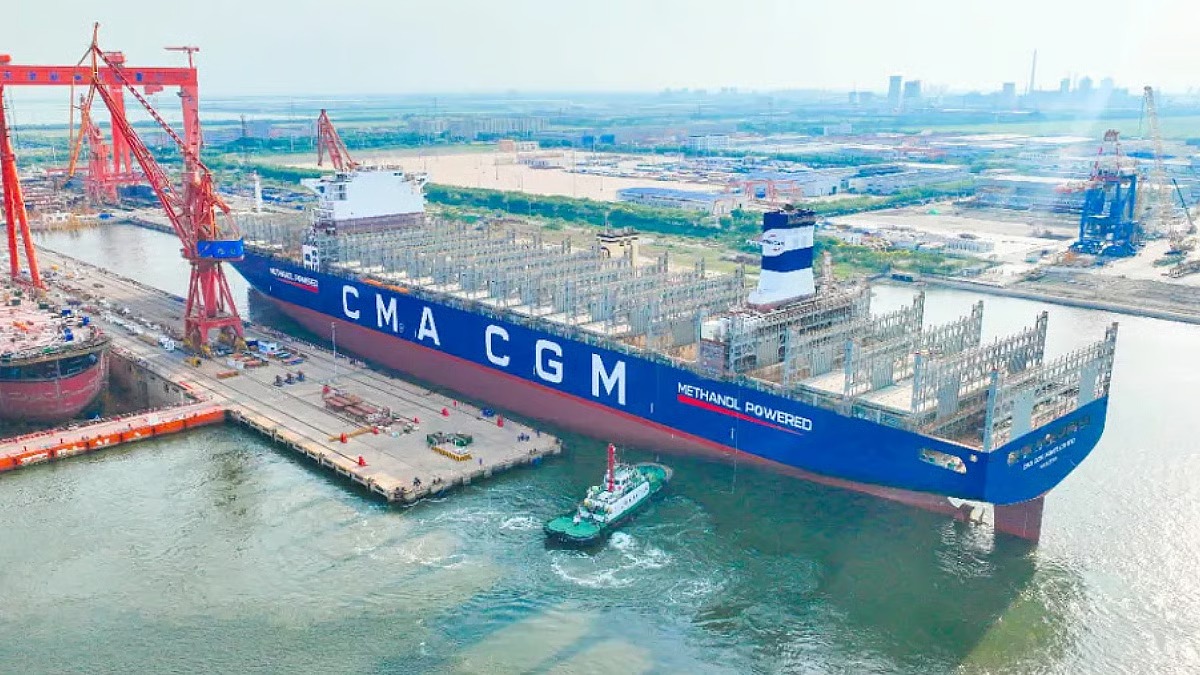
CMA CGM triples profit as Q3 freight rates and cargo volumes rise

MARSEILLE: CMA CGM reported a sharp increase in third-quarter earnings as higher freight rates and growing container volumes strengthened its ocean container business.

The third-largest liner operator said weaker profitability in logistics highlighted uneven conditions across the group. Net profit reached $2.32 billion, compared with about $760 million a year earlier.

The Marseilles-based company said revenue rose 31.1% to $18.4 billion, while earnings before interest, taxes, depreciation and amortization climbed 61.6% to approximately $4.8 billion. The group’s EBITDA margin widened to 25.9%, an improvement of 4.9 percentage points from the third quarter of 2025.

“In an uncertain geopolitical environment, the Group has delivered a strong performance in the third quarter, driven by the momentum and the increasing volumes of our maritime activities,” Chairman and Chief Executive Rodolphe Saade said in the earnings announcement.

CMA CGM carried 6.5 million twenty-foot equivalent units (TEUs) during the quarter, up 5.5% from a year earlier. The company said that growth outpaced the broader market and ranked among its strongest volume increases in recent years.

Shipping revenue increased 37.3% to $12.3 billion, substantially faster than cargo volumes, as average revenue per TEU rose 30% to $1,891. The division’s EBITDA reached $4 billion, compared with $2.2 billion a year earlier, while EBITDA margin expanded by 7.5 percentage points to 32.4%. 

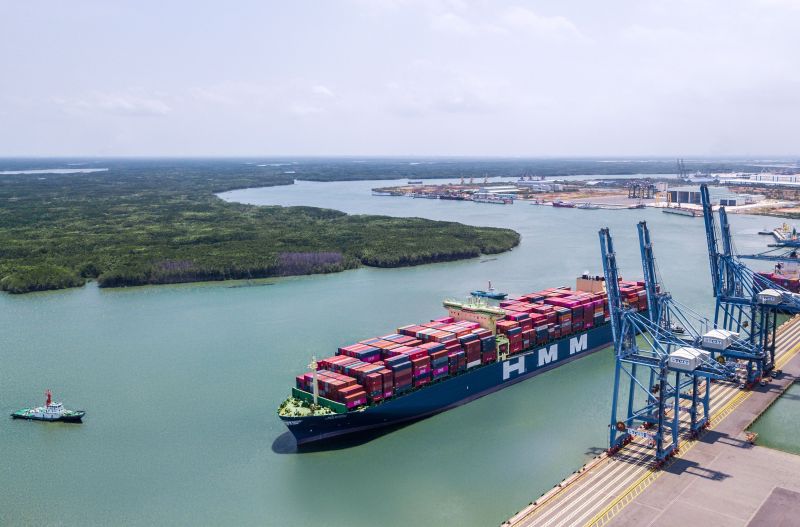
HMM posts 370% jump in Q3 operating profit, Q3 Net profit soars 405%

SEOUL: South Korean shipping company HMM reported a 405% leap in third quarter profit as container operations thrive in global uncertainties.

HMM reported a third quarter net profit of KRW1.55 trillion ($1.16 billion) up 405% from KRW304 billion in the same period in 2025. The company racked up revenues of KRW4.13 trillion in Q3 2026 an increase of 52% year-on-year.

HMM announced on the 12th November that third-quarter operating profit on a consolidated basis rose 370% year over year to 1.3947 trillion won. It was the highest third-quarter operating profit since the third quarter of 2024. Net profit climbed 405% to 1.5352 trillion won, and revenue increased 52% to 4.1271 trillion won.

 Financial Results (Consolidated)

4132 HMM posts 370% jump in Q3 operating profit, Q3 Net profit soars 405%

The Container division focused on network expansion and high-yield cargo via its ‘Hub-and -Spoke’ strategy. Profitability was enhanced through strategic operations despite global uncertainties, including Middle East geopolitical risks and natural disasters at major ports.

The bulk division secured a stable revenue base against market volatility through long-term contracts. HMM continues to diversify its fleet beyond dry bulkers and tankers into car carriers(PCTCs), gas carriers, and multi-purpose-vessels(MPVs).

Ocean Network Express resumes Suez Canal transits, signalling gradual return of major shipping lines

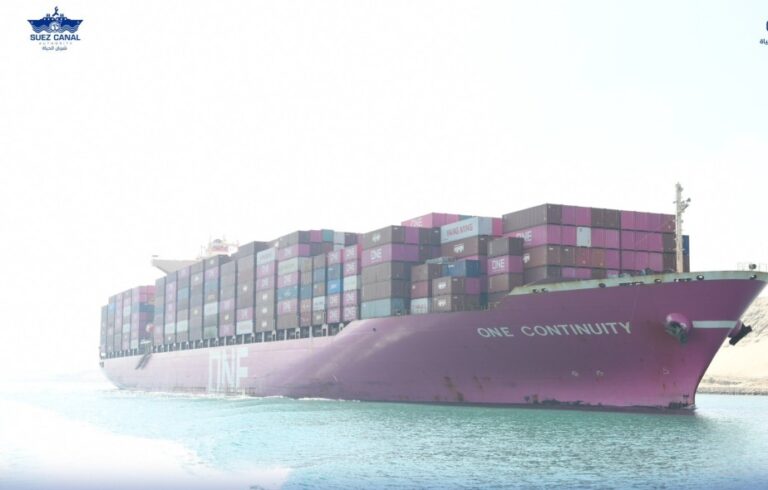
ISMALIA : Singapore-based global container shipping company Ocean Network Express (ONE) has resumed transits through the Suez Canal, marking another significant development in the gradual restoration of normal shipping operations along the vital Asia-Europe trade corridor.

Admiral Ossama Rabie, Chairman of the Suez Canal Authority (SCA), announced that the container vessel ONE CONTINUITY successfully transited the canal on Sunday, November 15, as part of the southbound convoy. The vessel was sailing from Singapore to the Netherlands, operating on the FE1 service under the Premier Alliance, which comprises ONE, HMM and Yang Ming.

The 320-metre-long and 46-metre-wide vessel has a gross tonnage of approximately 88,000 tonnes and a carrying capacity of 8,110 TEUs. Its transit represents an important step towards the gradual return of major container shipping operators to the shorter Asia-Europe maritime route through the Suez Canal, instead of diverting vessels around the Cape of Good Hope.

Welcoming the development, Admiral Rabie said the return of major shipping companies demonstrates the continued importance of the Suez Canal as a strategic and sustainable maritime link connecting East and West. He reaffirmed that the Authority remains fully prepared to handle vessel traffic at full capacity and accommodate the return of ultra-large container ships.

He further stated that the Suez Canal Authority had maintained continuous communication with shipping companies and other maritime stakeholders since the beginning of the Red Sea crisis. By closely monitoring geopolitical developments and changing market conditions, the Authority has worked towards facilitating the gradual resumption of transits and restoring confidence among international shipping operators.

Admiral Rabie also indicated that three additional shipping services operated by the Premier Alliance are expected to resume Suez Canal transits, replacing the longer routing around the Cape of Good Hope. This could further strengthen the canal’s role in international container shipping and improve connectivity between Asian and European markets.

Commenting on the decision to resume the canal transit, Captain Oleksandr Shumakov, master of ONE CONTINUITY, highlighted the significant operational and commercial advantages offered by the Suez Canal. The shorter route between Asia and Europe enables shipping companies to reduce sailing distances, save transit time, lower fuel consumption and improve cargo delivery schedules.

The captain also appreciated the navigation support extended by the Suez Canal Authority during the vessel’s passage, particularly the professional assistance provided by canal pilots and tugboat crews. He acknowledged the Authority’s ongoing infrastructure development initiatives, including the expansion of two-way navigation sections and widening of certain stretches, which have contributed to safer and smoother vessel movements.

The resumption of ONE’s Suez Canal transits comes at an important time for the global shipping industry, which has been adapting to prolonged disruptions and extended sailing routes across the Red Sea region. A gradual return of major container services could help restore schedule reliability, optimise vessel deployment, reduce voyage costs and improve the efficiency of global supply chains.

The latest development also reinforces the strategic importance of the Suez Canal in facilitating international trade, as the maritime industry looks towards a gradual normalisation of shipping movements between the Far East and Europe.

US extends Shipping Law waiver 90 days, to allow freer movement of oil, commodities

WASHINGTON: President Donald Trump ⁠extended ⁠for 90 days a ⁠waiver of a shipping law to allow foreign-flagged ​ships to transport oil and other commodities between US ports, a White ‌House official said on ‌Friday.

Reuters reported on Thursday that industry sources said the administration ⁠would ⁠extend the waiver on the more than 100-year-old Jones Act.

It ​has been the longest waiver in the history of the shipping law.

The administration issued a blanket waiver in March, a month after the ​US launched the war on Iran, in an effort to lower ⁠oil ⁠and fuel prices. In ⁠August, ​it extended the waiver but mandated that decisions would be made on ​a case-by-case basis, ⁠a stipulation continued through the latest waiver.

The Jones Act requires cargo moving between US ports to be carried on ships built in the US, owned by US companies and crewed by American ⁠workers. Allowing the waiver aims to lower gas, diesel and fertilizer ⁠prices driven up by the war on Iran by increasing shipping flexibility and reducing transport bottlenecks.

Since the waiver was issued in March, an additional 90 million barrels of petroleum, mostly refined, have been shipped between US ports, the White House said. The total includes 27 million barrels of gasoline, 26 million barrels of crude oil, and 6 ⁠million barrels of renewable fuels.

The length of waivers has been limited in the past as the Jones Act is supported by the domestic shipbuilding business, a powerful lobby across ​the country.

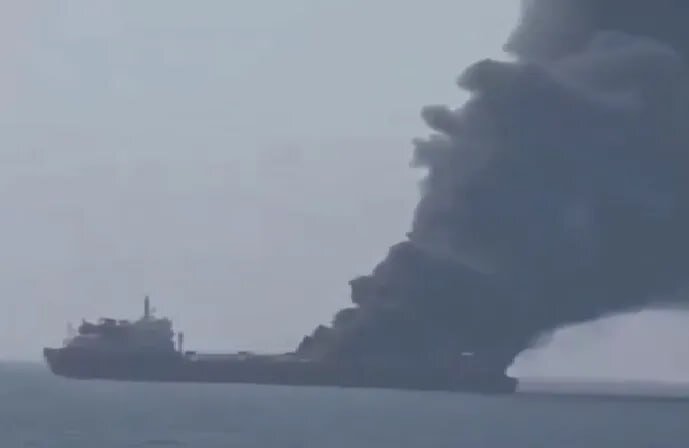
Iran says supertanker carrying 2 million barrels of oil sinks after 2 ships hit mines in Strait of Hormuz

TEHRAN : Iran’s Revolutionary Guards said on Sunday that a supertanker carrying more than two million barrels of oil had sunk after hitting a naval mine and catching fire in the Strait of Hormuz.

Earlier, the Guards’ Navy reported that two tankers had exploded and caught fire after striking naval mines in the strategic waterway, according to a statement carried by Iranian state media.

The IRGC said the sunken ship was one of two that hit mines while transiting, although no independent confirmation of the incidents have come through, reports said.

Since the West Asia war broke out in late February, Tehran has tightened its control over maritime traffic through the Strait of Hormuz, directing vessels to follow routes approved by Iran. Ships attempting to pass through without authorisation have reportedly come under attack.

In response, the United States imposed a naval blockade on Iranian ports and assisted tankers navigating the waterway, which normally accounts for nearly one-fifth of global oil shipments.

India-US trade deal by December G20 Summit? Former US diplomat sees possible breakthrough

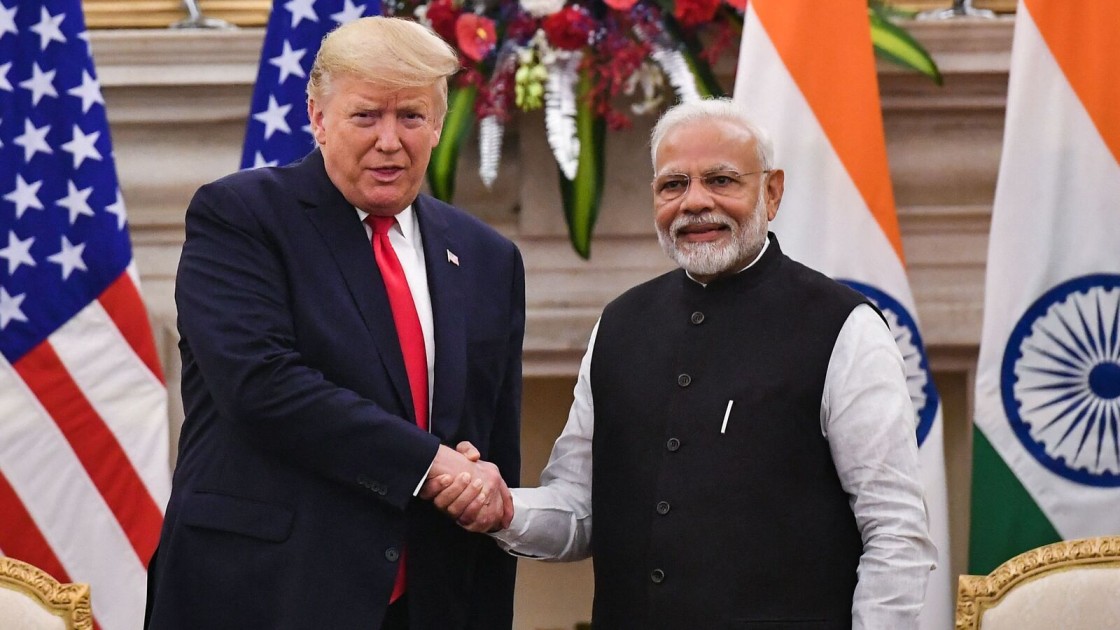
NEW DELHI: There is a desire within the US and India to try to conclude phase one of the bilateral trade agreement, perhaps by the G20 Summit in Florida next month, a former senior US diplomat said.

India and the US finalised a framework for the first phase of the bilateral trade agreement in February following a phone call between Prime Minister Shri Narendra Modi and US President Donald Trump. However, changes in the American tariff landscape have led to renewed negotiations, which are yet to conclude.

“By all expectations, I think that there’s a desire to try to conclude the phase one deal, perhaps by the G20,” Nisha Biswal, former Assistant Secretary of State for South and Central Asia, told PTI in an interview here.

The G20 brings together major industrialised and developing economies to discuss global issues. Under a rotating presidency, it holds ministerial meetings throughout the year, culminating in an annual Leaders’ Summit, which Trump will chair on December 14-15 in Florida, US.

“For the administration, trying to figure out how to address that and still stay within the strictures of the tools that it is using is also going to be an issue that they have to navigate,” she said.

Biswal said she was hopeful that Washington and New Delhi were aware of both the importance of the US-India corridor and the ability of the trade negotiators to actually reach an outcome.

“They are two extraordinarily complex economies. So I understand that this is not quite as easy as a back-of-the-envelope type of agreement; we’re actually trying to get through a lot of tricky issues,” she said.

Biswal said the India-US relationship has been a mixed bag during President Trump’s second tenure, which started in 2025.

She said the bilateral relationship stabilised after Modi and Trump announced the framework of the first phase of the trade deal in February this year and negotiations began in earnest.

“2026, I think, saw a kind of stabilisation in the relationship as the trade negotiations kind of took off in earnest, particularly after India made some very smart moves,” Biswal said.

The former diplomat said the US took note when Prime Minister Modi met with Chinese President Xi Jinping and Russian President Vladimir Putin on the sidelines of the Shanghai Cooperation Organisation meeting in Tianjin last year.

“When India and the EU signed their trade agreement, again, Washington took notice. You saw from US Trade Representative Ambassador Jamieson Greer, Treasury Secretary Scott Bessent, comments to that effect in terms of India-EU,” Biswal said.

“Not soon thereafter, you saw some agreement in principle on a phase one, you know, deal between the US and India,” Biswal said.

On October 20, Trump said Washington and New Delhi were “pretty close” to reaching a trade deal, adding that the proposed pact would differ from earlier agreements.

Speaking to reporters at the Oval Office, he said India wanted to make a deal and expressed confidence that an agreement would be reached.

India’s Commerce and Industry Minister Piyush Goyal on Thursday said New Delhi will have one of the “best” trade deals with Washington in every respect.

He said that India has negotiated a very good set of outcomes with the US in the pact. “And in every respect, India will have one of the best deals with the US,” he told reporters in Visakhapatnam.