Home Blog Page 151

Vietnam-Canada Trade is growing fast in 2026, Here’s why Indian Exporters and Forwarders should be watching

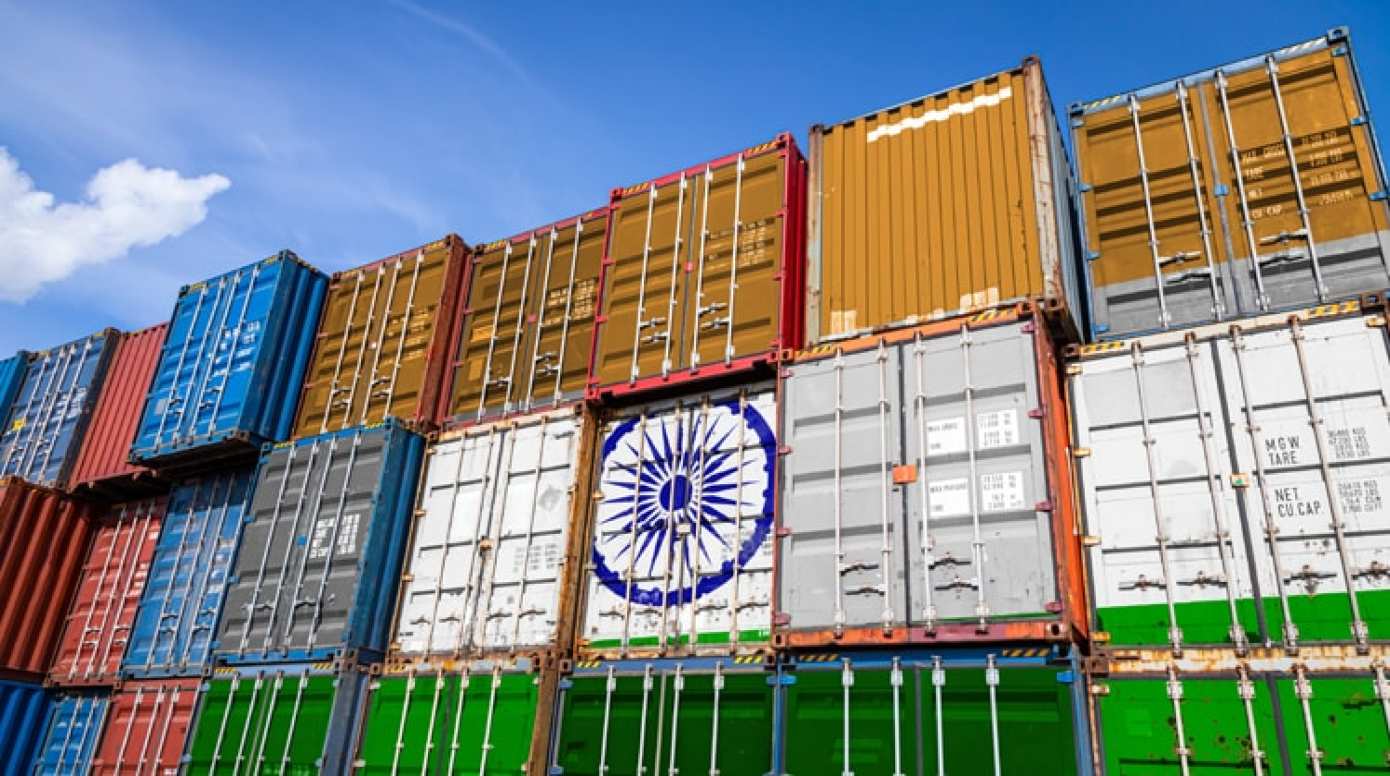
NEW DELHI: Vietnam’s trade relationship with Canada has moved from a footnote in regional trade data to one of the more closely watched corridors in global logistics this year, and the numbers explain why. Two-way merchandise trade between the two countries crossed roughly $8.6 billion, with Vietnam’s exports to Canada climbing more than 18 percent in a recent full year and continuing to grow another 25 percent in the months that followed. For a trade lane that barely registered a decade ago, that kind of sustained double-digit growth puts Vietnam among the more resilient exporters in Canada’s import mix, at a time when several of Canada’s larger trading partners have struggled to hold their ground.

Why Vietnam Is Pulling Ahead on This Lane

Part of the answer sits in the CPTPP, which brought Vietnam and Canada into the same trade agreement back in 2019 and has steadily lowered the friction for Vietnamese exporters entering the Canadian market. But the bigger driver is what’s happening in Vietnam’s export mix more broadly. The country crossed $930 billion in total trade in 2025, up more than 18 percent year on year, with growth concentrated in electronics, machinery, textiles, footwear, and wood products, the same categories that have made Vietnam the preferred alternative for manufacturers looking to diversify away from single-country sourcing. Canada, alongside the US and EU, has become one of the markets Vietnam is actively courting as it works to expand beyond the roughly three dozen export destinations already generating over a billion dollars in annual trade.

There’s a tariff angle too, and it cuts in an unusual direction. Vietnam currently faces a higher effective US tariff rate than Canada does, yet Vietnamese exports to the US have still grown fast enough that some analysts now expect Vietnam to overtake Canada as a source of American imports within the next several years. That competitive pressure on Canada’s own US-bound trade is part of what’s pushing Canadian buyers to look more closely at Vietnamese suppliers directly, rather than relying on established North American supply chains that are themselves under tariff strain.

Why This Matters for Indian Exporters and Logistics Players

None of this is happening in India’s backyard, but it’s happening in India’s competitive set. Vietnam and India are chasing many of the same buyers in textiles, footwear, electronics assembly, and light manufacturing, and Vietnam’s ability to lock in preferential access to a market like Canada through CPTPP is exactly the kind of structural advantage Indian exporters in comparable categories need to track. When a competing sourcing hub grows its access to a G7 market by double digits two years running, that’s demand India isn’t capturing in categories where Indian manufacturers are otherwise well positioned to compete.

The logistics side of this matters just as much as the trade policy side. Indian freight forwarders and NVOCCs increasingly operate well beyond India-origin cargo, arranging third-country moves for clients with sourcing or manufacturing footprints spread across multiple countries. A growing number of Indian textile and apparel groups have already shifted a share of production to Vietnam over the past several years, following the same China-plus-one logic that’s reshaping sourcing decisions across the industry. For those companies, and for the Indian logistics firms managing their supply chains, a Vietnam-to-Canada shipment isn’t a hypothetical lane on a map. It’s an active booking that needs the same rate visibility, transit reliability, and documentation support as any other trade corridor in a diversified network.

The SMB Angle That’s Easy to Miss

Most coverage of trade corridors like this focuses on the volumes moved by large manufacturers and established trading houses, but the growth on the Vietnam-Canada lane is increasingly being carried by smaller shippers too, businesses moving a container or two a month rather than full vessel allocations. That’s a harder segment to serve well. Traditional forwarders often set volume minimums that exclude smaller shippers outright, or bundle pricing in ways that only become transparent after several rounds of quotes.

Digital-first freight platforms have started filling that gap on specific corridors, offering instant comparative quotes and guaranteed space without the commitments larger forwarders expect. Ship4wd, for instance, runs Vietnam to Canada shipping for SMBs as one of its dedicated trade lane offerings, giving smaller importers and exporters the kind of booking transparency that’s traditionally been reserved for shippers with far larger volumes. For Indian trading companies or their overseas manufacturing partners moving smaller consignments on this specific route, that kind of access matters more than it would on a high-volume lane where negotiating power comes from scale alone.

Watching a Lane Still in Motion

Vietnam’s 2026 trade outlook isn’t without friction. Rising protectionism, tightening environmental standards, and growing scrutiny of forced-labour compliance across Southeast Asian supply chains are all pressures Vietnamese exporters will have to manage as they push toward ambitious export growth targets this year. But the direction of travel on the Vietnam-Canada corridor specifically looks settled for now, and that’s worth tracking closely from India, both as a signal of where competing manufacturing hubs are winning market access India hasn’t yet secured, and as a reminder that global logistics increasingly runs through networks Indian forwarders participate in well beyond the country’s own ports.
Bopal, Nehrunagar to get Metro connections

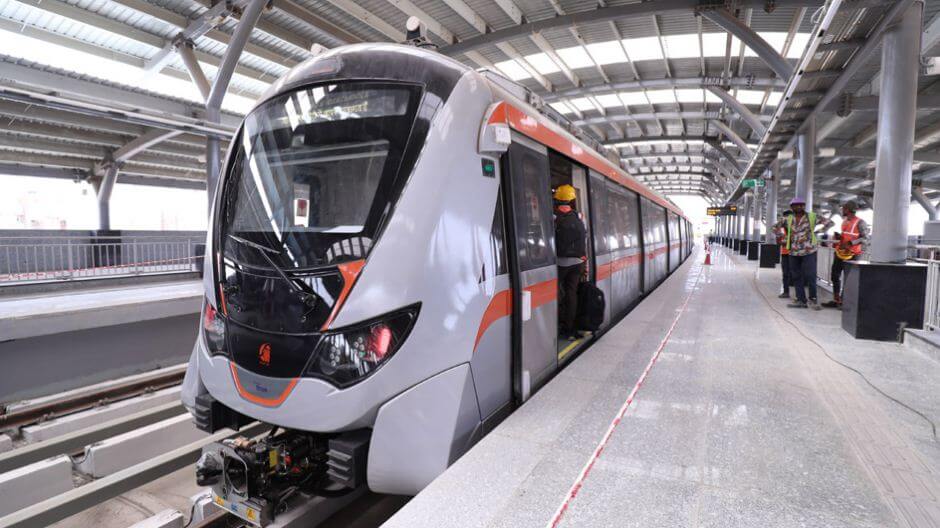
AHMEDABAD: Gujarat Metro Rail Corporation (GMRC) has stepped up preparatory work for its third-phase expansion, estimated to cost Rs 2,825 crore, with four tenders worth Rs 35.81 crore floated for shifting underground utilities along key stretches of Phase 3B and 3C and at the Gyaspur depot. The 60-km Phase 3, which will have 42 stations on a circular route, is also expected to extend towards Dholera Airport.

The process of appointing design consultants for three Metro-cum-Regional Rapid Transit System (RRTS) hybrid corridors under Phase 3 has started. Together, the corridors will cover 48.48 km and comprise 32 elevated stations.

The Vakil Bridge–Badarabad corridor will stretch 12.38 km and have six stations. The APMC–Rakhiyal corridor will cover 14.5 km with 11 stations, while the longest corridor, from Malek Saheban Stadium to Nehrunagar, will span 21.6 km and have 15 stations.

The proposed hybrid corridors are designed to provide faster connections between Ahmedabad’s urban areas and the wider regional transport network, adding a regional mobility component to the city’s planned Metro expansion.

Tenders issued

The utility-shifting works involve relocating electricity, water, gas, sewerage and telecom lines before construction of pillars, viaducts and stations begins. The preparatory work is intended to prevent repeated excavation of roads and minimise delays during the civil construction phase.

The largest tender, valued at Rs 13.82 crore, covers utility shifting along the APMC–Prakashnagar–Wadaj stretch. Another tender, worth Rs 13.17 crore, covers the Prakashnagar–Wadaj station link. Utility shifting from Canal Road to the Badarabad dead end under Phase 3B has been estimated at Rs 7.89 crore. The works have completion periods ranging from six to 10 months.

The Public Investment Board (PIB) has approved the third phase, which will now be placed before the Union Cabinet for consideration. The planned 60-km circular route is expected to strengthen connectivity across Ahmedabad while extending the Metro network towards the proposed Dholera airport link.

Shipping slows through Strait of Hormuz after tanker attacks

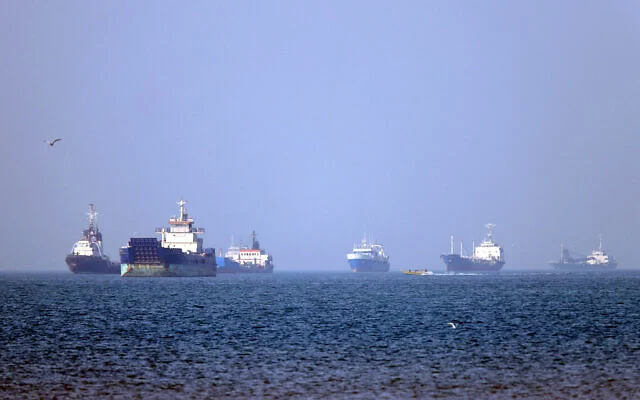
SINGAPORE : Shipping through the Strait of Hormuz slowed over the weekend, data showed on Monday, following attacks ​on tankers, while U.S.-Iran talks to resolve the Middle East ‌conflict stalled. Five commodity vessels transited the strait on Saturday, with none registered for Sunday, shiptracking data from Kpler showed, versus 31 in the prior weekend.

Ships ​entering the strait on Saturday included an empty Very Large ​Crude Carrier with its Automatic Identification System switched off ⁠and an Indian-flagged Very Large Gas Carrier that used the Iranian ​route, Kpler data showed.

A small tanker laden with Iranian fuel oil ​exited, it showed.

Shipping appeared to grind to a near standstill after the United Arab Emirates said three vessels operated by the Abu Dhabi National Oil Company were ​attacked in transit last week.

The United States said it could ​maintain a naval blockade of Iran indefinitely.

Some ships may pass through undetected with transponders ‌off, ⁠but the figures are far from the more than 130 ships a day that traversed the Strait of Hormuz before the war launched by the U.S. and Israel on Iran in February.

Washington must ​meet Iran’s conditions ​regarding the ⁠strait in order for shipping to resume, Foreign Minister Abbas Araqchi said in an interview with local media ​on Saturday.

The waterway handled a fifth of the world’s ​shipments ⁠of crude oil and liquefied natural gas before the war.

At the Bab el-Mandeb strait, where Yemeni Houthis declared a naval blockade on Saudi ⁠Arabia on ​July 20, Kpler data showed 49 ​weekend transits by commodity vessels, down from 55 in the prior week. There were ​no tracked Saudi oil shipments.

Source: Reuters

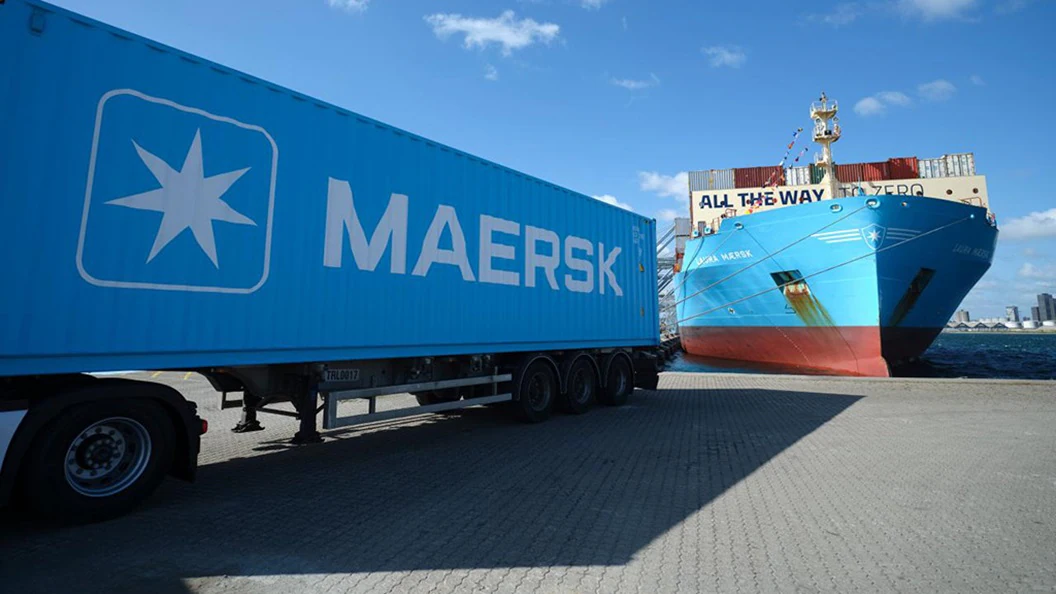
Maersk brings back AE19 Shipping Service through Suez Canal

COPENHAGEN : The latest move is part of a cautious return to the Suez Canal, with four Maersk services switching back since early July, the most recent in mid-August, while nine others continue to sail around Africa. Shipping companies Maersk and Hapag-Lloyd moved another major Asia–Europe container service through the Suez Canal, marking a further step in the gradual return of shipping to the route.

The AE19 Service, operated jointly under the companies’ Gemini Cooperation, connects Asia, the Mediterranean, Saudi Arabia and Europe. It had previously been sailing around the Cape of Good Hope. The two carriers announced on Monday that the change would take effect immediately, beginning with the westbound voyage of the Berlin Maersk.

Hapag-Lloyd told Euronews that the AE19 switch is expected to save around four weeks compared with sailing around the Cape of Good Hope. Maersk said the decision followed an assessment of security conditions in the Red Sea. Hapag-Lloyd described it as a “targeted adjustment for one selected service, not a general network-wide return”.

Hapag-Lloyd said any further routing decisions would depend on security, whether the route was operationally viable and the impact on customers.

The Danish shipping group told Euronews that AE19 is one of four services it has moved from the Cape of Good Hope to Suez since early July. The others are AE15, MECL and WAF6.

Maersk told Euronews that nine other services which could benefit from using the Red Sea and Suez route continue to sail around the Cape, but said it could not comment on potential future changes.

Shipping analysts also say the return of a handful of services should not be mistaken for a broader return to the canal.

Simon Heaney, senior manager for container research at maritime consultancy Drewry, told Euronews that the pace of Suez traffic’s recovery remains closely tied to how the Strait of Hormuz crisis and the wider conflict in the Middle East play out.

“While the latter remains unresolved, we do not expect to see a meaningful return of Asia-to-Europe loops via Suez,” he said.

Why the return will be gradual
Even if security conditions improve, shipping companies are unlikely to move all their services back through Suez at once.

Heaney said the return would probably happen in stages, beginning with journeys from Europe that generally carry lower-value cargo. Carriers would need confidence that hostilities would not resume before committing more valuable shipments to the route.

There is also a commercial reason for moving slowly.

Sailing around Africa requires more ships because each journey takes longer. If many services switch back to Suez at once, those ships would be freed up just as carriers are already taking delivery of large numbers of new vessels.

“Carriers have to manage capacity wisely due to the large number of new ships being delivered,” Heaney said. “Shortening rotations en masse will see rates slide dramatically.”

For European importers, this means the benefits of returning to Suez are unlikely to arrive all at once. A few restored services may offer shorter journeys on selected routes, but normal transit times across the wider network will not return immediately.

An important route for Egypt and Europe

The Suez Canal provides the shortest maritime connection between Asia and Europe, avoiding the much longer journey around the Cape of Good Hope. The diversions have added time and fuel costs to voyages while depriving Egypt of an important source of foreign currency.

The Suez Canal Authority has repeatedly sought to encourage shipping companies to return. In June, its chairman, Admiral Osama Rabie, said shorter transit times and operating savings were helping to attract some of the world’s largest container vessels back to the canal.

He made the comments as the CMA CGM Vendôme, which has capacity for 24,000 twenty-foot containers, passed through Suez on a service between Asia and north-western Europe.

The voyage marked the first southbound Suez transit by the FAL 3 service since January. According to the authority, vessels operated by France’s CMA CGM made 104 journeys through the canal between January and May, with a total tonnage of 12.5 million tonnes.

The return of several services offers early signs of renewed traffic through Suez, but both Hapag-Lloyd and Drewry say AE19 does not yet signal a wider return.

Source : euro news

Rhenus and shipzero launch strategic partnership to scale Book and Claim across air, ocean and road transport

SINGAPORE : The Rhenus Group and the leading global emissions intelligence platform shipzero Friday announced a strategic partnership. Under the agreement, Rhenus customers gain access to a Book and Claim solution designed to reduce climate impact of global transports, covering alternative fuels and battery-electric vehicles across air, ocean and road transport.

As a multimodal logistics service provider, Rhenus relies heavily on external transport capacity. The company is therefore introducing a Book and Claim approach as a solution to reduce the climate impact of transport emissions in areas where Rhenus has no direct influence over the underlying assets. Book and Claim is advantageous here by allowing companies to support lower-emission transport solutions outside the physical transport chain of a specific shipment, with the climate benefit allocated through a verified accounting system. Thanks to shipzero’s auditable platform, companies are less reliant on manual processes and data processing.

Scope and Availability

Through the partnership, Rhenus customers can book alternative fuel and battery-electric transport solutions on a single-shipment basis or through larger, ongoing or retroactive agreements. The solution is available across Rhenus air, ocean and road operations, supported by shipzero’s platform and methodology.

The partnership responds to rising demand across the industry: Book and Claim has become a widely accepted instrument for reducing the impact of logistics emissions, particularly for companies with limited control over the physical assets moving their goods.

“By partnering with shipzero, we aim to scale solutions such as battery-electric vehicles, SAF and SMF to drive the sustainable transformation with our carriers. As more companies commit to Science Based Targets, auditable Book and Claim accounting becomes an increasingly important foundation for credible decarbonisation efforts, and shipzero’s independently verified approach enables us to deliver exactly that to our customers,” remarks Adrian Wojnowski, Manager Sustainable Solutions & Decarbonisation at Rhenus.

A trusted, verifiable approach

Rhenus has chosen to partner with shipzero because the platform offers a robust and auditable solution. Its multimodal coverage and methodological alignment were also key factors.

“We’re proud that Rhenus, as a global, multimodal logistics provider, has placed its trust in shipzero to deliver audit-ready CO2 reduction tracking, built on a methodology aligned with ISO 14083 and the MBM Framework, down to the last detail – for their business and for their customers. It’s exactly the kind of partnership we want to keep building on,” says Martin Jacobs, Director of Client Solutions at shipzero.

Methodology and Regulatory Context

A reliable and verifiable methodology was a key selection criterion for Rhenus when choosing a partner. shipzero’s Book and Claim approach has been audited by the independent certification body Müller-BBM Cert and complies with the Smart Freight Centre’s (SFC) MBM Framework as well as ISO standard 14083 and the GLEC Framework. The emissions reductions achieved are reported separately from Scope 1–3 emissions in accordance with the requirements of the GHG Protocol. This enables companies to transparently track and document the savings achieved.

About Rhenus
The Rhenus Group is one of the leading logistics specialists with global business operations and annual turnover amounting to EUR 8.2 billion. 39,000 employees work at 1,300 business sites in more than 70 countries and develop innovative solutions along the complete supply chain. Whether providing transport, warehousing, customs clearance or value-added services, the family-owned business pools its operations in various business units where the needs of customers are always the major focus.

About shipzero
shipzero is the industry-leading data intelligence platform for effective emissions tracking and reduction in global freight transportation. The Hamburg-based company supports enterprises and logistics service providers in creating CO2 transparency and facilitating the path to “net-zero” – with decision-oriented information based on data rather than assumptions. shipzero brings together experts in data management, logistics, and sustainability.

The company specialises in the integration of primary energy data to ensure a precise calculation of emissions. shipzero’s methodology is certified by the Smart Freight Centre (SFC), fully aligned with the international Global Logistics Emission Council (GLEC) Framework V3 and compliant with International Organization for Standardization (ISO) 14083 standards.

New research by UCL and Strider Carbon shows financiers persistently priced in transition risk late in Germany’s power sector

LONDON: Shipping lenders and investors risk repeating the mistakes made by Europe’s electricity utilities and their financiers a decade ago, and the financial fallout could reach far beyond individual shipowners to lenders, investors, cargo owners and other supply-chain stakeholders.

The report, Lessons from electricity sector transitions and historic shipping collapses for understanding shipping stranded asset risks, by UCL Energy Institute’s Shipping and Oceans Research Group and Strider Carbon examines how stranded assets actually materialised during the renewable energy transitions in Germany and the UK, and how the resulting losses spread from asset owners to banks, retail investors and other stakeholders. It combines this with analysis of two shipping-sector precedents — the collapse of Germany’s KG shipping fund model and the bankruptcy of Hanjin Shipping — to draw out what could happen as shipping decarbonises.

Previous UCL research has estimated that as much as a third of the value of the current and ordered global fleet is at risk of stranding under a 1.5°C-aligned transition. This new report goes further, tracing how that could play out unless actions are taken now to mitigate the risk — and who ends up bearing the losses.

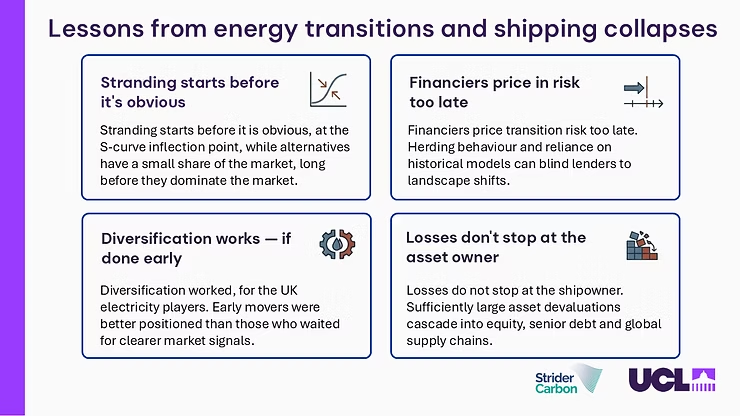
Dr Marie Fricaudet, Senior Research Fellow at the UCL Shipping and Oceans Research Group commented: “Our analysis of past energy transitions indicates that asset impairments often begin well before new technologies dominate the market. For shipping, this suggests transition pressures could affect fossil-fuel vessels while alternative fuels still hold a modest market share”

Key findings and implications for the shipping industry:

Stranded asset risks start earlier than expected: In both the German and UK electricity transitions, asset impairments and early plant closures began when renewables still represented only a modest but fast-growing share of generation — not once low-carbon technology had already taken over. The report suggests shipping could see similar pressure on fossil-fuel-dependent vessels well before alternative fuels reach significant market share.

Financiers are typically slow to price in risk: Equity markets and credit rating agencies in Germany were largely inert until stranded assets had already begun to materialise; Moody’s did not flag German-specific stranded asset risk until 2014, almost a decade later from the point at which renewables were gaining traction. The same slow recognition pattern shows up in shipping’s own history — most notably in the KG fund collapse, where banks deferred enforcing debt claims to avoid fire sales, a decision that delayed rather than prevented the eventual losses.

Early diversification pays off – waiting until there is certainty doesn’t: UK utilities that invested in renewables early were better shielded from financial losses than German utilities that stuck with incumbent technology. The report suggests shipping companies and investors that diversify early into more efficient, Scalable Zero Emission Fuel-compatible (SZEF as defined in Climate Action in Shipping – Progress towards shipping’s 2030 breakthrough) and SZEF-retrofit-ready or vessel types less exposed to fossil cargo trade may be better placed to manage the transition ahead.

Losses don’t stop with shipowners: The KG fund collapse imposed severe losses on retail investors and contributed to major loan impairments at Commerzbank and HSH Nordbank. The 2016 collapse of Hanjin Shipping — the largest bankruptcy in container shipping history — left $14bn of cargo stranded at sea, hit 8,300 cargo owners, and exposed Korean policy and commercial banks both as direct lenders and as beneficial owners of leased vessels. The report finds that sufficiently large devaluations can pass losses through the entire maritime financial ecosystem, even to parties with no direct ownership stake..

Prasanna Colluru, Managing Director at Strider Carbon, said: “Ship finance relies on mechanisms such as seniority, asset collateral and short tenors to mitigate risk. The KG and Hanjin case studies show that these protections, which held through ordinary shipping cycles, proved less reliable in practice once losses became systemic. Transition risk will test these levers in much the same way, as it manifests through several channels — policy and technology, their timing, and their interaction with the freight market. The institutions that fared best in the historical shipping cases recognised losses early and acted on them rather than deferring.”

The report’s authors argue that shipowners, financiers and policymakers should not wait for certainty before acting. Public financial institutions — including development banks, state-backed lenders and export credit agencies — are highlighted as bearing a disproportionate share of losses in past shipping crises, underscoring the case for early assessment and disclosure of climate-related transition risk in shipping portfolios.

The report notes important limits to the comparison. Shipping is far more fragmented than the concentrated electricity sector, is governed internationally through the IMO rather than by national policy, and ships (unlike power plants) can in some cases be retrofitted rather than replaced. However, the core financial mechanics — slow risk pricing, the protective value of early diversification, and loss transmission from owners to lenders — hold across both sectors.

ClassNK grants Innovation Endorsement for Products & Solutions to “eVa COLREGS” developed by eDOT Solutions

TOKYO : ClassNK has granted its Innovation Endorsement for Products & Solutions to “eVa COLREGS”, an AI-powered maritime COLREG training platform developed by eDOT Solutions.

The platform is designed to enhance understanding and proficiency in the International Regulations for Preventing Collisions at Sea (COLREG) among seafarers and maritime educational institutions, and is offered as a solution to support practical maritime education and training.

In order to promote the spread and development of innovative technologies, ClassNK has offered Innovation Endorsement for Products & Solutions. ClassNK supports the deployment of products and services through third-party certification for equipment and software technology with innovative functions. For more information, please visit this page.

–     Product name:

eVa COLREGS

–     Scope of Certification:

  1. AI-Powered Contextual Question Generation Engine for Adaptive COLREG Assessment
  2.  Rule-Based Real-Time COLREG Compliance Feedback and AI-Powered Post-Session Report Analysis
  3. AI-Generated Lights, Shapes and Sound Signals Identification Training with Simulated Vessel Scenarios
  4. Dual-Mode Delivery Architecture: Native Desktop Application and Browser-Based Game Streaming Across Devices
  5. 3D Maritime Simulation on Unreal Engine (developed by Epic Games) with Configurable Multi-Monitor Bridge Architecture

Detailed information on each product and solution is available on the following page.

https://colregs.ai

About eDOT Solutions

eDOT Solutions is a maritime software firm headquartered in Goa, India, developing AI-powered digital solutions for the global maritime industry

Website: https://www.edot-solutions.com/

India’s July exports surge nearly 20%, signalling strong external-sector resilience

NEW DELHI : India’s Merchandise Exports delivered a strong performance in July 2026, rising nearly 20% year-on-year to US$44.24 billion, even as global trade faced continued geopolitical disruptions, elevated freight costs and supply-chain pressures.

The sharp increase was supported by robust shipments of electronics, engineering goods and other manufactured products, underlining the growing competitiveness and diversification of India’s export basket.

The strong export performance, however, was accompanied by a significant rise in imports. Merchandise imports climbed 17.51% to US$76.22 billion, resulting in a goods trade deficit of approximately US$32 billion—the highest in six months.

Economists attributed the increase in the import bill partly to elevated global commodity prices and higher input costs arising from the continuing West Asia crisis.

According to Aditi Nayar, Chief Economist, ICRA, merchandise imports reached their highest level in nine months, with coal, fertilisers, electronic goods and chemical materials registering more than 20% growth. The July trade deficit was higher than both the year-ago level of US$27.9 billion and the average monthly deficit of US$29 billion recorded during the first quarter of FY27.

Export Momentum Broadens Across Markets

India’s export growth is increasingly being supported by a wider geographical spread. Commerce Secretary Rajesh Agrawal noted that exports to the West Asia region have stabilised, while faster growth is being witnessed in several non-traditional markets, including ASEAN, Africa, South Asia and North-East Asia.

The United States remained one of India’s largest export destinations. Indian exports to the US increased 12.85% year-on-year to US$9.02 billion in July. During April-July 2026, exports to the US rose 3% to US$34.5 billion, while imports from the country increased 22.42% to US$22.12 billion.

Trade with China also recorded a notable acceleration. Indian exports to China surged 64.57% in July to US$2.2 billion. During April-July, exports rose 35.97% to US$7.78 billion, while imports increased 29.68% to US$52.71 billion.

Singapore emerged as another standout market, with Indian exports jumping 83.7% year-on-year to US$1.6 billion in July.

Positive export growth was also recorded across markets including the UAE, Netherlands, Germany, South Africa, Tanzania, Australia, Malaysia, Sri Lanka, Italy and Vietnam.

At the same time, exports to the UK, Bangladesh, Saudi Arabia and Nepal witnessed declines, highlighting the uneven nature of the global demand environment.

Rising Imports Remain a Watchpoint

While stronger imports of capital goods, energy and industrial intermediates can indicate expanding domestic economic activity, the widening trade deficit is emerging as an area requiring close monitoring.

Imports from several major trading partners—including Russia, South Korea, Singapore, Germany, Oman, Malaysia, Taiwan and Brazil—registered substantial increases.

The data reinforces the dual challenge facing India: sustaining export momentum while reducing excessive dependence on imported critical inputs.

Mr.S.C. Ralhan, President of the Federation of Indian Export Organisations, described the July export performance as a reflection of the resilience and adaptability of Indian exporters amid global logistics disruptions and higher transportation costs.

He also stressed the need to strengthen domestic manufacturing capabilities in critical inputs, electronics, machinery and other import-intensive sectors, arguing that export expansion and strategic import substitution should progress together.

A Stronger, More Diversified Export Story

The July figures present a mixed but fundamentally encouraging picture of India’s external trade. A nearly 20% rise in merchandise exports demonstrates that Indian businesses are continuing to find opportunities despite an uncertain global environment.

The expanding contribution of electronics and engineering products, coupled with stronger penetration into emerging markets, points towards a gradual transformation in the composition and destination of India’s exports.

The immediate challenge will be to maintain this export momentum while containing the impact of higher commodity prices, imported inputs and logistics costs.

India’s July trade numbers therefore tell a broader story—not merely of higher exports, but of an increasingly diversified and resilient Indian trade sector navigating a rapidly changing global economy.

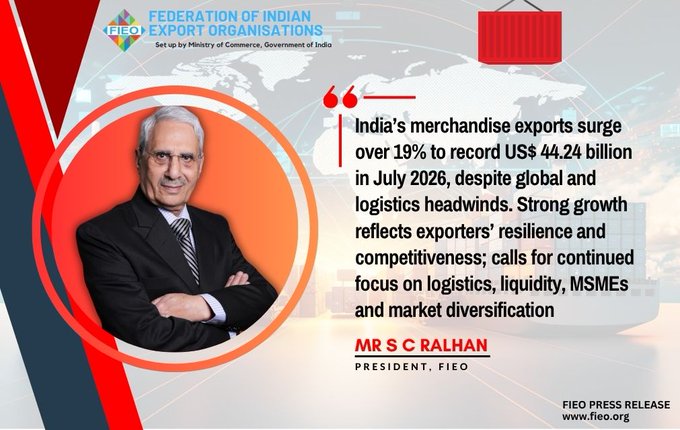
India’s merchandise exports surge over 19% to record US$ 44.24 billion in July 2026 : President, FIEO

NEW DELHI : India’s merchandise exports delivered a spectacular performance in July 2026, growing by over 19 per cent to a record US$ 44.24 billion, the highest-ever merchandise export value recorded for the month of July. The sharp growth assumes even greater significance against the backdrop of persistent geopolitical uncertainties, shipping and logistics disruptions, elevated freight costs and volatility in key global markets.

Commenting on the trade data, Mr S C Ralhan, President, Federation of Indian Export Organisations (FIEO), said, “The over 19 per cent growth in merchandise exports in July is an outstanding achievement and a strong testimony to the resilience, competitiveness and adaptability of Indian exporters. Achieving record exports despite continuing disruptions in global logistics and supply chains, besides higher transportation costs, demonstrates the ability of Indian businesses to respond swiftly to an increasingly complex global trading environment.”

Mr Ralhan said that the performance during April–July 2026-27 reinforces this positive trend. Merchandise exports increased by 17.04 per cent to US$ 173.78 billion, while India’s overall exports of merchandise and services grew by 13.16 per cent to US$ 316.42 billion. Particularly encouraging is the 12.79 per cent growth in non-petroleum exports, indicating that the export momentum is broad-based and increasingly supported by manufacturing and value-added sectors.

“The strong growth in non-petroleum exports is an important indicator of the underlying strength and diversification of India’s export basket. Engineering, electronics, pharmaceuticals, chemicals, textiles and other manufacturing sectors are contributing meaningfully to this momentum. Going forward, a sharper focus on MSMEs and labour-intensive sectors will help translate export growth into greater employment and wider economic benefits,” he added.

Among the major export categories, engineering goods emerged as the largest, followed by petroleum products, electronic goods, drugs & pharmaceuticals, organic & inorganic chemicals, gems & jewellery, readymade garments, cotton yarn/fabrics/made-ups and handloom products, rice, and plastic & linoleum. The strong presence of manufacturing and value-added products among the leading export categories augurs well for the structural transformation of India’s exports.

FIEO President also highlighted the encouraging geographical spread of exports. The US, UAE, Singapore, China, Netherlands, UK, Germany, South Africa, Bangladesh and Tanzania were among India’s leading export destinations during April–July 2026-27. “While resilience in major markets such as the US, EU and China is encouraging, the growing presence of Indian products in the UAE, Singapore, Africa and other emerging markets reflects the conscious efforts of exporters to diversify. In the current uncertain environment, deeper market and product diversification will remain one of our most effective risk-mitigation strategies,” he said.

At the same time, Mr Ralhan cautioned that the rising import bill and widening trade deficit require attention. Merchandise imports reached US$ 76.22 billion in July, resulting in a merchandise trade deficit of US$ 31.98 billion. During April–July, merchandise imports grew by 19.27 per cent, compared with 17.04 per cent growth in merchandise exports. Overall imports of goods and services increased from US$ 311.94 billion to US$ 365.85 billion, taking the overall trade deficit from US$ 32.32 billion to US$ 49.43 billion.

“While imports of energy, capital goods and intermediates are also associated with higher domestic economic activity, we need to simultaneously strengthen domestic manufacturing capabilities in critical inputs, electronics, machinery and other areas of high import dependence. Export expansion and strategic import substitution should complement each other in strengthening India’s external sector,” Mr Ralhan observed.

Looking ahead, Mr Ralhan said that sustaining the present export momentum would require continued policy support, particularly as geopolitical tensions, shipping disruptions, freight volatility and evolving trade policies remain significant risks to global commerce.

“Indian exporters have once again demonstrated that they can deliver even under difficult circumstances. The need now is to build on this momentum through a responsive trade policy framework, adequate and competitive export credit, easier access to working capital, faster trade facilitation and urgent attention to shipping and logistics challenges. Special support to MSMEs and labour-intensive sectors, together with aggressive market diversification, will further strengthen India’s export competitiveness,” he said.

“With continued partnership between the Government and industry, we are confident that India can sustain this momentum and move decisively towards a stronger, more diversified and globally competitive export economy,” Mr Ralhan added.

DP World reports growth despite disruption to Middle East trade flows

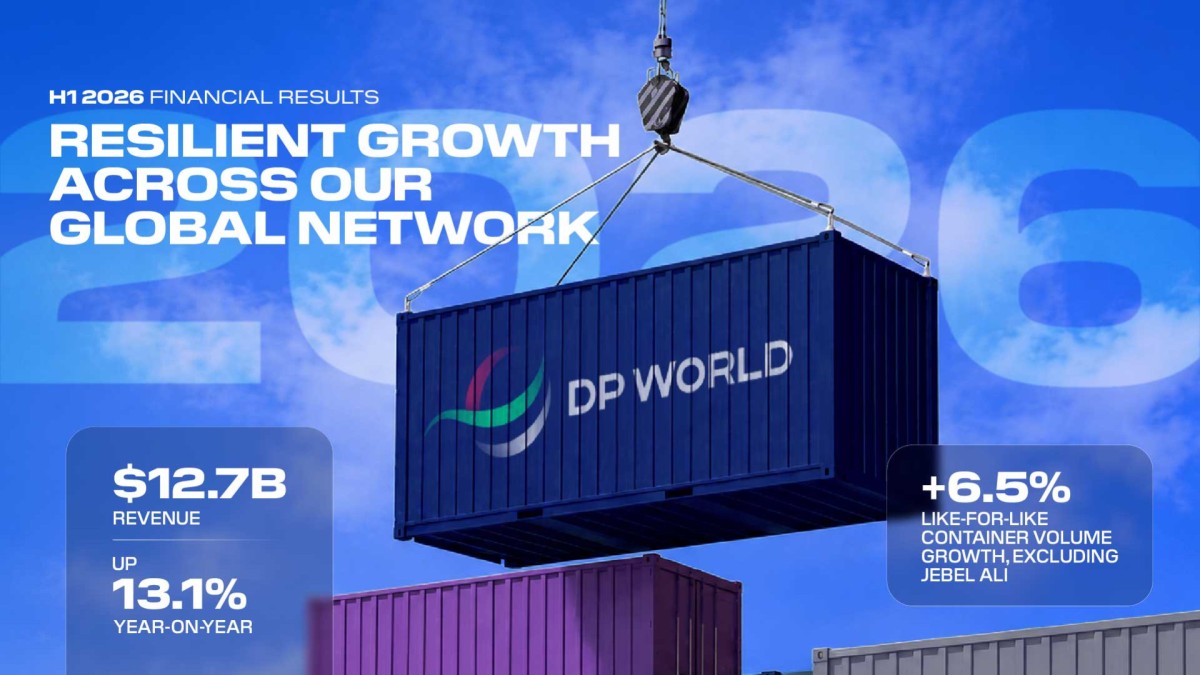
DUBAI : DP World reported revenue of $12.7 billion for the first half of 2026, up 13.1% year-on-year, as the strength of its global network helped the company navigate significant disruption to trade flows in the Middle East.

Growth across Logistics, Marine Services and DP World’s international Ports and Terminals portfolio helped offset lower activity at Jebel Ali. Excluding Jebel Ali, container volumes increased 6.5% on a like-for-like basis, with growth across Africa, Asia Pacific, Europe and the Americas.

Jebel Ali remains fully operational with no physical damage, although the regional conflict has temporarily reduced vessel traffic. DP World has implemented mitigation measures across its regional network, including expanded inland connectivity, to support the continued movement of critical cargo.

DP World Group Chairman, H.E. Essa Kazim, said:

“DP World delivered a strong revenue performance and resilient EBITDA in the first half of 2026, despite significant disruption to trade flows across the Middle East. Revenue increased 13.1% to $12.7 billion, reflecting the strength and diversity of our global portfolio, the benefits of our integrated business model, and our ability to help cargo owners keep goods moving across international markets.

“In the UAE, we are expanding our gateway network with two new terminals in Fujairah, extending the Jebel Ali ecosystem through an integrated supply chain. This will provide cargo owners with greater flexibility, more choice and enhanced supply chain resilience, while reinforcing our confidence in the UAE’s future as a leading global trade and logistics hub.”

DP World Group CEO, Yuvraj Narayan, said:

“Excluding Jebel Ali, Container volumes increased by 6.5% on a like-for-like basis, and adjusted EBITDA increased by 9.7%, with growth across Africa, Americas, Asia Pacific, and Europe. This performance reflects the strength of our global network and our ability to provide cargo owners with efficient end-to-end supply chain solutions.

“We continue to maintain a disciplined focus on capital allocation, cost management and operational efficiency. Combined with a strong balance sheet and liquidity position, this provides the flexibility to navigate uncertainty and continue creating long-term value for all our stakeholders.”

DP World plans to develop two new terminals in Fujairah under a 50-year concession, extending the Jebel Ali ecosystem and strengthening the resilience and flexibility of the UAE’s trade infrastructure.

The company invested $1.5 billion across its global portfolio during the first half and expects to invest approximately $3 billion in 2026, supporting new capacity and trade infrastructure in key growth markets including the UAE, UK, India, Saudi Arabia and the Democratic Republic of Congo.

Despite continued near-term uncertainty, DP World remains positive about the medium- to long-term outlook for global trade, supported by its diversified global network and growing integrated logistics business.

Global Financial & Operational Performance

 H1 2026H1 2025Change (as reported)Change (like-for-like at constant currency)
Gross throughput (thousand TEU)42,82645,438-5.7%-4.9%
Gross throughput excluding Jebel Ali Port (thousand TEU)39,68137,6645.4%6.5%
Revenue ($ million)12,71511,24413.1%4.1%
Adjusted EBITDA ($ million)2,8633,033-5.6%-8.3%
*Like-for-like at constant currency adjusts for foreign exchange movements and the impact of acquisitions and disposals to aid comparability.