Home Blog Page 152

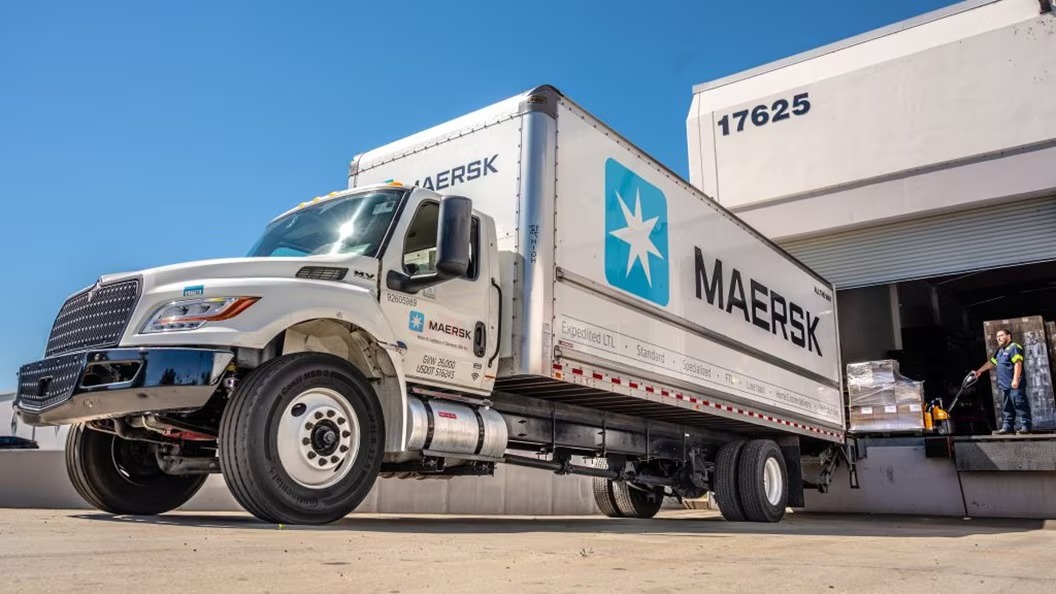
Maersk delivers strong Q2 and raises full year guidance

COPENHAGEN : A.P. Moller – Maersk delivered a strong second quarter, driven by high demand, higher spot rates in Ocean, and growth across all business segments.

Executive Summary

Full-year guidance raised to an underlying EBITDA of USD 10.5-12.5bn (previously USD 8-10bn) and an underlying EBIT of USD 4.5-6.5bn (previously USD 2-4bn)
For the group, EBITDA was USD 3.0bn and EBIT was USD 1.6bn in the second quarter up on both the prior year and first quarter
Ocean grew volumes by 4.1% and generated significantly better earnings
Logistics & Services grew revenue by 15% and improved EBIT margin to 5.1%
Terminals increased volumes by 2.2% and maintained strong earnings
Continued execution of the USD 1.0bn share buy-back programme

CEO Statement

The second quarter was yet another proof point of the new era of heightened volatility we have entered. Strong, broad-based demand from the Far East since 2024 has resulted in significantly more unbalanced trade flows, with volume levels that are challenging landside infrastructure capacity. From ports to inland transportation, we are seeing increased congestion and disruption across multiple geographies. Our global team’s ability to capture opportunities in these difficult markets has enabled us to deliver significant volume and earnings growth across our businesses, leading to the substantial upgrade to our full-year guidance. As markets evolve, we remain focused on helping customers respond quickly to change and maintain the integrity of their supply chains. With bottlenecks remaining deeply entrenched, we must continue to invest in critical trade infrastructure and scale, to keep delivering the best possible value to our customers. Vincent Clerc, Chief Executive Officer at Maersk

Financial highlights

Global demand for transport and logistics remained resilient during the quarter. As traffic flows in the Strait of Hormuz were disrupted, inbound cargo to the Gulf was rerouted to alternative ports and through inland transportation routes, with the affected Ocean capacity swiftly redeployed to other growing trade lanes. Growth was particularly strong for imports into Africa, North America and Latin America, supported by continued momentum in exports from the Far East, especially China. Ocean spot rates increased significantly during the quarter, driven by demand, the increasing imbalance in trade flows, tight capacity and rising port congestion in Europe, the Middle East, East Coast of South America and West Africa.

Maersk leveraged these market conditions to grow volumes across all segments and delivered a strong financial performance in Q2, with revenue increasing 20% year-on-year to USD 15.8bn from USD 13.1bn. Ocean was the main contributor, lifting revenue by USD 2.0bn. EBITDA rose to USD 3.0bn from USD 2.3bn, EBIT increased to USD 1.6bn from USD 845m, and the EBIT margin reached 10.0%.

Business segment highlights

Ocean

Ocean performance was strong operationally and commercially, with the segment delivering a 23% revenue increase and significantly improved earnings. Loaded volumes grew by 4.1% driven by Asian exports, while the average loaded freight rate increased by 22%. Vessel utilisation remained high at 96% and unit cost at fixed energy decreased by 0.8%, as higher volumes counter-balanced the increase in operating costs.

EBIT: USD 935m, up from USD 229m in the same quarter last year. EBIT was USD -192m in Q1 2026.

Logistics & Services

Logistics & Services delivered another quarter of continued improvement resulting in an EBIT margin of 5.1%, up 0.5 percentage points sequentially. Revenue increased by 15% year-on-year and 11% sequentially. Landside led the growth, supported by landbridge solutions connecting ports across the Gulf region, while Forwarding benefited from strong volume growth in Air and Project Logistics. Solutions also contributed positively, driven by a favourable mix of new and existing contracts.
EBIT: USD 217m, up from USD 175m in the same quarter last year. EBIT was USD 173m in Q1 2026.
Terminals

Terminals made further progress on several key initiatives, reflecting its ongoing commitment to strategic growth and capacity expansion. The strong underlying performance more than offset the impact of the Middle East conflict. Revenue increased by 11%, supported by a 7.1% increase in revenue per move driven by higher rates and increased storage revenue, and volume growth of 2.2%.
EBIT: USD 458m, against USD 461m in the same quarter last year. EBIT was USD 436m in Q1 2026.

Investments

Across the portfolio, Maersk continued to invest in critical trade infrastructure and supply chain capabilities. A major milestone was reached in Brazil where APM Terminals inaugurated the terminal in Suape, a USD 350m investment for the first fully electrified container terminal on the continent. With a new distribution and warehousing facility, Logistics & Services further contributed to the integrated logistics capabilities of Suape and the north-east Brazil. In Vietnam, APM Terminals and Hateco Group signed an agreement with Da Nang City to build and operate the Lien Chieu Container Terminal. The project represents an investment of over USD 1.7bn.

Financial guidance

Maersk has updated its full-year 2026 financial guidance on the back of the actual performance in the second quarter of 2026 and improved visibility for the remainder of the year. This is based on global container market volume growth for the full year 2026 of around 4%. Maersk now expects an underlying EBITDA of USD 10.5-12.5bn (previously USD 8-10bn), an underlying EBIT of USD 4.5-6.5bn (previously USD 2-4bn), and a free cash flow greater than USD 0 (previously at least USD -1.5bn).

Sensitivity guidance

Maersk’s financial performance for 2026 depends on several factors subject to uncertainties related to the given uncertain macroeconomic conditions, bunker fuel prices and freight rates.

About Maersk

A.P. Moller – Maersk (Maersk) is an integrated logistics company connecting and simplifying its customers’ supply chains. As a global leader in logistics services, the company has 100,000+ customers, operates in almost 130 countries, and employs 100,000+ people. Maersk delivers innovative, reliable ocean network solutions, offers truly integrated logistics products and operates advanced container terminals, both gateways and hubs, with 60+ locations globally.
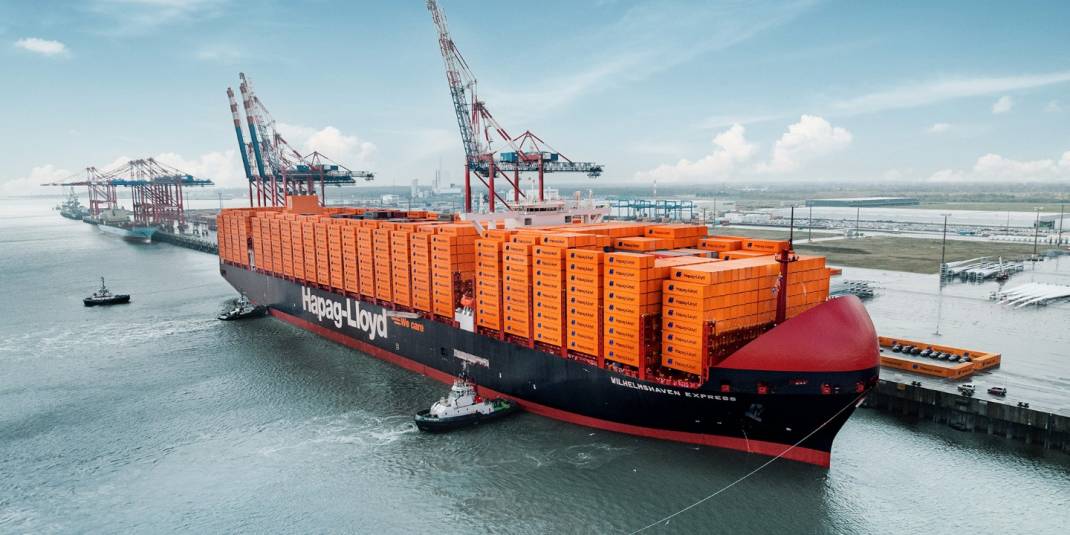
Hapag-Lloyd reports earnings recovery despite substantial cost headwinds

HAMBURG : Hapag-Lloyd concluded the second quarter of 2026 with a slightly higher Group EBITDA of USD 829 million (EUR 712 million) compared to the prior-year quarter. Group EBIT declined to USD 176 million (EUR 150 million), while Group profit decreased to USD 83 million (EUR 71 million). Following an unsatisfactory start to 2026, with earnings impacted by operational disruptions, volumes and spot rates picked up significantly in the second quarter. This positive development was mainly driven by strong exports out of Asia and improved US demand, which helped offset the significant cost headwinds of around USD 600 million in Q2 arising from the conflict in the Middle East.

In the Liner Shipping segment, revenues reached USD 5.7 billion (EUR 4.9 billion) in the second quarter of 2026, supported by higher transport volumes of 3.5 million TEU (Q2 2025: 3.4 million TEU). The average freight rate increased by 9% year over year to USD 1,475 per TEU (Q2 2025: USD 1,354 per TEU). EBITDA declined to USD 773 million (EUR 664 million), while EBIT fell to USD 153 million (EUR 131 million), primarily because the blockage of the Strait of Hormuz resulted in additional costs for bunker, insurance, storage, service rerouting, and inland transportation.

In the Terminal & Infrastructure segment, revenues increased to USD 191 million (EUR 165 million) in the second quarter of 2026, driven by the first-time full consolidation of J M Baxi’s container business and strong volume growth in Latin America. EBITDA rose to USD 55 million (EUR 47 million), while EBIT amounted to USD 21 million (EUR 18 million).

“The second quarter was better than the first, driven by significantly higher spot rates and robust demand. Our Gemini network remained resilient and continued to outperform the market, setting the industry benchmark for schedule reliability. Additionally, the terminal business continues to grow and is becoming increasingly strategically relevant, supported by strong throughput and investment in new assets. In the second half of 2026, we will remain focused on growing both our liner shipping and terminal businesses while maintaining strict cost discipline to further improve our financial performance,” said Rolf Habben Jansen, CEO of Hapag-Lloyd AG.

On the back of the Q2 performance and the improved market, the full-year 2026 earnings outlook was raised on July 13. Group EBITDA is expected to be in the range of USD 2.7 billion to USD 3.7 billion (EUR 2.3 billion to EUR 3.2 billion) and Group EBIT to be in the range of USD 0.1 billion to USD 1.1 billion (EUR 0.1 billion to EUR 1.0 billion). This outlook remains subject to considerable uncertainty due to the highly volatile development of freight rates and the conflict in the Middle East.

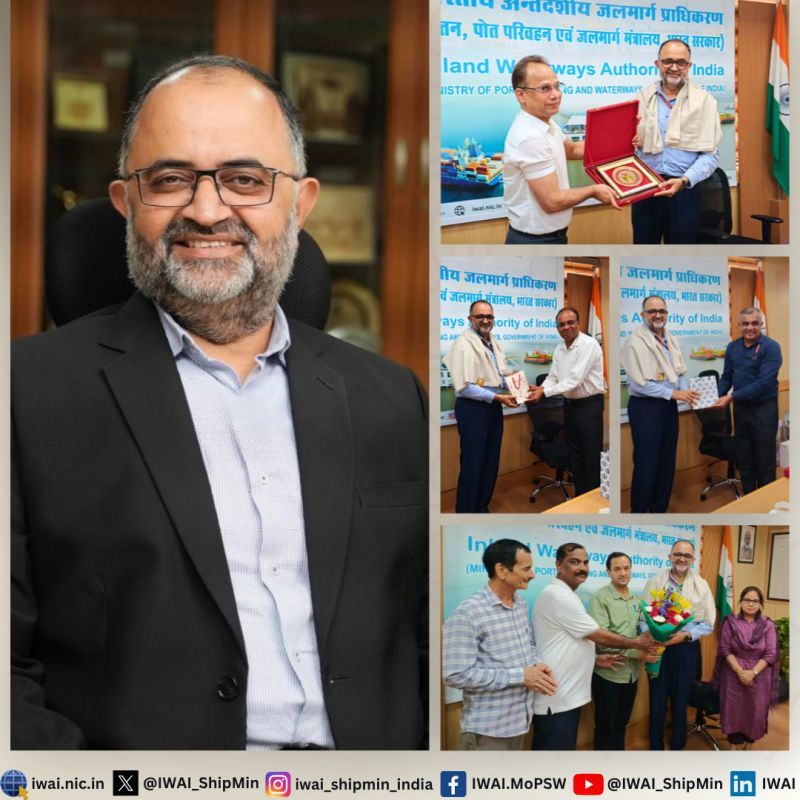
IWAI bids farewell to Sunil Paliwal, IAS, celebrating his leadership and contribution to India’s Inland Waterways

NEW DELHI : The Inland Waterways Authority of India (IWAI) bid a warm farewell to Shri Sunil Paliwal, IAS, on the completion of his tenure as Chairman, as he moves on to his new responsibility as Secretary, Department of Youth Affairs, Ministry of Youth Affairs and Sports.

During his tenure at the helm of IWAI, Shri Paliwal provided strategic leadership at a significant phase in the transformation of India’s inland waterways sector. His tenure coincided with an accelerating national focus on waterways as a cost-effective, environmentally sustainable and multimodal alternative for cargo and passenger transportation.

IWAI, under the Ministry of Ports, Shipping and Waterways, is the nodal authority responsible for the development, maintenance and regulation of India’s National Waterways. The Authority’s mandate spans fairway development, navigation infrastructure, hydrographic surveys, terminals, safety systems and coordination with other modes of transport.

Strengthening the Inland Waterways Ecosystem

Shri Paliwal’s tenure came at a time when India’s inland waterways ecosystem was witnessing rapid expansion in infrastructure, technology, cargo movement and river-based tourism.

Key national priorities included strengthening multimodal terminals and navigation infrastructure, promoting Ro-Ro and cargo movement, green and hybrid vessels, digital navigation systems and river cruise tourism. IWAI has also been working towards making waterways an integral component of India’s broader multimodal logistics network.

The Authority has continued to expand activity across major National Waterways, including NW-1 on the Ganga, NW-2 on the Brahmaputra and waterways in the eastern, southern and northeastern regions. Recent initiatives have also focused on cross-border trade, modern terminals, community jetties and cleaner vessels.

India has around 14,500 km of navigable waterways, with inland water transport offering a fuel-efficient and environment-friendly supplementary mode of transportation. IWAI’s vision is to develop a safe, economical and sustainable inland water transport system capable of contributing significantly to the country’s economic growth.

Building Momentum for a Future-Ready Waterways Sector

During his association with IWAI, Shri Paliwal also participated in important sectoral deliberations aimed at charting the future course of inland water transport. The recent Inland Waterways Development Council discussions have placed strong emphasis on green mobility, digitalisation, modern terminals, shipbuilding and ship repair, river cruise tourism and improved cargo logistics.

The sector is increasingly being positioned not merely as an alternative transport mode, but as an important pillar of India’s logistics transformation, regional connectivity and sustainable economic development.

Warm Wishes for the New Assignment

The farewell gathering provided an opportunity for officers and employees of IWAI to acknowledge Shri Paliwal’s leadership, guidance and contribution to the Authority. Colleagues expressed their appreciation for his vision and administrative leadership and conveyed their best wishes for his new assignment.

As Shri Sunil Paliwal takes on his new role as Secretary, Department of Youth Affairs, he carries with him the experience of leading an organisation at the forefront of India’s evolving inland waterways revolution.

IWAI conveyed its appreciation for his service and wished him continued success in his new responsibility, while reaffirming its commitment to advancing India’s waterways as a modern, sustainable and efficient component of the national transport network.

Chennai Port strengthens Rail Connectivity to expand access to key hinterland markets

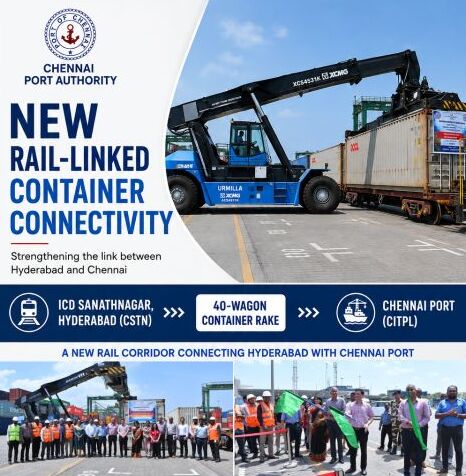
CHENNAI: Chennai Port Authority is stepping up efforts to strengthen rail-based EXIM connectivity with key hinterland markets, as it seeks to expand its container business and offer exporters and importers more efficient links to global trade routes.

A significant step in this direction is the commencement of container rail movement between Hyderabad and Chennai Port in association with CONCOR and OOCL, opening an additional rail-linked gateway for cargo originating from one of South India’s important industrial and commercial markets.

The Port Authority believes greater utilisation of rail for EXIM cargo can play a transformative role in strengthening cargo aggregation, enhancing connectivity for shipping lines and reducing dependence on road transportation. Increased rail movement can also contribute to a more efficient and environmentally sustainable logistics network.

To accelerate the development of rail-linked cargo opportunities, Chennai Port Authority has constituted a dedicated Rail Connectivity Cell. The Cell will work closely with trade bodies, logistics service providers, CONCOR, shipping lines and other stakeholders to identify and develop new rail-linked opportunities across Hyderabad, Pollachi, Mysore and other hinterland markets.

The initiative is aimed at creating a stronger connection between production and consumption centres in the hinterland and the maritime gateway, enabling cargo to move more seamlessly towards international markets.

Chennai Port Authority is also exploring appropriate commercial support mechanisms to encourage the growth of rail-linked cargo and make rail transportation a more attractive option for EXIM stakeholders.

The Port’s strategy comes as it looks to scale up its container business and strengthen its role as a gateway for India’s growing trade. The emphasis is not only on increasing cargo volumes but also on ensuring that the benefits of container growth extend across the wider logistics ecosystem, including port and terminal operators, shipping lines, Container Train Operators (CTOs), logistics providers, exporters and importers.

The development of dedicated rail connectivity could provide shipping lines and cargo owners with greater flexibility in planning inland transportation while helping to create more efficient cargo aggregation models.

With the Hyderabad–Chennai rail movement marking an important beginning, Chennai Port Authority is now looking to build a wider network of rail-linked hinterland connections.

The broader objective is clear: connect more cargo, move more freight by rail and bring more markets within the reach of Chennai Port.

By strengthening the link between the hinterland and the high seas, Chennai Port is positioning rail connectivity as a key component of its strategy to support the next phase of India’s EXIM trade growth.

MDL signs MoU with MWRRA to advance technology-driven water resource management

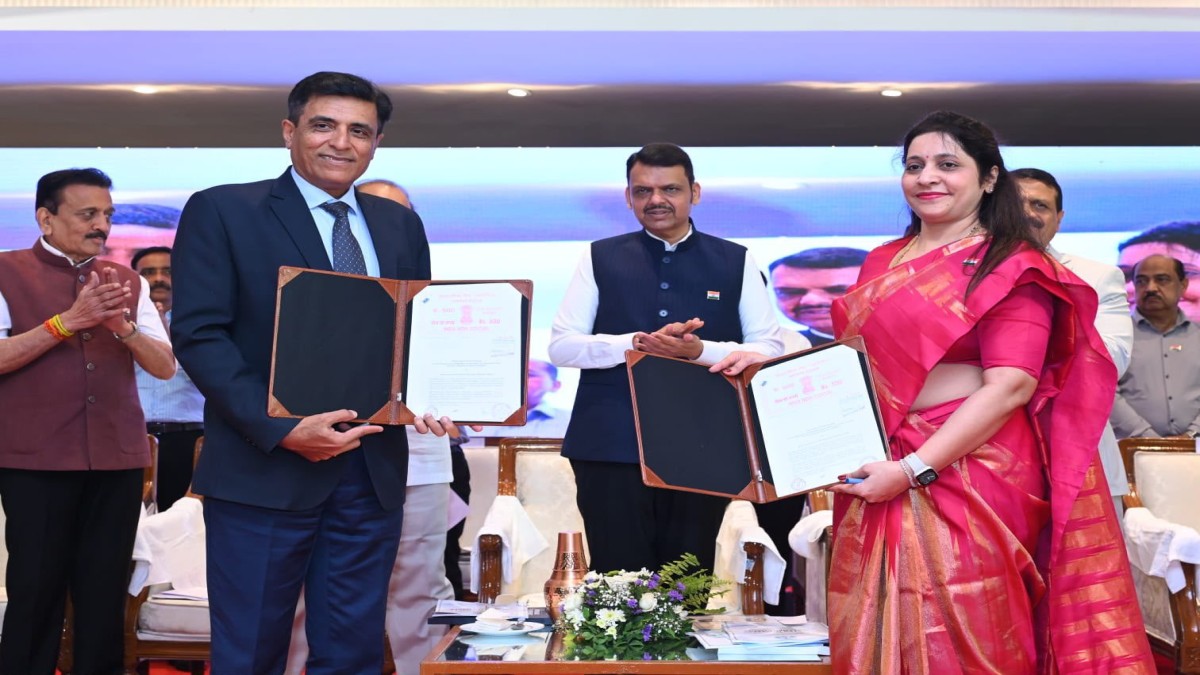
MUMBAI : Mazagon Dock Shipbuilders Limited (MDL) has achieved another significant milestone by signing a Memorandum of Understanding (MoU) with the Maharashtra Water Resources Regulatory Authority (MWRRA), strengthening efforts to leverage advanced technology and innovation for sustainable and data-driven management of water resources.

The MoU was signed in the presence of the Hon’ble Chief Minister of Maharashtra, Shri Devendra Fadnavis, underscoring the importance attached to technology-led initiatives aimed at addressing emerging challenges in water resource management.

Cdr Vasudev Puranik, Director (Corporate Planning & Personnel), MDL, Chairperson, MWRRA, Smt. Shwetali Thakare, along with other senior officials and dignitaries, were present on the occasion.

Under the collaboration, advanced technological capabilities will be explored for the digital assessment of water resources and identification of potential solutions, with high-resolution satellite imaging serving as an important component. The initiative is expected to facilitate the collection and analysis of detailed spatial information, supporting better understanding of water resources and enabling more informed decision-making.

The use of satellite-based technologies can provide valuable insights into water bodies, catchment areas, changes in water availability and other critical parameters, helping stakeholders develop more effective strategies for planning, monitoring and conservation.

The partnership represents an important step towards integrating space-enabled technologies, digital assessment tools and data analytics into water resource governance. Such technology-driven approaches can contribute to improved resource planning, enhanced monitoring capabilities and more sustainable management practices.

For MDL, the initiative also reflects its expanding focus on applying its technological expertise and innovation capabilities beyond traditional shipbuilding activities to support wider national and societal objectives.

The collaboration between MDL and MWRRA demonstrates the potential of public-sector technological partnerships in developing innovative solutions to complex resource-management challenges. By combining institutional expertise with advanced digital and satellite-based capabilities, the initiative seeks to support a more resilient and sustainable water management ecosystem.

The MoU marks another step forward in harnessing technology, innovation and data-driven solutions for a sustainable future, reinforcing Maharashtra’s commitment to modernising resource management through advanced technological interventions.

Technology for insight. Innovation for sustainability. Data for a water-secure future.

Varanasi MMLP development awarded to G R Infraprojects, SPV of NHLML and IWAI

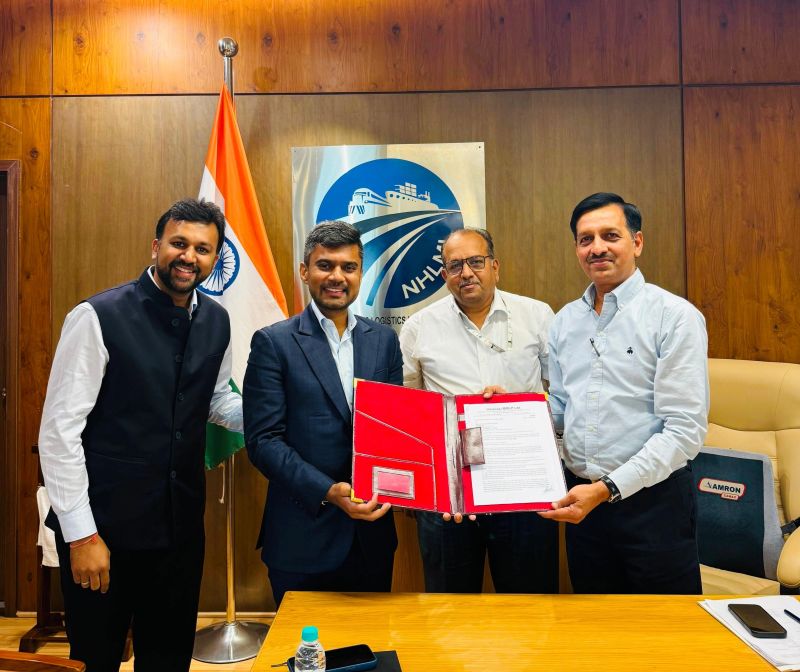
VARANASI : In a significant step towards strengthening India’s multimodal logistics infrastructure, the work for the Development, Operation & Maintenance of the Multi-Modal Logistics Park (MMLP) at Varanasi, Uttar Pradesh, has been awarded to G R Infraprojects Limited by Varanasi MMLP Limited, a Special Purpose Vehicle (SPV) of National Highways Logistics Management Limited (NHLML) and the Inland Waterways Authority of India (IWAI).

The project is being developed under the Public-Private Partnership (PPP) model on a Design, Build, Finance, Operate and Transfer (DBFOT) basis, marking an important milestone in the Government’s efforts to create modern, integrated and technology-enabled logistics infrastructure across the country.

Strategically located in Varanasi, the MMLP is envisaged as an important logistics hub integrating road, rail and inland waterways, thereby enabling seamless movement of freight across different modes of transport. Its strategic location is expected to strengthen connectivity to major production and consumption centres across Uttar Pradesh and the wider eastern and northern regions of India.

The project will contribute towards the development of an efficient logistics ecosystem by facilitating cargo aggregation, storage, handling, distribution and multimodal transportation under one integrated framework. Such infrastructure can help reduce logistics costs and transit time while improving supply-chain efficiency and reliability.

The Varanasi MMLP also complements the growing importance of National Waterway-1 (NW-1) and the inland water transport network on the Ganga, creating opportunities for greater integration of waterways with road and rail freight networks. This multimodal approach is aligned with the Government’s broader vision of promoting sustainable, cost-efficient and seamless freight transportation.

The development of the MMLP is expected to provide modern logistics facilities for industries, manufacturers, exporters, importers, traders and logistics service providers, while creating opportunities for greater private-sector participation in the development and operation of logistics infrastructure.

The award of the project represents another important step towards achieving the objectives of PM GatiShakti, the National Logistics Policy and the broader vision of transforming India into a globally competitive logistics hub.

With improved multimodal connectivity and integrated freight-handling capabilities, the Varanasi MMLP is poised to play an important role in strengthening regional trade, supporting industrial growth and enhancing the efficiency of India’s supply chains.

Connecting networks. Enabling growth. Transforming logistics.

The Varanasi MMLP stands as a strong example of how strategic infrastructure development, multimodal connectivity and public-private partnership can come together to build a more efficient, resilient and future-ready logistics ecosystem for India.

Kandla – Mundra National Highway (NH-41) Set for Six-Laning at ₹834 Crore

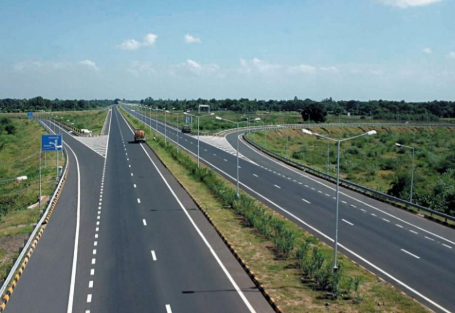
GANDHIDHAM: The National Highways Authority of India (NHAI) has invited bids for the six-laning of the 71.40-km Gandhidham (Kandla)–Mundra Port stretch of National Highway-41 (NH-41) in Gujarat, with the project estimated to cost ₹834.47 crore, excluding GST.

The project will be implemented under the Engineering, Procurement and Construction (EPC) mode. The proposed widening is aimed at improving connectivity between Gandhidham, Kandla and Mundra Port, an important freight corridor in the Kutch region.

According to the Request for Proposal (RFP) issued by NHAI, the selected contractor will be responsible for executing the six-laning work, with a completion period of two years, or 730 days. The project will also have a five-year maintenance period.

The six-laning of the corridor is expected to improve traffic movement on the busy Kandla–Mundra route, which handles substantial commercial and port-related traffic. The additional capacity is likely to help ease congestion, improve freight movement and strengthen connectivity between the region’s major ports and industrial areas.

The latest RFP follows an earlier bidding process for the same corridor, which had proposed implementation under the Hybrid Annuity Mode (HAM). The current tender, however, specifies execution through an EPC contract. 

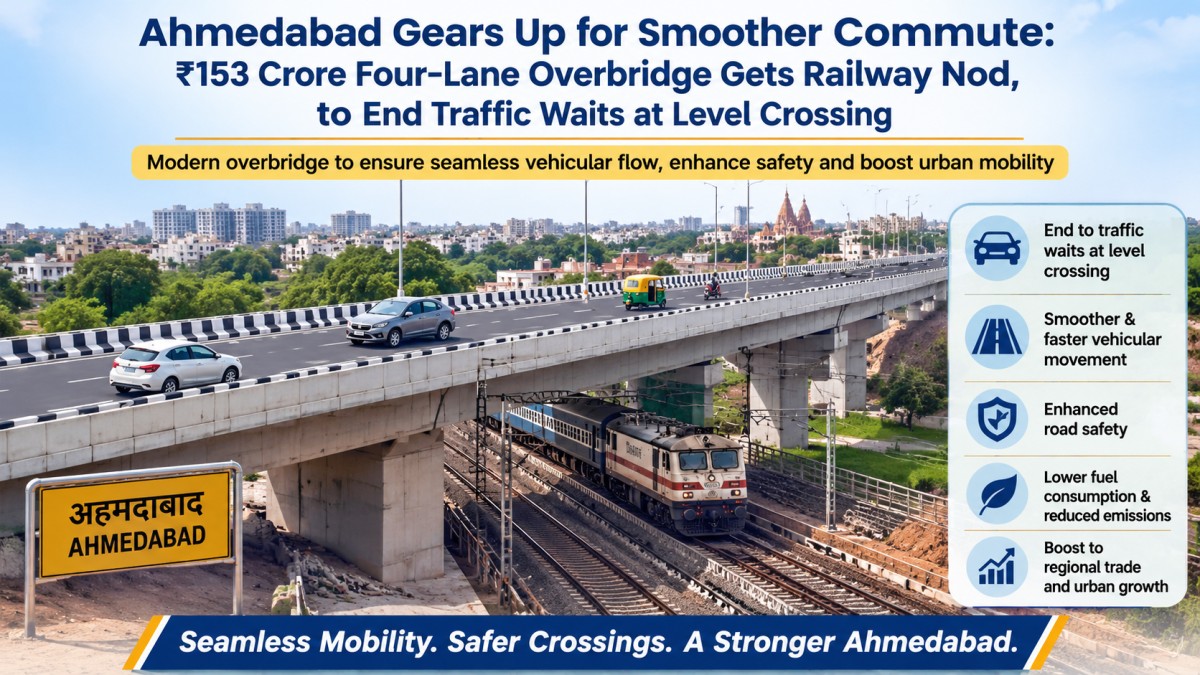
₹153 Crore four-lane overbridge near Ahmedabad gets Railway approval, set to transform traffic flow at Level Crossing 305

AHMEDABAD : In a major step towards safer and smoother movement of road traffic in Gujarat, Indian Railways has cleared the construction of a four-lane road overbridge at Level Crossing Number 305 on the Geratpur-Ahmedabad section of Western Railway.

The work carries a sanctioned cost of Rs 153 crore, with the project aimed at making road movement safer and quicker in the densely populated urban area.

The approval has been granted under Western Railway’s existing umbrella scheme covering road over and under bridges, foot over bridges, drainage works and the rebuilding of existing road bridges.

Since the crossing falls in a thickly populated urban stretch, the design provides for extended approaches and a bigger structure, ensuring the bridge can handle substantial traffic volumes.

The portion of the bridge over the railway line will run 106 metres and will be made up of two composite girders measuring 53 metres each.

Once operational, the bridge will eliminate the waiting time road users currently face at the level crossing, permitting vehicles to cross the tracks without delays.

The project forms part of Indian Railways’ broader infrastructure modernisation programme in Gujarat, where multiple railway enhancement projects worth thousands of crores are currently underway across the state.

The Geratpur-Ahmedabad section is part of the busy Ahmedabad–Mumbai main line operated by Western Railway.

The new overbridge will significantly improve connectivity between different parts of the expanded Ahmedabad city whilst enhancing safety for both road and rail traffic in one of Gujarat’s most critical transport corridors.

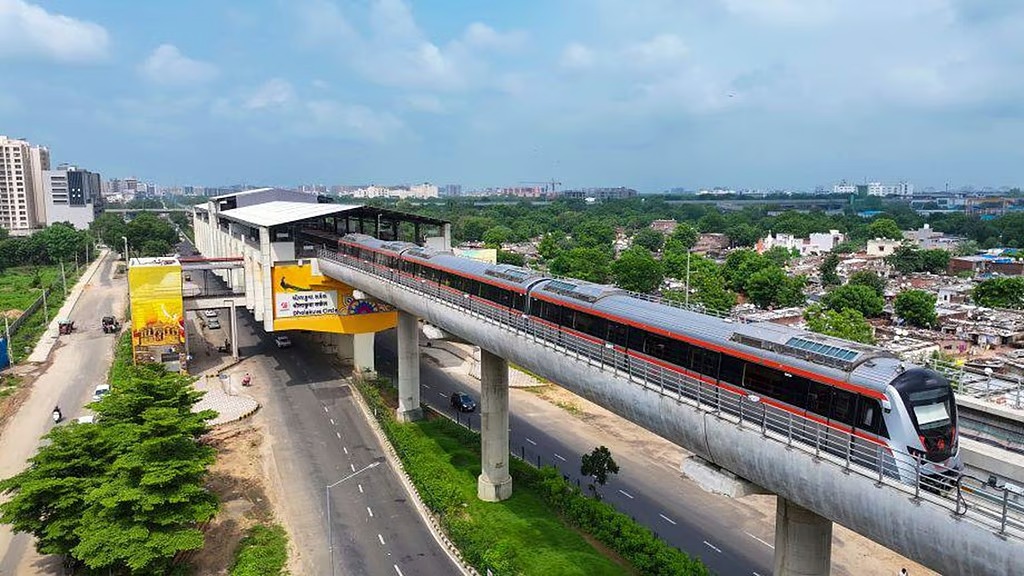
Ahmedabad Metro phase three secures PIB clearance

AHMEDABAD: The Public Investment Board (PIB) has approved the proposed Phase Three expansion of the Ahmedabad Metro, clearing a key administrative hurdle for the project. The expansion will create a 60 km network and include a planned connection to Dholera International Airport, and the Gujarat Metro Rail Corporation (GMRC) is overseeing development. Final approval from the Union Cabinet is required before civil construction may begin.

A principal element of Phase Three is a corridor from Thaltej Gam to Badrabad via Godhavi that will start at Shilaj Canal Road and follow the Sardar Patel Ring Road before reaching Badrabad near the Ahmedabad-Dholera Expressway. The Badrabad terminal has been proposed as a future interchange for extensions towards the Dholera Special Investment Region and the airport, intended to enhance connectivity in south west Ahmedabad. The plan will also integrate the new corridors with the existing East?West and North?South lines to provide additional interchange options.

The proposal foresees a circular corridor beginning and ending at Vadaj that will loop through western, eastern and southern parts of the city and call at key locations such as Akhbarnagar, Naranpura and Amraiwadi to offer alternatives to central city travel. Major interchanges are planned at Gujarat University, APMC, Amraiwadi and Vadaj to facilitate passenger movement without routing through the central business district. The expanded network is expected to include 41 elevated stations across the 60 km of new lines.

Preparatory work is under way as GMRC has engaged Detailed Design Consultants to finalise structural alignments and has begun geotechnical testing, utility diversion planning and tendering to reduce lead time before construction. A direct metro link to the South West Ahmedabad Sports Arena (SWASA) at Godhavi is included to improve access to the developing complex and support potential events related to Gujarat’s bid for the 2030 Commonwealth Games. The PIB clearance marks a significant step while final cabinet approval will determine the course and timing of construction and future extensions towards Dholera.

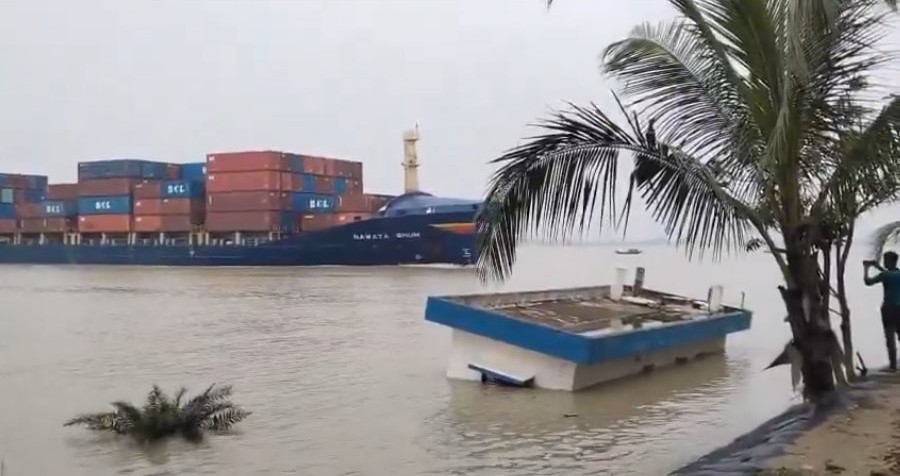
Singapore-flagged container ship ‘Nawata Bhum’ collides near Diamond Harbour

KOLKATA : Singapore-registered container ship, ‘Nawata Bhum‘, struck a river embankment along the Hooghly River in West Bengal, India, while en route to Syama Prasad Mookerjee Port, Kolkata, on Wednesday (Aug 12). Shows the container-laden ship heading directly towards the riverbank. The ship does not appear to slow down or alter course before the collision. The ship’s horn can be heard sounding repeatedly as it approaches the riverbank. Moments later, the ship’s bow becomes lodged in the embankment.

Based on the footage reviewed by media, there were no other vessels in the ship’s immediate path at the time of the incident. The road running alongside the embankment also appeared deserted, with no visible damage from the collision apart from affected vegetation. News on vessel-tracking platform showed the vessel making a right turn north of Latpatia at around 10.26am (India time). Its declared next port of call was Syama Prasad Mookerjee Port, formerly known as Kolkata Port.

According to information available, the ship failed to regain stability after taking a turn along the river bend near Diamond Harbour – about 50 kilometres south of Kolkata. Reports suggest a potential failure in the ship’s steering gear led to the crash.

No injuries have been reported in the incident. However, because the crash occurred near a ferry terminal, the ship repeatedly sounded its horn after losing control to warn people in the area.