Home Blog Page 154

Sushil Kumar Lohani takes helm at IWAI as Sunil Paliwal moves to Youth Affairs

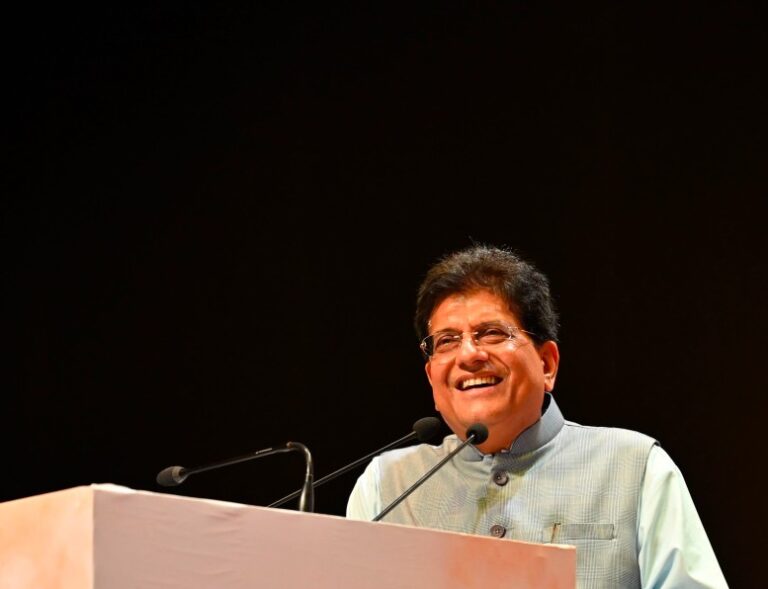
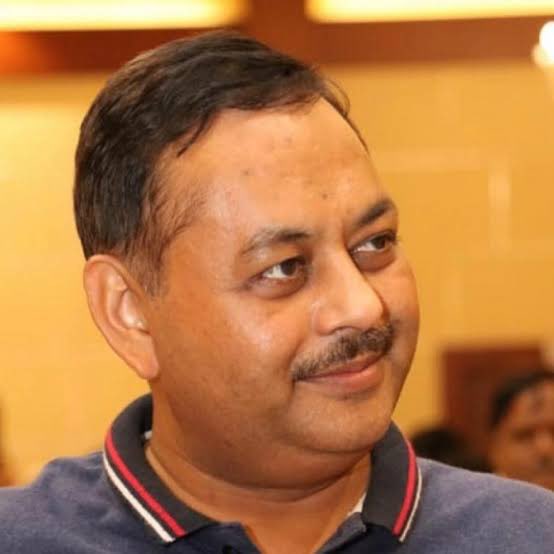
NEW DELHI: The Inland Waterways Authority of India (IWAI) is set for a change at the top, with the Centre appointing senior IAS officer Shri Sushil Kumar Lohani (Pic above) as its New Chairman, while incumbent Chairman Shri Sunil Paliwal has been moved to the Department of Youth Affairs as Secretary.

The appointments are part of a fresh round of senior-level bureaucratic changes approved by the Appointments Committee of the Cabinet (ACC). The reshuffle involves several Secretary-level appointments across key departments of the Government of India.

Paliwal, a 1993-batch IAS officer of the Tamil Nadu cadre, has been appointed Secretary, Department of Youth Affairs, Ministry of Youth Affairs and Sports. He had been serving as Chairman of IWAI and had assumed charge of the position in December 2025.

His move to Youth Affairs marks another significant central assignment in a career spanning senior administrative responsibilities in both the Tamil Nadu Government and the maritime sector. Before joining IWAI, Paliwal served as Chairperson of the Chennai Port Authority and Chairman of Kamarajar Port Limited, bringing extensive experience in port administration and infrastructure development to his tenure at IWAI.

Lohani to Lead Inland Waterways Development

Succeeding Paliwal at IWAI is Shri Sushil Kumar Lohani, a 1995-batch IAS officer of the Odisha cadre. Lohani has been appointed Chairman of IWAI in the rank and pay of Secretary to the Government of India, with the position being temporarily upgraded to the Secretary level to facilitate the appointment.

Lohani brings nearly three decades of administrative experience across state and central government assignments. His previous responsibilities have included senior positions in Odisha as well as central government roles involving rural governance, labour and employment, fertilisers and infrastructure-related institutions.

During his tenure in Odisha, Lohani held important positions including Chief Electoral Officer and Principal Secretary-level responsibilities in the Panchayati Raj and Drinking Water sectors. At the Centre, he has served in senior roles including Additional Secretary in the Ministry of Panchayati Raj.

His broad administrative experience is expected to provide a strong foundation as he takes charge of IWAI, the nodal authority responsible for the development, regulation and promotion of India’s inland waterways.

A Crucial Phase for India’s Inland Waterways

The leadership transition comes at an important juncture for India’s inland water transport sector, which is receiving increasing policy attention as the country seeks to expand multimodal logistics, reduce transportation costs, improve cargo connectivity and promote more sustainable modes of freight movement.

With the government continuing to focus on strengthening national waterways and integrating inland water transport with road and rail networks, the IWAI Chairman’s role assumes strategic importance in advancing infrastructure, navigability, terminal development and cargo movement on India’s waterways.

Lohani’s appointment therefore comes at a time when inland waterways are increasingly being positioned as an important component of India’s broader logistics and transportation architecture.

At the same time, Paliwal’s appointment as Secretary, Department of Youth Affairs, takes his administrative experience into a new policy domain at the national level.

The latest appointments underline the Centre’s continuing efforts to place experienced senior bureaucrats in key strategic positions, with both officers bringing substantial administrative experience to their respective new assignments.
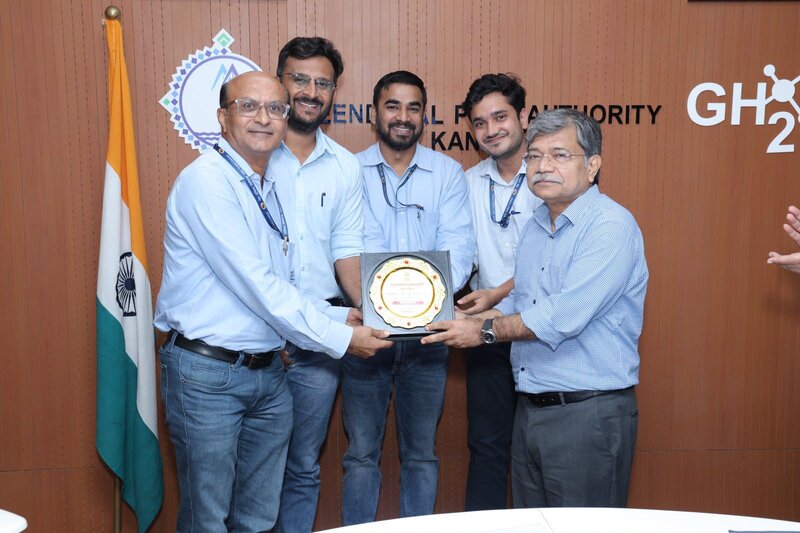
TOLIC Kandla holds half-yearly review meeting; ‘Rajbhasha Shields’ presented to member offices

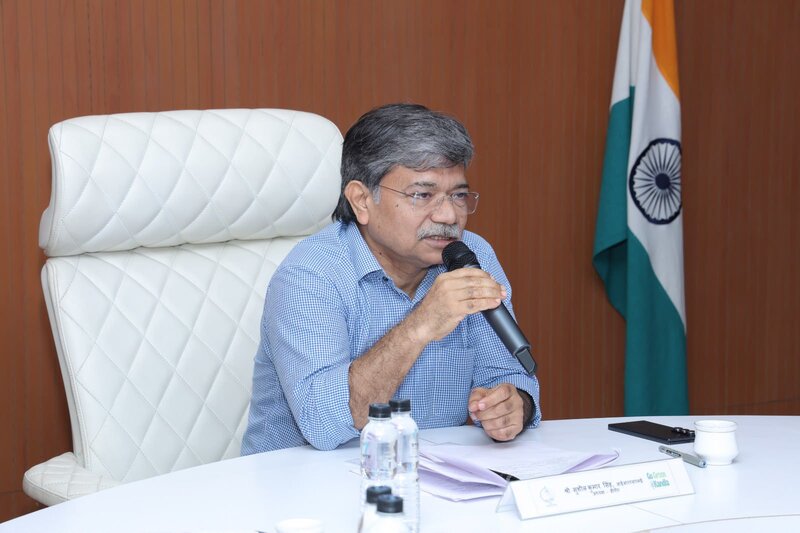
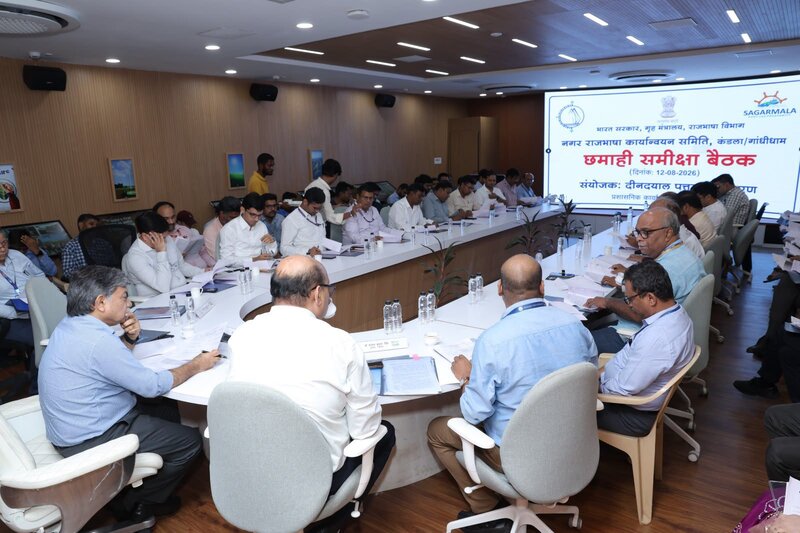
GANDHIDHAM: The half-yearly review meeting of the Town Official Language Implementation Committee (TOLIC), Kandla-Gandhidham, was held under the chairmanship of Shri Sushil Kumar Singh (IRSME), Chairman of Deendayal Port Authority and TOLIC Kandla, with a focus on strengthening the implementation and effective use of Hindi in official work.

Around 70 officers and employees representing 43 member offices participated in the meeting, where various issues related to the implementation of the Official Language and the use of Hindi in official work were discussed.

During the meeting, information was shared about the TOLIC Incentive Award conferred upon TOLIC Kandla-Gandhidham by the Department of Official Language in recognition of its work towards promoting the Official Language.

In a post on X, Deendayal Port Authority (DPA), Kandla, wrote, “Today, the half-yearly review meeting of the Town Official Language Implementation Committee (NARAKAS), Kandla-Gandhidham, was held under the chairmanship of Shri Sushil Kumar Singh, IRSME, Chairman, Deendayal Port Authority and President of NARAKAS Kandla-Gandhidham. About 70 officers and employees from 43 member offices were present in the meeting. The Department of Official Language provided information regarding the NARAKAS Incentive Awards to be given to NARAKAS Kandla-Gandhidham and awarded Official Language Shields to member offices for outstanding Official Language work for the year 2025-26.”

‘Rajbhasha Shields’ were also presented to member offices for their outstanding performance in the field of Official Language during the year 2025-26.

The meeting witnessed meaningful deliberations on ways to promote the effective and natural use of Hindi in official functioning and further accelerate the implementation of the Official Language.

In his concluding address, TOLIC Chairman Shri Sushil Kumar Singh encouraged all member offices to achieve the prescribed targets for the Official Language (Hindi) and make maximum use of Hindi in their official work.

The meeting concluded with an emphasis on collective efforts by all member offices to further strengthen the implementation of Hindi and promote its natural use in day-to-day official communication.

Source: ANI

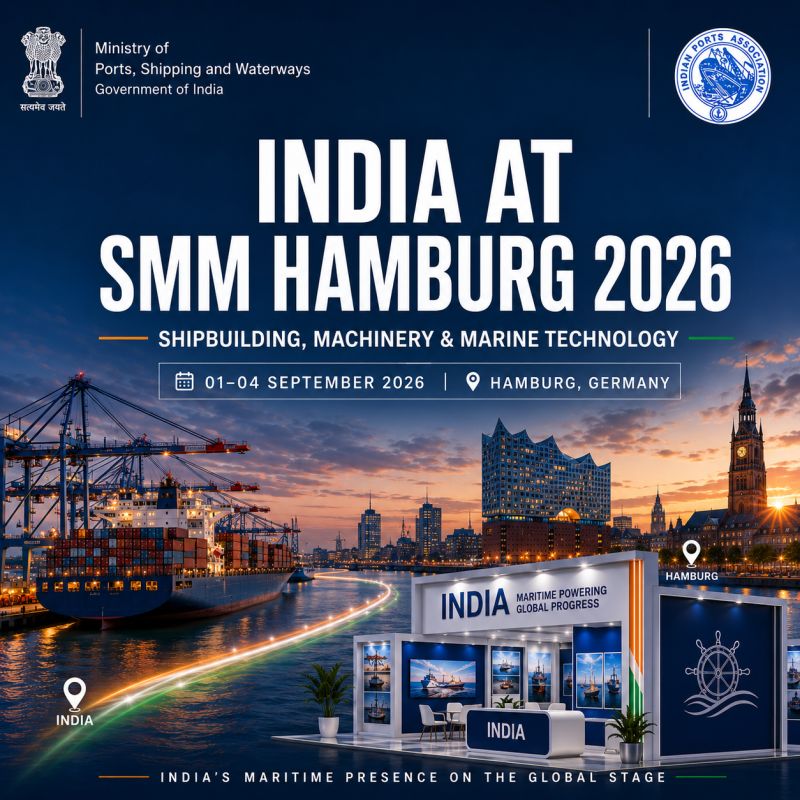
India to showcase growing maritime capabilities at SMM Hamburg 2026

HAMBURG : India is set to make a strong presence at SMM Hamburg 2026, one of the world’s leading international platforms for shipbuilding, machinery and marine technology, reinforcing the country’s growing ambitions as a competitive and future-ready maritime nation.

Scheduled to be held from 01 to 04 September 2026 in Hamburg, Germany, SMM brings together shipbuilders, maritime technology providers, equipment manufacturers, shipping companies, port operators, policymakers, investors and industry leaders from across the globe. India’s participation will provide an important platform to showcase its expanding capabilities across the maritime value chain.

India’s maritime presence at the global exhibition is expected to highlight opportunities in shipbuilding and ship repair, marine engineering, maritime equipment, digital technologies, green shipping, renewable marine fuels and sustainable maritime solutions. The participation also reflects India’s continued efforts to strengthen its domestic maritime ecosystem while positioning the country as a reliable partner in global shipping and shipbuilding.

With the global maritime sector undergoing a major transformation driven by decarbonisation, digitalisation, automation and energy transition, SMM Hamburg 2026 offers India an opportunity to present its technological capabilities, emerging innovations and investment potential to an international audience.

India’s participation is also aligned with the country’s broader vision of developing a robust maritime economy, strengthening indigenous shipbuilding and marine manufacturing, enhancing maritime skills and creating greater integration with global maritime supply chains. The event is expected to facilitate meaningful interactions between Indian and international stakeholders, opening avenues for technology collaboration, investment, joint ventures, knowledge exchange and new business partnerships.

The showcase comes at a significant time for India’s maritime sector, as the country continues to advance initiatives aimed at expanding shipbuilding capacity, promoting green and sustainable shipping, modernising ports and logistics infrastructure, and enhancing its role in global maritime trade.

SMM Hamburg 2026 will therefore serve not merely as an exhibition platform, but as an important gateway for India to strengthen its maritime partnerships and project its capabilities on the world stage.

Key Highlights

Event: SMM Hamburg 2026 – Shipbuilding, Machinery & Marine Technology
Dates: 01–04 September 2026
Venue: Hamburg, Germany
Focus Areas: Shipbuilding, marine technology, machinery, maritime innovation and sustainability
India’s Objective: Promote global partnerships, investment, technology collaboration and maritime growth
Global Message: India’s Maritime Presence on the Global Stage

As India looks towards building a stronger, greener and more technologically advanced maritime ecosystem, its presence at SMM Hamburg 2026 is poised to underline the country’s readiness to partner with the world and power the next chapter of global maritime growth.

Gujarat Pipavav Port Q1 profit rises 42% as revenue jumps 33%

PIPAVAV : Gujarat Pipavav Port Ltd. (APM Terminals Pipavav) reported a 41.8% year-on-year increase in net profit for the June quarter, helped by higher revenue and improved operating margins.The company, which develops and operates Pipavav Port, posted a net profit of ₹147.9 crore, compared with ₹104.3 crore in the year-ago period.

Revenue rose 32.6% to ₹331.7 crore from ₹250.1 crore a year earlier.

Earnings before interest, taxes, depreciation and amortisation (EBITDA) increased 45.3% to ₹214 crore from ₹147.2 crore. EBITDA margin expanded to 64.49% from 58.86% in the corresponding quarter last year.

The company said the West Asia conflict affected operations during the first quarter of FY27. Container volumes benefited from additional transshipment traffic, while bulk cargo volumes were hurt by lower mineral imports. Liquid cargo volumes were affected by lower imports of LPG and fuel oil.

Roll-on/roll-off (RoRo) exports increased during the quarter, driven by automobile manufacturers, the company said. Monica Widhani ceased to be an independent director of Gujarat Pipavav Port effective August 12 following the completion of her five-year tenure.

The company’s board had earlier approved the appointment of Harjeet Kaur Joshi as an independent director, effective July 1.

Tuna Terminal marks operational milestone with First-ever Dolomite Cargo

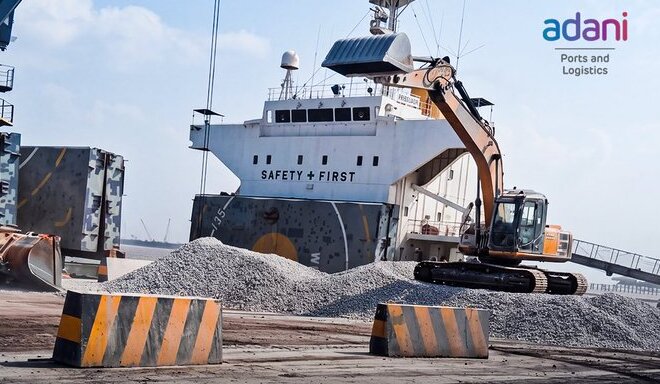
KANDLA: Adani Ports and Special Economic Zone (APSEZ) has achieved a significant operational milestone at its Tuna Terminal in Gujarat, successfully handling its first-ever Dolomite cargo.

The terminal discharged 27,150 metric tonnes of Dolomite from MV Portland, marking a new cargo-handling capability for the facility and reinforcing Tuna Terminal’s operational versatility.

The successful operation highlights the terminal’s ability to efficiently handle bulk cargo while further strengthening its role in supporting the region’s industrial and logistics requirements.

The milestone reflects APSEZ’s continued focus on enhancing cargo-handling capabilities, operational efficiency and customer confidence across its port network.

CONCOR explores Air Cargo collaboration with SATS and AISATS Under New CMD Ajit Kumar Panda

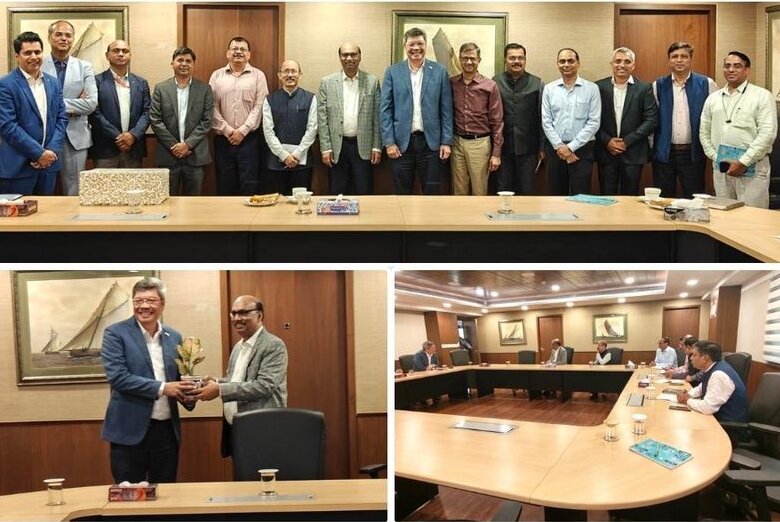
NEW DELHI: Container Corporation of India Ltd. (CONCOR) is exploring avenues for greater cooperation in the air cargo sector, with the company’s newly appointed Chairman & Managing Director (CMD), Mr. Ajit Kumar Panda, holding discussions with Mr. Bob Chi, CEO, APAC Gateway Services, SATS, and senior representatives from SATS and AISATS.

The meeting focused on identifying potential areas of mutual cooperation and exploring opportunities to strengthen collaboration in air cargo and related logistics services. The interaction assumes significance as CONCOR continues to expand its focus on integrated logistics solutions and explore new avenues to support India’s evolving multimodal transportation ecosystem.

Mr. Panda was joined by Mr. Vijoy Kumar Singh, Director (International Marketing & Operations), CONCOR, along with senior officers of the organisation. The CONCOR team engaged with the visiting SATS and AISATS delegation on opportunities that could create greater synergies between rail-based logistics, air cargo and associated supply-chain services.

The discussions with SATS and AISATS underline the growing importance of integrated logistics networks that can connect different modes of transportation and facilitate more efficient cargo movement. With air cargo emerging as an increasingly important component of time-sensitive and high-value supply chains, stronger cooperation among logistics stakeholders could help unlock new opportunities for customers and businesses.

The meeting also marks an important engagement for CONCOR under its new leadership, as the company continues to explore strategic partnerships and opportunities across the wider logistics sector.

The interaction between CONCOR and the SATS-AISATS delegation is expected to provide a platform for further discussions on areas of mutual interest and potential collaboration, particularly in developing seamless and customer-focused cargo logistics solutions.

As India continues to strengthen its position as a global trade and logistics hub, such cross-sector collaborations could play an important role in building more integrated, efficient and competitive supply-chain networks.

Piyush Goyal calls for fair trading practices and taking ‘Make in India’ from local to global

NEW DELHI : Union Minister of Commerce and Industry Shri Piyush Goyal urged Indian businesses and citizens to adopt fair trading practices, promote recycling and reuse, and encourage a circular economy while taking Indian products and services to global markets.

Addressing the inaugural ceremony of the Bharatiya Vyapar Mahotsav at Bharat Mandapam, New Delhi, Shri Goyal highlighted India’s growing global economic engagement and noted that markets have been opened for Indian industry and businesses through nine free trade agreements. He said that international trade now provides India preferential access and highlighted the contribution of Indian MSMEs, employees, fishermen, farmers, entrepreneurs and the services sector in taking Indian products and services to global markets.

Shri Goyal called for collective efforts to strengthen the Make in India brand by respecting India’s quality, design capabilities and brand. He said that India’s current economic size of around $4 trillion presents a major opportunity as the country moves towards the vision of becoming a $30 trillion economy by 2047. He noted that the whole world is seeking to increase trade relations with India and emphasised that such a large growth opportunity requires collective participation from businesses, entrepreneurs and citizens.

The Minister noted the growth of India’s exports and said that goods and services exports reached a record level of 863 trillion dollars last year, comprising 442 trillion dollars of merchandise exports and 421 trillion dollars of services exports. He said that exports had registered around 73 per cent growth over the last six years and that the target for the current year is to achieve exports of 1 trillion dollars. He further noted that exports recorded almost 15 per cent growth during the first four months from April to July of the current year.

Shri Goyal emphasised that self-reliance and national development go hand in hand. He said that citizens must themselves become part of the change and contribute to the country’s journey towards self-reliance. He highlighted various initiatives undertaken since 2014, including Digital India, Startup India, Stand-Up India and large-scale infrastructure development, which have contributed to strengthening industry and business and creating opportunities for the youth.

He said that ‘Swadeshi’ represents products made in India with the blood, sweat and tears of Indian citizens. He called upon Indian businesses to move beyond limited markets and take local products and services to global markets. He said that greater participation of Indian consumers in Indian products would create new opportunities, increase production and trade, enable economies of scale and make Indian businesses more competitive.

The Minister said that the people of India have demonstrated their capability to convert challenges into opportunities and emerge stronger. He highlighted the collective strength of travellers, MSMEs, startups, farmers, fishermen, labourers and entrepreneurs and said that this strength would help India take its products and services to the world.

Calling for greater participation in the country’s development journey, Shri Goyal said that the reform process involves improvement, transformation and performance, and that all stakeholders have a responsibility to demonstrate their capabilities and take India to the world through their work.

Shri Goyal called upon businesses and entrepreneurs to digitise their businesses, adopt good manufacturing practices and follow fair trading practices. He emphasised the importance of sustainability in the context of climate change and called for greater focus on recycling, reuse and a circular economy.

The Minister said that India’s journey should not only give a label to Make in India but also establish respect for India’s quality, design capabilities and brand. He expressed confidence that Indian products and natural resources would become trusted globally through these collective efforts.

Shri Goyal also said that growth in GDP would naturally lead to higher production and create employment opportunities. He noted that young people returning to India after completing their education or acquiring new skills through skill development centres would bring new solutions to address emerging challenges.

He emphasised that the collective efforts of Indian businesses, entrepreneurs, MSMEs, farmers, fishermen and workers would contribute to the country’s growth and help India emerge as a stronger participant in the global economy.

India and the SACU sign ToR for negotiations towards a Preferential Trade Agreement

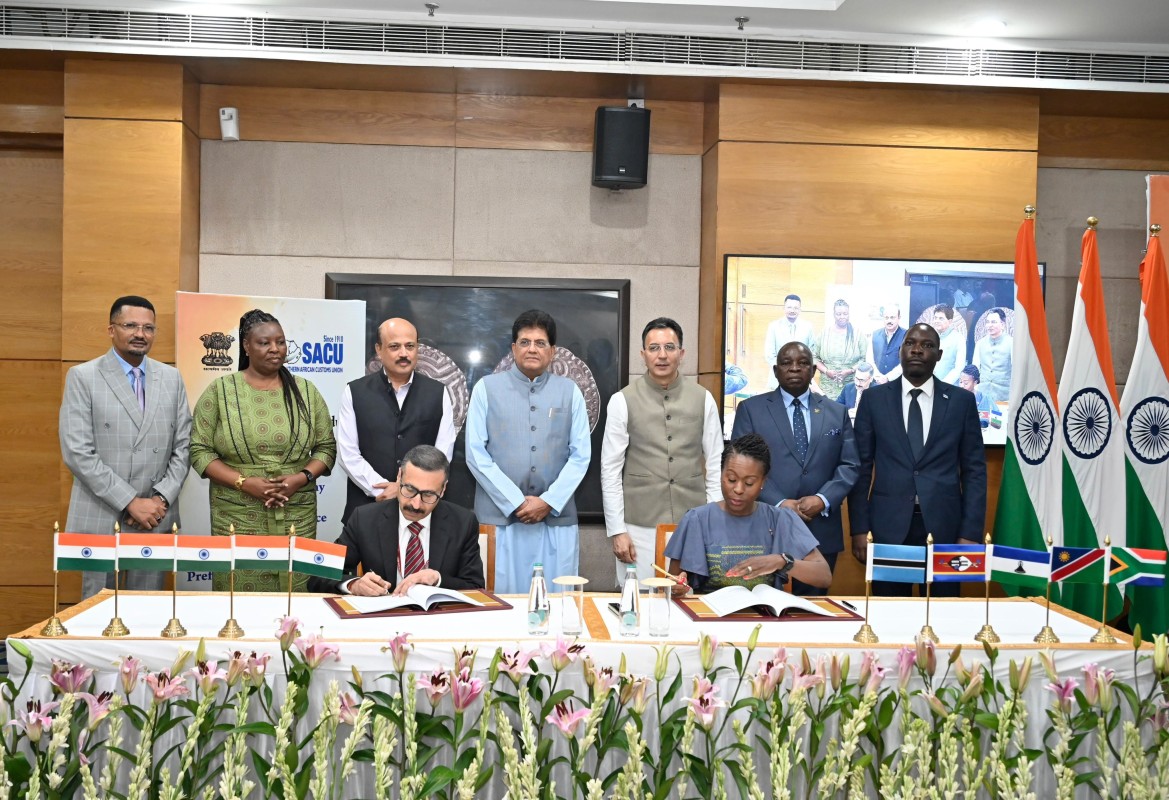
NEW DELHI : India and the Southern African Customs Union (SACU) on Wednesday signed the Terms of Reference (ToR) for negotiations towards a Preferential Trade Agreement (PTA) between India and SACU at Vanijya Bhawan, New Delhi. The signing marks an important step towards strengthening trade and economic engagement between India and the SACU Member States.

Speaking on the occasion, Union Minister of Commerce and Industry Shri Piyush Goyal called for a balanced, fair and equitable trade agreement between India and the Southern African Customs Union (SACU), emphasising that the partnership can help diversify markets and create opportunities for both sides to prosper. Shri Goyal said India can play an important role in supplying affordable medicines and supporting the development of new talent in the IT sector in the SACU region. Shri Goyal added that India can also help integrate SACU countries into global supply chains in areas where their businesses are competitive and where skills and talent can be developed or are already available.

The Minister stated that India’s engagement with Southern Africa is rooted in a longstanding partnership of equals and extends well beyond trade. He recalled that Southern Africa occupies a special place in India’s national memory, noting that “India’s relationship with Southern Africa did not begin with commerce. It began with conscience.” Recalling Mahatma Gandhi, he also highlighted India’s support for the peoples of Southern Africa in their struggle against apartheid.

Shri Goyal underscored that the negotiations seek to provide preferential market access to an already established commercial relationship, with significant complementarities in engineering goods and machinery, automobiles, pharmaceuticals, textiles, agriculture and agri-processing. He called upon the negotiating teams to proceed with urgency and stressed the importance of translating the agreed Terms of Reference into a concrete process towards early finalisation of the India–SACU PTA. He further noted, “What we sign does not by itself lower a single tariff or clear a single container. Only a final agreement will do that,” and called for an early conclusion of the PTA.

The signing ceremony was attended by Minister of State for Commerce and Industry Shri Jitin Prasada, senior officials from the Government of India and the SACU delegation.

Executive Director, Ministry of International Relations and Trade, Government of the Republic of Namibia, Ms. Ndiitah Nghipondoka-Robiati welcomed the signing of the ToR as an important milestone in formalising SACU–India engagement and providing structure, transparency and predictability to the forthcoming negotiations. Highlighting India’s importance as a strategic partner and a pillar of South–South cooperation, she noted the longstanding relationship between India and Africa through trade, investment, capacity building and development cooperation. She emphasised that SACU attaches real importance to an outcome that is balanced and takes into account the different levels of development among the Parties, particularly the interests and development needs of SACU Member States, including its Least Developed Countries and Small and Vulnerable Economies.

Secretary, Department of Commerce, Ministry of Commerce and Industry, Shri Rajesh Agrawal, addressing the gathering, said that this is India’s first ToR signing with the African region and noted SACU’s significance as the oldest customs union in the world. He stated that the PTA is envisaged to cover eight important chapters, including trade in goods and market access for goods; rules of origin and origin procedures; customs procedures and trade facilitation; trade remedies, including a bilateral safeguard mechanism; sanitary and phytosanitary measures; technical barriers to trade; dispute settlement; and legal and horizontal provisions.

The signing of the ToR reflects the shared commitment of India and SACU to advance mutually beneficial trade relations and lays the foundation for negotiations towards a balanced, mutually beneficial and development-oriented PTA.

Sagarmala startup & innovation initiative drives maritime transformation through Startup Solutions

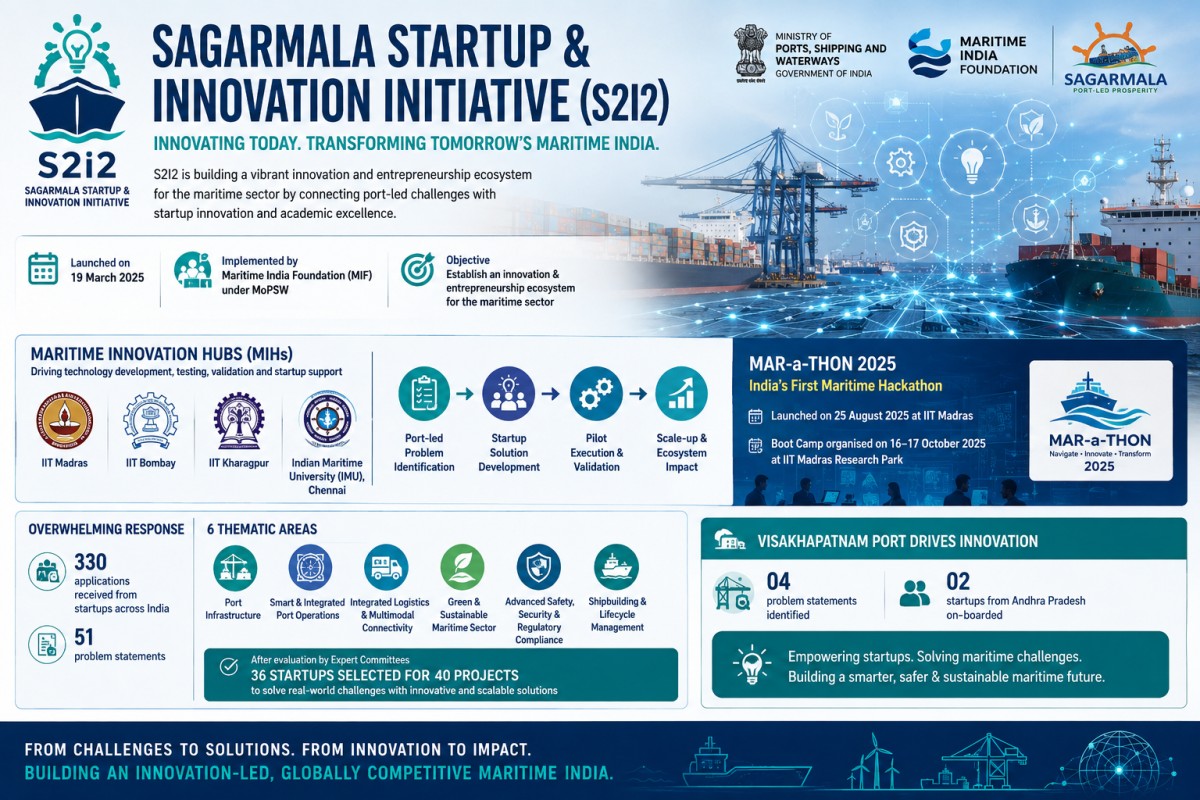
NEW DELHI : The Sagarmala Startup and Innovation Initiative (S2I2) is emerging as an important platform for fostering innovation, entrepreneurship and technology-led transformation in India’s maritime sector, connecting startups and emerging technologies with real-world challenges faced by ports and other maritime stakeholders.

Launched on 19 March 2025, S2I2 aims to establish a structured innovation and entrepreneurship ecosystem for the maritime sector. The initiative is being implemented by the Maritime India Foundation (MIF), a society registered under the Tamil Nadu Societies Registration Act, 1975 and functioning under the Ministry of Ports, Shipping and Waterways (MoPSW).

Maritime Innovation Hubs Create a Structured Innovation Ecosystem

A key component of S2I2 is the establishment of Maritime Innovation Hubs (MIHs) at IIT Madras, IIT Bombay, IIT Kharagpur and Indian Maritime University (IMU), Chennai.

These hubs provide startups with support in technology development, testing, validation, capacity building and handholding for the development and demonstration of innovative maritime solutions. The initiative establishes a structured pathway through which port-led operational challenges can be converted into technology solutions, piloted in real-world environments and subsequently scaled across the maritime ecosystem.

MAR-a-THON 2025: India’s First Maritime Hackathon

In a significant step towards strengthening this innovation ecosystem, MIF, in collaboration with Chennai Port Authority (ChPA) and the National Technology Centre for Ports, Waterways and Coasts (NTCPWC), IIT Madras, launched MAR-a-THON 2025 — India’s first-ever Maritime Hackathon at IIT Madras on 25 August 2025.

The initiative brought together startups, researchers, academia, industry experts and maritime stakeholders to develop practical solutions to some of the sector’s most pressing operational and technological challenges.

The momentum continued with the MAR-a-THON Boot Camp 2025, organised at IIT Madras Research Park on 16–17 October 2025. The two-day programme provided a collaborative platform for startups, academia, industry leaders and maritime stakeholders to engage directly with identified challenges and explore innovative solutions with potential for deployment and scale-up.

The response to the initiative was significant, with 330 applications received from startups across India against 51 problem statements covering six critical thematic areas:

Port Infrastructure
Smart & Integrated Port Operations
Integrated Logistics & Multimodal Connectivity
Green & Sustainable Maritime Sector
Advanced Safety, Security & Regulatory Compliance
Shipbuilding & Lifecycle Management

Following evaluation by multiple Expert Committees, 36 startups were selected for 40 projects, each addressing real-world operational challenges through innovative and scalable solutions aimed at accelerating the transformation of India’s maritime sector.

Visakhapatnam Port Strengthens Startup-Driven Innovation

Extending this innovation framework to Andhra Pradesh, Visakhapatnam Port has identified four specific problem statements under the S2I2 framework.

In a further step towards translating innovation into practical implementation, two startups from Andhra Pradesh have been onboarded to develop and implement innovative solutions addressing these identified challenges.

The engagement marks an important step in connecting local startup capabilities with real-world port requirements, while creating opportunities for technology demonstration, validation and eventual scale-up.

From Maritime Challenges to Scalable Solutions

The S2I2 model represents a shift towards a more collaborative and problem-driven approach to maritime innovation. By bringing together ports, startups, academic institutions, technology centres and industry stakeholders, the initiative seeks to accelerate the journey from identifying operational challenges to developing, testing and deploying viable solutions.

The onboarding of startups for Visakhapatnam Port demonstrates how this framework can translate India’s growing startup capabilities into practical solutions for port operations, efficiency, sustainability, safety and logistics.

With the maritime sector increasingly embracing digitalisation, automation, green technologies and smart infrastructure, initiatives such as S2I2 are expected to play a crucial role in building an innovation-led, technology-enabled and globally competitive Indian maritime ecosystem.

The Sagarmala Startup & Innovation Initiative is thus creating a bridge between India’s vibrant startup ecosystem and the evolving needs of its maritime sector — turning port-led challenges into opportunities for innovation, collaboration and sustainable growth.

NW Development gains momentum in AP as NW-4 strengthens inland connectivity

NEW DELHI : The development of National Waterway-4 (NW-4) through Andhra Pradesh is gaining momentum, with the Inland Waterways Authority of India (IWAI) advancing infrastructure aimed at promoting inland water transport, Ro-Ro connectivity and tourism along the Krishna River.

IWAI, an autonomous organisation under the Ministry of Ports, Shipping and Waterways (MoPSW), has developed a Roll-on/Roll-off (Ro-Ro) terminal at Muktyala on NW-4 to facilitate the movement of vehicles and cargo through inland waterways. The initiative is expected to provide an additional mode of transportation, improve multimodal connectivity and unlock the economic potential of the Krishna River corridor.

Ro-Ro and Tourism Infrastructure Strengthened

As part of efforts to expand the waterway infrastructure, IWAI constructed and handed over four floating jetties to the Andhra Pradesh Tourism Development Corporation (APTDC) in 2024. The facilities are intended to support tourism activities and strengthen river-based connectivity and passenger movement.

Further strengthening the Ro-Ro infrastructure network, the construction of a Ro-Ro terminal at Harishchandrapuram in Andhra Pradesh has been awarded, marking another step towards developing dedicated facilities for efficient inland cargo and vehicle movement.

In addition, the transfer of 3.80 acres of land belonging to the State Irrigation Department at Ibrahimpatnam in NTR District is currently under progress for the development of Ro-Ro terminal facilities on NW-4.

Investment in NW-4 Development Accelerates

Government spending on the development of NW-4 has witnessed a significant increase in recent years, reflecting the growing focus on strengthening inland waterways infrastructure.

Financial Year Funds Allocated/Utilised
2023–24 ₹0.67 crore
2024–25 ₹1.22 crore
2025–26 ₹18.28 crore

The funds utilised during 2025–26 were more than 15 times the amount recorded in 2024–25, indicating a substantial acceleration in infrastructure development along the waterway.

5.71 Million Tonnes of Cargo Moved on NW-4

The waterway is already demonstrating its potential as an alternative transportation corridor. During 2025–26, cargo movement on NW-4 stood at 5.71 million tonnes, while passenger movement reached 2.34 million.

The growing movement of both cargo and passengers underscores the importance of developing reliable inland waterway infrastructure and integrating NW-4 with road, rail, port and logistics networks.

Navigation Challenges Being Addressed

Despite the considerable potential of NW-4, several operational and infrastructure challenges continue to influence navigation along the waterway.

The availability of adequate water depth for safe navigation on the Vijayawada–Muktyala stretch depends on regulated water releases from the Pulichintala Dam, resulting in seasonal variations in navigable conditions.

Other challenges include the presence of low-level bridges, old navigational locks and encroachments, which can affect navigation and constrain the development of the waterway.

Addressing these issues through coordinated infrastructure planning, water management, removal of navigational constraints and modernisation of supporting facilities will be critical to achieving the full potential of NW-4.

Building a Multimodal Inland Waterway Corridor

The continued development of NW-4 forms part of India’s broader strategy to promote inland waterways as an efficient, sustainable and cost-effective mode of transportation. The expansion of Ro-Ro facilities, tourism infrastructure and multimodal connectivity along the Krishna River can help create new opportunities for cargo movement, passenger transport, tourism and regional economic development.

With increasing investment and the development of dedicated terminals, NW-4 is steadily evolving into an important component of Andhra Pradesh’s multimodal transport network.

From Ro-Ro terminals and floating jetties to growing cargo and passenger movement, the development of NW-4 reflects India’s continuing efforts to unlock the potential of its inland waterways and build a more integrated, efficient and sustainable transportation ecosystem.