Home Blog Page 153

Asia container freight faces delays due to typhoon, tight capacity

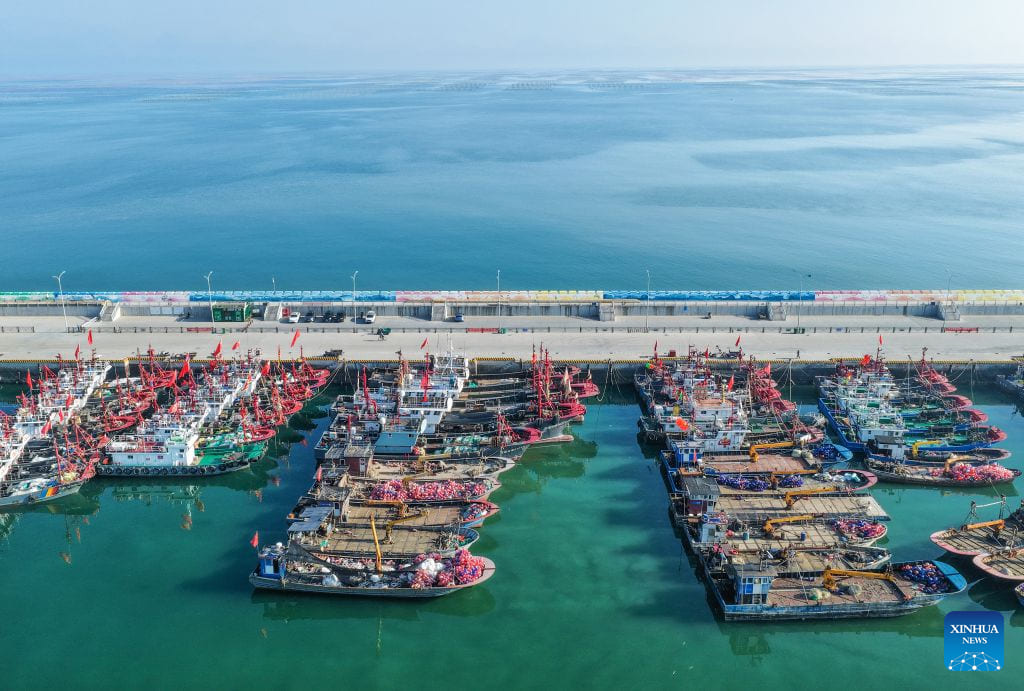
SINGAPORE: Container freight operations at major Chinese ports are gradually restarting after Typhoon Dolphin, but cargo backlogs, vessel delays and tight capacity could continue disrupting Asia’s supply chains for another one to two weeks, while congestion across north Asia has surged following the latest storm.

  • China chemical markets experience spillover effects from logistics disruptions
  • North Asia congestion exceeds 2.4 million TEU
  • Asia-Europe rates decline despite supply disruptions

Dolphin was the strongest of three typhoons that hit China in five weeks, causing significant disruption at Ningbo and Shanghai while tracking north toward Qingdao.

China’s National Meteorological Center (NMC) said the storm had weakened to a tropical depression by 11 August, although heavy rainfall and flood risks persisted across parts of central and northern China.

More than 1 million people were evacuated ahead of the storm, which disrupted transport and logistics operations across eastern China, according to media reports.

According to container shipping analyst firm Linerlytica, port congestion across North Asia has surged, with more than 2.4 million twenty-foot equivalent unitscontainership capacity effectively tied up after Typhoon Dolphin struck China’s eastern coast on 9 August.

The storm forced vessels to seek shelter away from its path, disrupting schedules across regional shipping networks.

Ningbo and Shanghai were the hardest-hit ports, with terminal closures beginning on 7-8 August, while congestion has also spread to ports in southern China and is expected to take several weeks to clear fully as carriers work through vessel backlogs.

“In China, trucking and warehousing operations across Shanghai and Ningbo are coming back online following Typhoon Dolphin, with both cities easing their emergency response levels, though vessel and terminal recovery is expected to take longer as ports work through accumulated cargo and rescheduled sailings,” Zencargo said in its 11 August market update.

“The backlog is also raising the risk of missed sailings; carriers may roll cargo, bump containers from booked vessels, or skip Shanghai calls entirely, with delays and revised schedules likely to persist over the coming one to two weeks.”

The latest disruption follows Typhoon Noul, which shut down ports in southern China in late July while regional hubs were still recovering from an earlier storm.

Container freight rate benchmarking and booking platform Freightos said freight rates across all major trade lanes, including Asia-Europe routes where demand is cooling, could face upward pressure from supply-side constraints caused by successive typhoons.

Some carriers are already omitting Shanghai port calls because of severe congestion, while multi-day delays have also been reported in Ningbo, Shenzhen and Hong Kong.

CHEMICAL MARKETS BEGIN TO FEEL IMPACT
The logistics disruption is beginning to spill over into China’s petrochemical markets, with market participants citing delays to cargo movements and heightened concerns over prompt material availability.

Acrylonitrile (ACN) producer Shanghai SECCO Petrochemical raised its weekly ACN price by yuan (CNY) 500/tonne to CNY13,000/tonne ex-tank, while noting that the typhoon had disrupted logistics in east China and contributed to near-term supply concerns.

Market participants said temporary port closures, vessel delays and restrictions on cargo movements in eastern China could affect the movement of both feedstocks and finished petrochemical products, particularly in the Yangtze River Delta region.

Typhoon-related disruption has also provided some support to Asia’s toluene market despite sluggish downstream demand. Traders said reduced port activity and slower cargo flows in eastern China helped underpin sentiment, as the storm curtailed logistics operations and added uncertainty over near-term supply availability.

Container ships and costs for shipping containers are relevant to the chemical industry because while most chemicals are liquids and are shipped in tankers, container ships transport polymers, such as polyethylene (PE) and polypropylene (PP), which are shipped in pellets. Titanium dioxide (TiO2) is also shipped in containers.

They also transport liquid chemicals in isotanks.

CHINA PORTS WORK THROUGH BACKLOG
Weather-related disruption at Ningbo-Zhoushan compounded pre-existing congestion in Shanghai, where delays and elevated yard density had already been reported before Dolphin made landfall, according to Zenargo.

Weekend closures included a halt to empty and laden container handling across major Ningbo terminals including Beilun 1, 2 and 3, Daxie, shan, Yongzhou and Zhenhai.

Jinyang Terminal was fully suspended, while pilotage services were halted, preventing vessel arrivals and departures during the peak of the storm.

“As the typhoon weakens, terminals across Ningbo-Zhoushan (Beilun No.1, No.2, No.3, Meidong, Daxie, Yongzhou) are resuming laden container gate-in and pick-up,” Zencargo said.

“Once terminals fully reopen, recovery is expected to take several days as ports work through a backlog of waiting vessels and accumulated containers. Shippers should anticipate delayed vessel departures, longer transit times, and revised arrival schedules over the coming one to two weeks.”

Congestion remains acute across several Chinese gateways. Freightos reported that some carriers are omitting Shanghai calls because of severe congestion, while delays continue at Ningbo, Shenzhen and Hong Kong.

ASIA-EUROPE DEMAND SOFTENS, BUT CAPACITY STAYS TIGHT
Demand on the Asia-Europe route remains healthy but has softened over the last four weeks, consistent with indications that this year’s peak season has already passed.

Carriers have adjusted freight-all-kinds (FAK) rates accordingly.

FAK rates are spot freight rates set by ocean carriers for shipping standard containerized cargo, regardless of the specific goods being transported, and are typically used as a benchmark for short-term market pricing.

“August rates for the first half of the month settled at a lower level than July, continuing the downward trend,” Zencargo said.

“Full visibility on second-half August rates is not yet available, though early indications point to a further, more modest decrease on top of the first-half reduction.”

Peak season surcharges (PSS) remain in place.

However, Freightos noted that softer demand may not automatically translate into lower rates as capacity remains constrained by weather-related disruption.

For all major trade lanes, including Asia-Europe services where market consensus points to cooling demand, rates may still face upward pressure from supply-side constraints created by typhoon-related congestion, vessel delays and schedule disruptions.

Market capacity remains tight through August, unchanged from recent weeks. Space on named accounts (NACs) and long-term (LT) contracts continues to be strictly controlled and largely full.

ASIA-US RATES HOLD
The FAK rate increase implemented at the start of August on Asia-US routes has held and is expected to remain in place, with the possibility of another increase during the second half of the month, according to Zencargo.

FAK levels vary by destination, with US east coast and Chicago-via-west-coast routings priced higher than direct west coast services. Premium-tier pricing is higher still. Increases have been most pronounced on the US east coast and Gulf because of Panama Canal surcharges.

“Named account (NAC) Peak Season Surcharges (PSS) will continue through August, with a possible further increase in the second half of the month,” Zencargo said.

“Panama Canal surcharges are being applied to NAC rates as a separate, additional charge.”

Operational space remains highly restricted, although conditions have improved from July.

Additional carrier capacity is being deployed primarily to clear cargo backlogs accumulated in Asia following the previous tariff deal rather than because of genuinely loose market conditions.

“The additional capacity being deployed is primarily aimed at working through the backlog accumulated in Asia following the previous tariff deal, rather than reflecting genuinely loose conditions,” Zencargo said.

The tariff agreement had triggered a surge in transpacific bookings as importers accelerated shipments to take advantage of improved trading conditions, resulting in cargo backlogs across Asia and a sharp increase in demand for vessel space, it said.

Carriers subsequently added capacity to accommodate the influx of cargo, but much of that tonnage is still being used to work through accumulated volumes rather than creating meaningful slack in the market.

Demand is expected to remain high throughout August. Vessel schedule disruption continues across central and southern China transpacific services after typhoon-related closures at Ningbo and Shanghai from 7 August.

Panama Canal restrictions are also tightening, with carriers becoming more selective on cargo because of weight limitations. US port congestion remains manageable.

Source: ICIS
Typhoon Dolphin deepens China Port Congestion, Stranding 2.4M TEUs

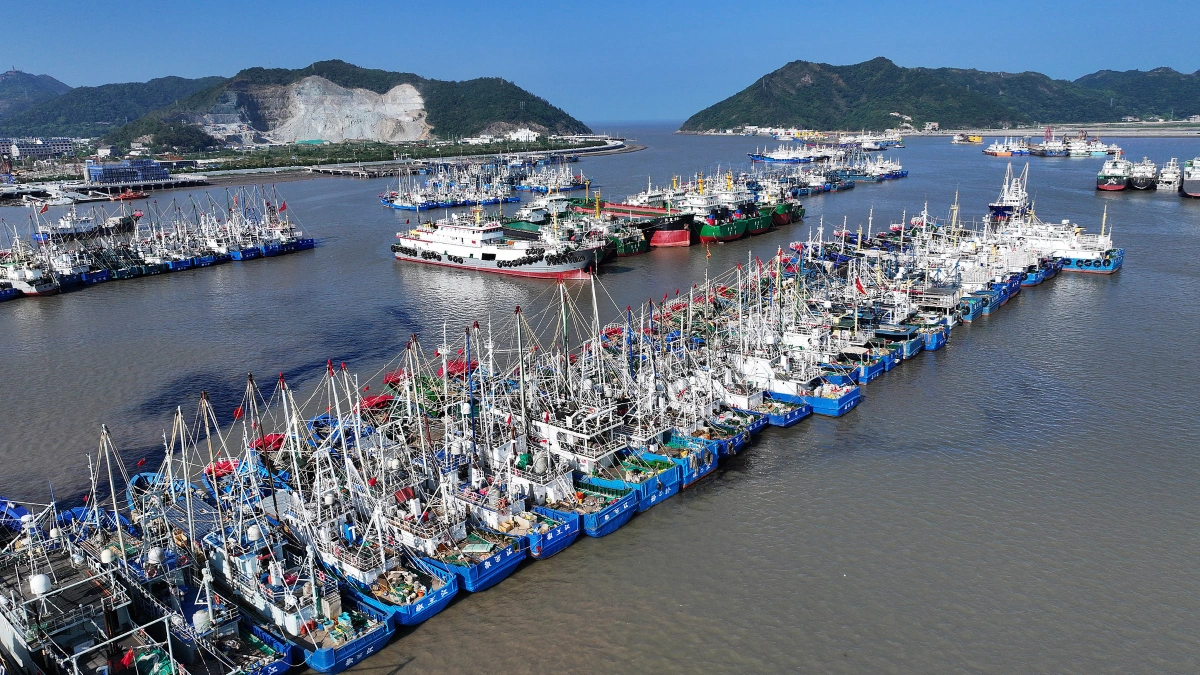
BEIJING: China endured its strongest storm of the season over the weekend, with ports in Shanghai and Ningbo experiencing three-day closures across multiple container terminals.

Typhoon Dolphin was the third tropical storm to hit China’s east coast in the past five weeks, with heavy rain and 90-mile-per-hour winds forcing ships to take shelter and leading airports to cancel hundreds of flights on Sunday and Monday.

According to data from container shipping market research firm Linerlytica, more than 2.4 million 20-foot equivalent units (TEUs) of container capacity were stranded across North Asia as of Monday.

Prolonged vessel delays are expected after terminal operations were reopened at the Ningbo-Zhoushan port on Monday afternoon and the Port of Shanghai on Tuesday morning. Ningbo shuttered all its terminals and container yards on Thursday in anticipation of the typhoon, while operations at Shanghai’s Yangshan and Waigaoqiao terminals were suspended on Friday.

With port congestion spreading toward southern China to hubs like Qingdao and Shenzhen, Linerlytica estimates it will take a few weeks to clear the vessel backlog.

Congestion has been a problem in the area for weeks, with Typhoon Bavi and Typhoon Noul leading to several port closures on the country’s east coast across July. This has ultimately led to longer waiting times to dock at the port, further exacerbating shipping delays. The situation has also provided further support to freight rates on the trans-Pacific trade lane due to the constrained container capacity, according to Drewry.

As of last Saturday, there were 67 vessels at anchorage at the Shanghai and Ningbo ports, along with 19 ships berthed at the hubs—amounting to more than 687,500 20-foot equivalent units (TEUs) in queue, compared to just above 96,500 TEUs at the ports.

The queue-to-berth ratio for vessels was 3.5, which is the highest ratio across all global ports with at least 20 ships at anchorage.

Access roads surrounding Waigaoqiao and Yangshan are experiencing heavy truck queuing, Seko said. The company is advising drivers to schedule gate appointments during off-peak windows.

At the Port of Ningbo, over 800 commercial vessels anchored during the storm are re-entering pilotage channels, the logistics provider told clients. Berth waiting times at the hub are expected to range from three to five days as terminals clear the backlog.

Regional drayage between the Shanghai and Ningbo ports and their inland factories is “actively recovering,” Seko said. The firm noted that major bridges like the Donghai Bridge and the Hangzhou Bay Bridge, as well as regional expressways, have reopened with standard speed limits restored.

Additionally, high-speed rail connections have resumed regular schedules. Yangtze River feeder connections will experience two to four days of lingering transit delay as mother vessels re-sequence at main ports.

Typhoon Dolphin’s impacts have extended to cargo movement in the air.

Air export space out of east China remains tight through Tuesday due to rolled cargo from cancelled flights over the prior two days, Seko says.

Shanghai’s Hongqiao and Pudong airports canceled more than 900 flights Monday, or about 40 percent of those expected, after about 1,300 were canceled the day before, according to Shanghai Airport Group.

Flight operations are normalizing as weather clears on Tuesday. Ground handling and tarmac loading have fully resumed, though flight schedules will require another 24-to-48 hours to clear passenger and freighter backlogs.

At other major airports in the region including Hangzhou Xiaoshan and Ningbo Lishe, departures and arrivals have resumed normal operations following weekend suspensions.

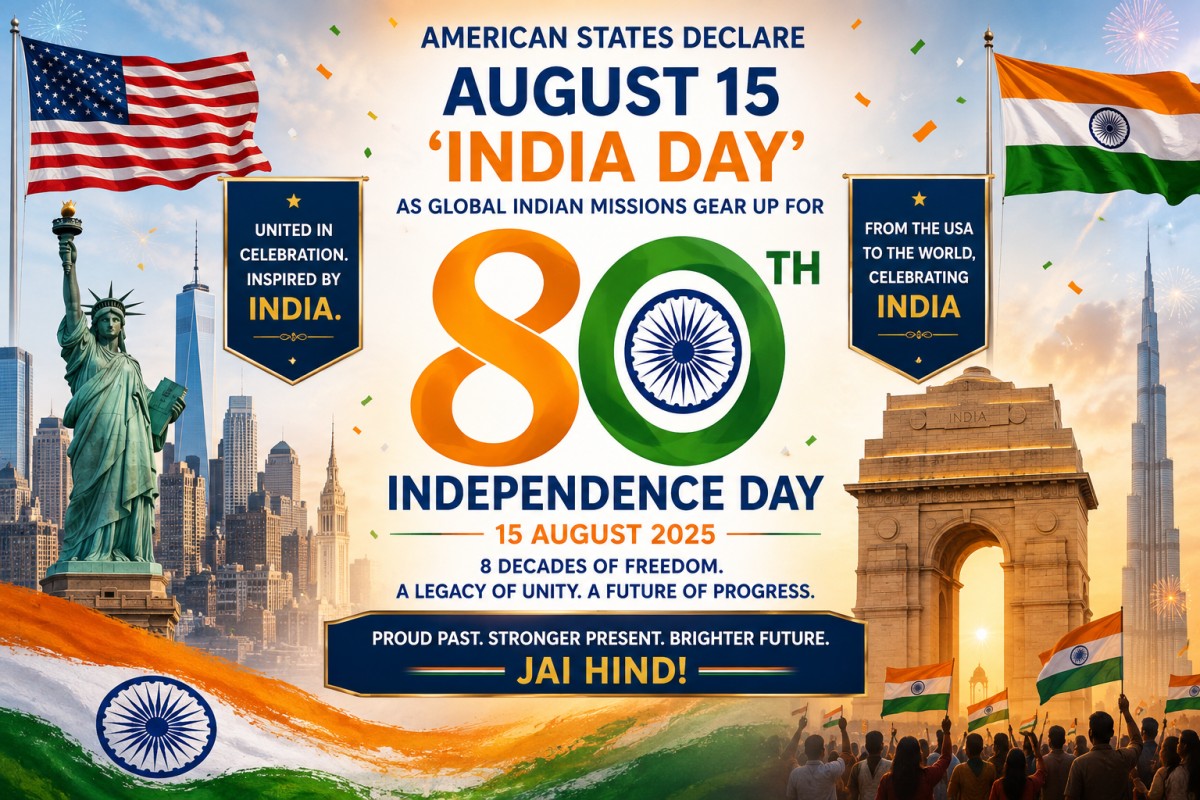
American states declare August 15 ‘India day’ as global Indian missions gear up for ’80th Independence Day’

NEW DELHI : Ahead of India’s landmark 80th Independence Day, Indian embassies, high commissions, and consulates across the globe are marking the occasion through official state proclamations, civic receptions, vibrant cultural performances, and community outreach initiatives.

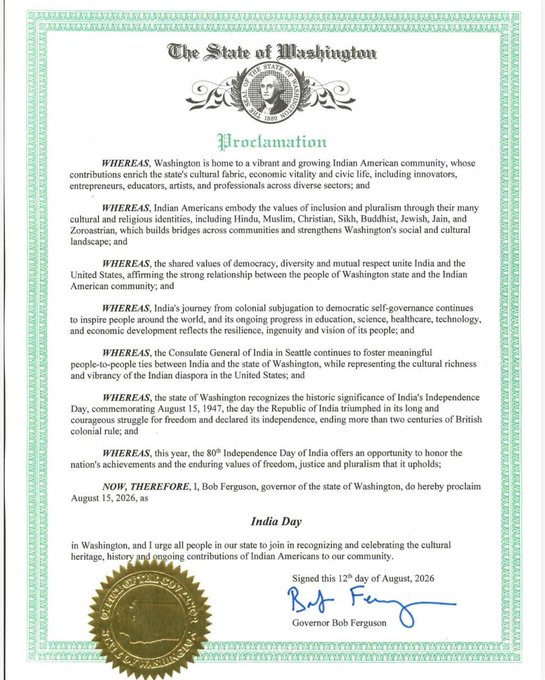
From executive declarations in major American cities to grand music collaborations in Berlin and diplomatic commentary in Hanoi, Indian missions are highlighting the nation’s democratic values and global partnerships. In the United States, the Consulate General of India in Seattle announced a series of official proclamations issued across Washington State and Nebraska designating August 15 as India Day.

Expressing gratitude to state and municipal leaders, the Consulate posted, “The proclamation recognizes the vibrant and growing Indian-American community in Seattle and its significant contributions to the city’s cultural fabric, economic vitality and civic life. It highlights the shared values of democracy, diversity and mutual respect that unite India and the United States, while recognising the Consulate’s role in fostering meaningful people-to-people ties between India and the City,” the Consulate General wrote in the post.

WASHINGTON DECLARES INDIAN INDEPENDENCE DAY American states declare August 15 'India day' as global Indian missions gear up for '80th Independence Day'

Source : ANI

Putin says Russia will start seizing European Vessels if its ships targeted

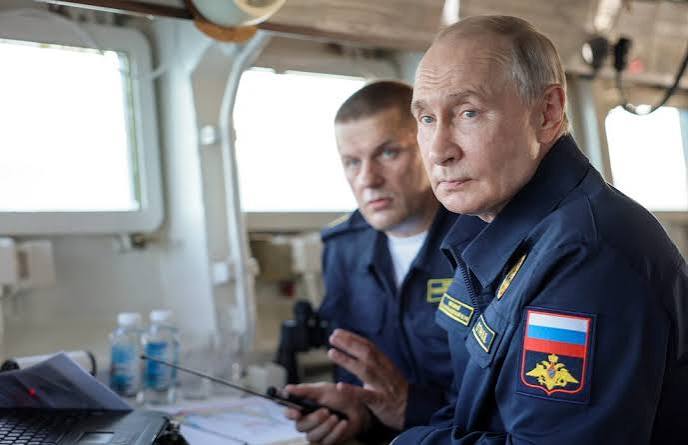
MOSCOW : President Vladimir Putin said on Wednesday that Russia will respond in kind if ‌European countries start to seize Russian merchant vessels and the commander of Russia’s Pacific Fleet said his forces were ready to “inspect and detain” foreign vessels from what he called hostile states.

The comments, which Putin made as he oversaw navy drills in Russia’s far east, come as the EU tries to ​ratchet up pressure on Russia’s so-called shadow fleet, expanding sanctions against hundreds of vessels and detaining some ships and ​their crews for checks. Some European governments have said they are exploring tougher maritime enforcement measures against ⁠ships suspected of sanctions evasion.

“We can see that the authorities of certain countries, in violation of international maritime law, are attempting to ​restrict the movement of our economic operators’ vessels…, and have recently gone so far as to consider the possibility of seizing our ​vessels and selling off the property they have plundered from us,” Putin said. “Naturally, this is nothing less than piracy and robbery. And if this begins to be put into practice, we shall be forced to respond in kind. And not necessarily in those waters where raids on our ships and vessels ​are planned, but wherever we ourselves deem it necessary and appropriate.”

Viktor Liina, commander of Russia’s Pacific Fleet, told Putin that what he ​described as hostile countries such as Britain and France also transported goods on vessels flying flags of convenience which – if the EU and Britain’s own ‌language was ⁠used – could also be described as a “shadow fleet. Western states are actively using vessels flying the flags of third countries to transport cargo in their own interests. In essence, this constitutes their shadow fleet,” Liina told Putin.

“We have the capabilities to inspect and detain vessels belonging to unfriendly states and their shadow fleet; inter-agency coordination is in place, and we are ready to tackle these tasks.” He said his ​fleet had carried out a detailed ​analysis of maritime traffic in ⁠the Asia-Pacific region and knew the routes, the cargo, and ownership of vessels linked to unfriendly nations.

The Russian Foreign Ministry weighed in too, accusing the EU in a statement of using its naval ​force in the Mediterranean – named operation EUNAVFOR MED Irini and originally launched to enforce a U.N. ​arms embargo on ⁠Libya – of carrying out unlawful inspections of foreign vessels. It cited a search operation led by Italy which boarded a tanker from Russia’s so-called this month, the second such operation in less than two weeks as Europe intensifies scrutiny of vessels suspected of helping Moscow circumvent oil sanctions.

“Operation ⁠Irini is ​effectively being used by the European Union to intimidate commercial shipping companies and ​impede freedom of navigation. There is a clear abuse of existing international legal norms and an expansive interpretation of its powers,” the foreign ministry said. “By resorting to ​such actions, the European Union is…bringing great dangers upon itself.”

Source : Reuters

Turkey backs Saudi-led maritime defence coalition in Red Sea

TURKEY : Turkey confirmed on Thursday for the first time that it had joined efforts to establish a multinational maritime defence coalition aimed at ensuring freedom of navigation in the Red Sea.

The announcement signals increased cooperation between Saudi Arabia and Ankara after the signing of a trilateral pact between the states and Pakistan in Mecca last week.

“At the invitation of Saudi Arabia, a technical meeting was held in Riyadh on 28 July to ensure freedom of navigation through the Bab al-Mandab Strait, followed by a meeting of the chiefs of general staff on 30 July 2026,” the Turkish Ministry of National Defence said in a statement.

The ministry added that Turkey was participating in another coordination meeting on the establishment of the maritime defence coalition in Jeddah on Thursday.

“Work continues with the Saudi Arabian authorities to reduce tensions in the Gulf region and ensure the uninterrupted flow of international trade,” the statement said.

Turkey, Saudi Arabia and Pakistan signed a defence pact last week committing the three countries to each other’s security, including collective security obligations.

Several Ankara-based sources who spoke to Middle East Eye said they believed the Red Sea coalition would be the first area in which the alliance between Turkey and Saudi Arabia would deepen.

Saudi Arabia announced last month that it had established a 13-country maritime alliance to safeguard security in the Red Sea.

The move followed the Houthis’ declaration on 20 July that they had imposed a maritime blockade on the kingdom, disrupting oil shipments diverted to the Red Sea following the closure of the Strait of Hormuz.

The alliance reportedly includes Saudi Arabia, Turkey, Pakistan, Bahrain, Bangladesh, Comoros, Djibouti, Egypt, Jordan, Kuwait, Qatar, Somalia and Yemen. It will be headquartered in Riyadh.

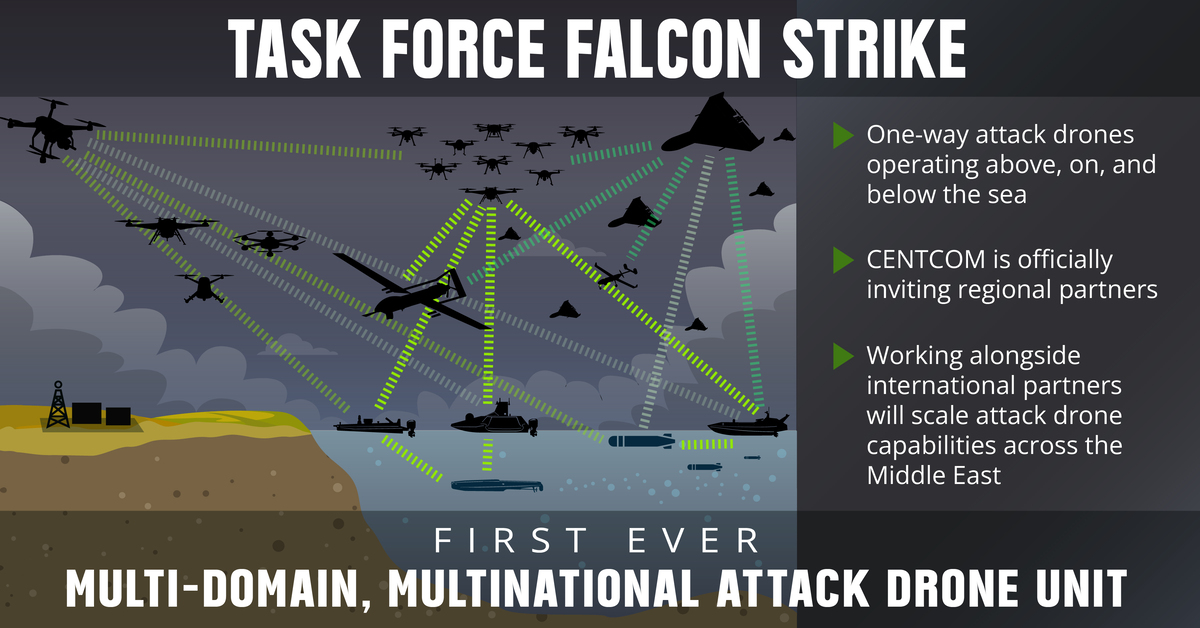
CENTCOM launches First-Ever Multinational Attack Drone Task Force

TAMPA: U.S. Central Command (CENTCOM) announced efforts to establish the first-ever multi-domain, multinational attack drone task force.

The unit, called Task Force Falcon Strike, will employ one-way attack drones consisting of unmanned systems from above, on, and below the sea operated by military support staff from the United States and regional partners.

Falcon Strike’s launch occurs nine months after CENTCOM established Task Force Scorpion Strike, the U.S. military’s first dedicated one-way attack drone squadron in the Middle East.

Scorpion Strike rapidly achieved key operational milestones, including the first-ever launch of an aerial attack drone from a U.S. Navy warship last December. The squadron also employed one-way unmanned aerial systems during Operation Epic Fury and during strikes on Iranian port facilities in July using unmanned attack vessels at sea.

“Task Force Falcon Strike will expand on Scorpion Strike’s success given the tremendous innovation happening among our regional allies and partners,” said Adm. Brad Cooper, CENTCOM commander. “Integrating and deploying our new capabilities together will help us rapidly realize the new possibilities that are on the horizon.”

CENTCOM has initiated the process of consulting with and officially inviting regional partners. As regional partners formally join, Task Force Falcon Strike will scale attack drone capabilities across the Middle East into a unified multi-domain, multinational deterrent.

“The United States military has a lot of strong partnerships and friends in the region,” said Cooper. “We are collectively stronger when we integrate and deploy new capabilities together.”

Personnel from U.S. Special Operations Command Central (SOCCENT), which launched Scorpion Strike, will lead Falcon Strike’s staff of U.S. and regional representatives.

Headquartered at MacDill Air Force Base in Tampa, SOCCENT plans and conducts special operations across CENTCOM’s 21-country area of responsibility in the Middle East, Central Asia, and South Asia.

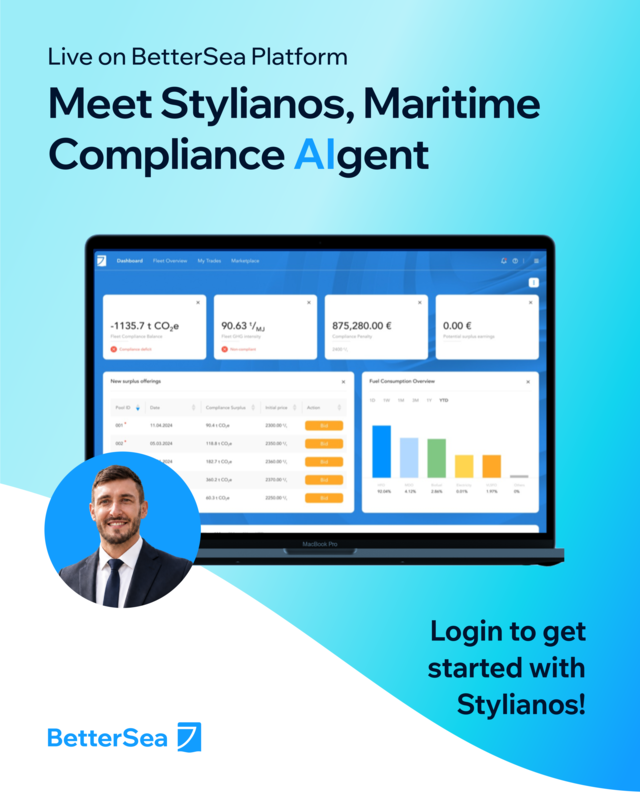
BetterSea launches Stylianos, a Maritime Compliance AIgent for End-to-End Compliance Execution Support

LISBON: BetterSea, provider of a maritime compliance platform and FuelEU marketplace, announced the launch of Stylianos, its new Maritime Compliance AIgent, trained to help shipping companies understand compliance exposure, evaluate most optimum strategies, source market quotations, and prepare compliance actions directly within the BetterSea platform.

Stylianos brings artificial intelligence into the day-to-day workflows behind maritime decarbonisation compliance. Rather than operating as a standalone chatbot, the AI-agent works with the data and functionality available within BetterSea to help users move from a compliance question to an actionable next step.

Users can ask Stylianos to assess compliance costs for individual vessels or voyage scenarios, compare different compliance pathways, identify optimal pool compositions, support marketplace activity: source quotations, perform compliance checks, and guide them through maritime regulation and platform workflows.

The launch expands BetterSea’s ambition to provide full compliance execution through a single platform, while reducing the manual work required to interpret increasingly complex regional and national carbon regulations.

AI-supported execution, with the user in control

BetterSea has designed Stylianos around a human-in-the-loop model.

The AIgent can analyse, recommend, prepare, and source, but it does not execute transactions or actions on behalf of the customer without review and approval. Users remain in control of the final commercial and compliance decisions.

This approach allows shipping companies to benefit from faster analysis and workflow automation while maintaining oversight over actions that may have regulatory, financial, or contractual consequences.

From compliance questions to actionable decisions

Stylianos can support users across several key workflows:

  • Estimate compliance costs and simulate voyage scenarios across FuelEU Maritime, EU ETS, UK ETS, the Djibouti carbon tax, and the Gabon carbon tax.
  • Suggest optimized compliance pathways based on selected vessels, voyage details, fuel assumptions, other costs, and potential pool compositions.
  • Support marketplace activity and sourcing, including identifying quotations for FuelEU surplus and ETS transactions.
  • Conduct compliance checks, including counterparty risk assessment.
  • Provide maritime compliance and platform guidance, helping users navigate both regulatory questions and BetterSea functionality.

For example, a user can ask Stylianos to calculate the expected compliance cost of a vessel’s upcoming schedule. Once the exposure is identified, the AIgent can help source multiple quotations for the required EUAs or FuelEU surplus and prepare the available options for the user to review.

Built with customer data privacy in mind

Data privacy is a core element of the new functionality.

BetterSea’s AI models are not trained on customer data. Customer data remains the customer’s own and is not used to train BetterSea’s AI models.

This enables customers to use AI-supported compliance workflows, while maintaining the confidentiality of their vessel, operational, commercial, and compliance information.

Bringing intelligence and execution together

Maritime compliance is becoming increasingly fragmented. Shipping companies must now assess and manage obligations across FuelEU Maritime, EU ETS, UK ETS, and a growing number of national carbon regimes, while simultaneously coordinating vessel data, counterparties, procurement requirements, and execution.

Stylianos is designed to reduce that complexity by bringing regulatory knowledge, compliance calculations, optimization, marketplace access, risk assessment, and execution preparation into one interaction layer.

Instead of moving between spreadsheets, regulatory documents, calculation tools, brokers, and internal procurement workflows, users can start with a simple question and use Stylianos to navigate toward an actionable compliance decision.

Executive Commentary

“Shipping companies are dealing with more compliance data, more regulations, and more execution steps than ever before, on top of their day-to-day workload. Stylianos is our time-saving answer to that complexity. We want users to be able to ask a straightforward question about a vessel or voyage and in minutes move from understanding their exposure to evaluating the best strategy and preparing execution within the same platform.”

Maximilian Schroer, Co-CEO, BetterSea

“The important distinction for us is that AI supports decision-making without removing control from the user. Stylianos can do the analytical and preparatory work, including sourcing market options, but the customer remains responsible for reviewing and approving the final action. This gives teams the speed of AI while preserving the oversight required for executing compliance.”

Dr. Gordana Ilic, Co-CEO, BetterSea

One platform for full compliance execution

The introduction of Stylianos further develops BetterSea’s platform from a compliance calculation and execution environment into an intelligent maritime compliance workspace.

By connecting AI-supported analysis and action directly with compliance data, simulation, marketplace activity, risk assessment, and execution workflows, BetterSea aims to help shipping companies make faster, better-informed decisions as maritime carbon regulation continues to expand.

Stylianos is now available through the BetterSea platform at no additional cost to users.

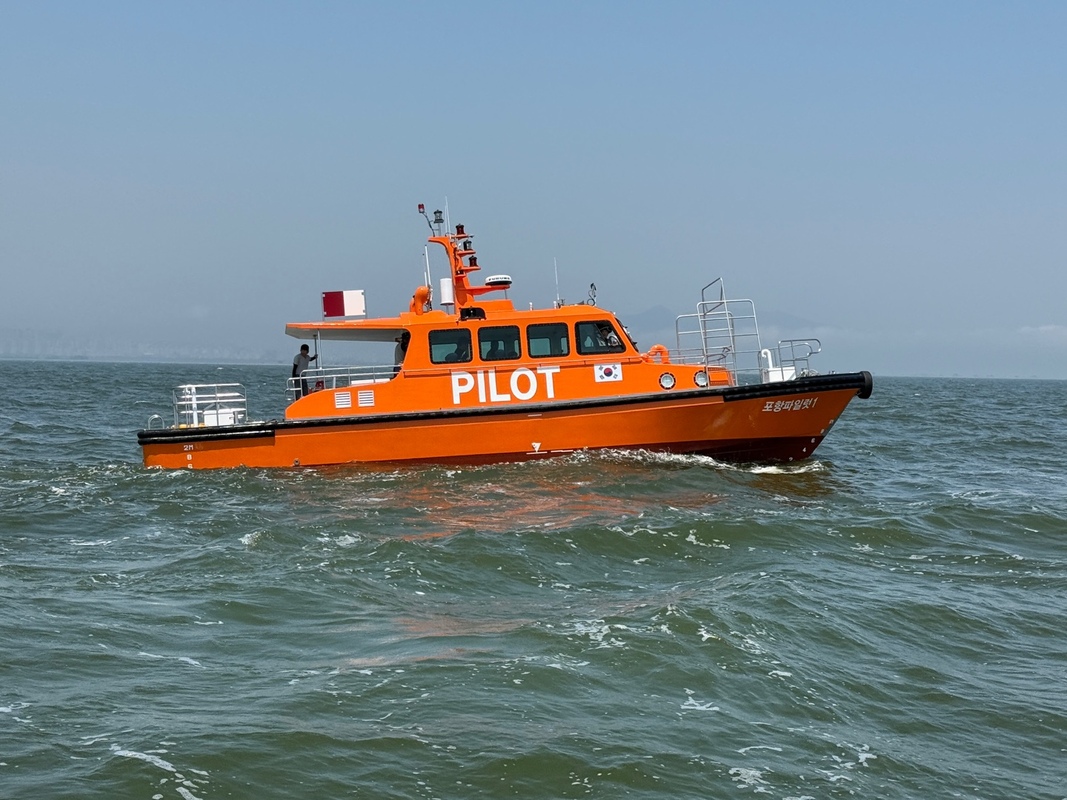
Korean Register issues Technical Information on Pilot Transfer Arrangements ahead of 2028 IMO Deadline

BUSAN: Korean Register (KR) has published new technical information to help the industry prepare for tightened IMO requirements on pilot transfer arrangements, the equipment used to move pilots safely on and off vessels. The requirements take effect January 1, 2028. KR developed the technical information with review and input from the Korea Maritime Pilots’ Association (KMPA), drawing on pilots’ firsthand experience of the risks involved in vessel boarding.

Pilot transfer arrangements, which include pilot ladders, handholds, securing points and winches used to raise and lower the ladder, are critical safety equipment. Because pilots rely on these arrangements when transferring between vessels, even a minor design or installation deficiency can lead to a serious accident.

To strengthen safety in this area, the IMO Maritime Safety Committee adopted amendments to SOLAS Regulation V/23 and a new mandatory performance standard for pilot transfer arrangements on June 26, 2025, through resolutions MSC.572(110) and MSC.576(110). The amendments were developed based on accident cases and root-cause analyses compiled by the International Maritime Pilots’ Association (IMPA), with the aim of addressing identified safety risks and improving the reliability of pilot transfer arrangements.

Under the revised requirements, several key design standards will be strengthened. The minimum breaking strength required for strong points used to secure the pilot ladder will increase, while requirements governing the location of deck handholds will also be revised. In addition, a new minimum diameter requirement will apply to winch reel drums, and the drums will be required to incorporate a sunken securing point.

The revised design requirements will apply to pilot transfer arrangements installed on or after January 1, 2028. For ships with existing arrangements installed before that date, compliance will generally be required by the first survey conducted on or after January 1, 2029. For vessels not certified under SOLAS, the compliance deadline will be January 1, 2030.

KR recommends that shipowners and shipyards begin reviewing their newbuilding specifications and retrofit plans well ahead of the implementation date. Even for newbuildings scheduled for delivery before 2028, failing to reflect the revised requirements during the design stage could result in additional modifications shortly after delivery. For in-service vessels, advance planning is also important to align necessary modifications with drydocking and survey schedules, helping to minimize costs and operational disruption.

To support the industry’s smooth transition to the strengthened requirements, KR’s new technical information explains the major design changes and additional requirements applicable to in-service vessels through user-friendly illustrations. It also includes a practical checklist to support design reviews and survey preparation, enabling shipowners and shipyards to identify potential compliance issues and necessary modifications in advance.

“Pilot transfer arrangements are safety equipment directly linked to human life,” said Kyungbok Kim, KR’s Executive Vice President of the Statutory Division. “We encourage shipyards and shipowners to start reviewing their newbuilding specifications and retrofit plans now so that the strengthened requirements can be incorporated into drydocking and survey schedules with minimal cost and disruption.”

The technical information is available on KR’s website at the following links:

Guidance to Support the Early Implementation of Requirements for Pilot Transfer Arrangements

Amendments to Pilot Transfer Arrangement Requirements Entering into Force on 1 January 2028(Rev.1)

New safety and training resources launched to help shipping prepare for ammonia-fuelled vessels

These resources provide practical guidance to build the competencies and safety management organisations needed for ammonia-fuelled shipping.

LONDON: Lloyd’s Register Maritime Decarbonisation Hub (the Decarb Hub) and the Mærsk Mc-Kinney Møller Center for Zero Carbon Shipping (MMMCZCS) have launched a new suite of resources to help shipowners, operators and managers prepare for the safe adoption of ammonia as a marine fuel.

The resources include an Ammonia Process Safety Management (PSM) Maturity Self-Assessment Tool and a series of Ammonia Competency and Training Practitioner Handbooks. Collectively, they form part of the ‘Fuel Safety Frameworks: Ammonia’ initiative, developed jointly by the Decarb Hub and MMMCZCS, which brings together expertise from across the shipping, energy, fuel production, training and technology sectors.

In preparation for ammonia-fuelled shipping, real progress has been made in understanding the technical requirements for safe ammonia fuel systems. However, ammonia’s hazard profile – particularly its toxicity – introduces safety challenges that need to be managed throughout a vessel’s operating life. This points to a need for new approaches to operational safety management, training and risk control, both ashore and at sea. Vessel operators with more mature safety management organisations, staffed by teams with the right competencies, will be better placed to control ammonia’s hazards and reduce the risk of incidents.

The Ammonia PSM Maturity Self-Assessment Tool aims to help shipowners, operators and managers evaluate where their safety management practices stand today and what might need to improve to achieve ammonia readiness. It uses a 5-tier maturity scale to identify weaknesses and to track improvements over time, helping to strengthen the controls that prevent ammonia incidents. As best practices for managing ammonia safety are still emerging in maritime, the tool borrows its evaluation framework from industries that already manage similar hazards, such as chemical processing and oil & gas. The tool is designed to support ongoing improvement rather than to check compliance, and works alongside existing regulations and requirements.

The three Ammonia Competency and Training Practitioner Handbooks have been developed to help organisations understand what different members of the maritime workforce need to know, understand and be able to do when working with ammonia. They focus on three safety-critical areas: Emergency Response; Maintenance; and Leak Detection, Management, Isolation and Repair. Each handbook translates realistic ammonia operational scenarios into competency and training expectations for shipboard and shore-based roles, including seafarers, vessel managers, terminal personnel, shore support teams and emergency responders.

These resources build on the partners’ established Ammonia Phase 3 Competencies and Training project, which identified the capabilities and operational requirements needed to support the safe deployment of ammonia-fuelled vessels.

Tom Chitseko, Head of Risk and Safety at Lloyd’s Register Maritime Decarbonisation Hub, said: “The industry has made significant progress in understanding the technical requirements for ammonia-fuelled vessels. People, processes and organisations must be equally ready. These resources provide practical guidance to help shipowners, operators and managers build that readiness and more systematically manage the risks posed by use of ammonia as a marine fuel.”

Martin Eriksen, Head of Safety Leadership & Operations at the Mærsk Mc-Kinney Møller Center for Zero Carbon Shipping, said: “Ammonia asks for more of our safety management than the conventional fuels we’re used to. A leak that would be a contained minor technical failure with conventional fuel can become an operational crisis with ammonia. This tool has been developed so operators don’t have to work that out the hard way — it gives them a structured way to see where their safety management stands today, and what ‘ammonia-ready’ looks like in practice.

“Additionally, the tool draws on process safety management having decades of track record in chemical engineering and oil & gas, handling exactly the kind of hazards ammonia introduces. This tool translates that experience into something maritime operators can use, in their language, against their operations.”

The Ammonia PSM Tool and Competency and Training Practitioner Handbooks are available free of charge from the Decarb Hub/Mærsk Mc-Kinney Møller Center for Zero Carbon Shipping at:

Gujarat steps up global investment outreach ahead of Vibrant Gujarat Summit

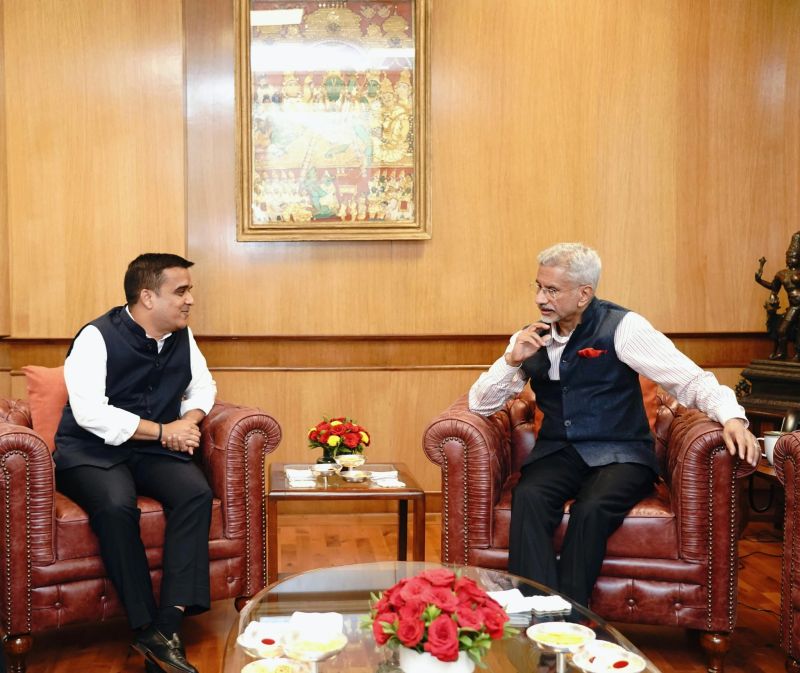
Deputy Chief Minister Harsh Sanghvi Meets External Affairs Minister S. Jaishankar to discuss Global Partnerships and Summit Preparations

NEW DELHI: Gujarat is stepping up its international investment outreach ahead of the upcoming Vibrant Gujarat Summit, with Deputy Chief Minister Shri Harsh Sanghvi holding a high-level meeting with Hon’ble External Affairs Minister Dr. S. Jaishankar to discuss preparations for the prestigious global investment platform and avenues to further strengthen Gujarat’s engagement with international investors and strategic partners.

Sharing details of the meeting, Shri Harsh Sanghvi said that he had an “excellent meeting” with Dr. Jaishankar, during which discussions focused on the upcoming Vibrant Gujarat Summit and opportunities to deepen global investment partnerships.

The meeting assumes significance as Gujarat continues to position itself as a leading destination for domestic and international investment, with a strong emphasis on strengthening global business linkages, facilitating international collaborations and creating new opportunities across emerging and high-growth sectors.

The discussions also explored the role of India’s diplomatic network in facilitating greater international participation in Gujarat’s investment initiatives. The External Affairs Ministry’s engagement with prospective global partners can further support Gujarat’s efforts to connect international businesses, investors and institutions with opportunities emerging across the state.

The Vibrant Gujarat initiative, which began as an investment summit in 2003, has evolved into a major platform connecting policymakers, industry leaders, investors and global business communities. The 2026 edition is being supported by a series of regional investment conferences across Gujarat, aimed at broadening investment opportunities beyond the state capital and strengthening local-to-global business linkages.

Recent regional conferences have already generated substantial investor interest. At the South Gujarat regional conference, the state government reported the signing of 2,792 MoUs involving proposed investments of ₹3.53 lakh crore, with the projects expected to generate nearly 2.82 lakh direct employment opportunities. The initiative has also focused on connecting MSMEs and entrepreneurs with international markets and investors.

The upcoming summit is therefore expected to provide another important platform for Gujarat to showcase its industrial ecosystem, infrastructure, connectivity, policy environment and investment opportunities to a wider international audience.

The meeting was attended by Minister of State Shri Jayram Gamit, Shri Hasmukh Adhia, Smt. Mamta Verma and other senior officials. Their participation underlined the coordinated efforts of the Gujarat Government and senior stakeholders to ensure effective preparations and maximise the summit’s global outreach.

With a continued focus on international cooperation, investment facilitation and strategic partnerships, Gujarat is seeking to further strengthen its position as a preferred destination for global investors and contribute to the broader national vision of Viksit Bharat@2047.

The forthcoming Vibrant Gujarat Summit is expected to build upon the state’s established investment ecosystem and create fresh avenues for collaboration between Gujarat and the global business community.