Home Blog Page 155

Indian Railways lines up 54 PPP Projects worth Rs 1.8 lakh crore as private sector role expands

NEW DELHI : Indian Railways is preparing a major expansion of private participation, with 54 projects worth around Rs 1.8 lakh crore identified for development through public-private partnerships (PPP). Nearly half of the proposed projects involve railway track construction.

The scale of the proposed pipeline is substantially larger than the Railways’ existing PPP portfolio.

“So far, 18 projects of Rs 16,686 crore have been completed through the PPP model. Seven projects worth Rs 16,362 crore are under implementation, including coal connectivity and port connectivity projects,” a Business Standard report quoted the ministry report as saying.

The proposed projects include several large infrastructure packages. These include the Rs 9,562-crore Itarsi-Manikpur third-line project and the Rs 8,321-crore Haridaspur-Vizianagaram fourth-line project.

The pipeline also covers seven trainset maintenance depots estimated at Rs 21,000 crore, wagon maintenance facilities worth Rs 6,400 crore and power projects valued at Rs 44,500 crore.

The ministry disclosed the plans to the Parliamentary Standing Committee on Railways in its response to earlier recommendations on its demand for grants.

The committee has called for simpler approval procedures and clearer risk-sharing arrangements to make PPP projects more attractive to investors while protecting the Railways’ financial interests..

It also urged greater involvement of state governments and local bodies in new-line and gauge-conversion projects, particularly to help resolve land, clearance and utility-related hurdles.

Entire top brass of CBIC-Chennai reshuffled overnight

CHENNAI : The government has affected a major overnight reshuffle of senior officers in the Chennai CGST office of Central Board of Indirect Taxes and Customs (CBIC), transferring six senior officials, including a Principal Chief Commissioner and a Principal Commissioner, with immediate effect.

The simultaneous movement of the senior-most CBIC officer in the Chennai chain and five other officers posted there makes the overnight reshuffle particularly significant.

According to an office order issued by the Department of Revenue dated August 10, Madan Mohan Singh, Principal Chief Commissioner, CGST Chennai, has been moved to CBIC, Delhi and attached as Officer on Special Duty (OSD). He stands relieved, the order said.

Pradip Kumar Suman, Principal Commissioner, CGST Chennai, has been attached as OSD in CBIC. Three Additional Commissioners and two Deputy Commissioners from Chennai have also been moved out and attached to CBIC, Delhi as OSD.

The other transfers include Shivaprakash Veeresh Baddi, Additional Commissioner, B Lokanath Reddy, Additional Commissioner and Deputy Commissioners M Pandaram and N Sudhakar. All will be attached to CBIC, Delhi as OSD.

The order, issued with the approval of the competent authority, stipulates that the transfers take effect immediately. While Singh has been relieved, the remaining officers have been directed to join their new postings by August 12.

The scale and suddenness of the move is notable although the office order itself does not cite any complaint, disciplinary action or reason for the move.

The order has been circulated to the Finance Minister’s office, Minister of State for Finance, Revenue Secretary, Chairman and Members of the CBIC, as well as the vigilance and human resources wings of the Board.

Source: BL

MEPZ SEZ approves investment worth ₹443 crores

CHENNAI : The Unit Approval Committee of MEPZ Special Economic Zone, chaired by Alex Paul Menon, Zonal Development Commissioner, has approved eleven significant investment proposals during its August meeting. The approvals, comprising 9 new SEZ units and 2 Export Oriented Units, represent a combined investment of ₹443 crore and are expected to generate 2,427 employment opportunities across diverse industrial sectors including manufacturing, information technology, and logistics services, says a release.

Major approvals include ZF Industrial Technology Coimbatore Pvt Ltd establishing a manufacturing facility at Aspen Park Infra Coimbatore, representing an investment of ₹336 crore that will create 250 direct employment opportunities and strengthen the region’s capabilities in advanced manufacturing, says the release.

Sanmina-SCI India Pvt Ltd has been approved to establish a manufacturing unit at SIPCOT Hi-Tech SEZ in Oragadam, Sriperumbudur, with an investment of ₹73 crore expected to generate 1,350 jobs and further consolidate the manufacturing ecosystem in the region.

Visionet Systems Pvt Ltd will expand its existing operations at ELCOT SEZ in Vilankurichi, Coimbatore, with an additional investment of ₹11 crore that will support 294 new employment opportunities in the service-oriented sector, says the release

TVS SCS bets big on India growth, eyes around ₹17K cr revenue by FY30

CHENNAI: Chennai-based TVS Supply Chain Solutions (TVS SCS), a leading global supply chain solutions provider, has said that the company may see over a 50 per cent rise in revenue over the next four years, from Rs 11,000 crore in FY26 to around Rs 17,000 crore by FY30.

This spike will mainly be driven by an improved performance in the domestic business, which is expected to see its share in the business rise from the current 30 per cent to 40 per cent in four years, said Vikas Chadha, MD at TVS Supply Chain Solutions.

“During the current financial year, we expect around 16 per cent growth. Long-term supply and logistics sector growth is normally two-fold the GDP. As a company, we expect faster growth in double digits. Considering the mid-teen growth this year, and double-digit growth going ahead, we will be around Rs 16,000-17,000 crore revenue in four years,” Chadha said.

The company posted a consolidated net profit of Rs 22.5 crore during the first quarter of FY27, down from Rs 71.1 crore in the year-ago quarter. The June 2025 quarter included a one-time gain from an InvIT transaction. Excluding this, operational net profit for Q1FY26 was Rs 8.8 crore, reflecting an underlying PAT growth of approximately 156 per cent in Q1FY27. The quarter also witnessed a 28.7 per cent rise in consolidated revenue to Rs 3,335.2 crore.

“We are seeing broad-based growth, with our Integrated Supply Chain Solutions (ISCS) growing by 22 per cent, and Global Forwarding Solutions (GFS) by 44 per cent. India business also grew by over 40 per cent,” he added.

“Our Q1 performance demonstrates the continued improvement in the quality of our earnings. Adjusted EBITDA grew 34 per cent while Adjusted PBT increased 71 per cent, reflecting operating leverage and disciplined cost management. The ISCS business maintained healthy margins, while the GFS segment delivered a significant improvement in profitability, with EBITDA margins expanding from 2.1 per cent to 4.1 per cent. We remain focused on sustaining margin expansion and profitable growth through the year,” said R Vaidhyanathan, global chief financial officer, TVS Supply Chain Solutions Ltd.

“We have made a strong start to FY27, building on the momentum of our FY26 performance and delivering robust growth across all our key operating metrics. The performance reflects sustained momentum in our ISCS business, significantly higher freight volumes and improved profitability in the GFS segment driven by disciplined execution across operations,” Chadha added.

The quarter also marked the company’s highest-ever quarterly new business wins of Rs 543 crore, while its order pipeline of over Rs 7,500 crore provides strong visibility for future growth. “Combined with our proven execution capabilities, these strengths reinforce our ability to deliver mid-teen growth in FY27,” he added.

BLive signs MoU with Tata Motors for 1,000 electric mini trucks under the PRIME program to drive cargo electrification

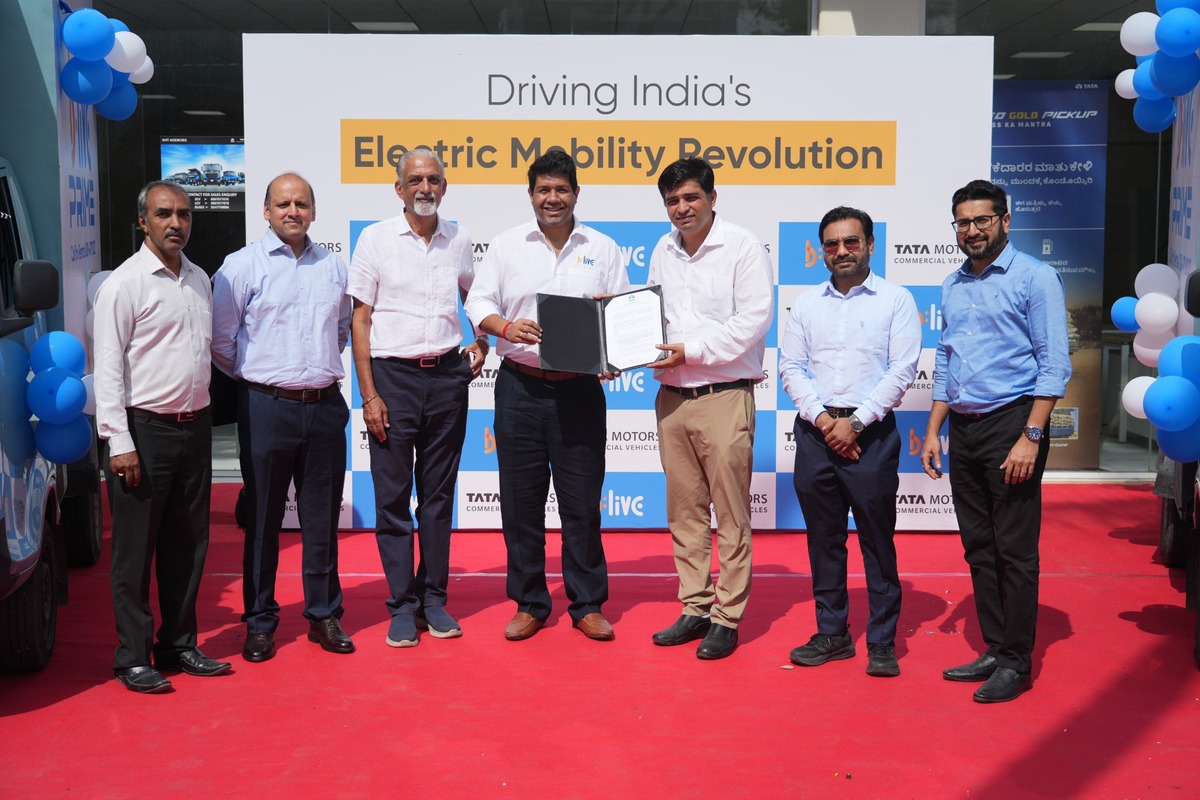
NEW DELHI: BLive, India’s leading integrated commercial EV mobility platform, has signed a Memorandum of Understanding (MoU) with Tata Motors, India’s largest commercial vehicle manufacturer, to deploy up to 1,000 Tata electric mini trucks through BLive PRIME, its franchise-owned commercial EV fleet programme. The planned rollout is part of the company’s strategy to build scale in India’s fast-growing Cargo EV segment and accelerate the electrification of last-mile and intra-city logistics. The company has recently introduced BLive PRIME with a ₹100 crore investment dedicated to large-scale electric fleet adoption and advancing the nation’s green delivery revolution.

As the first step under the partnership, BLive has inducted the first batch of Tata Ace Pro EVs, marking the start of on-ground deployment. The initial fleet will be used for enterprise logistics operations, with subsequent batches to follow in phases over the coming months. Through BLive PRIME’s franchise-owned fleet programme, entrepreneurs and businesses can invest in and own a fleet of electric cargo vehicles, starting with an investment of approximately ₹45 lakh, and earn assured rentals from the deployed fleet. BLive manages the end-to-end fleet lifecycle, including enterprise demand, vehicle deployment, fleet technology, charging ecosystem integration, maintenance and day-to-day operations, creating a professionally managed commercial EV ownership model.

Sandeep Mukherjee, Founder & CEO, BLive, said, “The Cargo EV segment is experiencing strong demand as businesses increasingly evaluate electric fleets for their intra-city logistics requirements. However, scaling commercial EV adoption requires more than vehicle availability. Enterprises need access to reliable fleets, charging, technology, maintenance and professionally managed operations. Through our franchise-owned fleet programme, we are enabling entrepreneurs to own productive electric cargo assets and earn from fleet rentals. At the same time, BLive manages enterprise deployment and end-to-end operations. Our plan to deploy more than 1,000 Tata Ace EVs reflects our ambition to build scale and establish BLive as a leading player in India’s Cargo EV segment.”

India currently has an estimated 4.5-5 million Light Commercial Vehicles (LCVs) on its roads, with the vast majority still operating on diesel. Electric penetration in the cargo LCV segment remains below 1%, highlighting the significant headroom for electrification and the scale of the market opportunity. BLive plans to deploy its franchise-owned electric cargo fleets across high-growth sectors including  manufacturing, warehousing, e-commerce, quick commerce, retail distribution, FMCG, construction, pharmaceuticals and third-party logistics (3PL).

Mr. Pinaki Haldar, Vice President & Business Head-SCVPU, Tata Motors Ltd., said, “We are pleased to partner with BLive as it expands electric cargo mobility solutions. With the Ace Pro EV, an accessible and efficient solution for small businesses, the proven Ace EV for last-mile logistics, and the high-performance Intra EV for larger cargo applications, Tata Motors offers a comprehensive electric SCV and pick-up portfolio to address diverse customer needs. Together, we are enabling businesses to adopt sustainable mobility solutions that deliver productivity, reliability and strong operating economics.”

The expansion comes as India’s commercial logistics industry is experiencing strong demand for electric cargo vehicles, driven by the rapid growth of e-commerce, quick commerce, organised retail, manufacturing and urban supply chains. Businesses are increasingly evaluating electric commercial vehicles to reduce operating costs, meet sustainability commitments and improve the economics of high-utilisation intra-city logistics.

BLive PRIME brings together all critical aspects of commercial fleet management, including vehicle procurement, financing, customer acquisition, charging, technology, maintenance, and operations, within an integrated EV ecosystem. Through its franchise-owned fleet programme, franchise partners own the electric cargo vehicles, while BLive manages deployment and operations to meet enterprise logistics requirements. This entrepreneur-led ownership network enables BLive to rapidly scale fleet capacity and provides enterprises with access to professionally managed electric cargo fleets. BLive’s commercial electric fleets already serve enterprise customers and logistics partners such as Hyperpure, Porter, and Delhivery, with the company expanding its reach across e-commerce, quick commerce, retail, manufacturing, and supply chain businesses.

While several companies operate in individual parts of the commercial EV value chain, BLive is among the few building a fully integrated Cargo EV ecosystem offering end-to-end solutions through a franchise-owned fleet model. The platform unifies vehicle procurement, franchise enablement, financing support, technology, enterprise demand, deployment, charging, maintenance, and operations under a single ecosystem. For enterprise customers, this means access to professionally managed electric cargo fleets. For franchise owners, it creates an opportunity to participate in India’s growing commercial EV economy by owning fleet assets and earning rentals, without the hassle of day-to-day fleet operations. With a roadmap to deploy 1,000+ Tata Ace EVs, BLive aims to establish market leadership in India’s rapidly evolving commercial electric mobility segment.


Bahri expands its maritime network with two new ship agency offices at Yanbu and Ras Tanura Ports

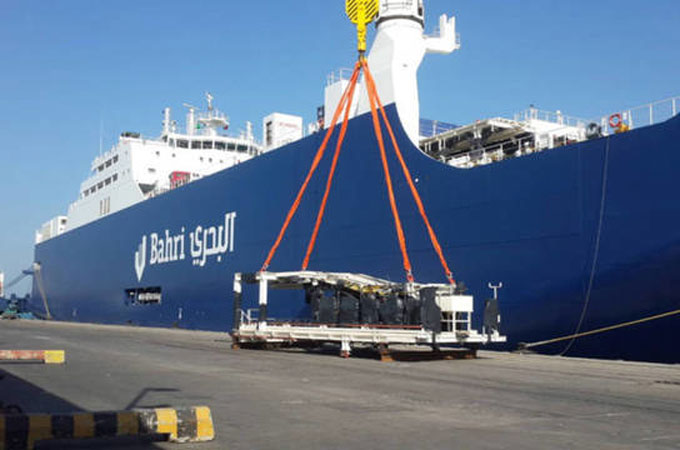
RIYADH : Bahri Logistics, a business unit of the National Shipping Company of Saudi Arabia (Bahri), a global leader in shipping, maritime transportation, and logistics, has expanded its ship agency operations with the opening of two new offices at Yanbu Commercial and Industrial Ports and Ras Tanura Industrial Port. The expansion strengthens the company’s operational presence at some of the Kingdom’s most strategically important ports serving the energy sector, complementing its existing operations at Jubail Commercial and Industrial Ports, Ras Al-Khair Port, Jeddah Islamic Port, King Abdullah Port, and King Abdulaziz Port in Dammam.

The move reflects Bahri Logistics’ commitment to strengthening its on-the-ground capabilities and enhancing the efficiency of its maritime services, supporting seamless operations while providing integrated ship and tanker agency solutions across Saudi ports. By expanding its presence in both the western region along the Red Sea coast and the eastern region along the Arabian Gulf, the company is further enhancing its ability to provide faster and more efficient support to customers across the oil and gas and industrial sectors.

Through this expansion, Bahri Logistics will provide a comprehensive range of ship agency solutions, including coordination of vessel port calls, crew-related requirements, handling of vessel operational and cargo documentation, and specialized logistics support, ensuring smooth operations for various types of vessels calling at Saudi ports. The Yanbu and Ras Tanura offices will also serve as strategic coordination hubs, supported by advanced digital systems and Bahri’s nationwide network, with the aim of accelerating port procedures and enhancing transparency in service delivery.

Commenting on the expansion, Mohammed Alsinan, Vice President of Bahri Logistics, said the opening of the two new offices marks an important step in the company’s efforts to strengthen its operational presence and enhance the level of service provided to customers.

“The opening of our new offices at Yanbu and Ras Tanura ports is a strategic step that brings us closer to our customers and partners at two of the Kingdom’s most important ports supporting the energy and industrial sectors. Through this expansion, we aim to respond more quickly to operational requirements, enhance coordination with relevant stakeholders, and provide integrated and reliable ship agency services that meet our customers’ needs and help improve the efficiency of their operations across the supply chain.”

The expansion of Bahri Logistics’ ship agency services is aligned with its long-term sustainable growth strategy and reflects its support for the objectives of Saudi Vision 2030 to reinforce the Kingdom’s position as a global logistics hub. The expansion also strengthens Bahri’s position as a national pillar of the maritime sector and supports the development of services and infrastructure in line with the highest international standards, contributing to the competitiveness of Saudi ports and the wider maritime ecosystem.

Container-ship pays $4 million to skip Panama Canal queue amid Iran war

PANAMA CITY: A container ship paid $4 million to cut the line at the Panama Canal, where wait times are stretching more than a week, as vessels seek alternative routes because of the Iran war.

The near-record high auction figure was paid by the owner of the vessel, the Seaspan Benefactor, according to people familiar with the matter who could not be identified because the auction data is private.

Seaspan didn’t respond to a request for comment on Tuesday. While typical transits through the waterway are paid by a flat rate via reservations, the Panama Canal Authority also offers customers an auction process in order to bypass the regular queue.

Shipowners are shelling out millions of dollars to use the auction workaround as the Iran war forces more congestion at the Panama Canal, which links the Atlantic Ocean with the Pacific. Buyers and sellers of oil, natural gas, fertilizer and chemicals, especially those in Asia, have scrambled to find alternative routes with traffic deeply curtailed at two key Persian Gulf transit points – the Strait of Hormuz and more recently the Bab el-Mandeb.

Neopanamax-size vessels, such as those carrying liquefied petroleum gas, liquefied natural gas, crude oil and refined products, without booked transit slots have to wait 10 days in line, the highest since May for Pacific-to-Atlantic transit, according to data from Argus Media.

The $4 million paid by the Seaspan Benefactor to jump to the front of the line on Monday was more than double the average of the previous seven days, according to a document seen by Bloomberg.

The ship was last shown in South Korea before heading to the Panama Canal. As of Tuesday, it was seen positioned on the Pacific side of the canal and looked to be waiting to transit northbound, according to shipping data compiled by Bloomberg.

The Panama Canal Authority said in a statement that auctions have experienced an increase in market costs due to shifts in global trade supply and demand and acknowledged that some have exceeded $1 million.

Houthis announce strikes on Saudi ship, military sites in Red Sea

SANAA: Yemen’s Houthis on Wednesday (local time) announced new military operations targeting Saudi assets, including a direct strike on a military transport vessel in the Red Sea and coordinated strikes on key Saudi-backed positions inland, according to Press TV.

Houthis announced strikes on a Saudi ship and military sites.

The military spokesperson of the Houthis said in a statement that the rebel group “successfully targeted Saudi enemy troop concentrations, weapons depots, and command centres in the Mocha area and the Tadawin camp in Marib Governorate with a large number of ballistic missiles and drones. The strikes were precise and resulted in dozens of casualties, including Saudis”.

It further added that the “group will continue their operations targeting all Saudi troop concentrations through which they seek to escalate tensions and seize control of our beloved country”.

The Yemeni Houthis warned those they accuse of being misled to abandon collaboration with their adversaries and stop what they described as acts of treason before it is too late.

Meanwhile, Yemen’s internationally recognised Presidential Leadership Council (PLC) chairman Rashad al-Alimi vowed that the government would respond to Houthi actions and called on the group to end the fighting and join the country’s political process, Al Jazeera reported.

Al Jazeera reported, while citing Yemen’s SABA news agency, that al-Alimi said during a meeting with representatives of prominent media outlets that “no action by the Houthi militias will go unanswered or unchecked”. Rashad al-Alimi also said there was still an opportunity for the Houthis “to lay down their arms, engage in political life, and compete through the ballot box on an equal footing with all other Yemenis”.

The latest strikes come amid continued tensions in and around the Red Sea, with attacks on commercial and military vessels raising concerns over maritime security in the strategic waterway.

Saudi Red Sea oil exports go dark as Houthi attack threat grows

LONDON : Saudi crude oil ​exports from the Red Sea are increasingly vanishing from view as tankers switch off tracking signals to avoid attacks ‌by Yemen’s Iran-aligned Houthis, with analysts saying all recent Yanbu loadings have been conducted “dark”.

The Houthis declared a maritime embargo against Saudi Arabia on July 20, opening a new front against the United States and its allies in the Iran war. Since then, they have claimed attacks on Saudi-linked tankers, Yanbu oil facilities and, ​most recently, the Jazan refinery on the Red Sea coast, prompting more vessels to operate without publicly visible tracking data.

The growing use ​of so-called dark voyages is clouding visibility into Saudi oil exports, making it harder to assess the ⁠degree to which the Houthi threats may be disrupting crude flows. Ship-tracking firms have produced widely differing export estimates – data which is used ​by the International Energy Agency, OPEC and traders to assess global oil supply and forecast market trends.

In the week beginning August 3, data ​analytics firm Vortexa estimated Yanbu loadings fell to 2.38 million barrels per day from 2.71 million the previous week, while Kpler estimated a sharper drop to 1.78 million bpd from 4.04 million, and AXSMarine calculated a rise to 850,000 bpd from about 420,000 bpd.

Leonhardt & Blumberg equips first of four newbuilds with Econowind VentoFoils

ZEEWOLDE (The Netherland): – German shipowner Leonhardt & Blumberg has equipped HANSA DREJOE with Econowind VentoFoils. The vessel is the first of four general cargo newbuilds to receive wind propulsion technology. This reflects Leonhardt & Blumberg’s practical approach to reducing fuel consumption and emissions while gaining experience with wind-assisted ship propulsion.

The first installation was completed on HANSA DREJOE at Royal Niestern Sander Shipyard in early August, with HANSA CHRISTIANSOE currently at the yard. Econowind calculated that the VentoFoils will deliver around 10 percent additional thrust, reducing fuel consumption and CO₂ emissions accordingly. The assessment uses the vessels’ actual trading routes throughout the year.

“We see wind-assisted ship propulsion as a logical next step in our journey toward greener operations,” said Christoph Meier, Naval Architect at Leonhardt & Blumberg. “Of course, the business case is important, but we also feel a responsibility to move the industry forward. Econowind’s practical and well-developed technology allows us to do both, while gaining real operational experience along the way.”

The four vessels were designed by Groot Ship Design. Two were delivered in the first half of 2025, while the other two are currently under construction in China. The GROOT XL-type vessels have all been designed for easy integration of wind-assisted ship propulsion from the outset, ensuring optimal placement and seamless installation. The two vessels under construction in China are expected to arrive in Europe in the first half of 2027 for final outfitting and commissioning.

“Our goal with VentoFoils is simple: to deliver measurable fuel savings with a clear business case,” said Stijn Engelage, Sales Manager at Econowind. “Leonhardt & Blumberg’s choice reflects their focus on proven technology and tangible results at sea. The systems will make a visible and immediate contribution to efficiency.”

By combining conventional propulsion with modern wind propulsion technology, Leonhardt & Blumberg continues its long-term strategy to improve efficiency across its fleet. The installation of VentoFoils forms part of a broader program to explore complementary technologies that deliver measurable impact, both operationally and environmentally.

VentoFoils are compact, autonomous wing systems that can be tilted in seconds. The units use boundary layer suction, creating additional thrust and optimizing aerodynamic efficiency. The technology has been deployed on a range of vessel types, from general cargo and tankers to heavy-lift and multipurpose ships.