Home Blog Page 159

WB weighs on land pooling, impetus to industrial parks to attract investments

KOLKATA : The BJP Government in West Bengal is exploring land pooling and the development of more industrial parks to facilitate the availability of large tracts of land for industry without direct acquisition, a politically sensitive issue in the state following the Singur and Nandigram agitations.

Subrata Gupta, adviser to Chief Minister Suvendu Adhikari, told PTI that land pooling is among the options being examined by the state to facilitate land aggregation, alongside a greater emphasis on developing industrial parks.

“Land pooling is one of the options that the state is evaluating for land aggregation, apart from giving greater impetus to industrial parks. The objective is to facilitate the availability of larger parcels of land required by industry while addressing the challenges posed by fragmented land holdings,” he said.

These models could help the state facilitate the assembly of large land parcels while limiting its direct involvement in transactions with individual landowners.

The political sensitivity surrounding land makes such models particularly important for the BJP government, as any move towards direct acquisition for private industry could provide the opposition with a potent campaign issue in a state where land conflicts have had far-reaching political consequences.

Gupta said if the government decides to adopt land pooling, it will have to bring in the necessary legislation to implement the policy.

Land pooling involves bringing together fragmented private land parcels for planned development rather than acquiring them outright. Landowners are typically offered developed plots or other benefits in return for contributing their land to the scheme.

One of the largest examples of land pooling is in Andhra Pradesh, where around 33,000 acres were pooled from about 29,000 farmers for the development of Amaravati.

Land pooling, along with similar land readjustment and town-planning schemes, has also been implemented in states such as Gujarat, Maharashtra, Punjab and Kerala.

The model can create large contiguous parcels and reduce upfront acquisition costs, but its success depends on clear land titles and records, transparent rules on the distribution of benefits and timelines, stakeholder participation and an effective grievance-redress mechanism.

A policy brief by the Indian Institute for Human Settlements describes land pooling as an alternative to conventional land acquisition in which parcels owned by different individuals are aggregated and redeveloped, with landowners receiving a share of the developed land or other benefits according to predetermined criteria.

The model can also reduce discontent by allowing landowners to share in the increased value of developed land while enabling multiple stakeholders to participate in land assembly and development.

For West Bengal, land pooling could address the problem of fragmented land holdings without requiring the government to acquire individual parcels.

Under the industrial park model, private developers can aggregate land and develop parks with ready-to-use plots and common infrastructure for industrial units. This could also help address restrictions on land holdings that individual companies may face when they require large contiguous parcels.

Gupta, a former IAS officer, said the state is also examining changes to land laws governing land holding and utilisation.

He said repeal of the Urban Land (Ceiling and Regulation) Act would not be a “silver bullet” for industry, as industrial units generally do not fall under the ambit of the urban land ceiling.

“Industries do not fall under the urban land ceiling. What we need is reform of land laws, which are stringent on holding and utilisation,” he said.

“If a large unit comes in, it will require a larger quantum of land, and we will have to provide laws so that the company can hold on to that land and use it for its purposes,” he added.

The state is simultaneously looking at land belonging to closed industrial units as another source for meeting the industry’s land requirements, without having to open up fresh acquisition of agricultural land.

Gupta said the government is also working on reforms relating to bargadars, or sharecroppers, who are no longer engaged in farming but continue to enjoy legal rights over land.

Source : PTI
DGFT removes Physical Duty Payment Challans for Export Obligation Discharge Certificate Applications

NEW DELHI: In a significant Ease of Doing Business measure for exporters, the Directorate General of Foreign Trade (DGFT) has removed the requirement of submitting physical duty payment challans while applying for Export Obligation Discharge Certificates (EODC) under the Advance Authorisation (AA) and Export Promotion Capital Goods (EPCG) Schemes. Licence-wise voluntary duty payment data received from Customs/ICEGATE has been integrated with DGFT’s online systems, enabling authenticated verification of such payments directly against the concerned authorisation.

For voluntary duty payments made on or after 1 August 2026, exporters will no longer be required to submit physical challans along with their applications for closure of authorisations. Authenticated payment details will be made available to exporters on the DGFT Customer Portal, enabling them to verify that the payment has been correctly mapped to the concerned authorisation before filing the application.

The same authenticated payment record will be available to the Regional Authorities on the DGFT Back Office, eliminating the need for manual verification of payment particulars. This is expected to facilitate faster processing, reduce avoidable correspondence and bring greater consistency in decision-making across DGFT Regional Authorities.

The digital facility has been implemented through an API-based data exchange between DGFT and ICEGATE, under which duty payment particulars are transmitted electronically from Customs systems to DGFT’s EODC processing workflow. The replacement of manual submission and verification with authenticated digital records is expected to shorten processing timelines, improve data accuracy, minimise human intervention and enhance transparency in the closure process.

The measure is also expected to reduce transaction costs and compliance burden for exporters by reducing documentation, follow-up and physical interface, particularly benefiting MSME exporters handling closure formalities in-house. Trade Notice No. 15/2026-27 dated 5 August 2026 has been issued by DGFT for information of exporters and other stakeholders.

The initiative is part of the Government’s broader digital transformation agenda for trade facilitation, aimed at creating a more efficient, predictable and trust-based regulatory environment. By strengthening integration between trade-related digital systems and reducing reliance on physical documentation, the measure reinforces the vision of “Minimum Government, Maximum Governance” and enables exporters to focus on trade and growth.

The Advance Authorisation Scheme permits duty-free import of inputs that are physically incorporated in the export product, while the EPCG Scheme permits import of capital goods at concessional or zero customs duty, in both cases against an export obligation. Where the export obligation is not fulfilled in full, the authorisation holder regularises the case by voluntarily paying the proportionate customs duty saved along with applicable interest and thereafter applies for an EODC to close the authorisation. Earlier, proof of such payment was required to be submitted in physical form and verified manually by the Regional Authority.

APEDA facilitates First-Ever Export of Mustard Honey by Dergang FPO from Tripura to Dubai

TRIPURA: APEDA facilitated the first-ever export of 1 Metric Tonne of Mustard Honey by Dergang Farmer Producer Organisation (FPO) from Tripura to Dubai. The export marks a new milestone for the FPO and the region by creating an opportunity for local beekeepers and farmers to access international markets through organised export-oriented production.

The shipment represents the first-ever export of Mustard Honey from the area and opens new avenues for diversification of Tripura’s honey value chain. The initiative is expected to encourage local farmers and FPOs to explore export opportunities and strengthen their participation in international agricultural markets.

The export is expected to provide farmers associated with Dergang FPO with improved price realisation compared to prevailing local market opportunities. Better market access through exports can provide an additional income avenue for beekeepers while encouraging greater adoption of quality-focused and export-oriented honey production practices.

The initiative was supported and hand-held by M/s Salt Range Foods Pvt. Ltd. which has been working with Dergang FPO to strengthen bee production and facilitate the development of export-oriented honey supply. The collaboration has enabled the FPO to take its first step towards international market access while creating a structured opportunity for farmers to participate in the export value chain.

The milestone is significant for Tripura’s emerging agri-export ecosystem, particularly for the development of its honey and beekeeping sector. The state’s diverse agricultural landscape and growing focus on organised farmer collectives offer considerable potential for expanding the production and export of quality honey and other agricultural products.

The export of Mustard Honey demonstrates the potential of FPO-led aggregation and industry collaboration in connecting farmers with international markets. It is expected to encourage more FPOs and farmers in Tripura and the wider North Eastern Region to explore value addition, quality improvement and export opportunities.

Encouraging the initiative, Agriculture Minister Shri Ratan Lal Nath, said, “The first-ever export of Mustard Honey by Dergang FPO is a significant achievement for Tripura’s beekeepers and farmers. It demonstrates the potential of our local agricultural products to reach international markets and create better income opportunities for farming communities. The Government of Tripura remains committed to strengthening apiculture and organic agriculture while supporting Farmer Producer Organisations in accessing wider markets. With coordinated efforts by farmers, FPOs, exporters and institutions such as APEDA, Tripura can further expand its presence in the global market for quality agricultural and organic products.”

The export consignment was flagged off by Agriculture Minister, Government of Tripura Shri Ratan Lal Nath. The ceremony was attended by Secretary, Agriculture & Horticulture, Government of Tripura Shri Apurba Roy, IAS, Executive Director, IFOAM Organics Asia Ms Jennifer Chang, senior officers from APEDA, representatives of the exporter, logistics partners and progressive beekeepers from the region.

APEDA continues to work with State Governments, FPOs, exporters, processors and other stakeholders to facilitate agricultural exports from the North Eastern Region through market linkages, capacity building, quality assurance and export facilitation. Such initiatives contribute to creating sustainable market opportunities for farmers while expanding the global footprint of India’s diverse agricultural products.

Container crunch at Singapore and Colombo disrupts Indian export supply chains

NEW DELHI : Indian Exporters are facing a fresh wave of disruption in container logistics as congestion at two of Asia’s most important transshipment hubs — Singapore and Colombo — begins to put additional pressure on vessel schedules, feeder availability and container flows.

The emerging situation has created a challenging operating environment for exporters whose cargo moves through these hubs before reaching destinations across Asia, Europe, Africa and other international markets. Industry reports indicate that the congestion is resulting in delays and tighter availability of feeder vessels for Indian-bound and Indian-origin cargo.

Singapore–Colombo bottleneck

Singapore and Colombo occupy a critical position in the regional container shipping network. Singapore serves as one of the world’s largest transshipment hubs, while Colombo is a key gateway for South Asian cargo, particularly for shipments connected with the Indian subcontinent.

The pressure on both hubs has been building amid continuing adjustments to global shipping networks and the redistribution of vessels and containers across major trade lanes. Industry observers point to stronger China–US container demand as one factor drawing equipment and vessel capacity towards those routes, leaving comparatively tighter availability for some India-linked services.

The situation at Colombo has also included pressure on container yards and inter-terminal transfer operations. Earlier reports indicated that vessels were experiencing berthing delays of around two to three days, highlighting the operational strain created by the accumulation and repositioning of containers.

Indian exporters feel the impact

For Indian exporters, the disruption is particularly significant because transshipment remains an important component of international container connectivity. When a hub experiences congestion, the consequences can extend well beyond the port itself — affecting feeder connections, connecting-vessel schedules, equipment availability and the overall transit time of cargo.

The shortage of feeder vessels can make it more difficult for cargo to secure timely connections from the transshipment hubs to Indian ports. This can result in longer transit times, missed connections, rolled cargo and uncertainty over delivery schedules.

Exporters may also face higher logistics costs as carriers and freight forwarders adjust routings, equipment positioning and service schedules to manage the disruption.

Global shipping network under pressure

The latest developments underline how quickly congestion at a major transshipment hub can cascade through interconnected global supply chains.

Singapore itself has been strengthening its resilience against prolonged shipping disruptions. Singapore’s Ministry of Transport said in May that additional berths at Tuas Port were scheduled to come into operation during 2026, while authorities and PSA were working to ensure adequate manpower and capabilities to manage fluctuations in demand. The port has also been using digital coordination mechanisms to optimise vessel arrivals and reduce the risk of vessel bunching and congestion.

The broader shipping market has already experienced substantial volatility during 2026. Data from Xeneta earlier this year showed elevated congestion at several Asian transshipment hubs, including Colombo and Singapore, illustrating the vulnerability of the regional network to sudden changes in vessel deployment and cargo flows.

Rerouting and schedule reliability become critical

Shipping lines and logistics providers are now having to balance several competing priorities — managing congested hubs, repositioning empty containers, maintaining feeder connections and recovering schedules after earlier disruptions.

For exporters, the immediate priority is greater visibility of vessel schedules and alternative routing options. Cargo owners may increasingly need to assess whether their shipments should continue through traditional transshipment hubs or be routed through alternative gateways, depending on destination, available services and overall transit economics.

The developments also highlight the growing importance of India’s own transshipment infrastructure. The emergence of facilities such as Vizhinjam and the planned development of other deep-water transshipment gateways could, over time, provide Indian cargo owners with greater routing flexibility and reduce excessive dependence on overseas hubs.

A warning for the peak shipping season

The Singapore–Colombo congestion comes at a crucial time for global trade, when exporters are closely watching vessel availability, freight rates and equipment supply.

If congestion persists, the impact could extend from port operations to the wider logistics chain, affecting inventory planning, delivery commitments, production schedules and export competitiveness.

For Indian exporters, the current container crunch is therefore more than a port-congestion issue. It is a reminder of the strategic importance of reliable transshipment capacity, adequate container availability, diversified shipping routes and resilient maritime infrastructure.

As shipping lines continue to rebalance their networks, the performance of Singapore and Colombo will remain closely watched by Indian trade and logistics stakeholders. The coming weeks will determine whether the present bottleneck remains a temporary operational disruption or develops into a more prolonged constraint on regional container supply chains.

How Digital Intelligence is accelerating Green Freight in India

By Tanuj Anand, Senior Manager – Logistics, NICDC

The sustainability agenda in logistics goes beyond the use of clean fuels or electric vehicles. Digital technology is also contributing to emissions reduction and optimization of freight flows.

Introduction

Sustainability has become a part of India’s infrastructure and industrial progress as the country strives to achieve the goal of being a 5 trillion-dollar economy and realize the Viksit Bharat vision by 2047. The logistics industry that provides foundations for trade and commerce is applying too. More investment continues to be made in green transport modes and clean technologies and the multimodal infrastructure, however digital technology is gaining ground as an equally important factor for sustainable freight initiatives.

Sustainability Begins with Smarter Decisions

Freight transport’s environmental impact is generally affected by inefficiencies such as time wasted, unnecessary routes taken, and delays in the supply chain. While these problems might be solved with the help of logistics infrastructure, they could also be handled by using good data. New digital technologies allow the real-time monitoring of the cargo being moved which makes it possible to improve asset management and logistics processes.

Digital Platforms Enabling Sustainable Freight

The role of digital technologies in reliable freight transports the digital logistics market of India is moving toward greater sustainability thanks to the use of the Unified Logistics Interface Platform (ULIP), Logistics Data Bank (LDB), and Track Your Transport (TYT) application. These instruments allow for efficient data sharing between different stakeholders and thus contribute to better logistics planning and coordination. For instance, while the LDB enables the tracking of containers, the TYT makes it possible to track cargo in the course of transportation and ultimately optimize transport routes.

How Digital Intelligence is Enabling Green Freight

• Real-time tracking: Monitoring of the goods in transit allows one to plan better reducing the delays in delivery and fuel use.

• More intelligent route optimization: Data-based decisions can contribute to having more efficient transport routes for better productivity.

• Better multimodal integration: Digitalization has enabled the companies to cooperatewhile transporting goods with the help of various means of transport.

• Enhanced utilization of assets: Blockchain technology eliminates empty trips reducing the utilization of vehicles.

• Predictive logistics planning: Use of analytics allows for better and faster decision-making keeping traffic under control.

• Collaborative digital ecosystems: Safe communication of information among supply chain players enhances the coordination activities of the companies.

Industry Perspective

Around the world, the leading ecosystems in logistics are realizing that sustainability is interconnected with the digital transformation process. Different countries are investing in connected logistics systems, information exchange solutions, and effective freight management in order to achieve high efficiency and decrease impacts on the environment. India is also following this approach through various initiatives toward the digital integration, multimodal connectivity, and logistics planning supported by advanced technology. With the further development of digital public infrastructure, connected ecosystems will play an important role in making green logistics practices possible and increasing the competitiveness of India as a logistics hub.

Looking Ahead

The next generation of green freight will be characterized by the complementary relationship between sustainability and digitalization. The technologies that will play an important role in enabling efficient, transparent and responsible freight movement include the application of artificial intelligence, the ability to track goods using IoT technology, big data applications, and digital solutions. While companies endeavour to incorporate sustainable practices in their operations, and digital innovations will help them find balance between creating economic value and being environmentally responsible. Green supply chains are now not only about cutting emissions, but also about making the right decisions guided by appropriate data and connected systems.

Conclusion

The process of achieving sustainable logistics in India has opened up several avenues for the development of new possibilities to integrate growth with the protection of the environment. With the help of modern technology, entrepreneurs are being able to optimise the logistics process, increase the resources efficiency and significantly enhance the overall supply chain resilience towards future challenges. The more logistic operations get dominated by data, the more the interaction of technological progress with sustainability will define the future of freight transformation in India.

Author:

Mr. Tanuj Anand, Senior Manager – Logistics, NICDC

From Detection to Intervention: Is India’s Coast Guard building A New Model for Maritime Casualty Response?

By Mr. Priyatham Sanjeeva Reddy Ramidi

Maritime emergencies rarely begin as dramatic events. A vessel loses propulsion. A machinery-space fire appears. A ship begins to list. An unidentified sheen forms astern. By the time the situation is clearly an emergency, the window for preventing a larger casualty may already be closing.

That is why two recent procurement moves by the Indian Coast Guard deserve attention beyond the usual discussion of fleet expansion.

In July 2026, the Coast Guard issued requests for information for five Multi-Purpose Emergency Response Vessels and, only days later, for Medium Altitude Long Endurance remotely piloted aircraft. Viewed separately, these are acquisition programs. Viewed together, they suggest something more consequential: a shift toward an emergency-response model built around persistent detection, earlier assessment and faster intervention.

The important question is not simply what new platforms India is buying. It is what those platforms could allow the Coast Guard to do before a casualty becomes irreversible.

For decades, maritime emergency response has been constrained by distance. Casualties often develop far from shore, and the first reliable picture may come from the vessel itself. Yet the ship in distress may simultaneously be fighting fire, flooding, machinery failure, or injury while trying to communicate an accurate picture ashore.

Long-endurance remotely piloted aircraft can alter that equation. Their value is not merely range, but persistence.

A conventional aircraft can reach a casualty quickly, but it cannot remain overhead indefinitely. A long-endurance unmanned platform can potentially maintain surveillance, follow a vessel, observe changes in trim or smoke, identify nearby traffic, relay imagery, and allow shore authorities to build a continuous operational picture. In search and rescue, that persistence can narrow uncertainty over large areas. In pollution response, it can track the movement and extent of a spill rather than relying only on intermittent reports.

The Coast Guard’s wider modernization makes this particularly significant. India contracted for eight additional Dornier 228 aircraft in February 2026, while the Coast Guard in July announced the induction of its first indigenous pollution-control vessel, Samudra Pratap. The proposed remotely piloted aircraft and emergency-response vessels therefore form part of a broader effort to strengthen both awareness and physical response.

That combination matters. Detection without intervention creates information. Intervention without timely detection creates delay. An effective casualty-response system requires both.

Consider a disabled merchant vessel drifting toward a sensitive coastline. The initial report may indicate only machinery failure. Hours later, the vessel could be taking water, dragging anchor or approaching shoal water. Persistent aerial surveillance could provide independent information on position, drift, surrounding traffic and visible condition while an emergency-response vessel proceeds toward the scene.

The measure of success may be that the dramatic rescue never becomes necessary.

Traditionally, casualty response is event-driven: a distress call is received, assets are tasked, responders arrive, and the situation is managed. Persistent surveillance creates the possibility of something closer to condition-driven response, where authorities follow an evolving risk and escalate intervention as indicators deteriorate.

That is particularly relevant in Indian waters. The Coast Guard’s responsibilities include maritime safety and security, search and rescue, law enforcement, emergency assistance and protection of the marine environment across a vast maritime domain. As shipping density, offshore activity and coastal economic exposure increase, the cost of late information increases with them.

There is also an investigative dimension that deserves more attention.

The earliest hours of a casualty often contain the most valuable evidence. Investigators later reconstruct timelines from voyage data recorders, AIS tracks, engine-room records, communications, photographs and witness accounts. Yet a vessel’s condition can change significantly between the first failure and the arrival of investigators.

Persistent aerial observation could create an independent, time-stamped record of a developing casualty: when smoke increased, when a list became visible, when survival craft were prepared, when pollution first appeared, how the vessel drifted, and what assistance arrived in what sequence.

That would not replace formal casualty investigation, nor should surveillance imagery automatically be treated as proof of fault. But it could preserve facts that might otherwise disappear.

The same evidence can become important in P&I and marine claims.

After a major casualty, disputes frequently concern timing. When did the owner know the situation was deteriorating? When was assistance requested? Was salvage engaged early enough? When did pollution begin? Were reasonable steps taken to prevent escalation? Could earlier intervention have reduced the eventual loss?

For insurers, shipowners and cargo interests, the difference between a manageable machinery casualty and a grounding, wreck-removal operation or pollution event can be measured in millions of dollars. Earlier information does not eliminate liability, but it can influence decisions while there is still an opportunity to reduce it.

It could also improve decisions made by P&I correspondents, salvors and authorities during the casualty itself. Independent surveillance may help establish whether a vessel remains stable, whether pollution is visible, whether towage is becoming urgent or whether evacuation must take priority over property preservation.

Technology, however, has limits.

More surveillance does not automatically produce better decisions. A Coast Guard can receive enormous volumes of imagery, sensor data and vessel information and still face the same fundamental challenge: deciding what matters. The effectiveness of remotely piloted aircraft will depend on trained operators, resilient communications, data integration, clear escalation criteria and coordination among aircraft, ships, rescue centers, ports and other agencies.

The emergency-response vessels face a similar test. Their value will not be measured by specifications alone, but by where they are based, how rapidly they can deploy and how effectively they integrate with existing assets.

There is also a danger in allowing technology to create false confidence. Sensors may identify that something is wrong, but casualty management remains an exercise in professional judgement. A photograph cannot always reveal progressive flooding. An AIS track cannot explain why machinery cannot be restarted. An unmanned aircraft can observe a vessel, but it cannot replace the judgement of the master, salvage team, rescue coordinator or technical experts trying to understand what is occurring inside it.

Technology should therefore shorten the distance between observation and professional judgement, not replace judgement itself.

That may ultimately be the most important aspect of India’s current modernization.

The future of maritime safety will not simply belong to the authority with the most ships, aircraft or sensors. It will belong to the authority that can connect detection, interpretation and intervention into one continuous response system.

India’s recent Coast Guard initiatives suggest an opportunity to do exactly that. If remotely piloted aircraft become persistent eyes over the maritime domain, and emergency-response vessels become part of the means of acting on what those eyes detect, the result could be more than additional capability.

It could represent a change in when maritime emergencies are confronted: not after the casualty has fully developed, but while there is still time to prevent it.

Disclaimer: The views expressed by Priyatham Ramidi in this interview are his independent professional opinions and are provided for general informational purposes. They do not constitute legal, insurance, classification, regulatory, security, or vessel-specific advice. Operational decisions are entirely based on the circumstances and of the individual vessels at their own discretion and made in conjunction with the Master’s agreement along with technical managers, flag administration, classification society, P&I Club or insurers, brokers, and relevant authorities.

MSC Container Vessel partially sinks off the Zhoushan area of China

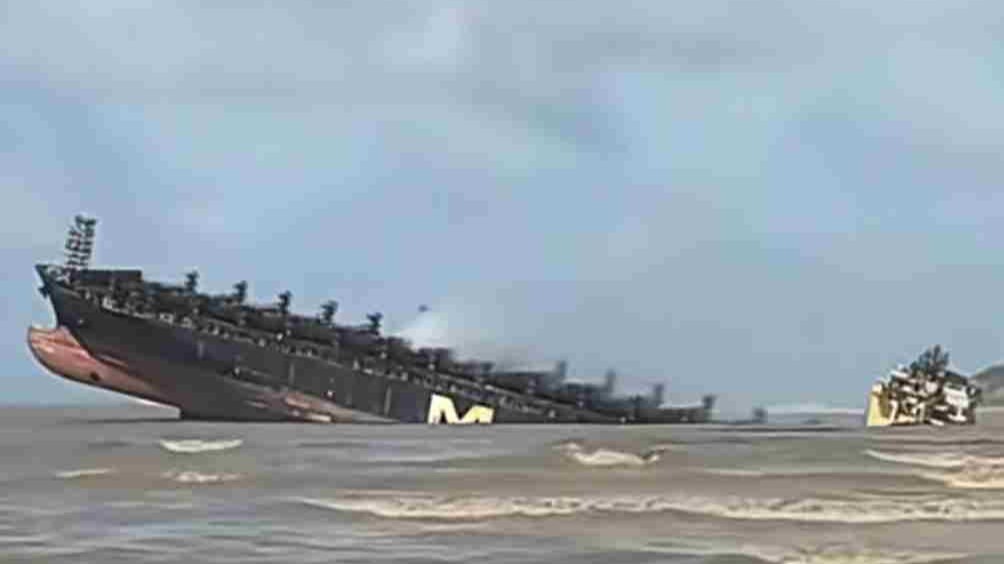
ZHOUSHAN: Containership MSC Silvana VIII has suffered severe flooding and remains heavily grounded in the Zhoushan area of China after being driven aground in July during severe weather.

The 2006-built vessel, operated by MSC, is 332 meters long and has a capacity of 8,401 TEU. It arrived at a ship repair yard in Zhoushan on 22 June from Gwangyang, South Korea, and departed on 11 July before encountering difficulties and grounding near Daishan during Dolphin typhoon.

Several attempts to refloat the vessel have failed. By early August, the stern, engine room and several cargo holds had been flooded, with a large section of the hull subsequently submerged and only the bow and forward section remaining above water.

Thousands of tons of fuel oil have been removed from the vessel, reducing the risk of a major pollution incident and facilitating possible recovery operations. However, an approaching typhoon is expected to further complicate salvage efforts and could increase the risk of additional structural damage or movement of the vessel.

With extensive flooding and the vessel resting unevenly on the seabed, any further refloating attempt will be technically challenging because of the structural stresses on the hull.

BIMCO welcomes proposal to include Indian ship recycling yards on EU list

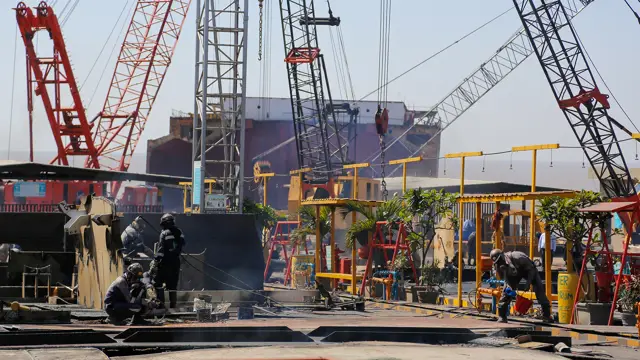
LONDON: The EU Commission has launched a proposal to EU member states to add two Indian ship recycling facilities to its list of approved yards. If approved, this would mark the first time that Indian yards have been recognised under the EU Ship Recycling Regulation (EU SRR), representing a milestone for a region that recycles the majority of the world’s end-of-life ships. We welcome the proposal as a positive step towards a more objective and performance-based approach to ship recycling.

The proposed inclusion of the yards reflects the substantial investments made by leading Indian recycling facilities over the past decade. Today, more than 110 Indian recycling yards hold a Hong Kong Convention (HKC) Statement of Compliance, issued by International Association of Classification Societies members. In addition, 23 yards in Bangladesh have already been authorised to conduct ship recycling by their national authorities as per HKC requirements.  

We believe that all yards, such as those in Alang, India, which have invested heavily in infrastructure, undergone repeated audits and received an official Document for the Authorisation of ship Recycling (DASR) from their national competent authorities, should be eligible to recycle ships. We therefore fully support the proposal by the EU Commission while recognising that the proposal should only be considered as a first step towards further global acceptance of the Hong Kong Convention.  

According to an estimate from our analysts, over 16,000 ships could be recycled over the next decade. While ship recycling holds great potential for the circular economy, it must be done in a safe and environmentally sound manner, and we need shipowners to choose globally compliant yards.  

Nearly a decade after the first Indian yards applied for inclusion on the EU list, it is fair to question whether a regional unilateral approach presents enough opportunities for building confidence, attract long-term investment and support continuous improvement in a sector that urgently needs it. The EU Ship Recycling Regulation still offers limited legal clarity on when and why facilities outside the EU are added to, or removed from, the EU List. Much of that decision still relies on non-binding guidance while, on the contrary, EU facilities are not subject to the same level of external assessment. We believe this approach does not offer a strong foundation for predictability, fairness or global progress. 

While additional capacity to the EU list is welcome, the industry will continue to require significantly more approved recycling capacity to meet the future demand. We therefore encourage European regulators to continue recognising compliant facilities, regardless of location, and to work towards greater convergence with the Hong Kong International Convention. 

Finally, it must be noted that the proposal must complete the EU approval process, including scrutiny by member states and the European Parliament. While the Commission’s technical assessment supports the inclusion of the two facilities, differing political views from the EU parliament may emerge regarding the interpretation and application of the EU Ship Recycling Regulation, potentially influencing the final outcome.  

It is our hope that the decision will remain firmly grounded in the Commission’s technical findings and the objective criteria established under the regulation.  

Global container throughput breaks 1 billion TEU as smaller ports outpace the giants

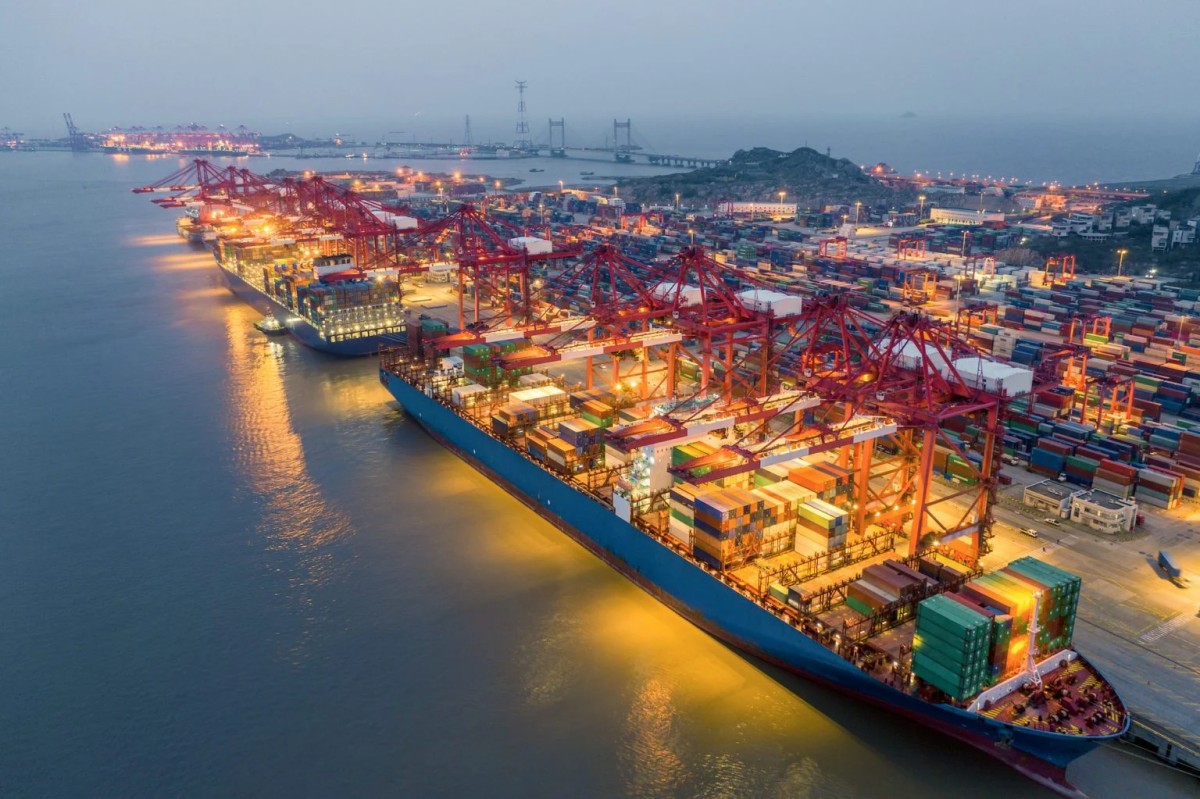
SINGAPORE : Global Container Port throughput crossed the 1 billion TEU mark for the first time in 2025, while faster growth outside the world’s largest gateways signalled a broader shift in where container volumes are being handled.

Worldwide throughput reached an estimated 1.012 billion TEU, up 8% from 937.3 million TEU in 2024, according to DynaLiners’ latest Millionaires report. The total stood at 876 million TEU in 2023.

The number of ports handling more than 1 million TEU rose to 171. Together, they processed about 884 million TEU, up 6% year on year. However, their share of global throughput slipped from 89% to 87% as ports outside the group expanded at a much faster pace.

Smaller gateways capture more growth
Ports handling less than 1 million TEU collectively processed 128.3 million TEU in 2025, a 21% increase from 106.4 million TEU a year earlier.

The figures suggest that container growth is becoming more widely distributed, even as the largest hubs retain the overwhelming majority of global volumes.

Twelve ports entered the million TEU group during the year: Aqaba, Baltimore, Dar es Salaam, Dong Nai/Phuoc An, El Sokhna, Gdynia, Huanghua, Manaus, Rio Grande, Tanjung Emas, Vizhinjam, and Wilhelmshaven. Montevideo was the only port to leave the group.

Of the 171 qualifying ports, 135 recorded growth, and 14 expanded by at least 25%. Thirty six reported lower volumes, with Haikou posting the steepest decline at 28%.

Regional growth was also uneven. Africa recorded the strongest increase at 12%, reaching 39.3 million TEU across its qualifying ports. Latin America grew 11% to 45.3 million TEU, while the Indian subcontinent advanced 10% to 35.3 million TEU.

Shanghai leads as Ningbo closes on Singapore
The Far East remained the dominant container handling region, with 63 million TEU plus ports processing 531.2 million TEU, up 6%.

Shanghai retained its position as the world’s largest container port, handling 55.06 million TEU, 7% more than in 2024.

Singapore remained second at 44.66 million TEU after 9% growth, but Ningbo narrowed the gap sharply. The Chinese port increased throughput by 12% to 43.87 million TEU, leaving less than 800,000 TEU between the two gateways.

Shenzhen ranked fourth at 35.41 million TEU, followed by Qingdao at 32.89 million TEU.

Nineteen ports exceeded 10 million TEU during 2025, underscoring the continued concentration of containerised trade among a relatively small group of major gateways.

China maintains commanding position
China remained the largest national market in the ranking. Its 30 million TEU plus ports handled 306.4 million TEU, up 6% from 287.8 million TEU in 2024.

The United States ranked second with 55.55 million TEU across 13 qualifying ports, an increase of 4%. Singapore followed with 44.66 million TEU, ahead of Malaysia at 31.6 million TEU and South Korea at 30.39 million TEU.

Vietnam’s four qualifying ports increased combined throughput by 11% to 25.88 million TEU, while India recorded 12% growth to almost 20 million TEU.

DynaLiners defines port throughput as full and empty containers loaded and discharged from ocean going short-sea, and deep-sea vessels, including imports, exports, and transshipment. Some figures are estimates, and differences in reporting periods and port definitions can affect comparisons.

Source : BBN Breakbulk News

Moscow weighs new Russia-India rail link route amid push for alternative trade corridors

MOSCOW: Russia is exploring the possibility of expanding rail connectivity with India, with Russian Deputy Prime Minister Marat Khusnullin saying a railway link between the two countries is an idea that “should be explored”, according to an interview with TASS.

Khusnullin’s remarks point to Moscow’s interest in developing longer and more direct transport links towards India as Russia seeks to expand its connectivity with Asian markets.

“A rail link to the Indian Ocean should also be explored. Risks related to the Bosphorus and the Strait of Hormuz might require alternative routes: through Turkmenistan, Iran, Afghanistan, and Pakistan. Any options providing access to India are acceptable,” he told TASS.

The proposal also comes against the backdrop of efforts to strengthen the International North-South Transport Corridor (INSTC), a multimodal network linking Russia with India through Iran and other countries.

What Russia’s proposed India rail link could mean

The idea does not currently amount to an approved direct passenger train between Russia and India. Rather, it points to the possibility of expanding railway connectivity as part of a broader transport network linking Russia with India.

The INSTC, launched by Russia, India and Iran, combines rail, road and sea routes. Its western route runs through Russia, Azerbaijan and Iran, while the eastern branch passes through Kazakhstan and Turkmenistan before reaching Iran. From Iran, cargo can move towards India by sea.

Khusnullin has previously said Russia plans to develop the North-South corridor to reach Iran and India through Kazakhstan, Turkmenistan and Azerbaijan.

Why Moscow is looking towards India

The push for stronger rail connectivity comes as Russia seeks to expand alternative trade routes linking its economy with markets in Asia, particularly amid changes in its traditional trade flows.

The 7,200-km INSTC is designed to provide a shorter multimodal route between India, Iran, Russia and markets farther north and west. The corridor includes both railway and maritime sections, rather than functioning as one continuous railway line.

For Moscow, improving rail links along the corridor could increase the movement of cargo towards India while strengthening Russia’s position as a transit hub connecting Europe and Asia. However, significant infrastructure and logistical challenges remain, including gaps in railway connectivity and the need to improve capacity across sections of the corridor.

Hormuz crisis adds urgency to alternative trade routes

The proposal also comes at a time when the conflict involving the US, Israel and Iran has raised fresh concerns over the security of one of the world’s most important maritime chokepoints — the Strait of Hormuz.

The waterway has faced heightened disruption since the outbreak of hostilities on February 28, with Iran restricting access for vessels linked to the US, Israel and countries it considers supportive of the military action. Iranian forces have also carried out retaliatory strikes against US military facilities and other targets across the region, further raising fears over the safety of commercial shipping.