Home Blog Page 170

Klaipėda Port reports growth and expanding Baltic market share

KLAIPEDA: The Port of Klaipėda delivered a strong performance in the first half of the year, demonstrating resilience in a changing market environment and further strengthening its position as the leading port in the Baltic States. Cargo handling volumes increased across most key segments, driven by growth in container traffic, maritime transit and the ship repair industry.

“The Port of Klaipėda is highly diversified, and that is one of the key elements of its success,” Latakas said in a statement. “Despite everything that is happening – not only the war but also its consequences, including sanctions and tariffs – the first half of the year was very good in terms of cargo handling.”

Containerised cargo, the port’s largest cargo segment, remained the key growth driver. During the first six months of the year, Klaipėda handled 7.2 million tonnes of containerised cargo, 12% more than in the same period of 2025. In terms of container throughput, the port entered the second half of the year having processed nearly 700,000 TEU. The increase was fuelled by rapidly growing sea transit volumes, the launch of a new deep-sea shipping service linking Klaipėda directly with Asia, the continued expansion of short-sea shipping services, and long-term investments in port infrastructure.

The Ro-Ro segment also continued to grow. Cargo carried by ferries reached almost 3.4 million tonnes, representing a 4% increase. The number of freight vehicles transported through Klaipėda Port also rose, reaching 173,505 units, compared with 169,280 during the same period last year. Growth was particularly noticeable on ferry services connecting Klaipėda with Germany and Sweden.

Oil products also delivered solid results. The port handled 2.3 million tonnes, an increase of 12% or 242,000 tonnes compared with the first half of last year, driven mainly by stronger export volumes.

One of the strongest growth rates was recorded in the liquefied natural gas (LNG) segment. Throughput reached nearly 1.6 million tonnes, 37% higher than a year earlier. The increase was supported by stable regional demand and growing cargo flows destined for Ukraine.

Fertiliser handling also continued to recover, reaching 894,000 tonnes, up 14% or 112,000 tonnes year-on-year.

Vegetable oils and fats posted one of the fastest growth rates among all cargo groups, increasing 58% to 294,000 tonnes.

Meanwhile, scrap metal volumes remained stable at 565,000 tonnes, matching last year’s performance.

The ship repair and shipbuilding industry remains an important contributor to the port’s resilience and competitiveness. During the first half of the year, 46 vessels were repaired or modernised at Klaipėda Port, representing a 31% increase compared with the same period last year.

Grain exports reached almost 1.3 million tonnes during the first six months of the year, slightly below last year’s level of 1.4 million tonnes. Timber cargo also declined by 153,000 tonnes compared with the same period of 2025. The construction materials and minerals segment also recorded lower volumes, with 943,000 tonnes handled, compared with more than 1 million tonnes in the first half of last year. These figures largely reflect the normalisation of market conditions following an exceptionally strong first half of 2025, when infrastructure development projects in Lithuania generated unusually high demand.

Klaipėda was the only Baltic seaport to increase cargo volumes during the first half of the year. As a result, the port expanded its market share among Baltic ports to 44%. When measured at country level rather than by individual ports, Lithuania – combining the results of Klaipėda Port and the Būtingė Oil Terminal – now accounts for more than 54% of the entire Baltic States cargo handling market.
Gioseppo strengthens its logistics operations with the new version of Easy WMS

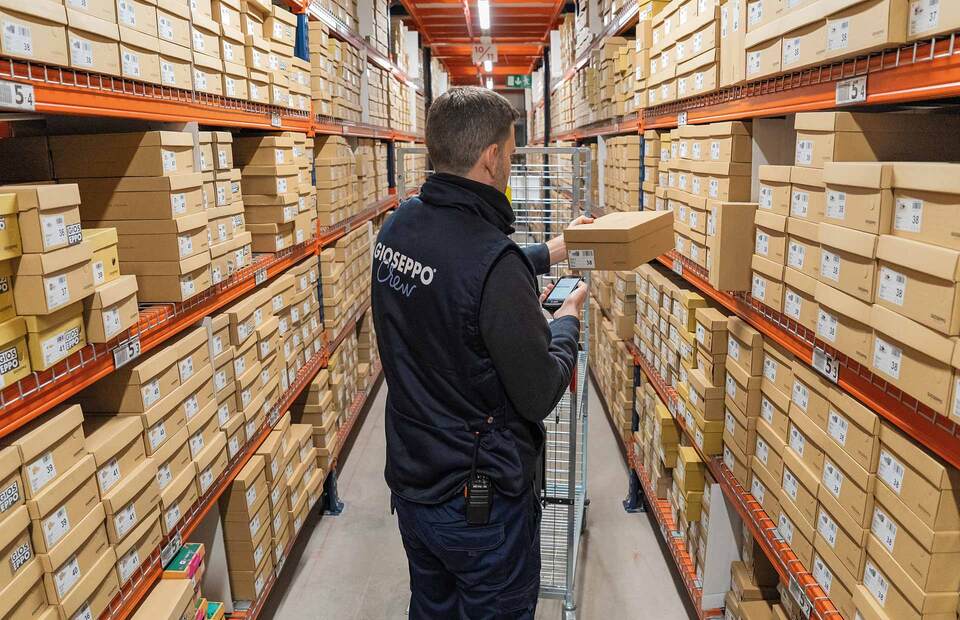
BARCELONA: Alongside its international expansion, the footwear and fashion accessory manufacturer Gioseppo has diversified its sales channels and modernised its logistics processes with the new version of Mecalux’s Easy WMS warehouse management system. To implement true omnichannel logistics, Gioseppo needed to synchronise picking tasks across its warehouses accurately and efficiently. “Our goal is to guarantee that every customer enjoys the same shopping experience, no matter which channel they choose,” says José Miguel Navarro, Vice President and Co-Founder.

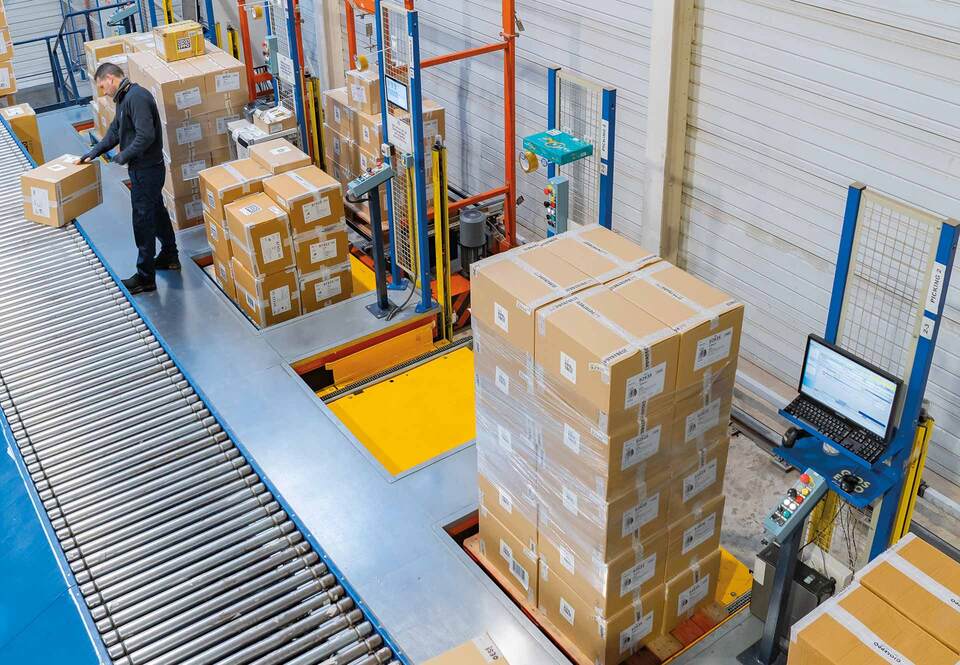
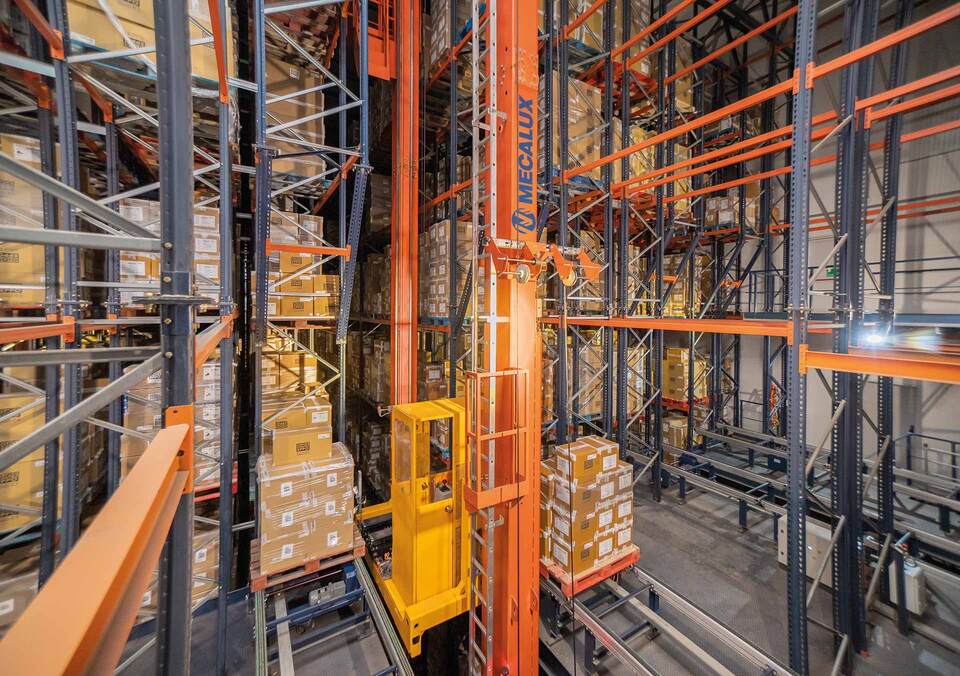
Gioseppo operates two facilities equipped with Mecalux solutions: one clad-rack warehouse with a capacity of 5,844 pallets and another dedicated to picking, with shelving for 480,000 boxes. Overall, the company manages 1.6 million units of shoes in Elche (Spain). With the new version of Easy WMS, the company has centralised order processing, regardless of the sales channel. It now provides its customers with fast, consistent service.

Gioseppo implemented the new version of Easy WMS without disrupting warehouse operations. The project aimed to meet growing omnichannel demands and effectively support the company’s expansion. The software runs on an updated infrastructure that prevents technological obsolescence. This setup provides maximum security and availability so the footwear company can serve customers across any sales channel.

Gioseppo’s story is one of evolution. From a small family-run shoe business in Spain, it has grown into a leading brand in the sector, now present in over 80 countries. While multi-brand shoe stores remain the primary sales avenue, the distribution network now includes company-owned stores across Spain, spaces in major retail chains and franchises. Since 2023, the company has accelerated its growth through digital transformation and the launch of its online store. Products are available through the official brand website, digital outlets and marketplaces.

About Gioseppo

Gioseppo is an innovative footwear company created with the ambition of offering designs for everyone. Its collections combine style, comfort and quality in every model for women, men and children. With integrated logistics and a comprehensive commercial strategy, the company makes its products available across multiple sales channels, adapting to evolving consumer habits. 

About Mecalux

Mecalux is a warehouse technology and intralogistics software enterprise. With 60 years of experience, the company develops automated storage solutions, warehouse management software and metal racking systems for all sectors. The Mecalux Group has an extensive worldwide distribution network, 12 manufacturing plants, seven R&D centres for technological development and a workforce of more than 5,500 employees. 

Piyush Goyal invites Indian and Uzbek businesses to Co-invest and Co-manufacture; Calls for doubling bilateral trade at India-Uzbekistan Business Forum

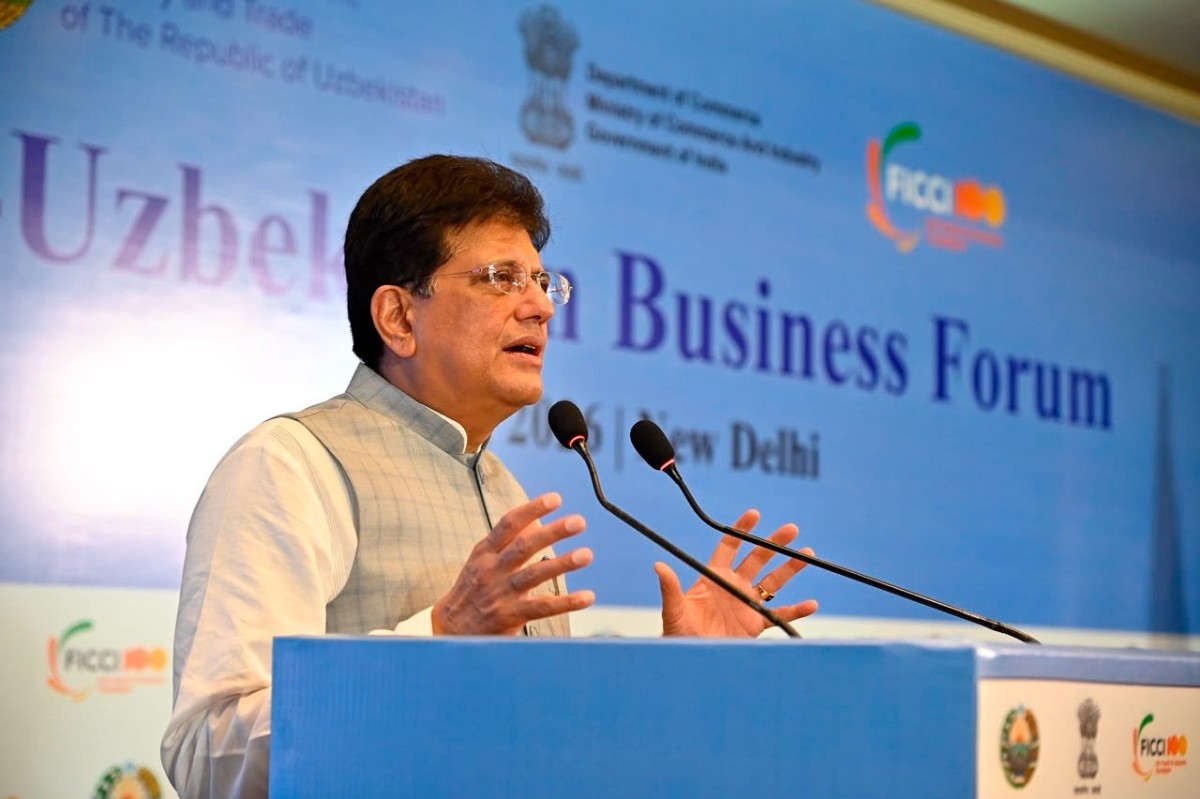
NEW DELHI : Union Minister of Commerce and Industry Shri Piyush Goyal on Monday invited businesses from India and Uzbekistan to co-invest, co-manufacture and co-innovate, while calling for concerted efforts to double bilateral trade between the two countries over the next three years. Addressing the India-Uzbekistan Business Forum in New Delhi, the Minister said the strategic partnership between the two countries, founded on mutual trust, respect and a shared vision for prosperity, offers tremendous opportunities for expanding trade, investment and economic cooperation.

Welcoming the delegation, Shri Goyal said India and Uzbekistan are bound not only by a rich shared history and deep cultural connect, but also by immense business potential that remains largely untapped. He observed that while bilateral trade has crossed approximately USD 1.5 billion, it represents only a fraction of what the two economies can achieve together.

The Minister said India offers Uzbekistan not only a large and growing market but also a reliable partner, a skilled and youthful workforce and a platform for innovation-led growth. Referring to the recently concluded Bilateral Investment Treaty between India and Uzbekistan, he said the agreement would enhance investor confidence and encourage businesses from both countries to invest in each other’s economies and build long-term partnerships.

Shri Goyal identified several sectors with strong complementarities that offer significant scope for bilateral collaboration. He said Uzbekistan presents substantial opportunities for Indian investment in the mining sector. He also highlighted the potential for cooperation in textiles, noting Uzbekistan’s strength in cotton production and India’s leadership in the textile industry, with opportunities to jointly expand into garment manufacturing, design and global markets.

In the pharmaceutical and healthcare sectors, the Minister said India, recognised as the pharmacy of the world, can support Uzbekistan’s healthcare modernisation through affordable medicines, medical devices, diagnostics, telemedicine, training of doctors and paramedics, and quality healthcare services. He also proposed reviving cooperation in traditional systems of medicine such as Ayurveda, Yoga and Unani, which had historical links with the Uzbek region.

On agriculture and food processing, Shri Goyal said cooperation in food processing, packaging, cold chains and agri-tech could help build global value chains that benefit farmers in both countries while serving international markets through complementary strengths.

The Minister also underlined India’s readiness to collaborate with Uzbekistan in information technology and the digital economy. He said India would be happy to work with Uzbekistan in developing Digital Public Infrastructure and strengthening cooperation in areas such as fintech, agri-tech and medtech. He further noted that engineering components, advanced manufacturing, automotive components and automobiles also offer promising avenues for future collaboration.

The Minister noted that Prime Minister Shri Narendra Modi and the President of Uzbekistan H.E. Mr. Shavkat Mirziyoyev have imparted new dynamism to bilateral relations by bringing the people of the two countries closer together and providing a clear political direction for the partnership. He emphasised that the full potential of the relationship can be realised only when businesses from both sides deepen engagement, expand economic ties, increase investments and create more employment opportunities.

Emphasising that trade must lead the bilateral relationship, Shri Goyal urged businesses to seize the opportunity to build enduring commercial partnerships. He called for eliminating trade barriers, promoting mutual recognition of standards, approvals, testing and certification processes, integrating customs systems through greater digitalisation, and creating more efficient trade routes to facilitate commerce.

He said both governments are working towards a more structured, time-bound and outcome-oriented economic partnership and stressed that regulators and standard-setting authorities should also strengthen cooperation to facilitate businesses on both sides.

Addressing industry leaders, the Minister said, “This is your moment. Co-invest, co-manufacture and co-innovate. Build partnerships that are everlasting and which give companies on both sides scale, resilience and prosperity for the two economies and the people of Uzbekistan and India.”

The Minister concluded by welcoming the visiting delegation and reaffirming India’s commitment to deepening the India-Uzbekistan economic partnership through stronger trade, investment and business collaboration.

Adani Vizhinjam International Seaport sets new operational benchmark with record 10,545 TEU exchanges on a single vessel

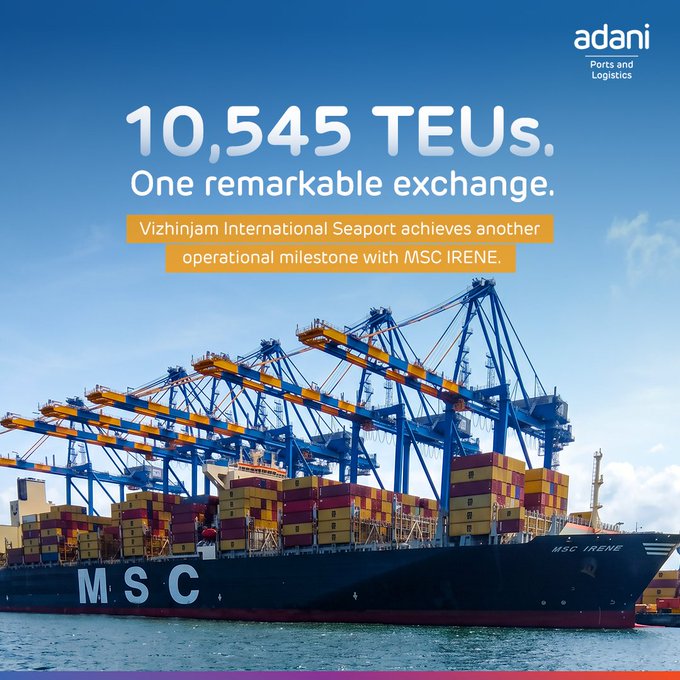
THIRUVANANTHAPURAM : Adani Vizhinjam International Seaport has achieved yet another significant operational milestone by recording 10,545 TEU (Twenty-foot Equivalent Unit) exchanges on a single vessel, MSC IRENE, marking one of the highest container exchange operations handled at the port to date.

The achievement underscores the port’s world-class operational capabilities, driven by cutting-edge automation, state-of-the-art infrastructure, and the exceptional efficiency of Team Vizhinjam. The seamless handling of such a high-volume container exchange demonstrates the terminal’s ability to manage ultra-large container vessels with speed, precision, and reliability.

Strategically located near the East-West international shipping corridor, Vizhinjam International Seaport continues to strengthen its role as India’s premier deep-water transshipment hub. Its natural draft, advanced cargo-handling systems, and modern terminal infrastructure enable faster vessel turnaround times, enhanced productivity, and improved supply chain efficiency for global shipping lines.

The successful handling of 10,545 TEUs on MSC IRENE further reinforces Vizhinjam’s growing reputation as a preferred transshipment destination in the Indian Ocean region, supporting India’s vision of becoming a global maritime and logistics powerhouse.

This latest milestone reflects the unwavering commitment of the port’s workforce, technology-driven operations, and continuous pursuit of operational excellence, setting new benchmarks in container handling while contributing to the growth of international trade and India’s maritime sector.

Key Highlights:

  • 10,545 TEU exchanges handled on a single vessel – MSC IRENE
  • Demonstrates world-class operational efficiency and advanced terminal automation
  • Highlights the expertise and dedication of Team Vizhinjam
  • Reinforces Vizhinjam’s position as a leading international transshipment hub
  • Strengthens India’s maritime connectivity and global trade competitiveness

This record-breaking performance marks another step forward in Vizhinjam International Seaport’s journey toward becoming one of the world’s most efficient and strategically important container transshipment terminals.

SCI floats Tender for construction of Next-Generation 8,000 TEU LNG-Fuelled Container Vessels

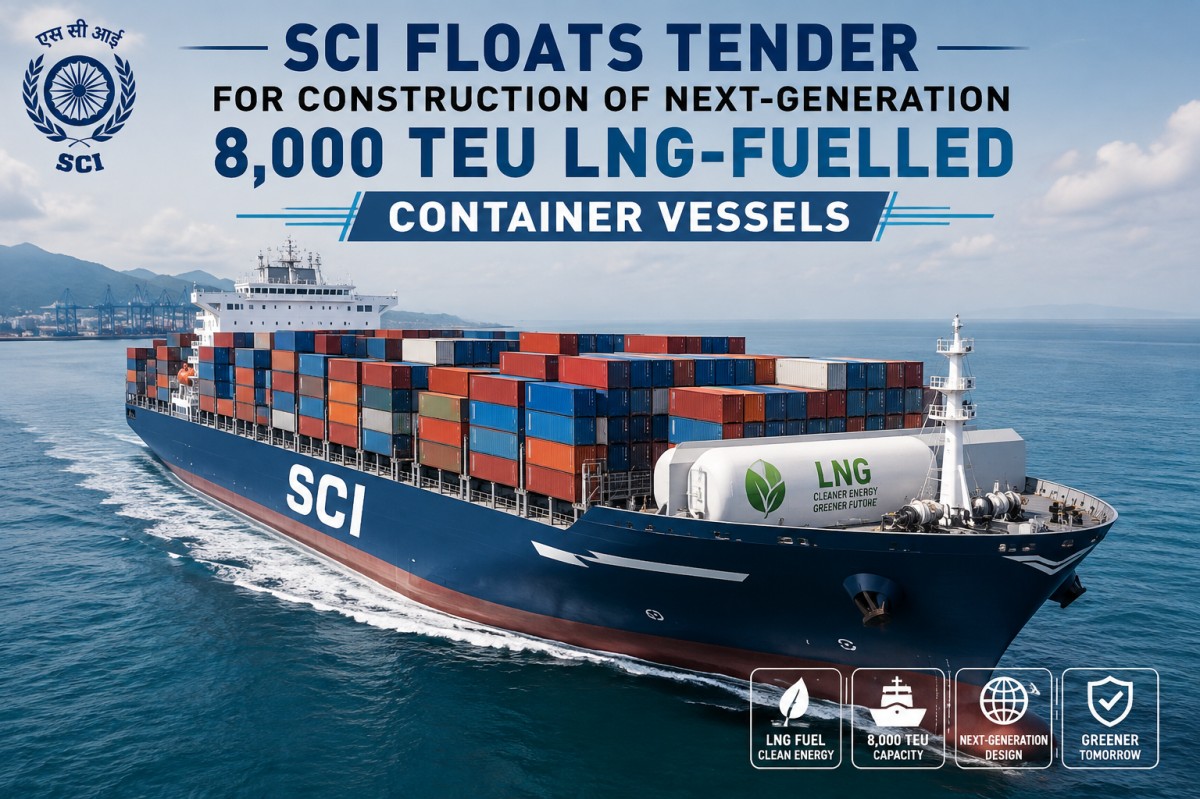
MUMBAI : The Shipping Corporation of India Ltd. (SCI) has invited bids from shipyards for the construction of 8,000 TEU LNG-fuelled container vessels, marking a significant step towards fleet modernization and the adoption of greener technologies in India’s shipping sector. The tender is accompanied by a detailed outline technical specification that sets out the design, performance, environmental and operational requirements for the proposed vessels.

According to the specifications, the vessels will have a minimum carrying capacity of 8,000 TEUs at 14 tonnes per TEU and will be designed for unrestricted ocean-going service. The ships will be capable of carrying dry cargo containers, refrigerated containers and specified IMDG dangerous cargo while meeting the latest international standards for safety, environmental protection and operational efficiency.

The proposed vessels are planned with an overall length of about 330 metres, a beam of 50 metres, a design speed of 19 knots, and a service speed of 17 knots, with an endurance of at least 20,000 nautical miles. The design emphasizes fuel efficiency, slow steaming capability and enhanced hydrodynamic performance.

A key feature of the project is the adoption of dual-fuel propulsion technology. The vessels will be equipped with LNG-fuelled, IMO NOx Tier III-compliant main engines capable of operating on LNG with MGO/VLSFO as pilot fuel, while also being compatible with B100 biofuel. The design further incorporates energy-saving devices and EEDI-compliant features to reduce emissions and improve fuel economy.

The technical specifications also call for double-hull construction, advanced ballast management systems, LNG bunkering compatibility, modern automation, cyber-secure ship systems, and compliance with the latest IMO conventions, SOLAS, MARPOL, IGF Code and Indian regulatory requirements. Extensive model testing, risk assessments, dock trials and sea trials have been prescribed to ensure optimum performance and safety before delivery.

The tender reflects SCI’s continued focus on building a modern, environmentally sustainable fleet capable of meeting the evolving demands of global container shipping while supporting India’s long-term maritime ambitions and green shipping initiatives.

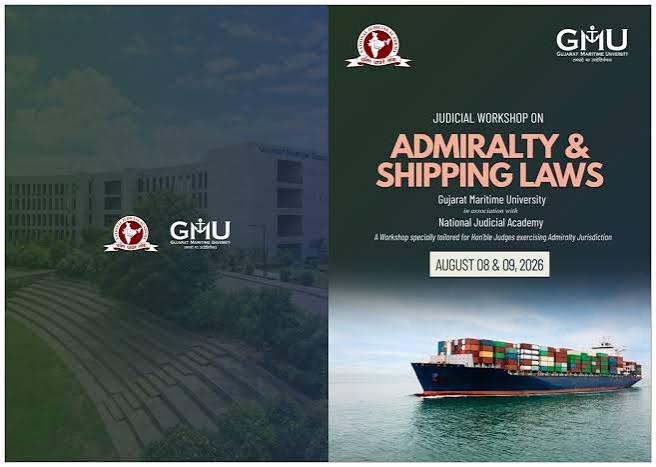
Unique Judicial Workshop on “Admiralty & Shipping Laws” at GMU on 8–9 August

GANDHINAGAR : Gujarat Maritime University (GMU), in association with the National Judicial Academy (NJA), is organising a two-day Judicial Workshop on “Admiralty & Shipping Laws” on 8–9 August 2026 at Gujarat Maritime University, Gandhinagar.

The Workshop will bring together the Hon’ble Judges from seven High Courts exercising Admiralty Jurisdiction: the High Courts of Calcutta, Bombay, Madras, Gujarat, Orissa, Kerala and Andhra Pradesh.

The workshop is specially tailored for Hon’ble Judges exercising Admiralty Jurisdiction and brings together the Hon’ble Judges from the High Courts of Calcutta, Bombay, Madras, Gujarat, Orissa, Kerala and Andhra Pradesh, along with distinguished judicial resource persons, for focused deliberations on the evolving landscape of admiralty and shipping law.

The workshop assumes particular significance in view of India’s expanding maritime sector and its growing integration with global trade. Admiralty and shipping disputes often involve complex questions relating to maritime claims, jurisdiction, commercial transactions and international legal frameworks. The programme therefore seeks to facilitate dialogue on both the legal principles and practical dimensions involved in the adjudication of such disputes.

The participation of Hon’ble Judges exercising Admiralty Jurisdiction from seven High Courts across India provides an important opportunity for the exchange of judicial experiences and perspectives concerning the interpretation and application of admiralty and shipping laws.

The workshop also reflects the shared commitment of the National Judicial Academy and Gujarat Maritime University towards strengthening judicial capacity and promoting specialised legal knowledge in areas of growing national and international importance.

As India continues to strengthen its position as a major maritime nation, effective and informed adjudication of maritime disputes remains integral to ensuring legal certainty and supporting the growth of maritime commerce. Through initiatives such as this Judicial Workshop, Gujarat Maritime University continues to advance its mandate of promoting education, research, training and capacity building in the maritime sector, while fostering meaningful engagement between academia and the judiciary.

Shanghai Port smashes highest single-day container throughput record with 203,881 TEUs

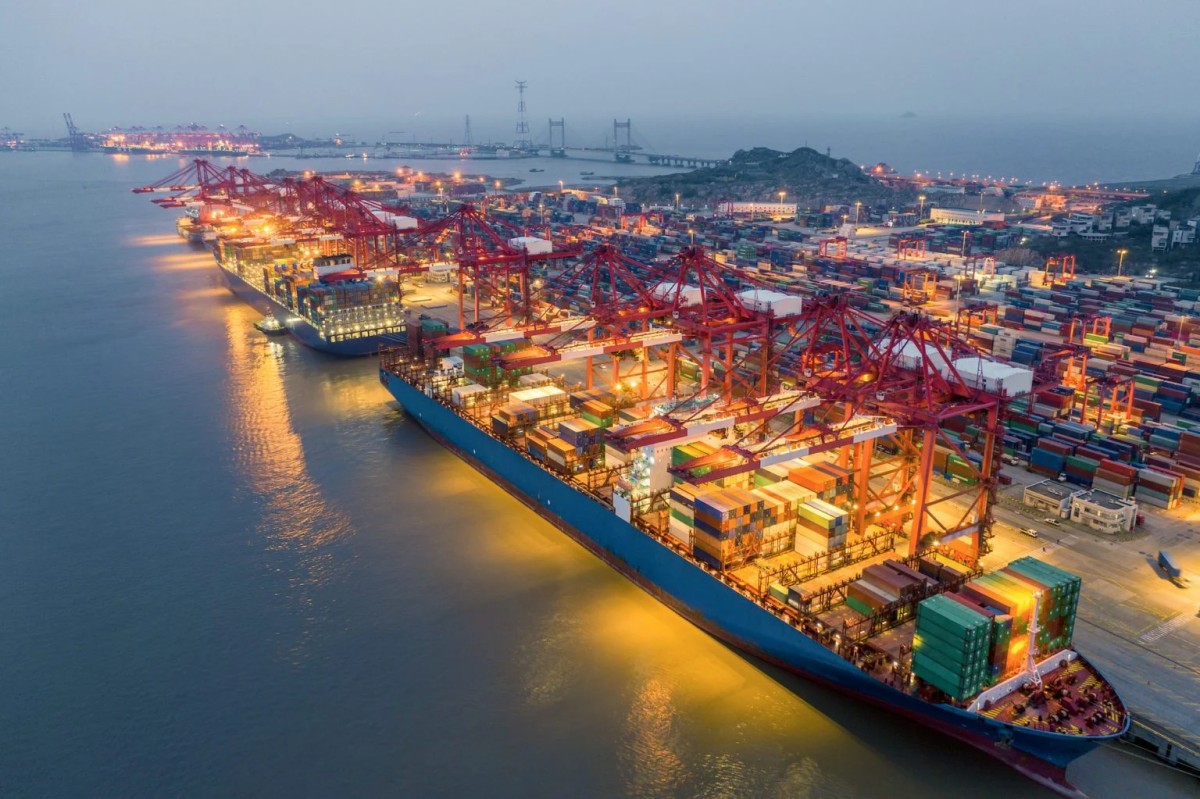
SHANGHAI : Shanghai Port recorded its highest single-day container throughput on 1 August, handling 203,881 TEUs and surpassing the 200,000 TEU mark for the first time, according to Shanghai International Port (Group).

The figure exceeds the port’s previous record of 187,312 TEUs by close to 9 per cent, and comes weeks after Typhoon Bavi disrupted vessel operations at the port for around four days in mid-July.

The storm forced trunk and feeder vessels sheltering offshore to arrive at the port simultaneously once conditions cleared, tightening berth availability and creating a temporary buildup of containers that strained terminal operations, vessel clearance and yard turnover, according to the port group’s official WeChat account.

In response, Shanghai International Port (Group) coordinated resources and introduced measures to clear the vessel backlog and restore terminal capacity. During the recovery phase, daily throughput held steady at 172,000 TEUs, with efficiency improving in the lead-up to Saturday’s record.

Zhao Nan, expert at the Shanghai International Shipping Research Center, said the record reflected the strength of China’s ports in absorbing unexpected disruption.

Despite Typhoon Bavi causing a surge in vessel arrivals and temporary cargo backlogs, Zhao said Shanghai Port had swiftly restored operations and improved handling efficiency, reflecting its capabilities in intelligent management, coordinated scheduling and infrastructure support.

Shanghai Port’s container throughput exceeded 55.06 million TEUs in 2025, a record that kept the port in position as the world’s busiest container port for the 16th consecutive year, according to Xinhua News Agency.

Under the recently released Shanghai 15th Five-Year Plan (2026–2030) for Accelerating the Development of the International Shipping Center, the port is set to play a leading role among ports in the Yangtze River Delta cluster, with annual container throughput targeted to exceed 58 million TEUs by 2030.

Zhao added that continued improvements in international transhipment capacity, alongside further progress in digitalisation and green development, would position Shanghai Port to play a larger role in supporting China’s domestic and international economic circulation, while strengthening its place in the global shipping network.

VoC Port achieves record milestone in logistics with dispatch of 100 VinFast electric vehicles

TUTICORIN : A proud logistics milestone at V.O. Chidambaranar Port with rail dispatch of 100 VinFast electric vehicles

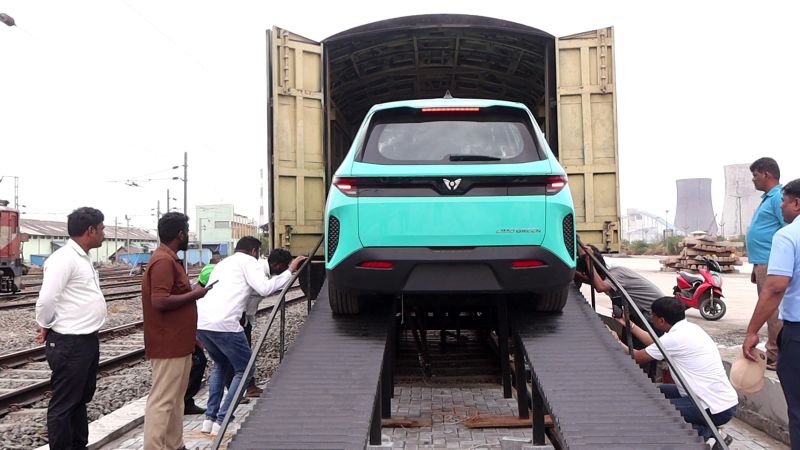
The Port’s state-of-the-art Marshalling Yard at Tuticorin enabled the rail dispatch of 100 VinFast electric vehicles to Ballabhgarh, Haryana, aboard the newly introduced NMG (Newly Modified Goods) Wagons.

voc port logistics 1 VoC Port achieves record milestone in logistics with dispatch of 100 VinFast electric vehicles

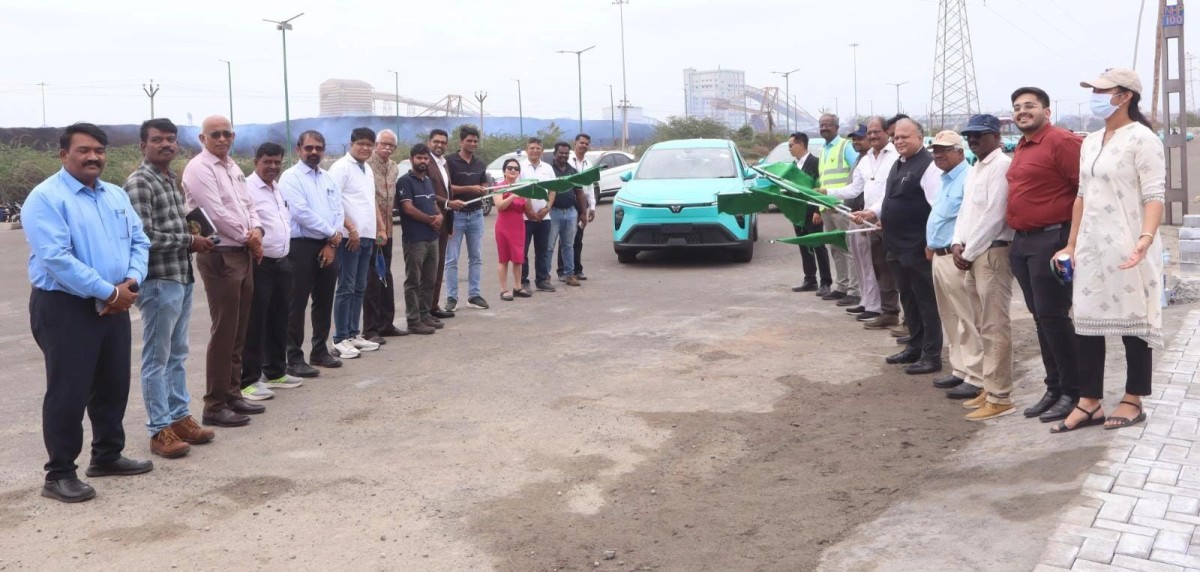
The consignment was flagged off in the presence of Shri Sanjiv Garg, IRTS, Former Additional Member, Railway Board; Shri Sriram V., IRTS, Former Director, IRCTC; and officials from VinFast and V.O. Chidambaranar Port Authority.

Developed across 16.25 acres, the Marshalling Yard is equipped with dedicated RCC loading platforms, internal road infrastructure and seamless rail connectivity—providing industry with a modern, efficient gateway for cargo movement.

This dispatch demonstrates the Port’s growing capability to support automobile logistics, multimodal connectivity and faster cargo evacuation through purpose-built infrastructure.

V.O. Chidambaranar Port Authority remains committed to building the logistics capacity needed to power India’s manufacturing and mobility ambitions.

Ignazio Messina launches new “Red Sea Express Line” to strengthen India–Red Sea Connectivity

MUMBAI : Ignazio Messina & C. has announced the launch of its new Red Sea Express Line, a strategic expansion of the company’s Indian Ocean–Red Sea service network aimed at meeting the growing demand for reliable and efficient shipping services across one of the region’s most important trade corridors.

The new service will operate alongside the company’s established Jolly Line, significantly enhancing network coverage by offering additional sailings, greater schedule flexibility, increased cargo capacity, and improved connectivity between India, the Gulf, and the Red Sea.

As part of this expansion, Ignazio Messina will deploy the MV Berham Box, a dedicated vessel for the Red Sea Express service, underscoring the company’s continued investment in strengthening its presence across strategic global trade routes.

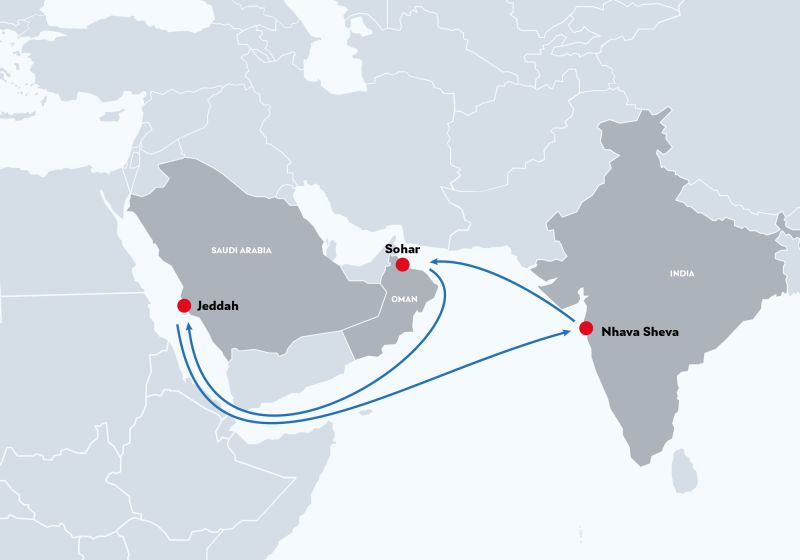
The Red Sea Express Line will follow the rotation:

Nhava Sheva – Sohar – Jeddah – Nhava Sheva

The service will operate with a 20-day frequency, providing customers with more frequent departures and enhanced supply chain reliability.

The inaugural voyage of the Red Sea Express is scheduled to sail from Nhava Sheva on 27 August, marking the commencement of regular operations.

The introduction of the new service is expected to support growing trade volumes between the Indian subcontinent, the Gulf region, and Saudi Arabia by offering faster and more dependable shipping options. The enhanced network will benefit exporters and importers across a wide range of sectors, including industrial goods, project cargo, machinery, consumer products, and containerized freight.

With the launch of the Red Sea Express, Ignazio Messina & C. further reinforces its commitment to expanding its global liner network, investing in strategic markets, and delivering customer-centric, reliable, and efficient maritime transport solutions tailored to evolving international trade requirements.

The Red Sea Express represents another significant milestone in the company’s long-term strategy to strengthen regional connectivity, enhance service resilience, and provide greater value to customers through an increasingly comprehensive shipping network.

GRSE bags ₹1,032 crore PSV contract from ONGC: Powering India’s Offshore Energy Sector

KOLKATA : Reinforcing India’s self-reliance in maritime manufacturing Garden Reach Shipbuilders & Engineers Ltd. (GRSE), a Navratna Defence Public Sector Undertaking under the Ministry of Defence, Government of India, has received the Notification of Award (NOA) from Oil and Natural Gas Corporation Limited (ONGC) for the construction of four Platform Supply Vessels (PSVs).

The Notification of Award (NOA) was received by GRSE on 30 July 2026 for the design, construction and delivery of the vessels.

The order marks a significant diversification of GRSE’s shipbuilding portfolio and reinforces the shipyard’s growing presence in the commercial and offshore vessel segment. The project is expected to contribute substantially to India’s offshore energy infrastructure while further strengthening the nation’s indigenous shipbuilding capabilities.

The vessels will be designed and built-in accordance with the Rules of the Indian Register of Shipping (IRS) and will incorporate advanced technologies to support offshore exploration and production activities. With an overall length of approximately 80 metres, beam of 20 metres, deadweight capacity of 3,800 tonnes, endurance of 45+3 days and a clear deck area of about 650 square metres, the vessels will be capable of undertaking a wide range of offshore logistics and support missions.

A key highlight of the vessels is the incorporation of an advanced hybrid propulsion architecture, featuring electrically driven azimuth thrusters and a Lithium-Ion Battery Energy Storage System. The battery system will support peak load management, spinning reserve, dynamic positioning operations and emergency response functions, thereby enhancing operational efficiency and reducing environmental impact.

With over six decades of shipbuilding excellence, GRSE has built and delivered more than 800 platforms, including 118 warships, to the Indian Navy, Indian Coast Guard and friendly foreign countries. The latest order further expands GRSE’s footprint in the commercial and offshore vessel market and underscores its capability to deliver technologically advanced and environmentally sustainable maritime solutions.