Home Blog Page 171

Shanghai Port smashes highest single-day container throughput record with 203,881 TEUs

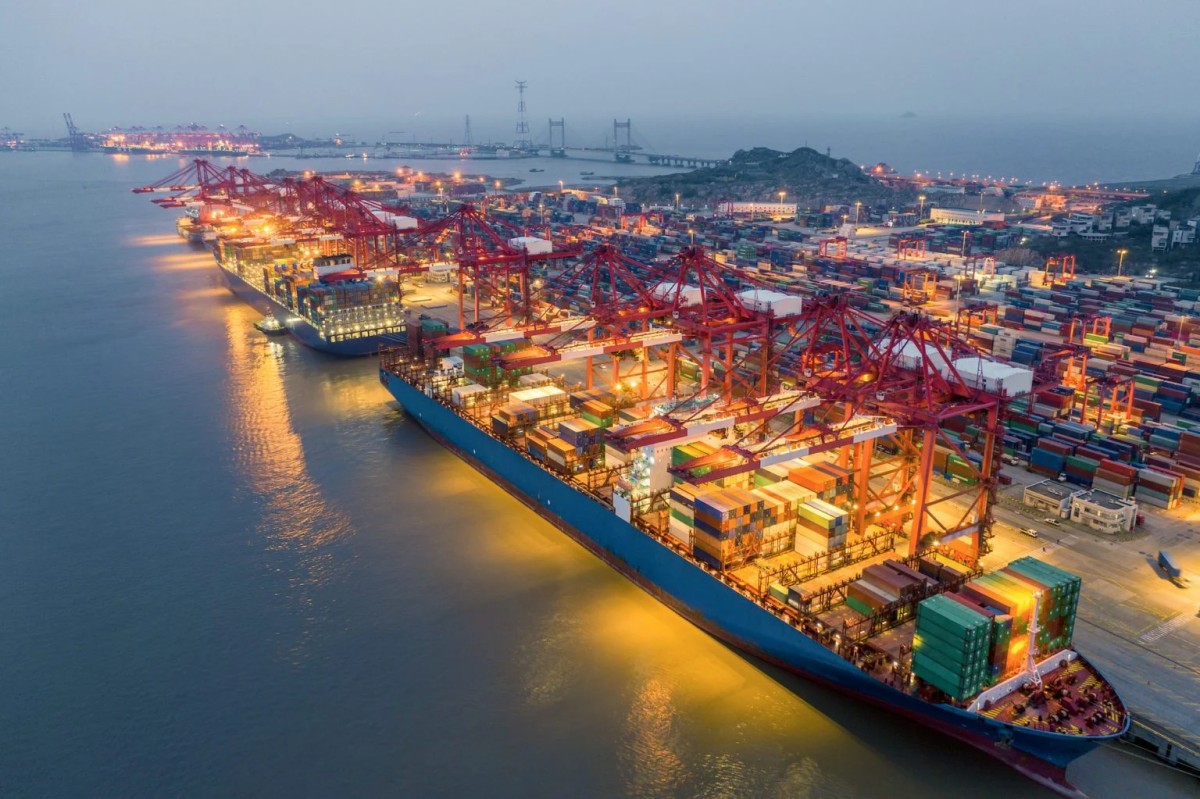
SHANGHAI : Shanghai Port recorded its highest single-day container throughput on 1 August, handling 203,881 TEUs and surpassing the 200,000 TEU mark for the first time, according to Shanghai International Port (Group).

The figure exceeds the port’s previous record of 187,312 TEUs by close to 9 per cent, and comes weeks after Typhoon Bavi disrupted vessel operations at the port for around four days in mid-July.

The storm forced trunk and feeder vessels sheltering offshore to arrive at the port simultaneously once conditions cleared, tightening berth availability and creating a temporary buildup of containers that strained terminal operations, vessel clearance and yard turnover, according to the port group’s official WeChat account.

In response, Shanghai International Port (Group) coordinated resources and introduced measures to clear the vessel backlog and restore terminal capacity. During the recovery phase, daily throughput held steady at 172,000 TEUs, with efficiency improving in the lead-up to Saturday’s record.

Zhao Nan, expert at the Shanghai International Shipping Research Center, said the record reflected the strength of China’s ports in absorbing unexpected disruption.

Despite Typhoon Bavi causing a surge in vessel arrivals and temporary cargo backlogs, Zhao said Shanghai Port had swiftly restored operations and improved handling efficiency, reflecting its capabilities in intelligent management, coordinated scheduling and infrastructure support.

Shanghai Port’s container throughput exceeded 55.06 million TEUs in 2025, a record that kept the port in position as the world’s busiest container port for the 16th consecutive year, according to Xinhua News Agency.

Under the recently released Shanghai 15th Five-Year Plan (2026–2030) for Accelerating the Development of the International Shipping Center, the port is set to play a leading role among ports in the Yangtze River Delta cluster, with annual container throughput targeted to exceed 58 million TEUs by 2030.

Zhao added that continued improvements in international transhipment capacity, alongside further progress in digitalisation and green development, would position Shanghai Port to play a larger role in supporting China’s domestic and international economic circulation, while strengthening its place in the global shipping network.
VoC Port achieves record milestone in logistics with dispatch of 100 VinFast electric vehicles

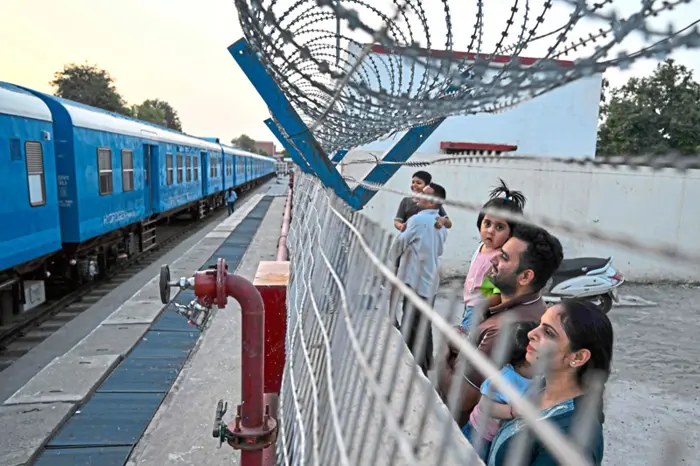
TUTICORIN : A proud logistics milestone at V.O. Chidambaranar Port with rail dispatch of 100 VinFast electric vehicles

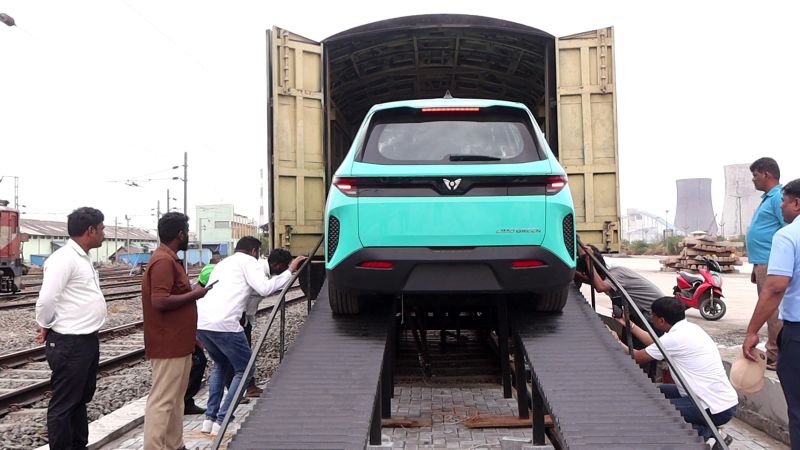
The Port’s state-of-the-art Marshalling Yard at Tuticorin enabled the rail dispatch of 100 VinFast electric vehicles to Ballabhgarh, Haryana, aboard the newly introduced NMG (Newly Modified Goods) Wagons.

voc port logistics 1 VoC Port achieves record milestone in logistics with dispatch of 100 VinFast electric vehicles

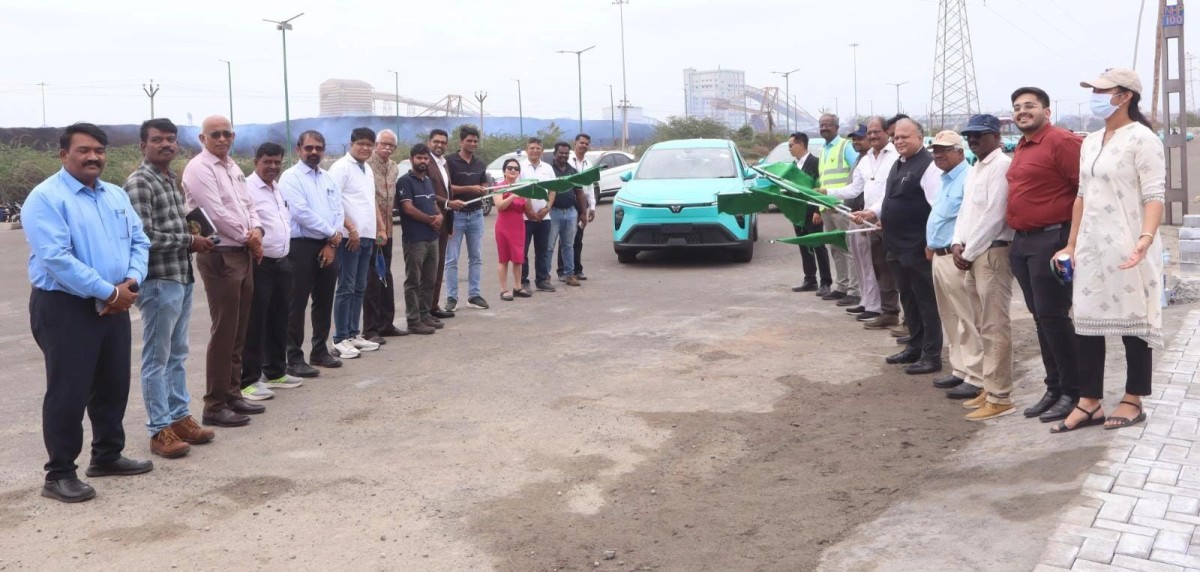
The consignment was flagged off in the presence of Shri Sanjiv Garg, IRTS, Former Additional Member, Railway Board; Shri Sriram V., IRTS, Former Director, IRCTC; and officials from VinFast and V.O. Chidambaranar Port Authority.

Developed across 16.25 acres, the Marshalling Yard is equipped with dedicated RCC loading platforms, internal road infrastructure and seamless rail connectivity—providing industry with a modern, efficient gateway for cargo movement.

This dispatch demonstrates the Port’s growing capability to support automobile logistics, multimodal connectivity and faster cargo evacuation through purpose-built infrastructure.

V.O. Chidambaranar Port Authority remains committed to building the logistics capacity needed to power India’s manufacturing and mobility ambitions.

Ignazio Messina launches new “Red Sea Express Line” to strengthen India–Red Sea Connectivity

MUMBAI : Ignazio Messina & C. has announced the launch of its new Red Sea Express Line, a strategic expansion of the company’s Indian Ocean–Red Sea service network aimed at meeting the growing demand for reliable and efficient shipping services across one of the region’s most important trade corridors.

The new service will operate alongside the company’s established Jolly Line, significantly enhancing network coverage by offering additional sailings, greater schedule flexibility, increased cargo capacity, and improved connectivity between India, the Gulf, and the Red Sea.

As part of this expansion, Ignazio Messina will deploy the MV Berham Box, a dedicated vessel for the Red Sea Express service, underscoring the company’s continued investment in strengthening its presence across strategic global trade routes.

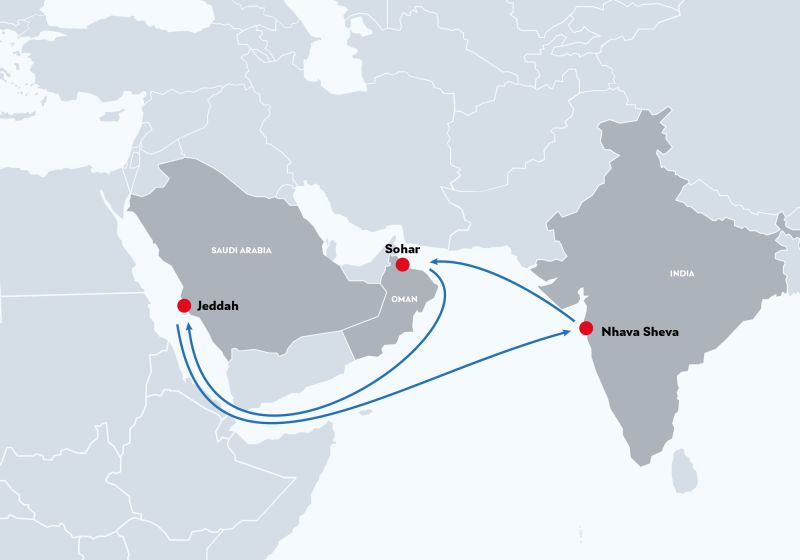
The Red Sea Express Line will follow the rotation:

Nhava Sheva – Sohar – Jeddah – Nhava Sheva

The service will operate with a 20-day frequency, providing customers with more frequent departures and enhanced supply chain reliability.

The inaugural voyage of the Red Sea Express is scheduled to sail from Nhava Sheva on 27 August, marking the commencement of regular operations.

The introduction of the new service is expected to support growing trade volumes between the Indian subcontinent, the Gulf region, and Saudi Arabia by offering faster and more dependable shipping options. The enhanced network will benefit exporters and importers across a wide range of sectors, including industrial goods, project cargo, machinery, consumer products, and containerized freight.

With the launch of the Red Sea Express, Ignazio Messina & C. further reinforces its commitment to expanding its global liner network, investing in strategic markets, and delivering customer-centric, reliable, and efficient maritime transport solutions tailored to evolving international trade requirements.

The Red Sea Express represents another significant milestone in the company’s long-term strategy to strengthen regional connectivity, enhance service resilience, and provide greater value to customers through an increasingly comprehensive shipping network.

GRSE bags ₹1,032 crore PSV contract from ONGC: Powering India’s Offshore Energy Sector

KOLKATA : Reinforcing India’s self-reliance in maritime manufacturing Garden Reach Shipbuilders & Engineers Ltd. (GRSE), a Navratna Defence Public Sector Undertaking under the Ministry of Defence, Government of India, has received the Notification of Award (NOA) from Oil and Natural Gas Corporation Limited (ONGC) for the construction of four Platform Supply Vessels (PSVs).

The Notification of Award (NOA) was received by GRSE on 30 July 2026 for the design, construction and delivery of the vessels.

The order marks a significant diversification of GRSE’s shipbuilding portfolio and reinforces the shipyard’s growing presence in the commercial and offshore vessel segment. The project is expected to contribute substantially to India’s offshore energy infrastructure while further strengthening the nation’s indigenous shipbuilding capabilities.

The vessels will be designed and built-in accordance with the Rules of the Indian Register of Shipping (IRS) and will incorporate advanced technologies to support offshore exploration and production activities. With an overall length of approximately 80 metres, beam of 20 metres, deadweight capacity of 3,800 tonnes, endurance of 45+3 days and a clear deck area of about 650 square metres, the vessels will be capable of undertaking a wide range of offshore logistics and support missions.

A key highlight of the vessels is the incorporation of an advanced hybrid propulsion architecture, featuring electrically driven azimuth thrusters and a Lithium-Ion Battery Energy Storage System. The battery system will support peak load management, spinning reserve, dynamic positioning operations and emergency response functions, thereby enhancing operational efficiency and reducing environmental impact.

With over six decades of shipbuilding excellence, GRSE has built and delivered more than 800 platforms, including 118 warships, to the Indian Navy, Indian Coast Guard and friendly foreign countries. The latest order further expands GRSE’s footprint in the commercial and offshore vessel market and underscores its capability to deliver technologically advanced and environmentally sustainable maritime solutions.

DFCCIL achieves record monthly freight performance with highest-ever gross tonne kilometres in July 2026

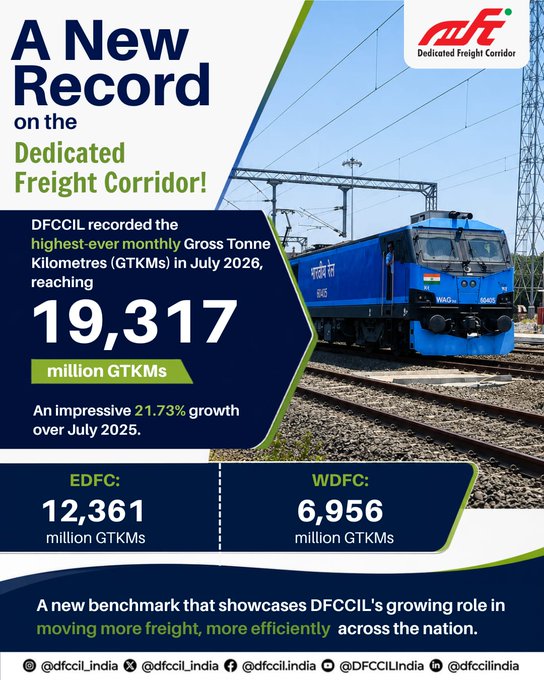
NEW DELHI : The Dedicated Freight Corridor Corporation of India Limited (DFCCIL) has achieved another landmark in India’s freight transportation sector by recording its highest-ever monthly Gross Tonne Kilometres (GTKMs) in July 2026, reaffirming the growing strength and efficiency of the Dedicated Freight Corridor (DFC) network.

During the month, DFCCIL registered 19,371 million Gross Tonne Kilometres (GTKMs), marking an impressive 21.73% year-on-year growth over July 2025. The achievement reflects the sustained increase in freight volumes, improved network utilization, and enhanced operational efficiency across the DFC system.

Gross Tonne Kilometres (GTKMs), a key indicator of freight transport performance, measure the movement of the total weight of trains—including cargo and rolling stock—over a given distance. The record figure underscores the Dedicated Freight Corridor’s growing capacity to handle heavier freight trains, improve transit efficiency, and support India’s expanding industrial and trade requirements.

The milestone also demonstrates the transformative impact of the Dedicated Freight Corridors in modernizing the country’s rail freight ecosystem. By enabling higher axle loads, longer and faster freight trains, and reducing transit times, the DFC network is helping logistics operators and industries achieve greater reliability, lower transportation costs, and improved supply chain efficiency.

DFCCIL’s continued growth is playing a pivotal role in strengthening multimodal logistics by seamlessly connecting ports, industrial clusters, logistics parks, inland container depots, and manufacturing hubs across the country. The enhanced freight capacity is contributing significantly to the Government of India’s vision of creating an integrated, technology-driven logistics network under initiatives such as PM GatiShakti and the National Logistics Policy.

The record-breaking performance further highlights DFCCIL’s unwavering commitment to operational excellence, innovation, and customer-centric freight services. As the Dedicated Freight Corridor network continues to expand and optimize its operations, it is expected to further boost rail’s share in freight transportation, reduce congestion on the conventional railway network, improve energy efficiency, and promote sustainable logistics across India.

This latest achievement marks yet another milestone in DFCCIL’s journey towards building a world-class, high-capacity freight transportation system, strengthening India’s supply chains and supporting the nation’s long-term economic growth and global competitiveness.

Greaks Shipping achieves milestone with successful Export Block Train movement from Kishangarh to Mundra

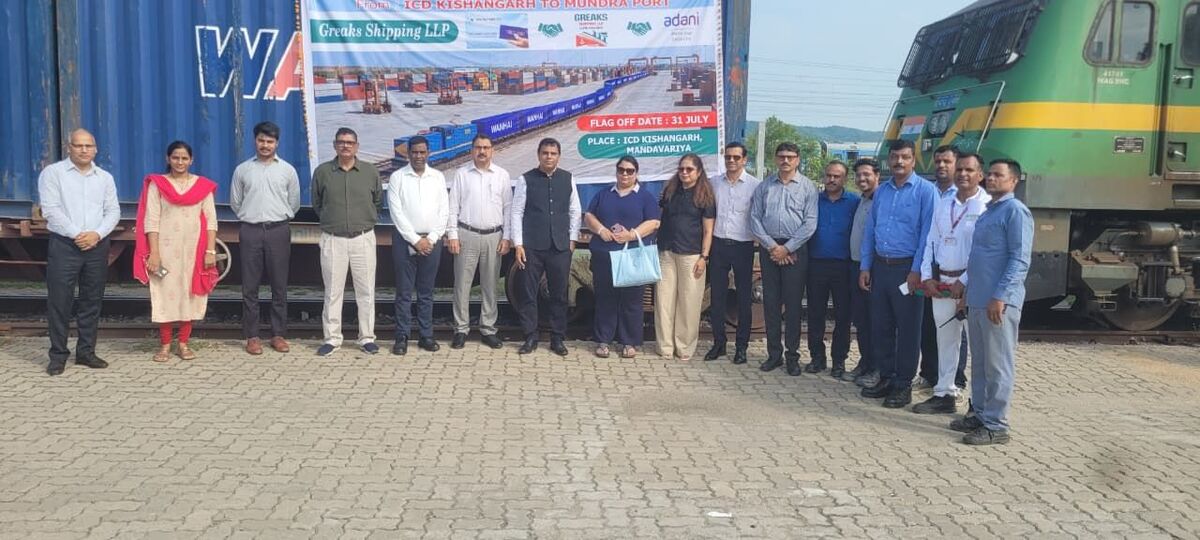
NEW DELHI: Greaks Shipping LLP has marked a significant milestone in its logistics operations by successfully organizing a dedicated export Block Train from Kishangarh to Mundra Port on July 31, 2026, reinforcing its commitment to providing efficient and seamless multimodal logistics solutions.

The Block Train movement was executed in collaboration with Adani Logistics and Wan Hai Lines, highlighting the growing importance of strategic partnerships in strengthening India’s export logistics ecosystem.

The dedicated rail service was designed to facilitate the smooth transportation of export cargo from the inland industrial hub of Kishangarh to Mundra Port, one of India’s leading container gateways. The initiative is expected to improve cargo movement efficiency, reduce transit times, optimize logistics costs, and provide exporters with a more reliable and sustainable transportation solution.

The successful operation reflects the collective efforts of Greaks Shipping and its logistics partners in enhancing supply chain connectivity while supporting the increasing demand for dedicated rail-based cargo transportation. Block Train services play a vital role in ensuring timely movement of containerized cargo, reducing road congestion, and promoting environmentally sustainable logistics practices.

With India’s export sector witnessing steady growth, integrated logistics solutions such as dedicated Block Trains are becoming increasingly important in improving operational efficiency and strengthening the country’s trade infrastructure.

The milestone further demonstrates Greaks Shipping’s focus on delivering innovative logistics solutions and expanding its capabilities to support exporters with dependable, end-to-end transportation services. The collaboration with Adani Logistics and Wan Hai Lines also underscores the value of coordinated industry partnerships in driving efficiency across the logistics and maritime sectors.

The successful Block Train operation from Kishangarh to Mundra is expected to pave the way for more such dedicated rail services, contributing to faster cargo evacuation, improved port connectivity, and enhanced competitiveness for Indian exporters in the global marketplace.

India plans $5 billion railway boost along Pakistan, China, Bangladesh borders

NEW DELHI : India plans to invest as much as Rs 450 billion ($4.7 billion) into railway upgrades along its borders with China, Pakistan and Bangladesh, according to people familiar, marking one of its most significant strategic infrastructure pushes amid shifting regional dynamics.

The spending — set to unfold over the next 18 to 24 months — will help build new tracks, platforms and network strengthening across Punjab, West Bengal, Himachal Pradesh, Rajasthan, Assam and several northeastern states, the people said, asking not to be identified because the discussions are private.

The border-state program represents about 22% of all railway infrastructure outlay planned over the next two years, underscoring the scale of the effort, the people said. The latest plan shows that the Narendra Modi-led administration’s vision to build border-area infrastructure goes beyond the $3.4 billion spending Bloomberg News had reported in September for constructing rail lines, including bridges and tunnels, in the northeastern parts of the country.

The focus on frontier connectivity comes as India recalibrates its posture across sensitive borders where relationships are moving in different directions: ties with China have steadied after a deadly clash six years ago, it engaged in a brief conflict with Pakistan last year, and Bangladesh’s political upheaval in 2024 has complicated a previously stable partnership.

India’s railway ministry did not respond to an email seeking comments on the investment plan.The investment push will help create dual-use infrastructure — civilian railways that also support military logistics — while also improving connectivity in historically underdeveloped border regions.

Vulnerable Frontiers

By bolstering high-capacity, all-weather rail networks into vulnerable frontiers like the Himalayas, the Siliguri Corridor, and the northeastern states, New Delhi is systematically reducing troop mobilization times while securing critical supply-line redundancy against regional rivals.

Prime Minister Shri Narendra Modi has already prioritized connectivity in sensitive zones, including 1,450 kilometers (900 miles) of new roads along the Pakistan border and upgrades near Doklam, a plateau near the Indian border claimed by both China and Bhutan. Last year, he inaugurated the world’s tallest railway bridge connecting the Kashmir Valley with the rest of the country.

In the Northeast, the administration has added about 1,700 kilometers of rail lines over the past decade, the people said.

India has also reactivated airside infrastructure such asR— which have been dormant since 1962 — for helicopter and military aircraft use in its northeastern territories, the people said.

China, meanwhile, has accelerated its own build-out since an earlier 2017 military stand-off over Doklam, constructing dual-use infrastructure such as airports and heliports. Its expansion has bolstered the People’s Liberation Army’s logistics capabilities through faster equipment and troops movement.

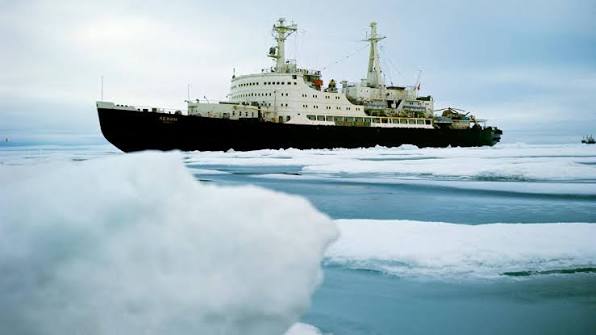
World’s first nuclear-powered icebreaker Lenin reflects Russia’s Arctic ambitions, growing India-Russia NSR cooperation

MURMANSK (RUSSIA): The Lenin, the world’s first nuclear-powered surface ship, continues to stand as a symbol of Russia’s Arctic legacy in the northern port city of Murmansk, where the historic icebreaker has been preserved as a museum after three decades of service along the Northern Sea Route (NSR).

The keel of the Lenin was laid on July 17, 1956, at the Admiralty Shipyard in St. Petersburg, and the vessel entered service on December 3, 1959, pioneering the use of nuclear propulsion in civilian surface shipping.

Speaking to ANI, Vladimir Ulyanikhin, First Category Specialist at FSUE Atomflot (Rosatom), said the icebreaker served for 30 years and played a crucial role in Arctic navigation.

“The nuclear-powered icebreaker Lenin, the world’s first nuclear-powered surface ship, was in service for 30 years. It took part in 26 Arctic navigations along the Northern Sea Route, provided icebreaker assistance for 3,741 vessels and covered a total distance of 654,000 nautical miles,” Ulyanikhin said.

According to Ulyanikhin, Russia today operates the world’s largest icebreaker fleet, comprising more than 40 icebreakers, including eight nuclear-powered vessels. Operated by Rosatom’s subsidiary Atomflot, the fleet plays a key role in maintaining year-round navigation along the Northern Sea Route, which runs along Russia’s Arctic coastline and is viewed as a strategic shipping corridor linking Europe and Asia.

India and Russia are expanding cooperation on the Northern Sea Route. In 2024, the two countries established a Russian-Indian Working Group under the Inter-Governmental Committee for cooperation on the NSR.

The working group, co-chaired by Rosatom’s Special Representative for Arctic Development Vladimir Panov and Shri Rajesh Kumar Sinha from India’s Ministry of Ports, Shipping and Waterways, held its first meeting in New Delhi in October 2024 and a second meeting in 2025. Both sides agreed to strengthen cooperation in developing efficient transport corridors and enhancing logistics connectivity through the Northern Sea Route.

Today, preserved as a museum in Murmansk, the Lenin stands as a reminder of the technological breakthrough that transformed Arctic navigation and continues to shape Russia’s ambitions in the polar region.

Source: ANI

‘Unknown projectile’ strikes cargo vessel off Oman’s Al Khasab, Probe On: UKMTO

AL KHASAB (OMAN): A cargo vessel was struck by an unknown projectile approximately 20 nautical miles northeast of Al Khasab, Oman, the United Kingdom Maritime Trade Operations (UKMTO) said on Tuesday.

In a post on X, UKMTO said it had received a distress call regarding the incident after the cargo vessel broadcast a message over VHF Channel 16.

“UKMTO has received a report of an incident 20NM northeast of Al Khasab, Oman. A cargo vessel has broadcasted on VHF 16 that they have been hit by an unknown projectile. Authorities are investigating,” UKMTO said.

The latest incident comes a day after the UKMTO reported an explosion in close proximity to a tanker off the coast of Oman on Sunday. According to the organisation, the incident occurred approximately 20 nautical miles northeast of Khasab, Oman. It said all crew members and the vessel were safe following the explosion, while maritime authorities launched an investigation into the incident. UKMTO also advised all vessels transiting the area to exercise caution and immediately report any suspicious activity to the agency.

The development comes amid heightened tensions in the region surrounding the Strait of Hormuz following remarks by US President Donald Trump on Monday regarding ongoing discussions with Iran.

Speaking to reporters at the Oval Office after signing an Executive Order establishing the first-ever Presidential Military Spouse Commission, Trump claimed that the United States had postponed a planned military strike against Iran after diplomatic interventions by Saudi Arabia, the United Arab Emirates (UAE), Qatar and Iran.

“This is a last chance. This is not something that if it doesn’t happen, this is a last chance for them to sign a good document,” Trump said while referring to the negotiations.

He also claimed that talks were taking place at Iran’s request and reiterated that preventing Tehran from acquiring nuclear weapons remained Washington’s primary objective.

Earlier on Monday, Trump also said discussions were underway regarding the reopening of the Strait of Hormuz and asserted that Iran would never be allowed to possess a nuclear weapon.

His remarks came after Iranian Foreign Ministry spokesperson Esmail Baghaei rejected reports of direct or indirect negotiations with the United States and maintained that Tehran was not engaged in bilateral talks with Washington. Baghaei also said that an understanding between Iran and Oman on a new maritime traffic route through the Strait of Hormuz was only a technical arrangement for safe vessel movement and did not signify the reopening of the strategically important waterway.

The reported strike on the cargo vessel comes as diplomatic efforts continue over regional security and navigation through the Strait of Hormuz, one of the world’s most critical maritime trade routes.

“Strait of Hormuz could reopen by tomorrow, denuclearisation to be next phase of Iran talks”: says President Trump on talks with Iran

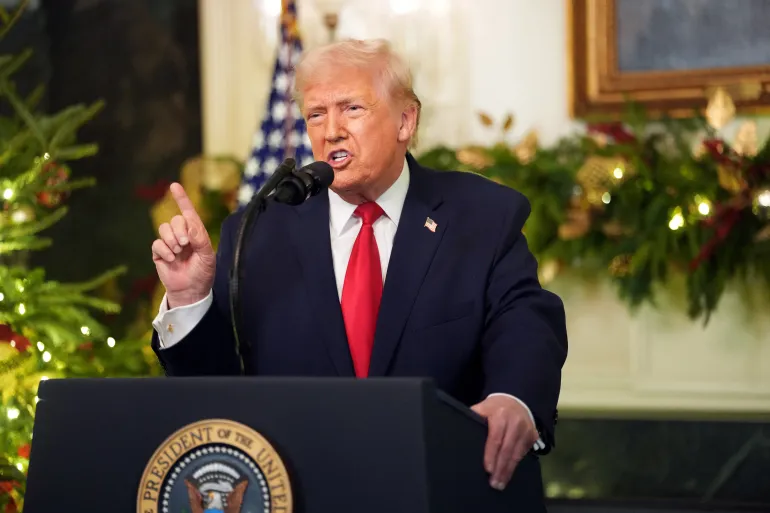
WASHINGTON DC : US President Donald Trump on Monday (local time) said that there are discussions over “completely” reopening the Strait of Hormuz “by tomorrow” as part of the first phase of ongoing discussions with Iran. President Trump added the next stage of negotiations would focus on “denuclearisation” of Iran, while reiterating that Tehran would never be allowed to possess a nuclear weapon.

Speaking to reporters at the Oval Office after signing an Executive Order establishing the first-ever Presidential Military Spouse Commission, Trump expressed optimism that developments on the strategic waterway could happen within a day.

“Well, we’ll find out today or tomorrow. I mean, they’re going to go quickly one way or the other. It’s not very complex. We’re talking about the Strait, the opening of the Strait, having it open, literally by tomorrow. Completely open. And that’s Phase 1,” Trump said.

He said discussions would then move to Iran’s nuclear programme, stressing that dismantling Tehran’s nuclear capabilities remained Washington’s central objective.

“Phase 2 is we then will talk about the nuclear capacity… I think most accurately, the denuclearisation of Iran has to happen. Has to happen. That’ll be the second phase. But the first phase is the opening of the Strait, the second phase will be the denuclearisation, and that’ll take a little while. But we’re very strong on it. They cannot have a nuclear weapon. Iran cannot have a nuclear weapon, and I have never changed that position,” Trump said.

Earlier during the interaction, Trump said Iran had been given what he described as a “last chance” to reach an agreement, claiming the United States had paused a planned military strike after requests from Saudi Arabia, the United Arab Emirates (UAE), Qatar and Iran to allow diplomacy to proceed.

“This is a last chance. This is not something that if it doesn’t happen, this is a last chance for them to sign a good document,” Trump said.

Claiming that negotiations were taking place at Tehran’s request, he said, “We are talking right now, we’re talking, and we’re talking at the request of Iran, backed by Saudi Arabia, backed by UAE, and backed by Qatar in particular, but others also. Many countries called… they all wanted to give this a last chance.”

Trump also accused Iran of publicly denying negotiations despite engaging in discussions with US officials.

“It’s an amazing thing… we have many talks… they’ll sometimes deny it, even though they’ve spent hours and hours together talking. But the talks are going along,” he said.

The US President further claimed Washington had been prepared to launch a major military operation against Iran before diplomatic interventions from regional countries.

“We were going to hit them very hard yesterday, very, very hard, harder than any attack… since World War II. We were set to go, and they called and, in addition, Saudi Arabia called, UAE called, Qatar called. I got calls from numerous people,” Trump said.

“Now, I don’t want to use the word begging, but some were in particular. Iran did not want to be hit. And they said we want to talk… more importantly, from my standpoint, we want to talk about the de-nuclearisation of Iran because that’s what it’s all about,” he added.

Earlier, Trump intensified his criticism of Iran in a post on Truth Social, describing the Iranian leadership as “unbelievably duplicitous” for allegedly seeking talks with Washington while publicly denying that negotiations were underway. He also reiterated that “Iran will never have a nuclear weapon” and claimed the United States maintained control over access through the Strait of Hormuz until a deal or “total surrender” was achieved.

Trump’s remarks came after Iranian Foreign Ministry spokesperson Esmail Baghaei rejected reports of direct or indirect negotiations with the United States, maintaining that Tehran was not engaged in bilateral talks with Washington. Baghaei also said that an understanding between Iran and Oman on a new maritime traffic route through the Strait of Hormuz was merely a technical arrangement for safe vessel movement and did not signal the reopening of the strategically important waterway.

Separately, Trump signed an Executive Order establishing the first-ever Presidential Military Spouse Commission, saying the initiative would strengthen support for military families.

“Thank you for all being here as we take a major new step to support our incredible military families… Today, I’m signing an Executive Order to establish the first-ever Presidential Military Spouse Commission,” he said.