Home Blog Page 182

Open Markets Institute analysis shows U.S. to consider publicly backed Container Shipping Line

WASHINGTON D.C. : A fresh analysis from the Open Markets Institute recommends that the United States explore the creation of a government-backed container shipping line to decrease its dependency on foreign operators. The antimonopoly organization, based in Washington, points out that six overseas-owned liner firms manage close to 80% of worldwide container capacity and over 90% of American trade on key routes, labeling this dominance a container cartel.

Report Highlights Risks of Foreign Control

The document, Creating a Publicly Accountable Ocean Supply Chain, asserts that four decades of deregulation, industry consolidation, and strategic alliances have exposed U.S. importers, exporters, and defense planners to choices made by corporations based outside the country. The study notes that the American-flagged container fleet engaged in international trade has decreased to 58 vessels, accounting for less than 1% of the global total. The institute cautions that the nation relies on foreign carriers not just for consumer supply chains but also for emergency sealift operations.

Proposed Solutions and Concerns

Author Arnav Rao contended that container shipping ought to be regarded as essential infrastructure. The report asserts that leading carriers can take advantage of unclear service contracts, unfair pricing, canceled sailings, cargo hold-ups, and extra fees, with small exporters and manufacturers facing the heaviest impact. Its most ambitious suggestion is a public container shipping service that can ensure market access where private operators fail to deliver dependable or equitable service.

Additional recommendations involve heightened Federal Maritime Commission oversight of global alliances, reinstated common-carrier obligations, increased backing for U.S.-flagged ships, and broader mariner training programs. Carrier collaboration agreements are already submitted to and reviewed by the FMC, and they may qualify for exemptions from U.S. antitrust regulations. The agency mandates detailed reporting from alliances and can pursue court orders if diminished competition leads to unjustified cost hikes or worsening service quality.

Nevertheless, the report contends that oversight alone is inadequate when the fleet, crew base, and commercial capacity have relocated overseas. Its core argument is that Washington cannot restore maritime resilience merely through shipyard subsidies; it must also determine who governs access to the transport network linking American producers and consumers to global markets.
DP World completes Ndayane Port dredging 13 months early in Senegal

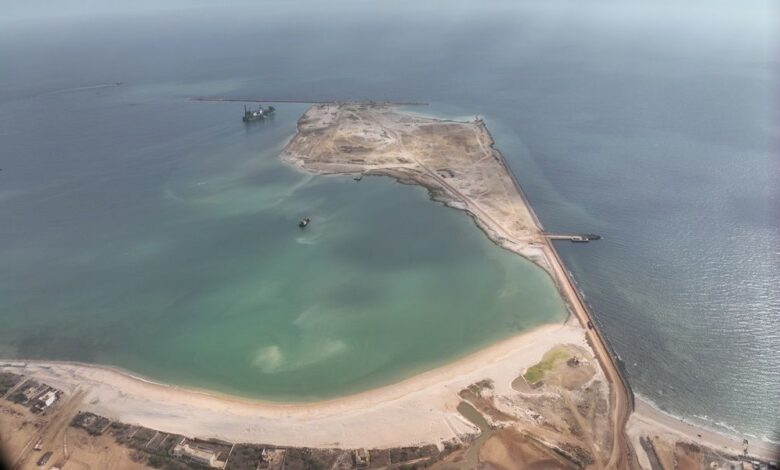
DUBAI : DP World has completed major dredging work at Senegal’s Port of Ndayane 13 months ahead of schedule, allowing construction of the quay and other marine infrastructure to begin earlier than planned.

The $1.2 billion project is due to be completed in 2028 and will become Senegal’s main deep-water container gateway, expanding the country’s trade capacity and strengthening its position in West African logistics.

More than 1,000 people are currently employed directly on the site, with construction now moving into the next phase of marine and civil works.

The work covered a five-kilometre navigation channel, a turning basin and a berth pocket designed to receive the world’s largest container ships.

Two large cutter suction dredgers were used to remove material from the site, more than 95 per cent of which was solid rock.

Some of the rock formations had compressive strength exceeding 100 megapascals, making them considerably harder than the material usually encountered during major port construction.

The dredging was completed without blasting, reducing the environmental impact while allowing work to continue safely.

Mohammed Akoojee, CEO and Managing Director for Africa at DP World, said the early completion would bring forward the next stage of construction.

“Completing major dredging works 13 months ahead of schedule is a significant milestone for the Port of Ndayane and a testament to the expertise, commitment and collaboration of everyone involved in delivering this project safely.”

Port designed for larger vessels

The completed access channel has been dredged to a depth of 20 metres, while the project also includes a 600-metre turning basin and an 875-metre berth pocket.

The berth will be capable of handling two Triple E-class container vessels at the same time.

Capital dredging was initially expected to be completed in September 2027, but early mobilisation in December 2024 allowed the work to finish well ahead of schedule.

Jobs and access to goods

DP World said the project would support 2.3 million jobs through trade and improve access to critical goods and staples for 7.8 million people.

The company also expects the port to improve opportunities for local businesses and support skills development in Senegal.

The project currently employs 1,043 people on site and has maintained environmental monitoring and engagement with local stakeholders throughout construction.

Dakar terminal nearing its limits

DP World has operated the Port of Dakar terminal since 2008 and has invested about $340 million in modernising the facility.

Container volumes increased from 265,000 twenty-foot equivalent units in 2008 to 850,000 units in 2025.

Vessel waiting times also fell from 35 hours to almost zero during that period.

The Port of Dakar is now operating close to its physical capacity, prompting DP World and the Senegalese government to develop Ndayane as the country’s next major gateway for international trade.

The new port is located about 50 kilometres from Dakar and has been designed to support future expansion while improving links between the port and inland logistics networks.

The Port of Dakar is currently the highest-ranked port in Sub-Saharan Africa for efficiency in the World Bank’s Container Port Performance Index.

Source : Gulf News

GCMD welcomes Development Bank of Japan Inc. as newest Impact partner

SINGAPORE: The Global Centre for Maritime Decarbonisation (GCMD) and Development Bank of Japan Inc. (DBJ) Tuesday announced a five-year Impact partnership to accelerate the adoption of maritime decarbonisation solutions through innovative financing approaches.

The partnership combines GCMD’s experience in conducting real-world pilots with DBJ’s transition financing expertise and extensive shipping and maritime portfolio. It builds on the organisations’ successful collaboration through the USD 35M Fund for Energy Efficiency Technologies (FEET) — the world’s first fund for vessel retrofits to leverage a pay-as-you-save payment mechanism. In addition to being the fund’s preferred equity provider, DBJ helped shape the financing framework by drawing on its extensive experience in maritime investment.

Deepening collaboration on FEET

Improving energy efficiency remains one of the most effective near-term strategies for reducing fuel consumption and emissions. Yet the adoption of energy efficiency technologies (EETs) continues to face barriers, including uncertainty around technology performance, challenges in quantifying fuel savings, and limited access to financing. FEET addresses these barriers by linking lease payments for the retrofits directly to quantified and verified fuel savings.

Since its close, FEET has established a strong pipeline of retrofit opportunities spanning a range of energy efficiency technologies and vessel owners across diverse market segments. Separately, pilots are also underway to acquire high-frequency and high-resolution operational data that will help quantify savings across a broader range of EETs.

GCMD, DBJ and a consortium of partners were recently recognised with Marine Money’s Wild Card East Deal Award for the innovative financing structure of FEET, which helps tackle the longstanding data-financing gap that has precluded the shipping industry from adopting EETs more broadly.

Mobilising transition finance for maritime decarbonisation

As Japan’s national development bank, DBJ plays a key role in supporting the country’s energy transition, and has committed to achieving net-zero greenhouse gas emissions across its investment and loan portfolios by 2050.

Following GCMD’s Knowledge partnership with the Asian Development Bank, DBJ’s entry as an Impact partner marks a major step forward in expanding GCMD’s engagement with financial institutions. By strengthening partnerships with leading financial institutions, GCMD aims to help address investment barriers needed to accelerate maritime decarbonisation.

Professor Lynn Loo, CEO, GCMD, said, “Welcoming DBJ as an Impact partner is a meaningful extension of the work we have already done together through FEET. Decarbonising shipping is not just a technology challenge; it is also a financing and risk-allocation challenge. To scale practical solutions, we need to connect operational data and verified performance with financing structures to accelerate technology deployment. DBJ is a mission-aligned partner who brings valuable transition finance expertise to GCMD’s ecosystem.”

Corporate Finance Department, Division 4, DBJ, said, “We are pleased to join GCMD as an Impact partner and contribute to advancing practical decarbonisation solutions for the maritime industry. As a leading organisation for decarbonisation initiatives across the maritime sector, GCMD has established itself as an important platform for collaboration and knowledge-sharing among industry stakeholders. Through collaboration with GCMD and by leveraging its valuable expertise, DBJ will continue to contribute to the promotion of decarbonisation in international shipping.”

CCM Appoints Kevin Daly as Chief Commercial Officer

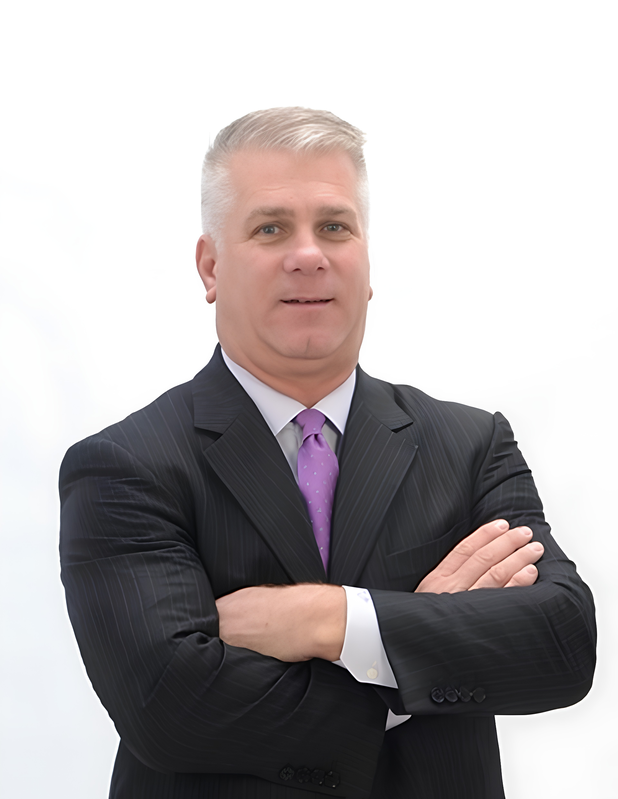
ROCKAWAY (NEW JERSEY): CCM Tuesday announced the appointment of Mr. Kevin Daly as Chief Commercial Officer. In this role, Mr. Daly will lead the company’s commercial organization, overseeing sales, marketing, business development, and customer engagement while advancing CCM’s long-term growth strategy.

As Chief Commercial Officer, Mr. Daly is responsible for driving revenue growth, shaping market strategy, strengthening customer and industry partnerships, and aligning CCM’s commercial initiatives with the company’s long-term vision. He will focus on expanding CCM’s market presence, optimizing go-to-market strategies, and delivering exceptional value to customers across the intermodal transportation industry.

Mr. Daly brings more than 35 years of leadership experience in the third-party logistics (3PL) and intermodal sectors. Throughout his career, he has built a strong track record of developing customer relationships, leading high-performing sales organizations, and delivering sustainable business growth. His deep understanding of the logistics marketplace and customer-focused approach position him to help guide CCM through an increasingly dynamic freight environment.

“Kevin’s experience, industry knowledge, and commitment to serving customers make him an outstanding addition to CCM’s leadership team,” said Paul Nazzaro, Chief Executive Officer of CCM. “As the intermodal market continues to evolve, Kevin’s strategic perspective and proven commercial leadership will help strengthen our customer partnerships, expand our market position, and support the next phase of CCM’s growth.”

Mr. Daly joins CCM at a pivotal time for the intermodal industry as freight flows become increasingly regionalized and supply chains continue to adapt to changing global trade patterns. Growing demand for flexible transportation solutions and interoperable chassis pools is creating new opportunities to improve equipment availability and supply chain efficiency across ports, rail terminals, and inland distribution centers. With Mr. Daly leading the company’s commercial strategy, CCM is well positioned to strengthen customer relationships and capitalize on these long-term industry trends.

“I am honored to join CCM and work alongside an exceptional team committed to delivering outstanding service and innovative solutions for our customers,” said Mr. Daly. “The intermodal industry continues to evolve, creating new opportunities to help customers improve efficiency and supply chain performance. I look forward to strengthening customer relationships, expanding our commercial capabilities, and helping drive CCM’s continued growth.”

Mr. Daly holds a Bachelor of Science in Business Management and Labor Relations from Niagara University.

About CCM

CCM offers the nation’s largest independent full-service intermodal chassis pool management solution. Consistently evolving to respond to the ever-changing needs of the marketplace, CCM delivers scalable and reliable solutions that enhance supply chains across major ports, carriers, and inland hubs throughout the U.S. Backed by nearly two decades of expertise, CCM offers a state-of-the-art technology platform to simplify chassis provisioning and support supply chain fluidity, as well as best-in-class comprehensive suite of services and solutions based on market dynamics. Through innovation, collaboration, and operational excellence, CCM meets the evolving need for safe, efficient, and dependable intermodal solutions that drive the future of intermodal logistics.

Lloyd’s Register contributes to industry debate on the future of nuclear propulsion in superyachts

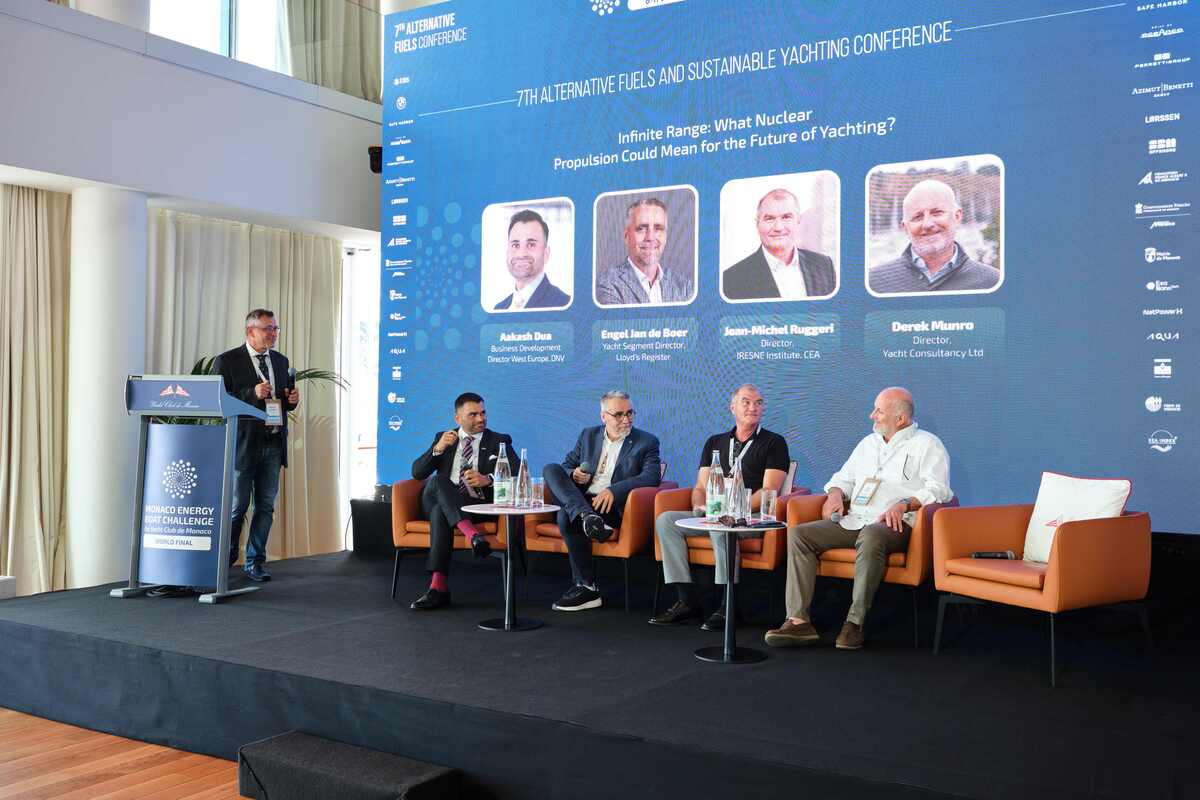
LONDON: Lloyd’s Register (LR) joined leading industry experts at the Monaco Energy Boat Challenge 2026 to discuss the potential role of nuclear propulsion in the future of yachting.

The discussion formed part of the conference panel, “Infinite Range: What Nuclear Propulsion Could Mean for the Future of Yachting?” held during the event at Yacht Club de Monaco.

Representing LR, Engel-Jan de Boer, Global Yacht Segment Manager, joined experts from across the maritime and energy sectors to explore the opportunities, challenges and regulatory considerations associated with nuclear-powered yachts.

The session examined how advances in small modular reactor technologies and changing expectations around sustainability, energy security and operational autonomy are prompting renewed interest in nuclear propulsion across the maritime sector.

While the concept of nuclear-powered yachts remains a long-term proposition, panellists agreed that the conversation is no longer theoretical.

Rapid developments in maritime nuclear technologies, combined with increasing pressure to decarbonise shipping and yachting, are encouraging designers, owners, regulators and classification societies to consider how such vessels could be safely designed, operated and regulated in the future.

Engel highlighted the importance of taking a balanced approach to the debate, recognising both the potential benefits and the challenges.

Potential advantages include virtually unlimited range, reduced dependence on fuel bunkering infrastructure, lower operational emissions and greater energy availability to support increasingly sophisticated onboard systems.

At the same time, issues relating to safety, regulation, crew competence, port acceptance, insurance, waste management and public perception will require careful consideration.

Engel-Jan de Boer, Global Yacht Segment Manager, Lloyd’s Register, said: “The yachting sector has always been at the forefront of innovation. While significant regulatory and societal challenges remain, it is important that the industry begins the conversation now.

“Classification societies have a key role to play in establishing the safety frameworks, risk assessments and assurance processes that will be required should nuclear propulsion become a viable option for superyachts.”

The Monaco Energy Boat Challenge provided an important forum for industry leaders to discuss future propulsion pathways and emerging technologies. LR’s participation reflects its continued commitment to supporting the safe adoption of innovative solutions that can contribute to the maritime sector’s long-term sustainability goals.

Gujarat unveils shipbuilding policy, eyes more than Rs 27,000 Cr investment

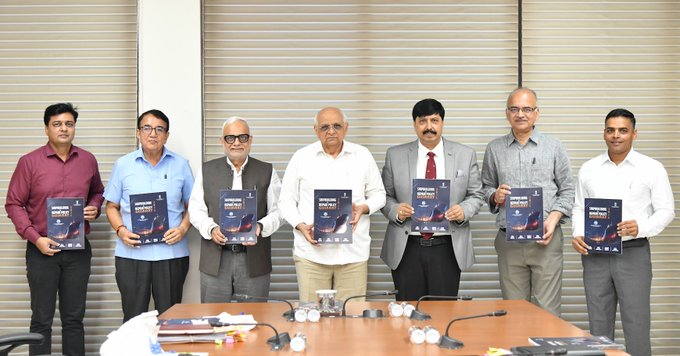
GANDHINAGAR: The Gujarat Government on Monday launched its shipbuilding policy aimed at developing the state into India’s leading maritime manufacturing hub through fiscal incentives, infrastructure development and skill creation, an official said.

Chief Minister Shri Bhupendra Patel launched the Gujarat Shipbuilding and Repair Policy 2026, which envisages setting up two Integrated Mega Shipbuilding Parks, increasing the state’s shipbuilding capacity to more than 50 lakh Deadweight Tonnage (DWT) and attracting investments worth over Rs 27,000 crore, a government release stated. DWT is the maximum weight a ship can carry safely.

The policy also aims to provide skill development and capacity-building training to over five lakh people. Speaking at the launch, Patel said, “This policy will create a globally competitive shipbuilding ecosystem in Gujarat and strengthen the state’s role in achieving the vision of Viksit Gujarat 2047 and Aatmanirbhar Bharat.” According to the state government, the policy aligns with the Centre’s Shipbuilding Financial Assistance Scheme 2025 and Maritime Vision 2047.

The policy seeks to develop a future-ready shipbuilding ecosystem by promoting marine equipment manufacturing, research and development, startups, ancillary industries and capacity building.

It is also aimed at promoting sustainable and green shipyards, developing smart shipyards, and encouraging startups and research and development in the shipbuilding sector.

Under the policy, two integrated mega shipbuilding parks will be developed with modern shipyard infrastructure, along with marine equipment manufacturing clusters, testing facilities, logistics support, research and development centres and skill development institutions.

The Centre has approved a mega greenfield shipbuilding cluster at Kuchhadi in Porbandar district. The Gujarat Maritime Board is preparing the detailed project report (DPR) for the project, which will pave the way for its implementation, the release said.

The cluster will accommodate two to three world-class shipyards along with a network of ancillary industries, and the project is expected to attract private investment of around Rs 23,700 crore.

To support the ecosystem, common marine and land-based infrastructure worth around Rs 3,300 crore will be developed with financial assistance from the Centre under the Shipbuilding Development Scheme (SbDS) and the Gujarat government, taking the total expected investment in the project to over Rs 27,000 crore.

According to the release, the common infrastructure will include breakwaters, floating cranes, heavy-lift ships, dredging facilities, harbour basin development, navigation channels, roads, electricity, water supply and other shared utility infrastructure.

The government stated that the integrated infrastructure would substantially reduce project costs for investors, speed up implementation and improve Gujarat’s competitiveness as a global shipbuilding and maritime manufacturing hub.

It also provides a wide range of fiscal and non-fiscal incentives to attract investment, including capital assistance, reimbursement of stamp duty, interest subvention, dredging assistance, subsidies for procurement from MSMEs, electricity tariff support and subsidies on water charges.

The policy also offers special incentives for marine equipment manufacturing clusters and additional benefits for early-bird investors commencing development within the prescribed timeline.

It provides a single-window clearance mechanism and a dedicated grievance redressal system to ensure time-bound approvals and faster implementation of projects.

The Gujarat Maritime Board has prepared detailed implementation guidelines to simplify application procedures for developers and investors and accelerate execution of projects, the release said.

DPA Kandla creates history of highest-ever single-day cargo handling

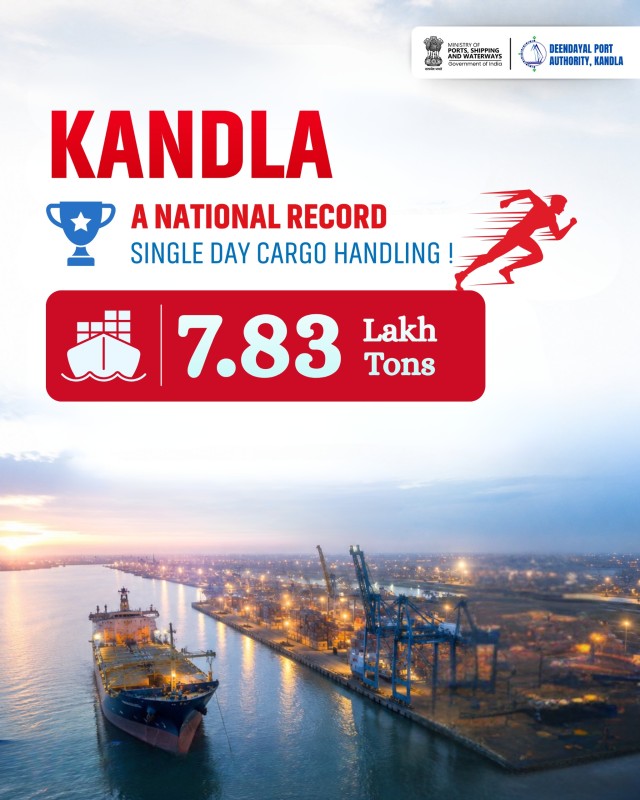
GANDHIDHAM : Deendayal Port Authority Kandla has once again rewritten history by breaking its own National Record of highest-ever single-day cargo handling. On 26th July 2026, DPA achieved an unprecedented 7,83,816 MTs of cargo handling in a single day, surpassing its own National Record of 7,78,570 MTs achieved on 17th June 2026.

Adding to this remarkable achievement, Offshore Oil Terminal, Vadinar also established a new 24-hour benchmark by handling 5,09,101 MTs of liquid cargo, exceeding its previous record of 5,07,397 MTs. On 17.06.2026. The record handling included 2,55,557 MTs of Crude Oil, 40,534 MTs of POL, and 2,13,010 MTs of LPO.

This historic achievement reflects the unwavering dedication, teamwork, and operational excellence of Team DPA and all our stakeholders. On this occasion, Shri Sushil Kumar Singh, IRSME, Chairman, DPA, congratulated all stakeholders, port users, exporters, importers, shipping lines, vessel agents, stevedores, Customs House Agents, terminal operators, trade associations, truck drivers, DPA officials, employees, Shramiks and every member of the Port fraternity whose dedicated efforts and unwavering support have made this landmark achievement possible.

CONCOR and FIEO hold high-level discussions to strengthen multimodal logistics for Indian exporters

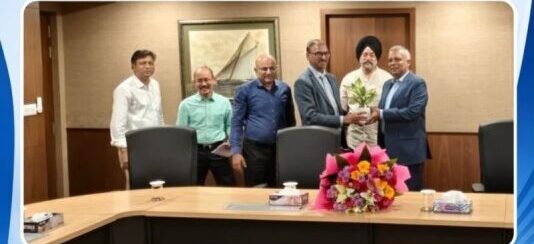
NEW DELHI : In a significant step towards enhancing logistics efficiency and supporting India’s growing export ecosystem, a delegation from the Federation of Indian Export Organisations (FIEO), led by Dr. Ajay Sahai, Director General & CEO, FIEO, met Shri Sanjay Swarup, Chairman & Managing Director, Container Corporation of India Ltd. (CONCOR) to discuss key issues relating to multimodal logistics services in the country.

The interactive meeting focused on strengthening collaboration between CONCOR and the export community, with discussions covering ways to improve logistics efficiency, enhance supply chain connectivity, reduce transit time, and provide seamless end-to-end transportation solutions for exporters.

During the meeting, the CMD of CONCOR highlighted several customer-centric initiatives undertaken by the company in recent years to improve service delivery and operational efficiency. These include expansion of multimodal logistics infrastructure, digitalisation of customer services, improved rail-road connectivity, enhanced terminal operations, increased first- and last-mile connectivity, and customised logistics solutions designed to meet the evolving requirements of India’s export-import trade.

The discussions also covered the importance of integrated logistics in reducing overall logistics costs and improving the global competitiveness of Indian exports. Members of the FIEO delegation shared valuable feedback from the exporting community and discussed opportunities for further collaboration to facilitate faster cargo movement, improve container availability, and strengthen multimodal logistics networks across the country.

Senior officials from CONCOR, including Director (Projects & Services) and Director (International Marketing & Operations), along with other officials, participated in the deliberations and exchanged views with the FIEO delegation on enhancing customer experience and expanding logistics support for exporters.

The meeting reaffirmed CONCOR’s commitment to working closely with industry stakeholders and export promotion organisations to build a more efficient, reliable, and technology-driven logistics ecosystem aligned with the Government of India’s vision of improving Ease of Doing Business and boosting India’s global trade competitiveness.

With India’s exports continuing to grow and the emphasis on multimodal connectivity increasing under initiatives such as PM GatiShakti and the National Logistics Policy, closer engagement between logistics service providers and exporters is expected to play a crucial role in creating a resilient and globally competitive supply chain.

FIEO proposes Govt intervention to address shipping disruptions amid West Asia Crisis

NEW DELHI : The Federation of Indian Export Organisations (FIEO) has urged the Government of India to take immediate measures to address the growing shipping and logistics challenges arising from the continuing crisis in West Asia, warning that escalating freight rates, reduced direct vessel connectivity and rising dependence on foreign transhipment hubs are adversely impacting the competitiveness of Indian exports.

In a letter addressed to Union Minister of Ports, Shipping and Waterways Shri Sarbananda Sonowal, FIEO has sought an urgent meeting with the Ministry to discuss both immediate relief measures and long-term strategies to strengthen India’s maritime logistics ecosystem.

FIEO Director General Dr. Ajay Sahai said exporters are facing mounting shipping-related challenges that require timely government intervention. He noted that the organisation intends to engage with the Ministry to identify practical solutions to the issues affecting India’s export trade.

The exporters’ body has highlighted that the ongoing geopolitical tensions in West Asia and the Red Sea region have significantly disrupted global shipping networks. As a result, several mainline shipping services have reduced direct calls at Indian ports, compelling a larger share of export cargo to move through overseas transhipment hubs such as Colombo, Singapore and Jebel Ali.

According to FIEO, the increased reliance on feeder services has resulted in longer transit times, additional cargo handling, higher logistics costs, irregular sailing schedules and container shortages, creating uncertainty for exporters and affecting supply chain efficiency.

Expressing concern over the continuing increase in ocean freight charges, FIEO pointed to the latest announcement by global shipping line CMA CGM, which has introduced a fresh Peak Season Surcharge (PSS) effective from 15 August on cargo originating from India, Pakistan, Sri Lanka, the Middle East Gulf and Red Sea ports destined for the US East Coast, Gulf Coast and inland destinations. The surcharge has been fixed at US$5,000 per container across major cargo categories.

FIEO stated that these developments come at a crucial time when India is pursuing an ambitious export growth agenda with the objective of achieving US$2 trillion in merchandise and services exports by 2032. The organisation emphasised that reliable, predictable and cost-effective maritime connectivity will be critical to achieving this national target.

To address the situation, FIEO has urged the Government to:

Rationalise freight rates and improve transparency in freight and contingency charges.

Facilitate the restoration of direct mother vessel calls at Indian ports.

Ensure adequate vessel availability and improve schedule reliability.

Develop contingency mechanisms to minimise the impact of future geopolitical disruptions on maritime trade.

Work closely with shipping lines and port authorities to strengthen India’s maritime resilience and reduce exporters’ logistics costs.

FIEO has stressed that timely policy intervention will help stabilise supply chains, contain rising logistics costs and safeguard the global competitiveness of Indian exporters in an increasingly uncertain international trade environment.

Why Reliability has become Shipping’s Most Valuable Currency

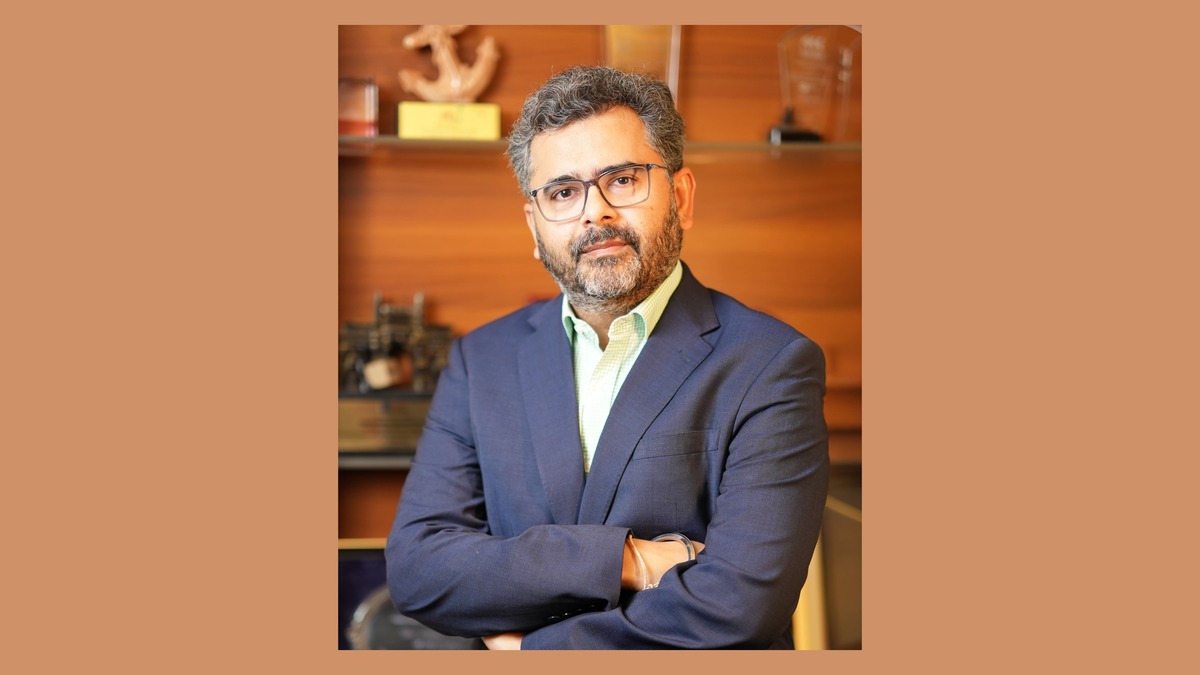
By Mr.Brijesh Parekh, Director, Parekh Global

In global trade, cost has always been a key factor in choosing a logistics partner. Today, however, reliability is becoming just as important—if not more. Businesses can absorb small fluctuations in freight rates, but missed delivery timelines, shipment disruptions and inconsistent service often come at a much higher cost. For exporters and importers alike, reliability has become the foundation of long-term business relationships.

The global supply chain has changed dramatically over the last few years. From geopolitical tensions and port congestion to weather-related disruptions and shifting trade routes, uncertainty has become a part of everyday business. In this environment, companies are no longer looking for the cheapest option. They want predictability. They want to know where their cargo is, when it will arrive and how quickly unexpected issues can be resolved.

That shift has raised the expectations from shipping companies in India. Businesses now expect logistics partners to do much more than move cargo. They need accurate documentation, proactive communication, customs expertise and contingency planning that keeps supply chains moving even when disruptions occur.

Reliability Is Built Before a Shipment Moves

Reliable shipping begins long before a container reaches a port. It starts with route planning, regulatory compliance, documentation, warehousing and constant coordination across multiple stakeholders. Even a minor documentation error can delay a shipment, increase costs and impact customer commitments.

Technology has certainly improved shipment visibility, but digital tools alone cannot replace experience. When unexpected situations arise, informed decision-making and strong operational networks often make the difference between a delayed shipment and one that stays on schedule.

Businesses are also placing greater value on integrated supply chain solutions. Working with an experienced logistics company in India that can manage freight, warehousing, customs support and distribution through a single ecosystem reduces complexity and improves consistency across the supply chain.

For exporters expanding into new markets, trusted freight forwarders in India have become strategic partners rather than service providers. Their role extends beyond transportation to helping businesses navigate changing regulations, optimise transit times and minimise operational risks.

Shipping has always been about moving goods from one destination to another. Today, it is equally about delivering confidence. When customers receive their shipments on time, with complete visibility and without avoidable disruptions, trust grows stronger. In a world where supply chains are constantly being tested, reliability is no longer just a competitive advantage—it has become shipping’s most valuable currency.

Author:

Mr. Brijesh Parekh, Director, Parekh Global