Home Blog Page 193

Merchant Shipping Act, 2025 strengthens Seafarer Safety Framework amid emerging Maritime Security Risks

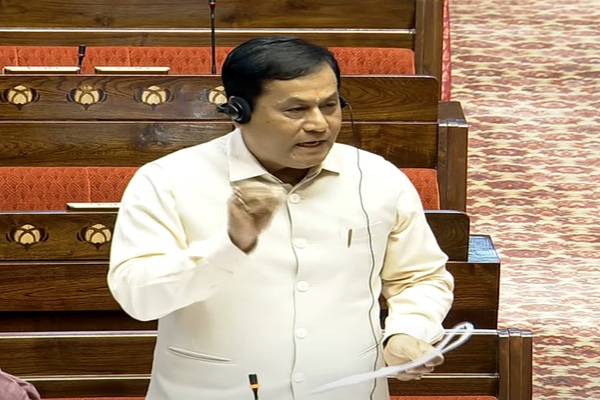
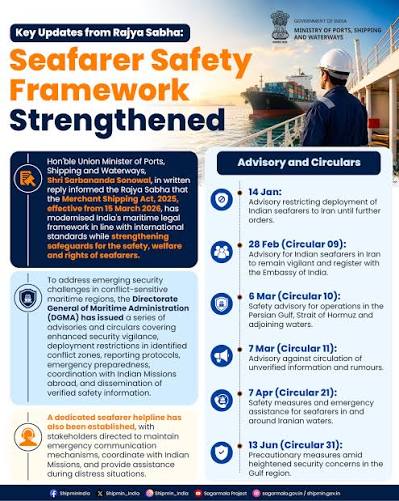
NEW DELHI : Union Minister of Ports, Shipping and Waterways, Shri Sarbananda Sonowal, informed in a written reply to the Rajya Sabha that, reinforcing India’s commitment to the safety, welfare and rights of its seafarers, the Government has significantly strengthened the country’s maritime regulatory framework through the implementation of the Merchant Shipping Act, 2025, which came into force on March 15, 2026. The legislation modernises India’s maritime laws in line with contemporary international standards while introducing enhanced legal safeguards to protect Indian seafarers, particularly in an increasingly complex global security environment.
imageMerchant Shipping Act 2025 strengthens Seafarer Safety Merchant Shipping Act, 2025 strengthens Seafarer Safety Framework amid emerging Maritime Security Risks

The new Act establishes a comprehensive statutory framework for safeguarding the rights and welfare of seafarers. It introduces legal protections for abandoned seafarers, strengthens the regulation and oversight of Recruitment and Placement Service (RPS) agencies, and provides a robust mechanism for implementing evolving international maritime labour standards, reinforcing India’s commitment to the Maritime Labour Convention (MLC) and other global conventions.

Recognising the growing geopolitical tensions affecting international shipping routes, the Directorate General of Maritime Administration (DGMA) under the Ministry of Ports, Shipping and Waterways has issued a series of advisories and circulars to safeguard Indian seafarers operating in conflict-sensitive maritime regions, particularly around Iran, the Persian Gulf and the Strait of Hormuz.

The advisories outline comprehensive precautionary measures, including heightened security vigilance, mandatory reporting requirements, round-the-clock emergency contact mechanisms, coordination with Indian Missions abroad, restrictions on deployment of Indian seafarers in identified conflict zones, emergency preparedness protocols, and dissemination of verified safety information to seafarers and maritime stakeholders.

Among the key measures issued during 2026 are advisories directing shipping companies to suspend deployment of Indian seafarers to Iran until further orders, urging seafarers already in the region to register with the Embassy of India and remain in constant contact with company representatives and Indian diplomatic missions. The DGMA has also mandated continuous monitoring of Indian crews in affected areas and immediate reporting of their status.

Special safety advisories issued for vessels operating in the Persian Gulf, Strait of Hormuz and adjoining waters require strict compliance with the International Ship and Port Facility Security (ISPS) Code, establishment of 24×7 emergency response systems, enhanced liaison with Indian Missions, emergency preparedness drills, and provision of psychological counselling support to seafarers and their families wherever necessary.

To curb misinformation during periods of heightened security, the DGMA also issued a dedicated advisory directing maritime stakeholders and the seafarer community to refrain from circulating unverified information, rumours, fake videos or speculative reports on social media, and instead rely solely on authenticated information issued by official authorities.

Further advisories issued during April and June 2026 reiterated enhanced security protocols for Indian seafarers ashore in Iranian ports and onboard vessels operating in or around Iranian waters. Shipping companies and Recruitment and Placement Service Licence (RPSL) holders have been instructed to restrict deployment of Indian seafarers to conflict-affected areas, except for emergency crew changes undertaken with the seafarer’s consent, while ensuring continuous monitoring, reporting and dissemination of verified security updates.

To strengthen emergency response capabilities, the Government has also established a dedicated helpline for Indian seafarers requiring assistance. Shipping companies and maritime stakeholders have been directed to maintain emergency communication systems, coordinate closely with Indian Missions and Consular authorities, monitor official advisories on a real-time basis, facilitate assistance to affected seafarers, and provide timely support during distress situations.

The combined measures under the Merchant Shipping Act, 2025 and the DGMA’s proactive advisories reflect India’s comprehensive approach towards ensuring the safety, security and welfare of its seafarers while enhancing the resilience of the country’s maritime sector against emerging global security challenges.
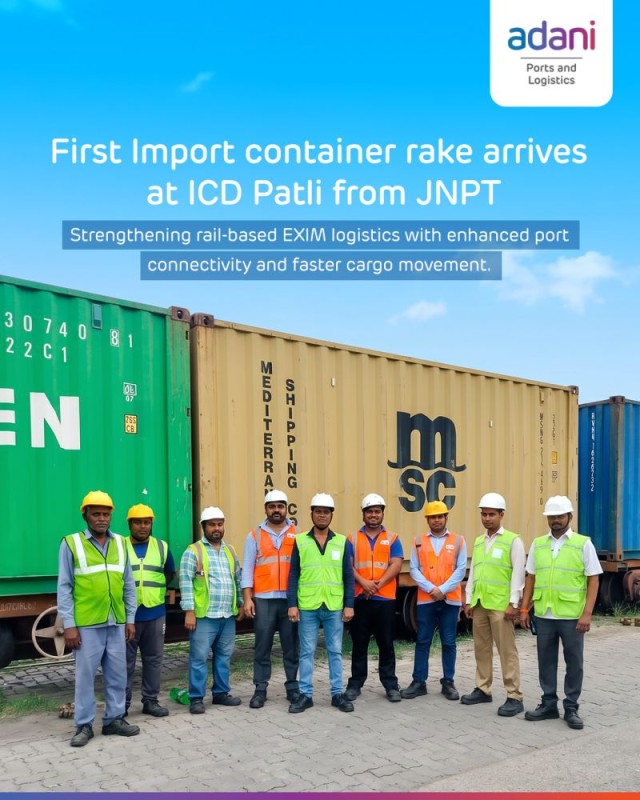
APSEZ achieves milestone at ICD Patil with the arrival of first import container rake from JNPA

NEW DELHI : Adani Ports and Special Economic Zone Ltd. (APSEZ) has achieved a significant milestone at its Inland Container Depot (ICD) Patli with the arrival of the first import container rake from Jawaharlal Nehru Port Authority (JNPA). The landmark movement marks a major step towards strengthening multimodal logistics connectivity between India’s premier gateway port and the National Capital Region (NCR).

The inaugural import rake is expected to enhance the efficiency of cargo movement by providing a seamless rail-based transportation solution for importers across NCR and North India. By reducing dependence on road transport, the service will help lower transit times, optimize logistics costs, and contribute to more sustainable supply chain operations.

Strategically located near Gurugram, ICD Patli serves as a key logistics hub catering to industrial and commercial clusters across Delhi-NCR, Haryana, Punjab, Rajasthan, Uttar Pradesh, and other northern states. The new rail connection with JNPA is expected to improve cargo evacuation from the port while ensuring faster and more reliable inland distribution of imported goods.

The milestone further reinforces Adani Ports’ commitment to developing an integrated multimodal logistics network that combines port, rail, and inland container infrastructure to offer end-to-end supply chain solutions. It also aligns with the Government of India’s vision of promoting rail-led freight transportation, enhancing logistics efficiency under the PM Gati Shakti National Master Plan, and reducing the country’s overall logistics costs.

With the commencement of import rake operations from JNPA, ICD Patli is poised to play an increasingly important role in facilitating EXIM trade, improving cargo accessibility for businesses in North India, and strengthening India’s multimodal logistics ecosystem.

Commerce Secretary highlights India’s strong economic performance and record USD 863.1 billion exports at WTO trade policy review

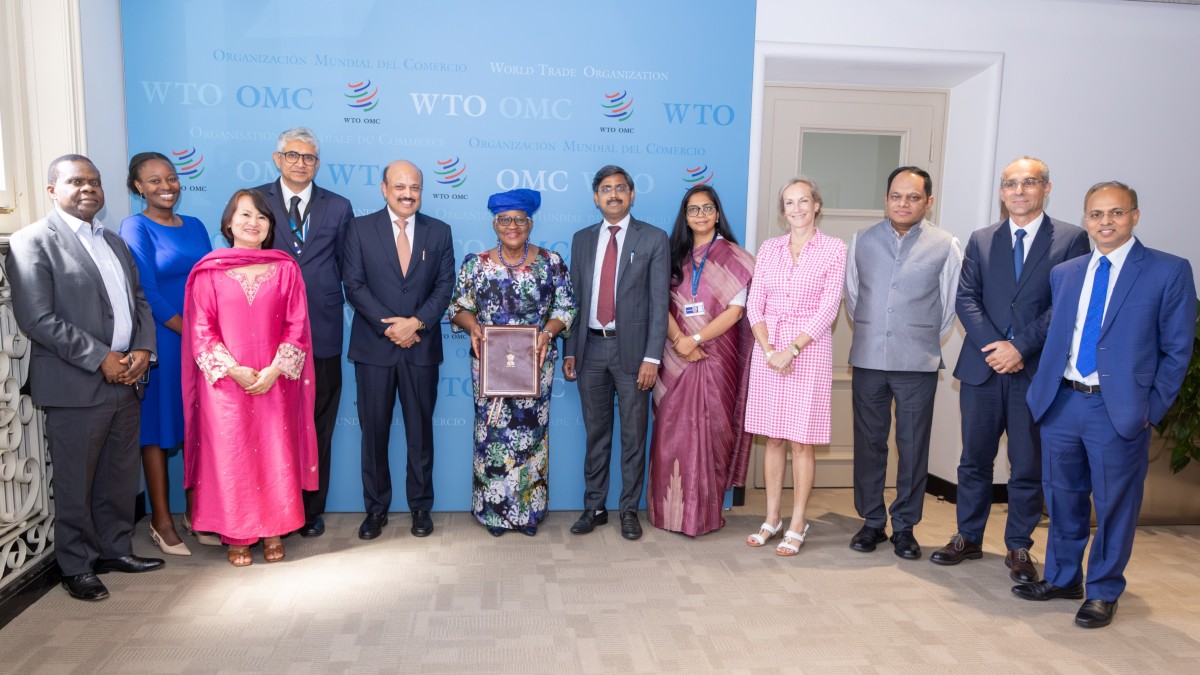
NEW DELHI : India’s 8th Trade Policy Review (TPR) at the World Trade Organization (WTO) commenced on Tuesday in Geneva, with Commerce Secretary Shri Rajesh Agarwal leading the Indian delegation and reaffirming the country’s commitment to a transparent, rules-based, inclusive and development-oriented multilateral trading system. The Trade Policy Review meeting, being held on 21 and 23 July 2026, provides WTO Members an opportunity to assess India’s trade and related policies during the review period from 1 January 2021 to 31 December 2025.

In his opening statement, the Commerce Secretary highlighted India’s strong economic performance, with the country recording an average annual growth of nearly 8 per cent during the review period despite an exceptionally challenging global environment. He noted that India’s exports reached a record USD 863.1 billion in 2025-26 and emphasised that India is undertaking the unprecedented task of advancing the prosperity of nearly one-fifth of humanity amid global uncertainty, technological disruption, supply chain realignments and rising protectionism.

Shri Agarwal underlined that Aatmanirbhar Bharat is strengthening domestic capabilities while integrating India more deeply into global value chains. He highlighted key reforms undertaken through the Jan Vishwas Initiative, trade facilitation measures, digital customs, logistics modernisation, quality infrastructure, Digital Public Infrastructure, artificial intelligence, innovation, sustainability, agricultural resilience, expanding regional trade agreements, and inclusive development through South-South Cooperation and the Indian Technical and Economic Cooperation (ITEC) Programme. He also reaffirmed India’s support for balanced, development-oriented WTO reforms that preserve and strengthen the multilateral trading system.

In her opening remarks, Trade Policy Review Body (TPRB) Chair Ambassador Nelle Pepe Tavita Levy welcomed the Indian delegation and highlighted India’s remarkable growth as one of the fastest-growing major economies progressing towards the vision of Viksit Bharat by 2047. She recognised India’s leadership in digitally delivered services exports and Digital Public Infrastructure reforms that have strengthened financial inclusion and trade facilitation. She also welcomed India’s acceptance of the WTO Agreement on Fisheries Subsidies, marked by the deposition of its Instrument of Acceptance the previous day, and appreciated India’s timely responses to all advance written questions, describing them as a demonstration of transparency under the Trade Policy Review Mechanism.

The discussant, H.E. Mr. Guilherme de Aguiar Patriota of Brazil, participating in his personal capacity, commended India’s structural reforms, particularly the Goods and Services Tax (GST) for unifying the national market, digital trade reforms, expanding export strategy and recent regional trade agreements. He also appreciated India’s Duty-Free Tariff Preference Scheme for Least Developed Countries (LDCs) and its longstanding contribution to the WTO amid evolving multilateral challenges. He observed that India’s Digital Public Infrastructure and development-oriented reforms offer valuable lessons for developing countries and LDCs pursuing digital transformation.

During the meeting, 65 WTO Members are participating in the discussion on various aspects of India’s trade policy. Several Members recalled the value of their trade and economic relationship with India and broadly appreciated the country’s constructive engagement in the multilateral trading system and its strong economic resilience. Members also highlighted India’s achievements in Digital Public Infrastructure, customs and trade facilitation modernisation, innovation and startup initiatives, expanding regional trade agreements, and efforts to integrate MSMEs into global value chains. They also welcomed India’s acceptance of the WTO Agreement on Fisheries Subsidies.

Several Members sought further clarifications on issues relating to trade and investment regimes, certain trade policy measures and practices, Quality Control Orders (QCOs), trade remedy measures and matters relating to ongoing WTO reforms.

Alongside the Trade Policy Review, India organised an exhibition showcasing a diverse range of Indian products, highlighting the country’s craftsmanship, innovation and quality. Traditional papier-mâché coasters presented as souvenirs were warmly appreciated by WTO delegates as a reflection of India’s rich artisanal heritage.

India’s Trade Policy Review meeting will conclude on 23 July 2026, following further discussions among WTO Members and India’s responses to the issues raised during the review.

DGFT proposes RCMC exemption for low-value exports to boost MSME and E-Commerce Shipments

NEW DELHI : In a move aimed at simplifying export procedures for Micro, Small and Medium Enterprises (MSMEs), artisans, and first-time exporters, the Directorate General of Foreign Trade (DGFT) has proposed easing export norms by exempting low-value export consignments from the requirement of obtaining a Registration-cum-Membership Certificate (RCMC).

In a Trade Notice issued on 20 July, the DGFT invited comments from exporters, industry associations and other stakeholders on a proposed amendment to Paragraph 2.57 of the Foreign Trade Policy (FTP) 2023. Stakeholders have been given 10 days to submit their feedback before the proposal is finalized.

Under the proposed amendment, exporters shipping goods with a Free on Board (FOB) value of up to ₹10,000 would no longer be required to obtain an RCMC or Certificate of Registration while applying for import or export authorisations under the FTP or while availing benefits and concessions under the policy. However, the exemption will not apply to goods classified as “Restricted” under the ITC (HS) classification.

Currently, exporters are generally required to secure an RCMC, issued by Export Promotion Councils (EPCs) or other designated authorities, to access various authorisations, incentives and benefits under the Foreign Trade Policy. The certificate serves as proof of an exporter’s registration with the relevant export promotion body.

According to the DGFT, the proposed amendment seeks to introduce a de minimis exemption for low-value export consignments, particularly those shipped through postal services, courier operators and e-commerce platforms. The initiative is expected to significantly reduce procedural compliance for small exporters while encouraging greater participation in cross-border e-commerce.

The proposal is aligned with the Government of India’s broader objective of expanding India’s export base by making international trade more accessible to MSMEs, artisans, start-ups and individual entrepreneurs. By lowering entry barriers for small-value shipments, the measure is expected to facilitate quicker market access, promote digital exports and strengthen India’s growing e-commerce export ecosystem.

Industry stakeholders believe the proposed relaxation could provide a major boost to small businesses by reducing administrative burdens, lowering compliance costs and encouraging more enterprises to participate in global trade through emerging export channels.

The DGFT stated that the proposed amendment has been prepared under the stakeholder consultation provisions of the Foreign Trade Policy, and feedback received during the consultation period will be considered before the final notification is issued.

Government expands FTAs, export promotion measures to diversify export markets

NEW DELHI : Minister of State for Ministry of Commerce and Industry, Shri Jitin Prasada informed in a written reply in Lok Sabha, that Government has undertaken several initiatives to diversify export markets in light of evolving global geopolitical and economic developments. These include expanding network of Free Trade Agreements (FTAs) and Comprehensive Economic Partnership/Cooperation Agreements (CEPAs/CECAs); pursuing trade negotiations with major economies and regions to secure preferential market access for exporters; undertaking focused export promotion activities through Export Promotion Mission, Indian Missions overseas, Export Promotion Councils (EPCs), industry associations and other stakeholders; implementing district and sector-specific export promotion initiatives under the Districts as Export Hubs (DEH) initiative; and capacity-building programmes.

A list of trade agreements signed in the past few years is at Annexure I. Further, a list of ongoing FTAs is at Annexure II.

Free Trade Agreements (FTAs) are entered into with the concerned trading partner countries primarily with the aim of increasing bilateral trade through enlarging the scope of market access and building on the trade complementarities for increasing trade and investment, thereby providing enhanced export potential, creating benefits for industry and farmers and enhancing job opportunities. The FTAs facilitate preferential market access for labour intensive sector products to boost growth and employment opportunities in sectors like textile, apparel and leather goods. FTAs endeavor to deliver a comprehensive, balanced, broad based and equitable agreement based on the principle of fairness and reciprocity and overall benefit to all the stakeholders.

The FTAs include provisions on Technical Barriers to Trade to promote mutual understanding of each sides’ standards, technical regulations, and measures to enhance transparency. These provisions facilitate smoother and more effective access to export markets for Indian goods. Government engages with its trading partners through bilateral, regional and multilateral mechanisms to address non-tariff barriers (NTBs) and improve market access for Indian exports. These includes holding regular meetings and direct talks with partners through Joint Committees and Working Groups established under trade agreements to solve specific export problems to align with emerging global requirements, consultations with partner countries to resolve market access issues, technical discussions on sanitary and phytosanitary (SPS) measures, technical barriers to trade (TBT), standards, conformity assessment procedures and regulatory requirements and continuous engagement with stakeholders to identify and address market access concerns in key export destinations, including the European Union, Africa and Southeast Asia.

Government has undertaken various policy and facilitation measures to promote cross-border e-commerce exports, particularly for Micro, Small and Medium Enterprises (MSMEs), startups, artisans and other small exporters. Key initiatives include:

Export Promotion Mission (EPM): The Export Promotion Mission (EPM) was launched in 2025 to strengthen India’s export competitiveness with a total outlay of
₹25,060 crore for the period FY 2025–26 to FY 2030–31. The EPM shall operate through two integrated sub-schemes:

NIRYAT PROTHSAHAN, focused on improving access to trade finance through instruments such as interest subvention, export factoring, collateral guarantees for export credit, credit guarantee for e-commerce exporters, and credit enhancement support; and
NIRYAT DISHA, focused on other trade enablers such as export quality and compliance support, international branding and packaging, market access initiatives, export logistics & warehousing, and trade intelligence.
Implementation of the E-Commerce Export Hub (ECEH) initiative on a pilot basis to create an integrated ecosystem for e-commerce exports by facilitating logistics, customs clearances and other export-related services.
The District Export Hub (DEH) Initiative provides the district-level framework for decentralised export promotion. In each district, the effort is to identify and prioritise 3–5 products/services with viable export potential for targeted interventions.
Reforms to simplify exports through courier mode and reduce compliance burden:
The Reserve Bank of India (RBI) has relaxed export reconciliation requirements for small-value exports up to ₹10 lakh by permitting closure of export transactions in the Export Data Processing and Monitoring System (EDPMS) on the basis of declarations furnished by exporters and reconciliation undertaken by banks.
· The per-consignment value limit of ₹10 lakh for exports through courier mode has been removed vide DGFT Notification No. 67/2025–26 dated March 27, 2026 and CBIC Notification No. 34/2026 dated March 31, 2026.

· CBIC Notification No. 33/2026 dated March 31, 2026 has simplified reverse logistics by facilitating the re-import of export rejects and returned goods in respect of cross-border e-commerce exports.

PM Gati Shakti National Master Plan (NMP) was launched to facilitate data-based decisions related to integrated planning of multimodal infrastructure, thereby reducing logistics cost.
Refund of Duties and Taxes on Exported Products (RoDTEP) Scheme aims to refund currently un-refunded duties/taxes/levies borne on the export product, including prior stage cumulative indirect taxes on goods and services used in production of the exported products.
The Ministry of Micro, Small and Medium Enterprises has established 65 Export Facilitation Centers (EFCs) in its field offices across the country with the aim of providing requisite mentoring and handholding support to MSMEs in exporting their products and services.
International Cooperation (IC) Scheme of Ministry of MSME aims to build capacity of MSMEs by facilitating their participation in international exhibitions/fairs/conferences/seminar/buyer-seller meets abroad as well as reimbursement of various costs.

India–UK CETA to unlock New Trade Opportunities; Agile Supply Chains will be key to realising full benefits: DP World

MUMBAI: The signing of the India–UK Comprehensive Economic and Trade Agreement (CETA) marks a landmark moment in the economic relationship between the two countries and is expected to significantly boost bilateral trade, investment, and business opportunities. While the agreement will provide Indian exporters with preferential market access by eliminating tariffs on the vast majority of exports, industry experts believe that the true benefits will depend on the ability of businesses to build agile, resilient, and digitally connected supply chains.

According to industry estimates, the agreement will eliminate tariffs on 99% of India’s exports, covering nearly 100% of the trade value, thereby strengthening India’s export competitiveness in the UK market. The pact is also expected to expand bilateral trade to USD 100 billion by 2030, creating significant opportunities across key sectors such as automotive, engineering, textiles, leather, footwear, food products, and manufacturing.

Commenting on the development, Manisha Malhotra, Vice President – Freight Forwarding, Logistics, SCO (India), DP World, said:

“The landmark agreement is expected to significantly strengthen bilateral trade by eliminating tariffs on 99% of India’s exports, covering almost 100% of the trade value, thereby enhancing India’s export competitiveness. The agreement is also expected to expand bilateral trade, attract investment, create new opportunities for businesses, and boost bilateral trade to USD 100 billion by 2030.

Trade agreements are often measured by the tariffs they remove. Their true success, however, is determined by the capabilities they unlock.

The UK–India Comprehensive Economic and Trade Agreement marks an important shift in the trade relationship between two economies with complementary strengths. Preferential access across sectors including automotive, engineering, textiles, leather, footwear and food products has the potential to accelerate India’s integration into higher-value global value chains. But tariff concessions alone will not drive competitiveness.

Businesses will need supply chains that are agile, compliant, and connected. Meeting rules of origin requirements, maintaining documentation integrity, navigating customs efficiently and synchronising production with multimodal transport networks will become just as critical as manufacturing excellence itself.

At DP World, we are well positioned to support this next phase of UK–India trade. Our globally integrated freight forwarding network spans over 300 offices worldwide and is backed by owned multimodal assets across India and more than 80 countries. Combined with end-to-end digital visibility and strong local execution, these capabilities enable us to help customers build more resilient, agile and efficient supply chains—transforming preferential market access into reliable trade flows and long-term growth.”

The agreement is expected to further deepen economic cooperation between India and the United Kingdom by encouraging greater cross-border investments, strengthening manufacturing competitiveness, and enabling Indian businesses to integrate more effectively into global value chains.

With international trade becoming increasingly dependent on speed, compliance, visibility, and multimodal connectivity, logistics providers are expected to play a pivotal role in helping exporters maximise the advantages offered by the new trade framework. Industry observers believe that companies capable of delivering integrated freight forwarding solutions, digital supply chain visibility, and seamless multimodal logistics will be instrumental in translating the agreement’s tariff benefits into sustainable trade growth.

As India prepares for the next phase of export-led expansion under the India–UK CETA, the focus is expected to shift beyond market access towards creating efficient, resilient, and technology-driven supply chains that can support long-term bilateral trade growth and strengthen India’s position in global commerce.

India–UK CETA opens New Tracks for the Indian Railway industry

NEW DELHI: The Chamber of Railway Industries (Rail Chamber) welcomes the coming into force of the India–United Kingdom Comprehensive Economic and Trade Agreement (CETA), describing it as a transformative milestone that has the potential to strengthen India’s railway manufacturing ecosystem, accelerate technology partnerships, and position the country as a global hub for rail exports.

With zero-duty market access for nearly 99% of India’s exports to the UK, the agreement creates fresh opportunities for Indian manufacturers to expand exports of railway components, engineering products, electrical equipment, fabricated steel structures, signalling hardware, rolling stock sub-systems, and maintenance technologies to one of the world’s most advanced rail markets.

India’s railway industry has undergone a remarkable transformation over the past decade, driven by unprecedented public investment, large-scale infrastructure development, and the Government’s vision of Make in India and Atmanirbhar Bharat. As Indian companies increasingly meet global quality and safety standards, CETA provides a timely platform to showcase India’s manufacturing capabilities to the UK and beyond.

For the railway sector, the agreement should not be viewed merely as a trade pact but as a strategic partnership that can catalyse long-term collaboration in high-speed rail, digital signalling, rolling stock manufacturing, predictive maintenance, railway electrification, hydrogen propulsion, battery technologies, station redevelopment, freight logistics, and sustainable transport solutions.

The Rail Chamber believes that the next phase of India–UK cooperation should focus on joint innovation rather than traditional buyer-seller relationships. Indian manufacturers possess significant cost competitiveness, engineering expertise, and large-scale production capabilities, while the UK brings strengths in railway research, advanced signalling, safety systems, asset management, digital technologies, and innovation. Together, these complementary strengths can create globally competitive railway solutions for emerging and developed markets alike.

The Agreement’s emphasis on digital trade, professional services, intellectual property, customs facilitation, and regulatory cooperation is particularly significant for the railway industry, where cross-border collaboration increasingly depends on integrated engineering, software, certification, design services, and lifecycle asset management.

The Rail Chamber also sees substantial opportunities for Indian MSMEs, many of which form the backbone of the railway supply chain. Simplified certification procedures, self-certification of Certificates of Origin, and reduced compliance costs can enable smaller manufacturers to integrate into global value chains and access new export markets with greater confidence.

However, the success of CETA will ultimately depend on implementation. Indian railway manufacturers will need support in understanding market access requirements, technical standards, procurement processes, quality certifications, intellectual property frameworks, and business opportunities within the UK railway ecosystem. Industry associations, export promotion bodies, and government agencies must work together to ensure that businesses—especially MSMEs—can effectively utilise the Agreement.

Commenting on the development, Dr. Vinod Shah, Director General, Chamber of Railway Industries, said:

“The India–UK CETA represents far more than a free trade agreement. It opens a strategic corridor for innovation, investment, technology collaboration, and export-led growth for India’s railway industry. As India emerges as one of the world’s fastest-growing railway markets, we have an unprecedented opportunity to build globally competitive partnerships that strengthen manufacturing, create high-quality employment, and position India as a trusted supplier of railway products and technologies worldwide. The Rail Chamber looks forward to working closely with governments, industry, research institutions, and international partners to ensure that the Indian railway sector fully harnesses the opportunities created by this landmark agreement.”

The Rail Chamber remains committed to facilitating industry dialogue, promoting international collaborations, supporting export-oriented manufacturing, and helping Indian railway enterprises leverage the full potential of the India–UK CETA. The Agreement marks not only a new chapter in bilateral trade but also an important step towards building a globally integrated, innovation-driven, and future-ready railway industry for both nations.

JSW Infra’s Q1 profit slips 8% despite strong growth in revenue

MUMBAI : JSW Infrastructure, a JSW Group Company, reported an 8.2% year-on-year decline in consolidated net profit to ₹357.6 crore for the first quarter of FY2027, despite posting double-digit growth in revenue and operating earnings.

The infra firm said that its revenue from operations rose 18.1% to ₹1,444.8 crore from ₹1,223.8 crore a year earlier. EBITDA also increased 15.9% to ₹673.7 crore, while the EBITDA margin narrowed to 46.6% from 47.5% in the corresponding quarter last year.

Cargo volumes support revenue growth

The company said that it handled 31 million tonnes of cargo during the quarter, up 6% year-on-year. It said the increase was primarily driven by Jaigarh Port, supported by higher anchor customer volumes and increased third-party cargo throughput from newer cargo segments.

The growth was further aided by improved performance at Dharamtar Port, South West Port and Ennore Bulk Terminal, along with contributions from interim operations at the Tuticorin Terminal.

However, lower volumes at the Fujairah Liquid Terminal, owing to a challenging operating environment in the West Asia, partly offset the gains. Operational revenue from the ports business increased 11% year-on-year to ₹1,208 crore, driven by higher cargo volumes and a favourable product mix.

Operational milestones during the quarter

During the quarter, JSW Infrastructure expanded cargo handling capacity at South West Port, Goa and the Mangalore Container Terminal. It also commenced interim operations at the Kolkata Container Terminal, began commercial operations at the Arakkonam GCT, and secured environmental clearance and rail connectivity approval for the Murbe Port project in Maharashtra.

The company also added that it completed a ₹7,503-crore qualified institutional placement (QIP) and received Moody’s Baa3 investment-grade rating with a Stable Outlook.

Guidance and expansion plans

JSW Infrastructure said it is targeting consolidated operating revenue of ₹6,850 crore and operating EBITDA of ₹3,000 crore for FY2027.

The company reiterated its plan to expand cargo handling capacity to 400 million tonnes per annum by FY2030 or earlier, from the current 186 MTPA, backed by a ₹30,000-crore capital expenditure plan for ports. It has also earmarked ₹9,000 crore for expanding its logistics business.

Balance sheet

As of June 30, 2026, the company reported gross debt of ₹7,094 crore, cash and bank balances of ₹9,863 crore, resulting in a net cash position of ₹2,769 crore. Shares of JSW Infrastructure ended 0.85% lower at ₹345.50 on the NSE on Tuesday, ahead of the earning announcement.

Sinotrans expands China–India Shipping Network with new CIW2 Service

SHANGHAI : Chinese logistics and shipping major Sinotrans has strengthened its presence on the rapidly growing China–India trade lane with the launch of its new CIW2 service, further enhancing direct container connectivity between major ports in China, Southeast Asia, Sri Lanka and India’s west coast.

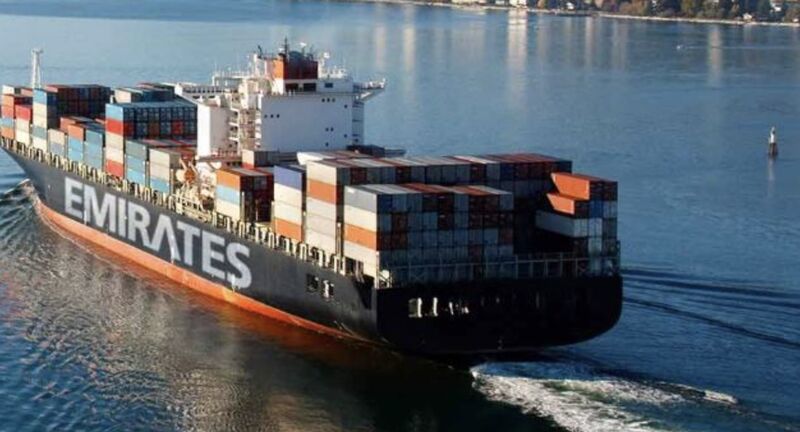
The new service has been introduced through a slot-sharing arrangement on the CSX/CI8 service jointly operated by Emirates Shipping Line (ESL) and Evergreen Line, enabling Sinotrans to broaden its regional service portfolio without deploying its own vessels.

The CIW2 service will be operated using a fleet of six container vessels, each with an average carrying capacity of approximately 6,000 TEUs, ensuring regular and reliable weekly sailings for exporters and importers across Asia.

Under the new rotation, vessels will call at Qingdao, Xiamen, Nansha, Shenzhen (Dachan), Port Klang, Colombo, Nhava Sheva, Mundra, Port Klang, before returning to Qingdao, providing seamless connectivity across key manufacturing, transshipment and consumption hubs.

The inclusion of Nhava Sheva (JNPA) and Mundra, India’s two largest container gateways, is expected to improve cargo movement for a wide range of commodities, including engineering goods, electronics, machinery, textiles, chemicals, consumer products and industrial raw materials moving between China and India.

By connecting with strategic transshipment hubs such as Port Klang in Malaysia and Colombo in Sri Lanka, the service also offers customers greater flexibility, expanded feeder connectivity and improved access to regional and global shipping networks.

The launch comes at a time when container trade between China and India continues to remain one of Asia’s busiest trade corridors, supported by growing manufacturing activity, expanding bilateral trade and rising demand for efficient, time-bound logistics solutions. Shipping lines are increasingly enhancing service frequencies and network coverage to meet evolving customer requirements while improving schedule reliability and supply chain resilience.

With the introduction of the CIW2 service, Sinotrans aims to strengthen its competitive position in the China–India market by offering customers broader port coverage, enhanced sailing options and improved transit connectivity. The expanded network is expected to support exporters and importers with greater flexibility in cargo planning while facilitating smoother movement of containerised trade across Asia.

The latest service expansion also reflects the growing trend of strategic partnerships and slot-sharing agreements among global container shipping lines, enabling carriers to optimize vessel capacity, improve network efficiency and offer wider geographic coverage without significant fleet expansion.

As regional trade volumes continue to grow, the addition of the CIW2 service is expected to further reinforce maritime connectivity between China and India, supporting supply chain integration and facilitating faster, more efficient movement of containerised cargo across the region.

DBGT handles widest vessel ever to call at terminal, sets new operational milestone

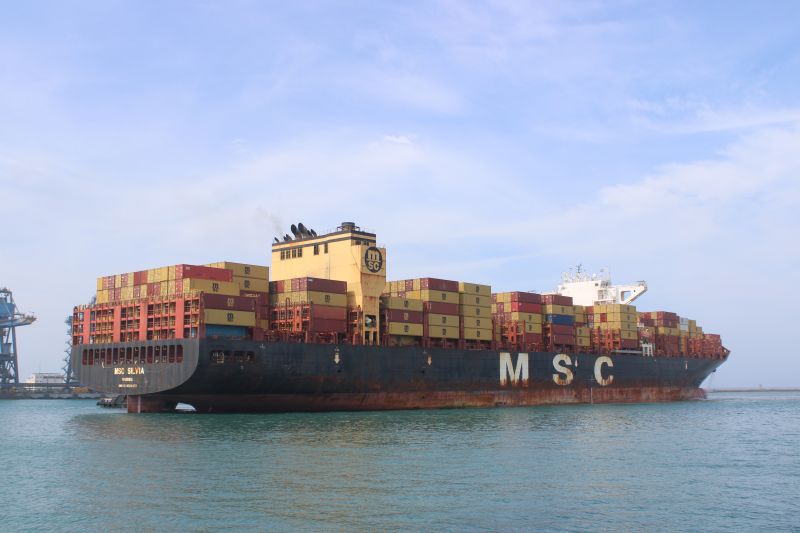
TUTICORIN : Dakshin Bharat Gateway Terminal (DBGT) has achieved a significant milestone in its operational history with the successful handling of M.V. MSC SILVIA, the widest vessel ever to berth at the terminal, reinforcing its capability to accommodate next-generation mainline container vessels.

The vessel berthed at DBGT on 19 July 2026, setting a new benchmark with a beam (width) of 48.20 metres. Measuring 300 metres in Length Overall (LOA) and with a carrying capacity of 9,411 TEUs, M.V. MSC SILVIA arrived from Port of Onne, Nigeria, highlighting DBGT’s growing prominence as a gateway for international container trade.

The successful handling of the vessel demonstrates the terminal’s advanced infrastructure, operational preparedness and ability to safely manage increasingly larger container ships. The achievement also reflects the growing confidence of global shipping lines in DBGT’s capabilities and the expanding role of Tuticorin in India’s maritime logistics network.

DBGT credited the V.O. Chidambaranar Port Authority (VOCPA) for its continued support and strategic investments in port infrastructure, which have played a vital role in enhancing the port’s capacity to handle larger vessels and strengthen its competitiveness on international shipping routes.

The terminal also expressed its appreciation to MSC Mediterranean Shipping Company (MSC) for its continued confidence in DBGT and for deploying mainline services through the terminal. The regular deployment of larger vessels is expected to improve direct connectivity, enhance service reliability and provide greater opportunities for exporters and importers across southern India.

DBGT acknowledged the continued support of the EXIM trade community, shipping lines, vessel operators and logistics stakeholders, whose collaboration has contributed to the terminal’s sustained growth and operational success.

A special appreciation was also extended to Team DBGT, whose meticulous planning, coordinated execution and commitment to operational excellence ensured the safe and efficient handling of the record-setting vessel.

The latest milestone further reinforces DBGT’s position as one of India’s emerging container terminals capable of handling large mainline vessels. As vessel sizes continue to increase across global shipping networks, the terminal remains focused on expanding its capabilities, improving operational efficiency and strengthening Tuticorin’s position as a preferred gateway for international shipping, logistics and global trade.