Home Blog Page 194

Kerala aims to attract $1 billion in shipbuilding from investors

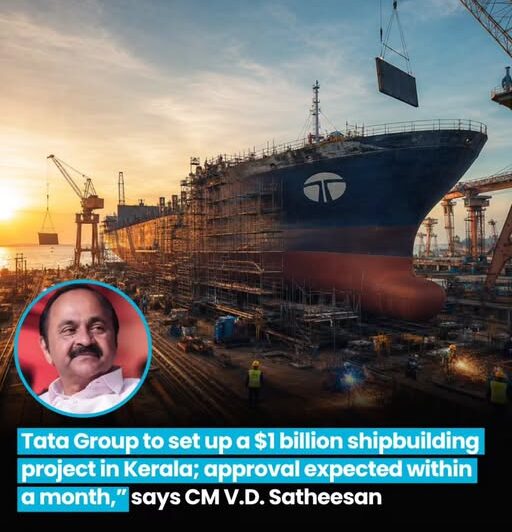
THIRUVANANTHAPURAM : The Kerala Government on Saturday clarified that the southern Indian state aims to attract ₹10,000 crore ($1 billion) of investment in shipbuilding from multiple investors, rather than a single source, in the coming years.

The clarification comes after Chief Minister Shri V.D. Satheesan in an interview to Bloomberg News earlier this week said the TATA Group has sought approval to invest $1 billion in shipbuilding in Kerala.

“It does not mean that a single investment agreement of this amount has been finalized with any one institution,” Kerala’s Department of Information and Public Relations said in a statement.

The state government has facilitated a joint venture between Malabar Cements Ltd. and Artsun Engineering Ltd., a part of the Tata Projects Group, to set up a shipbuilding unit at Cochin Port, and all the necessary approvals have been received for the project, according to the statement.

The Tata Group has not yet issued any statement on the matter. Mission Samudra, code name for Kerla’s shipbuilding and marine ecosystem project, is not a project limited to one shipbuilding unit, the state government said.

GIFT City seeks FinMin approval to become global commodity trading hub: IFSCA Chairperson

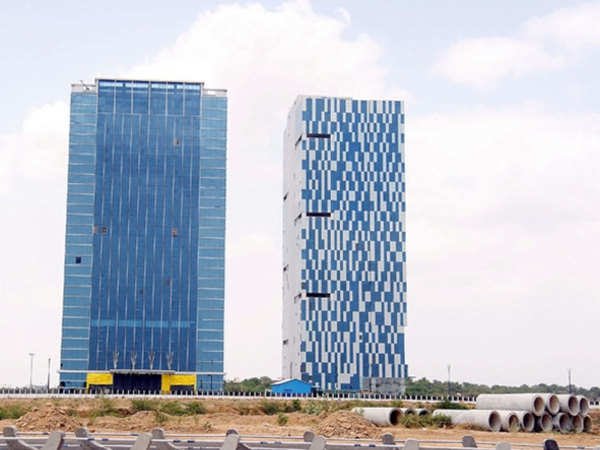
GANDHINAGAR : GIFT City is looking to position itself as a global hub for commodity trading, with its regulator seeking legal changes that would allow international trading, hedging and financing of commodities such as crude oil, gold, metals and agricultural products to take place from India’s financial services centre.

The International Financial Services Centres Authority (IFSCA) has written to the Finance Ministry seeking formal recognition of commodity trading as a financial activity under the law governing GIFT City, IFSCA Chairperson K Rajaraman told Moneycontrol.

The proposal forms part of IFSCA’s broader strategy to expand GIFT City’s offerings beyond banking, fund management and insurance by bringing global commodity trading businesses back to India.

“Despite being one of the largest consumption markets and largest importers of many commodities, most commodity traders are executing trades from other financial centres rather than from India,” Rajaraman said.

Many Indian commodity trading firms currently operate out of Singapore, Dubai and Switzerland, where established regulatory frameworks, tax incentives and banking infrastructure support international commodity trading.

“We believe GIFT IFSC has the potential to become a global commodity trading hub, given that it already possesses the characteristics of a global financial centre, a strong banking network, and a more favourable tax regime than other financial centres. The initial objective is to onshore Indian firms that have migrated to global commodity trading hubs,” he said.

“IFSCA has forwarded the recommendations to the Ministry of Finance for consideration,” Rajaraman added.

At present, commodity trading is not recognised as a financial activity under the IFSCA Act, limiting the regulator’s ability to frame regulations, license market participants and establish a comprehensive legal framework for the sector.

The proposal follows the model adopted for bullion trading. Before 2020, bullion trading also lacked statutory recognition under the IFSCA framework. The government subsequently notified it as a financial activity, paving the way for the launch of the India International Bullion Exchange (IIBX) in GIFT City in 2022. IIBX was inaugurated by the Prime Minister in GIFT City in 2022, and has since expanded from spot gold and silver trading to futures contracts. IFSCA now wants that same recognition extended to a wider range of commodities.

According to Rajaraman, similar recognition for commodities would enable electronic trading, hedging through commodity derivatives, trade financing, merchanting and re-invoicing of global commodity transactions.

“The purpose is to permit electronic trading, hedging, commodity derivatives, trade financing, re-invoicing, merchanting, etc.,” he said.

GIFT City-based firms could start buying and selling commodities and using contracts to protect against price swings, financing large commodity trades with loans and credit, handling trades where goods are bought from one country and sold to another without passing through India, and managing the billing and paperwork side of such cross-border trades.

He clarified that IFSCA would regulate only the financial aspects of commodity trading, while physical infrastructure such as warehousing and logistics would continue to remain under the existing Free Trade Warehousing Zone (FTWZ) and SEZ framework.

“IFSCA does not intend to regulate physical parts of commodities such as warehousing, logistics, etc., which will still continue to follow the Free Trade Warehousing Zone (FTWZ), SEZ framework,” Rajaraman said.

Banking assets at GIFT City have already crossed $111-$114 billion, while commitments to non-retail investment funds have reached $39.3 billion, underscoring the financial centre’s expanding scale.

Centre forms a 17-member panel to submit SEZ reform report to Commerce Ministry

NEW DELHI : A 17-member committee constituted to recommend reforms to India’s Special Economic Zone (SEZ) policy is expected to submit its report to the Ministry of Commerce. The report, to be submitted to Commerce Secretary Shri Rajesh Agarwal, is expected to recommend measures to revamp the SEZ framework to boost domestic manufacturing, exports and import substitution.

The 17-member panel, constituted in March under the Commerce Secretary’s chairmanship, was given six months to prepare a comprehensive roadmap for the so-called SEZ 2.0 policy.

The committee has been examining the effectiveness of the Special Economic Zones Act, 2005, in the current global trade environment whilst identifying operational bottlenecks faced by developers and units.

Its mandate includes harmonising SEZs with other export promotion schemes such as Export Oriented Units, Manufacturing and Other Operations in Warehouse, and various duty exemption programmes to eliminate policy distortions.

The committee has held consultations with various stakeholders and examined issues relating to the functioning of SEZs, reported PTI.

A key focus has been the harmonisation of existing export promotion schemes, including Special Economic Zones (SEZs), Export-Oriented Units (EOUs), Manufacturing and Other Operations in Warehouse (MOOWR), Advance Authorisation, Export Promotion Capital Goods (EPCG) and the Duty-Free Import Authorisation (DFIA) scheme.

Policy And Legal Reforms Under Review

The panel’s terms of reference include identifying operational, procedural and regulatory challenges faced by SEZ developers and units, reviewing the fiscal impact of SEZs, including revenue forgone through tax and duty exemptions, and assessing their contribution to exports, investment and economic activity.

It has also been tasked with recommending short-, medium- and long-term policy, legal and procedural reforms, including possible amendments to the SEZ Act and Rules, along with an implementation roadmap.

Review Driven By Changing Trade Landscape

The review comes as India’s trade and manufacturing ecosystem has evolved significantly since the SEZ Act was enacted in 2005, requiring the policy framework to be aligned with current global trade dynamics.

According to official data, exports from SEZs increased 7.37 percent to USD 172.27 billion in 2024-25. India currently has 276 operational SEZs housing 6,279 units.Total exports from these zones have experienced fluctuations, declining to $133. 45 billion in fiscal year 2025-26 from $172. 07 billion the previous year, highlighting the urgency for structural changes that can revitalise manufacturing competitiveness and capacity utilisation.

The committee’s recommendations will include short-, medium- and long-term policy, legal and procedural reforms, with possible amendments to the SEZ Act and Rules.

The panel has drawn expertise from the Ministry of Commerce and Industry, NITI Aayog, the Central Board of Indirect Taxes and Customs, and various development commissioners to ensure the new framework aligns with World Trade Organisation norms whilst boosting exports, investment and employment generation.

QodeNext brings together industry leaders to showcase the future of intelligent traceability and connected enterprise solutions

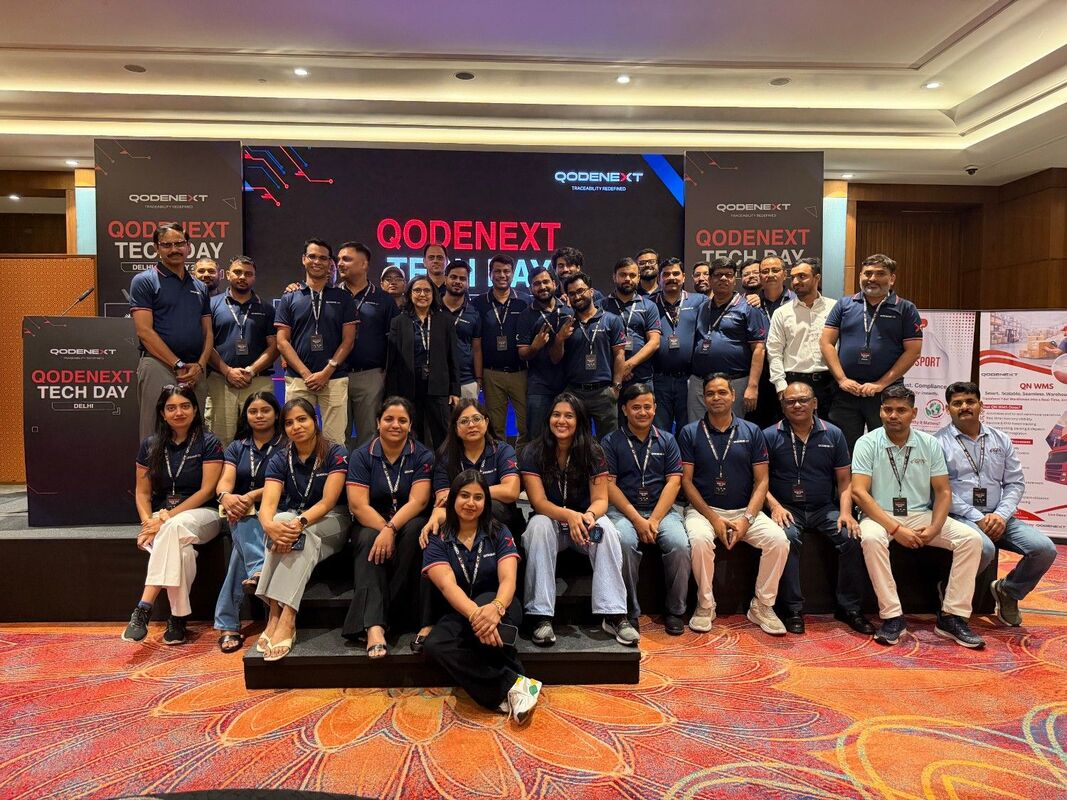
GURUGRAM : QodeNext, one of India’s fastest-growing supply chain traceability and automation service providers, successfully hosted ‘Tech Talk Over Lunch – QodeNext Tech Day‘ at The Leela Ambience, Gurugram. The event brought together customers, industry leaders and technology partners for an engaging knowledge-sharing session focused on the future of enterprise mobility, intelligent traceability and connected operations.

The event served as a platform for business leaders to explore how integrated technologies are transforming manufacturing and supply chain operations through enhanced visibility, automation and real-time decision-making. Opening the event, QodeNext welcomed the attendees and highlighted the growing importance of connected technologies in enabling organizations to improve operational efficiency and accelerate digital transformation. The session also provided an overview of QodeNext’s capabilities and its commitment to delivering end-to-end solutions that help businesses simplify complex operations through intelligent automation and traceability. Through expert-led discussions, attendees gained practical insights into building more resilient, efficient and future-ready enterprises.
The event featured insightful sessions by QodeNext’s technology partners, including Zebra Technologies, 42Gears, 3M, Vinayak Group and Wizpro. The discussions covered a wide spectrum of enterprise technologies, including enterprise mobility, secure device management, RFID-enabled traceability, industrial labelling solutions, security printing and AI-powered machine vision, offering attendees a comprehensive view of the technologies shaping the next generation of connected enterprises.

Commenting on the occasion, Mr. S R Srinivasan, CEO, QodeNext, said, “QodeNext Tech Day reflects our commitment to creating a collaborative platform where customers can engage with technology experts, learn from real-world success stories and discover solutions that address today’s operational challenges. Together with our ecosystem partners, we are enabling enterprises to embrace intelligent technologies that improve.

As businesses continue to navigate evolving market demands and increasing operational complexities, QodeNext remains focused on enabling enterprises with scalable, technology-driven solutions that enhance supply chain visibility, productivity and agility. Through continuous innovation and strong ecosystem collaborations, QodeNext aims to empowerorganizations with the capabilities required to build smarter, more connected and future-ready operations.

About QodeNext India Private Limited

QodeNext is one of India’s fastest-growing supply chain traceability and automation service providers. Established in 2017, the company was formed through the strategic merger of three well-known AIDC and automation organizations: Intellicon, Intercode Solutions, and Essae Technologies. This consolidation brought together decades of experience, deep industry knowledge, and a shared vision to build a stronger, technology-driven organization capable of serving India’s rapidly evolving supply chain sector.

QodeNext delivers smart, reliable, and scalable solutions that help enterprises achieve complete visibility and control across their supply chains. With a strong focus on technology-led transformation, the company supports key sectors including manufacturing, logistics, retail, pharmaceuticals, automotive, FMCG, and e-commerce. Its solutions enable businesses to build integrated, transparent, and efficient operations that are ready for the next phase of digital growth.

The company acts as a single point of contact for all traceability requirements, offering a comprehensive portfolio that includes consulting, solution design, technology deployment, and long-term support. By using a combination of barcode, RFID, vision systems, cognitive computing, the Internet of Things, predictive analytics, and other emerging technologies, QodeNext India Private Limited helps organisations unify data across assets, people, and processes. These capabilities improve accuracy, strengthen automation, and enable real-time decision-making across the supply chain.

With the legacy of its founding entities, QodeNext India Private Limited brings together more than twenty-five years of industry experience. Over time, it has evolved into India’s largest Automatic Data Information Capture solutions provider, trusted by leading enterprises seeking to modernize their operations and achieve end-to-end digital visibility.
QodeNext India Private Limited offers one of the widest solution portfolios in the industry, covering warehouse management, vendor management, truck and yard management, warranty tracking, print and apply automation, high-speed labeling, vision-based inspection, RFID system integration, and customised software platforms for complete supply chain traceability. Its proprietary platforms support collaborative and interconnected supply chains that allow decentralized decision-making while improving productivity, transparency, and operational efficiency.

The company is supported by a dedicated workforce of more than two hundred professionals, combining domain expertise with strong on-the-ground execution. This includes operations across ten major Indian cities. This network ensures rapid implementation, dependable service, and consistent customer support.

QodeNext India Private Limited’s commitment to quality, customer centricity, and continuous innovation has made it a preferred partner for enterprises across India. By combining global technologies with India’s diverse supply chain needs, the company plays a key role in strengthening operational resilience, ensuring compliance, and supporting the growth of digitally enabled industries.

Looking ahead, QodeNext India Private Limited remains focused on advancing India’s supply chain landscape through innovation, research and development, and next-generation software platforms that are shaping the future of traceability. Its long-term vision is to be the most trusted and preferred partner for transparent, connected, and intelligent supply chains, while upholding ethical business practices, sustainability, and long-lasting customer relationships.

US forces strikes on Iran for 11th consecutive night; targets military ops centers, drone storage facilities

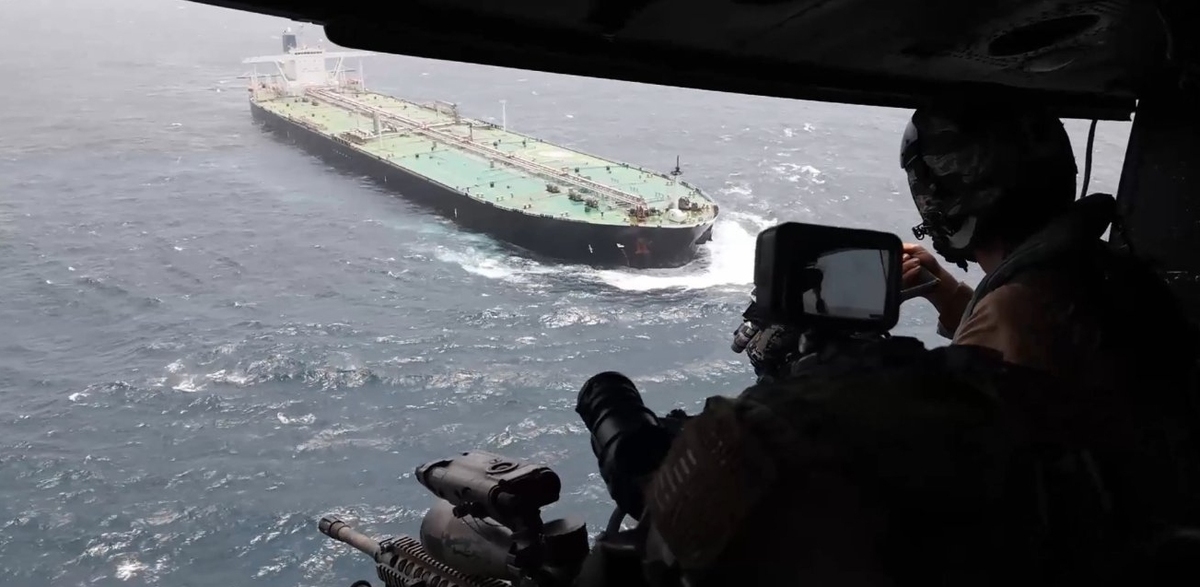
WASHINGTON DC: The United States Central Command (CENTCOM) on Tuesday (local time) said that it had completed its 11th consecutive night of strikes against Iran, targeting military operations centres, maritime capabilities, aircraft hangars, drone storage facilities and military logistics infrastructure.

In a statement, CENTCOM said the operation concluded at 8:15 pm ET on July 21 and was aimed at further degrading Iran’s ability to threaten commercial shipping in the Strait of Hormuz.

“At 8:15 p.m. ET on July 21, U.S. Central Command (CENTCOM) successfully completed the 11th consecutive evening of strikes against Iran,” the statement said.

It added that CENTCOM assets targeted “Iranian military operations centers, maritime capabilities, aircraft hangars, drone storage facilities, and military logistics infrastructure to further degrade Iran’s ability to threaten commercial shipping in the Strait of Hormuz.”

According to CENTCOM, Iran has attacked more than 30 commercial vessels transiting the strategic waterway over the past three months, describing the attacks as “unwarranted” and saying they had endangered hundreds of civilian mariners and undermined freedom of navigation.

“Despite Iranian aggression, the Strait of Hormuz remains open for commercial vessel transit,” CENTCOM said, adding that since early May, US forces have helped facilitate the transit of approximately 900 commercial vessels carrying around 450 million barrels of crude oil through the vital maritime route.

Earlier, CENTCOM announced the commencement of the latest round of strikes in a post on X.

“CENTCOM forces began striking military targets in Iran at 7 p.m. ET today for the 11th consecutive night. The strikes are designed to continue degrading Iran’s ability to threaten commercial shipping in the Strait of Hormuz,” the post said.

According to Iran’s state broadcaster, IRIB (Islamic Republic of Iran Broadcasting), multiple locations across Iran came under reported airstrikes following the US announcement of the commencement of strikes.

IRIB reported that airstrikes were carried out in the Chavar and Abdanan regions of Ilam province. The governor of Abdanan confirmed that the Dinarkoh area in the county had been targeted.

According to IRIB, a location outside the city limits of Baneh in Iran’s Kurdistan province was also struck in what it described as an “enemy attack.”

In Hamadan province, Deputy Governor officials, as quoted by IRIB, said Kabudar Ahang County was targeted in what they described as continued “aggressive actions” by the United States.

IRIB further reported that explosions were heard in the cities of Mahshahr in Khuzestan province and Tabriz in East Azerbaijan province.

In southeastern Iran, several explosions were heard in Chabahar, with sounds of multiple explosions and, briefly, aircraft flying overhead were heard in the area.

Separately, IRIB quoted the Deputy Governor of Khuzestan as saying that areas around the cities of Behbahan and Omidieh had come under missile attack, adding that relevant authorities were carrying out field assessments and security evaluations of the targeted locations.

The Deputy Governor of Sistan and Baluchestan, as cited by IRIB, also confirmed attacks in the Chabahar and Konarak areas, stating that the situation was under control after the strikes.

This comes as tensions between Iran and the United States escalated after the collapse of the 14-point MoU, signed last month, aimed at ending the hostilities between the two sides and opening the pathway for further negotiations, particularly on Iran’s nuclear programme and the Strait of Hormuz.

Its collapse renewed the conflict in West Asia, with the US striking Iranian military and civilian assets, and the Islamic Republic also targeting American bases across the Gulf in retaliatory strikes.

Source: ANI

Shipowners offer Seafarers massive bonuses to sail through risky Hormuz Waters

OMAN : Sinokor Group, the biggest owner of supertankers in the world, is offering an additional 6 months’ salary to seafarers if they are willing to sail through the volatile Strait of Hormuz.

The company distributed the offer to its seafarers for a round trip to pick up oil from either Saudi Arabia or Iraq and unload it in the Gulf of Oman, which would take about a month in total.

The lucrative offer comes after 59 commercial vessels have been attacked in and around the Persian Gulf since the U.S-Iran war began on February 28, 2026. More than 20 Seafarers lost their lives in the attacks, and many more have been critically injured, The highest-paid individual on a ship is the captain, who has the final authority to make all the decisions. He or she can earn around $15,000 (€13,140) a month on oil tankers, and the pay can vary according to the company and the type of ship.

A junior sailor, or rating, might earn about $1,500 a month and have the right to ask to leave the ship and be replaced if they do not want to sail into a danger zone.

However, many crew members are reluctant to take these offers since they might lose their lives instead, as the situation in the region has escalated and ship attacks have become frequent.

Two seafarers died last week, 4 Indian seafarers died off Odesa, and a vessel was abandoned by the crew on Monday after catching fire due to a drone strike.

“They are being offered huge bonuses by some companies,” according to Captain Pradeep Chawla, chairman of GlobalMET, a body that works with the International Maritime Organisation to promote seafarer training and education, without specifically referencing the Sinokor offer.

“We have heard stories of a large number of crew members getting off, but they can find people who are willing to go.”

Sinokor wants to partner with regional producers to get their oil out of the region, especially the UAE, Iraq and Saudi Arabia.

Turkon Line’s LNG-powered Kaşif Kalkavan makes first call at Marport

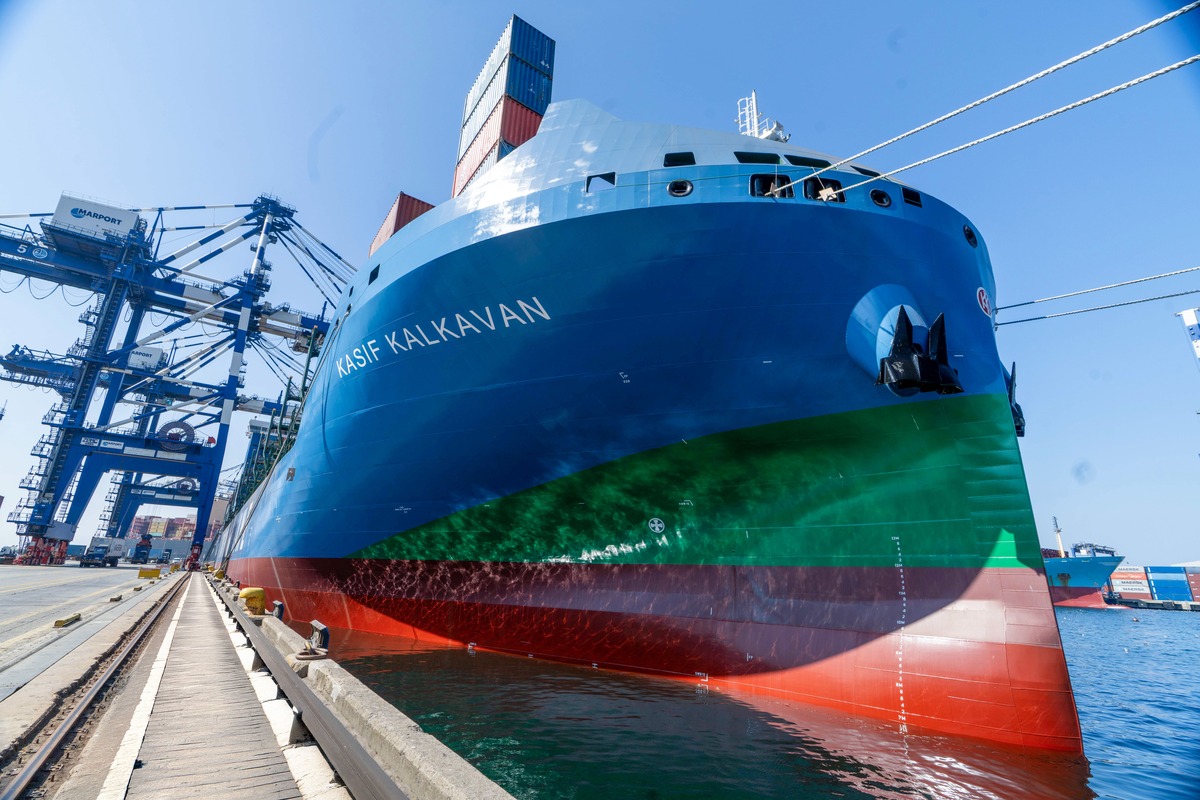
ISTANBUL: Turkon Line’s new container ship, Kaşif Kalkavan, has made its first port call at Marport, one of Türkiye’s largest container terminals. Recognized as Türkiye’s first and largest domestically built LNG-fuelled container ship, the 4,000 TEU vessel marks a significant milestone for the country’s maritime and shipbuilding industries. Built entirely with Turkish capital and engineering expertise, MV Kaşif Kalkavan is designed to operate on five different fuel types, including LNG.

Equipped with environmentally friendly technologies, the vessel offers greater operational flexibility while supporting lower emissions and more sustainable maritime transport. A ceremony was held at Marport to mark the first call, attended by Nevzat Kalkavan, Chairman of the Board of Turkon Holding, O. Alkın Kalkavan, CEO of Turkon Line, together with executives from both Turkon Line and Marport.

Strategic partnership continues to grow

The first call marks another milestone in the strategic partnership between Marport, one of Türkiye’s largest container terminals, and Turkon Line, one of the country’s leading container shipping companies. Supported by Marport’s advanced infrastructure, high operational capacity and efficiency-driven service approach, the collaboration provides reliable and efficient port services for Turkon Line’s next-generation vessels while further strengthening the long-term partnership between the two companies.

Project CAPTURED advances regulatory pathways for onboard captured CO2

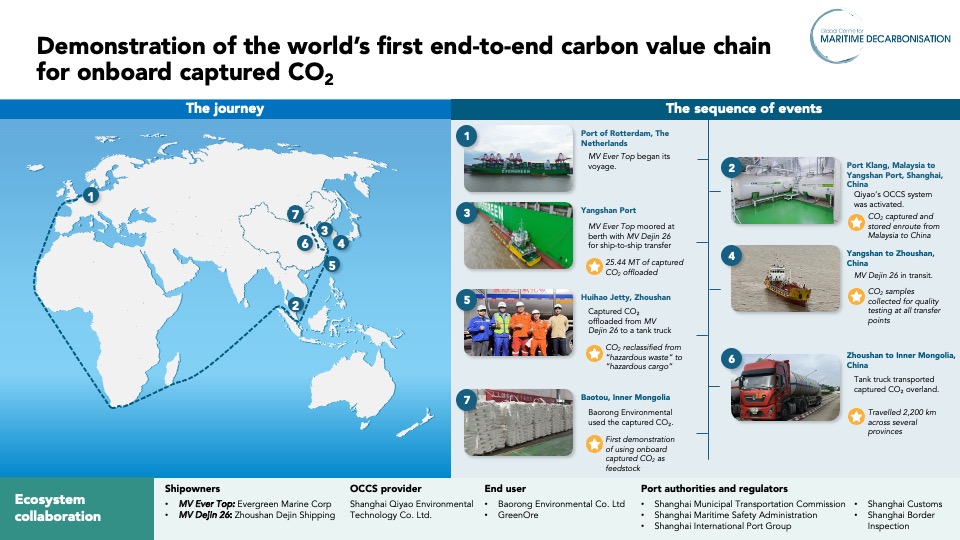
SINGAPORE: Project CAPTURED has achieved two regulatory milestones that strengthen the commercial case for onboard carbon capture and storage (OCCS), following its world’s first demonstration of an end-to-end value chain for onboard captured and liquefied CO2 (LCO2).

Completed in June 2025, the pilot showed that CO2 captured onboard a vessel can be offloaded ship-to-ship, transported overland and permanently bound through carbon mineralisation—a process that converts captured CO₂ into stable materials for industrial use.

EU ETS recognition for onboard captured CO2

The CO2 captured onboard during Project CAPTURED has been formally recognised for compliance under the European Union Emissions Trading System (EU ETS). This means the verified tonnage of captured CO2 can be deducted from emissions requiring the surrender of EU Allowances (EUAs).

To qualify for this recognition, the CO2 must be chemically bound permanently in eligible products. Project CAPTURED demonstrated that CO2 captured onboard vessels can meet this requirement through carbon mineralisation.

IMO’s in-principle support for carbon mineralisation

The data and learnings from the same demonstration formed the basis of a proposal submitted to MEPC 84. This proposal received in-principle support from the International Maritime Organization (IMO) for recognising carbon mineralisation as a form of permanent CO₂ storage.

Complementing geological sequestration, which is already accepted by the IMO, this recognition broadens the downstream options for CO2 captured onboard vessels, and supports the development of maritime carbon value chains. Beyond providing a permanent storage pathway, carbon mineralisation also creates the potential for captured CO2 to serve not only as a waste stream requiring permanent storage, but also as a feedstock for industrial applications through carbon mineralisation, extending emissions reductions beyond the shipping value chain.

About Project CAPTURED

Project CAPTURED demonstrated that captured CO2 can be safely transported and converted into industrial products while maintaining CO2 purity above 99.95 vol% at all custody-transfer points. GCMD’s life cycle assessment further showed that this first-of-a-kind pilot achieved a 7.9% net GHG reduction based on a at 10.7% gross capture rate onboard. An optimised value chain based on the same gross capture rate could deliver GHG savings of 17.8%.

GCMD orchestrated this landmark pilot by bringing together 11 partners across the maritime and industrial ecosystems, including SMDERI-QET, Evergreen Marine Corp, Zhoushan Dejin Shipping, and Greenore/ Baorong.

Professor Lynn Loo, CEO, GCMD, said, “Project CAPTURED has moved OCCS beyond technical demonstration. The acceptance of the EU ETS deduction gives captured CO₂ a compliance value. At the same time, IMO’s in-principle support for carbon mineralisation will help clarify how captured CO2 can be treated after it leaves the vessel. Together, these milestones turn a pilot into a verified reference case for maritime carbon logistics, one that links regulatory recognition, commercial value and emissions impact.”

Dr Su Yi, General Manager of SMDERI-QET, said, “Project CAPTURED has demonstrated that captured CO₂ can be transferred from ship to ship and converted into construction materials. We have now taken a further step by achieving carbon deductions under the EU ETS, which means we have further explored the possibilities of the maritime carbon value chain. The IMO’s support in principle for carbon mineralisation means that our pathway is repeatable, offering a feasible blueprint for future emissions reductions in the shipping industry.”

Capital Ship Management, K Shipbuilding and Lloyd’s Register target scalable wind-assisted propulsion for MR tanker sector

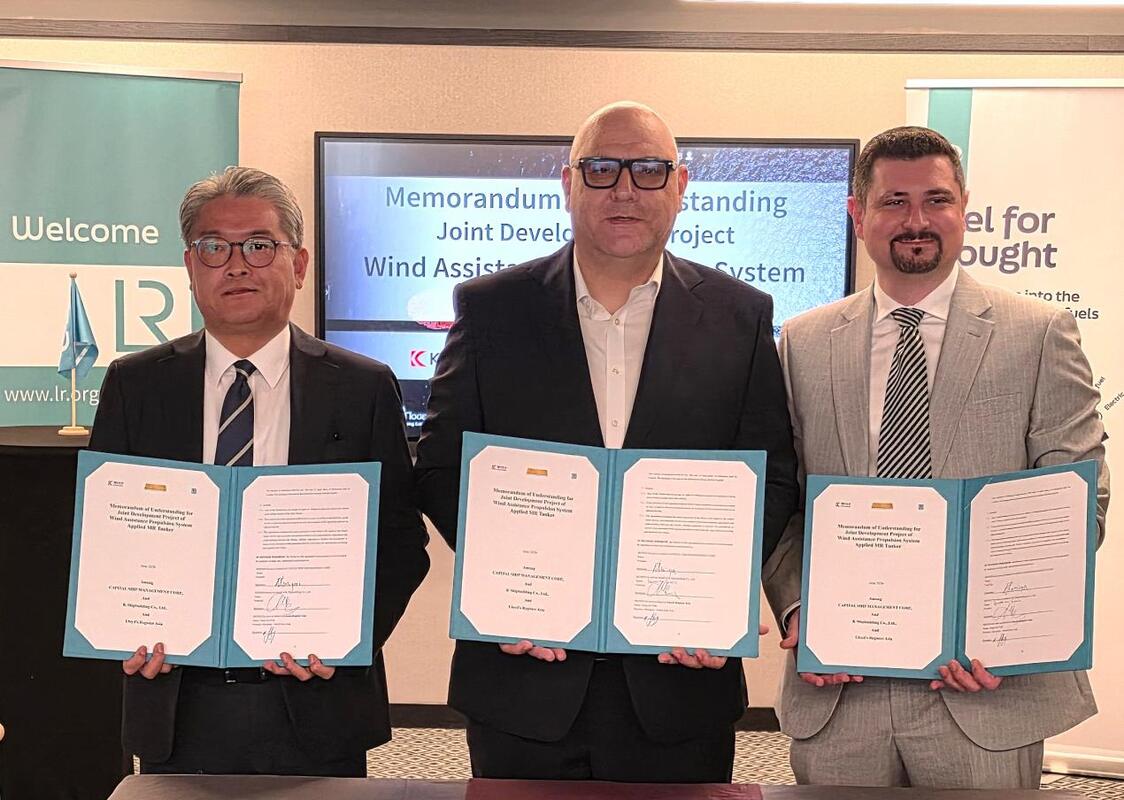
LONDON: Capital Ship Management Corp., K Shipbuilding and Lloyd’s Register (LR) have launched a Joint Development Project (JDP) to develop a wind-assisted 50,000 dwt Medium Range (MR) tanker.

While wind-assisted propulsion has gained traction across bulk carrier and specialist vessel segments, its application in the MR tanker market remains largely unexplored.

The project aims to bridge that gap by assessing how Wind-Assisted Propulsion Systems (WAPS) can be integrated into a commercially competitive tanker design, while maintaining operational flexibility and cargo-carrying capability.

The collaboration combines Capital Ship Management’s operational expertise, K Shipbuilding’s tanker design and construction capability, and LR’s technical assurance and regulatory knowledge to address both the engineering and compliance challenges associated with deploying WAPS on a mainstream tanker platform.

The project will include technical studies, design optimisation and regulatory assessments to support future Approval in Principle (AiP) activities and establish a pathway towards commercial deployment.

The signing of the JDP marks the first stage of a broader technical programme that will examine the operational, engineering and regulatory considerations associated with wind-assisted tanker designs, supporting the development of commercially viable solutions for low-emission shipping.

Theo Kourmpelis, Global Business Director for Tankers, Lloyd’s Register, said: “Wind-assisted propulsion has already demonstrated its potential to improve vessel efficiency, but wider adoption will depend on proving that the technology can deliver commercial value in mainstream shipping sectors. The MR tanker market is an important test case.

“Shipowners are increasingly seeking solutions that can deliver measurable efficiency improvements while supporting regulatory compliance. By combining practical operational insight with advanced ship design expertise, this project will help evaluate how wind-assisted propulsion can be effectively incorporated into future tanker designs.”

Nikolas Vaporis, Chief Technical Officer, Capital Ship Management Corp., said: “When we took delivery of our six MR newbuildings in 2023, each one carried Wind-Assisted Ready notation, a deliberate design choice that reflected our conviction that wind propulsion would become commercially relevant for this segment. This project is the natural next step on a path we set out on from the start. Our priority now is to move from ‘ready’ to ‘proven’: a design that delivers real efficiency and emissions benefits while preserving the operational and cargo flexibility our charterers depend on.”

Tae-Hyun Koh, Chief Technology Officer, K Shipbuilding, said: “As the maritime industry accelerates its efforts towards decarbonisation and sustainable growth, this collaboration will enable K Shipbuilding to further enhance its capabilities in developing next-generation eco-friendly vessel solutions and strengthen our position in the global MR tanker market.”

“K” LINE Selected as a Constituent of FTSE4Good Index Series, FTSE JPX Blossom Japan Index and FTSE JPX Blossom Japan Sector Relative Index

TOKYO: Kawasaki Kisen Kaisha, Ltd. (“K” LINE) has been selected as a constituent of the FTSE4Good Index Series, one of the leading global indices for ESG investing, for the fifth year straight and 22nd time in total. “K” LINE has also been listed as a constituent of the FTSE JPX Blossom Japan Index for the ninth consecutive year and the FTSE JPX Blossom Japan Sector Relative Index for the fifth consecutive year. It has been a constituent of both indices since their respective launches.

The FTSE4Good Index Series, FTSE JPX Blossom Japan Index, and FTSE JPX Blossom Japan Sector Relative Index are created by FTSE Russell, the global index and data provider wholly owned by London Stock Exchange Group. These indexes are designed to measure the performance of companies demonstrating strong Environmental, Social and Governance (ESG) practices and are used by wide variety of market participants to create and assess responsible investment funds and other products. FTSE Russell evaluations are based on performance in areas such as Corporate Governance, Health & Safety, Anti-Corruption and Climate Change.  Businesses included in these indexes meet a variety of environmental, social and governance criteria.

Among these indexes, the FTSE4Good Index Series selects companies that demonstrate strong ESG performance from around the world, currently comprising 1,211 companies from developed countries, including 296 Japanese companies, and 1023 companies from emerging countries. Meanwhile, the FTSE JPX Blossom Japan Index and FTSE JPX Blossom Japan Sector Relative Index are composed of Japanese companies with outstanding ESG initiatives (478 companies and 670 companies, respectively, are selected out of 1,306 constituents of the FTSE Japan All Cap Index).

The “K” LINE Group regards sustainability management as one of its key management priorities and is committed to addressing social challenges through its business activities while pursuing sustainable growth. We will continue to advance initiatives to address climate change and other global social issues and, as a shipping company that underpins global logistics, contribute to the realization of a sustainable society and the enhancement of corporate value.