Home Blog Page 216

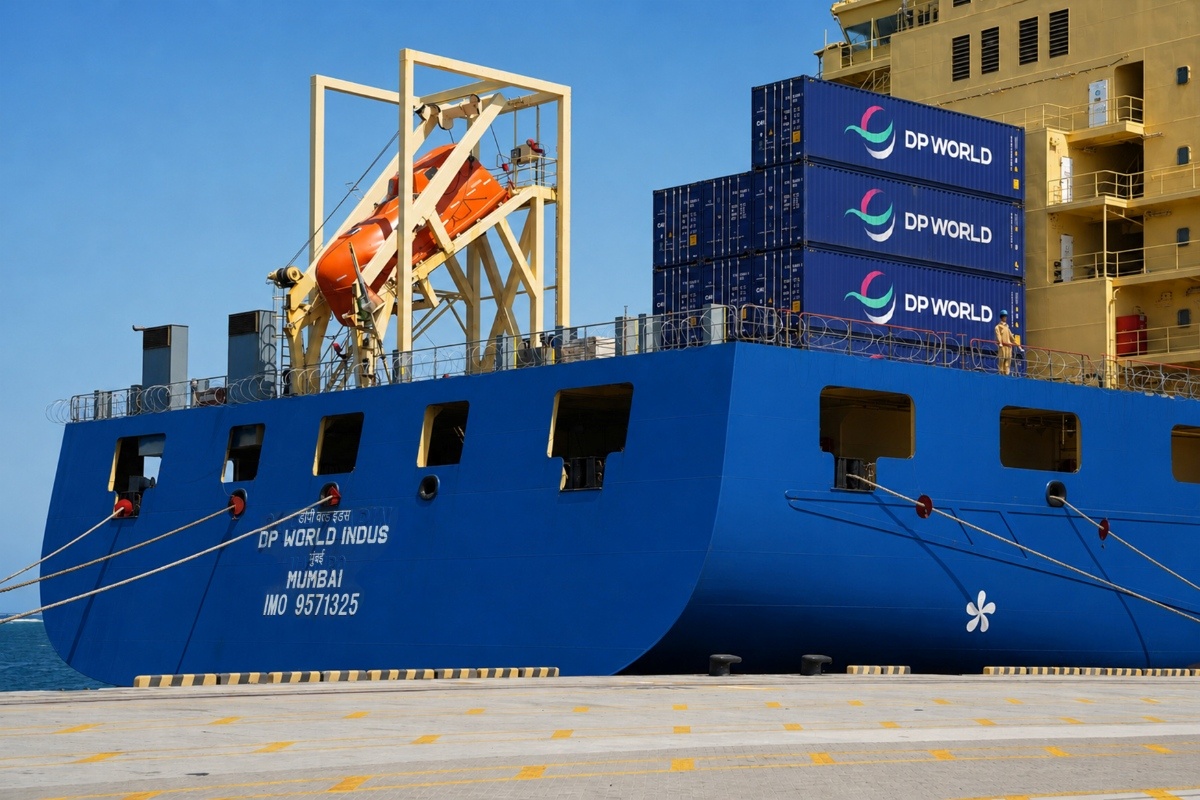
DP World expands India Coastal Shipping Network with acquisition of Container Vessel DP World Indus

DUBAI: DP World’s Marine Services business, Shipping Solutions (“Shipping Solutions”), has expanded its fleet with the acquisition of DP World Indus, a 2,500+ TEU container vessel dedicated to supporting domestic coastal trade across India.

The addition of DP World Indus further strengthens Shipping Solutions’ coastal shipping capabilities in India, enhancing its ability to provide reliable, efficient, and sustainable cargo transportation between key Indian ports. By supporting the movement of cargo via coastal shipping, the vessel helps reduce pressure on road networks while contributing to more resilient and environmentally responsible supply chains. DP World’s Shipping Solutions coastal network in India currently spans 14 ports and maintains a dedicated fleet of 10 vessels. In 2025, the business handled more than 473,000 TEUs through its coastal shipping operations.

The vessel’s maiden call at Jeddah South Container Terminal, operated by DP World, marks another milestone in the company’s strategy to strengthen trade connectivity through greater integration between its ports and marine services businesses.
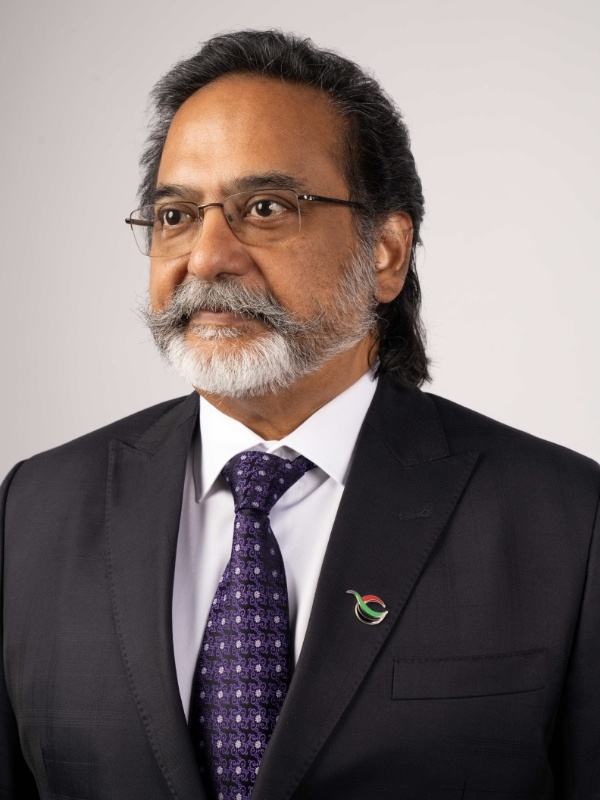
Ganesh Raj, Global Chief Operating Officer, Marine Services, DP World

Ganesh Raj, Global Chief Operating Officer, Marine Services, DP World, said: “India’s coastal shipping sector presents a significant opportunity to improve supply chain efficiency and support sustainable economic growth. We documented this opportunity gap in our ‘Enhancing India’s Ship Registry: Pathways to Global Competitiveness’ report in 2025, and the acquisition of India-flagged DP World Indus, reflects our commitment to strengthening domestic maritime connectivity and providing customers with reliable, high-quality services that connect businesses and markets across the country.”

Coastal shipping plays an increasingly important role in enhancing multimodal transport networks, reducing carbon emissions, and improving cargo movement efficiency. By enhancing connectivity between India’s major manufacturing, industrial, and consumption centres, DP World Indus will play an important role in facilitating the movement of containers along the country’s coastline, offering customers a dependable alternative to long-haul land transport. 

The acquisition of DP World Indus aligns with DP World’s broader strategy to support India’s trade and logistics ecosystem through continued investment in maritime infrastructure, ports, logistics services, and supply chain solutions.  

DP World’s report, ‘Enhancing India’s Ship Registry: Pathways to Global Competitiveness’, offers a practical roadmap to strengthen India’s ship registry into a globally competitive, credible, and sustainable platform, positioning the Indian flag as a symbol of efficiency, trust, and modern maritime excellence. The report outlines key recommendations across governance reform, fiscal and commercial incentives, international outreach, and green transition initiatives. Each of these measures is designed to enhance competitiveness and align with India’s Maritime Vision 2030, supporting the Government’s ambition to position India as a global maritime leader.

Last year, in further support of this, DP World’s Shipping Solutions also signed a Memorandum of Understanding with Sagarmala Finance Corporation Limited (SMFC), a Government of India enterprise under the Ministry of Ports, Shipping and Waterways, to collaborate on developing and scaling sustainable coastal and shortsea shipping services across the country.
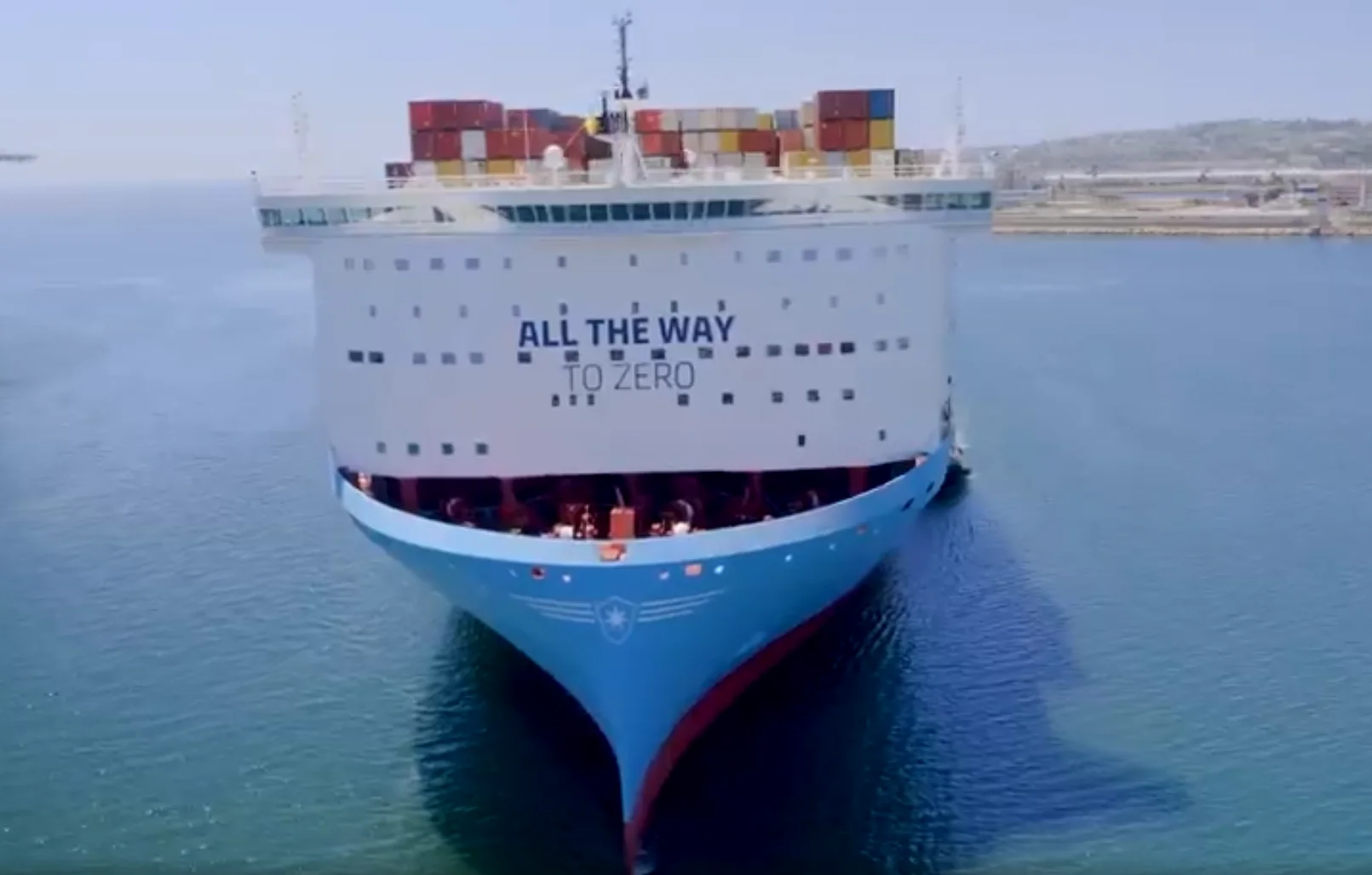
Danish shipping giant Maersk charts course for India-built vessels

COPENHAGEN : Danish shipping giant AP Moller-Maersk is looking at vessels built in India and is in talks with multiple shipyards to build container vessels with capacities of about 3,000 twenty-foot equivalent units (TEUs), a senior executive said.

Maersk, among the world’s largest container shipping lines, has initiated talks with Indian shipyards to build these smaller container vessels, Amdi Krogh, the carrier’s global head of ocean assets partnering, told Business Standard.

The shipping line, which on Friday became the first international player to order containers from an Indian manufacturer — DCM Containers — is also looking to source a larger share of its container demand from India, Krogh said.

He did not specify details of the discussions with shipyards or container manufacturers. The longer-term goal is to build bigger vessels in India once capacity expands, Krogh said.

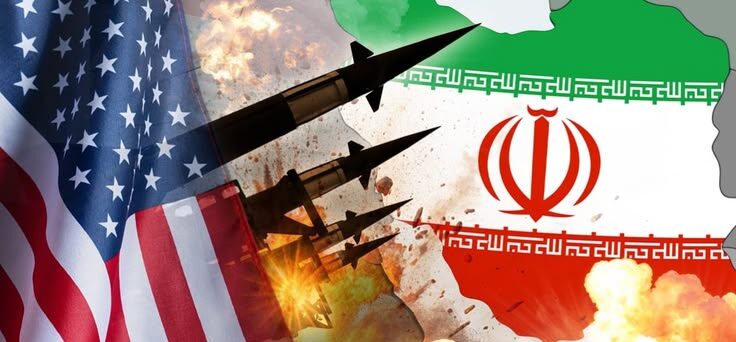
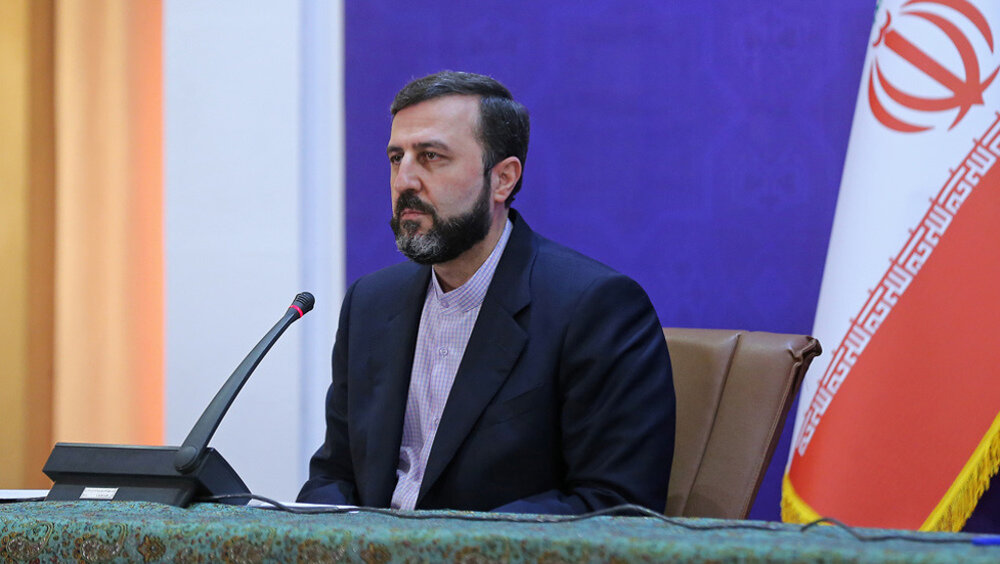
Iran warns of “decisive actions” to safeguard national security after US moves

TEHRAN: In a major diplomatic and military escalation, Iran has strongly condemned the United States’ recent military actions and its decision to cancel sanctions waivers on Iranian oil exports, warning of decisive countermeasures.

In a post on X, Iranian Deputy Foreign Minister Kazem Gharibabadi denounced the American moves, stating that these measures, along with the latest strikes on the country, represent a severe breach of bilateral understandings. He asserted that the recent US actions constitute “blatant violations” of Articles 1, 2, and 10 of the Islamabad MoU.

According to the Deputy Foreign Minister, Washington has consistently breached the accord “due to the actions of the Zionist regime in Lebanon and threatening statements against Iran.” Warning of serious repercussions following the escalation, the Iranian diplomat added, “Iran, while issuing a serious warning regarding the consequences of America’s breach of the agreement, will take decisive actions to safeguard its national interests and security.”

Concurrently, the Iranian Foreign Ministry also condemned Washington’s decision to rescind the licence, stating that the move violates the interim agreement and declaring that “the US government bears responsibility for the consequences of this breach of commitment.”

This diplomatic fury follows an announcement by the US Treasury Department confirming that the United States has revoked a sanctions waiver that previously permitted the sale of Iranian oil. The licence, which was issued last month under an interim agreement aimed at halting hostilities between Washington and Tehran, had temporarily eased restrictions on Iranian oil exports for a period of 60 days.

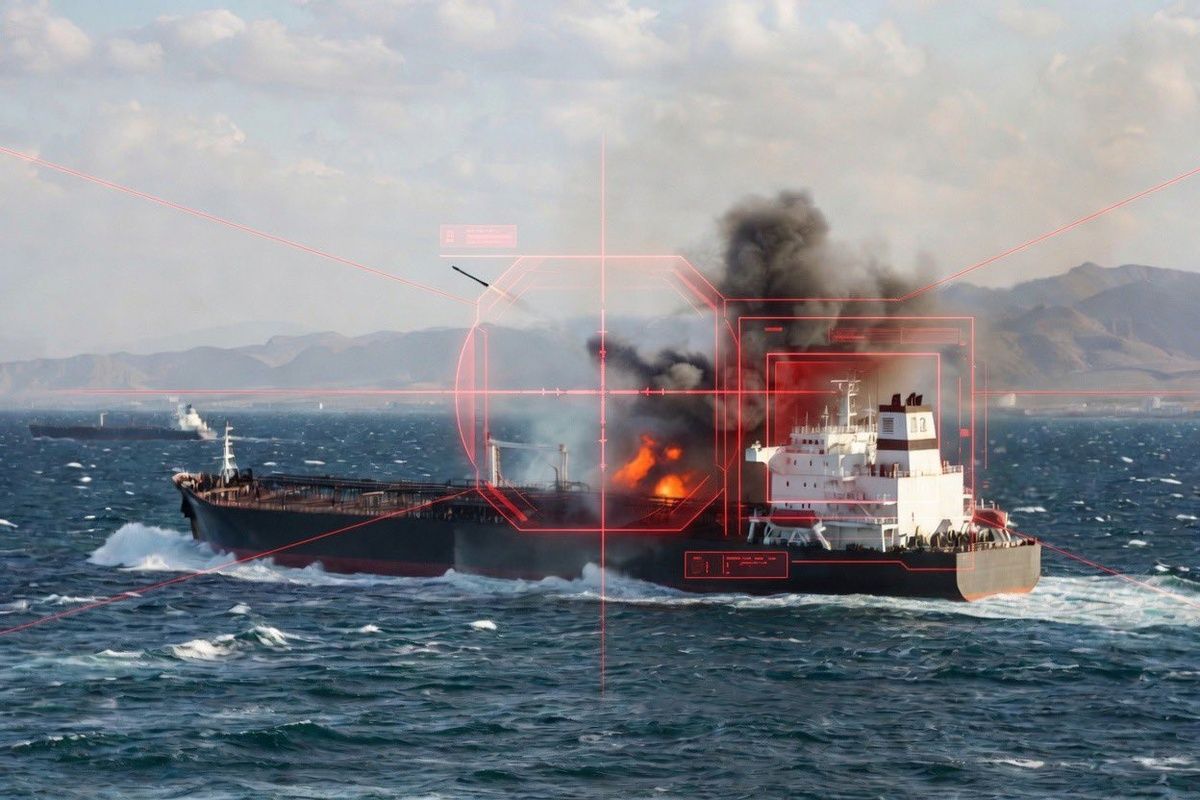
The swift reimposition of sanctions occurred merely hours after the British military reported that three tankers were struck by projectiles in the Strait of Hormuz. The incidents mark the latest in a series of assaults on vessels navigating the strategic waterway, which remains central to diplomatic efforts aimed at securing a permanent end to the conflict between the US and Iran.

According to data from the United Nations’ International Maritime Organization, the Tuesday strikes represent the highest number of attacks recorded in a single day since late April. The incidents have threatened to disrupt maritime traffic through the vital corridor, just as international stakeholders were seeking to restore normal shipping operations and alleviate the global economic strain induced by the conflict.

One of the tankers caught fire after being targeted off the coast of Oman, according to the United Kingdom Maritime Trade Operations (UKMTO). Iranian state television reported that the liquefied natural gas tanker was attacked after it ignored warnings, though the broadcaster stopped short of explicitly claiming responsibility for the strike.

The remaining two vessels sustained minor damage and were capable of continuing their respective voyages, with no injuries reported.
Tehran has consistently maintained that only its designated route through the Strait of Hormuz remains safe, and the nation has previously faced suspicion over attacks on vessels using an alternative route closer to the Omani coastline.

Location data published by the UKMTO indicated that all three of Tuesday’s attacks took place off the coast of Oman or the neighbouring United Arab Emirates, indicating that the vessels were utilising that specific alternative route.

Source: ANI

US official says latest attacks on Iran “4-5 times bigger” than last strikes: Report

WASHINGTON DC: The United States has launched massive military strikes against Iranian targets, with an American official describing the operation to Axios as “four or five times bigger in scope and power” than the previous assaults launched ten days ago.

The official further warned that the ongoing operation could persist for several more hours, noting that these actions represent the most intense American attacks on Iran since the April ceasefire.

Underscoring the severity of the military action, a separate US official told CNN that the operation was intended as “punishment, not proportional” and indicated that the conclusion of the strikes was not imminent. The official remarked to the news network, “This is punishment. It won’t be over for a bit.”

According to the US military, the airstrikes targeted Iranian military installations located near the strategic Strait of Hormuz. The military stated that the strikes were initiated following renewed aggression against commercial vessels navigating the crucial waterway.

Detailing the operation, a US official revealed that the targeted sites comprised Iranian air defence systems, coastal surveillance infrastructure, surface-to-air missile positions, anti-ship cruise missile locations, drone launch facilities, and port infrastructure.

Following the bombardments, Iranian state media reported multiple explosions, specifically in the port cities of Bandar Abbas and Sirik, as well as blasts on Qeshm Island. The state media also reported fires breaking out at the Sirik pier and the Shahid Haqqani Port in Bandar Abbas.

The United States Central Command stated that the aerial strikes were executed in direct retaliation for Iranian assaults on three commercial vessels navigating the Strait of Hormuz on Tuesday. The command issued a stern warning, declaring that Washington would impose “heavy costs” on any entities targeting international shipping.

Reacting to the developments, Iran’s Foreign Ministry accused Washington of repeatedly breaching the signed memorandum of understanding between the two nations. The ministry cautioned that Tehran would take “any action it deems necessary” to safeguard its national security and interests.

The significant escalation comes amid intensifying friction between the two nations, severely threatening a fragile ceasefire and ongoing efforts aimed at ending the conflict in West Asia.

Source: ANI

India-bound vessel hit by suspected drone attack in Gulf of Oman, all crew members safe: Sources

NEW DELHI: An India-bound vessel coming from Qatar reportedly experienced a suspected drone attack and no casualties or environmental damage have been reported, sources said on Tuesday.

The sources said there are 29 seafarers on board the vessel, of which four are Indian nationals and information received said that all crew members are safe.

The sources said that vessel’s engine room caught fire following the strike, resulting in heavy smoke. The vessel is proceeding to Dahej in India from Ras Laffan in Qatar.

The incident took place in Gulf of Oman, near the Strait of Hormuz.

“On July 7 while transiting in the Arabian Sea, LNGC AL REKAYYAT reportedly experienced a suspected drone attack. The incident was reported to DGCOMM by the RPSL. Initial information indicates that the vessel sustained damage, and there are no casualties or environmental damaged reported. The vessel is proceeding to Dahej, India, from Ras Laffan, Qatar. Location of Incident is Gulf of Oman (near the Strait of Hormuz),” a source said.

The DGComm Center is India’s 24/7 maritime command, response, and emergency helpdesk operated by the Directorate General of Shipping. It serves as a central hub connecting ships with the Navy, Coast Guard, and port authorities to manage maritime casualties, seafarer grievances, and security threats.. An RPSL is a mandatory Recruitment and Placement Service License required for any agency to legally recruit and deploy seafarers.

“There are a total of 29 seafarers on board the vessel, out of which four (04) are Indian nationals. It was informed that all the crew members are safe. The vessel’s engine room caught fire following the strike, resulting in heavy smoke,” a source added.

India has repeatedly emphasised the safety of shipping lines. India has emphasised free and unimpeded navigation and commerce through the international waterways in the region in keeping with international law.

Source: ANI

Strategically aligned’: Singapore, Indonesia want Strait of Malacca open and free for all, say leaders

JAKARTA : Singapore and Indonesia have pledged to keep the Strait of Malacca open, safe and accessible to all, elevating maritime security to the forefront of a bilateral relationship that both countries increasingly see as critical to regional stability and economic growth.

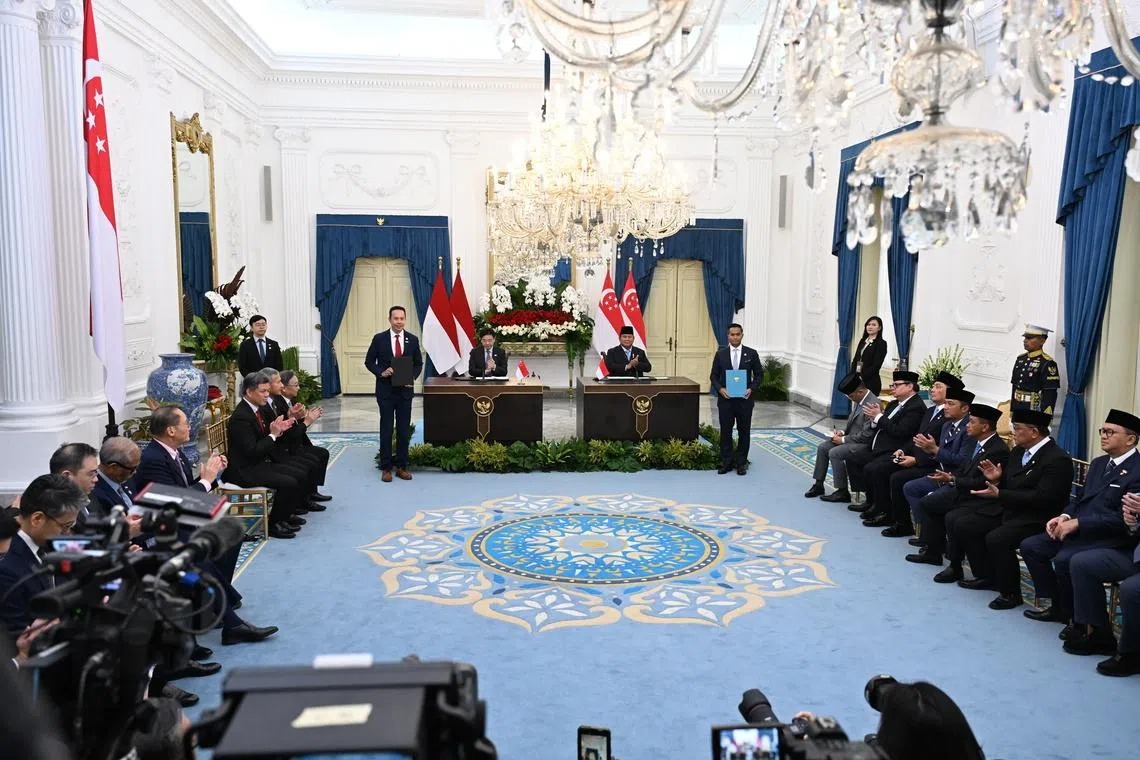
The commitment emerged after talks on July 6 between Prime Minister Lawrence Wong and President Prabowo Subianto at the annual Leaders’ Retreat, where they stressed the importance of safeguarding one of the world’s busiest shipping routes amid growing geopolitical uncertainty.

Reaffirming the two countries’ “special” and “unique” relationship, the leaders held discussions that highlighted how the relationship is evolving beyond trade and investment into new areas such as renewable energy, cross-border electricity trade, digital infrastructure and supply chain resilience.

“The Leaders’ Retreat is a unique feature of the Singapore-Indonesia relationship. It reflects the special relationship between our two countries, one that is characterised by close ties, as well as mutual trust, respect and understanding,” said PM Wong at a joint press conference with President Prabowo.

In the same vein, President Prabowo underscored how both countries share a responsibility to safeguard regional security and economic growth. “Prosperity will never come without peace and stability,” he said.

The Strait of Malacca, which connects the Indian Ocean and the South China Sea, carries a significant share of global trade and energy shipments, making it one of the world’s most strategically important maritime corridors.

President Prabowo said Indonesia and Singapore had reaffirmed their shared position on the waterway. “Indonesia and Singapore are countries that directly border one another in the Strait of Malacca. We have a shared interest in maintaining the Strait of Malacca as a passage that is free for all parties,” he said.

“We must preserve security and peace in the strait, and also, of course, protect it from pollution, accidents, and from robbery or piracy.”He added that Indonesia would continue coordinating with Malaysia and Thailand to ensure that, in accordance with the United Nations Convention on the Law of the Sea (UNCLOS), the strait would “always remain open to all, safe and accessible to anyone who requires access”.

PM Wong struck a similar note, linking maritime security to wider global developments.

He said recent events in the Middle East had highlighted the importance of keeping major trade routes functioning and secure. The Iran war had choked off traffic in the Strait of Hormuz, leading to disruptions in global trade and the supply of oil.

“As littoral states bordering the Strait of Malacca and Singapore, both Singapore and Indonesia are strategically aligned,” he said.

“We both share interest in upholding navigational rights and freedoms, and keeping sea lines of communication open to all, including the unimpeded rights of transit passage of vessels, in accordance with UNCLOS which is also customary international law.”

The two leaders agreed to work with other littoral states to ensure that the Strait of Malacca and Singapore remain safe, open and accessible.

President Prabowo said Singapore and Indonesia shared common interests as neighbours in the same region, adding that peace and stability required constant effort and cooperation.

“Stability and peace are not something that will come by themselves,” he said. “We must carry it out without rest.”

The leaders also exchanged views on regional and global developments. President Prabowo said they had reaffirmed ASEAN’s longstanding position that disputes should be resolved peacefully through dialogue and diplomacy, a principle he said should apply “not only in our region, but in all regions”.

New growth areas
While maritime security featured prominently at the retreat, much of it also focused on expanding cooperation into new sectors expected to shape both economies in the years ahead.

Among the most significant developments was progress on cross-border electricity trade, which both countries see as a cornerstone of future energy cooperation.

Indonesia announced that sovereign investment fund Danantara would take the lead in implementing cooperation on cross-border electricity trade, as well as future collaboration in trade, energy and the digital economy.

Singapore and Indonesia also signed new agreements involving Danantara and Singapore firms Keppel Electric, Sembcorp Industries and Singapore Energy Interconnections, which are aimed at advancing discussions on future electricity exports.

PM Wong said the arrangements would provide a road map for negotiations and pave the way for a cross-border electricity project between the two countries.

He described the initiative as a “win-win” project and an important building block for a wider ASEAN Power Grid that could strengthen regional energy security.

PM Wong also highlighted a planned solar project in Morowali in central Sulawesi, where Singapore and Indonesia are collaborating to develop renewable energy. The area is one of Indonesia’s largest nickel processing centres, where energy-intensive industries have driven growing demand for electricity.

“This will unlock the clean supply of electricity to power industries there,” he said. The two sides also highlighted cooperation in supply chains, cybersecurity and digital infrastructure.

President Prabowo said discussions on the digital ecosystem and cybersecurity had produced “fairly concrete outcomes”, while both leaders agreed to continue strengthening supply chain resilience and economic connectivity.

PM Wong said the two sides also agreed to strengthen institutional links, adding that in particular, good relations between the Singapore Armed Forces and Tentara Nasional Indonesia, Indonesia’s national armed forces, foster trust between the two countries.

Source : The Straits Times

Gadkari pitches hydrogen as India’s next transport fuel: “I travel in a hydrogen car. It is better than Mercedes”

NEW DELHI: Union Minister of Road Transport and Highways Shri Nitin Gadkari on Tuesday made a strong push for hydrogen-powered mobility, saying he is already using hydrogen vehicles and that trucks and buses running on the fuel are set to hit Indian roads soon.

Speaking at the Navbharat Conclave, Gadkari said he personally drives multiple alternative-fuel vehicles and wants more people to adopt hydrogen.

“I drive electric, flex-fuel and hydrogen vehicles; I have all three at home right now,” he said. “I have all three cars in my house. Those who have understood, come to my house after the program, and take a ride in all three cars.”

The Minister recounted how he got his first hydrogen car after a conversation with his wife and Toyota India’s Vikram Kirloskar. “I travel in a hydrogen car. It is better than Mercedes,” Gadkari said, adding that the experience convinced him of the technology’s potential.

Gadkari said the focus is now shifting from passenger cars to commercial vehicles. He announced that hydrogen-powered trucks and buses are arriving.“Now, hydrogen trucks are arriving. I recently launched Tata’s hydrogen-powered trucks–one running on a hydrogen fuel cell and another new one that uses an internal combustion (IC) engine modified to run on hydrogen,” he said.

The Minister outlined a pilot aimed at public transport. “Now hydrogen buses are coming too. I am running a pilot project in Nagpur: hydrogen will be produced, filled into buses, and the buses will run,” Gadkari said.

He described the Nagpur project as a template for scaling. “Hydrogen will be ready. We will fill it in the buses and the buses will run,” he added.

Gadkari has been advocating for a shift away from fossil fuels to cut import dependence and emissions. At the conclave, he linked hydrogen to India’s broader alternative fuel push, which already includes ethanol and electric vehicles.

While he acknowledged skepticism around the technology, he urged people to experience it directly. The Minister’s remarks come as automakers like Tata are testing both fuel cell and hydrogen-IC engine platforms for trucks, signaling early commercial interest.

With pilots for buses in Nagpur and the rollout of hydrogen trucks, the government appears to be moving hydrogen from demonstration to deployment in heavy transport — a segment considered critical for India’s net-zero and energy security goals.

India and Costa Rica hold the first JETCO Meeting

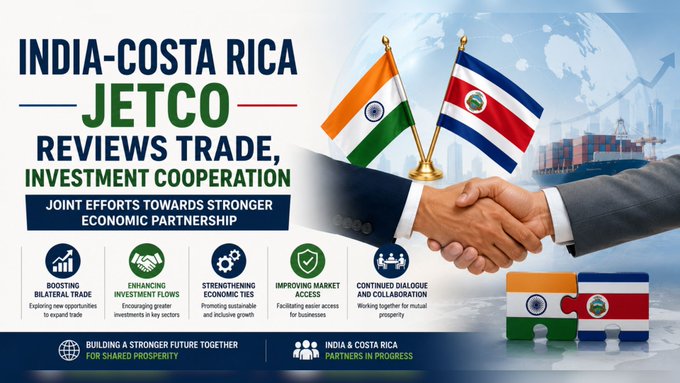
NEW DELHI : The 1st Meeting of the India-Costa Rica Joint Economic and Trade Committee (JETCO) was held virtually on 6-7 July 2026. The meeting was co-chaired by Joint Secretary, Department of Commerce, Ministry of Commerce & Industry, Shri Vimal Anand, from India and General Director of Foreign Trade, Ms. Adriana Castro, from the Republic of Costa Rica.

During the meeting, both sides reviewed bilateral trade and investment relations, exchanged views on their respective trade and investment regimes, and noted with satisfaction the steady growth in bilateral merchandise trade to approximately USD 391 million in 2025–26. They also discussed opportunities to further expand trade and investment.

The two sides exchanged information on their respective standards, accreditation, certification and regulatory frameworks, and explored cooperation in areas such as standards development, conformity assessment, food safety, pharmaceutical regulation and export certification to facilitate trade and reduce technical barriers.

The Indian side highlighted its strengths and identified opportunities for enhanced cooperation in pharmaceuticals, digital technologies, manufacturing and innovation, while the Costa Rican side presented an overview of the Central American trade integration regime and its experience in regional trade negotiations.

The JETCO, established under the Memorandum of Understanding on Economic Cooperation between India and Costa Rica, serves as the principal institutional mechanism for reviewing bilateral trade and investment relations, addressing issues of mutual interest and identifying new avenues for economic cooperation.

Both sides agreed to strengthen business-to-business engagement, promote institutional cooperation, and encourage regular interactions between the concerned Ministries, regulatory authorities and industry. Reaffirming their commitment to deepening bilateral economic ties, they agreed to utilise the JETCO as a key platform for advancing trade, investment and sectoral cooperation.

India’s Trade Deficit with Australia nearly halves to USD 6.5 Billion: Rubix Data Sciences

MUMBAI: Ahead of Prime Minister Narendra Modi’s visit to Australia this week, Rubix Data Sciences has released Rubix Country Insights – Australia, part of its Country Insights series. The report finds Australia’s growth story remains steady, anchored by resilient domestic demand, cooling inflation, robust Asian trade ties, and a deepening partnership with India spanning trade, critical minerals and defence.

The report shows Australia’s GDP is projected to rise from USD 1.84 trillion in 2024 to USD 2.29 trillion by 2028, with real growth of 2% in 2026 moderating to 1.7% in 2027 before recovering to 1.9% in 2028. Inflation, at 4.0% in May 2026, remains above the Reserve Bank of Australia’s 2%-3% target, with the cash rate at 4.35% after three hikes this year. Australia’s goods trade surplus has nearly halved, from USD 97 billion in 2021 to USD 47 billion in 2025, as import growth (4.5% CAGR) outpaced export growth (-0.1% CAGR). Iron ore (23%), coal (13%), natural gas (12%) and gold (11%) dominate exports, while China remains Australia’s top trading partner (27% of imports, 30% of exports).

On India, the report notes that under the four-year-old India–Australia Economic Cooperation and Trade Agreement (ECTA), India’s trade deficit with Australia more than halved to USD 6.5 billion in FY2026, as imports fell (-10% CAGR) faster than exports grew (2% CAGR); all Indian exports have been duty-free into Australia since January 2026. Refined petroleum products account for 37% of India’s exports to Australia, while coal makes up 45% of India’s overall imports from Australia, reiterating how energy trade continues to anchor the bilateral relationship even as it diversifies. Cooperation is also deepening in critical minerals (Australia holds 21 of 49 minerals critical to India) and in defence, marked by 2025’s first Australia-India Defence Ministers’ Dialogue and a Mutual Submarine Rescue Arrangement.

The report also highlights the AUD 5.1 trillion in foreign investment in Australia, with the US (27%), UK (16%), Belgium (9%), Japan (6%), and Hong Kong (3%) being the top investors in 2025. Mining and quarrying (31%), financial and insurance activities (13%), real estate (12%), manufacturing (10%), and wholesale and retail trade (6%) were the top FDI-attracting sectors. The report further covers the 2026-27 Budget’s energy-security and tax-relief measures, new critical minerals and hydrogen tax incentives, the Australia-UAE CEPA, a Vanuatu strategic partnership, rising defence spending toward 3% of GDP by 2033-34, and a cautious approach to AI governance. Fitch and S&P both affirmed Australia’s ‘AAA’ rating with a stable outlook in late 2025.

Commenting on the release, Tushar Bhaskar, President, Rubix Data Sciences, said: “What most conversations about India-Australia trade miss is the minerals dependency running through it. Australia holds 21 of the 49 minerals India has flagged as critical, at a time when India’s clean energy and semiconductor ambitions need exactly that kind of supply security. We feel that is a bigger long-term story than the trade deficit numbers.”

In conclusion, the report paints a picture of an Australian economy growing moderately even as its trade surplus narrows. Meanwhile, its relationship with India is entering a more consequential phase, positioning India as a growing pillar of Australia’s economic and strategic engagement with Asia.

About Rubix Data Sciences –

Rubix Data Sciences Pvt. Ltd. helps you to take prudent credit risks, build a robust supply chain and monitor compliance for your business partners in India and around the world. Rubix helps you collect payments in time from your debtors, helping generate predictable cash flows.

Set up by highly experienced Risk Professionals, the company has been recognised at the IMC Digital Technology Awards in 2020 for the Rubix ARMSTM platform, and in 2021 for the Rubix Early Warning System (EWS). Rubix has also received the prestigious ET BFSI Exceller Award three times in a row: in 2023 for its ground-breaking analytics initiative, ‘SME Income Range Estimation and Financial Ratio Benchmarking’, in 2024 for the Rubix Risk Scoring Model, and in 2025 for Rubix Nexus Check.

The Rubix ARMSTM and Early Warning System (EWS) platforms and their suite of reports, products and services are based on Rubix’s extensive database of structured and unstructured data aggregated from over 120+ sources, customised predictive analytics and proprietary technology.

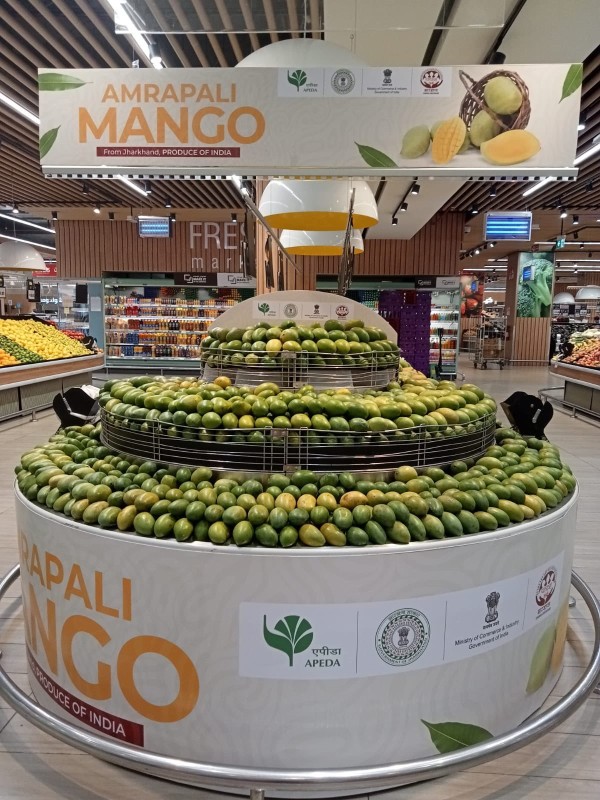
APEDA facilitates commercial export of Amrapali Mangoes from Jharkhand to Dubai

JHARKHAND : The Agricultural and Processed Food Products Export Development Authority (APEDA), under the Ministry of Commerce & Industry, has facilitated the commercial export of 2 metric tonnes (MT) of Amrapali mangoes from the Aspirational District of Gumla and Aspirational Block of Deoghar in Jharkhand to Dubai on July 3, 2026. The consignment was exported by M/s Fair Exports (India) Pvt. Ltd. for retail distribution across Lulu stores in Dubai, marking another milestone in promoting exports from tribal and women-led farmer collectives.

The export consignment comprised premium-quality Amrapali mangoes sourced from three women-led Farmer Producer Companies (FPCs) promoted by Palash – Jharkhand State Livelihood Promotion Society (JSLPS). One metric tonne was sourced from APEDA-registered MVM Baghima Palkot Producer Company Limited and Raidih Agri Producer Company Limited in Gumla district, while the remaining one metric tonne was sourced from Mohanpur Ajeevika Mahila Kisan Producer Society in Deoghar district. The orchards have been developed by tribal women farmers under the Birsa Harit Gram Yojana, implemented in convergence with MGNREGA and supported by the Government of Jharkhand.

The consignment was ceremonially flagged off in the presence of the Deputy Commissioner and Deputy Development Commissioner of the respective districts, along with representatives of APEDA, JSLPS and other line departments. The flag-off symbolised the successful collaboration among APEDA, the Government of Jharkhand, district administrations, women-led FPCs, exporters and development partners in connecting rural producers with international markets.

The export has delivered significant economic benefits to the participating farmers, with members of the women-led FPCs realising nearly 180 per cent higher returns than prevailing local market prices. The initiative demonstrates the potential of export market access in enhancing farmers’ incomes while encouraging greater participation of women producers in export-oriented agriculture. Each of the participating FPCs has more than 1,500 shareholders and collectively represents over 50,000 member farmers, extending the benefits of the initiative to a large farming community.

The export reflects APEDA’s sustained efforts to develop export-ready farmer collectives through capacity building, quality enhancement and market facilitation. In May 2026, APEDA organised a dedicated capacity-building programme in the Palkot area of Gumla district to sensitise members and Board of Directors of eight Farmer Producer Companies on international quality standards, post-harvest handling practices and export procedures, enabling them to meet the requirements of premium overseas markets. Representatives from the district offices of Agriculture, Horticulture, JSLPS, District Industries Centre (DIC) and other line departments also participated in the programme.

Further strengthening its outreach among women entrepreneurs, APEDA’s Regional Office, Kolkata, organised an Export-Oriented Capacity Development Programme for Women Entrepreneurs and Self-Help Groups on September 19, 2025, at Baswariya village in Devipur block of Deoghar district. Around 105 participants, including women entrepreneurs, Self-Help Groups, Farmer Producer Organisations, and officials from the Department of Horticulture, Agriculture Department, NABARD and APEDA, participated in the programme. The session focused on creating awareness about APEDA’s mandate, Financial Assistance Scheme, export opportunities, key export procedures and institutional support available for women entrepreneurs to participate in global agricultural trade.

The initiative highlights the growing export potential of Jharkhand’s horticulture sector and reflects APED