Home Blog Page 235

APSEZ secures “BBB” rating upgrade from S&P, matches India’s sovereign rating

AHMEDABAD: Adani Ports and Special Economic Zone Limited (APSEZ), India’s largest and one of the world’s fastest growing Integrated Transport Operator, announces that S&P Global Ratings has upgraded its long-term issuer credit rating and the issue rating on its senior unsecured notes to “BBB” from “BBB-“, with a “Stable” outlook, elevating APSEZ to a rating level at par with India’s sovereign rating assigned by S&P.

According to a release from APSEZ, the upgrade recognises APSEZ’s robust operating cash flow and financials, underpinned by APSEZ’s resilient business model that has withstood trade tensions across business cycles and competitive pressures within the transportation sector.

Key rating action rationale includes APSEZ’s robust financials can accommodate high growth spending, tightened leverage policy to support healthy financials, and a growing and diversified portfolio of assets to underpin strong cash flows.

“This S&P upgrade is a landmark achievement for the company. Attaining a rating at par with India’s sovereign rating reflects the strength of our business model, the resilience of our cash flows, the quality of our infrastructure assets, and our unwavering commitment to financial discipline”, “This upgrade comes at a time when APSEZ is executing one of the most ambitious growth programs in the global ports and logistics sector and is testament to APSEZ’s disciplined approach to capital allocation,” said Mr. Ashwani Gupta, Whole-time Director and CEO, APSEZ.

Recently, during Jan 2026, JCR assigned APSEZ a “A- / Stable” rating, representing a rare breach of the sovereign threshold by an Indian corporate by an international rating agency.

Technology and AI to Shape the Future of India’s Logistics Ecosystem: Resham Sahi

Ahead of National Logistics Day (June 28), A.P. Moller – Maersk highlights the transformative role of Artificial Intelligence and Generative AI in building smarter, more resilient supply chains.

As India prepares to celebrate National Logistics Day on June 28, global integrated logistics company A.P. Moller – Maersk has underlined the growing importance of technology, particularly Artificial Intelligence (AI) and Generative AI, in transforming India’s logistics and supply chain landscape.

With India’s logistics sector contributing nearly 8% to the country’s GDP, the industry is witnessing rapid digital transformation as businesses increasingly adopt advanced technologies to improve supply chain visibility, operational efficiency, resilience, and decision-making. According to Maersk, the integration of AI-powered solutions is enabling organizations to optimize demand forecasting, inventory management, and risk mitigation, paving the way for more intelligent and connected supply chains.

Sharing her views on the occasion of National Logistics Day, Ms. Resham Sahi, Senior Vice President – Technology and Head of Maersk Technology Centre, Bangalore at A.P. Moller – Maersk, said:

“India’s logistics sector accounts for nearly 8% to the country’s GDP, and is becoming increasingly technology-driven as businesses seek greater visibility, reliability and efficiency across their supply chains. At A.P. Moller – Maersk, we are seeing customers increasingly leverage technology, particularly AI, to unlock actionable insights across their supply chains: from improving demand planning and inventory positioning to identifying risks before they affect operations. The next frontier will be Generative AI, which has the potential to simplify access to operational intelligence, accelerate decision-making and enable supply chain teams to spend less time navigating data and more time driving business outcomes. As we mark National Logistics Day, the future of logistics will be defined by the convergence of physical infrastructure and digital capabilities. Building connected, intelligent supply chains will be essential to strengthening India’s position as a trusted global manufacturing and trade hub.”

Maersk believes that the convergence of robust physical logistics infrastructure with advanced digital capabilities will define the next phase of growth for India’s supply chain ecosystem. The company sees Generative AI playing a pivotal role in democratizing access to operational intelligence, enabling faster business decisions, and helping organizations respond proactively to evolving market dynamics.

As one of the world’s leading integrated logistics companies, A.P. Moller – Maersk serves more than 100,000 customers across nearly 130 countries with a workforce of over 100,000 employees. The company is also committed to achieving net-zero emissions by 2040 across its entire supply chain through investments in new technologies, next-generation vessels, and alternative energy solutions.

With India’s manufacturing and export ambitions continuing to grow, industry leaders believe that technology-led logistics innovation will be instrumental in strengthening the country’s position as a trusted global trade and manufacturing hub.

GIFT City hosts City of London Policy Chairman to deepen UK–India financial cooperation

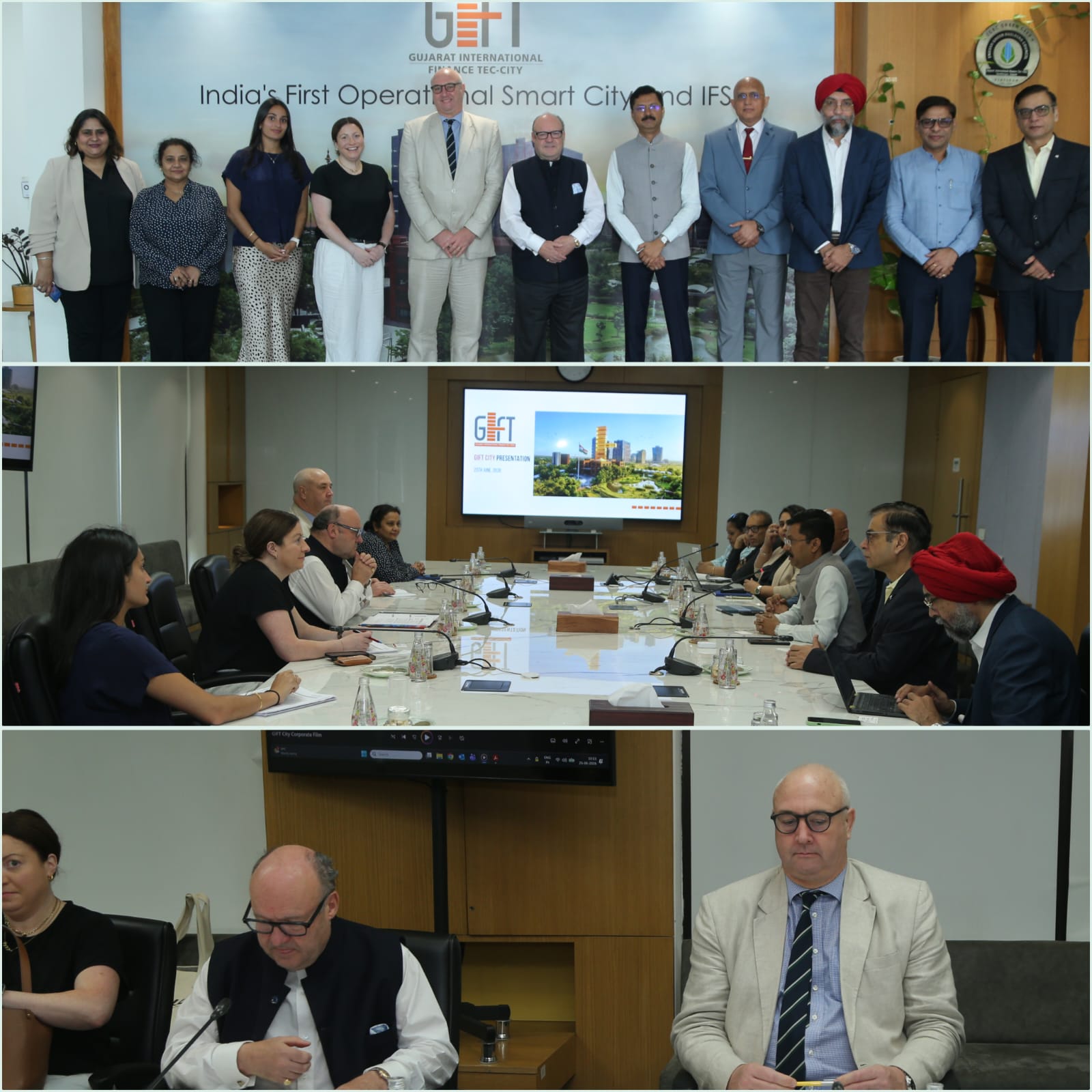
GANDHINAGAR : GIFT City on Friday hosted Chris Hayward, Policy Chairman of the City of London Corporation, for high-level discussions aimed at strengthening financial and economic cooperation between India and the United Kingdom.

The visit comes at a pivotal time following the conclusion of the India–UK Free Trade Agreement (FTA) and ahead of the next India–UK Economic & Financial Dialogue, reflecting the growing momentum in bilateral economic engagement.

During the discussions, both sides explored opportunities to expand collaboration across a range of strategic sectors, including financial and professional services, capital markets connectivity, green finance, social infrastructure financing and the mobilisation of global capital to support India’s long-term economic growth and infrastructure development.

The meeting also focused on leveraging the strengths of GIFT City and the UK’s globally recognised financial ecosystem to facilitate cross-border investments, foster financial innovation and promote sustainable finance initiatives. Participants discussed ways to deepen institutional partnerships and create new avenues for investment flows between the two countries.

As India’s first operational international financial services centre (IFSC), GIFT City has emerged as a key gateway for global financial institutions, offering a world-class regulatory framework and business environment for banking, insurance, asset management, capital markets and fintech. The centre is playing an increasingly important role in attracting international investments and positioning India as a global financial hub.

The engagement with the City of London Corporation is expected to further reinforce financial sector cooperation between the two countries, complementing the broader objectives of the recently concluded FTA. Enhanced collaboration is anticipated to boost capital market integration, encourage sustainable investments and create new opportunities for businesses and investors in both India and the United Kingdom.

Officials expressed confidence that closer cooperation between GIFT City and the UK’s financial ecosystem would unlock fresh avenues for innovation, investment and economic growth while strengthening the long-standing strategic partnership between the two nations.

Mazagon Dock Shipbuilders Limited lays keel of fourth next gen offshore patrol vessel for ICG

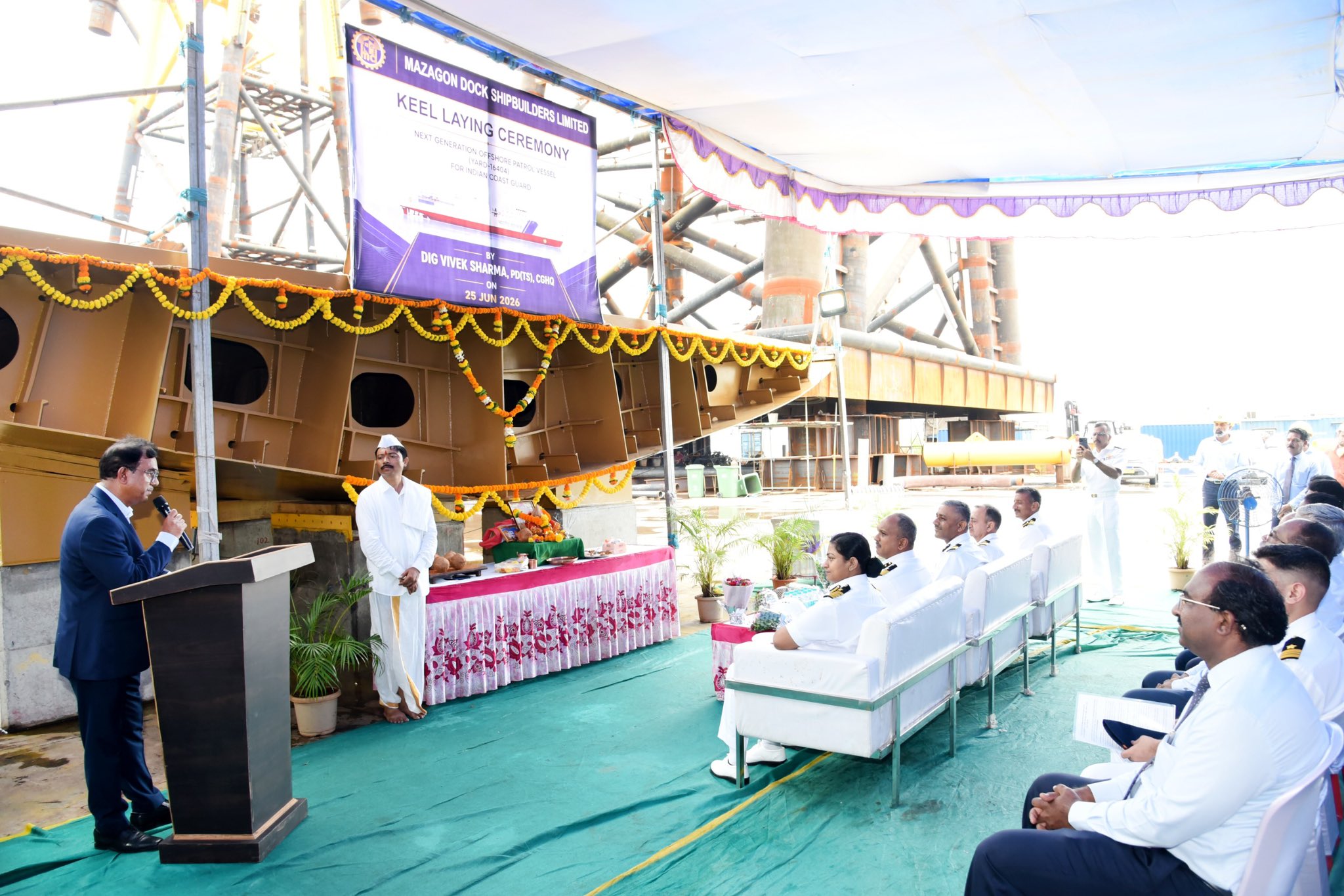
MUMBAI : Mazagon Dock Shipbuilders Limited (MDL) has achieved another milestone in India’s indigenous shipbuilding programme with the keel laying of the fourth Next Generation Offshore Patrol Vessel (NGOPV) under Project 06 for the Indian Coast Guard.

The keel laying ceremony was held at MDL’s Nhava Yard in the presence of Deputy Inspector General Vivek Sharma, Principal Director (Technical Services), Indian Coast Guard, Rajeev Ranjan, Executive Director (Production), MDL, along with senior officials from MDL, the Indian Coast Guard and classification society representatives.

The ceremony marks a significant milestone in the construction of the NGOPVs, signifying the successful transition from the design and fabrication phase to the assembly of the vessel’s main hull structure. Keel laying is regarded as one of the most important stages in shipbuilding, symbolising the formal commencement of a ship’s construction.

MDL CEREMONY Mazagon Dock Shipbuilders Limited lays keel of fourth next gen offshore patrol vessel for ICG

The Next Generation Offshore Patrol Vessels are being built to enhance the operational capabilities of the Indian Coast Guard in safeguarding India’s vast coastline and Exclusive Economic Zone (EEZ). The vessels will undertake a wide range of missions, including maritime surveillance, coastal security, anti-smuggling and anti-piracy operations, search and rescue missions, protection of offshore assets, fisheries enforcement and humanitarian assistance during natural disasters.

Designed with advanced navigation, communication and surveillance systems, the NGOPVs will offer improved endurance, greater operational flexibility and enhanced capability to operate across diverse maritime environments. The project is expected to significantly strengthen the Coast Guard’s ability to respond to emerging maritime security challenges.

The programme is also a major boost to India’s indigenous defence manufacturing ecosystem under the Atmanirbhar Bharat initiative. Construction of the vessels at MDL is expected to generate substantial employment opportunities while promoting the participation of domestic industries, including micro, small and medium enterprises (MSMEs), in the defence supply chain.

The keel laying of the fourth NGOPV underscores India’s continued commitment to self-reliance in defence production, strengthening maritime security and advancing indigenous shipbuilding capabilities to support the nation’s long-term strategic interests.

Adani Airports to invest Over ₹20,000 crore in integrated airport cities across India

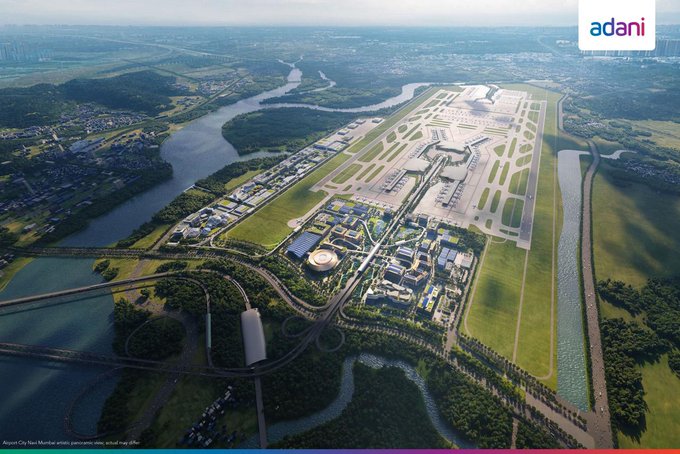
KOLKATA : Adani Airports Holdings Limited is developing integrated airport cities across six airports in five states as part of a major infrastructure expansion aimed at transforming airports into multi-purpose urban destinations.

The company plans to invest more than ₹20,000 crore in the first phase of the project, covering over 655 acres of land. The airport city developments are designed to create vibrant commercial and lifestyle hubs that extend well beyond traditional aviation functions.

The integrated airport cities will feature a mix of hotels, office spaces, retail outlets, restaurants, entertainment facilities and convention centres, creating business, hospitality and leisure ecosystems directly connected to airport terminals.

The developments will also be seamlessly linked with Metro networks and city transport infrastructure, enabling improved connectivity for passengers, businesses and local communities while supporting urban mobility.

The initiative aligns with the growing global trend of airports evolving into economic and commercial centres that generate employment, attract investment and stimulate regional development. By integrating aviation infrastructure with commercial real estate and public transport, the airport cities are expected to enhance passenger experience while unlocking new revenue streams and supporting long-term economic growth.

The investment marks one of the largest airport-led urban development programmes in India and reflects the increasing role of airports as catalysts for sustainable urban expansion and economic activity.

NimbusPost appoints Ankit Sood as Chief Executive Officer

GURUGRAM: NimbusPost, India’s leading tech-enabled logistics platform for D2C brands, today announced the appointment of Mr. Ankit Sood as Chief Executive Officer.

Ankit brings over 20 years of experience scaling high-growth businesses across logistics, consumer internet, and enterprise technology in India and APAC. He has held senior leadership roles across some of India’s most recognised new-age companies including Shiprocket, Zomato, and OYO, leading businesses through rapid scale, international expansion, and technology transformation in PE and VC-backed environments.

“Logistics operations for D2C brands today are fundamentally broken, often managing multiple courier partners, fragmented data streams, and manual processes that limit efficiency and growth. As the D2C logistics market matures, competitive advantage will come not from network breadth alone, but from intelligent products, AI-driven decision-making, and the ability to serve as a true growth partner for brands. NimbusPost is uniquely positioned to address these challenges at scale and help shape the future of logistics for digital-first businesses. I’m excited to join the company at this pivotal stage and be part of its next phase of growth,” said Ankit Sood, CEO, NimbusPost. 

Under Ankit’s leadership, NimbusPost is accelerating investment in AI-powered logistics intelligence, a reimagined seller experience, and a new technology platform launching early next quarter, designed to make logistics a competitive advantage for India’s growing D2C ecosystem.

NimbusPost serves over 1,00,000 brands and resellers across India through a multi-courier delivery network, cost-efficient warehousing, and a suite of value-added services.

Cargo Force eyes Double-Digit Growth as UK–India FTA takes effect

WEMBLEY (UK); Cargo Force, a leading cross-border logistics provider operating on the United Kingdom–India corridor, expects a significant increase in shipping demand following the implementation of the UK–India Free Trade Agreement (FTA) on 15 July 2026. The company anticipates double-digit growth in shipment volumes over the next 12–18 months, driven by expanding trade activity, stronger economic ties, and rising demand from consumers, families, and small businesses moving goods between the two countries.

The UK–India corridor is witnessing unprecedented momentum. Supported by a UK-Indian diaspora of nearly 1.9 million people and annual remittance flows estimated at USD 12–13 billion, demand for reliable and efficient logistics services continues to grow. The upcoming FTA is expected to further strengthen bilateral commerce by reducing trade barriers, improving market access, and creating new opportunities for businesses and individuals engaged in cross-border transactions.

Against this backdrop, Cargo Force has demonstrated strong operational performance and resilience. The company successfully fulfilled more than 52,000 shipments over the past two years, maintaining an annual run rate of approximately 26,000 shipments while sustaining a 95% delivery success rate throughout a major technology migration programme.

Commenting on the evolving opportunity, Asad Ali Mirza, Director, Cargo Force Limited, said, “The UK–India corridor remains a key market for us, and we are witnessing growing demand driven by stronger trade ties, increasing cross-border activity, and a large diaspora presence. The upcoming Free Trade Agreement is expected to further boost shipments, particularly from emerging cities beyond traditional metro markets.”

He added, “Delivering over 52,000 shipments in the last two years while maintaining a 95% delivery success rate reflects the strength of our operations and customer-first approach. We are well positioned to support the next phase of growth in UK–India trade and logistics.”

Notably, Cargo Force is witnessing growing demand from beyond India’s traditional metropolitan gateways such as Delhi and Mumbai. Cities including Ahmedabad, Chandigarh, Pune, Jaipur, Lucknow, Coimbatore, Kochi, Indore and Surat are emerging as important shipment destinations, reflecting broader economic growth and increasing international engagement from Tier II and Tier III markets.

The company expects increasing demand across multiple shipment categories, including personal effects, household goods, gifts, e-commerce parcels, SME exports, and business shipments. As trade flows expand and customer expectations evolve, Cargo Force continues to invest in technology, operational efficiency, and service capabilities to support growing volumes while maintaining reliability and transparency.

With bilateral relations entering a new phase and trade expected to accelerate under the FTA framework, Cargo Force believes the UK–India logistics sector is poised for sustained long-term growth, creating new opportunities for businesses, entrepreneurs, and consumers on both sides of the corridor.

About Cargo Force Limited: 

Cargo Force Limited is a UK-based freight forwarding and logistics company specializing exclusively in cargo and courier services between the United Kingdom and India. Established in 2009, the company has 17 years of experience providing reliable, cost-effective, and seamless door-to-door shipping solutions for both individuals and businesses.

DPIIT notifies Transition Facilitation (Quality Control) order, 2026 to strengthen supply chains and facilitate industry compliance

NEW DELHI : In a significant step towards strengthening India’s quality ecosystem and enhancing industrial competitiveness, the Department for Promotion of Industry and Internal Trade (DPIIT), Ministry of Commerce and Industry, has notified the Transition Facilitation (Quality Control) Order, 2026. The Order introduces a framework aimed at balancing regulatory compliance with innovation, technological advancement and supply chain resilience.

The Government of India is working to build a robust quality ecosystem by ensuring the availability of safe, reliable and standards-compliant products. As part of this effort, DPIIT has notified Quality Control Orders (QCOs) for critical products to safeguard consumer interests, improve product reliability and enhance the competitiveness of domestic industry through standardisation and improved manufacturing practices.

Building upon this objective, the Transition Facilitation (Quality Control) Order, 2026 introduces an alternative risk-based compliance mechanism to facilitate a smooth transition for industry while maintaining quality assurance and consumer protection.

The Order enables domestic industry to procure supplies from manufacturers holding licences under Scheme II of Schedule II of the Bureau of Indian Standards (Conformity Assessment) Regulations, 2018, instead of Scheme I (ISI Mark Scheme) of BIS. Permissions under the mechanism will be granted based on technical capability, demonstrated compliance history and commitment towards technology advancement or adoption, development of design and research capabilities, innovation and strengthening domestic supply chain capabilities.

The Order also extends its benefits to manufacturers that have demonstrated consistent adherence to QCO requirements over a continuous period of three years without any default. The provision recognises sustained compliance with quality requirements and encourages continued adherence to prescribed standards.

The reform seeks to facilitate industry compliance while maintaining quality standards. By providing an alternative compliance mechanism, the Order is expected to support technological modernisation, innovation and the strengthening of India’s manufacturing ecosystem.

The initiative is expected to strengthen domestic value chains, promote technology advancement, reduce compliance bottlenecks and enhance India’s integration with global supply chains, while reinforcing consumer confidence in the quality and safety of products available in the Indian market.

APEDA facilitates first Biscuit Export Shipment from Varanasi to Oman following India-Oman CEPA

NEW DELHI : The Agricultural and Processed Food Products Export Development Authority (APEDA), under the Ministry of Commerce & Industry, Government of India, has facilitated the export of a 40 metric tonne (MT) consignment of biscuits from Varanasi, Uttar Pradesh, to Oman. The shipment marks the first export consignment of biscuits from Varanasi to Oman following the signing of the India-Oman Comprehensive Economic Partnership Agreement (CEPA), highlighting the growing export potential of processed food products from the region.

The export consignment has been undertaken by M/s Shree Tirupati Balajee Industries Pvt. Ltd., a manufacturer-exporter based in Varanasi. The initiative represents a significant step towards integrating the region’s processed food sector with international markets and expanding the global reach of value-added food products from Uttar Pradesh.

APEDA has been actively supporting the exporter through various export promotion initiatives, including participation in major domestic and international trade fairs such as AAHAR 2026 and Gulfood 2026. These interventions have helped enhance the visibility of products manufactured in the Varanasi region and facilitated access to overseas markets.

The consignment will commence its journey from Varanasi and move to the Inland Container Depot (ICD), Kanpur, for customs clearance before being transported to Jawaharlal Nehru Port (JNPT) for onward shipment to Oman.

The export assumes added significance in the backdrop of strengthening trade and economic relations between India and Oman under the framework of the Comprehensive Economic Partnership Agreement (CEPA). The agreement is expected to facilitate greater market access and create new opportunities for Indian exporters, particularly in the agricultural and processed food sectors.

APEDA has indicated that a series of additional shipments to the Oman market are planned in the coming months, reflecting growing demand and market opportunities for processed food products from the region.

The first-ever biscuit export shipment from Varanasi to Oman, following the signing of the India-Oman CEPA, reflects the growing capabilities of the region’s food processing sector and underscores APEDA’s continued efforts to promote exports from emerging agri-export hubs across the country.

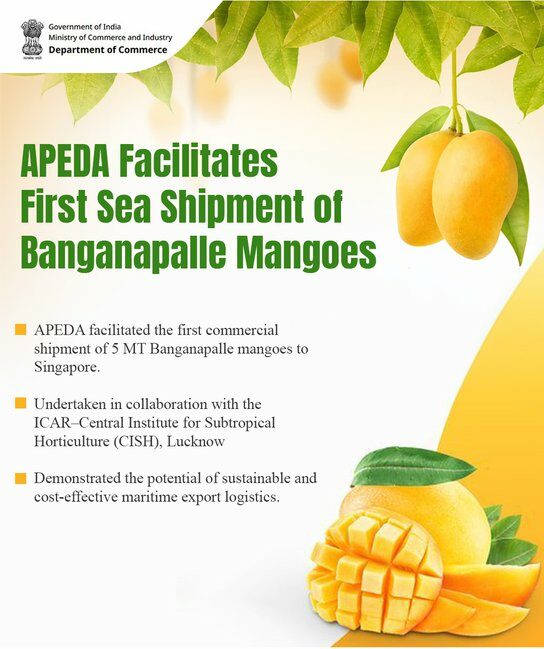
APEDA facilitates first commercial sea shipment of premium Banganapalle Mangoes from India to Singapore

NEW DELHI : In a significant boost to India’s fresh produce export sector, the Agricultural and Processed Food Products Export Development Authority (APEDA), under the Ministry of Commerce & Industry, in collaboration with the ICAR–Central Institute for Subtropical Horticulture (CISH), Lucknow, has successfully facilitated the first commercial sea shipment of premium Banganapalle mangoes from India to Singapore.

The consignment, comprising 5 metric tonnes (MT) of Banganapalle Mangoes, was exported by M/s Osum Food Solutions LLP on 11 June 2026 and arrived in Singapore on 24 June 2026. The successful shipment marks an important milestone in promoting cost-effective and sustainable export logistics for India’s horticultural produce while expanding market access for premium Indian mangoes.

The mangoes were sourced from Good Agricultural Practices (GAP)-certified orchards in Andhra Pradesh and processed and packed at an APEDA-recognised packhouse in Karnataka. The entire consignment was handled in accordance with the quality and phytosanitary requirements prescribed by Singapore.

Upon arrival, the importer, EC-Links Pte Ltd, Singapore, reported excellent fruit quality, appreciating the mangoes for their sweetness, uniform ripening, shelf life and overall phytosanitary condition. The consignment successfully met all import requirements, demonstrating the effectiveness of scientific post-harvest management practices and cold-chain logistics during sea transportation.

The export also generated substantial economic benefits for farmers. While domestic market prices ranged between ₹25 and ₹26 per kilogram, the export consignment realised approximately ₹50 per kilogram, nearly doubling farm-gate returns and creating enhanced value for growers.

The successful shipment highlights the growing viability of sea freight as a cost-effective, environmentally sustainable and commercially scalable mode of transport for fresh fruits. Supported by robust cold-chain infrastructure, scientific handling practices and efficient logistics management, maritime transport offers significant potential to strengthen the global competitiveness of Indian horticultural exports.

Banganapalle, one of India’s most renowned mango varieties, is prized for its golden-yellow colour, pleasant aroma, fibreless pulp and rich sweetness. The variety enjoys strong demand in international markets and offers considerable potential for further expansion of India’s mango exports.

APEDA has been actively promoting the use of sea freight for fresh fruit and vegetable exports through market development initiatives, infrastructure support and capacity-building measures for exporters to meet international quality standards. The successful shipment to Singapore is expected to encourage wider adoption of maritime transport for horticultural exports and further strengthen India’s reputation as a reliable supplier of high-quality agricultural products in global markets.

The initiative aligns with the Government of India’s broader objective of boosting agricultural exports, enhancing farmers’ incomes and expanding the global footprint of Indian agricultural produce through efficient and sustainable export pathways.