Home Blog Page 252

PM Modi meets with the PM of the Slovak Republic

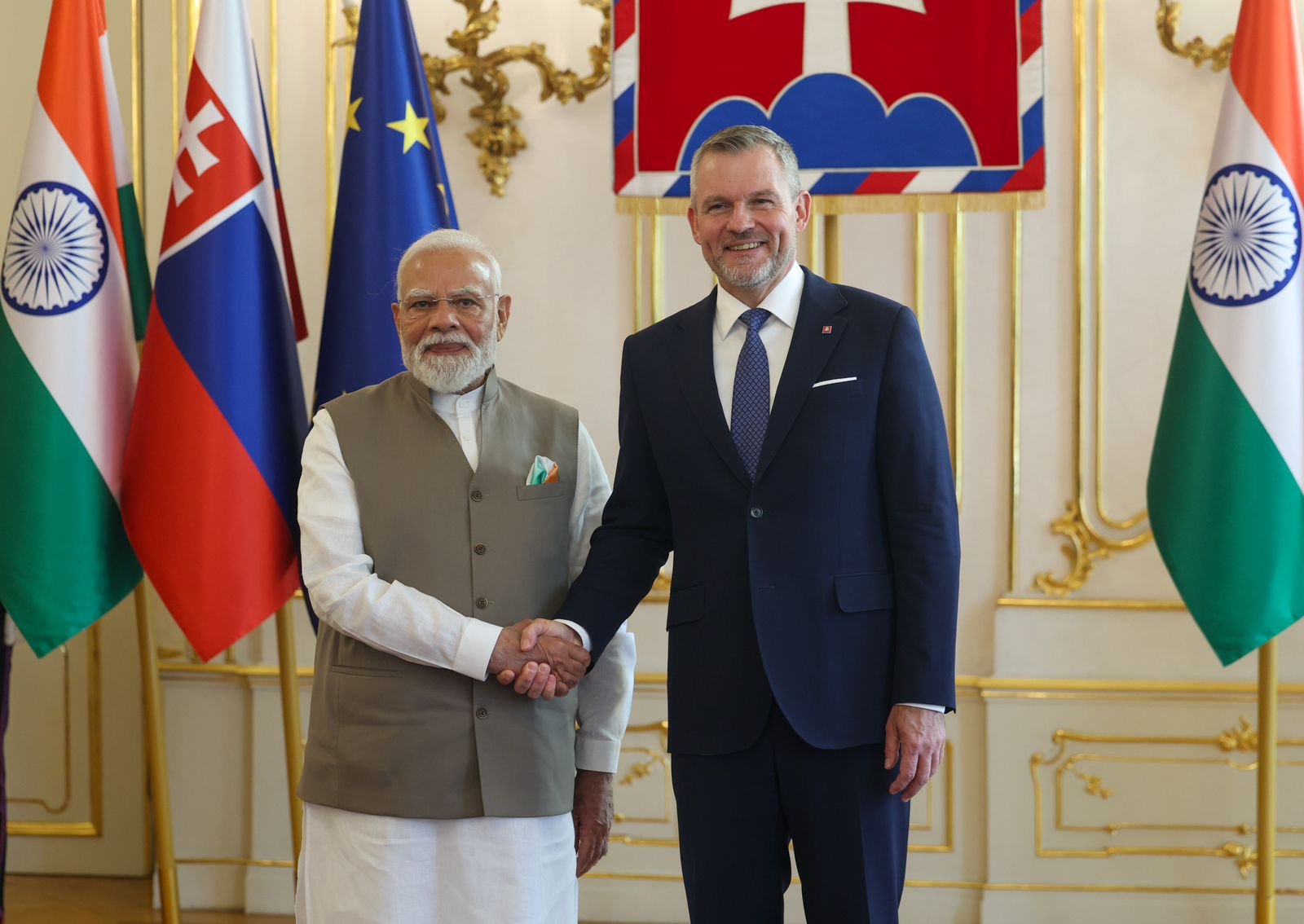
NEW DELHI : At the invitation of His Excellency Robert Fico, Prime Minister of the Slovak Republic, His Excellency Shri Narendra Modi, Prime Minister of the Republic of India, paid a State Visit to the Slovak Republic on 15 June 2026.

The visit is the first by an Indian Prime Minister to Slovakia since its independence in 1993, marking a historic milestone and charting a new course in the enduring friendship between the two nations. Since the establishment of diplomatic relations in 1993, India and Slovakia have developed a traditional friendship and multifaceted cooperation based on trust, equality and mutual respect.

Building on the historic nature of this visit and their shared commitment to deepen bilateral cooperation, the Prime Minister of the Republic of India and the Prime Minister of the Slovak Republic agreed to elevate the relationship to a Comprehensive Partnership between the Republic of India and the Slovak Republic. The Comprehensive Partnership aims to take bilateral relations to a new level, strengthen existing cooperation mechanisms and explore new avenues for deepening cooperation, both bilaterally and multilaterally.

Recognising the growing geopolitical, economic and technological importance of the Indo-Pacific, the two leaders acknowledged the value of a stronger partnership between India and Slovakia in support of mutually beneficial cooperation, regional connectivity, open international trade, freedom of navigation, peaceful resolution of disputes and a rules-based international order.

Both leaders underscored the importance of regular high-level exchanges and sustained political dialogue, and agreed to enhance exchanges of delegations at all levels. The two sides also agreed to enhance parliamentary exchanges, contacts and cooperation with a view to promoting greater mutual understanding and sharing of legislative experiences and best practices.

The leaders reaffirmed their commitment to multilateralism, with the United Nations at its core, and to a rules-based international order, while supporting comprehensive reforms of multilateral institutions, including the United Nations, particularly the United Nations Security Council, to make them more representative, inclusive, effective and reflective of contemporary geopolitical realities. The leaders stressed on the urgent need to expand the UN Security Council in both permanent and non-permanent categories. In this context, India appreciated Slovakia’s continued support for India’s permanent membership in a reformed and expanded UN Security Council. The two leaders also agreed to continue consultations and coordination on their respective candidacies in international organisations and to exchange views and cooperate closely in global forums, including the United Nations. The two leaders also discussed the importance of upholding the global nonproliferation architecture. Slovakia reaffirmed its constructive approach to India’s membership of the Nuclear Suppliers Group.

The leaders agreed to support the development of cooperation with regional groupings such as the Slavkov 3, Visegrad 4 and 3 Seas Initiative, including interconnected and mutually beneficial infrastructure projects that promote connectivity, sustainable economic growth and regional integration. The two sides further reaffirmed their commitment to a free, open, peaceful and prosperous Indo-Pacific, based on respect for international law, sovereignty and territorial integrity, including the United Nations Convention on the Law of the Sea.

The leaders underscored the importance of strengthening defence and security cooperation as one of the key pillars of the bilateral partnership. They agreed to encourage regular consultations and exchanges between their respective defence authorities to explore opportunities for enhanced collaboration, including in defence technologies, capacity building, research and development, and defence industrial cooperation. In this context, the leaders welcomed the signing of the Letter of Intent on Defence Cooperation between the two sides, which will foster mutually beneficial partnerships in the defence sector.

The leaders recognised the growing importance of strengthening cooperation in disaster risk reduction and resilience-building and agreed to enhance collaboration in the areas of resilient infrastructure, capacity building, knowledge sharing and institutional cooperation.

The leaders agreed to strengthen cooperation in the protection of critical information infrastructure and in preventing and countering cybercrime, while promoting an open, secure, accessible, stable, interoperable, resilient and peaceful digital space. The leaders also expressed their commitment to supporting each other in safeguarding information technology systems against emerging quantum threats to cryptography, including through preparedness for post-quantum security transitions. In this context, they noted that such cooperation would be further facilitated by the Memorandum of Cooperation signed in the field of critical infrastructure protection and postquantum cryptography.

The two leaders unequivocally condemned terrorism in all its forms and manifestations, including cross-border terrorism, and strongly condemned the heinous terrorist attack perpetrated in Pahalgam, Jammu and Kashmir, on 22 April 2025. They agreed to establish a Joint Working Group on Counter- Terrorism. They called for concerted international efforts to combat terrorism in a comprehensive and sustained manner. The leaders reaffirmed their commitment to strengthening bilateral and multilateral cooperation in counterterrorism, including within the framework of the United Nations, and called for strong and decisive action against terrorists and terrorist entities, including those designated by the United Nations Security Council 1267 Sanctions Committee, as well as their affiliates, proxies, sponsors, financiers and supporters. They further underscored the importance of holding perpetrators, organisers and sponsors of terrorist acts accountable and agreed to work closely towards the early finalisation and adoption of the Comprehensive Convention on International Terrorism (CCIT) within the United Nations framework.

Welcoming the conclusion of negotiations on the India–EU Free Trade Agreement in January 2026 and the new Joint India–EU Comprehensive Strategic Agenda, the two leaders noted that the FTA will unlock new opportunities for trade and investment and called for its early signing and timely implementation to realise the full potential of trade and investment cooperation by diversifying critical value chains and opening new markets.

The leaders agreed to further strengthen the role of the India–Slovakia Joint Economic Committee in identifying and promoting high-potential areas of economic cooperation between the two countries. They also committed to exploring avenues to significantly enhance bilateral trade and two-way investment across sectors such as automotive, electronics and other advanced manufacturing industries, leveraging Slovakia’s well-developed industrial ecosystem and India’s scale, innovation ecosystem and technological capabilities, with a particular focus on high value-added collaboration.

The two sides agreed to strengthen bilateral cooperation to achieve netzero emissions, focusing on the exchange of technologies for the green energy transition and promoting clean, reliable and resilient energy systems.

The leaders agreed to enhance cooperation in the energy sector with a view to promoting energy security, sustainability and resilience through diversification of energy sources, including nuclear energy and geothermal power. They expressed their intent to deepen collaboration through joint research, exchange of expertise and capacity-building initiatives in areas of mutual interest.

The leaders agreed to strengthen cooperation in the fields of meteorology and hydrology, including through the sharing of expertise and best practices in the efficient and sustainable management of water resources and dam safety. They further expressed their intent to promote collaboration in areas such as source sustainability, rural drinking water quality monitoring, water treatment technologies, capacity building and community participation, and underscored the importance of developing climate-resilient rural drinking water infrastructure to enhance water security and ensure sustainable access to safe drinking water.

Recognising connectivity as a strategic pillar of the partnership, the two sides underscored the importance of promoting joint ventures, technology transfer, innovation and skills development in the automotive and railway sectors, with a view to enhancing competitiveness and generating new employment opportunities. They further noted the potential of Slovakia’s position as a Central European transport hub and India’s large-scale manufacturing capabilities to boost trade, investment and connectivity. They also encouraged exploring of direct air connectivity between India and Slovakia to facilitate growing economic, business and people-to-people exchanges.

The two leaders appreciated the successful outcomes of the AI Impact Summit 2026 in Delhi, attended by H.E. Mr Peter Pellegrini, President of the Slovak Republic. The two sides welcomed the signing of the Memorandum of Understanding on Digital Technologies, which will provide a structured framework for deepening cooperation in the digital domain. They agreed to further strengthen collaboration in emerging areas such as artificial intelligence, semiconductors, start-ups, innovation ecosystems, research institutions and technology companies, with a view to fostering innovation-led growth and mutually beneficial partnerships. The two sides also agreed to explore cooperation in new and emerging technologies, including 5G use cases, 6G standardisation, Internet of Things (IoT) and machine-to-machine (M2M) applications.

The two leaders agreed to explore opportunities to strengthen cooperation between their respective space ecosystems in the field of satellite technology and its applications. They also underscored the importance of fostering exchanges between scientific and research institutions, as well as industry stakeholders, to encourage innovation and the development of advanced space technologies.

The leaders highlighted the need to maintain regular dialogue and deepen cooperation in the field of healthcare, with particular emphasis on pharmaceutical research and development, digital health solutions and the strengthening of human resources for health. The two sides also underscored the importance of sharing best practices in public health management and leveraging digital technologies to build more resilient, efficient and patientcentric healthcare systems, consistent with their respective national priorities.

The two leaders agreed to encourage enhanced mobility of students, academics and researchers, with particular emphasis on STEM and humanities disciplines, in order to promote deeper educational and scientific exchanges. They took note of the existing arrangements and collaborations between higher education institutions of the two countries and encouraged their further expansion and diversification. The two sides also welcomed the conclusion of a Memorandum of Understanding between the respective Ministries of Education in the field of higher education and research, which would provide a structured framework for strengthening academic linkages and fostering long-term institutional partnerships.

The leaders agreed to further promote cultural exchanges, tourism and people-to-people contacts with a view to deepening mutual understanding and strengthening the bonds of friendship between the peoples of India and Slovakia. They emphasized the importance of expanding cultural cooperation through regular exchanges of artists and cultural troupes, the organisation of exhibitions and participation in festivals, as well as by encouraging greater tourism flows in both directions. The leaders also welcomed the signing of the Memorandum of Understanding on Audio-visual Creation, which will provide a structured framework for collaboration in film and media production and further enhance cultural connectivity between the two countries.

The leaders expressed support for the orderly, safe and legal mobility of skilled professionals. They took note of the Comprehensive Framework of Cooperation on Mobility agreed between India and the European Union in January 2026. They welcomed the signing of the Memorandum of Understanding on Cooperation in the Field of Labour Migration to facilitate mobility and promote the exchange of information between the relevant authorities of India and Slovakia. The two sides also agreed to work towards the early conclusion of a Social Security Agreement, which would contribute to safeguarding the welfare and social protection of working professionals engaged in mobility between India and Slovakia.

The leaders noted that cooperation on consular matters remained an area of continued interest to both countries, given the growing movement of people and expanding people-to-people ties. In this context, they agreed to establish a mechanism for regular consular consultations between their respective consular authorities to facilitate cooperation on consular matters.

The leaders agreed to regularly review the implementation of the Comprehensive Partnership at the appropriate functional level.

Both leaders agreed that the present visit represents a significant step forward in transforming this India-Slovakia relationship and committed to taking bilateral relations forward into a new phase of engagement.

The Prime Ministers welcomed the announcements made and the MoUs signed, which are available on the MEA website.

Prime Minister Modi thanked Prime Minister Fico and the people of Slovakia for the warm hospitality extended to him and his delegation. Both leaders agreed to maintain the momentum of high-level exchanges.
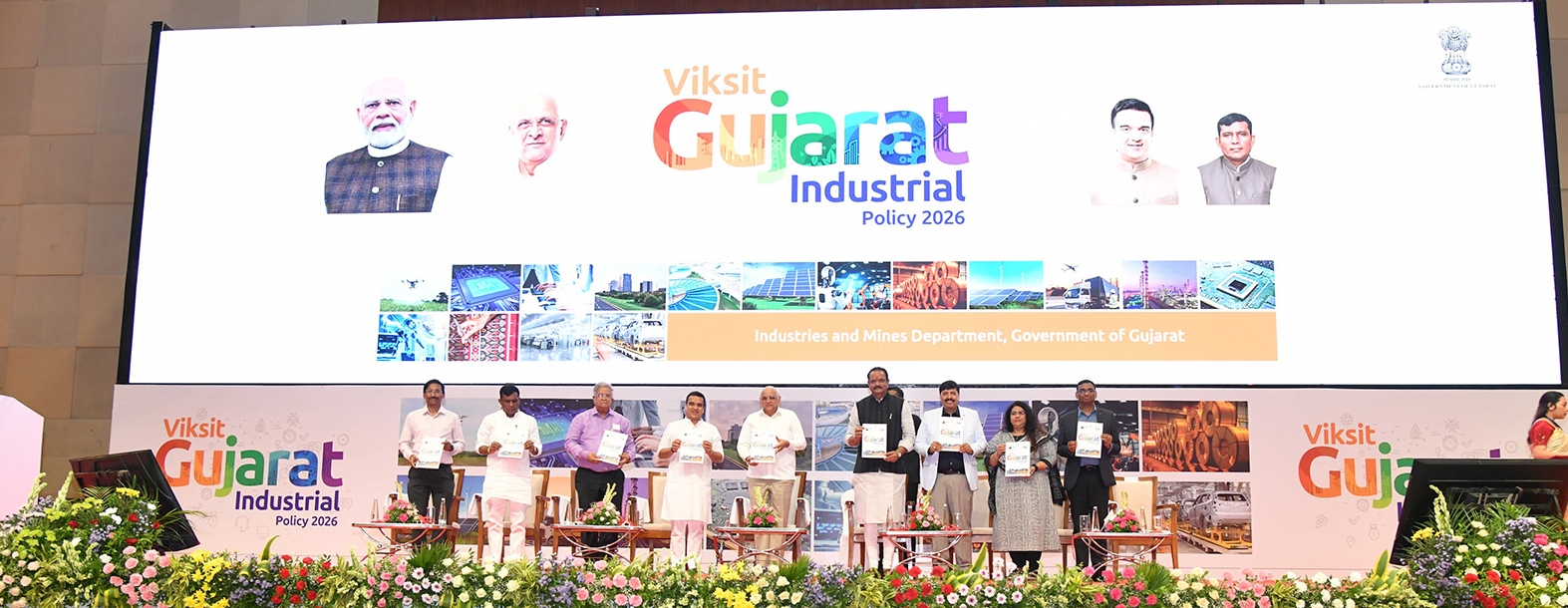
Gujarat unveils Industrial Policy 2026, targets ₹10 lakh crore investment in five years

GANDHINAGAR: Gujarat Governement unveiled its much-awaited Viksit Gujarat Industrial Policy 2026 on Monday, 15 June. The policy was launched by Chief Minister Shri Bhupendra Patel in the presence of Deputy Chief Minister Shri Harsh Sanghavi, and other minister at Mahatma Mandir in Gandhinagar.

The new policy aims at taking a quantum leap in attracting domestic and global investment through an enabling, pedictable and future-ready business environment. Positioning Gujarat as global R&D hub, is among top priorities in the new policy.

The policy aims to attract investments worth ₹10 Lakh crore in next five years, officials said.

“Gujarat has always been at the forefront of India’s industrial growth. With this policy, we are taking a decisive step towards building globally competitive industries, attracting next-generation investments, and strengthening our integration with global value chains,” Chief Minister Shri Bhupendra Patel said on the occasion.

Driven by the aim of Viksit Gujarat se Viksit Bharat@2047, the Viksit Gujarat Industrial Policy 2026 consists of several initiatives and industry-friendly incentives that are set to accelerate development and growth in the state, a government statement said.

“It is anchored in the vision of “Living Well” and “Earning Well,” aiming to empower enterprises while creating high-quality employment opportunities for the youth. The vision of Aatmanirbhar Bharat further guides this policy to create impetus for strengthening domestic capabilities while reducing reliance on imports.” read the statement.

The goal of Viksit Gujarat 2047 with a $3.5 Trillion economy, necessitates the reimagination of regional ecoomic planning in the state, where each region, district and taluka actively contribute to this objective, the policy document reads.

“To position Gujarat as a globally competitive, innovation-driven and sustainable industrial powerhouse with focus on value addition, advanced manufacturing ad deeper value chains, thereby contributing effectively to the realisation of Viksit Gujarat se Viksit Bharat @2047,” it reads.

Decongest cities and enhance urban livability
The policy shall be valid for a period of five years starting from 1 June, 2026.

The policy introduces enhanced flexibility by allowing large and mega units to choose an optimal mix of capital subsidy, interest subsidy and power tariff assistance in line with their project structures and financial viability.

“Large Units in Thrust Sectors will have the option to choose a combination of capital subsidy, interest subsidy and power tariff, subject to maximum incentive ceiling of 25% of eFCI and 35% of eFCI for Category B and Category A Talukas respectively,” it reads.

The new policy has revised definition of MSMEs as per the recent amendments by the Government of India. MSMEs will have the option to choose a combination of capital subsidy, interest subsidy and power tariff, subject to maximum incentive ceiling of 35% of eFCI and 45% of eFCI for Category B and Category A Talukas respectively, the policy reads.

“With a strong emphasis on R&D, emerging technologies, and innovation-led growth, this Policy will enable Gujarat to lead India’s transition into a knowledge-driven and technology-intensive economy,” Deputy Chief Minister Shri Harsh Sanghavi said.

To promote sectors with high employment and strategic value, the industrial policy provides special incentive provisions for priority industries such as Sports Goods And Equipment, Toys, Footwear, Robot and Drones, along with any other sectors as may be notified from time to time.

Gujarat at a Glance
Over the past two decades, Gujarat’s GDP has grown 20 times, demonstrating a strong and consistent growth trajectory.

“This sustained growth reflects rapid, large-scale industrial development anchored in a clear long-term vision, stable governance and an investor-friendly approach – a legacy set by the Prime Minister of India Shri Narendra Modi during his tenure as the Chief Minister of Gujarat,” said the government statement.

Carrying forward this legacy, Gujarat, under the leadership of Chief Minister of Gujarat Shri Bhupendra Patel, has grown multifold to$ 329.70.10 Billion, notably contributing 8.2% of India’s GDP, it said.

Sarbananda Sonowal highlights Northeast’s transformative growth at North East India Infrastructure Summit & Exhibition 2026

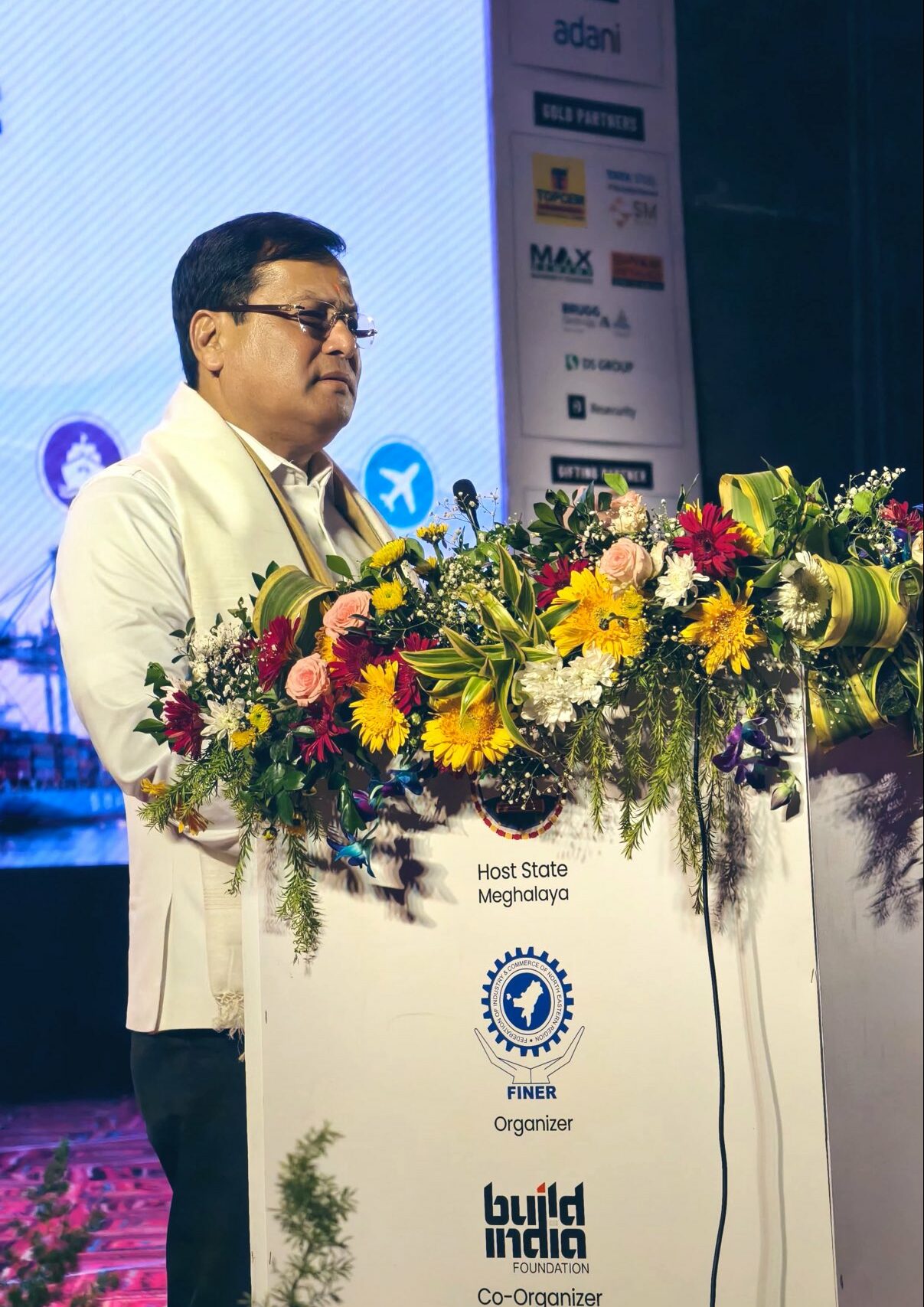
SHILLONG : Union Minister of Ports, Shipping and Waterways, Shri Sarbananda Sonowal, addressed the North East India Infrastructure Summit & Exhibition 2026 here in Shillong, underscoring the remarkable transformation of the Northeast over the past 12 years under the visionary leadership of Hon’ble Prime Minister Shri Narendra Modi.

Addressing policymakers, industry leaders, investors, and stakeholders, the Minister highlighted the Northeast’s emergence as a strategic growth engine and a vital gateway connecting India with Southeast Asia.

North East India Infrastructure Summit Exhibition 2026 Sarbananda Sonowal highlights Northeast’s transformative growth at North East India Infrastructure Summit & Exhibition 2026

“The Northeast has truly become the fulcrum of India’s Act East Policy and a vibrant gateway to Southeast Asia. Guided by Prime Minister Modi ji, the Ashtalakshmi story is unfolding at an accelerated pace, driving an inclusive, sustainable, and globally competitive future,” Shri Sonowal said.

He noted that the Government of India has undertaken unprecedented investments in multimodal connectivity, logistics infrastructure, inland waterways, road and rail networks, aviation, digital infrastructure, and border trade facilities across the region.

Emphasising the importance of integrated development, Shri Sonowal said the Northeast is witnessing a paradigm shift through enhanced connectivity projects that are reducing distances, boosting trade, attracting investments, and creating new employment opportunities.

The Minister highlighted the significant progress made in expanding national highways, railway connectivity, regional air links, and inland water transport systems, which are strengthening the region’s integration with domestic and international markets.

He also reiterated the strategic importance of the Northeast in strengthening India’s partnerships with neighbouring countries under the Act East Policy. Improved cross-border connectivity and trade corridors are positioning the region as a key hub for commerce, tourism, logistics, and cultural exchange.

Shri Sonowal emphasised that the government’s development approach for the Northeast is rooted in sustainability, inclusivity, and empowerment, ensuring that the benefits of economic growth reach local communities, entrepreneurs, youth, women, and indigenous populations.

Highlighting the transformative vision of “Ashtalakshmi,” he stated that the eight Northeastern states are emerging as dynamic centres of innovation, entrepreneurship, tourism, renewable energy, agriculture, and sustainable development.

The Minister called upon industry stakeholders and investors to explore the immense opportunities available in the region and partner in building a globally competitive Northeast that serves as India’s growth gateway to Southeast Asia.

The North East India Infrastructure Summit & Exhibition 2026 brought together government representatives, industry leaders, infrastructure developers, investors, and policymakers to deliberate on strategies for accelerating infrastructure development and unlocking the region’s vast economic potential.

MoPSW’s ₹1,057 crore Fishing Harbour Projects empower coastal communities and strengthen India’s Blue Economy

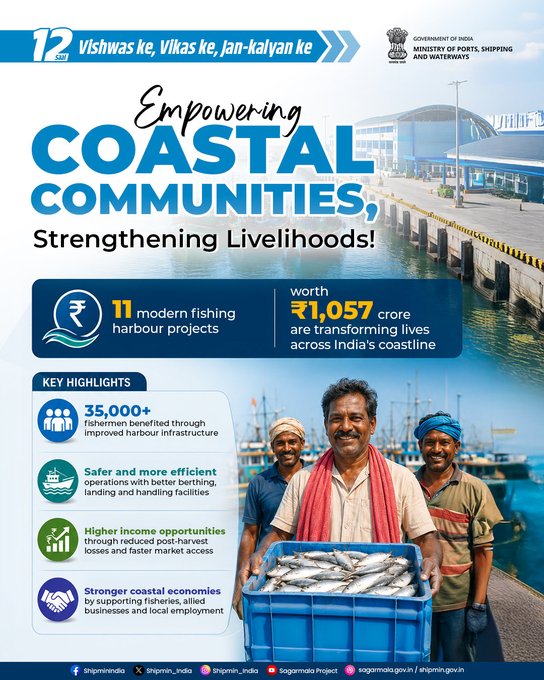
NEW DELHI : In a significant boost to India’s coastal infrastructure and fisheries sector, the Ministry of Ports, Shipping and Waterways (MoPSW) has successfully completed 11 modern fishing harbour projects with a cumulative investment of ₹1,057 crore, creating new economic opportunities for coastal communities and strengthening the nation’s Blue Economy. ‘Empowering Coastal communities, Strengthening Livelihood .’

The projects are expected to benefit more than 35,000 fishermen and allied workers by providing improved infrastructure, enhanced market access, and modern post-harvest facilities.

Developed under the Government of India’s flagship Sagarmala Programme, these fishing harbours are designed to transform traditional fishing ecosystems through the creation of world-class facilities, including modern berthing spaces, hygienic fish handling areas, auction halls, cold storage units, ice plants, processing facilities, and improved road connectivity.

The upgraded infrastructure is expected to significantly reduce post-harvest losses, improve fish quality, enhance value realisation for fishermen, and strengthen the overall seafood supply chain.

Officials noted that the projects are not only improving operational efficiency at fishing harbours but are also creating employment opportunities across allied sectors such as fish processing, transportation, logistics, packaging, cold-chain management, and retail marketing.

The initiative aligns with the Government’s broader vision of promoting sustainable and inclusive growth across India’s coastal regions while enhancing the contribution of the fisheries sector to the national economy.

India, with a coastline spanning over 11,000 kilometres, possesses immense potential for marine fisheries and coastal economic development. Through strategic investments under the Sagarmala Programme, the government aims to unlock this potential by integrating port-led development with community welfare initiatives.

MoPSW stated that the modernisation of fishing infrastructure is playing a vital role in improving the ease of doing business for the fisheries sector while ensuring that the benefits of maritime growth reach grassroots communities.

These projects reflect the Ministry’s commitment to creating resilient coastal infrastructure, improving livelihoods, increasing fishermen’s incomes, and building a sustainable blue economy that contributes to the vision of Viksit Bharat 2047.

Key Highlights:

11 fishing harbour projects completed
Total investment: ₹1,057 crore
Over 35,000 fishermen and allied workers to benefit
Enhanced fish landing, handling, storage, and auction facilities
Improved market connectivity and cold-chain infrastructure
Reduced post-harvest losses and improved price realisation
Increased employment opportunities across coastal value chains
Major boost to India’s blue economy and coastal development agenda

“From stronger infrastructure to better market access, these initiatives are empowering coastal communities and creating a more sustainable and prosperous future for India’s fisheries sector.”

India’s total exports grows 18%, trade deficit recorded at $28.21 billion

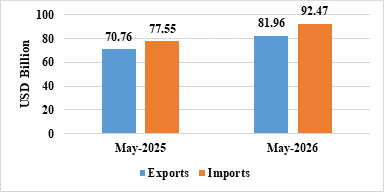
NEW DELHI : India’s total exports (Merchandise and Services combined) for May 2026* is estimated at US$ 81.96 Billion, registering a positive growth of 15.83 percent vis-à-vis May 2025. Total imports (Merchandise and Services combined) for May 2026* is estimated at US$ 92.47 Billion, registering a positive growth of 19.23 percent vis-à-vis May 2025.

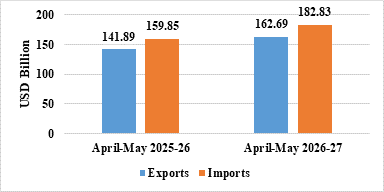
India’s total exports (merchandise and services combined) recorded strong growth of 14.66% during April–May 2026–27, reaching an estimated US$ 162.69 billion, compared to US$ 141.89 billion in the same period last year, according to official trade estimates released on Monday.

Table 1: Trade during May 2026*

  May 2026(US$ Billion)May 2025(US$ Billion)
MerchandiseExports45.2038.30
Imports73.4160.86
Services*Exports36.7632.46
Imports19.0616.70
Total Trade(Merchandise +Services) *Exports81.9670.76
Imports92.4777.55
Trade Balance-10.51-6.79

* Note: The latest data for services sector released by RBI is for April 2026. The data for May 2026 is an estimation. (ii) Data for April-May 2025-26 and April-December 2025 has been revised on pro-rata basis using quarterly balance of payments data.

Fig 1: Total Trade during May 2026*

image001P1KW India’s total exports grows 18%, trade deficit recorded at $28.21 billion

India’s total exports during April-May 2026-27* is estimated at US$ 162.69 Billion registering a positive growth of 14.66 percent. Total imports during April-May 2026-27* is estimated at US$ 182.83 Billion registering a growth of 14.38 percent.

Table 2: Trade during April-May 2026-27*

  April-May 2026-27(US$ Billion)April-May 2025-26(US$ Billion)
MerchandiseExports88.9176.59
Imports145.35126.24
Services*Exports73.7965.30
Imports37.4833.61
Total Trade(Merchandise +Services) *Exports162.69141.89
Imports182.83159.85
Trade Balance-20.13-17.96

Fig 2: Total Trade during April-May 2026-27* 

image002TERO India’s total exports grows 18%, trade deficit recorded at $28.21 billion

MERCHANDISE TRADE

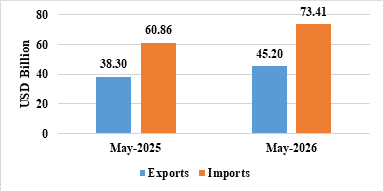
  • Merchandise exports during May 2026 were US$ 45.20 Billion as compared to US$ 38.30 Billion in May 2025.
  • Merchandise imports during May 2026 were US$ 73.41 Billion as compared to US$ 60.86 Billion in May 2025.

Fig 3: Merchandise Trade during May 2026

image0036P01 India’s total exports grows 18%, trade deficit recorded at $28.21 billion
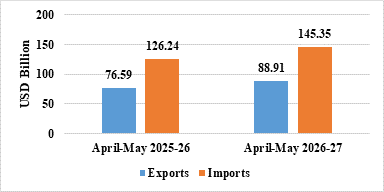
  • Merchandise exports during April-May 2026-27 were US$ 88.91 Billion as compared to US$ 76.59 Billion during April-May 2025-26.
  • Merchandise imports during April-May 2026-27 were US$ 145.35 Billion as compared to US$ 126.24 Billion during April-May 2025-26.
  • Merchandise trade deficit during April-May 2026-27 was US$ 56.44 Billion as compared to US$ 49.65 Billion during April-May 2025-26.

Fig 4: Merchandise Trade during April-May 2026-27

image004H2X2 India’s total exports grows 18%, trade deficit recorded at $28.21 billion
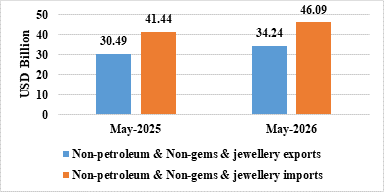
  • Non-petroleum and non-gems & jewellery exports in May 2026 were US$ 34.24 Billion compared to US$ 30.49 Billion in May 2025.
  • Non-petroleum, non-gems & jewellery (gold, silver & precious metals) imports in May 2026 were US$ 46.09 Billion compared to US$ 41.44 Billion in May 2025.

Table 3: Trade excluding Petroleum and Gems & Jewellery during May 2026

 May 2026(US$ Billion)May 2025 (US$ Billion)
Non- petroleum exports36.7832.87
Non- petroleum imports50.7346.11
Non-petroleum & Non-Gems & Jewellery exports34.2430.49
Non-petroleum & Non-Gems & Jewellery imports46.0941.44

Note: Gems & Jewellery Imports include Gold, Silver & Pearls, precious & Semi-precious stones

Fig 5: Trade excluding Petroleum and Gems & Jewellery during May 2026

image005Z2T7 India’s total exports grows 18%, trade deficit recorded at $28.21 billion
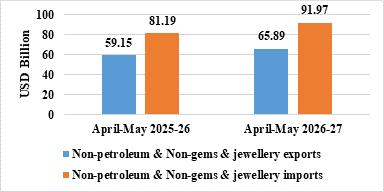
  • Non-petroleum and non-gems & jewellery exports in April-May 2026-27 were US$ 65.89 Billion, compared to US$ 59.15 Billion in April-May 2025-26.
  • Non-petroleum, non-gems & jewellery (gold, silver & precious metals) imports in April-May 2026-27 were US$ 91.97 Billion, compared to US$ 81.19 Billion in April-May 2025-26.

Table 4: Trade excluding Petroleum and Gems & Jewellery during April-May 2026-27

 April-May 2026-27(US$ Billion)April-May 2025-26(US$ Billion)
Non- petroleum exports70.7464.03
Non- petroleum imports104.0590.79
Non-petroleum & Non Gems & Jewellery exports65.8959.15
Non-petroleum & Non Gems & Jewellery imports91.9781.19

Note: Gems & Jewellery Imports include Gold, Silver & Pearls, precious & Semi-precious stones

Fig 6: Trade excluding Petroleum and Gems & Jewellery during April-May 2026-27

image006VWUO India’s total exports grows 18%, trade deficit recorded at $28.21 billion

SERVICES TRADE

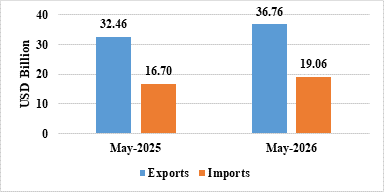
  • The estimated value of services export for May 2026* is US$ 36.76 Billion as compared to US$ 32.46 Billion in May 2025.
  • The estimated value of services imports for May 2026* is US$ 19.06 Billion as compared to US$ 16.70 Billion in May 2025.

Fig 7: Services Trade during May 2026*

image007UEXP India’s total exports grows 18%, trade deficit recorded at $28.21 billion
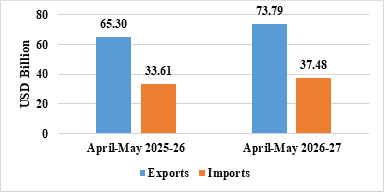
  • The estimated value of service exports during April-May 2026-27* is US$ 73.79 Billion as compared to US$ 65.30 Billion in April-May 2025-26.
  • The estimated value of service imports during April-May 2026-27* is US$ 37.48 Billion as compared to US$ 33.61 Billion in April-May 2025-26.
  • The services trade surplus for April-May 2026-27* is US$ 36.31 Billion as compared to US$ 31.69 Billion in April-May 2025-26.

Fig 8: Services Trade during April-May 2026-27*

image008UGBS India’s total exports grows 18%, trade deficit recorded at $28.21 billion

Top 5 import sources, in terms of change in value, exhibiting growth in April-May 2026-27 vis a vis April-May 2025-26 are Russia (40.02%), China P Rp (22.15%), Oman (277.63%), U S A (19.4%), and Brazil (180.35%).

Exports of  Other Cereals  (262.73%), Petroleum Products (54.89%), Meat, Dairy & Poultry Products (42.51%), Oil Meals (24.61%), Engineering Goods (24.48%), Handicrafts Excl. Hand Made Carpet (23.85%), Plastic & Linoleum (21.82%), Iron Ore (14.76%), Organic & Inorganic Chemicals (12.71%), Electronic Goods (11.62%), Gems & Jewellery (6.66%), Drugs & Pharmaceuticals (6.13%), Rice (5.38%), Cereal Preparations & Miscellaneous Processed Items (4.4%), Coffee (4.37%), and Cotton Yarn/Fabs./Made-Ups, Handloom Products Etc. (1.89%) record positive growth during May 2026 over the corresponding month of last year.

Imports of Silver (-86.65%), Project Goods (-64.05%), Chemical Material & Products (-63.58%), Pearls, Precious & Semi-Precious Stones (-26.5%), Iron & Steel (-12.47%), Pulp And Waste Paper (-9.93%), Machine Tools (-8.14%), Newsprint (-6.69%), Textile Yarn Fabric, Made-Up Articles (-3.68%), and Wood &  Wood Products (-3.65%) record negative growth during May 2026 over the corresponding month of last year.

Services exports is estimated to grow by 12.99 percent during April-May 2026-27* over April-May 2025-26.

Top 5 export destinations, in terms of change in value, exhibiting positive growth in May 2026 vis a vis May 2025 are Singapore (68.96%), South Africa (116.21%), Tanzania Rep (196.89%), Italy (87.54%), and Sri Lanka Dsr (150.29%).

Top 5 export destinations, in terms of change in value, exhibiting positive growth in April-May 2026-27 vis a vis April-May 2025-26 are Singapore (123.75%), Tanzania Rep (172.22%), Sri Lanka Dsr (183.32%), South Africa (62.24%), and China P Rp (25.85%).

Top 5 import sources, in terms of change in value, exhibiting growth in May 2026 vis a vis May 2025 are Russia (63.46%), China P Rp (23.4%), U S A (54.43%), Oman (305.66%), and Brazil (358.83%).

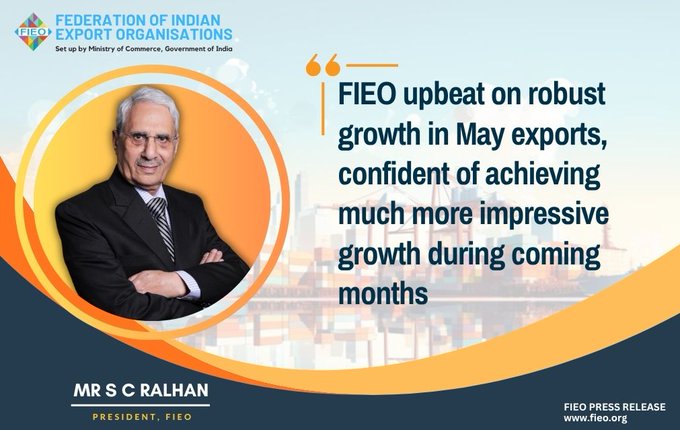
FIEO upbeat on robust growth in May exports, confident of achieving much more impressive growth during coming months

NEW DELHI : The Federation of Indian Export Organisations (FIEO) has welcomed India’s impressive foreign trade performance during April–May 2026-27, reflecting the resilience and growing global competitiveness of Indian exporters amid evolving international economic conditions especially amid US-Israel-Iran Peace deal. According to the latest trade data, India’s Overall Exports (Merchandise and Services combined) during April–May 2026-27 reached US$ 162.69 billion, registering a healthy growth of 14.66 percent over the corresponding period of the previous year.

Merchandise exports during April–May 2026-27 stood at US$ 88.91 billion, recording a robust growth of 16.09 percent, while merchandise exports in May 2026 alone reached US$ 45.20 billion, reflecting an impressive growth of 18.01 percent. India’s Overall Imports (Merchandise and Services combined) during April–May 2026-27 stood at US$ 182.83 billion, showing a growth of 14.38 percent. Merchandise imports during April–May 2026-27 reached US$ 145.35 billion, registering a growth of 15.14 percent, while merchandise imports in May 2026 stood at US$ 73.42 billion, reflecting a growth of 20.62 percent.

Commenting on the trade performance, Mr S C Ralhan, President, FIEO, said that the strong growth in exports during the first two months of FY 2026-27 is a highly encouraging sign for India’s external sector. Achieving over 16 percent growth in merchandise exports and nearly 15 percent growth in overall exports despite global uncertainties demonstrates the resilience, adaptability and competitiveness of Indian exporters. This performance reflects the positive impact of policy reforms, enhanced market access initiatives, growing manufacturing capabilities and the sustained efforts of exporters across sectors.

The recent diplomatic breakthrough in West Asia, Mr Ralhan said as with regard to the emerging peace framework involving the United States, Iran and the broader regional stakeholders is a positive development for global trade, shipping and supply chains. The reported reopening of the Strait of Hormuz and the de-escalation of geopolitical tensions are expected to improve the movement of goods, stabilize freight and insurance costs, and enhance predictability in international trade flows but also for our Indian exporters, thereby further providing boost to our exports in coming months as GCC is one of our key markets.

FIEO Chief further noted that engineering goods, petroleum products, electronic goods, drugs & pharmaceuticals, chemicals, gems & jewellery, textiles, rice, cotton products and plastics continued to drive India’s export growth during the period.

Highlighting the growing diversification of India’s export markets, Mr Ralhan observed that India’s leading export destinations during April–May 2026-27 included the USA, UAE, Singapore, China, Netherlands, United Kingdom, Bangladesh, Tanzania, Germany and Saudi Arabia. “The continued strong demand from both traditional and emerging markets reflects increasing global confidence in Indian products and services. The growing presence of Indian exporters in diverse geographies is helping strengthen India’s position in global trade and reducing dependence on a limited number of markets,” he added.

On imports side, the major sourcing partners for India during the period were China, Russia, USA, UAE, Saudi Arabia, South Korea, Singapore, Japan, Germany and Oman, while key imported commodities included petroleum products, electronic goods, machinery, gold, transport equipment, non-ferrous metals, coal, chemicals, plastics and vegetable oils. FIEO President stated that the increase in imports of capital goods, machinery, electronics and industrial inputs indicates sustained economic activity, investment demand and manufacturing growth within the country. He further emphasized that as India advances towards its aspiration of becoming a developed economy and a global manufacturing hub, exports will continue to play a critical role in driving economic growth, employment generation and foreign exchange earnings. The encouraging trade numbers at the beginning of the fiscal year reinforce confidence in achieving higher export growth during 2026-27.

FIEO expressed confidence that ongoing infrastructure improvements, PM Gati Shakti initiatives, digital trade facilitation measures, Free Trade Agreements (FTAs), production-linked incentive schemes and proactive export promotion efforts by Indian Missions abroad will further strengthen India’s export competitiveness. FIEO reiterates its commitment to working closely with the Government, industry stakeholders and exporters to help achieve India’s long-term export ambitions and contribute significantly towards the vision of Viksit Bharat.

Govt hikes export duty on diesel to Rs 14/litre, ATF to Rs 12.5/litre; no change in fuel for domestic consumption

NEW DELHI: The Central government on Monday hiked the export duties levied on diesel by Rs 14 per litre and Aviation Turbine Fuel (ATF) by Rs 12.5 per litre, with no change in the rates of duty on petrol.

According to the official Gazette notification issued by the Department of Revenue, the rate of duty will be Rs 14 per litre on exports of diesel and Rs 12.5 per litre on exports of ATF. There is no change in the rate of duty on exports of petrol or in the existing excise duty rates on petrol and diesel cleared for domestic consumption.

The revised rates will come into effect on Tuesday.

Export levies, Special Additional Excise Duty (SAED) and Road and Infrastructure Cess (RIC), on the exports of petrol, diesel and aviation turbine fuel (ATF) were introduced with effect from March 27 to ensure domestic availability of petroleum products by disincentivising exports in the backdrop of the West Asia crisis.

The rates are being revised on a fortnightly basis, and the last such revision was undertaken with effect from June 1. The rates are prescribed based on the average international prices of crude oil, petrol, diesel and ATF prevailing during the period since the last review.

Meanwhile, the Petroleum Ministry on Monday has assured there is sufficient supply of petrol, diesel, LPG and natural gas in the country and urged citizens and industry to use energy responsibly.

Joint Secretary Sujata Sharma, speaking at an Inter-Ministerial press briefing, appealed for energy conservation and asked bulk industrial and commercial consumers to purchase diesel from their consumer pumps to reduce pressure on retail outlets.

The appeal comes as the government put a temporary order in place to ease congestion at retail pumps. Sharma explained that the supply of petrol, diesel and LPG remains stable and refineries are operating at optimum capacity, with crude inventories maintained.

The strain stems from a shift in offtake: about 42 crore litres of diesel that earlier moved through bulk or consumer pumps shifted to retail outlets in May, creating supply issues at some locations.

To protect common consumers, the government issued a budget notification on June 11, capping retail diesel sales at 200 litres per person per day. Industrial and commercial users have been directed to source from their own consumer pumps.

Sharma clarified this is a temporary order for about 90 days and has been brought in to save the common consumer from inconvenience, stressing there is no shortage of petrol and diesel.

US-Iran peace deal may help boost India’s exports and stabilise Rupee

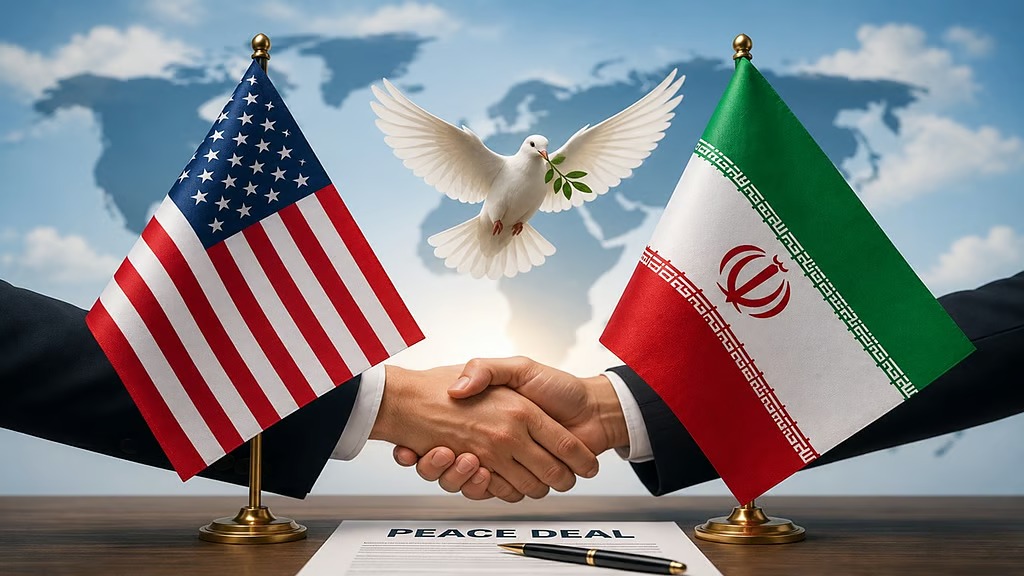
NEW DELHI : The announcement that the US and Iran have finalised a deal to end their 107-day conflict and reopen the Strait of Hormuz is expected to boost India’s exports to West Asia, which was severely impacted by the hostilities, spur manufacturing activity and help stabilise the rupee, according to exporters and experts.

They said the announcement, if implemented successfully, would reduce pressure on India’s import bill, ease inflationary covers and create a more conducive environment for trade.

The peace agreement would be signed on June 19 in Switzerland.

The US and Iran have reached a peace deal to end a four-month war that disrupted global energy supplies, pushed oil prices above USD 100 per barrel, and brought the Middle East to the brink of a wider regional conflict.

For India, which relies heavily on West Asia for crude oil, LPG and LNG supplies, the deal promises relief from high energy prices, pressure on the rupee, and inflation risks that intensified during the conflict, economic think tank GTRI said.

Soutce : PTI

Centre taking more measures to attract foreign capital inflows: FM

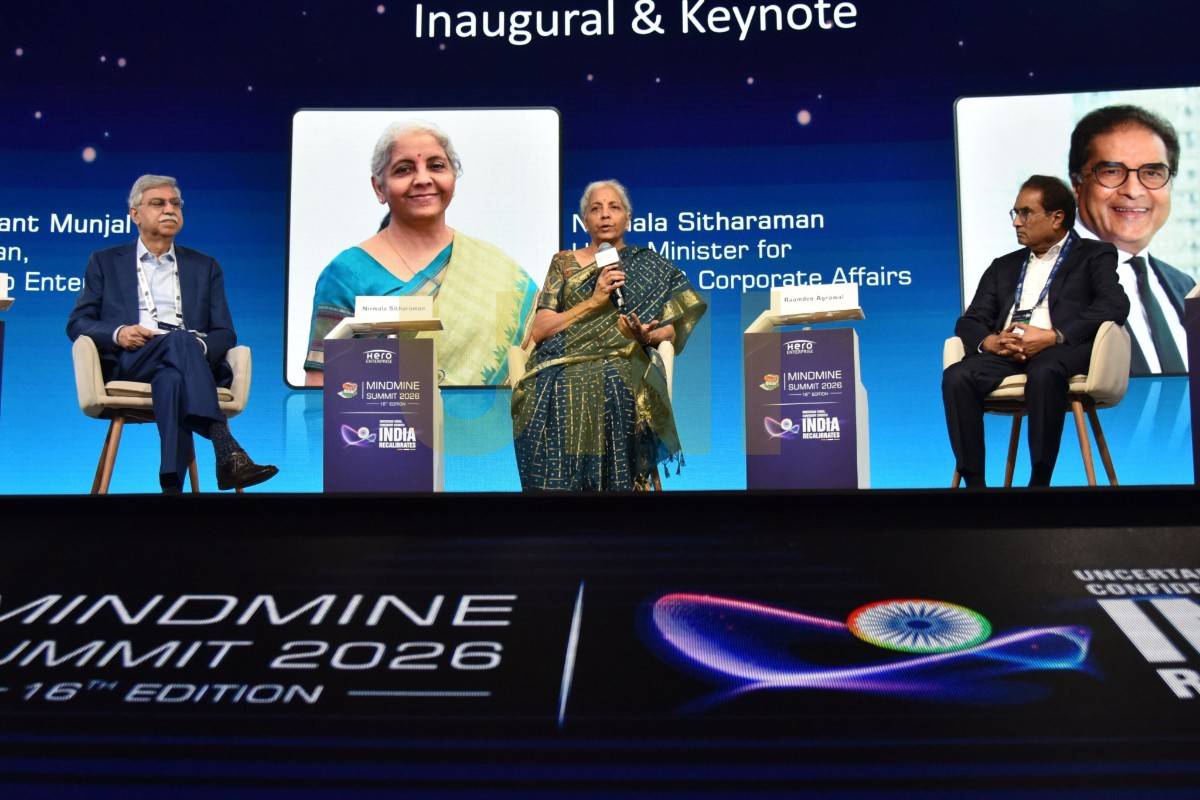
NEW DELHI : Finance Minister Smt Nirmala Sitharaman on Monday said the measures announced by the RBI and government to boost foreign fund inflows are the “first step” to bring back foreign capital and indicated that more steps could be in the offing.

Sitharaman participated in a fireside chat at the Mindmine Summit 2026 on Monday, June 15, 2026, with the session streamed live for audiences across the country. The annual summit, which brings together corporate leaders, policymakers and investors, provided a platform for the Finance Minister to engage directly with the private sector on pressing economic matters.

Sitharaman also said that there is a need to be prepared for exigencies arising out of the evolving global situation as the Indian economy is facing “severe strain” from import of key raw materials, as well crude oil and fertilisers.

Speaking at the Mindmine Summit 2026, Sitharaman said an analysis by the RBI and the government has shown that the bond market can be a “very good magnet” to absorb foreign capital.

Accordingly, to reduce compliance burden for foreign investors in Government Securities (G-Secs), the government on June 5 expanded the list of specified securities under the Fully Accessible Route (FAR) to also include new issuances in G-Secs.

Besides, income tax exemption was given to income from interest and capital gains made by FPIs from investments in G-Secs.

Sitharaman said these measures are the “first step” towards drawing foreign capital back.

“Although at the moment it’s confined to the bond market, certainly that’s not the end of the story. There will be more. We recognise, we need more foreign capital to come in,” Sitharaman said.

Gujarat, Rajasthan to get new direct daily train with Sabarmati-Bikaner Express

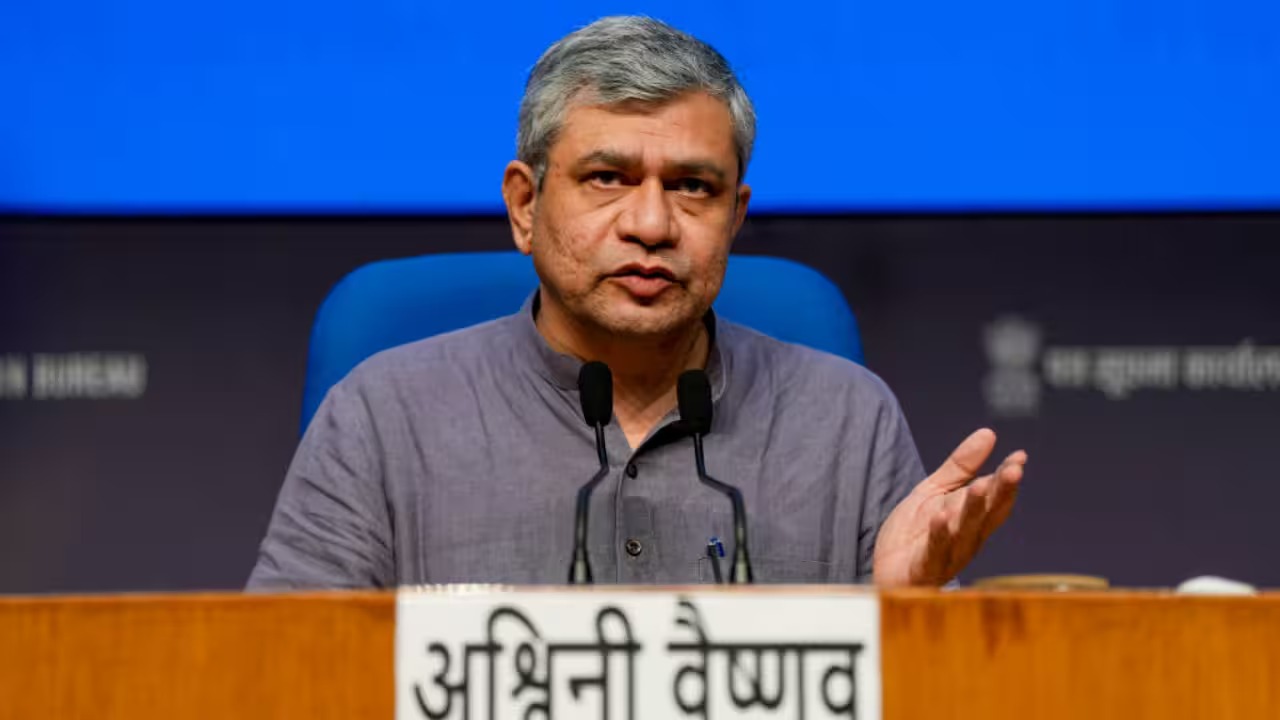
AHMEDABAD : Union Railway Minister Shri Ashwini Vaishnaw will soon flag off the new Sabarmati-Bikaner Express, providing direct daily rail connectivity between Gujarat and western Rajasthan.

The new express train service aims to benefit students, working professionals, traders and travellers commuting between Ahmedabad and Bikaner.

The launch follows a series of railway infrastructure developments in the region.

In May, Vaishnaw extended the Sabarmati-Jodhpur Superfast Express to Jaisalmer, whilst also flagging off the Bhuj-Delhi Express via the Bhildi-Jalore-Luni-Pali Marwar route.

The Railway Minister has been actively expanding rail connectivity across Gujarat and Rajasthan throughout 2025 and 2026.

The Sabarmati station, located near Ahmedabad, already serves as a terminus for several long-distance trains. Several trains currently operate between Sabarmati and Bikaner, covering approximately 727 kilometres. Journey times on existing services range from 12 to 14 hours, with trains halting at major stations including Mehsana, Palanpur, Abu Road, Marwar Junction, Jodhpur and Nagaur.

The new express service is expected to provide enhanced connectivity along this corridor. Indian Railways has invested heavily in Gujarat’s rail infrastructure, with projects worth Rs 1.28 lakh crore currently underway in the state.

Since 2014, nearly 2,900 kilometres of new railway tracks have been constructed in Gujarat, with the state receiving Rs 17,366 crore in this year’s Railway Budget allocation.