Home Blog Page 28

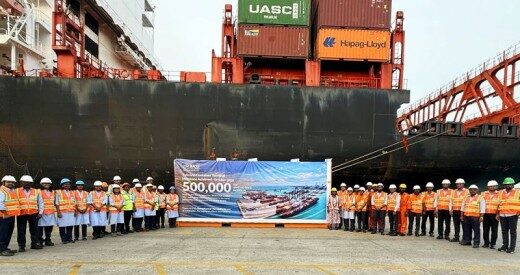
Tuticorin Container Terminal achieves 500,000 TEUs milestone within two years of operations

TUTICORIN : Tuticorin Container Terminal (TCT), operated by J M Baxi Ports & Logistics, has achieved a significant operational milestone by successfully handling 500,000 Twenty-foot Equivalent Units (TEUs) since commencing commercial operations in September 2024.

Reaching the half-million TEU mark within approximately two years of operations reflects the terminal’s steady progress, growing operational capabilities and commitment to delivering efficient container-handling services to the shipping and trade community.

The achievement represents an important step in TCT’s development as a growing container-handling facility on India’s southeastern coastline. Its performance also highlights the increasing importance of port infrastructure in supporting containerised trade, strengthening maritime connectivity and facilitating the movement of export-import cargo.

A particularly notable aspect of this milestone is the contribution of the terminal’s workforce, with women representing a significant part of its employee base and taking leadership responsibilities across various operational and administrative departments. Their participation reflects the growing role of women in the maritime and port logistics sector, traditionally regarded as a male-dominated industry.

The milestone has been made possible through the collective efforts of the terminal’s employees, operational teams and business partners, supported by the continued cooperation of V.O. Chidambaranar Port Authority.

J M Baxi Ports & Logistics has also acknowledged the continued trust and support of vessel operators, international shipping lines, customers and external stakeholders, whose collaboration has played an important role in the terminal’s operational journey.

The achievement further reinforces the importance of coordinated efforts between terminal operators, port authorities and shipping lines in strengthening India’s container-handling infrastructure and improving the efficiency of maritime logistics.

With 500,000 TEUs successfully handled, Tuticorin Container Terminal enters its next phase of growth with a focus on operational excellence, customer satisfaction, workforce development and stronger connectivity with global shipping networks.

The milestone marks not just a volume achievement, but also two years of progress, teamwork and growing confidence in Tuticorin’s potential as an important gateway for India’s international trade.
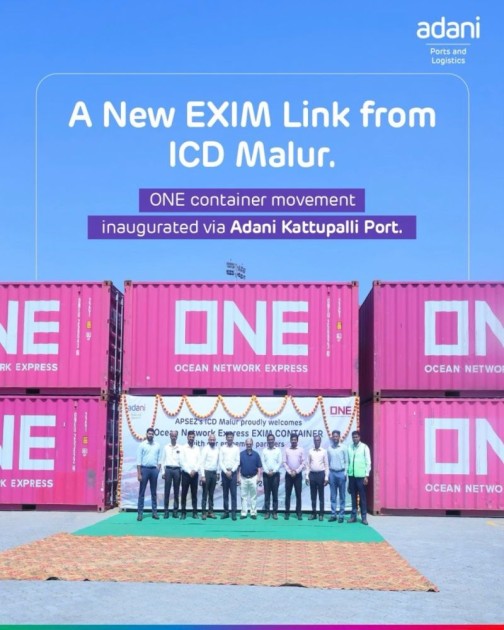
APSEZ strengthens EXIM connectivity with launch of ONE Container Movement from ICD Malur via Kattupalli Port

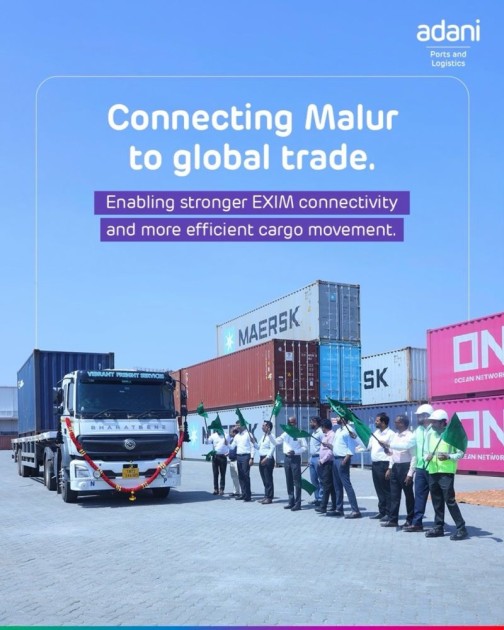
BENGALURU : Adani Ports and Special Economic Zone Ltd. (APSEZ) has achieved another significant milestone in strengthening India’s integrated logistics network with the launch of Ocean Network Express (ONE) export-import (EXIM) container movement from its Inland Container Depot (ICD) at Malur, Bengaluru, through Adani Kattupalli Port.

The newly established connectivity marks an important step towards enhancing multimodal logistics integration between inland cargo centres and international maritime trade routes. By linking ICD Malur with Kattupalli Port, APSEZ aims to provide exporters and importers in the Bengaluru industrial region with improved access to global shipping networks through an integrated port-to-inland logistics solution.

The initiative is expected to facilitate smoother movement of EXIM containers, improve coordination across the logistics chain and provide customers with greater flexibility in managing their international shipments. It also strengthens the connection between Karnataka’s manufacturing and industrial clusters and international markets through Kattupalli’s port infrastructure and shipping connectivity.

The launch reflects the growing importance of inland container depots in supporting India’s expanding international trade, particularly by bringing port-based shipping services closer to manufacturing centres, exporters and importers. Integrated inland and port connectivity can help streamline cargo movement, improve supply chain coordination and enhance the overall efficiency of EXIM operations.

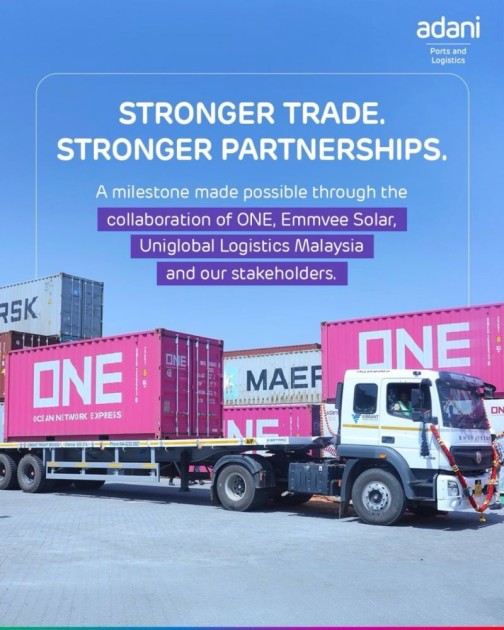
The initiative has been made possible through the strong collaboration of Ocean Network Express (ONE), Emmvee Group, Guangzhou Uniglobal Logistics Malaysia, APSEZ and other stakeholders involved in establishing this logistics connection.

Their collective efforts underline the importance of partnerships between global shipping lines, logistics providers, terminal operators and cargo stakeholders in developing reliable and efficient international supply chains.

With this new service connectivity, APSEZ continues to strengthen its integrated ports-to-logistics network, supporting India’s EXIM trade growth and providing businesses with more efficient access to international markets.

The milestone reinforces APSEZ’s commitment to developing seamless, reliable and sustainable logistics solutions while contributing to India’s ambition of becoming a globally competitive trade and logistics hub.

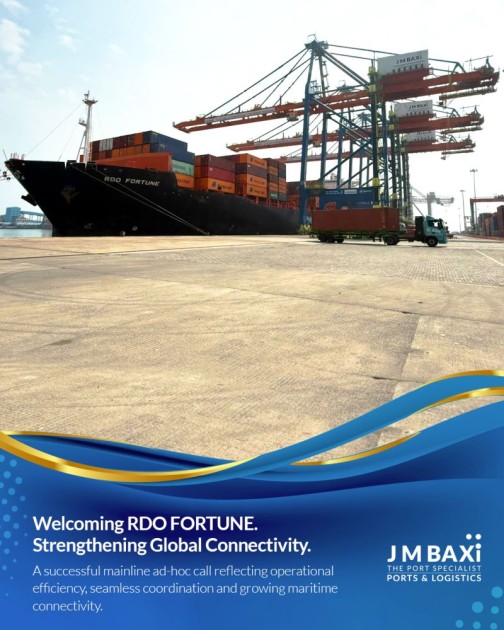
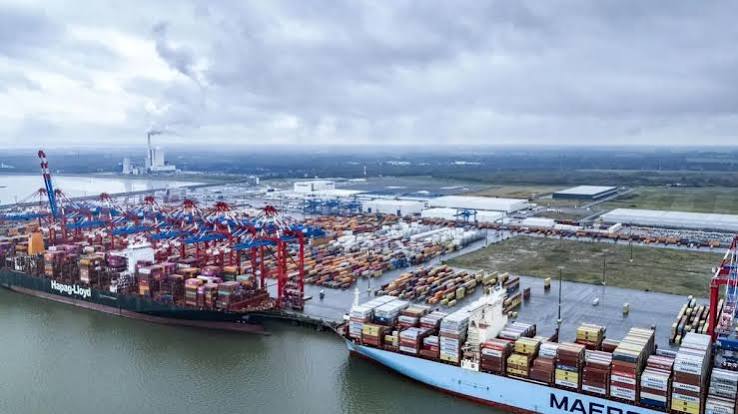
Tuticorin Container Terminal successfully handles mainline vessel RDO FORTUNE, discharges 2,630 Teus

TUTICORIN: Tuticorin Container Terminal (TCT), operated by J M Baxi Ports & Logistics, has successfully handled a mainline ad-hoc vessel call by RDO FORTUNE on October 28, 2026, marking another significant milestone in strengthening its operational capabilities and enhancing India’s maritime trade connectivity.

The vessel, deployed on the Colombo–Singapore trade lane, berthed successfully at the terminal and recorded an impressive discharge volume of 2,630 TEUs during its call. The successful handling of this mainline vessel demonstrates TCT’s growing ability to accommodate international container services and manage substantial cargo volumes efficiently.

The vessel call reflects the terminal’s operational readiness, cargo-handling capabilities and commitment to delivering efficient port services to global shipping lines. Mainline vessel calls also provide opportunities to strengthen regional maritime connectivity, improve access to international trade routes and support the growing containerised trade requirements of exporters and importers.

The Colombo–Singapore corridor is an important maritime trade route connecting major transshipment hubs and international shipping networks. Successful handling of vessels operating on this route further reinforces Tuticorin’s potential to emerge as a stronger gateway for containerised cargo movements in South India.

J M Baxi Ports & Logistics extended its sincere appreciation to Hapag-Lloyd for its continued confidence in Tuticorin Container Terminal and acknowledged the coordination and support extended by V.O. Chidambaranar Port Authority in ensuring the successful vessel call.

This achievement underlines the importance of close collaboration between terminal operators, port authorities and international shipping lines in strengthening port efficiency and improving the competitiveness of India’s maritime logistics ecosystem.

With every successful vessel call, Tuticorin Container Terminal continues to build its capabilities, strengthen customer confidence and contribute to India’s expanding role in global shipping and international trade.

No compromise on dairy, GM products in trade deals : Piyush Goyal

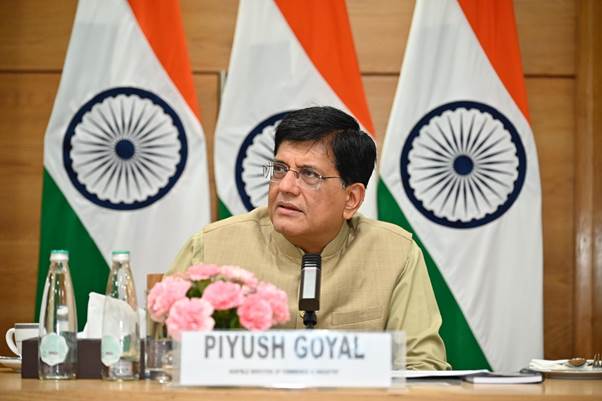
NEW DELHI: India will never open its dairy sector or allow genetically modified (GM) products in its trade agreements, Commerce and Industry Minister Shri Piyush Goyal said on November 3, asserting the country would not compromise on sensitive sectors as it pursues greater access to overseas markets.

Addressing students of Kirori Mal College here, Goyal said India has “never ever” compromised on any sensitive item and has always protected its farmers, fishermen, and MSMEs in trade pacts.

“We are very sensitive to opening up to certain agricultural produce, certain goods that we are very strong on like marine products. We are very sensitive to opening our dairy. In fact, till date, we have never opened up dairy for anybody.

“We are very sensitive not to allow any GM products to come to India and we have never allowed it and we’ll never allow it in the future. We are sensitive to our religious sensitivities. So very often in foreign countries, they use calf meat or Rennet while producing their dairy products. We don’t allow that in India. It is strictly got to be certified…so that religious sensitivities of the large parts of India are not hurt,” he said while replying to a question on trade pacts.

Rennet is an enzyme used in cheese-making, traditionally obtained from the stomach lining of young calves.

“Our effort is to unlock new opportunities, new employment opportunities, new opportunities for our produce where we are competitive and where our larger part of India, our MSMEs, our agricultural farmers, everybody can benefit in a big way,” the minister said.

These remarks assume importance as agriculture supports a large share of India’s population, mostly small and marginal farmers.

Policymakers fear that cheap, large-scale imports of GM crops, especially from highly mechanised and subsidised farming systems of developed nations, could depress domestic prices and hurt rural incomes. These products are also sensitive as they touch food safety, farm livelihoods, environmental risks, religious concerns, and trade protection issues.

The US has major interests in GM farm and dairy products. Indian rules prohibit imports of products from animals fed with animal-derived feed due to religious sensitivities.

Goyal said India always seeks preferential access for sectors such as textiles, pharma, agri products, and gems and jewellery.

“So these are all our offensive interests, where we work to get preferential market access. Where duties imposed on goods from India will be less than from our competing nations like Indonesia, Malaysia, Vietnam, China, Philippines,” he said adding, “Our effort is how do we get India a preferential rate over our competitors”.

Regarding jobs, he said the government is promoting manufacturing in the country in a big way.

“We are working to promote manufacturing, more government jobs. We are working to promote more opportunities for those who want to look for a regular employment. But the world today is opening up for entrepreneurship, is opening up for startups, is offering new opportunities, which I would urge you to seriously consider,” Goyal said.

Informing students about the country’s exports, the minister said India is aiming USD one trillion worth of goods and services exports in 2026-27.

During April-September 2026, India’s exports have reached about USD 480 billion, an increase of about 14 per cent year-on-year.

In the remaining six months, “we need USD 520 billion” to achieve the target and “we have very good export numbers” in October. The trade data for October will be released officially in mid-November.

On a question about China’s export controls on tunnel boring machines, he said that if the supply of tunnel boring machines is impacted, India will work to make them by itself, adding that the country didn’t go with a begging bowl when access to rare earths was blocked.

Goyal said India is working with aircraft makers Embraer, Airbus, and Boeing to increase availability of aircraft in the country and this will also boost tourism.

Piyush Goyal chairs roundtable on strengthening India’s Biopharma Startup Ecosystem and accelerating Bio-Economy growth

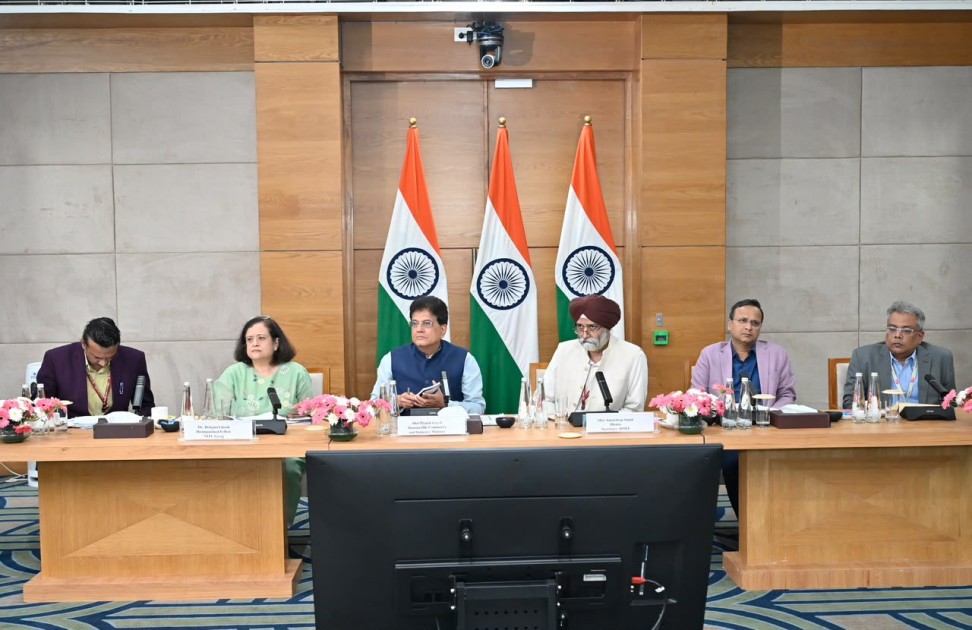
NEW DELHI: Union Minister of Commerce and Industry Shri Piyush Goyal chaired a high-level roundtable on “India’s Bioeconomy Opportunity: Role of Startups in Driving Innovation and Growth” at Vanijya Bhawan, New Delhi. Organised by the Department for Promotion of Industry and Internal Trade (DPIIT), in collaboration with NITI Aayog and NITI Frontier Tech Hub, the roundtable brought together policymakers, industry leaders and biopharma startups to deliberate on measures to accelerate the growth of India’s bioeconomy.

In his address, Shri Piyush Goyal emphasised the need to leverage India’s scientific capabilities and entrepreneurial talent to position the country as a global leader in the bioeconomy. He underscored the importance of faster approvals, improved access to finance, shared infrastructure and stronger industry–academia–Government collaboration. He also called for time-bound action on the recommendations emerging from the roundtable.

The discussions focused on strengthening the biopharma startup ecosystem through streamlined regulations, faster approvals, a proposed Regulatory Sandbox, Single Window Clearance, global regulatory alignment and simplified patent application processes.

The importance of Biopharma SHAKTI, announced in the Union Budget 2026–27, was also discussed, along with the need to develop shared infrastructure, including laboratories, testing facilities and clinical trial facilities, to reduce costs and enable startups to scale their innovations.

Distinguished Fellow, NITI Aayog, Ms. Debjani Ghosh, highlighted the importance of collaboration among startups, industry, academia and Government in building a globally competitive bioeconomy. Member, NITI Aayog, Prof. Gobardhan Das, stressed the need to strengthen research capabilities and translate scientific discoveries into commercially viable products.

The roundtable also discussed measures to strengthen indigenous life sciences manufacturing, expedite customs clearance for laboratory equipment and reagents, and simplify access to Government schemes and regulatory support. Participants emphasised the need for stronger inter-ministerial coordination to facilitate coherent policy interventions and ensure faster resolution of sector-specific challenges.

DP World expands Free Eyecare Programme for 12000 Commercial Drivers in India

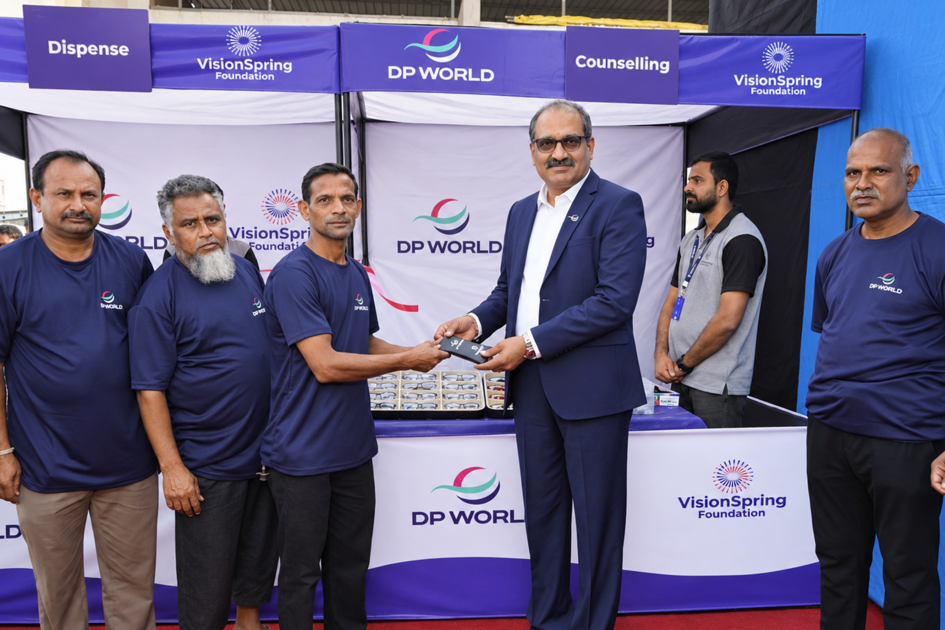
MUMBAI: DP World’s Shipping Solutions AMEA business (“Shipping Solutions”), is expanding its partnership with VisionSpring Foundation to provide free eye screenings and prescription glasses to approximately 12,000 commercial drivers and transport workers across India, helping improve driver wellbeing and support safer movement of goods along the country’s trade corridors.

The initiative builds on a successful programme in Gujarat in 2025, which screened 9,000 commercial drivers and transport workers and distributed more than 5,200 pairs of prescription glasses. Of those screened 61% were identified as requiring vision correction, while 94% of those receiving glasses were first-time wearers, highlighting the significant unmet need for accessible eyecare among transport workers.

The expanded programme was launched at Jawaharlal Nehru Port in Mumbai, with additional screenings planned in Kochi, Delhi and Kolkata.

Commercial drivers play a vital role in India’s economy, connecting ports, factories, businesses and consumers across the country. Yet, long working hours and demanding schedules can make it difficult for drivers to access routine eye examinations, leaving vision problems undetected or untreated. By bringing eye care services directly to ports, logistics hubs and transport centres, DP World’s Shipping Solutions and VisionSpring Foundation aim to remove these barriers and make essential vision care more accessible without disrupting their work.

Participants will receive comprehensive eye examinations from trained healthcare professionals. Those requiring vision correction will receive prescription glasses free of charge, while drivers showing signs of conditions, including cataracts or glaucoma, will be referred to local charitable or government healthcare providers for further diagnosis and treatment. The programme also includes guidance on maintaining eye health and recognising early signs of vision deterioration.

CM Muraleedharan, Regional Director, Shipping Solutions AMEA, DP World, said: “Every shipment depends on the people behind the wheel. Commercial drivers connect our ports with businesses and communities across the country, often working long hours in demanding conditions. By expanding this programme, we’re helping improve access to eyecare so drivers can stay safer on the road while strengthening the reliability of the supply chains our customers depend on. Investing in people is just as important as investing in infrastructure if we want trade to keep flowing.”

Anshu Taneja, Managing Director, VisionSpring Foundation, said: “Clear vision is essential for safe driving, yet many professional drivers continue to live and work with avoidable vision impairment. Expanding this partnership allows us to reach thousands more drivers with essential eyecare, helping improve road safety while protecting livelihoods and supporting the transport networks that communities and businesses rely on.”

The Shipping Solutions and VisionSpring Foundation initiative further reflects DP World’s wider commitment to supporting the people and communities that underpin global trade. By investing in the wellbeing of commercial drivers, the company aims to contribute to safer transport operations and more resilient supply chains across India.

Razorpay secures final IFSCA PSP licence for GIFT City operations

GANDHINAGAR: India-based Razorpay has obtained its final Payment Service Provider (PSP) licence from the International Financial Services Centres Authority (IFSCA), allowing it to operate in GIFT City and move money into and out of India under a single regulatory framework. The announcement follows the in-principle approval the company received from the regulator in April 2026.

The licence allows the company to move money into and out of India from GIFT City under a single regulatory framework. It follows the in-principle approval Razorpay received in April 2026, marking another regulatory milestone for the company as it seeks to enable compliant cross-border financial flows to and from India.

Rahul Kothari, CEO, Razorpay, said the company already facilitates cross-border payments on both sides: Indian consumers paying global businesses and Indian businesses collecting payments from customers around the world.

The setup is designed to replace a multi-step process with a single flow. Instead of connecting separately to multiple banks, compliance systems, and remittance partners, platforms can integrate once to offer global investing in line with the Foreign Exchange Management Act (FEMA) and GIFT City regulations. According to Razorpay, integrations that typically take months can be completed in two to three weeks.

Beyond investing, the infrastructure brings international collections, settlements, and multi-currency capabilities together under one regulated layer. The licence allows the company to move funds in foreign currency and hold them in multi-currency accounts, supporting flows that the domestic framework could not accommodate.

The development comes as outbound investment from India grows. According to the official press release, Indian residents invested USD 2.65 billion in overseas stocks and debt in FY26, a 56% increase year-on-year. Razorpay notes, however, that the infrastructure supporting this activity remains complex and fragmented, resulting in longer onboarding timelines, inconsistent user experiences, and operational uncertainty for both platforms and investors.

BuildSpace launches ₹265-crore, 42-acre Sahakar Logistics Park in Bhiwandi under exclusive EPC, marketing and leasing mandate

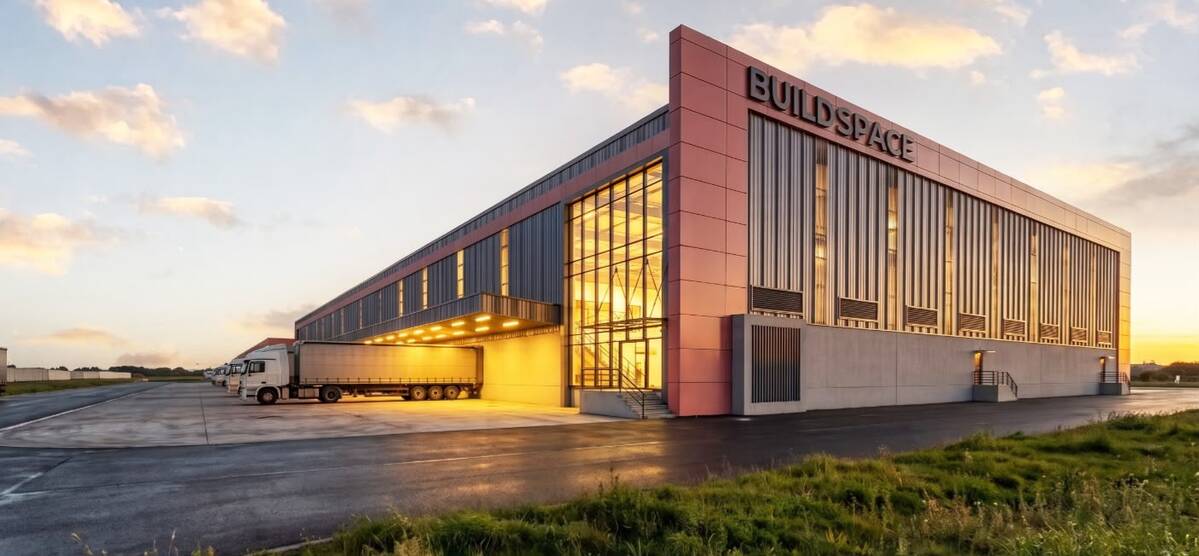
MUMBAI: BuildSpace, a Navi Mumbai-based industrial and logistics infrastructure development platform, has launched Sahakar Logistics Park, a Grade-A+ warehousing project spread across 42 acres in Bhiwandi, Mumbai Metropolitan Region (MMR), under its exclusive mandate covering development management, EPC, marketing and leasing. The project will offer 1.3 million sq. ft. of leasable area and entails an investment of ₹265 crore. It has already achieved financial closure, with Sahakar Global Limited infusing ₹100 crore of equity and lenders keen to back the development.

The mandate has been awarded by Sahakar Group, a diversified business group with interests in toll collection, sand mining and real estate. The group is promoted by Mr. Kishore Agrawal, with Mr. Pranay Agrawal serving as Director. Sahakar Logistics Park is BuildSpace’s flagship EPC mandate, executed under its BuildVALUE vertical, and forms part of the company’s development pipeline of more than 3 million sq. ft.

Under the mandate, BuildSpace will lead the project end to end, from conceptualisation, design and master planning through statutory approvals, engineering and construction. Its scope also extends to the marketing, leasing and operations of the park.

The master plan comprises five Grade-A+ buildings, with space configurations ranging from approximately 30,000 sq. ft. to 700,000 sq. ft. to accommodate build-to-suit requirements. Planned facilities include wide internal roads, optimised traffic circulation, dedicated parking with EV charging stations, drivers’ restrooms, centralised power and water supply, landscaped garden areas, a visitor and gate management system, and a modern park management office. The park is designed to serve third-party logistics, e-commerce and quick-commerce occupiers, with flexible configurations suited to their warehousing and operational needs.

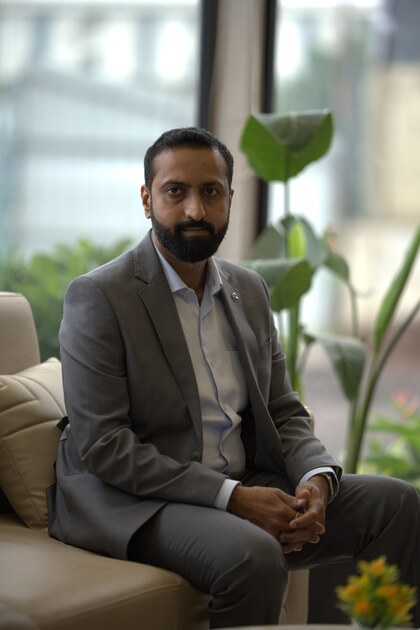
Rohan Latad press photo 1 BuildSpace launches ₹265-crore, 42-acre Sahakar Logistics Park in Bhiwandi under exclusive EPC, marketing and leasing mandate

Commenting on the mandate, Mr. Rohan Latad, Managing Director and CEO, BuildSpace, said, “As occupiers seek well-located facilities with higher specifications for greater operational efficiency, demand for Grade-A+ warehousing continues to rise. At the micro-market level, Bhiwandi has emerged as a key hub, accounting for 85% of MMR’s demand in Q2 CY26. We are building Sahakar Logistics Park with these demand dynamics in mind. The facility’s location, building specifications and build-to-suit capacity will enable a wide range of occupiers to take space according to their requirements. For us, this is an important step in building scale in the MMR as we expand our industrial and logistics development platform across established and emerging markets.”

Speaking on the contract awarded to BuildSpace, Mr. Pranay Agrawal, Director, Sahakar Group, said, “We are pleased to entrust BuildSpace with this mandate and are confident in its ability to deliver Sahakar Logistics Park through an end-to-end, integrated approach. Given Bhiwandi’s established logistics ecosystem and connectivity to key freight corridors, we see strong potential in developing this site into a Grade-A+ logistics asset that supports India’s growing supply-chain needs.”

Bhiwandi’s strategic location offers several logistical advantages, including direct highway frontage and heavy-vehicle access to the Samruddhi Mahamarg and the Pune, Nashik and Agra corridors, facilitating freight movement across regional and national markets. The site also offers access to key maritime and air-cargo infrastructure, with Jawaharlal Nehru Port Authority approximately 85 km away, and Chhatrapati Shivaji Maharaj International Airport and Navi Mumbai International Airport connecting it to the region’s air-cargo network.

The project comes amid sustained demand for Grade-A+ warehousing in the MMR. According to industry reports, the region recorded 6.6 million sq. ft. of Grade A/A+ demand against 3.5 million sq. ft. of supply in H1 CY26.

Construction at Sahakar Logistics Park is progressing, with pre-engineered building erection underway for the first building and the second building at the plinth stage. In line with its sustainability objectives, BuildSpace is targeting an Indian Green Building Council Platinum rating for the park, incorporating features such as solar-ready roofing, water reuse and on-site sewage treatment. The project is expected to begin accommodating occupiers in December 2026, with operations scheduled to commence in March 2027.

Petronet LNG seeks early delivery of Qatar cargoes amid Hormuz disruptions

QATAR: Petronet LNG Ltd (PLL) is in discussions with Qatar to recover pending liquefied natural gas (LNG) cargoes earlier than the contractual recovery period, as disruptions in the Middle East have sharply curtailed deliveries, said Akshay Kumar Singh, Managing Director and Chief Executive Officer.

Speaking at a post-results media briefing, Singh said that of the roughly 75-80 cargoes expected during the eight-month disruption period from March to October 2026, only about six cargoes had arrived. Deliveries under the current Qatar supply arrangement have been severely affected by force majeure disruptions since March 2026.

Under normal circumstances, the company receives around 9-10 LNG cargoes a month from Qatar, with each conventional cargo carrying approximately 138,000 cubic metres of LNG, he added.“We are actively discussing with Qatar to receive these pending cargoes earlier. However, they are also waiting for the situation to normalise and cannot commit till then,” said Singh.

Around 53-54 cargoes are also pending from the 2015-16 settlement agreement period.

Petronet LNG signed a 20-year LNG supply agreement with QatarEnergy for 7.5 million tonnes per annum (mtpa), commencing in May 2028 and running until December 2048. The agreement renews an existing long-term contract signed in 1999, which was due to expire in 2028, ensuring continued LNG supplies from Qatar to India.

The contract provides for a designated one-year recovery period during which deferred and force majeure-affected cargoes can be supplied at the original long-term contractual prices, without the need for renegotiation.

The company said both sides were closely monitoring developments in the Middle East, particularly shipping conditions and the situation around the Strait of Hormuz, a critical route for global energy supplies.

Petronet LNG reported a 54 per cent year-on-year (YoY) increase in consolidated net profit to ₹1,235 crore in the second quarter of 2026-27 (FY27), from ₹802 crore a year ago.

The company’s revenue from operations fell by 34.5 per cent YoY to ₹7,202 crore in Q2. Its board of directors approved an interim dividend of ₹7 per share.

During the quarter ended September 30, the company’s Dahej terminal processed 216 trillion British thermal units (TBTU) of LNG, against 211 TBTU a year ago. The overall LNG volume processed by the company in the current quarter was 231 TBTU, against 228 TBTU a year ago.

The Dahej terminal achieved a capacity utilisation of 73 per cent in the current quarter, against 92 per cent a year ago. At the overall company level, capacity utilisation in the current quarter stood at 64 per cent, against 78 per cent a year ago.

Maersk and Hapag-Lloyd resume Suez Canal Container Shipping between India and Europe

COPENHAGEN : Shipping group Maersk said on Monday that another of its joint container services with Germany’s Hapag-Lloyd will resume sailings through the Suez Canal, as they gradually return to using the shortcut between Asia and Europe.

ME1 Service Route Update

  • The ME1 service, which connects India and Europe, will now sail via the trans-Suez route instead of taking the much longer route around Africa, Maersk said in a statement

Impact of Red Sea Security Situation

  • The Asia-Europe trade corridor through the Suez Canal was abandoned by most shippers in late 2023 after attacks in the Red Sea by Yemen’s Houthis. “Maersk and Hapag-Lloyd will continue to monitor the security situation in the Middle East region very closely, and any alteration to services within the Gemini Cooperation will remain dependent on the ongoing stability in the Red Sea area,” it added.

  • Source: Reuters