Home Blog Page 285

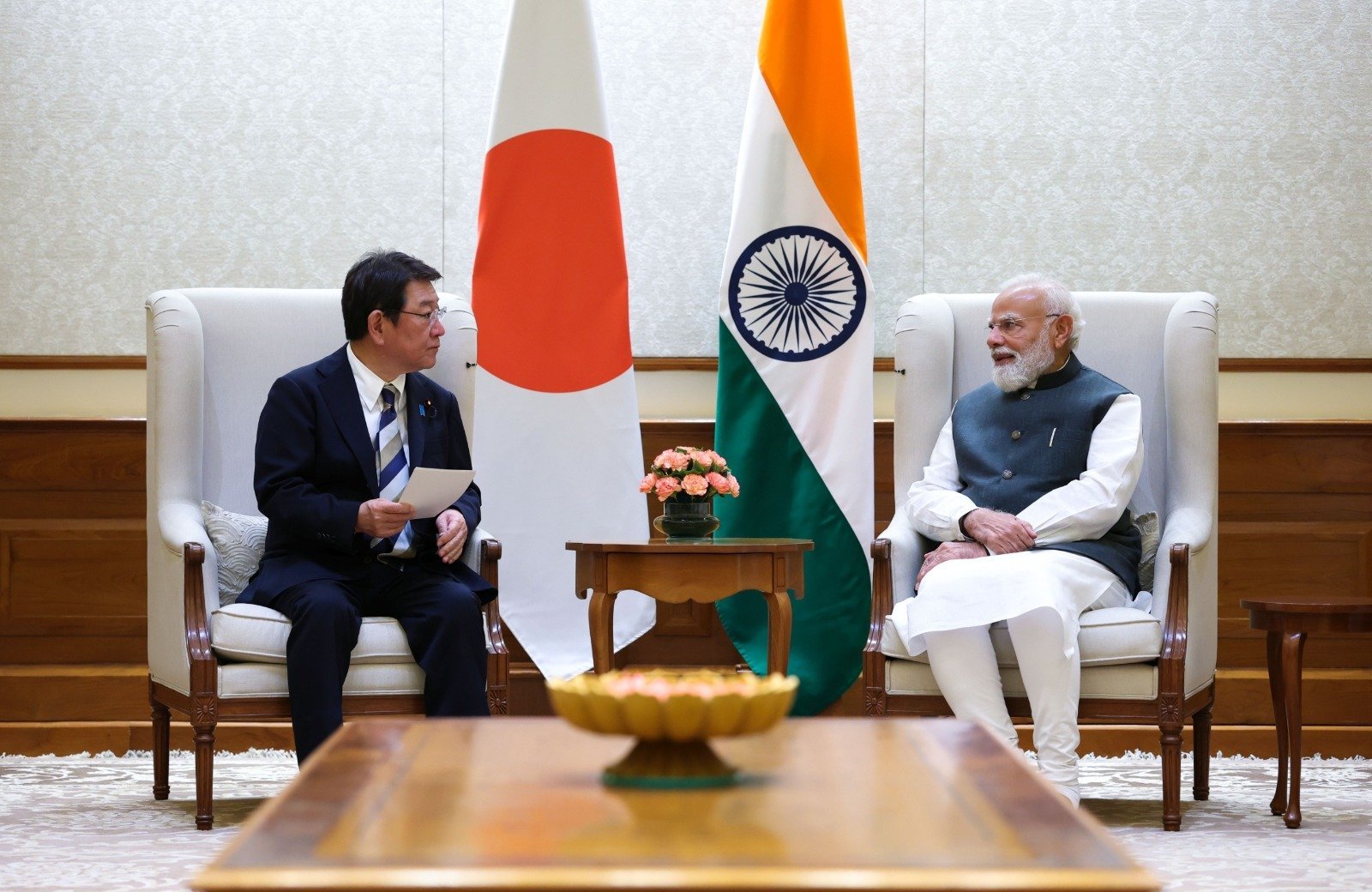
PM Modi welcomes Japanese Foreign Minister Toshimitsu Motegi, reaffirms strength of India–Japan Strategic Partnership

NEW DELHI : Prime Minister Shri Narendra Modi warmly welcomed Japan’s Minister for Foreign Affairs, Shri Toshimitsu Motegi, reaffirming the enduring strength and strategic importance of the India–Japan Special Strategic and Global Partnership in advancing peace, stability, economic growth, and prosperity across the Indo-Pacific region and beyond.

During the meeting, both leaders reviewed the expanding scope of bilateral cooperation and exchanged views on key regional and global developments of mutual interest. Prime Minister Modi underscored the deep-rooted friendship between India and Japan, built on shared democratic values, mutual trust, and a common vision for a free, open, inclusive, and rules-based Indo-Pacific.

The discussions highlighted the growing momentum in India–Japan collaboration across diverse sectors, including trade and investment, infrastructure development, connectivity, digital innovation, clean energy, technology, defence and security cooperation, and resilient supply chains. Both sides acknowledged the significant progress achieved under the Special Strategic and Global Partnership and reiterated their commitment to further deepening collaboration in emerging and critical sectors.

Prime Minister Modi appreciated Japan’s continued partnership in India’s development journey, including its contribution to major infrastructure projects, industrial growth initiatives, and sustainable development efforts. The leaders also emphasized the importance of strengthening people-to-people ties, cultural exchanges, and business engagement to further solidify the longstanding friendship between the two nations.

The meeting reaffirmed the shared commitment of India and Japan to work closely in addressing global challenges, enhancing regional cooperation, and contributing towards a secure, stable, and prosperous Indo-Pacific and international order.

The interaction reflected the strong convergence of interests and the growing strategic alignment between India and Japan, further reinforcing the trusted partnership between the two countries.

Canadian PM Mark Carney calls India-Canada CEPA a “Game Changer” as Piyush Goyal holds high-level talks in Ottawa

OTTAWA : Union Minister of Commerce and Industry Shri Piyush Goyal arrived in Ottawa, Canada, heading the largest-ever Indian business delegation to Canada comprising industry leaders from over 100 companies, in a landmark step towards the full revival of India-Canada economic relations. The three-day visit to Cananda, covering Ottawa on May 25 and Toronto from May 26–27, is aimed at advancing bilateral trade and economic ties between India and Canada, with a particular focus on accelerating the ongoing negotiations for the India-Canada Comprehensive Economic Partnership Agreement (CEPA).

During the Day 1 visit in Ottawa, Shri Goyal held a series of high-level meetings with senior Canadian leaders and Ministers to deepen bilateral cooperation across trade, investment, technology, agriculture, and strategic sectors.

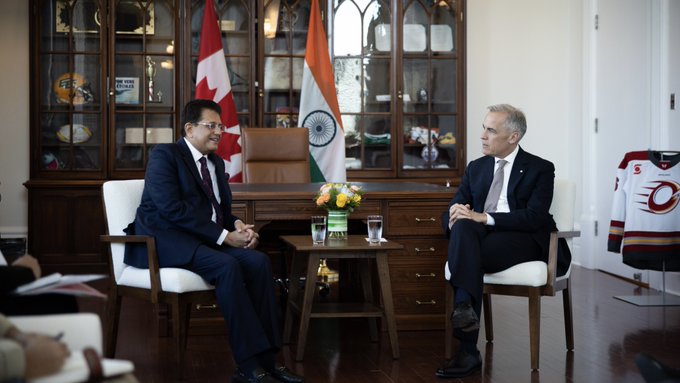
Calling on Prime Minister of Canada Mr. Mark Carney, Shri Goyal conveyed warm greetings from Prime Minister Shri Narendra Modi. The Minister fondly recalled Prime Minister Carney’s recent visit to India, which imparted fresh momentum and renewed confidence to the India-Canada partnership. Both sides held forward-looking discussions on further deepening bilateral cooperation across multiple domains and expressed optimism towards the early conclusion of the India-Canada CEPA.

Prime Minister Carney affirmed that the proposed free trade agreement with India would be a game changer, unlocking a massive new market. Both sides reaffirmed their commitment to a balanced, commercially meaningful and ambitious Comprehensive Economic Partnership Agreement and directed their respective teams to work towards an agreement that strengthens economic partnerships and delivers tangible benefits to businesses and citizens of both nations.

Shri Goyal also held constructive bilateral discussions with Canada’s Minister of International Trade Mr. Maninder Sidhu on advancing the India-Canada CEPA negotiations. The two Ministers reviewed the outcomes of negotiations completed to date and identified future opportunities to expand trade and investment flows. Both sides reaffirmed their resolve to conclude a balanced and mutually beneficial agreement by the end of 2026.

The envisaged CEPA is expected to strengthen economic partnerships and deliver tangible benefits to businesses and citizens of both countries, deepening the bilateral economic relationship to its fullest potential.

In a productive meeting with Canada’s Minister of Agriculture and Agri-Food Mr. Heath MacDonald, discussions centred on strengthening bilateral cooperation in agriculture, with a focus on food security, sustainability, and agri-technology. Both sides explored meaningful opportunities for collaboration in the food processing sector. It was highlighted that such cooperation would play an important role in boosting the incomes of Indian farmers and producers, while contributing to greater agricultural integration between the two countries.

Shri Goyal also held wide-ranging talks with Canada’s Foreign Minister Ms. Anita Anand and emphasised the importance of trade, investment, and technology linkages for the India-Canada Strategic Partnership. The Minister highlighted India’s expanding infrastructure, renewable energy, logistics, digital infrastructure, and consumer sectors as offering significant opportunities for greater collaboration and long-term Canadian investments. Both sides reaffirmed their commitment to strengthening the bilateral partnership across economic and strategic dimensions.

Shri Goyal concluded a productive Day 1 in Ottawa with a warm interaction at a reception hosted by his counterpart, Canada’s Minister of International Trade, Mr. Maninder Sidhu. Speaking at the reception, the Hon’ble Minister spoke about India’s remarkable growth journey — driven by the aspirations of its people, a thriving entrepreneurial spirit, a vast and skilled talent pool, and expanding market opportunities. Shri Goyal also underscored the significant contribution of the Indian diaspora in deepening economic, cultural, and people-to-people relations between the two nations.

From May 26–27, Shri Goyal will lead the delegation through an intensive programme of industry roundtables and B2B engagements in Toronto, aimed at translating ministerial-level commitment into concrete commercial partnerships across priority sectors.

The visit carries forward the mandate set by Prime Ministers Shri Narendra Modi and Mr. Mark Carney during Prime Minister Carney’s New Delhi visit in March 2026 and builds on sustained high-level engagement between the two countries since mid-2025.

CEPA negotiations have moved swiftly since the Terms of Reference were signed in March 2025. A first round of virtual talks was held in March 2026, followed by a second round that concluded on May 8, 2026. A concurrent round of technical negotiations is underway in Ottawa from May 25–29, running in parallel with Minister Goyal’s visit, signalling the seriousness and pace both sides are bringing to the process.

The delegation of over 100 industry leaders, drawn from sectors including energy, mining, automotive goods, pharmaceuticals, telecommunications, artificial intelligence, leather, and textiles, reflects the breadth of opportunity both sides are seeking to unlock.

With bilateral trade currently standing at approximately USD 8.5 billion, both governments have set an ambitious shared target of expanding this to USD 50 billion by 2030.

“We need to see the Strait open”: US Secy Rubio updated Quad on Iran talks, says Aussie FM Wong

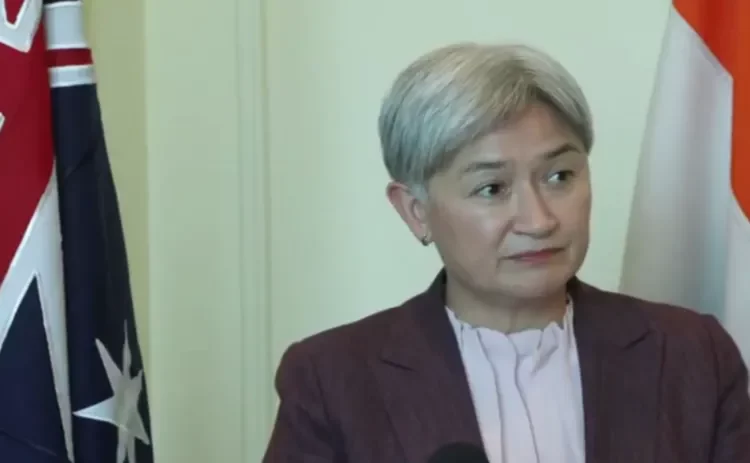
NEW DELHI: Highlighting a unified stance among Quad partners on maintaining global maritime stability, Australian Foreign Minister Penny Wong on Tuesday stated that US Secretary of State Marco Rubio updated members on the progress of crucial diplomatic negotiations with Iran over the volatile Strait of Hormuz.

Addressing reporters in the national capital after deliberations of the foreign ministers of the four members of the Quadrilateral grouping of countries, Wong underlined the strategic necessity of keeping the vital trade chokepoint secure, pointing to a shared consensus within the four-nation grouping to avert a wider economic fallout.

Responding to a question from ANI regarding the escalating situation in the Strait of Hormuz, the Australian Minister detailed the high-level diplomatic briefings that took place during their interactions.

“The first point is that Secretary Rubio did update us on the negotiations and the progress of those negotiations with Iran. Australia and others have been saying for some time that we need to see a diplomatic resolution,” Wong said.

With global maritime trade vulnerable to disruptions in West Asia, the minister tied the ongoing instability directly to the shared strategic priorities of the four Quad members- India, the US, Japan and Australia.

“We need to see the Strait open. We need to see the supply flow. And I think that’s a consistent position of Quad members. So we were updated on that,” she noted.

The ripple effects of the ongoing friction in West Asia have pushed the grouping to actively address the vulnerabilities in global logistics and fuel corridors, ensuring that regional economies are insulated from sudden shocks.

Elaborating on how the Quad plans to address the direct fallout of the maritime deadlock, Wong connected the conflict to the tangible, collaborative frameworks emerging from their latest discussions.

“In terms of some of the consequences of the conflict and the closure of the Strait, you would see that there’s a discussion about energy security, and the Energy Security Initiative is one of the outcomes of our meeting,” the Australian Foreign Minister explained.

This crucial update emerged from the first Quad meeting of 2026 hosted by India- which brought together External Affairs Minister S Jaishankar, US Secretary of State Marco Rubio, Australian Foreign Minister Penny Wong and Japanese Foreign Minister Toshimitsu Motegi to confront a world economy reeling under acute economic stress and aggressive maritime blockades.

At the heart of the emergency deliberations was Iran’s recent closure of the critical strategic waterway, a move executed in response to a US-Israeli war that broke out on February 28, severely disrupting international energy markets. Tensions have since intensified as Tehran actively discusses formalising its chokehold over maritime traffic by establishing a permanent tolling system.
En route to New Delhi, Secretary Rubio set a confrontational tone for the summit, flatly rejecting Tehran’s maritime manoeuvres as unlawful, illegal, unsustainable and unacceptable, while firmly asserting that no nation across the globe would accept such a unilateral tolling mechanism.

Addressing a group of media persons after the meeting, Australian minister Wong voiced deep apprehensions over the regional fallout of the blockade, explicitly characterising Iran’s closure of the strategic passage as a primary catalyst for the current wave of global instability.

“We know the consequences for our region of the Iranian closure of the Strait of Hormuz and what that means for our energy security, for our economies, and for our people,” Wong warned, while commending Rubio’s ongoing diplomatic interventions to restore unhindered freedom of navigation.

Host minister S Jaishankar described the strategic interactions between the Quad leaders as highly substantive and productive, reiterating that the four major democracies spent considerable time focusing on ensuring safe and unimpeded commerce while calling for the scrupulous observation of international law.

Aligning with this firm posture, Japanese Foreign Minister Toshimitsu Motegi confirmed that the grouping had synchronised its strategic perceptions on the fast-evolving regional security landscape, agreeing to strongly oppose any unilateral attempts to alter the status quo through coercion.

To transition the security architecture from what Rubio described as a traditional “talk shop” into an active “partnership of action” representing one-third of global GDP, the ministers unveiled a suite of major initiatives aimed at insulating the Indo-Pacific, where 60 per cent of global maritime trade transits.

Chief among these frameworks is the newly launched Indo-Pacific Energy Security Initiative, a direct policy countermeasure designed to reinforce regional fuel supply chains, which will see the US Department of Energy hosting a specialised Fuel Security Forum for Quad partners later this year.

To back this up operationally, the grouping launched the Indo-Pacific Maritime Surveillance Collaboration, a strategic mechanism that integrates the tracking and surveillance capabilities of India, the US, Japan and Australia to generate a Common Operating Picture and deliver near real-time data sharing across vital shipping corridors.

In a landmark geopolitical shift to counter deteriorating strategic circumstances in the island chains, Rubio announced that the Quad will also jointly fund and develop a major port infrastructure project in Fiji under the newly minted Quad Ports of the Future Partnership.

Further elevating their joint defensive posture, the US Secretary of State concluded by thanking India for committing to host the next “Quad at Sea” deployment, an operational milestone that will see the coast guards of all four nations operate together aboard a single vessel to enforce maritime safety.

Source: ANI

Gujarat Govt. signs MoU with Meta to deliver 20 government services via WhatsApp

GANDHINAGAR : In a move aimed at expanding digital governance and citizen service delivery, the Government of Gujarat on Monday (May 25, 2026) signed a memorandum of understanding (MoU) with Meta Platforms Inc. to introduce WhatsApp-based access to government services across the State.

Under the leadership of Chief Minister Shri Bhupendra Patel, Gujarat has taken an important step towards realising Prime Minister Shri Narendra Modi’s vision of “Nagrik Devo Bhava” by advancing from One Day Governance to WhatsApp Governance.

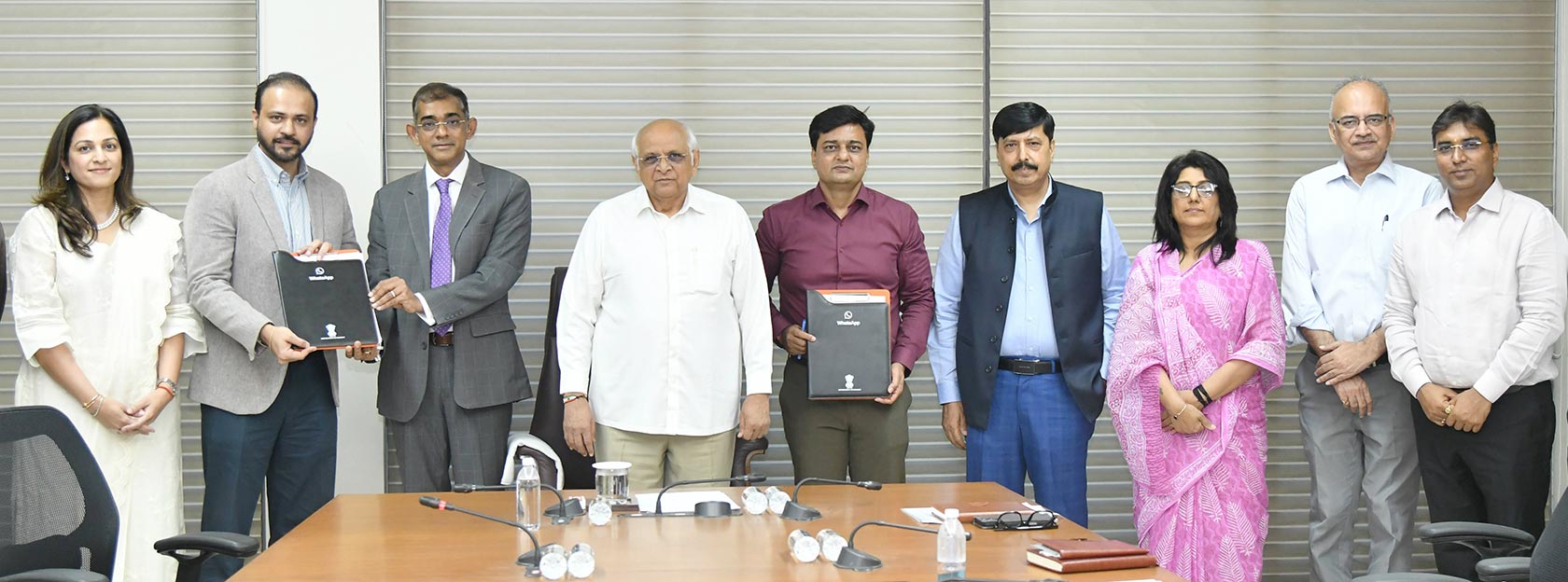
Towards this objective, in presence of Chief Minister, an MoU was signed in Gandhinagar between the State Government and Meta Platforms Inc.

Under the guidance of Chief Minister, the state government, in accordance with the recommendations of the GARC, has made approximately 20 citizen-centric services from five major departments available via a WhatsApp chatbot through the Sugam Digital Gujarat Initiatives.

Now, this MoU between Meta and the State Government will play an important role in making these services simpler and faster for citizens while also ensuring last-mile delivery.

Accordingly, through a WhatsApp-based chatbot available in English and Gujarati, citizens across the state will soon be able to avail nearly 20 important services directly on their phones from home through a single WhatsApp number.

Also, citizens will also be freed in the coming days from navigating multiple web portals or standing in queues at government offices for such services.

The services that will be made available by the State Government on WhatsApp include important facilities such as grievance redressal assistance, income, caste and EWS certificates, ration card updates, revenue records and official affidavits.

With the implementation of this MoU, the service delivery process will become simpler in the future, while real-time status tracking will also become more robust. The State Government also intends to gradually integrate more services with this WhatsApp-based platform in the coming days.

Under the guidance of the Chief Minister, the biggest benefit of these new WhatsApp Governance-based citizen-centric services will be received by the citizens. Government services will become easier, services will be available on mobile phones in just a few clicks, both time and cost will be saved, and transparency and accountability will become stronger. The reach of government services will increase in both rural and urban areas, and the benefits of technology will now reach citizens at their homes.

In line with the direction given by Prime Minister Shri Narendra Modi for citizen-centric governance, Gujarat has continuously undertaken successful initiatives under the guidance of Chief Minister Shri Bhupendra Patel to ensure that citizens receive timely and transparent services through initiatives such as One Day Governance with minimum inconvenience and maximum ease.

Through Jan Seva Kendras in urban areas and the VCE-based system in rural areas, government services are reaching lakhs of citizens in a simple and transparent manner. Now, through the MoU signed with Meta Platforms Inc. (Meta), Gujarat is entering the next phase of citizen-centric governance.

In the coming time, the pathway to providing end-to-end government services to citizens through just a few clicks on their mobile phones will become stronger. Modern facilities will be developed not only to provide information but also to simplify and make more accessible the complete process from application to certificate issuance.

Secretary of the Training and Administrative Reforms Division of the General Administration Department of the State Government, Shri Hareet Shukla, along with Meta’s Director and Head of Policies Shri Aman Jain and Country Director Shri A. Srinivas, signed and exchanged the MoU in the presence of the Chief Minister.

On this occasion, Chief Secretary Shri M. K. Das, Principal Advisor to the Chief Minister Dr. Hasmukh Adhia, Additional Chief Secretary of the General Administration Department Smt. Anju Sharma, Principal Secretary to the Chief Minister Shri Sanjeev Kumar, Additional Principal Secretary Dr. Vikrant Pandey and Secretary Dr. Ajay Kumar were also present.

Maersk launches FI2 Ocean Service to strengthen India-China trade connectivity

The dedicated weekly service from Southern and Eastern China to Northwest India addresses the capacity demanded by customers across automotive, chemical, technology and retail verticals

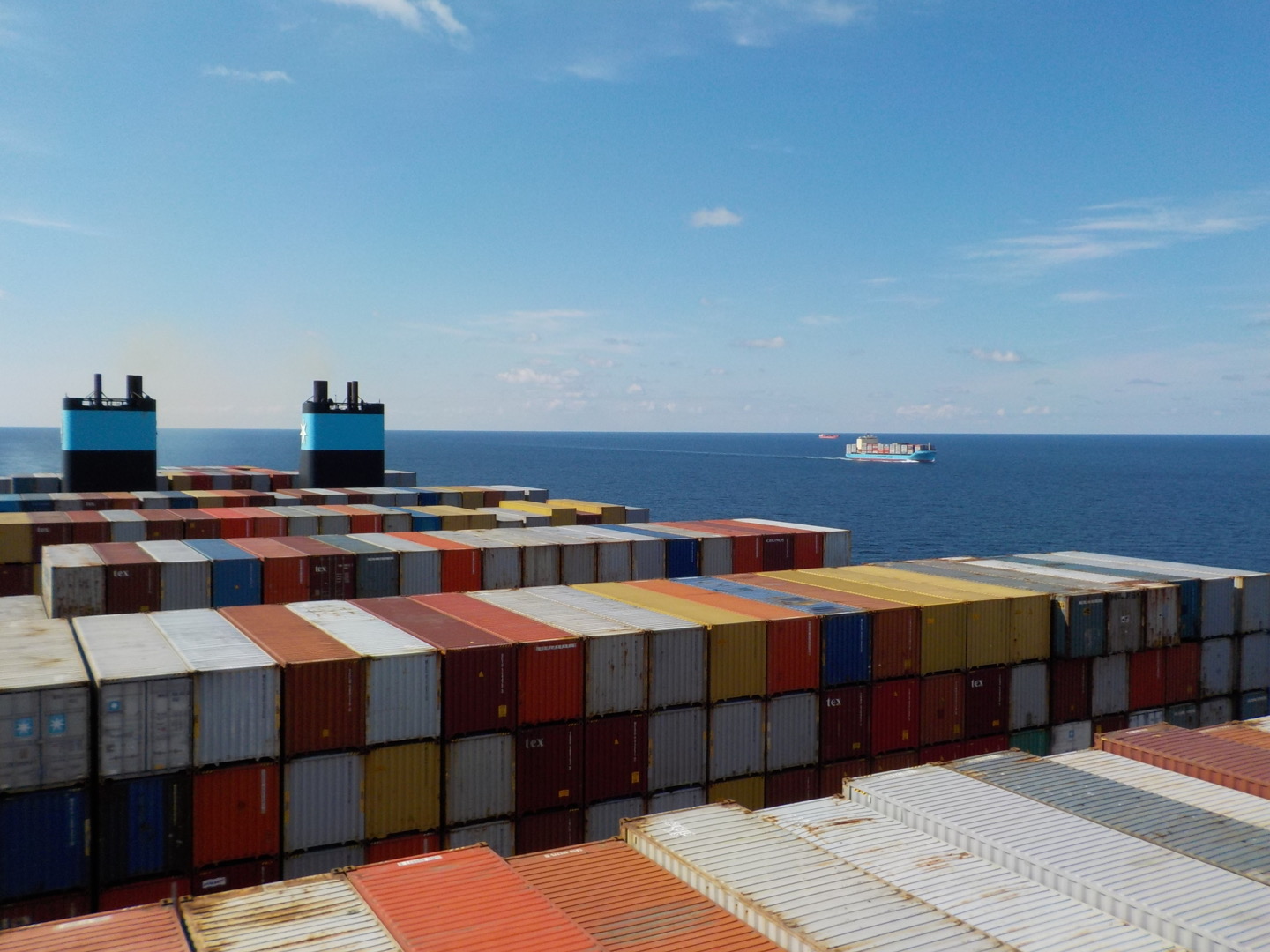
MUMBAI : A.P. Moller – Maersk (Maersk) has announced the launch of FI2, a new dedicated ocean service connecting Far East Asia to the Indian Subcontinent, with the first Westbound sailing departing Shanghai on June 4th, 2026. The service has been introduced in direct response to growing customer demand for additional capacity on the China–India trade route and will provide Indian importers and exporters with a quicker, reliable, high-frequency connection to key manufacturing and sourcing hubs across North West India.

Maersk logo Sh 696x464 1 Maersk launches FI2 Ocean Service to strengthen India-China trade connectivity

The weekly service will be operated with a fleet of six vessels with a nominal capacity of 4,500 TEU. The port rotation will be Shanghai – Ningbo – Nansha – Tanjung Pelepas – Nhava Sheva – Pipavav – Port Qasim.

Unlocking the Hinterland: Pipavav and the Dedicated Freight Corridor

A defining feature of the FI2 service is its call at Pipavav on India’s northwestern coastline in Gujarat. Pipavav serves as a gateway to the Dedicated Freight Corridor (DFC) rail network, enabling Maersk to offer customers a seamless, integrated logistics solution beyond the port gate. Through DFC rail connectivity, cargo arriving at Pipavav can be efficiently transported inland to the National Capital Region (NCR), including Delhi, Gurugram, Noida, and the surrounding industrial belts. This reduces transit times and ensures reliable delivery to the destination. This makes FI2 particularly compelling for customers moving high-value and time-sensitive cargo in automotive, chemicals, retail, and technology verticals who require dependable, door-to-door supply chain solutions.

Thomas Theeuwes, Managing Director, Maersk South Asia, commented, “The FI2 is a direct response to what our customers want: more capacity, consistency, and connectivity, on the China-India route. By combining the weekly ocean service with our rail solution via the DFC, we are going a step further and giving our customers the true integrated logistics experience.”

Complementing Maersk’s existing network

The FI2 service joins Maersk’s existing FI3 service, together forming two direct Far East – India ocean services. Together, they deliver improved frequency options, greater routing flexibility, and enhanced resilience, ensuring customers can better plan and protect their supply chains from disruption.

For more information on the FI2 service, click here.

About A.P. Moller – Maersk

A.P. Moller – Maersk is an integrated logistics company working to connect and simplify its customers’ supply chains. As a global leader in shipping services, the company operates in more than 130 countries and employs over 100,000 people worldwide. Maersk is aiming to reach net zero emissions by 2040 across the entire business with new technologies, new vessels, and green fuels. For more information: www.maersk.com

MoPSW Addl. Secretary reviews key maritime infrastructure and operations in Gujarat

BHAVNAGAR /ALANG : Shri Mukesh Mangal, Additional Secretary, Ministry of Ports, Shipping & Waterways (MoPSW), undertook a comprehensive visit to key maritime facilities in Gujarat, including the APPL Container Manufacturing Unit in Bhavnagar, the Voyage Express RoPax Ferry service at Ghogha, and the Alang Ship Recycling Yard, to assess ongoing developments, operational performance, and future growth potential across the maritime ecosystem.

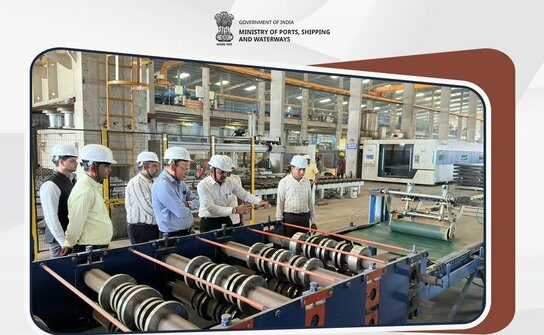
During his visit to the APPL Container Manufacturing Unit, Bhavnagar, Shri Mangal reviewed the facility’s production capabilities, technological processes, and contribution towards strengthening India’s domestic container manufacturing ecosystem. Discussions focused on enhancing self-reliance in container production, supporting trade logistics, and advancing the objectives of Atmanirbhar Bharat through robust indigenous manufacturing capabilities.

At Ghogha, Shri Mangal inspected operations of the Voyage Express RoPax Ferry service, which plays a significant role in boosting coastal connectivity and facilitating efficient passenger and cargo movement across the Gulf of Khambhat. The review covered operational efficiency, passenger amenities, safety standards, and the service’s contribution to reducing travel time, improving regional accessibility, and supporting economic activities along the coastline.

The visit also included an extensive review of the Alang Ship Recycling Yard, one of the world’s leading ship recycling hubs. Shri Mangal interacted with stakeholders and reviewed ongoing efforts aimed at promoting environmentally sustainable and safe ship recycling practices aligned with international standards, including compliance with the Hong Kong International Convention for the Safe and Environmentally Sound Recycling of Ships. Discussions also focused on worker welfare, environmental safeguards, modernization initiatives, and strengthening India’s leadership in responsible ship recycling.

The visit underscored the Ministry’s continued commitment to advancing maritime infrastructure, strengthening coastal and multimodal connectivity, fostering domestic manufacturing excellence, and promoting sustainable maritime practices as part of India’s broader vision for a modern, resilient, and globally competitive maritime sector.

CONCOR sees strong revenue performance in Q4 26 , Profit eases 3.9%; Dividend unveiled

NEW DELHI : Container Corporation of India Limited (CONCOR), a ‘Navratna’ Central Public Sector Enterprise under the Ministry of Railways, has reported a standalone net profit of Rs 258.23 crore for the fourth quarter of FY26, ending March 31, 2026, slightly lower than Rs 302.14 crore in the same period last year. Revenue from operations stood at Rs 2,256.84 crore for Q4 FY26, compared with Rs 2,281.37 crore in Q4 FY25, while total income was recorded at Rs 2,345.94 crore and profit before tax at ₹339.98 crore.

Earnings per share (EPS) for the quarter came in at Rs 3.39 (basic and diluted), on a face value of Rs 5 per share.

For the full financial year FY26, CONCOR’s standalone net profit was Rs 1,221.81 crore, down 3.9% from Rs 1,271.98 crore in FY25, while EPS fell to Rs 16.04 from Rs 16.70. Total comprehensive income for the year was Rs 1,240.93 crore, marginally lower than Rs 1,268.29 crore a year ago.

Revenue from operations rose to Rs 9,059.45 crore in FY26 from Rs 8,863.37 crore in FY25, an increase of 2.2%. On a consolidated basis, the company reported a net profit of Rs 1,245.74 crore and revenue from operations of Rs 9,078.97 crore, with total comprehensive income at Rs 1,265.64 crore.

Segment‑wise, EXIM (export–import) revenue grew to Rs 6,008.63 crore in FY26 from Rs 5,733.32 crore in FY25, while domestic revenue dipped to Rs 3,050.82 crore from Rs 3,130.05 crore. Key standalone ratios show paid‑up equity share capital of Rs 380.81 crore (face value Rs 5), reserves (excluding revaluation) of Rs 12,508.91 crore, and closing cash and cash equivalents of Rs 610.20 crore.

CONCOR’s net worth stood at Rs 12,942.35 crore and total assets at Rs 15,175.66 crore on a consolidated basis. The board has also declared a final dividend of Rs 1.00 per equity share (20% of face value) for FY26, in addition to three interim dividends: Rs 1.60, Rs 2.60 and Rs 3.40 per share, summing up to Rs 8.60 per share (172% of face value) for the year.

The final dividend is subject to shareholder approval at the upcoming 38th Annual General Meeting, with the record date to be announced and payment scheduled within 30 days of declaration.

TCI announces Strong Growth in Q4 FY2026 Financial Results

GURUGRAM: Transport Corporation of India Ltd. (TCI), India’s leading integrated multimodal logistics and supply chain solutions provider, today announced its financial results for the fourth quarter and year ended March 31, 2026.

Financial Highlights for Q4/FY2026:

– Revenue: TCI reported a consolidated revenue of ₹ 1336 Cr, marking a growth of 11.6% compared to ₹ 1197 Cr in the same period last year.

– EBITDA: The Company’s Earnings before Interest, Taxes, Depreciation and Amortization (EBITDA) stood at ₹ 174 Cr, a 7.4 % increase from ₹ 162 Cr in Q4/FY2025.

– Profit after Tax (PAT): PAT rose by 8.7% to ₹ 125 Cr, compared to ₹ 115 Cr in the corresponding quarter of the previous yea

Consolidated

Performance Highlights: Q4/FY2026 vs.Q4/FY2025 Consolidated (In ₹ Cr.)Performance Highlights: 12M/FY2026 vs.12M/FY2025 Consolidated (In ₹ Cr.)
Particulars31.03.202631.03.2025Growth %Particulars31.03.202631.03.2025Growth %
Revenue1,3361,19711.6 %Revenue4,9654,5389.4 %
EBITDA1741627.4 %EBITDA6505978.9 %
PAT1251158.7 %PAT46041610.6 %

Standalone

Performance Highlights: Q4/FY2026 vs.Q4/FY2025 Standalone (In ₹ Mn.)Performance Highlights: 12M/FY2026 vs.12M/FY2025 Standalone (In ₹ Mn.)
Particulars31.03.202631.03.2025Growth %Particulars31.03.202631.03.2025Growth %
Revenue1,1401,02111.7 %Revenue4,3534,0597.2 %
EBITDA1461339.8 %EBITDA6095608.7 %
PAT1029112.1 %PAT44439612.1 %

Management Commentary

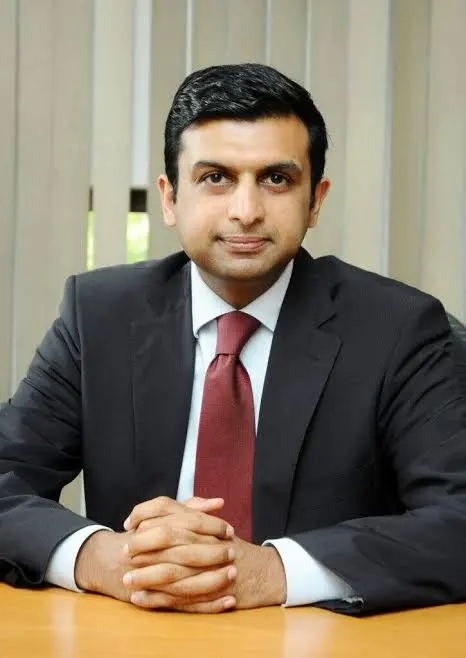
Mr. Vineet Agarwal, Managing Director, Transport Corporation of India Ltd. commented, “Q4 FY2026 reflected TCI’s steady execution and disciplined operations in a dynamic business environment. Our diversified portfolio, integrated multimodal capabilities and customer-led approach continued to strengthen our market position.

TCI saw healthy traction across warehousing, multimodal movement and sector-specific logistics solutions, with our 3PL, cold chain and warehousing offerings serving customers across FMCG, consumer durables, renewables, e-commerce and quick commerce. Momentum across rail, road and coastal shipping, supported by continued investments in warehouses, hubs, trucks and rail car carriers, is strengthening our long-term capabilities, alongside our exploration of EV trucks to advance greener logistics.

Looking ahead, we remain focused on leveraging our investments in technology, multimodal infrastructure, green logistics and strategic partnerships to create enduring value for our customers, communities and shareholders.“

MOVIN celebrates Four Years of Growth, Innovation, and Future‑Ready Logistics Leadership for India’s B2B Supply Chains

GURUGRAM: MOVIN, the logistics brand launched as a joint venture between UPS and InterGlobe Enterprises, Tuesday (26-05) proudly marks its fourth anniversary, a journey defined by rapid nationwide growth, technology‑enabled solutions, and customer‑first logistics solution.

Rooted in the combined expertise of UPS and InterGlobe Enterprises, MOVIN has built a logistics Brand offering global best practices with local market insights, operational excellence, trust, and reliability. Over the past four years, it has expanded its operational footprint across India’s key business hubs, scaled shipment volumes, and strengthened its position as a trusted partner for SMEs, MSMEs, and enterprise clients navigating India’s evolving supply chain landscape.

MOVIN has reinforced its presence across India’s industrial corridors with the recent inauguration of a strategic hub in Surat and a strong existing footprint across Delhi/NCR, Mumbai, Pune, Ahmedabad, Bengaluru, Kolkata, Hyderabad, Chennai, Jaipur, Chandigarh, Ludhiana, and Bhubaneswar. A landmark achievement for the Company was the launch of MOVIN Healthcare in November 2025 – a dedicated vertical operating nationwide to serve the pharmaceutical, MedTech, and diagnostics sectors with advanced temperature‑controlled packaging and an industry‑leading Next Flight Out (NFO) service for time‑bound medical shipments.

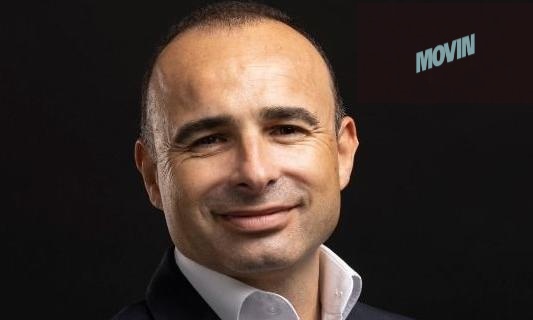
Grégory Goba-Blé, Director of MOVIN Express and Head of UPS India, commented, “Four years of MOVIN represent a decisive step in strengthening India’s logistics backbone. Our journey has been about building scale with reliability, embedding technology into operations, and creating a network that supports businesses across sectors. As India advances its economic corridors and industrial clusters, our focus is on accelerating digital integration, expanding footprint, and deepening partnerships that enable supply chains to be more resilient and competitive. One encouraging development for us has been the response from our customers. We have received thoughtful feed-back, stronger engagement and growing support from our them all this while.  MOVIN’s next phase is about driving transformation in B2B logistics, ensuring that businesses are equipped to meet the demands of a future‑ready economy.”

As MOVIN marks four years of redefining logistics in India, the journey ahead is filled with greater ambition, stronger momentum, and a continued commitment to innovation, customer-centricity, operational excellence, and sustainable growth. With a future-ready approach and an expanding nationwide network, MOVIN remains dedicated to delivering seamless, reliable, and technology-led logistics solutions that empower businesses to grow with confidence.

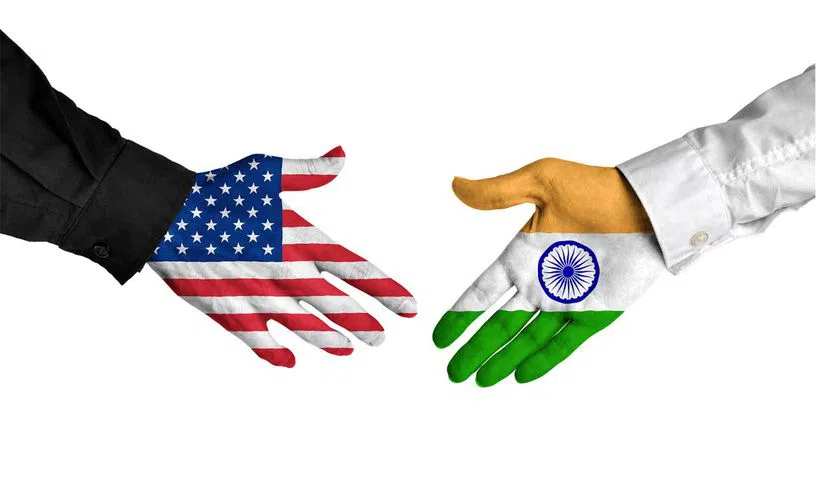
India to re-assess US Trade tariff terms amid legal uncertainty and competitive concerns

NEW DELHI : India is expected to review the tariff treatment being extended to competing exporting countries before finalising any new tariff commitments under the proposed trade agreement with the United States, according to a senior government source. The matter is likely to feature prominently during the next round of bilateral trade talks scheduled for June.

The development comes amid legal uncertainty over Washington’s reciprocal tariff regime of up to 50 percent, introduced earlier this year under emergency powers. In May, the US Court of International Trade invalidated these duties, ruling that the International Emergency Economic Powers Act (IEEPA) did not grant the administration authority to impose broad-based import tariffs.

“The previous understanding was based on a 50 percent tariff structure. The court has now overturned that framework. At present, a temporary 10 percent tariff is in effect, but it is set to expire in July. In such a scenario, what benchmark should be used to negotiate a higher tariff?” the source said on condition of anonymity.

The remarks come ahead of an anticipated visit by a US delegation to India in June for the next round of trade negotiations, as both countries work toward an interim arrangement covering tariff reductions and enhanced market access across key sectors.

“Why should India agree to an 18 percent tariff unless there is a genuine risk of facing a higher duty? Equally important, we need clarity on the tariff treatment being offered to our competitors. India should receive preferential market access compared to competing economies,” the source added.

In February, India and the United States agreed on a framework for an interim Bilateral Trade Agreement (BTA), under which tariffs on Indian-origin goods would be reduced from an effective 50 percent level to 18 percent.

Under the arrangement, the additional 25 percent duty imposed by Washington in response to India’s purchases of Russian oil was withdrawn immediately, bringing the effective tariff on Indian exports down to 25 percent. The interim framework envisaged a further reduction to 18 percent.

However, subsequent judicial rulings challenging the Trump administration’s tariff measures, combined with the introduction of a temporary 10 percent tariff under Section 122, have created uncertainty regarding the final tariff structure applicable to Indian exports, officials said.

The proposed arrangement had been negotiated when the Trump administration’s reciprocal tariff framework remained in force, and trading partners faced the possibility of significantly higher duties if negotiations failed.

The 10 percent tariff imposed under Section 122 of the Trade Act of 1974 allows for temporary import restrictions but is scheduled to expire in July. This has prompted New Delhi to reassess the basis on which future tariff commitments should be negotiated.

At the same time, the Indian government is closely monitoring a parallel Section 301 investigation launched by the Office of the US Trade Representative (USTR), which examines foreign trade practices considered unfair or restrictive to US commerce. The investigation covers issues such as manufacturing overcapacity, labour standards, market access barriers, and other policies affecting American businesses.

Officials note that any trade measures resulting from the Section 301 process may have a stronger legal footing than the reciprocal tariffs that were struck down by US courts.

Against this backdrop, Indian negotiators are evaluating the tariff structure that may ultimately emerge, while also assessing whether competing export economies could secure more favourable treatment, the source said.

India has already submitted its response and representations to the USTR as part of the consultation process and continues to engage with the US side on concerns raised under the investigation, even as broader trade negotiations continue.

Source : Moneycontrol