Home Blog Page 291

Gujarat CM Bhupendra Patel and Railway Minister Ashwini Vaishnaw virtually flag off Bhuj-Delhi Express train service

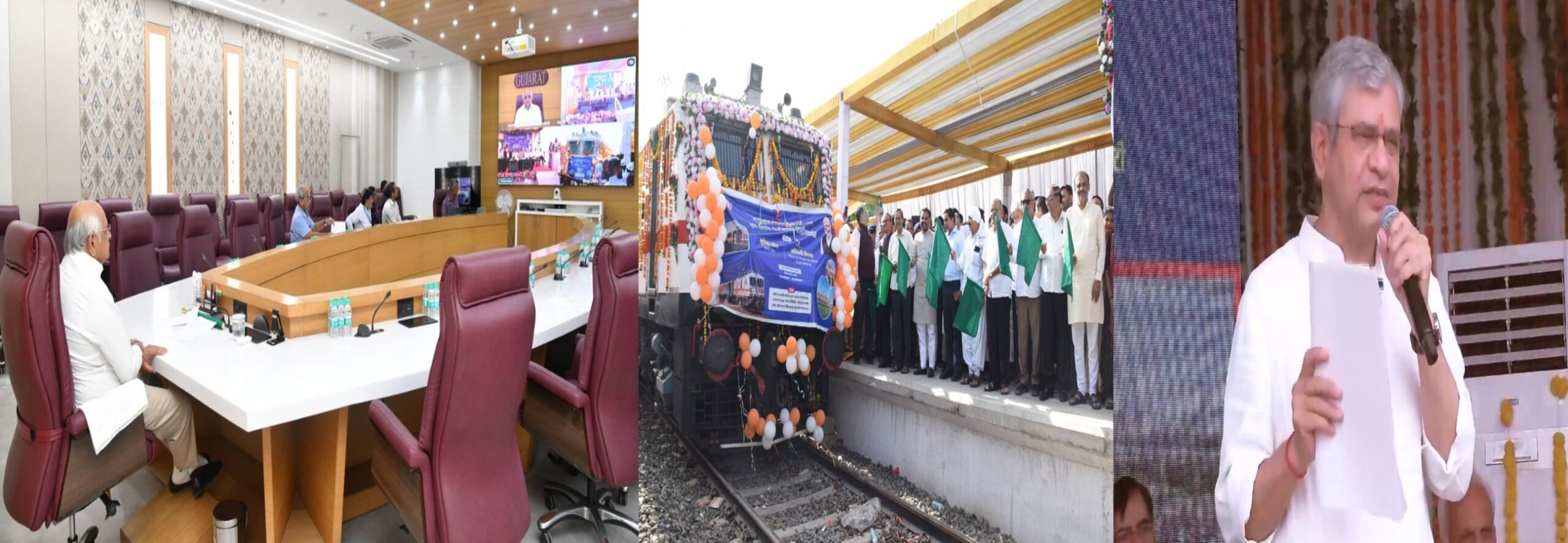
BHUJ: A new direct rail service connecting Kutch with New Delhi was launched on Friday, with Chief Minister Shri Bhupendra Patel participating virtually from Gandhinagar and Union Railway Minister Shri Ashwini Vaishnaw joining virtually the flag-off ceremony from Pali, Rajasthan.

The launch of the Bhuj–Delhi Express fulfills a long-pending demand for direct rail connectivity between the border district and the national capital. The train will run via Bhildi, Jalore, Pali Marwar and Marwar Junction. Significantly, it marks the first-ever direct rail connection between Jalore and New Delhi.

The train will cover a distance of 1,239 km in approximately 24 hours and 30 minutes and will operate daily.

Speaking on the occasion, Chief Minister Shri Bhupendra Patel expressed gratitude to Prime Minister Shri Narendra Modi and Railway Minister Ashwini Vaishnaw for introducing the direct rail link connecting Kutch with New Delhi and also for approving the Ahmedabad–Dholera Semi High-Speed Rail Project recently.

He said Indian Railways serves as a vital pillar of the country’s transportation network and has undergone significant transformation over the past 12 years under the Prime Minister’s leadership.

The Chief Minister said railway infrastructure development in Gujarat has accelerated significantly since 2014, with nearly 2,900 km of new railway tracks constructed across the state. He added that railway projects worth approximately Rs 1.28 lakh crore are currently underway in Gujarat.

He further said Gujarat received Rs 17,366 crore under the Railway Budget for 2026–27, representing a 29% increase compared to allocations made in 2014.

Speaking on the occassion, Railway Minister Shri Ashwini Vaishnaw highlighted that the new daily Bhuj-Delhi Express is a historic milestone that gives the Jalore region direct rail connectivity to Jaipur and Delhi for the first time. He stated this will significantly boost local trade, tourism, and overall economic development while providing highly convenient travel

Train numbers and stoppages

The service will operate as Train No. 19403/19404 between Bhuj and Delhi. During its journey, the train will halt at 22 stations, including Anjar, Gandhidham BG, Bhachau BG, Bhildi, Dhanera, Raniwara, Marwar Bhinmal, Modran, Jalor, Mokalsar, Samdari Junction, Luni Junction, Pali Marwar, Marwar Junction, Beawar, Ajmer Junction, Kishangarh, Jaipur Junction, Gandhinagar Jaipur, Bandikui Junction, Alwar Junction and Rewari Junction.

Timings

Train No. 19403, the Bhuj–Delhi Express, will commence operations from May 23, 2026, departing Bhuj at 11:15 am and reaching Delhi at 11:45 am the following day.

In the return direction, Train No. 19404, the Delhi–Bhuj Daily Express, will begin operations from May 24, 2026. The train will depart Delhi at 4:40 pm and arrive in Bhuj at 7:35 pm the following day.
Gujarat CM holds talks with Russian Envoy to boost Shipbuilding & Trade Ties

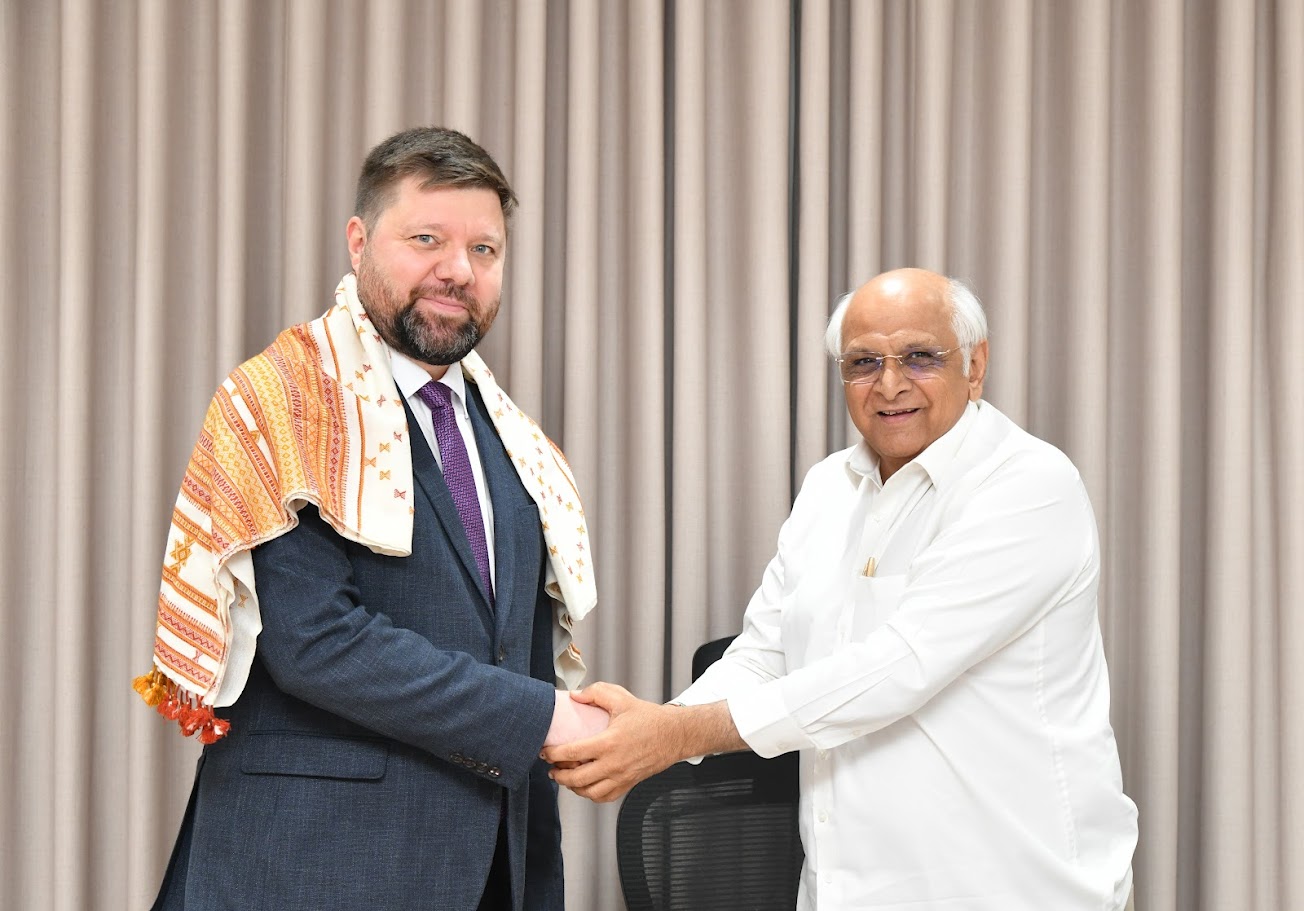
GANDHINAGAR: In a significant step towards enhancing international economic and maritime collaboration, Gujarat Chief Minister Shri Bhupendrabhai Patel held discussions with Mr. Ivan Fetisov, Consul General of the Russian Federation in Mumbai, at Gandhinagar on Friday. The meeting focused on expanding Gujarat-Russia cooperation across key sectors including maritime, shipbuilding, education, and industrial partnerships.

During the interaction, the Chief Minister highlighted Gujarat’s remarkable transformation into a leading maritime and industrial hub under the visionary leadership of Prime Minister Shri Narendra Modi. He emphasized that Gujarat has emerged as a frontrunner in port-led development, cargo handling, ship recycling, and shipbuilding, reinforcing its strategic role in India’s maritime growth story.

The discussions also explored opportunities to deepen bilateral engagement through industrial collaborations and increased business participation between Gujarat and Russia. Both sides deliberated on strengthening economic ties through platforms such as the Vibrant Gujarat Global Summit and other collaborative initiatives aimed at fostering investment and trade partnerships.

The meeting assumes significance at a time when Gujarat continues to position itself as a global investment destination with robust maritime infrastructure, progressive industrial policies, and growing international connectivity. Strengthening ties with Russia in sectors such as shipbuilding and maritime logistics could further accelerate Gujarat’s ambitions of becoming a major global maritime and industrial powerhouse.

Industry observers believe that enhanced Gujarat-Russia cooperation could open new avenues in technology exchange, industrial investments, skill development, and educational partnerships, while also supporting India’s broader vision of strengthening global trade and maritime connectivity.

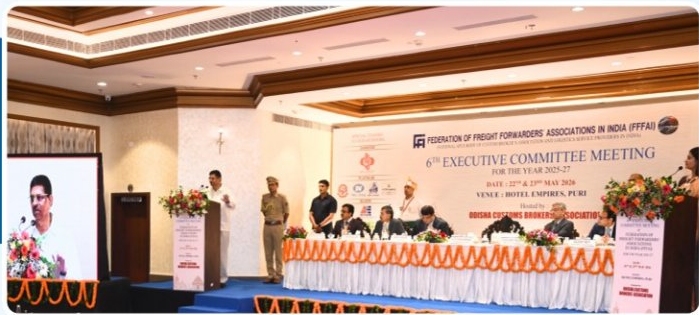
Odisha Governor flags global supply chain disruptions, calls for lower logistics costs to boost competitiveness at the 6th EC Meeting of FFFAI

PURI: India has taken several proactive steps to strengthen the country’s logistics ecosystem and reduce logistics costs to improve global competitiveness, Odisha Governor Shri Hari Babu Kambhampati said on Friday.

Stating that global trade environment was facing major challenges due to geopolitical tensions, supply chain disruptions, rising freight costs and uncertainty in shipping routes, the Odisha Governor stressed the need for resilience, innovation and coordinated action in the logistics sector.

Addressing the 6th Executive Committee Meeting of the Federation of Freight Forwarders’ Associations in India (FFFAI) for the 2025-27 term in Puri, Kambhampati said, “The global trade environment today is passing through a challenging phase. Geopolitical tensions, supply chain disruptions, rising freight costs, war risk surcharges, container shortages, and uncertainty in international shipping routes have affected global commerce.”

He said these developments have increased pressure on governments and industries worldwide to build resilient and efficient supply chains.

“These challenges demand resilience, innovation and coordinated action from governments and industry,” he added.

Highlighting the government’s focus on logistics reforms, the Governor said the Ministry of Commerce and Industry has created a separate department dedicated to logistics, recognising the importance of reducing logistics costs in India.

“The Ministry of Commerce and Industry has opened up a separate department on logistics and it identified the cost of logistics in India is very high compared to many other countries,” he said.

“The emphasis of the Government is how the logistics cost can be reduced so that our goods will be internationally competitive,” Kambhampati said.

The Governor also appreciated the initiatives undertaken by FFFAI in areas such as skill development, digitalisation, women empowerment and youth participation in the logistics sector.

“FFFAI has taken commendable initiatives in skill development, digitalisation, women empowerment, and youth participation in the logistics sector,” he said.

The remarks come amid continued global trade uncertainties and ongoing efforts by India to strengthen logistics infrastructure, improve supply chain efficiency and enhance export competitiveness.

Source: ANI

Vibrant Gujarat Regional Conference to be held in Vadodara next month

GANDHINAGAR: Building upon the success and legacy of the Vibrant Gujarat Global Summit, the next edition of the Vibrant Gujarat Regional Conference (VGRC) is scheduled to be held in Vadodara during the last week of June 2026, focusing on the Central Gujarat region.

The region encompasses 10 districts, namely, Ahmedabad, Gandhinagar, Vadodara, Anand, Kheda, Panchmahal, Dahod, Chhotaudepur, Narmada, and Mahisagar, accounting for 28% of Gujarat’s total manufacturing output.

As per District-level data of the Annual Survey of Industries 2022-23, the Central Gujarat region contributed 93% of the state’s total Other Transport Equipment manufacturing output (which includes railway locomotives, rolling stock, air and spacecraft, two- and three-wheeled vehicles, etc.), 92% of Auto & Auto Components, 70% of Beverages, and 63% each of Pharmaceuticals and Electrical Equipment, a release said.

Around 62% of the total area within Gujarat is covered under the influence area of the Delhi-Mumbai Industrial Corridor (DMIC), making the state an ideal destination for investors. Anchoring this corridor’s progress within Central Gujarat are two flagship projects in various phases of development, the 5,560-acre Dholera Special Investment Region (DSIR) and the 2,849-acre Mandal-Becharaji Special Investment Region (MBSIR).

Each district has its own industrial character and strength in the region. Vadodara’s Chemicals & Petrochemicals sector accounted for 61% of the district’s total manufacturing output. Ahmedabad leads in Auto & Auto Components (18%), Textiles (15%), Basic Metals (13%), and Pharmaceuticals (9%). Gandhinagar’s manufacturing output is driven by Food Processing (18%), Basic Metals (17%), and Chemicals (14%).

The state capital leads the region’s electronics and financial technology sectors through the presence of GIFT City, supported by its academic institutions.

Anand’s manufacturing base is built on Agro and Dairy Processing (50%) and Chemicals (12%). Panchmahal draws its strength from the Auto & Auto Components (23%), Rubber & Plastics (19%), and Pharmaceuticals (15%) sectors. Kheda is driven by Rubber & Plastics products (23%) and Food Processing (22%). Narmada’s output is dominated by Food Processing (92%), while Chhotaudepur contributed through Agro & Food Processing (56%) and Dahod through Food Processing (48%).

In FY 2024-25, the region’s total exports reached $20.54 billion, extending Central Gujarat’s commercial reach across more than 219 countries. Pharmaceuticals led the export basket at $3.67 billion (17.8%), followed by Nuclear Reactors, Boilers & Machinery at $2.79 billion (13.6%), Electrical Machinery & Equipment at $1.79 billion (8.7%), Road Vehicles & Parts at $1.47 billion (7%), Organic Chemicals at $1.45 billion (7%), and Dyeing, Tanning & Colouring Matter at $1.03 billion (5%). The USA was the largest export destination, accounting for 23.8% ($4.88 billion) of the total, followed by the UAE at 7.3%, Thailand at 3%, the UK at 2.8%, and Saudi Arabia at 2.7%.

For the upcoming VGRC (Central Gujarat), the focus sectors include Semiconductors & Electronics, IT & ITeS, Biotech, Pharmaceuticals, Aerospace & Defence, Fintech, Auto & Auto Components, Dairy & Food Processing, Education, Chemicals & Petrochemicals, Textiles & Apparels, Green Energy Ecosystem, Skill Development, Startups, MSMEs, and Tourism & Culture.

A prominent highlight of the VGRC is its focus on Tourism & Culture as a stimulus for regional economic growth. By promoting heritage tourism and world-class destinations such as the Statue of Unity, Central Gujarat aims to attract international visitors and boost local economic activity.

With its exceptional diversity, the region stands out as a high-potential version of the state’s broader tourism strategy. Central Gujarat boasts a dense concentration of spiritual, historical, and archaeological landmarks, anchored by iconic sites such as Ahmedabad’s Gandhi Ashram, Vadodara’s Laxmi Vilas Palace, Gandhinagar’s Swaminarayan Akshardham Temple, and Panchmahal’s UNESCO World Heritage-listed Champaner-Pavagadh Archaeological Park.

Beyond heritage, the region drives initiatives like eco-tourism and experiential travel, focusing on Narmada’s globally renowned Statue of Unity, the Nalsarovar Bird Sanctuary, and Panchmahal’s scenic Pavagadh Hill corridor.

Furthermore, with major urban centres hosting state-of-the-art facilities like Gandhinagar’s Mahatma Mandir, the region acts as a primary hub for lucrative MICE tourism.

The three preceding editions of the VGRC have established a strong track record. Each brought together industry leaders, investors, policymakers, and academic institutions in a focused regional format, channelling the larger Vibrant Gujarat Global Summit’s ethos into concentrated, sector-specific dialogue aligned with the goals of Viksit Bharat at 2047.

The inaugural edition for North Gujarat, held in Mehsana (October 2025), witnessed 1,264 MoUs, projecting investments of Rs 3.25 lakh crore, with 29,000+ registrations and participation of 440+ international delegates from 80+ countries.

This was followed by the Kutch & Saurashtra edition in Rajkot (January 2026), which witnessed 5,492 MoUs with proposed investments of Rs 5.78 lakh crore, approximately 29,000 registrations, as well as participation of about 400 international delegates from 57 countries.

The South Gujarat edition in Surat (May 2026) resulted in 2,792 MoUs with proposed investments of Rs 3.53 lakh crore, drawing 20,000+ registrations and 150+ international delegates from 27 countries.

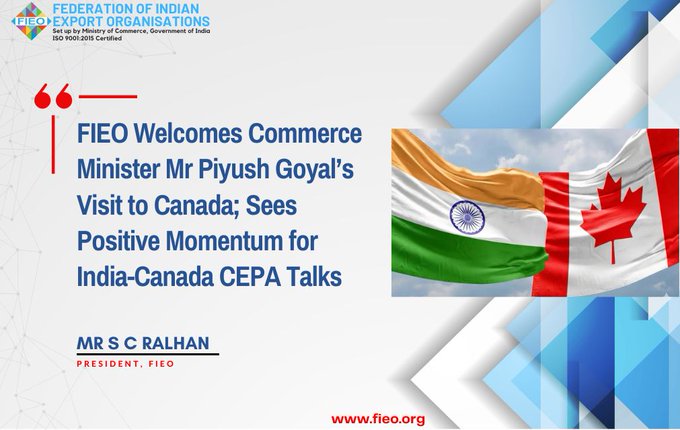
FIEO Welcomes Commerce Minister Piyush Goyal’s visit to Canada; Sees Positive Momentum for India-Canada CEPA Talks

NEW DELHI:  The Federation of Indian Export Organisations (FIEO) has welcomed the upcoming visit of the Union Minister for Commerce & Industry, Piyush Goyal, to Canada from May 25–27, 2026, viewing it as a significant step towards strengthening bilateral economic and trade relations between the two countries. The visit assumes significant importance at a time when India and Canada are actively working towards reviving negotiations on the proposed Comprehensive Economic Partnership Agreement (CEPA), with an ambitious target to enhance bilateral trade to USD 50 billion by 2030.

Commenting on the development, FIEO President, Mr S C Ralhan said that FIEO strongly welcomes the visit of Hon’ble Commerce & Industry Minister, Mr Piyush Goyal to Canada. The visit reflects the commitment of both nations to rebuild economic engagement and accelerate discussions on the proposed CEPA. India and Canada share strong complementarities in sectors such as agriculture, clean energy, critical minerals, food processing, education, and advanced manufacturing, which can significantly enhance bilateral trade and investments.

Mr Ralhan further added that the proposed trade agreement will open new opportunities for Indian exporters, particularly MSMEs, by improving market access, facilitating smoother trade procedures, and encouraging greater collaboration in technology and innovation-driven sectors. Amid evolving global trade dynamics and supply chain realignments, stronger India-Canada trade relations can contribute positively to economic resilience and growth for both countries.

FIEO noted that the renewed engagement between India and Canada comes at a crucial juncture when global markets are witnessing uncertainties arising from geopolitical conflicts, tariff-related disruptions, and changing international trade alignments. Enhanced bilateral cooperation is expected to support diversification of trade partnerships and strengthen supply chain security.

The apex exporters’ body also highlighted the increasing momentum in ministerial exchanges and trade missions between the two countries, including the recent engagements between Indian and Canadian trade officials. FIEO believes that continued dialogue and industry-level cooperation will play a key role in restoring confidence and expanding bilateral commercial ties. The Federation expressed confidence that the Minister’s visit will provide fresh impetus to CEPA negotiations and pave the way for deeper economic integration between India and Canada.

Capital Group builds $2 billion Adani Group bet in pivot from Reliance

LOS ANGELES : The Capital Group, one of the world’s largest investment management firms, has been increasing its exposure to Adani Group companies while steadily paring holdings in Reliance Industries Ltd., marking a shift in foreign investor preference between India’s biggest conglomerates.

The Los Angeles-based money manager has acquired stakes worth more than $2 billion across three Adani Group companies in recent weeks, according to people familiar with the matter. On May 5, Capital Group bought nearly a 2 per cent stake in Adani Ports and Special Economic Zone Ltd. for 74.86 billion rupees ($776 million) through open-market transactions, according to BSE block-deal data.

The investor, which oversees more than $3.3 trillion in assets globally, has also accumulated between 1.5 per cent and 2 per cent stakes in Adani Power Ltd. and Adani Green Energy Ltd. through market purchases, the people said, asking not to be identified because the information is private.

In a market that’s fallen out of favor with some investors because of its lack of companies tied to the global artificial intelligence buildout, Adani companies are increasingly viewed as rare leveraged plays on India’s infrastructure development, energy transition and manufacturing push. That shift is also emblematic of a broader transition toward bets on the next phase of India’s economic expansion.

Adani Power, Adani Green and Adani Ports shares surged 94 per cent, 35 per cent and 25 per cent, respectively, in one year. A Capital Group spokeswoman said she’s unable to comment on individual stocks or shareholdings. A representative for Adani Group didn’t respond to a request for comment.

The pivot toward Adani stocks in particular signals a recovery in investor confidence after months of regulatory scrutiny and market volatility. The group was able to remove a major overhang when the US Justice Department recently sought to drop criminal charges against Gautam Adani, bringing the billionaire founder closer to resolving a legal risk that had once threatened the future of his sprawling ports-to-power empire.

On the other side of the ledger, Capital Group’s exposure to Reliance has declined sharply over the past several years. The firm held about 142 million shares in Reliance Industries at the end of March, compared with about 500 million six years earlier and a peak of 755 million in March 2017, according to data compiled by Bloomberg.

While Reliance remains one of the country’s most widely held and closely tracked companies among global funds, its earnings growth and stock performance have moderated after years of rapid expansion across telecommunications, retail and energy. Reliance Industries shares have declined 8.36 per cent over one year.

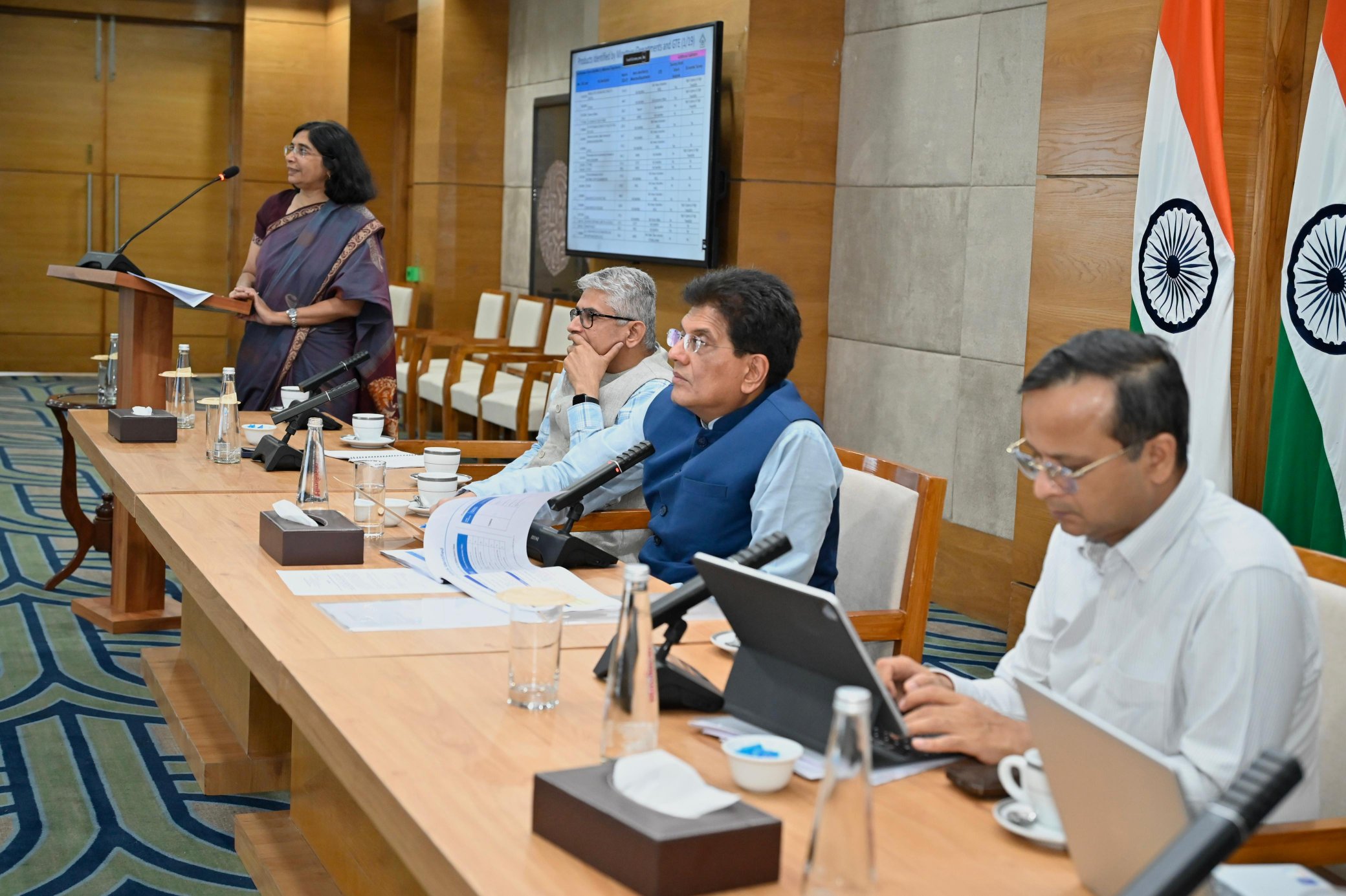
Piyush Goyal chairs High-Level Meeting to accelerate domestic manufacturing and strengthen India’s Global Competitiveness

NEW DELHI : Union Minister of Commerce & Industry, Shri Piyush Goyal, chaired a comprehensive and productive high-level meeting with senior officials from key Ministries and representatives of leading industry associations to deliberate on strategies for boosting domestic manufacturing and reinforcing India’s industrial growth trajectory.

The meeting focused on identifying measures to strengthen India’s manufacturing ecosystem, enhance production capabilities, improve quality benchmarks, and expand the country’s global competitiveness across key sectors. Discussions also explored policy support, technology adoption, innovation-driven manufacturing, supply chain resilience, and investment facilitation to enable sustained industrial expansion.

HI7Kc daEAAwcv6 Piyush Goyal chairs High-Level Meeting to accelerate domestic manufacturing and strengthen India’s Global Competitiveness

Shri Goyal reaffirmed the Government’s strong commitment to working in close partnership with industry stakeholders to create a robust, future-ready manufacturing landscape aligned with the vision of Aatmanirbhar Bharat. He emphasized the importance of collaborative efforts between government, industry bodies, and sectoral stakeholders in unlocking new growth opportunities, encouraging value addition, and promoting globally competitive manufacturing practices.

The deliberations highlighted the need to further strengthen domestic capacities, foster higher quality standards, and encourage innovation-led growth to position India as a preferred global manufacturing destination. Industry representatives shared sector-specific insights and recommendations aimed at improving ease of doing business, enhancing productivity, and supporting export-oriented manufacturing growth.

The meeting reflects the Government’s continued focus on advancing industrial development, driving economic resilience, generating employment opportunities, and accelerating India’s emergence as a major global manufacturing hub.

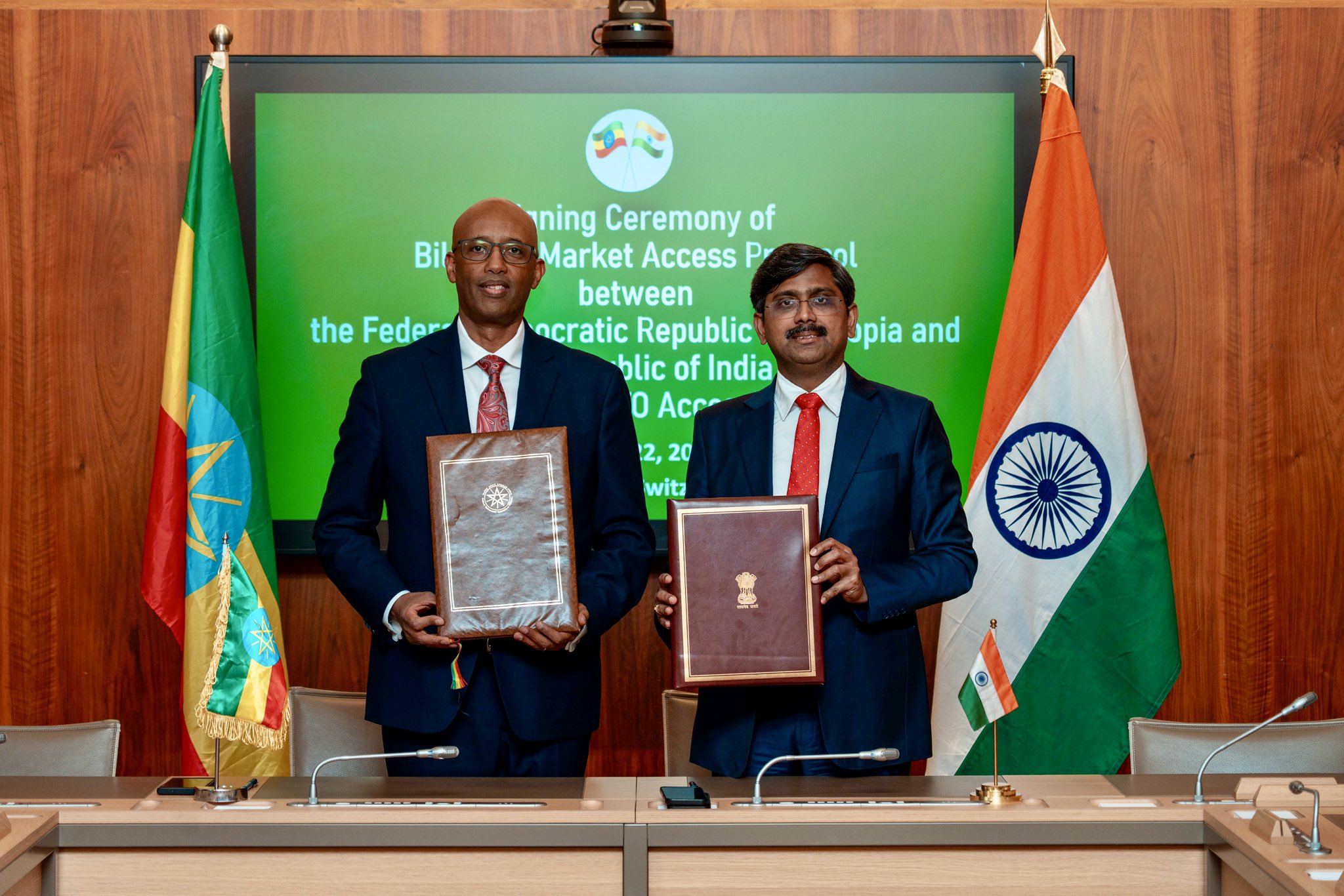
India and Ethiopia sign Bilateral Accession Protocol for Ethiopia’s WTO Membership in Geneva

GENEVA : India and Ethiopia signed the bilateral accession protocol in the context of Ethiopia’s accession to the World Trade Organization (WTO) on 22 May 2026 in Geneva, where the signing ceremony took place. The protocol was signed by Ambassador and Permanent Representative of the Republic of India to the WTO, Dr. Senthil Pandian C., on behalf of India, and Ambassador and Permanent Representative of the Federal Democratic Republic of Ethiopia to the United Nations Office and Other International Organizations in Geneva, Tsegab Kebebew Daka, on behalf of Ethiopia. Following the signing, the Protocol and its annexes were formally handed over and deposited with the WTO Secretariat.

India has consistently supported the accession of developing countries and Least Developed Countries to the WTO, recognising that their fuller integration into the multilateral trading system and global value chains is essential for building a more inclusive and balanced global economy. The agreement was fast-tracked and concluded under the guidance of Union Minister of Commerce and Industry, Shri Piyush Goyal.

India and Ethiopia share deep and enduring people-to-people and civilisational ties. India is Ethiopia’s second-largest trading partner, and Indian companies are among the leading foreign investors in Ethiopia. Bilateral relations between the two countries were elevated to a Strategic Partnership during the visit of Prime Minister Shri Narendra Modi to Ethiopia in December 2025.

The WTO accession process requires aligning domestic economic and trade policies with WTO rules and negotiating market access commitments with existing members. Ethiopia is currently at an advanced stage of its accession process, with its Working Party having met for the seventh time on 22–23 April 2026.

As Ethiopia advances economic and trade policy reforms through the WTO accession process, new opportunities are expected to emerge for enhanced trade, investment, and business collaboration between India and Ethiopia.

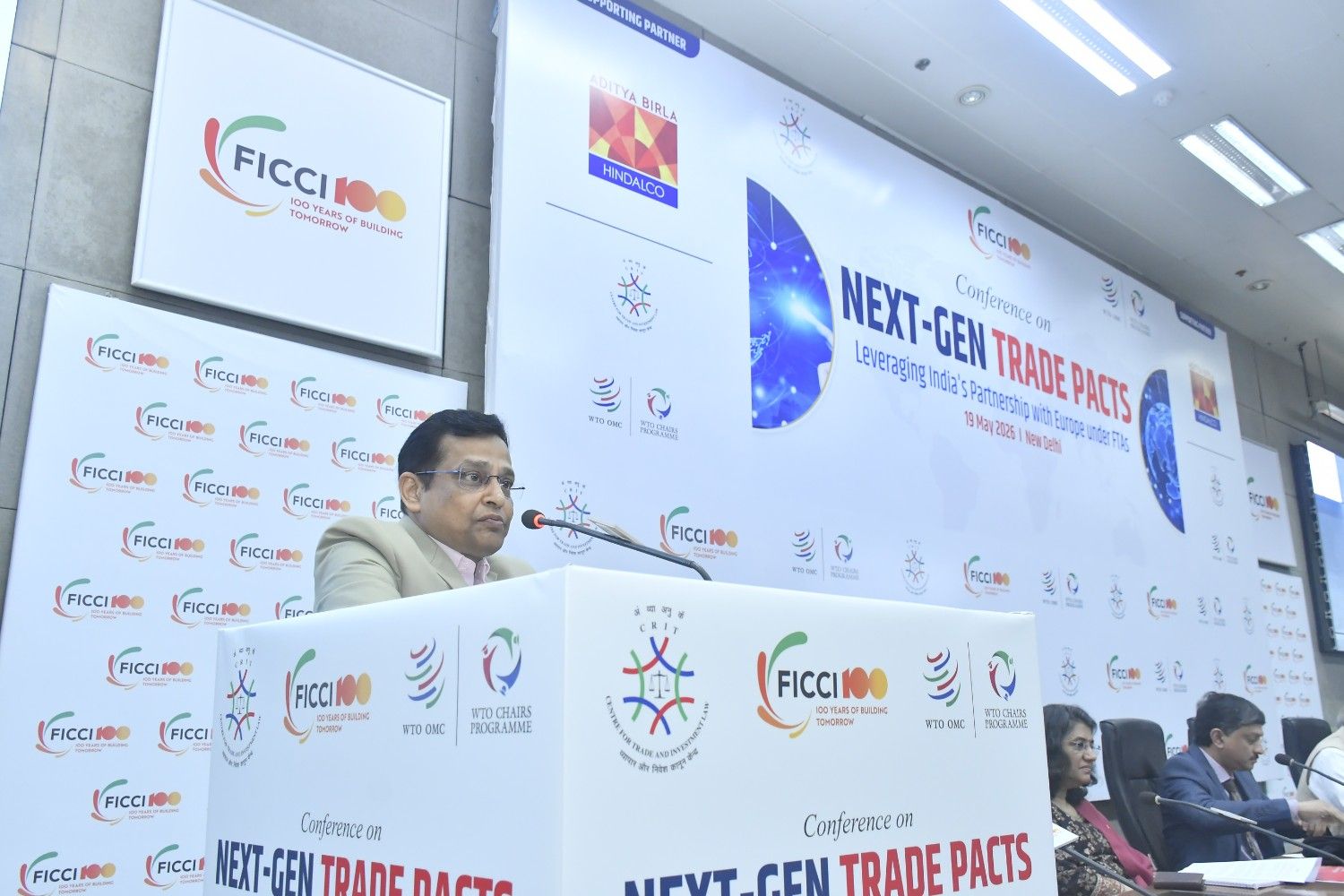
CTIL and FICCI organise Conference on India–Europe Trade Partnerships under Next-Generation FTAs

NEW DELHI : The Centre for Trade and Investment Law (CTIL), Indian Institute of Foreign Trade, in collaboration with Federation of Indian Chambers of Commerce & Industry, organised a conference on “Next-Gen Trade Pacts: Leveraging India’s Partnership with Europe under FTAs” on 19 May 2026 at FICCI Federation House, New Delhi. The conference brought together policymakers, industry representatives, trade experts, legal practitioners, and members of academia to deliberate on India’s evolving trade engagement with Europe under emerging free trade agreements.

CTIL and FICCI CTIL and FICCI organise Conference on India–Europe Trade Partnerships under Next-Generation FTAs

The conference commenced with an inaugural session featuring Secretary General, FICCI, Anant Swarup, who welcomed the participants and highlighted the growing significance of India’s trade partnerships with Europe. Chair, FICCI Foreign Trade and Trade Facilitation Committee and Managing Director, Shahi Exports Pvt. Ltd., Harish Ahuja underlined the need to strengthen standards infrastructure, testing and certification capabilities, digital compliance tools, and institutional mechanisms to effectively address non-tariff barriers in European markets.

Professor and Head, Centre for Trade and Investment Law (CTIL), and India Chair, WTO Chairs Programme, Dr. James J. Nedumpara delivered the context-setting address. He highlighted the importance of next-generation trade agreements and emphasised that the evolving trade architecture between India and Europe extends beyond tariff liberalisation to broader disciplines shaping the future framework of international trade and economic cooperation.

Delivering the keynote address, Additional Secretary, Department of Commerce and Industry, Government of India, Darpan Jain described the conclusion of the India–EU Free Trade Agreement negotiations as a significant milestone in India’s economic diplomacy. He stated that the agreement would provide preferential tariff treatment to 99.5 per cent of Indian exports. He further noted that the agreement would strengthen India’s integration into European value chains, facilitate greater market access across goods and services sectors, and reduce non-tariff trade barriers.

Director General, FICCI, Jyoti Vij delivered the concluding remarks during the inaugural session and emphasised the importance of effective industry utilisation of trade agreements through awareness, capacity-building, and enterprise preparedness initiatives.

The conference featured four thematic sessions focusing on opportunities arising from India’s trade agreements with Europe, standards and regulatory compliance in European markets, services trade and digital economy engagement, and the implications of the Carbon Border Adjustment Mechanism (CBAM) for Indian industry.

The discussions examined pathways for enhancing market access, strengthening export competitiveness, addressing sanitary and phytosanitary measures and technical barriers to trade, expanding India’s services presence in European markets, and navigating emerging carbon-related trade measures.

The conference also included presentations by experts from CTIL on leveraging India’s FTAs with the UK, EU, and EFTA; SPS and TBT barriers under new trade pacts; services trade and digital economy engagement; CBAM and EU carbon measures; and the Trade Remedies Advisory Cell of CTIL.

The event concluded with a vote of thanks delivered by Assistant Secretary General, FICCI, Pragati Srivastava.

PM Vishwakarma Scheme set for roll-out in West Bengal

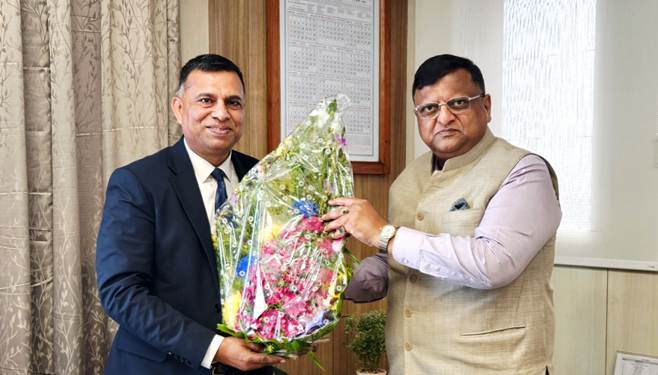
KOLKATA: Dr. Rajneesh, Additional Secretary and Development Commissioner (MSME), Ministry of MSME, Government of India met with Shri Manoj Agarwal, the Chief Secretary, Government of West Bengal on May 22, 2026, for implementation of PM Vishwakarma Scheme in West Bengal.

The scheme was launched by Ministry of MSME, Government of India on 17th September, 2023 and recently the Government of West Bengal has issued notification for constitution of State Monitoring Committee and also District Implementation Committees for roll-out PM Vishwakarma in West Bengal.

Discussions were held on accelerating implementation of the PM Vishwakarma, improving beneficiary identification, strengthening skill development and ensuring wider outreach among traditional artisans and craftspeople. The interaction also focused on the implementation of other MSME schemes in the State and strategies for strengthening the MSME ecosystem through enhanced coordination and institutional support.

The Chief Secretary appreciated the continued support of the Ministry of MSME, Government of India, towards strengthening MSME development in West Bengal and reiterated the State Government’s commitment for effective implementation of Central sector schemes.

PM Vishwakarma Scheme launched in West Bengal 2 PM Vishwakarma Scheme set for roll-out in West Bengal

A meeting was also held with Shri Rajesh Pandey, Additional Chief Secretary, MSME & Textiles Department, Government of West Bengal and state functionaries wherein the modalities for outreach and implementation of PM Vishwakarma was detailed to the state officials and the bankers.

Dr. Rajneesh highlighted the importance of the PM Vishwakarma Scheme in preserving India’s traditional skills and empowering artisans through modern tools, formal financial access, and improved market opportunities. He noted that West Bengal, with its rich heritage of traditional crafts and artisan communities, has significant potential for successful implementation of the scheme. There are 7.79 lakh artisans and craftspeople currently enrolled under PM Vishwakarma in West Bengal.

During the visit Dr. Rajneesh also interacted with the MSME associations of West Bengal and apprised them of the flagship programs of Ministry of MSME for facilitating growth and development of MSMEs. The activities of Technology Centre and Testing Centre at Kolkata were reviewed to expand technological, tooling and testing support to MSMEs in West Bengal. During the visit he also inaugurated the “Transformer Testing Facility” at MSME Testing Centre, Kolkata on 21 May, 2026.

The establishment of this modern transformer testing facility will provide affordable and reliable testing services under one roof with cost competitiveness. The facility will support testing of a wide range of capacity-oriented transformers, including both step-up and step-down transformers, in line with evolving industry and utility requirements.

The project is expected to significantly benefit Micro, Small and Medium Enterprises (MSMEs) engaged in transformer manufacturing by providing access to reliable and standardized testing facilities within the region, thereby reducing dependency on distant laboratories and minimizing testing turnaround time.