Home Blog Page 298

Dredging Corporation of India scripts history with highest ever annual turnover in FY 2025-26

NEW DELHI: Dredging Corporation of India Limited (DCIL), India’s premier dredging organization under the consortium of four major ports — Visakhapatnam Port Authority, Jawaharlal Nehru Port Authority, Paradip Port Authority and Deendayal Port Authority has achieved a historic milestone by posting its highest ever Annual Turnover of Rs. 1214.09 Crore during the Financial Year 2025-26, the best performance since its inception over the last five decades.

As per Dredging Corporation of India Limited, “The Company has also registered a profit after Tax (PAT) of Rs 4.75 Crore for the Financial Year 2025-26, reflecting strong operational efficiency, prudent financial management and unwavering commitment of Team DCI.

“Despite challenging global economic conditions and persistent inflationary pressures triggered by volatile geopolitical developments across the world, DCIL demonstrated remarkable resilience throughout the year,” the DCI said in a release
DCI Limited further said in a statement, “The Company successfully navigated multiple operational challenges, including rising fuel prices, increased operational costs and intense pricing pressures while still delivering an impressive Operational Profit (EBIDA) Rs 253.46 Crore for the FY 2025-26.”

The Company’s robust performance highlights its adaptability, strategic planning and execution excellence. Team DCI continued to deliver all ongoing dredging projects efficiently and within stipulated timelines, ensuring complete satisfaction of clients across various ports and maritime infrastructure projects.

The Earnings Per Share (EPS) for FY 2025-26 improved significantly to Rs 5.28, from negative Rs 12.07 in the previous financial year 2024-25, reflecting enhanced shareholder value and sustained growth momentum.

Speaking on this landmark achievement, Dr Madhaiyan Angamuthu, Chairman, Dredging Corporation of India stated, “This historic performance reflects the resilience, dedication, and collective commitment of the entire DCIL team.”

“Despite challenging global economic and geopolitical conditions, the Company has demonstrated remarkable strength and operational excellence. I am confident that with continued teamwork, strategic vision, and unwavering determination, DCIL will scale even greater heights in the years ahead and further strengthen its position as India’s premier dredging organisation,” he added

Capt S Divakar, MD & CEO, DCIL, said, “The record-breaking turnover achieved during FY 2025-26 is a testimony to the hard work, professionalism, and perseverance of all employees and stakeholders of DCIL. This turnaround performance gives us renewed confidence to face future challenges with greater determination. We remain committed to driving operational efficiency, enhancing capacity, and ensuring sustainable growth for the Company in the coming years.”

Source: ANI
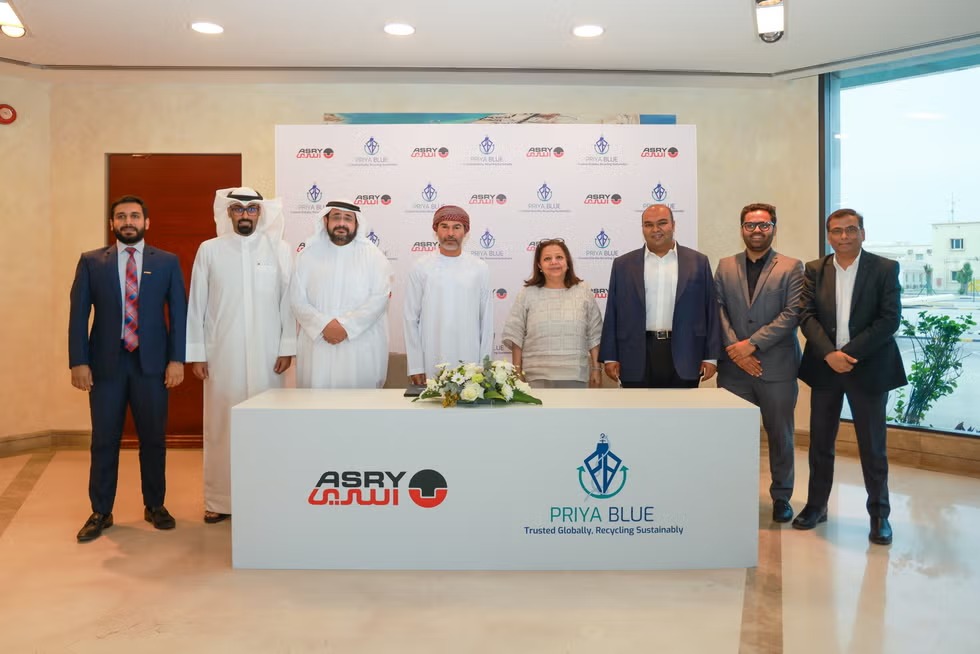
Indian Giant-Priya Blue Group, joins with ASRY in Bahrain to create Middle East’s biggest ship recycling yard

BAHRAIN : Priya Blue Group, one of South Asia’s largest green ship recyclers, is joining forces with Arab Shipbuilding & Repair Yard (ASRY) to create the Middle East’s biggest ship recycling yard.

The Bahrain-based shipyard and Indian ship recycler launched a joint venture this week establishing a “world-class facility” for compliant and environmentally responsible recycling.

It will tap into ASRY’s shipyard facilities to allow operations to be performed using dry dock, slipway and alongside methods, able to handle vessels up to ULCC size, as well as receive rigs and offshore structures directly onto berth.

In addition to conventional vessels, the joint venture is positioning itself to support the recycling of complex offshore assets including floating production, storage and offloading vessels, floating storage and offloading units, rigs and offshore structures.

Priya Blue affiliated cash buyer Best Oasis will help source tonnage and manage the commercial acquisition of vessels brought to the Bahrain facility.

The first vessel to be recycled by the joint venture recently arrived at the ASRY yard, although its identity was not disclosed.

The facility incorporates ship recycling, environmental protection and hazardous waste management systems.

The partnership will develop integrated solutions covering recycling operations, safety and environmental management, compliance documentation, hazardous waste management, dry dock and slipway access, heavy lifting infrastructure and regulatory support within Bahrain.

ASRY already holds licences to recycle vessels containing hazardous materials originating from production fluids. This covers the handling, storage, treatment, export and disposal of naturally occurring radioactive material waste, a key challenge in recycling offshore assets and production facilities.

The shipyard made its first major move into ship recycling in early 2023 when it handled several Wan Hai Lines container ships in alignment with the principles of the Hong Kong International Convention for the Safe and Environmentally Sound Recycling of Ships and the European Union Ship Recycling Regulation.

Chief executive Dr Ahmed Al Abri said ASRY has successfully delivered complex repair and maintenance operations for some of the world’s most demanding vessels over the past five decades.

“Partnering with Priya Blue to bring best practices in ship recycling to the Kingdom of Bahrain represents a strategic extension of ASRY’s journey and evolution,” he said.

This is the first time an Indian ship recycler has established itself as a global player with operations in facilities outside of South Asia.

Priya Blue Chairman Sanjay Mehta told TradeWinds: “We have recycled over a hundred complex vessels at Alang.

“We know what compliant, responsible ship recycling looks like — and what it takes to deliver it consistently.

“Bahrain is not an experiment. It is a deliberate expansion of a proven operation.”

Source : TradeWinds

Iran in contact with Oman to develop new mechanism for managing Strait of Hormuz: Foreign Ministry Spox

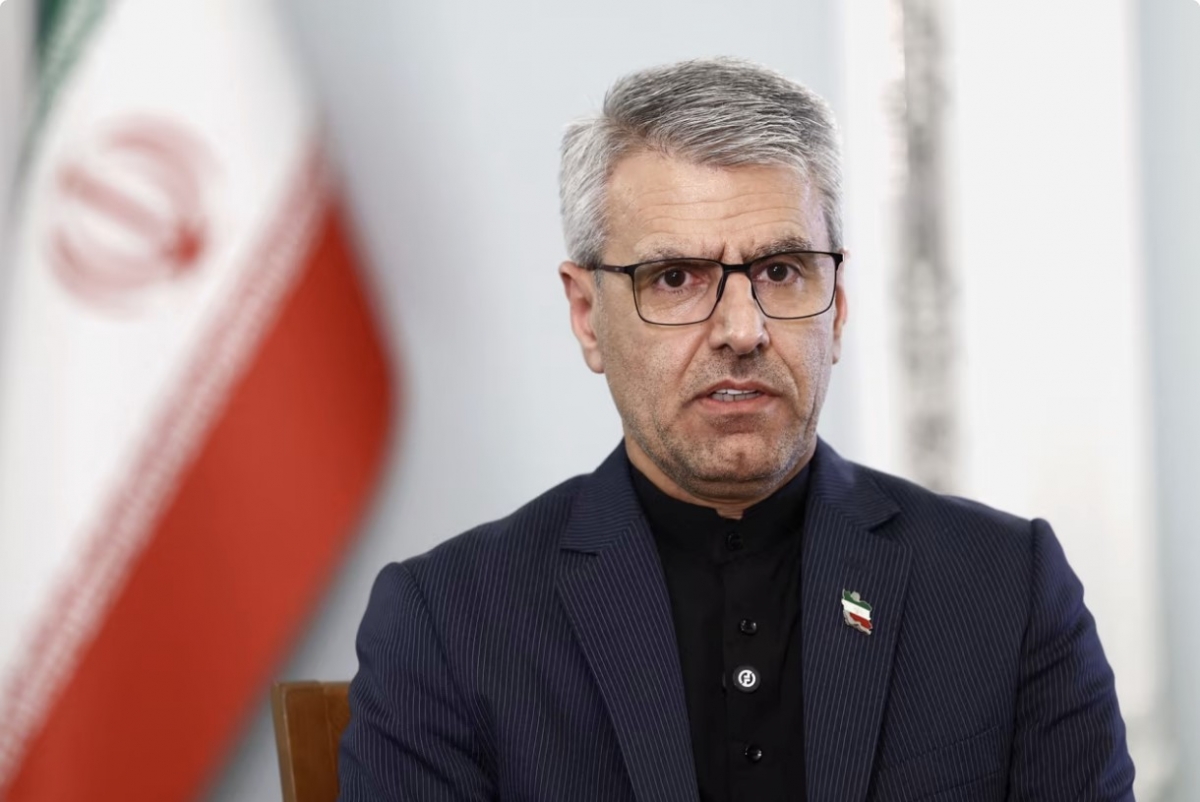
TEHRAN: Spokesperson for Iran’s Ministry of Foreign Affairs Esmail Baghaei on Monday stated that the Islamic Republic is maintaining continuous talks with Oman to establish a new mechanism for managing the strategic Strait of Hormuz amid the escalating tension over the control of the strategic waterway in the region.

Addressing a press conference here, Baghaei said that the consultations aim to safeguard safe maritime traffic while protecting Iran’s rights and sovereignty over the crucial waterway.

“The Strait of Hormuz is an important waterway for the entire world, and we have always worked to protect safe traffic through this route,” Baghaei stated.

“We continue to strive to ensure that traffic through the Strait of Hormuz is carried out in complete safety. Iran and Oman consider themselves obligated to fulfil their responsibilities in this regard,” he added.

The spokesperson noted that Tehran had to take such measures due to the geopolitical tensions amid the conflict in West Asia with US-Israeli coalition forces.

He further stated that Iran and Oman are in ongoing negotiations to develop such a mechanism to achieve this goal, with an expert-level meeting held last week in Muscat.

“The military aggression of the United States and the Zionist regime against Iran caused us to adopt a new approach to defend territorial sovereignty. We are in continuous contact and negotiation with the Omani side to develop a mechanism that will achieve this goal. Last week, an expert meeting was held in Muscat, and contacts between Iran and Oman on this issue are ongoing,” he stated.

The Strait of Hormuz, linking the Persian Gulf to the Gulf of Oman, remains one of the world’s most vital shipping routes for energy supplies.

Meanwhile, Iran had announced the launch of a new regulatory body aimed at managing and monitoring operations related to the strategically important waterway, the Strait of Hormuz.

The top security establishment of the Islamic Republic, the Supreme National Security Council, reposted a post on X on Monday where it stated that the official X account of the “Persian Gulf Strait Authority” (PGSA) is now operational.

The PGSA introduced at the start of this month has been characterised as a new mechanism for governing maritime traffic through the strategic Strait of Hormuz.

“In the Name of God. The official X account of the Persian Gulf Strait Authority (#PGSA) is now live. Follow us for real-time updates on the Hormuz Strait operations and latest developments,” the statement posted by the official account of the Persian Gulf Strait Authority said.

The announcement signals the formal establishment of a dedicated body overseeing developments and operations linked to the Strait of Hormuz, one of the world’s most critical maritime trade routes for global oil and energy shipments.

India exporting only food and essential items to West Asia via Oman, Dubai

NEW DELHI : India is rerouting their exports to the countries of Gulf Cooperation Council (GCC) through Oman, Hatta Border, Dubai and Khor Fakkan port, according to the sources from the Ministry of Commerce. Due to the closure of Strait of Hormuz and other disruptions arising from Iran war, the exports to West Asia from India have been severely impacted. The officials confirmed that India is only exporting essential goods which also include perishable food items to the Middle East countries.

“Food is being mainly exported through Dubai and other essential items are being sent through Dubai and Hatta Border. Nearly 14-15% of the exports from India to the GCC have been impacted,” said an official aware of the matter.

India’s exports and imports with West Asian region has gone down by more than 28% in April. This is the second month in a row that the trade with West Asia has fallen as the geopolitical crisis has caused severe disruptions in ship movements and surge in freight rates. In one of the recent media briefings, Commerce Secretary Rajesh Agrawal said that the country’s merchandise exports to the West Asian region has come down to $4.16 billion in April this year as against $5.78 billion in April last year.
“Exports of most of the perishable items are being sent through Khor Fakkan port,” said another official.

As per the recent details shared by the Ministry of Commerce, imports from this region has also gone down by 31.64% to $10.47 billion in April, which previously stood at $15.32 billion in the same month a year ago.

India’s exports to the UAE and Saudi Arabia have also declined by 36.39 % to $2.18 billion and 2.89 % to $ 852 million in April, respectively. Imports from the UAE dropped 34.63 % to $4.07 billion. However, from Saudi Arabia, it grew 30.29 % to $3.84 billion, and from Oman, it jumped by 246.42 % to $1.48 billion.

Piyush Goyal asks Indian industries to find more import substitution
Indian industries need to explore import substitution opportunities and boost local sourcing to strengthen domestic manufacturing, Commerce and Industry Minister Shri Piyush Goyal said on Monday. Addressing domestic traders, Goyal urged businesses to closely monitor imported goods and identify products that could instead be manufactured locally.

“You should keep an eye on what goods are being imported, because opportunities lie there, as these goods could potentially be manufactured in India,” he said.

He also urged the companies to enhance procurement from domestic firms. Goyal advised stakeholders to study import patterns to identify sectors where the manufacturing potential can be enhanced for both domestic consumption and exports.

Source : Indian Express

Strait of Hormuz closure causes Diet Coke shortage in India as food brands brace for wider impacts

NEW DELHI : With the war between the US and Iran in its third month, major food and beverage companies are feeling the brunt of the ongoing closure in the Strait of Hormuz, and some are experiencing shortages or warning about them.

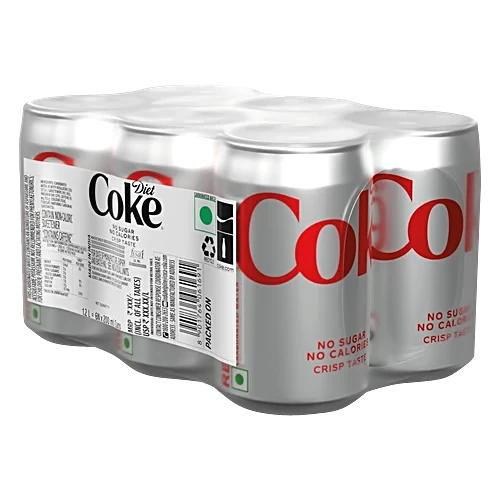
In India, a supply squeeze for aluminum due to the Middle East conflict is causing shortages of Diet Coke, Reuters reported. The scarcity, which Coca-Cola (KO) declined to comment on, has led some consumers and businesses to throw “Diet Coke parties,” where crowds pay an entry fee to access the beloved beverage.

Diet Coke is sold only in cans in India, unlike other markets, making it more susceptible to the aluminum supply shock than drinks sold in plastic and glass bottles. According to the International Aluminum Institute, the Middle East accounts for roughly 9% of global aluminum supply, which has been choked off as traffic through the strait remains largely stopped.

Aluminum (ALI=F) prices have surged to four-year highs since the war in the Middle East broke out.

But the metal is just one of many components of packaged goods that travel through the Strait of Hormuz. Before the war began on Feb. 28, two-thirds of the world’s oil supply and about 30% of the world’s fertilizer supply, among other petrochemical-linked goods like plastics, synthetic apparel fibers, and household supplies, flowed through the Gulf region.

Due to a shortage of naphtha, a petrochemical used in paints and inks, Japanese snack company Calbee said it will begin temporarily selling black-and-white versions of its colorful packaging starting on May 25, using just two ink colors.

On a typical day before the war, 1.2 million barrels of naphtha passed through the Strait. Beer makers, especially in India, have also been feeling the strain. Jorn Kersten, the CFO of Heineken’s India subsidiary United Breweries (UBL.BO), said on an earnings call that the brewer was investing in glass bottles. Kersten warned that the company is seeing “tightness” for packaging materials supplies, which have been “highly impacted by the energy prices driven by what’s happening in the Middle East.”

Kernsten also warned of higher aluminum prices, which he doesn’t think will come down anytime soon. That’s on top of existing concerns about a potential carbon dioxide shortage in the UK this summer, due to disrupted CO2 imports and high energy costs, that could affect beer availability during the World Cup.

While actual shortages and product changes have been limited so far, the ripple effects of the Strait of Hormuz closure are being felt in other items, such as bananas and sugar. Fresh Del Monte Produce CFO Monica Vicente noted on a call with investors that bananas were already facing supply pressure at the beginning of the year. Now, “trade dislocations following Middle East-related disruptions” are creating “incremental volume pressure in both North America and Europe.”

And some not-so-sweet news: Approximately 10% of the world’s raw sugar passes through the Strait of Hormuz each year, according to S&P Global. While refineries still have the commodity in stock, one trader warned that tighter sugar supplies could get worse if the strait doesn’t reopen.

Higher commodity prices and higher transportation costs will have far-reaching effects later in the year, Fed Watch Advisors chief investment officer Ben Emons told Yahoo Finance. This fall, higher fertilizer costs will directly affect the price of corn (ZC=F), which is processed into various breads and other products.

“The seeding season has already started, and there was just not enough fertilizer coming out of the strait anymore, so we’re going to get shortages,” Emons said. “That’s the big issue.”

Source : Yahoo Finance

ABB introduces new solution to automate quay crane waterside operations and improve container terminal efficiency

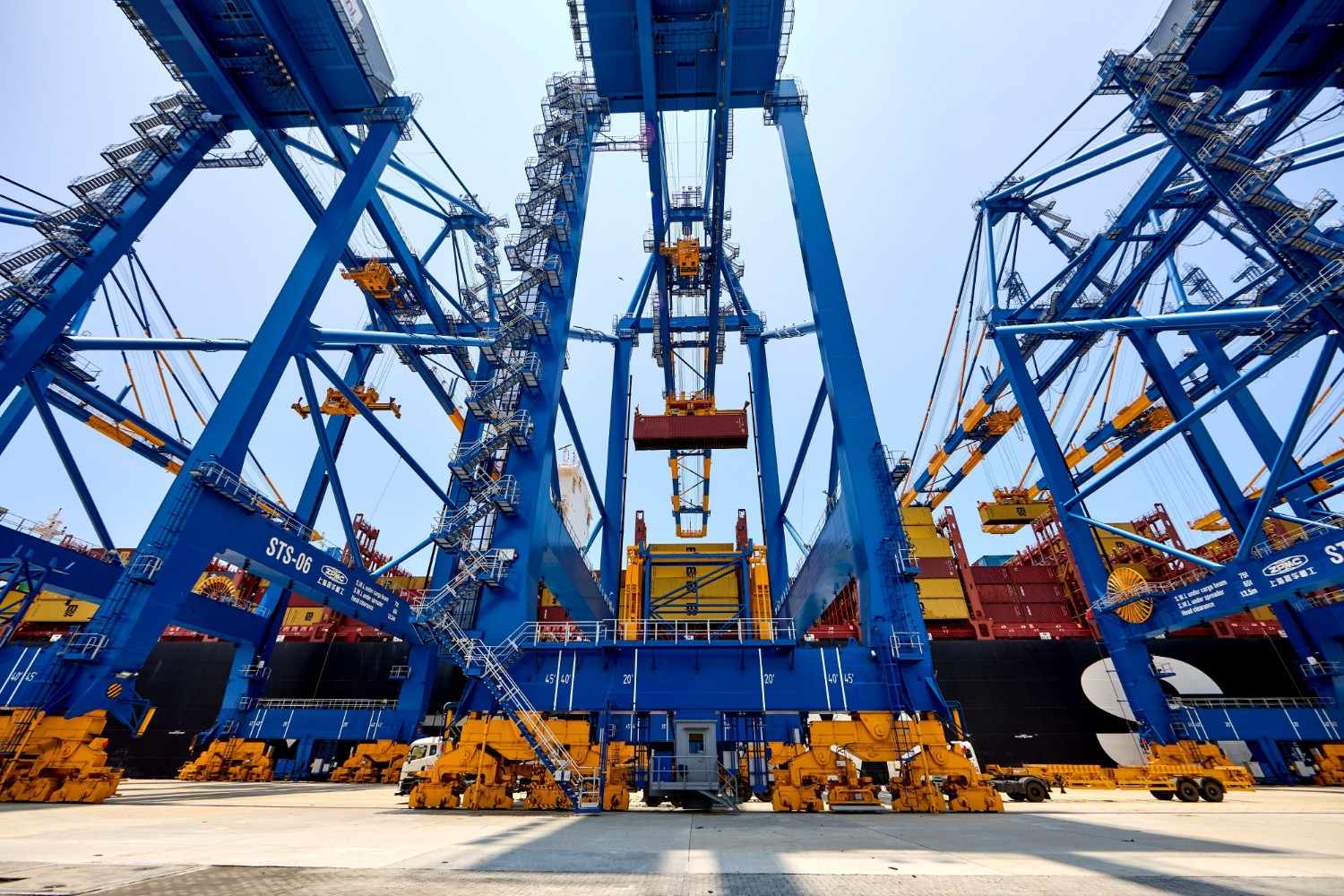
VASTERAS (SWEDEN): ABB introduces Waterside Automation solution which enables quay cranes to perform a larger share of container handling operations automatically. By automating operations over the vessel and reducing the need for continuous manual control, the solution addresses a key bottleneck in container terminal efficiency and enables a gradual transition toward autonomous quay crane operations.

Today, facing ever-increasing pressure on schedule reliability, many container terminals have already automated much of their yard operations. Quay cranes, however, still rely heavily on manual control, which can limit overall productivity. Drawing on ABB’s expertise in system integration and artificial intelligence, ABB’s Waterside Automation solution increases the level of automation in quay crane operations over the vessel, making the process more consistent and reducing interruptions caused by manual interventions.

A key feature is that the solution enables decoupling of the operator from individual quay cranes. Instead of directly controlling challenging activities like picking up and setting down containers over the vessel, operators will be able to supervise the process and manage multiple cranes from an office environment, allowing terminals to introduce quay crane pooling. This also helps improve workforce flexibility.

ABB’s Waterside Automation solution integrates vision- and movement-based sensor technologies with data analytics and AI to control container position, crane movements, and the vessel environment in real time. Based on this data, the system can automatically execute lifting and positioning tasks, while ensuring safe and consistent crane operations under changing conditions including vessel movements both alongside and across the quay, as well as the impact of weather. It also connects with other handling processes and operator interfaces, helping to coordinate container flows and increase operational efficiency across the terminal.

While similar sensor- and AI-based technologies have been developed and deployed in urban environments, such as semi-autonomous vehicles in public transport systems, ABB has adapted and validated these capabilities specifically for container terminal operations. Crucially, the solution integrates exception handling, stowage confirmation, optical character recognition (OCR), and digitalized work instructions into a coordinated system. This reduces the need for manual verification between steps and supports consistent execution across the full crane cycle.

“ABB, as a system integrator, is in a unique position to deliver this solution and facilitate a stepwise transition towards autonomous quay crane operations,” said Thomas Kumm, Global Technology Manager, Ports, ABB’s Marine & Ports division. “We design and develop our systems to evolve in line with terminal operations and technological development and continue to add new functions as requirements change.”

ABB is a global technology leader in electrification and automation, enabling a more sustainable and resource-efficient future. By connecting its engineering and digitalization expertise, ABB helps industries run at high performance, while becoming more efficient, productive and sustainable so they outperform. At ABB, we call this ‘Engineered to Outrun’. The company has over 140 years of history and around 110,000 employees worldwide. ABB’s shares are listed on the SIX Swiss Exchange (ABBN) and Nasdaq Stockholm (ABB).

ABB’s Automation business automates, electrifies and digitalizes industrial operations that address a wide range of essential needs – from supplying energy, water and materials, to producing goods and transporting them to market. With its ~26,000 employees, leading technology and service expertise, Automation helps process, hybrid and maritime industries outrun – leaner and cleaner.

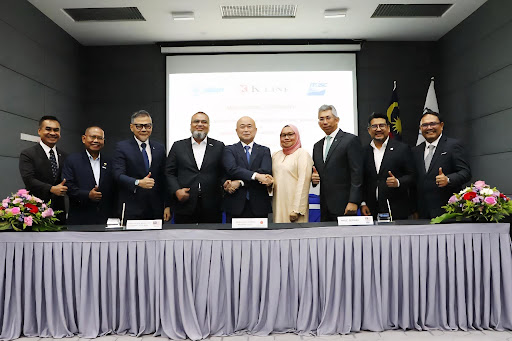
“K” LINE and Akademi Laut Malaysia enter into an MoU to establish a Scholarship Program for Students

TOKYO: Kawasaki Kisen Kaisha, Ltd. (“K” LINE) and Akademi Laut Malaysia (ALAM), Malaysia’s leading maritime education and training institution have signed a memorandum of understanding (MoU) to providea scholarship program for ALAM students. This represents “K” LINE’s first initiative to nurture maritime talent in Malaysia.

The objectives of the scholarship program are to foster the development of outstanding human capital who will play key roles in the future maritime industry and, and to support ALAM students n building their academic and maritime career pathways.Through this program, students will be provided with financial support and shipboard training opportunities aboard ships managed by the “K” LINE Group. This will create hands-on learning and training in practical operations, supporting students’ future growth as maritime professionals.

To date, “K” LINE has focused on the global development of maritime human resources. Through this initiative, “K” LINE and ALAM will contribute to the development of maritime education in Malaysia and promote the sustainable cultivation of maritime human resources.

About ALAM

ALAM is Malaysia’s leading maritime education and training institution for the development of maritime professionals. For almost 50 years, ALAM has trained more than 15,000 maritime professionals through its structured maritime training programmes. With internationally benchmarked maritime education and training facilities at its 75-acre campus, including full-mission simulators and specialised labs, ALAM provides a full spectrum of pre-sea, post-sea and modular training courses and internationally recognised qualifications for seafarers, along with maritime-management and skill based or TVET rating programmes. ALAM is a member of MISC Group, operated and managed by the Malaysian Maritime Academy Sdn. Bhd. (MMASB) a wholly-owned subsidiary of the MISC Berhad. 

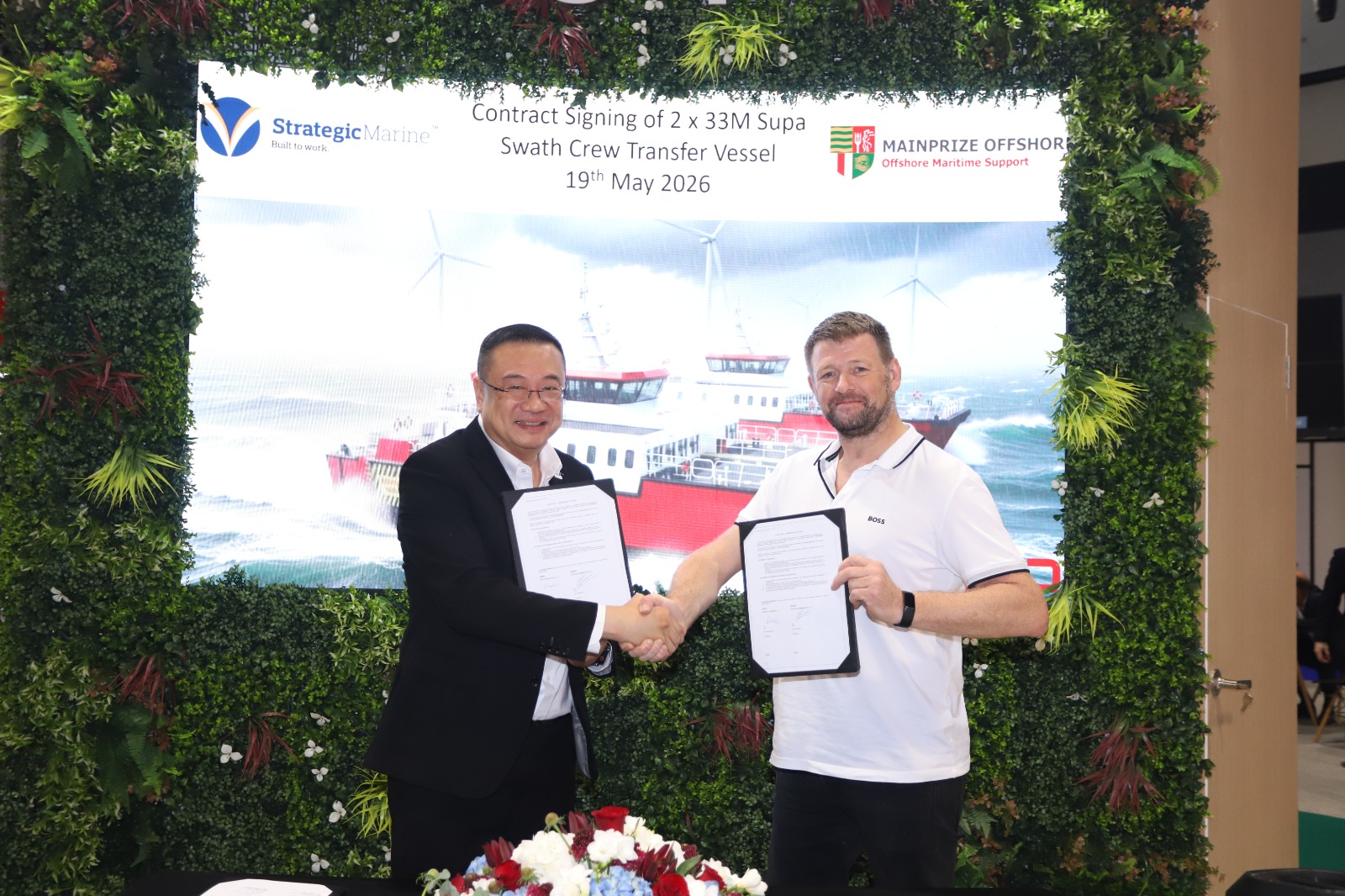
Strategic Marine scores “Threepeat” order from Mainprize Offshore with order for largest Supa Swath vessels to date

SINGAPORE: Strategic Marine, a leading builder of high-performance aluminium vessels, has signed shipbuilding contracts with Mainprize Offshore for two new 33 metre Supa Swath crew transfer vessels (CTVs), further strengthening a long-standing partnership between the two companies.

The new order builds on a successful track record of deliveries between Strategic Marine and Mainprize Offshore, bringing the total number of Supa Swath vessels delivered and on order to 10. The continued collaboration reflects Mainprize Offshore’s confidence in the Supa Swath design and Strategic Marine’s ability to deliver reliable, high-performance vessels for offshore wind operations. Mainprize Offshore currently operates 11 vessels.

Designed by Walker Marine Design, the new 33m CTV builds on the proven 26m Supa Swath platform while introducing several enhancements. Key upgrades include an extended waterline length of 30 metres, an expanded 13 metre beam, and increased fuel oil capacity in excess of 63,800 litres, allowing for longer operational endurance. Passenger capacity has also been increased to accommodate up to 39 personnel, up from 27 on the 26m design, with premium seating for comfort during transit.

The vessel also features 360-degree visibility from the wheelhouse to enhance navigational safetyalongside a deck cargo area of 140m2 with a load capacity of up to a class leading 50 tonnes. Powered by two Caterpillar C32B engines and twin four-blade controllable pitch propellers, the vessel can achieve speeds of up to 30 knots. This delivers higher endurance and greater capacity while maintaining the same high-speed performance as the smaller Supa Swath variant. The efficient hull and propulsion configuration helps to reduce fuel consumption and emissions, supporting sustainable operations without compromising performance.

Mr. Bob Mainprize, Managing Director of Mainprize Offshore said: “Our partnership with Strategic Marine has been built over many years, and this latest and third order from us reflects the trust and confidence we have in their team and their vessels. The Supa Swath design continues to perform well in the field, especially in terms of stability, safety and crew comfort, which are critical to our operations.”

Mr. Chan Eng Yew, CEO of Strategic Marine commented: “We are proud and honoured to continue our collaboration with Mainprize Offshore, who have been a long-standing partner of Strategic Marine. This new order is a strong endorsement of our team’s ability to constantly deliver vessels that meet the evolving needs of offshore operators and their demands for high operational uptime and performance.”

The first two units in the series are expected to be delivered in Q3 2027. Upon completion, these additions will further expand Mainprize Offshore’s fleet to 21 vessels, strengthening its support foroffshore wind operations across Europe and Asia, with extensive collaboration for future series.

WinGD secures World-First Ethanol-Fuelled engine orders for Ocean-Going Ships

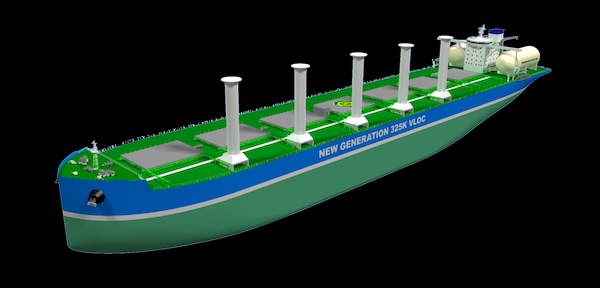
SWITZERLAND : Swiss marine power company WinGD’s first ethanol-fuelled X-DF-M/E engines have been ordered for two ore carriers to be built for Chinese owner Shandong Shipping Corporation and to operate under long-term charters for Brazil-headquartered global mining company Vale. The two Newcastlemax (325,000 DWT) vessels will be built by Beihai Shipbuilding in China, and will each be powered by a six-cylinder, 820mm-bore 6X82DF-M/E engine intended to run primarily on ethanol fuel.

The engines will be the first of the X-DF-M/E platform optimised for primarily ethanol use. The fuel supply and injection pressure will be modified from WinGD’s methanol-fuelled engine concept already in service to account for the difference in energy density between the two fuels, which otherwise share very similar properties and combustion characteristics. The contract includes options for further engine deliveries should the vessel series be extended.

WinGD Executive Director Sales Volkmar Galke said: “These first ethanol-fuelled X-DF-M/E engines build on more than a decade of intensive investigation into alcohol fuels including ethanol and methanol. Securing orders for a top-tier charterer and ship operator is the best possible validation of those efforts. This is a clear signal that the shipboard technology and fuel infrastructure around ethanol as a marine fuel are ready, giving confidence to others considering ethanol as an option for maritime decarbonisation.”

Ethanol is gaining attention as a ship fuel due to its widespread and cost-competitive availability in several markets. These markets include Brazil, from where the vessels will deliver iron ore to China. According to Vale’s own investigations, the use of ethanol can reduce greenhouse gas emissions by around 90% compared with heavy fuel oil, depending on the fuel type and lifecycle assumptions.

Vale Director of Shipping Rodrigo Bermelho said: “The adoption of ethanol as an alternative fuel is part of Vale’s strategy to combine flexibility and efficiency in the ships that transport our ore and places the company in a unique position for the energy transition in global shipping over the coming decades, whilst driving similar initiatives in the sector. We are pleased to partner with Shandong and WinGD on the world’s first newbuilding order for ethanol-fueled ocean-going vessels.”

With the addition of ethanol-fuel capability for its X-DF-M/E platform, WinGD now offers unparalleled fuel flexibility across Diesel-cycle two-stroke engines. X-DF-M/E, alongside the ammonia-fuelled X-DF-A and high-pressure LNG-fuelled X-DF-HP platforms, are all based on the same robust engine architecture and injection concept – ensuring efficient conversion capability that does not lock owners into a single fuel option. The engine deliveries are scheduled to take place in early 2029 depending on shipyard requirements.

Source : Hellenic Shipping

Gulf of America Logistics strengthens leadership and expands statewide as Louisiana industry booms

BOSSIER CITY: Gulf of America Logistics (GoAL), the 100% Louisiana-owned capital projects specialist, has announced the appointment of Jake Minner as Vice President of Operations – Specialized Transport and Trucking, and the opening of a new Baton Rouge office, bringing its statewide network to four locations.

Minner brings 17 years of heavy-haul experience from a major industrial carrier, with deep expertise in Louisiana’s energy and petrochemical corridor. He will lead GoAL’s asset-based heavy-haul transportation division from the Baton Rouge office.

“Jake has spent nearly two decades doing specialized transport in this state – he knows these roads, these routes, and these clients. That kind of embedded expertise is exactly what GoAL is built on,” said Brent Patterson, CEO and Co-Owner of GoAL.

GoAL’s four Louisiana offices each serve distinct industrial zones:
• Bossier City – Corporate Headquarters
• Baton Rouge – Heavy Haul & Specialized Transport Operations (new)
• Lafayette – Gulf Coast & Offshore Logistics
• Rayville – Northeast Louisiana Industrial Services

GoAL is currently securing port facilities in Cameron Parish, directly adjacent to the Sabine Pass and Cameron LNG terminals, placing the company at the epicenter of Louisiana’s $100 billion-plus LNG investment surge. The firm has also struck exclusive asset-based trucking agreements across the Gulf Coast, giving clients direct asset control rather than brokered capacity — a meaningful distinction as equipment availability tightens across the region.

The expansion comes as out-of-state logistics firms move to establish a Louisiana presence through joint ventures. GoAL, founded in 2025, was built specifically to counter that dynamic. Patterson, a U.S. Navy logistics veteran and former senior vice president at Blue Water Shipping, co-founded the company with Rock Bordelon, a prominent Louisiana entrepreneur with interests across more than 200 businesses and a long record of rural economic development advocacy. All of GoAL’s decision-making, capital, and employment remain within the state.

“Louisiana’s industrial market is the hottest in North America,” said Patterson. “We saw a gap where out-of-state firms were winning big contracts while local businesses weren’t seeing the full benefit. Our mission is to close that gap permanently. We are a Louisiana company, hiring Louisiana people, to serve Louisiana projects. No global parent company, no divided loyalties, and no offshore profits.”

Bordelon added: “My mission has always been to build a future where our children and grandchildren can stay in Louisiana, raise their families here, and be proud to call this state home. GoAL is not just a business investment – it’s a commitment to creating an economy where hardworking Louisianans can succeed without having to leave the state they love.”

About Gulf of America Logistics
Headquartered in Bossier City, Louisiana, Gulf of America Logistics (GoAL) is a 100% Louisiana-owned logistics firm providing customized solutions for capital projects across the Gulf Coast. Specializing in heavy-haul transport, project cargo, barging, multimodal logistics, and LNG/petrochemical support, GoAL maintains offices in Bossier City, Baton Rouge, Lafayette, and Rayville, Louisiana. With port assets in Cameron Parish and a growing asset-based trucking network, GoAL is purpose-built to keep Louisiana’s infrastructure investment – and its economic benefits – at home.