Home Blog Page 323

BIFA takes the lead in Transaid’s Kilimanjaro to Coast Cycle Challenge 2026

LONDON: The British International Freight Association (BIFA) has agreed to be the lead sponsor of the 2026 Kilimanjaro to Coast Cycle Challenge, organised by international development charity Transaid.

The ambitious challenge will see participants cycle from the foothills of Mount Kilimanjaro to the Tanzanian coast, covering hundreds of kilometres across diverse and demanding terrain. The event aims to raise vital funds to support Transaid’s life-saving work improving access to healthcare, road safety, and professional driver training across sub-Saharan Africa.

As lead sponsor, BIFA reinforces its long-standing commitment to supporting initiatives that enhance safety and sustainability within the global transport and logistics sector. The association’s involvement will help drive awareness and fundraising efforts, enabling Transaid to expand its impact in communities that depend on safe and reliable transport systems.

BIFA is also delighted to confirm that Pawel Jarza, the trade association’s policy, compliance, and external affairs director will be among those taking part in the 2026 challenge. Pawel’s participation highlights the dedication and spirit of individuals within the logistics industry who are willing to go the extra mile, quite literally, to support meaningful causes.

Speaking about the announcement, BIFA director general, Steve Parker said: “We are thrilled to support Transaid as lead sponsor of the Kilimanjaro to Coast Cycle Challenge 2026. This initiative perfectly aligns with our mission to promote best practices and support safer transport systems both in the UK and worldwide. We are especially proud to see Pawel Jarza stepping up to take part in this incredible journey.”

Transaid also welcomed the partnership, noting that BIFA’s support will be instrumental in ensuring the success of the event and the sustainability of its programmes.

The Kilimanjaro to Coast Cycle Challenge 2026 promises to be both a physical and emotional journey, bringing together industry professionals and supporters united by a shared goal: to make transport safer and more accessible for all.

Full details about this event can be found at this link on Transaid’s website: https://www.transaid.org/event/kilimanjaro-to-coast-2/

Carriers repositioning equipment back to China, depots in Europe remain congested; Sogese Report

LIVORNO (ITALY): The global container market is entering a new phase of rebalancing, with equipment flows beginning to reverse direction as carriers accelerate repositioning back to Asia. This shift is expected to reduce container availability across Europe in the near term, particularly as demand and pricing signals strengthen at origin.

“What we are seeing in the market is a clear directional shift in container flows. Depots across Europe remain congested, while prices and demand signals in China are strengthening. Carriers are actively repositioning equipment back to origin, and this is likely to reduce European stock levels in the near term, particularly for 40HC, as production and demand begin to align again.” Shared Andrea Monti, CEO & MD, Sogese, a worldwide container provider based in Italy.

Europe’s Surplus Is Beginning to Drain

For much of early 2026, Europe has been characterised by elevated depot congestion and extended dwell times, creating the perception of oversupply. The report shows that this surplus is now being actively corrected.

Carriers are prioritizing repositioning strategies that move containers back to origin markets, particularly China, where production activity and demand are showing renewed strength. This is expected to gradually reduce stock levels across Europe, with a more pronounced impact on high-cube containers (40HC), which are critical for long-haul trade.

At the same time, longer transit cycles, inland bottlenecks, and congestion at intermediate hubs are slowing the return of equipment into active circulation, amplifying the impact of outbound repositioning.

A Flow-Driven Market Shift Is Reshaping Availability

The tightening in Europe is being driven by how containers move through the system. Extended transit times, delayed port operations, and disrupted routing patterns are increasing the time it takes for equipment to complete each cycle.

As repositioning accelerates, availability constraints are expected to emerge even while depot utilisation remains high. This creates a disconnect between visible stock levels and actual access to usable equipment.

A System Under Structural Reconfiguration

Beyond regional imbalances, the report highlights a deeper shift underway across global shipping networks. Disruption has moved upstream into mainline Asia–Europe services, where routing, scheduling, and capacity deployment are being continuously adjusted.

Longer transit times and extended port delays are increasing container cycle times, making time efficiency a defining constraint on effective capacity. At the same time, freight pricing is being shaped more by risk exposure, including fuel costs, insurance premiums, and rerouting decisions, than by underlying demand trends.

Key Takeaways from the Report

  • Transit times are structurally extended
  • Capacity exists, but circulation is constrained
  • Costs are rising despite stable freight rates
  • Network design is now fluid, with routes and schedules adjusted as conditions evolve
  • Delays and uncertainty are putting pressure on working capital, especially for smaller players

Italy Highlights: Stable Volumes, Rising Pressure

Italy offers a clear example of how these shifts are playing out on the ground. While container throughput across major ports has remained broadly stable, underlying conditions are becoming more complex.

Delays in vessel arrivals, extended waiting times at ports, and inconsistencies in equipment availability are affecting operational efficiency. At the same time, longer shipment cycles and uncertainty around delivery timelines are beginning to impact payment cycles and working capital, particularly for smaller businesses operating with limited financial buffers.

Operational Impact Will Surface First in Availability

Availability pressures are likely to appear before congestion visibly eases. Exporters and logistics operators across Europe are expected to face reduced access to containers during peak windows, longer lead times to secure equipment, and greater variability in planning and execution.

Download the full monthly Europe container market update from here

About Sogese

Founded in 1980 by Ercole Monti, Sogese S.r.l. is an Italian provider of container-based logistics and infrastructure solutions, specialising in the sale, rental, maintenance, and customization of maritime containers, refrigerated units, and modular prefabricated structures. Its operating model integrates storage, repair, specialized equipment management, and tailored logistics solutions for industrial and commercial users.

Orderbook growth and significant developments in reducing methane slip highlight LNG’s role in maritime decarbonisation

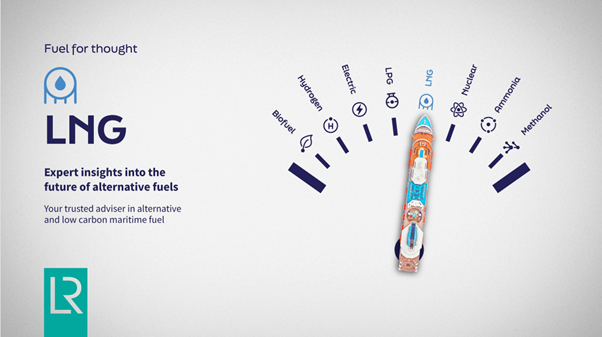
A new edition of Fuel for thought: LNG sets out how LNG continues to offer a competitive compliance pathway as EU and IMO regulations tighten.

LONDON: Lloyd’s Register (LR) has released its latest Fuel for thought: LNG report, offering a refreshed and data-driven assessment of LNG’s evolving role as a mature and significant fuel in transition for the shipping industry.

As of March 2026, the dual-fuel LNG fleet has reached 1,665 vessels, with an additional 982 on order — expanding the gas-fuelled fleet[1]. Although recent developments may have created uncertainty that has impacted investment in alternative fuels, LNG continues to be the key alternative fuel in the existing orderbook.

Growth is being driven particularly by the container sector, which is on course to more than double its LNG capable fleet, while cruise, tanker and PCC/RoRo operators are also accelerating their uptake.

LR’s economic modelling confirms LNG remains the most cost-effective alternative fuel pathway to 2050 under any proposed framework so far.

The report also shows that blending LNG with bio-LNG and e-LNG could strengthen this advantage further, allowing LNG-fuelled vessels to generate compliance surpluses in the early years of new regulatory regimes.

A major focus of the updated report is the significant progress in methane slip reduction. High-pressure two-stroke engines are now achieving slip as low as 0.2 g/kWh, while low-pressure engines fitted with exhaust gas recirculation are delivering reductions of more than 60%.

However, these improvements are not yet reflected in the emissions factors under both FuelEU Maritime and the IMO’s Lifecycle Assessment guidelines. The report argues that updating these factors will be essential to ensure that regulation reflects current technology and incentivises genuine emissions reductions rather than penalising early movers.

The report also underlines the importance of upstream emissions and fuel certification. Cleaner LNG production, reduced methane leakage and the growth of independently verified certification schemes are essential if shipowners are to realise the full emissions reduction potential of cleaner supply chains.

Additionally, the operational considerations of LNG-fuelled vessels during drydocking are examined with recommendations for planning, execution and safety.

Constantinos Chaelis, Global Gas Segment Director, Lloyd’s Register, said: “LNG represents an immediately deployable, scalable, and well-established fuel in transition  that aligns with both operational imperatives and emerging regulatory requirements.

“As global bunkering infrastructure continues to expand, renewable gas supply chains mature, and emissions control technologies become more widely adopted, LNG is expected to remain a central component of the maritime sector’s transitional energy landscape.”

Panos Mitrou, SVP Shipping Strategy, Lloyd’s Register, said: “The findings in our new report underline that this continued interest in LNG is not solely a bridge to other fuels, but a strategic response to tightening global and regional regulation. We need to intensify our focus on methane emissions, clean LNG variants and improving the LNG value chain GHG footprint.”

The Fuel for thought:LNG report is available at Fuel for Thought – alternative marine fuels | LR

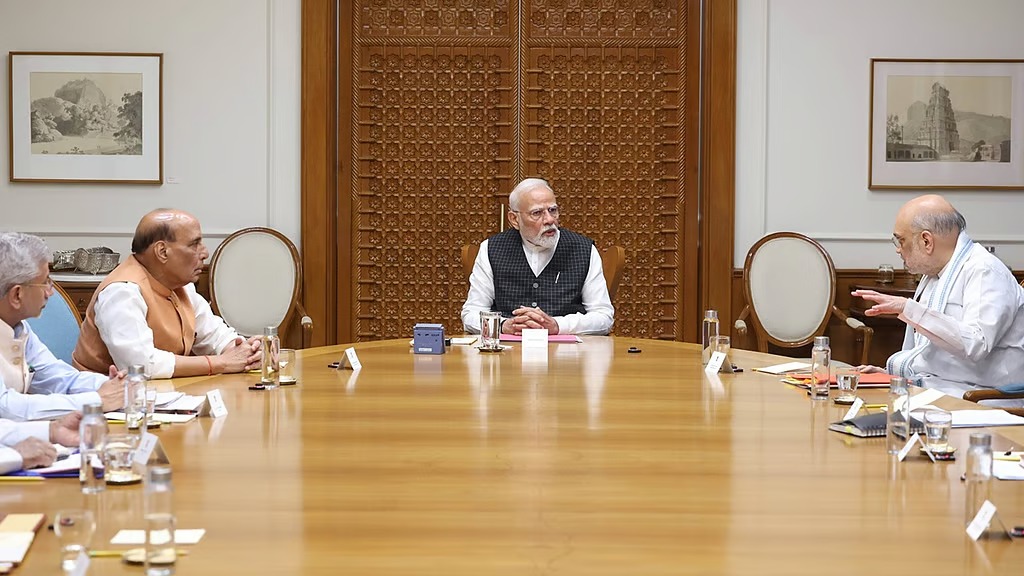
Cabinet approves Emergency Credit Line Guarantee Scheme 5.0 amid West Asia Crisis

NEW DELHI : The Union Cabinet chaired by the Prime Minister Shri Narendra Modi has approved Emergency Credit Line Guarantee Scheme (ECLGS) 5.0. The scheme aims to provide credit guarantee coverage of 100% for MSMEs and 90% for non-MSMEs as well as airline sector, to Member Lending Institutions (MLIs) by National Credit Guarantee Trustee Company Limited (NCGTC) for the amount in default under the additional credit facility extended to the eligible borrowers to tide over any short-term liquidity mismatches in view of West Asia Crisis.

Salient features of the scheme:

Eligible borrowers: MSMEs and non-MSMEs with existing working capital limits and scheduled passenger airlines having outstanding credit facilities, as of March 31, 2026, provided their accounts are standard.
Guarantee coverage: 100% for MSMEs and 90% for non-MSMEs as well as airline sector.
Guarantee Fee: Nil.
Quantum of Support: Additional credit up to 20% of peak working capital utilised during Q4 FY 26 (capped at Rs.100 crore). For airlines up to 100% (capped at Rs.1,500 crore per borrower, subject to satisfying certain specific conditions).

Tenure of Loan:

For MSMEs/Non MSMEs (except Airline sector): 5 years from the date of first disbursement including moratorium of 1 year.
For airline sector: 7 years from the date of first disbursement including moratorium of 2 years.
Tenure of Guarantee Cover: Maximum period of guarantee cover shall be co-terminus with the tenor of the loan.
Duration of the Scheme: The Scheme would be applicable to all loans sanctioned during the period from the date of issue of these guidelines by NCGTC upto 31.03.2027


Impact:

The scheme aims to enable businesses to tide over the challenges arising from the West Asia conflict. Additionally, this is expected to help businesses maintain their operations, protect jobs, and sustain supply chains. The proposed credit guarantee scheme is a major step to help businesses, particularly MSMEs and airline sector, to ensure their additional working capital needs, are catered by the Banks & FIs. By providing timely liquidity, the scheme will sustain the businesses and prevent job losses. It will also promote uninterrupted domestic production and maintain the resilience of the ecosystem.

Cabinet approves Ship Repair Facility at Vadinar, Gujarat

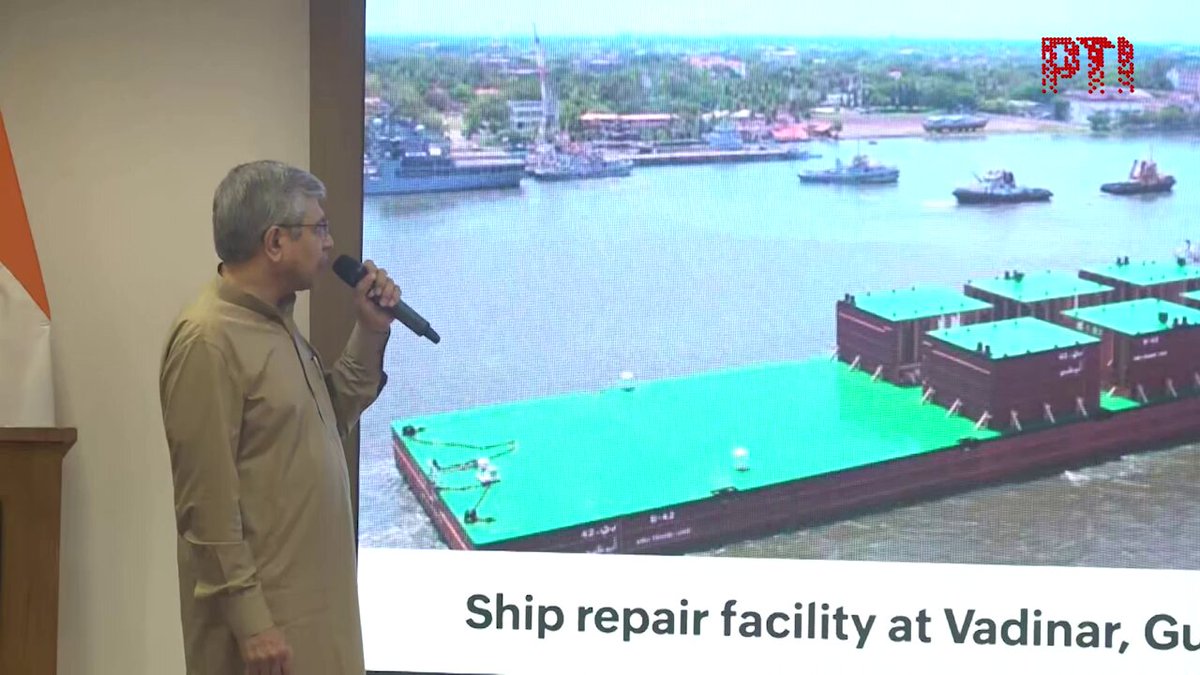
NEW DELHI : The Cabinet Committee on Economic Affairs, chaired by the Prime Minister Shri Narendra Modi, has approved the development of a state‑of‑the‑art Ship Repair Facility at Vadinar, Gujarat, marking a major expansion of the national ship repair ecosystem. The project will be jointly implemented by Deendayal Port Authority (DPA) and Cochin Shipyard Limited (CSL), with a combined investment of Rs.1,570 crore.

The project is planned as a brownfield facility with a 650 metres jetty, two large floating dry docks, workshops and associated marine infrastructure. Vadinar’s natural deep draft, connectivity to major shipping routes, and proximity to key ports such as Mundra and Kandla make it an optimal location for repair operations, particularly for large commercial and foreign‑flagged vessels.

The project will also create opportunities for skill development and generate direct and indirect employment, while enabling the growth of maritime ancillary services and MSMEs in the surrounding region.

Impact:

The Vadinar Ship Repair Facility will directly address a critical gap in India’s ship repair infrastructure, as the country currently lacks adequate domestic capacity to repair large vessels exceeding 230 m in length. By enabling repair of vessels up to 300 m, the facility will allow high‑value repairs of large vessels within India. This will significantly reduce dependence on foreign shipyards and curb foreign exchange outflow.

Enhanced turnaround times and strengthened repair capability on the western coast will improve the overall competitiveness of Indian ports. The project is expected to create sustainable employment, generating approximately 290 direct and around 1,100 indirect jobs across ship repair, logistics, and ancillary industries, while catalysing a broader maritime industrial ecosystem.

The initiative will contribute to regional economic growth and support India’s long‑term maritime objectives under Maritime India Vision 2030 and Maritime Amrit Kaal Vision 2047.

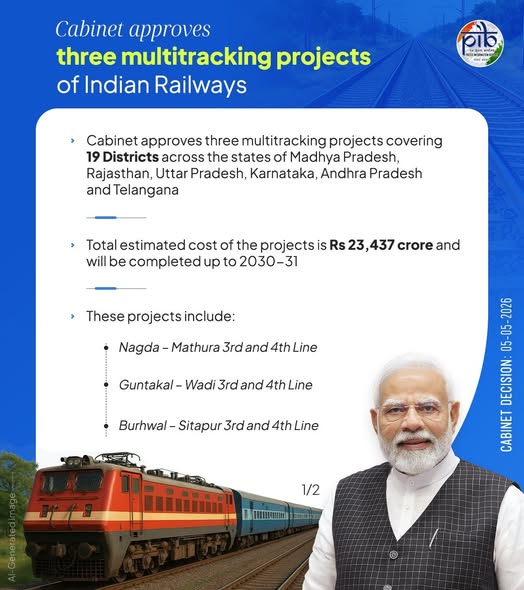
Cabinet approves three multitracking projects covering 19 Districts increasing the existing network of Indian Railways by about 901 Kms

691415486 1550702030430923 8202548743598966243 n 1 Cabinet approves three multitracking projects covering 19 Districts increasing the existing network of Indian Railways by about 901 Kms

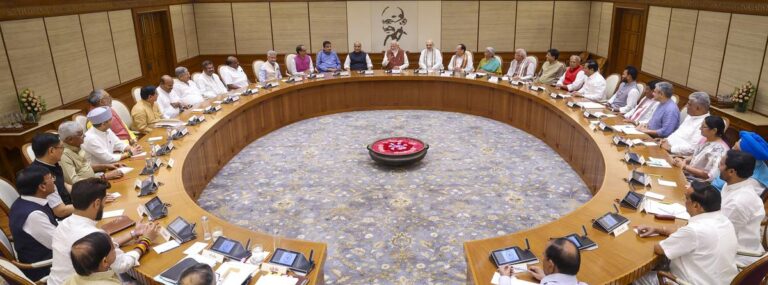
NEW DELHI : The Cabinet Committee on Economic Affairs, chaired by the Prime Minister Shri Narendra Modi, has approved 03 (Three) projects of Ministry of Railways with total cost of Rs. 23,437 crore (approx.). These projects include: 

a)    Nagda – Mathura 3rd and 4th Line

b)    Guntakal – Wadi 3rd and 4th Line

c)    Burhwal – Sitapur 3rd and 4th Line 

The increased line capacity will significantly enhance mobility, resulting in improved operational efficiency and service reliability for Indian Railways. These multi-tracking proposals are poised to streamline operations and alleviate congestion. The projects are in line with the  Prime Minister Shri Narendra Modiji’s Vision of a New India which will make people of the region “Atmanirbhar” by way of comprehensive development in the area which will enhance their employment/ self-employment opportunities.

 The projects are planned on PM-Gati Shakti National Master Plan with focus on enhancing multi-modal connectivity & logistic efficiency through integrated planning and stakeholder consultations. These projects will provide seamless connectivity for movement of people, goods, and services. 

The 03 (Three) projects covering 19 Districts across the states of Madhya Pradesh, Rajasthan, Uttar Pradesh, Karnataka, Andhra Pradesh and Telangana will increase the existing network of Indian Railways by about 901 Kms.

 The proposed multi-tracking project will enhance connectivity to approx. 4,161 villages, which are having a population of about 83 lakhs.

 The proposed capacity enhancement will improve rail connectivity to several prominent tourist destinations across the country, including Mahakaleshwar, Ranthambore National Park, Kuno National Park, Keoladeo National Park, Mathura, Vrindavan, Mantralayam (Sri Raghavendra Swamy Mutt), Sri Nettikanti Anjaneya Swamy Vari Temple (Kasapuram), Shyamnath Temple, Naimisharanya (Neemsar), etc. 

The proposed projects are essential routes for transportation of commodities such as coal, foodgrains, cement, POL, iron and steel, iron ore, container, fertilizers, etc. The capacity augmentation works will result in additional freight traffic of magnitude 60 MTPA (Million Tonnes Per Annum). The Railways being environment friendly and energy efficient mode of transportation, will help both in achieving climate goals and minimizing logistics cost of the country, reduce oil import (37 Crore Litres) and lower CO2 emissions (185 Crore Kg) which is equivalent to plantation of 07 (Seven) Crore trees., chaired by the Prime Minister Shri Narendra Modi, today has approved 03 (Three) projects of Ministry of Railways with total cost of Rs. 23,437 crore (approx.). These projects include:

a) Nagda – Mathura 3rd and 4th Line

b) Guntakal – Wadi 3rd and 4th Line

c) Burhwal – Sitapur 3rd and 4th Line

The increased line capacity will significantly enhance mobility, resulting in improved operational efficiency and service reliability for Indian Railways. These multi-tracking proposals are poised to streamline operations and alleviate congestion. The projects are in line with the Prime Minister Shri Narendra Modiji’s Vision of a New India which will make people of the region “Atmanirbhar” by way of comprehensive development in the area which will enhance their employment/ self-employment opportunities.

The projects are planned on PM-Gati Shakti National Master Plan with focus on enhancing multi-modal connectivity & logistic efficiency through integrated planning and stakeholder consultations. These projects will provide seamless connectivity for movement of people, goods, and services.

The 03 (Three) projects covering 19 Districts across the states of Madhya Pradesh, Rajasthan, Uttar Pradesh, Karnataka, Andhra Pradesh and Telangana will increase the existing network of Indian Railways by about 901 Kms.

The proposed multi-tracking project will enhance connectivity to approx. 4,161 villages, which are having a population of about 83 lakhs.

The proposed capacity enhancement will improve rail connectivity to several prominent tourist destinations across the country, including Mahakaleshwar, Ranthambore National Park, Kuno National Park, Keoladeo National Park, Mathura, Vrindavan, Mantralayam (Sri Raghavendra Swamy Mutt), Sri Nettikanti Anjaneya Swamy Vari Temple (Kasapuram), Shyamnath Temple, Naimisharanya (Neemsar), etc.

The proposed projects are essential routes for transportation of commodities such as coal, foodgrains, cement, POL, iron and steel, iron ore, container, fertilizers, etc. The capacity augmentation works will result in additional freight traffic of magnitude 60 MTPA (Million Tonnes Per Annum). The Railways being environment friendly and energy efficient mode of transportation, will help both in achieving climate goals and minimizing logistics cost of the country, reduce oil import (37 Crore Litres) and lower CO2 emissions (185 Crore Kg) which is equivalent to plantation of 07 (Seven) Crore trees.


Cabinet approves two more semiconductor manufacturing units with cumulative investment of more than Rs. 3,900 crore

NEW DELHI : The Union Cabinet chaired by the Prime Minister Shri Narendra Modi approved two more semiconductor projects under India Semiconductor Mission (ISM) which includes country’s first commercial Mini/Micro-LED display facility based on GaN (Gallium Nitride) Technology and a semiconductor packaging facility.

The two approved proposals will set up semiconductor manufacturing facilities in Gujarat with a cumulative investment of around Rs.3,936 crore and are expected to generate cumulative employment for 2,230 skilled professionals.

The details of the two approved proposals are as follows:

Crystal Matrix Limited (CML) will establish an integrated facility for compound semiconductor fabrication and ATMP in Dholera, Gujarat for manufacturing Mini/Micro-LED display modules. The integrated facility will also provide GaN foundry services, including epitaxy on 6” wafers. The annual proposed production capacity for Mini/Micro-LED Display Panels is 72,000 sq. meters, and for Mini-Micro-LED GaN Epitaxy Wafers is 24,000 sets of RGB wafers. The proposed products will have applications in large displays for TVs and signages/commercial displays, Medium-sized displays for tablets, smartphones, and in-car displays, and Micro-displays for Extended Reality (XR) glasses and smart watches.

Suchi Semicon Private Limited (SSPL) will be setting up an Outsourced Semiconductor Assembly and Test (OSAT) facility in Surat, Gujarat for manufacturing discrete semiconductors. The proposed production capacity of the Suchi Semicon is 1033.20 million chips per annum. The target applications include power electronics, analog ICs, and industrial systems, serving end markets such as automotive, industrial automation, and consumer electronics.

With these two approvals, semiconductor ecosystem in the country would get a significant boost as the total number of approved projects under India Semi-conductor Mission (ISM) reaches 12, with cumulative investments of around Rs.1.64 lakh crore.

These would complement the growing world class chip design capabilities coming up in the country which are propelled by design infrastructure support provided by Government to 315 academic institutions and 104 start-ups.

Momentum is building up further in the semiconductor ecosystem in India with the ten approved projects already in various stages of execution. Two projects have already started commercial shipments from India and Two more are expected to start commercial shipments soon.

DPA Kandla signs landmark MoU to enable liquid Green Hydrogen exports

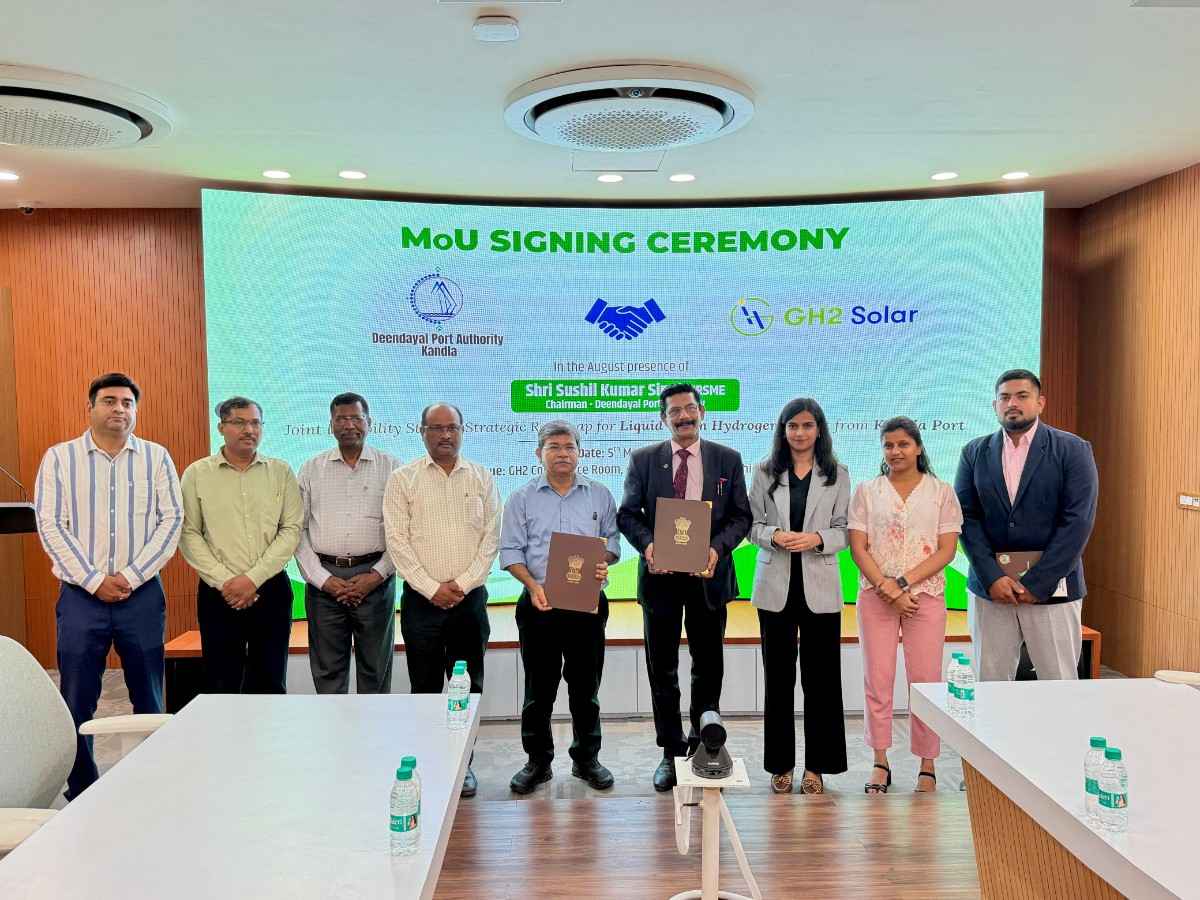
GANDHIDHAM : In a decisive step towards shaping India’s clean energy future, Deendayal Port Authority (DPA), Kandla has signed a landmark Memorandum of Understanding (MoU) with GH2 Solar Ltd. to undertake a Joint Feasibility Study and develop a Strategic Roadmap for enabling the export of Liquid Green Hydrogen from Kandla Port.

This collaboration marks a significant milestone in positioning DPA Kandla as a key enabler in India’s National Green Hydrogen Mission and reinforces its commitment to advancing sustainable, low-carbon maritime operations.

Under the scope of the MoU, both parties will collaboratively assess the technical, commercial, regulatory, and environmental aspects required to establish a robust green hydrogen export ecosystem at Kandla. The study will evaluate infrastructure requirements including production facilities, storage systems, liquefaction capabilities, and specialized port handling infrastructure necessary for safe and efficient hydrogen export.

The initiative will also explore integration of renewable energy sources, particularly solar and wind, to power green hydrogen production, ensuring a fully sustainable value chain. Additionally, the roadmap will outline potential global market linkages, export strategies, and alignment with international safety and environmental standards.

Speaking on the occasion, officials highlighted that the partnership aligns with India’s vision to become a global hub for green hydrogen production and export. With its strategic location, established port infrastructure, and strong connectivity, DPA Kandla is well-positioned to play a pivotal role in facilitating large-scale green energy exports.

The development is expected to attract investments, foster innovation in clean energy technologies, and generate new economic opportunities while significantly reducing carbon emissions in the maritime and logistics sectors.

This initiative further strengthens DPA’s commitment to sustainability, energy transition, and future-ready port operations—setting a benchmark for green port development in India.

EXG handle Multimodal Movement of Huge Process Columns

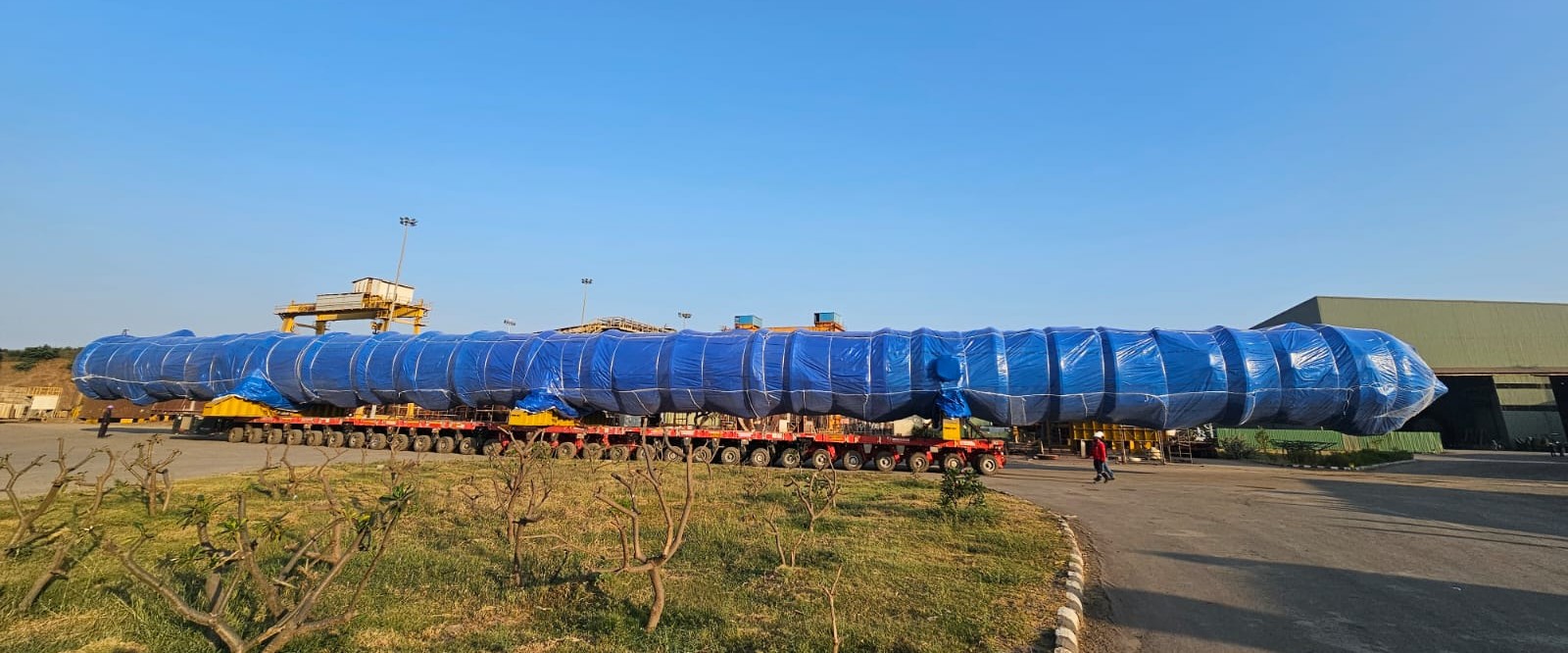
MUMBAI: Express Global Logistics (EXG) have handled the multimodal transport and barging movement of super-heavy process columns through synchronised SPMT and marine operations.

The project involved the multimodal movement of two over-dimensional process columns from the Dahej fabrication facility to an overseas Exxon site. The operation required precise coordination across road transport, loadout, marine transit, and final delivery stages, all within a tightly controlled timeframe.

EXG Project Cargo EXG handle Multimodal Movement of Huge Process Columns

The cargo consisted of two critical units – a high-pressure column measuring 70.0 x 8.0 x 5.6m with a weight of 330mtn and a low-pressure column measuring 65.8 x 8.0 x 5.3m with a weight of 248mtn. The movement demanded precise engineering due to the extreme length and high tonnage of the units.

Origin Handling & SPMT Operations
The operation commenced at the fabrication yard, where both columns were received onto SPMTs configured with 30 axle-lines. Given the restriction for manoeuvring space within the yard, turning and alignment of such long cargo required controlled execution. Load distribution across axles was calculated in advance to ensure stability, and movements were carried out gradually under technical supervision to avoid any structural stress on the equipment.

Road Transportation to Loadout Point
The cargo was transported from the fabrication yard to the nearby loadout jetty. Although the distance was short, this phase required a detailed assessment of ground conditions, turning radii, and pathway clearances. The SPMT movement was executed in a controlled manner, ensuring uninterrupted transit and maintaining alignment for the upcoming loadout operation.

Loadout & Barge Positioning
At the jetty, a 230-class barge, supported by a 2000 BHP tug, was positioned for loadout. Due to tidal constraints, the loadout window was limited and required precise timing. The operation involved the beaching of the barge and transferring the cargo from SPMTs onto the barge with accurate positioning. Alignment and load transfers were executed carefully to ensure structural integrity and balance during placement.

Sea Fastening & Marine Readiness
Once positioned on the barge, sea-fastening activities were initiated. This phase was critical to secure the cargo against dynamic marine conditions. Despite a compressed schedule, the team completed the entire sea fastening process within an accelerated timeframe of 6 hours, ensuring all securing arrangements met safety and engineering standards.

Marine Transportation
Post loadout, the barge commenced marine transit along the western coastal route toward the designated port anchorage. The movement was carried out within a limited sailing window, requiring close coordination between the marine crew and operations team. Continuous monitoring ensured a stable and incident-free journey.

Anchorage Delivery & Demobilisation
Upon arrival at the anchorage, the cargo was delivered under Free Alongside Ship (FAS) terms. Sea fastening arrangements were carefully removed, and the cargo was handed over as per agreed procedures.

Execution Highlights
The project highlights included:

  • Successful handling of ultra-long columns exceeding 70m in length,
  • Precise axle load distribution using 30 axle-line SPMTs,
  • Completion of sea fastening within 6 hours under time constraints,
  • Seamless loadout and marine transit within restricted tidal and sailing windows,
  • Loadout completed in 3 days, followed by marine transportation in 3 days, and final discharge within 3 days.

This project highlights the importance of planning, coordination, and execution discipline in heavy lift logistics. Each stage, from yard movement to marine delivery, was carried out with technical precision, ensuring safe and timely completion. For EXG, such operations reinforce the ability to manage complex cargo movements through structured and reliable project logistics solutions.

Source: Project Cargo Network

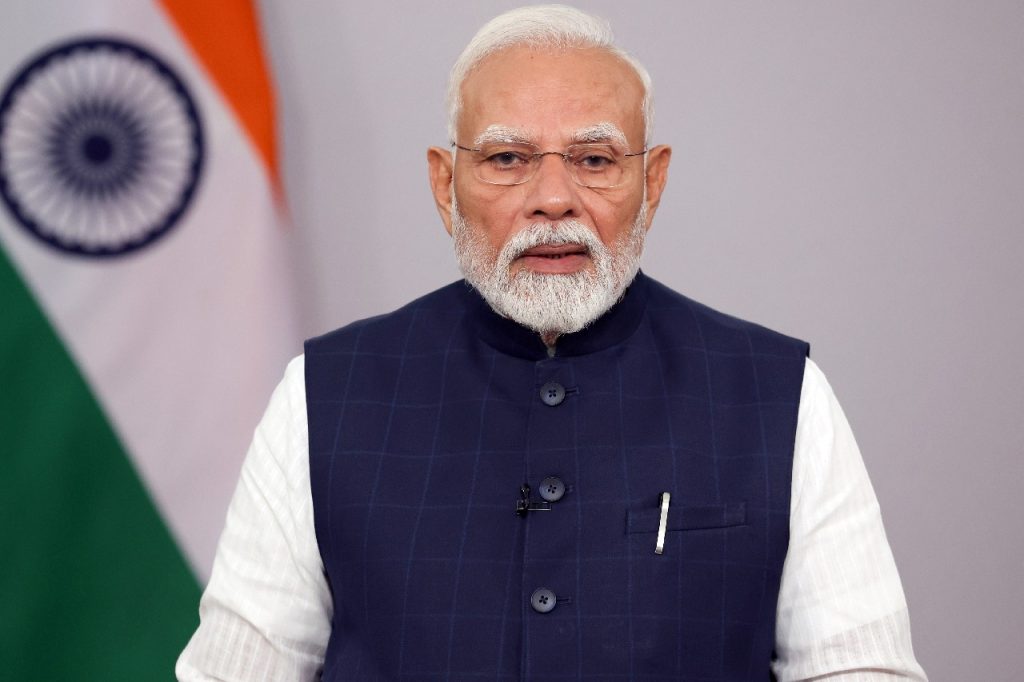
“Unacceptable”: PM Modi condemns attack on UAE’s Fujairah, expresses solidarity after 3 Indians injured

NEW DELHI: Prime Minister Shri Narendra Modi has reaffirmed India’s deep-rooted ties with the United Arab Emirates, expressing unwavering support for the Gulf nation after an attack on civilian infrastructure in the strategic energy hub of Fujairah left three Indian citizens injured.

The strikes targeted Fujairah, a critical global maritime artery on the UAE’s eastern seaboard, which serves as a primary bypass for oil exports outside the volatile Strait of Hormuz. In a post on X, the Prime Minister conveyed his distress over the escalation, stating, “Strongly condemn the attacks on the UAE that resulted in injuries to three Indian nationals. Targeting civilians and infrastructure is unacceptable.”

He further emphasised the depth of the bilateral relationship, noting that “India stands in firm solidarity with the UAE” and continues to advocate for the “peaceful resolution of all issues through dialogue and diplomacy.”

Underscoring the strategic importance of the region’s maritime corridors, PM Modi highlighted that “ensuring safe and unimpeded navigation through the Strait of Hormuz is vital for enduring regional peace, stability and global energy security.”

New Delhi’s condemnation was first articulated by MEA Spokesperson Randhir Jaiswal, who, in an official statement on the attack on Fujairah, emphasised India’s stance on the escalating regional situation.

He noted that the targeting of innocent civilians must cease and reiterated that India continues to stand for “dialogue and diplomacy” to restore peace and stability across West Asia.

Highlighting the importance of global trade routes, the spokesperson called for “free and unimpeded navigation and commerce” through the Strait of Hormuz, stressing that such activities must remain “in keeping with international law.”

The Ministry further stated that India stands ready to support all efforts directed towards a peaceful resolution of the ongoing issues in the region.

In line with this diplomatic stance, the Indian Embassy in the United Arab Emirates (UAE) has confirmed that three Indian nationals sustained injuries during “today’s attacks in Fujairah”.

According to the mission, officials are currently in coordination with local agencies to guarantee that the injured individuals receive “adequate medical care and welfare”.

Reports indicate the three individuals sustained moderate injuries following a fire sparked by the strikes in the Fujairah Petroleum Industries Zone (FOIZ).

The development follows a sharp rebuke from the UAE’s Ministry of Foreign Affairs, which denounced the “renewed unprovoked Iranian aggression” involving the deployment of drones and missiles.

The Ministry verified that the three Indian citizens were caught in the crossfire of Iran’s strikes directed at “civilian sites and facilities”.

Labelling the offensive an “unacceptable act of aggression”, the Ministry described the move as a “direct threat to the UAE’s security, stability and territorial integrity”, while noting it stands in “violation of the principles of international law and the Charter of the United Nations”.

UAE authorities have made it clear that the nation will not accept any infringement on its “security and sovereignty under any circumstances”.

The Ministry further asserted that the UAE “reserves its full and legitimate right to respond to these unprovoked attacks in a manner that ensures the protection of its sovereignty, national security, territorial integrity, and the safety of its citizens, residents, and visitors, in accordance with international law”.

A demand to “immediately halt these attacks” was issued, alongside a call for “full compliance with the cessation of all hostilities”, while the official statement held Tehran “fully responsible for these unprovoked attacks and their repercussions”.

On Monday, the UAE’s Ministry of Defence reported the detection of “four cruise missiles launched from Iran” aimed at multiple locations across the country.

The Ministry clarified that loud noises reported in various regions were the “result of successful interception of the aerial threats”.
The UAE’s National Emergency Crisis and Disaster Management Authority (NCEMA) issued a public advisory on X, stating, “Air defence systems are currently responding to a missile threat. Please remain in a safe location and follow official channels for warnings and updates”.

Citizens and residents were further instructed “not to approach, touch or photograph any fragments or objects that have fallen” from the sky following the interceptions, to ensure the “relevant authorities assess the situation” safely.