Home Blog Page 324

Trump says Project Freedom to be “paused for short period of time” while naval blockade on Iran continues

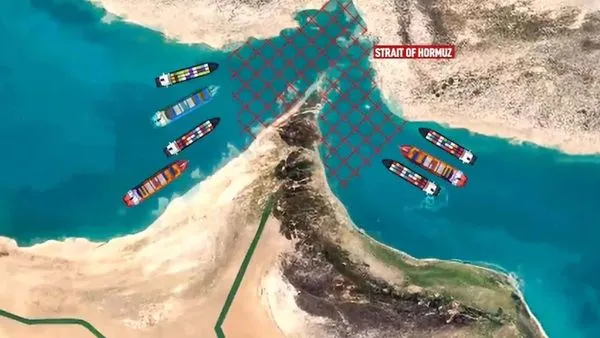
WASHINGTON D.C.: US President Donald Trump on Tuesday (local time) announced that “Project Freedom”, an initiative aimed at helping the passage of commercial vessels trapped in the Strait of Hormuz amid escalating regional tensions in the Gulf, will be temporarily paused even as the naval blockade of Iran’s ports remains in place.

In a post on Truth Social, Trump said the decision was taken following requests from Pakistan, which has been acting as a mediator to broker a peace deal between Washington and Tehran, and other countries.

Trump further claimed that the decision also followed what he described as significant military gains during the campaign against Iran and progress toward a potential agreement with Iranian representatives.

The US President further noted that the pause was announced to “see whether or not the Agreement can be finalised and signed” between Tehran and Washington.

“Based on the request of Pakistan and other Countries, the tremendous Military Success that we have had during the Campaign against the Country of Iran and, additionally, the fact that Great Progress has been made toward a Complete and Final Agreement with Representatives of Iran, we have mutually agreed that, while the Blockade will remain in full force and effect, Project Freedom (The Movement of Ships through the Strait of Hormuz) will be paused for a short period of time to see whether or not the Agreement can be finalised and signed,” the post stated.

On Sunday, US President Donald Trump announced “Project Freedom”, an initiative aimed at helping commercial vessels trapped in the Strait of Hormuz amid escalating regional tensions in the Gulf.

In another post on Truth Social, Trump said countries around the world had requested American assistance to safely guide their ships out of the strategically vital waterway.

US Central Command (CENTCOM) forces started the operation on Monday to support merchant vessels seeking to freely transit through the essential international trade corridor under Project Freedom.

According to a statement by CENTCOM, the US military will support the operation through deployment of guided-missile destroyers, over 100 land- and sea-based aircraft, multi-domain unmanned platforms, and 15,000 service members.

Source: ANI
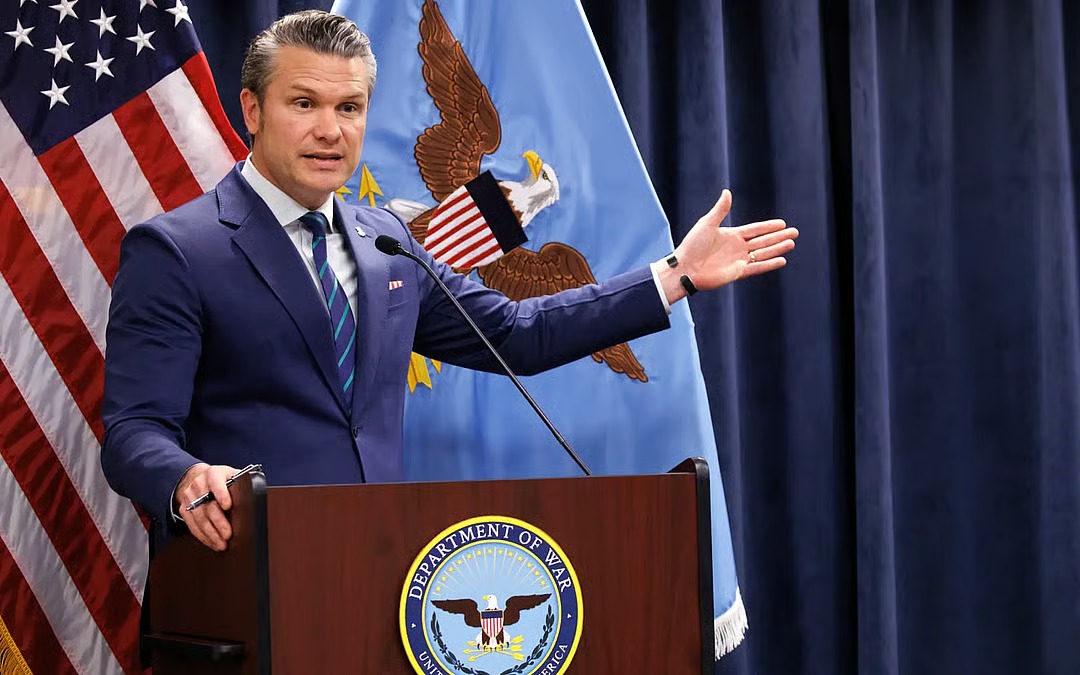
Ceasefire with Iran is not over : U.S. Defense Secretary

WASHINGTON : U.S. Defense Secretary Pete Hegseth said on Tuesday that the ceasefire with ‌Iran was not over, even as the U.S. and Iran exchanged fire in the Gulf as they wrestled for control of the Strait of Hormuz.

Hegseth said the U.S. had successfully secured a path through the critical waterway and that hundreds of commercial ships were lining up to pass through, as Washington seeks to break a chokehold Iran ​has asserted on the Strait of Hormuz since the conflict began on February 28.

“We know the Iranians are embarrassed by this ​fact. They said they control the strait. They do not,” Hegseth told a Pentagon news conference. The U.S. military says ⁠it sank six Iranian small boats and intercepted Iranian cruise missiles and drones, after President Donald Trump sent the navy to escort stranded tankers ​through the Strait of Hormuz in a day-old campaign he called “Project Freedom.”

Several merchant ships in the Gulf reported explosions or fires on Monday, the ​first day of the operation. General Dan Caine, the chairman of the Joint Chiefs of Staff, said Iran attacked Oman once on Monday and waged three attacks on the United Arab Emirates, before adding that, at least so far, “today is quieter.”

Caine said that since the ceasefire was announced on April 7, Iran had fired at commercial vessels ​nine times and seized two container ships. Iran has attacked U.S. forces more than 10 times, he added. However, the attacks fell “below the threshold of ​restarting major combat operations at this point,” Caine told reporters. Asked whether the ceasefire with Iran still held, Hegseth said: “No, the ceasefire is not over.” “We said we would ‌defend and ⁠defend aggressively, and we absolutely have. Iran knows that, and ultimately, the president can make a decision whether anything were to escalate into a violation of a ceasefire,” he said.

BLOCKADE
The operation is Trump’s latest effort to force an end to the disruption of international energy supplies caused by Iran’s blockade of the strait, which carried a fifth of global oil and liquefied natural gas before the war. The U.S. Navy is also enforcing a maritime ​blockade of Iran, which prevents ships ​from going to Iran or ⁠departing Iranian territory.

The two military operations seek to pressure Iran to strike a deal to end the conflict on Trump’s terms. But Iran has countered that there is no military solution to the crisis, and it has ​threatened to fight for as long as necessary. The U.S. military said on Monday two U.S. merchant ships ​made it through the ⁠strait, with the support of Navy guided-missile destroyers.

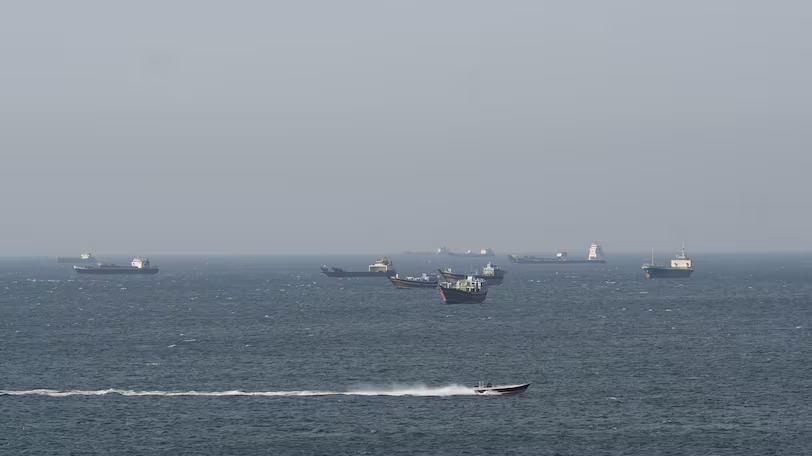
Iran denied any crossings had taken place, though shipping company Maersk said the Alliance Fairfax, a U.S.-flagged ship, exited the Gulf under U.S. military escort on Monday. Caine estimated 22,500 mariners embarked on more than 1,550 commercial vessels were stuck in the Gulf, unable to ⁠transit.

“CENTCOM, along with ​partner nations, is in active communication with hundreds of ships, shipping companies and insurers,” ​Hegseth said, referring to the U.S. military’s Central Command, which leads operations in the Middle East.
“All of these ships from all around the world want to get out of the ​Iranian trap that they have been stuck inside.”

Source : Reuters

US proposes resolution to UNSC to defend free navigation, secure Hormuz; Rubio says “test” for UN

WASHINGTON D.C.: The United States on Tuesday (local time) proposed a draft resolution in the United Nations Security Council (UNSC) aimed at defending freedom of navigation and securing the Strait of Hormuz amid the ongoing crisis over transit through the strategic waterway due to the ongoing power struggle between Washington and Tehran.

According to a statement from the US Department of State, US Secretary of State Marco Rubio stated that Iran is “holding the world’s economy hostage” through threats and actions in the strategic waterway, including alleged attempts to close the Strait of Hormuz, attacks on ships, laying of sea mines, and efforts to impose tolls on maritime traffic.

Rubio, in the statement, noted that the proposal comes at the direction of US President Donald Trump in conjunction with Bahrain, Saudi Arabia, the United Arab Emirates, Kuwait, and Qatar.

“At President Trump’s direction, the United States, alongside Bahrain and our Gulf partners, Saudi Arabia, the United Arab Emirates, Kuwait, and Qatar, drafted a UN Security Council Resolution to defend freedom of navigation in the Strait of Hormuz,” the statement read.

The draft resolution reportedly “requires Iran to cease attacks, mining, and tolling” and also “demands that Iran disclose the number and location of the sea mines it has laid and cooperate with efforts to remove them”, while supporting the creation of a humanitarian corridor.

The US said it expects the resolution to be voted on in the coming days and hopes for broad international backing from Security Council members.

During a separate White House briefing later, after the release of the written statement, Rubio said the proposed measure represents a “real test for the UN”, arguing that failure to adopt it would raise questions about the institution’s effectiveness.
He described the proposal as “a very modest request”, adding, “If you’re telling me that the international community and hundreds of countries cannot rally behind that, then I don’t know what the utility of the UN system is if it can’t even solve something as straightforward as that,” he said.

Rubio also noted that a similar Bahrain-led resolution on the Strait of Hormuz was vetoed by China and Russia last month and further said it would be in the interest of both China and Russia to support the new draft, arguing that instability in the Strait of Hormuz could disrupt global trade and potentially trigger “economic chaos to dozens and dozens of countries around the world”.
Earlier in April, Russia and China vetoed a UN resolution aimed at reopening the Strait of Hormuz. The resolution was already diluted to secure their abstentions.

The 15-member council saw 11 votes in favour, and two against by China and Russia, and Pakistan and Colombia abstained from voting.

The resolution demanded that Iran immediately cease all attacks against merchant and commercial vessels and any attempt to impede transit passage or freedom of navigation in the Strait and further calls for the cessation of attacks against civilian infrastructure, including water infrastructure and desalination plants, as well as oil and gas installations.

Source: ANI

Nine ships use Strait of Hormuz as ‘renewed tensions’ to slow traffic: CAS

NEW YORK: Nine ships crossed the Strait of Hormuz on May 3, down from 13 on May 2 and 21 on May 1, S&P Global Commodities at Sea (CAS) said in a May 4 report.

The May 3 traffic comprised three cargo ships, two bulk carriers, two landing craft, one bitumen tanker and one LPG small gas carrier, CAS said. Three of the ships entered the Persian Gulf, including the LPG tanker G Jades, which is part of the Iranian fleet and is currently in ballast, CAS said. It passed the US naval blockade May 2, CAS said.

Another Iranian ship, the VLGC Sarv Shakti, left Hormuz heading east on May 2 and also crossed through the US naval blockade on May 3, CAS said. It is heading for New Mangalore, India, it said.

Forty-four ships crossed the US naval blockade line over the three days, evenly split between outbound transits and inbound toward the Gulf of Oman, CAS said. The US Central Command redirected 49 commercial vessels by May 3 since the US naval blockade began, according to CAS.

Traffic is set to remain constrained given “renewed tensions” as the US said it will assist ships through Hormuz while Iran said all commercial ships need coordination with the Iranian military, CAS said.

“Without consent from Iran to let commercial ships transit safely through the Strait of Hormuz, it is currently not clear whether the Iranian threat to ships can be degraded or suppressed,” Jakob Larsen, BIMCO’s chief safety and security officer, said in a May 4 statement. “The overall security situation for the shipping industry is currently unchanged, and our advice is for all shipowners to continue carrying out thorough risk assessments.”

Three tankers carrying Iraqi crude have exited Hormuz since the start of the war, CAS said. As of May 3, about 163 million barrels of crude oil remains on tankers positioned west of the Strait of Hormuz, including an estimated 43 million barrels of Iranian crude and 42 million barrels of Saudi Arabia crude oil, CAS said.

Source: Platts

Amazon opens up logistics network to other businesses in challenge to UPS, FedEx

BENGALURU : Amazon said on Monday it would allow other businesses to store and ‌ship goods ranging from raw materials to final products through its vast network, as the E-commerce giant moves to challenge a market long dominated by UPS and FedEx. “Amazon Supply Chain Services” will allow companies across industries such as retail, healthcare and manufacturing to use the ​company’s supply-chain network spanning ocean, road, rail and air.

The move could position Amazon as a major player ​in the U.S. logistics industry, intensifying competition on pricing and speed for incumbents. The company boasts ⁠a fleet of more than 100 cargo planes — behind only FedEx and UPS — along with a vast network of ​warehouses and sorting hubs. Shares of FedEx and UPS (UPS.N), opens new tab fell more than 9% each, while Amazon rose nearly 1%.

It would ​also help Amazon unlock a new growth opportunity for its e-commerce unit, building on a service that already supports thousands of independent third-party sellers on the platform worldwide. Companies can take advantage of Amazon’s speedy two-to-five-day delivery timelines, as well as inventory forecasting capabilities, among other ​distribution and fulfillment services.

The move is “a direct competitive blow,” to parcel firms such as UPS and FedEx, analysts at ​Evercore ISI said in a note. Contract logistics firms DHL Supply Chain, Maersk Logistics and GXO Logistics (GXO.N) are also among the most exposed, ‌they said.
Shares ⁠of DHL (DHLn.DE were down 7.3%, GXO was down nearly 13%, while Maersk was little changed.

Amazon said companies can use its solutions across all of their sales channels, including their own website, social media and physical stores. It said it has already signed on consumer goods major Procter & Gamble (PG.N), industrial heavyweight 3M (MMM.N), and apparel firm American Eagle Outfitters.

Amazon’s expansion takes ​aim at the business-to-business shipping ​market, a prized high-margin ⁠segment for logistics firms where deliveries tend to be denser, more predictable and less expensive to serve than consumer shipments.

The move is “Amazon trying to convert logistics from a cost burden ​into an infrastructure product,” said Parth Talsania, CEO of Equisights Research. It also takes a ​leaf out of ⁠Amazon’s cloud computing unit’s playbook — Amazon Web Services was launched in 2006 to revamp the company’s own IT infrastructure, and it later evolved into the world’s biggest cloud services provider.
Meanwhile, UPS and FedEx have been de-emphasizing retail shipments and pursuing higher-profit ⁠healthcare, data ​center and business-to-business shipments.

“We would not be surprised to see near-term ​weakness across the less-than-truckload, air-freight, and forwarding complexes as the market assesses the competitive implications of the announcement,” analysts at Baird said. Reporting by Deborah ​Sophia, Shivansh Tiwary and Nandan Mandayam in Bengaluru, additional reporting by Anhata Rooprai; Editing by Leroy Leo and Shilpi Majumdar.

Maersk vessel damaged in collision with another ship at Chittagong Port

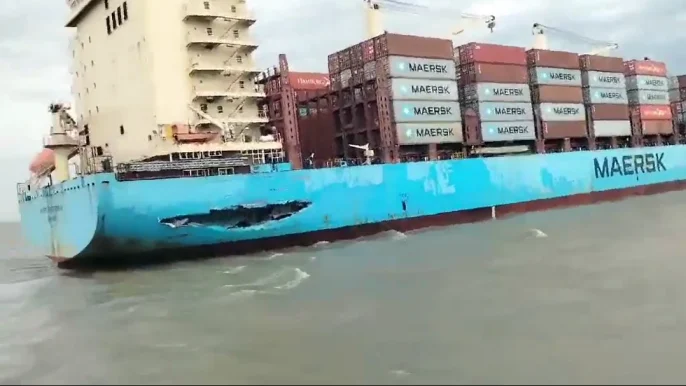
CHATTOGRAM : A container vessel operated by Maersk Line collided with another ship at the outer anchorage of Chattogram Port, causing structural damage but no casualties.

According to port officials, the vessel Z9K Maersk Chattogram (V-612A/614N) collided with HR Turag at around 9:30am on Friday morning (1 May) while approaching the pilot station. The incident took place near BDCGP at the port’s outer anchorage.

Preliminary reports indicate that the impact damaged the aft section of the Maersk vessel. However, no injuries were reported among crew members.

“The damage is limited to the external hull. The engine and steering gear remain in good condition,” said a statement citing the vessel’s captain and chief engineer.

Authorities said safety measures have been strengthened following the incident. The Chattogram Port Authority has been requested to keep an additional tugboat on standby to ensure the vessel’s safety.

A CPA secretary confirmed the incident to The Business Standard, stating that the collision occurred before the piloting process began. However, Mahmudul Karim, head of operations at Maersk Bangladesh, said the vessel may be berthed later in the day.

“After unloading the containers, a decision will be taken on the next steps,” he told TBS.

Port officials said they are closely coordinating with relevant stakeholders and will provide further updates as more information becomes available.

HMM Namu, a cargo ship hit by explosion off UAE

UMM AL QUWAIN : A Panama-flagged Korean general cargo ship HMM Namu hit by an explosion while at anchor.

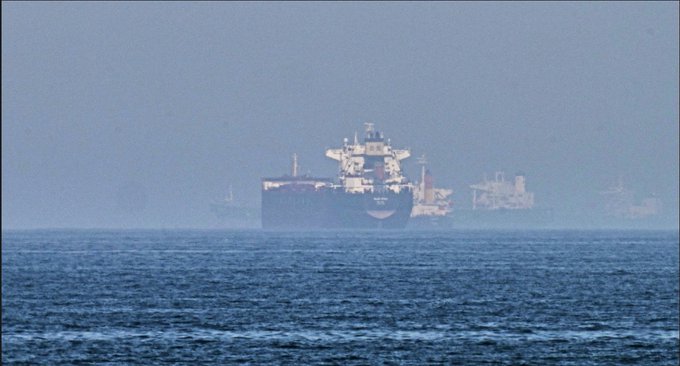
The 2026-built, 38,000 dwt HMM Namu was struck by an object while at anchor in OPL of Umm Al Quwain, UAE, with a distress signal sent at 11:40 hrs UTC by a nearby vessel.

According to maritime security firm Vanguard Tech an explosion was observed on the port side near the engine room. Security sources indicate that source of the explosion was either a USV (sea drone) or a drifting sea mine. Coalition forces were reported to be on the scene.

All 24 crew on board the HMM Namu are reported to be safe. The crew comprises six South Korean nationals and 18 seafarers of other nationalities. No environmental damage has been reported as a result of the strike.

Over the weekend there were reports of warnings to vessels anchored off Ras Al-Khaimah, UAE to move from their anchorages.On 4 May Iran announced new maritime control zone in the Strait of Hormuz that extends from south of the line between Mount Mubarak in Iran and south of Fujairah in the UAE and from the west, the line between the tip of Qeshm Island in Iran and Umm Al Quwain in UAE.

It is third attack on a commercial vessel in the region in just over a 24 hour period. A tanker was hit by suspected drones 78 nm north of Fujairah at 19:40 hrs UTC on 3 May, and a bulker attacked by multiple small vessels 11 nm west of Sirik in Iran while northbound towards the Strait of Hormuz at 11:30 hrs UTC on 3 May.

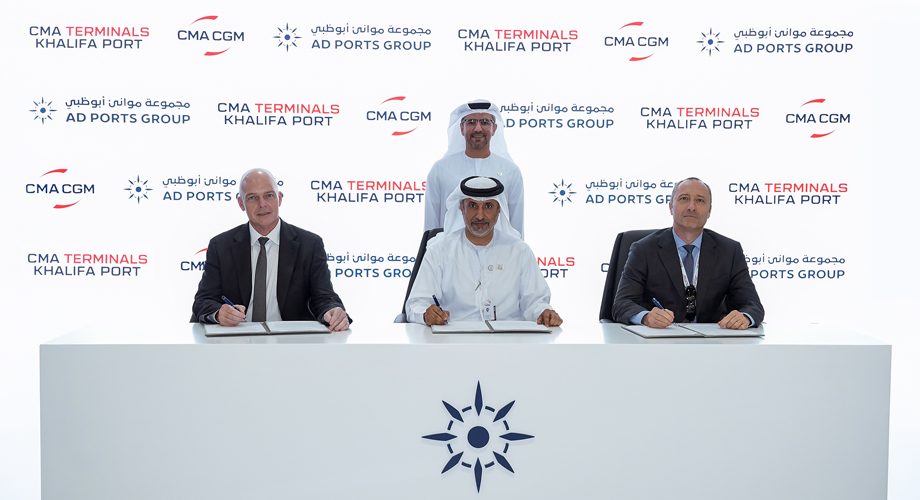
AD Ports Group, CMA Terminals Khalifa Port, and CMA CGM Group sign MoU to extend inland reach across the UAE and wider region

ABU DHABI : AD Ports Group, a leading global enabler of integrated trade, industry and logistics solutions, signed a Memorandum of Understanding (MoU) with CMA Terminals Khalifa Port container terminal and CMA CGM Group, a global player in sea, land, air and logistics solutions, to develop efficient intermodal solutions and extend inland reach across the UAE and wider region, through AD Ports Group’s consolidated inland intermodal network.

Under the MoU, the three partners intend to cooperate to anchor cargo flows across AD Ports Group’s consolidated network of rail-linked inland container depots, dry ports, and cargo depots, extending CMA Terminals Khalifa Port’s reach beyond the quay to inland consumer, industrial, and regional markets.
The collaboration will also explore opportunities to strengthen cargo flows across the UAE and regional markets, including the Northern Emirates, whilst extending trade corridor optionality through rail-linked inland connectivity to the borders of the Sultanate of Oman and the Kingdom of Saudi Arabia.

By supporting more efficient inbound cargo flows to industrial and manufacturing sectors, the collaboration aims to support the UAE’s industrial growth agenda by creating flexible and resilient export corridors through multiple inland and gateway routing options.

Captain Mohamed Juma Al Shamisi, Managing Director and Group CEO of AD Ports Group, said: “This MoU marks an important step in consolidating the UAE’s inland intermodal logistics backbone under one integrated platform. By bringing CMA CGM as the first global shipping line partner into this network, we are extending CMA Terminals Khalifa Port beyond its traditional role at the quay and creating a more connected, flexible and resilient trade gateway for the UAE and the wider region. This initiative, under the wise guidance of our leadership in the UAE, directly supports national industrial growth ambitions by strengthening inbound cargo access, improving corridor optionality and enhancing the long-term competitiveness of national supply chains.”

Inaugurated in December 2024, CMA Terminals Khalifa Port is a joint venture between CMA CGM Group (70%) and AD Ports Group (30%), and one of three container terminals at Khalifa Port operated by major international shipping lines.

Jesper Stenbak, Regional Director in the Middle East Gulf, Indian Sub-Continent, and Indian Ocean, CMA CGM Group, said: “This collaboration strengthens CMA Terminals Khalifa Port’s role as an inland-enabled gateway terminal, extending CMA CGM’s reach beyond the port through integrated inland connectivity across the UAE and into regional markets. By linking maritime services more directly to inland cargo flows, this partnership supports more efficient routing, stronger supply chain resilience and improved service reach for our customers.”

AD Ports Group’s inland intermodal network connects gateway ports to inland dry ports, rail-linked cargo facilities and industrial demand centres across the UAE, supporting more efficient cargo movement, stronger inland connectivity and improved access to regional trade corridors.

Maritime Emissions Reduction Centre welcomes Cargill as newest member

LONDON: The Maritime Emissions Reduction Centre (MERC) has welcomed Cargill as its newest member, broadening the industry collaboration working to reduce greenhouse gas emissions from the existing global shipping fleet. 

Cargill’s membership strengthens MERC by adding the perspective of a major charterer to the Centre’s work. This addition reflects the growing role that commercial operators can play in helping identify, assess and scale practical emissions-reduction measures for ships already in service.   

Together with Drydocks World, who joined MERC earlier this year, the expanded membership strengthens the MERC’s role as a collaborative industry platform to pursue practical emissions reduction measures. 

MERC is an Athens-based non-profit initiative co-established by the Lloyd’s Register Maritime Decarbonisation Hub and leading shipowners Capital Group, Navios Maritime Partners, Neda Maritime Agency, Star Bulk and Thenamaris (Ships Management) Inc., with enabling support from Lloyd’s Register. The Centre was established to help accelerate near-term emissions reductions across the global fleet through technical collaboration and evidence-based analysis. 

Its work is focused on developing solutions and technical studies that can support investment and retrofit decisions that are matched or tailored to different vessel types and trading profiles. Current areas of study include energy-efficiency technologies, hydrodynamic performance, wind-assisted propulsion, alternative auxiliary power solutions and data-driven operational optimisation, as well as integration pathways for more complex onboard systems. 

Nikos Kakalis MERC Maritime Emissions Reduction Centre welcomes Cargill as newest member

Nikos Kakalis, Managing Director of MERC, said: “Cargill’s involvement reflects the growing role of charterers in shaping the industry’s decarbonisation pathways.  

“With extensive experience across vessel operations, energy efficiency and technology integration, Cargill brings the important charterer-led perspective on what solutions can realistically be implemented across different ship types and trading profiles” 

Chris Hughes, Decarbonization Lead for Cargill Ocean Transportation, said: “Joining MERC reflects Cargill’s focus on pragmatic decarbonization. We’re working with shipowners and industry partners to test and deploy solutions that cut emissions now, while building the capability to scale as the enabling framework develops.” 

He continued: “Progress depends on deep collaboration with vessel owners to shape solutions, and that’s exactly what MERC enables. As we continue advancing long-term pathways such as alternative fuels, we must also stay laser-focused on practical efficiency measures that deliver impact today. Together, we need to identify what already works, understand the gaps that remain, and scale viable approaches across hardware, operations, data, and digital, so we can drive meaningful, real-world improvements across the fleet.” 

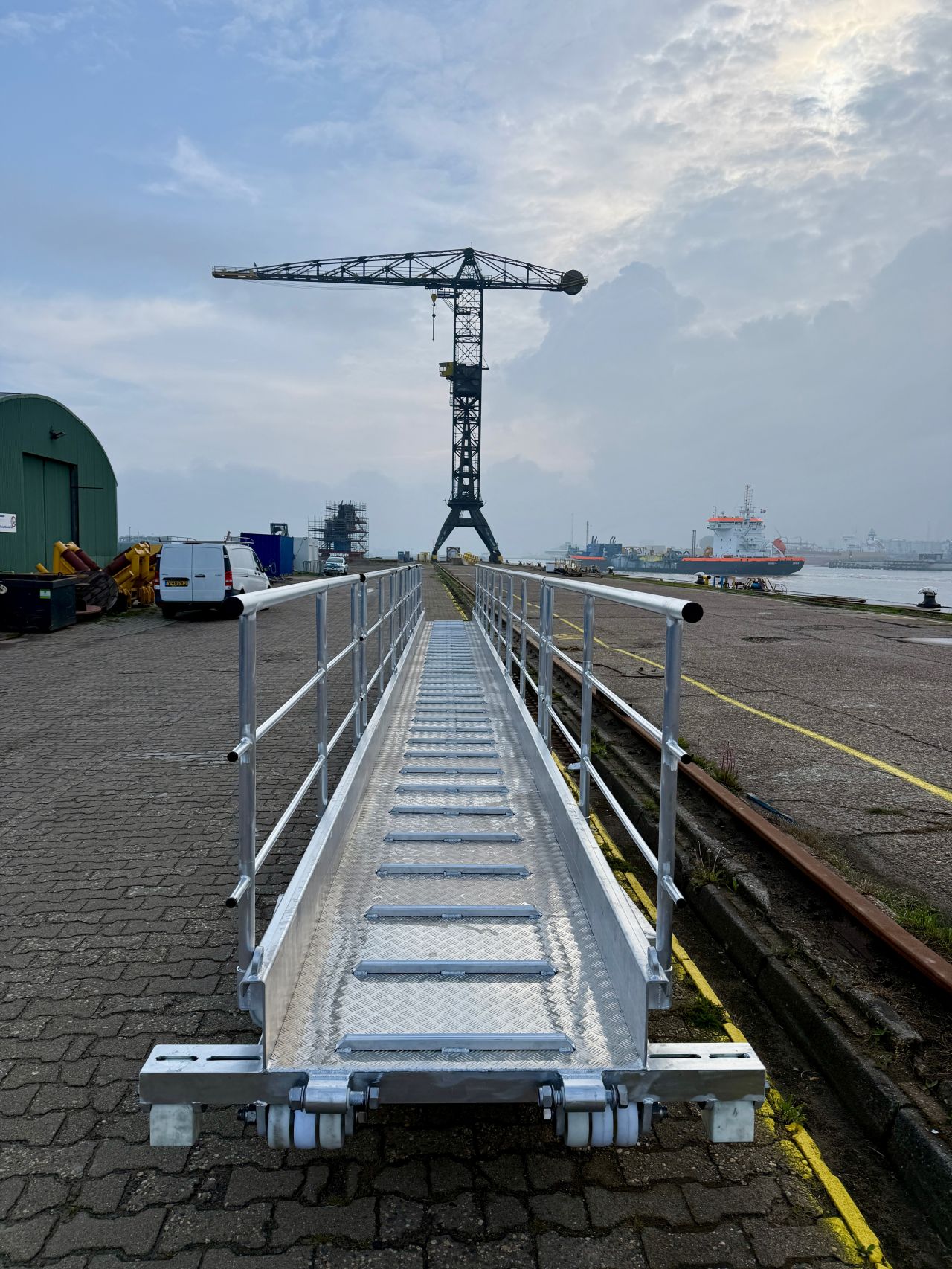
Ned Marine Alucon opens aluminium manufacturing facility at Damen Shiprepair Rotterdam

ROTTERDAM: Ned Marine has relocated and rebranded its aluminium manufacturing division – formerly known as MTQ Products – to a new production facility at Damen Shiprepair Rotterdam in the Botlek area. Operating under its new name, Ned Marine Alucon, the facility designs and builds certified aluminium gangways, bridges, cruise window wash systems, and access structures for the maritime, offshore, and civil engineering industries.

The move to Damen Shiprepair Rotterdam marks a significant step in Ned Marine’s growth strategy. The new location, on the waterfront at the former Verolme yard in the Botlek – provides direct quayside access, enabling the company to serve ocean-going vessels more effectively than was possible from Dordrecht. Inland shipping, which remains an important market for Ned Marine Alucon, also continues to be served from the new Rotterdam base.

Closer to clients

Being located at Damen Shiprepair Rotterdam opens direct access to a diverse client base. Container vessels, cruise ships, and offshore units, including platforms, barges, and rigs, are among the vessel types regularly calling at the yard. For Ned Marine Alucon, this proximity translates into shorter lead times, faster on-site support, and a stronger position in the market for ocean-going vessels.

In-house design, manufacturing and certification

Ned Marine Alucon operates as a fully integrated OEM production facility. Products are designed, engineered, and manufactured in-house, including aluminium gangways, window wash systems for cruise vessels, civil bridges, and specialised MK4 bridge parts for use between offshore rigs.

All products that require certification (for classification societies or other regulatory bodies) are delivered with full documentation.

Where certification is not required, Ned Marine Alucon still delivers high quality products, offering the same guarantee as for certified gangways and bridges. Leo Zwagemaker, Commercial Manager Ned Marine, says: “This is a logical next step for Ned Marine Alucon. Moving to Damen’s repair and conversion yard in the Botlek puts us right where our seagoing clients need us. From this location we bring our full manufacturing capability to bear on projects that require more than a standard off-the-shelf solution. Meanwhile our inland navigation clients can now be served from both our headquarters and warehouse in Ridderkerk and this new facility.”