Home Blog Page 326

UAE, Saudi Arabia, and Turkey working on alternative corridor to stop dependence on Strait of Hormuz

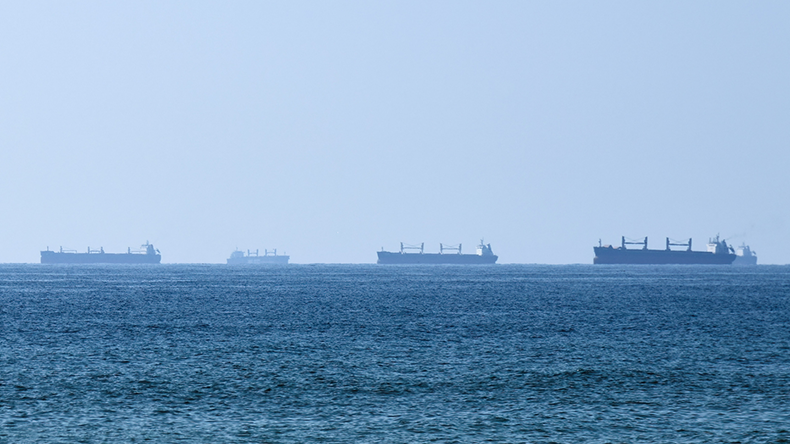
Amidst escalating tensions surrounding the Strait of Hormuz, Saudi Arabia, the UAE, and Turkey are now exploring alternative routes. Since Iran’s blockade of the Strait of Hormuz, nations across the globe have faced significant challenges.

Saudi Arabia, UAE, Turkey Working On Alternate Routes
In a recently released report, the South China Morning Post revealed that the governments of Saudi Arabia, the UAE, and Turkey are actively working on land-based rail links, maritime corridors, and pipeline projects. The objective of this initiative is to reduce their reliance on routes passing through the Strait of Hormuz and the Red Sea.

A blockade was imposed on the Strait of Hormuz on February 28, following a joint operation against Iran by the United States and Israel. This action had a profound impact on the global economy, as the Strait serves as the primary waterway for global energy supplies.

Experts Weigh In: A Structural Transformation
In light of these recent developments, experts are characterizing this move as a “structural transformation”—a shift away from a reliance on the region’s historically fragile infrastructure. These new routes involve the movement of goods from ports in the UAE and Oman—located outside the Persian Gulf—to their destinations. Under this new framework, cargo will be transported through Saudi Arabia to Jordan. From there, it will be moved onward to the Mediterranean Sea, either via Egypt’s Suez Canal or through Syrian ports.

Furthermore, several links are already operational. These include a land-sea corridor connecting ports in the UAE with those in Saudi Arabia, as well as a rail service in Jordan; both initiatives were launched earlier this year. Additionally, Saudi Arabia has inaugurated a freight transport service from its Neom port, which connects the Suez Canal region with the Gulf nations and Iraq.

Meanwhile, in a parallel initiative, Saudi Arabia, the UAE, Turkey, and Jordan have set plans in motion to revive the historic Hejaz Railway. This railway connects Istanbul to Jeddah, passing through Amman and Damascus.

Consensus Reached at GCC Summit on Developing a Regional Railway Network
At a recently held GCC summit in Jeddah, leaders reached a consensus on rapidly developing a regional railway network. This network will connect Saudi Arabia to the UAE, Qatar, Oman, Kuwait, and Bahrain. Furthermore, discussions are underway regarding the creation of a multi-national network for oil and gas pipelines, as well as the construction of power lines and water systems.

Xeneta Weekly Ocean Container Shipping Market Update: Spot Rates Easing

OSLO: Middle East conflict is making life complicated for shippers because, while they are firefighting supply chain disruption and elevated spot rates across global trades, they must play their cards carefully when tendering for new long term contracts.

Xeneta analyst insight

Peter Sand, Xeneta Chief Analyst
“The impact of conflict in the Middle East is making life increasingly complicated for shippers because, while they are firefighting supply chain disruption and elevated spot rates across global trades, they must play their cards carefully when tendering for new long term contracts or risk leaving money on the table.”

Spot rates easing but variance between US and Europe

“The supply chains that carriers have built around the Middle East disruption – rerouting via land bridges, alternative ports, and new service networks – are now functioning with enough regularity that spot rates are beginning to reflect a more stable, if still elevated, operating environment.

“Far East to US West Coast rates essentially flat at USD 2 864 per FEU (40ft container) – albeit still more than 52% above pre-crisis levels at the end of February. Into US East Coast, spot rates are still up 46% compared to pre-crisis at USD 3 873 per FEU. These rates have reached a high plateau, sustained by ongoing congestion at Southeast Asian transshipment hubs and the knock-on effects of longer transit times across the network.

“The European-bound trades are softening to a larger extent. Capacity into North Europe is up 7.6% from a week ago and this combination of carrier adaptation on these corridors and the seasonal softening in second-quarter demand is allowing rates to come off their peaks more meaningfully than on the US-bound trades.

“Far East to North Europe spot rates are down 10% compared to one month ago at USD 2 528 per FEU. Far East to Mediterranean is down 15% in the same period at USD 3 567 per FEU.”

Long term market

“The Middle East conflict is creating nervousness and very real operational disruption that is causing spot rates to spike, but you cannot hide from the market fundamentals of supply and demand.

“Xeneta customers tendering in 2026 have reported round one bids below the long term market average in the majority of cases, despite the elevated spot rates across major fronthaul trades. By round three, these shippers are securing even bigger discounts as carriers fight for their volumes for the next 12 months.

“This tells us that the long-term market is being driven by supply and demand fundamentals rather than the crisis-driven sentiment that is propping up the spot market. Carriers open negotiations with ambitious pricing, but shippers played their hand and pushed back effectively. With contracts now being finalised for implementation in May and June, this is a signal that the market expects the current level of disruption to be temporary – even if the spot market has not yet priced that expectation in.”

Data highlights

Market average spot rates – 30 April 2026


Far East to US West Coast: USD 2 864 per FEU

Far East to US East Coast: USD 3 873 per FEU

Far East to North Europe: USD 2 528 per FEU

Far East to Mediterranean: USD 3 567 per FEU

North Europe to US East Coast: USD 2 188 per FEU

Spot rate changes in the past month – 30 April vs 30 March 2026

Far East to US West Coast: +21% (USD 2 368 to USD 2 864 per FEU)

Far East to US East Coast: +19% (USD 3 264 to USD 3 873 per FEU)

Far East to North Europe: −10% (USD 2 802 to USD 2 528 per FEU)

Far East to Mediterranean: −15% (USD 4 221 to USD 3 567 per FEU)

North Europe to US East Coast: +45% (USD 1 512 to USD 2 188 per FEU)

Rate signals on heavily impacted trades

As of April 29, average short term rates out of China are up by 24-310% since February 27 on trades most directly impacted by the Middle East conflict. Increases since April 13 are in brackets to show more recent easing.

Nhava Sheva: +31% (+44%)

Colombo: +21% (+39%)

Khor al Fakkan: +316% (+310%)

Jeddah: +59% (+76%)

Mersin: +11% (+24%)

Offered capacity on major fronthaul trades (4-week rolling average) – w/c 27 April 2026

Far East to US West Coast: +0.5% from a week ago

Far East to US East Coast: +1.4% from a week ago

Far East to North Europe: +7.6% from a week ago

Far East to Mediterranean: −1.5% from a week ago

North Europe to US East Coast: +7.4% from a week ago

Source: Xeneta

Rhenus Strengthens its Road Freight Offerings in APAC to Meet High Demand in the Region

SINGAPORE: With demand for road freight services across Asia Pacific rising, leading global logistics provider Rhenus Group has announced plans to further expand its road freight operations in the region. As part of its broader regional growth strategy, the company is strengthening cross-border trucking across Southeast Asia and key corridors between Greater China and Southeast Asia. Building on this, it is continuously integrating road with air and ocean freight, while scaling local distribution, sourcing and leveraging existing free trade zone warehousing capabilities.

As part of this expansion, Rhenus is investing in local capabilities to support individual market needs including the recent establishment of its Bukit Kayu Hitam Border Office in Malaysia, with full customs capabilities to support smoother cross-border movements.

Prem Anand Anandaverl, Regional Director of Cross Border Trucking Asia, Rhenus Logistics notes, “Our goal is to provide a seamless connectivity to the global network by reinforcing a comprehensive road freight service and continue to help businesses to move their goods across Asia efficiently and compliantly. Road Freight is playing an increasingly important role in building a resilient supply chain especially in this region.”

Asia Pacific to see high demand for road freight services

The global freight trucking market size [1] is projected to be valued at US$2.74 Tn in 2025 and is set to reach US$3.70 Tn by 2032, growing at a CAGR (Compound Annual Growth Rate) of 3.9%. Asia Pacific remains a key growth driver, supported by expanding industrial output, a large consumer base, and rapidly developing logistics infrastructure enabling both domestic and cross-border trade.

Achieving Sustainable Growth through Road Freight: Consistency, Scalability and Increasing Customer Value

With more than 150 owned and partner road freight locations in Europe, Rhenus currently operates in over 15 countries through a well-established network. The expansion of road freight services in Asia Pacific will enable the company to further integrate its’ end-to-end supply chain solutions, combining road freight solutions with air and ocean services to deliver more flexible and customized logistics solutions globally.

Ongoing investments in multilingual local teams, dedicated border infrastructure, and best practice transport management systems will support seamless cross-border operations, stronger customs and regulatory expertise across markets.

Leveraging its rail connections between Greater China and Europe, alongside a robust multimodal network spanning sea, land, and rail, the company aims to provide customers with greater flexibility and scalability in response to evolving supply chain demands. The company is also working with partners to improve CO₂ tracking and explore alternative fuel options, supporting more sustainable road freight operations.

[1] Based on analysis by Persistence Market Research

About Rhenus
The Rhenus Group is one of the leading logistics specialists with global business operations and annual turnover amounting to EUR 8.2 billion. 39,000 employees work at 1,300 business sites in more than 70 countries and develop innovative solutions along the complete supply chain. Whether providing transport, warehousing, customs clearance or value-added services, the family-owned business pools its operations in various business units where the needs of customers are the major focus at all times.

RINA expands its Singapore Open Innovation Hub with the support of EDB

SINGAPORE : RINA – a global ship classification, inspection, certification and consulting engineering group – strengthens its Singapore Open Innovation Hub with the support of the Singapore Economic Development Board (EDB). The aim is to accelerate innovation across the maritime and energy sectors.

The Singapore Open Innovation Hub focuses on translating applied research into real-world solutions with clear industry impact. Bringing together industry, academia and technology partners, the Hub serves as a platform to co-develop and deploy innovations addressing key challenges across the maritime and energy sectors.

At the core of the initiative are three priority areas:

Integrated digital twin technologies connecting vessels, ports and hinterland systems to optimise performance and reduce emissions;
Decarbonisation solutions, including alternative fuels and new operational models developed in collaboration with industry;
AI-enabled learning platforms to accelerate workforce skills and support the adoption of emerging technologies.
The Hub will support applied research, industry pilots and large-scale deployment, with a focus on delivering practical, scalable outcomes. This includes the development of multi-dimensional digital twins, joint projects on alternative fuel adoption and advanced training systems designed to close critical skills gaps. The initiative is also expected to support the development of new capabilities and services, strengthening innovation across the maritime and energy value chains.

As part of the programme, RINA will expand its Singapore-based research and innovation team, with plans to create 13 new specialist roles over the next three years.

Imran Ibrahim, Director of the Open Innovation Hub Singapore at RINA, said: “We see the Singapore Open Innovation Hub as a catalyst for translating innovation into real operational value for the maritime and energy sectors. By working closely with industry partners, regulators and research institutions, we are building an ecosystem that connects digitalisation, decarbonisation and workforce development. EDB’s support allows us to accelerate the deployment of solutions such as integrated digital twins, alternative fuel adoption pathways and AI-enabled learning platforms, ensuring that innovation is not only developed but also implemented at scale.”

Soo Haw Yun, Vice President Global Enterprise Division at EDB, added: “The launch of RINA’s first Open Innovation Hub for Asia here in Singapore is a testament to our role as a leading maritime hub and a trusted base for companies to accelerate innovation. Companies like RINA can access a strong base of research and scientific capabilities here to co-develop, test and scale new solutions. We look forward to RINA’s partnerships with industry players to drive new technology adoption and capability development in our maritime and energy sectors.”

The Singapore facility is part of RINA’s global network of Open Innovation Hubs, reinforcing its position as a recognised player in global innovation and supporting the development of sustainable, technology-driven solutions worldwide.

Source : Hellenic Shipping

Shipping: IMO’s Net Zero Framework Progresses but ENGOs Slam Unnecessary Delay

LONDON: As this last meeting of the International Maritime Organization’s Marine Environment Protection Committee (IMO, MEPC 84, April 27-May 1) closd, the Clean Shipping Coalition welcomed support from the majority of member states for the IMO’s Net-Zero Framework (NZF) despite pressure from US, Saudi Arabia, UAE, Panama, Liberia, and other petro-states, but called out the threat of further delays to adoption, which is now scheduled for early December.

The NZF will be discussed at two IMO intercessional meetings, one in September and another immediately prior to December’s MEPC 85, which will itself immediately precede a resumed Extraordinary Session 2, during which the NZF is scheduled for adoption.

“Most IMO member states have demonstrated support for the Net-Zero Framework, with many calling for its urgent adoption”, said Delaine McCullough, President of the Clean Shipping Coalition and Ocean Conservancy’s Shipping Program Director. “Clearly, the NZF must be adopted as soon as possible, without interference from those who would seek to undermine or slow the process. Any further delay to the NZF is unacceptable – it already represents years of negotiation and consensus – the IMO has no other option capable of meeting goals of its own GHG Strategy or attracting wider support.”

Net Zero Framework
The IMO’s Net-Zero Framework is aimed at reducing greenhouse gas (GHG) emissions from ships, in line with the 2023 GHG Strategy. The NZF includes a global fuel standard (GFS), requiring ships “to gradually reduce how polluting its ship fuel can be (i.e. how much greenhouse gas is emitted for each unit of energy used, across a fuel’s life cycle)”. It also includes a mechanism for setting prices on the GHGs ships emit, to encourage the shipping industry to lower emissions as per the global fuel standard.

“We welcome the news that the Net-Zero Framework remains on the table. It’s a critical foundation for decarbonising shipping”, said Anaïs Rios, Senior Shipping Policy Officer, Seas At Risk. “But what started off as a legitimate framework, with a carbon pricing at its core for a chance at a just transition, has been weakened along the way. Recent events have exposed the truth. Our dependence on fossil fuels is not just a climate risk, it’s an economic and geopolitical liability. However, solutions already exist: Wind propulsion can cut emissions today and ease the reliance on scarce and expensive new fuels. Shipping must play its fair share, and countries must do the same.”

“It is a relief that the Net Zero Framework survived, but we cannot let delays become the new norm. Now is not the time for setting up compromises that water down the deal or to kick the can down the road”, said Felix Klann, Shipping Policy Officer at Transport & Environment. “At the same time, the IMO cannot lose track of its technical work. It will determine whether future fuels and technologies are truly sustainable just shift emissions away from ship to shore.”

“The USA and their allied petrostates weren’t successful in stopping climate negotiations at the IMO,” says Lukas Leppert, Policy Officer at NABU. “However, they obstruct final adoption of necessary and agreed measures. The IMO must adopt the Net-Zero Framework by 2026. Neither the industry nor our planet can afford to bear the consequences of further delays: rising costs of an already costly transformation, and the escalating threats of global warming.”

“The IMO’s Life Cycle Assessment (LCA) guidelines, which will determine well-to-wake emissions and sustainability criteria for global marine fuels, continued to advance”, said Andrew Dumbrille, Co-Director of Equal Routes. “Preventing the sector from becoming trapped by methane dependency, or from embracing dead-end fuels like LNG, requires that the guidelines incorporate on-the-ground emissions data, ecological considerations, and the rights of affected communities.”

Emission Control Area Adopted
“The world’s biggest emission control area will come into effect from September 2027 – great news for the environment, people’s health and the climate”, said Sönke Diesener, Senior Policy Officer at NABU. “It is encouraging that coastal states have not gotten distracted by the postponement after last October’s turbulent IMO meeting. The new ECA will connect existing European and North American ECAs, delivering a huge sea area where low sulphur fuels and cleaner technologies must be deployed. 

“We encourage the inclusion of the remaining EU waters to deliver the same standards of air pollution regulation and likewise a level playing field for industry”, said Diesener. “Moreover we urge policy makers worldwide to include air pollution reduction in maritime strategies to benefit people and nature. As assessment studies show again and again the costs are marginal and outpaced multi times by health costs and environmental damage savings.” 

Underwater Noise
“We welcome progress on Underwater Radiated Noise (URN) regulation toward a clearer policy roadmap to reduce shipping’s impacts on biodiversity, alongside the advancement of the IMO’s Life Cycle Assessment guidelines, which aim to account for full life-cycle emissions and sustainability criteria for marine fuels”, said Elissama Menezes, Co-Director of Equal Routes. “To be effective, shipping regulations must align with real-world emissions, biodiversity impacts, and human rights considerations. Without a nexus approach, the sector risks worsening the triple planetary crisis of climate change, biodiversity loss, and pollution.”

Marine Litter
“The mandate given by MEPC 84 to develop a plastics code marks another important step forward in binding measures to prevent plastic pellet pollution during maritime transport. Plastic pellets are a transboundary source of pollution, and the global community is relying on the IMO to prevent their release and harm,” said EIA Legal and Policy Specialist, Amy Youngman. “Governments have consistently recognised the serious and irreversible damage these pellets cause in the marine environment. But while we continue to move forward, obstruction and delay tactics from a few are making this process more challenging than it needs to be. Plastic pollution harms everyone. The majority must now turn this momentum into decisive action and deliver robust, binding rules without delay.”

“We are calling for urgent action on the most harmful form of marine plastic pollution, abandoned, lost, or otherwise discarded fishing gear (ALDFG), in order to fulfil IMO’s commitment to prevent marine plastic litter from ships”, said Hannah Pragnell-Raasch, Global Policy Lead, Global Ghost Gear Initiative, Ocean Conservancy. “As such, we welcome MEPC 84’s adoption of the circular on fishing gear marking as an important initial step forward on this critical body of work. However, we are disappointed that no adequate time was afforded to meaningfully consider and advance proposals on fishing gear despite the support from numerous Member States. As we now prepare for PPR 14, we reiterate the need to develop mandatory goal-based gear-marking and lost gear reporting together in order to be effective within a comprehensive governance framework that includes mandatory global measures”.

The Port of Klaipėda opens the cruise season: over 60 ships expected and a passenger record in sight

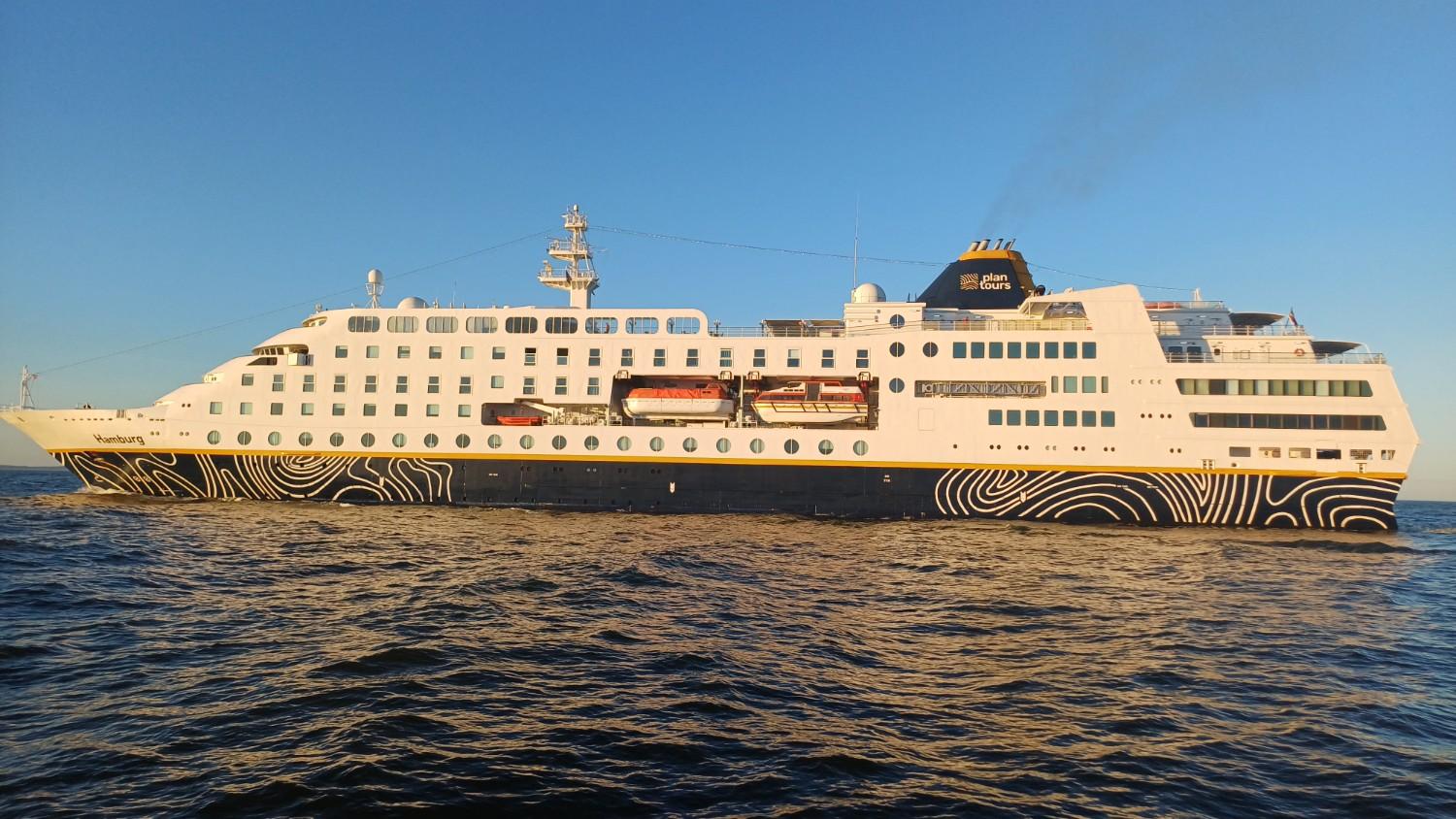
KLAIPEDA: The first cruise ship of the season has already arrived the Port of Klaipėda. This year, more than 60 impressive ships will arrive at the port, bringing a record number of tourists to the region.

istatomavizualizacija4 b The Port of Klaipėda opens the cruise season: over 60 ships expected and a passenger record in sight

“On Saturday, we welcomed the first cruise ship of the season – the Bahamas-flagged MS Hamburg. The first ship arrived nearly full, bringing not only several hundred tourists but also a promise of an active and record-breaking season. We expect around 90,000 tourists to reach Lithuania through the Port of Klaipėda this year – a record in the port’s history. And when we look ahead to 2027, we already see over 100 ships and even more travelers. This confirms that our decision to develop a new cruise terminal was timely – it will significantly improve the quality of passenger experience and strengthen Lithuania’s image as an attractive cruise destination,” says Algis Latakas, CEO of Klaipėda State Seaport Authority.

The cruise season in Klaipėda, which began on May 2, is expected to run until mid-October. During this period, 64 ships are scheduled to arrive, including four making their first call. Most ships are expected to arrive at full capacity.

July will be the busiest month, with 16 cruise ships expected. June and September will each see 12 ships, while August will welcome 14. A standout date this season is June 17, when three cruise ships will visit Klaipėda at the same time: the 225-meter MS Europa 2, the 193-meter Amadea, and the 100-meter Clio. On July 1, two ships – the 175-meter Deutschland and Clio – will be berthed at the port.

As every year, the season will also feature large cruise vessels. On May 8, the nearly 300-meter Sapphire Princess will arrive for the first time. This seven-deck ship can carry around 3,000 passengers. In May, Klaipėda will also welcome MSC Poesia and MSC Magnifica, both measuring 294 meters in length. The largest ship of the season, the 316-meter Mein Schiff 7, will arrive on July 16. Towards the end of the season, in late September, the 300-meter Rotterdam will call at the port. Slightly smaller but equally eye-catching is the colorful Norwegian Sun, decorated with bright sun motifs, which will visit Klaipėda for the first time on June 20. This ship is operating in the Baltic Sea region for its first season.

The Port of Klaipėda is preparing to handle the growing number of tourists. Construction of the new cruise terminal is already underway. It will become a high-quality public space for residents and create a strong first impression for visitors arriving in Lithuania by sea. The €50.3 million terminal is scheduled for completion in 2027.

2,792 MoUs singed at Vibrant Gujarat Regional Conference; expected to create 2.82 lakh jobs

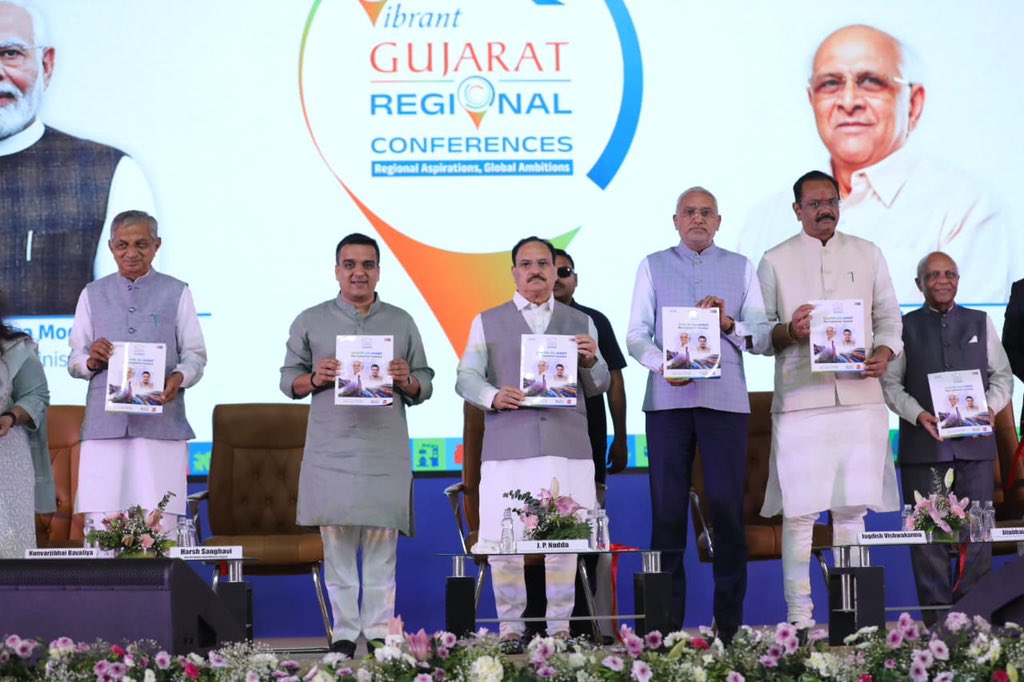
SURAT : Gujarat Deputy Chief Minister Shri Harsh Sanghavi on Saturday (May 2, 2026) said investment proposals worth ₹3,53,306 crore were secured through 2,792 memoranda of understanding (MoUs) signed during the two-day Vibrant Gujarat Regional Conference for South Gujarat, with the projects expected to generate 2.82 lakh direct jobs.

Addressing the valedictory session, Mr. Sanghavi said the agreements were finalised during the event and expected to be implemented over the next three years. He said the conference was part of efforts by the State government to expand the Vibrant Gujarat initiative beyond Gandhinagar to different regions under the leadership of Chief Minister Shri Bhupendra Patel.

As per a government release, while proposals for 5,865 projects with investment interest worth Rs 4,81,709 crore were received, 2,792 projects have been approved, even as dozens of other projects were in the pipeline.

The 2,792 projects belong to sectors such as agro and food processing, animal husbandry (fisheries and co-operation), chemical (petrochemical), engineering auto, environment and forest, financial services, healthcare and pharmaceuticals, industrial parks (logistic parks and mini estate, information technology and biotechnology), power (oil, gas and renewable), rural development and urban housing, skill development, textile and apparels, tourism and civil aviation, transport, and urban development.

In the valedictory speech, Union Health and Family Welfare Minister JP Nadda said, “The foundation laid for the development of South Gujarat through this conference has made this region ready to take a big economic leap in the coming times.”

Nadda said recent global developments underline the need to reduce strategic dependencies and strengthen supply chains. “The recent global uncertainty is an indication that we must turn crises into opportunities. We must give maximum attention to our manufacturing sectors through regional conferences,” he said.

Given the sectoral strength of South Gujarat, Nadda said, “The diamond and textile industries of Surat, as well as the chemical and fertiliser industries of Bharuch-Dahej-Ankleshwar, have become global hubs. Now, along with textiles, the garment industry is being linked with tribal areas, opening new avenues of development, which will be considered a big victory for the local sector and the state government.”

He praised Gujarat’s economic strength and added that it contributes 8% to the country’s GDP. “Gujarat has not only made economic progress under the leadership of Prime Minister Shri Narendra Modi but has also established itself as a competitive and connected economic engine of the world on its own,” he noted.

Giving an example of how policymakers can bring about big changes through positive policies, Nadda said, “Previously, there was a gap between industrialists and the government, but in 2003, then Gujarat CM Narendrabhai Modi started the ‘Vibrant Gujarat’ event and developed a culture of dialogue and cooperation with industrialists. Such a step has today become an exemplary model for other states in the country. It is because of such efforts that India has become the most reliable place for investment in the world.”

Stressing the need to become self-reliant and increase manufacturing capacity in times of global uncertainties, Nadda said, “The way Gujarat is turning disasters into opportunities and moving forward through projects like the Statue of Unity, GIFT City and High-Speed Rail, will be fundamental in realizing the vision of a developed India.” He congratulated the state government for organising the VGRC.

On the final day of the event, Deputy Chief Minister Harsh Sangahvi said: “VGRC has become an important platform to showcase the potential of South Gujarat to the country and the world. This two-day conference has proven to be historic for the all-round development and employment generation of the industrial sector of South Gujarat. With the implementation of projects as per the MoU in the next three years, more than 2.82 lakh youths of South Gujarat will get direct employment.”

He further added, “The state government’s priority is not limited to industrialists seated on the front row, but also to accomplish the dreams of the small traders sitting in the back row. The government is working to ensure that the direct benefit of the VGRC goes to small entrepreneurs.”

Sanghavi assured the audience that ‘open door meetings’ would be organised at regional conferences to timely resolve the problems of existing industrialists, who could directly communicate with government officials.

Regarding the policy to promote industries, Sanghavi said, “In addition, non-polluting industries and the garment sector are being promoted in tribal areas like Dang, Tapi, Valsad and Navsari. Due to which, more than 25 thousand women from tribal areas will get employment opportunities at home in the next two years.”

Sanghavi asked the industrialists and investors that “Go Ahead” with progressive ideology, the government will fully help you reach buyers from all over the world and provide all the necessary arrangements. The in-depth discussions and brainstorming sessions held across various sectors during the conference and seminars will serve as a guide for industrialists, adds Sanghavi.

Gujarat BJP president Jagdish Vishwakarma said, “The journey of Vibrant Summit, which started in 2003, has become synonymous with talent, technology and transparency in 2026. Vibrant Summit plays a very important role in the prosperity and development of the state. As a result, industrial growth has increased gradually.”

In her welcome speech, additional chief secretary (Industries and Mines Department) Mamta Verma termed the regional conference as fruitful and said that over the last two days, a strong platform was provided to entrepreneurs with the combination of ‘scale and skill’. “A successful attempt was made to provide a strong platform to industrialists and young entrepreneurs of South Gujarat. Here, B2B, B2G, Reverse Buyers Sellers Meet, and a series of seminars have also given the young generation a new direction.”

Gujarat CM Patel meets Singapore’s High Commissioner to India, Simon Wong

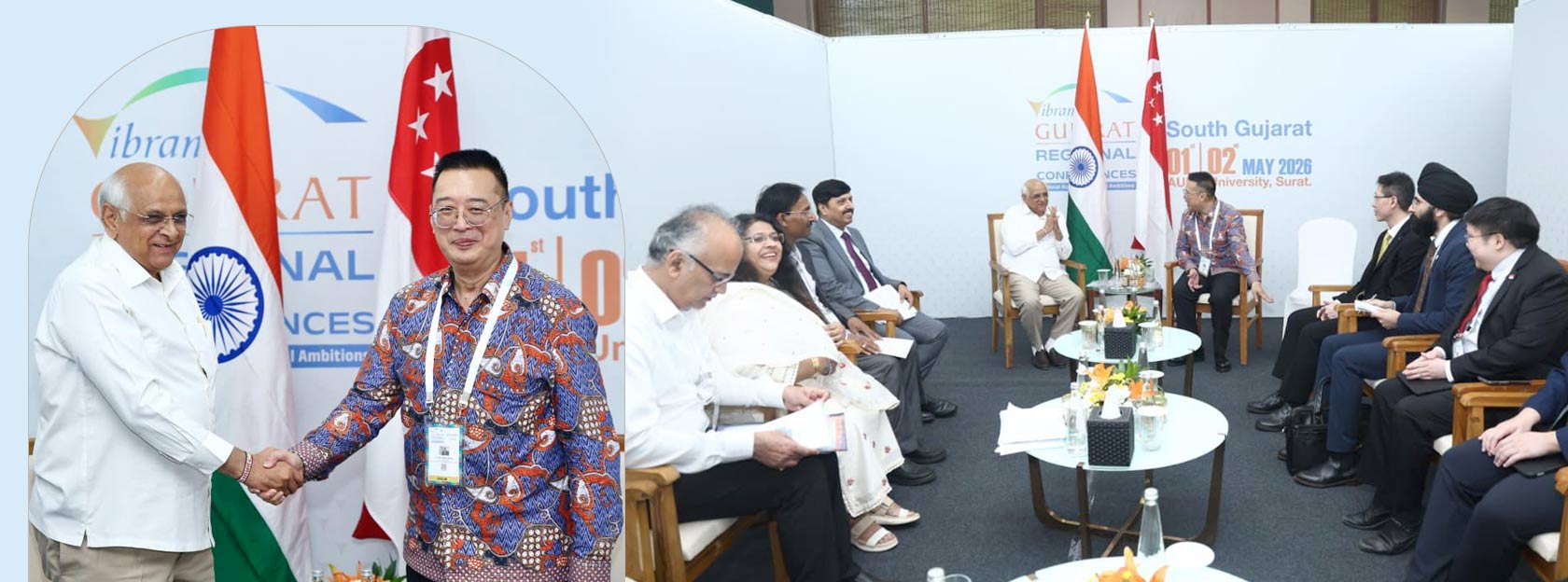
SURAT : Singapore’s High Commissioner to India, Mr. Simon Wong, who was in Surat to participate in the Vibrant Gujarat Regional Conference, held a one-to-one meeting with Chief Minister Shri Bhupendra Patel.

Mr. Wong stated that Singapore’s investment in Gujarat has been consistently rising, and Singapore has also made significant investments in GIFT City.

He expressed confidence that GIFT City will emerge as a hub for issuing USD-INR bonds in the coming years.

The High Commissioner also shared his views on establishing data centers in GIFT City, as well as developing sandboxes for new AI fintech and data localization initiatives. He added that Singapore is keen to collaborate with India, which is emerging as a major data and financial hub.

The Chief Minister highlighted that Gujarat’s ease of doing business ecosystem has made project establishment simpler, attracting investors from across India and abroad.

The Singapore High Commissioner also extended his greetings to the Chief Minister on the occasion of Gujarat Foundation Day.

On this occasion, Chief Secretary Shri M. K. Das, Additional Chief Secretary of the Industries and Mines Department Ms. Mamta Verma, Additional Chief Secretary of the Finance Department Shri T. Natarajan, Principal Secretary to the Chief Minister Shri Sanjeev Kumar, Additional Principal Secretary Dr. Vikrant Pandey, Secretary Dr. Ajay Kumar, along with representatives from Singapore, were present.

JNPA inaugurates India’s largest battery swapping & charging station for Heavy Electric Vehicles at NSFT Terminal

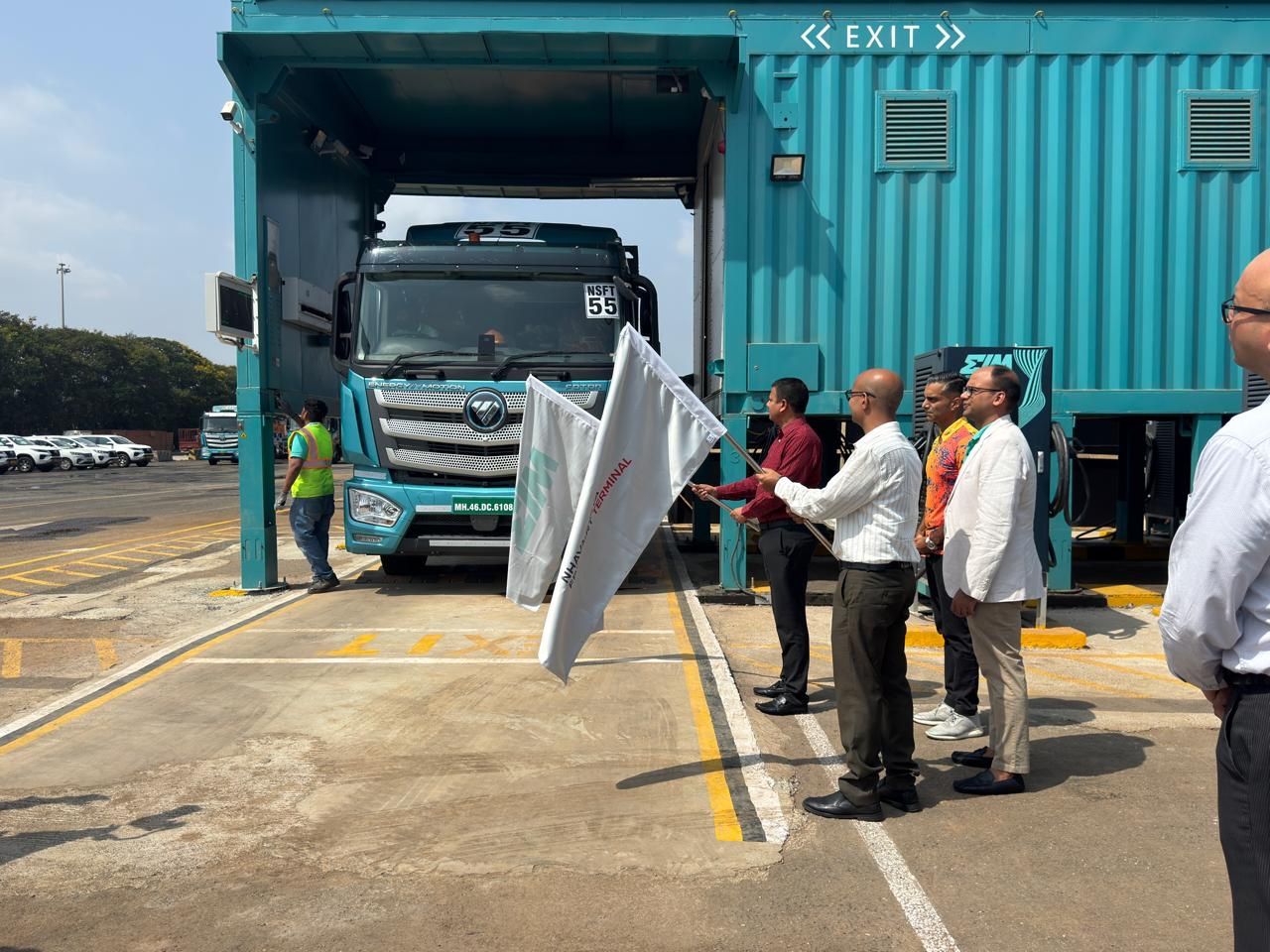
MUMBAI : In a major stride towards sustainable maritime operations, Jawaharlal Nehru Port Authority (JNPA) has inaugurated India’s largest battery swapping and charging station for heavy electric vehicles at the NSFT Terminal. This landmark initiative underscores the port’s commitment to green energy adoption and environmentally responsible logistics.

The state-of-the-art facility is designed to support the seamless operation of heavy electric vehicles (EVs) within the port ecosystem, significantly reducing carbon emissions and dependence on fossil fuels. Equipped with advanced high-capacity charging infrastructure and rapid battery swapping capabilities, the station will enable minimal downtime and enhanced operational efficiency for cargo movement.

nhava sheva jnpa 1 JNPA inaugurates India’s largest battery swapping & charging station for Heavy Electric Vehicles at NSFT Terminal

The inauguration ceremony was graced by Shri Gaurav Dayal, IAS, Chairperson, JNPA; Shri Ravish Kumar Singh, IRTS, Deputy Chairperson, JNPA; and Shri Dhruv Kotak, Managing Director of JM Baxi Group, along with senior officials and industry stakeholders. The event marked a symbolic flag-off of heavy electric vehicles by the JNPA Chairperson, signaling the operational readiness of the facility.

Speaking on the occasion, the Chairperson highlighted that the initiative aligns with national priorities on decarbonization and sustainable infrastructure. He emphasized that JNPA is actively integrating green technologies across port operations, including electrification of equipment, promotion of clean fuels, and adoption of energy-efficient systems.

The NSFT Terminal, operated in collaboration with private partners, continues to set benchmarks in innovation and sustainability. The introduction of this large-scale EV charging and battery swapping infrastructure is expected to catalyze the transition towards clean mobility in port-led logistics and inspire similar initiatives across India’s maritime sector.

This milestone reinforces JNPA’s vision of developing a future-ready, eco-friendly port ecosystem, contributing to India’s broader climate commitments and the global agenda for sustainable development.

Piyush Goyal congratulates IIFT on 63rd Foundation Day, highlights its role in advancing India’s Global Trade and Policy Ecosystem

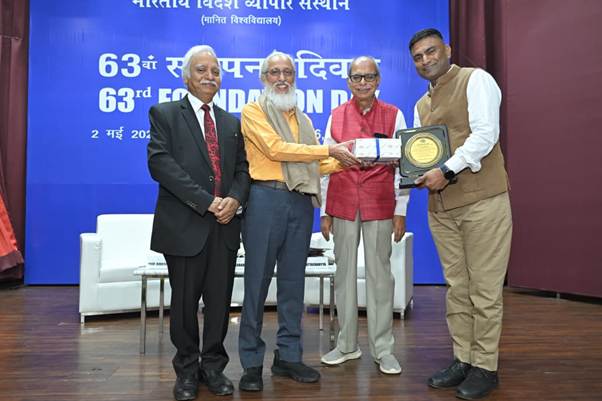
NEW DELHI : The Indian Institute of Foreign Trade (IIFT), an autonomous body under the Ministry of Commerce and Industry, celebrated its 63rd Foundation Day on 2nd May, Saturday. The Union Minister of Commerce and Industry, Piyush Goyal, extended his congratulations on the occasion through a message on social media. The Minister appreciated the institute’s continued excellence in shaping India’s international trade and management landscape and highlighted its role as a premier institution contributing to policy, research, and capacity building in global trade.

Commerce Secretary, Department for Promotion of Industry and Internal Trade, Ministry of Commerce and Industry, Shri Rajesh Agrawal congratulated IIFT and commended the institute’s growth. He noted that IIFT has consistently contributed to India’s global trade ambitions through high-quality education, research, and policy engagement. He highlighted that its presence across four campuses—New Delhi, Kolkata, Kakinada, and GIFT City—reflects its evolving global outlook and commitment to excellence. He further stated that IIFT continues to play a vital role in building future leaders in international business and has undertaken several initiatives in recent years to strengthen the academic and research ecosystem, deepen alumni engagement, and expand to new campuses.

Chairman, National Board of Accreditation (NBA) and National Educational Technology Forum (NETF), Prof. Anil Sahasrabudhe, who was the Chief Guest, emphasized the importance of offering multilingual courses to expand the reach and accessibility of quality education across diverse regions of the country. Referring to the VUCA (Volatile, Uncertain, Complex, and Ambiguous) world, he noted that the education imparted by IIFT is increasingly relevant in preparing future leaders to navigate dynamic global business challenges. He appreciated IIFT’s expansion across Delhi, Kolkata, GIFT City, and Kakinada, reflecting its growing national presence.

Vice Chancellor, IIFT, Prof. Rakesh Mohan Joshi reflected on the institute’s journey and highlighted its recent growth. He underlined the institute’s rising academic and research stature through the successful organisation of five major academic and research conferences, including IIFT’s first Vice-Chancellors’ Conclave 2026 on Internationalisation of Higher Education in India. He also highlighted the launch of the Pitch Perfect Australia–India Business Compendium under IIFT’s Case Research Centre, aimed at fostering research-led innovation, experiential learning, and globally benchmarked case research.

A key highlight of the event was the launch of the new IIFT website to enhance user experience, accessibility, and digital engagement for students, faculty, researchers, and stakeholders.

During the event, IIFT felicitated Lt. Col. Trivedi Paragkumar, an IIFT student, on being conferred the Vishisht Seva Medal in recognition of his exemplary service and accomplishment.

The celebration also included classical cultural performances, followed by a ceremony honouring retired employees and staff members completing 25 years of service at the institute.