Home Blog Page 329

Invest India facilitates 60 Projects worth Over USD 6.1 Billion in FY 2025–26, Generating over 31,000 jobs

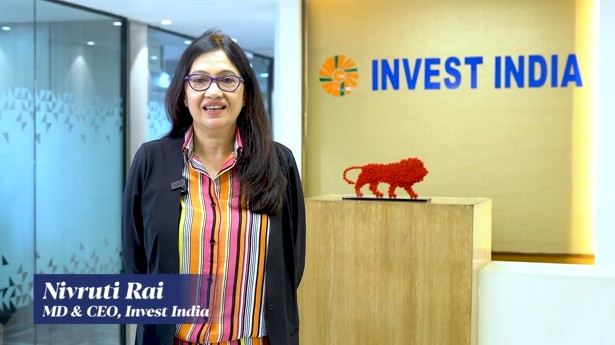
NEW DELHI: Invest India, the National Investment Promotion and Facilitation Agency under the Department for Promotion of Industry and Internal Trade (DPIIT), Ministry of Commerce and Industry, has facilitated the grounding of 60 projects worth over USD 6.1 billion during Financial Year 2025–26. These investments span 14 states and are estimated to generate more than 31,000 potential jobs, reflecting sustained and deepening global confidence in India as a preferred investment destination.

Approximately 42 per cent of the total grounded investment value originates from European nations, reinforcing strengthening India-Europe economic linkages. Continued participation from the United States, Japan, South Korea, Australia, and other key source markets affirms broad-based international confidence in India’s regulatory environment and manufacturing capabilities. Emerging source nations such as Brazil, New Zealand, and Canada indicate diversification in the country’s investment base.

Commenting on India’s policy environment, Secretary, DPIIT, Shri Amardeep Singh Bhatia said, “India’s investment momentum is a direct outcome of policy clarity, institutional commitment, and the trust global investors place in our systems. The USD 6.1 billion grounded by Invest India in FY 2025–26 reflects the strength of India’s regulatory environment and the depth of its economic transformation. DPIIT remains committed to further simplifying processes and ensuring that investments translate into jobs, innovation, and long-term value.”

Invest India has strengthened end-to-end facilitation across the investment lifecycle, from early-stage advisory to post-investment aftercare. It has adopted a network-led ecosystem approach by engaging with investors’ suppliers, buyers, and extended value chains to build integrated industrial ecosystems. The agency is also supporting foreign companies exploring alternate entry routes such as joint ventures by facilitating partnerships with credible domestic players.

These interventions have resulted in improved investment conversion and scale. Grounded investments have registered nearly threefold growth over FY 2024–25, while the average deal size has increased by 1.8 times, indicating a shift towards higher-value investments.

MD & CEO, Invest India, Ms. Nivruti Rai said, “These outcomes reflect a shift in Invest India’s role towards becoming a strategic investment partner. The threefold growth in grounded investments and the creation of over 31,000 jobs demonstrate the impact of coordinated policy support, institutional agility, and investor confidence. Invest India remains committed to sustaining this momentum as India progresses towards Viksit Bharat 2047.”

Chemicals, Pharmaceuticals & Biotechnology, and Food Processing sectors account for approximately 65 per cent of grounded investments, driven by high-value projects aligned with India’s manufacturing and value-addition priorities. Emerging sectors such as Electronics System Design and Manufacturing (ESDM), Aerospace & Defence, and Auto/EV also recorded significant activity.

FY 2025–26 witnessed continued geographic diversification of investments across states. Gujarat, Madhya Pradesh, Maharashtra, and Andhra Pradesh emerged as key hubs driven by high-value projects, while Rajasthan and Uttar Pradesh recorded strong grounding activity. Established destinations such as Tamil Nadu, Karnataka, Haryana, and Delhi continued to anchor major investment inflows. The grounding of projects in Assam, Bihar, and Sikkim indicates the broadening of the investment landscape. In terms of employment generation, Madhya Pradesh emerged as the leading state, followed by Andhra Pradesh, Rajasthan, Telangana, and Maharashtra.

These trends reflect the cumulative impact of India’s landmark policy initiatives, including Make in India, Production Linked Incentive (PLI) Schemes across 14 key sectors, and sustained infrastructure development programmes, which have strengthened India’s position as a globally competitive and reliable manufacturing destination.

About Invest India

Invest India is the National Investment Promotion and Facilitation Agency of the Government of India, established in 2009 as a not-for-profit company under DPIIT, Ministry of Commerce & Industry. Supported by a unique partnership between the Central and State Governments and industry associations, Invest India serves as the first point of contact for global and domestic investors, providing comprehensive end-to-end support across the investment lifecycle — from pre-investment advisory and project facilitation to aftercare and expansion support. The agency focuses on high-impact sectors, including Electronics & Semiconductors, Renewable Energy, Electric Vehicles, Capital Goods, Textiles, Food & Agriculture, Pharmaceuticals, Chemicals & Critical Minerals, and Infrastructure. For further information, please visit: www.investindia.gov.in

OOCL orders twelve 13,600 TEU class LNG dual-fuel container vessels

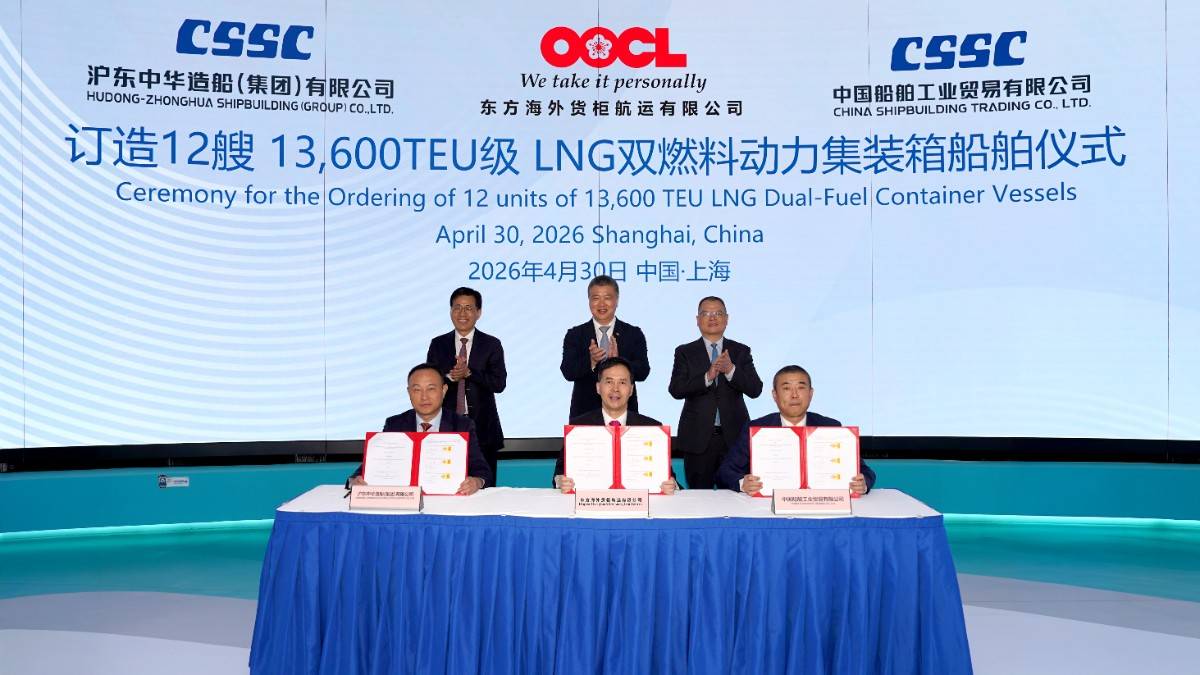
SINGAPORE : OOCL entered into the relevant shipbuilding contracts with Hudong‑Zhonghua Shipbuilding (Group) Co., Ltd. on April 29, 2026. These new vessels will be equipped with dual-fuel main engine systems capable of running LNG and conventional fuel. Upon delivery, they will become the first LNG-powered vessels in the OOCL fleet. This represents an important strategic decision made by OOCL following a comprehensive assessment of environmental regulatory trends, pathways for new energy technologies and the feasibility of fuel supply.

Mr. Tao Weidong, Chief Executive Officer of OOCL, said that the order of twelve 13,600 TEU class LNG dual‑fuel container vessels demonstrates OOCL’s commitment to supporting the green transition and sustainable development of the shipping industry, while also ensuring flexibility in vessel types and diversification of the fleet. The continuous increase in capacity will provide support for OOCL to increase capacity deployment in emerging markets, regional markets and third‑country markets, further optimize its global capacity allocation and promote balanced global development, thereby meeting customers’ diverse and long‑term transportation needs more effectively.

About OOCL

“Orient Overseas Container Line” and “OOCL” are trade names for transportation provided separately by: Orient Overseas Container Line Limited (“OOCLL”) and OOCL (Europe) Limited respectively and both are wholly-owned subsidiaries of Orient Overseas (International) Limited, a public company (0316) listed on the Hong Kong Stock Exchange. Headquartered in Hong Kong, China, OOCL is one of the world’s largest integrated international container transportation and logistics companies, with about 130 offices in more than 100 major cities. Linking Asia, Europe, the Americas, Africa and Oceania, the company offers transportation services to all the major trading economies of the world. OOCL is also an industry leader in the use of the latest technologies to enhance global supply chains. (http://www.oocl.com/)

​

APEDA signs 70-Year Lease Agreement for Basmati and Organic Training Centre in Pilibhit

NEW DELHI: In a significant step towards strengthening the Basmati rice ecosystem in India, the transfer of land for the establishment of a Basmati & Organic Training Centre-cum-Demo Farm at Tanda Bijaisi, Pilibhit, has been formalised through the signing of a 70-year lease agreement between the Agricultural and Processed Food Products Export Development Authority (APEDA), the Department of Agriculture, and the Government of Uttar Pradesh.

The proposed Basmati & Organic Training Centre-cum-Demo Farm will be developed over an area of approximately seven acres. The centre will be equipped with facilities including an auditorium, museum and gallery on Basmati and organic farming, conference room, laboratory and storage space for organic farming inputs. The facility is expected to support training and capacity building for Basmati and organic farmers, and also serve as a resource centre for agricultural experts and students.

Once established, the facility will be the country’s first Basmati organic training and demonstration farm covering both conventional and organic Basmati cultivation. Owing to its location, the centre is expected to benefit farmers and stakeholders in Uttar Pradesh and Uttarakhand.

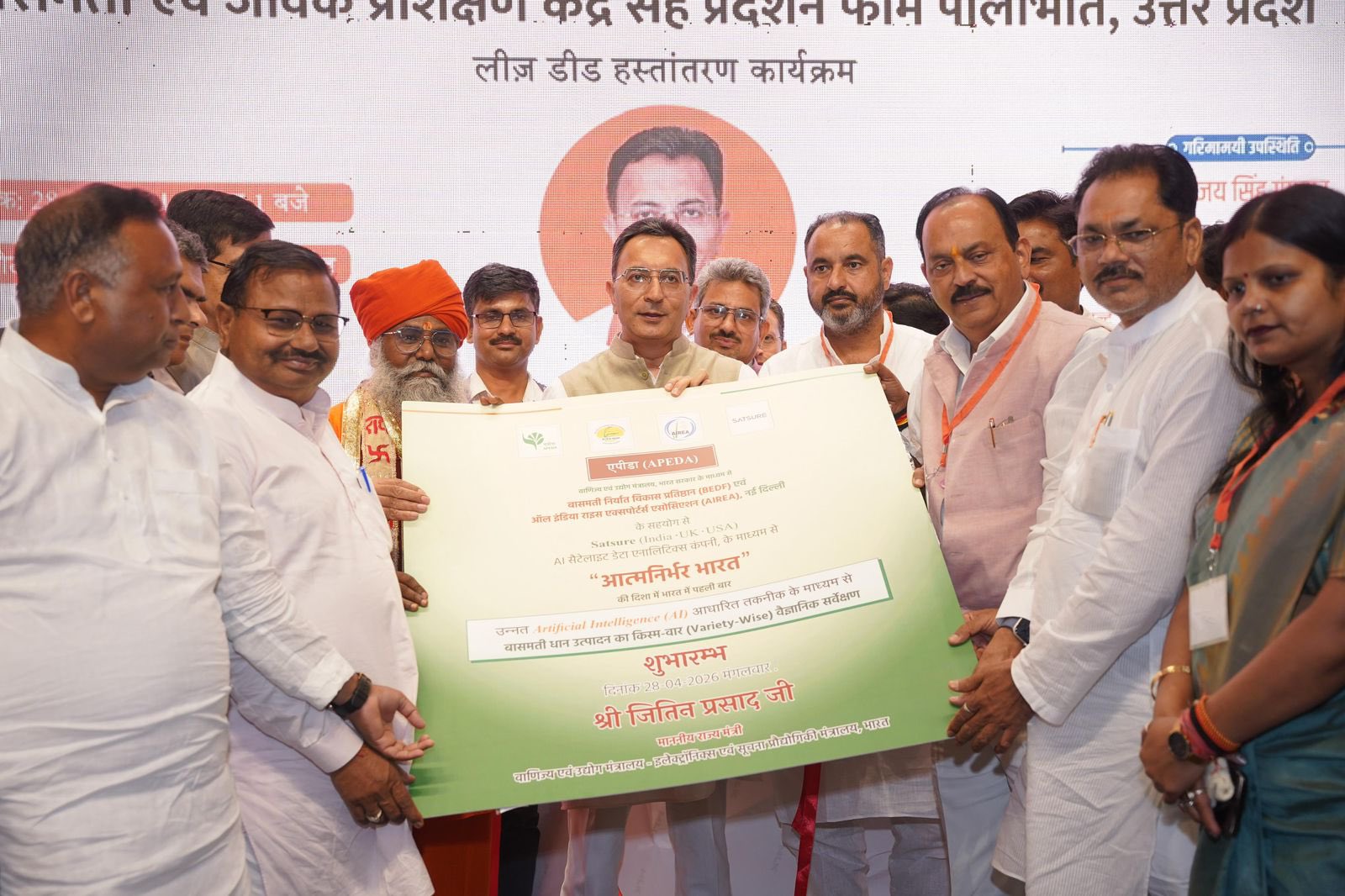
Addressing the gathering, Union Minister of State for Commerce and Industry and Electronics and Information Technology, Shri Jitin Prasada, appreciated the initiative and highlighted the potential of Pilibhit as a major Basmati-producing region. He emphasised the importance of expanding organic cultivation and called for greater farmer engagement. Shri Prasada suggested incorporating an AI-based interactive museum at the centre to provide information and experiential learning for visitors and students, along with establishing a dedicated outlet for quality Basmati seeds and organic inputs for farmers.

On the occasion, Shri Jitin Prasada also unveiled India’s first AI-based Basmati Paddy Survey project (2026–2028), to be implemented by APEDA in collaboration with the All-India Rice Exporters Association (AIREA). The project will cover nearly 4 million hectares, collect data from over 150,000 ground-truth points and engage with more than 500,000 farmers. It aims to support precise crop assessment, varietal identification, scientific advisory services and improved export planning.

It was also announced that the upcoming centre has been designated as an All India Coordinated Research Projects (AICRP) centre for national-level Basmati trials, as recognised at the 61st Annual Rice Research Group Meeting. With this, Pilibhit will become the third AICRP centre in Uttar Pradesh’s Basmati GI zone after Nagina (Bijnor) and BEDF Modipuram, following the operationalisation of the facility. This will facilitate systematic testing and evaluation of new Basmati varieties suited to the region’s agro-climatic conditions.

Basmati rice, a Geographical Indication (GI) product of India, recorded exports valued at USD 5.67 billion in 2025–26, with export volumes reaching around 6.5 million metric tonnes. The sector continues to contribute significantly to India’s agricultural exports, with a strong presence in markets across the Middle East, Europe and North America.

APEDA is promoting organic farming through training, certification support and market linkage initiatives to facilitate adoption of sustainable agricultural practices. These efforts are aligned with global demand for environmentally responsible produce.

The event was attended by Union Minister of State for Commerce and Industry and Electronics and Information Technology, Shri Jitin Prasada, senior public representatives of the district, officials of APEDA, the Government of Uttar Pradesh and other stakeholders.

Department of Commerce Notifies Revised Remission of Duties and Taxes on Exported Products (RoDTEP) Schedules for Alignment with Amended Customs Tariff

NEW DELHI: The Department of Commerce has issued Notification No. 15/2026–27 dated April 30, 2026, revising the schedules under the Remission of Duties and Taxes on Exported Products (RoDTEP) Scheme. The revisions pertain to Appendix 4R for DTA exports and Appendix 4RE for exports by Advance Authorisation (AA), Export Oriented Unit (EOU) and Special Economic Zone (SEZ) units, in line with amendments made in the First Schedule to the Customs Tariff Act, 1975, through the Finance Act, 2026.

The notification provides for the technical alignment of RoDTEP tariff lines with the revised Customs tariff structure. The revision covers 194 tariff lines, including the addition of 142 new 8-digit tariff lines, deletion of 50 tariff lines and modification in the descriptions of 2 tariff lines in the RoDTEP schedules.

The revised schedules will enable seamless implementation of RoDTEP benefits in the Customs Automated System with effect from May 01, 2026. The alignment is expected to reduce classification-related ambiguity, ensure consistency between Customs tariff entries and RoDTEP schedules and facilitate smoother processing of eligible export claims.

The measure is RoDTEP-specific and is aimed at improving ease of doing business for exporters by ensuring timely convergence of related compliance frameworks, minimising system-level discrepancies and maintaining continuity in the remission of eligible duties, taxes and levies on exported products.

DPIIT Secretary Amardeep Singh Bhatia reviews NICDC projects in Haryana and Rajasthan; holds industry stakeholder consultations

NEW DELHI: Shri Amardeep Singh Bhatia, Secretary, Department for Promotion of Industry and Internal Trade (DPIIT), visited key industrial project sites in Haryana and Rajasthan to review progress of projects being developed under the National Industrial Corridor Programme and to interact with industry stakeholders.

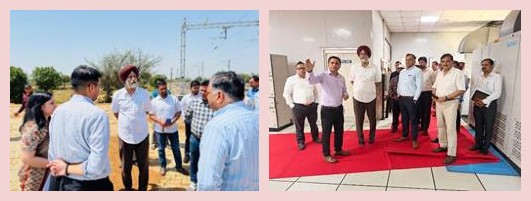
The visit commenced with a review of the Integrated Multi-Modal Logistics Hub (IMLH), Nangal Chaudhary, in Mahendragarh district, Haryana. Spread over approximately 886 acres, the project is planned to serve freight movement to and from major industrial regions including Manesar, Bawal, Dharuhera, East Rajasthan and Western/Northern Haryana sub-regions of NCR.

The project was approved by the Government of India at an estimated cost of ₹1,029 crore and is being developed on PPP mode through the SPV, NICDC Haryana Multi Modal Logistic Hub Project Limited, with equal shareholding between NICDIT and HSIIDC. The Secretary reviewed progress of Phase-I development, external connectivity works, internal rail infrastructure, and proposed logistics facilities such as EXIM zone, warehousing, container stacking, transportation zone and commercial areas.

Shri Rajat Kumar Saini, CEO & MD, National Industrial Corridor Development Corporation, accompanied the Secretary during the visit. In Haryana, Shri Sushil Sarwan, Managing Director, HSIIDC; Smt. Anupama Anjalli, IAS, Deputy Commissioner, Mahendragarh at Narnaul; Shri Aniruddh Yadav, IAS, Sub-Divisional Officer (Civil), Narnaul; and other senior officers were present.

The delegation thereafter visited Neemrana, Rajasthan, where an industry interaction was held along with a visit to the NICDC Neemrana Solar Power Project. The project, developed as an Indo-Japan collaboration, demonstrates the integration of solar power with smart micro-grid systems for industrial use. It comprises a 6 MW solar power installation including solar PV generation and has served as an important clean-energy demonstration initiative for industrial areas. DPIIT Secretary inaugurated SCADA facility at 5 MW plant in NICDC Neemrana Solar Power Project.

Shri Suresh Kumar Ola, IAS, Managing Director, RIICO, along with senior officers of RIICO, participated during the review of the Jodhpur-Pali-Marwar Industrial Area and related discussions.

At Neemrana, the Secretary also reviewed the progress of the Jodhpur-Pali-Marwar Industrial Area (JPMIA) being developed under the National Industrial Corridor Programme in Rajasthan. The node, spread over approximately 1,578 acres, is strategically located between Jodhpur and Pali, around 30 km from each city. It has strong regional connectivity through NH-62 and SH-64, with additional access to NH-25 and SH-68 and is positioned to serve key industrial and logistics markets in western Rajasthan.

JPMIA is being implemented through the Rajasthan Industrial Corridor Development Corporation (RIDCO), an SPV with equity participation of RIICO and NICDC. The project is expected to attract investment of approximately ₹7,500 crore and generate around 40,000 employment opportunities. Target sectors include textiles and apparel, agro and food processing, engineering goods, automobiles, handicrafts and building materials. The Secretary reviewed the status of trunk infrastructure works, project management arrangements and implementation timelines, and emphasised coordinated action for timely execution and investor facilitation.

The delegation later visited IMT Bawal and IMT Sohna in Haryana, including the TDK Battery Manufacturing Plant, followed by further interaction with industry representatives.

The stakeholder consultations provided a constructive platform for dialogue between government and industry. Industry representatives highlighted the need for continued support in resolving operational and infrastructure-related issues, improving ease of doing business, and strengthening industrial competitiveness. The discussions also brought out the importance of promoting innovation, research and development, and technology commercialisation within industrial clusters.

Speaking during the visit, Shri Amardeep Singh Bhatia reiterated that DPIIT, NICDC and State Governments are working in close coordination to ensure that industrial corridor projects respond effectively to industry requirements and implementation challenges. He noted that regular field visits and stakeholder consultations are essential for identifying bottlenecks, enabling faster resolution of issues and strengthening investor confidence.

Shri Rajat Kumar Saini reaffirmed NICDC’s commitment to developing world-class industrial infrastructure, supporting investment facilitation and building sustainable industrial cities that contribute to economic growth, employment generation and India’s manufacturing competitiveness.

Great Nicobar Project – Strategic Importance, Sustainable Development

NEW DELHI: Great Nicobar Project – Strategic Importance, Sustainable Development

Introduction

The Great Nicobar Project is a strategic project which aims to strengthen India’s presence in the Andaman Sea and Southeast Asia. The project seeks to balance port-led growth with calibrated environmental safeguards and protection of indigenous communities. By combining strategic, economic, and ecological priorities, the project seeks to ensure that development in Great Nicobar is sustainable, inclusive, and aligned with national interests.

The project includes:

International Container Transhipment Terminal (ICTT) with a capacity of 14.2 million TEU (Twenty-Foot Equivalent Unit)
Greenfield International Airport (4000 Peak Hour Passengers-PHP) A 450 MVA (Megavolt Ampere) gas and solar-based power plant,
A new township spanning 16,610 hectares.
The development follows a sensitive and holistic approach. It considers the needs of indigenous communities and aims to protect the island’s ecological resources. The plan evaluates social, cultural, and environmental impacts carefully and prioritises options that balance environmental, social, and economic goals.

Core Infrastructure Components of the Great Nicobar Project

  1. International Container Transhipment Terminal

India’s ports lack deep water berths for large ships. Because of this, cargo is routed through Colombo and Singapore. India loses substantial revenue as a result. Countries like Myanmar, China and Sri Lanka are already building deep water facilities to capture this trade.

In this context, the International Container Transhipment Port (ICTP) at Galathea Bay is being developed as part of the Holistic Development of Great Nicobar Island under the Island Development programme. Along with the proposed airport, township, and power plant, the Galathea Bay transhipment port forms a major infrastructure component of the overall Great Nicobar Project. The port is strategically important because it is located close to the East-West international shipping route, about 40 nautical miles away, and has natural water depth of over 20 metres. This strategic location gives it an advantage to attract both gateway and transhipment cargo, reduce India’s dependence on foreign ports like Colombo, Singapore and Klang. The project is designed to enhance India’s national security, strategic and defence presence, strengthen the islands’ economic position, and accelerate holistic development in the region.

  1. Greenfield International Airport

The island has world class ecological resources that can attract international and Indian tourists. An international airport is necessary to improve connectivity and open up the island to tourism. The island is close to international tourist destinations like Senang City, Phuket Island and Langkawi Island. Port Blair airport currently handles approximately 1.8 million passengers annually. The new airport is expected to handle at least 1 million passengers when it opens and grow to approximately 10 million passengers per year thereafter.

  1. Township and Area Development

The planned township is intended to support the residential, commercial and institutional requirements arising from the port-led development of the island. It will provide essential urban infrastructure for personnel, service providers and associated economic activities, in line with the overall integrated development framework.

  1. Power Plant

Reliable power infrastructure is essential for the operation of the transshipment terminal, airport and associated urban infrastructure. Currently, diesel generating sets are the major source of energy in the Andaman & Nicobar Islands. The primary objective of Power Plant is to provide good quality, reliable electrical energy without interruptions. The system is designed to ensure continuity of power supply even if one primary component fails. Renewable energy sources will also be planned for additional generation. An uninterrupted energy supply is a key component in increasing the GDP of the island.

Strategic and Economic Importance

The Great Nicobar Project is being implemented in three distinct phases-

Phase I (2025–35, 72.12 sq. km),
Phase II (2036–41, 45.27 sq. km),
Phase III (2042–47, 48.71 sq. km)
It covers a total area of 166.10 sq. km, which includes 35.35 sq. km of revenue land and 130.75 sq. km of forest land. This phased approach allows for systematic infrastructure development, while ensuring that environmental safeguards and tribal welfare measures are effectively integrated at each stage.

The project’s strategic and economic significance is underscored by the need to position Great Nicobar as a critical node in the Indian Ocean Region. The project ensures optimized land use, coordinated ecological management, and long-term regional benefits, while remaining fully compliant with Environmental Impact Assessment (EIA) regulations and statutory approvals.

Environmental Impact Assessment (EIA) is a tool to ensure proper use of natural resources for sustainable development. EIA is mandatory for specified categories of projects, as per the schedule of Environmental Impact Assessment Notification, 2006. Expert Committees for different sectors examine project proposals, assess environmental impacts, and recommend approval or rejection.

Environmental impact assessment of the Great Nicobar Island Project

  • The project received prior Environmental Clearance under the EIA Notification, 2006 after a detailed process of screening, scoping, public consultation and appraisal.
  • The Environmental Clearance includes 42 specific conditions covering air, water, noise, waste management, marine ecology, human health and disaster management, with a robust Environment Management Plan (EMP)
  • Expert institutions such as Zoological Survey of India (“ZSI”), Salim Ali Centre for Ornithology and Natural History (“SACON”), the Wildlife Institute of India (“WII”), Indian Institute for Science (“IISc”) conducted studies, and the Zoological Survey of India stated that the project can proceed with proper safeguards.
  • Three independent Monitoring Committees have been formed to oversee pollution, biodiversity, and the welfare of the Shompen and Nicobarese communities. The Committees are as follows:

I) Committee to oversee pollution related matters

II) Committee to oversee biodiversity related matters

III) Committee to oversee welfare and issues related to Shompen and Nicobarese.

An Overarching Committee has been constituted under the chairmanship of Chief Secretary, A&N Administration to ensure coordinated implementation of EC/CRZ conditions among all stakeholders. It serves as a central mechanism for oversight, monitoring, and inter-institutional coordination.

Environmental Safeguards and Compensatory Afforestation Plan

Before clearance, the project underwent multiple levels of statutory scrutiny, including preparation of an Environmental Management Plan (EMP). The EMP outlines mitigation measures for construction and operational phases.

Environmental Management Plan (EMP) is a plan to ensure sustainable development around a proposed project. It involves the industry, Government, Pollution Control Board, and local people.

It includes measures to reduce environmental impacts. Mitigation is done at the source and at the project site. During operation, the EMP focuses on minimizing continuous environmental impacts while supporting economic development.

The Great Nicobar Project will divert 1.82% of the total forest cover of the Andaman and Nicobar Islands. The estimated number of trees in this area is 18.65 lakh, though the maximum number expected to be felled is 7.11 lakh within 49.86 sq. km of forest. The tree felling will be carried out in a phased manner in line with proposed phase wise development of the key projects. Importantly, 65.99 sq. km of land will be preserved as green zones with no tree felling, ensuring ecological balance. Since the islands already have over 75% forest cover, compensatory afforestation cannot be carried out locally. Instead, afforestation is planned in Haryana, with 97.30 sq. km of land identified to compensate for Phase I diversion of 48.65 sq. km forest. Additionally, under, ‘Ek Ped Maa Ke Naam’, 2.4 million trees have been planted in Andaman and Nicobar Islands.

Tribal Welfare and Social Considerations

Great Nicobar Island is inhabited by the aboriginal Mongoloid tribes, the Shompens (about 237), who are hunter-gatherers, and the Nicobarese (about 1,094), who live in coastal settlements and depend mainly on fishing for survival. The Great Nicobar Project has been carefully designed to ensure that the Nicobarese and Shompen tribes are not displaced. Within the project area, the only tribal habitations are located at New Chingen and Rajiv Nagar, and the administration has explicitly stated that no relocation of tribal communities is proposed.

The Great Nicobar Project is fully aligned with the Shompen Policy of 2015 and the Jarawa Policy of 2004, which mandate that large-scale development proposals prioritize the welfare and integrity of Particularly Vulnerable Tribal Groups (PVTGs) and follow a structured consultation process. To safeguard tribal interests, an Independent monitoring committee has been mandated by the Ministry of Environment, Forest and Climate Change to oversee issues affecting the Shompen and Nicobarese during both construction and operation phases. Consultations have also been conducted with the Ministry of Tribal Affairs, the Directorate of Tribal Welfare, the Andaman Adim Janjati Vikas Samiti (AAJVS), and tribal experts including the Anthropological Survey of India to ensure safety, protection and well-being of the communities.

The project implementation framework is aligned with the provisions of Article 338A (9) of the Constitution, with due emphasis on safeguarding the interests of Scheduled Tribes and Particularly Vulnerable Tribal Groups in the region. Importantly, the Union Territory of the Andaman and Nicobar Islands has undertaken no new policy measures affecting these tribes beyond implementing this development project, ensuring that tribal rights and welfare remain central to the planning process.

Currently, Great Nicobar Island has 751.070 sq. km of land officially marked as Tribal Reserve. Out of the 166.10 sq. km that is proposed for development projects, 84.10 sq. km overlaps with the Tribal Reserve. However, within this portion, 11.032 sq. km has already been settled and used as revenue land since 1972. Consequently, the effectively remaining area measuring 73.07 sq. km is being de-notified for project purposes. To compensate, 76.98 sq. km is being re-notified as tribal reserve, resulting in a net addition of 3.912 sq. km to the tribal reserve. Specifically, in Phase I, only 40.01 sq. km of tribal area is involved in the project, with 11.032 sq. km already under revenue use since 1972.

Risk Assessment and Disaster Management

The island lies in a seismically sensitive and cyclone-prone region. To address this, a comprehensive risk assessment study has been conducted covering both natural disasters (tsunamis, earthquakes, cyclones) and anthropogenic risks (industrial hazards, accidents). A vulnerability and disaster management plan has been prepared, ensuring preparedness for emergencies. Moreover, the reliance on a hybrid power plant (gas and solar) ensures resilience against disruptions while reducing carbon emissions.

Conclusion

The Great Nicobar Project is an example of how holistic development can balance economic growth, ecological conservation, and social inclusion. It leverages Great Nicobar’s strategic location to strengthen India’s national security, maritime and defence presence in the Indo-Pacific, while simultaneously embedding strong environmental safeguards and tribal welfare mechanisms. By committing to wildlife conservation, compensatory afforestation, disaster preparedness, and social inclusion, the government demonstrates that development need not come at the expense of the environment.

Ultimately, the project represents a model for future large-scale infrastructure initiatives in ecologically sensitive regions, showing how economy and ecology, rather than being at odds, can reinforce one another to serve national and global interests.

PM Modi inaugurates 594-km long access-controlled Greenfield Ganga Expressway in Hardoi, Uttar Pradesh

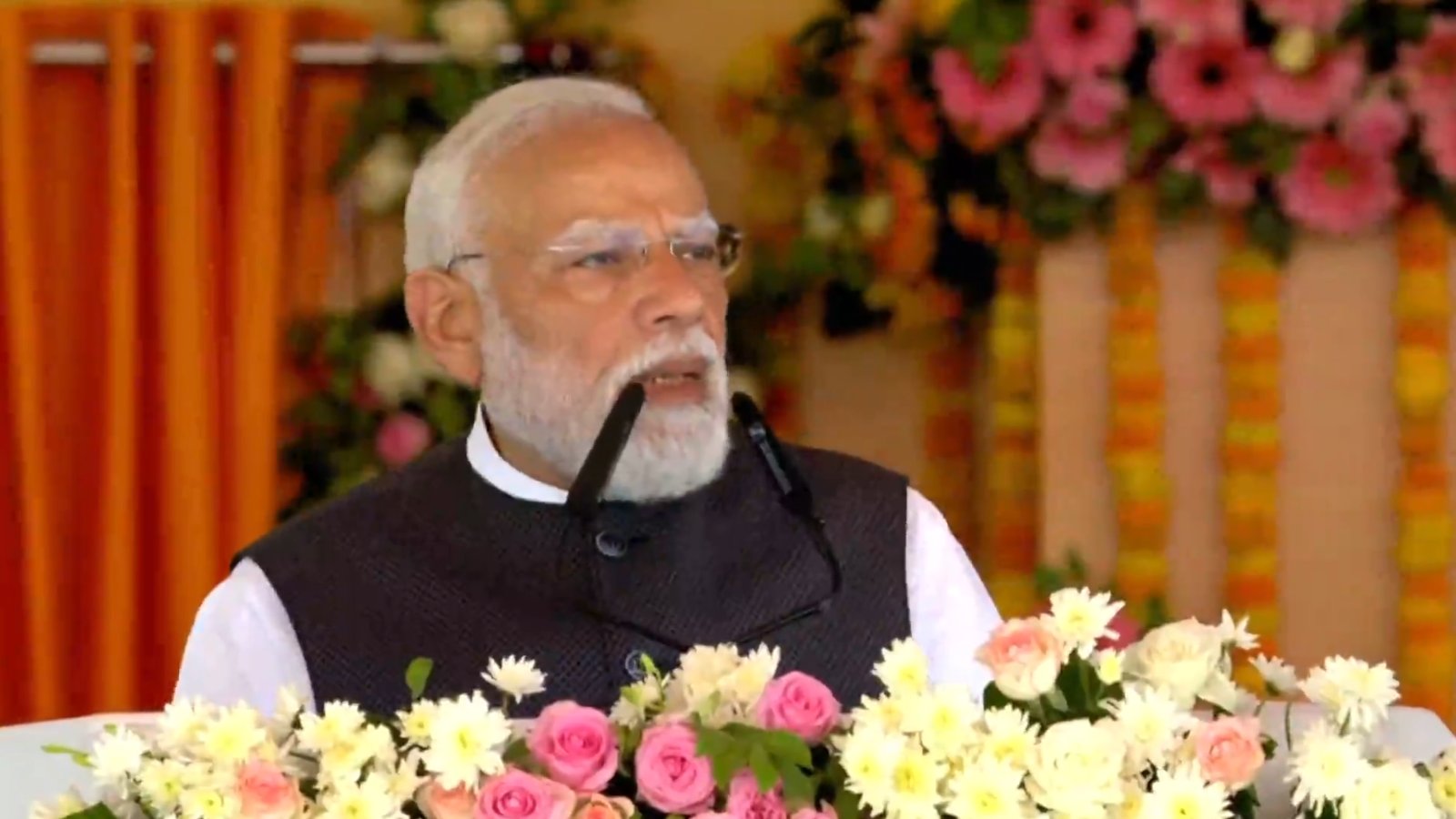
HARDOI : Prime Minister Shri Narendra Modi on Wednesday inaugurated 594-km long Access-Controlled Greenfield Ganga Expressway in Hardoi, Uttar Pradesh. Commencing his address by reverencing the sacred land of Lord Narasimha and the divine presence of Maa Ganga flowing just kilometers away, the Prime Minister stressed that the entire region stands as a pilgrimage site blessed by the river’s spiritual and nurturing grace. “The boon of expressways to Uttar Pradesh is also a blessing from Maa Ganga herself,” Shri Modi asserted, highlighting how the expressway will transform travel to sacred destinations within hours.

Drawing a parallel between the timeless significance of Maa Ganga and modern infrastructure, the Prime Minister emphasized the expressway’s transformative role in the state’s development journey. Noting that these newly constructed highways represent the lifelines of a developing India, Shri Modi remarked, “These modern lifelines are today proclaiming the bright future of India.”
Reflecting on his recent spiritual engagements, the Prime Minister observed that his presence near Maa Ganga over the preceding days, from Bengal on April 24 to Kashi yesterday and again this morning, constituted a remarkable convergence of faith and infrastructure development. Expressing his delight at the state government’s decision to name the expressway after Maa Ganga, Shri Modi noted, “This reflects our vision of development and offers glimpses of our heritage.”

Emphasizing the government’s accelerated pace of infrastructure construction, the Prime Minister noted the completion of the Ganga Expressway, the country’s longest green corridor expressway, in less than five years. Asserting his vision for rapid modernization, he remarked, “This is the speed of the current government’s work! This is the way the current government works!”
Elaborating on the expressway’s strategic significance, the Prime Minister outlined its 600-kilometer span connecting western UP’s commercial centers through central UP’s agricultural heartland to eastern UP’s cultural sites, directly impacting crores of citizens across twelve districts. “The Ganga Expressway is not merely a high-speed road. It is a gateway to new possibilities, new dreams, and new opportunities,” asserted Shri Modi.

Addressing the chronic challenges faced by agricultural communities, the Prime Minister observed that farmers in these fertile regions historically struggled to access major markets due to inadequate logistics infrastructure and cold storage facilities. Affirming the transformative potential of improved connectivity, he asserted, “This will increase our farmers’ income.”
Highlighting the expressway’s connectivity benefits, the Prime Minister noted, “while it connects one end of UP to the other, it will also bring closer the immense possibilities of the National Capital Region, with new industrial opportunities developing along its sides as vehicles run on it.”

Highlighting the emergence of industrial opportunities alongside the expressway, the Prime Minister noted that industrial corridors are being strategically developed in districts like Hardoi to attract manufacturing clusters across pharmaceuticals, textiles, handlooms, leather goods, and handicrafts, and create new employment opportunities for youth. Praising the entrepreneurial spirit of the state’s youth empowered by schemes like Mudra Yojana and ODOP (One District One Product), the Prime Minister noted that small industries and MSMEs are getting a boost, and better connectivity will open new paths for them. “All these will reach domestic and international markets on a large scale. This will increase the income of millions of families,” observed Shri Modi.
Highlighting the remarkable transformation of Uttar Pradesh, the Prime Minister recalled that the state once labeled backward and BIMARU is today moving forward to become a 1 trillion dollar economy, a very big goal backed by equally big preparation owing to the state’s immense capacity and the potential of the country’s large young population. Outlining the strategy to harness this demographic dividend, PM Modi explained that this strength is being used to make UP a manufacturing hub, where new industries and factories will be established, large-scale investment will arrive, economic progress will accelerate, and employment opportunities will be created for youth. Highlighting India’s achievement as the world’s second-largest mobile manufacturer with half of production occurring in UP, Shri Modi remarked, “UP has made a significant contribution to this.”

Underscoring the state’s emerging role in cutting-edge technology sectors, the Prime Minister observed UP’s advancement in semiconductor manufacturing following the recent groundbreaking in Noida. “Vast areas full of unlimited opportunities are opening for UP’s people in the future,” Shri Modi noted, positioning the state as a leader in the AI-driven economy.
Positioning UP’s industrial development as a strategic asset for national security, the Prime Minister observed that one of India’s two defense corridors operates within the state, with major defense manufacturers establishing operations there. Noting the manufacture of globally-respected systems like BrahMos missiles in UP, Shri Modi remarked, “UP’s industrial development is today becoming a strategic strength for India.”


Emphasizing the comprehensive modernization of UP’s connectivity infrastructure, the Prime Minister noted the expansion of the airport network from minimal presence to 21 operational airports, including 5 international facilities, with the newly inaugurated Noida International Airport positioned just hours from the Ganga Expressway corridor. Juxtaposing UP’s current trajectory with its troubled past, the Prime Minister observed the stark contrast between an earlier era when the state was associated with crime and lawlessness, and today’s reality where law and order have become exemplary. “Now, UP’s law and order is cited as an example throughout the country,” remarked Shri Modi.

Positioning UP’s development within India’s broader civilizational and economic ambitions, the Prime Minister asserted that the state’s transformation embodies the nation’s core resolve. “Today, the entire country is moving forward with one resolve,the resolve for a Viksit Bharat! UP has a major role to play in fulfilling this resolve,” stated Shri Modi.

Acknowledging global instability and external opposition to India’s ascendancy, the Prime Minister affirmed the nation’s unwavering commitment to development despite external threats. ” We are not only secure but are also creating new milestones of development. We are advancing the Atmanirbhar Bharat campaign. We are constructing the most modern infrastructure,” asserted Shri Modi.

Concluding his remarks by positioning the Ganga Expressway as emblematic of this broader development paradigm, the Prime Minister affirmed his confidence in the people of UP to transform emerging opportunities into tangible prosperity. “I am confident that the possibilities the Ganga Expressway will bring to our doorstep, the people of UP will realize through their hard work and talent,” remarked Shri Modi.

“India sets course for Atmanirbhar Shipping; plans 62 vessels in FY 2026–27 with ₹51,383 Cr investment:” Sarbananda Sonowal

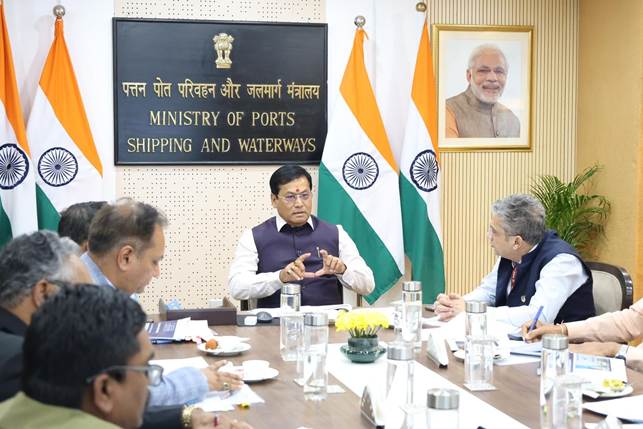
NEW DELHI : In a decisive push towards self-reliance in the maritime sector, a high-level inter-ministerial review meeting on the Strait of Hormuz situation pivoted to accelerating India’s shipping capabilities, with a renewed focus on building a robust, future-ready maritime ecosystem.

Chaired by Union Minister of Ports, Shipping and Waterways Shri Sarbananda Sonowal, the meeting brought together senior officials from the Ministry of Petroleum and Natural Gas (MoPNG), oil PSUs, Ministry of Chemicals and Fertilisers, Directorate General of Shipping, National Shipping Board and the Directorate General of Foreign Trade (DGFT).

Speaking on the occasion, Sarbananda Sonowal said, “Under the visionary leadership of Narendra Modi, we are positioning shipping at the core of India’s economic resilience. Our journey towards Atmanirbhar shipping is a strategic necessity, and we are advancing a roadmap to add 62 vessels in FY 2026–27, backed by ₹51,383 crore, creating an additional 2.85 million GT capacity.”

Reviewing the current global scenario and its implications on maritime trade routes, the Minister called for urgent expansion of India’s shipping capacity, including container vessels, LPG and crude carriers, and green tugs, to ensure resilience against external disruptions. Sonowal also reviewed cargo flows, vessel movements and operational preparedness across key maritime segments. The need for expansion of container fleet, green tugs, LPG carriers, crude carriers, dredging vessels and tankers were underscored by the Minister to combat any future global challenge and sustain supply chain of the country. The Shipping Minister also reviewed the status of the Joint Venture between Shipping Corporation of India (SCI) and Oil PSUs to acquire 59 vessels.

“We must act with urgency to strengthen our fleet, shipbuilding capacity, port infrastructure, and the broader maritime ecosystem,” the Union Minister said, underscoring the need for a coordinated national effort.

Directing a structured policy response, Sonowal instructed all concerned departments to prepare a concise and actionable white paper outlining & addressing the current gaps, clear targets and a time-bound roadmap across key pillars of the maritime sector. Sonowal emphasised that this exercise must be undertaken in close coordination with the Ministries of Petroleum and Natural Gas, Chemicals and Fertilisers, and Commerce and Industry, given their critical linkage to maritime supply chains.

“This document will form the basis of our next review on a larger inter-ministerial platform. I expect focused, practical and outcome-oriented inputs. Let us move forward with clarity, coordination and commitment,” Union Minister Sarbananda Sonowal added.

The Minister also reiterated that the safety and security of Indian seafarers remains paramount, with agencies directed to maintain heightened vigilance in sensitive maritime zones. The inter-ministerial meeting concluded with a call for greater alignment, coordination and execution across ministries and stakeholders to position India as a globally competitive maritime nation.

The government continues to closely monitor developments in the region while advancing long-term strategies to strengthen India’s maritime capabilities and secure its position in global trade.

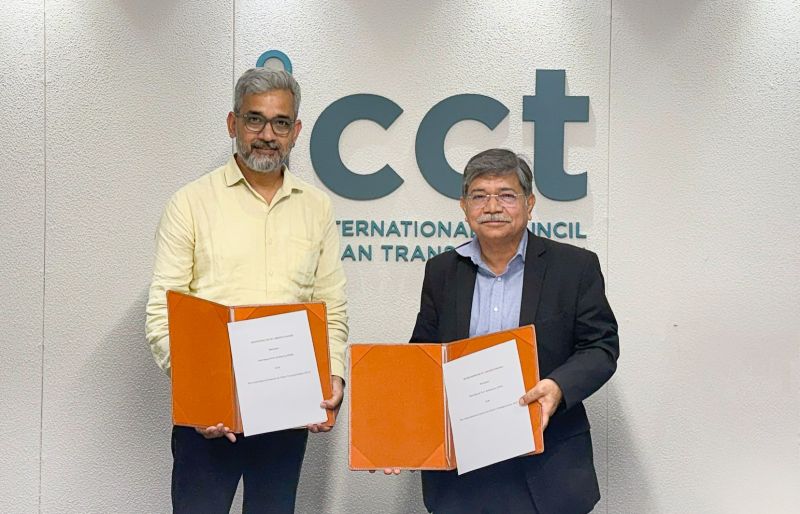
DPA Kandla and ICCT India sign MoU to accelerate Green Port Transition at Kandla

GANDHIDHAM : In a significant step towards advancing sustainable maritime operations, Deendayal Port Authority (DPA) and the International Council on Clean Transportation (ICCT India) have entered into a strategic Memorandum of Understanding (MoU) to collaborate on reducing greenhouse gas emissions and air pollution from port and shipping activities at Kandla.

The partnership aims to develop a comprehensive, data-driven roadmap for decarbonization, focusing on key emission sources including ocean-going vessels, alternative fuels, port-linked transportation, and cargo handling equipment. Through detailed emissions inventories, baseline assessments, and scenario modelling, the initiative will identify high-impact interventions to enable measurable and time-bound reductions in emissions across the port ecosystem.

As part of the collaboration, ICCT will bring its global technical expertise in clean transport and energy transition, supporting DPA in evaluating emerging low- and zero-emission technologies such as shore power (cold ironing), electrification of cargo handling equipment, adoption of green hydrogen and alternative marine fuels, and optimization of logistics chains to reduce fuel consumption and emissions from trucking operations.

The MoU also emphasizes the importance of enabling frameworks, including policy alignment, regulatory support, and infrastructure readiness. The partners will work closely to assess investment needs, identify funding opportunities, and recommend best practices aligned with international climate commitments and India’s maritime sustainability goals.

In addition, capacity-building initiatives, stakeholder consultations, and knowledge-sharing workshops will be conducted to ensure effective implementation and industry-wide participation. The collaboration is expected to serve as a model for other ports across India, demonstrating scalable solutions for achieving cleaner, greener, and more efficient port operations. This strategic alliance underscores a shared commitment to environmental stewardship and reinforces Kandla’s position as a forward-looking port, actively contributing to India’s transition towards a low-carbon and sustainable maritime future.

GMU Provost Prof. S. Shanthakumar invited by IMO for Distinguished Lecture at IMLI

LONDON/GANDHINAGAR: In a significant step towards strengthening global maritime legal education, Prof. Dr. Sanjeevi Shanthakumar, Provost of Gujarat Maritime University and Director of Gujarat National Law University, will deliver a distinguished expert lecture at the IMO International Maritime Law Institute during its 37th Academic Year.

The session, scheduled today 30th April 2026 at 10:00 AM, underscores the growing international recognition of India’s academic leadership in maritime law. A respected authority in the field, Prof. Dr. Shanthakumar’s engagement with IMLI reflects a strong commitment to advancing legal scholarship, fostering global collaboration, and contributing to the development of future maritime leaders.

His lecture is expected to provide valuable insights into contemporary maritime legal frameworks and emerging challenges in the sector, further reinforcing the role of academic institutions in shaping policy and practice at the international level.

The initiative has been made possible with the support of Dr. Norman Martinez, whose continued efforts in promoting academic exchange and cooperation have strengthened ties between leading maritime institutions worldwide.

This engagement marks yet another milestone in enhancing India’s presence in the global maritime academic landscape and highlights the importance of knowledge-sharing in building a sustainable and future-ready maritime ecosystem.