Home Blog Page 33

New Georgia hub aims to take 26,000 containers off the road

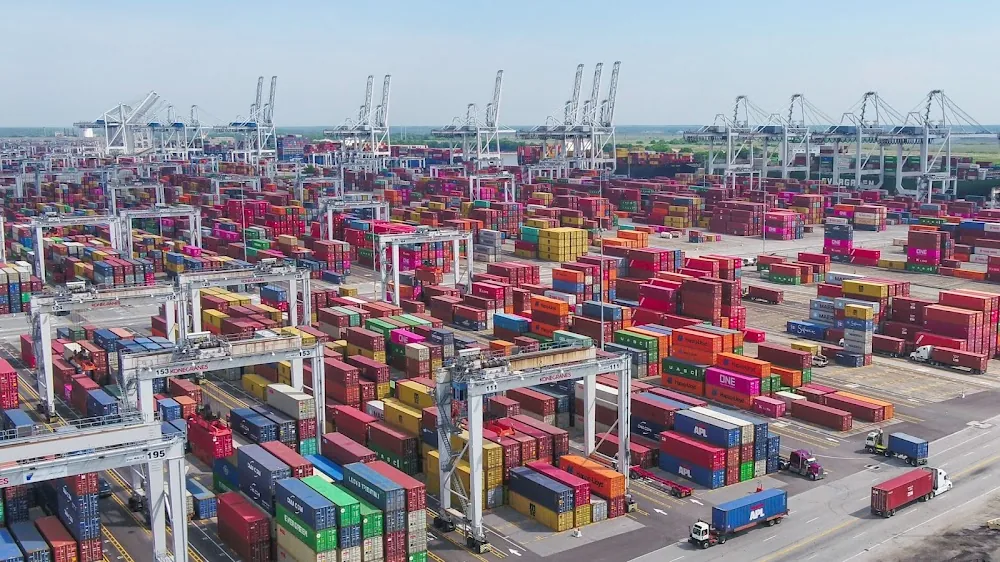
SAVANNAH: Gov. Brian Kemp and Georgia Ports Authority officials celebrated the grand opening of the $134 million Gainesville Inland Port on Thursday, marking a new connection between Northeast Georgia’s manufacturing economy and international markets through the Port of Savannah.

The ceremony followed the terminal’s operational opening on May 4. The facility provides direct Norfolk Southern (NYSE: NSC) rail service between Gainesville and Savannah five days a week, giving regional businesses an alternative to the roughly 600-mile round trip by truck.

“Georgia’s ports are a major reason companies choose to invest and create jobs here, and the Gainesville Inland Port brings that advantage directly to Northeast Georgia,” Kemp said. “Connecting this region to the Port of Savannah with new supply chain options makes it easier for Georgia businesses to reach customers around the world and helps ease congestion on our highways.”

The inland terminal extends Savannah’s port services into a region with more than 330 manufacturers, including poultry, heavy equipment and forest products businesses. Its rail connection gives shippers access to Savannah’s network of approximately 40 weekly vessel calls.

“With the start of operations in Gainesville, we’re extending the reach of the Port of Savannah deep into Northeast Georgia,” Georgia Ports President and Chief Executive Griff Lynch said when operations began. “Manufacturers across the region now have a seamless rail connection to more than 40 weekly vessel calls linking to global markets.”

Georgia Ports expects the terminal to shift 26,000 containers to rail during its first year of operation, reducing truck traffic and emissions on highways across Georgia, including in the Atlanta region. The agency has not disclosed volume at Gainesville since it opened.

Gainesville is the latest inland hub serving a major East Coast port. Georgia Ports also operates the Appalachian Regional Port serving Savannah, while South Carolina’s inland ports at Greer and Dillon handle boxes from the Port of Charleston. Virginia Inland Port at Front Royal, and North Carolina’s Charlotte Inland Port, alsop connect inland cargo markets to U.S. East Coast seaports by rail, although their terminal arrangements differ.

The 104-acre facility, formerly known as the Blue Ridge Connector, is designed to handle 200,000 containers annually at full build-out. It also offers access to Interstates 85 and 985.

Georgia Ports also funded $4.8 million in surrounding road improvements, including rerouting an access road, eliminating an at-grade rail crossing and resurfacing another road.

The opening comes amid industrial growth in Gainesville-Hall County. Since 2020, 78 new and expanding businesses have added more than 4,800 jobs and $2 billion in capital investment, according to figures cited by Georgia Ports. Manufacturing, processing and logistics account for 33% of the area’s workforce.

The Gainesville terminal is part of Georgia Ports’ nearly $5 billion, 10-year expansion program, which also includes additional cargo berths in Savannah and Brunswick.

Panama Canal revises Transit Booking System and updates NetZero Program Requirements

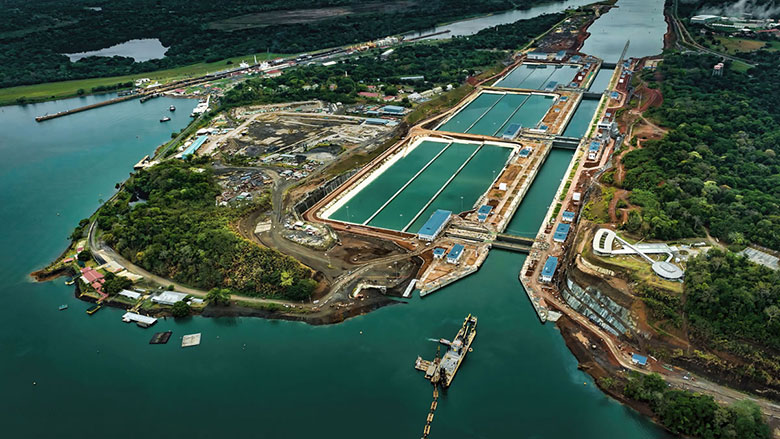
PANAMA CITY: The Panama Canal has updated the criteria for reallocating transit slots that are canceled or become available during booking periods 1A and 2 at the Neopanamax locks. The changes, announced through an Advisory to Shipping, take effect immediately and restore the allocation criteria that were in place prior to July 2026.

Available slots during these periods will be offered through a special allocation process with priority given in the following order: Container ships, liquefied natural gas (LNG) carriers, liquefied petroleum gas (LPG) carriers, and vehicle carriers or roll-on/roll-off (RoRo) vessels. Within each vessel segment, Transit TEU Allowance (TTA) capacity will serve as the primary tiebreaker, where applicable.

NetZero

Through the same advisory, the Panama Canal also updated the eligibility requirements for vessels transiting the waterway for the first time to participate in the NetZero program. The initiative aims to continue supporting and encouraging investment in low-carbon, energy-efficient vessels.

Under the updated requirements, vessels must undergo a preliminary tonnage inspection conducted by the Panama Canal’s Admeasurement Unit. To streamline participation in the program, these inspections may now be executed outside Panama.

Beginning November 1, 2026, vessel owners, operators, or authorized agents may request a preliminary inspection before their vessels arrive in canal waters. This will allow the Panama Canal to obtain the information needed in advance to calculate tolls, determine vessel tonnage under the Panama Canal Universal Measurement System (PC/UMS), identify engine types, and verify other requirements for participation in the NetZero program.

Applicants must submit the required technical documentation, pay all applicable fees and charges, and coordinate the necessary arrangements at the port where the vessel is located. The preliminary inspection does not replace the final verification or any additional inspections that may be required before transit.

Together, these measures reinforce the Panama Canal’s commitment to encourage the adoption of low-carbon, energy-efficient vessels while maintaining clear and predictable criteria for allocating transit capacity.

The full provisions are available in Advisory to Shipping No. A-40-2026.

PM Modi laid the foundation stone, inaugurated, and dedicated to the nation development projects worth over ₹14,000 crore in Gujarat ; new trains and Ahmedabad Metro expansion on agenda

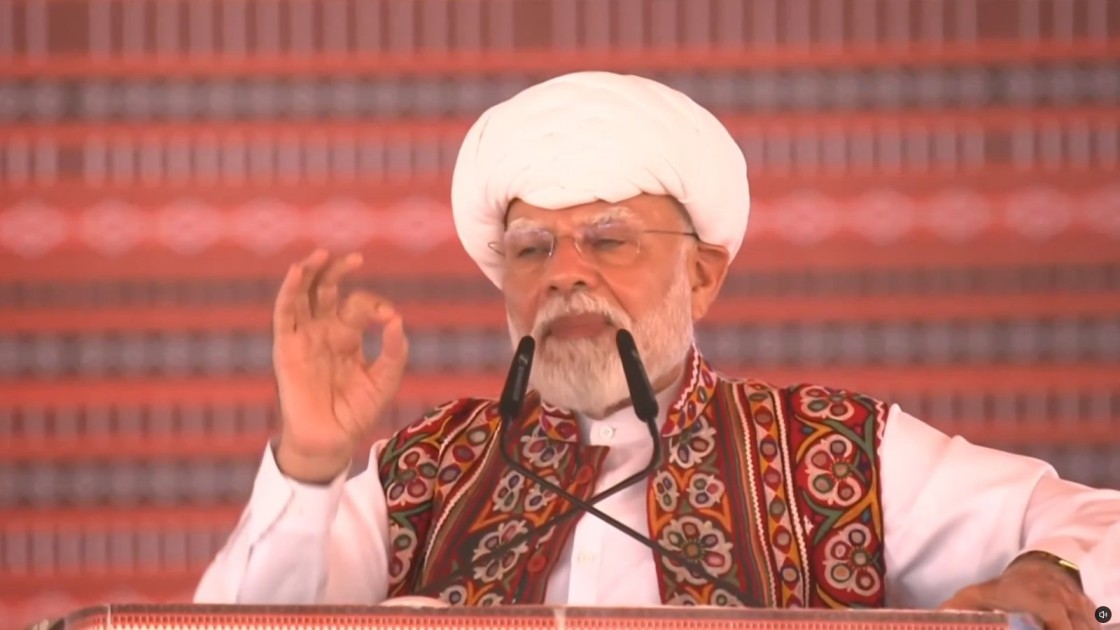
AHMEDABAD: Prime Minister Shri Narendra Modi undertaking a two-day visit to Gujarat, during which he has inaugurated and dedicated development projects worth Rs 14,000 crore, release the 24th instalment of PM-KISAN payments worth Rs 19,000 crore and to flag off two trains. His itinerary included laying the foundation stone for Ahmedabad Metro extensions and road upgrades, inaugurating child-friendly Anganwadi centres and participating in the Rashtriya Ekta Diwas celebrations at Ekta Nagar.

Listing several major infrastructure projects inaugurated or initiated for Gujarat’s development on Friday, the Prime Minister highlighted the flagging off of two new rail services, the Ahmedabad-Varanasi Sabarmati Express and the Mehsana-Becharaji-Sabarmati MEMU train, alongside the expansion of the Ahmedabad Metro with foundation stones laid for metro projects connecting GIFT City and the airport. “The Ahmedabad-Mehsana highway is now going to become eight-lane from four-lane,” noted Shri Modi.

Today on October 31, the prime minister will offer floral tributes at the Statue of Unity, lay the foundation stone, and inaugurate various development projects worth over Rs 400 crore in Ekta Nagar.

He will then visit the Rain Forest and Vaman Vriksha Vatika in Ekta Nagar and participate in the Rashtriya Ekta Diwas celebrations commemorating the 151st birth anniversary of Sardar Vallabhbhai Patel, according to officials.

During the tour, Modi will lay the foundation stone of the Ahmedabad Metro Phase 2A and Phase 2B.

Phase 2A will have a length of over 6 kilometres, covering five stations from Koteshwar Road to the airport, while Phase 2B will have a length of over 3.3 kilometres, covering three stations from GIFT City to Shahpur.

Piyush Goyal chairs Chintan Shivir on digitisation of trade

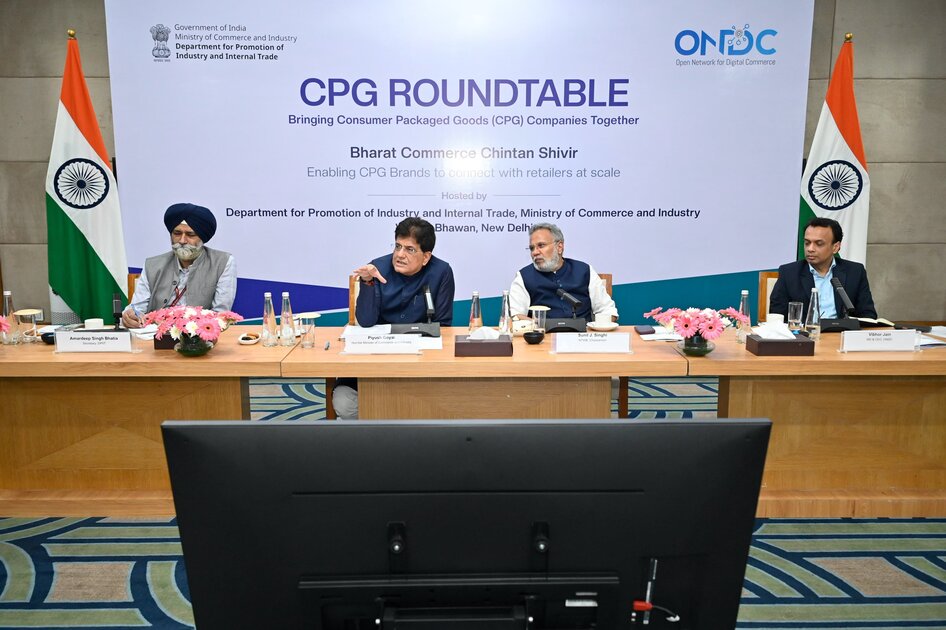
NEW DELHI: Union Minister of Commerce and Industry Shri Piyush Goyal chaired the Bharat Commerce Chintan Shivir, a high-level CEO Roundtable convened by the Department for Promotion of Industry and Internal Trade (DPIIT) and the Open Network for Digital Commerce (ONDC) at Vanijya Bhawan, New Delhi. The roundtable brought together over 40 leaders from leading Fast-Moving Consumer Goods (FMCG) companies to deliberate on a shared roadmap for strengthening and digitising India’s General Trade ecosystem through ONDC DigiDukaan.

Speaking at the roundtable, Union Minister of Commerce and Industry Shri Piyush Goyal said, “ONDC’s DigiDukaan shows that when open digital infrastructure is built around the needs of the small retailer, adoption follows. Let this become another case study where the world can learn from India. By making procurement simpler and more transparent while strengthening our distributors, we can help kiranas free up working capital and grow. I invite the FMCG industry to work together and take this to every corner of Bharat.”

Shri Amardeep Singh Bhatia, Secretary, Department for Promotion of Industry and Internal Trade (DPIIT) said, “Open digital infrastructure has a critical role to play in accelerating the digitalisation of India’s retail ecosystem, particularly its vast network of kirana stores. ONDC’s DigiDukaan is an important step in this direction, demonstrating how an open, interoperable network can enable neighbourhood retailers to access digital procurement opportunities and participate more effectively in the evolving digital economy. By bringing together retailers, FMCG companies and distributors on a common network, DPIIT along with ONDC is helping build a more connected and efficient General Trade ecosystem, creating a pathway for digitalisation to reach kiranas at scale.”

The discussions focused on strengthening and re-empowering the General Trade ecosystem, which remains central to India’s retail economy and supports the livelihoods of millions of neighbourhood retailers. Participants emphasised the need for greater institutional commitment from FMCG companies, distributors and industry stakeholders to accelerate digital procurement, improve supply-chain efficiency and enhance the competitiveness of kirana stores. The initiative seeks to bring industry stakeholders together through common digital infrastructure, shared services and commercially sustainable models.

Senior representatives from Hindustan Unilever (HUL), Coca-Cola India, ITC, P&G, Marico, CavinKare, Pidilite, Britannia, Adani Wilmar, LT Foods, Anmol Industries, Haldiram’s, Emami, Veeba and Nilon’s participated in the roundtable, along with representatives from logistics providers, technology partners and ONDC network participants.

ONDC DigiDukaan addresses procurement by digitising kiranas as buyers. Through a single digital interface, retailers can discover and order products across multiple brands, distributors and wholesalers, with greater visibility into pricing, trade schemes and product availability. The initiative is designed to strengthen existing distribution relationships rather than replace them, while creating a common digital foundation through which retailers can eventually access shared logistics, formal credit and other services. This approach seeks to reduce the complexity and cost of participation across the General Trade value chain.

The roundtable deliberated on five key areas for strengthening the General Trade ecosystem. These included developing a common digital identity for kirana retailers to enable seamless engagement with multiple brands, distributors and service providers; creating shared logistics and micro-warehousing infrastructure to improve distributor reach and facilitate reliable next-day replenishment, including in areas beyond existing delivery routes; and expanding access to formal credit through financing solutions linked to digital procurement and transaction activity to improve access to working capital and reduce dependence on informal distributor credit.

Discussions also focused on simplifying technology integration through plug-and-play Distributor Management System (DMS) connectors, standardised catalogues and common digital interfaces to reduce onboarding complexity and encourage wider industry participation. Participants further deliberated on realigning commercial incentives for FMCG companies, sales teams, distributors and channel partners to make digital ordering, wider retail coverage and sustained retailer adoption commercially beneficial across the value chain.

DigiDukaan has connected over 21,000 retailers with more than 450 brands across Hyderabad, Jaipur and Mumbai as of September 2026, compared with over 12,000 retailers in the previous quarter. In Hyderabad, more than 16,000 retailers have been onboarded, with monthly repeat ordering rates of 73–78%. An initial ONDC retailer study also found that 40% of surveyed retailers reported lower inventory holdings for products procured through DigiDukaan, indicating the potential for improved working capital efficiency.

The National Traders’ Welfare Board (NTWB), under the chairmanship of Shri Sunil J. Singhi, has been working closely with ONDC to accelerate the adoption of DigiDukaan among kirana retailers. The collaboration focuses on mobilising local trade associations, strengthening retailer participation and enabling small businesses to benefit from digital procurement and more efficient distribution networks.

Managing Director and Chief Executive Officer, ONDC, Shri Vibhor Jain, said, “Digital adoption for the distributor fraternity has been developing – billing, printing, order placement are largely online. But retailers, most of which are mom-and-pop shops, still run on pen, paper and memory. DigiDukaan is ONDC’s effort to build digital infrastructure for India’s General Trade ecosystem in retail. We are digitising kiranas as buyers, while strengthening the existing distributor network rather than replacing it.”

DigiDukaan is building an expanding network of FMCG brands, technology providers and logistics partners. Leading FMCG companies, including HUL, Marico, Colgate-Palmolive, Emami and Amul, are participating through their distribution networks, while ITC, Tata Consumer Products and Britannia are at various stages of integration or discussion. On the technology front, Paytm for Business, Qwipo and Mulltiply.ai are live on the network, while DMS and technology providers, including Bizom, Botree, QuIDPe and ENS, are progressing towards integration. Logistics and warehousing partners, including ElasticRun, Shiprocket, India Post and Moeving, are also part of the expanding ecosystem, supporting seamless procurement, wider distributor reach and faster replenishment for kirana retailers.

As part of its next phase, ONDC is focusing on deepening brand and distributor participation in Mumbai, particularly North Mumbai, while strengthening operations across existing markets.

The Open Network for Digital Commerce (ONDC) is building open digital commerce infrastructure in India through a network model aimed at reducing entry barriers and improving access for businesses. The network has enabled over 500 million transactions to date, with retail as its core focus area. It seeks to create digital networks that improve efficiency, lower costs and unlock opportunities for businesses, gig workers, small retailers and consumers.

ONDC-enabled retail initiatives include DigiDukaan, which has onboarded over 21,000 retailers for business-to-business (B2B) procurement digitisation, and Amazing India, which focuses on enabling products from kisans, karigars, cooperatives and other micro-producers to become e-commerce-ready and reach wider markets.

Other initiatives include public transport services, facilitating over 5 lakh metro and bus journeys daily through more than 40 consumer applications; logistics infrastructure used by over 80,000 merchants and 30+ small and micro fleet operators; and more than 1,000 tourism experiences, including 170 Archaeological Survey of India (ASI) monuments and 29 museums, available on the network. ONDC has also enabled low-ticket investment and credit solutions aimed at expanding financial access, with a majority of investors coming from Tier-2 cities and beyond.

Iran-US draft proposes uranium transfer, Hormuz reopening within 7 days: Report

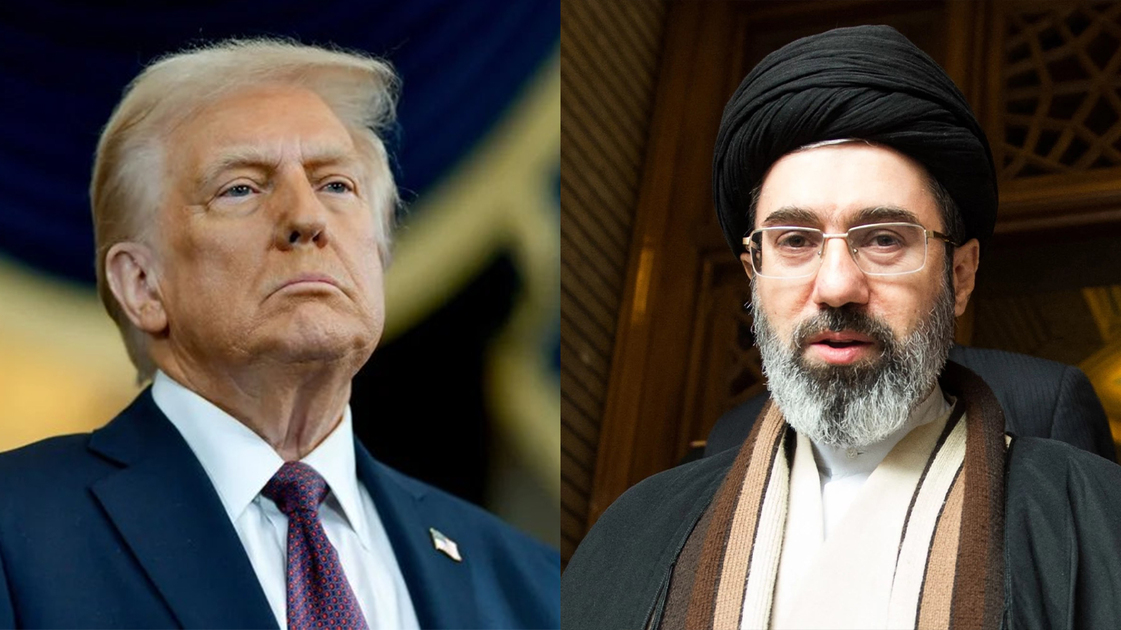
TEHRAN: A preliminary draft framework for US-Iran negotiations proposes transferring Iran’s highly enriched uranium stockpile to an agreed third country or reducing its enrichment level, while reopening the Strait of Hormuz to international maritime traffic within seven days of an initial understanding, Al Arabiya English reported.

According to Al Arabiya English, which exclusively obtained the draft’s key points, China could potentially act as a guarantor for the implementation and sustainability of any agreement.

The framework also proposes holding direct US-Iran negotiations in Doha instead of Istanbul.

Under the proposed arrangement, Iran’s measures on its nuclear programme and maritime security would be matched by US steps to ease sanctions, blockades and economic restrictions.

An independent verification mechanism would assess compliance before each phase of implementation, ensuring that neither side makes substantial concessions without corresponding, independently verifiable commitments.

The draft also proposes a dispute-resolution mechanism involving mediators and guarantor parties to address delays or violations and prevent renewed military escalation, according to the news platform.

According to IRNA, a Qatari team had arrived in Tehran in an effort to restore a ceasefire between the United States and Iran. The delegation, led by a senior advisor to Qatar’s prime minister and foreign minister, and operating in coordination with Washington, landed on Friday morning for consultations.

Meanwhile, a letter from US Vice President JD Vance to Iranian security official Mohsen Rezaei, delivered by the Qatari envoys, was reportedly welcomed in Tehran for proposing a fresh diplomatic pathway to prevent further American military strikes.

The draft framework comes as the United States President Donald Trump has stated that Washington is in no hurry to end its war with Iran, characterising the ongoing hostilities as “not a typical war” while maintaining that time favours the American side despite months of fighting and repeated diplomatic efforts failing to yield a lasting settlement.

Trump likewise claimed that Tehran remains eager to pursue negotiations with American authorities but faces severe domestic hurdles, specifically highlighting an inability to pay military personnel and law enforcement officers.

“There are talks. They want to talk. They keep talking,” Trump told reporters in the Oval Office.

“But look, they’re not paying their soldiers, they’re not paying their police. They’re in a lot of trouble. And we have time, frankly. It’s a war, but it’s not a typical war; we’ve been there for seven months,” he added.

The American leader also minimised the economic cost of the campaign, asserting that Washington’s financial outlays on the conflict remain minimal.

“We’re spending very little money, relatively speaking. I heard somebody say, you’re spending money. I said, well, any money we spent, we’ve more than made up for in a place called Venezuela, like by 10 times…” he remarked.

He did not provide figures to substantiate his assertion concerning the recovery of expenditures through South American channels.
Trump’s insistence that Washington has adequate time for diplomatic efforts persists despite his frequent references to the possibility of renewed military action against Iran.

Previously, he noted that the US could launch “another little Epic Fury”, alluding to the initial military operation directed at Tehran, while on separate occasions suggesting that a “big and good” agreement might still materialise.

His latest remarks come amid persistent ambiguity surrounding the trajectory of the confrontation. Although Trump intimated that Tehran desires an agreement, both capitals remain divided on core prerequisites, notably Iran’s nuclear programme, sanctions and the US blockade of Iranian ports.

Diplomatic outreach aimed at seeking a resolution advanced on Friday as Turkish Foreign Minister Hakan Fidan held a formal meeting with US Secretary of State Marco Rubio during a G20 ministerial gathering hosted in the United States.

The discussions encompassed ongoing negotiations between Washington and Tehran, alongside broader regional developments and bilateral relations, as outlined by Turkey’s official Anadolu Agency.

That meeting followed a telephone conversation between Turkish President Recep Tayyip Erdogan and Trump days earlier, during which Ankara conveyed its vigilance over maritime passages and expressed support for diplomatic efforts aimed at defusing regional tensions.
While Ankara has joined regional actors in engaging American counterparts to explore pathways forward, Trump’s stance regarding the availability of time, coupled with ongoing threats of military escalation, underscores the continued fragility of any prospective diplomatic breakthrough.

Source: ANI

Strait of Hormuz shipping routes cleared of Iranian sea mines, vessels transiting freely: CENTCOM chief

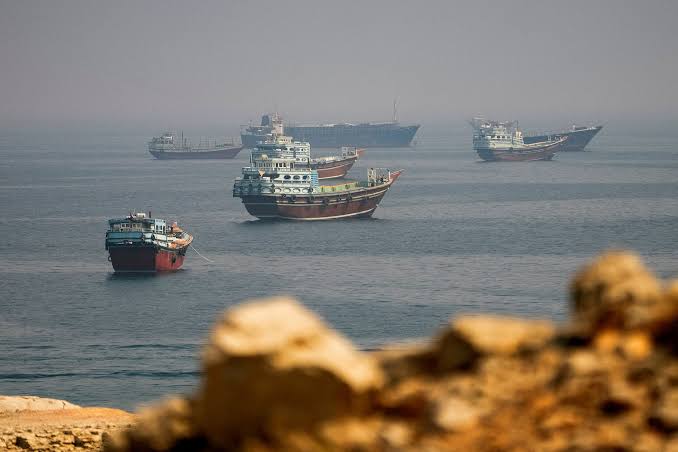
WASHINGTON: The Commander of the United States Central Command (CENTCOM), Admiral Brad Cooper, on Friday (local time) stated that the primary internationally recognised transit routes in the Strait of Hormuz have been successfully cleared of Iranian sea mines and commercial vessels are sailing freely through the strategic waterway.

Following his review of military operations across the Middle East, in a post shared by the US CENTCOM on social media platform X, Admiral Cooper said that during an aerial survey over the strait, he witnessed dozens of merchant vessels transiting unimpeded.

“Earlier this week, I visited some of the more than 50,000 service members supporting operations across the Middle East, including our mission in the Strait of Hormuz. When I flew over the strait, I saw dozens of commercial vessels transiting—all types: cargo, crude oil, liquid natural gas, or LNG. And I also saw our U.S. assets in the air and on the water, including a squadron of advanced sea drones that were on patrol, supporting a defensive layer,” Admiral Cooper stated.

Pointing to the complete absence of Iran’s Islamic Revolutionary Guard Corps (IRGC) along the waterway, the CENTCOM chief added, ” Here’s what I didn’t see: I didn’t see the IRGC out there at all. They patrolled the Strait of Hormuz and surrounding waters for decades, harassing and threatening and seizing commercial vessels at will. But they were not out there because Iran’s navy is all at the bottom of the sea.”

The Commander further announced a significant milestone achieved regarding the export of crude oil barrels.

“This week, we reached a significant milestone, having now assisted Gulf partners in exporting more than 1.5 billion barrels of crude oil since summer. U.S. forces have been laser-focused in this effort, in coordination with regional partners, other U.S. government teammates, and the shipping industry. Meanwhile, we’ve prevented Iran from exporting any oil because of the ironclad blockade on Iranian ports,” Cooper said.

“I strongly believe that every success begins and ends with our people, and our incredible men and women in uniform represent the very best. During my trip, I met with teams who executed the mine clearance mission in the Strait of Hormuz, and who continue to provide coordinated protection for commercial shipping as we strictly enforce the ongoing blockade,” he added.

Further expressing his gratitude, the CENTCOM Commander stated, “Since day one, America’s sons and daughters serving in the Middle East have shown relentless commitment, dedication, and courage. It’s been the honour of a lifetime to serve alongside them and recognise them for their tremendous accomplishments on behalf of the nation. As their commander, I could not be prouder, and I know that the families, friends, loved ones, and the American people back home share in this pride. To all our service members: keep up the great work, and Godspeed. Thanks so much.”

Earlier on Thursday, IRGC dismissed claims by US Central Command (CENTCOM) regarding minesweeping operations in the Strait of Hormuz, demanding concrete proof rather than media statements, state news agency IRNA reported.

In an official statement published Thursday, IRGC Deputy Head of Public Relations and Spokesperson Brigadier General Hossein Mohebbi directly addressed US military leadership, drawing a parallel between current regional maritime tensions and historical shifts in global power dynamics.

“Child-killing CENTCOM! The 1956 Suez Crisis lifted the curtain on the limits of British power; history turns at strategic chokepoints,” Mohebbi declared, according to IRNA. “Prove the claim of minesweeping the Strait of Hormuz with independent evidence, not with statements!”

Mohebbi emphasised that control over the strategic waterway is dictated by physical military presence on the ground rather than digital narratives.

“The reality of the Strait of Hormuz is forged in the sky, on land, and at sea; not in cyberspace and US media war rooms,” he added.

Tanker-MT LOUISE 1 carrying 27 Indians hit by limpet mines in Strait of Hormuz

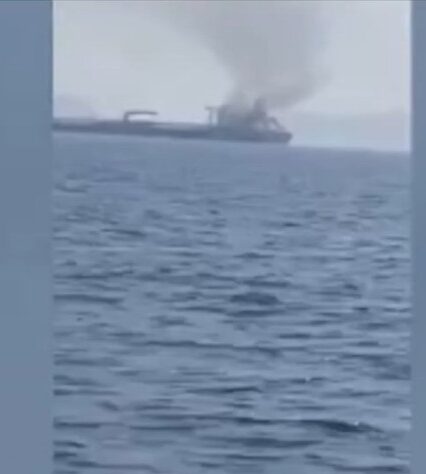
NEW DELHI: A Panama-flagged oil tanker carrying 27 Indian seafarers was struck by limpet mines in the Strait of Hormuz on Friday, triggering a fire in its engine room and temporarily disabling the vessel. All crew members were safe and no injuries were reported, the government said.

The attack on MT LOUISE 1 marks the first reported successful use of limpet mines against a vessel in the strategic waterway since the US-Iran conflict began in February.

Union Minister for Ports, Shipping and Waterways Shri Sarbananda Sonowal confirmed that all 27 Indian seafarers aboard the tanker were safe. He said the government was closely monitoring the situation and coordinating with the ship management company to ensure their safety and well-being.

According to maritime security sources cited by Reuters, a small boat approached the tanker and attached two limpet mines to its hull before leaving the area. The subsequent explosions triggered a fire in the engine room, temporarily disabling the vessel.

The crew managed to bring the fire under control. No environmental damage was reported, and the tanker later resumed its voyage towards its next port of call.

The United Kingdom Maritime Trade Operations (UKMTO) said the incident occurred about 25 nautical miles (46 km) north-east of Khasab in Oman. It confirmed that the crew was safe, the fire had been extinguished and the vessel was continuing its journey.

Although UKMTO did not identify the vessel, three maritime security sources identified it as MT LOUISE 1.

The incident came a day after another vessel, the Liberia-flagged very large crude carrier (VLCC) MT ARZANAH, carrying two Indian nationals, was targeted in a projectile attack in the Strait of Hormuz on October 29.

Sonowal said all 29 Indian seafarers aboard the two vessels were safe, with no injuries reported.

The perpetrators of the attack on MT LOUISE 1 have not yet been identified. Maritime security sources said a previous attempt to use similar explosives in September had failed, as the devices did not detonate.

The latest incident has heightened concerns over the security of commercial shipping in the Strait of Hormuz, a vital passage for global energy supplies.

Limpet mines are magnetic explosive devices that can be attached to a ship’s hull, often by divers or occupants of small boats. Their relatively simple deployment makes them a potential threat to commercial vessels, particularly in busy shipping channels.

Greece-based maritime risk management company Marisks said the ability of a small boat to approach a moving tanker, attach explosives and withdraw posed a significant security challenge. It also noted that limpet mines had been used against commercial vessels in the region in previous years.

The Strait of Hormuz connects the Persian Gulf with the Gulf of Oman and the Arabian Sea and serves as one of the world’s most important routes for oil and gas shipments. The latest attack adds to a series of security incidents involving commercial vessels in and around the waterway since the US-Iran conflict began in February.

Nitesh Narayan Rane to address FICCI’s Maritime India Conference & Expo.

MUMBAI: Shri Nitesh Narayan Rane, Maharashtra’s Minister of Fisheries and Ports Development, will address the inaugural session of FICCI’s fourth Maritime India Conference & Expo, which opens at the Bombay Exhibition Centre on Monday.

The event, running from 2 to 4 November, will bring together policymakers, port authorities, shipping lines, shipbuilders, and investors as India seeks to establish itself as a global maritime hub. It is organised with support from the Ministry of Ports, Shipping and Waterways under the theme “India as a Global Maritime Hub: Trade, Transformation & Sustainable Growth”.

The event has grown substantially since last year. More than 10,000 business visitors have already registered, and FICCI is targeting 16,000, up from 7,200 at the previous edition. Exhibition space has expanded to 10,000 sq m, about 40 per cent more than in 2025, and more than 150 companies will exhibit, 92 per cent of them from the private sector.

Karnataka, Odisha, Goa and Maharashtra are partner states, with their state maritime boards participating. Mumbai Port Authority, Paradip Port Authority, V.O. Chidambaram Port Authority and Deendayal Port Authority are partner ports, and the Inland Waterways Authority of India (IWAI) is the institutional partner.

The Netherlands, the partner country, will host a dedicated pavilion. Delegations from Italy, Norway and Singapore will attend, with the Italian delegation led by Mr Marco Consalvo, president of the Port of Trieste and Monfalcone. Companies and institutions from the UAE, Sweden, Denmark, Germany, France, Japan and Switzerland will also take part.

Minister Shri Rane will be joined at the inaugural session by Mr Vijay Sankar, President-elect of FICCI and chairman of the Sanmar Group; Mr Dhruv Kotak, chair of the FICCI Committee on Ports & Shipping and Managing Director of JM Baxi; Mr Nabil Taouati, Consul General of the Netherlands in Mumbai; Capt. Binesh Kumar Tyagi, Chairman and Managing Director of the Shipping Corporation of India; Shri Sushil Kumar Singh, Chairperson of the Indian Ports Association; Shri Shyam Jagannathan, Director General of Shipping; and Mr Sushil Kumar Lohani, chairman of IWAI.

Four FICCI knowledge reports will be released during the session: a FICCI-PwC report, “Smart & Future-Ready Ports”; a FICCI-A.T. Kearney report, “Trade, Logistics and Global Connectivity: Hinterland Connectivity, Modal Shift and Cargo Evacuation”; a FICCI-EY report, “Optimising India’s Shipbuilding and Ship Repair Capacity: Roadmap for Industrial Scale-Up”; and a FICCI-CRISIL report on domestic container manufacturing in India.

Seven plenary sessions will cover smart ports, trade and connectivity, logistics, shipbuilding, green shipping, inland waterways and cruise tourism, and maritime investment and security. Participants include global carriers and operators such as MSC, CMA CGM, Maersk, Hapag-Lloyd, DP World and PSA, alongside leading private port groups, shipbuilders Cochin Shipyard, Mazagon Dock, GRSE and Titagarh, energy companies BPCL, ONGC and Indian Oil, and financial institutions including Exim Bank, NIIF and IFSCA. Invite-only roundtables for chief executives and diplomats will run in parallel on the opening day.

More than 2,000 business-to-business and business-to-government meetings will match port operators, shipping lines and technology providers with potential partners. State sessions and roundtables on dredging, multimodal connectivity and shipbuilding policy will bring government and industry to the same table.

The programme is aligned with Maritime India Vision 2030, which sets out more than 300 initiatives for the sector. Recommendations from the sessions and reports will be submitted to the government, giving industry direct input into policy on ports, shipbuilding, logistics and sustainable shipping.

Union Cabinet approves ₹40,000 crore project for 8 next-gen corvettes; GRSE and Goa Shipyard to build warships

NEW DELHI: In a major boost to naval firepower and domestic defence manufacturing, the Cabinet Committee on Security (CCS), chaired by Prime Minister Shri Narendra Modi, has cleared a ₹40,000+ crore project to construct eight Next-Generation Corvettes (NGCs) for the Indian Navy.


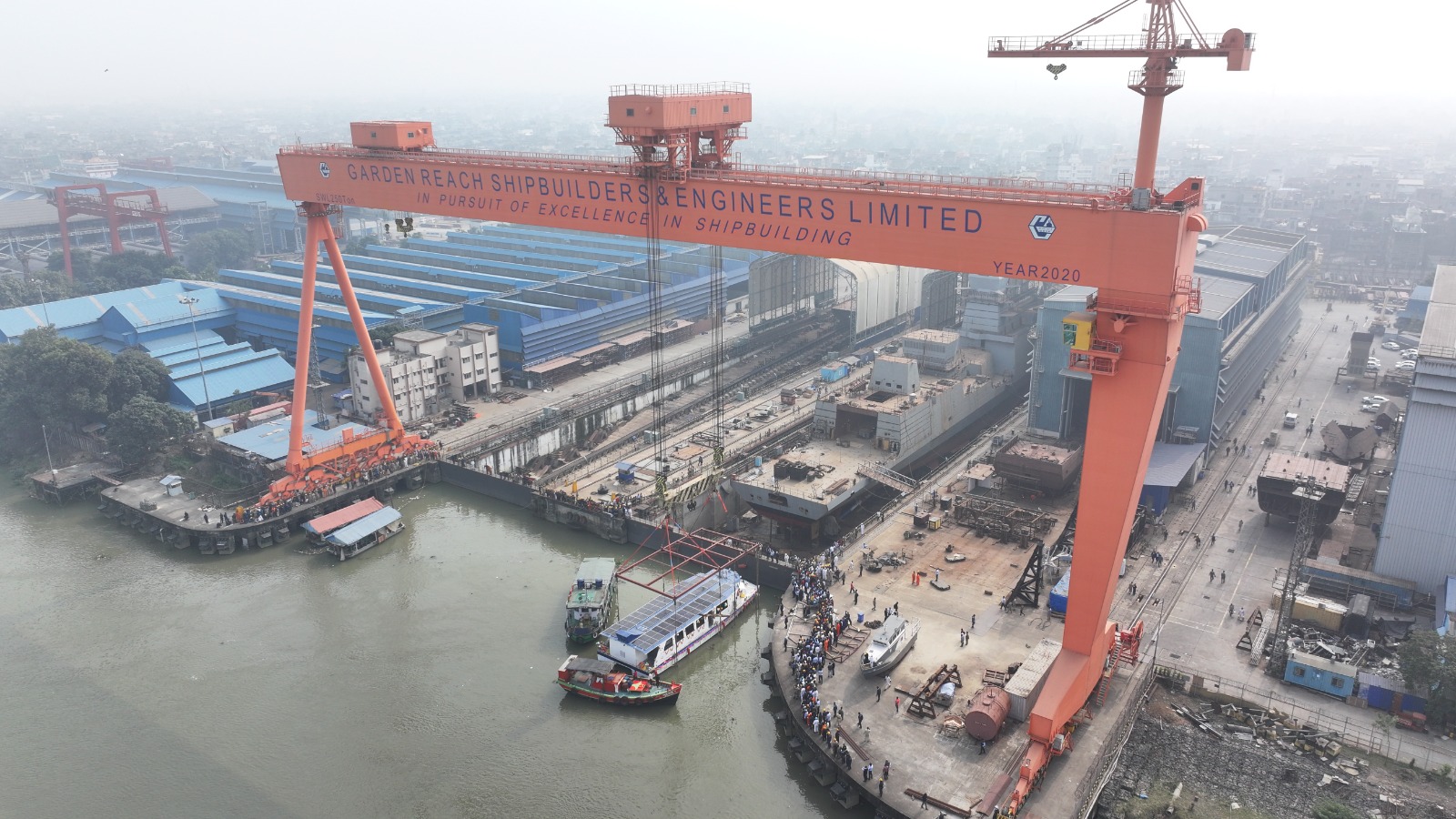
“The deal worth over Rs 40,000 crore was cleared by the CCS led by Prime Minister Narendra Modi in its meeting held on Wednesday. The contract for the eight warships would be signed in the next few days with Garden Reach Shipbuilders, Kolkata and Goa Shipyard Limited,” top government officials told ANI.

The Indian Navy will build eight Next-Generation Corvettes under a project worth over Rs 40,000 crore, with the vessels to be constructed by two premier state-owned shipbuilders: Garden Reach Shipbuilders & Engineers (GRSE) in Kolkata and Goa Shipyard Limited (GSL) in Goa.

The 2,000-ton high-speed surface combatants will feature an all-new in-house stealth design developed directly by the Indian Navy, aimed at strengthening blue-water capabilities using advanced shipbuilding technologies. Each warship will have a displacement of approximately 2,000 tons and a speed profile of around 30 knots.

The first vessel is targeted for delivery by 2030, with efforts underway to accelerate construction timelines.
According to the Ministry of Defence, these Next-Gen Corvettes are designed as highly adaptable, multi-role platforms capable of taking on diverse maritime security missions across the Indian Ocean Region (IOR).

Beyond augmenting naval combat readiness, the local construction of all eight warships furthers the Prime Minister’s vision of SAGAR (Security and Growth for All in the Region) and reinforces the government’s push for indigenous defence manufacturing under Atmanirbhar Bharat.

Source: ANI

Adjudicatory Board for major ports launches e-Filing Portal at Cochin Port Authority

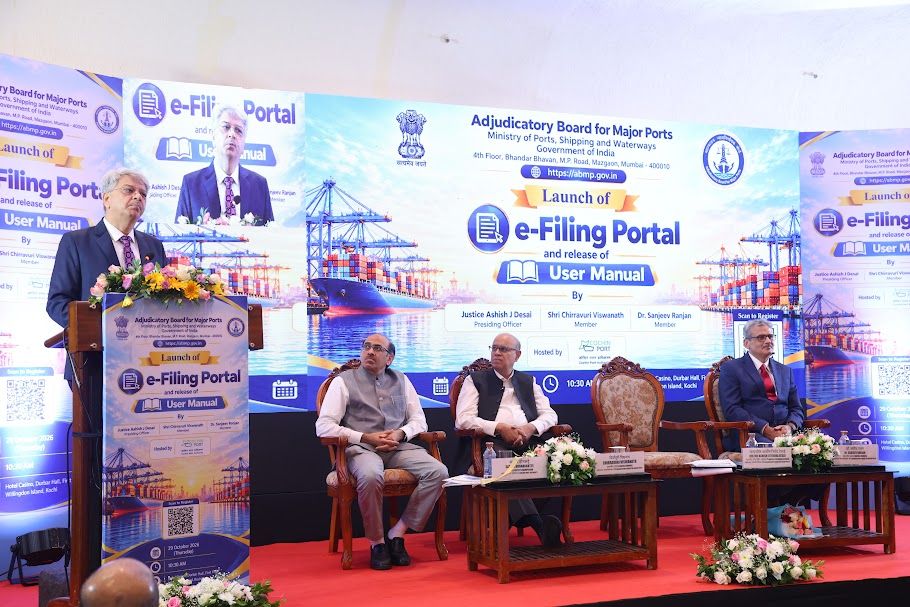
KOCHI: In a significant step towards strengthening digital governance and modernising administrative and legal processes in India’s major ports sector, the Adjudicatory Board for Major Ports (ABMP) formally launched its e-Filing Portal and released its User Manual at the Cochin Port Authority (CoPA), Kochi, on 29 October 2026.

The launch marks an important milestone in the adoption of technology-driven systems for improving the accessibility, transparency and efficiency of adjudicatory proceedings relating to the major ports sector. The newly introduced portal is designed to facilitate online filing of cases and support digital case management, offering stakeholders a more streamlined and accessible mechanism for interacting with the Adjudicatory Board.

COPA USER MANUAL 1 Adjudicatory Board for major ports launches e-Filing Portal at Cochin Port Authority

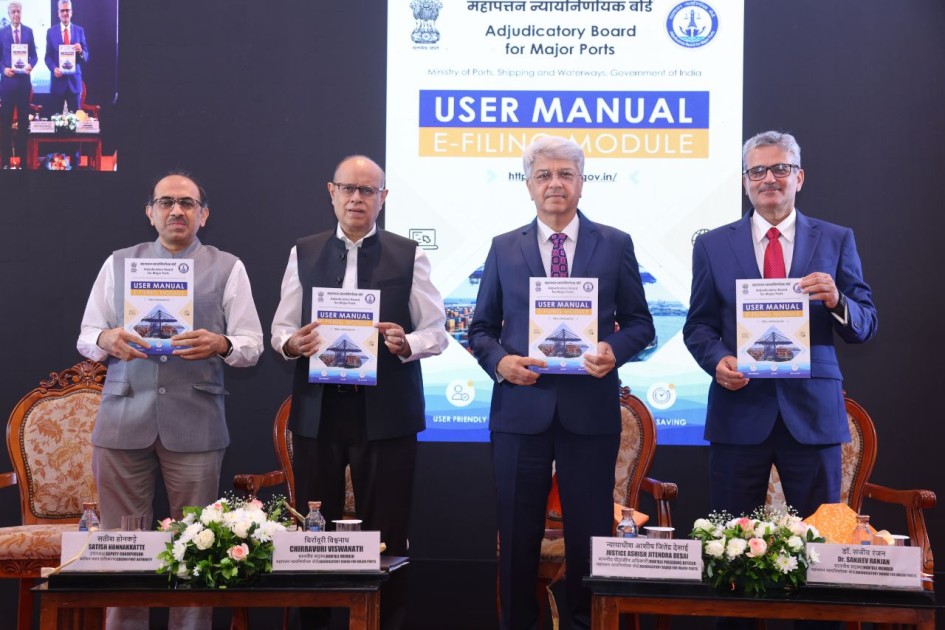
The event was graced by Justice Ashish J. Desai, Hon’ble Presiding Officer of ABMP and former Chief Justice of the Kerala High Court, along with Hon’ble Members Shri Chirravuri Viswanath and Dr. Sanjeev Ranjan. Shri Satish Honnakkatte, Deputy Chairperson, Cochin Port Authority, was also present during the occasion.

Dr. M. Angamuthu, IAS, Chairperson, Cochin Port Authority, Heads of Departments of CoPA and other stakeholders participated in the programme through video conferencing, reflecting the wider institutional participation and importance attached to the initiative.

User Manual Released to Facilitate Digital Adoption

A key highlight of the programme was the release of the User Manual, which provides step-by-step guidance on accessing and using the e-Filing Portal. The manual is intended to assist users in understanding the online filing procedures and navigating the various features of the digital platform for case submission and management.

The portal is expected to simplify the filing process by enabling users to submit cases electronically, reducing dependence on conventional physical documentation and facilitating more organised management of case-related information. It also aims to improve procedural convenience for stakeholders by providing a technology-enabled interface for filing and managing proceedings.

Strengthening Transparency and Institutional Efficiency

The introduction of the e-Filing Portal represents an important advancement in the digital transformation of governance within the major ports ecosystem. By integrating digital processes into adjudicatory procedures, the initiative seeks to promote greater transparency, improve accessibility and support more efficient handling of cases.

The move is also aligned with the broader Government of India’s emphasis on Digital India, paperless administration and technology-enabled public service delivery. The adoption of digital platforms in institutional and regulatory processes is expected to strengthen coordination among stakeholders while contributing to more efficient and accountable governance.

A Step Towards Modernising the Major Ports Sector

With the launch of the e-Filing Portal, the Adjudicatory Board for Major Ports has taken a progressive step towards modernising its case-filing and case-management framework. The initiative is expected to benefit stakeholders across the major ports sector by providing a more accessible, structured and efficient digital mechanism for adjudicatory processes.

The launch at Cochin Port Authority underscores the growing role of digital innovation in strengthening institutional frameworks and supporting a transparent, responsive and efficient maritime administration system in India.