Home Blog Page 34

IPRCL signs MoU with Yogayatan Ports to strengthen cooperation in marine and civil infrastructure development

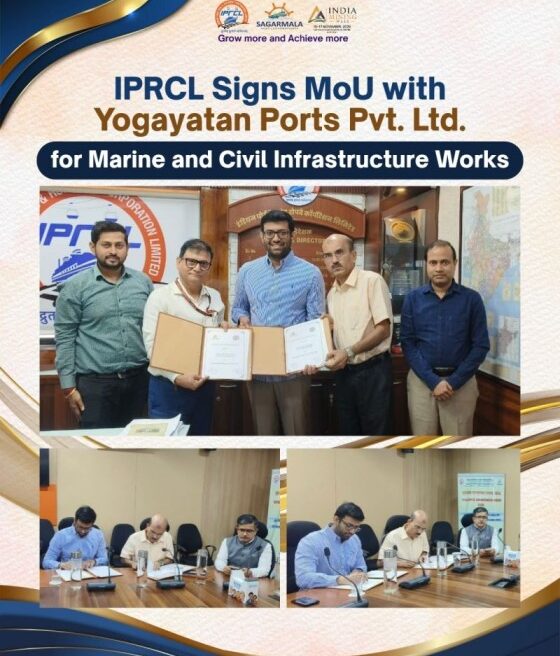
MUMBAI: Indian Port Rail & Ropeway Corporation Limited (IPRCL) has signed a Memorandum of Understanding (MoU) with Yogayatan Ports Pvt. Ltd. (YPPL) to establish a framework for cooperation in marine and civil infrastructure works associated with project implementation.

The agreement marks an important step towards strengthening collaboration between the two organisations in undertaking infrastructure development activities, with a focus on leveraging their respective expertise and capabilities in marine and civil engineering projects.

The MoU was signed by Dr. Ameya Pratap Singh, Director, Yogayatan Ports Pvt. Ltd., and Shri Santosh Shukla, Chief General Manager (Civil), IPRCL, in the presence of Shri Arvind Kumar, Director (Transportation & Business Development), IPRCL.

Through this collaboration, IPRCL and YPPL intend to facilitate cooperation in the planning, development and execution of marine and civil infrastructure works related to various projects. The partnership is expected to provide opportunities for sharing technical knowledge, engineering expertise and organisational capabilities to support effective project implementation.

Strategic partnership to facilitate project implementation, leverage technical expertise and support the development of port-related infrastructure

Strengthening Infrastructure Development Capabilities

Marine and civil infrastructure form an essential foundation for the development and modernisation of ports and associated maritime facilities. Such projects require specialised engineering capabilities, coordinated execution and efficient project management to ensure timely and effective delivery.

The collaboration is aimed at creating synergies between the two organisations and supporting infrastructure development through mutual cooperation. It also reflects the importance of partnerships between specialised infrastructure organisations and port-sector entities in accelerating project execution and enhancing development capabilities.

Supporting India’s Maritime and Logistics Infrastructure Growth

IPRCL plays an important role in developing port connectivity and associated infrastructure through rail, ropeway and other transportation solutions. Its collaboration with Yogayatan Ports further reflects its efforts to expand cooperation in infrastructure-related activities and contribute to the development of India’s maritime and logistics ecosystem.

The MoU underscores the growing significance of institutional and industry partnerships in supporting port-led development, strengthening infrastructure capabilities and advancing India’s broader maritime growth ambitions.

The collaboration is expected to open avenues for future cooperation in marine and civil infrastructure projects, contributing to more integrated and efficient project implementation.

TCI Seaways strengthens its Fleet with TCI SETU, a 500 TEU Container Vessel

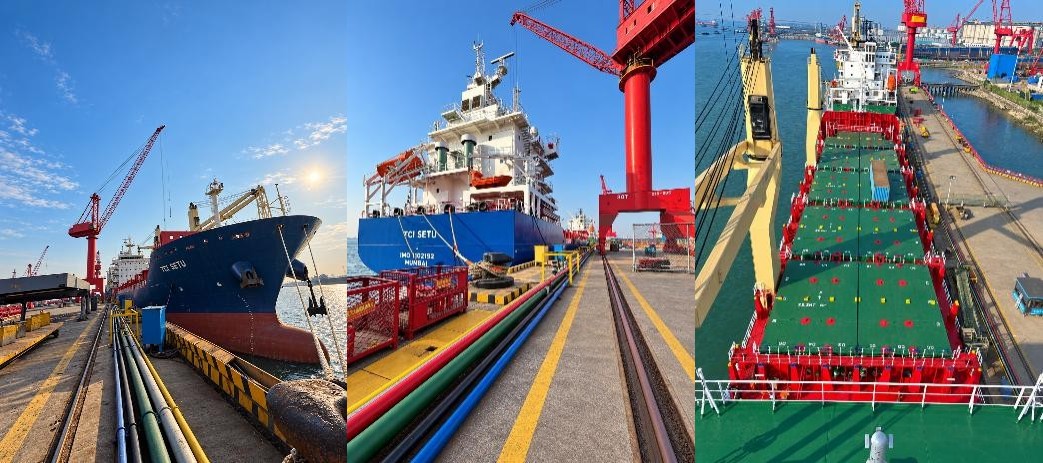
GURUGRAM: Reinforcing its commitment to sustainable logistics and India’s coastal shipping infrastructure, TCI Seaways, a division of Transport Corporation of India Limited (TCI), has taken delivery of TCI SETU, a 500 TEU Container Vessel, on 29 October 2026.

With a deadweight capacity of approximately 7,300 metric tons, TCI SETU is the seventh ship in the TCI Seaways fleet, joining the existing six vessels. It enhances capacity to serve India’s growing coastal freight requirements, particularly on the East Coast, where TCI Seaways connects Chennai, Visakhapatnam, the Andaman Islands and Myanmar.

Built by Taizhou Sanfu Ship Engineering Co. Ltd., China, the vessel is designed for superior build quality, operational reliability and economic efficiency. Its low-carbon performance supports the transition towards cleaner, more sustainable maritime transport.

TCI SETU represents an investment of ₹178.8 crore, funded entirely through internal accruals. It is the first of two vessels contracted from the yard.

Vineet Agarwal, MD, said: “At TCI, we see coastal shipping as a critical pillar of India’s future logistics infrastructure. TCI SETU reflects our continued commitment to investing in technology, operational excellence and sustainable transportation. By combining efficient coastal shipping with our extensive road and rail capabilities, we are building a more integrated, cost-effective and environmentally responsible multimodal network. This is not just about expanding our fleet. It is about helping shape a greener and more connected future for Indian logistics.”

As India accelerates its focus on logistics efficiency, infrastructure development and decarbonization, coastal shipping is set to play a larger role in a balanced and sustainable transport ecosystem. TCI Seaways will continue to invest in modern vessel technology, strengthen its fleet and advance multimodal connectivity.

Gateway Distriparks reports strong recovery in Q2 FY2027, container business revenue rises 12%

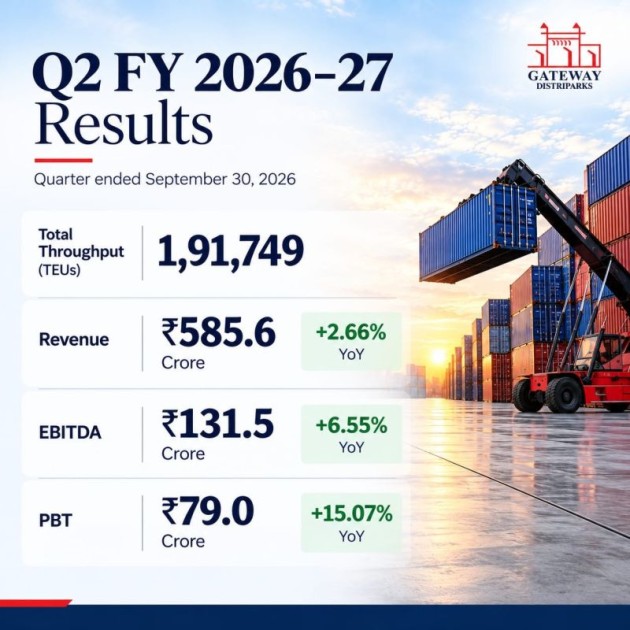
NEW DELHI: Gateway Distriparks Limited (GDL), one of India’s leading integrated intermodal logistics and container rail transportation companies, has announced its financial results for the second quarter of FY2026–27 (Q2 FY2027), reporting a strong recovery in its container business compared with the preceding quarter.

Commenting on the company’s performance, Mr. Prem Kishan Dass Gupta, Chairman and Managing Director, Gateway Distriparks Limited, said that the container business recorded encouraging growth during the quarter, with revenue increasing by 12%, EBITDA rising by 15.3% and Profit After Tax (PAT) growing by 23% compared with Q1 FY2027.

He noted that the improvement was achieved despite continuing geopolitical uncertainties, a subdued macroeconomic environment, container imbalances and irregular vessel schedules. These industry-wide challenges continued to affect operational efficiency and cargo movement, indicating that the business could have delivered even stronger growth under more favourable market conditions.

The company highlighted that the improved performance reflects the resilience of its container logistics operations and its ability to respond to changing market conditions. The recovery in the container business during Q2 also signals improving operational momentum amid a challenging global trade and shipping environment.

Expansion Initiatives to Strengthen Future Growth

Looking ahead, Gateway Distriparks remains optimistic about its medium-term growth prospects, supported by its ongoing infrastructure expansion and emerging opportunities in India’s logistics and international trade sectors.

A key development is the commencement of EXIM operations at its Ankleshwar facility in Gujarat, which is expected to strengthen its regional logistics presence and provide enhanced connectivity for exporters and importers. The progress of the upcoming Indore Inland Container Depot (ICD) is another important milestone in the company’s expansion strategy, aimed at extending its network reach and improving access to containerised cargo markets in central India.

Additionally, the recently signed trade agreements by the Government of India are expected to create fresh opportunities for international trade, potentially supporting higher export-import cargo volumes and increasing demand for integrated logistics and container transportation services.

Positive Medium-Term Outlook

While acknowledging that near-term market uncertainties and operational challenges are likely to persist, the company remains confident about its long-term business fundamentals. The expansion of its terminal network, strengthening of EXIM infrastructure and potential growth in India’s international trade are expected to provide a strong foundation for future business development.

Gateway Distriparks continues to focus on expanding its logistics capabilities, improving operational efficiency and strengthening its position in India’s growing multimodal transportation and supply chain ecosystem.

The Q2 FY2027 performance reflects the company’s resilience and strategic focus on capacity expansion, operational improvement and capturing emerging opportunities in India’s evolving logistics sector.

PSA International’s new Priok Container Terminal One named ‘Container Terminal Operator of the Year’ at Indonesia Logistics Awards 2026

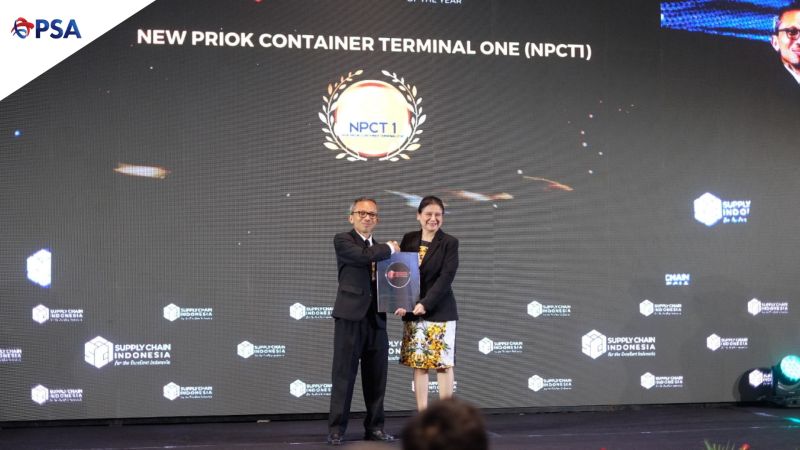
JAKARTA: New Priok Container Terminal One (NPCT1), operated by PSA International, has been named ‘Container Terminal Operator of the Year’ at the Indonesia Logistics Awards 2026, organised by Supply Chain Indonesia. The recognition marks a significant achievement for the terminal, which is celebrating its 10th anniversary this year, making the award particularly special as it recognises a decade of operational development and contribution to Indonesia’s maritime and logistics industry.

This is the first time NPCT1 has received the prestigious distinction, acknowledging its operational performance, professional workforce and contribution to strengthening Indonesia’s port and logistics ecosystem.

The achievement reflects the collective efforts and commitment of NPCT1’s employees and terminal management, supported by the strong collaboration of its key stakeholders, including PT Pelabuhan Indonesia (Pelindo), Mitsui & Co., Ocean Network Express (ONE), the workforce union, shipping lines and other partners across the logistics value chain.

Strengthening Operational Capabilities

As part of its ongoing commitment to operational excellence and capacity enhancement, NPCT1 is planning to introduce two additional Rubber-Tyred Gantry (RTG) cranes in 2027. The planned investment is expected to strengthen the terminal’s container-handling capabilities, improve yard operations and support greater operational efficiency.

The addition of modern cargo-handling equipment will further enhance the terminal’s ability to respond to evolving customer requirements and the growing demands of containerised trade.

Advancing PSA’s ‘Node to Network’ Strategy

Looking ahead, NPCT1 will continue to strengthen its position within Indonesia’s maritime and logistics landscape by advancing PSA International’s broader ‘Node to Network’ strategy.

The strategy focuses on strengthening connectivity and collaboration across ports, shipping lines, logistics providers and other supply chain stakeholders. By developing stronger partnerships throughout the logistics ecosystem, NPCT1 aims to support more seamless cargo movement and build resilient, efficient and sustainable supply chains for Indonesia.

The approach also highlights the importance of integrated port and logistics networks in facilitating international trade, improving supply chain reliability and supporting the long-term competitiveness of Indonesia’s maritime sector.

A Decade of Progress and Partnership

The award comes at a landmark moment as NPCT1 completes ten years of operations. Over the past decade, the terminal has continued to develop its capabilities through operational improvements, stakeholder partnerships and investments aimed at supporting Indonesia’s growing container trade.

The recognition at the Indonesia Logistics Awards 2026 is a testament to the dedication and professionalism of the NPCT1 team and the continued support of its partners across the maritime and logistics industry.

As it enters its next phase of growth, NPCT1 remains focused on operational excellence, infrastructure enhancement, stronger industry collaboration and sustainable supply chain development, reinforcing its role in supporting Indonesia’s position in global trade.

Freight rates for Russian oil stay at record highs amid tanker shortage, Black Sea risks, sources say

NEW DELHI : Freight rates for oil shipments from Russia’s Western Ports to India remained at record highs in late October, reflecting risks in the Black ​Sea and a shortage of vessels amid disruptions and strong global ‌demand, three trading and shipping sources said. High freight rates are driving up costs for Russian oil exporters, as Western sanctions force Russia to ship most of its crude from ​its western ports to Asia, primarily India and China, via long ​and costly routes.

Freight costs for shipping Urals crude to India are ⁠currently around $30 per barrel or more, depending on the shipowner and destination, ​up from around $20 in September. The cost of shipping a cargo of about 100,000 ​metric tons on an Aframax tanker from Russia’s Baltic ports to western India has remained at around $23 million per one-way voyage, compared with roughly $13 million-$16 million in September. A Suezmax ​tanker can be fixed for the same route at about $27 million, the ​sources said, adding that shipping costs are eating into sellers’ profits more than ever.

The cost ‌of ⁠shipping Urals crude from the Black Sea to India on Suezmax tankers, which can carry about 140,000 tons, has risen to a record $30 million per one-way voyage, up from around $19 million in September, the sources said. Oil loadings from ​the Black Sea have ​been largely disrupted ⁠since the summer due to constant drone attacks and war tensions in the region causing long delays in exports.

According to ​shipbroker Riverlake, the cost of transporting a 140,000-ton crude ​cargo from ⁠the Black Sea to the Mediterranean remained at Worldscale 952 points in October, only slightly below about WS1,000 earlier this month.

“Oil sellers are asking for lower rates, ⁠but ​shipowners don’t want to offer discounts,” one of ​the sources said.

Another source said the upcoming winter season is likely to make the situation even ​worse as the weather further complicates shipping.

Source: Reuters

Four things to watch in shipping and energy if Middle East conflict resumes

DUBAI: Despite ongoing efforts to de-escalate tensions in the Middle East, there is growing anticipation of renewed fighting between Iran, the United States, and Israel.

If another round of intense strikes takes place in the next weeks, the repercussions will once again be felt across the region’s energy and shipping sectors. This would come as some transits have been gradually recovering, and regional exporters adapting to an extremely challenging security situation by relying on workarounds and new ways of trading. These two sectors have been at the heart of the eight-month war and key targets for Iran as it seeks to maintain pressure on regional and international markets.

Crude oil flows have gradually recovered in recent months. Data from Kpler shows that at least 16.5 million barrels per day (bpd) of crude were exported from the Middle East in September. The commodities data and analytics firm describes these volumes as matching the pre-war average, excluding Iranian exports. However, the flows no longer follow the same route they did before the war, namely the traditional outbound lane in the middle of the Strait of Hormuz. Some volumes are also reliant on Saudi and Emirati pipelines, which are themselves vulnerable to attacks, as the Saudi East-West pipeline has demonstrated. Other volumes require ship-to-ship transfers in the Gulf of Oman, where infrastructure constraints have caused bottlenecks and delays – discussed in a previous article.

This crude recovery also remains inconsistent due to geopolitical risks, sustaining risk premiums in crude prices and freight rates. Iran-led attacks this month suggest that Tehran has sought to slow the recovery and sustain pressure on these flows. Preventing a stable recovery and keeping risks elevated are key objectives of Iran’s maritime campaign, knowing that regional countries are resorting to different measures to keep energy supplies flowing despite the sustained security risks.

Yet while attention has focused overwhelmingly on crude, it’s crucial to remember that flows of other commodities, such as liquefied natural gas (LNG) and refined products, are recovering slowly. Additional challenges could emerge in the event of another round of escalation.

The following shows the gradual recovery in some energy flows out of the region and highlights four developments to watch if fighting resumes.

Ship attacks expand, crude recovery slows down
This will depend on what Iranian infrastructure any possible US and Israeli strikes target, and Iran’s response to that. Since crude exports have been driving the gradual oil recovery in the region, these volumes will be closely watched. Any transit disruption will likely be the outcome of both strikes within Iran, as some vessels may pause transit to assess the geopolitical risks, as well as Iran’s direct ship attacks.

Attacks on ships are expected to be maintained along the Omani corridor and probably expand deep inside the Persian Gulf close to terminals that have seen an increase in loadings. So far in October, there have been at least 30 reported and confirmed ship attacks in the Strait of Hormuz and surrounding waterways, the highest monthly total recorded during this war.

A brief halt in loadings could occur in case of attacks similar to those that took place in March. For instance, that month Iraq had to halt oil loadings following an attack against two oil tankers in Iraqi waters. Loadings from Iraq along with Saudi Arabia and the UAE have been driving crude oil exports from the region higher over the past months. In Iraq’s case, southern loadings from export outlets in the Gulf were approaching 3 million bpd as of October 28, compared to around 3.5 million bpd in February and before the war started, based on data from Kpler. Unlike Saudi Arabia and the UAE, Iraq’s southern crude exports rely on tanker loadings and stable transits via the Strait of Hormuz due to the absence of a pipeline system in the country.

Non-crude commodities experience further pressure
The challenges facing the recovery of LNG transits, particularly from Qatar, a top LNG exporter prior to the war, have been overshadowed by coverage of regional crude oil flows. Before the war broke out, the number of overall LNG tankers (laden with Qatari and non-Qatari LNG) exiting the Strait of Hormuz stood at over 80 LNG tankers in February, according to data from Bloomberg and Kpler. This number collapsed in March as LNG exports tumbled and Iran attacked Qatar’s Ras Laffan, the world’s largest LNG export facility. Transits remained in single digits in April and May before increasing slightly in June amid a brief ceasefire, although they remained below 20 per month. Since September, these outbound transits have been in the range of 20 to 30 tankers, data shows. Prior to the war, 20 percent of global LNG supply transited through the Strait of Hormuz.

With respect to Qatar specifically, QatarEnergy has been seeking LNG supplies from other regions, including the US, to maintain its supplies to customers as the war in the region has severely impacted its exports to long-term buyers. In addition to being a top LNG producer and exporter, Qatar possesses a large LNG tanker fleet which the country was on a mission to expand up to 200 vessels prior to the war in anticipation of rising LNG supplies. This fleet is now seen as being utilized by QatarEnergy to source LNG supplies from different regions outside the Middle East.

Like other regional producers and exporters, Qatar has been adapting to the challenging energy and maritime environment, and has resorted to new ways of LNG trading, as well as workarounds to keep some tanker transits via the Strait of Hormuz, including the shuttle trade. However, even these workarounds cannot guarantee a stable recovery amid the high-risk security situation, and if fighting resumes.

Next, the recovery of refined products
This has been also slow compared to crude, reportedly due in part to more complex logistical operations when it comes to STS transfers, and lower refinery runs following attacks during the war. One case to look at is exports of very low sulphur fuel oil (VLSFO) from Kuwait’s Mina al-Zour refinery which market reports, including from Kpler and Argus, said resumed exports of VLSFO between late August and early September after a months-long pause. This refinery is described as a major exporter of VLSFO including to the Asian market. A major escalation in the region could reverse this slow recovery. This could also impact shipping globally, restricting bunker supplies in major hubs with the disruption of marine fuel supplies a major concern for shipowners and managers in the early months of the war.

Iran amplifies its maritime disinformation campaign
In October, Iran intensified its attacks against commercial vessels while also escalating its media campaign. One of the key objectives has been to create the perception that tankers have been hitting mines in the Strait. For instance, the Islamic Revolutionary Guard Corps (IRGC) Navy claimed that two supertankers struck mines in the Strait of Hormuz, yet the Joint Maritime Information Center (JMIC) said in an advisory note that there was “no substantiation to these claims.” However, when fake images of vessels on fire and videos of attacks that pro-Iran media falsely claim took place in the region go viral on social media, it becomes difficult to maintain a clear picture of events. Reassuring the shipping and energy communities becomes especially challenging once that disinformation has spread. Iran should be expected to rely on this media campaign as it has contributed to keeping the war risks high.

Lastly, the double whammy: Iranian attacks joined by attacks from Yemen and Iraq
Over the past few days, there have been efforts to de-escalate the conflict in the region. These included a meeting in Tehran between top officials from Iran, Saudi Arabia, Turkey and Pakistan – the latter three countries being parties to the Mecca Joint Defense Agreement reached in August. Meanwhile, the Wall Street Journal cited US officials on October 28 as saying that US Vice President JD Vance had reached out to Iranian officials to revive negotiations.

If efforts to resume talks between the warring sides fail and intensive strikes against Iran resume, Iranian retaliation could intersect with ongoing Houthi-led attacks on Saudi infrastructure, including energy facilities, and as part of the Houthi-Saudi conflict. Possible pressure from Iran-aligned armed groups in Iraq could also compound the threats. Together, these would serve Iran’s plan since the war started of sustaining risks to regional oil and gas value chains, complicating recovery efforts and keeping global markets on edge.

Source: Seatrade Maritime News

Pharma H1 exports up 5% to $16.14-bn. as Europe offsets U.S. slowdown

NEW DELHI : India’s pharmaceutical exports rose 4.90% year-on-year (YoY) to $16.14 billion in the first half of FY27, as strong demand from Europe, Latin America and ASEAN markets offset a decline in shipments to North America, including the crucial U.S. generics market.

According to the Pharmaceuticals Export Promotion Council of India (Pharmexcil), Europe emerged as a key growth driver, with exports rising 9.66% to $3.29 billion. Accounting for 20.38% of India’s pharmaceutical exports, the region offered opportunities for deeper engagement, particularly in Germany, the Netherlands and France.

In contrast, exports to the North American Free Trade Agreement (NAFTA) region, India’s largest pharmaceutical market, declined 2.05% YoY to $5.3 billion. The region accounted for 32.87% of total shipments.

Other markets also supported growth. Exports to Africa increased 6.48% YoY to $2.25 bllion, while Latin America recorded a 16.58% rise to $1.3 billion. Shipments to the Association of Southeast Asian Nations (ASEAN) surged 21.54% YoY to $1.06 billion.

The growth was supported by exports across key product categories, including drug formulations and biologicals, bulk drugs and intermediates, and surgical products.

Drug formulations and biologicals remained the largest category, accounting for 73.84% of total exports at $11.91 billion, an increase of 3.81% YoY. Bulk drugs and drug intermediates grew 12.07% to more than $2.75 billion, while surgical product exports rose 9.53% to nearly $427 million.

The diversified market performance helped sustain export growth despite weaker North American shipments, Pharmexcil Chairman Namit Joshi and Vice-Chairman Bhavin Mehta said on Thursday. Exports in the July-September quarter rose 3.05% YoY to $8.04 billion.

“The next phase of our growth should focus on moving up the value chain… will require greater investment in research and development, technology transfer and co-development of complex generics, biosimilars and specialised therapies. Europe presents significant opportunities for such collaborations, given its strong research and innovation ecosystem,” Mr. Joshi said.

Mr. Mehta said expanding exports across Europe, ASEAN, Latin America and Africa demonstrated the opportunities available to Indian pharmaceutical companies across the value chain.

Ocean Network Express names new 14,000-TEU container vessel ‘ONE SYMPHONY’ in Japan

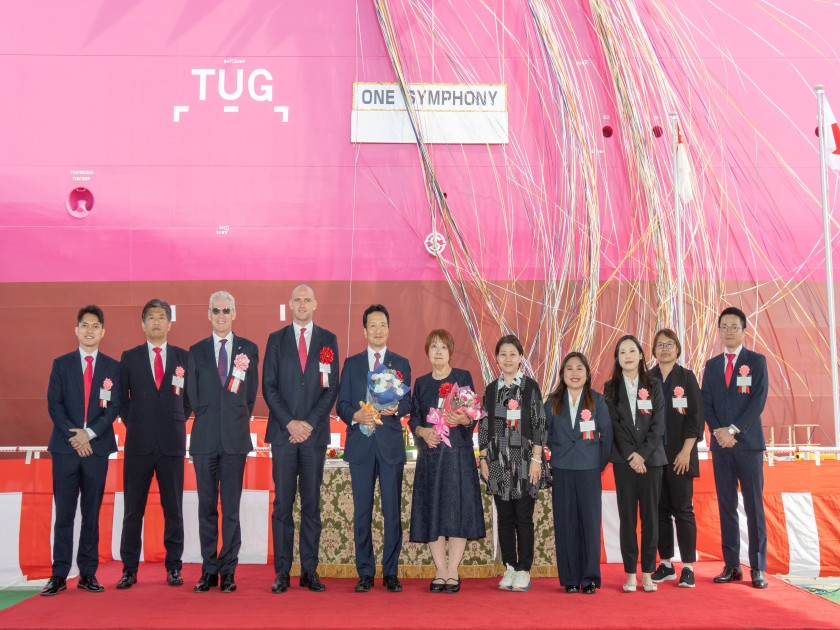
TOKYO: Ocean Network Express (ONE), one of the world’s leading container shipping companies, held the naming ceremony of its latest newbuild container vessel, ONE SYMPHONY, in Japan on 22 October 2026. With an approximate carrying capacity of 14,000 TEU, the vessel represents another important milestone in the company’s ongoing fleet modernisation and expansion programme.

The ceremony was attended by Mr. Till Ole Barrelet, Chief Executive Officer of Ocean Network Express, and Mr. Jeremy Nixon, Senior Advisor, along with distinguished guests and industry partners representing Yusen Logistics, Imabari Shipbuilding and Nihon Shipyard. The event celebrated the addition of the new vessel to ONE’s expanding fleet and recognised the collaborative efforts of the organisations involved in its development.

Part of 20 Next-Generation Ammonia- and Methanol-Ready Vessels

ONE SYMPHONY is among 20 newbuild container vessels being introduced as part of the company’s fleet development strategy. These vessels are designed to be ammonia- and methanol-ready, reflecting ONE’s forward-looking approach to preparing its fleet for the evolving requirements of the global shipping industry.

The newbuild programme underlines the company’s focus on modernising its fleet, strengthening its service capabilities and preparing for the maritime sector’s transition towards lower-carbon shipping solutions. The ammonia- and methanol-ready design provides flexibility for potential future adoption of alternative marine fuels as the availability of infrastructure, technologies and regulatory frameworks continues to develop.

With a capacity of approximately 14,000 TEU, ONE SYMPHONY will add substantial container-carrying capability to the company’s network, supporting the efficient movement of cargo across international trade routes and meeting the evolving requirements of global customers.

ONE SYMPHONY: A Name Reflecting the Spirit of Teamwork

The name ‘ONE SYMPHONY’ has a special significance, representing one of the company’s core values – Teamwork.

Drawing inspiration from a symphony orchestra, where different sections and individual musicians work in harmony to create a unified performance, the name symbolises ONE’s philosophy of collaboration. Just as every instrument contributes to the success of an orchestra, ONE believes that strong partnerships, shared expertise and coordinated efforts are essential to delivering reliable and high-quality services to customers worldwide.

The name also recognises the importance of close cooperation with customers, business partners, shipbuilders and other maritime stakeholders in strengthening the global supply chain.

Strengthening Fleet Capabilities and Sustainable Maritime Operations

The naming of ONE SYMPHONY highlights Ocean Network Express’s continued investment in next-generation vessels and its commitment to building a modern, efficient and environmentally responsible fleet.

Through its newbuilding programme and strategic partnerships, the company aims to enhance operational capabilities, support global trade connectivity and remain responsive to the changing demands of international shipping.

As the maritime industry accelerates its transition towards more sustainable operations, investments in ammonia- and methanol-ready vessels are expected to play an important role in preparing shipping companies for the next phase of maritime decarbonisation.

The addition of ONE SYMPHONY marks another significant step in ONE’s journey towards strengthening its global shipping network while embracing innovation, collaboration and sustainability.

MOL holds joint naming ceremony for world’s 1st 3 Ammonia-Fueled Capesize Bulk Carriers

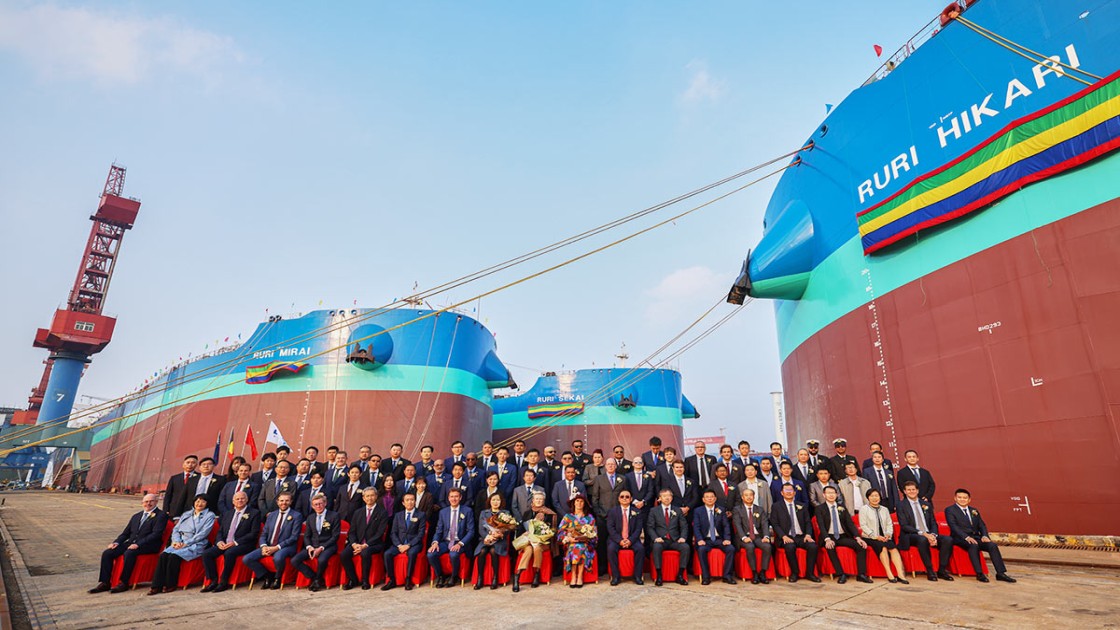
TOKYO: Mitsui O.S.K. Lines, Ltd. on Friday announced that on October 29, MOL held a joint naming ceremony at CSSC Qingdao Beihai Shipbuilding Co., Ltd., part of China State Shipbuilding Corporation (CSSC), for the world’s first three ammonia-fueled Capesize bulk carriers, which are being jointly developed with the Belgian shipping group CMB.TECH NV (Note 1). Upon their scheduled delivery starting around early 2027, they will be jointly owned by MOL and CMB.TECH. MOL plans to operate the vessels under long-term charter contracts.

With CMB.TECH CEO Alexander Saverys and MOL Managing Executive Officer Kazuhiro Takahashi on hand for the ceremony, along with numerous stakeholders, the three vessels were respectively named the RURI MIRAI, RURI SEKAI, and RURI HIKARI (Note 2).
As a co-owner and charterer of these vessels, MOL is working closely with internal and external stakeholders to formulate safe operating procedures and develop and establish comprehensive safety measures. These vessels will form MOL’s first net-zero-emission fleet.
Because ammonia does not emit CO2 during combustion, it is attracting attention as one of the next-generation fuels expected to support the decarbonization of the shipping industry. These vessels represent an important milestone toward achieving net-zero emissions.

Environmental strategy is a key element of the MOL Group’s management plan, “BLUE ACTION 2035.” In the “MOL Group Environmental Vision – BLUE ACTION 2035 Phase 2,” the group aims to begin operating net-zero-emission ocean-going vessels in the 2020s and achieve net-zero emissions by 2050. By providing safe, high-quality transport services using ammonia-fueled vessels, the MOL Group will promote the wider adoption of ammonia fuel and contribute to the realization of a sustainable society.

CMB.TECH (all capitals) is one of the largest listed, diversified and future-proof maritime groups in the world with a combined fleet of about 230 vessels: dry bulk vessels, crude oil tankers, chemical tankers, container vessels and offshore energy vessels. CMB.TECH also offers hydrogen and ammonia fuel to customers, through own production or third-party producers.
CMB.TECH is headquartered in Antwerp, Belgium, and has offices across Europe, Asia and Africa.
CMB.TECH is listed on Euronext Brussels and the NYSE under the ticker symbol “CMBT” and on Euronext Oslo Børs under the ticker symbol “CMBTO”.

(Note 2) The name RURI (lapis lazuli), shared by all three vessels, reflects the hope of protecting our beautiful blue planet through the operation of these environmentally friendly vessels and the use of next-generation fuels. In addition, the names MIRAI (Future), SEKAI (World), and HIKARI (Light) were chosen to express the aspiration that these vessels, as the world’s first ammonia-fueled Capesize bulk carriers, will lead the way toward the future of sustainable shipping and serve as a beacon of hope for the realization of a decarbonized global society.

European Shipowners call on MEPs to back Commission proposal to include two Indian yards in the EU ship recycling list

LONDON: The Environment Committee of the European Parliament votes on 4 November on a motion for resolution objecting to the Commission’s proposal to add two Indian ship recycling yards to the European List of Ship Recycling Facilities. European Shipowners | ECSA call on MEPs to reject the motion and to support the inclusion of the two Indian yards in the EU List.

The two Indian yards have been thoroughly evaluated during an extensive inspection period and were found compliant with the requirements of the EU Regulation. This is a major breakthrough in ensuring high environmental and safety standards for ship recycling worldwide. The Commission’s proposal sends a clear signal: yards outside the EU that meet the safety and environmental requirements of the EU Ship Recycling Regulation (EU SRR) can and should be recognised.

European Shipowners | ECSA call on members of the European Parliament to support the proposal of the Commission, which is based on a thorough and independent inspection process.

“The inclusion of the two Indian yards in the EU list is a long-awaited and very welcome step, which rewards investments made to meet EU standards. Objecting to the inclusion of facilities that comply with the stringent EU safety and environmental standards would undermine the credibility of the EU’s own legislation”, said Sotiris Raptis, Secretary General of European Shipowners | ECSA.

In July 2026, European Shipowners | ECSA welcomed the Commission’s proposal. The global shipping industry came together in September to back the proposal through a Joint Industry Statement and issued an open letter to EU ministers urging them to adopt the list.