Home Blog Page 334

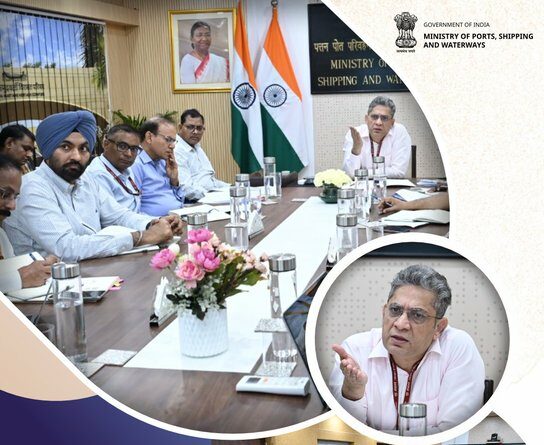
MoPSW Secy. chairs High-Level Review Meeting to accelerate maritime sector growth

NEW DELHI: Shri Vijay Kumar (IAS), Secretary, Ministry of Ports, Shipping and Waterways (MoPSW), chaired a high-level virtual review meeting with Heads of Organisations and senior officials of the Ministry to deliberate on new ideas and strategic interventions aimed at enhancing the overall performance of India’s maritime sector.

The meeting focused on identifying innovative approaches to improve operational efficiency, strengthen port-led development, and boost India’s competitiveness in global trade. Key discussions were held on enhancing port productivity, promoting digitalisation and smart port initiatives, improving multimodal connectivity, and accelerating infrastructure development under flagship programmes.

A comprehensive review of the action taken on key outcomes of the PM Sector Review 2024–25 was also undertaken. Progress across critical areas such as capacity augmentation, logistics cost reduction, ease of doing business, and sustainability initiatives was assessed, with emphasis on timely implementation and measurable outcomes.

Shri Vijay Kumar underscored the importance of adopting technology-driven solutions, fostering public-private partnerships, and ensuring seamless coordination among stakeholders to achieve faster and more efficient project execution. He also highlighted the need to align sectoral initiatives with the Government’s vision of making India a leading maritime nation and a global logistics hub.

Senior officials shared updates on ongoing projects and proposed forward-looking strategies to further strengthen institutional performance and service delivery. The meeting concluded with a renewed commitment to innovation, efficiency, and accelerated growth, reinforcing MoPSW’s focus on driving transformative changes across India’s maritime ecosystem.

BLR Logistiks (I) Ltd receives CRISIL Rating Upgrade to A-/Stable

MUMBAI: BLR Logistiks (I) Ltd has announced that CRISIL Ratings has upgraded the company’s credit rating to CRISIL A-/Stable from CRISIL BBB+/Positive.

The rating upgrade reflects the company’s strong financial performance, prudent management practices, and consistent business growth. It also reinforces BLR Logistiks’ financial stability and growing credibility in the logistics sector.

ASHOK GOYAL BLR Logistiks (I) Ltd receives CRISIL Rating Upgrade to A-/Stable

Commenting on the achievement, Mr. Ashok L Goyal, Managing Director, said: “We are proud of this milestone, which reflects the trust of our stakeholders and our continued focus on sustainable growth, operational excellence, and financial discipline.”

The improved rating is expected to further strengthen the company’s market position, enhance financial flexibility, and support future expansion plans.

As part of its growth strategy, BLR Logistiks (I) Ltd has also recently ventured into the air cargo business, with a focus on providing customers end-to-end logistics solutions under one roof. This expansion is aimed at strengthening the company’s service portfolio and offering seamless multimodal logistics solutions.

About BLR Logistiks (I) Ltd

BLR Logistiks (I) Ltd is a leading logistics solutions provider committed to operational excellence, customer satisfaction, and long-term value creation for all stakeholders.

GMU launches Alumni Association at inaugural reunion

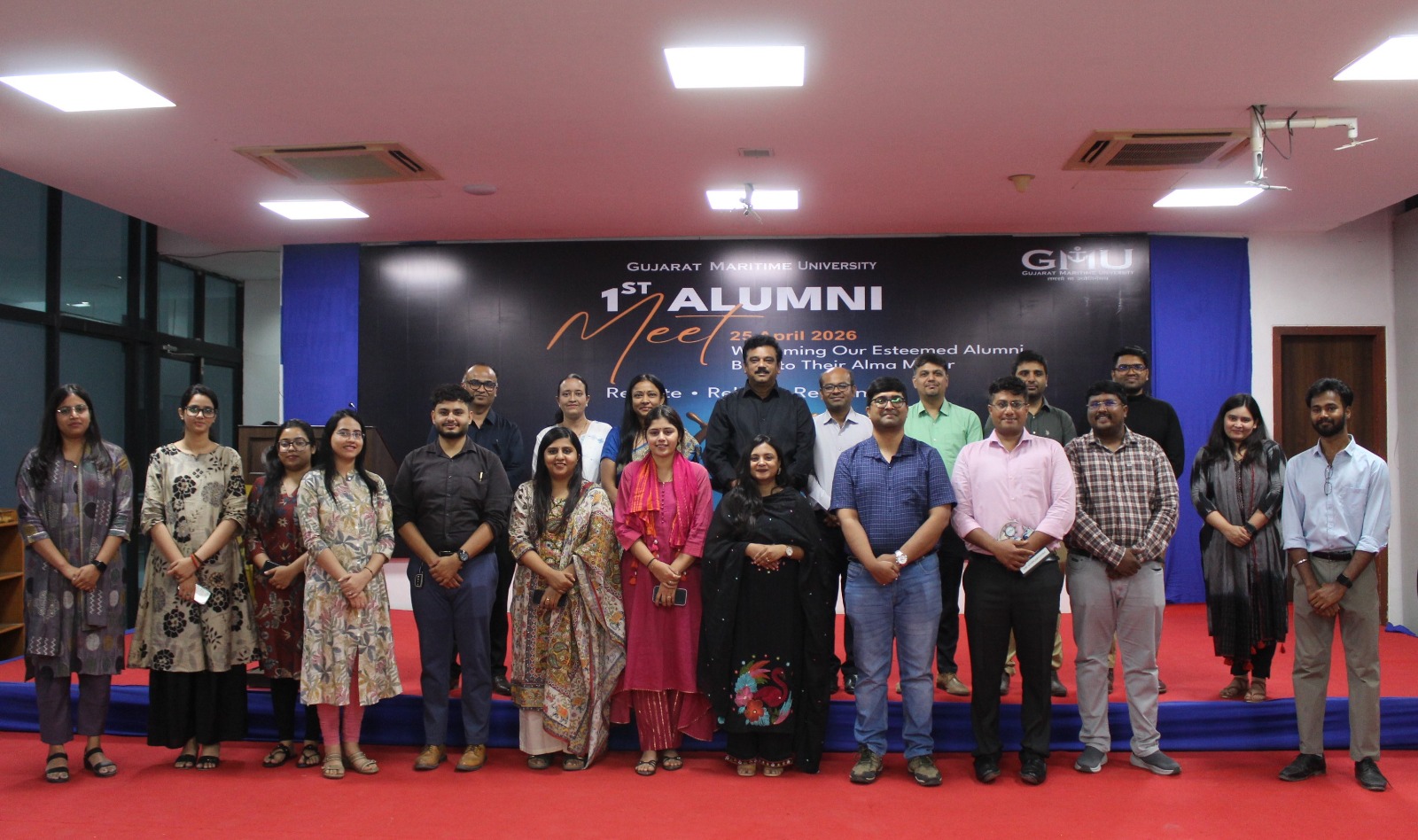
GANDHINAGAR : Gujarat Maritime University (GMU) scripted an important chapter in its institutional journey on 25 April 2026, as it hosted its first Alumni Reunion alongside the formal launch of the Gujarat Maritime University Alumni Association (GMUAA) and the announcement of its inaugural office-bearers.

WhatsApp Image 2026 04 28 at 6.42.01 AM 1 GMU launches Alumni Association at inaugural reunion

Alumni of GMU’s MBA and LLM programmes from across batches gathered on campus for the occasion, marking the beginning of what promises to be an enduring and mutually enriching relationship between the university and its growing community of graduates.

Rekindling old friendships and forging new connections, alumni engaged in spirited conversations with faculty and staff.

The highlight of the event was the formal constitution of the GMUAA, a milestone that signals GMU’s commitment to fostering a vibrant, engaged, and lifelong alumni community. The Association’s first office-bearers were announced during the ceremony, lending the occasion a sense of historic significance.

Names and designations of office-bearers:

 President: Ms. Mili Trivedi (LLM 2020–2021)
 Vice President: Mr. Parth Tank (MBA 2023–2025)
 General Secretary: Mr. Kingshuk Halder (LLM 2019–2020)
 Treasurer: Mr. Rahul Akolkar (MBA 2020–2022)

The event concluded with a cultural programme in which alumni, faculty, and staff participated with great enthusiasm.

Reflecting on the significance of the occasion, GMU Provost, Prof. (Dr.) S. Shanthakumar, said, “The launch of the Gujarat Maritime University Alumni Association is a landmark moment for our institution. An alumni association is far more than a formal body — it is the living bridge between the university and the world it seeks to serve. Our alumni carry GMU’s values into boardrooms, ports, courtrooms, and policy chambers across the country and beyond, and this Association will be the channel through which that connection is strengthened and sustained. I urge our alumni to see GMUAA not merely as an association they belong to, but as one they actively shape — by mentoring students, contributing to our research and academic goals, and helping us build a university that future generations of maritime professionals will be proud to call their alma mater.”

India- New Zealand-FTA could absorb at least 12% of India’s Gulf exports

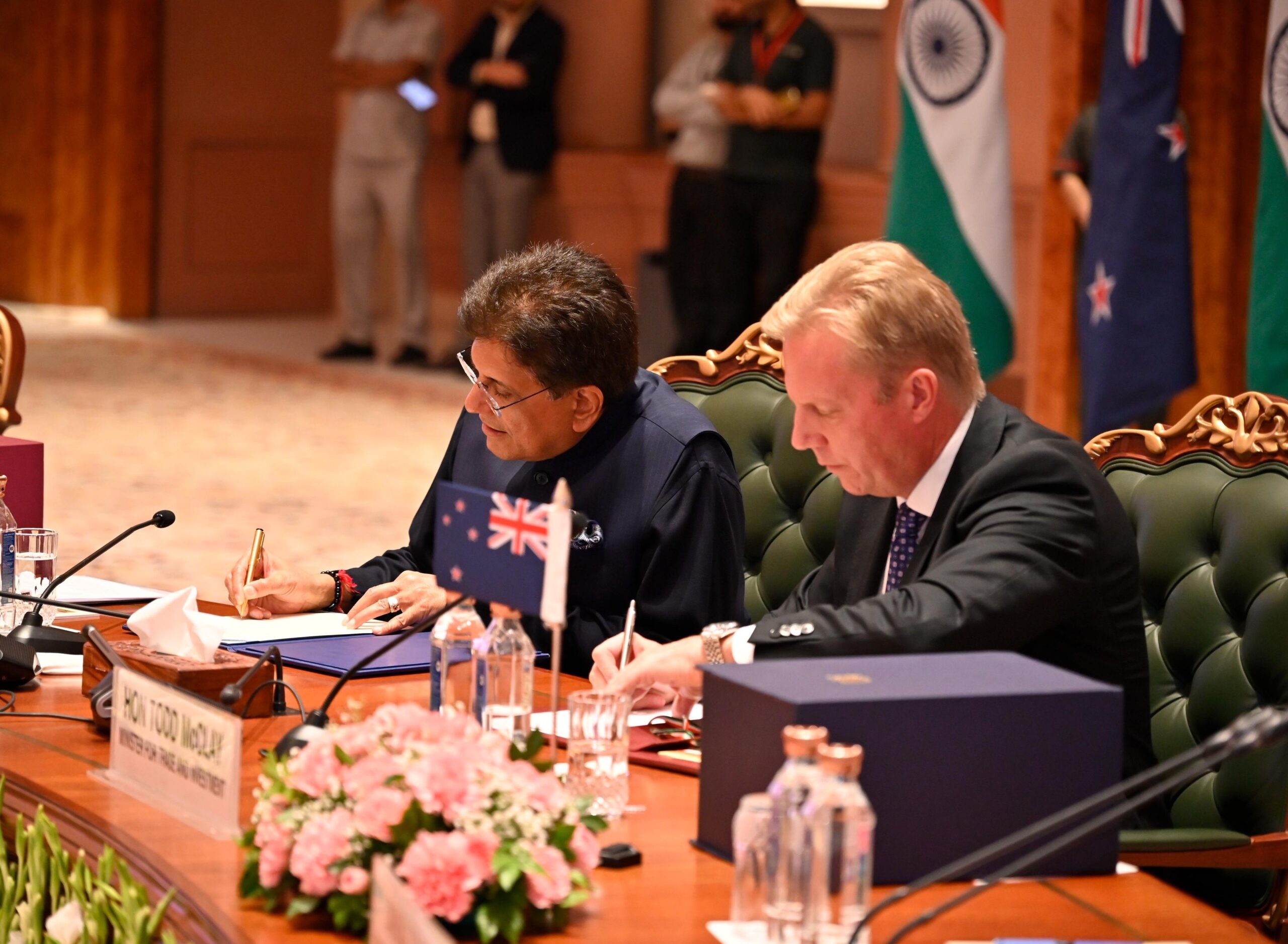
NEW DELHI : India and New Zealand on April 27 signed a free trade agreement (FTA), concluding 13 months of negotiations.

Food preparations ($119.2 million), industrial machinery ($98.8 million), excavators and earth-moving equipment ($95.6 million), and vehicle parts ($88.5 million) also feature prominently

New Zealand could absorb at least 12 percent of India’s exports currently exposed to the Strait of Hormuz if disruptions in the key shipping route persist, according to a Moneycontrol analysis of trade data. The estimate assumes a prolonged blockade of the Hormuz corridor and a slower recovery in demand from affected Gulf markets.

The pact is expected to significantly boost bilateral trade, with Wellington offering zero-duty access to 100 percent of Indian exports. New Delhi, in turn, has agreed to eliminate tariffs on 70 percent of tariff lines, covering about 95 percent of New Zealand’s exports by value, while keeping sensitive sectors such as dairy outside the agreement.

“This FTA reflects the shared trust between the two nations, the confidence of policy stability, business environment stability and all of this leading to a resilient supply chain,” Union Commerce and Industry Minister Shri Piyush Goyal said at the signing.

New Zealand could help India redirect nearly $7.3 billion worth of exports that currently move through the Strait of Hormuz, a critical artery for India’s trade with Gulf economies, particularly if regional demand takes time to recover.

Among the most exposed product categories routed through Hormuz are medicaments, worth $417.2 million, and cosmetics and toilet preparations, worth $267.3 million. Food preparations ($119.2 million), industrial machinery ($98.8 million), excavators and earth-moving equipment ($95.6 million), and vehicle parts ($88.5 million) also feature prominently.

Trade diversification benefits limited

Diversification options remain limited in the near term, with the New Zealand market currently capable of offsetting less than 2 percent of India’s total exports. However, India’s expanding export basket could improve that over time.

New Zealand shows the strongest potential demand in selected manufactured and consumer goods categories. It could absorb exports worth $603.1 million in turbo-jets, $390.8 million in communication apparatus and $384 million in food preparations.

Medical and surgical instruments could see additional demand of $305.6 million, while aluminium oxide exports worth $257.8 million may also find a market in New Zealand.

Other categories with relatively high replacement potential—where India’s trade remains over 50 percent dependent on Gulf markets, the US, UK, European Union, South Korea and Japan—include cosmetics ($194.6 million), plastic articles ($175.8 million), toys and scooters ($160.9 million), electrical static converters ($142.5 million) and iron or steel structures ($135.7 million).

Source : Moneycontrol

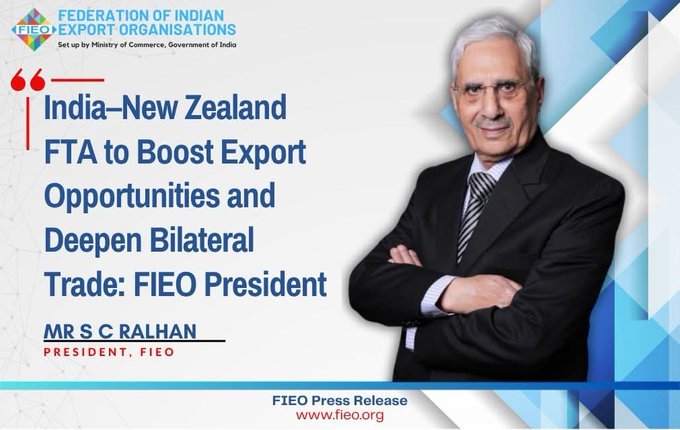
India–New Zealand FTA to boost export opportunities and deepen bilateral trade : FIEO President

NEW DELHI : The Federation of Indian Export Organisations (FIEO) warmly welcomes the India–New Zealand Free Trade Agreement (FTA) signed on Monday, terming it a significant milestone in strengthening India’s global trade engagement and expanding its export footprint. FIEO President, Mr S C Ralhan said that the FTA will open new avenues for Indian exporters by enhancing market access to New Zealand across key sectors such as agriculture, textiles, pharmaceuticals, engineering goods, and services such as IT & ITES, Business Services, Engineering, Education, Construction and Health Services. With reduced tariff barriers and streamlined trade procedures, Indian businesses will gain with improved competitiveness in the New Zealand market, added Mr Ralhan.

Mr S C Ralhan further reiterated that the India–New Zealand FTA marks a strategic step towards diversifying India’s export destinations and reducing overdependence on traditional markets. It presents immense opportunities for our exporters, particularly MSMEs, to tap into a high-value market with growing demand for quality goods and services. He further added, that the agreement will facilitate smoother trade flows, encourage investments for which a firm commitment has been made, and foster stronger supply chain linkages between the two nations. Exporters must proactively align their product standards and marketing strategies to leverage the full potential of this agreement.

FIEO Chief emphasized that sectors such as processed food, dairy alternatives, organic products could witness significant growth under the FTA framework. MRA for Organic Certification will facilitate the market access. AYUSH products for the first time will get the market access. Additionally, the services sector is likely to benefit from enhanced mobility provisions and mutual recognition of professional qualifications.

Highlighting the way forward, Mr Ralhan noted that to fully realize the benefits of the FTA, it is essential for exporters to stay informed about the rules of origin, compliance requirements, and regulatory frameworks. Capacity-building initiatives, market intelligence, and government support will play a crucial role in ensuring that Indian exporters can effectively capitalize on the opportunities presented.

FIEO also urges the government to work closely with industry stakeholders to address potential challenges such as non-tariff barriers, logistics costs, and awareness gaps among exporters. Strengthening trade facilitation infrastructure and promoting ease of doing business will be key to maximizing gains from the agreement. The India–New Zealand FTA is expected to more than double bilateral trade volumes, promote economic cooperation, and create a robust platform for long-term partnership between the two countries.

‘Apparel exports will rise 3-4 times’: Industry sees sharp gains from India-New Zealand FTA

NEW DELHI: Industry leaders on Monday said the India-New Zealand Free Trade Agreement (FTA) will open up significant market access and boost exports across key sectors, calling it a major opportunity for Indian businesses.

Mr. Sunil Kaushal, Chief Executive of India, India-New Zealand Business Council, said the agreement would strengthen economic engagement between the two countries. “It is a great opportunity for both New Zealand and India… It will provide market access to Indian companies in New Zealand… A lot of opportunities are going to come out of this FTA,” he said.

Export-oriented sectors, particularly apparel, are expected to see strong gains following the agreement. Dr A. Sakthivel, Chairman of the Apparel Export Promotion Council, said the FTA would significantly boost shipments. “The FTA with New Zealand is going to be very good for the apparel sector… After FTA, our exports will increase by 3 or 4 times in 2 years… It is very important for the apparel industry… It is a good opportunity,” he said.

Engineering exports are also likely to benefit from improved trade access under the pact. Mr.Pankaj Chadha, Chairman of EEPC India, said the agreement would help expand India’s export footprint. “This will help in increasing our export… It will at least be doubled… Overall, for engineering, it is a good agreement,” he said.

Industry stakeholders said the agreement is expected to create new opportunities for exporters by improving access to the New Zealand market, while also supporting growth across key manufacturing sectors.

India and New Zealand signed the Free Trade Agreement (FTA) on Monday, marking a significant step in strengthening bilateral economic ties, with the pact expected to bring deep tariff cuts, expanded market access and enhanced services cooperation.
The deal signed between India’s Commerce and Industry minister Shri Piyush Goyal and New Zealand’s Minister for Trade and Investment Todd McKlay is being described as one of India’s fastest concluded bilateral trade deals.

Zero-duty access under India-New Zealand FTA expected to lift gems, jewellery exports to USD 50 mn in three years: GJEPC

NEW DELHI: Gems and Jewellery Export Promotion Council (GJEPC) on Monday welcomed the signing of the India-New Zealand Free Trade Agreement (FTA), saying the pact is expected to significantly boost India’s gem and jewellery exports with zero-duty access to the market.

India’s current gem and jewellery exports to New Zealand stand at around USD 16.61 million, which the industry body expects to rise sharply to nearly USD 50 million over the next three years under the agreement.

“In today’s turbulent global environment, India’s continued progress in advancing and concluding FTAs is enabling the industry to strategically diversify its export markets and reduce overdependence on any single geography such as the US or regions like the GCC,” said Mr. Kirit Bhansali, Chairman, GJEPC.

“The India-New Zealand FTA, following the Australia agreement, is a timely step in this direction… with zero-duty access under the agreement, we expect this to grow to nearly USD 50 million over the next three years,” he added.

The council noted that New Zealand’s high per capita jewellery consumption offers strong growth potential for Indian exporters. It also highlighted that the agreement gives India a “clear duty advantage over key competitors such as China and Thailand,” which is expected to improve competitiveness and expand market share.

The FTA is likely to benefit multiple segments, including gold, silver, platinum, studded, contemporary and fashion jewellery, while also supporting employment generation across key manufacturing hubs such as Gujarat, Maharashtra, Rajasthan and West Bengal.

“Importantly, this FTA is not just an export opportunity, but also a platform for deeper economic engagement and investment, supporting a more balanced and resilient growth trajectory for the sector,” Mr. Bhansali said.

The GJEPC further said the agreement opens avenues to leverage the Indian diaspora in New Zealand, expand retail presence through local partnerships, and strengthen long-term trade ties in the Oceania region.

Recent Indian investments in New Zealand’s jewellery retail segment also point to strong long-term growth potential, with the FTA expected to further accelerate bilateral trade and investment flows, the council added.

Source: ANI

Department of Posts and DTDC sign MoU to strengthen logistics and E-Commerce in India

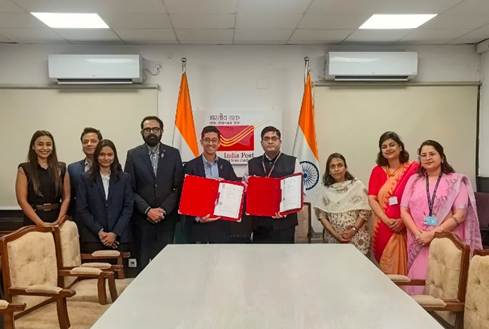
NEW DELHI : In a significant development to enhance India’s logistics and e-commerce ecosystem, the Department of Posts (DoP) under the Ministry of Communications and DTDC Express Limited have signed a Memorandum of Understanding (MoU). The MoU was formalized on Monday in New Delhi by Sh. Neeraj Kumar Jha, General Manager of Parcel Directorate, Department of Posts, and Sh. Abhishek Chakraborty, Chief Executive Officer of DTDC Express Limited, in the presence of senior officials from both organizations.

This partnership aims to leverage DoP’s vast infrastructure and network, coupled with DTDC’s logistics experience, to significantly improve parcel delivery operations across India. The MoU denotes a continued collaboration between the two parties, which began in 2025.

india post dtdc Department of Posts and DTDC sign MoU to strengthen logistics and E-Commerce in India

Key Highlights of the MoU:

Objective: To explore and expand opportunities in logistics and business operations, enabling DTDC to utilize DoP’s extensive postal network for nationwide parcel delivery, including Cash on Delivery (COD) services.
Increased Collaboration: The MoU focuses on joint logistics operations, capacity-sharing, best practices in parcel industry and synchronization of marketing strategies to optimize operational efficiency and service quality.
Regular Review Mechanisms: Both parties will conduct quarterly meetings to assess the progress of the partnership, ensure the integration of their systems and explore new opportunities to enhance the logistics network.
Benefits to DTDC:

DTDC will gain access to DoP’s unparalleled network of 1.64 lakh Post Offices spread across the country. This partnership will allow DTDC to expand its logistics operations, improve delivery speed and meet the growing demands of India’s e-commerce sector, especially in remote areas.

Benefits to the Department of Posts:

For DoP, the collaboration will enhance its parcel business, facilitating faster transmission and delivery services while expanding its network. By joining hands with DTDC, DoP aims to further strengthen its role in India’s logistics sector, contributing to the country’s vision of becoming a global logistics hub.

About the Department of Posts:

The Department of Posts, under the Ministry of Communications, operates the world’s largest postal network with over 1.64 lakh Post Offices across India. It plays a critical role in providing communication, logistics and financial services with a focus on driving e-commerce growth in India.

About DTDC Express Limited:

DTDC is one of the express parcel delivery companies in India, offering innovative logistics solutions for domestic and international e-commerce. The company is committed to delivering reliable, cost-effective and scalable logistics services, supporting businesses across various sectors.

Mumbai- Ahmedabad Vande Bharat to run with 20 coaches permanently from Today

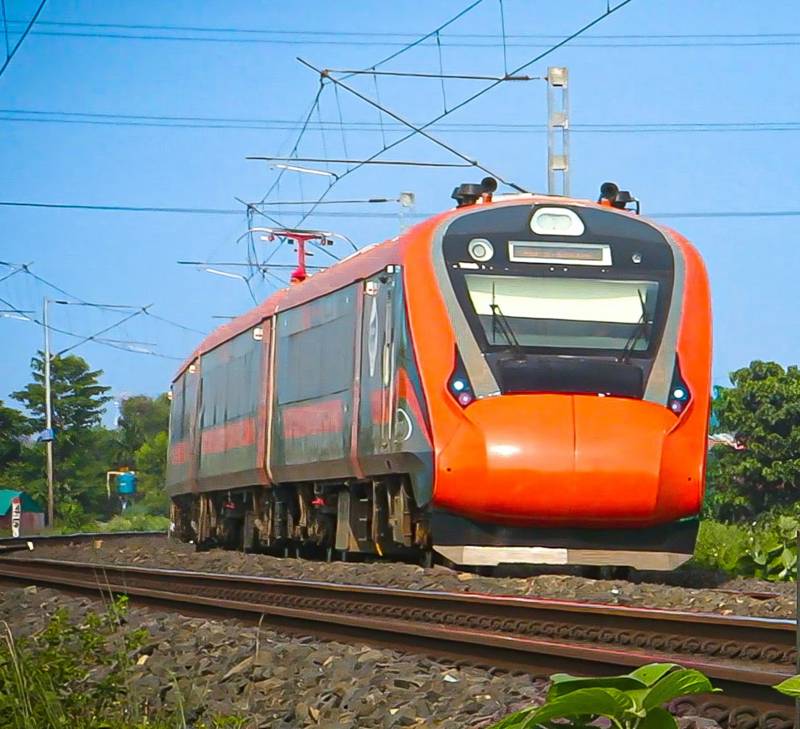
MUMBAI : Indian Railways has made the augmentation of Train No. 22961/22962 Mumbai Central-Ahmedabad Vande Bharat Express from 16 coaches to 20 coaches permanent, with effect from journeys commencing April 28, 2026. The augmented four coaches comprise three AC Chair Car coaches and one Executive Class coach, offering passengers significantly improved seating availability on one of India’s busiest and most sought-after inter-city rail corridors.

The decision is a direct response to the sustained and overwhelming demand the service has witnessed since its introduction. What began as a temporary augmentation to address peak travel requirements has now been formalised into a permanent operational arrangement, a reflection of Indian Railways’ commitment to matching its capacity with the confidence its passengers have placed in it.

Till now, 162 Vande Bharat services had been operationalised, reducing journey times by up to 45 percent on several corridors. Of these, 90 services are operating with 8-coach formations, 38 services with 20-coach formations and 34 services with 16 coaches. This indicates that approximately 23.45 per cent of Vande Bharat services have been upgraded to 20 coaches, while around 21 per cent operate with 16 coaches, with the remaining services continuing in the 8-coach configuration.

The 491-kilometre route, completing its journey in 5 hours 30 minutes and halting at Borivali, Vapi, Surat, and Vadodara, connects two of western India’s most economically vibrant cities. It serves a diverse cross-section of passengers, including business travellers, students, daily commuters, and tourists, for whom speed, comfort, and reliability are no longer aspirations but expectations.

That expectation is well-founded. Nearly 4 crore passengers travelled on Vande Bharat services in FY 2025-26, registering a year-on-year growth of approximately 34 percent. Since its inception in 2019, the Vande Bharat Express has served over 9.1 crore passengers across 1 lakh trips. Network-wide occupancy has consistently exceeded 100 percent. These numbers speak not merely to demand, but to a deep and growing trust among the travelling public in the quality and reliability of the service.

The growing popularity of Vande Bharat trains is rooted in a combination of factors that are reshaping how India travels. A new generation of rail passengers that is younger, more mobile, and increasingly unwilling to compromise on comfort or punctuality has found in the Vande Bharat a service that meets them where their expectations are. Faster journey times, cleaner coaches, improved on-board experience, and significantly better punctuality compared to conventional services have made these trains the preferred choice on route after route.

Indian Railways has responded in kind, a reflection of how persistently demand has outpaced capacity on the network’s most sought-after corridors. The Mumbai Central-Ahmedabad service joining this league permanently is not an isolated decision, but part of a wider, data-driven effort to ensure that the railway keeps pace with the aspirations of a changing India.

Other than the Mumbai Central-Ahmedabad service, the 20901/20902 Gandhinagar Capital-Mumbai Central Vande Bharat Express provides another key high-speed link between Gujarat and Maharashtra. Connecting Gandhinagar with Mumbai, this route also serves the larger Ahmedabad-Gandhinagar region, offering faster and more comfortable travel for business, administrative, and daily commuters, while strengthening economic ties between the two states.

Vande Bharat services, a fleet of semi-high-speed trains are designed to enhance passenger experience and safety. These trains are equipped with advanced safety systems such as KAVACH, along with features like faster acceleration and fully sealed gangways for improved stability and security. Passenger convenience is addressed through automatic plug doors, ergonomic reclining seats, and revolving seats in executive class. Onboard amenities include a mini pantry with hot case provision, bottle cooler, deep freezer, and hot water boiler. Each seat is fitted with mobile charging sockets, while CCTVs ensure surveillance and safety. Additionally, special lavatories for Divyangjan passengers have been provided in the Driving Trailer Car (DTC), ensuring inclusive and comfortable travel for all.

The permanent expansion of the Mumbai Central-Ahmedabad service to 20 coaches is part of this larger story of a railway system that is listening closely, scaling confidently, and ensuring that the millions of Indians who choose Vande Bharat every day are never left without a seat.

Maersk revises emergency contingency surcharges for ISC–WCLA Trade

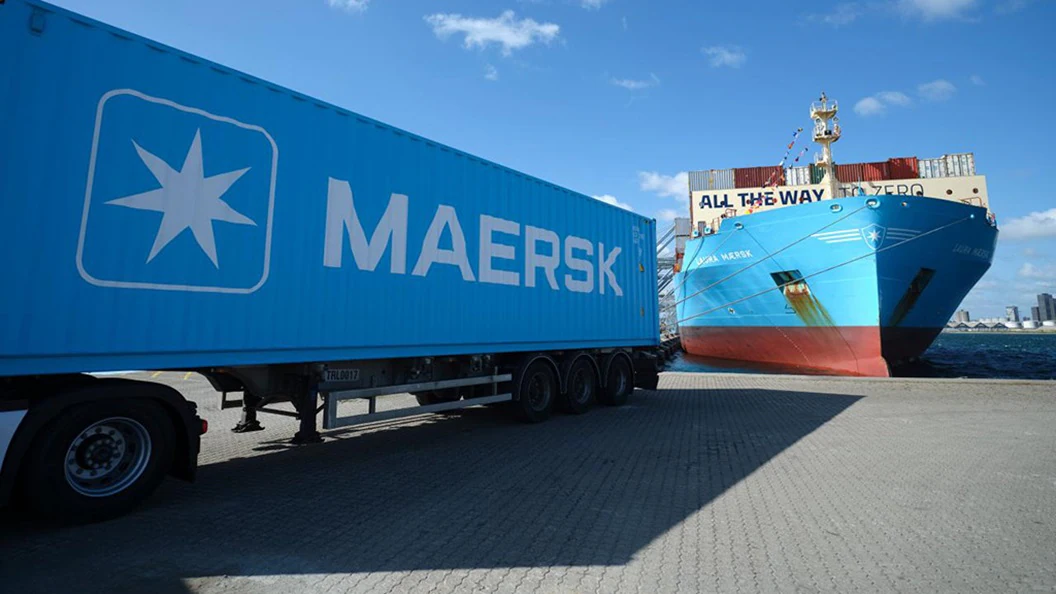
COPENHAGEN : Maersk has announced revisions to its Emergency Contingency Surcharge (ECS) applicable on shipments from the Indian Subcontinent to the West Coast of Latin America (B1S trade lane), citing evolving operational and market conditions.

The revised surcharge structure will impact cargo moving from North West India & Pakistan as well as South & East India to key destinations across West Coast South America, the Caribbean, and Central America. The changes will be effective from the Price Calculation Date (PCD) of May 10, 2026, with additional adjustments for select destinations effective May 23, 2026.

Under the updated structure, ECS levels have been increased across container categories, with differentiated rates based on origin regions. The revised surcharges will apply uniformly across all container types, including Out of Gauge (OOG), Shipper-Owned Containers (SOC), and Non-Operating Reefers (NOR).

Key ECS Revisions:
North West India & Pakistan → WCSA / Caribbean / Central America
ECS: USD 1200 (20’), USD 1000 (40’/45’)
Effective: May 10, 2026
South & East India → WCSA / Caribbean / Central America
ECS: USD 1400 (20’ & 40’/45’)
Effective: May 10, 2026
North West India & Pakistan → Puerto Rico & Colombia
ECS: USD 1200 (20’), USD 1000 (40’/45’)
Effective: May 23, 2026
South & East India → Puerto Rico & Colombia
ECS: USD 1400 (20’ & 40’/45’)
Effective: May 23, 2026

The company clarified that all surcharge revisions remain subject to regulatory approvals and applicable notice periods. Customers will see the updated ECS reflected in their invoices post-implementation.

Maersk also confirmed that the advisory has been updated on its official rate announcement channels and assured customers of continued support. Clients are encouraged to reach out to their local Maersk representatives for further clarification.

Port Coverage:
North West India: Mundra, Jawaharlal Nehru, Hazira, Pipavav
South & East India: Chennai (Ennore), Kattupalli, Tuticorin, Visakhapatnam, Kolkata, Cochin, Mangalore, Haldia
Middle East Gulf: Dammam, Riyadh, UAE, Oman, Qatar, Kuwait, Iraq, Bahrain
Middle East Red Sea: Jordan, Jeddah, King Abdullah Port

The revision reflects Maersk’s ongoing efforts to manage operational disruptions while ensuring reliable service across key global trade corridors.