Home Blog Page 337

Germany readies naval units for possible mission in Strait of Hormuz

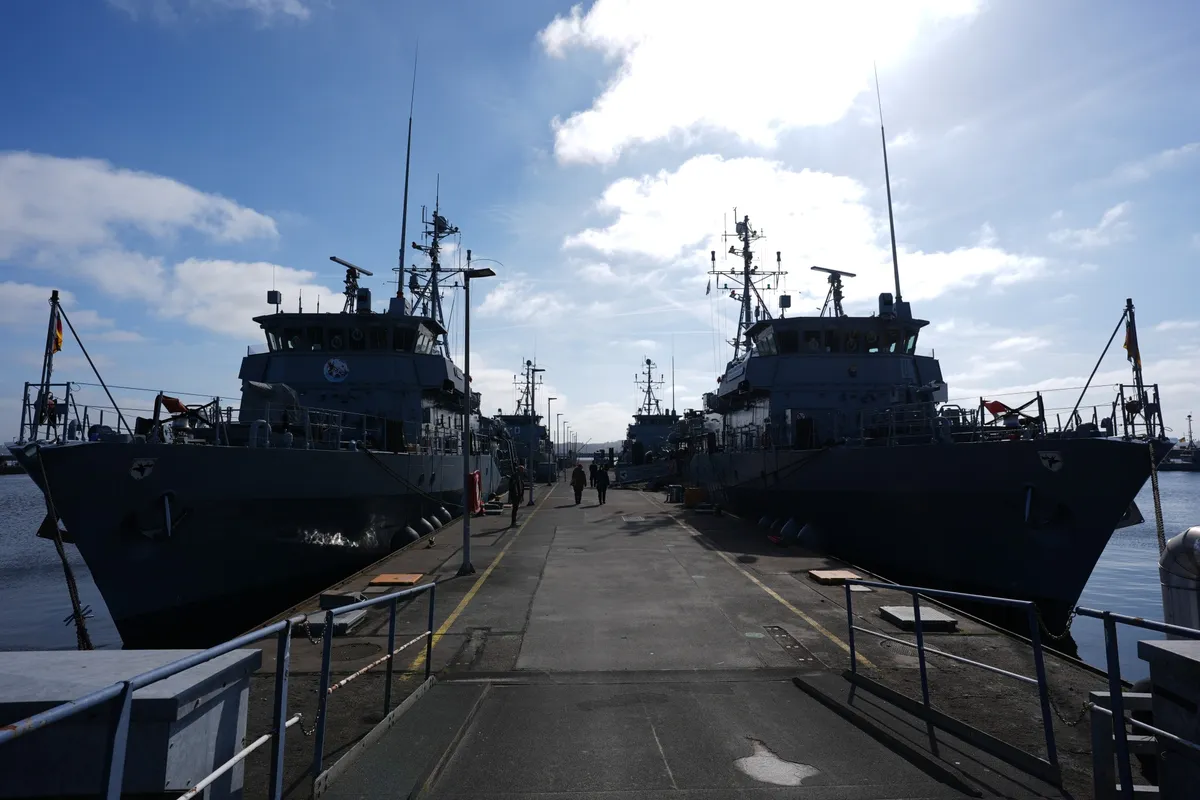
HAMBURG : Germany is sending naval units to the Mediterranean in preparation for possible deployment in an international mission in the Strait of Hormuz.

“We will deploy a minesweeper to the Mediterranean and provide it with a command and supply ship,” Defense Minister Boris Pistorius told Rheinische Post in an interview published on Saturday. He didn’t specify when the two vessels are scheduled to depart.

Pistorius emphasized that an end to the hostilities in the region is a prerequisite for any German deployment. He also noted that such a deployment would only permissible if parliament gives the green light.

“To save time, we have decided to deploy parts of the German units to the Mediterranean early on so that — once the mandate is approved — we do not lose any further time,” Pistorius said.

Chancellor Friedrich Merz had previously suggested that Germany could participate in an international military mission to secure shipping in the Strait of Hormuz, but that it would first need an international mandate. Government officials have signaled that the German army could provide minesweepers, an escort vessel and aerial reconnaissance.

“Our navy is really good at detecting and clearing mines,” Pistorius said in the interview. “We could do that to contribute to free and safe shipping and navigation in the Strait of Hormuz,” he said.

In order to provide support there, “we will temporarily reduce our commitment elsewhere in a sensible manner and in coordination with our partners.” The minesweeper to be deployed is called Fulda, the defense ministry said separately in a statement.

No safe transit through Strait of Hormuz: IMO Secretary-General

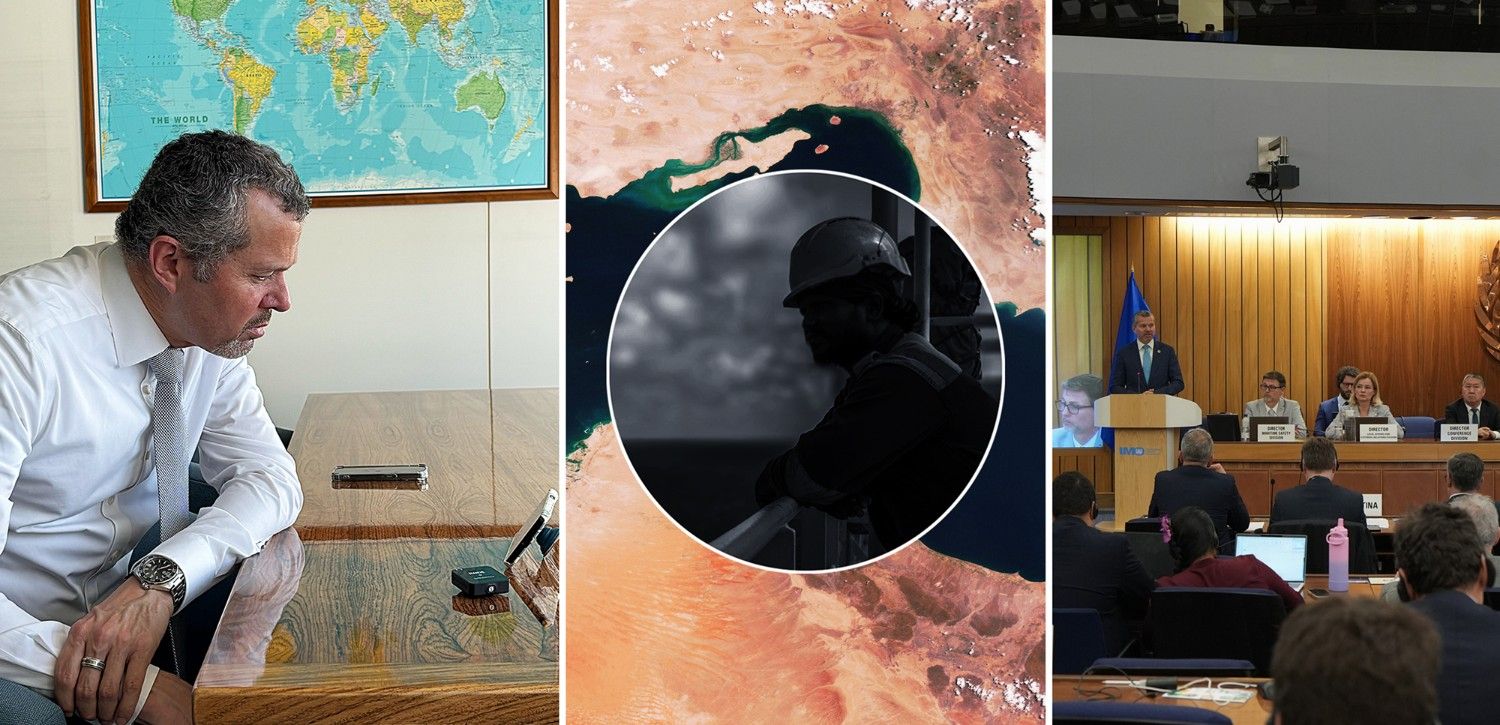
LONDON: IMO Secretary-General Arsenio Dominguez has called on all Member States to support efforts to address the situation in the Strait of Hormuz, where around 20,000 seafarers remain trapped and unable to leave.

In an informal briefing to Member States and industry representatives, Secretary-General Dominguez confirmed that several vessels had been seized and detained in the region over the past few days.   

He urged maximum caution, considering potential mines present throughout the Strait and threat of further attacks on ships.  

“My call is to release the seafarers because they are not at fault,” he said. “The situation is not improving. I reiterate: there is no safe transit anywhere in the Strait of Hormuz.”  

He highlighted that 29 attacks on vessels in the Persian Gulf and around the Strait of Hormuz had been verified by IMO since the beginning of the conflict, resulting in the death of at least 10 seafarers and damage to the vessels. Around 20,000 seafarers on around 1,600 vessels remain in the Gulf.  

Seafarers’ welfare  

With the conflict now in its eighth week, Secretary-General Dominguez warned that supplies on ships stuck in the Persian Gulf – including water, food and fuel – will start running short. He appreciated the ongoing support from countries in the region in providing essential supplies and provisions.   

Secretary-General Dominguez urged all flag States, NGOs, industry bodies and the States of nationality of the seafarers to offer any assistance, including through remote support, helplines and keeping families informed. He also highlighted the importance of fair treatment of seafarers in terms of welfare and payment of wages.   

“I spoke to a seafarer who had been trapped in the Persian Gulf for more than six weeks. Aside from the exhaustion and toll on mental health of the crews, they feel invisible, that they are not valued. There is much more we need to do,” he told delegates.  

Maritime evacuation plan  

IMO is working with Member States and partners on an evacuation plan for seafarers, ready to implement once it is safe to do so. This includes compiling a list of affected vessels and prioritizing them based on humanitarian needs.   

For the evacuation to proceed, all parties involved in the conflict would need to agree to refrain from attacks on maritime assets during the operation.  

Mr. Dominguez also called for coordination among flag States, shipowners and operators to use the internationally recognized Traffic Separation Scheme (TSS) as an evacuation corridor, once safety guarantees are in place.   

He underscored that the TSS, adopted by the IMO in 1968, remains the only recognized route through the Strait.  

He said the IMO will continue to engage with Iran and Oman, which have been coordinating transit operations in the corridor. He also acknowledged the support offered by France, the United Kingdom and other countries for the evacuation process.  

IMO will further update the UN Security Council on Monday 27 April 2026 on developments.  

APM Terminals and Hateco Group partner for new terminal in Da Nang

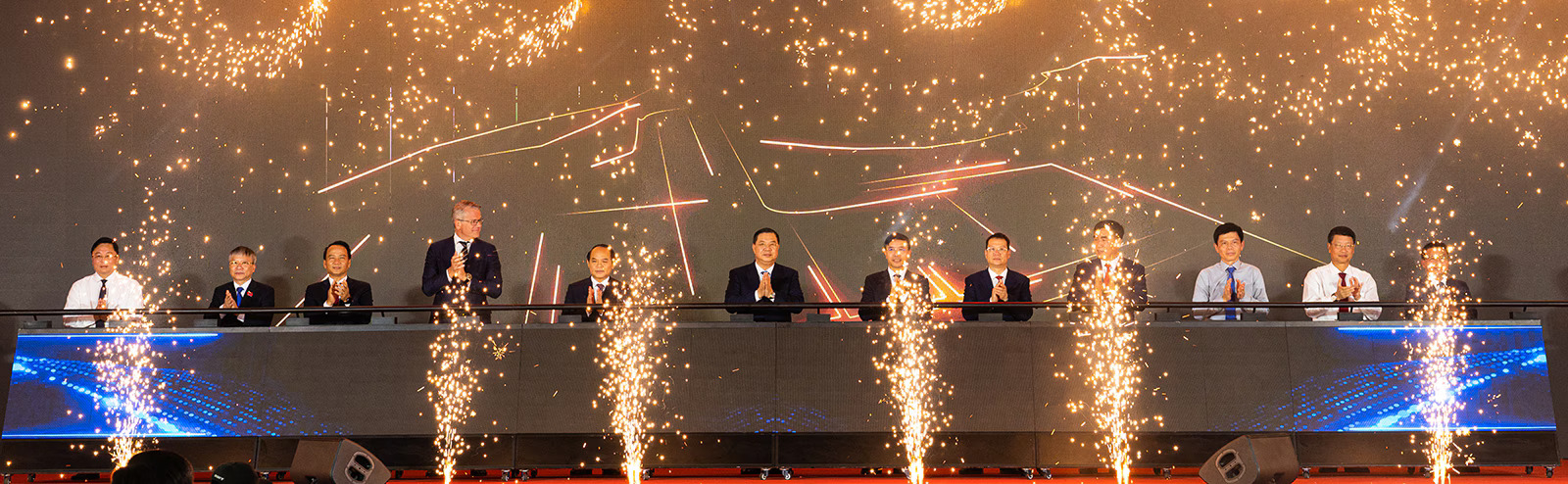
DA NANG CITY: APM Terminals and Hateco Group have signed an agreement with Da Nang City to develop, build and operate a new terminal in Da Nang, the Lien Chieu Container Port. The agreement includes an estimated investment of over 1.7 billion USD to deliver a terminal estimated to handle more than 5.7 million TEU per year, starting with Berths 1 and 2 (Phase 1), with expansion of Berths 3-8. The terminal project was celebrated in Da Nang with a groundbreaking ceremony attended by Maersk CEO Vincent Clerc.

APM Terminals and Hateco Group will build on the shared infrastructure developed by Da Nang City to invest in the civil infrastructure and equipment, with the aim of going live in early 2029. This project is aligned with Vietnam’s National Strategy for Logistics Development and Vietnam’s Seaport Development Plan which mention Da Nang as one of four strategically prioritised logistic centers.

“We value our partnership and collaboration with Hateco Group and our long-standing partnership with Vietnam. This project will support the development of Da Nang as a high-performing gateway for central Vietnam’s growing trade flows, underpinned by targeted investment in modern port infrastructure and capabilities that enable long-term economic growth. By combining APM Terminals’ operating discipline with Hateco’s local expertise, we are establishing a platform that improves the efficiency and reliability of trade, strengthening connectivity across Vietnam and into neighbouring markets, including Laos, Cambodia, eastern Thailand, and Myanmar,” says Keith Svendsen, CEO of APM Terminals.

Part of the vision for Da Nang is to develop a port that can complement a complete logistics ecosystem to attract international trade and investment.

“The partnership between Hateco Group and APM Terminals has proven to create strong results for the Vietnamese port development. We firmly believe that with our investments and the combination of local and global expertise can accelerate the port development of Da Nang as a central economic hub and grow economic potential in the region,” says Tran Van Ky, Chairman of Hateco Group.

260425 DaNang connectivity APM Terminals and Hateco Group partner for new terminal in Da Nang

Boosting integration of land and sea

The aim of the investments in the new terminal in Da Nang is to unlock the untapped potential of both emerging markets and to boost the cross-border flows reducing logistics costs and congestions in the current setup.

At capacity, the Lien Chieu Container Port complex will include a deep-water berth with capacity of up to eight container berths, barge vessels, container yards and with links to warehouses, rail, industrial parks and the Da Nang Free Trade Zone with ability be able to handle vessels of up to 18,000 TEUs (twenty foot equivalent units) as central Vietnam’s only deep-sea terminal.

APM Terminals’ standardised approach to efficient operations and focus on constant optimisation aims to boost the reliability and speed for shipping lines and in-land operators, among other things via reduced vessel lead time and optimised truck turnaround times, as also demonstrated in our joint venture with Hateco on the Hateco Hai Phong International Container Terminal (HHIT) in Hai Phong City, that went live in 2025. APM Terminals upholds high operational efficiency standards with a persistent focus on the highest safety standards.

This investment builds on our long-term relationship with Da Nang City; we look forward to the design and construction period ahead.

Gujarat strengthens global logistics ambitions with DP World Partnership

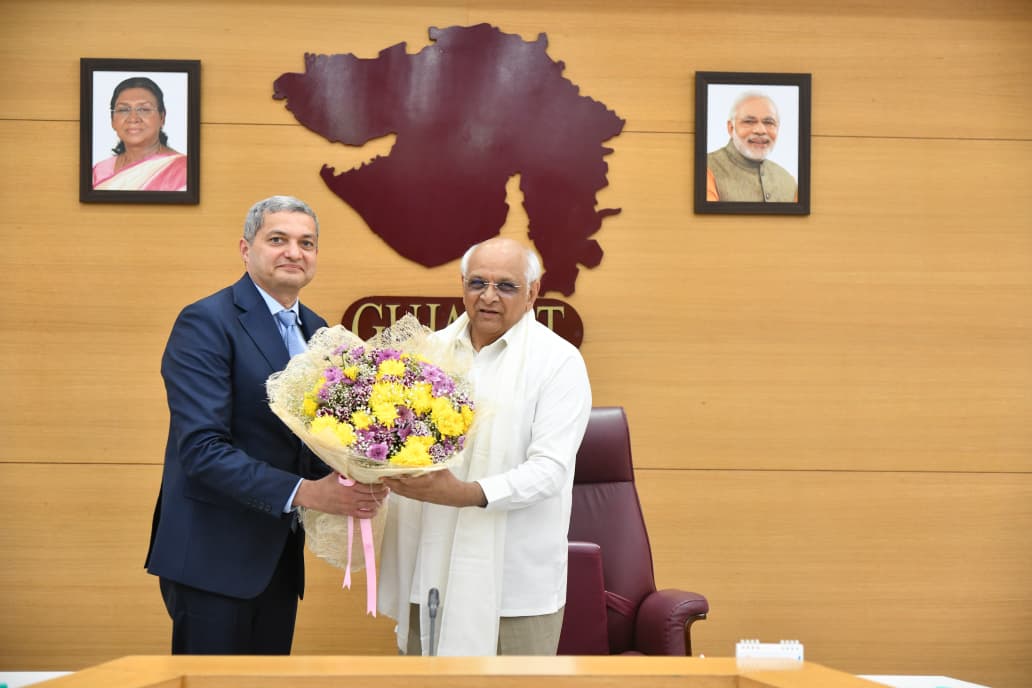
GANDHINAGAR : Chief Minister of Gujarat, Shri Bhupendra Patel, held a high-level meeting with Yuvraj Narayan, Group CEO of DP World, to explore avenues for further enhancing Gujarat’s position as a leading global logistics and trade hub.

During the meeting, the Chief Minister emphasized the long-standing partnership between Gujarat and DP World, highlighting the company’s significant role in the state’s infrastructure and economic growth. Several Memoranda of Understanding (MoUs) signed during the Vibrant Gujarat Global Summit have laid the foundation for transformative projects across ports, logistics parks, rail freight, and economic zones.

These initiatives are expected to substantially boost connectivity, improve trade efficiency, and generate large-scale employment opportunities across the state.

The collaboration is also strengthening Gujarat’s maritime ecosystem through the development of world-class port infrastructure. Key projects include DP World’s operations at Mundra Port and the upcoming greenfield terminal at Tuna Tekra near Kandla Port. These developments are poised to drive exports, reduce logistics costs, and reinforce Gujarat’s strategic importance in global supply chains.

Reaffirming the state’s growth trajectory, the Chief Minister noted that under the visionary leadership of Prime Minister Narendra Modi, Gujarat continues to attract global investments and play a pivotal role in advancing India’s economic development.

The meeting underscores Gujarat’s commitment to building a robust, future-ready logistics and maritime ecosystem through strong global partnerships.

Major ports handled 915.17 MT of cargo in FY26 : Sarbananda Sonowal

NEW DELHI : Major ports have collectively handled 915.17 million tonnes of cargo in 2025–26, surpassing the annual target of 904 MT, Union Minister for Ports, Shipping and Waterways Shri Sarbananda Sonowal said on Friday.

The minister further said that this marks a year-on-year growth of 7.06 per cent, reaffirming the sector’s strong recovery, enhanced efficiency, and sustained growth trajectory.

He said that during 2025-26, overall capex by the Shipping Ministry and its attached organisations was Rs 14,953 crore compared to Rs 9,708 crore in 2024-25. “During 2025-26, 94 ships were added to the Indian Flag with the addition of 25.67 lakh Deadweight Tonnage (DWT) compared to 45 ships with 7.72 lakh DWT during 2024-25,” the minister said at an event to exchange of MoU between the Delhi School of Economics and think tank RIS (Research and Information System for Developing Countries).

There are 12 major ports wholly-owned by the central government and governed by the provisions of the Major Port Authorities Act, 2021. These are Deendayal Port, Mumbai Port, Jawaharlal Nehru Port, Mormugao Port, New Mangalore Port, Cochin Port, V.O. Chidambaranar Port, Chennai Port, Kamarajar Port, Visakhapatnam Port, Paradip Port and Syama Prasad Mookerjee Port.

“During 2025-26, 94 ships were added to the Indian Flag with the addition of 25.67 lakh Deadweight Tonnage (DWT) compared to 45 ships with 7.72 lakh DWT during 2024-25,” the minister said at an event to exchange of MoU between the Delhi School of Economics and think tank RIS (Research and Information System for Developing Countries).

There are 12 major ports wholly-owned by the central government and governed by the provisions of the Major Port Authorities Act, 2021.

Sonowal said India’s progress in sea-going workforce has been significant and measurable, as the number of Indian seafarers has nearly tripled during the last 12 years. “India today ranks, amongst the top three countries, as a seafarer provider, contributing roughly 12 per cent of the global maritime workforce.“

“We aim to increase our global share to 20 per cent by 2030,” he added. The minister emphasised that equally important is the skilling and development of maritime professionals for shore-based jobs. Therefore, the government is expanding the scope of maritime education into emerging and interdisciplinary domains,” he said.

The minister said that for a maritime nation like India, with a coastline of over 11,098 kilometres, 111 National Waterways and a strategically advantageous position on major global trade routes.

Complementing all this is the Maritime India Vision 2030 and Maritime Amrit Kaal Vision 2047, which charts our long-term ambition for establishing India as the top maritime nation in the next 21 years, he said.

It is important to emphasise that the Blue Economy is not about the indiscriminate exploitation of ocean resources, Sonowal said, adding that it is about the sustainable and responsible utilisation of ocean, coastal and marine ecosystems to drive economic growth, generate livelihoods, while ensuring environmental protection.

“It encompasses a wide range of sectors, including fisheries, maritime transport, offshore renewable energy, marine biotechnology, and coastal tourism,” he said, adding that sustainability remains a central pillar of our maritime strategy.

Source : PTI

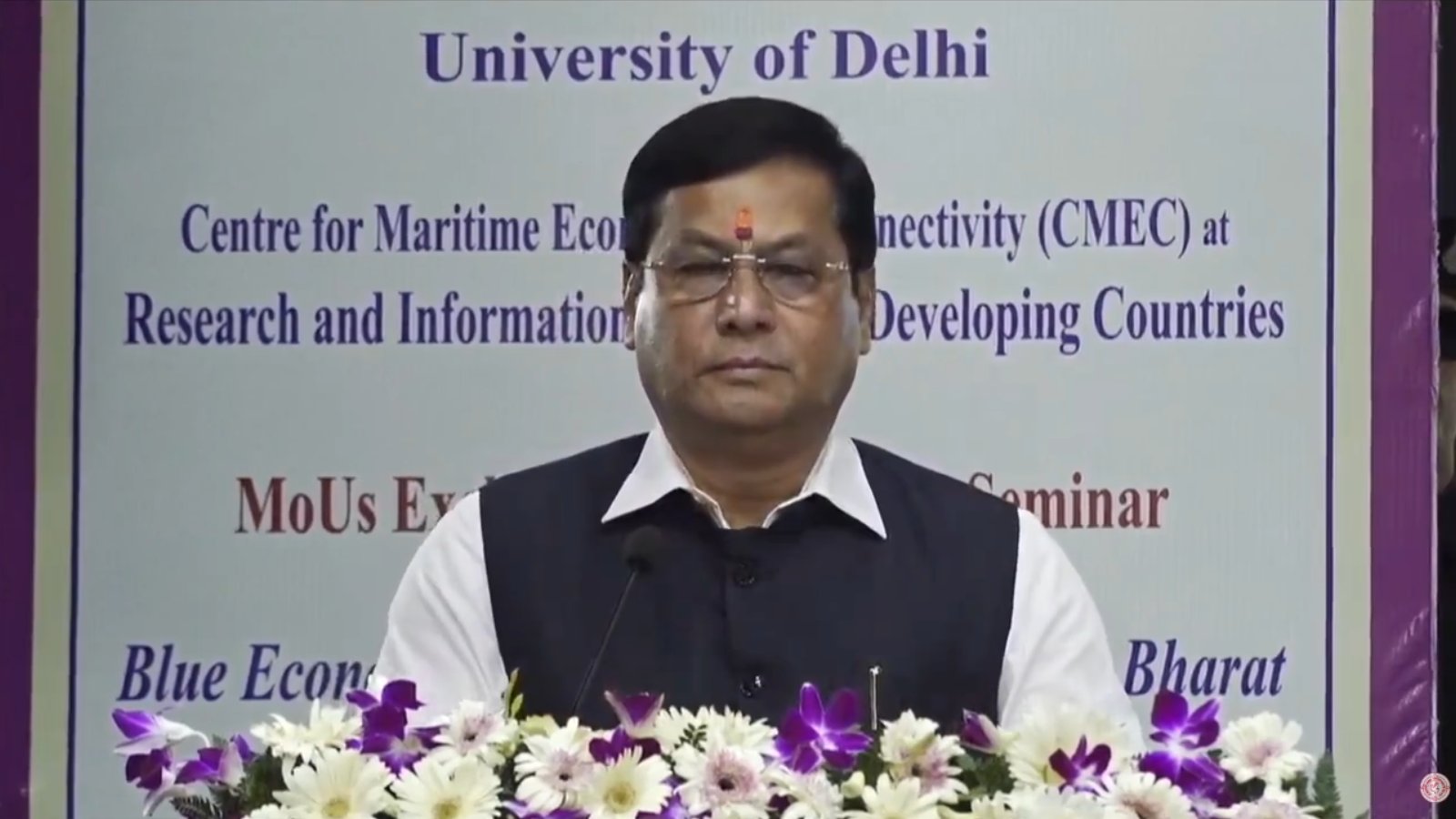
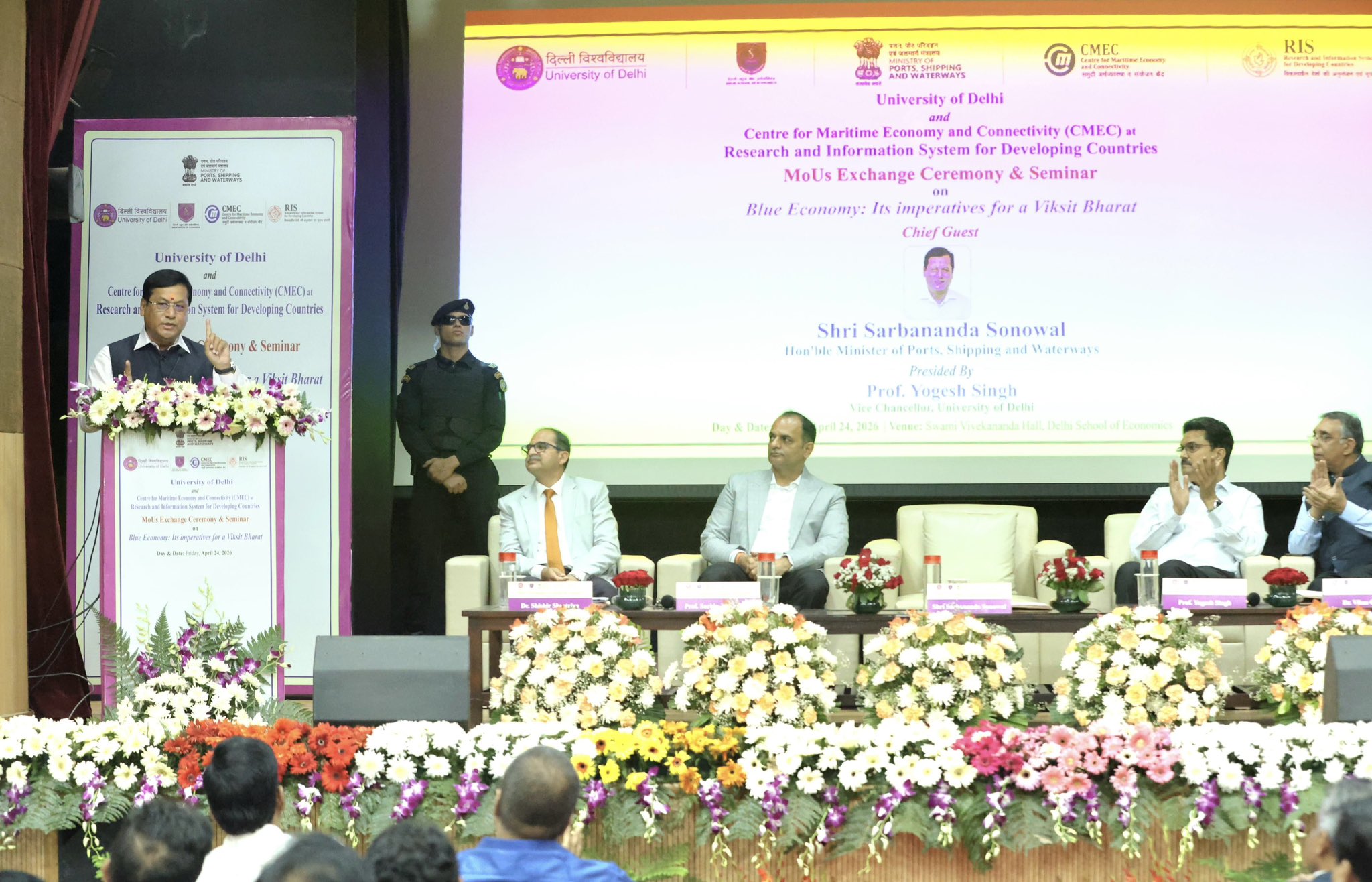
Sarbananda Sonowal highlights transformative role of maritime sector at MoU exchange ceremony between University of Delhi & CMEC at RIS

NEW DELHI : Union Minister of Ports, Shipping and Waterways Shri Sarbananda Sonowal underscored the transformative potential of India’s maritime sector in driving economic growth, as two key Memoranda of Understanding (MoUs) were exchanged at the Delhi School of Economics.

The MoU between the University of Delhi and the Centre for Maritime Economy and Connectivity (CMEC) at the Research and Information System for Developing Countries (RIS) aims to strengthen maritime education, research and capacity building in alignment with India’s long-term maritime vision.

Addressing a seminar on “Blue Economy: Its Imperatives for a Viksit Bharat,” Union Minister Sarbananda Sonowal said, “As we move towards Viksit Bharat, the maritime sector will play an even more transformative role in driving India’s economic growth, trade competitiveness and sustainable development. By strengthening the maritime talent pipeline—the core objective of this MoU—we are building a robust ecosystem to meet the growing demand for world-class maritime professionals, both in quality and scale, positioning India as a global leader in the sector. Under PM Narendra Modi ji’s vision, India is aligning education, policy & innovation to emerge as a global maritime leader.”

Highlighting India’s strategic maritime advantages, the minister noted that with a coastline of over 11,000 kilometres and 111 national waterways (NWs), strengthening the maritime ecosystem is a national imperative. Sonowal emphasised that the government’s maritime vision, guided by the SAGAR and MAHASAGAR doctrines, reflects a commitment to regional cooperation, maritime security and shared prosperity.

The MoU seeks to foster interdisciplinary collaboration between academia and policy institutions, with a focus on skill development, capacity building and research in emerging maritime domains. Key areas of cooperation include development of academic frameworks for maritime courses, joint research projects, training programs, knowledge dissemination and professional counselling for students.

Sonowal described the collaboration as a “forward-looking step” that bridges academia and industry, creating opportunities for youth to engage with India’s expanding maritime sector. The Shipping Minister stressed that human capital will be central to India’s maritime ambitions, noting that the country’s seafaring workforce has nearly tripled in the past 12 years and now contributes about 12% of the global maritime workforce, with a target to reach 20% by 2030. “MoU between University of Delhi & CMEC to boost maritime education, research and skill development”, Sonowal said.

The Union Minister also highlighted that India’s maritime transformation is being driven by an integrated approach encompassing port-modernisation, multi-modal connectivity, sustainability initiatives and digitalisation. He pointed to flagship programs such as Sagarmala and Maritime Amrit Kaal Vision 2047 as key enablers of this growth trajectory.

The collaboration is expected to open new avenues for students and researchers in fields such as maritime logistics, green shipping, supply chain management and maritime policy, contributing to the broader vision of a sustainable and globally competitive Blue Economy.

During the event, an additional MoU was also exchanged between RIS and the Delhi School of Economics (DSE) to promote joint programmes in public policy research and training.

The ceremony was attended by senior officials, academic leaders, faculty members and students, marking a significant step towards integrating education, research and policy in India’s maritime sector.

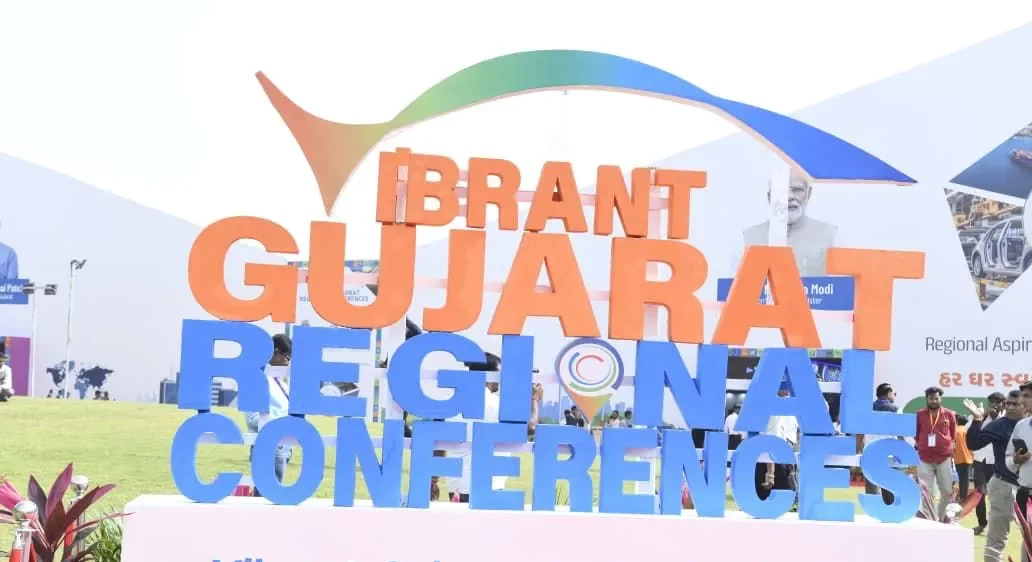
Vibrant Gujarat Regional Conference for south and central regions begins on May 1

SURAT : The Vibrant Gujarat Regional Conference (VGRC) for the South and Central Gujarat regions will take place in Surat on May 1 and 2, under the leadership of Prime Minister Shri Narendra Modi and Gujarat Chief Minister Shri Bhupendra Patel.

According to a release from the Chief Minister’s Office (CMO), the VGRCs aim to enhance regional industrial growth, attract sector-specific investments, and strengthen global engagements in line with the vision of Viksit Bharat@2047. The conferences are intended to transform and prepare local industries to become global players by securing wider market recognition and partnerships.

The Regional Conferences serve as platforms to showcase regional achievements, introduce new initiatives, and co-create Gujarat’s growth story by empowering regional economies, fostering innovation, and facilitating strategic investments throughout the state. The results of the VGRCs are expected to be displayed at the next Vibrant Gujarat Global Summit.

This VGRC will focus on districts from South Gujarat, including Bharuch, Dang, Navsari, Surat, Tapi, and Valsad, along with Central Gujarat districts such as Ahmedabad, Anand, Chhotaudepur, Dahod, Gandhinagar, Kheda, Mahisagar, Narmada, Panchmahal, and Vadodara. Various seminars will be held on sectors including Chemicals & Petrochemicals, Textiles & Apparels, Gems & Jewellery, Pharmaceuticals, Green Energy Ecosystem, Agro & Food Processing, ESDM, IT & ITeS, Biotech/Biopharma, Aerospace & Defence, Fintech, Auto & Auto Components, Skill Development, Startups, MSMEs, and Tourism & Culture.

Coinciding with the occasion of Gujarat Sthapana Divas, the event will also feature the Vibrant Gujarat Regional Exhibition, which includes the Vendor Development Programme, International Reverse Buyer Seller Meet, and the Udyami Mela.

The VGRC for the North Gujarat region was conducted on October 9 and 10, 2025, at Ganpat University, Mehsana. Inaugurated by Chief Minister Bhupendrabhai Patel, it highlighted key sectors such as Agro & Food Processing, Auto & Auto components, Green Energy Ecosystem, and Engineering. This conference aimed to attract targeted investments and promote balanced regional growth, supporting Gujarat’s commitment to empowering grassroots industries.

Earlier in the year, Prime Minister Narendra Modi inaugurated the VGRC for the Kutch & Saurashtra region held on January 11 and 12 at Marwadi University, Rajkot. Partner countries at that event included Japan, South Korea, Rwanda, and Ukraine. Focus sectors were Ceramics, Engineering, Ports & Logistics, Fisheries, Petrochemicals, Agro & Food Processing, Minerals, and the Green Energy Ecosystem.

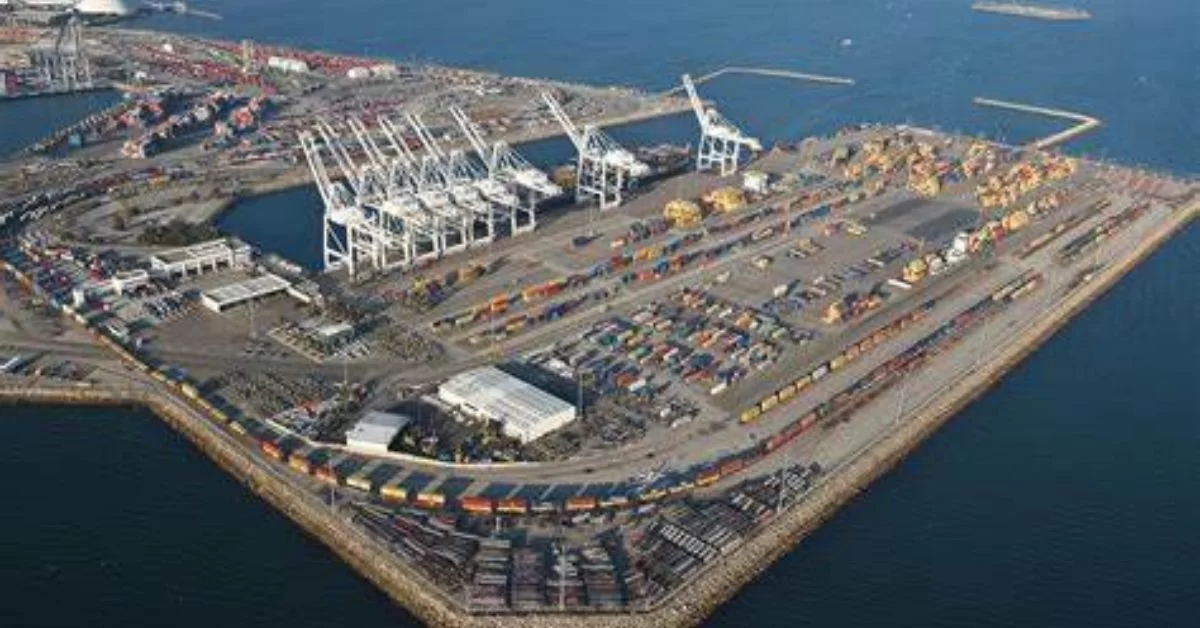
India moves to transfer Iran’s Chabahar Port stake amid looming US sanctions risk

NEW DELHI : India is preparing to divest its stake in the Chabahar Port project to an Iranian entity just days before the expiry of an extended US sanctions waiver covering its operations there, a Business Standard report said on Friday. A proposal has been worked out for India Ports Global Ltd (IPGL) to sell its holding in India Ports Global Chabahar Free Zone (IPGCFZ) to a local Iranian entity, an official aware of the development told Business Standard.

India’s activities at the strategic Iranian port remain exempt from US sanctions until Sunday. Business Standard said New Delhi has been exploring an interim arrangement under which a domestic Iranian entity would manage operations while sanctions remain in place, with assurances that control would revert to India once restrictions are lifted.

Queries sent by Business Standard to the Ministries of External Affairs and Ports, Shipping and Waterways had not received a response at the time of publication.

Amid the ongoing conflict in West Asia, the Ministry of External Affairs has been engaging with stakeholders on the evolving situation. India first secured an exemption for Chabahar-related operations from US sanctions on Iran in November 2018.

Business Standard noted that in February 2025, the US administration directed the Secretary of State to revise or revoke sanctions waivers that offer Iran any form of economic or financial relief, including those tied to the Chabahar Port project. The US State Department later withdrew the 2018 waiver on September 29 last year.

“Following India’s representation, the US Department of the Treasury on 28th October, 2025, issued a Letter stating that activities at the Chabahar Port will not be exposed to U.S. sanctions till 26 April 2026,” the external affairs ministry told Parliament, as quoted by Business Standard.

India has invested close to $120 million in equipment procurement for the Chabahar project. The port has also played a key role in enabling humanitarian aid and emergency assistance to Afghanistan, the ministry said, as cited by Business Standard.

In 2024, India signed a 10-year agreement with Iran to operate a terminal at Chabahar after prolonged negotiations.

Business Standard said India views its presence at the port as strategically significant due to its proximity to Pakistan and China-backed investments at Pakistan’s Gwadar Port.

Chabahar is also considered a crucial gateway for the proposed International North-South Transport Corridor (INSTC), a multimodal trade route linking India with Central Asia and Russia, aimed at cutting transport time between the regions.

Last year, the government assessed potential fallout from continued involvement in Chabahar if sanctions relief was not extended. Legal experts reportedly warned that companies linked to the project could face exposure to sanctions, which may affect India’s ambitions to emerge as a global ports operator, Business Standard said.

IPGL, which runs the India-backed Chabahar terminal, is a wholly owned subsidiary of Sagarmala Development Corporation Ltd (SDCL), now renamed Sagarmala Finance Corporation. The company is India’s first maritime non-banking financial corporation.

Business Standard added that IPGL is also part of the Bharat Global Ports consortium launched by Shipping Minister Sarbananda Sonowal in February 2025 to pursue overseas port opportunities. IPGL also operates Myanmar’s Sittwe Port.

If the stake transfer to a local Iranian entity goes through, the associated sanctions risks could ease significantly, the report added.

Strait of Hormuz traffic slows to a trickle amid US-Iran tensions, only five ships transit in 24 hours

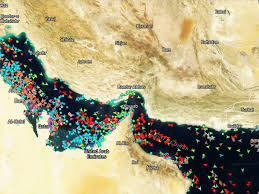
LONDON: Only five ships, including one Iranian oil products tanker, have passed through the Strait of Hormuz in the past 24 hours, Friday shipping data showed, after Iran seized two container ships this week and the US continues to blockade Iranian ports.

Shipping traffic passing through the crucial waterway at the entrance to the Persian Gulf during an uneasy ceasefire between Washington and Tehran represents a fraction of the average 140 daily passages before the Iran war began on February 28.

“For most shipping companies, they will need a stable ceasefire and assurances from both sides of the conflict that the Strait of Hormuz is safe to transit,” said Jakob Larsen, chief safety and security officer at shipping association BIMCO.

“In the meantime, shipping will be restricted to using routes close to Iran and Oman. Due to their confined nature, these routes cannot safely accommodate the normal volumes of shipping through the Strait of Hormuz,” Larsen added.

The Iranian-flagged oil products tanker Niki, which is subject to US sanctions, was among the few vessels that sailed out of the strait with no destination listed, Kpler analysis and tracking data on the MarineTraffic platform showed on Friday.

It was unclear what would happen if it continued to sail further east towards the blockade line imposed by the US Navy.

Nearly two months after the US and Israel launched strikes on Iran, there is little sign of peace talks resuming.

Container shipping group Hapag-Lloyd said on Friday that one of its ships has crossed the strait but did not provide any information on the circumstances or timing. The Comoros-flagged supertanker Helga arrived at an offshore oil loading terminal in Iraq’s southern Basra port on Friday, the second vessel to reach Iraq since the strait’s closure.

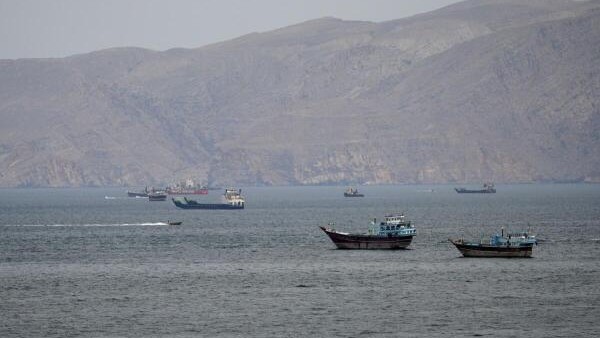
Iran’s use of a swarm of small, fast boats to seize two container ships near the strait on Wednesday has heightened concerns among many shipping and oil companies.

“The latest seizures make clear, even an ‘open’ Strait of Hormuz is not a safe Strait of Hormuz for seafarers, ships and cargo,” Peter Sand, chief analyst with ocean and air freight intelligence platform Xeneta, said in a note.

Between April 22 and early April 23, seven vessels transited the strait, six of which were involved in Iran-related trade, analysis from Lloyd’s List Intelligence showed.

The closure of the strait has disrupted a fifth of the world’s oil and liquefied natural gas (LNG) supplies and triggered a global energy crisis.

Hundreds of ships and 20,000 seafarers remained stranded inside the gulf with war risk insurers and oil companies watching for any sign that the risks may have eased so they can prepare to sail through.

Source: Reuters

Iran war leaves seafarers stranded in the Gulf

NEW DELHI: Ankit Yadav, a seafarer from India, has been stuck on a boat at an ​inland Iranian port for about 2-1/2 weeks, surviving with his three fellow mariners on limited rations of tomatoes ‌and potatoes.

He is one among thousands of seafarers from India and other nations who are stranded in and around the Strait of Hormuz, as the war in Iran disrupts trade along one of the world’s busiest ship routes.

Ankit, who is in his early 30s, was on a small vessel carrying steel ​and plying between Iran, Kuwait and Oman. He said he could have left the conflict zone had the vessel ​received permission to sail to Oman and then be repatriated to India, but that could not happen ⁠because of the blockade imposed by the U.S. Navy.

“The shipping company I work for is not ready to give us the sign-off ​because they do not want to pay higher air ticket prices, and we cannot afford to buy them on our own. The ​only way out is the government’s help,” he told Reuters by phone.

Salman Siddiqui, another Indian seafarer, is also at an Iranian port on a Comoros-flagged cargo vessel that was bound for Oman from Iran.

“The only thing we do here is plan how to spend the night and pray to God ​that we do not get hit during an attack,” Siddiqui said, speaking to Reuters from the vessel that is currently harboured at ​Khorramshahr.

“It is a kind of relief that a ceasefire is in place and we do not hear the same number of explosions like we ‌used to ⁠see and hear earlier,” he told Reuters by phone.

‘SCARY WHEN YOU SEE PROJECTILES FLYING’

India ranks among the world’s top three suppliers of seafarers with a workforce of more than 300,000. The attacks on vessels have raised security concerns among seafarers who are unwilling to return to sea.

“We have heard more than 100 explosions. It is scary when you see projectiles flying and exploding very near your ​vessel,” Siddiqui said.

Surindra Kumar Chaurasia ​was among the lucky ones ⁠who were repatriated to India. He had been on a vessel near Sharjah port with 20 other crew members waiting for approval to load urea when the conflict broke out.

“We were stranded in ​the Persian Gulf for about four days, and then our shipping company was able to negotiate ​with Iran for ⁠safe passage. While stranded, we saw ships being attacked by drones, warning messages from the Islamic Revolutionary Guard Corps on VHF radio, fighter jets and more,” Chaurasia said.

His captain received a route from the IRGC, and they sailed close to Iranian and Omani waters because there ⁠were sea ​mines on the other side, he said.

India’s shipping ministry has facilitated the repatriation ​of about 2,680 Indian seafarers since the outbreak of the conflict. Three Indian sailors have lost their lives owing to the ongoing war and on April 18 ​two Indian-flagged vessels were fired upon by the IRGC while attempting to transit through the Strait of Hormuz.

Source: Reuters