Home Blog Page 336

Adani Dahej Port handles first capesize slag cargo, expands bulk handling capabilities

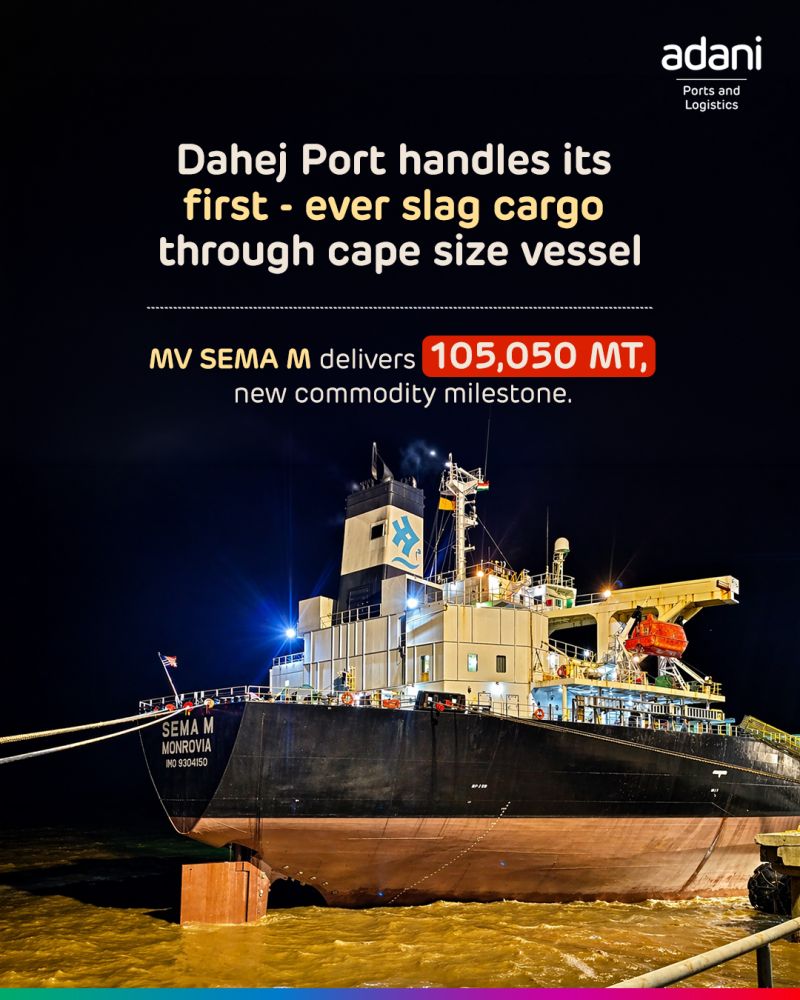
DAHEJ : Adani Dahej Port, operated by Adani Ports and Special Economic Zone Ltd., has achieved a significant operational milestone with the successful handling of MV SEMA M, a Capesize vessel, marking the port’s first-ever handling of slag as a cargo commodity.

The vessel’s call represents a strategic expansion in the port’s cargo portfolio, demonstrating its capability to efficiently manage diversified bulk commodities alongside large-sized vessels. The handling of slag—widely used in cement manufacturing and infrastructure development—opens new avenues for industrial cargo movement through Dahej.

The operation showcased the port’s advanced marine infrastructure, deep-draft berthing facilities, and robust cargo handling systems, enabling seamless discharge while adhering to stringent safety and environmental standards. The successful execution further underlines Dahej Port’s readiness to support high-volume, specialized bulk cargo with precision and reliability.
Officials noted that the achievement reflects ongoing efforts to enhance operational versatility and strengthen the port’s position as a key logistics hub on India’s western coast. The ability to accommodate Capesize vessels also reinforces the port’s competitiveness in handling large-scale international shipments.

This milestone is expected to boost regional trade, particularly for industries reliant on bulk raw materials, while contributing to improved supply chain efficiency. With this accomplishment, Adani Dahej Port continues to reinforce its role in driving port-led industrial growth and delivering world-class maritime logistics solutions.
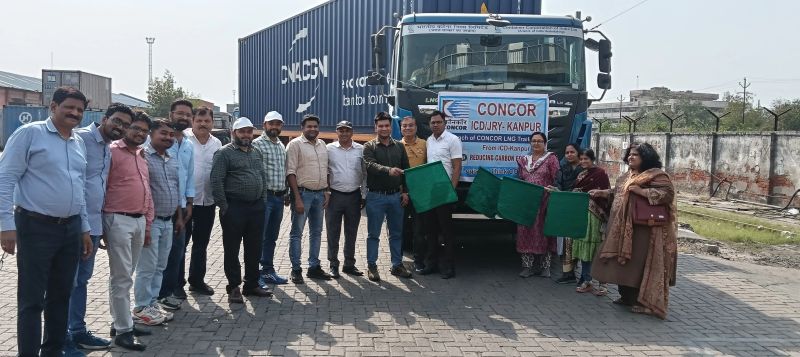
CONCOR flags off first LNG-powered container trailer, advancing green logistics

NEW DELHI : In a landmark step towards sustainable logistics, the Container Corporation of India Ltd. (CONCOR) inaugurated the movement of its first LNG-powered container trailer from ICD Kanpur, marking a decisive shift towards cleaner and more efficient freight transportation.

The initiative commenced with the deployment of five 40-ft LNG-powered trailers, underscoring CONCOR’s commitment to reducing carbon emissions while enhancing operational efficiency. The inaugural consignment was flagged off for Pratapgarh, symbolising a new chapter in the organisation’s sustainability journey.

The transition to Liquefied Natural Gas (LNG) as an alternative fuel aligns with India’s broader clean energy goals and is expected to significantly lower the environmental footprint of logistics operations. By adopting LNG-powered mobility solutions, CONCOR aims to contribute meaningfully to greener supply chains and reduced dependence on conventional fossil fuels.

In a notable highlight, the flag-off ceremony was led by women officials, reflecting the organisation’s commitment to inclusivity and progressive leadership in the sector.

This milestone reinforces CONCOR’s forward-looking approach in reshaping the logistics landscape—driving innovation, sustainability, and efficiency in equal measure.

With this initiative, CONCOR continues to lead with purpose, advancing not just cargo, but the future of environmentally responsible logistics in India.

NSA Ajit Doval meets UAE President in Abu Dhabi; discusses strategic partnership, regional situation

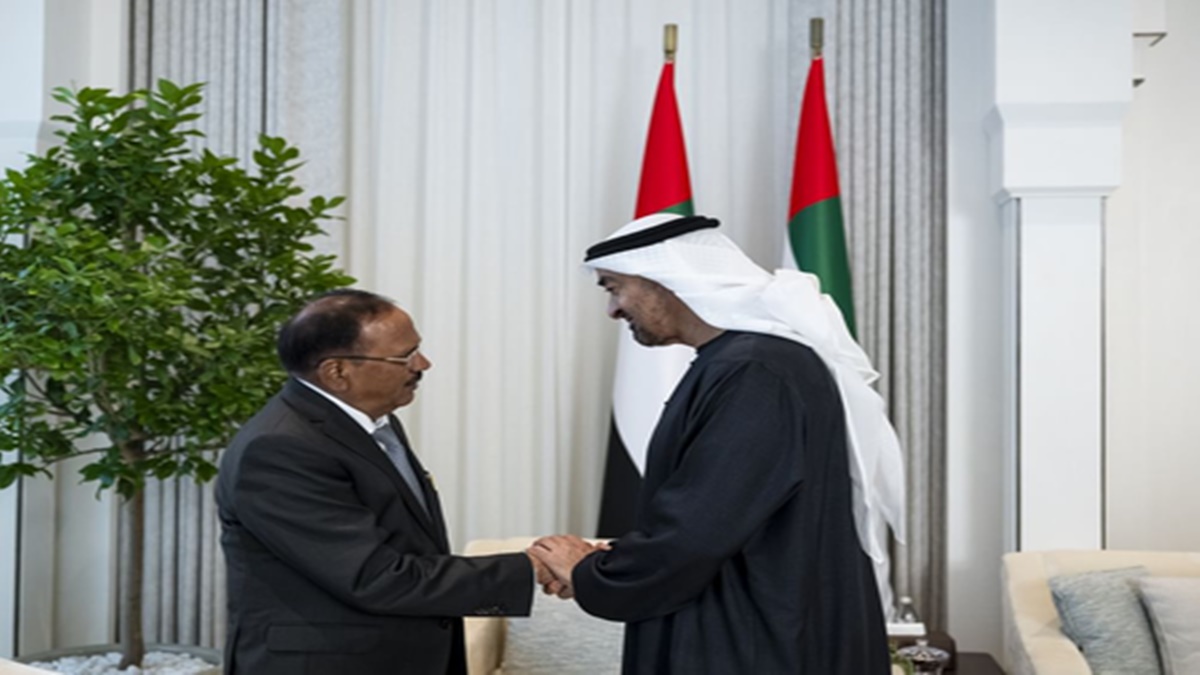
ABU DHABI : In Abu Dhabi on Saturday, Ajit Doval held talks with UAE President Mohamed bin Zayed Al Nahyan, focusing on advancing bilateral cooperation and addressing regional challenges.

The interaction, part of Doval’s official visit, centered on strengthening the Comprehensive Strategic Partnership between India and the United Arab Emirates, with particular emphasis on energy security and evolving geopolitical conditions. According to the Indian Embassy in the UAE, Doval also conveyed greetings from Prime Minister Shri Narendra Modi during the meeting.

“He called on President HH Sheikh Mohamed bin Zayed Al Nahyan. Conveyed greetings of PM, Narendra Modi. Measures to deepen the Comdeepen the Comprehensive Strategic Partnership, the regional situation, and other issues of mutual interest were discussed,” the Embassy said in a post on X.

The UAE’s state-run WAM news agency reported that the meeting included an exchange of greetings between the leadership of both nations. Doval extended Modi’s wishes for the UAE’s continued progress and prosperity, while the UAE President reciprocated with similar sentiments for India and its people.

Beyond bilateral ties, discussions also covered recent developments in the Middle East and their broader implications for regional as well as global security. Energy concerns and stability in the region were key themes during the engagement.

The meeting was attended by senior Emirati officials, including Sheikh Khaled bin Mohamed bin Zayed Al Nahyan, Crown Prince of Abu Dhabi, and Ali bin Hammad Al Shamsi, Secretary-General of the Supreme Council for National Security.

This engagement marks the second high-level interaction between the two countries within a month. Earlier, External Affairs Minister S. Jaishankar met the UAE President during a two-nation visit.

Jaishankar had underscored the strength of India-UAE ties, noting that engagement between the two sides remains steady and transparent despite a complex regional environment. He had arrived in the UAE after attending the 9th Indian Ocean Conference in Mauritius.


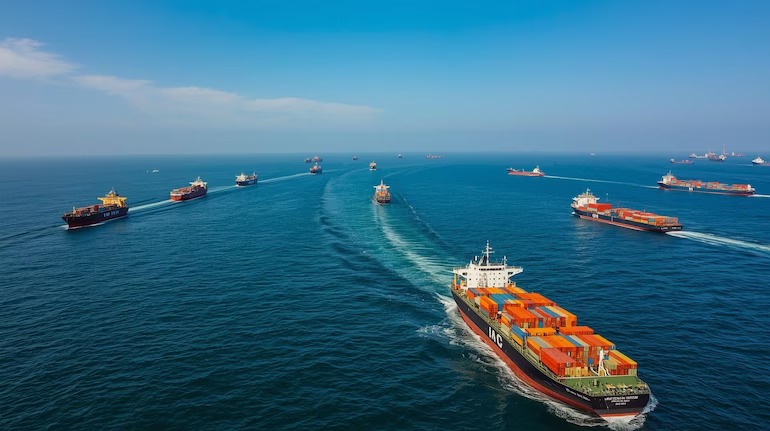
Shipping crisis exposes gaps in India’s maritime strategy

NEW DELHI : Industry leaders argue that the crisis underscores the urgent need for India to expand its national fleet. Anil Devli, CEO of Indian National Shipowners Association, emphasised that a portion of critical imports—such as crude oil, LPG, coal, and fertilizers—must be carried on Indian-flagged vessels. “Ships are needed today, not five or ten years later,” he said, advocating policies that encourage the acquisition of second-hand vessels to quickly build capacity.

A key structural issue lies in how India contracts its imports. A large share of cargo currently comes under Cost, Insurance, and Freight (CIF) terms, where the seller controls shipping. This limits opportunities for Indian shipowners. In contrast, Free on Board (FOB) contracts—where the buyer arranges transport—allow greater control over logistics and support domestic fleet growth.

Ideally, at least a por­tion of imports should be FOB and exports, CIF, for stra­tegic reas­ons. Des­pite earlier policy pref­er­ences for FOB imports, the trend has shif­ted toward CIF, said Mr. Devli. This has sig­ni­fic­ant fin­an­cial implic­a­tions, with mil­lions in freight pay­ments flow­ing over­seas.

Cer­tain sec­tors high­light the imbal­ance. About half of India’s crude oil imports are on FOB terms and some 40% of LPG is car­ried by Indian flagged car­ri­ers. But fer­til­isers such as urea are almost entirely impor­ted under CIF con­tracts, leav­ing them depend­ent on for­eign ves­sels. Dur­ing crises, such cargo is among the first to face delays. Experts sug­gest that India should aim to carry at least 50% of its stra­tegic com­mod­it­ies — energy and food — on its own ships.

Former Dir­ector Gen­eral of Ship­ping Amit­abh Kumar said the pat­tern was pre­dict­able: whenever a crisis hits, global ship­ping capa­city tight­ens sharply.

This has dir­ect implic­a­tions for coun­tries like India. Low­mar­gin goods— par­tic­u­larly agri­cul­tural com­mod­it­ies—are often left behind, while high­value cargo such as elec­tron­ics con­tin­ues to move des­pite rising freight costs.

The impact is com­poun­ded by equip­ment short­ages and logist­ical bot­tle­necks.

Bey­ond eco­nom­ics, the crisis has also raised con­cerns about the safety of sea­farers. Thou­sands of Indian sea­farers are stran­ded on the ships stuck in the Per­sian Gulf. There have been cas­u­al­ties, too.

Source : The Hindu

Manufacturing hub to emerge along Ganga Expressway; Rs 46,660-cr investment plans in 12 UP districts

NEW DELHI: The Uttar Pradesh government will develop the Ganga Expressway — to be inaugurated by Prime Minister Shri Narendra Modi on April 29 — as an “expressway-cum-industrial corridor” model, according to an official statement issued in Lucknow on Sunday.

By linking infrastructure with industrial growth, the expressway is being developed as an Integrated Manufacturing and Logistics Cluster (IMLC), it said.

Under the Uttar Pradesh Expressways Industrial Development Authority’s plan, 12 industrial nodes are being developed along the 594-km expressway, with 6,507 acres of land identified.

So far, 987 investment proposals have been received, targeting nearly Rs 47,000 crore in investments. This initiative will create a new industrial development network across 12 districts, the statement said.

Under the IMLC plan, 12 nodes are being developed across these 12 districts along the corridor.

These nodes will be in Meerut, Hapur, Bulandshahr, Amroha, Sambhal, Budaun, Shahjahanpur, Hardoi, Unnao, Raebareli, Pratapgarh, and Prayagraj.

Each node has been designed based on its geographical advantages and industrial potential to promote integrated growth in manufacturing, warehousing, and logistics.

Locations and areas for each node from Meerut to Prayagraj have been finalised, it said.

This strategic planning is set to transform the entire expressway into into an “economic growth belt”, it said, adding that the IMLC initiative has received a strong response from investors, with 987 expressions of interest already submitted.

The corridor will directly connect 12 districts, helping reduce regional disparities. Districts such as Hardoi, Unnao, Raebareli, and Pratapgarh are expected to witness rapid industrial growth, boosting local employment and economic activity, the statement added.

India-New Zealand FTA to boost Agra’s leather exports: Piyush Goyal

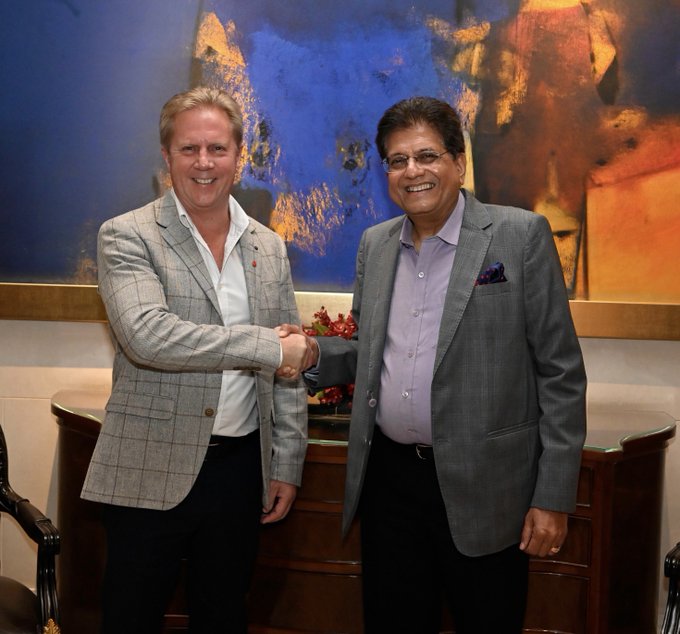
NEW DELHI : The free trade agreement (FTA) with New Zealand, scheduled to be signed on April 27, will provide significant opportunities for domestic firms, including leather exporters from the city of the Taj Mahal, Commerce and Industry Minister Shri Piyush Goyal said on Sunday.

Goyal is here with visiting New Zealand’s Minister for Trade and Investment, Todd McClay. The ministers held discussions with businesses from different sectors, including leather and sports goods.

The FTA aims to double bilateral trade and facilitate duty-free access to the island nation’s markets for Indian companies, as well as bring in $20 billion of investment over the next 15 years.

“Goods exported from India to New Zealand will go without any tax, creating significant opportunities, including for Agra’s leather industry and other sectors,” Goyal said, adding that the pact would help promote two-way commerce, which stood at around $2.4 billion.

Agra is one of India’s largest leather and footwear clusters, playing a key role in both domestic supply and exports. It is dominated by MSMEs. The sector will get duty-free access to the New Zealand market once the trade deal comes into force.

He added that India and New Zealand are set to sign the FTA on Monday, which is expected to boost trade between the two countries in the coming months.

Meanwhile, in a social media post, Goyal said he and the New Zealand minister held discussions with leaders from the leather and footwear, AYUSH, pharma, medical devices, light engineering, and sports goods sectors.

“Also launched the ‘Agra: World Capital of Footwear’ brand campaign, celebrating the skills of our artisans and women entrepreneurs, and positioning Agra as a global sourcing destination, employment engine, and export powerhouse,” he said.

McClay reaffirmed that India is a strategic priority for New Zealand and urged businesses to actively pursue joint ventures and investments in India.

On political issues, the Union commerce and industry minister expressed confidence that the NDA would form governments in Tamil Nadu and West Bengal.

He also criticised the Aam Aadmi Party.

“A corrupt group remains around Arvind Kejriwal, and it is natural that they (seven AAP Rajya Sabha MPs) left the party. It is possible that more people will leave in the future,” he said.

Meanwhile, the two ministers visited the Taj Mahal. They arrived around 7 am, accompanied by their spouses, and spent nearly two hours at the monument, where a guide briefed them about its history.

Western Railway’s Ahmedabad Division to get Integrated Control Centre by June 2026

AHMEDABAD : In a significant initiative aimed at strengthening rail operations within Western Railway’s Ahmedabad Division, the construction of an Integrated Control Centre is progressing rapidly. The centre is set to become fully operational by June 2026.

Spanning approximately 24,500 square feet, this modern complex will serve as the “nerve centre” for rail operations across the North Gujarat region. Since its inception in 2003, the Ahmedabad Division has recorded remarkable progress. Freight loading has surged from 9.38 million tonnes to 51 million tonnes in 2025–26, marking a growth of more than five-fold.

To streamline increasing operational demands, control activities of various departments are now being centralised under a single roof.

This integrated control centre complex will be equipped with an advanced digital surveillance system, featuring a massive Video Display Unit (VDU) wall for real-time, high-resolution monitoring of a 1,350 route-kilometre network, enabling faster and more informed decision-making.

Furthermore, it will ensure integrated management of Freight and Coaching Control, Signalling and Telecommunications (S&T), Engineering, Traction, and Crew Management. To bolster safety and security, the Railway Protection Force (RPF) Control Room, the Disaster Management Cell, and Carriage & Wagon (C&W) operations will also be housed within the complex.

To enhance passenger services, direct integration will be established with the ‘Rail Madad’ grievance redressal mechanism and the NTES (National Train Enquiry System), ensuring passengers have access to accurate and up-to-date information.

The Integrated Control Centre aims to ensure punctuality and precision in the movement of more than 130 coaching trains and over 160 freight trains operating daily. It is also expected to significantly improve efficiency in processes such as locomotive changes, water supply, parcel management, and crew deployment.

With the flow of real-time data, passengers will benefit from more transparent and reliable services.

As per the railway authorities, the control centre will not merely be a building but a symbol of advanced technology and integrated operational methodologies, functioning round the clock (24×7). Designed as a modern workplace with staff comfort in mind, it will include amenities such as a canteen, restrooms, a mini boardroom, and dedicated parking, ensuring smoother, more efficient, and seamless operations.

NHAI plans 6-lane Greenfield Highway to link Ahmedabad with Delhi-Mumbai Expressway

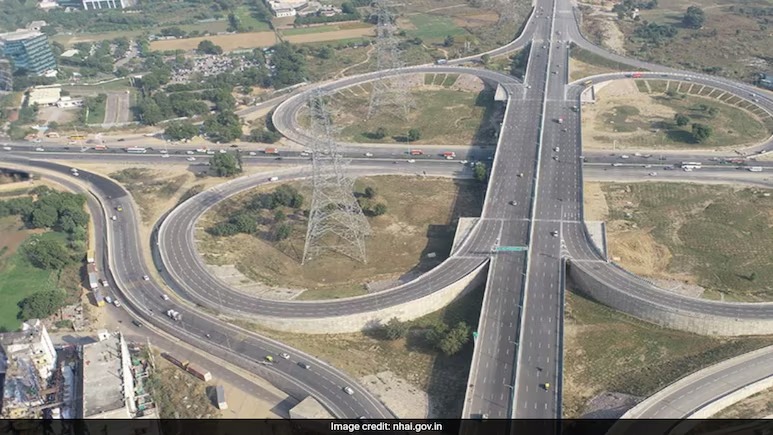
AHMEDABAD : A six-lane greenfield highway is being planned in Gujarat to provide a direct connection between Ahmedabad and the Delhi-Mumbai Expressway. Moving forward with the project, the National Highways Authority of India (NHAI) has invited proposals for the preparation of a Detailed Project Report (DPR) for the development of a new six-lane greenfield highway connecting Ahmedabad to Godhra.

This major infrastructure project, covering a tentative length of 120 km, is designed to provide a direct link between Ahmedabad and the Delhi-Mumbai Expressway (DME). Currently, people travelling from the Godhra side have to go up to the Vadodara-Ahmedabad Expressway interchange and then take NE1, the Ahmedabad-Vadodara Expressway, to reach Gujarat’s largest city.

The primary objective of the consultancy is to prepare a comprehensive DPR that includes detailed highway design, pavement design with options for rigid or flexible pavements, and the design of major structures such as bridges, grade-separated intersections, and service roads. As this is a greenfield project, the consultant will also be required to perform a comparative cost-benefit analysis against existing routes, taking into account land acquisition, utility shifting, and environmental impact.

The highway is planned with a Right of Way (ROW) of 60 to 70 metres and is designed to eventually accommodate up to an eight-lane configuration to meet future traffic demands.

The selection process for consultancy services will be conducted on the basis of International Competitive Bidding, and the appointed consultant will be responsible for establishing the technical, economic, and financial viability of the project over a 12-month contract period.

Cochin Port Authority conducts Area-Level Pollution Response Exercise 2026

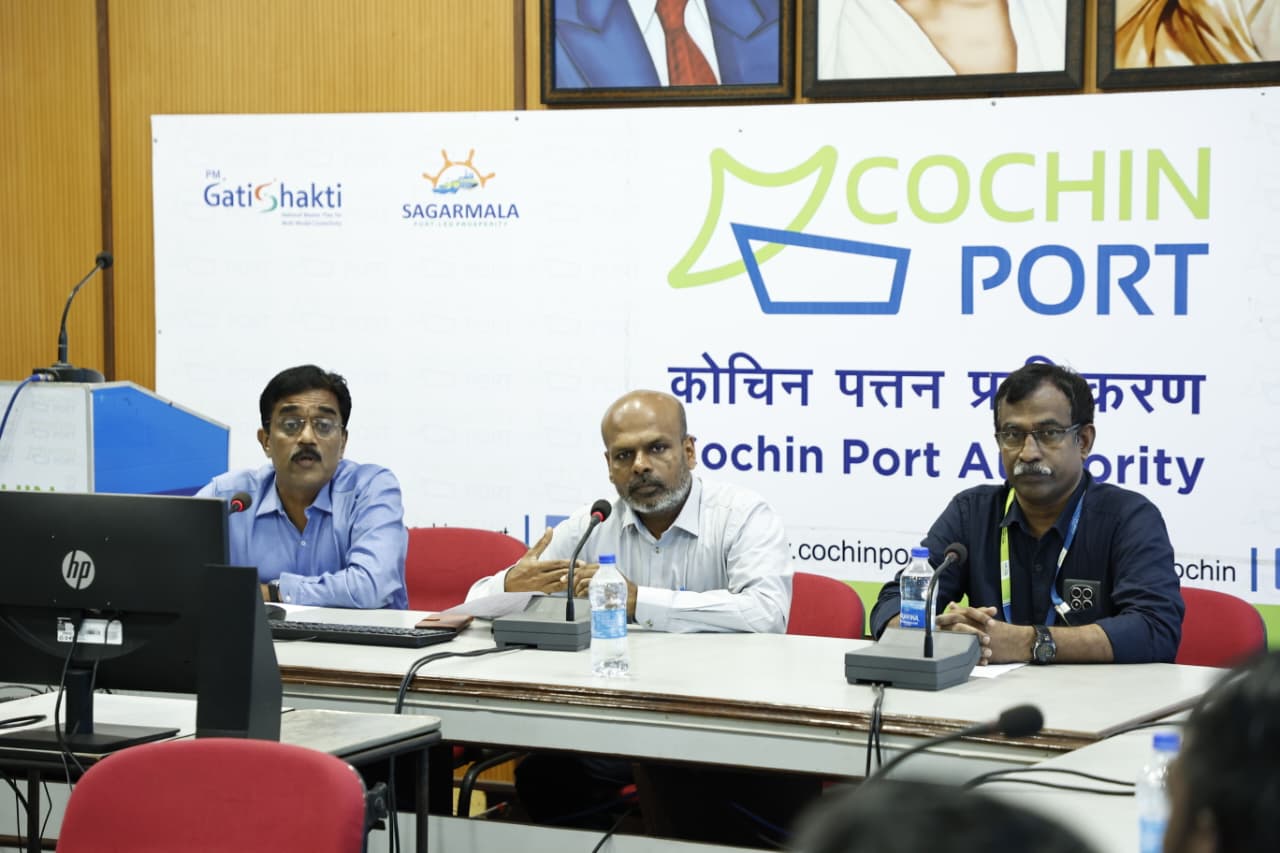
KOCHI : The Cochin Port Authority successfully conducted the Area-Level Pollution Response Exercise 2026, reinforcing its commitment to environmental protection and maritime safety. The exercise witnessed active participation from key stakeholders, including major oil companies, tank farm operators, Kerala State Pollution Control Board (KSPCB), Kerala Maritime Board, the Marine Enforcement Wing, and the Indian Coast Guard.

The programme commenced with an introductory session highlighting the importance of coordinated response mechanisms in addressing marine pollution incidents, particularly oil spills. Experts outlined standard operating procedures, regulatory frameworks, and the critical role of inter-agency collaboration in minimizing environmental impact.

This was followed by a live demonstration of advanced pollution response equipment, including oil containment booms, skimmers, dispersant spraying systems, and emergency response gear. Participants were briefed on deployment techniques, operational efficiency, and maintenance protocols to ensure readiness during real-time contingencies.

A comprehensive mock pollution response drill formed the core of the exercise, simulating an oil spill scenario within the port limits. The drill showcased swift mobilization of response teams, effective containment strategies, and seamless coordination among participating agencies. Real-time communication systems, incident command structures, and safety measures were tested to evaluate preparedness and identify areas for improvement.

Senior officials from Cochin Port Authority emphasized that such exercises are crucial in enhancing response capabilities, strengthening stakeholder coordination, and ensuring compliance with national and international maritime environmental standards.

The exercise concluded with a debriefing session, where observations were shared, response timelines were assessed, and best practices were discussed. The initiative reflects Cochin Port Authority’s proactive approach towards safeguarding the marine ecosystem and maintaining high standards of operational and environmental excellence.

Only five ships pass through Strait of Hormuz, looks near-empty

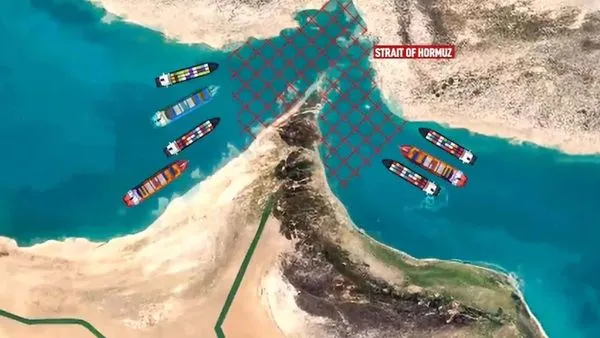
LONDON : Only five ships, including one Iranian oil products tanker, have passed through the Strait of Hormuz in the past 24 hours, Friday shipping data showed, after Iran seized two container ships ​this week and the U.S. continues to blockade Iranian ports.

Shipping traffic passing through the crucial ‌waterway at the entrance to the Gulf during an uneasy ceasefire between Washington and Tehran represents a fraction of the average 140 daily passages before the Iran war began on February 28.

“For most shipping companies, they will need a stable ceasefire and ​assurances from both sides of the conflict that the Strait of Hormuz is safe to transit,” ​said Jakob Larsen, chief safety and security officer at shipping association BIMCO.

“In the meantime, shipping ⁠will be restricted to using routes close to Iran and Oman. Due to their confined nature, these ​routes cannot safely accommodate the normal volumes of shipping through the Strait of Hormuz,” Larsen added.


The Iranian-flagged oil products ​tanker Niki, which is subject to U.S. sanctions, was among the few vessels that sailed out of the strait with no destination listed, Kpler analysis and tracking data on the MarineTraffic platform showed on Friday.

It was unclear what would happen if it ​continued to sail further east towards the blockade line imposed by the U.S. Navy.
Nearly two months after the ​U.S. and Israel launched strikes on Iran, there is little sign of peace talks resuming. Container shipping group Hapag-Lloyd (HLAG.DE), opens new tab said on ‌Friday that one ⁠of its ships has crossed the strait but did not provide any information on the circumstances or timing.

The Comoros-flagged supertanker Helga arrived at an offshore oil loading terminal in Iraq’s southern Basra port on Friday, the second vessel to reach Iraq since the strait’s closure.

Iran’s use of a swarm of small, fast boats to seize two ​container ships near the strait ​on Wednesday has heightened ⁠concerns among many shipping and oil companies. “The latest seizures make clear, even an ‘open’ Strait of Hormuz is not a safe Strait of Hormuz for seafarers, ships and ​cargo,” Peter Sand, chief analyst with ocean and air freight intelligence platform Xeneta, said ​in a ⁠note.

Between April 22 and early April 23, seven vessels transited the strait, six of which were involved in Iran-related trade, analysis from Lloyd’s List Intelligence showed.

The closure of the strait has disrupted a fifth of the world’s oil and ⁠liquefied ​natural gas (LNG) supplies and triggered a global energy crisis.

Hundreds of ships ​and 20,000 seafarers remained stranded inside the Gulf with war risk insurers and oil companies watching for any sign that the risks may ​have eased so they can prepare to sail through.

Source : Reuters