Home Blog Page 340

CMA CGM reflags fifth container vessel in India

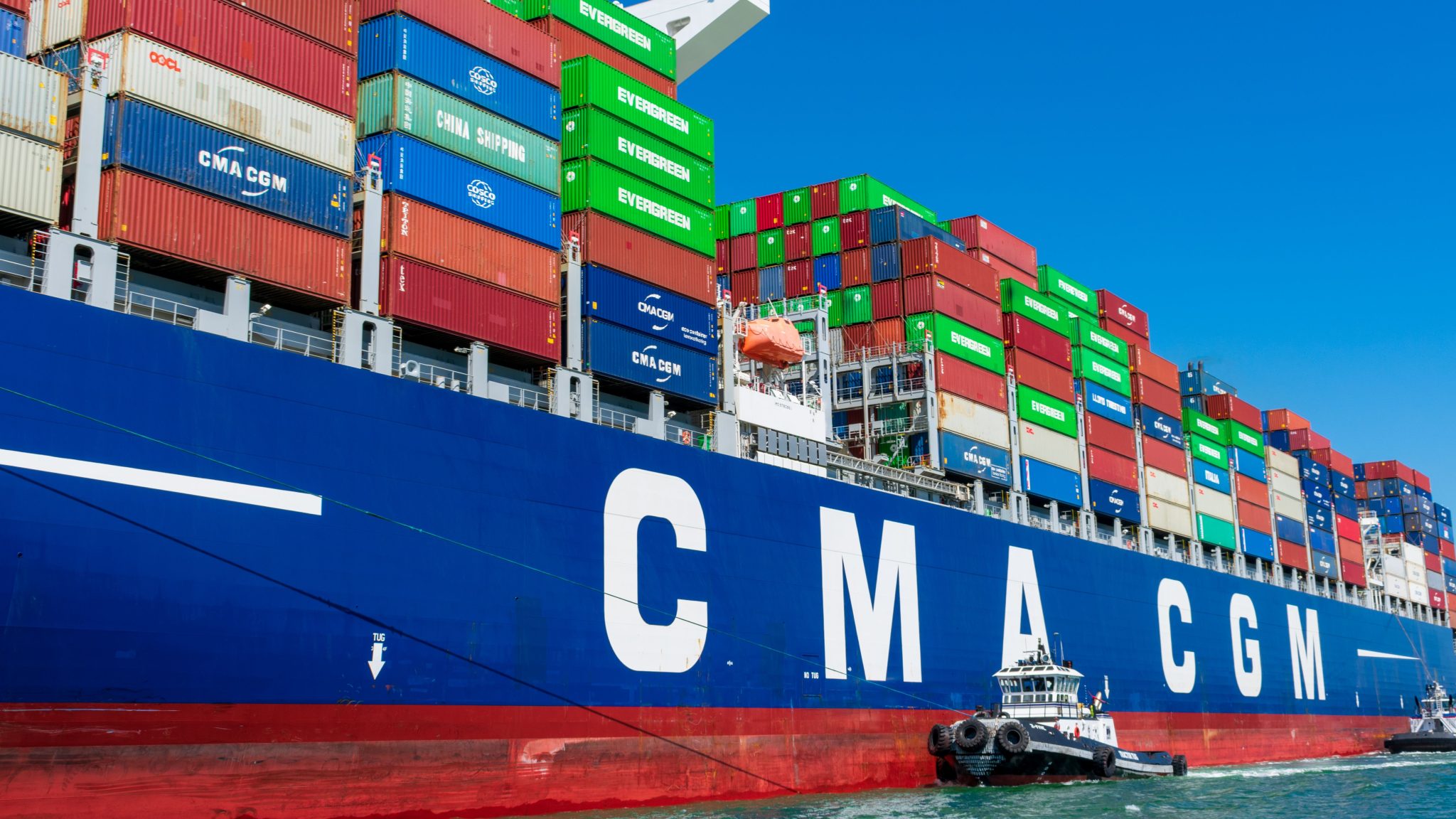
MUMBAI : French container shipping line CMA CGM Group on Wednesday announced the reflagging of its fifth container vessel in India, as it looks to enhance its service efficiency for customers across key trade routes.

Reflagging is the process of changing the country of registration (flag State) of a merchant ship. The group said it has been a strong growth partner of India across maritime, logistics, and infrastructure sectors and the reflagging of the 2,592 TEUs capacity vessel, Vila do Conde, marks another significant milestone in its continued investment and long-term commitment to the country.

Reflagging of vessels is picking up pace with the government’s plan to have a larger fleet owned by India. In September last year, Prime Minister Shri Narendra Modi had called for self-sufficiency in shipping, citing India’s ₹6 trillion outgo to foreign shipping lines in maritime trade.

All five vessels of the French carrier have been reflagged since last year. In February, Modi visited the company’s headquarters in Marseille with French President Emmanuel Macron. The French company also plans to flag its sixth vessel in the country by the end of May, as part of its expansion strategy.

CMA CGM has strategic initiatives planned to support India’s maritime ecosystem, on account of India playing an increasingly important role in global trade, it said.

In February, CMA CGM became the first major international carrier to order vessels from an Indian shipyard, after it signed a $350 million deal with state-owned Cochin Shipyard for the supply of six dual-fuel vessels.

It also has significant investments planned across logistics, with a $300 million one lined up in Maharashtra, the company’s chairman Rodolphe Saade had told this paper in an interview.

It is also eyeing operations in inland waterways, but is in the process of identifying a viable business proposal.

The company has been advocating that the Indian government leverage Gujarat International Finance Tec-City (GIFT City) as a vessel registration hub, according to a senior executive.

Registering vessels under the Indian flag has been a priority for the government as it eyes a larger share of global trade. While it has commercial benefits, the West Asia crisis has also led global experts to link it to maritime security.

A New Era for Indian Shipbuilding: SMEC Automation to Support VARD Electro (India) in Delivering the Next-Generation SOV Fleet at Cochin Shipyard

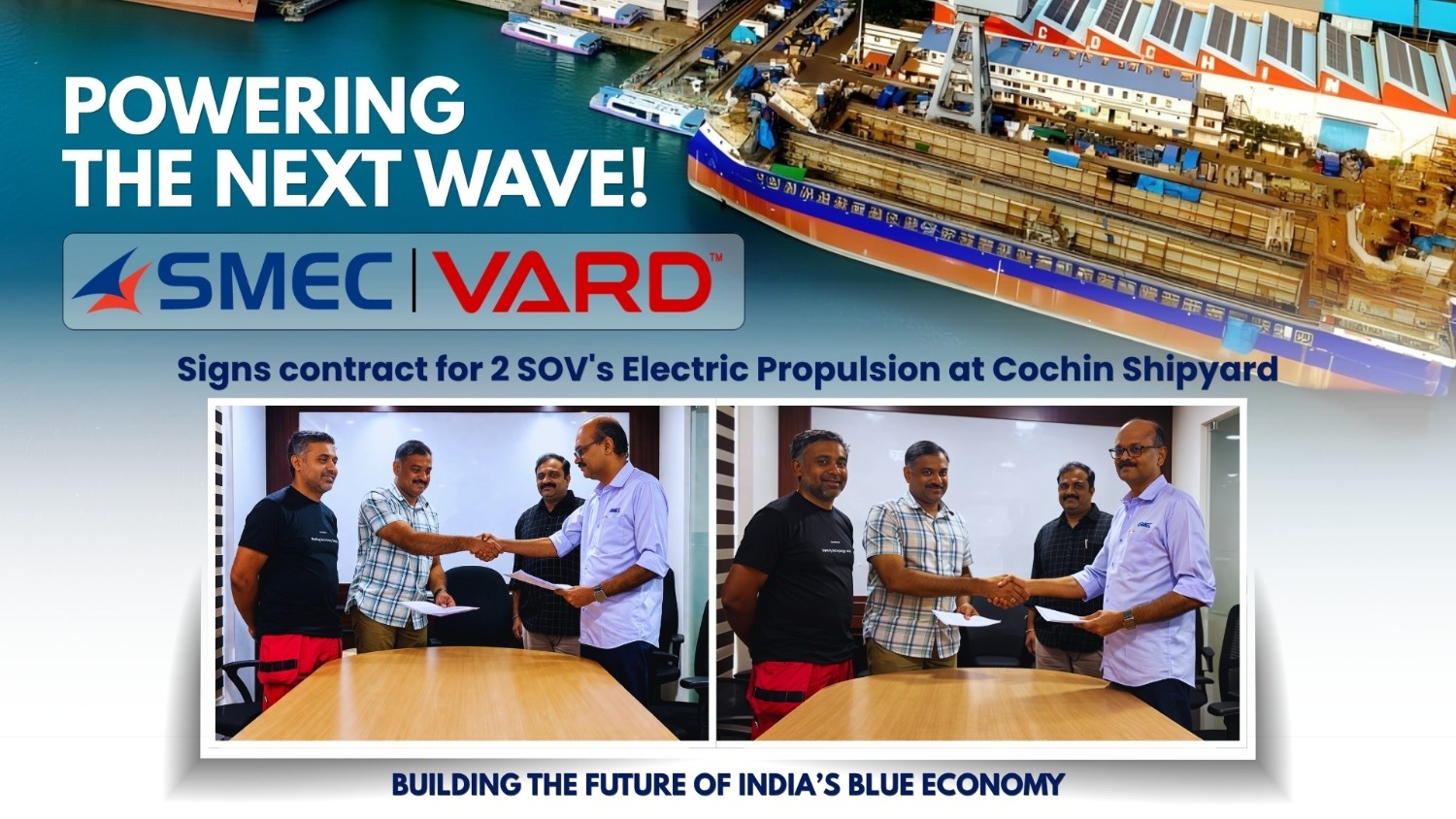
KOCHI: SMEC Automation Pvt. Ltd., a premier provider of marine engineering solutions, has officially entered into a landmark strategic commercial agreement to support VARD Electro (India). This alliance is set to revolutionize the Indian shipbuilding landscape by delivering fully integrated equipment packages and providing end-to-end execution of electrical installations for newbuild vessels across major Indian shipyards.

By merging VARD Electro’s renowned technical heritage with SMEC’s dominant local execution and engineering infrastructure, this collaboration creates a formidable “Turnkey” solution for the Indian maritime sector. This initiative directly accelerates India’s Harit Nauka initiative and addresses the rigorous IMO decarbonization mandates currently reshaping global fleet standards.

The immediate focus of this support includes the integration of advanced Electric Propulsion systems into two landmark Service Operation Vessels (SOVs) currently being built at Cochin Shipyard Ltd — vessels built to serve the rapidly expanding European offshore wind market, where demand for IMO-compliant, electrically integrated newbuilds is accelerating sharply.

The global electric ship market is projected to reach USD 18.39 billion by 2032, driven by a surge in demand for next-generation, emission-compliant SOVs. As Cochin Shipyard Ltd. emerges as a global hub for these vessels, this alliance provides the localized, high-spec electrical integration required to meet the standards. We are here to ensure that India’s manufacturing excellence is matched by world-class electric propulsion execution.”

“This agreement to support VARD Electro (India) is a definitive statement of intent for the future of Indian maritime infrastructure,” stated Saiju Mohamed, Managing Director of SMEC Automation. “We are bridging the gap between global innovation and local excellence. By bringing world-class electrical integration and equipment directly to Indian shores, we are empowering local shipyards to build vessels that are globally competitive, technologically advanced, and future-ready.”

For over 25 years, SMEC Automation has been a trusted engineering partner at Cochin Shipyard Ltd. Today, that legacy evolves as we provide critical technical support to VARD Electro (India) to bring Electric Propulsion to these landmark vessels, ensuring high-quality, reliable, and efficient project delivery from design to commissioning.


About SMEC Automation

Founded in 2001 and headquartered in Kochi, SMEC Automation is a leader in industrial and marine automation. We specialize in high-fidelity control systems, complex retrofits, and electrical instrumentation, serving as a frontline enabler for the maritime, oil & gas, and energy sectors across South Asia and the Middle East.

About VARD Electro (India)

VARD Electro (India) is a division of the VARD Group (part of the Fincantieri Group). As a premier provider of integrated electrical and automation systems, they bring a culture of innovation and precision to the most demanding marine and offshore environments in India.

A Practical View on the EU’s Revised Ship Recycling Guidance

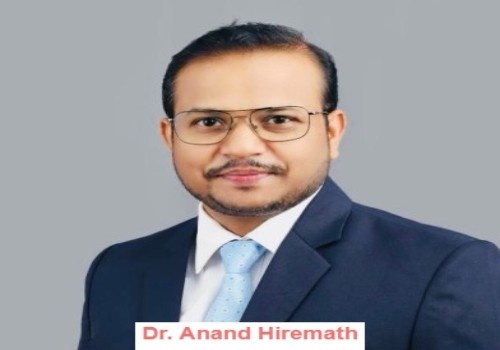
By Dr. Anand Hiremath, CEO, Sustainable Ship and Offshore Recycling Program (SSORP)

The European Union has long positioned itself at the forefront of responsible ship recycling. The intent behind the EU Ship Recycling Regulation (EUSRR) is clear and commendable: to ensure that end-of-life vessels are dismantled in a manner that protects both human health and the environment.

The recently issued draft guidance for third-country yard inclusion continues in that same spirit. It seeks to clarify expectations, strengthen oversight, and ensure consistency in how facilities are assessed. These are important objectives, and the industry broadly supports the direction of travel.

However, as with any regulatory framework that operates across jurisdictions, the effectiveness of the policy will ultimately be determined not only by the standards it sets, but by the level of participation it achieves.

At first glance, the revised guidance appears significantly more stringent than previous interpretations. While presented as clarification, the document introduces a level of detail and expectation that, in practice, raises the threshold for entry in a meaningful way, particularly for major recycling hubs such as Alang.

This distinction matters.

From Alignment to Accessibility

The core premise of the EUSRR has always been that facilities outside the EU can be included in the EU List, provided they meet equivalent standards. In principle, this creates a pathway for global alignment.

In practice, the revised draft risks shifting that pathway into a narrow corridor.

Several elements contribute to this shift:

  • Expanded interpretation of infrastructure requirements, particularly around impermeable flooring, drainage systems, and handling areas. For instance, the scope now extends beyond primary cutting zones to include handling, sorting, and movement areas, significantly widening the physical footprint required for compliance.
  • More prescriptive environmental monitoring frameworks. These now require defined methodologies, station mapping, and year-on-year comparability, often involving accredited laboratory testing, introducing a level of operational and administrative intensity not previously required.
  • Increased emphasis on downstream waste management being “broadly equivalent” to EU standards. This places an implicit obligation on yards to ensure compliance across external value chains that are often outside their direct control.
  • A heavier documentation and verification burden, including expectations around the independence and role of third-party verifiers.
  • A more complex inspection and review structure, including the possibility of unannounced inspections and cumulative deficiency assessments.

Individually, each of these elements can be justified. Collectively, they create a compliance environment that may prove difficult to access, even for yards that have already invested significantly in upgrades and alignment with international conventions.

The Practical Reality on the Ground

Facilities in Alang, for example, have undergone substantial transformation over the past decade. Many yards have invested in infrastructure improvements, safety systems, environmental controls, and Hong Kong Convention compliance.

The question is no longer whether progress has been made. It clearly has.

The question now is whether the revised framework recognises that progress as a foundation to build upon, or whether it resets the baseline to a level that is operationally difficult to achieve within a reasonable timeframe.

One area where this becomes particularly evident is in the interpretation of environmental control systems. Requirements around impermeable surfaces, drainage collection, and water treatment are expanded to cover a broader range of activities and areas. While technically sound, the practical application of these requirements in intertidal operating environments introduces engineering and operational challenges that are not easily reconciled with existing yard layouts.

Similarly, the expectation that downstream waste facilities operate to standards broadly equivalent to those in the EU raises questions of jurisdictional reach. Ship recycling yards do not operate in isolation, and their ability to control or certify external waste ecosystems is inherently limited. In effect, compliance expectations begin to extend beyond the facility boundary into national waste ecosystems, where alignment is neither uniform nor fully verifiable by the yard itself.

These are not arguments against higher standards. They are reflections of operational realities that must be accounted for if the objective is to bring more facilities into a regulated framework.

When Compliance Becomes a Constraint

The most important consideration, however, lies not in the technical details, but in how market participants respond.

Shipowners operate in a commercial environment. End-of-life decisions are influenced by freight markets, steel prices, regulatory exposure, and timing. In such conditions, owners are unlikely to delay decisions while navigating uncertain or prolonged approval processes.

If inclusion on the EU List is perceived as complex, unpredictable, or out of reach, the likely outcome is not a pause in recycling activity. It is a shift in where that activity takes place.

This is the central risk.

By raising the entry threshold without a clearly defined transition pathway, the framework may limit participation rather than expand it. In doing so, it risks reducing the number of approved facilities available to the market.

The result is not reduced recycling, but redirected recycling, often into channels where regulatory oversight is less visible. This ultimately diminishes the very influence the regulation seeks to extend.

The Case for a Phased Approach

There is an alternative path that could better align regulatory ambition with market behaviour.

A phased inclusion model would allow a limited number of demonstrably compliant yards to enter the EU List based on current capabilities, subject to clearly defined improvement milestones over time. A phased approach would recognise existing compliance efforts as a starting point, rather than requiring full alignment at the point of entry.

This would:

  • Encourage participation by providing a visible and achievable entry point
  • Maintain regulatory oversight while improvements continue
  • Create real-world examples of compliance outside the EU
  • Allow standards to evolve in parallel with operational adaptation
  • Introduce measurable, time-bound improvement milestones aligned with infrastructure and monitoring upgrades

Such an approach would not dilute standards. It would sequence them.

It would recognise that transformation in industrial environments is a process, not an event, and that sustained improvement is often best achieved through engagement rather than exclusion.

Preserving Influence Through Participation

The EU has an opportunity to shape global ship recycling practices in a meaningful way. That influence, however, depends on participation.

If the regulatory framework becomes too difficult to access, it risks creating a system that is robust in design but limited in reach. Conversely, a system that combines high standards with practical pathways for inclusion can extend its impact far beyond its immediate jurisdiction.

The current draft guidance reflects a strong commitment to environmental and safety outcomes. The next step is to ensure that it also supports practical adoption.

A Moment to Reconsider the Balance

Regulation in complex, global industries is always a balance between ambition and applicability.

The revised guidance represents an important evolution of the EUSRR framework. It also presents an opportunity to reflect on how that framework interacts with the realities of ship recycling markets.

If the objective is to improve standards globally, then the pathway to participation must be as carefully considered as the standards themselves.

Because in the end, the success of any regulatory system is not measured solely by the level it sets but by how many are able and willing to meet it.

Without that balance, there is a real risk that regulatory intent outpaces market participation.

Author:

Dr. Anand Hiremath, CEO, Sustainable Ship and Offshore Recycling Program (SSORP)

DP World launches ‘Swasthya Kendra’ Programme, The First Step in a Mission to support 1 Million Truckers across India

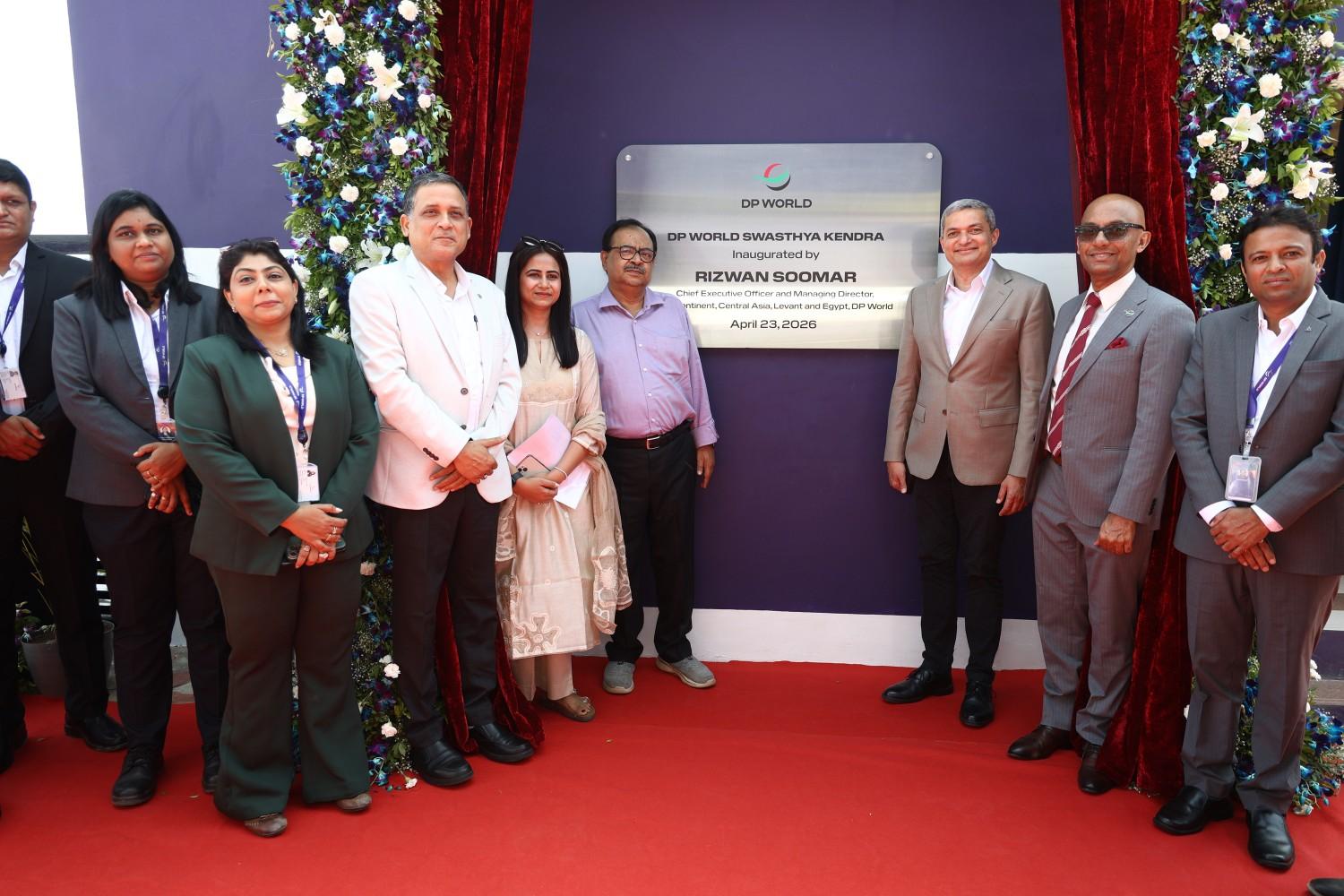
MUNDRA: DP World on Thursday announced the launch of its flagship Swasthya Kendra in Gujarat, marking the first step in a nationwide mission to build a network of accessible wellbeing hubs for India’s trucking community. With an initial ambition to positively impact one million truckers and their families, the programme reflects a long-term vision to progressively serve trucking communities across the country.

India’s trucking community forms the backbone of the nation’s supply chains, enabling over 70% of the country’s freight movement and connecting industries, businesses, and households across geographies. With more than 6.5 million registered trucks on Indian roads, access to quality healthcare, financial security, and welfare support continues to remain a significant challenge for many within the sector. Through the Swasthya Kendra programme, DP World seeks to address these longstanding gaps by creating accessible wellness hubs across key freight corridors, bringing essential services closer to where truckers live and work.

The first Kendra in Gujarat, strategically located near the Mundra International Container Terminal, spans 7,000 square feet and has been developed as an integrated wellbeing hub designed to serve the trucking community over the coming years. It will provide access to healthcare services, preventive screenings, rest and recovery spaces, sanitation facilities, and assistance in navigating welfare and social security schemes.

The initiative has been developed in partnership with Plan International India, combining DP World’s logistics and infrastructure expertise with deep community engagement capabilities to deliver meaningful and sustained impact. Support services will also extend to truckers’ families, underscoring a broader commitment to holistic wellbeing and community resilience.

As part of its long-term vision, DP World plans to expand the Swasthya Kendra network across India, creating a scalable platform that improves quality of life for truckers, strengthens road safety, and helps future-proof the nation’s logistics backbone. Complementing this effort, DP World will continue to advance its Mission for Vision programme through preventive eye-care initiatives along major transport routes, contributing to safer roads and healthier communities nationwide.

Speaking at the launch,Rizwan Soomar, CEO and Managing Director, Subcontinent, Central Asia, Levant and Egypt, DP World said, “India’s growth story will be shaped not only by world-class infrastructure, but by how we support the people who keep trade moving every day. Truckers are the backbone of our supply chains and vital to the nation’s progress. At DP World, we believe infrastructure development must go hand in hand with social impact. The launch of the first Swasthya Kendra in Gujarat marks the beginning of our long-term vision to build a network of support that progressively serves trucking communities across India, ensuring those who drive economic growth are supported with dignity, wellbeing, and opportunity.”

Naveen Gupta, Secretary General, All India Motor Transport Congress, commented: “Truck drivers are the backbone of the transport industry and key contributors to the nation’s economy. They often operate under demanding conditions with limited access to adequate rest, leading to fatigue. The pan-India Swasthya Kendra initiative goes beyond infrastructure – it recognises their contribution and seeks to improve their wellbeing. Through this partnership, drivers will have access to essential amenities, critical information, and healthcare support helping to bring greater comfort, safety, and dignity to their lives.”

Mr. Mohammed Asif, Executive Director- Plan International India, said: “By transforming the rest stop at Mundra into a hub of healthcare, wellbeing, and essential services, this initiative marks a significant step towards inclusive development, with a special focus on truckers and, by extension, their families and communities. Plan India is proud to partner with the district government and local community, with the support of DP World, to deliver integrated assistance and promote wellbeing for truckers on the move.”

A Broader Commitment to India’s Logistics Ecosystem

Complementing the physical Kendras, DP World’s multilingual, mobile-first application is now available for download on the Google Play store and has already garnered an impressive response with close to 1000 truckers actively using it nationwide within just one month of launch. The app helps truckers and their families locate health facilities, ATMs, petrol pumps, and mobile health units, while an in-built wellness tracker monitors key vitals and delivers real-time fit-to-drive status. A gamified learning module promotes safe driving practices, and integrated digital tools connect truckers to benefits, rewards, and social security support, ensuring comprehensive on-road assistance well beyond the walls of the Kendras.

Jitin Prasada concludes official visit to the Czech Republic to strengthen bilateral economic cooperation

NEW DELHI : Union Minister of State for Commerce & Industry, Shri Jitin Prasada, concluded his official visit to the Czech Republic from 22-23 April 2026. The visit was held at the invitation of the Government of the Czech Republic, reaffirmed India’s commitment to strengthening strategic and economic engagement with key European partners, while deepening bilateral trade, investment, and innovation linkages with the Czech Republic.

During the visit, the Minister held bilateral meetings with senior Czech leadership, including Mr. Karel Havlíček, Deputy Prime Minister and Minister of Industry and Trade; Mr Jan Sechter, Deputy. minister of Industry and Trade and Ms. Marie Chatardová, Deputy Minister of Foreign Affairs. These engagements focused on reviewing progress in economic cooperation and exploring new avenues to strengthen industrial and trade linkages across priority sectors.

Shri Prasada co-chaired the 13th Session of the India–Czech Republic Joint Commission for Economic Cooperation (JCEC) with his Czech counterpart Mr Jan Sechter, Deputy Minister of Industry and Trade of the Czech Republic in Prague on 23rd April 2026. Both leaders reviewed the full spectrum of bilateral economic relations and identify new opportunities for collaboration in priority and emerging sectors. The protocol of 13th India-Czechia JCEC was signed.

On the margins of the visit, the Minister inaugurated in the India–Czech Business Forum with Mr Jan Sechter, Deputy Minister of Industry and Trade and engaged with leading Czech industry representatives to promote trade and investment opportunities and further strengthen business-to-business linkages.

As part of the programme, Shri Prasada visited leading Czech industrial and technology companies in the automotive, transport equipment, and advanced engineering sectors, including Škoda Transportation in Plzeň, gaining first-hand insights into Czech industrial capabilities and exploring avenues for deeper collaboration. Minister also held meeting with representatives of Skoda Auto and encouraged to enhance investment in India’s auto mobile sector. Minister interacted with vibrant Indian community during the visit.

The Minister also visited Czech Institute of Informatics, Robotics and Cybernetics (CIIRC CTU) in Prague and the ELI Beamlines Laser Facility in Dolní Břežany—globally recognised centres of excellence in advanced research, artificial intelligence, robotics, and laser science.

The visit reflects the growing political will and converging economic aspirations between India and its European partners. It aims to translate shared leadership vision into durable partnerships that drive inclusive growth, industrial transformation, and global economic resilience.

India, Germany need open markets, supply chains amid West Asia crisis: Indo-German Chamber Director-General

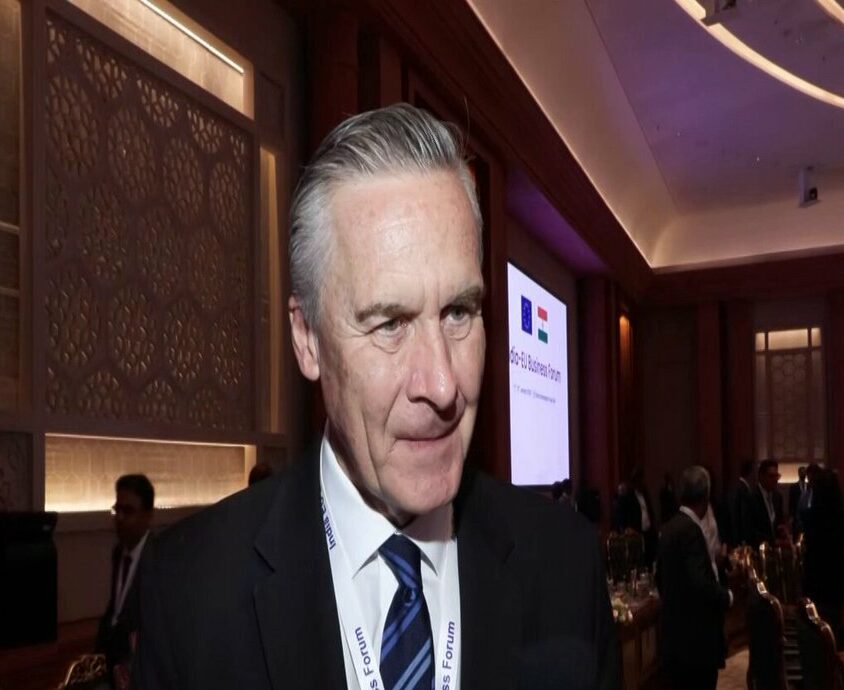
AHMEDABAD: India and Germany need to ensure open markets and uninterrupted supply chains amid the ongoing West Asia crisis and disruptions in the Strait of Hormuz, said Jan Noether, Director General, Indo German Chamber of Commerce, highlighting the impact of geopolitical tensions on global trade.

In an exclusive interaction with ANI, Noether said both India and Germany are heavily dependent on free shipping routes for trade, particularly for the movement of oil, gas and other essential goods.

He noted that disruptions in the Strait of Hormuz have affected trade flows and increased pressure on supply chains globally.

“Trade has been affected since both India and Germany depend on supplies through the Strait of Hormuz, including oil and gas, which form the basis of energy supplies,” he said.

He stressed that maintaining open markets and ensuring the smooth movement of goods is critical for sustaining economic activity and business cooperation between countries.

“Germany as well as India are large economies that depend on free trade and reliable business cooperation. Therefore, we need open markets and open supply chains to make that happen,” he added.

Noether also pointed out that the impact of the crisis is already being felt in Germany, with rising prices of fuel and daily consumption items.

“Prices are up in Germany. If you look at fuel prices and general prices of daily consumption, they have increased,” he said.

He noted that the situation reflects the broader impact of global supply disruptions, as restrictions or uncertainties in key trade routes quickly translate into higher costs for consumers and businesses.

Expressing hope for an early resolution, Noether said a political solution to the conflict is essential to ease tensions and restore stability in global markets.

“We hope that there is a political solution and that it is around the corner, which can help soften tensions not only in the region but also globally,” he said.

The comments come at a time when global trade routes remain under pressure due to geopolitical tensions, with economies like India and Germany facing challenges related to energy supply, pricing and overall trade flows.

Noether emphasised that restoring stability in supply chains will be key to ensuring continued trade and economic cooperation between nations.

Source: ANI

India–South Korea Trade stays Range-Bound at $25–28 Billion amid push towards $50 Billion Milestone: Rubix Data Sciences

MUMBAI: India–South Korea economic ties are entering a more strategic phase, even as trade remains range-bound and imbalances persist, according to a new analysis by Rubix Data Sciences. Both countries have set a target of scaling bilateral trade to USD 50 billion by 2030.

The report, India and South Korea: Trade Scenario, notes that the first South Korean presidential visit to India in eight years signals a clear shift towards a more structured, investment-led partnership spanning semiconductors, clean energy, shipbuilding, defence, and advanced manufacturing. 

However, the analysis also points to underlying structural challenges that could shape the pace of this expansion. Bilateral goods trade has remained largely range-bound at USD 25–28 billion between FY2022 and FY2025, while India’s goods trade deficit with South Korea has widened significantly, making the case for export diversification, deeper value chain integration, and improved market access to fully realise the partnership’s potential. 

Trade Trends Reveal Structural Gaps

Rubix’s analysis highlights that India’s goods exports to South Korea have declined from USD 8.1 billion in FY2022 to USD 5.8 billion in FY2025, reflecting an 11% CAGR contraction, even as imports have remained relatively stable at around USD 21 billion. This imbalance has led to a sharp rise in the trade deficit, which has expanded more than 1.6 times over the same period. 

The findings suggest that while engagement between the two economies has deepened at a policy level, trade flows have yet to fully reflect this momentum, pointing to the need for more targeted interventions.

Shift Towards High-Value Supply Chains

The report identifies a gradual shift in India’s import basket towards higher-value, technology-intensive goods. Electrical integrated circuits have emerged as the fastest-growing import category, increasing their share from 7% to 15%, reflecting India’s growing dependence on semiconductor inputs and deeper integration into global electronics supply chains. 

On the export side, India continues to rely on commodity and intermediate goods such as petroleum products and metals, though emerging segments like aerospace components indicate early signs of diversification. However, limited penetration into high-value industrial supply chains remains a key constraint.

Unlocking the Next Phase of Growth

Rubix Data Sciences notes that achieving the USD 50 billion trade target will depend on sustained execution across multiple fronts, including:

  • Export diversification into high-value sectors
  • Stronger manufacturing linkages and value chain integration
  • Improved market access and reduction of non-tariff barriers
  • Increased bilateral investments in strategic industries

With institutional frameworks being put in place and sectoral priorities aligned, the report concludes that India–South Korea economic ties are well-positioned for expansion, provided structural imbalances are addressed in a timely manner.

About Rubix Data Sciences

Rubix Data Sciences Pvt. Ltd. enables businesses to take prudent credit risks, build resilient supply chains, and monitor partner compliance in India and globally, while also helping ensure timely debtor collections for predictable cash flows. Founded by seasoned risk professionals.

Rubix is India’s first Validation Agent for the Legal Entity Identifier (LEI), appointed by Legal Entity Identifier India Ltd, accredited by GLEIF, Switzerland. It’s ARMSTM and EWS platforms, along with their reports and services, are powered by a vast database sourced from 120+ data streams, supported by customised predictive analytics and proprietary technology.

DTDC Express strengthens Operations and Technology Functions to Power Next Phase of Vision 2030

MUMBAI : DTDC Express Ltd., India’s leading multinational logistics firm, has announced the elevation of two senior leaders as part of its ongoing efforts to strengthen its core functions and prepare the organization for its next phase of growth. This strategic move is aligned with the brand’s ‘Vision 2030’ to expand its expertise beyond express parcel delivery and become the most admired logistics partner with closer connections and smarter solutions. 

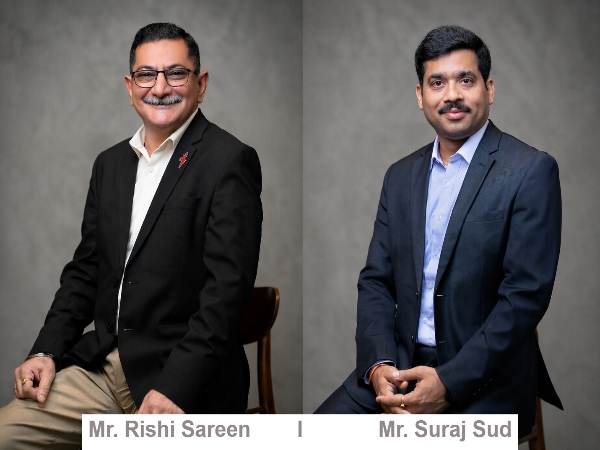
The company has elevated Rishi Sareen to Chief Operations Officer (COO) and Suraj Sud to Chief Technology Officer (CTO), reflecting a continued emphasis on building leadership from within and aligning responsibilities with evolving business needs.

Rishi Sareen, who previously served as the Chief Information Officer, has been instrumental in shaping DTDC’s technology and digital backbone. In his new role as Chief Operations Officer, he takes on a strategic mandate to reimagine operations as a key lever of competitive advantage. He will lead the transformation of DTDC’s network into a future-ready, agile, and intelligence-led ecosystem, seamlessly integrating technology with physical infrastructure to drive a unified and scalable operating model. By embedding data-led decision-making into operations, he aims to improve network resilience and execution excellence while ensuring consistent service delivery and operational discipline. This shift enhances alignment between technology and operations, allowing DTDC to navigate market complexities more swiftly and accurately.

Suraj Sud has taken on the role of Chief Technology Officer after significant contributions within DTDC’s technology function. Having played a crucial part in building the company’s digital infrastructure, he now leads the technology roadmap, focusing on strengthening platforms, improving data visibility, and enabling more informed decision-making throughout the business.

Speaking on the elevations, Abhishek Chakraborty, CEO, DTDC Express Ltd., said,  “We have always believed that long-term strength comes from within the organization. Both Rishi and Suraj have grown with DTDC and understand the business at a very fundamental level. As we continue to scale, it becomes even more important to have leaders who can connect strategy with execution. These changes are a step in that direction.”

Rishi Sareen, Chief Operations Officer, DTDC Express Ltd., said, “As we embark on our journey of scaling, our priority is to cultivate a disciplined and agile operating model that guarantees consistency throughout our network. The real opportunity lies in forging a deeper alignment between our planning, execution, and delivery processes. This alignment will empower us to enhance our operational efficiency and responsiveness, ensuring that we are not only prepared for the next phase of growth but also positioned to lead in our industry.”

Suraj Sud, Chief Technology Officer of DTDC Express Ltd., stated, “I am excited to build upon the robust foundation we have established and to spearhead the next wave of product and platform innovation. This strategy will not only define DTDC’s competitive edge but will also position us as a front-runner in the logistics industry for years to come. Together, we will harness the power of technology to enhance our customer experience, streamline operations, and drive sustainable growth.”

DTDC operates one of the largest logistics networks in the country, backed by a comprehensive partner ecosystem and a strong market presence. As the business evolves, the company prioritizes both enhancing execution and improving the technology that supports it. 

With these leadership changes, DTDC intends to create better alignment between its operational priorities and technology investments while continuing to develop a more responsive and resilient organization.

MPA and UNCTAD Partner to Support Global Maritime Transition in Decarbonisation and Digitalisation

SINGAPORE: The Maritime and Port Authority of Singapore (MPA) has signed a memorandum of understanding (MOU) with the United Nations Conference on Trade and Development (UNCTAD) to support maritime decarbonisation and digitalisation efforts globally.   

The partnership brings together UNCTAD’s trade development mandate and Singapore’s experience as a leading global hub port, to advance the adoption of alternative fuels and digital solutions for ports and countries at different stages of readiness.

The MOU was signed by Mr Tan Hoe Soon, Assistant Chief Executive (Corporate & Strategy) of MPA, and Mr Vinod Nair, Chief, Budget and Project Finance Section of UNCTAD. 

Under the MOU, MPA and UNCTAD will work together to share knowledge and best practices in areas such as sustainable finance and manpower development. It will also include capacity building and technical training for developing countries to strengthen their maritime capabilities and port resilience.

PIL and PSA International launch Singapore’s First Joint Land-Sea Green Shipping Service supported by DNV

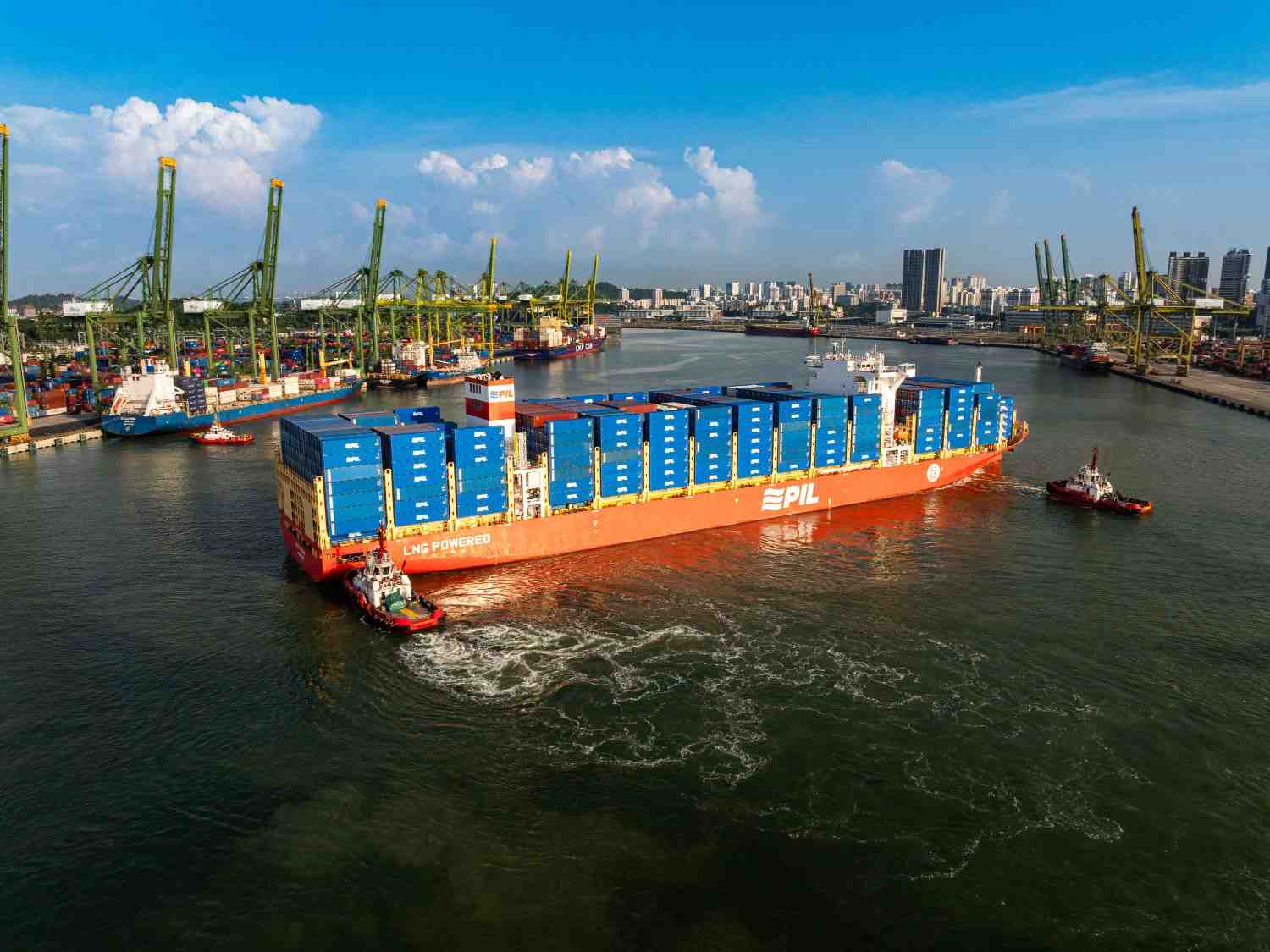
SINGAPORE: Pacific International Lines (PIL) and PSA International (PSA), supported by DNV, have launched Singapore’s first joint land-sea green value-added service for cargo transhipped through the Port of Singapore, which will allow shippers and cargo owners a practical way to reduce their Scope 3 emissions.

The new service enables participating shippers and cargo owners to achieve verifiable emissions reductions through the allocation of carbon reductions generated from the use of lower-carbon fuels across multiple modes of transportation within the logistics, shipping and port operations. Trials for this service are scheduled to commence later in May.

This latest initiative marks a major milestone in the joint Memorandum of Understanding signed in March 2025 between PIL, PSA and DNV to jointly advance carbon emissions measurement and reporting in the maritime sector.

PIL brings its core expertise as an ocean carrier, leveraging its vessel deployment, fuel selection and voyage execution to generate emissions reductions within its own shipping value chain.

PSA contributes its port and supply‑chain capabilities, enabling a green network of terminal and landside operations to reduce end-to-end supply chain emissions.

In line with the partnership’s objectives to accelerate digital decarbonisation, DNV is leveraging its digital capabilities to facilitate standardised data flows and independent verification for maritime emissions data.

For shippers and cargo owners, this offering provides a transparent and trusted pathway to address Scope 3 emissions-reduction needs across the end-to-end supply chain ecosystem, contributing to value chain decarbonisation.

Interested businesses can register for the trial programme via the link or contact sustainability@globalpsa.com for further information.

PIL Chief Commercial Officer, Lionel Patrice Chatelet said, “PIL is advancing maritime decarbonisation by leveraging carbon insetting as a practical and impactful lever within our own value chain. By investing in initiatives that directly reduce or remove emissions across our operations, PIL ensures that emissions reductions are real, measurable, and closely tied to our business activities. This approach not only accelerates progress toward our climate targets but also enables customers to access lower-carbon shipping solutions.”

PSA Group Head of Operations, Technology and Sustainability, Eddy Ng said, “PSA facilitates global trade through responsible stewardship, working with partners to enable efficient, resilient and sustainable trade flows. Our collaboration with PIL and DNV marks an important step in advancing low-carbon initiatives to support the decarbonisation of maritime supply chains and strengthen Singapore’s position as a hub for sustainable maritime and low-carbon energy solutions.”

Veracity by DNV Executive Director, Mikkel Skou said, “This initiative is a strong example of how a trusted data ecosystem can deliver real value across the maritime value chain. When shipowners, ports, and cargo stakeholders are connected through standardised, verifiable data, emissions reductions can be measured, shared, and applied with confidence. At DNV, we see this as a key step in enabling transparency and trust at scale – helping the industry move from ambition to measurable impact.”