Home Blog Page 342

BIMCO INDIA FORUM in Ahmedabad Sees Strong Industry Participation and Engaging Dialogue

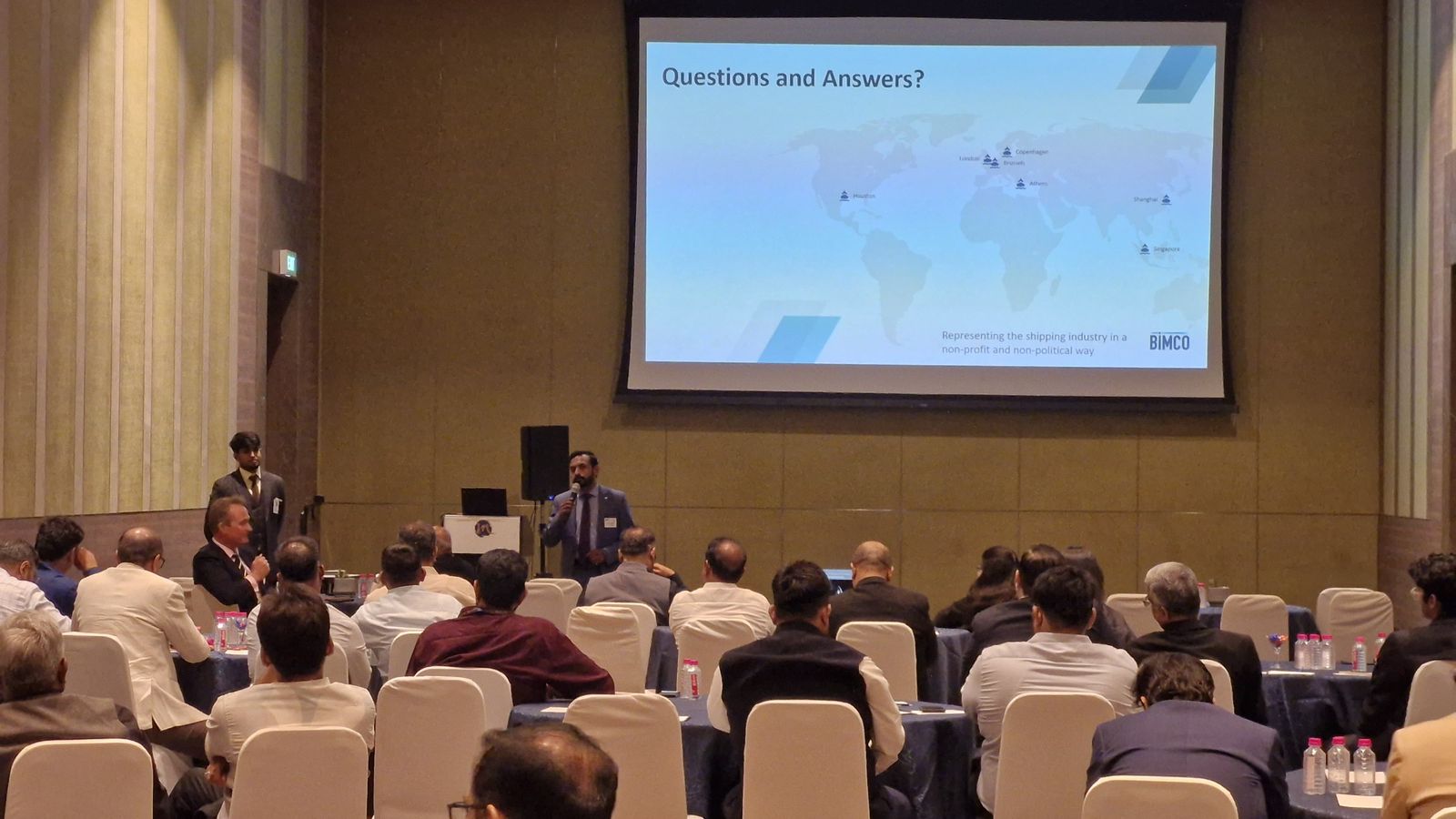
AHMEDABAD: The BIMCO India Forum, hosted by BIMCO at the Grand Mercure Ahmedabad GIFT City, concluded on a highly interactive and insightful note, bringing together a wide spectrum of stakeholders from India’s maritime sector.

The forum featured the presence of Mr. David Loosley, Secretary General & CEO of BIMCO, who delivered a comprehensive overview of BIMCO’s global role, highlighting its contributions to standardising shipping contracts, supporting regulatory alignment, and strengthening international maritime collaboration. His address set the tone for the discussions, emphasising the importance of global best practices and industry cohesion.

Capt. Ashok Srinivasan, Regional Manager & Technical Advisor (South Asia), followed with a detailed and well-received presentation outlining the practical benefits for Indian companies in joining BIMCO. He elaborated on access to globally recognised contracts, advisory support, training programmes, and the value of being part of a strong international shipping network.

The event witnessed active participation from ship recycling companies based in Alang, Bhavnagar, and Mumbai, along with members of the Ship Recycling Industries Association (India). The strong turnout from India’s ship recycling sector highlighted its growing intent to align with global regulatory standards and enhance international competitiveness.

A key highlight of the forum—clearly reflected in the sessions—was the high level of audience engagement. Participants actively interacted with BIMCO leadership, raising a wide range of practical and forward-looking questions on ship recycling regulations, contractual frameworks, compliance challenges, and evolving global shipping dynamics. The open exchange underscored both the awareness and preparedness of Indian stakeholders in navigating a rapidly changing maritime landscape.

Discussions during the forum also focused on responsible ship recycling and the implementation of the Hong Kong International Convention for the Safe and Environmentally Sound Recycling of Ships, along with broader regulatory developments shaped by the International Maritime Organization and the Basel Convention.

Adding an academic perspective, Gujarat Maritime University actively participated in the forum. As highlighted in its official note, the event marked a significant milestone with BIMCO hosting such an interaction in India for the first time. Students gained valuable exposure to an international maritime platform and engaged directly with industry leaders. Dr. Dharmesh Raval, Director, School of Maritime Management, represented the university along with students from MBA and LL.M. programmes.

The overall atmosphere of the forum—as evident from the sessions—was dynamic and collaborative, with strong participation, attentive audiences, and meaningful exchanges between global leadership and Indian stakeholders.

The BIMCO India Forum successfully created a platform for industry dialogue, knowledge sharing, and global-local collaboration, reinforcing India’s growing prominence in the maritime sector. Such engagements are expected to further strengthen alignment with international standards and support the continued development of India’s shipping and ship recycling industries.

Indian Seafarers safe; Over 2,600 repatriated as situation in Persian Gulf remains stable

NEW DELHI : The Ministry of Ports, Shipping and Waterways (MoPSW) has confirmed that no incidents involving Indian-flagged vessels have been reported in the past 24 hours, with all Indian seafarers in the Persian Gulf region remaining safe.

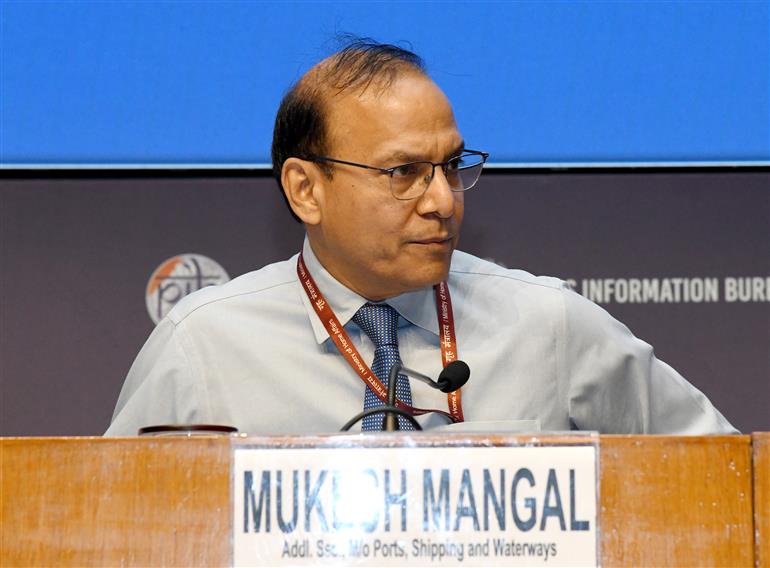
Providing an update, Mukesh Mangal, Additional Secretary, MoPSW, stated that the Indian-flagged crude oil tanker Desh Garima—which safely transited the region on 18 March with 31 Indian seafarers onboard—is expected to arrive in Mumbai later this evening.

The Ministry continues to actively monitor the situation and ensure the safety and welfare of Indian maritime personnel. So far, coordinated efforts have enabled the safe repatriation of more than 2,615 Indian seafarers, including 25 individuals in the last 24 hours alone.

The government has reaffirmed its commitment to maintaining close vigilance and extending all necessary support to Indian seafarers operating in sensitive maritime regions.

Adani Ports gets lenders’ Nod for Karanja Terminal buy

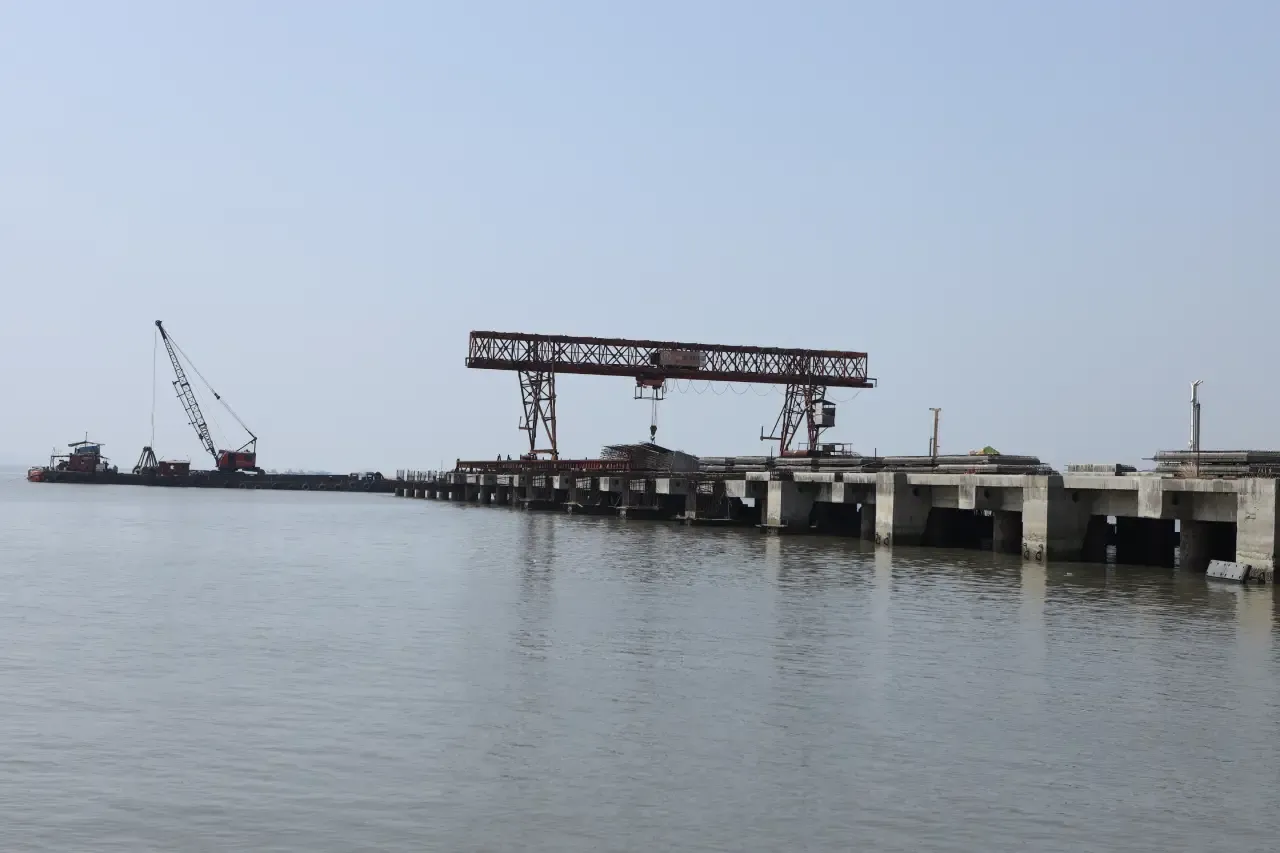
RAIGAD : Adani Ports and Special Economic Zone (APSEZ) has reportedly secured approval from the Committee of Creditors to acquire Karanja Terminal & Logistics, a multi-purpose port and logistics facility located in Maharashtra’s Raigad district.

According to reports, the lenders’ panel approved the resolution plan with 100 per cent voting support on April 14. The creditor committee is led by Prudent ARC, which holds the overwhelming share of voting rights after Canara Bank assigned the debt to the asset reconstruction company in January 2025.

If completed, the transaction would become APSEZ’s third port and terminal acquisition through India’s bankruptcy process, following earlier purchases of Dighi Port in Maharashtra and Karaikal Port in Puducherry. Both Dighi and Karanja are strategically located near Jawaharlal Nehru Port, India’s busiest container gateway by capacity.

Karanja Terminal & Logistics operates a port designed to handle vessels of up to 4,000 DWT and also includes a modern logistics park spread across around 100 acres, featuring warehousing, bonded storage, cold storage and cargo value-added services.

However, Mercantile Ports and Logistics (MPL), the current parent company of Karanja Terminal, has opposed the outcome and said it would pursue legal remedies to regain control of the asset. MPL claims it had submitted a proposal to fully repay creditors, but that the offer was rejected by the lenders.

The acquisition, if finalised, would further strengthen Adani Ports’ footprint in western India and deepen its presence in the logistics and maritime infrastructure segment.

U.S. Delegation engages with PPA to deepen maritime cooperation

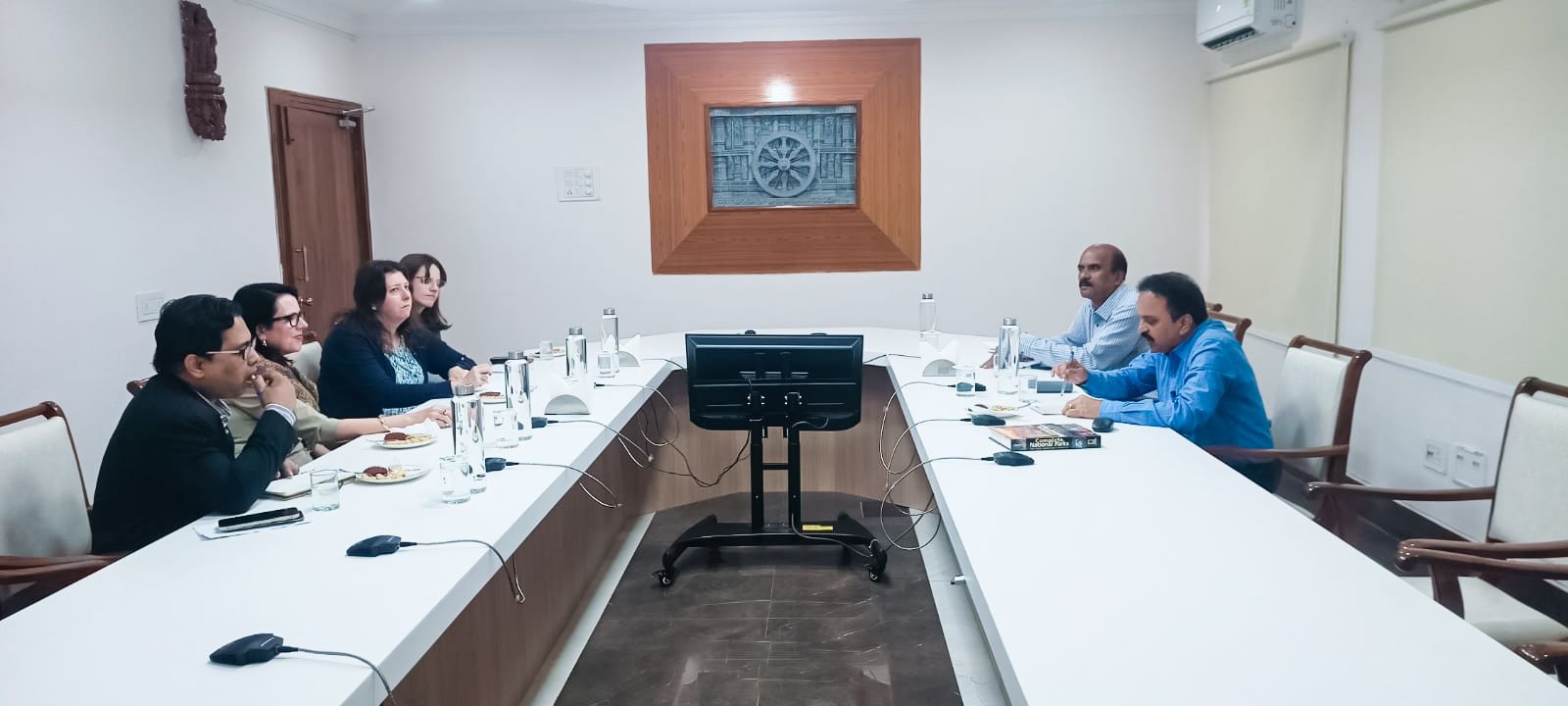
BHUBANESWAR : In a significant step toward strengthening maritime collaboration and exploring investment opportunities, a U.S. delegation led by Laura Williams, Consul General at the U.S. Consulate General Hyderabad, met with P. L. Haranadh, Chairman of the Paradip Port Authority, in Bhubaneswar.

The high-level meeting centered on a range of strategic infrastructure and sustainability initiatives aimed at transforming Paradip Port into a future-ready maritime hub. Among the key projects discussed was the proposed Bahuda Satellite Port, envisioned to enhance regional cargo handling capacity and decongest existing port infrastructure while unlocking new trade corridors along India’s eastern coastline.

A major highlight of the discussions was the proposed Green Hydrogen Jetty, a forward-looking initiative aligned with India’s clean energy transition goals. The project is expected to position Paradip as a key node in the emerging global green hydrogen ecosystem, facilitating production, storage, and export capabilities.

The delegation also reviewed plans for establishing a Shipbuilding and Repair Cluster along the banks of the Mahanadi River in Kendrapara district. This cluster is aimed at boosting domestic shipbuilding capacity, generating employment, and fostering ancillary industries, while supporting India’s vision of becoming a global maritime manufacturing hub.

Discussions further covered opportunities to enhance cargo export-import volumes, improve multimodal connectivity, and attract foreign investment in logistics, port-led industrialization, and maritime services. The U.S. delegation expressed keen interest in collaborating on technology transfer, sustainable port operations, and capacity building.

Chairman P. L. Haranadh highlighted Paradip Port’s ongoing modernization initiatives, including mechanization, digitalization, and green port practices, reaffirming the port’s commitment to efficiency, sustainability, and global competitiveness.

The interaction underscores the growing international attention toward Odisha’s rapidly evolving maritime ecosystem and reflects a shared commitment to advancing resilient, sustainable, and high-capacity port infrastructure in line with global best practices.

New VTI service at GTI strengthens India-Southeast Asia trade connectivity

MUMBAI : Gateway Terminal India (GTI) marked the maiden call of the VTI (Vietnam–Thailand–India) service operated by Interasia Lines on 16 April 2026, reinforcing its role as a key gateway for India’s international trade and strengthening direct connectivity with Southeast Asia.

The inaugural call represents an important step in expanding direct maritime links between India and key markets including Vietnam and Thailand. Operating on a weekly basis, the VTI service offers reliable connections, faster transit times, and reduced reliance on transshipment hubs.

Gateway Terminal India VTI service
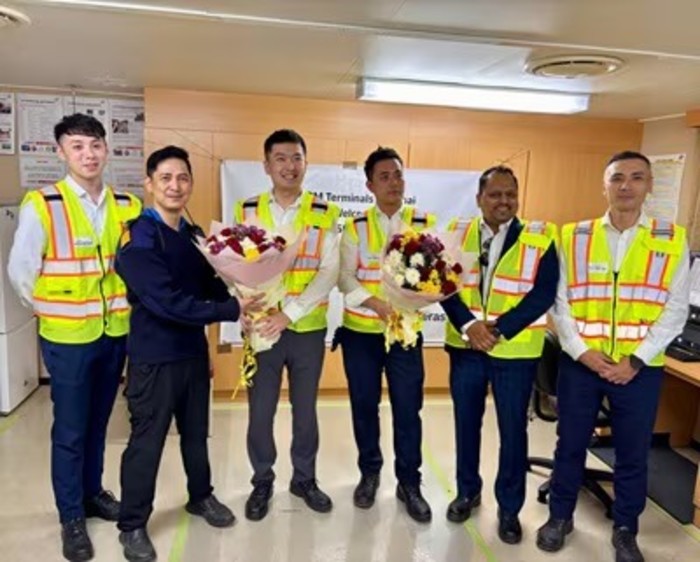
Plaque exchange ceremony marking the maiden call of the Vietnam-Thailand-India service at Gateway Terminal India
The occasion was commemorated with a traditional plaque exchange ceremony between GTI and Interasia Lines representatives and the vessel’s Master, underscoring the growing collaboration between terminal operations and global shipping lines.

“This marks an important milestone in establishing our first direct partnership with Interasia Lines, and a strong step towards supporting IAL’s future growth ambitions globally,” said Mr. Kelvin Lin, Key Client Director, Global Sales, APM Terminals.

Reflecting GTI’s focus on long‑term customer alignment, the terminal continues to work closely with its shipping line partners to support trade growth across emerging and high‑potential corridors.
“This maiden call reflects our commitment to building deeper, more structured partnerships with our customers,” said Mr. Kumar Divya, Chief Operating Officer, GTI. “By aligning our operations closely with Interasia Lines, we are creating a strong foundation to support growth across the India–Southeast Asia trade.”

The addition of the VTI service is expected to benefit a wide range of industries by enabling smoother and more efficient cargo movements.

By combining dependable service delivery with operational excellence, GTI continues to strengthen its position as a preferred terminal partner, supporting customers through reliable infrastructure, collaborative engagement, and a long‑term approach to enabling growth across key trade lanes.

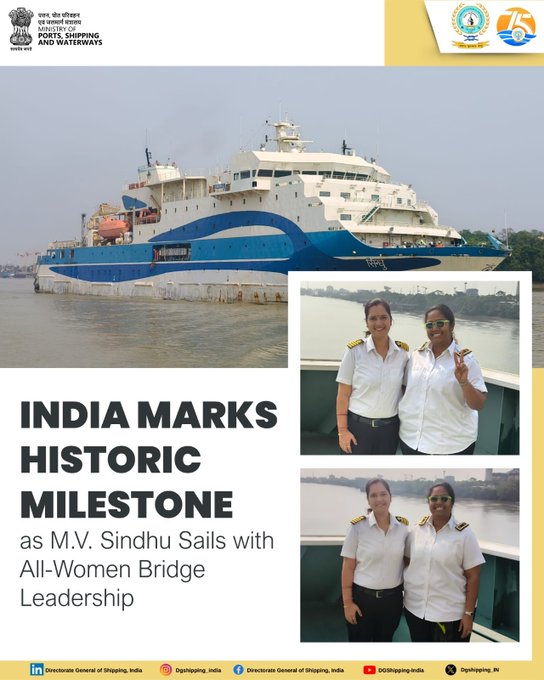
Historic first in Indian Maritime: M.V. Sindhu sails with all-women bridge leadership

KOLKATA : In a landmark moment for India’s maritime sector, M.V. Sindhu etched its name in history by becoming the first Indian-flag vessel to sail with both a women Master and a women Pilot commanding operations on the bridge.

Under the command of Capt. Meera Uppadhaya, Master of the vessel, and Ms. Reshma Nilofer Visalakshi, Pilot, the ship departed from the Khidderpore Docks in Kolkata in the early hours of 21 April 2026. The vessel is currently en route to Port Blair, marking not just a routine voyage, but a defining milestone in the journey toward gender equality in maritime leadership.

This pioneering achievement highlights the evolving face of India’s shipping industry, where women are increasingly taking on critical operational and leadership roles traditionally dominated by men. The seamless coordination and professional excellence demonstrated during the vessel’s departure underscore the high standards of competence and training among India’s महिला maritime professionals.

The occasion has been widely recognized as a testament to the progressive policies and sustained efforts by maritime institutions, training academies, and regulatory bodies working to promote diversity and inclusivity at sea. It also reflects the broader vision of the Ministry of Ports, Shipping and Waterways to foster an equitable and future-ready maritime ecosystem.

Industry stakeholders have hailed the voyage as a powerful symbol of empowerment, sending a strong message to aspiring seafarers across the country. As more women step into commanding roles on ships and in port operations, such milestones are expected to accelerate the transformation of the maritime workforce.

This historic sailing of M.V. Sindhu not only celebrates individual excellence but also reinforces India’s commitment to inclusive growth in the maritime domain—setting a precedent and inspiring a new generation of women to navigate the oceans with confidence and leadership.

GIFT City becomes flagbearer of India’s smart infrastructure vision

GANDHINAGAR : As India cements its position as one of the world’s fastest-growing major economies, global corporations are increasingly eyeing the country as a key investment destination. Anchored by strong digital systems and rapidly advancing infrastructure, India’s urban landscape is undergoing a transformation, and at the heart of it stands Gujarat International Finance Tec-City (GIFT City).

Located in Gujarat’s Gandhinagar, GIFT City is emerging as a next-generation financial and technology hub, purpose-built to meet international standards and attract global capital. “At GIFT City, we have focused on creating infrastructure that matches global benchmarks in both quality and efficiency,” said Anil Parmar, Vice President (Engineering).

“We’ve developed an integrated utility framework where all essential services are housed within a single tunnel system. This ensures that future maintenance or expansion does not require digging up roads.”

One of the defining features of GIFT City is its advanced underground utility tunnel network. Electricity, water supply, high-speed internet, and district cooling systems are seamlessly integrated, enabling uninterrupted services and long-term sustainability.

The city also hosts India’s first fully integrated smart operations model. Its centralised Command and Control Centre enables real-time monitoring and management of key urban services. Dr. Nilesh Kumar Purey, Chief Technology Officer, emphasised the system’s robustness, stating, “Before granting occupancy certificates, we ensure that all buildings are connected to our centralised platform. This allows us to monitor and manage utilities in real time, ensuring efficiency and quick response when required.”
The city’s strategic importance is further reinforced by the presence of global firms such as Bank of America, KPMG, and Infibeam Avenues, all of which have expanded their operations within the hub.

In a significant boost to its global profile, Deakin University has also established an international campus in the city, marking a milestone in cross-border educational collaboration.

“Following the 2023 announcement, coordinated efforts by the Gujarat government, Government of India, and the Australian government made this international campus a reality,” said Deepak Bajaj, Campus Director. With its seamless blend of smart infrastructure, global business ecosystem, and international education, GIFT City is not just a city, it is a blueprint for India’s urban future.

As nations compete for investment and innovation, this high-tech hub is positioning India firmly on the global financial map, shaping what could become the country’s most defining growth story in the years ahead.

Source : ANI

Less than 10% of India’s exports via Strait of Hormuz may struggle to find new markets

NEW DELHI : Less than a tenth of India’s exports routed to countries linked to the Strait of Hormuz may face difficulty finding alternative markets in the event of prolonged disruption, while the bulk of shipments could be redirected to other major economies, a Moneycontrol analysis shows.

Middle Eastern economies, especially the UAE, had become one of India’s major export markets for rerouting goods in the wake of US tariffs last year. A Moneycontrol analysis shows that the European Union, the US and ASEAN may offer similar relief to Indian exporters in 2026 in the wake of the Iran-US war.

The assessment comes amid rising geopolitical risks following the Iran-US conflict, with exporters reassessing trade flows through one of the world’s most critical maritime chokepoints.

India exported goods worth $62.4 billion to economies linked to the Strait of Hormuz in 2024. Of this, only around $5.3 billion, or less than 10 percent, may face significant challenges in being redirected elsewhere. The remainder could be absorbed by markets such as the European Union, the US, ASEAN, the UK, and others.

Among the most exposed categories is rice, with over $4 billion of Indian rice exports headed to the region. Rice growers may face the sharpest disruption if Gulf demand weakens and rerouting proves difficult.

Within the vulnerable $5.3 billion, around $291 million worth of goods are most at risk due to heavy dependence on Gulf buyers and limited alternative demand. These include goats, cardamom and copra.

Countries linked to the Strait accounted for 76 percent of India’s total cardamom exports, worth nearly $200 million, while unworked diamonds worth $53 million, or around 70 percent of India’s total exports in that category, were also routed to these markets.

The analysis suggests that the European Union alone has the capacity to absorb nearly 90 percent of India’s exports previously destined for these countries.

The US and UK could individually absorb 79percent and 51 percent, respectively. If disruptions were to widen to the Red Sea route as well, Japan and South Korea could absorb 39 percent and 33 percent of the affected trade, respectively.

Meanwhile, ASEAN countries could take in 78 percent, while Australia alone could absorb 39 percent.

Even in categories where India was completely dependent on the West Asian countries, exports could be accommodated by other nations.

India’s largest export to Strait-linked nations, with more than 60 percent dependence in 2024, was aircraft parts, valued at $3.8 billion. The analysis indicates that ASEAN, the EU, the UK and the US all have sufficient import demand to absorb such shipments.

Similarly, India’s $1 billion ink exports, currently concentrated in Middle Eastern markets, could be redirected to Europe, while $5.38 billion worth of jewellery exports could also find buyers in the EU.

Iran flags undersea cables, cloud networks as potential targets in Gulf

TEHRAN : Iran’s Islamic Revolutionary Guard Corps (IRGC) has signalled that critical digital infrastructure in the Persian Gulf—including undersea internet cables and cloud networks that could become targets amid escalating tensions and a fragile ceasefire.

According to reports from IRGC-linked media, the warning highlights the strategic importance and vulnerability of the region’s digital backbone, suggesting that infrastructure supporting global connectivity could be drawn into the conflict.

Digital Infrastructure In Focus
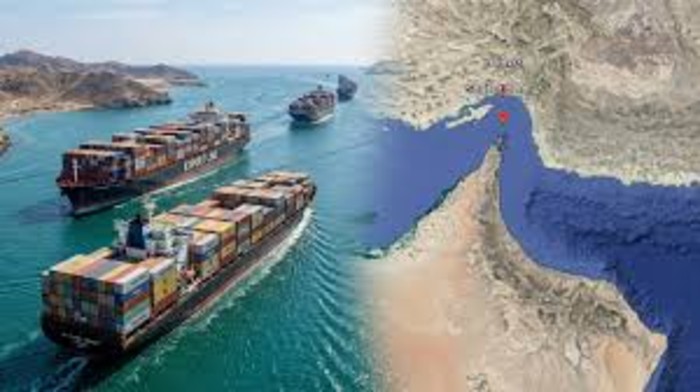
The Strait of Hormuz is not only a key global oil route but also a major corridor for submarine communication cables that carry internet and data traffic across continents.

IRGC-linked reports have mapped these undersea cables and associated cloud infrastructure across Gulf countries such as the UAE, Qatar, Bahrain and Saudi Arabia—effectively identifying them as potential pressure points.

Experts warn that any disruption to these systems could trigger widespread internet outages and impact financial networks, businesses, and governments across multiple regions.

Wider Escalation Concerns
The warning comes as tensions remain high despite a ceasefire between Iran and the United States. The conflict has already expanded beyond conventional military targets, with reports of strikes on data centres and growing concerns over cyber and infrastructure warfare.

Undersea cables, which form the backbone of global communications, are particularly vulnerable because they run through narrow maritime chokepoints like the Strait of Hormuz.

Analysts say even limited damage to a few major cables could significantly disrupt connectivity across the Middle East and beyond, given the region’s heavy reliance on these routes.

Strategic Signal Amid Fragile Truce
The IRGC’s messaging is widely seen as a strategic signal to regional and global players, underlining Iran’s ability to target not just energy infrastructure but also the digital systems that underpin the global economy.

The development adds a new dimension to the conflict, raising fears that any further escalation could impact both physical supply chains and the digital networks that support them.

Source : News18

MPA and PSA Singapore seek proposals for autonomous shipping to modernise port operations

SINGAPORE : The Maritime and Port Authority of Singapore (MPA) and PSA Singapore (PSA) have launched an Expression of Interest (EOI) to invite proposals to develop and test autonomous inter-gateway container feeder vessel operations within Singapore’s port.

  1. Inter-gateway container feeder vessels move containers between terminals within the Port of Singapore (e.g. between Tuas and Pasir Panjang terminals), playing a crucial role in daily port operations. As vessel traffic grows, it is important to ensure that such movements are conducted efficiently, safely, and reliably.
  2. The EOI is part of MPA and PSA’s efforts to explore autonomous technologies and assess their technological readiness, operational feasibility, and safety for use in port operations. The inter-gateway context provides an operationally rigorous environment to assess productivity, safety, and sustainability benefits. As autonomous capabilities advance, they are also expected to create new career opportunities, such as in remote vessel monitoring and operations, autonomous systems engineering, maritime data analytics, and specialised technical maintenance roles.
  3. The EOI also includes plans for a remote operations centre, where information from vessels’ sensors and port traffic data will be integrated to enable real-time monitoring and timely intervention. This will form part of the core safety and assurance system for autonomous operations.
  4. Applicants are expected to address several key considerations in their proposals, such as navigational safety, interaction with manned vessels, traffic management, system redundancy, cybersecurity, human-machine interfaces, and regulatory compliance. Proposals should articulate the operational limits, technological readiness, and risk mitigation measures relevant to inter-gateway deployment. Proposals must also include viable business models, and ensure that their solutions meet PSA’s operational and integration requirements.