Home Blog Page 352

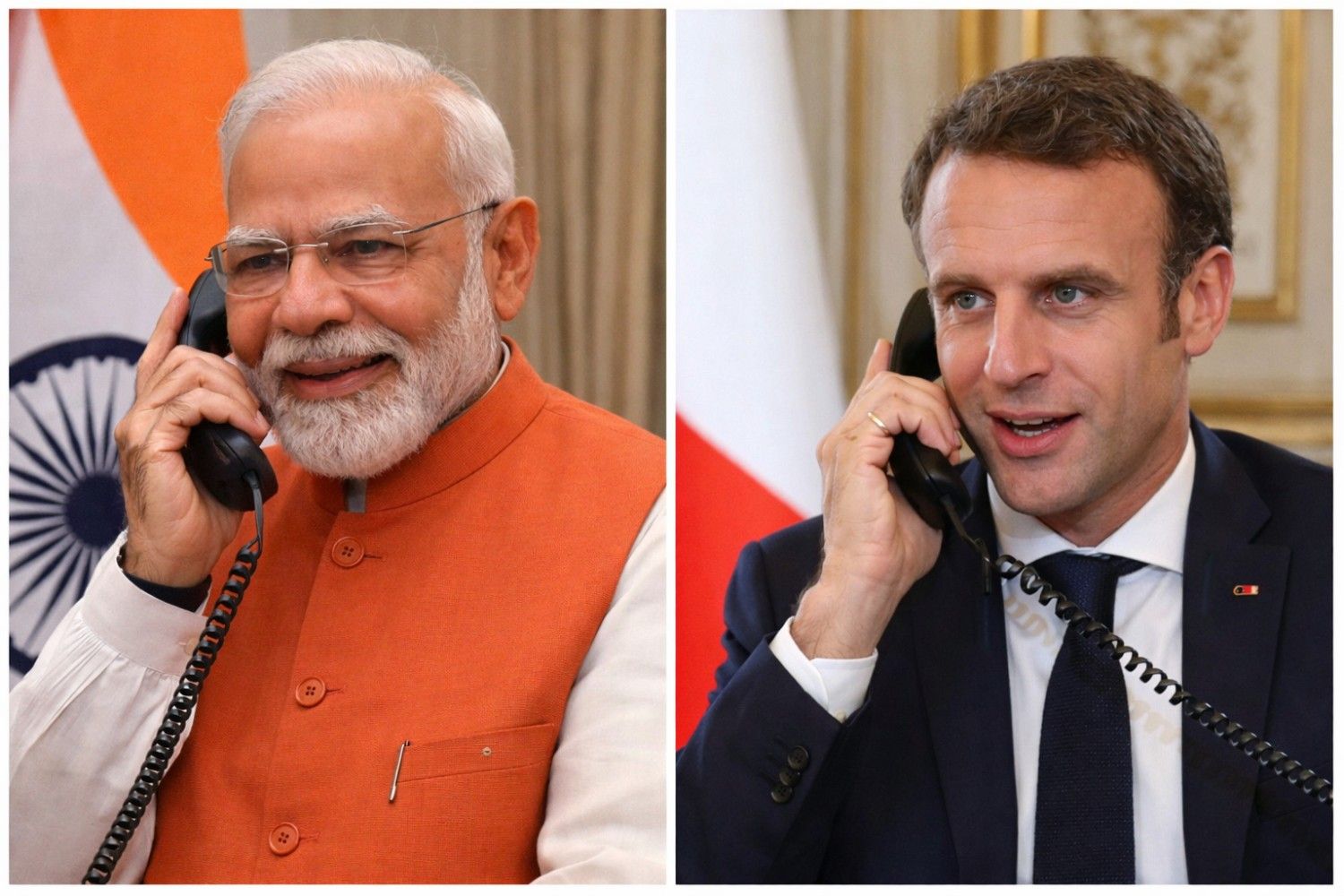
President Macron calls PM Modi, urges urgent restoration of navigation safety in Strait of Hormuz

NEW DELHI : French President Emmanuel Macron spoke with Prime Minister Shri Narendra Modi over the phone and discussed the situation in West Asia, with both leaders stressing maritime security.

PM Modi shared details of the conversation on X, saying, “We discussed the situation in West Asia and agreed on the need to urgently restore safety and freedom of navigation in the Strait of Hormuz,” Modi said in a post on X. He added, “We will continue our close cooperation to advance peace and stability in the region and beyond,” underlining growing coordination between India and France.

The Strait of Hormuz remains one of the world’s most important shipping corridors, transporting a significant share of global oil and gas exports. Any disruption to the narrow waterway can quickly impact energy markets, freight movement and insurance costs. Concerns have intensified amid ongoing tensions in West Asia, with several countries calling for de-escalation and stronger protection for commercial shipping.

The phone call between Prime Minister Narendra Modi and French President Emmanuel Macron comes as diplomatic activity in the region intensifies. A Pakistani delegation led by military chief Asim Munir has arrived in Tehran, in the latest effort to restart talks between the United States and Iran following a fragile two-week ceasefire agreed last week after nearly six weeks of fighting.

The truce, which is due to expire on April 22, has opened a limited window for negotiations aimed at ending a conflict that has killed more than 4,000 people across West Asia, with the majority of casualties reported in Iran and Lebanon.

The first round of talks was held last week in Islamabad under Pakistani mediation but did not result in any agreement between Tehran and Washington. US President Donald Trump has said the war is “very close to being over” and indicated that a second round of discussions could take place within days, again possibly in the Pakistani capital.
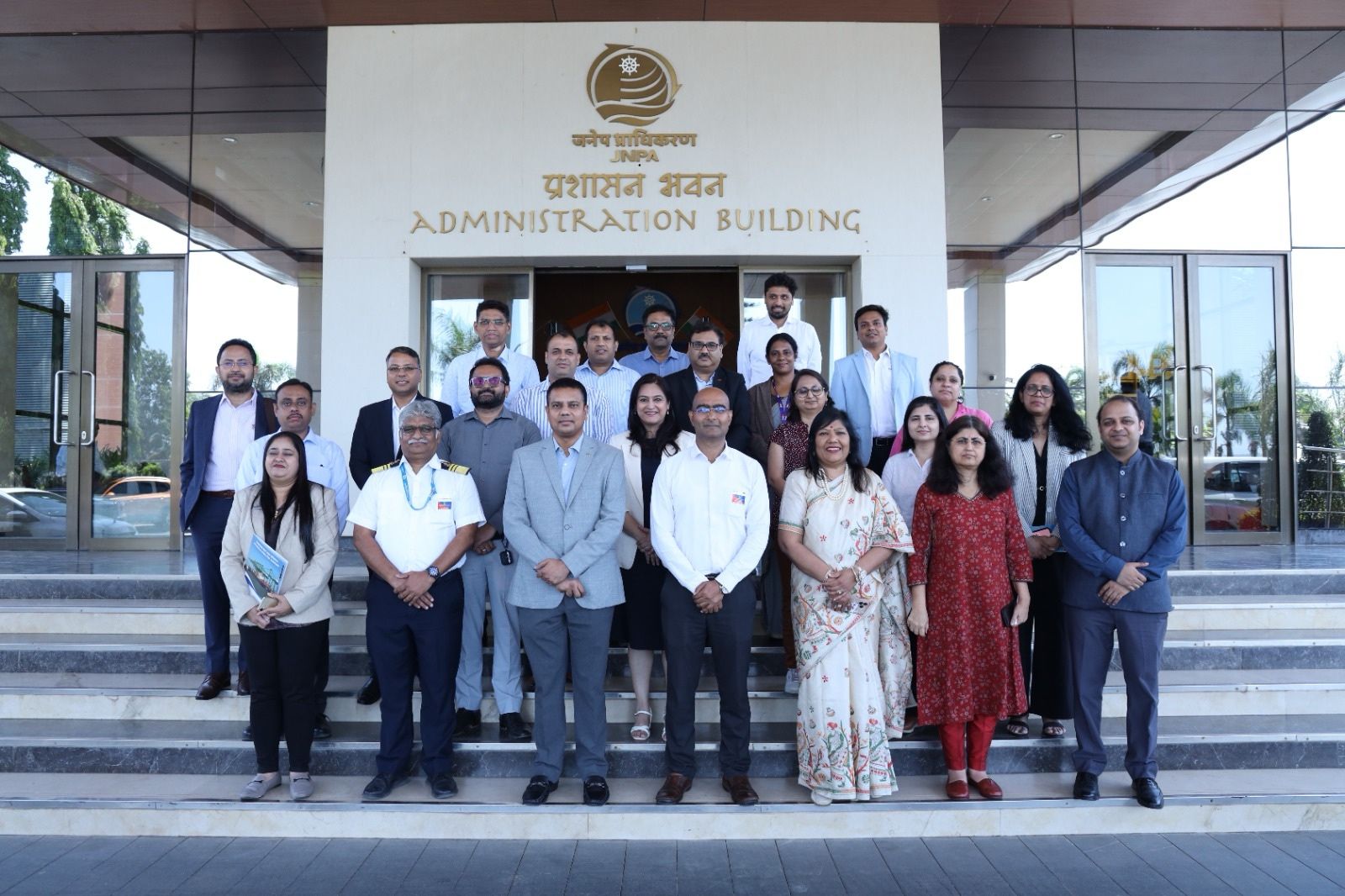
JNPA hosts USISPF delegation to strengthen India–US Maritime and Trade Collaboration

MUMBAI : The Jawaharlal Nehru Port Authority (JNPA) welcomed a high-level delegation from the US-India Strategic Partnership Forum (USISPF), representing some of the world’s leading companies, for a landmark engagement aimed at deepening bilateral trade ties, enhancing maritime collaboration, and advancing global connectivity.

jnpa us ind JNPA hosts USISPF delegation to strengthen India–US Maritime and Trade Collaboration

The delegation was received by Chairperson Shri Gaurav Dayal, IAS, who also serves as CMD of Vadhvan Port Project Limited, along with Heads of Departments and senior officials of JNPA. The visit featured an in-depth presentation highlighting JNPA’s world-class port operations, cutting-edge infrastructure, digital initiatives, and strong focus on sustainability and green port practices.

A key highlight of the interaction was a detailed overview of the upcoming Vadhvan Port, envisioned as one of India’s largest deep-draft ports. Officials shared insights into its strategic importance in enhancing cargo capacity, accommodating next-generation vessels, and positioning India as a major global maritime hub.

The delegation was also given a comprehensive tour of the Centralized Parking Plaza (CPP), where they gained firsthand exposure to India’s integrated logistics ecosystem. The visit showcased advanced traffic management systems, streamlined gate operations, and the efficient handling of container movement at scale, underscoring JNPA’s commitment to operational excellence and ease of doing business.

Discussions during the visit focused on opportunities for collaboration in areas such as port-led industrial development, multimodal connectivity, supply chain resilience, and the adoption of smart and sustainable technologies. The interaction also explored avenues for increased investment and partnerships between Indian and US stakeholders in the maritime and logistics sectors.

Such engagements reinforce JNPA’s position as a premier trade gateway and reflect its proactive approach to building strong global partnerships. The port authority reiterated its commitment to supporting India’s growth as a preferred maritime and trade destination while contributing to the broader vision of enhanced India–US economic cooperation.

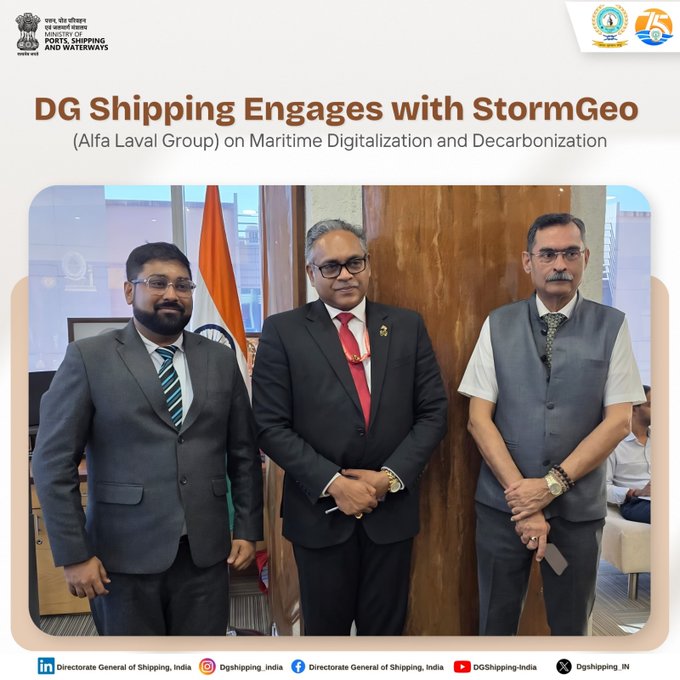
DG Shipping explores digitalization and decarbonization pathways with industry stakeholders

MUMBAI : A high-level meeting was convened between Shri Shyam Jagannathan, IAS, Director General of Shipping, and Shri Subhajit Sarkar, Head of Sales – India, StormGeo (Alfa Laval Group), who visited the Directorate along with Shri Saanjeev Mehra, Chairman – Mumbai Branch, IMEI, to deliberate on the future course of India’s maritime transformation.

The discussions centered on accelerating the adoption of digital technologies and sustainable practices across the Indian maritime ecosystem. Emphasis was laid on leveraging advanced data analytics and predictive solutions to enhance voyage optimization, improve fuel efficiency, enable real-time emissions monitoring, and ensure compliance with evolving international environmental regulations.

Key areas of engagement included the integration of weather intelligence systems, route optimization tools, and performance monitoring platforms to support safer and more efficient vessel operations. The participants also explored opportunities for capacity building, knowledge sharing, and collaborative pilot projects to demonstrate the impact of digital solutions in reducing carbon footprints across shipping operations.

The meeting further underscored the importance of aligning India’s maritime strategies with global decarbonization targets set by the International Maritime Organization (IMO), while ensuring operational efficiency and cost-effectiveness for Indian shipping stakeholders.

This interaction reflects the Directorate General of Shipping’s continued commitment to fostering innovation, strengthening industry partnerships, and driving the twin objectives of digital transformation and environmental sustainability within the maritime sector.

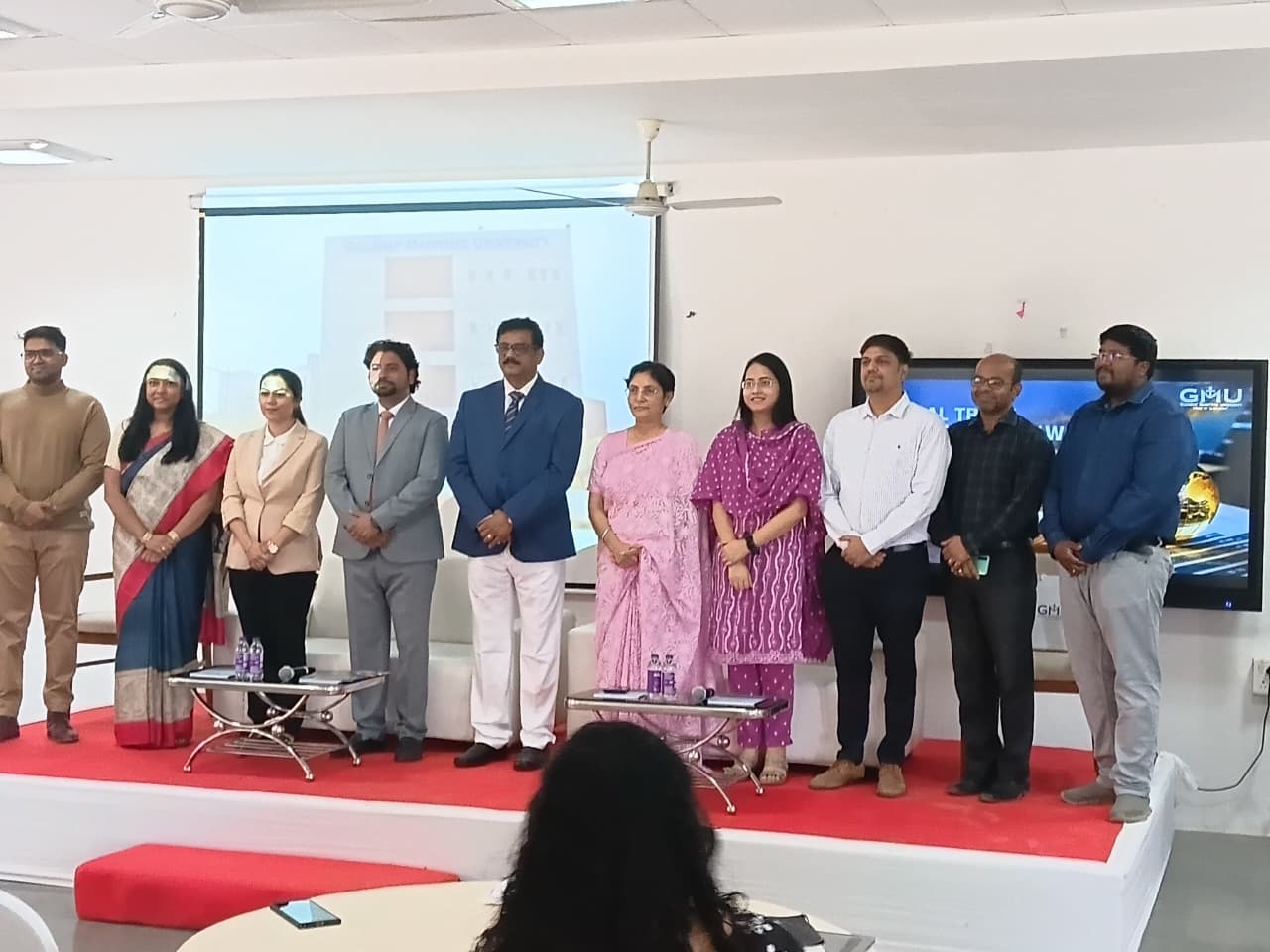
GMU hosts two-Day intensive workshop on Global Trade, Investment & Law

GANDHINAGAR : Gujarat Maritime University (GMU) recently organised a two-day intensive Workshop on ” Global Trade ,Investment & Law ,” in collaboration with Laboratory for the Study of Public Interest Protection Under Economic Sanctions, HSE University, Moscow.

The workshop aimed at providing participants with a comprehensive understanding of WTO, international trade, Investor State Dispute Settlement, emerging global trends, and the evolving legal landscape governing cross-border commerce.

The workshop was inaugurated by the distinguished keynote speaker Prof. (Dr.) Sheela Rai, Professor, National Law University, Odisha, and Ms Teterina Irina Sergeevna, Representative – Laboratory for the study of Public Interest Protection Under Economic Sanctions (Moscow), in the presence of GMU Provost Prof. (Dr.) S. Shanthakumar and Mr. Abhishek, Dubey, Partner, Trilegal.

In her keynote address, Prof. (Dr.) Sheela Rai offered incisive insights into the challenges posed by unilateral tariff measures, particularly those introduced by the United States. Referring to the recently concluded trade agreement between India and the European Union, she noted that the deal envisions a phased move towards zero tariffs. She cautioned, however, that the complete elimination of tariffs may not always be desirable. Tariffs, she argued, are at least honest and transparent instruments of trade policy. Nations resort to protectionist measures for a variety of legitimate reasons, including the protection of domestic industries and revenue generation. In the absence of tariff options, she warned, countries are likely to rely more heavily on non-tariff barriers, such as quantitative restrictions, which tend to be far opaque. She also emphasized on the serious dangers for such unilateral sanctions on the stability of International trade regime as it specifically transforms trade from a facilitative instrument to a penalty imposition mechanism, which will create an increasing distrust over the stability and predictability of global trade.

Mr. Abhishek Dubey, Partner, Trilegal, observed that the world is increasingly moving away from multilateral frameworks such as the General Agreement on Tariffs and Trade (GATT) towards bilateral treaties and agreements. He highlighted that India’s recently concluded trade agreements with the EU and the United Kingdom are poised to unlock a wide range of opportunities across sectors including significant avenues for legal professionals and trade advisors.

Finally, Ms. Teterina Irina Sergeevna, representative on behalf of Laboratory for the Study of Public Interest Protection Under Economic Sanctions, HSE University, Moscow, made audience aware about the works of the Laboratory stating the the Lab is actively involved in conducting research and teaching on safeguarding Russian interests amid sanctions.

The workshop was well-received by participants and underscored GMU’s commitment to fostering a deeper understanding of global trade and maritime commerce law among students, researchers, and legal professionals.

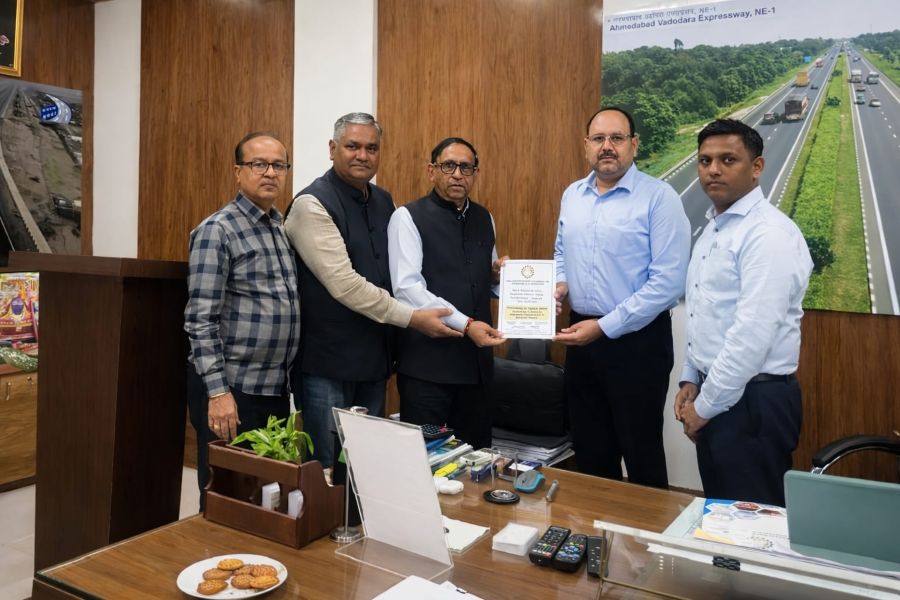
Gandhidham Chamber flags infrastructure gaps, seeks policy relief for Kutch Logistics Sector

GANDHIDHAM : The Gandhidham Chamber of Commerce and Industry has pointed a series of critical infrastructure and regulatory concerns impacting the logistics ecosystem in Kutch, calling for swift intervention from both central and state authorities.

In a detailed representation to the National Highways Authority of India (NHAI), the Chamber highlighted the urgent need to accelerate development and strengthening of key national highways connecting the region. Emphasizing the strategic importance of Deendayal Port and Mundra Port—which together handle a substantial share of India’s EXIM trade—the Chamber stressed that robust road connectivity is essential for sustaining economic growth and ensuring seamless cargo movement.

A delegation led by President Teja Kangad, Honorary Secretary Mahesh Tirthani, and Executive Committee Member Harish Maheshwari met senior NHAI officials, including Regional Officer Pradeep Atri and Project Director Ajay Swami, to submit a comprehensive memorandum.

Among the key concerns raised were delays in the final package of the Amritsar–Jamnagar Expressway, persistent congestion on the Bamnbore–Samakhiyali stretch, and slow progress in six-laning works on the Samakhiyali–Santalpur route. The Chamber also flagged the deteriorating condition of the Santalpur–Palanpur road and increasing traffic pressure on the Kandla–Mundra corridor.

To address these issues, the Chamber urged authorities to expedite critical projects such as the proposed coastal highway between Kandla and Maliya and a six-lane link road to NH-8A, aimed at enhancing port connectivity and reducing logistics costs.

Operational bottlenecks at the Samakhiyali–Surajbari toll plaza were also highlighted, with transporters facing long queues and delays. The Chamber recommended increasing toll lanes, deploying advanced traffic management systems, and prioritizing maintenance works. It further stressed the need to ensure crane availability and complete ongoing infrastructure upgrades ahead of the monsoon to improve road safety.

In a parallel development, the Chamber has taken up concerns regarding the mandatory implementation of Vehicle Location Tracking Devices (VLTD) in national permit vehicles. The issue was escalated to Union Minister Nitin Gadkari following representations from tanker and container associations.

Transporters argued that most fleets already operate GPS-based tracking systems, making the VLTD mandate duplicative and financially burdensome. Industry representatives, including tanker association leader Rameshbhai Mayatra and container association president Bhagirathsinh Jadeja, cautioned that additional compliance requirements could disrupt supply chains in one of India’s key logistics hubs.

A joint representation was also submitted to the Regional Transport Office in Gandhidham. While temporary relief on enforcement granted by the Gujarat Government until May 1 has provided some respite, stakeholders have called for a more practical and phased implementation approach.

Positioning itself as a key industry mediator, the Chamber emphasized the need for balanced policy measures that safeguard transporter interests while achieving safety and regulatory objectives. NHAI officials have assured that infrastructure concerns will be addressed on priority, and stakeholders remain optimistic about a timely resolution.

The Chamber expressed confidence that coordinated action on infrastructure upgrades and regulatory clarity will further strengthen Kutch’s position as a critical gateway in India’s trade and logistics network.

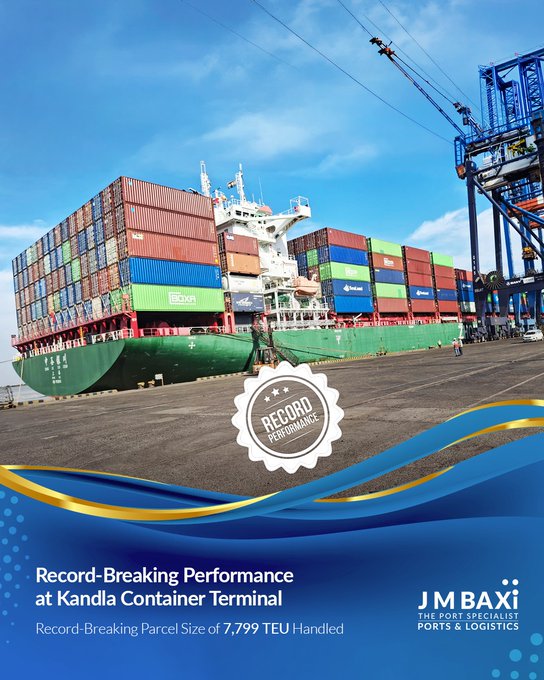
JM Baxi KCT sets new record with largest-ever Parcel Handling

GANDHIDHAM : The JM Baxi Kandla Container Terminal (KCT) has achieved a significant operational milestone with the successful handling of its largest-ever parcel size, reinforcing its growing stature in India’s maritime logistics sector.

The container vessel MV Zhong Gu Yin Chuan sailed on April 8, 2026, with an impressive exchange of 7,799 TEUs at the terminal, setting a new benchmark in cargo handling. This achievement surpasses the previous record of 6,011 TEUs handled by MV Zhong Gu Lan Zhou in January 2025, marking a notable advancement in the terminal’s operational capabilities.

The milestone underscores seamless coordination, high operational efficiency, and the collective efforts of all stakeholders involved, including port authorities, terminal operators, and logistics partners. It reflects the terminal’s ability to handle increased cargo volumes with precision and reliability.

At a broader level, this accomplishment highlights the rising importance of Kandla under the aegis of the Deendayal Port Authority, particularly in ensuring uninterrupted trade flows amid evolving global supply chain dynamics.

With shifting trade patterns and growing EXIM volumes, Kandla Container Terminal continues to strengthen its position as a stable and dependable gateway for cargo movement, supporting India’s expanding trade ambitions and enhancing regional connectivity.

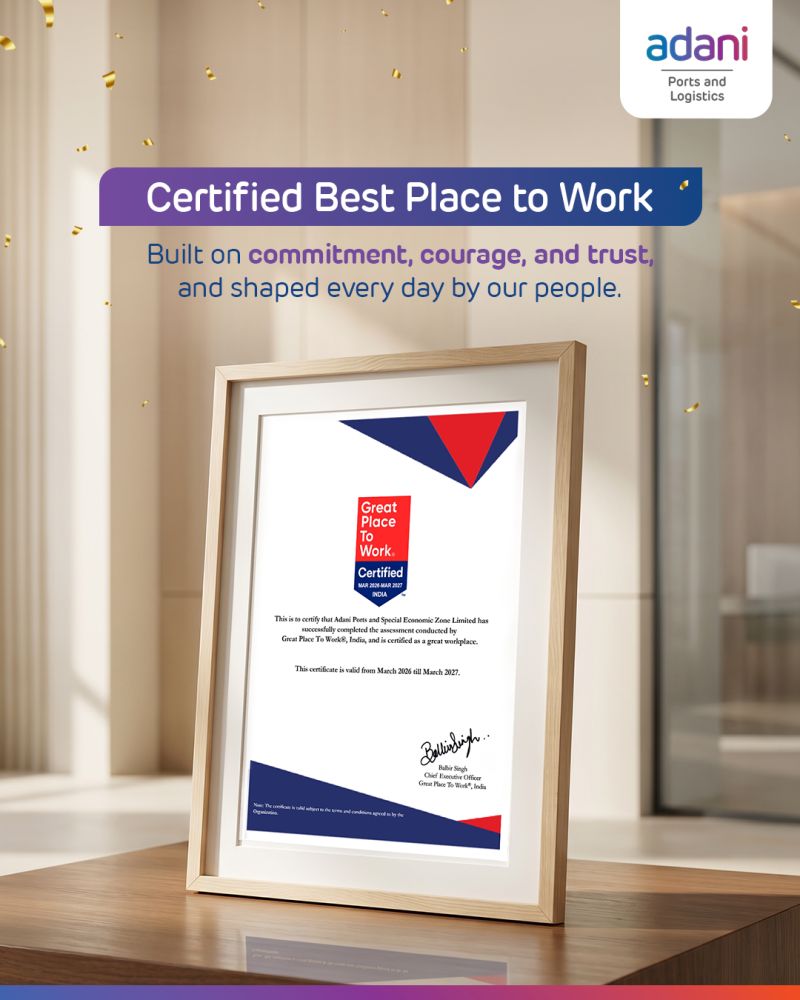
Adani Ports recognised as ‘Great Place to Work® India’ for sixth consecutive year

AHMEDABAD : Adani Ports and Special Economic Zone Limited (APSEZ) has once again been certified as a Great Place to Work® in India, marking its sixth consecutive year of receiving this prestigious recognition and reaffirming its strong commitment to fostering a high-trust, people-centric workplace culture.

The certification by Great Place to Work Institute reflects the positive workplace experience shaped by APSEZ employees, built on the pillars of trust, pride, and camaraderie. The recognition underscores the company’s sustained focus on creating an environment where employees feel valued, empowered, and aligned with a shared purpose.

Over the years, APSEZ has strengthened its organizational culture through initiatives centered on employee well-being, continuous learning, diversity and inclusion, and leadership development. The company has consistently emphasized open communication, recognition of performance, and opportunities for growth, enabling employees to contribute meaningfully to both individual and organizational success.

The milestone highlights not just where employees work, but how they work together—with mutual respect, collaboration, and a sense of pride in contributing to one of India’s leading integrated logistics and port operators.

As APSEZ continues to expand its footprint and capabilities, the company reiterated that its people remain at the core of its achievements. The recognition further reinforces its commitment to nurturing a resilient and future-ready workforce while driving excellence across India’s maritime and logistics landscape.

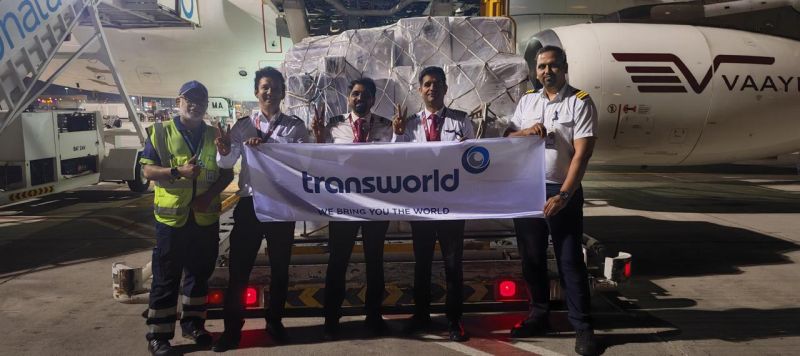
Transworld strengthens supply chain resilience with dedicated air charter operations to UAE

DUBAI : Amid ongoing regional disruptions impacting global supply chains, Transworld Group has reinforced its commitment to ensuring the uninterrupted movement of food and essential commodities through dedicated air charter operations connecting India and the UAE.

In response to evolving logistics challenges and supply chain uncertainties across key trade corridors, the company has initiated weekly air charter services between major Indian hubs and the United Arab Emirates. These services are specifically designed to maintain the timely delivery of perishable goods, pharmaceuticals, and other critical cargo where speed, reliability, and continuity are of paramount importance.

The air charter operations complement Transworld’s multimodal logistics network, enabling seamless integration with first-mile and last-mile delivery solutions. By leveraging its strong presence across ports, inland logistics infrastructure, and international trade lanes, the company is ensuring minimal disruption to supply chains that are vital for food security and essential services in the region.

Industry stakeholders have highlighted that such agile, charter-led interventions are crucial in mitigating the impact of geopolitical and operational disruptions, particularly in times when conventional shipping schedules face delays or uncertainty.

A senior company official stated that Transworld remains focused on delivering responsive and flexible logistics solutions tailored to customer needs. “Our air charter services are a strategic response to current disruptions, ensuring that essential cargo continues to move without delay. We are closely monitoring developments across regions and stand ready to expand these operations to additional trade lanes as required.”

Looking ahead, Transworld plans to scale up its charter operations based on demand dynamics, while continuing to invest in technology-driven visibility tools, real-time tracking systems, and enhanced cold chain capabilities to support sensitive cargo.

As global supply chains continue to navigate a complex and dynamic environment, Transworld’s proactive approach underscores its role as a reliable logistics partner, committed to sustaining critical cargo flows and supporting economic resilience across regions.

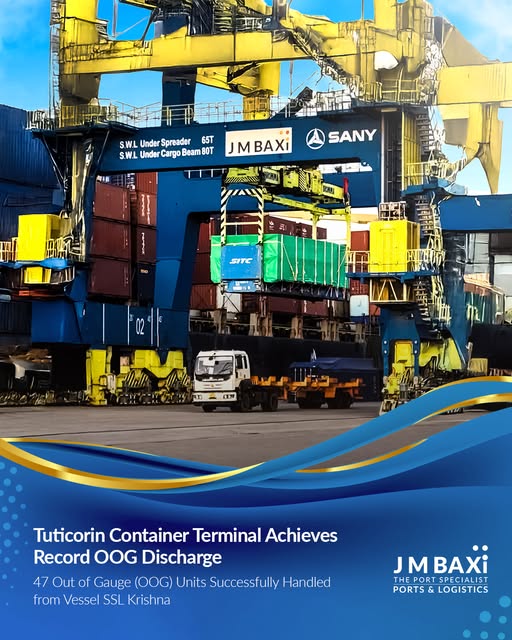
J M Baxi Tuticorin Container Terminal sets new benchmark with record OOG cargo handling

TUTICORIN : J M Baxi Tuticorin Container Terminal has achieved a significant operational milestone with the safe discharge of 47 Out of Gauge (OOG) units from the vessel SSL Krishna, marking the highest number of OOG units ever handled from a single vessel at the terminal.

The record-breaking operation underscores the terminal’s growing capability in managing complex and oversized cargo, which requires specialized equipment, meticulous planning, and seamless coordination among multiple stakeholders. OOG cargo—often comprising heavy machinery, industrial equipment, and project consignments—demands enhanced safety measures and precision handling due to its non-standard dimensions.

The successful handling of this consignment was made possible through close coordination between the vessel operators, terminal planning teams, stevedores, and equipment personnel. Advanced cargo handling systems, along with the deployment of high-capacity cranes and customized lifting gear, ensured smooth and damage-free discharge operations.

Terminal authorities highlighted that stringent adherence to safety protocols and real-time monitoring played a critical role in executing the operation efficiently without any incidents. The milestone further reflects the terminal’s commitment to operational excellence and its readiness to support large-scale infrastructure and industrial projects.

With increasing demand for project cargo movement across sectors such as energy, infrastructure, and manufacturing, Tuticorin Container Terminal continues to strengthen its position as a reliable hub for specialized cargo handling on India’s southern coast.

Indian Register of Shipping strengthens India’s naval expansion with classification and certification of indigenous defence platforms

MUMBAI: Indian Register of Shipping (IRS) takes pride in its continued contribution to India’s defence capabilities, reflected in a series of significant milestones recently achieved by leading Indian shipyards for defence vessels.

Garden Reach Shipbuilders & Engineers Ltd. (GRSE) on 31st March 2026, delivered two frontline Naval platforms INS Sanshodhak, and INS Agray, built under single class of IRS, to the Indian Navy, further reinforcing India’s indigenous shipbuilding capabilities.  INS Sanshodhak, the fourth and final Survey Vessel (Large) in its Class, is equipped with advanced hydrographic and oceanographic capabilities, enabling critical support for both defence operations and civil maritime requirements.

INS Agray is the fourth Anti-Submarine Warfare (ASW) ship of the series of most-silent Naval platforms with advanced stealth features, designed for critical naval operations including underwater surveillance, search and rescue, and Low Intensity Maritime Operations (LIMO). The vessel is capable of conducting Anti-Submarine Warfare operations in coastal waters, as well as carrying out advanced mine-laying missions.

On the same day, Goa Shipyard Limited (GSL) marked a notable achievement with the launch of INS Shachi, first of the Next–Generation Offshore Patrol Vessels (NGOPVs) for the Indian Navy, as well as the delivery of ICGS Achal, the Fourth Fast Patrol Vessel (FPV) to the Indian Coast Guard.

This rare achievement of four milestones on the same day underscores the growing efficiency and maturity of India’s shipbuilding ecosystem, thereby strengthening the nation’s maritime surveillance and coastal security capabilities.  The developments also highlight the strong progress of India’s maritime sector under the Aatmanirbhar Bharat and Make in India initiatives. The increasing indigenous content in these vessels is a testament to the country’s expanding industrial base and technological capabilities, supported by IRS, thereby promoting confidence and credibility in complex indigenous shipbuilding programmes.

Cdr KK Dhawan, Head Defence at IRS said “As India continues to expand its naval and coast guard fleets, IRS remains committed to partnering with shipyards and maritime stakeholders to deliver safe, reliable, and future-ready assets. IRS is proud to contribute to strengthening the nation’s maritime future, ensuring Atmanirbharta in indigenous equipment and in Indian ship-classification.”