Home Blog Page 357

Indian Railways partners with BPCL to build Gati Shakti Cargo Terminal in Jammu to strengthen fuel supply and rail logistics

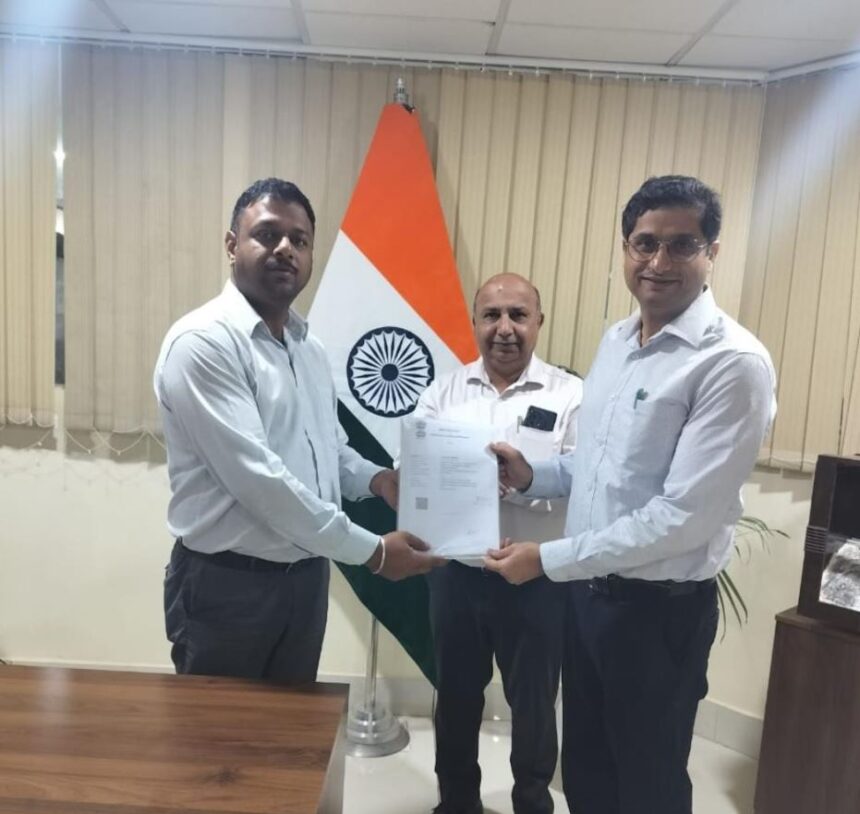
NEW DELHI : The Indian Railways has entered into an agreement with Bharat Petroleum Corporation Limited (BPCL) to develop a Gati Shakti multi-modal cargo terminal on the outskirts of Jammu, enhancing freight efficiency and securing fuel supply chains in the region.

The agreement was formalised between Senior Divisional Commercial Manager Uchit Singhal, representing the Jammu division of the Railways, and BPCL’s Territory Manager (Retail), Chandan Chauhan.

Officials said the project would streamline the movement of petroleum products while strengthening logistics infrastructure under the Centre’s Gati Shakti framework.

Planned at Bajalta, the terminal is designed to significantly improve coordination between the Railways and public sector entities, facilitating smoother trade flows and infrastructure development.

With a storage capacity of 109,225 kilolitres, the facility will be able to handle two rakes, translating into a monthly throughput of around 162,000 metric tonnes of petroleum products.

According to officials, “The facility will use modern tank wagons for safe and efficient handling operations and is scheduled to become operational by the end of this month.”

The terminal is expected to play a crucial role in ensuring a steady, all-weather fuel supply to strategically important areas such as Jammu and Kashmir and Ladakh.

By shifting bulk transportation from road to rail, the initiative is also set to ease congestion on city roads, reduce reliance on tanker lorries, and improve overall traffic conditions.

Singhal noted that the move would help cut carbon emissions, lower logistics costs, and boost operational efficiency for industries. He added that rail-based fuel transport, supported by modern infrastructure, would also improve safety and environmental standards.

US Challenges Adani’s plan to move cargo operations to Navi Mumbai Airport, flags possible Breach Of India–US Aviation Pact

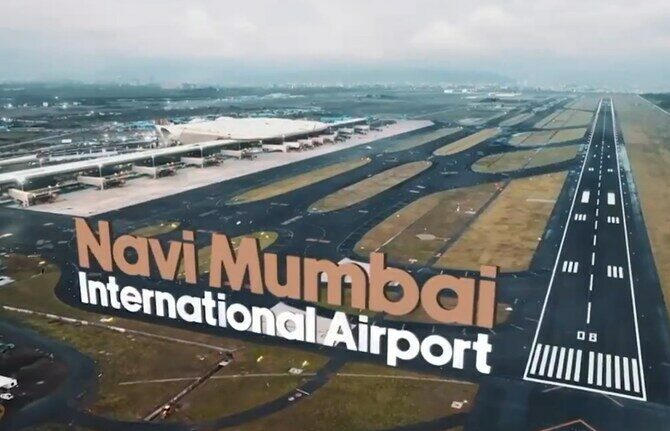
MUMBAI : A proposal by the Adani Group to relocate cargo operations from Mumbai’s primary airport to the upcoming Navi Mumbai International Airport has drawn objections from US authorities.

According to a Bloomberg report, the US Department of Transportation had written to India’s Aviation Ministry in March, raising concerns that the proposed shift of freighter services, including those operated by FedEx, could breach the India–US Air Transport Agreement.

The US side has cautioned that compelling American carriers to relocate may invite retaliatory measures under the bilateral pact.

The move follows a directive by Adani Airport Holdings Ltd., which operates both Chhatrapati Shivaji Maharaj International Airport and Navi Mumbai airport, asking cargo operators to transition in phases between August 2026 and May 2027.

The company has attributed the decision to planned infrastructure upgrades at Mumbai airport that are expected to reduce cargo handling capacity.

A spokesperson for the group stated that refurbishment works, “including operationalization of Taxiway-E and rapid exit taxiways, will temporarily impact nearly 25 per cent of cargo handling capacity,” adding that a phased shift of select freighter operations had been proposed to manage the disruption.

However, US officials reportedly view the plan as an attempt to channel traffic towards the new airport, rather than a purely operational necessity.

With the Adani Group controlling both facilities, concerns have been raised about its growing influence over traffic allocation in India’s busiest aviation hub.

FedEx, currently the only US cargo carrier operating from Mumbai, is said to have approached US authorities over the issue. The matter has since been taken up at a diplomatic level, with the Indian government seeking a resolution.

The development comes amid broader scrutiny of the group’s global operations and could add strain to otherwise strengthening India–US ties.

Source : Swarajya

MSC announces leadership transition as Aponte Family formalises generational handover

GENEVA : MSC Mediterranean Shipping Company, the world’s largest container shipping line, has confirmed a significant ownership transition, marking a new chapter in the company’s five-decade journey of global maritime leadership.

Founder Gianluigi Aponte has formally transferred ownership of the business to his children, Diego Aponte and Alexa Aponte, following a structured handover completed in the last quarter of 2025. The transition formalises a long-anticipated succession plan, as both successors have played key leadership roles within the organisation for several years.

While ownership has now passed to the next generation, Gianluigi Aponte will continue to serve as Executive Chairman, ensuring strategic continuity and preserving the founding vision that has guided MSC’s remarkable rise.

Founded in 1970 as a single-vessel operation, MSC has evolved into a global powerhouse, now operating across 155 countries with a network of over 675 offices. The company services approximately 300 trade routes and calls at more than 520 ports worldwide. Its fleet is approaching the milestone of 1,000 vessels, handling an estimated 30 million TEUs annually and supported by a workforce exceeding 200,000 employees across shipping, logistics, terminal operations, and cruise services.

Under the leadership of Diego Aponte, who serves as Group President, and Alexa Aponte in her role as Chief Financial Officer, MSC is expected to continue its strategic expansion across integrated logistics. The company has, in recent years, significantly strengthened its end-to-end capabilities through investments in inland logistics, port terminals, air cargo, and digital supply chain solutions—positioning itself as a comprehensive global transport and logistics provider.

Industry observers note that MSC’s growth trajectory has been defined by a long-term, privately held business model, enabling decisive investments during both market upcycles and downturns. This approach has helped the company consolidate its leadership position in container shipping, particularly in the post-pandemic era marked by supply chain disruptions and shifting global trade patterns.

The transition also comes at a time when the maritime industry is navigating complex challenges, including decarbonisation, fleet modernisation, and evolving regulatory frameworks. MSC has reiterated its commitment to sustainability, with ongoing investments in energy-efficient vessels, alternative fuels such as LNG and biofuels, and participation in global initiatives aimed at reducing greenhouse gas emissions from shipping.

Despite the scale and significance of this leadership transition, the development has been characteristically understated—reflecting MSC’s longstanding culture of discretion and operational focus.

With the next generation of the Aponte family now formally at the helm, MSC appears well-positioned to build on its legacy while steering the company through the next phase of global maritime transformation.

UK and France to co-host 40-nation summit to restore shipping in Strait of Hormuz

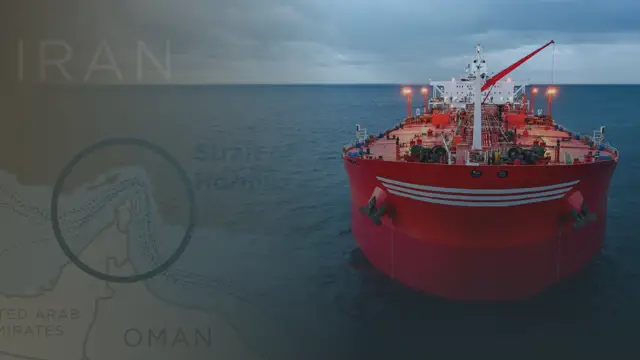
LONDON : UK and France will host a 40-nation summit this week to restore navigation in the Strait of Hormuz as global shipping disruptions continue The United Kingdom and France will this week co-host a summit of around 40 countries aimed at restoring freedom of navigation through the Strait of Hormuz, as geopolitical tensions continue to disrupt one of the world’s most critical energy corridors.

UK Prime Minister Keir Starmer said in a post on X that the ongoing disruption in the Strait is “deeply damaging” and is contributing to global cost-of-living pressures by affecting energy and shipping flows. He said more than 40 nations have now been brought together to coordinate efforts to ensure safe maritime passage in the region.

Starmer added that the UK and France will jointly advance plans at a conference this week to develop a coordinated, independent multinational framework to protect international shipping once conditions improve. He said Britain has already helped rally broad international support for restoring freedom of navigation, though earlier discussions did not include the United States.

Earlier in the day, French President Emmanuel Macron said the initiative envisions a “strictly defensive” naval mission that would operate independently of parties to the conflict and could be deployed when circumstances allow. In a post on X, he said the proposal is aimed at strengthening long-term maritime security and safeguarding global shipping lanes.

Macron also called for intensified diplomatic efforts to achieve a durable settlement to regional tensions, stressing the need to address Iran’s nuclear and ballistic programmes, wider security concerns, and the restoration of safe passage through the Strait. He further said discussions would include stabilising Lebanon and upholding its sovereignty and territorial integrity.

The Strait of Hormuz, which handles nearly a fifth of global oil shipments, has seen sharply reduced traffic amid escalating tensions in West Asia. While limited commercial movement has resumed following a ceasefire, shipping volumes remain well below normal levels, highlighting ongoing risks to global energy supply chains.

The developments come amid renewed escalation in the region. US President Donald Trump has announced a naval blockade of ships entering and leaving Iranian ports, intensifying pressure on Tehran after stalled ceasefire talks. He has blamed Iran’s nuclear programme for the breakdown in negotiations and said Washington remains prepared to consider all options.

Source : Moneycontrol

“International law applies to all States, without exception”: UN Secretary General on West Asia

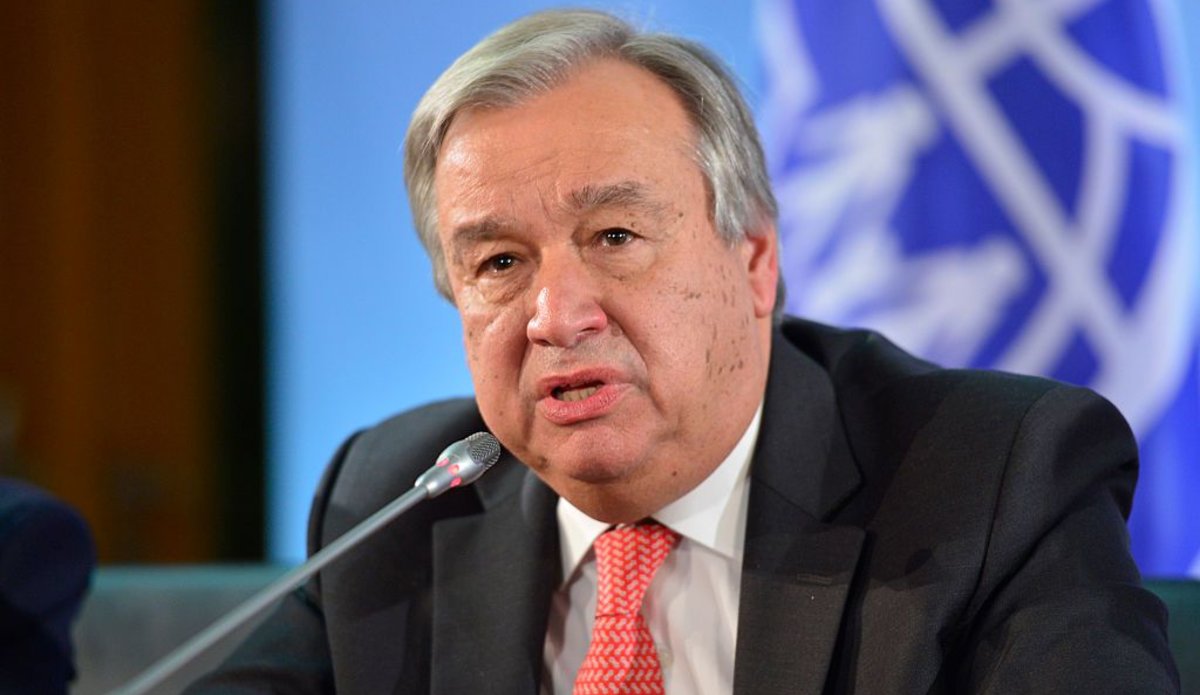
NEW YORK: United Nations Secretary-General Antonio Guterres on strongly reaffirmed the universality of international law, stating that it applies to all States without exception amid rising global tensions and the ongoing conflict in West Asia.

In a post on X, Guterres said,” International law applies to all States, without exception. Respect for its rules is not optional. Without it, instability spreads, mistrust deepens & conflicts spiral out of control. This is not the moment to retreat from international law. It is the moment to reaffirm it.”

He further emphasised that in an increasingly fragmented world marked by sharper power competition, international law remains indispensable.

“In a world moving toward greater fragmentation & sharper power competition, international law is indispensable. Without it, instability spreads, mistrust deepens & conflicts spiral out of control. This applies everywhere – and it applies urgently to the conflict in the Middle East,” Guterres added in another post.

The UN chief’s remarks come amid heightened geopolitical tensions and continued violence in West Asia, underscoring the need for all nations to uphold the rules-based international order.

UN Spokesperson Stephane Dujarric earlier noted that although no formal agreement was reached, the discussions represented a constructive step and reflected the seriousness of engagement by both parties.

The release stated that, while no agreement was reached at the talks hosted by Pakistan between the United States and the Islamic Republic of Iran in Islamabad, the discussions themselves underscored the seriousness of their engagement and constituted a positive and meaningful step toward renewed dialogue.

“Given the deeply rooted differences, an agreement cannot be reached overnight, and the Secretary-General calls on the talks to continue constructively for an agreement to be reached,” Dujarric said in a statement.

He further reiterated that the ceasefire must be fully preserved and that all violations must stop, urging all parties involved to adhere strictly to international commitments.

The UN also expressed gratitude to mediators Pakistan, which hosted the discussions, as well as Saudi Arabia, Egypt, and Turkiye for their diplomatic efforts, and called on the international community to support continued engagement.

The statement also said that the Secretary-General stressed that all parties to this conflict must respect freedom of navigation, including in the Strait of Hormuz, in line with international law.

It was noted that some 20,000 seafarers had been caught up in this conflict and were stranded on ships, facing worsening conditions.

The UN highlighted that disruptions in maritime trade through the Strait of Hormuz had already contributed to global economic instability, including rising costs, supply chain disruptions, and increased food insecurity due to impacts on fertiliser transport and fuel supplies.

The disruption of fertiliser and its inputs further exacerbated food insecurity for millions of vulnerable people around the world, adding to the rising cost of living due to impacts from fuel, transportation, and supply chain disruptions.

With that in mind, the Executive Director of the UN Office for Project Services (UNOPS), Jorge Moreira da Silva, working with UN Trade and Development (UNCTAD), International Maritime Organization (IMO), and the International Chamber of Commerce, continued engaging extensively with relevant parties to design and operationalize the mechanism announced for the Strait of Hormuz on 27 March.

For his part, the Secretary-General’s Personal Envoy, Jean Arnault, remained actively engaged in the region, consulted closely with key stakeholders, and continued his outreach in support of a comprehensive and durable agreement.

Source: ANI

Two ships from Iran ports pass Hormuz despite US blockade

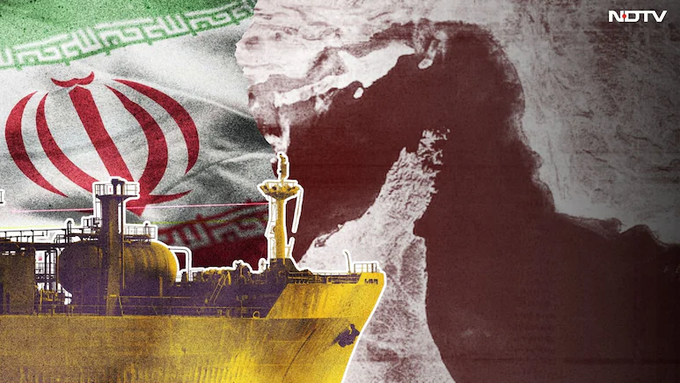
At least two vessels linked to Iranian ports transited the Strait of Hormuz on Monday despite a US military blockade, according to data from maritime tracking firm Kpler, reported by AFP on Tuesday.

The Liberia-flagged bulk carrier Christianna passed through the strait after unloading corn at Iran’s Bandar Imam Khomeini port. It sailed past Larak Island at around 1600 GMT, roughly two hours after Washington’s blockade came into effect, Kpler data showed.

A second vessel, the Comoros-flagged tanker Elpis, was tracked near Larak Island at about 1100 GMT and cleared the strait later in the day around 1600 GMT, according to the same data. It was carrying around 31,000 tonnes of methanol, having departed from Iran’s Bushehr port on March 31.

US Central Command had earlier said the blockade would target “vessels of all nations entering or departing Iranian ports and coastal areas”. Despite that, shipping activity appeared to continue.

A Chinese tanker, Rich Starry, also crossed the strait overnight via an Iranian-approved route south of Larak Island. The vessel, carrying about 31,500 tonnes of methanol and headed for Sohar in Oman, is listed under sanctions by the US Office of Foreign Assets Control due to its links with Iran.

Shipping journal Lloyd’s List described the Chinese tanker’s transit as a possible “test” of US President Donald Trump’s blockade.

Another sanctioned vessel, the Madagascar-flagged tanker Murlikishan, crossed westward into the Gulf on Tuesday morning along the same route. It was travelling empty towards Iraq’s Khor al Zubair port, though Kpler data showed many of its previous voyages involved transporting Iranian bitumen and asphalt to Asia.

Maritime analysts have cautioned that vessel tracking in the region has become increasingly difficult, with ship signals often disrupted or manipulated amid the ongoing conflict. Iran had earlier effectively shut the strait following the outbreak of hostilities with US and Israeli strikes on February 28, before Washington announced its own blockade after talks with Tehran collapsed.

China has criticised the move, with foreign ministry spokesperson Guo Jiakun calling the US blockade “dangerous and irresponsible.”

Source : Moneycontrol

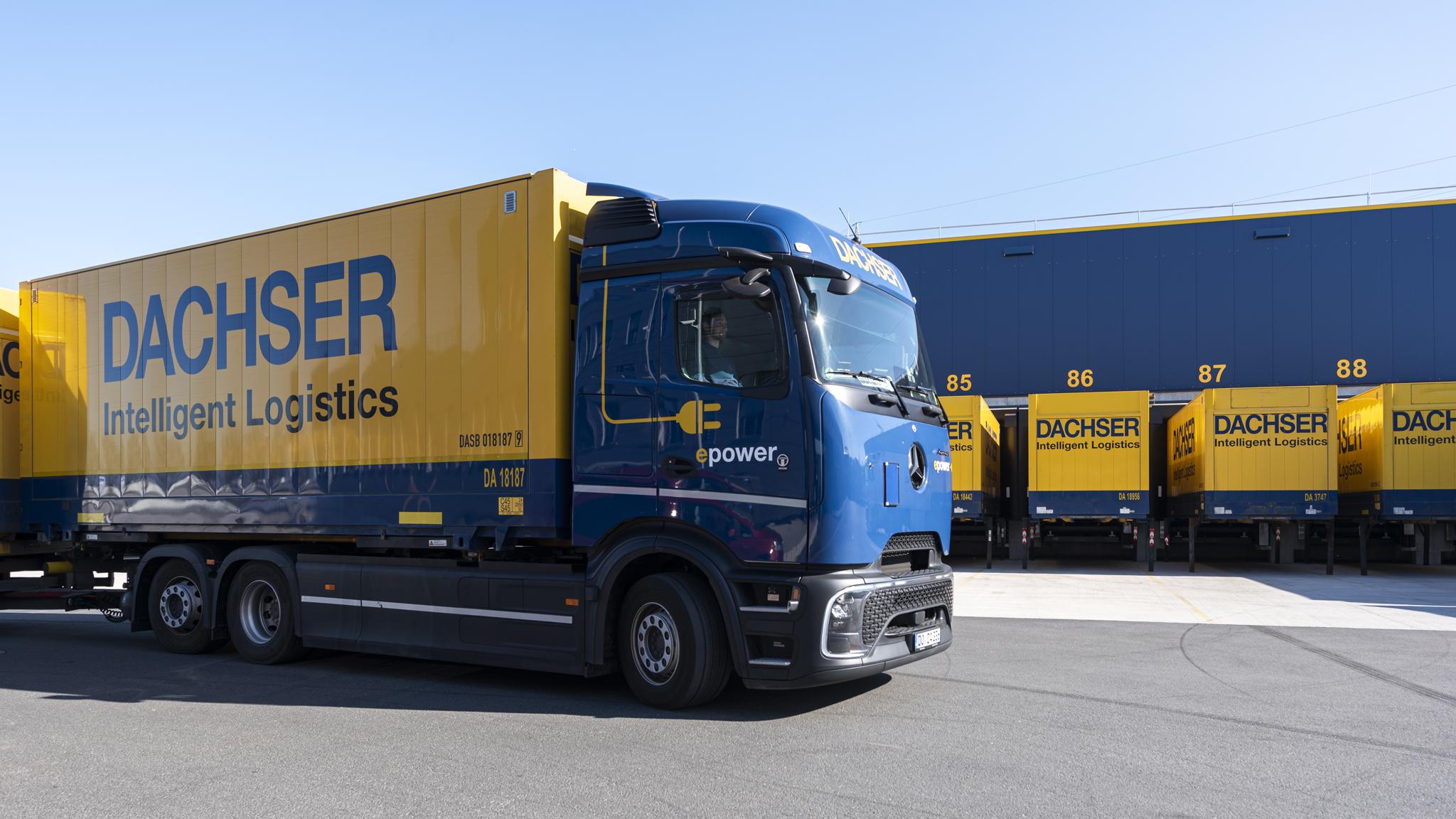
Dachser grows despite economic headwinds

KEMPTEN: Logistics provider Dachser increased its revenue to around EUR 8.3 billion in the 2025 financial year. This is 3.1 percent higher than the previous year and sets a new record for the company. The tonnage transported rose to 46.7 million metric tons (+5.8 percent), while the number of shipments increased to 86.2 million (+3.6 percent). 

“In 2025, the economic environment we had to operate in remained difficult. While European core markets stagnated and grappled with high cost and competitive pressure, US tariff policy created additional uncertainty in global trade,” says Burkhard Eling, Dachser CEO. “The fact that we were able to grow organically under these conditions and even gain market share in overland transport proves the strength and resilience of our business model, which is based on integration, quality, and innovation.”

Dachser’s focus was on the rapid integration of its recent acquisitions, particularly in Italy (DACHSER & FERCAM Italia), southern Germany and Austria (Brummer), and the Nordic countries (Frigoscandia). All three contributed fully to Group revenue for the first time in 2025. Excluding these acquisitions, Dachser would have grown by just 0.3 percent compared to the previous year. 

Dachser stays on course with investments in the future 

Continuing its investment policy of recent years, in 2025 Dachser invested some EUR 325 million in expanding its network, in its employees, and in digitalization and climate action. “We’re staying the course of continuously investing in our network,” Eling says. “Especially in challenging times, it’s more important than ever to steadfastly maintain our strategic course and continue to pursue our mission of becoming the most integrated logistics provider worldwide.” 

For 2026, the company is planning to increase its investments to over EUR 350 million with a view to strengthening its competitive position in the long term. 

Business development in detail

Dachser’s Road Logistics business field—which comprises the transport and warehousing of industrial and consumer goods (European Logistics) and food (Food Logistics)—increased its revenue by around 7 percent last year to EUR 6.9 billion. Shipments handled rose by 3.7 percent and tonnage grew 6.2 percent. 

Revenue in the European Logistics business line broke EUR 5 billion for the first time to reach EUR 5.1 billion. Dachser grew here by 5.9 percent compared to the previous year. Developments in food logistics were particularly positive. Boosted by recent acquisitions, Dachser increased its revenue in the Food Logistics business line by 10.1 percent to over EUR 1.8 billion. “Our growth strategy in food logistics is bearing fruit,” Eling says. “By integrating our acquisitions, we’ve nearly doubled our revenue in just five years and attained a new European level.”

In 2025, the defining factor in the Air & Sea Logistics business field was a sharp decline in sea freight rates, particularly on the main route from Asia to Europe, together with a slight drop in air freight rates. After a good start, the market cooled off, partly thanks to US tariffs. Revenue fell by 12.6 percent to some EUR 1.4 billion, after having grown by 22 percent from 2023 to 2024. “We’re familiar with this market volatility in air and sea freight, and we know how to handle it,” Eling says. “We see the growing importance of globally integrated end-to-end services. For our customers, we systematically link European overland transport with air and sea freight to create seamless and resilient supply chains.” 

In Contract Logistics, which combines transport, warehousing, and customer-specific value-added services, Dachser has grown strongly in recent years. In 2025, the logistics provider added space for roughly another 240,000 pallets at its 174 warehouse locations worldwide. This brought the logistics provider’s total storage capacity for industrial goods and food to over four million pallet spaces for the first time. 

Dachser’s overall workforce grew in 2025 by around 200 people to a total of approximately 37,500 worldwide.

Dachser expects market conditions to remain complex and volatile in the current year. “The hostilities in the Middle East are reducing air and sea freight capacity, particularly on the route from Asia to Europe, while the high price of fuel is making transport services even more expensive and putting the European transport market under considerable pressure,” Eling says. “Our operational teams tackle these challenges with a high level of professionalism, always with the aim of finding the best solutions for our customers and also supporting our transport partners. In line with this maxim, we will continue on our strategic path in 2026—with reliability and consistency.” 

Overview of revenue 

Net revenue in EUR million2025
(provisional)
2024Change in 2025
vs. 2024
Road Logistics6,8886,440+6.9%
European Logistics5,0654,785+5.9%
Food Logistics1,8231,655+10.1%
Air & Sea Logistics1,3871,587−12.6%
Group8,2758,027+3.1%

Global seaborne crude oil shipments down 16% since start of the Iran war: BIMCO

LONDON: Since the beginning of the Iran war, global seaborne crude oil shipments have fallen 16% compared to the first nine weeks of 2026, according to Signal Ocean data. This represents a reduction of 7.6 million barrels per day (mbdp) to 38.4 mbpd. Coincidentally, shipments during the past six weeks have likewise been 16% lower than during the same period last year.

Coincidentally, shipments during the past six weeks have likewise been 16% lower than during the same period last year, explained BIMCO, Chief Shipping Analyst, Niels Rasmussen,

Before the Iran war, the U.S. Energy Information Administration had estimated global 2026 oil production to be 79.9 mbpd. The 7.6 mbpd reduction in seaborne shipments thereby means that 9.5% of the previously expected crude oil production is currently not reaching markets.

The reduction in shipments has naturally been driven by the effective closure of the Strait of Hormuz. Since the beginning of the war, tanker transits have reduced to a trickle while other countries have not significantly ramped up exports.

“In total, seaborne crude oil shipments from the Persian Gulf have fallen 12.7 mbpd during the past six weeks compared to the first nine weeks of 2026. The United Arab Emirates has managed to increase loadings from ports east of the Strait of Hormuz by 0.7 mbpd while Saudi Arabia has increased shipments from Yanbu in the Red Sea by 3.0 mbpd.” highlights Niels Rasmussen.

Adjusting for increased shipments from ports outside the Persian Gulf, crude oil shipments from the region have fallen 9.0 mbpd compared to earlier in the year. 

In total, other countries have only managed to increase shipments by 1.4 mbpd during the past six weeks compared to the first nine weeks of the year.

Venezuela has increased shipments by 0.4 mbpd while Russian Black Sea shipments are up 0.8 mbpd. Combined, this accounts for 85% of increased shipments from countries outside of the Persian Gulf.

India has been the main destination of the increased shipments from both areas.

Since the two-week ceasefire was agreed between the US and Iran, transits through the Strait of Hormuz have failed to pick up significantly.

The US decision to block all traffic to and from Iranian ports, except humanitarian shipments, could lead to a further reduction in transits.

Even if the Strait of Hormuz is fully reopened, it may take a long time for crude oil and other energy shipments to return to previous volumes. According to reporting by the Financial Times, Saudi Arabia’s production capacity has suffered considerable damage while Qatar has lost almost one fifth of its LNG output. At the same time, refinery capacity of about 2.4 mbpd is currently estimated to be offline.

New report finds LNG remains cruise shipping’s most deployable decarbonisation option

LONDON: Lloyd’s Register (LR) has published the latest report in its award-winning Fuel for Thought research series, examining the role of liquefied natural gas (LNG) in the cruise sector. 

Launched today (14 April) at Seatrade Cruise, Fuel for Thought: LNG for Cruise offers a detailed, evidence-based assessment of how LNG is already delivering improved air quality and emissions performance. The report highlights how further gains can be achieved through advances in engine technology, methane abatement, cleaner fuel supply and emerging pathways such as bioLNG and synthetic methane. 

The report shows that LNG is now the most widely adopted alternative fuel in the cruise sector, both in the in-service fleet and the orderbook. This reflects the need for solutions that are available at scale, supported by global bunkering infrastructure and compatible with existing safety and regulatory frameworks.  

Drawing on LR’s technical expertise and market analysis, the report examines the full lifecycle performance of LNG, including well-to-wake emissions, regulatory treatment under IMO and EU regimes, and the economic implications of emerging compliance mechanisms such as the IMO Net Zero Framework and FuelEU Maritime.  

It makes clear that addressing methane slip is critical to LNG’s long-term credentials and highlights the progress already being made through improved engine designs, onboard abatement technologies and verification approaches. 

The analysis also underlines the importance of recognising upstream improvements in LNG production and supply. Certification of lower emissions LNG and the scaling up of bioLNG offers the potential to significantly reduce greenhouse gas intensity, but only if regulatory frameworks evolve to reflect real-world performance and encourage investment across the value chain. 

LR Francesco Ruisi New report finds LNG remains cruise shipping’s most deployable decarbonisation option

Francesco Ruisi, LR’s VP global passenger ship segment director, said: “For cruise operators, the report positions LNG not as an end point, but as a practical enabler of the industry’s decarbonisation pathway.  

“With cruise ships operating in a highly visible and tightly regulated environment, the need to reduce emissions today while retaining the flexibility to adopt future fuels and technologies remains a critical consideration.” 

Fuel for Thought: LNG for Cruise forms part of LR’s wider award-winning Fuel for Thought series, which provides independent, technical insight into the alternative fuels shaping shipping’s transition to lower carbon operations. The report is intended to support informed decision-making across the cruise sector as it navigates the complexities of maritime energy transition. 

The report is available at Fuel for thought: LNG for Cruise | LR 

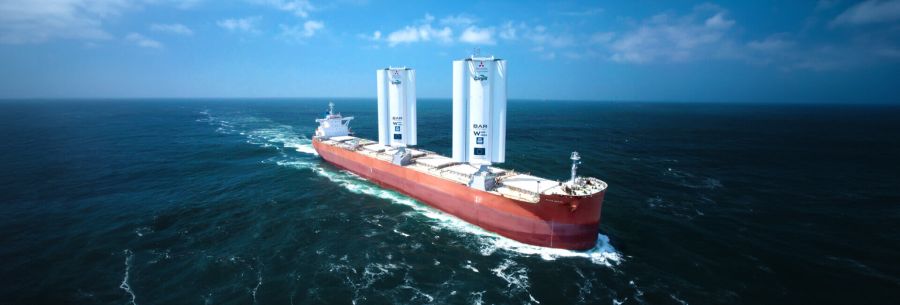
BAR Technologies highlights charterparty barrier to scaling wind propulsion

PORTSMOUTH: The global shipping industry’s slow uptake of wind propulsion is no longer a technology issue, but a commercial one, according to new analysis from BAR Technologies.

While proven wind-assisted propulsion systems like WindWings® are now delivering measurable fuel and emissions savings in operation, adoption across the fleet remains uneven. BAR Technologies argues that the root cause lies in the way value is structured between shipowners and charterers under existing charterparty agreements.

“The industry doesn’t have a technology problem; it has a contract problem,” said John Cooper, CEO of BAR Technologies. “We can’t keep waiting for perfect charterparties to appear. The industry needs to make this work with what’s in place today, because those who do will be in a far stronger position than those who don’t.”

Shipping’s long-established commercial model separates ownership from operation. Owners invest in vessels and onboard technologies, while charterers typically control fuel consumption and voyage decisions. In time charter arrangements, this creates a disconnect between owners’ funds and wind propulsion systems, but charterers often realise the immediate fuel and emissions benefits.

This “split incentive” is increasingly recognised across the industry as a key barrier to scaling wind technologies.

The challenge is not without precedent. The introduction of scrubbers created a similar dynamic, with owners funding installation and charterers sharing in the benefit. However, shorter, clearer payback periods enabled faster commercial alignment. With wind propulsion, longer and less predictable returns are complicating the agreement.

Legal and contractual frameworks are now under increasing scrutiny. Industry experts note that wind propulsion introduces new variables into traditional charterparty clauses, from performance measurement to operational constraints. Without clear definitions of value and responsibility, stakeholders risk disputes rather than shared benefits.

At the same time, market participants are beginning to explore new commercial approaches. These include baseline performance agreements, shared-savings mechanisms, and performance-linked charter structures. However, most remain bespoke and negotiated on a case-by-case basis, limiting scalability.

Industry bodies are also responding. BIMCO is currently developing an Energy Saving Device Retrofit Addendum designed to help owners and charterers agree on how to allocate costs, risks and benefits when installing efficiency technologies during a charter period.

While the commercial case is still evolving, external pressures are only increasing. Regulation is tightening, fuel costs remain volatile, and expectations around emissions performance continue to rise.

Established wind propulsion technologies like WindWings® are already demonstrating fuel and emissions savings of 5–20% in real-world conditions, meaning delays in adoption are leaving measurable reductions on the table today.

Wind propulsion is now linked not only to fuel savings but also to regulatory exposure, including FuelEU Maritime and the EU Emissions Trading System, increasing its strategic importance.

BAR Technologies said the industry cannot afford to wait for perfect contractual solutions.

“The question is no longer whether wind propulsion works, that has already been established,” Cooper added. “It is whether the industry can afford not to make it work commercially, now, not later. Because every delay means avoidable fuel burn and emissions that could be reduced today.”