Home Blog Page 36

INMARCO 2026: DGMA launches two green maritime digital tools to drive India’s Blue Economy and decarbonisation agenda

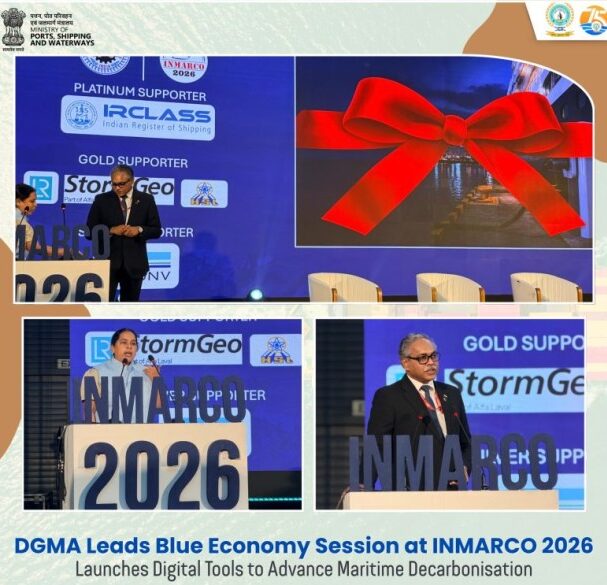
MUMBAI : India’s growing maritime capabilities, sustainable development priorities and emerging opportunities in the Blue Economy were at the centre of discussions during the Blue Economy Session at INMARCO 2026, held on 27 October 2026 at The Westin Mumbai Powai Lake, Mumbai. The session brought together key maritime stakeholders to deliberate on strategies for strengthening India’s maritime sector while advancing environmental sustainability and long-term economic growth.

Shri Shyam Jagannathan, IAS, Director General of Maritime Administration (DGMA), chaired the session and delivered an address supported by a presentation titled “India’s Blue Economy: Charting the Course towards Maritime Excellence and Sustainability”.

In his address, the Director General highlighted the growing significance of the Blue Economy in India’s economic development and the country’s expanding maritime capabilities. He emphasised the importance of strengthening maritime infrastructure, promoting indigenous shipbuilding, implementing progressive legislative reforms, encouraging technological innovation and accelerating maritime decarbonisation.

He also outlined the relevance of these initiatives in achieving the objectives of Maritime India Vision 2030 (MIV 2030) and Maritime Amrit Kaal Vision 2047 (MAKV 2047), which provide a strategic roadmap for transforming India into a globally competitive maritime nation.

Launch of Two Digital Tools to Advance Green Shipping

A major highlight of the session was the formal launch of two specialised digital tools developed by the National Centre of Excellence in Green Ports and Shipping (NCoEGPS–TERI) by the Director General of Maritime Administration.

The newly launched tools are designed to support data-driven decision-making, improve operational assessments and encourage the adoption of sustainable maritime practices.

  1. Maritime CO₂ Emission & Implied Carbon Tax Calculator

The tool is designed to estimate carbon dioxide emissions from vessels and assess indicative carbon-cost implications under different reference scenarios. It is expected to help maritime stakeholders better understand vessel emissions and evaluate the potential financial implications associated with carbon emissions.

  1. Shore to Ship Power Estimator PRO Tool

This tool enables users to assess the potential benefits of shore power utilisation during vessel port stays. It evaluates possible fuel savings, reductions in emissions and associated operating-cost implications, providing useful insights into the adoption of shore-to-ship electricity solutions at ports.

Advancing India’s Green and Sustainable Maritime Future

The launch of these digital platforms marks an important step towards integrating technology, environmental accountability and practical sustainability solutions into India’s maritime ecosystem.

By providing analytical tools for assessing vessel emissions, carbon-related costs and shore power benefits, the initiative aims to encourage informed investment decisions and accelerate the transition towards cleaner and more energy-efficient port and shipping operations.

The discussions at INMARCO 2026 reaffirmed the importance of collaborative efforts among government institutions, maritime organisations, research bodies and industry stakeholders in unlocking the full potential of India’s Blue Economy.

Through policy initiatives, technological innovation and the adoption of sustainable maritime practices, India continues to advance its ambition of building a modern, competitive and environmentally responsible maritime sector in line with its long-term vision for 2047.
ChPA receives Samudri Paryavaran Sanrakshan Trophy 2026 for environmental excellence

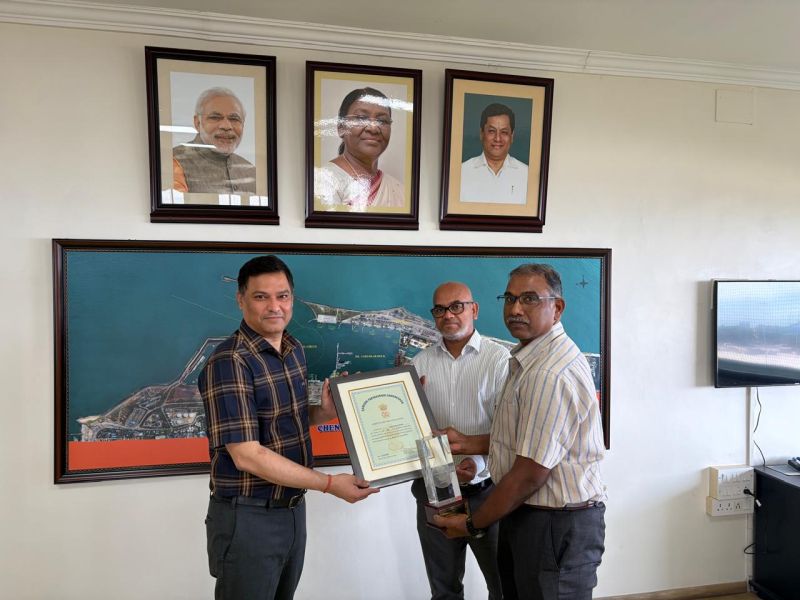
NEW DELHI : Chennai Port Authority has been honoured with the prestigious Samudri Paryavaran Sanrakshan Trophy 2026 by the Indian Coast Guard in recognition of its sustained commitment to marine environmental protection and environmentally responsible port operations.

The award was presented during the 28th Annual NOH-CMP Meeting, held in New Delhi on 27 October 2026. The recognition highlights Chennai Port Authority’s continued efforts towards safeguarding the marine environment and integrating sustainable practices into its port operations.

The honour reflects the Port’s focus on promoting environmental responsibility, strengthening marine pollution prevention measures and encouraging sustainable practices across its operational ecosystem. As a major maritime gateway on India’s eastern coast, Chennai Port continues to recognise the importance of balancing operational efficiency with environmental conservation.

The award also underscores the growing significance of environmental stewardship in the maritime sector, particularly in ensuring cleaner port operations, protecting marine ecosystems and promoting responsible development of port infrastructure.

This national recognition stands as an acknowledgement of Chennai Port Authority’s ongoing commitment to making sustainability an integral part of its operations while contributing to India’s broader vision of green and sustainable maritime development.

The achievement further reinforces Chennai Port’s dedication to building a cleaner, greener and more environmentally responsible maritime future.

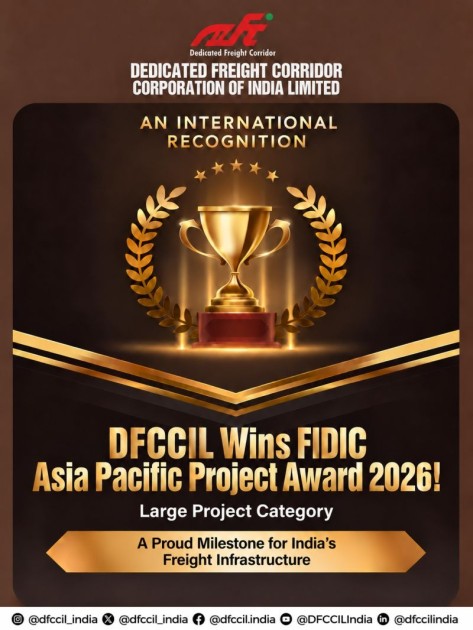
DFCCIL wins FIDIC Asia Pacific Project Award 2026 in large category

NEW DELHI : Dedicated Freight Corridor Corporation of India Limited (DFCCIL) has been selected for the FIDIC Asia Pacific Project Award 2026 in the Large Project Category, marking a significant achievement for India’s railway infrastructure sector and bringing international recognition to the country’s efforts to modernise freight transportation.

The award recognises DFCCIL’s engineering excellence and its transformative contribution to the development of dedicated freight corridors, designed to strengthen freight movement, improve logistics efficiency and enhance the capacity of India’s rail transportation network. The recognition also reflects the scale, complexity and strategic importance of developing modern freight infrastructure to meet the growing requirements of India’s economy.

DFCCIL is implementing dedicated freight corridor infrastructure to facilitate faster, more efficient and reliable movement of goods across the country. By creating specialised rail corridors for freight traffic, the organisation is helping improve freight-handling capacity, reduce pressure on existing railway networks and support more efficient transportation of bulk commodities and containerised cargo.

The development of dedicated freight corridors is a key component of India’s broader logistics modernisation strategy. Improved rail freight connectivity can contribute to lower logistics costs, better supply-chain performance and enhanced connectivity between industrial centres, ports, logistics hubs and consumption markets. It also supports the increased use of rail-based freight transportation, which can offer environmental advantages over road transport.

The FIDIC Asia Pacific Project Award 2026 selection places the spotlight on the technical expertise, planning, coordination and sustained efforts required to deliver large-scale infrastructure projects. It also highlights the contribution of DFCCIL’s engineers, technical specialists, project teams and other stakeholders in advancing India’s freight transportation capabilities.

The achievement is a matter of pride for Team DFCCIL and reflects the collective commitment of its workforce and partners towards building a modern, efficient and future-ready logistics network.

As India continues to strengthen its infrastructure and logistics ecosystem, DFCCIL’s progress in dedicated freight corridor development remains an important part of the country’s ambition to improve supply-chain competitiveness, facilitate trade and support sustainable economic growth.

The international recognition further reinforces India’s growing capabilities in executing complex railway infrastructure projects and its commitment to developing world-class freight transportation systems.

PSA Singapore partners with Cisco to develop AI-Powered platform for smarter and more resilient port operations

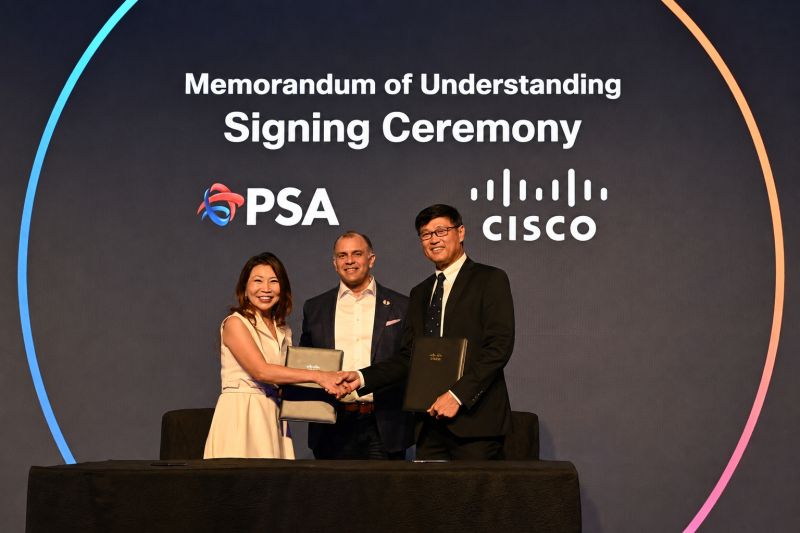
SINGAPORE : PSA Singapore is collaborating with global technology company Cisco to explore the application of Artificial Intelligence (AI) in strengthening the reliability, resilience and operational efficiency of critical digital systems at Tuas Port, one of the world’s most advanced automated port facilities.

Under this collaboration, the two organisations will develop a proof of concept (PoC) for an AI-powered platform designed to integrate and analyse real-time data across multiple digital environments, including applications, IT infrastructure and network systems.

The proposed platform aims to provide enhanced visibility into the performance of interconnected digital systems, enabling technical teams to identify potential issues, diagnose problems and resolve disruptions more quickly. By leveraging AI-driven insights, the initiative also seeks to move beyond conventional troubleshooting towards predictive capabilities, allowing potential system failures and outages to be anticipated and addressed before they affect port operations.

The initial testing of the platform will take place at the Phase 2 Living Lab at Tuas Port, providing an environment to assess its capabilities and explore its potential application across the port’s complex automated operating ecosystem.

As ports increasingly adopt automation, advanced digital infrastructure and intelligent operating systems, ensuring the reliability and cybersecurity of these interconnected technologies has become critical to maintaining uninterrupted cargo movement and global supply chain connectivity.

The PSA–Cisco collaboration represents another step towards integrating AI-driven intelligence into port operations. By combining PSA’s extensive port operational expertise with Cisco’s technology capabilities, the initiative aims to strengthen digital resilience, improve operational continuity and support the evolution of next-generation smart ports.

The project also reflects the growing role of AI and advanced digital technologies in transforming the global maritime and logistics industry, where real-time intelligence, predictive capabilities and resilient infrastructure are becoming essential to operational excellence.

Through this initiative, PSA Singapore continues to advance its vision of building smarter, more secure and resilient port operations, reinforcing Tuas Port’s position at the forefront of digital transformation in the global maritime sector.

M. R. Shah Group deploys Blue Energy Motors’ LNG Trucks for Long-Haul Freight Operations

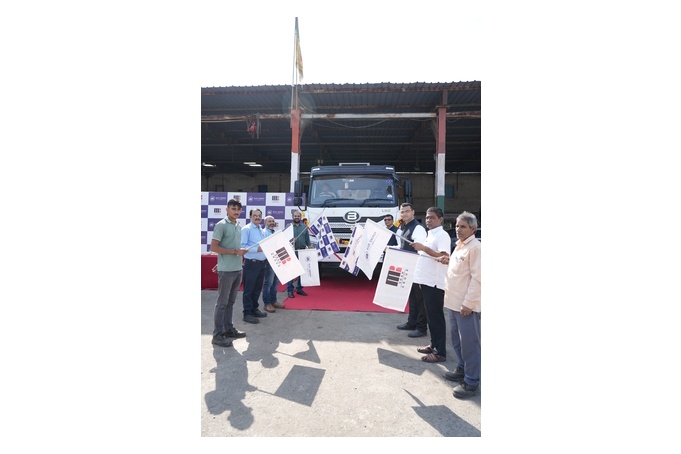
GANDHIDHAM : M. R. Shah Group is strengthening its freight operations with the deployment of double-tank LNG-powered heavy-duty trucks from Blue Energy Motors, India’s No. 1 Green Truck Brand. The trucks will transport non-hazardous chemicals from Kutch to destinations across North India, combining extended driving range with a shift towards cleaner fuel technology.

Designed for demanding freight applications, Blue Energy Motors’ double-tank LNG trucks offer a driving range of up to 2,400 km on a single fill, helping reduce the need for refuelling stops on extended routes. The vehicles can also help reduce greenhouse gas emissions by up to 30% compared with diesel-powered counterparts.

Mr. Archit Agrawal, Director, M. R. Shah Group, said: “In our business, keeping goods moving efficiently across long distances is essential. Blue Energy Motors LNG double-tank trucks offer the range required for our operations from Kutch to North India, while supporting reliable transportation and better fleet utilisation. Adopting this technology is a practical step towards improving operational efficiency while progressively moving towards cleaner freight transportation.”

Anand Mimani, CEO – EV & New Energy Business, Blue Energy Motors, said: “We value M. R. Shah Group’s confidence in our LNG-powered heavy-duty trucks and its commitment to exploring cleaner solutions for long-haul transportation. The adoption reflects a forward-looking approach to freight operations, where operational efficiency and environmental responsibility go hand in hand. At Blue Energy Motors, we remain committed to supporting our customers with reliable, high-performance solutions that contribute to lower-emission freight movement and the evolution of India’s logistics sector.”

Blue Energy Motors is advancing green freight mobility through its electric and LNG-powered heavy-duty truck solutions. With over 1,400 green heavy-duty trucks operating across key freight routes in India, the company has crossed 150 million green kilometres on Indian roads, helping reduce CO2 emissions by more than 44,000 tonnes equivalent to the carbon absorption of approximately 1.8 million trees.

HSL signs MoU with Kakinada Seaports to expand shipbuilding operations in Andhra Pradesh

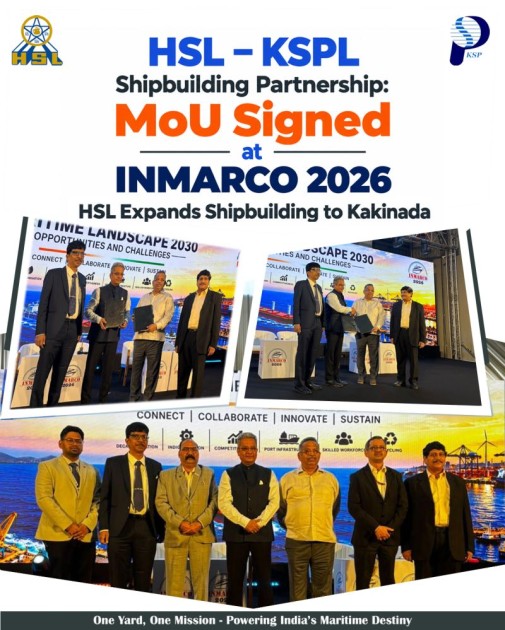
KAKINADA : Hindustan Shipyard Limited (HSL), a leading shipbuilding and ship repair organisation under the Ministry of Defence, has signed a Memorandum of Understanding (MoU) with Kakinada Seaports Limited (KSPL) to explore and develop shipbuilding operations at the KSPL facility in Kakinada, Andhra Pradesh. The agreement marks an important step towards expanding India’s shipbuilding infrastructure through strategic collaboration between a major shipyard and a port operator.

The MoU was signed during INMARCO by Rear Admiral Chandreshekharan Raghuram, VSM, Chairman and Managing Director of Hindustan Shipyard Limited, and Shri K. V. Rao, Chairman and Managing Director of Kakinada Seaports Limited.

Under the agreement, both organisations will work together to utilise and augment existing infrastructure at the KSPL facility, including slipways and jetty facilities, to support shipbuilding activities by HSL. The partnership will also explore collaborative business models, combining the technical expertise and operational capabilities of both organisations to identify and undertake major shipbuilding projects.

The proposed collaboration is expected to create opportunities for optimising existing maritime infrastructure, expanding shipbuilding capacity and promoting allied maritime activities. By bringing together HSL’s established shipbuilding expertise and KSPL’s port infrastructure, the initiative aims to develop a supportive ecosystem for future shipbuilding projects.

The partnership also reflects the growing importance of cooperation between shipyards and ports in advancing India’s maritime ambitions. Effective utilisation of existing port assets, development of additional infrastructure and collaboration among industry stakeholders will be essential to strengthening the country’s domestic shipbuilding ecosystem.

The initiative is aligned with India’s broader vision of enhancing indigenous shipbuilding capabilities, reducing dependence on overseas facilities and positioning the country as a competitive global maritime and shipbuilding hub. It also complements the national priorities of maritime infrastructure development, capacity expansion and the creation of new opportunities across the maritime value chain.

Commenting on the significance of the partnership, HSL emphasised that India’s shipbuilding ambitions require coordinated efforts among shipyards, ports, regulators, designers, suppliers, financial institutions and local stakeholders.

The MoU represents a shared commitment by HSL and KSPL to transform existing maritime infrastructure into productive shipbuilding capacity and contribute to India’s long-term maritime development objectives.

Through this collaboration, both organisations look forward to identifying new opportunities, strengthening industrial partnerships and supporting the growth of India’s shipbuilding sector.

One Yard. One Mission. Powering India’s Maritime Destiny.

Relentless efforts of NUSI – Revised Wages for Andaman & Nicobar Seafarers

NEW DELHI: The National Union of Seafarers of India (NUSI) continues its determined efforts to secure the long-pending implementation of revised wages for seafarers serving on board passenger and cargo vessels operated by the Andaman & Nicobar Administration.

The prolonged delay in obtaining approval from the Ministry of Home Affairs (MHA) has caused considerable financial hardship to the affected seafarers and their families. NUSI has consistently pursued this legitimate demand with the concerned authorities to ensure that seafarers receive their rightful wages without further delay.

23rd October 2026 – Meeting with Joint Secretary, Ministry of Home Affairs

NUSI representative from Port Blair met Shri P. Manoj Kumar, Joint Secretary, Ministry of Home Affairs, and strongly raised the issue of the pending approval for implementation of revised wages.

The Joint Secretary indicated that the necessary approval would be communicated to the Andaman & Nicobar Administration within one month.

However, NUSI firmly rejected the prospect of further delay, particularly when seafarers had already endured prolonged financial losses. NUSI emphasised that the matter demanded urgent administrative action and could no longer be allowed to remain pending.

24th October 2026 – Intervention of Hon’ble Union Minister Shri Ramdas Athawale

Determined to accelerate the process, NUSI delegation met Shri Ramdas Athawale, Hon’ble Union Minister of State for Social Justice and Empowerment, and highlighted the financial hardship caused by the continued delay.

Recognising the seriousness of the issue, the Hon’ble Minister extended his support and facilitated further intervention at the Ministry of Home Affairs.

28th October 2026 – Crucial Meeting with Hon’ble Union Minister of State for Home Affairs

With the valuable intervention of Shri Ramdas Athawale, NUSI delegation met Shri Nityanand Rai, Hon’ble Union Minister of State for Home Affairs, at his office in New Delhi.

The delegation placed before the Hon’ble Minister the prolonged financial losses suffered by seafarers serving on board vessels of the Andaman & Nicobar Administration and stressed the urgent need to resolve the matter.

Taking immediate cognisance of the issue, the Hon’ble Minister directed the concerned authorities to expedite the file and initiate the necessary action for obtaining approval from the competent authority without further delay.

He also instructed the NUSI delegation to follow up directly with the Joint Secretary regarding the progress.

SIGNIFICANT DEVELOPMENT – FILE MOVES TOWARDS FINAL APPROVAL

Acting upon the Minister’s intervention, NUSI delegation immediately followed up with the Joint Secretary, Ministry of Home Affairs.

The Joint Secretary confirmed that:

  • The file had been cleared by all concerned departments.
  • The concerned Section Head had initiated immediate action to process the file.
  • The file was being moved for submission to the Union Home Secretary for final approval.

This marks a significant step forward in the sustained campaign of NUSI to secure the legitimate wage revision of Andaman & Nicobar seafarers.

Although final approval remains pending, the direct intervention of the Hon’ble Minister of State for Home Affairs has accelerated the administrative process.

NUSI places on record its sincere appreciation for the timely intervention of Shri Ramdas Athawale and Shri Nityanand Rai, whose support has been instrumental in advancing this long-pending issue.

THE UNWAVERING COMMITMENT OF NUSI

NUSI reiterates its firm commitment to every seafarer serving on board vessels of the Andaman & Nicobar Administration.

The movement of files in progress, but the implementation of revised wages is the real objective.

NUSI will maintain relentless pressure on the concerned authorities until the revised wages are formally approved, implemented and the legitimate financial benefits reach every eligible seafarer.

SEAFARERS HAVE WAITED LONG ENOUGH. THEIR RIGHTFUL WAGES MUST NOT BE DELAYED ANY FURTHER.

NUSI WILL NOT REST UNTIL JUSTICE IS DELIVERED!

NUSI – ALWAYS WITH SEAFARERS, ALWAYS FOR SEAFARERS!

Source: National Union of Seafarers of India (NUSI)

Khalifa Port climbs to 34th in Lloyd’s list top 100 after 21.6% throughput rise

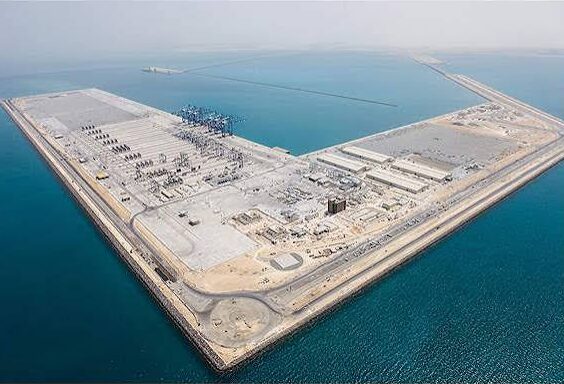
ABU DHABI : Khalifa Port in Abu Dhabi has risen five places to 34th in the Lloyd’s List Top 100 Container Ports 2026, AD Ports Group has announced. Lloyd’s List ranks ports by annual throughput, and this edition is based on 2025 results. Khalifa Port’s three container terminals handled a combined 6.6 million teu during 2025. That was up 21.6% from 5.42 million teu in 2024.

The group said this was the highest percentage increase among the top 40 ports in the ranking. Khalifa Port was ranked 39th a year earlier and has climbed 61 places since entering the list at 95th in 2019.

The port’s terminals are Abu Dhabi Terminals, operated with MSC; CSP Abu Dhabi Terminal, operated with COSCO Shipping; and CMA Terminals Khalifa Port, operated with CMA CGM. AD Ports attributed the 2025 growth to higher terminal utilisation, strong demand and new capacity. The CMA CGM joint venture handled more than 1.3 million teu over its first full year after opening in January 2025.

“Khalifa Port’s rise to 34th in the Lloyd’s List ranking reflects the strength of our long-term vision and our continued commitment to operational excellence,” said Saif Al Mazrouei, Chief Executive Officer, Ports Cluster at AD Ports Group. He said the group would continue to invest in capacity and connectivity at the port.

An expansion under way at the CMA CGM terminal will raise its annual handling capacity by almost 50% to 2.7 million teu. On completion, Khalifa Port’s total container-handling capacity will reach 10.5 million teu a year.

Panama Canal strengthens long-term vision following 41st Advisory Board Meeting

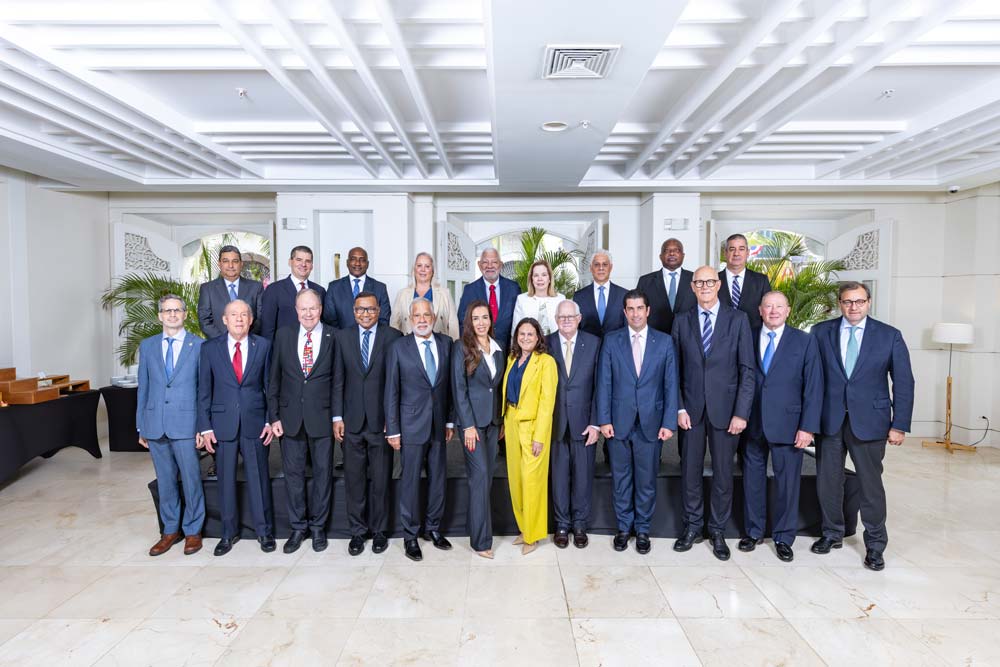
PANAMA CITY : The Panama Canal Boards of Directors and Advisors concluded their 41st meeting on Thursday, following three days of discussions focused on evaluating opportunities for the waterway’s growth in a rapidly evolving global maritime trade landscape.

“The Panama Canal Advisory Board’s expertise is invaluable in informing our decisions about the Canal’s future. Their insights help us anticipate shifts in global trade and ensure that the Canal remains reliable, sustainable, and competitive for generations to come,” said Minister for Canal Affairs and Chairman of the Board of Directors José Ramón Icaza.

The meeting’s agenda included an assessment of maritime industry trends and geopolitical developments that could affect the Canal in both the short and long term.

Participants also received updates on Canal’s operational, commercial, and financial performance, its revenue diversification program, projects aimed at securing long-term water availability, and workforce development initiatives.

Advisory board members also toured the Cocolí Locks and the Integrated Operations Control Center (CICO) and attended a meeting at the Presidential Palace.

Additionally, during a joint session, representatives from the McKinsey Global Institute examined how shifting global supply chains and geopolitical tensions are reshaping international trade routes.  Established in 1990, the McKinsey Global Institute conducts research on critical global issues, including productivity, technology, and sustainability to inform decision-making among business leaders and policymakers worldwide.

This was the first meeting chaired by Tommy Thomsen who succeeded U.S. Navy Admiral William J. Flanagan as Chairman of the Advisory Board. “It is an honor to assume the chairmanship of the Panama Canal Advisory Board. Throughout my career in the maritime industry, I have witnessed firsthand Panama’s vital role in global trade, and I am confident that the Canal has a bright future ahead,” said Thomsen.

Reflecting on his tenure, U.S. Navy Admiral Flanagan stated, “I am proud to have served on an advisory board dedicated to bringing global perspectives to support the Canal’s development. Over the years, I have learned a lesson that will always stay with me: Panama is not a place.  It is a passion. That passion is reflected in the people who make the Canal’s operations possible every day.”

The Panama Canal Authority established the advisory board in December 1999, in accordance with Article 19 of its Organic Law (Law 19 of June 11, 1997). The board serves as an advisory body to the authority, with the primary responsibility of providing guidance and recommendations to the board of directors and Panama Canal Administration.

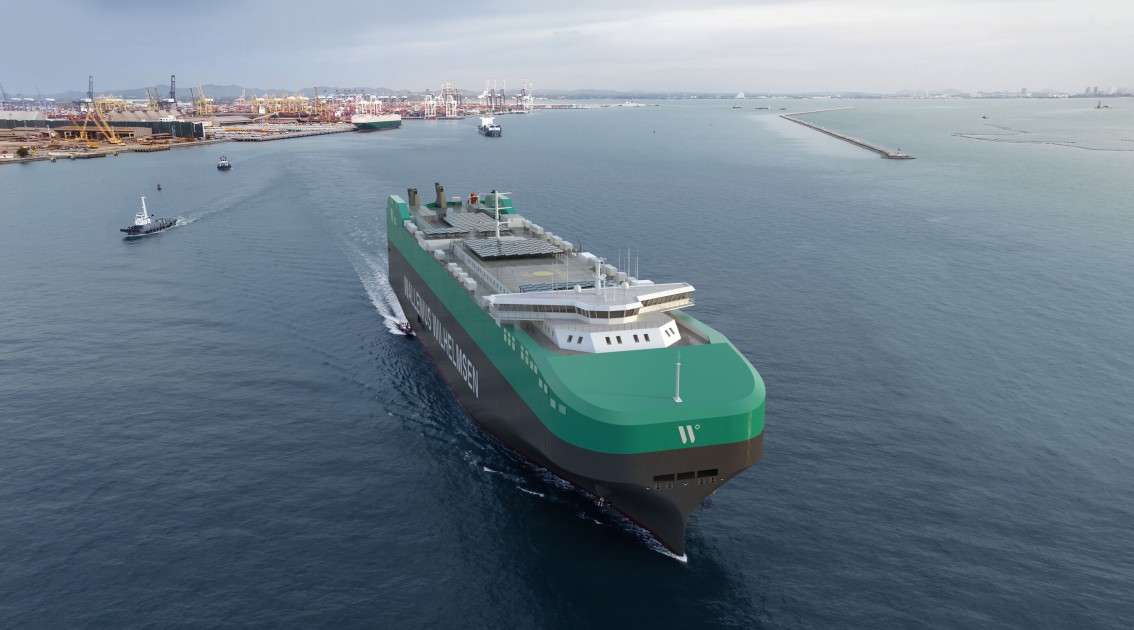
Building capacity for what comes next: Wallenius Wilhelmsen extends fleet renewal program

LYSAKER : After launching the largest fleet renewal program in the company’s history in 2023, Wallenius Wilhelmsen is now taking the next step, adding capacity to meet future demand and support long-term growth.

The new vessels will strengthen operational flexibility across the company’s global network, helping Wallenius Wilhelmsen respond to evolving customer needs while further developing its leading position in the deep-sea RoRo market.

“We continue to see attractive opportunities in the segments we serve and want to ensure we have the capacity, flexibility and efficiency needed to support our customers well into the next decades,” says Xavier Leroi, Chief Operating Officer Shipping Services at Wallenius Wilhelmsen, adding:

“Expanding our newbuilding program with deliveries from 2030 reflects our confidence in the long-term fundamentals of the market. We are investing now to ensure we can continue to grow with our customers while further developing our leading position in deep-sea RoRo.”

The investment builds on Wallenius Wilhelmsen’s ongoing Shaper Class fleet renewal program, with vessels already being delivered and entering service. Together, the vessels will modernize the fleet, add capacity and strengthen operational flexibility across the company’s global network.

Vessel information
Purpose-built for Wallenius Wilhelmsen’s trading patterns, the Shaper Class combines hoistable decks, strong ramps and adaptable cargo spaces to accommodate a broad range of cargo. Its future-ready design also supports Wallenius Wilhelmsen’s ambition to make lower-carbon transportation increasingly available and affordable for customers.

Wallenius Wilhelmsen reached the agreement with Jinling Shipyard (Jiangsu) following the company’s private placement announced earlier in October 2026. The vessels will have 9,900 CEU capacity and dual-fuel LNG engines. The four firm vessels will be delivered from mid-2030, with options for four additional vessels in 2031 and a further four in 2032. Assuming all options are exercised, the total capex is expected to be around USD 1.5bn.

Wallenius Wilhelmsen’s fleet renewal program now totals 26 vessels, including options, and will enable the company to keep supporting its customers’ evolving logistics needs.