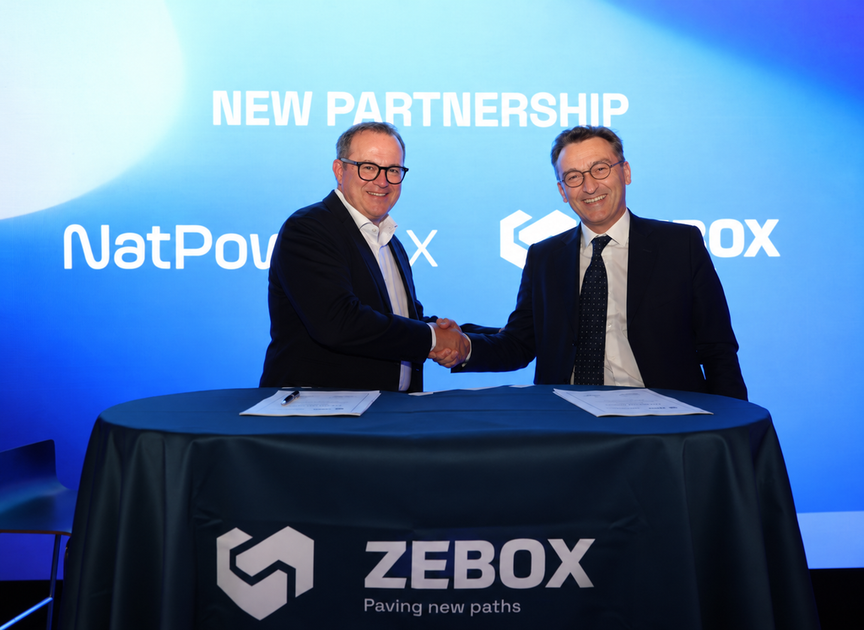
MARSEILLE: ZEBOX and NatPower Marine announce a strategic partnership to accelerate the development and deployment of energy infrastructure supporting the decarbonisation and electrification of ports and maritime transport.
NatPower Marine joins ZEBOX, the international innovation accelerator initiated by the CMA CGM Group, combining NatPower Marine’s infrastructure development, financing and operating capabilities with ZEBOX’s international maritime and logistics ecosystem.
Together, ZEBOX and NatPower Marine will identify and advance opportunities across shore power, electric vessel charging, battery storage, grid connection, clean energy and integrated energy management. The objective is to connect innovative technologies and real operational needs with the infrastructure, capital and execution capabilities required to move relevant use cases from concept to deployment.
From innovation to industrial deployment
NatPower Marine develops, finances, builds and operates integrated energy infrastructure for ports and shipping lines, with expertise spanning energy supply, grid connection, battery storage, shore power, electric vessel charging and energy management.
Founded in 2018 by Rodolphe Saadé, the Chairman and CEO of the CMA CGM Group, ZEBOX gathered the most promising startups and large companies to accelerate decarbonisation and operational optimisation in the maritime and logistics industry.
As a true innovation catalyst, ZEBOX’s mission is to connect the world’s best innovations with the CMA CGM Group and its corporate partners across three key areas: environmental impact, technological competitiveness, employee well-being and safety at work.
By joining ZEBOX, NatPower Marine will work with its international ecosystem of startups, corporate partners and maritime stakeholders to assess selected technologies and use cases against real operational requirements and identify opportunities for deployment.
Together, ZEBOX and NatPower Marine will create a more direct pathway from innovation to industrial deployment, helping relevant solutions move beyond pilots and supporting ports and maritime operators in developing scalable decarbonisation infrastructure.
“At ZEBOX, our mission is to connect breakthrough technologies with real industry needs and create the conditions for them to scale. By welcoming NatPower Marine into our ecosystem, we are adding critical energy infrastructure expertise that can help our startups and corporate partners turn innovative solutions into concrete projects and accelerate the transition towards cleaner maritime transport.” says Frederic Guilleux, CEO ZEBOX
“The maritime energy transition will not be delivered by technology alone. It requires energy, infrastructure, capital and operational capability to come together around real demand. Our partnership with ZEBOX gives us access to an exceptional ecosystem of innovation and industrial expertise, while allowing NatPower Marine to contribute what we do best: turning complex energy requirements into infrastructure that can be financed, built and operated at scale.” says Fabrizio Zago, Global CEO, NatPower
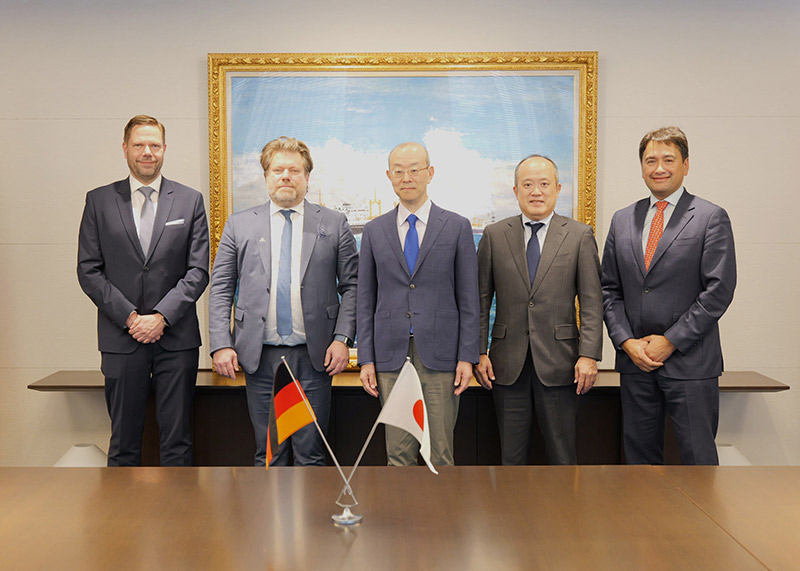
TOKYO : Mitsui O.S.K. Lines, Ltd. and Deutsche ReGas announced that they have entered into a long-term Time Charter Contract with Deutsche ReGas for the deployment of one FSRU (Note 2) at the Energie-Terminal “Deutsche Ostsee” in Mukran (Note 3), Germany. Under this long-term arrangement, the LNG carrier will be converted at Hudong-Zhonghua Shipbuilding (Group) Co., Ltd.(“HZ”) in China and Deutsche ReGas will charter the FSRU from MOL starting in 2028. While MOL has previously undertaken FSRU conversion projects in collaboration with partner companies for their specific use, the Project marks FSRU conversion project on MOL’s sole initiative to be developed for LNG deliveries to major gas networks. The commemorative ceremony was held in Tokyo on October 29th, with relevant parties in attendance, including Deutsche ReGas CEO Ingo Wagner and MOL President & CEO Jotaro Tamura.
Mr. Jotaro Tamura, President & CEO of MOL, commented:
“The FSRU Project represents a major strategic milestone for MOL. We are pleased to partner with Deutsche ReGas on this important infrastructure Project and to work together with HZ to deliver an FSRU solution. Through this FSRU Project, MOL will further strengthen its position as a global provider of LNG infrastructure while contributing to Germany’s and Europe’s import solution.”
“The FSRU Project is a landmark achievement for MOL Europe and Africa Region and reflects our commitment to developing critical energy infrastructure that supports Europe’s evolving energy needs. By combining MOL’s global LNG expertise with Deutsche ReGas’s strong market position and leading operatorship in Germany, we are creating a reliable and flexible solution that will contribute to supply security and energy resilience in the region. We look forward to working closely with all Project partners to ensure the successful delivery and long-term operation of the terminal.”
Ingo Wagner, Chief Executive Officer of Deutsche ReGas, commented:
“We are excited about the future partnership with MOL as the leading player in floating LNG infrastructure. As the only LNG-Terminal in the eastern part of Germany and critical infrastructure, Deutsche ReGas has demonstrated its strategic importance for security of supply. By restoring the Terminal’s fully permitted capacity, we are continuing the path which we started in 2024. This allows to strengthen long-term energy security and creates additional import flexibility benefiting consumers, industry and energy markets alike. Formidable energy companies are reliable partners for us an infrastructure provider.”
In BLUE ACTION 2035 Phase 2, the MOL Group has positioned portfolio strategy as one of its core strategies, with FSRU business serving as a stable earnings-generating business in the downstream segment of the LNG value chain. Through this Project, MOL aims to contribute to the stable supply of energy in Germany and Europe while further strengthening its energy infrastructure business.
(Note 1) Deutsche ReGas is a provider of European critical energy infrastructure. In the industrial port of Mukran, Deutsche ReGas operates the Energie-Terminal “Deutsche Ostsee.” This Energie-Terminal, along together with the previously completed LNG terminal in Lubmin, are the first and only privately financed floating operating liquefied natural gas terminals in Germany. In addition, Deutsche ReGas is planning the construction of hydrogen electrolyzers and solutions for hydrogen derivatives. (Note 2) A floating facility capable of receiving, storing and regasifying liquefied natural gas (LNG) before delivering natural gas to shore through pipeline infrastructure. Compared with conventional land-based LNG terminals, FSRUs provide shorter development schedules and lower capital investment requirements while offering flexible and scalable energy infrastructure solutions. (Note 3) Located on Germany’s Baltic Sea coast, Mukran is home to the LNG import terminal Energie-Terminal “Deutsche Ostsee”, built and operated by Deutsche ReGas. The terminal plays a key role in diversifying gas supply sources for Germany and Europe.
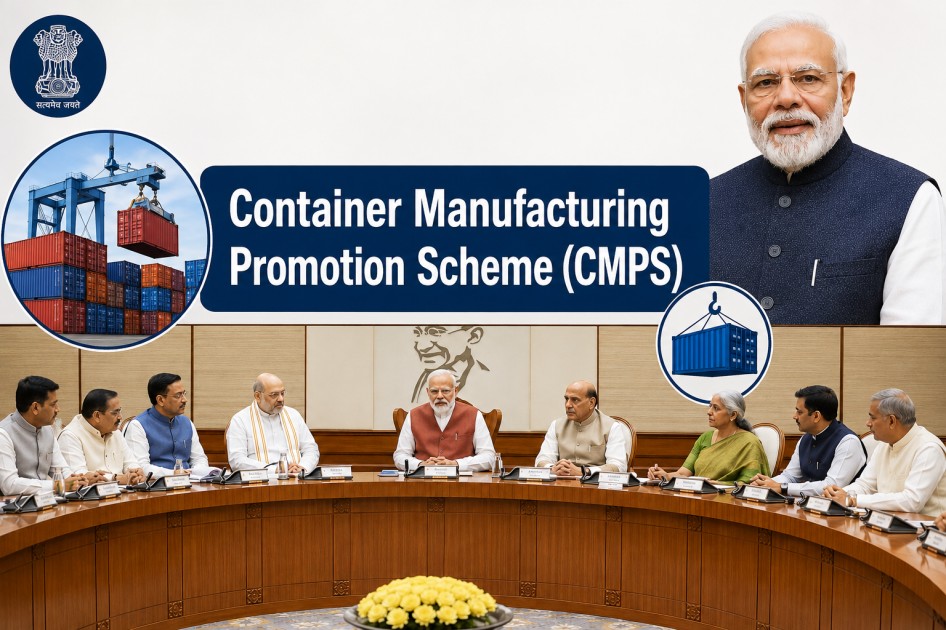
NEW DELHI : The Union Cabinet, chaired by Prime Minister Shri Narendra Modi, on Wednesday approved the Container Manufacturing Promotion Scheme (CMPS), a Rs 10,000 crore programme announced in the Union Budget 2026-27 to build a globally competitive container manufacturing ecosystem in India. The scheme will run from FY 2027-28 to FY 2039-40, with three years for setting up facilities and ten years of production support.
The scheme will support new factories as well as the expansion of existing units. It aims to lift India’s annual container manufacturing capacity around ten-fold, to 7.5 lakh TEUs, from about 70,000 TEUs today. Union Minister of Ports, Shipping & Waterways (MoPSW), Shri Sarbananda Sonowal welcomed this announcement by thanking Prime Minister Narendra Modi for emboldening Make In India push in container manufacturing in the country.
“I express my heartfelt gratitude to Prime Minister Shri Narendra Modi ji for his visionary leadership. His Make in India push is giving our container manufacturers the confidence to build at scale, and this scheme is a strong step to reduce import dependence,” Sarbananda Sonowal said.
India’s trade depends on containers, but almost all of them are made abroad. India’s container traffic is projected to grow from about 24 million TEUs in 2024 to 175 million TEUs by 2047 under the Maritime Amrit Kaal Vision, which makes home-grown capacity critical.
What the scheme offers
• Interest Subvention Assistance (Rs 859 crore): 3 per cent a year on eligible term loans for greenfield plants of at least 1,00,000 TEUs a year and brownfield expansions of at least 25,000 TEUs a year. • Operational Expenditure Assistance (Rs 8,891 crore): support for every container made to global shipping standards and sold by an eligible manufacturer, Rs 49,500 for a 20-foot and Rs 86,625 for a 40-foot container, to bridge the cost gap with imports. Domestic content must rise from 70 per cent to 90 per cent. • Testing and Certification (Rs 150 crore): common facilities, such as dynamic longitudinal impact testing, to reduce dependence on overseas testing. • Scheme management (Rs 100 crore): administration, monitoring and capacity building. • Land at major ports: leasing support at 25 per cent of the notified rate.
An Inter-Ministerial Steering Committee chaired by the Secretary, Ministry of Ports, Shipping and Waterways, will approve guidelines and sanction assistance.
The scheme is expected to create about 3,000 direct and more than 50,000 indirect jobs, in steel, components and logistics. It will also support ancillary industries such as corner castings, specialised steel, wooden frames and paints. The government estimates it will generate about Rs 75,000 crore of economic output by FY 2039-40, more than seven times the support provided. Demand is expected from replacement of the global fleet, the Bharat Container Shipping Line, and new mega ports such as Vadhavan and Galathea Bay.
“Containers are the backbone of our trade. By making them in India, we strengthen the maritime logistics supply chain on which our ports, our exporters and our shipping lines depend, and we take another step towards a self-reliant India and the goals of Maritime Amrit Kaal Vision 2047,” Sonowal added.
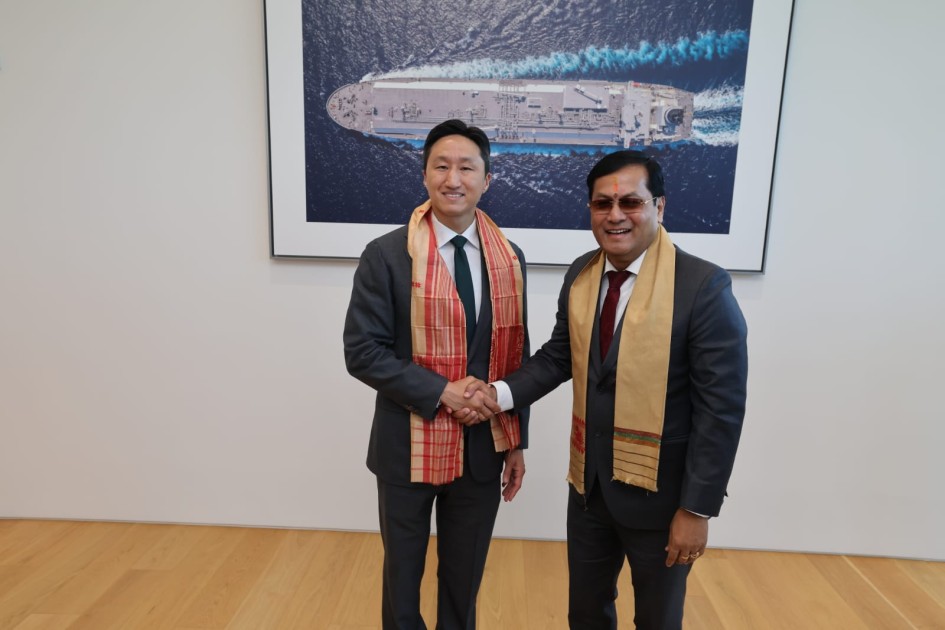
SEOUL : Union Minister of Ports, Shipping and Waterways, Shri Sarbananda Sonowal, on Wednesday met Chung Ki-sun, Chairman of HD Hyundai, in Seoul and discussed the next steps for India’s proposed greenfield shipyard at Thoothukudi, Tamil Nadu. The meeting took place during Sonowal’s four-day visit to South Korea, which is focused on deepening India–Korea cooperation in shipbuilding and the wider maritime industry.
The meeting added momentum to the project, and the day’s engagements produced a clear path forward. HD Korea Shipbuilding & Offshore Engineering (HD KSOE), HD Hyundai’s shipbuilding arm, reiterated its intent to participate as a primary strategic investor, and the project partners expressed their shared intent to take the yard forward. A joint working group (JWG) will now oversee project development, the two sides will work towards agreeing a joint venture structure, and the Detailed Project Report (DPR) is expected to be finalised within six months.
Union Minister Sarbananda Sonowal told HD Hyundai Chairman Chung Ki-sun that his main goal in Seoul is to turn into reality, as quickly as possible, the shared vision the Chairman had set out to Prime Minister Narendra Modi, that India is a core pillar of HD Hyundai’s global future, as India–Korea maritime ties gain new energy since President Lee Jae Myung’s visit to New Delhi earlier this year.
Speaking at the meeting, Sarbananda Sonowal said, “We have a clear mandate to scale up our work together. The MoU we signed on 20 April 2026 is the bedrock of what we want to build together in Thoothukudi, Tamil Nadu. A greenfield shipyard with $4 Billion investment is a massive milestone, and we are completely committed to backing it. Your team has done an incredible job during the site assessment and has been continuously collaborating with the teams from both Central as well as the State governments.”
National Shipbuilding & Heavy Industries Park, Tamil Nadu Limited (NSHIP-TN) and HD Korea Shipbuilding & Offshore Engineering Co., Ltd. (HD KSOE) expressed their shared intent to take forward the proposed greenfield shipyard at Thoothukudi, Tamil Nadu.
The discussions built on the India–Republic of Korea Comprehensive Framework for Partnership in Shipbuilding, Shipping and Maritime Logistics adopted in April 2026 and the Memorandum of Understanding signed on 20 April 2026 between HD-KSOE and NSHIP-TN on the sidelines of the state visit by the President of the Republic of Korea, H.E. Lee Jae Myung. During the meeting HD-KSOE expressed its appreciation of the enabling conditions created by the Government of India towards implementation of the project.
The proposed shipyard, being developed under the Government of India’s Shipbuilding Development Scheme, is envisaged to have an annual shipbuilding capacity of approx. 2.5 million Gross Tonnage (GT), subject to validation through Detailed Project Report (DPR). Once operational, it is expected to be India’s largest commercial shipyard, significantly strengthening domestic shipbuilding capacity and India’s competitiveness in the global maritime industry.
During the meeting HD KSOE reiterated its strong intent in participating as a primary strategic investor, bringing its global expertise in shipyard design, construction, advanced manufacturing and operations. Discussions will now focus on finalising the proposed investment structure, equity participation and implementation arrangements, subject to due diligence and requisite approvals. Similarly, NSHIP-TN reassured its support for setting up of the greenfield shipyard, including all coordination with the government authorities both at Central as well as the State level.
Speaking about the domestic demand in India, Sarbananda Sonowal said, “The domestic market in India is booming right now. Our public agencies are looking to acquire more than 400 vessels in the coming years. I am sure that apart from the export orders the mega greenfield shipyard in Thoothukudi, Tamil Nadu would be instrumental in construction of many of these identified vessels. We look forward to HD KSOE deepening its footprint in India through strategic partnerships, technology collaboration and localised manufacturing, thereby contributing to India’s emergence as a global shipbuilding hub.”
To accelerate implementation, a working group comprising officials from both sides would oversee project development and coordinate ke activities. The two organisations will endeavour to agree on a suitable joint venture structure and are expected to finalise the DPR within six months, covering vessel product mix, production capacity, infrastructure requirements, project costs and implementation schedule.
NSHIP-TN will facilitate the availability of suitable waterfront land, development of enabling infrastructure and utilities, and coordination with relevant authorities for timely statutory approvals, in accordance with applicable laws and procedures. In parallel, preparatory activities, including site assessments, infrastructure planning and preliminary dredging/reclamation studies, will be progressed to support project readiness.
Beyond infrastructure development, the collaboration aims to establish a globally competitive shipbuilding ecosystem in India, with emphasis o technology transfer and workforce skilling. Opportunities for technical training, knowledge exchange and collaboration with Indian industry and academic institutions will be explored to strengthen indigenous shipbuilding capabilities and generate skilled employment.
In his closing remarks, Sarbananda Sonowal said, “This partnership will be a truly vital & defining cornerstone of the broader India-Korea relationship. By bringing together South Korea’s world-class technological genius with India’s economic energy and market scale, we are creating a partnership that will genuinely reshape the global maritime landscape.Let’s join hands to bring this incredible shipyard to life on the ground. I am eager to hear your thoughts on how we can accelerate this journey together.”
The proposed Thoothukudi shipyard is envisaged as a flagship initiative under the India–Republic of Korea Special Strategic Partnership, combining Korea’s advanced shipbuilding expertise with India’s industrial capabilities and long-term maritime ambitions.
AHMEDABAD : Adani Ports and Special Economic Zone Limited (APSEZ) announced its results for the second quarter ended September 30, 2026. APSEZ’s strong Q2 performance, with consolidated revenue up 24% to ₹11,340 Cr and EBITDA up 23% to ₹6,807 Cr, underscores its transformation into India’s largest and amongst the world’s fastest growing Integrated Transport Operator, with multiple growth engines across Domestic and International Ports, Logistics, and Marine scaling simultaneously.
Q2 FY27 & H1 FY27 key financials (consolidated)
Particulars (₹ Cr)
Q2 FY27
Q2 FY26
YoY
H1 FY27
H1 FY26
YoY
Revenue
11,340
9,167
24%
22,161
18,294
21%
EBITDA
6,807
5,550
23%
13,347
11,046
21%
PAT
3,682
3,120
18%
7,332
6,431
14%
Comment by Ashwani Gupta, Whole-time Director & CEO
“APSEZ’s ability to execute at scale with financial prudence enables us to pursue ambitious growth while leveraging balance-sheet strength and compounding cash flows. Against this backdrop, Q2FY27 was another stellar quarter. Domestic Ports continue to anchor our earnings, while International Ports, Logistics and Marine are emerging as powerful growth engines. Reflecting strong H1 performance, we are upgrading our FY27 guidance across revenue, EBITDA and capex.
As we accelerate investments toward our Ambition 2031 objectives, our balance sheet remains exceptionally strong. We have deployed ₹30,346 Cr of capex over the past two years, including higher-than-planned investments in H1, while maintaining net debt-to-EBITDA at just 1.8x, underscoring the strength of our business model and capital discipline.”
FY27 revenue, EBITDA and capex guidance upgraded
Strong H1 performance has led APSEZ to raise its FY27 revenue and EBITDA guidance by ₹1,000 Cr each to ₹44,000–₹46,000 Cr and ₹26,000–₹27,000 Cr, respectively. APSEZ is simultaneously accelerating its investment program to deliver its FY31 Ambition of ₹91,500 Cr revenue and ₹52,000 Cr EBITDA, equivalent to 2.4x and 2.3x FY26 levels. Consequently, FY27 capex guidance has been raised by ₹3,000 Cr to ₹15,000–₹17,000 Cr, reflecting the higher pace of investment across the company’s growth initiatives.
Figures in ₹ Cr
FY27 guidance
FY27 revised guidance
Revenue
43,000 – 45,000 (11%-16% YoY growth)
44,000-46,000 (14%-19% YoY growth)
EBITDA
25,000 – 26,000 (9%-14% YoY growth)
26,000-27,000 (14%-18% YoY growth)
Capex
12,000 – 14,000
15,000 – 17,000
Net debt / EBITDA
Up to 2.5x
No change
Multiple businesses – one integrated platform
Q2 FY27 consolidated revenue grew 24% to ₹11,340 Cr and EBITDA rose 23% to ₹6,807 Cr reflecting strong, broad-based growth across all businesses. Q2 FY27 performance also demonstrates the impact of APSEZ’s transformation into an increasingly diversified transport and logistics platform, where multiple growth engines across ports, logistics, marine and international markets are scaling simultaneously.
Revenue
EBITDA
Q2 FY27
Q2 FY26
YoY %
Q2 FY27
Q2 FY26
YoY %
Domestic ports
7,177
6,351
13%
5,201
4,688
11%
International ports
1,839
1,077
71%
878
261
236%
Logistics
1,273
1,055
21%
237
220
8%
Marine
1,007
641
57%
447
338
32%
SEZ
44
43
2%
44
43
2%
Total
11,340
9,167
24%
6,807
5,550
23%
Domestic ports: The earnings anchor
Domestic Ports continued to provide scale, stability and strong cash generation. Revenue increased 13% YoY, supported by cargo growth and higher realizations. EBITDA margin remained best-in-class at 72.5%. Cargo volume during the quarter stood at 118 MMT, while APSEZ’s all-India cargo and container market share was at 27.3% and 44.4% respectively. Domestic ports’ capacity stood at 671 MMT.
During the quarter, APSEZ secured 30-year concession for Paradip Port’s CQ-I and CQ-II dry bulk berths, adding 18 MMT of mechanized capacity. The addition strengthens APSEZ’s east coast network, enhances access to mineral-rich hinterlands and supports long-term cargo growth. During the quarter, APSEZ also commenced EXIM operations at the Vizhinjam port.
International Ports: moving from scale-up to meaningful earnings contribution
The International Ports portfolio sustained its strong momentum, delivering record revenue and EBITDA of ₹1,839 crore and ₹878 crore respectively, with the EBITDA margin reaching a record 47.7%. Volumes increased to 24 MMT from 10 MMT in Q2 FY26.
The performance was led by the continued ramp-up of Colombo West International Terminal (CWIT) and Tanzania operations and contribution from NQXT Australia. CWIT handled 2 million TEUs within its first 18 months of operations, demonstrating strong customer confidence and operational scale. Building on the success of Phase I, APSEZ inaugurated Phase II, doubling CWIT’s capacity from 1.6 million TEUs to 3.2 million TEUs. The expanded terminal aims to handle nearly 25% of the Port of Colombo’s targeted capacity of 13 million TEUs by 2028.
Tanzania also delivered its highest ever quarterly volume at 265,518 TEUs, including its highest ever monthly volume at 91,625 TEUs during July 2026.
Logistics: expanding the shore-to-door opportunity
Logistics business demonstrated strong recovery from Q1FY27 that was impacted by the West Asia crisis. TEU volumes jumped 15% to 167,453 TEUs in Q2 FY27 from 145,310 TEUs in Q1 FY27. Trucking revenue was up 28% YoY. IFN revenue more than doubled YoY to ₹289 Cr.
The changing business mix reflects APSEZ’s strategy of building an integrated, asset-light logistics platform that connects ports with industrial and consumption centers across India.
Marine: building a global maritime services platform
Marine revenue and EBITDA increased 57% YoY and 32% YoY respectively supported by fleet additions (138 vessels in Q2 FY27 v. 127 in Q2 FY26), higher contribution from offshore services, and foray into subsea services.
Strong capex momentum: H1FY27 capex at ₹10,521 Cr. Driven by strong H1 performance, APSEZ has upgraded its capex guidance to ₹15,000 Cr – ₹17,000 Cr (₹12,000 Cr – ₹14,000 previously) Disciplined capital allocation ensured efficient leverage management: Gross debt at ₹57,717 Cr. Cash balance at ₹12,502 Cr. Net debt / EBITDA at 1.8x (proforma net debt / EBITDA calculated using TTM NQXT EBITDA at 1.8x). Despite elevated capex of ₹10,521 Cr during H1FY27 and aggregate capex of ₹30,346 Cr over the past 2 years, APSEZ has consistently maintained its net debt / EBITDA levels Free cash flow despite elevated capex – APSEZ generated ₹2,806 Cr free cash flow despite elevated capex spend during H1 FY27 Credit rating upgrade and rating affirmation: S&P Global Ratings upgraded APSEZ’s long-term issuer credit rating and the issue rating on its senior unsecured notes to “BBB” from “BBB-“, with a Stable outlook, placing APSEZ on par with India’s sovereign rating assigned by S&P. In January 2026, JCR assigned APSEZ an “A- / Stable” rating, positioning it among a select group of Indian corporates rated above the sovereign level by an international rating agency. APSEZ’s strong credit profile continues to be reinforced by the reaffirmation of its “AAA” domestic ratings by both CARE Ratings and ICRA Limited. The company’s debt maturity profile remains well diversified, with an average debt maturity of 4.9 years as of September 30, 2026, compared with 5.2 years as of September 30, 2025.
About APSEZ:
APSEZ, part of the globally diversified Adani Group, a leading Integrated Transport Operator–across cargo origination (International Freight Network) through port handling, rail transport, multi-modal logistics parks, warehousing, and final delivery via road transport to customer gates.
This comprehensive “shore-to-door” capability, supported by cutting-edge digital infrastructure and AI-driven optimization, positions APSEZ as India’s preeminent integrated logistics solutions provider. The company operates a comprehensive ecosystem of 16 strategically located ports and terminals across India’s west, south, and east coasts, combined with a diversified marine fleet of 138 vessels, integrated logistics capabilities including 12 multi-modal logistics parks, 3.1 million sq. ft. of warehouses, and 40,000+ trucks operating on its proprietary platform, thus providing capabilities to handle vast amounts of cargo from both coastal areas and the hinterland. APSEZ also operates 4 international ports across Australia, Colombo, Israel and Tanzania. With a current cargo handling capacity of 671 million tonnes per annum, APSEZ commands approximately 27% of India’s total port volumes, targeting 1 billion tonnes throughput by FY31.
Recognized among the Top 5% of global transportation and transportation infrastructure firms in the 2025 S&P Global Corporate Sustainability Assessment (95th percentile globally), with five ports featuring in the World Bank’s Container Port Performance Index 2024, APSEZ combines scale, operational excellence, and integrated capabilities to enable seamless global trade.
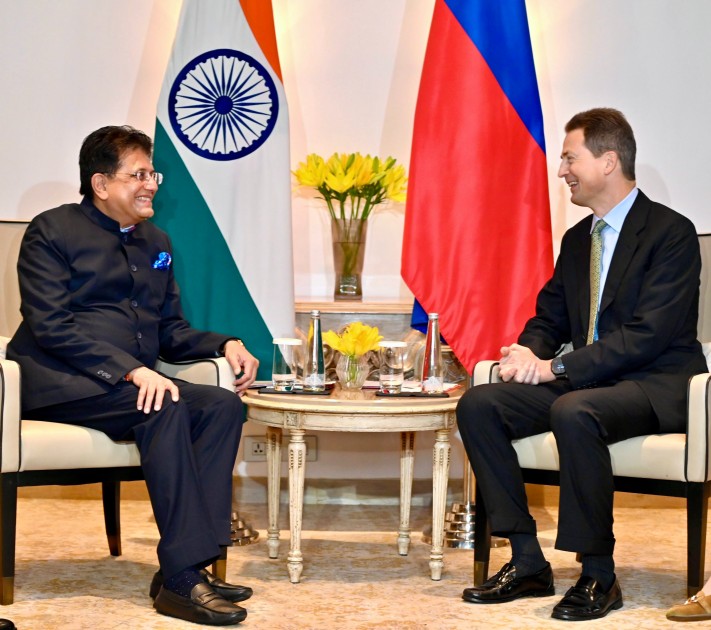
NEW DELHI : Union Minister of Commerce and Industry Shri Piyush Goyal paid a courtesy call on H.S.H. Hereditary Prince Alois of Liechtenstein on 28 October 2026 during his State Visit to India. The meeting focused on strengthening economic engagement and advancing investment opportunities under the India-EFTA Trade and Economic Partnership Agreement (TEPA).
Shri Goyal highlighted India’s strong economic fundamentals, sustained reform agenda and expanding manufacturing capabilities, which offer significant opportunities for international investors. He underscored the Government’s continued efforts to improve the ease of doing business, simplify regulatory processes, strengthen digital governance and create a predictable, transparent and competitive business environment.
India’s investment performance reflects growing international confidence in its economic prospects. Cumulative Foreign Direct Investment (FDI) inflows stood at USD 843 billion during FY 2014-15 to FY 2025-26, with inflows reaching a record USD 94.53 billion in FY 2025-26, underscoring India’s growing attractiveness as an investment destination. India also has a thriving start-up ecosystem, with 2.50 lakh startups supporting over 25.42 lakh jobs across more than 770 districts and 56 industries. Of these startups, 52% are based in non-metropolitan cities.
Shri Goyal highlighted the opportunities offered by the India-EFTA TEPA, which entered into force on 1 October 2025. The Agreement provides for EFTA States to aim to increase FDI into India by USD 100 billion over 15 years and facilitate the generation of one million direct jobs. This framework offers an opportunity to translate stronger economic engagement into long-term investments, productive capacity, technology partnerships and employment generation in India.
Shri Goyal emphasised that India offers international businesses the advantages of a large and growing domestic market, a skilled workforce, a competitive manufacturing ecosystem and access to expanding global value chains. He invited companies from Liechtenstein to explore opportunities in India, including through manufacturing partnerships, technology collaboration, research and development, and deeper integration with Indian suppliers and micro, small and medium enterprises.
The discussions also explored opportunities to expand industrial cooperation in areas such as precision engineering, advanced manufacturing, industrial technologies and innovation. Greater collaboration in these areas can support technology adoption, strengthen industrial linkages and create mutually beneficial opportunities for businesses in both countries.
Earlier this month, on 7 October 2026, the India-EFTA Prosperity Summit was held in New Delhi to mark the first anniversary of the India-EFTA TEPA. H.E. Mr. Hubert Büchel, Minister of Home Affairs, Economy and Sport of Liechtenstein, along with representatives of Liechtenstein businesses, participated in the Summit.
The meeting reaffirmed the shared interest in leveraging the India-EFTA TEPA to strengthen investment flows and deepen commercial engagement. India’s focus remains on translating the opportunities created by the Agreement into tangible economic outcomes, including greater investment, enhanced manufacturing capabilities, technology collaboration and quality employment.
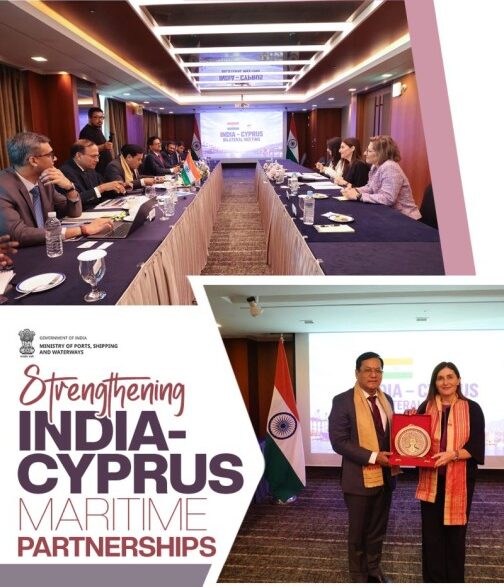
BUSAN : Shri Sarbananda Sonowal, Hon’ble Union Minister of Ports, Shipping and Waterways, held a bilateral interaction with H.E. Marina Hadjimanolis, Shipping Deputy Minister of Cyprus, in Busan to explore avenues for strengthening the strategic maritime partnership between India and Cyprus.
The discussions focused on enhancing bilateral cooperation in key maritime areas, including sustainable shipping, vessel flagging, maritime investments and the development of new opportunities for collaboration in the global shipping industry.
The interaction highlighted the growing importance of international partnerships in advancing a sustainable, efficient and resilient maritime sector. Both sides explored opportunities to deepen engagement by leveraging their respective maritime capabilities, expertise and strategic positions in international trade and shipping networks.
Sustainable Shipping and Maritime Investments in Focus
Sustainable shipping emerged as a key area of mutual interest, particularly in the context of the global maritime industry’s transition towards cleaner fuels, energy-efficient vessels and environmentally responsible operations. Greater cooperation in this field could help encourage the adoption of green maritime technologies and support international efforts to reduce emissions from shipping.
The discussions also covered vessel flagging and maritime investment opportunities, which are important components of the international shipping ecosystem. Enhanced engagement in these areas could facilitate greater industry interaction, encourage investment flows and create new avenues for cooperation between maritime stakeholders in both countries.
India’s expanding port infrastructure, modernisation initiatives and focus on sustainable maritime development offer significant opportunities for international collaboration. Cyprus, with its established presence in the global shipping sector, presents further scope for engagement in maritime services, shipping operations and investment-related activities.
Advancing India’s Global Maritime Engagement
The meeting reflects India’s continued efforts to strengthen maritime partnerships with countries across the world and expand cooperation in areas that support trade, investment and sustainable growth. Such engagements are aligned with India’s broader vision of building a globally competitive maritime sector through international cooperation, technological advancement and environmentally sustainable practices.
The India–Cyprus interaction in Busan marks an important opportunity to build on bilateral engagement and explore practical avenues for deeper cooperation, contributing to stronger maritime connectivity and shared growth in the evolving global shipping landscape.
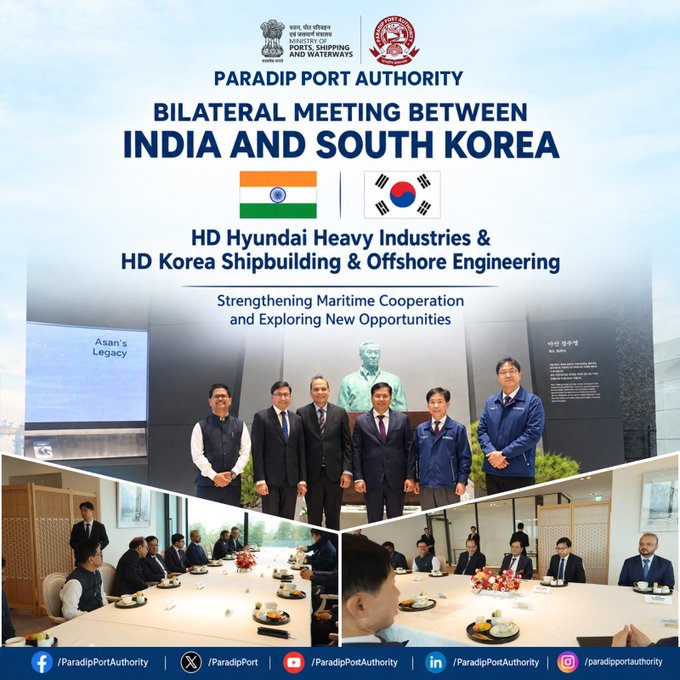
PARADIP : Paradip Port Authority (PPA) is exploring new avenues for cooperation with leading South Korean maritime and shipbuilding companies to strengthen bilateral maritime ties and promote technological advancement in the port and shipping sectors.
Shri Susanta Kumar Purohit, IRSEE, Chairperson, Paradip Port Authority, held an interaction with a high-level delegation from HD Hyundai Heavy Industries and HD Korea Shipbuilding & Offshore Engineering, led by Mr. Sangkyun Lee, Vice Chairman and CEO of HD Hyundai Heavy Industries. The delegation comprised senior executives representing production, corporate planning and global business divisions of the two organisations.
The engagement focused on identifying potential areas of collaboration in shipbuilding, maritime technology and port sector development, with an emphasis on leveraging the expertise and industrial capabilities of both countries to support the growth of the maritime ecosystem.
Focus on Shipbuilding and Maritime Technology
Discussions explored opportunities to strengthen cooperation in shipbuilding and advanced maritime technologies. South Korea’s established expertise in shipbuilding and marine engineering, combined with India’s growing maritime ambitions, offers significant potential for knowledge exchange, technology partnerships and industrial collaboration.
The interaction also highlighted the importance of modern technologies in improving operational efficiency, strengthening port infrastructure and supporting the evolving requirements of global shipping and logistics. Collaboration in these areas could open up opportunities for innovation and contribute to the development of a more efficient, competitive and sustainable maritime sector.
Strengthening India–South Korea Maritime Relations
The engagement reflects the growing scope for India–South Korea cooperation in the maritime domain, particularly as India continues to expand its port capacity, modernise maritime infrastructure and promote domestic shipbuilding capabilities.
For Paradip Port Authority, such international engagements provide an opportunity to explore global best practices, encourage industry-level collaboration and identify potential pathways for future development. The exchange also reinforces the importance of partnerships with leading international maritime organisations in supporting India’s long-term port-led development objectives.
The interaction underscores the shared commitment to exploring new opportunities in shipbuilding, maritime technology and port development, while advancing a stronger, more resilient and sustainable maritime partnership between India and South Korea.
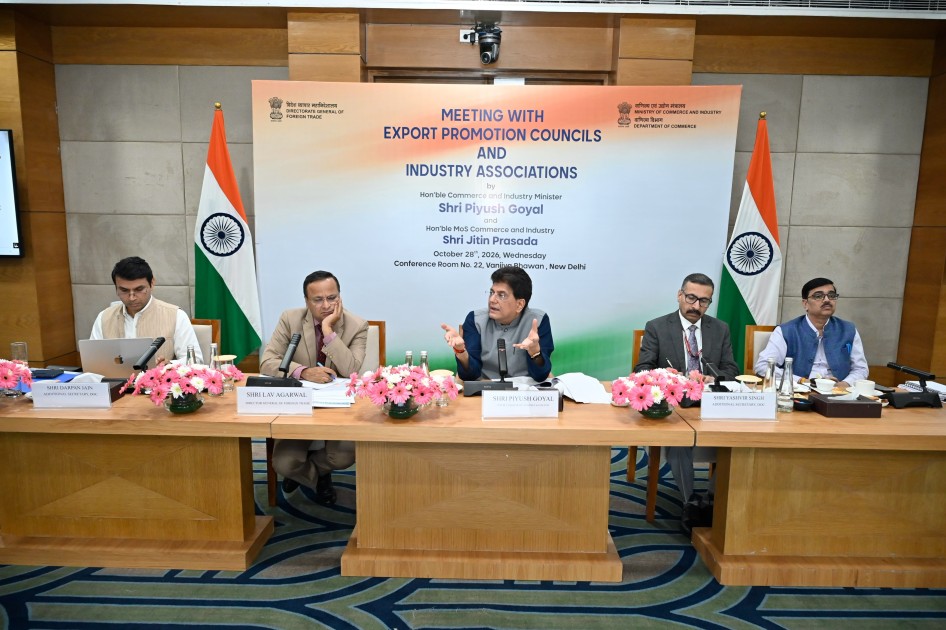
NEW DELHI : Union Minister of Commerce and Industry, Shri Piyush Goyal, interacted with representatives of Export Promotion Councils (EPCs) in New Delhi on Wednesday to review the prevailing export scenario, discuss emerging opportunities and challenges in international trade, and deliberate on measures to further strengthen India’s export competitiveness.
During the interaction, Shri Goyal highlighted the evolving global trade environment, characterised by geopolitical uncertainties, changes in tariff structures, supply chain realignments and emerging regulatory requirements in major international markets. He noted that while these developments pose challenges for exporters, they also present opportunities for India to strengthen its position as a reliable and competitive global trading partner.
Shri Goyal emphasised the need for Indian industry to remain agile and responsive to the changing international business environment. He encouraged exporters to focus on improving product quality, innovation, cost competitiveness, reliability of supply and compliance with international standards to enhance India’s participation in global value chains.
Referring to his recent international engagements, including his visits to Germany and the Netherlands, Shri Goyal highlighted the growing interest in India as a manufacturing, sourcing and investment destination. He stressed the importance of translating these engagements into tangible business outcomes through sustained interaction between Indian industry and overseas businesses. He encouraged EPCs to engage proactively with their international counterparts, identify potential buyers and facilitate business partnerships in established and emerging markets.
The Minister also highlighted the importance of effectively leveraging the opportunities arising from India’s expanding network of Free trade agreements and economic partnerships. He emphasised that preferential market access under Free Trade Agreements must translate into increased exports, greater market penetration and wider participation of Indian enterprises in international trade. EPCs were encouraged to undertake sector-specific assessments of export opportunities in partner countries and strengthen awareness among exporters regarding applicable trade preferences, standards and market requirements.
Shri Goyal also emphasised the need for a focused approach towards product and market diversification in response to changing global demand and emerging supply chain opportunities. He encouraged EPCs to identify products with untapped export potential, explore new destinations and develop market-specific strategies. He highlighted the importance of consolidating India’s competitive advantages in established sectors while building capabilities in emerging areas.
Reiterating the Government’s commitment to facilitating exports, the Minister highlighted ongoing efforts to improve ease of doing business, strengthen trade infrastructure and address challenges faced by exporting enterprises. He referred to the Export Promotion Mission as an important initiative for addressing constraints related to export finance, market access and international competitiveness, particularly for Micro, Small and Medium Enterprises (MSMEs).
Highlighting the contribution of MSMEs to India’s export ecosystem, Shri Goyal called upon EPCs to expand their outreach to smaller enterprises, startups, new exporters and businesses in emerging export clusters and districts. He stressed the need for practical handholding support, improved access to market intelligence and greater integration of these enterprises into global markets.
The Minister further encouraged EPCs to adopt a more data-driven and outcome-oriented approach to export promotion. He emphasised the value of timely market intelligence, identification of sector-specific opportunities, monitoring of international trade trends and resolution of operational bottlenecks. He highlighted the need for greater collaboration among EPCs, industry associations, State Governments and field formations of the Directorate General of Foreign Trade (DGFT).
During the interaction, representatives of the Export Promotion Councils also shared their perspectives on the international trading environment and sector-specific issues concerning export competitiveness, market access, logistics, regulatory requirements and trade facilitation. The discussions provided an opportunity to exchange views on addressing exporters’ concerns and strengthening coordination between the Government and industry.
Reaffirming the Government’s commitment to maintaining regular engagement with industry stakeholders, the Minister underscored the importance of collective efforts to make Indian products and services globally competitive and strengthen India’s reputation as a trusted trading partner.
The interaction reflected the shared commitment of the Government and Export Promotion Councils to work collaboratively towards expanding India’s export footprint, harnessing emerging global opportunities and supporting sustainable, broad-based export growth.
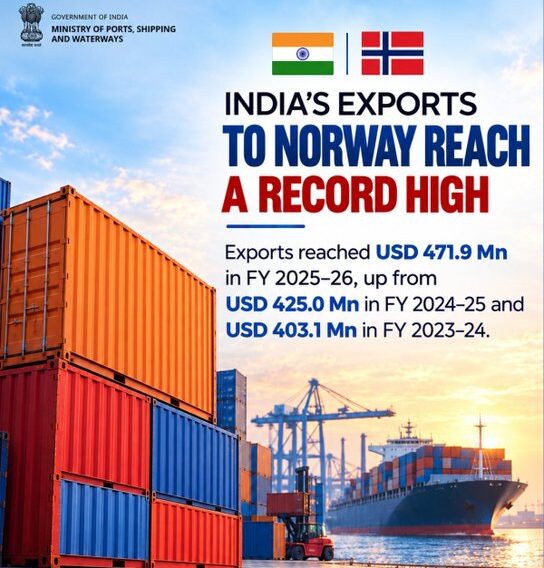
NEW DELHI : India’s exports to Norway reached a record high in the financial year 2025–26, reflecting the growing international competitiveness of Indian products and the expanding footprint of Indian manufacturers in global markets. The achievement highlights the increasing demand for Indian goods across key sectors, including chemicals, engineering goods, technical textiles, maritime equipment and green mobility.
The milestone underscores the growing potential of India–Norway trade relations, creating fresh opportunities for businesses in both countries to explore new markets, strengthen industrial partnerships and expand cooperation in advanced manufacturing and sustainable industries.
Diverse Export Basket Drives Growth
The broad range of products contributing to India’s export performance demonstrates the diversification of the country’s manufacturing and export base. Engineering goods and chemicals remain important components of India’s industrial trade, while technical textiles and specialised maritime equipment offer opportunities for Indian companies to expand their presence in high-value international markets.
The growing focus on green mobility also reflects the emergence of sustainable technologies as an important area of industrial development. As global industries increasingly prioritise cleaner technologies and resource-efficient solutions, Indian manufacturers have opportunities to strengthen their capabilities and respond to evolving international market requirements.
India–Norway Partnership Opens New Trade Opportunities
India and Norway share opportunities to deepen economic engagement through trade diversification, technological collaboration and sustainable industrial development. Norway’s expertise in maritime industries, clean energy and advanced technologies, alongside India’s expanding manufacturing capabilities and large industrial base, provides a strong foundation for mutually beneficial cooperation.
Greater engagement between businesses, industry associations and investors can help identify new export opportunities, encourage technology exchange and strengthen supply-chain linkages. Cooperation in maritime equipment, green technologies and advanced engineering could also support innovation and create avenues for long-term industrial partnerships.
Supporting India’s Global Trade Ambitions
The record export performance reinforces India’s efforts to expand its global trade presence, enhance manufacturing competitiveness and promote the international reach of domestically produced goods. Continued diversification of export markets and a focus on quality, innovation and value addition will remain important in strengthening India’s position in international commerce.
The achievement marks a positive development in India–Norway economic relations and highlights the potential for further growth in bilateral trade. By building on existing commercial ties and exploring emerging sectors, both countries can work towards a more diversified, resilient and sustainable trade partnership.