Home Blog Page 363

NorthStandard adds GlobeView Iran Conflict layer to update users on fast-evolving situation

LONDON: Continuing high levels of risk in the Persian Gulf have prompted NorthStandard to add an ‘Iran Conflict layer’ to its GlobeView platform to update users on the still evolving threats to the safety and security of shipping in the region.

Bringing together existing data and intelligence-based insights in a single, intuitive overview, the new layer enables Members and correspondents to evaluate operational risks and access relevant guidance without needing to search across multiple sources.

When activated, the layer displays Risk Intelligence threat assessments and maritime incident data covering the Persian Gulf, Red Sea, and Indian Ocean maritime zones, as well as neighbouring countries. It also offers port assessments across regional hubs, Iran-conflict related updates, articles and latest guidance from NorthStandard, and correspondent contacts at key locations.

Users also gain direct access to updates from trusted external sources and listed correspondents, offering timely insights into port operations and regional developments.

Collin Gillespie NorthStandard adds GlobeView Iran Conflict layer to update users on fast-evolving situation

“The announcement of a ceasefire on 8th April has increased expectations that the Iran conflict may be addressed through diplomatic channels, although conditions in the Gulf are likely to remain uncertain for some time,” said Colin Gillespie, Global Head of Loss Prevention, NorthStandard. “It is important that our Members have access to timely updates on a rapidly changing situation. Our new Iran Conflict layer consolidates information and expertise already available across GlobeView and our website into a single, focused overview, and provides a foundation for incorporating additional datasets and functionality over time.”

The Iran Conflict layer is now live and available to NorthStandard Members and correspondents via the GlobeView platform.

About NorthStandard:

NorthStandard is one of the leading providers of global marine insurance products and services across the maritime industries. Established through the merger of North P&I Club and the Standard Club in February 2023 and ‘A’ rated by S&P Global, NorthStandard has premium revenues exceeding US$930 million, free reserves of over US$900 million and mutual pool tonnage surpassing 270 million GT.

From headquarters in the UK and with offices throughout Europe, Asia and the Americas, NorthStandard offers a unique blend of worldwide presence and class-leading expertise across multiple specialist areas, including P&I, FD&D, War Risks, Strike & Delay, Hull and Machinery and ancillary insurance. Its Sunderland Marine and Coastal & Inland divisions also provide cover for owners’ fixed premium P&I, fishing vessels, inland waterway and coastal trading vessels. NorthStandard’s comprehensive local market and sector knowledge is underpinned by continuous investments in market-leading digital technologies.

NorthStandard is a leading member of the International Group of P&I Clubs (IG) and is fully committed to upholding the shared objectives of its 12 independent member clubs, which provide liability cover for approximately 85% of the world’s ocean-going tonnage.

Anglo-Eastern supports Four Seasons Yachts’ successful entry into the ultra-yacht sector with bespoke ship management services

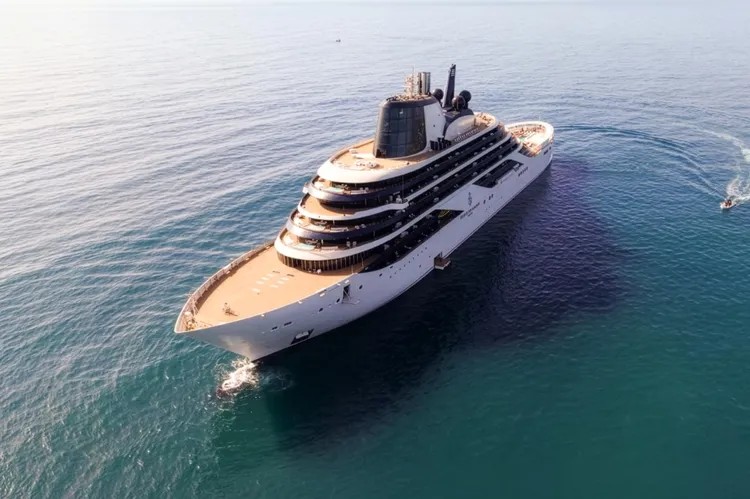
HONG KONG: Four Seasons I, a 95-suite yacht that announced Four Seasons’ entry into the ultra-luxury yacht segment, has successfully completed her maiden voyage in the Mediterranean, supported by Anglo Eastern Cruise Management Inc. (AECMI) as her technical ship management partner.

AECMI’s involvement began during the newbuilding phase at Fincantieri’s Ancona shipyard in 2024 and now includes technical management, safety and regulatory compliance, and crew recruitment and training customised to meet Four Seasons hospitality standards. Shore‑side support covers fuel procurement, emissions‑related compliance, itinerary and port support, medical coordination and voyage security monitoring, with new technology being introduced to facilitate 24/7 coverage to maximise guest safety as the yacht sails through some of the world’s most exclusive destinations.

Neil McNeil, Managing Director, AECMI, said: “From the outset, close cooperation with Malta Flag (Transport Malta), the shipowner and the classification society was essential. The yacht’s highly customised design called for tailored operating procedures to ensure tender operations for limousines, side shell doors and floating marinas, and onboard water sports could be introduced safely and seamlessly. This is further backed by a bespoke Safety Management System.”

Through its role as ship manager, AECMI continues to deliver on its commitment to its clients by translating complex vessel capabilities and brand aspirations into safe, reliable, and well-managed operations at sea.

Iran Closes Strait of Hormuz again after Israel Strikes Lebanon

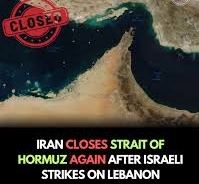
TEHRAN: Less than 24 hours after US President Donald Trump announced a ceasefire with Iran, the Islamic Republic has closed the Strait of Hormuz in response to Israeli attacks on Lebanon, the Associated Press reported, citing local media.

The US and Iran announced a two-week ceasefire early Wednesday, as part of which Iran agreed to re-open the Strait of Hormuz, potentially restoring global energy supplies. However, the Israeli military launched more than 100 air strikes within a 10-minute window in Lebanon.

Israeli Prime Minister Benjamin Netanyahu has publicly shown support for the United States’ decision for a ceasefire with Iran but said that it does not include Lebanon.

“Israel supports President Trump’s decision to suspend strikes against Iran for two weeks subject to Iran immediately opening the straits and stopping all attacks on the US, Israel and countries in the region,” Netanyahu wrote on X. 

However, in a separate post, he stated, “The United States has told Israel that it is committed to achieving these goals, shares by the US, Israel and Israel’s regional allies, in the upcoming negotiations. The two-week ceasefire does not include Lebanon.”

Israel continued military operations in Lebanon and against Hezbollah, killing 112 and wounding 837, which has prompted protests from Iran.

US Response

The United States said Wednesday that Iran must open the Strait of Hormuz “immediately, quickly, and safely” after reports that the strategic waterway had been shut down despite the US-Iran ceasefire.

Any closure “is completely unacceptable,” White House Press Secretary Karoline Leavitt told reporters.

“I will reiterate the president’s expectation and demand that the Strait of Hormuz is reopened immediately quickly and safely.”

Trump Has Backed Israeli Strikes On Lebanon

Trump, earlier today, backed Israel’s ongoing military operation in Lebanon, stating that Hezbollah “was not included” in the recent ceasefire deal between Washington and Tehran, which halted the conflict in West Asia for two weeks.

Speaking to PBS News, when asked about Lebanon still being targeted despite the ceasefire announcement, Trump said, “Yeah, they were not included in the deal.”

When pressed on why Israeli military action in Lebanon was excluded from the deal, Trump replied, “Because of Hezbollah. They were not included in the deal. That’ll get taken care of too. It’s alright.”

Asked if he was okay with Israeli forces continuing strikes in Lebanon, Trump told PBS News, “It’s part of the deal – everyone knows that. That’s a separate skirmish.”

India not in favour of tolls for passage through Hormuz: Sources

NEW DELHI : Under a two-week ceasefire agreement reached with the US, maritime traffic through the vital Strait of Hormuz, through which a fifth of global oil and gas passes, would be guaranteed.

Meaning, the Strait is now open for business. Iran’s ability to control the Strait of Hormuz since the war began on February 28 proved a tremendous strategic advantage.

The ceasefire may formalise that control – and give Iran a new source of revenue.

The plan allows for both Iran and Oman to charge fees on ships transiting through the Strait, AFP reported, quoting a regional official who was directly involved in negotiations.

The official said Iran would use the money it raised for reconstruction.

That would upend decades of precedent treating the Strait as an international waterway that was free to transit and will likely not be acceptable to the Gulf Arab states, which also need to rebuild after repeated Iranian attacks targeting their oil fields.

Iranian Foreign Minister Abbas Araghchi said passage through the Strait would be allowed under Iranian military management – further clouding the picture of who would be allowed to transit the waterway.

India is not in favour of giving any kind of toll for passage of cargo ships through the Strait of Hormuz, government sources told NDTV.

The United Nations Convention on the Law of the Sea bans interfering with ships passing through the Strait of Hormuz. That would be illegal under the Law of the Sea, as the pact is widely known.

The law establishes certain waterways, like the Strait of Hormuz, as a freely passable to international shipping and bars interference like tolls.

The concerned UN Charter will have to be amended to allow Iran to impose toll on cargo ships passing through the Strait of Hormuz. India has held no talks with Iran on the toll issue so far, sources added.

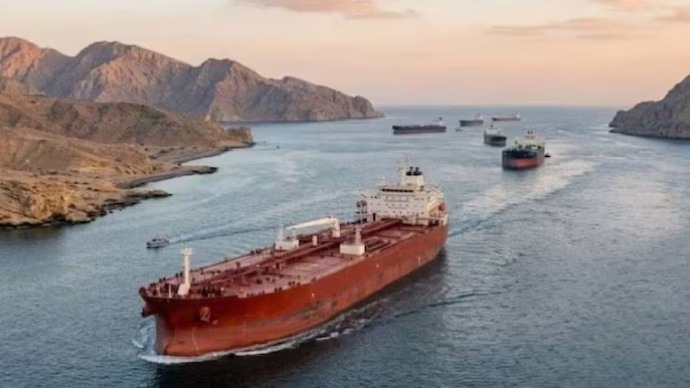
Some shipowners and charterers are preparing to move their vessels stuck in the Gulf, shipping journal Lloyd’s List reported on Wednesday morning. It estimates around 800 ships are currently stuck in the Gulf.

From March 1 to April 7, commodities carriers have made 307 crossings, according to Kpler data, a 95-percent decrease from peacetime traffic.

Source : NDTV World

DFCCIL delegation meets Gujarat Chief Secretary to advance freight infrastructure initiatives

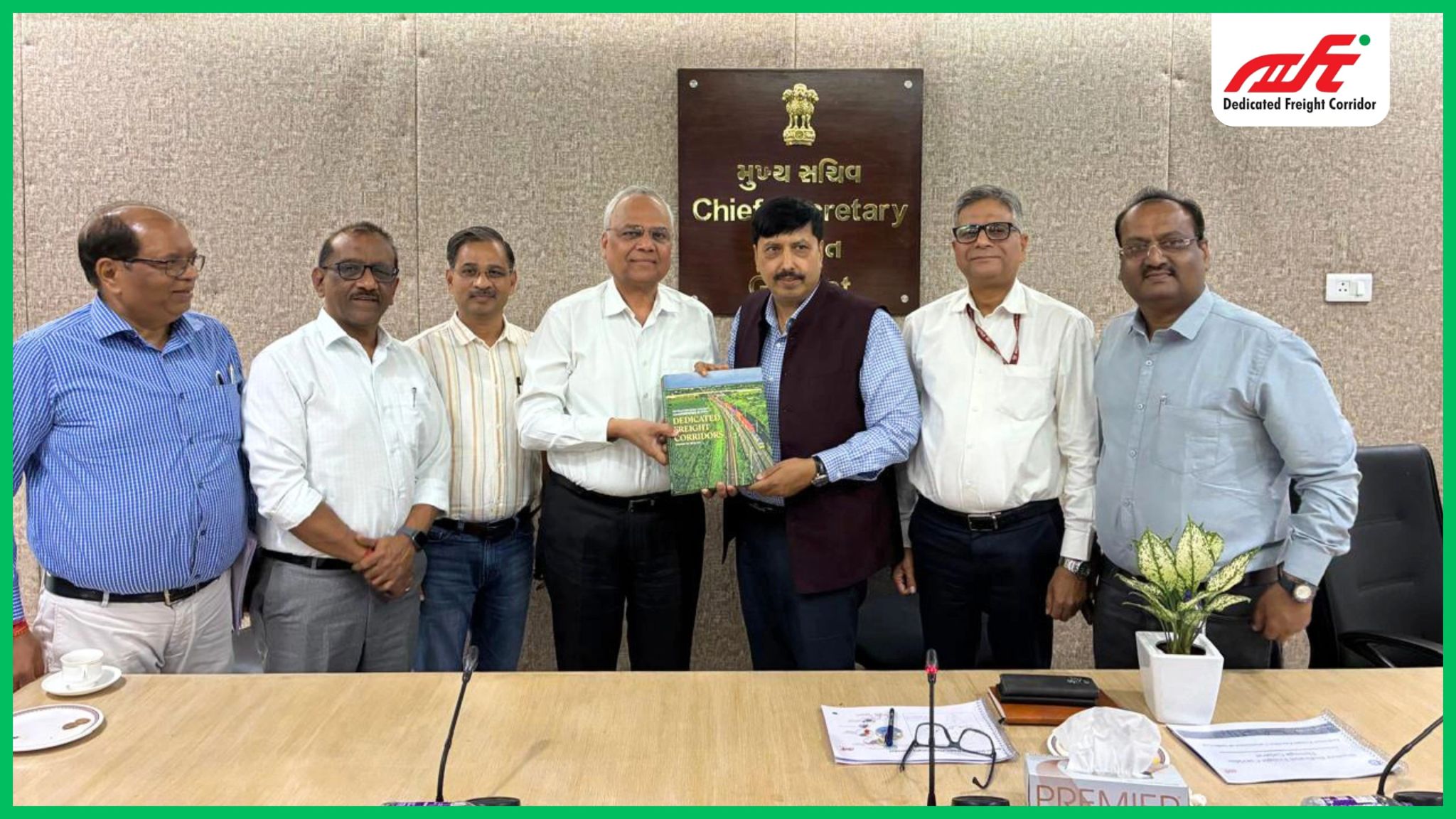
GANDHINAGAR : In a significant step towards strengthening freight infrastructure and logistics efficiency, a senior delegation from Dedicated Freight Corridor Corporation of India Limited (DFCCIL), led by Managing Director Shri Praveen Kumar, called on Shri M. K. Das, Chief Secretary, Government of Gujarat, for a comprehensive discussion on ongoing and upcoming freight corridor initiatives.

The delegation comprised key officials including Shri Manish Awasthi, Executive Director (Infrastructure); Shri Govind Saini, Chief General Manager, Ahmedabad Unit; Shri Jitendra Srivastava, General Manager (Security), Western Dedicated Freight Corridor (WDFC); and Shri J. K. Agrawal, AGM (Operations & Business Development), WDFC.

dfccil gujarat DFCCIL delegation meets Gujarat Chief Secretary to advance freight infrastructure initiatives

Focus on Transformative Freight Infrastructure

The meeting centered on the transformative role of the Dedicated Freight Corridor in enhancing logistics efficiency, accelerating industrial growth, and reshaping the economic landscape of Gujarat. Discussions highlighted how the corridor is enabling faster, more reliable, and high-capacity freight movement, thereby supporting the state’s position as a major industrial and logistics hub.

Presentation of DFCCIL Legacy

As part of the engagement, Shri Praveen Kumar presented the DFCCIL History Book to the Chief Secretary, showcasing the organisation’s journey, key milestones, and its contribution to strengthening India’s freight transportation network.

Key Strategic Discussions

The deliberations also focused on:

State support for the proposed East–West Dedicated Freight Corridor
Facilitation in resolving critical pending matters related to the Western Dedicated Freight Corridor

The interaction underscored the importance of continued collaboration between DFCCIL and the Government of Gujarat to ensure seamless execution of infrastructure projects and to unlock greater economic potential.

Commitment to National Logistics Growth

DFCCIL reaffirmed its commitment to developing efficient, sustainable, and high-capacity freight corridors across the country. Through strategic partnerships and infrastructure development, the organisation continues to play a pivotal role in enhancing India’s logistics ecosystem and driving economic growth.

CONCOR hosts high-level industry interaction in Raipur to strengthen regional logistics ecosystem

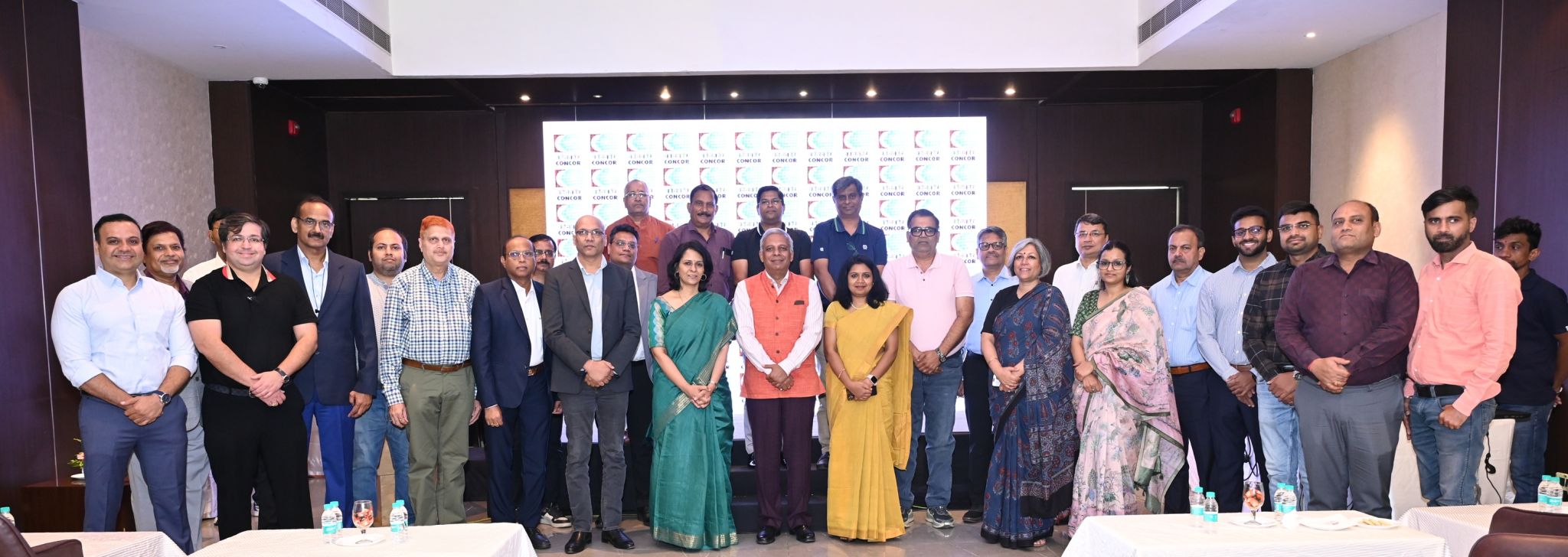
NEW DELHI : In a significant initiative aimed at strengthening the logistics and supply chain framework in central India, Container Corporation of India Limited (CONCOR) hosted a high-profile interactive session at Hotel Sayaji Raipur.

The session was chaired by Shri Sanjay Swarup, Chairman and Managing Director, CONCOR, who engaged directly with key industry stakeholders and global shipping lines contributing to the economic growth of Chhattisgarh. The event also witnessed the presence of senior CONCOR officials, including Ms. G. Gayatri, IRTS, Area Head III, and Ms. Anita Barik, IRTS, Cluster Head Hyderabad.

The interaction saw robust participation from leading industrial houses, logistics operators, trade facilitators, and global shipping lines, underlining the strategic importance of the Multi-Modal Logistics Park (MMLP) at Naya Raipur as a key logistics hub in the region.

Diverse Industry Participation

Prominent stakeholders attending the session included representatives from major industrial and manufacturing companies such as Manorama Industries, Sambhav Steel and Pipes Ltd, and Godawari Ispat and Power. Key logistics and freight players including CJDARCL Ltd and SPL Logistics also participated actively.

Global shipping lines such as Maersk and Mediterranean Shipping Company (MSC) were part of the discussions, alongside trade facilitators and freight forwarders including R&Y Logistics, IP Shipping, Vijay Shipping, Thaperson, Bharti Freight Forwarder, and Customs House Agents (CHAs).

Focus on Growth and Operational Efficiency

The session centered on reviewing the current logistics landscape, identifying operational challenges, and exploring future expansion opportunities, particularly focusing on optimizing the utilization of the CONCOR terminal at Raipur.

Shri Sanjay Swarup emphasized a transparent and collaborative approach, encouraging stakeholders to share real-time feedback and suggestions to improve efficiency and ease of doing business. The interactive format enabled constructive dialogue on enhancing service delivery and strengthening logistics infrastructure in the region.

Strategic Roadmap for Expansion

Key highlights of CONCOR’s growth strategy discussed during the session included:

Increasing the number of railway rakes to boost cargo movement capacity
Expanding the CONCOR-owned container fleet
Enhancing the utilization of CONCOR containers in EXIM trade

These initiatives are expected to significantly improve throughput, reduce logistics costs, and enhance connectivity for industries operating in and around Chhattisgarh.

Strengthening Rail-Logistics Synergy

Following the interactive session, a high-level meeting was convened with the Divisional Railway Manager (DRM), Raipur, under South East Central Railway, along with senior railway officials. The discussions focused on strengthening rail-logistics coordination to support increased cargo volumes and streamline operations at the Raipur terminal.

Driving Regional Growth

The session reaffirmed CONCOR’s commitment to fostering a robust, efficient, and industry-responsive logistics ecosystem. By facilitating direct engagement with stakeholders and aligning infrastructure expansion with industry needs, CONCOR continues to play a pivotal role in enhancing India’s multimodal logistics capabilities and supporting regional economic growth.

IRS announces leadership realignment to drive growth and operational excellence

NEW DELHI : Indian Register of Shipping (IRS) has announced key leadership appointments effective 1 April 2026, as part of its strategic efforts to strengthen organizational capabilities and support its continued growth trajectory.

As IRS enters the financial year 2026–27, the organisation is witnessing sustained expansion across its core and emerging service areas. This growth comes alongside a rapidly evolving maritime landscape, marked by increasing regulatory complexity, technological transformation, and the global push towards sustainability.

In response, IRS has undertaken a leadership realignment aimed at enhancing operational efficiency, reinforcing governance frameworks, and enabling greater agility and accountability across its functions.

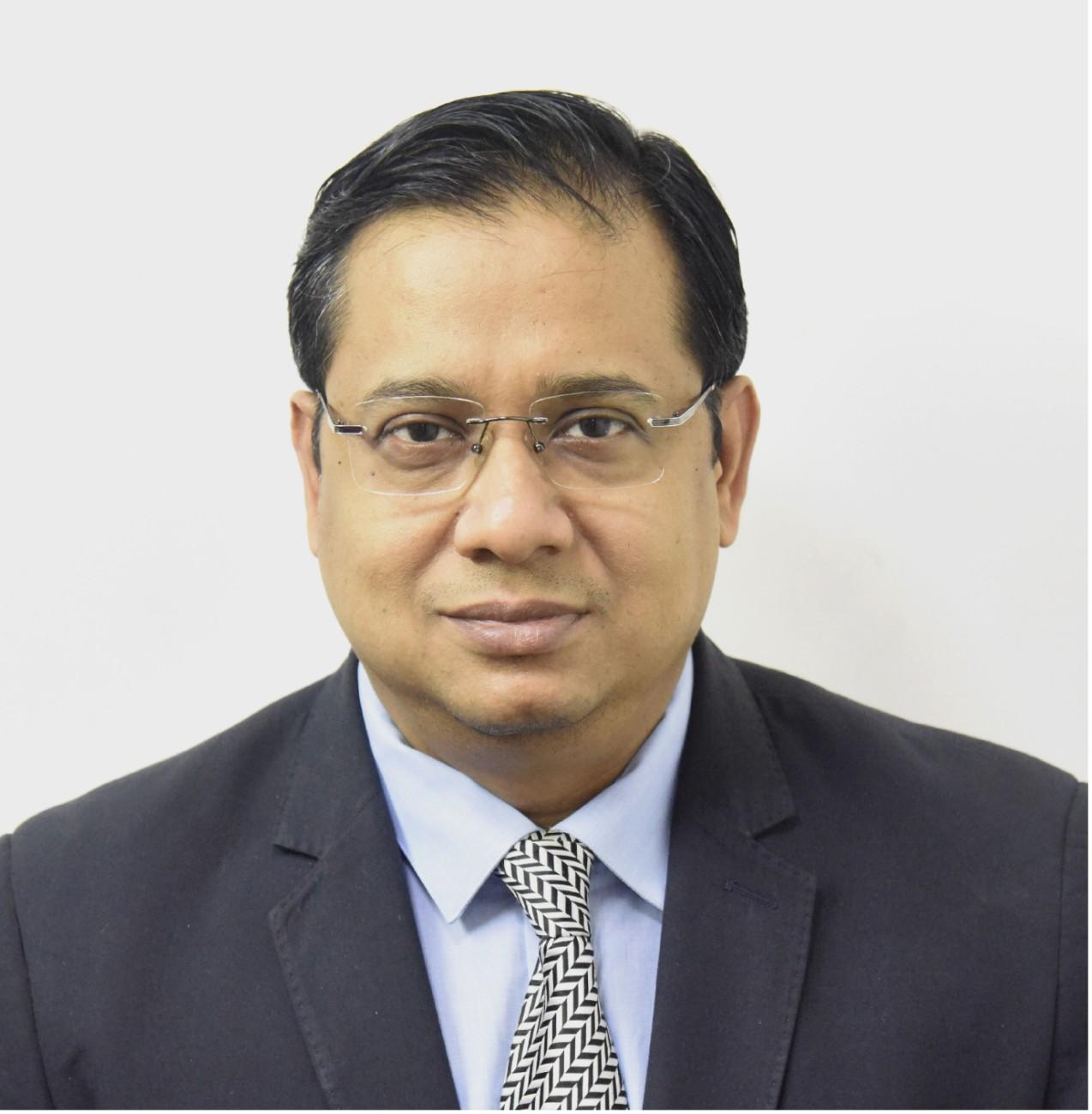
Mr. Saikat Roychowdhury has been appointed as Chief Operating Officer (COO). He will oversee overall operations and, along with the Management Representative, supervise both internal and external audit functions.

hv ramesh 1 IRS announces leadership realignment to drive growth and operational excellence

Mr. H.V. Ramesh has been appointed as Head – Technical and will lead IRS’s technical function, supporting innovation, quality assurance, and service delivery across the organisation.

pavan varma 1 IRS announces leadership realignment to drive growth and operational excellence

Cdr. Pavan Kumar Varma has been appointed as Management Representative (MR) and Divisional Head – QHSE.

Commenting on the development, Arun Sharma, Executive Chairman, IRS said “As IRS continues to expand its footprint and capabilities in a rapidly evolving maritime ecosystem, it is essential that our leadership structure remains aligned with our strategic priorities. These appointments are a reflection of our commitment to strengthening operational excellence, enhancing governance, and building a future-ready organisation. We are confident that this leadership team will play a pivotal role in driving IRS’s next phase of growth and value creation for our stakeholders.”

Jeena & Company reaffirms its long-standing partnership with OEC Group to strengthen India–Canada trade corridor

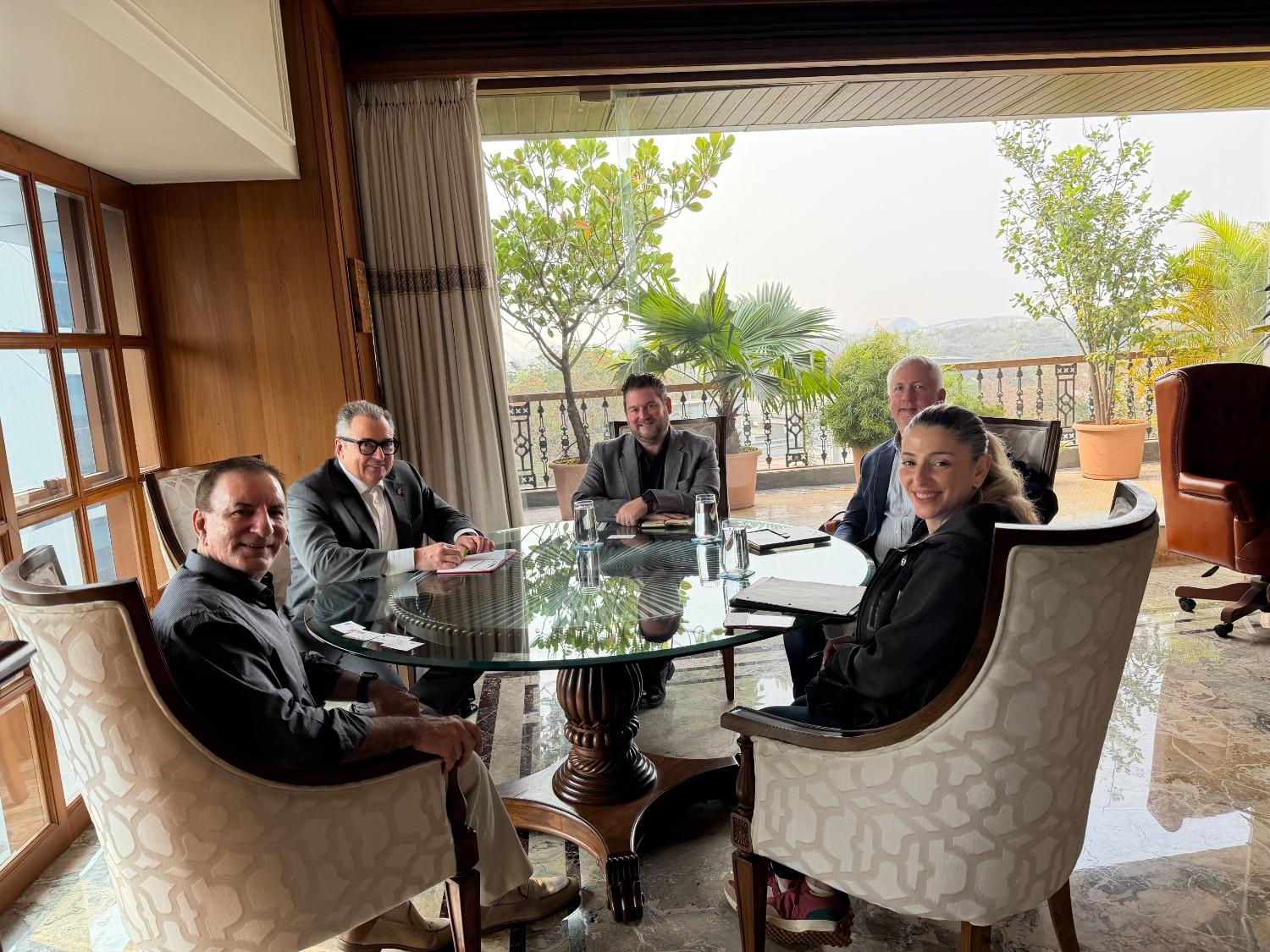
NEW DELHI: Jeena & Company, one of India’s leading logistics & freight forwarding companies & OEC Group Canada a globally recognized logistic provider, are pleased to reaffirm their long-standing strategic partnership, strengthening logistics connectivity & Trade facilitation between India & Canada.

Built on years of collaboration & mutual trust, the partnership between Jeena & OEC has consistently delivered reliable, efficient and customer focused logistic solutions to business operating across the India – Canada trade corridor. Together the two companies have successfully supported customers across diverse industries with reliable, efficient & scalable supply chain services.

By combining Jeena’s strong operational network across India and with OEC established presence in Canada, the partnership provides customers with seamless end to end logistics solutions covering ocean and air cargo, specialized dedicated teams for project cargo, integrated warehousing free trade zones fulfillment and end mile delivery support, customs clearance capabilities, and leading technology, and automated solutions for our visibility platforms, PO management and reporting, shipment tracking.

India and Canada are witnessing a growing trade relationship as the trade in goods and services between the two countries has approximately exceeded $23 billion* in recent times. The main export segments from India are pharmaceuticals, engineering, textiles, seafood, and gems and jewelry, while pulses, fertilizers, paper, energy resources, and critical minerals are some of the main exports from Canada to India. The growing segments of clean energy, technology, and manufacturing are also witnessing a growth trajectory, thereby underlining the strategic importance of the India-Canada trade corridor.

The partnership will offer complete FCL sailing options from all major Indian ports to key Canadian gateways, catering to both general and specialized cargo requirements, along with regular LCL consolidation services featuring fixed-day schedules, competitive pricing, and optimized transit times for smaller shipments. It will also leverage Jeena’s strong operational capabilities and robust network across India, coupled with the technology-enabled logistics platforms, global freight management capabilities of the OEC Group, to deliver greater shipment visibility, improved reliability, and support to the customers of the organization that operates in the Canada markets.

The partnership will also support integrated air freight services with both Economy and Express modes to address time-sensitive cargo charter requirements between India and Canada. These services will be supported by advanced shipment tracking, proactive exception management, and solutions designed for diverse industries such as pharmaceuticals, automotive, retail, and engineering, ensuring compliance, security, and reliability throughout the supply chain.

Speaking on this long-standing partnership, Mr. Prediman Koul, Chief executive officer Jeena & company, said “The collaboration with OEC consistently delivered value to customers by ensuring efficient cargo movements, reliable service standards and strong coordination across both markets, thus delivering value-driven logistic solutions to customers navigating increasingly complex global supply chains.”

Mr. Bibeau, Executive Chairman of the OEC Group emphasized: “Our established relationship with Jeena is founded on mutual trust, integrity and shared values, reflecting a close trusted partnership aligned in service excellence and customer centric focus, and united in supporting the continued growth of trade opportunities between India and Canada.

Mr. Koul and Mr. Bibeau see the future of the Indian subcontinent as a market with strong growth momentum that will remain at the forefront of global trade over the next two decades, offering substantial long-term growth potential and significant opportunities.”

About Jeena & Company:

Founded in 1900, Jeena & Company is a leading global logistics and supply chain solutions provider with operations across 60 countries, six continents, and 27 offices in India.

A trusted legacy brand with a customer-first approach, Jeena specializes in pharma, life sciences, automotive, defence, and project logistics, offering air and sea freight, last-mile delivery, warehousing, customs clearance, and documentation services.

As one of India’s largest national customs brokers, Jeena has pioneered industry-first innovations, including paperless documentation. With recent expansion into Sydney, Australia, the company is strengthening its global footprint in the UK, Europe, the US, Africa, Germany, China, and New Zealand.

About OEC Global:

OEC Group is a leading global logistics provider, delivering integrated freight forwarding solutions including air and ocean consolidation, charter services, warehousing and distribution, fulfillment and end‑to‑end last‑mile delivery services. The company offers state‑of‑the‑art technology platforms complemented with AI and LLMs tools that provide enhanced visibility, PO tracking, advanced reporting dashboards, and Tier‑1 warehouse management solutions. Through its worldwide network and a strong foundation of operational excellence, customer‑centricity, and innovative technology, OEC Group enables businesses to streamline international logistics operations and optimize supply chain efficiency.

Hormuz Reopens, But Shipping Remains Locked in a Confidence Deficit

MUMBAI: When US President Donald Trump declared the truce on April 8, 2026 subject to the complete and immediate reopening of the Strait of Hormuz, the world exhaled. Equity futures surged. Oil slid 8% within the hour. The news cycle declared the crisis over.

It isn’t. Not yet. Not for shipping.

For the global maritime industry, the current disruption is no longer about whether vessels can transit. It is about whether operators are willing to move at scale under conditions that remain uncertain, conditional, and fragile.

 “The Strait may be open, but until confidence returns, the system isn’t. And in shipping, confidence is what moves cargo.”

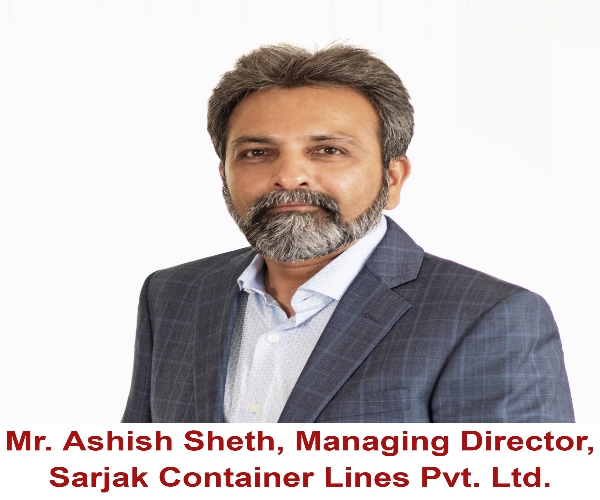
— Mr. Ashish Sheth, Chairman & MD, Sarjak Container Lines

A Managed Corridor, Not an Open One

The two-week ceasefire mediated by Pakistan’s Prime Minister Shehbaz Sharif and Field Marshal Asim Munir has produced a conditional reopening of Hormuz. Iran’s Foreign Minister has confirmed coordination through its armed forces for vessel transit. In theory, the waterway is accessible.

In practice, it is functioning very differently from the corridor the world relied on before February 28.

 “The corridor is technically accessible, but operationally constrained. The ceasefire is conditional across all sides — the US, Iran, and Israel are not fully aligned. From a shipping perspective, the Strait may be temporarily open, but it is functioning as a managed corridor, not a neutral one.”

— Ashish Sheth, Chairman & MD, SCL

Transit volumes reflect this reality starkly. Daily vessel movements through Hormuz, which stood at 130–140 before the war began on February 28, fell to single digits at the peak of the disruption. Even with the ceasefire announcement, traffic remains well below 10% of typical capacity, at around 9 vessels a day, compared to the pre-war norm.
The ceasefire is for two weeks. The Islamabad talks, beginning Friday April 10, will determine whether it holds or collapses. Every shipowner watching their screens knows that.

Shipowners Move on Assurance, Not Announcements
The announcement of a ceasefire and the physical reality of a normalised corridor are two very different things. The maritime industry has watched Trump extend this same deadline four times before following through. Iran’s Supreme National Security Council, in accepting the ceasefire, explicitly stated: “Our hands remain upon the trigger.”
Israel has not fully stood down. Missile alerts continued in Israel and the UAE even after the ceasefire announcement. The IRGC has warned it will deprive the region of oil “for years” if civilian infrastructure is struck. This is the environment in which operators are being asked to commit vessels and cargo.

 “Shipowners don’t move on announcements, they move on assurance. Right now, the market is still in a wait-and-watch mode because risk perception hasn’t eased at the same pace as political signalling.”

— Ashish Sheth, Chairman & MD, SCL

The result is a confidence deficit that is now the central bottleneck in global shipping, not physical access.

The Backlog: A Recovery Measured in Weeks, Not Days
The sharp drop in Hormuz transit flows during the peak disruption created a significant backlog of vessels across Gulf anchorage points — Fujairah, Khor Fakkan, and wider Gulf waiting zones. This overhang will not clear quickly.

 “When a corridor drops from over 100 daily transits to single digits, normalisation doesn’t happen overnight. Clearing the backlog requires sustained stability — not just a ceasefire announcement.”

— Ashish Sheth, Chairman & MD, SCL

At current movement levels, backlog clearance will naturally extend over several weeks. Ports and anchorages in the UAE and Oman, along with India’s west coast gateways, are likely to experience localised congestion and operational strain as vessel flows resume in clusters rather than smoothly.
Indian port traffic data remains stable so far, reinforcing that the upstream disruption has not yet fully reached Indian shores. But that lag is closing.
Insurance: The Real Gatekeeper
Beyond the geopolitics and the vessel backlog, one factor above all others is determining how quickly large-scale movement resumes through Hormuz: insurance.

 “Insurance is the real gatekeeper here. As long as the region is priced as a war-risk zone, large-scale movement will remain constrained, regardless of whether the Strait is technically open.”

— Ashish Sheth, Chairman & MD, SCL

War-risk premiums for Hormuz-area transits surged from 0.125% of hull value to 0.2–0.4% per voyage at the start of the conflict, an increase of a quarter of a million dollars per transit for very large crude carriers. The Joint War Committee of the London insurance market has extended its high-risk area listings to include waters around Oman.
A temporary ceasefire does not automatically reset these underwriting positions. Until the Islamabad talks produce a durable framework and until the IRGC and Israel both demonstrate sustained restraint on the ground, war-risk premia will remain elevated, and underwriter appetite will remain restricted.
What is emerging is not a return to open passage. It is a shift to managed passage — whether through coordinated routing, IRGC clearance protocols, or informal controls. The bigger signal is that transit through Hormuz is becoming more conditional in structure, not less.

India’s Dual Exposure: Supply and Execution at Risk
The Hormuz disruption is typically framed as an energy security story for India. That framing is incomplete.
India is not just importing energy through this corridor. It is exporting execution.

 “India today is both a destination for energy and a source of execution for global projects. Any disruption at Hormuz therefore hits us on both sides of the value chain — impacting supply on one end and delivery commitments on the other.”

— Ashish Sheth, Chairman & MD, SCL

With petroleum cargo accounting for nearly a third of total Indian port traffic, any sustained disruption in Hormuz will reflect first in POL volumes in the coming weeks. India remains heavily dependent on the Gulf for crude oil and LNG imports. Any disruption directly impacts inbound energy flows, freight costs, and supply predictability.
But the less-discussed dimension is India’s role as a global execution hub. Indian manufacturers and EPC contractors are deeply embedded in project supply chains across the Middle East, Africa, and Southeast Asia. These movements are highly time-sensitive, synchronised with tight construction and commissioning schedules:

  • Refinery and petrochemical equipment
  • EPC-linked cargo and infrastructure modules
  • Project components moving between India, the Gulf, and global markets

Unlike commodity cargo, project logistics operates on sequencing. A single delayed shipment — a reactor component, a structural module, critical rotating equipment — can cascade across entire project timelines.

 “In project logistics, it’s not just about whether cargo moves — it’s about whether it moves on time. When movement becomes uncertain, execution itself is at risk.”

— Ashish Sheth, Chairman & MD, SCL

The cost envelope is also expanding beyond freight. Companies are absorbing elevated war-risk insurance premiums, delay penalties tied to EPC contracts, and idle equipment and workforce costs at project sites. The disruption is multi-layered, and in project cargo, those layers compound.

The 15-Day Trap: The Voyage Math Nobody Is Talking About
There is a critical operational reality that is being overlooked in the relief surrounding the ceasefire announcement. The Strait of Hormuz is open — but only for fifteen days. And fifteen days is not enough time to complete a voyage and safely exit the war zone.

Voyage Leg Typical Duration Risk Window
Transit into Gulf (Hormuz entry) 1–2 days Days 1–2
Passage to discharge port (e.g. Dammam, Jubail, Khalifa) 2–3 days Days 3–5
Port operations — berthing, discharge, documentation 3–7 days Days 6–12
Return transit to Hormuz exit 2–3 days Days 13–15 ⚠️
Total voyage cycle 8–15 days minimum Zero buffer

The arithmetic is unforgiving. A vessel departing today, transiting Hormuz, proceeding to a Gulf discharge port, completing port operations, and returning to Hormuz exit will use every single day of the 15-day window — with zero margin for delay. Any port congestion, berthing queue, documentation hold, or operational disruption, and the vessel is still inside the war zone when the ceasefire expires.
And if the ceasefire expires without renewal or a permanent framework from the Islamabad talks — that vessel is trapped.

 “The corridor may be open for 15 days, but a round voyage through the Gulf cannot be completed in 15 days with any operational certainty. The shipowner who commits today is not just taking a transit risk — they are taking a post-ceasefire entrapment risk. That changes the commercial calculus entirely.”

— Ashish Sheth, Chairman & MD, SCL

What This Means in Practice
The entrapment risk cascades across every stakeholder in the chain:

  • Shipowners face potential vessel detention in a declared war zone with no legal or diplomatic recourse if the ceasefire collapses mid-voyage
  • War-risk underwriters are unlikely to cover a vessel that knowingly commits to a voyage that cannot be completed within the ceasefire window — read your policy language before sailing
  • Charterers and cargo owners face force majeure triggers, ETA failures, and contractual penalties if the vessel cannot exit on time
  • P&I clubs will be scrutinising due diligence — did the shipowner make a reasonable commercial decision given the known 15-day window?
  • Crew safety obligations under MLC and ISM Code become acute if a vessel is caught inside the war zone post-ceasefire

The practical implication is that only short-haul, high-priority cargo movements — where the full voyage cycle can be completed with a meaningful buffer inside 15 days — should be seriously considered right now. Longer voyages, complex multi-port calls, and vessels with uncertain port turnaround times should hold.
The 15-day clock also creates a perverse incentive: operators who do commit will rush, creating congestion at ports that are already operating under strain from the backlog of the past five weeks. Speed of port operations cannot be assumed.

The Islamabad Talks Are the Real Signal to Watch
The Friday April 10 talks in Islamabad between US and Iranian negotiators will determine everything. If they produce a framework for a permanent ceasefire, the 15-day trap dissolves and normal commercial planning can resume. If they stall or collapse, any vessel inside the Gulf at that point faces the worst-case scenario.
Until Islamabad delivers a clear outcome, the prudent commercial position is: assess every voyage against the 15-day clock, not just against current transit access.

Outlook: Confidence Restoration Remains the Critical Variable
In response to the uncertainty, operators are beginning to adapt. There are early signs of a shift from containerised movement to breakbulk and multi-modal solutions, greater reliance on flexible routing, and increased planning buffers to absorb uncertainty.
But adaptation is not normalisation. The cargo is there. The vessels are there. What is not yet there is the sustained, predictable stability that large-scale shipping movement requires.

 “The Hormuz uncertainty is a confidence disruption for shipping lines. The cargo is there, the vessels are there, but the willingness to move at scale depends entirely on how stable and predictable the corridor proves to be — which is currently being reshaped by every negotiation between the US, Israel, and Iran.”

— Ashish Sheth, Chairman & MD, SCL

ABOUT SARJAK CONTAINER LINES

Sarjak Container Lines (SCL) is an asset-owning breakbulk and project cargo shipping operator, operating MV SCL Mercury across 84+ countries. With deep expertise in India-linked flows across oil & gas, infrastructure, and EPC projects, SCL delivers end-to-end logistics solutions for complex and high-value cargo segments. Built on decades of experience in containerised shipping and cargo movement, SCL has evolved into a trusted partner for handling the most demanding project logistics challenges.


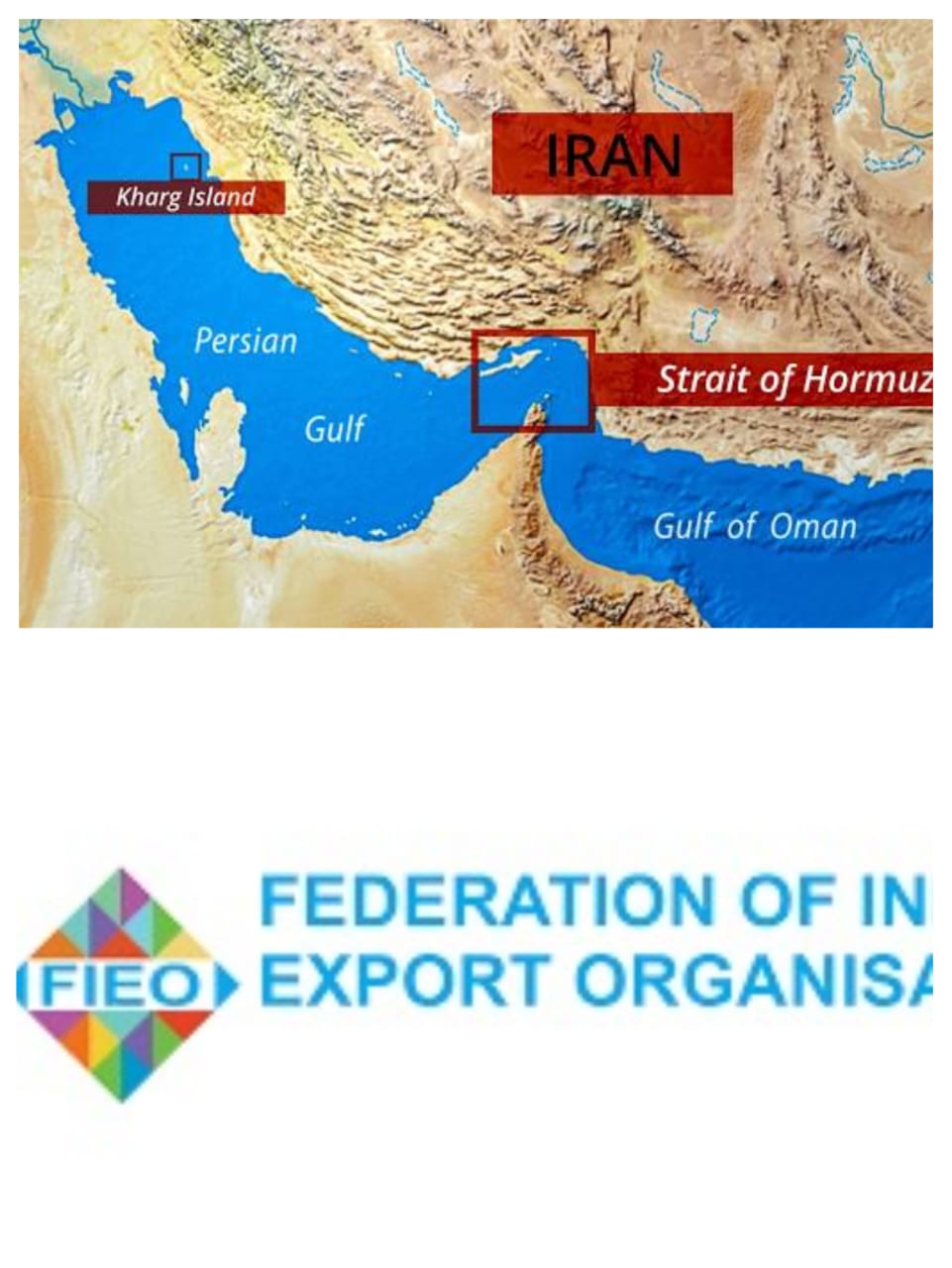
U.S.-Iran ceasefire, Hormuz reopening to ease shipping disruptions : FIEO

NEW DELHI : The announcement of a ceasefire between the U.S. and Iran, along with the reopening of the Strait of Hormuz, will provide immediate relief to exporters by easing shipping disruptions, Federation of Indian Export Organisation (FIEO) said on Wednesday (April 8, 2026). U.S. President Donald Trump announced a two-week suspension of military strikes against Iran.

Iran agreed to allow safe navigation through the Strait of Hormuz during the ceasefire, triggering sweeping market moves across oil, equities and currencies.

“The ceasefire and reopening of the Strait of Hormuz bring immediate relief to exporters by easing shipping disruptions, high freight rates, and insurance costs,” FIEO president S.C. Ralhan said.

He said while this should help normalise logistics in the short term, exporters will remain cautious given the temporary nature of the truce.

“Sustained stability is essential for restoring confidence and ensuring smooth trade flows,” Mr. Ralhan added.

Key export destination
The ceasefire announcement is important as the West Asia region is a key export destination for Indian exporters. The conflict has posed challenges for exporters to ship goods to the Gulf region, with which India had a bilateral trade of $178 billion in 2024-25 ($56.87 billion exports and $121.67 billion imports).

The joint attack launched by the U.S. and Israel on Iran on February 28 has severely disrupted the movement of ships in international waters. Air freight rates too have jumped manifold. The war has also led to an increase in insurance premiums, impacting the profit margins of exporters.

Besides, the closure of the Strait of Hormuz by Iran, through which about one-fifth of global oil and gas supplies pass, has led to shortages of oil and gas in several parts of the world, including Asia.

The government has rolled out a host of measures to cushion exporters from the impact of the conflict in the Gulf region, a key market for India’s exports such as gems and jewellery, rice and pharma, which were valued at about $57 billion in 2024-25.

The major sectors which are under stress include petroleum products, chemicals and plastics, engineering goods, rice, pharma and gems and jewellery.

The six countries in this region are the U.A.E., Saudi Arabia, Oman, Bahrain, Qatar and Kuwait.

The region is the largest agri-export destination for basmati, marine products and fresh produce, he said, adding air and sea freight costs surged for fresh fruits and vegetables in transit.