Home Blog Page 38

INMARCO 2026: HSL CMD calls for series production to boost India’s shipbuilding competitiveness

MUMBAI : Hindustan Shipyard Limited (HSL) Chairman and Managing Director Rear Admiral C. Raghuram (Retd.) has called for a shift towards series production, collaborative rule-making and digital documentation to improve the competitiveness of India’s shipbuilding industry.

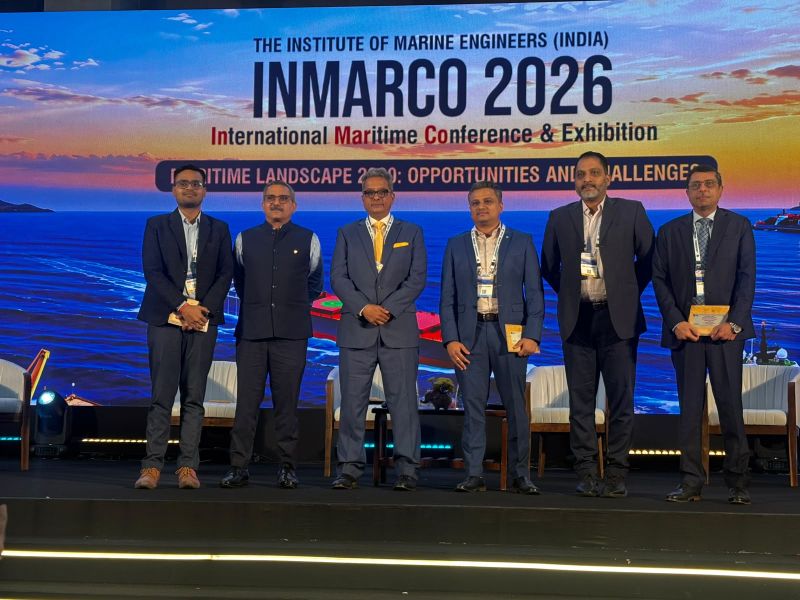
Speaking at INMARCO 2026 in Mumbai on October 27, Raghuram said India must move beyond demonstrating its ability to build individual ships to delivering vessels repeatedly, on time and at competitive costs.

Participating in a panel discussion on “Shipyards and Newbuilds: Maritime Landscape 2030”, organised by the Institute of Marine Engineers (India), he emphasised that consistent production, rather than isolated milestones, would be critical to building a globally competitive shipbuilding ecosystem.

“A first ship is a prototype. The fifth ship is a product,” Raghuram said, highlighting the need for Indian shipyards to adopt a production-system approach. He cited an estimated 24% cost gap between Indian and East Asian shipyards, as reported by the Shipyards Association of India, and said incentives could narrow the gap, but sustained series production was necessary to close it.

HSL expands shipbuilding capacity
Highlighting HSL’s recent milestones at Visakhapatnam, Raghuram referred to the launch of Surya, the first of five Fleet Support Ships being built for the Indian Navy, on October 6. The 43,500-tonne vessel is targeted to have more than 80% indigenous content and is classed by the Indian Register of Shipping (IRS).

On the same day, HSL laid the keel of the fifth Fleet Support Ship and inaugurated its extended Slipway-4, equipped with a 300-tonne Goliath crane. The facility is designed to handle ships of up to 45,000 deadweight tonnes (DWT).

The shipyard also delivered INS Nipun, its second indigenous Diving Support Vessel, in August.

These developments reflect HSL’s efforts to expand its capacity and strengthen domestic shipbuilding capabilities, with a greater emphasis on indigenous content and the execution of complex naval projects.

Calls for greater Indian role in maritime standards
Raghuram called for closer collaboration among Indian shipyards, classification societies, regulators, equipment manufacturers and vessel owners to shape maritime standards and rules.

He argued that India should have a stronger role in developing the rules under which ships are designed, approved and built. As an initial step, he proposed the joint development of green tugs involving ports, shipyards, classification societies, the Directorate and battery manufacturers.

He also advocated a digital documentation framework for every vessel built in India. Under the proposed system, each ship would have a “digital birth certificate” containing a consolidated record of its technical and material details, including the inventory of hazardous materials required under the Hong Kong Convention.

The record would serve surveyors, shipowners, repair yards and recyclers throughout the vessel’s lifecycle, potentially spanning 30 years.

Maritime policy support and investment outlook
Welcoming government support for the sector, the HSL CMD referred to an estimated demand outlook of around 437 vessels over the next ten years, infrastructure status for Indian-built ships, a Rs 69,725 crore package, a Rs 25,000 crore Maritime Development Fund and a target of 4.5 million gross tonnes (GT) of annual shipbuilding capacity.

He called for clearer delivery timelines to help shipyards plan production, greater participation by Indian designers in international rule-making, and long-term financing and local service support from equipment manufacturers and financial institutions.

Raghuram also proposed that the India Ship Technology Centre support micro, small and medium enterprises (MSMEs), design firms and shipyards in developing a shared digital record framework. HSL, he said, was ready to participate in the initiative.

Emphasising the sector’s employment potential, he noted that every shipbuilding job creates approximately six additional jobs and said the announced package could generate close to 30 lakh jobs.

Three priorities for Indian shipyards
Raghuram said Indian shipyards must focus on three priorities outlined by the Defence Minister during his visit to HSL on October 6: indigenous design capabilities, timely delivery and measurable productivity.

Summing up the industry’s challenge, he said launching a single ship was a milestone, but delivering successive vessels on schedule would demonstrate the maturity of the shipbuilding industry.

The panel discussion was moderated by Ankur Anal, Junior Ship Surveyor-cum-ADG (Technical), Directorate General of Maritime Administration. Other panellists included Capt. P. Sunil Kumar of Garden Reach Shipbuilders & Engineers (GRSE), Sujith Tooneri of Lloyd’s Register, Rajeev Nayyer of Swan Defence and Heavy Industries and former President of the Institute of Marine Engineers (India), and Cdr. Samuel Ranji of First Marine International, Royal HaskoningDHV.
Iranian Foreign Minister says Tehran in talks with mediators to implement 7-day plan with US

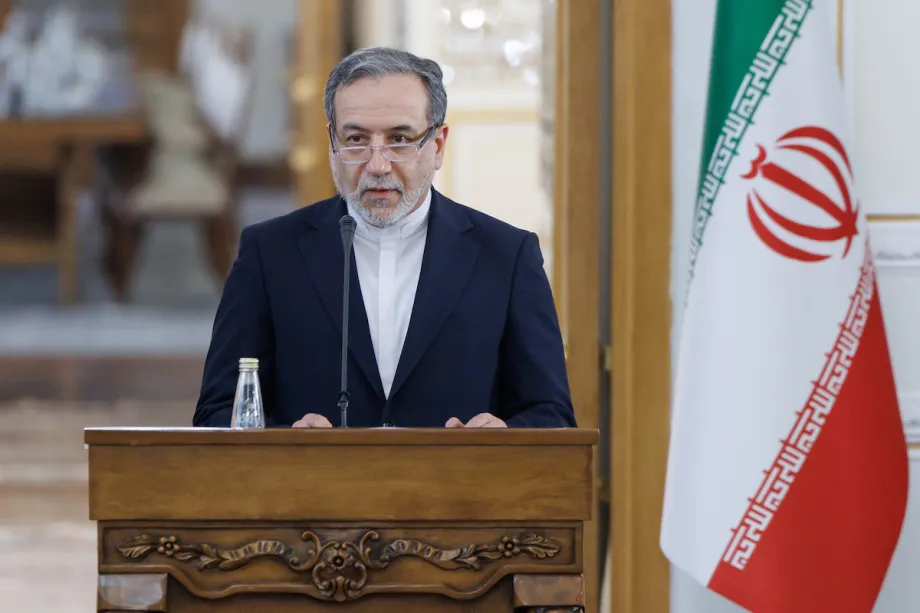
TEHRAN: Iran is continuing talks with intermediaries concerning a proposal to end its war with the United States, with Foreign Minister Abbas Araghchi stating that the plan could be implemented in less than a week, provided the necessary arrangements are secured.

In a statement posted on X, Araghchi affirmed that Tehran remains committed to diplomatic efforts while maintaining a high level of military readiness.

“While our Brave Armed Forces are fully prepared to defend the Homeland, Iran continues to give diplomacy a chance to succeed,” he wrote.

“We remain in close and ongoing contact with intermediaries to review ideas that can ensure implementation of our 7-Day Plan in even less than a week,” he added.

Earlier on Wednesday, Araghchi cautioned that a further Israeli-led military attack could trigger severe repercussions for international energy markets.

“Devastating impact on int’l markets of any Israel-instigated military misadventure in Persian Gulf region remains major concern for both gas suppliers and consumers,” he wrote on X, referencing discussions held during the Gas Exporting Countries Forum summit in Moscow.

This warning comes amid persistent regional tensions between Iran and Israel. Under Prime Minister Benjamin Netanyahu, Israel has pledged to overthrow the Iranian administration, as both nations engage in direct warfare for the first time following decades of animosity.
Hostilities began in February following joint US and Israeli airstrikes targeting Iran, while fears of renewed attacks persist amid escalating regional tensions.

European natural gas prices surged past 100 euros per megawatt-hour on Wednesday, reaching their highest level since 2022, fuelled by growing concerns over the conflict in the Middle East and the urgency of rebuilding fuel stockpiles ahead of the winter season.

At around 1455 GMT, Dutch TTF futures, which serve as the primary benchmark for European gas prices, rose by more than 4 per cent to reach 100.45 euros per megawatt-hour.

Current prices remain significantly below the record peak of 345 euros per megawatt-hour recorded in March 2022 during the global energy disruption triggered by Russia’s invasion of Ukraine.

This upward price movement stems from concerns that Washington could launch fresh strikes against Tehran following the upcoming midterm elections, raising fears of retaliatory actions targeting critical energy infrastructure across the Gulf region.

Meanwhile, the recent electoral cycle in Israel has heightened uncertainty surrounding the trajectory of the regional conflict, with voters assessing Netanyahu’s right-wing administration amid threats of further military escalation.

Transport Corporation of India Ltd. (TCI) announces Q2 FY2027 financial results

GURUGRAM : Transport Corporation of India Ltd. (TCI), India’s leading integrated multimodal logistics and supply chain solutions provider, today announced its financial results for the quarter and half year ended September 30, 2026.

Financial Highlights for Q2/FY2027:

  • Revenue: TCI reported a consolidated revenue of ₹13,979 Mn, marking a growth of 14.8% compared to ₹12,174 Mn in the same period last year.
  • EBITDA: The Company’s Earnings before Interest, Taxes, Depreciation and Amortization (EBITDA) stood at ₹1,759 Mn, an 8.3% increase from ₹1,624 Mn in Q2/FY2026.
  • Profit after Tax (PAT): PAT increase by 3% to ₹1,169 Mn, compared to ₹1,135 Mn in the corresponding quarter of the previous year.
ConsolidatedStandalone
Performance Highlights: Q2/FY2027 vs. Q2/FY2026 Consolidated (In ₹ Mn.)Performance Highlights: Q2/FY2027 vs. Q2/FY2026 Standalone (In ₹ Mn.)
Particulars30.09.202630.09.2025Growth %Particulars30.09.202630.09.2025Growth %
Revenue13,97912,17414.8%Revenue11,96410,65212.3%
EBITDA1,7591,6248.3%EBITDA1,4291,3039.7%
PAT1,1691,1353.0%PAT9178784.4%
ConsolidatedStandalone
Performance Highlights: 6M/FY2027 vs. 6M/FY2026 Consolidated (In ₹ Mn.)Performance Highlights: 6M/FY2027 vs. 6M/FY2026 Standalone (In ₹ Mn.)
Particulars30.09.202630.09.2025Growth %Particulars30.09.202630.09.2025Growth %
Revenue26,52723,68012.0%Revenue23,08020,99010.0%
EBITDA3,3583,1446.8%EBITDA3,0842,9325.2%
PAT2,2352,2071.3%PAT2,1152,120-0.2%

Management Commentary
Mr. Vineet Agarwal, Managing Director, Transport Corporation of India Ltd. commented, as India’s consumption and trade flows expand, TCI’s integrated model of road, rail, coastal, warehousing and technology continues to prove its strength. A diversified portfolio, deep customer relationships and reliable, technology-led supply-chain solutions at scale are helping us serve customers as their needs evolve.

We are seeing healthy traction across 3PL, warehousing and multimodal logistics, with rail, road and coastal movement enabling efficient, lower-emission long-haul transportation. Our expanding network of warehouses and hubs positions us well for fast-growing channels such as e-commerce, quick commerce and omni-channel retail.

Technology remains at the core of how we grow. Through ULIP-enabled digital integration, we are giving customers real-time visibility and data-driven supply-chain solutions, while scaling AI-led forecasting, route optimisation and automation to improve service quality, asset productivity and cost efficiency.

As festive-season demand builds across consumption-led sectors, we see a constructive outlook for the coming quarters. TCI will keep investing in multimodal infrastructure, digital capabilities and green logistics to create lasting value for our customers and stakeholders.

About TCI : TCI Group, with revenues of over Rs. 7000 Cr is India’s leading integrated supply chain and logistics solutions provider. TCI group with expertise developed over 6 decades has an extensive network of company owned offices, 17+ Mn. sq. ft. of warehousing space and a strong team of trained employees. With its customer-centric approach, world class resources, state-of-the-art technology and professional management, the group follows strong corporate governance and is committed to value creation for its stakeholders and social responsibilities.
TCI has been the first to launch several solutions in the logistics field. Its product offering includes:
TCI Freight: India’s leading surface transport entity. This division is fully equipped to provide total transport solutions for cargo of any dimension or product segment. It transports cargo on FTL (Full truck load)/ LTL (Less than truck load)/ Small packages and consignments/ Over Dimensional cargo.

TCI Supply Chain Solutions: TCI SCS is a single window enabler of integrated supply chain solutions right from conceptualization and designing the logistics network to actual implementation. The core service offerings are Supply Chain Consultancy, Inbound Logistics, Warehousing / Distribution Centre Management & Outbound Logistics.

TCI Seaways: TCI Seaways is well equipped with six ships in its fleet and caters to the coastal cargo requirements for transporting containers and bulk cargo. Being the pioneers in multimodal coastal shipping and container cargo movement and transportation services, TCI Seaways connects India with its western, eastern, and southern ports.

TCI Chemlog Pvt. Ltd.: Offers End-to-end integrated, secure and compliant solutions for transporting hazardous and non-hazardous chemicals in solid, liquid, and gaseous forms for diverse industries including pharma, agro-chem, petro-chem, dyes & paints, speciality chemicals, healthcare and others. Backed by certified storage and a multimodal fleet—ISO tanks, gas tankers and flexi tanks—it ensures safe, efficient movement via road, rail, and coastal routes, with strict adherence to safety and regulatory standards.
TCI Cold Chain Solutions Ltd.: Integrated cold chain service provider to meet the needs of temperature-controlled warehousing and distribution services. The facility caters to the needs of various industries such as agriculture products, processed foods, life sciences, health care and specialty chemicals, among others.

TCI CONCOR Multimodal Solutions Pvt. Ltd.: An end-to-end multimodal logistics solutions provider, it is a joint venture between TCI and Concor. This segment synergises the strengths, infrastructure and capabilities of TCI Group with rail infrastructure of Concor. It establishes a cost-effective integrated rail-road service.

Transystem: Transystem Logistics International Pvt Ltd. (TLI), a JV between TCI and Mitsui & Co., carved its niche by offering high quality integrated logistics solutions to Japanese Automotive Manufacturers and Suppliers in India. TLI offers a wide range of services like IBL for Production Parts (Just-In-Time basis) OBL, Warehousing, Spare Parts delivery (After Sales Service), CKD container transportation etc.
TCI Express Ltd: A leading express distribution specialist that offers a single window door-to-door & time definite solution for customers’ express requirements

TCI Developers Ltd: It undertakes development of large modern Warehouses, Logistics Parks etc.
TCI Foundation: TCI Foundation, the social arm of Transport Corporation of India Limited (TCI), endeavours to support & assist lesser privileged communities in India by facilitating Health Services, Education, Community and Sports Development. TCI Foundation is associated with Government of India, State Governments, International Organizations, Public Sector Undertakings and Corporates of repute to deliver the quality controlled CSR activities in India.

Achilles delivers 286% ROI for Energy Supply Chains, according to independent Verdantix Study

ABINGDON: Achilles, a global leader in supply chain risk and performance management, has announced the results of a new independent ROI analysis conducted in collaboration with independent research and advisory firm Verdantix. The study highlights the significant financial and operational benefits energy and natural resources companies can achieve by modernising supplier risk and sustainability management.

As energy companies face increasingly complex global supply chains, tightening ESG regulations, and growing stakeholder expectations around transparency, supplier management has become a strategic business priority. However, many organisations continue to rely on manual systems such as spreadsheets and disconnected internal platforms to manage supplier information, creating inefficiencies and limiting visibility of supplier risk.

Modelling the Financial Impact of Supplier Risk Management

The study evaluated the financial impact of replacing these manual processes with the Achilles platform. Based on data collected from 15 companies, Verdantix modelled a representative energy and natural resources company employing 9,000 people, generating £100 million in annual revenue, and managing approximately 2,000 suppliers managed through the Achilles platform.

By centralising supplier data, automating due diligence, and enabling continuous risk monitoring, the analysis found that organisations implementing Achilles can achieve a modelled 286% return on investment over three years, reaching breakeven within just six months, while delivering approximately £325,000 in total financial benefits through improved operational efficiency, supplier transparency, and proactive risk management.

By providing trusted supplier intelligence in a single platform, Achilles enables organisations to make faster, better-informed decisions while significantly reducing administrative workload.

Supply Chain Risk Across Energy Supply Chains

For organisations operating across oil and gas, renewables, and wider energy infrastructure, supplier performance directly affects operational safety, regulatory compliance, and corporate reputation. As supply chains become larger and more complex, maintaining visibility across contractor and supplier networks has become a necessity.

This challenge was reflected in the responses of customers interviewed as part of the Verdantix study. One organisation noted that supplier management represents a key operational risk within the energy sector, where reputational damage arising from poor supplier performance can result in significant financial disruption. The customer explained that Achilles plays a critical role in benchmarking suppliers, enabling the business to identify and manage risk more effectively across its supply chain.

Manual supplier management also consumes significant internal resources across sustainability and operational teams. Activities such as supplier onboarding, risk assessments, due diligence, sustainability reporting, and supplier benchmarking frequently involve repetitive manual work spread across multiple disconnected systems.

The Verdantix study found organisations implementing Achilles achieve time savings of between 10% and 50% across supplier management processes, resulting in labour savings exceeding £340,000 over three years. These efficiency gains allow internal teams to focus on higher-value activities that contribute to business growth and development.

As sustainability reporting requirements continue to evolve, energy companies require accurate, verified supplier information to support ESG reporting and wider disclosure obligations. Customers participating in the study highlighted Achilles’ ability to assess and benchmark suppliers’ sustainability performance, giving organisations greater confidence in supplier selection while supporting sustainability objectives.

Reducing Operational Disruption and Building Resilient Supply Chains

Supplier failures or compliance breaches can quickly escalate into operational disruption across critical energy infrastructure. The study assessed the financial impact of supply chain disruption by modelling lost productivity and the wider business costs associated with supplier failures.

By improving supplier visibility, ongoing risk monitoring, and early identification of potential issues, organisations using Achilles reduced operational disruption costs by more than £72,000 over three years.

While these financial returns are significant, the study also highlights a broader shift taking place across the energy sector. Organisations are moving away from fragmented, manual supplier management processes towards integrated platforms that combine verified supplier data with automated due diligence and continuous risk monitoring.

Strengthening Compliance and Delivering Measurable Value

The Verdantix analysis found organisations implementing Achilles reduced compliance-related costs by approximately £19,000 over three years, while strengthening governance across increasingly complex supply chains.

By strengthening supply chain transparency and enabling continuous supplier risk monitoring, Achilles helps organisations improve governance, support regulatory compliance, and reduce the operational uncertainty associated with increasingly complex supplier ecosystems. The Verdantix analysis demonstrates that these improvements not only enhance risk management but also generate measurable financial value through efficiency gains, reduced disruption, and stronger organisational resilience.

About Achilles:

For more than 30 years, Achilles has protected organizations’ business interests and reputations by providing unrivalled levels of supply chain transparency, carbon reduction and management. Achilles is the supply chain risk, ESG and carbon management partner of choice for the world’s leading global brands.

Achilles specializes in supporting customers who require robust global supply chain resilience, risk management and reporting to comply with ESG regulations, meet investor requirements, and achieve ambitious sustainability goals.

It works with market-leading financial, industrial, commercial and governmental organizations that require serious, detailed analysis and expert insight to deliver exceptional supplier selection and reporting confidence. Operating from 22 locations worldwide, Achilles is at the forefront of the battle against climate change, a champion for social justice and human rights, and an expert in health, safety, and risk management.

Automotive, Logistics and other Emerging Industries set to create over 35 Crore Jobs by 2030; DIDAC Skills 2026 to Bridge the Industry-Skills Gap

NEW DELHI:  India’s manufacturing and services sectors are projected to generate more than 35 crore (350 million) new jobs by 2030, according to the latest estimates from multiple Sector Skill Councils and industry bodies. This surge in employment potential is matched by an urgent need for accelerated skilling, practical training, and robust collaboration between industry and academia. Industry data from various councils and government sources highlights the scale and immediacy of the challenge. The automotive sector is expected to add between 20 and 25 lakh direct jobs by 2030 (NITI Aayog). Logistics will require an additional 47 lakh skilled workers by the same year (Logistics Sector Skill Council), while the telecom sector is projected to create 10 lakh new roles (National Telecom Policy objectives). India’s clean energy transition is likely to contribute more than 44 lakh full-time jobs by 2030 (CEEW-NRDC), and the textiles and apparel industry anticipates nearly 2 crore new jobs within the next three years (Ministry of Textiles, June 2026). These figures underscore both the magnitude of the employment opportunity and the risk that millions of positions may go unfilled unless workforce readiness keeps pace.

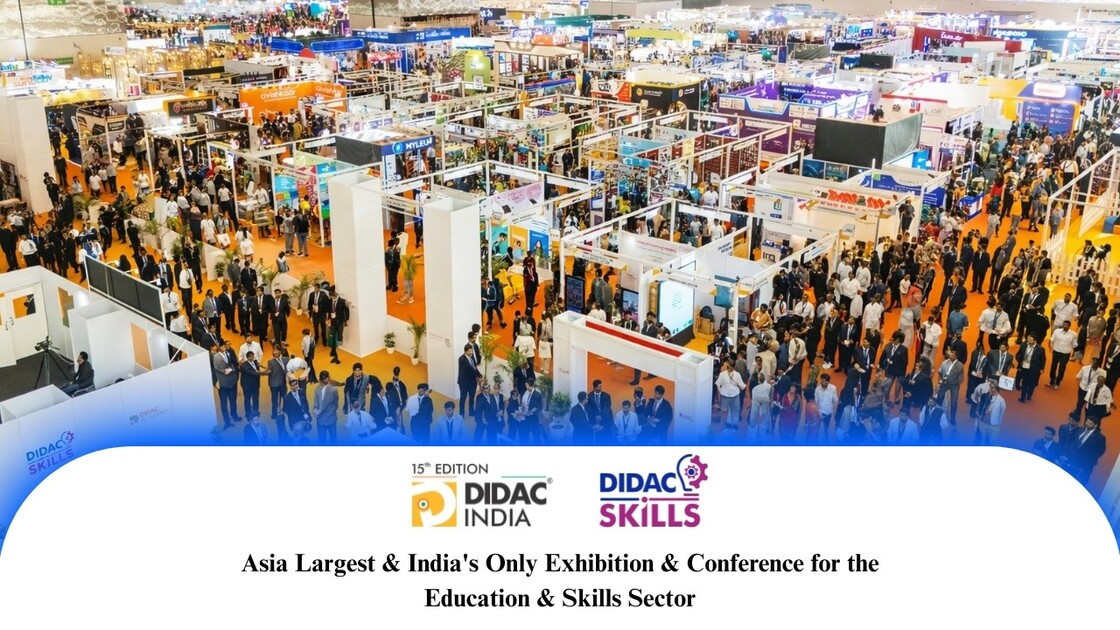
As industry leaders and educators recognise both the challenge and the opportunity, there is growing momentum to align India’s education and skilling systems with the evolving needs of employers. This proactive approach will take centre stage at DIDAC Skills, Asia’s Largest & India’s Only Exhibition & Conference for Skills, to be held at BIEC, Bengaluru from 25-27 November 2026. Running concurrently will be DIDAC India – Asia’s Largest & India’s Only Exhibition & Conference for the Education Sector, creating an unprecedented platform where the future of skills and education will converge under one roof.

Aditya Gupta, CEO, India Didactics Association, said, “India stands at a defining moment where emerging industries, technological advancements and new investments are creating unprecedented opportunities for employment and economic growth. However, the real challenge is not just creating jobs, but ensuring that our workforce has the skills to seize these opportunities. We must move from qualification-driven education to competency-driven learning, where practical skills, industry exposure and adaptability become central to employability. DIDAC Skills 2026 is our effort to bring industry and the skilling ecosystem together, accelerate the adoption of modern training technologies and strengthen the link between learning and livelihoods. Ultimately, India’s greatest competitive advantage will be the quality of its skilled workforce.”

DIDAC Skills 2026 will showcase sector-specific skilling through live demonstrations, hands-on workshops, technology showcases, and interactive learning experiences. This initiative is being shaped in partnership with key Sector Skill Councils, including the Furniture and Fittings Skill Council, Healthcare Sector Skill Council, Water Management and Plumbing Skill Council, Beauty and Wellness Sector Skill Council, Sports, Physical Education, Fitness and Leisure Skills Council, Capital Goods & Strategic Skill Council.

DIDAC Skills 2026 will spotlight India’s evolving workforce requirements across advanced manufacturing, healthcare, water management, wellness, furniture and fittings, sports and fitness, and emerging technologies, bringing industry and skilling institutions together to strengthen practical training and employability.

The must attend exhibition brings together prominent companies, sector skill councils, industry partners, education institutions, and training organisations to highlight modern solutions, equipment, emerging technologies, and practical competencies aligned with evolving job roles and industry requirements. Special emphasis will be placed on bridging the gap between classroom learning and workplace realities by fostering partnerships, promoting hands-on and competency-based learning, updating training infrastructure, and advancing curriculum relevance, all aimed at strengthening workforce readiness and employability for India’s youth.

Wind challenger-equipped LNG dual-fueled coal carrier ‘MAIZURU KAZENOMAI’ delivered

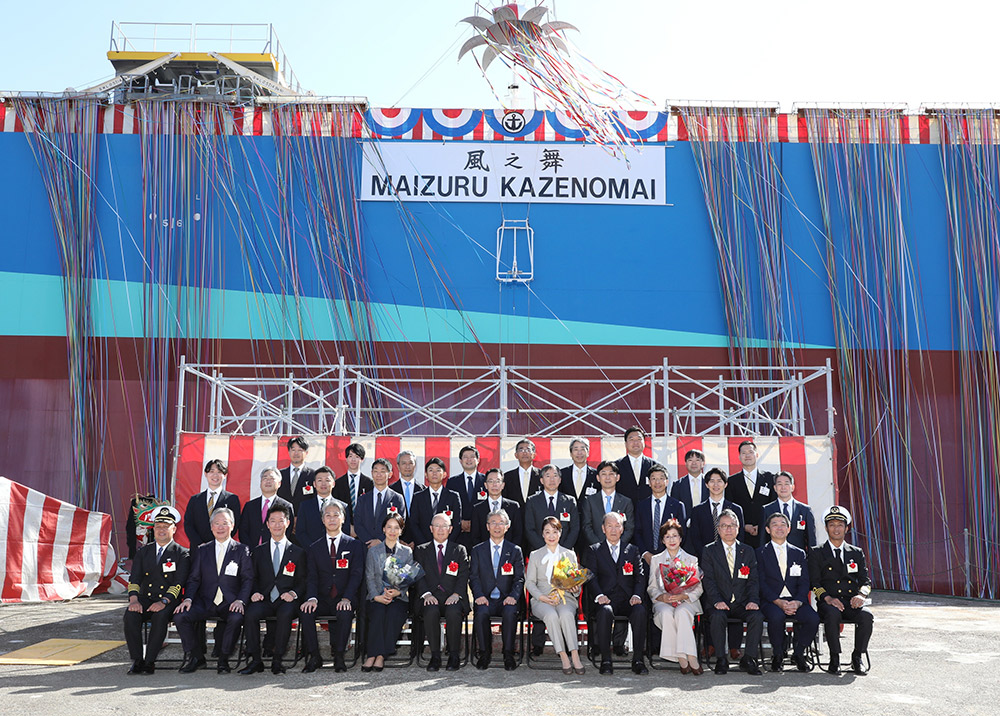
TOKYO : Mitsui O.S.K. Lines, Ltd. day announced the delivery and entry into service of an LNG dual-fuel coal carrier constructed as a dedicated vessel for Kansai Electric Power Co., Inc. The vessel is Japan’s first coal carrier equipped with the Wind Challenger, a hard sail wind-assisted propulsion system. A naming and delivery ceremony was held at Oshima Shipbuilding Co., Ltd. to mark the vessel’s completion, during which the vessel was named “MAIZURU KAZENOMAI“

This vessel is engaged in transporting coal to Kansai Electric Power’s Maizuru Power Plant and plays an important role in supporting a stable supply of electricity. To reduce its environmental impact, it features a dual-fuel main engine capable of using LNG as its primary fuel, as well as the Wind Challenger, a wind-assisted propulsion system jointly developed by MOL and Oshima Shipbuilding.

Compared with conventional heavy fuel oil-fired vessels, the vessel is expected to reduce GHG and NOx emissions and significantly reduce SOx emissions through the use of LNG fuel. Furthermore, the combined effect of the LNG dual-fuel main engine and the Wind Challenger wind-assisted propulsion system is expected to reduce CO2 emissions by up to approximately 30%.

Under the MOL Group Environmental Vision – BLUE ACTION 2035 Phase 2, which sets out the MOL Group’s medium- to long-term environmental targets, MOL has established the target of achieving net-zero GHG emissions by 2050. To help achieve this target, the group has identified improvement of fuel efficiency as one of its key actions and plans to deploy 25 Wind Challenger-equipped vessels by 2030 and 80 vessels by 2035.

The name “MAIZURU KAZENOMAI” combines “Maizuru,” the location of the Maizuru Power Plant, with “KAZENOMAI,” which reflects the vessel’s ability to sail utilizing wind power. The name embodies the hope that the vessel will continue to sail safely and reliably.

Nuclear ships only pay off under the IMO’s net-zero rules, UCL study finds

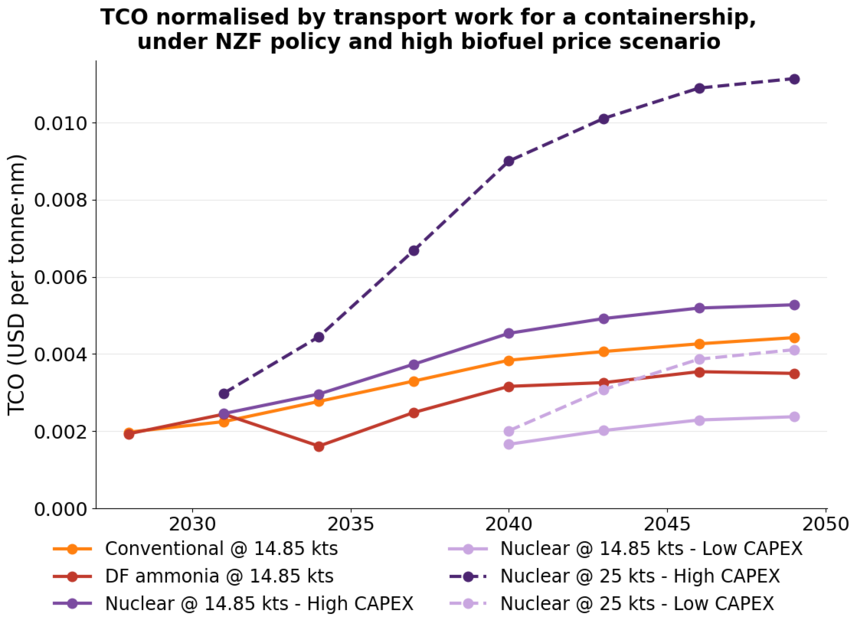
LONDON : Nuclear propulsion can compete in container shipping only if an effective global emissions policy is in place and reactor costs fall sharply, according to new research from the UCL Energy Institute’s Shipping and Oceans Research Group. It is one of the most detailed total cost-of-ownership assessments of nuclear merchant shipping to date.

The report, Nuclear Reactors for Merchant Shipping: A Total Cost of Ownership Assessment of a Low-Carbon Pathway, compares a large container ship (14,500 to 19,999 TEU) with nuclear propulsion against conventional fuel oil and dual-fuel ammonia vessels. It uses a literature review, interviews with five UK-based experts in law, insurance, classification, technology development and industry representation, and a cost model run with and without the IMO Net-Zero Framework (NZF).

Key findings

  • Policy sets the business case. Without the NZF, no nuclear vessel is cheaper than a conventional ship, even at the lowest assumed reactor cost. Under the NZF, nuclear vessels earn income by selling surplus units to other ships, which closes the gap.
  • Reactor cost decides the outcome. Published estimates range from about 2,600 to 12,400 USD per kWe, a spread of nearly five times. At the low end, which assumes series production and deep cost reductions, nuclear is the cheapest option from 2040. At the high end, which reflects first-of-a-kind reactors, it is not cheapest in any scenario.
  • The window is narrow. Surplus unit income is largest when a vessel enters service and shrinks as the NZF’s fuel targets tighten. Nuclear’s best chance to break into the market is early, not late.
  • Faster is not cheaper. At 25 knots, the vessel sails 32% more distance a year but needs more than three times the installed power, and costs rise.
  • Non-technical barriers are as large as the technical ones. Existing nuclear liability conventions were designed for fixed, land-based reactors. Interviewees expect no global framework for the first vessels, and a mature insurance regime could take 15 to 20 years.

“Nuclear can compete, but only with much cheaper reactors and a global emissions policy, and neither exists yet. How both develop over the coming years will decide whether nuclear has a place in shipping.” said Farah Bziker, Researcher, UCL Shipping and Oceans Research Group.

Three features of the NZF support nuclear as a maritime energy source: a stringent fuel-intensity limit or steep reduction rate to ensure long-term demand; a stable, high-integrity surplus-unit market with a firm price; and a strong, sustained reward for zero- and near-zero-emission technologies. Policy that is less ambitious or less supportive of these technologies than the NZF will reduce nuclear’s potential.

“Nuclear is not a reason to weaken maritime climate policy. It is one of the technologies that depends on it. Anyone backing reactor programmes should want a stringent international GHG policy and credible global framework,” said Dr Tristan Smith, Professor of Energy and Transport, UCL Shipping and Oceans Research Group.

The authors caution that the results may understate the true cost of nuclear shipping. The model excludes nuclear-specific insurance, reactor maintenance and hull integration, and treats decommissioning as a rough estimate. Vessels with first-of-a-kind reactors are not competitive, and it remains open who would bear their cost. A favourable cost comparison is also not enough: the first vessels will need agreements between states on liability, insurance and regulation.

UCL Table Nuclear ships only pay off under the IMO’s net-zero rules, UCL study finds

Total Cost of Ownership normalised by transport work for a containership, under NZF policy and high biofuel price scenario

Link to full report: https://www.shippingandoceans.com/post/nuclear-ships-only-pay-off-under-nzf

About UCL Energy Institute The UCL Energy Institute hosts a world leading research group which aims to accelerate the transition to an equitable and sustainable energy and trade system within the context of the ocean. The research group’s multi-disciplinary work on the shipping and ocean system leverages advanced data analytics, cutting-edge modelling, and rigorous research methods, providing crucial insights for decision-makers in both policy and industry. The group focuses on three core areas: analysing big data to understand drivers of historical emissions and wider environmental impacts, developing models and frameworks to explore energy and trade transition to a zero emissions future, and conducting social science research to examine the policy and commercial structures that enable the decarbonisation of the shipping secto

JERA to source Green Ammonia from India for bunkering

TOKYO : Japanese energy and power company JERA has signed a binding agreement with India’s AM Green for long-term green ammonia supplies, with the fuel intended for bunkering ammonia-fuelled car carriers.

The deal covers around 70,000 tonnes/year for five years, with supplies planned from AM Green’s Kakinada facility from 2028/29, JERA announced on Tuesday.

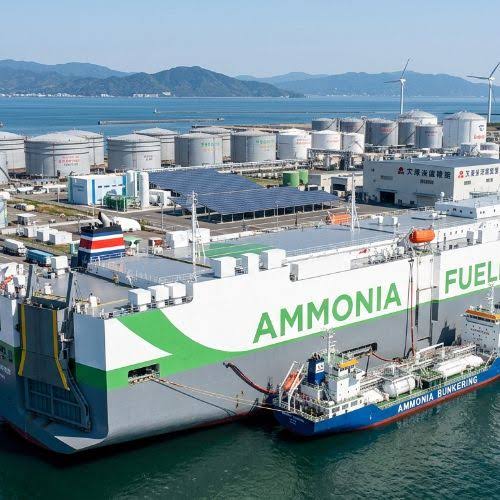
The ammonia will be delivered to Japan for use by a planned venture involving shipping companies K Line and NYK, which intends to use an ammonia bunkering vessel to supply fuel to ammonia-fuelled car carriers.

“This agreement reflects the growing demand for competitively priced green molecules from India and reinforces the strategic role of our Kakinada project in supporting Japan’s and maritime industry’s decarbonisation ambitions,” Mahesh Kolli, Group President and Joint Managing Director of AM Green, said.

JERA is among the seven Japanese companies that announced a collaboration on Tuesday to develop an ammonia bunkering network in Japan.

Ammonia-fuelled oceangoing vessels are beginning to enter the global fleet, with maritime firm Exmar taking delivery of the first such vessel earlier this year.

K Line and NYK to receive four ammonia-fuelled car carriers by 2030

TOKYO : Seven Japanese companies agreed on Tuesday, October 27, to build four ammonia-fuelled car carriers and develop an ammonia fuel supply chain centred on Japan’s Chubu region.

All four vessels are scheduled for completion in 2030.

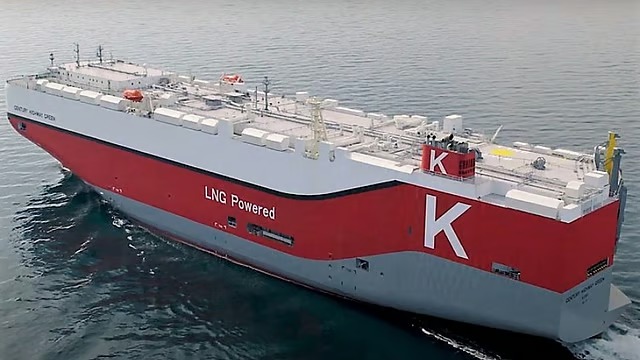
Kawasaki Kisen Kaisha (K Line) and NYK will each own and operate two of the carriers. The vessels are anticipated to carry completed vehicles for customers including Toyota.

Shin Kurushima Dockyard will lead basic design, and Imabari Shipbuilding and Nihon Shipyard will take part in joint design and construction.

The carriers will have dual-fuel engines capable of burning ammonia. Their fuel tanks will be sized for trans-Pacific voyages on ammonia alone. Safety systems will include leak prevention and detection, as well as equipment to neutralise ammonia after a leak.

JERA will procure “green ammonia” and develop ship-loading facilities at its receiving terminal beside the Hekinan Thermal Power Station. Kyokuyo Shipyard will build a dedicated bunkering vessel, also due in 2030. NYK will own and operate it, either directly or through a wholly owned subsidiary.

A joint venture equally owned by K Line and NYK will sell the fuel through ship-to-ship bunkering, primarily at the ports of Nagoya and Mikawa. Transfers will take place alongside quays or piers, or at anchor.

On the same day, JERA signed a binding heads of agreement with AM Green for around 70,000 tonnes of “green ammonia” annually for five years. The fuel will come from AM Green’s plant in Kakinada, India, and is intended primarily for the K Line and NYK venture.

K Line and NYK are also working with Sumitomo on a newbuild ammonia bunkering vessel for Singapore. In 2025, NYK’s ammonia-fuelled tug Sakigake completed a three-month demonstration in Tokyo Bay.

India widens its Maritime Partnerships in Busan, from shipbuilding supply chains to ship recycling

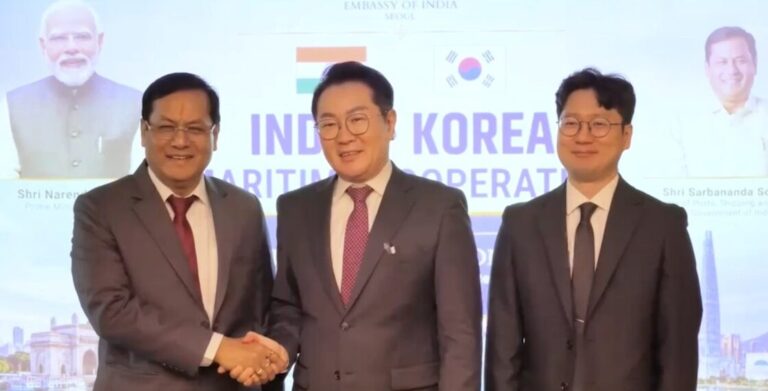
BUSAN: Union Minister of Ports, Shipping and Waterways (MoPSW), Shri Sarbananda Sonowal, held a series of meetings in Busan, South Korea, with South Korean maritime institutions, shipbuilders and shipping companies, and with Cyprus’ Shipping Deputy Minister, as India works to build the supply chain, finance, technology and markets behind its shipbuilding ambitions.

The talks covered shipbuilding investment, marine equipment manufacturing, maritime financing, port development, shipping, green technology and sustainable ship recycling. The government aims to make India a globally competitive shipbuilding, shipping and maritime services hub by 2047.

“India’s shipbuilding landscape is on a fast growth trajectory backed by vision and policy initiatives of the Indian government led by Prime Minister Shri Narendra Modi,” Sarbananda Sonowal said.

Key takeaways from the day

Recycling: Cyprus backed India’s bid for EU recognition of eligible ship-recycling yards.
Green Shipping: Korean makers and Indian yards explored partnerships in LPG and LNG cargo tanks, cryogenic structures and large ship blocks.
Finance: Sonowal presented the opportunity of Maritime Development Fund (MDF) and Sagarmala Finance Corp. (SMFC) to Korean maritime financiers.
Fleet and markets: Possibilities explored as leading Korean shipping line expressed interest to invest in India flagging, made in India containers and in the upcoming Vadhvan Port.

In a bilateral meeting, Cyprus’ Shipping Deputy Minister, Marina Hadjimanolis, reaffirmed her country’s support for India’s effort to win European Union (EU) recognition for eligible Indian ship-recycling facilities.

The two ministers also discussed shipping, shipbuilding, maritime investment, seafarer welfare and maritime services. Hadjimanolis said about 25 leading Cypriot companies are expected to visit India in November to explore partnerships in shipping, ship management, maritime technology and related sectors. Both sides welcomed the India-Cyprus strategic partnership and stressed turning it into commercial outcomes.

“I look forward to working with you to translate our Strategic Partnership into concrete and mutually beneficial maritime outcomes,” Sarbananda Sonowal said.

In his meeting with Kim Jin-jong, CEO of Sejin Heavy Industries, discussions focused on potential manufacturing partnerships in large shipbuilding blocks, LPG and LNG cargo tanks, cryogenic structures, which keep gas liquefied at very low temperatures, and other specialised marine equipment. The Indian delegation highlighted opportunities from new shipbuilding clusters and the expansion of existing yards. Cochin Shipyard Ltd (CSL) also explored block fabrication with Sejin, as it expressed their openness to evaluate its possibility. Building tanks and cryogenic capability in India would add depth to the nation’s shipbuilding base.

“India’s growing maritime ecosystem offers immense opportunities for Korean expertise and Indian manufacturing capabilities to come together. A modern green fleet needs specialised capability, from cryogenic tanks to ship blocks. Under Prime Minister Narendra Modi’s vision, we are building that capability at home with the best partners in the world, and green shipping in India will be the stronger for it,” said Sarbananda Sonowal.

During his meeting with Yang Won-chang, President of the Korea Marine Equipment Research Institute (KOMERI), Union Minister Sarbananda Sonowal discussed collaboration in marine equipment manufacturing, research and development, testing, certification, green propulsion and smart maritime technologies. The two sides explored institutional cooperation between KOMERI and the proposed India Ship Technology Center (ISTC), alongside opportunities for Korean marine equipment makers to partner with Indian companies. Sonowal invited KOMERI and interested Korean equipment makers to visit India and explore concrete areas of technical and industrial collaboration.

“We are developing the India Ship Technology Center as a national platform for ship design, research, testing and training. Testing and certification at home, with Korean technical expertise, will help Indian-made marine equipment meet international standards and prepare our yards for green propulsion and smart ship technologies,” Sonowal said.

Union Minister Sarbananda Sonowal led Indian delegation had a fruitful discussions with Jay Y. Lee, Senior Executive Vice President led team of HMM on flagging its vessels in India, recruiting Indian seafarers, utilising Indian ship-recycling facilities compliant with the Hong Kong Convention (HKC), and expanding shipping services to additional Indian ports not currently covered by HMM’s network. During the discussion with Ahn Byung-gil, CEO of Korea Ocean Business Corporation (KOBC), investment and business opportunities in India’s growing maritime sector, particularly in port infrastructure and shipping, were explored.

Sonowal invited greater collaboration between Korean maritime financing institutions and Indian stakeholders. India has approved a shipbuilding support package of about $7.8 billion, mega shipbuilding clusters are under development, and a pipeline of more than 400 vessels is worth an estimated $23 billion.

The meetings opened new avenues for cooperation with global maritime players, supporting India’s goal of becoming a global hub for shipbuilding, shipping and maritime services by 2047.