Home Blog Page 370

UNSC set to review Bahrain-led draft resolution on maritime security in Strait of Hormuz

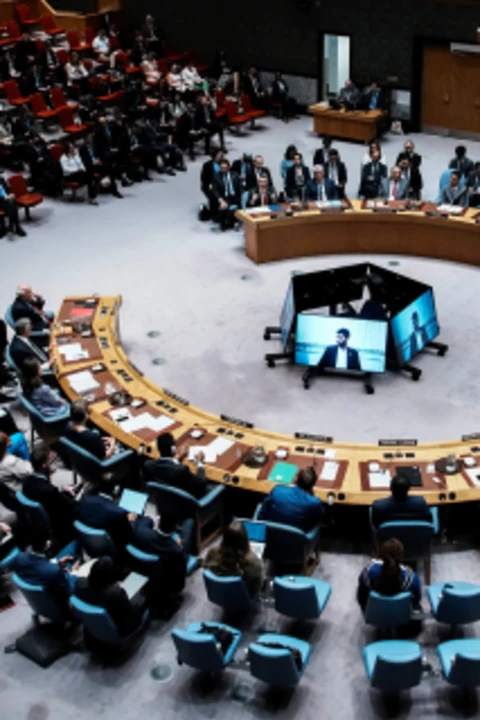
The United Nations Security Council is set to review a draft resolution submitted by Bahrain addressing maritime security in the Strait of Hormuz. Bahrain’s Foreign Minister Abdullatif bin Rashid Al Zayani said the move responds to Iran’s illegal attempts to control international shipping, calling for a unified international response.

Meanwhile, Israeli Prime Minister Benjamin Netanyahu said Israeli strikes had destroyed about 70 percent of Iran’s steel production capacity, calling it a tremendous achievement that reduced resources available to the Islamic Revolutionary Guard Corps.

Iran’s army said it launched drone strikes early Friday targeting US military support facilities in Jordan and Kuwait, describing the attacks as retaliation for recent American strikes on Iranian infrastructure, signalling continued escalation across West Asia

Is Bab el‑Mandeb Strait Iran’s next global choke point after Hormuz?

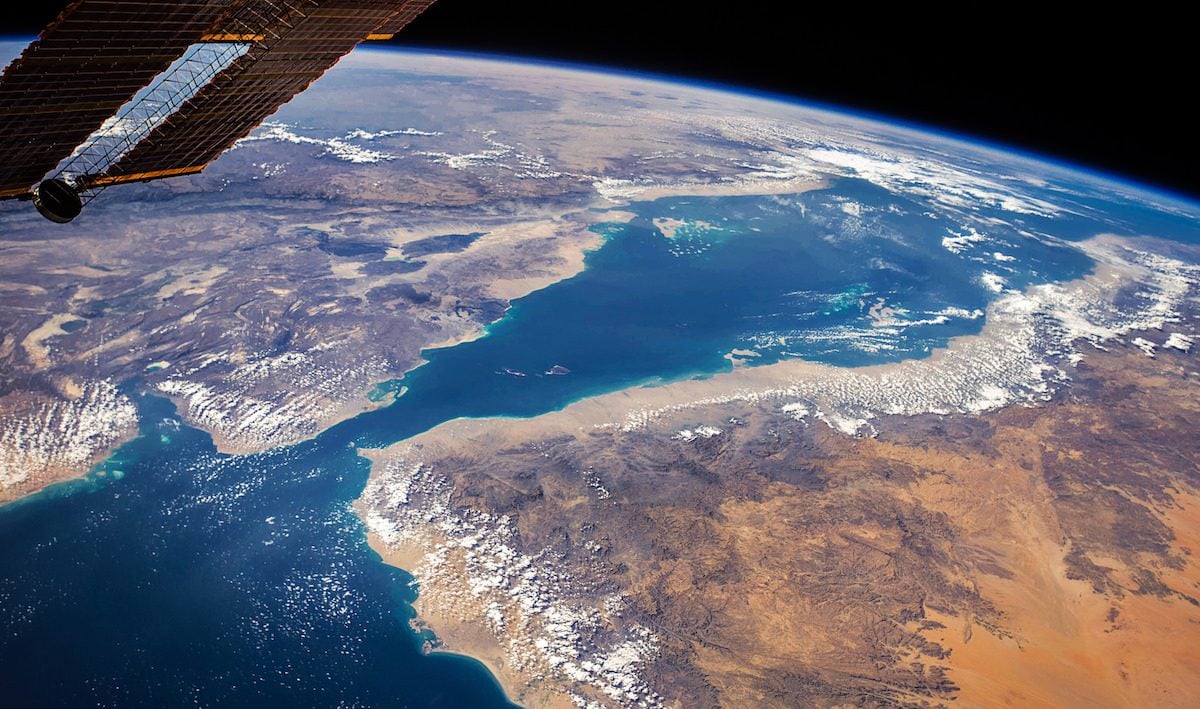
With the Strait of Hormuz already under strain, Iran has signalled it could widen the pressure by turning its focus to another critical global shipping route – the Bab el-Mandeb Strait, raising fresh concerns over supply chains and energy flows.

The remarks from Iran’s parliamentary leadership come at a time when the ongoing blockade of Hormuz has already disrupted maritime traffic and tightened global markets.

Iranian Parliament Speaker Mohammad Bagher Ghalibaf hinted at the possibility of targeting the Bab el-Mandeb Strait in a series of posts on X, pointing to its importance in global trade.

“What share of global oil, LNG, wheat, rice, and fertilizer shipments transits the Bab el-Mandeb Strait?” he asked.

“Which countries and companies account for the highest transit volumes through the strait?” he added, suggesting that Tehran is assessing where disruption could have the most impact.

PRESSURE BEYOND HORMUZ
The comments come as Iran continues to exert control over the Strait of Hormuz, one of the world’s most vital oil corridors, putting pressure on international shipping and raising costs.

By signalling interest in Bab el-Mandeb, another key maritime chokepoint connecting the Red Sea to the Gulf of Aden, Iran appears to be expanding its strategic playbook.

GLOBAL SUPPLY CHAINS IN FOCUS
Ghalibaf’s remarks directly point to the vulnerability of global supply chains, particularly in energy and essential commodities.

Oil and LNG shipments, along with key food supplies such as wheat and rice, rely heavily on secure passage through narrow maritime routes.

Any disruption to Bab el-Mandeb could have wide-reaching consequences, affecting not just energy markets but also food security and trade flows.

A CALCULATED SIGNAL TO RIVALS
The questions posed by the Iranian Speaker suggest more than rhetoric, indicating a calculated effort to map out leverage points against adversaries.

By drawing attention to countries and companies most dependent on the route, Tehran appears to be signalling its ability to escalate pressure if required.

TENSIONS CONTINUE TO BUILD
The latest remarks add to mounting tensions in the region, as Iran continues to respond to pressure from the US and its allies.

With no clear resolution in sight, the possibility of disruption at multiple maritime chokepoints raises the risk of wider economic fallout.

Source : BT

How is war reshaping the global economy? 4 chief economists explain

GENEVA: The ongoing war in the Middle East is rapidly emerging as an unprecedented shock to the global economy, sending tremors through energy markets, supply chains and financial systems already strained by years of volatility.

As governments and businesses scramble to adapt and assess the fallout, the conflict is reshaping economic expectations in ways that could reverberate for years. The impact on inflation and cost of living could impact people everywhere via fuels, food and energy, but also shortages of products that depend on these things.

So, one month into the conflict, how has the global economic outlook changed? And what will be the implications for energy supply, food systems, financial markets and people?

Four leading chief economists examine those questions and provide insights into what’s next for the global economy.
Risk of a ‘COVID-scale’ economic contraction

While humanitarian aspects remain top of mind, economists were aligned that the nature of the economic fallout of the war in Iran could be “unprecedented”.

They agree that much is still unclear and many potential impacts of the crisis are yet to emerge, but suggest the possibility of “COVID levels of economic shutdown” in the event of a protracted war.

Oil flows through the Strait of Hormuz have been significantly disrupted, prices have surged and fuel shortages are hitting Asia. They see the severity of the situation likely to crystallize as the crisis spreads from East to West. If it continues longer-term, it could become the largest disruption to the global economy in recent memory, they warn.

“At some point, given the scale of disruption, we’re not just looking at a price impact, it’s that you don’t have the molecules, so that is demand destruction,” said Saad Rahim, Chief Economist for Trafigura. If the current level of disruption continues, he added, “we are looking at something I don’t think we have seen before.”

‘A very vulnerable place’: multiplying factors

The chief economists stress that factors could multiply as the situation continues. It is no longer just about the extent of the global energy shock, but also how quickly that could turn into a food shock, and how the physical disruption could affect people globally.

“We’re in a very vulnerable place,” noted Standard Chartered’s Razia Khan. “We could just be one or two shocks away from something even more significant taking place.”

If the conflict and related disruption become more drawn out, it could significantly impact food production towards the end of this year and for 2027, said Maximo Torero from the Food and Agriculture Organization (FAO) of the United Nations.

The impact stems in part from the fact that the Gulf region is central to global fertilizer supply, both as a producer and a key trade route. If a fertilizer shock hits key exporting countries such as Brazil or India, this could lower yields and availability of important crops including wheat and rice. This would impact prices and drive food inflation, which would in turn accelerate overall inflation.

“The situation is very complex, and the impacts in the market could last a year or more until we can resolve the situation,” Torero said.

‘A Darwinian moment’

The knock-on effects could touch many other areas of the global economy too, with a level of impact similar to what the world saw during COVID-19, the economists said.

Moreover, existing concerns, including those highlighted in the January 2026 Chief Economists’ Outlook like debt crises and an expected decline in AI-related stocks, could be exacerbated. A third of the world’s helium, for example, used in technologies from semiconductors to MRIs is transported through the Strait of Hormuz.

Everything from chemicals to healthcare and construction will be affected, said Ludovic Subran, Chief Investment Officer and Chief Economist of Allianz. “It’s going to be a very Darwinian moment for a lot of sectors,” he added.

So, with the impacts mounting, how should businesses and policymakers respond?

“Resilience has been exposed,” Khan said. Economists agreed this could lead to a switch in how countries view longer-term security and increase the focus on resilient supply chains and contingency planning. A need to rely on fewer oil and gas imports could also accelerate sustainable energy investment and the energy transition.

In January, at the launch of the latest Chief Economists’ Outlook, the World Economic Forum’s Saadia Zahidi noted that “governments and companies will have to navigate an uncertain near-term environment with agility while continuing to build resilience and invest in the long-term fundamentals of growth.”

The levels of uncertainty may have multiplied since, but for leading economists, the need to build sound fundamentals endures.

Source: World Economic Forum

Xeneta Weekly Ocean Container Shipping Market: Rates Up 30% Over the Past Month

OSLO: Xeneta analyst insight

Peter Sand, Xeneta Chief Analyst: “Five weeks into the Strait of Hormuz closure and spot rates on every major East-West trade lane have risen sharply, showing this is a conflict with global repercussions for ocean supply chains.

“From Far East to North Europe and Mediterranean – trades with direct exposure to the Middle East disruption – spot rates are up 31% and 30% since the end of February.

“No shipper is insulated from financial or operational risk. Far East to US West Coast – a trade which transits the Pacific thousands of miles from the epicenter of conflict – has seen spot rates climb 29% since the end of February.

Xeneta Graph Xeneta Weekly Ocean Container Shipping Market: Rates Up 30% Over the Past Month
Screenshot

“The complex interconnectivity of global supply chains means port congestion in the Middle East has rippled across to key Asian transshipment hubs — including Singapore, Port Klang and Tanjung Pelepas — which are also vital for feeding goods toward the US.

“The position of carriers is unambiguous – the cost of uncertainty sits with the shipper, even on trades with no direct exposure to the Middle East. Market memory is a powerful force and shippers who experienced the second wave of the Red Sea crisis in 2024, when port congestion in Singapore saw already elevated rates double, are not waiting around and are securing capacity at today’s rates.

“Shippers booking capacity today are paying a premium for certainty, but it is a calculated risk against being caught short in peak season three months from now and paying even higher rates. Shippers who wait for conditions stabilize are placing a bet with no clear evidence behind it.

“Bunker fuel at Singapore — the world’s leading bunkering hub — remains available, with prices roughly double pre-crisis levels, but trending slowly downward after an initial spike of around 200%. Rotterdam prices continue rising, and ship-to-ship fuel transfers in the Far East are adding cost and complexity.

Xeneta Chart Xeneta Weekly Ocean Container Shipping Market: Rates Up 30% Over the Past Month
Screenshot

“With no visible end to the crisis, however, carriers are almost certainly drawing up another set of contingency plans. The coming weeks will show whether slow steaming and alternative routing can hold the line, or whether blank sailings become the next lever carriers reach for.”

Data highlights

Market average spot rates – 1 April 2026

  • Far East to US West Coast: USD 2,430 per FEU (40ft container)
  • Far East to US East Coast: USD 3,382 per FEU
  • Far East to North Europe: USD 2,904 per FEU
  • Far East to Mediterranean: USD 4,333 per FEU
  • North Europe to US East Coast: USD 1,775 per FEU

Offered capacity (4-week rolling average) – w/c 30 March 2026

  • Far East to US West Coast: +12.1% from a week ago
  • Far East to US East Coast: +2.9% from a week ago
  • Far East to North Europe: +12.5% from a week ago
  • Far East to Mediterranean: +6.5% from a week ago
  • North Europe to US East Coast: +3.4% from a week ago

Source: Xeneta

63rd National Maritime Day: Gujarat Sets the Tone with Governor and CM Flag Pinning Ceremonies

GANDHINAGAR: As India prepares to commemorate the 63rd National Maritime Day on April 5, Gujarat has set a vibrant tone for the celebrations with dignified flag pinning ceremonies, recognizing the invaluable contribution of seafarers and the maritime community to the nation’s growth.

Observed every year on April 5, National Maritime Day marks India’s rich maritime legacy and acknowledges the relentless efforts of mariners, shipping professionals, and stakeholders who power global trade and connectivity. The occasion also serves as a reminder of India’s aspirations to emerge as a leading maritime nation through innovation, sustainability, and robust port-led development.

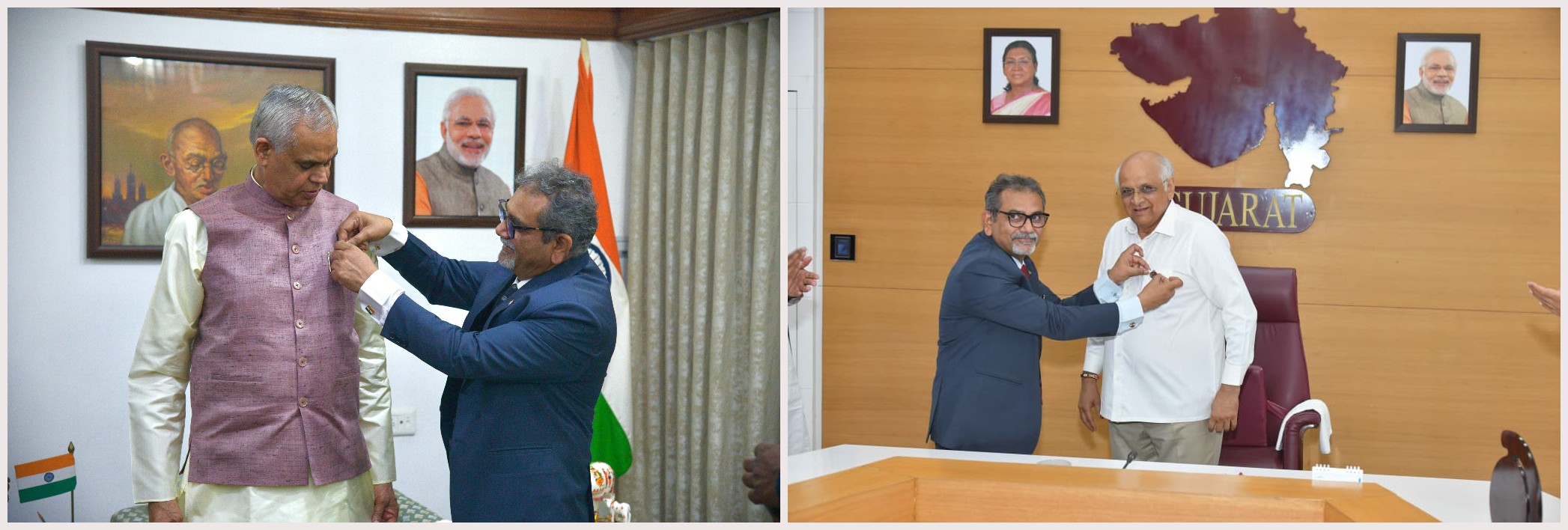
In the lead-up to the celebrations, flag pinning ceremonies were conducted by Capt. Santoshkumar Darokar, Joint Director General (Technical) and Principal Officer at the Directorate General of Shipping, symbolizing solidarity and respect for the maritime fraternity.

On April 1, 2026, the first ceremony was held at Raj Bhavan, Gandhinagar, where the Hon’ble Governor of Gujarat, Acharya Devvratji, was adorned with the Merchant Navy Day flag. The ceremony reflected a gesture of gratitude and recognition for the tireless dedication of seafarers. Sharing his thoughts, Capt. Darokar conveyed heartfelt appreciation, extending “positive vibrations to all mariners and stakeholders in the maritime fraternity,” underscoring the spirit of unity and pride that defines the sector.

Later the same day, a similar ceremony was at the residence of the Hon’ble Chief Minister of Gujarat, Shri Bhupendra Patel, in Gandhinagar. The flag pinning once again symbolized respect for the maritime workforce and highlighted the state leadership’s continued support for the sector’s advancement. Capt. Darokar reiterated his message of encouragement, expressing gratitude and sharing positivity for mariners, seafarers, and all associated stakeholders.

These ceremonies form an integral part of the National Maritime Day Week celebrations, fostering awareness about the maritime industry’s crucial role in economic development, international trade, and national security. Gujarat, with its strong port infrastructure and proactive maritime ecosystem, continues to play a pivotal role in driving India’s maritime ambitions.

As the nation gears up to celebrate the 63rd National Maritime Day, the message resonates clearly—honouring the past, celebrating the present, and navigating confidently towards a sustainable and resilient maritime future powered by the dedication of its seafarers.

Gujarat Governor Acharya Devvrat Lauds DPA Kandla’s Record-Breaking Performance at National Maritime Day Week Ceremony

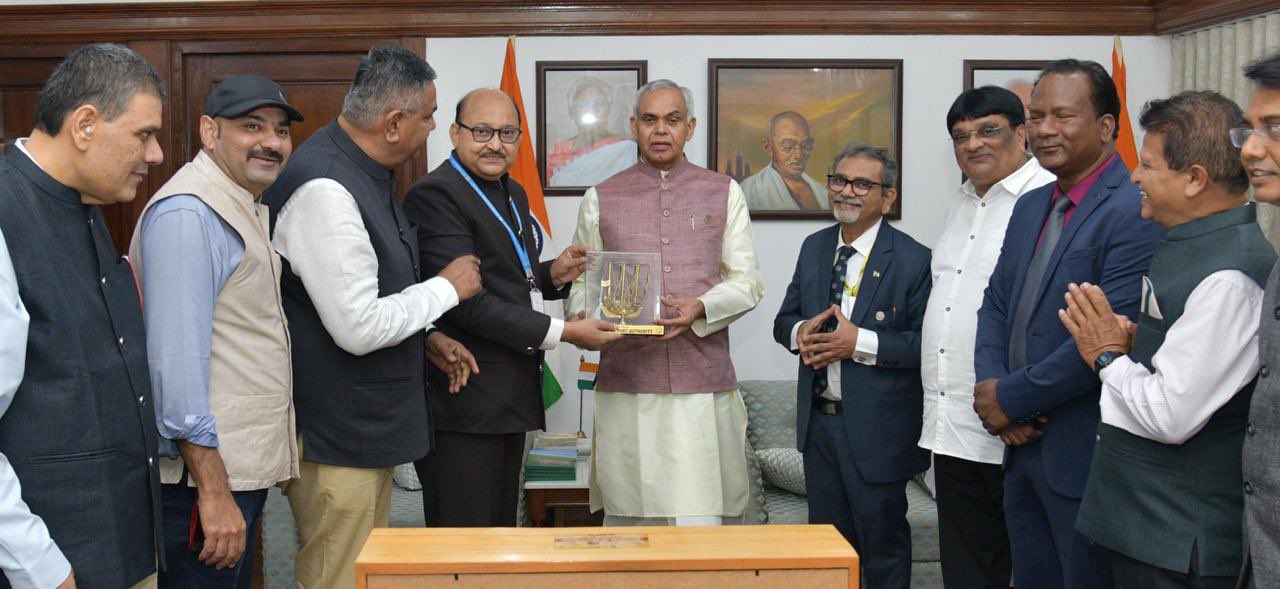
GANDHINAGAR: n a moment of pride for India’s maritime sector, the Hon’ble Governor of Gujarat, Acharya Devvrat, was felicitated with a commemorative souvenir during the Flag Pinning Ceremony as part of the 63rd National Maritime Day Week celebrations.

The souvenir was presented by Shri Yogesh Kumar Singh, Secretary of Deendayal Port Authority (DPA), marking the significance of the occasion and the port’s continued excellence in maritime operations.

During a cordial meeting, the Hon’ble Governor was apprised of a historic milestone achieved by DPA Kandla, which has set a new national benchmark by surpassing 160 million tonnes of cargo throughput, thereby emerging as India’s No. 1 Major Port. This remarkable feat underscores the port’s operational efficiency, robust infrastructure, and strategic importance in the country’s logistics ecosystem.

The discussions also highlighted DPA’s progressive green initiatives, reflecting its commitment to environmentally sustainable practices. The port’s focused efforts towards energy efficiency, reduced carbon footprint, and eco-friendly operations demonstrate its vision of becoming a self-reliant and future-ready maritime gateway.

Aligning with the broader national agenda of sustainable and resilient port-led development, DPA continues to play a pivotal role in strengthening India’s maritime capabilities while contributing to economic growth.

Commending this outstanding achievement, Governor Acharya Devvrat extended his heartfelt congratulations to Chairman DPA, Shri Sushil Kumar Singh, IRSME, and the entire team for their dedication, leadership, and exemplary performance in elevating the port to new heights.

The recognition further reinforces DPA Kandla’s position as a cornerstone of India’s maritime success story and a driving force behind the nation’s vision of a sustainable maritime future.

Adani sets 1 bn tonnes cargo target by 2030 as APSEZ crosses 500 mn tonnes milestone

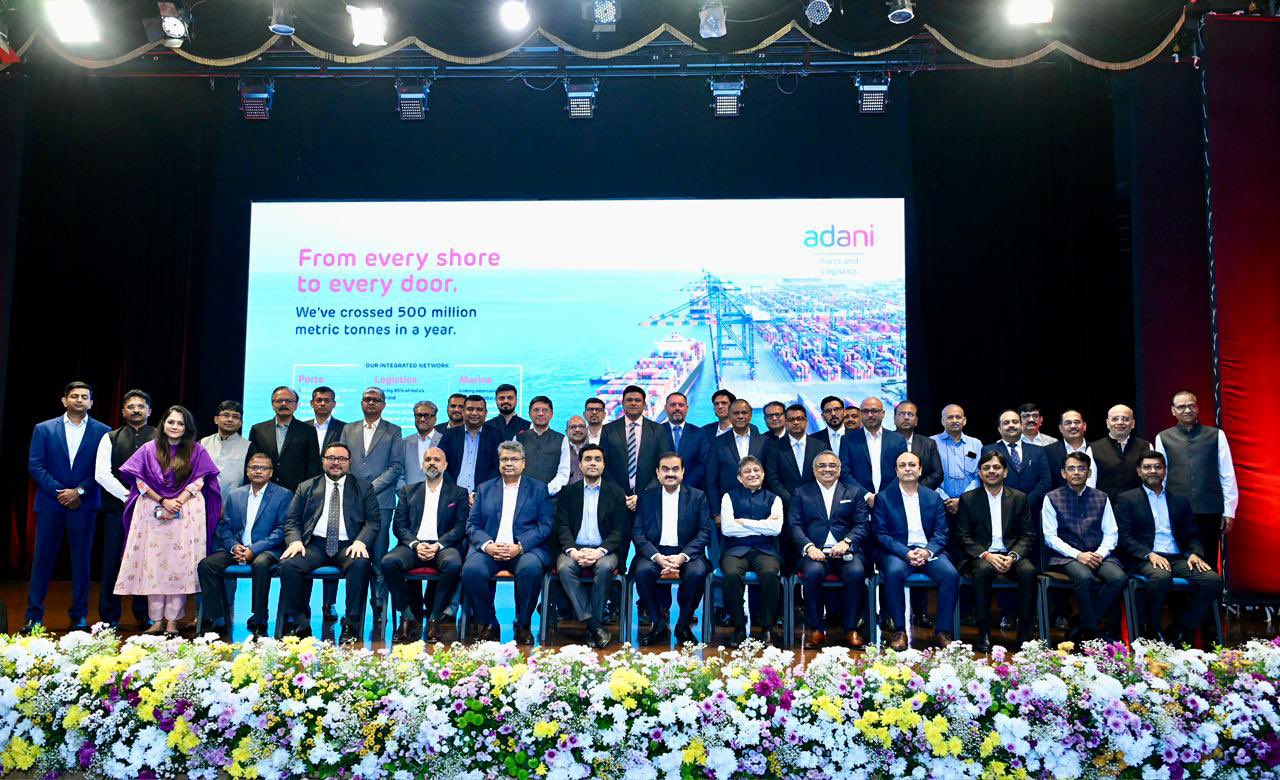
AHMEDABAD : Billionaire Gautam Adani on Friday said his conglomerate’s port arm is targeting cargo volumes of 1 billion tonnes by 2030, after the company surpassed 500 million tonnes milestone, underscoring the rapid scale-up of India’s largest port operator.

Speaking on the occasion of Adani Ports and Special Economic Zone (APSEZ) crossing the milestone, Chairman Adani said the group’s ports network has expanded into an integrated system of 20 ports across India and international locations, positioning it as a key enabler of trade and logistics flows.

He said APSEZ’s logistics and marine services businesses are expected to grow fivefold over the next five years, as India enters a phase where logistics capacity will become a strategic driver of economic growth.

The milestone marks a significant step in the ports-to-energy conglomerate’s ambition to scale up infrastructure capacity in line with India’s rising trade and industrial demand.

Highlighting the pace of expansion, Adani said it took the company 16 years to reach its first 100 million tonnes of cargo, but subsequent growth accelerated sharply, with the last 200 million tonnes added in just four years.

Adani also outlined organisational changes aimed at improving execution, including a shift to a flatter, three-layer structure to push decision-making closer to operations and enhance responsiveness.

“Numbers measure performance. Legacy measures something deeper. It measures the audacity of vision, the endurance of belief, and the courage to target what most would not even dare imagine,” he said.

Dwelling into the group’s business philosophy, Adani said great organizations are built twice – first, in the mind through hope, self-belief, conviction, and second, in the real world, where dreams are constructed, moment by moment, brick by brick, hand by hand.

Milestones such as those achieved by APSEZ can never be measured in business terms alone. “They are about our people – about those who chose to believe in me, to walk with me and to build with me,” he said. “They are about our memories – of struggles, of victories, of setbacks – all of which came to define the Adani spirit.”

Mundra in Gujarat, APSEZ’s first port, gave vision to the group’s philosophy, its first physical form. “It is here that our belief became reality, courage became commitment, and conviction became concrete.”

“I still clearly remember many trips, driving overnight in an old Contessa car, from Ahmedabad to Mundra… There were really no roads to Mundra in the 1990s, and even I am amazed that we did it.

“Because no one in their right mind would have driven through the night to a place that, at the time, looked less like the future of ports and Indian logistics and more like a giant endless marshland at the very edge of western India,” he said.

In moments of despair, his long-time confidant, Malay Mahadevia, broke into the iconic song “Rote hue aate hain sab. Hansta hua jo jaayega. Woh muqaddar ka Sikandar Woh muqaddar ka Sikandar Jaan-e-man kehlayega,” he recalled.

“Somehow, in the middle of that vast emptiness, the philosophy of a song celebrating Alexander the Great became our own private anthem. And perhaps, without even fully realizing it, this gave voice to something deep within us – the stubborn belief that if destiny does not come to you on its own, then you must go out and build it yourself,” he said.

Adani said the truth about all great institutions ever built is this: they do not begin because the future is fully visible; they begin because their conviction is stronger than their doubts.

“That, my friends, is the story of Mundra,” he said. “Mundra was the spark. ​This spark became the nucleus of APSEZ. APSEZ became the nucleus of the Adani Group. And the Adani Group became the nucleus for Indian infrastructure.”

Source : PTI

MoPSW signs implementation plan with KOICA to boost skill development in India’s shipbuilding sector

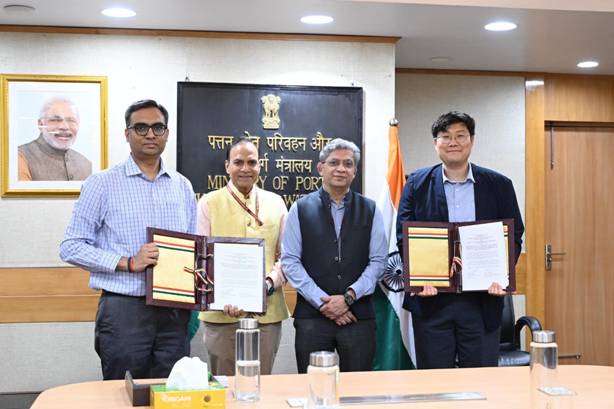
NEW DELHI : In a significant step towards strengthening India’s maritime capabilities, the Ministry of Ports, Shipping and Waterways (MoPSW), Government of India, has signed a Plan of Implementation with the Korea International Cooperation Agency (KOICA) on 02 April 2026 for a landmark project on skill development in the Indian shipbuilding sector.

Aligned with the ambitious goals outlined under the Maritime Amrit Kaal Vision 2047, the project titled ‘Support the Establishment of Development Strategies and to Build a Foundation for Skilled and Professional Talents for the Indian Shipbuilding and Marine Sector’ aims to position shipbuilding as a strategically vital sector for India’s economic growth and global maritime standing.

Under this collaboration, KOICA, with the support of the Korea Research Institute for Vocational Education and Training and other stakeholders, will undertake comprehensive research on India’s shipbuilding and marine engineering industries. The initiative will focus on workforce mapping, skill gap assessment, and the development of a robust master plan and actionable roadmap for human resource development in the sector.

Speaking on this, the Union Minister of Ports, Shipping & Waterways (MoPSW), Sarbananda Sonowal said, “This partnership marks a defining moment in India’s maritime journey, as we move towards building a future-ready, globally competitive shipbuilding ecosystem. Under the visionary leadership of Prime Minister Shri Narendra Modi ji, India is transforming its maritime sector into a key driver of economic growth and strategic strength. This collaboration is about creating a robust foundation for a new generation of highly skilled, technologically empowered maritime professionals who will power India’s rise as a global shipbuilding hub. By leveraging the Republic of Korea’s advanced expertise and aligning it with our national priorities under Maritime Amrit Kaal Vision 2047, we are ensuring that our workforce is equipped to meet the demands of a rapidly evolving global maritime landscape. This initiative will strengthen institutional capacity, foster innovation, and generate high-quality employment opportunities, particularly for our youth. It reaffirms our commitment to building an Atmanirbhar maritime sector that is resilient, future-oriented and globally respected.”

As part of the project, a series of bilateral workshops on workforce development are planned to be conducted in both India and the Republic of Korea. These workshops will bring together key stakeholders, industry leaders, policymakers, and academic experts to exchange best practices and foster deeper cooperation.

The collaboration is expected to significantly contribute to the advancement of India’s shipbuilding and marine sectors by leveraging Korea’s globally recognised technological expertise and experience. It will facilitate workforce analysis, enhance institutional capacity, and support the formulation of structured training programs aimed at developing a highly skilled and future-ready maritime workforce.

Further strengthening this partnership, discussions between MoPSW and KOICA are in the final stages for the establishment of a ‘Shipbuilding Workforce Development and Technology Cooperation Center’ in India. The proposed centre will focus on delivering industry-oriented vocational training, enhancing technical competencies, and improving productivity through advanced skill development programs tailored to the needs of the shipbuilding ecosystem.

This initiative marks a major milestone in India’s journey towards becoming a global hub for shipbuilding and maritime services, reinforcing the Government’s commitment to capacity building, international collaboration, and sustainable maritime growth.

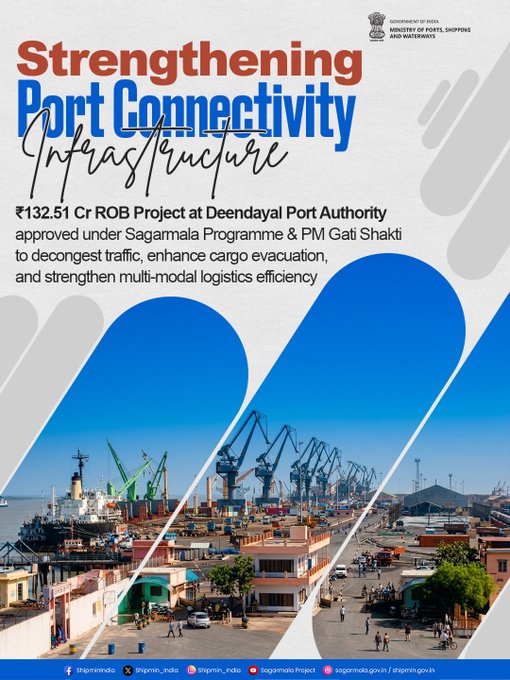
Government approves ₹132.51 crore for critical port connectivity project at Kandla

GANDHIDHAM : In a significant step towards strengthening port-led development in the country, the Union Minister of Ports, Shipping and Waterways (MoPSW), Sarbananda Sonowal, has approved the construction of a Road Over Bridge (ROB) at LC-235 at Deendayal Port Authority. The project is estimated at a cost of ₹132.51 crore.

The project forms an integral part of the Government of India’s flagship Sagarmala Programme and aligns with the objectives of the PM Gati Shakti National Master Plan, aimed at enhancing multi-modal connectivity and logistics efficiency across the country. The construction is currently being undertaken by Western Railway on a deposit basis.

Speaking on the occasion, Union Minister Sarbananda Sonowal said, “This project reflects our commitment to modern, efficient and seamless port-led connectivity under the visionary leadership of Prime Minister Shri Narendra Modi ji. The ROB at Deendayal Port will remove critical bottlenecks, improve cargo movement and strengthen India’s logistics efficiency. Aligned with the Sagarmala Programme and PM Gati Shakti, we are building integrated infrastructure that accelerates trade, enhances safety and supports economic growth. This is a decisive step towards creating world-class port infrastructure and reinforcing India’s position as a global maritime hub.”

The proposal was recently appraised by the Delegated Investment Board (DIB) in a meeting chaired by the Secretary, Ministry of Ports, Shipping and Waterways. The revised cost of the project was examined to ensure compliance with modern safety standards and technical specifications.

The proposed ROB is a critical infrastructure intervention designed to address existing logistical constraints at the port. By enabling seamless movement across the rail crossing, the project will eliminate bottlenecks, ensure uninterrupted flow of port-bound cargo, and significantly improve operational efficiency at Deendayal Port. Upon completion, it is expected to reduce congestion, facilitate faster cargo evacuation, and strengthen the overall maritime logistics chain of the country.

In line with Prime Minister Narendra Modi’s vision of integrated and coordinated infrastructure development, the Ministry has also directed all Major Ports to map their projects on the PM Gati Shakti portal. This initiative will enable better synchronisation of multi-modal connectivity projects, enhance inter-agency coordination, and accelerate infrastructure development across the nation.

Indian Railways set cargo loading record in FY26, on track to achieve 3,000 MT milestone by 2030

NEW DELHI : Indian Railways shipped a record 1,670 million tonnes (MT) of freight in the financial year 2025-26 (FY26), registering a growth of 3.25% over the previous year’s freight transportation of 1,617 MT.

The growth was largely driven by key sectors such as fertilizer (13.49%) , pig iron and steel (13.11%), iron ore (6.74%), container (5.59%), cement (4.74%) and other goods (11.69%).

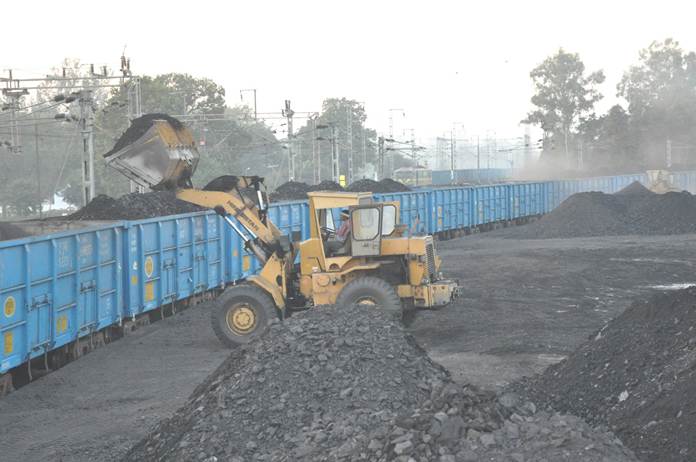
However, the coal transportation, which accounts for almost 50% of the overall freight, reduced by 0.51%.

Foodgrains also saw a decrease of 2.05% in loading than FY25. Officials said that the increase in iron ore and cement transportation shows that infrastructure development and construction activity has increased across the country, where railways continues to serve as a vital logistics partner.

Freight is one of the biggest sources of revenue for the railways. Nearly 65% revenue of railways comes from freight. The passenger segment, which is subsidised, contributes almost 30% of the total revenue of Indian Railways.

The National Rail Plan pegged the total freight demand for the year 2025 at 6,017 MT. Nearly 27% of the country’s total freight is moved by the railways.

The zone-wise freight loading data shows that South Western Railway (SWR), which has important divisions Bengaluru, Mysuru, and Hubball, has registered a highest increase of 14.89% over the previous year.

Similarly, North Central Railway (NCR) saw an increase of 12.62%, East Coast Railway (ECoR) at 10.42%, and West Central Railway (WCR) at 10.06%.

Other zones which registered positive growth are Eastern Railway (ER) (0.78%), East Central Railway (ECR) (0.39%), North Eastern Railway (NER) (0.25%), Northeast Frontier Railway (NFR) (6.75%), North Western Railway (NWR) (5.17%), South Central Railway (SCR) (2.59%), South East Central Railway (SECR) (3.18%), Southern Railway (SR) (1.10%), and Western Railway (WR) (3.57%).

However, the freight loading in four zones Central Railway, Konkan Railway, Northern Railway and South eastern railway saw a decrease of 3.87%, 2.02%, 6.13% and 0.92%.

According to the 2019 National Rail Plan, prepared for a “future-ready” railway system, the Indian Railways has set ambitious targets.

Besides increasing freight capacity to 3,000 MT by 2030, there are plans to raise the speed of freight trains to 100 km per hour from the current average speed of 25 kmph.

In December 2025, the Standing Committee on Railways underlined the need for Indian Railways to diversify its freight basket, move beyond bulk commodities, and focus on goods that are primarily transported by road to jack up its business.

The panel suggested that the railways should explore automobiles, fast moving consumer goods (FMCG) and e-commerce.