Home Blog Page 378

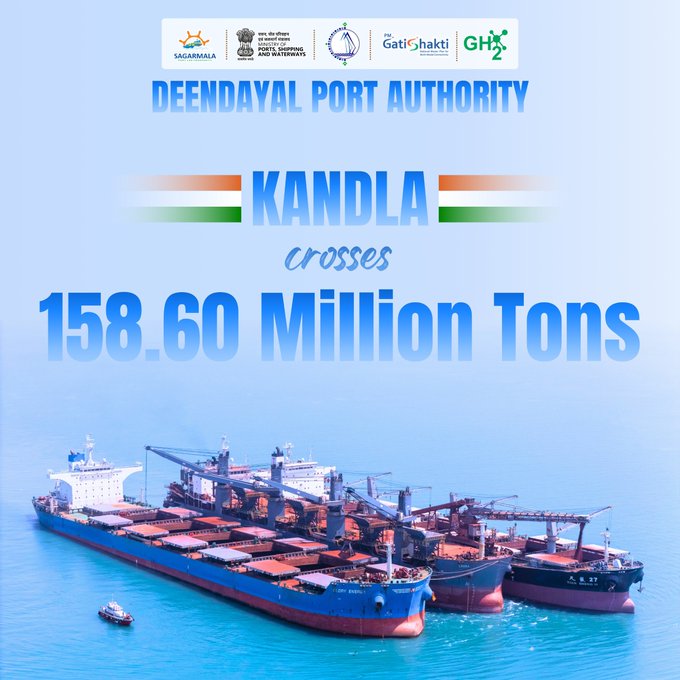
Mission Accomplished : DPA Kandla surpasses FY 2025–26 cargo target of handling 158.60 Million Tons

GANDHIDHAM : Deendayal Port Authority (DPA), Kandla is all set to create a new record!! It has successfully surpassed its cargo handling target of 158.60 million tonnes for the financial year 2025–26,marking a significant milestone in its operational journey. Demonstrating exceptional efficiency, resilience, and commitment, the port is now poised to achieve an all-time high and set a new benchmark in cargo throughput.

This remarkable achievement reflects the collective efforts of port stakeholders, terminal operators, trade partners, and the dedicated workforce of DPA. With a strong focus on operational excellence, improved turnaround time, and customer-centric services, the port has consistently enhanced its performance across multiple cargo segments.

As a leading user-driven port, DPA, Kandla continues to play a pivotal role in strengthening India’s maritime and logistics ecosystem. Strategic initiatives in infrastructure development, mechanization, digitalization, and multimodal connectivity have further contributed to increased efficiency and capacity augmentation.

The port’s robust performance underscores its vital contribution to facilitating trade, supporting economic growth, and reinforcing India’s position in global maritime commerce. With sustained momentum and forward-looking initiatives, DPA remains committed to driving innovation, sustainability, and excellence in port operations.

All indicators point toward a record-breaking finish for the financial year, reaffirming DPA, Kandla’s status as a key engine of India’s maritime growth.

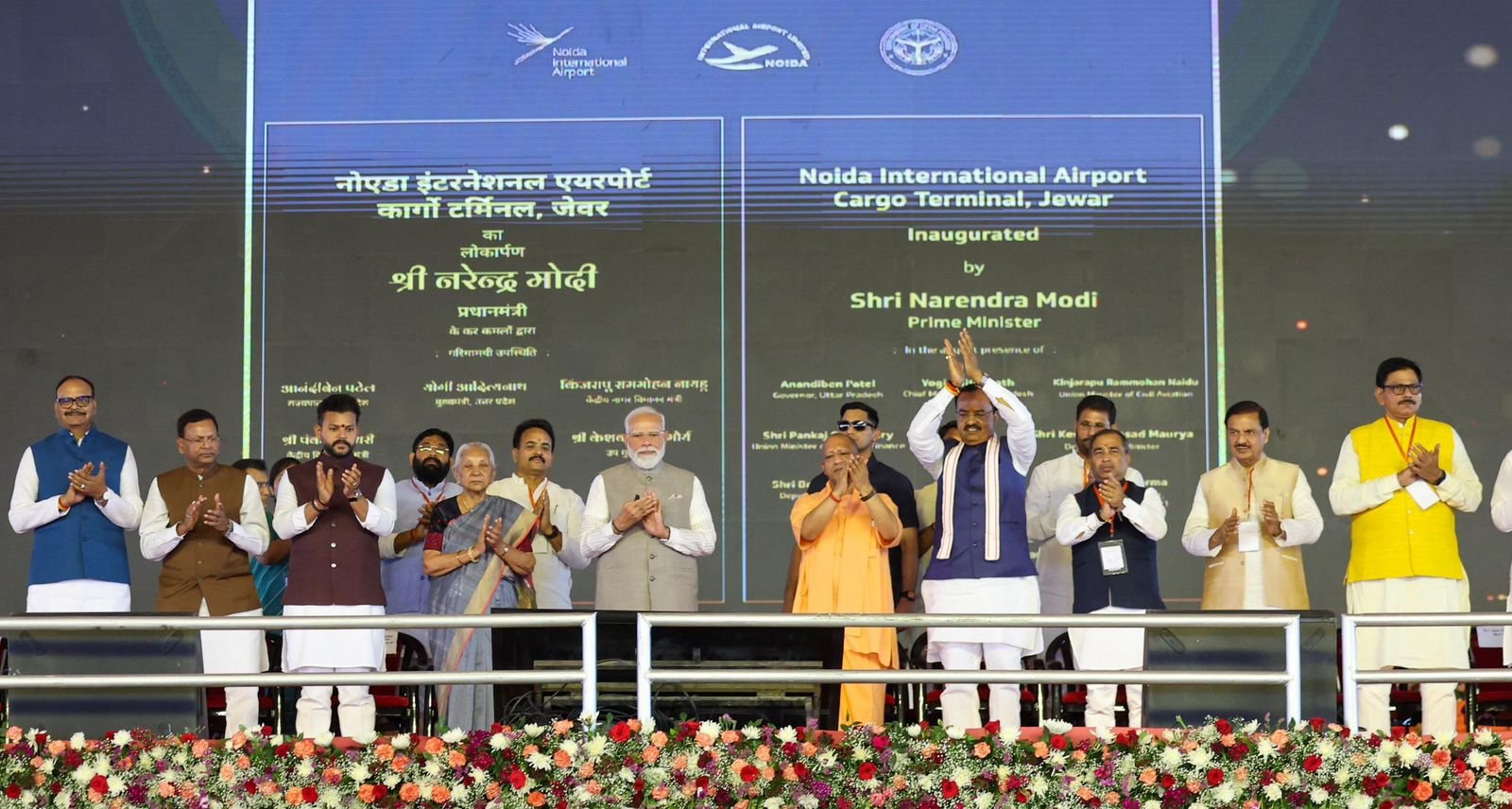
PM Modi inaugurates Phase I of Noida International Airport

NOIDA : Prime Minister, Shri Narendra Modi, on Saturday inaugurated the Noida International Airport at Jewar in Uttar Pradesh. Expressing his pride and joy on the occasion, the Prime Minister said that this marks a new chapter in the Viksit UP, Viksit Bharat Abhiyan. He noted that India’s largest state has now become one of the states with the highest number of international airports. PM Modi shared that he felt doubly proud , first, for having laid the foundation stone of this airport and now inaugurating it, and second, because the name of this grand airport is linked to Uttar Pradesh. “This is the state that chose me as its representative and made me a Member of Parliament, and its identity is now associated with this magnificent airport,” remarked Shri Modi.

Highlighting the far-reaching impact of the new airport, the Prime Minister said that the Noida airport will benefit a vast region encompassing Agra, Mathura, Aligarh, Ghaziabad, Meerut, Etawah, Bulandshahr, and Faridabad. He emphasised that the airport will bring numerous new opportunities for the farmers, small and medium enterprises, and the youth of western Uttar Pradesh. “Aircraft will fly from here to the world, and this airport will also become a symbol of a developed Uttar Pradesh taking flight,” said Shri Modi, extending his heartfelt congratulations to the people of the state, especially western UP.

Speaking about the current global situation, the Prime Minister observed that the entire world is deeply concerned today, with a war raging in West Asia for over a month, creating crises of essential commodities including food, petrol, diesel, gas, and fertilizers in many countries. He noted that India imports a very large quantity of crude oil and gas from the conflict-affected region. “The Government is taking every possible step to ensure that the burden of this crisis does not fall on ordinary families and farmers,” affirmed Shri Modi.

Underscoring India’s continued momentum of rapid development even during times of global crisis, the Prime Minister noted that in Western Uttar Pradesh alone, this is the fourth major project to be either inaugurated or have its foundation stone laid in recent weeks. “During this period, the foundation stone of a major semiconductor factory in Noida was laid, the country’s first Delhi-Meerut Namo Bharat train gained speed, the Meerut Metro was expanded, and today the Noida International Airport is being inaugurated,” highlighted PM Modi.

The Prime Minister credited the current Government for these remarkable achievements in UP’s development. He noted that the semiconductor factory is making India self-reliant in technology, the Meerut Metro and Namo Bharat Rail are providing fast and smart connectivity, and the Jewar Airport is connecting entire North India to the world. ” Today under the current government, the same Noida is becoming a powerful engine of UP’s development,” asserted Shri Modi.

Elaborating on the history of the airport project, The Prime Minister recalled that the Jewar Airport was approved by Atal ji as early as 2003. And as soon as the current government was formed here, the foundation was laid, construction happened, and now it has started operations,” said Shri Modi.

Drawing attention to the region’s emerging role as a logistics hub, the Prime Minister pointed out that this area is becoming the hub of two major freight corridors , special railway tracks laid for goods trains, which have enhanced North India’s connectivity with the seas of Bengal and Gujarat. He noted that Dadri is the strategic point where both these corridors converge, meaning whatever farmers grow and industries produce here can now reach every corner of the world swiftly, by land and by air. “This kind of multi-modal connectivity is making UP a major attraction for investors worldwide,” explained PM Modi.

Addressing the transformation of the region’s image, the Prime Minister said. “Today, Noida is ready to welcome the entire world. This whole area is strengthening the resolve of Aatmanirbhar Bharat”.

The Prime Minister expressed his gratitude to the farmers who gave up their lands to make this project a reality, noting that agriculture and farming hold great importance in the region’s economy. Shri Modi noted that the expansion of modern connectivity will further boost food processing prospects in Western UP, adding, “The agricultural produce from here will now reach global markets more efficiently.”

Acknowledging the contribution of sugarcane farmers to reducing India’s dependence on crude oil, the Prime Minister highlighted the significant role of ethanol produced from sugarcane. PM Modi highlighted that without the increase in ethanol production and its blending with petrol, India would have had to import an additional four and a half crore barrels,approximately 700 crore litres of crude oil annually, adding, “The hard work of our farmers has given the country this enormous relief during the time of crisis.”

The Prime Minister further elaborated that ethanol has not only benefited the nation but has also greatly benefited farmers, with approximately Rs 1.5 lakh crore worth of foreign exchange being saved. He recalled the earlier days when sugarcane farmers had to wait for years for their dues. “Today, thanks to the efforts of the current Government, the condition of sugarcane farmers has improved significantly,” affirmed Shri Modi.

Emphasizing that airports are not merely amenities but catalysts for progress, the Prime Minister pointed out the remarkable expansion of India’s aviation infrastructure. Highlighting that today, there are more than 160 airports, PM Modi remarked that the Air connectivity is now reaching not just metropolitan cities but also smaller towns. “ The current government has made air travel accessible for the common Indian,” asserted Shri Modi, adding that the number of airports in Uttar Pradesh has been increased to seventeen.

Highlighting the impact of the UDAN scheme, the Prime Minister said that the government has consistently strived to ensure that while airports are built, airfares remain within the reach of ordinary families. Noting that more than one crore sixty lakh citizens have travelled by air at affordable rates by booking tickets under the UDAN scheme, Shri Modi remarked, “ Recently, the Central Government has further expanded the UDAN scheme with an approval of approximately Rs 29,000 crore, under which 100 new airports and 200 new helipads will be built in smaller cities in the coming years. UP will also benefit immensely from this.”

Speaking about India’s rapidly growing aviation sector, the Prime Minister noted that as new airports are being built, the demand for new aircraft is also rising, with various airlines placing orders for hundreds of new planes. Shri Modi observed that this creates tremendous opportunities for the youth, including pilots, cabin crew, and maintenance professionals, adding that “our government is also expanding training facilities in the aviation sector” to meet this growing demand.

Addressing a critical gap in India’s aviation ecosystem, the Prime Minister drew attention to the Maintenance, Repair, and Overhaul (MRO) sector, noting that 85 per cent of Indian aircraft still have to go abroad for MRO services. PM Modi noted that the government has resolved to make India self-reliant in the MRO sector as well and highlighted that today, the foundation stone of an MRO facility has been laid here at Jewar. “When ready, it will serve aircraft from India and abroad , generating revenue for the country, keeping our money within India, and creating numerous jobs for the youth,” announced Shri Modi.

Underlining the government’s priority of ensuring citizen convenience and saving their time and money, the Prime Minister spoke about the expansion of modern rail services such as Metro and Vande Bharat. “The Delhi-Meerut Namo Bharat Rail has already been used by over two and a half crore passengers. The journey between Delhi and Meerut that used to take hours is now completed in minutes,” said PM Modi.

Underscoring the unprecedented investment in modern infrastructure for a Viksit Bharat, the Prime Minister shared that over the past eleven years, the infrastructure budget has been increased more than six-fold, with Rs 17 lakh crore spent on highways and expressways and over one lakh kilometres of highways constructed. He noted that railway electrification has expanded from 20,000 kilometres before 2014 to over 40,000 kilometres since then, with nearly 100 per cent of the broad-gauge network now electrified. The Prime Minister highlighted that for the first time, the Kashmir Valley and the capitals of the North-East are being connected to the rail network, while port capacity has more than doubled in the past decade and the number of inland waterways continues to grow. “India is working at a rapid pace in every sector necessary for building a Viksit Bharat,” stated Shri Modi.

Calling for collective effort and national unity in the face of global challenges, the Prime Minister said he had spoken at length in Parliament and held detailed discussions with Chief Ministers about tackling the crisis arising from the ongoing conflict. He appealed to the people to face this crisis with a calm mind and patience, calling it the greatest strength of Indians. PM Modi reiterated that what is in the interest of Indians and in the interest of India, that alone is the policy and strategy of the Government of India.” I am fully confident that all political parties will lend strength to the country’s united efforts”, concluded Shri Modi.

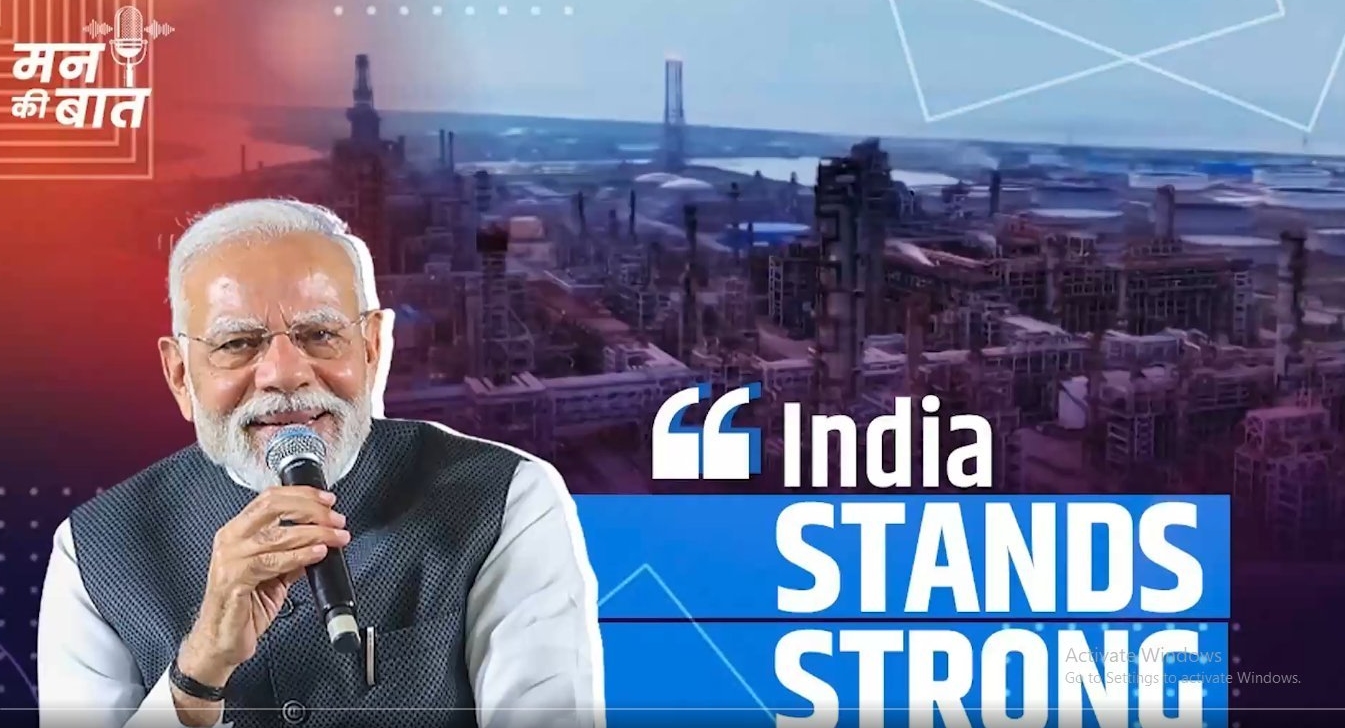
“Challenging times”, says PM on West Asia crisis during Mann ki Baat

NEW DELHI: Prime Minister Shri Narendra Modi on Sunday (March 29, 2026) noted that the situation in West Asia had created “challenging times” and called for those “politicising” the issue to refrain from doing so. He cautioned Indians against believing rumours related to the crisis.

Speaking during his monthly Mann Ki Baat address, the Prime Minister said that following the COVID-19 pandemic, it was expected that the world would move forward on a path of renewed progress.

“However, situations of war and conflict have continuously kept arising in different parts of the world,” he said. “Presently, a fierce war has been going on in our neighbourhood for a month. Millions of our family members, near and dear ones, live in these countries, especially working in the Gulf countries.”

“I am deeply grateful to the Gulf countries for providing all kinds of assistance to more than 1 crore Indians there,” he added.

Mr. Modi noted that the West Asian region is a major centre of India’s energy needs, and due to the ongoing war, a “crisis” regarding petrol and diesel is emerging around the world.

“These certainly are challenging times,” he said. “I would once again urge all my countrymen that we must unitedly overcome this challenge. Those who are politicising even this issue should refrain from doing so. This is a matter concerning the interests of 140 crore countrymen; there is no place for self-serving politics.”

“Therefore, those who are spreading rumours are causing a major harm to the country,” Mr. Modi added. “I would also appeal to all citizens to remain vigilant and not be misled by rumours. Trust only the continuous information provided by the government and take action based only on that.”

PM Modi discusses West Asia situation with Saudi Crown Prince, stresses secure shipping routes

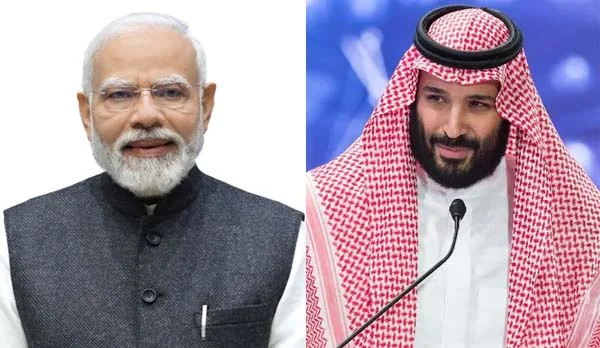
NEW DELHI : Prime Minister Shri Narendra Modi on Saturday held a telephonic conversation with Saudi Arabia’s Crown Prince and Prime Minister Mohammed bin Salman to discuss the escalating situation in West Asia and its wider implications.

In a post on X, PM Modi said, “Spoke with Crown Prince and PM of Saudi Arabia, HRH Prince Mohammed bin Salman and discussed the ongoing conflict in West Asia. I reiterated India’s condemnation of attacks on regional energy infrastructure.”

“We agreed on the need to ensure freedom of navigation and keeping shipping lines open and secure. Thanked him for his continued support for the welfare of the Indian community in Saudi Arabia,” added PM Modi.

S. Jaishanker says importance of resilient trade corridors, such as the IMEC and supply chains needed

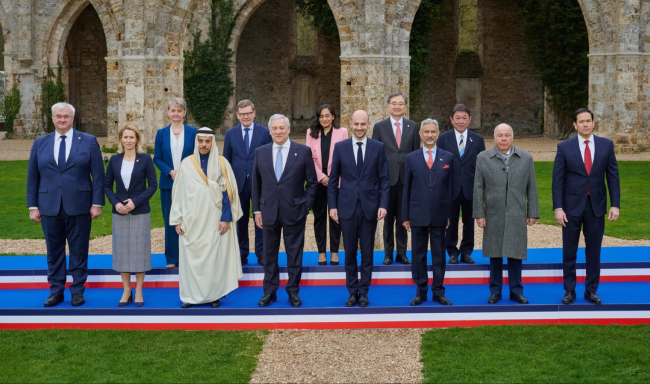
As the U.S.-Israel war against Iran approached the close of its fourth week, External Affairs Minister Dr. S. Jaishankar discussed India and the Global South’s concerns about food, fuel, and fertilizer shortages with his counterparts from the G-7 advanced economies and others, according to the Ministry of External Affairs (MEA).

Mr. Jaishankar is on the second day of his visit to Vaux-de-Cernay, France, as one of several guest country representatives at the G-7 Foreign Ministers meeting.

He spoke at two sessions, one on global governance, peacekeeping and humanitarian aid delivery, and a second session on the India Middle East Europe Economic Corridor (IMEC). The Minister stressed the importance of having resilient trade corridors, according to MEA spokesperson Randhir Jaiswal.

“The uncertainties arising from the conflicts in West Asia only make a stronger case for more resilient trade corridors and supply chains,” Mr. Jaishankar said in a post on X. “At the same time, India’s FTAs with the European Union, EFTA [European Free Trade Association] members and UK have enhanced the utility of IMEC,” he added.

Freedom of navigation
“Underscored the importance of freedom of navigation for global economic security. As well as the threat of narco – terror linkages,” Mr. Jaishankar said.

Energy and commodity markets have been reeling under the impact of the conflict in West Asia, with Iran controlling the transit of ships through the Strait of Hormuz. Other sessions at the G-7 meet included discussions on cooperation for critical minerals.

The Minister also held bilateral talks or pull-aside conversations with his counterparts, including U.S. Secretary of State Marco Rubio, and the Foreign Ministers of France, Germany, Canada, the U.K., Ukraine, South Korea, and Brazil, as well as the EU’s top diplomat Kaja Kallas.

South Africa’s exclusion
Responding to a question from The Hindu on whether India had protested the exclusion of South Africa from the upcoming G-7 Summit in June, or from the G-20 summit in December, Mr. Jaiswal said the matter was for the hosts to decide. South Africa has participated as an outreach country at G-7 meets, and is a member of the G-20.

France currently holds the presidency of the G-7, while the U.S. is hosting the G-20 meetings this year. The U.S. has reportedly pressured France to exclude South Africa, though Paris has denied this, saying it is inviting Kenya this year instead.

The U.S. and South Africa have had a series of recent diplomatic rifts, including over South Africa’s domestic policies on land reform as it attempts to correct the injustices of apartheid. The two also have different positions on Israel, against whom South Africa had filed a case at the International Court of Justice for its alleged genocide in Gaza.

India to send empty tankers to West Asia for Refill

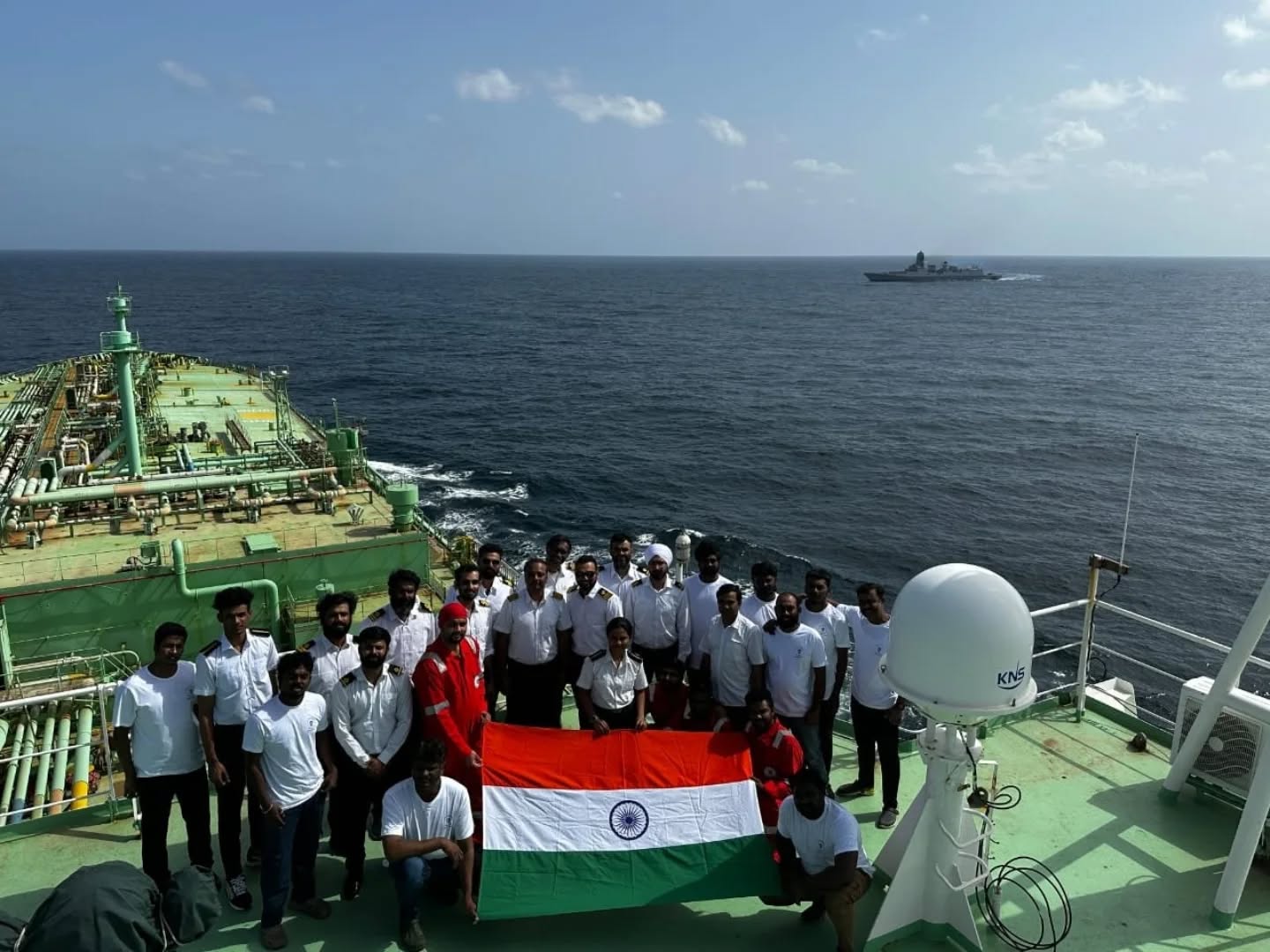
NEW DELHI : India is planning to send empty tankers to West Asia to load and bring back energy supplies, even as talks are underway for approximately five more Indian-flagged ships to transit the Strait of Hormuz in the coming week. The Ministry of External Affairs, Indian Navy, and the Shipping Ministry are in active coordination on both fronts. This information is available to The Sunday Guardian exclusively. The Indian Navy has deployed more than half a dozen frontline warships—including Visakhapatnamclass destroyers and frigates—in the Gulf of Oman to escort India-bound tankers out of the conflict zone surrounding the Strait of Hormuz.

MEA spokesperson Randhir Jaiswal told the media that four Indian ships carrying LPG have crossed the Strait and arrived safely in India. Of the 24 India-flagged ships originally stranded at the Strait of Hormuz, 20 remain. “We continue to be in touch with all concerned countries for the safe transit of our ships to meet our energy requirements,” he said.

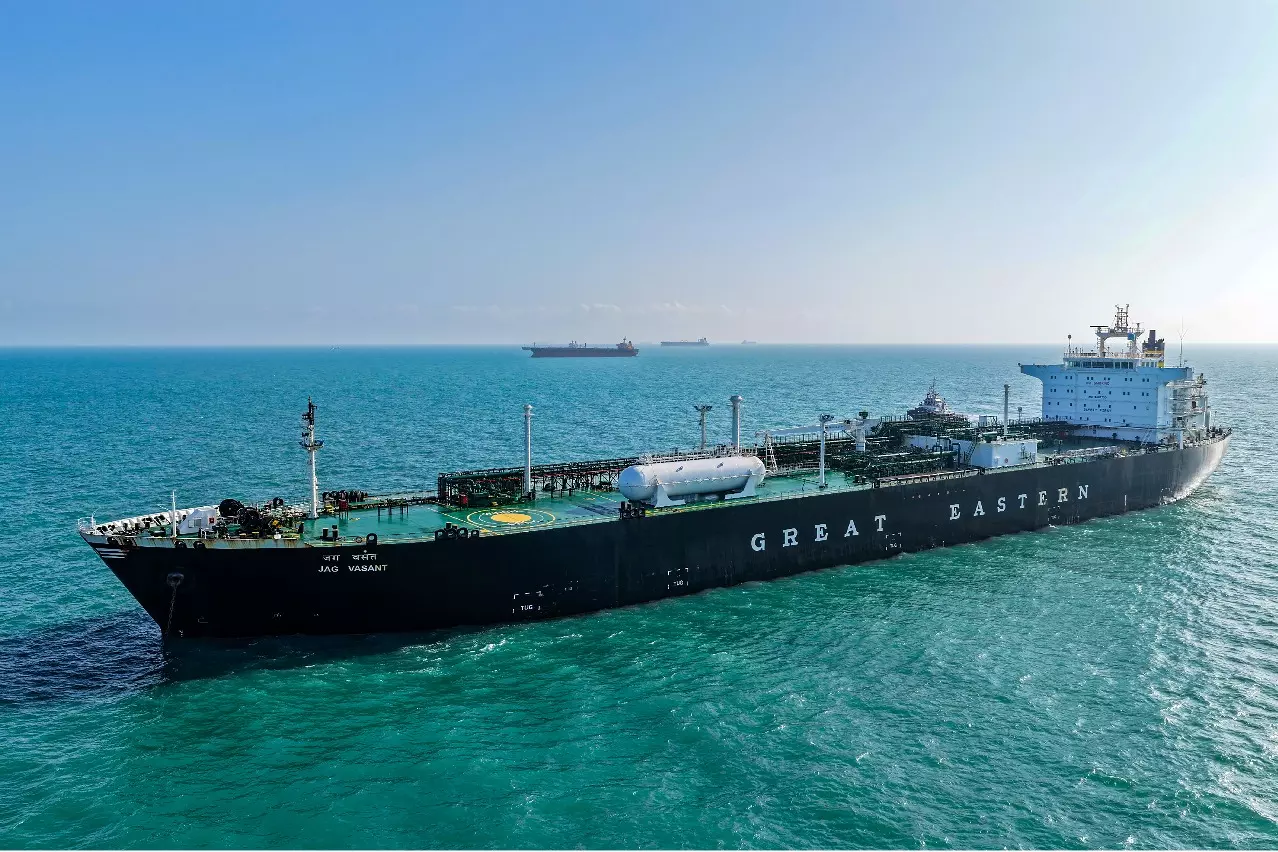
The four LPG carriers that have returned—Shivalik, Nanda Devi, Pine Gas, and Jag Vasant—carried a combined load of close to two lakh metric tonnes of liquefied gas. Crude oil tanker Jag Laadki has also been escorted out of the danger zone.

The Navy’s warships are positioned east of the Strait of Hormuz and are not entering the waterway itself. Once vessels clear the Iranian-controlled zone, naval ships escort them through the Gulf of Oman into the Arabian Sea. The Navy is providing real-time route guidance using hydrographic charts and maintaining constant communication with merchant crews. Iran has been forcing ships to deviate from the normal Traffic Separation Scheme and sail closer to its coastline, making precise, ship-by-ship guidance critical.

“Given the dynamic and rapidly evolving nature of this conflict—whose reverberations are being felt across the region and beyond—Indian Navy has undertaken several proactive measures to safeguard India’s energy imports and protect the lives of seafarers aboard merchant vessels. However, for operational reasons, certain details cannot be disclosed at this stage,” a top Indian Navy official told The Sunday Guardian.

Over 600 Indian seafarers remain aboard the 20 vessels still stranded at the Strait.

The threat is not limited to surface dangers. Concerns have been raised about the possible presence of underwater mines in and around the Strait, adding urgency to the Navy’s hydrographic support for transiting vessels. In moments such as these, where civilian agencies have neither the reach nor the capability to respond, the Indian Navy’s role as an armed force plays a central role. The crisis was triggered when the United States and Israel launched coordinated strikes on Iran under Operation Epic Fury, targeting military facilities, nuclear sites, and leadership, resulting in the death of Supreme Leader Ali Khamenei. Iran’s IRGC responded by issuing warnings restricting vessel passage through the Strait of Hormuz, causing tanker traffic to drop significantly. The Strait of Hormuz is the principal artery for oil and gas supplies bound for Asian countries.

Prime Minister Narendra Modi spoke with Iranian President Masoud Pezeshkian on March 12, pressing for the safety of Indian nationals and the unimpeded movement of energy supplies. On March 26, Iranian Foreign Minister Abbas Araghchi announced that ships from five nations—India, China, Russia, Iraq, and Pakistan—would be permitted to transit the Strait of Hormuz, describing them as countries Iran considers friendly.

India’s diplomatic outreach was not limited to Tehran alone. India’s diplomatic outreach has been extensive, with the country’s leadership actively engaging all nations in the region—whether directly involved in the conflict or affected by its fallout—the latest being Prime Minister Modi’s conversation with Saudi Crown Prince Mohammed bin Salman. PM Modi, in a post on X on Saturday, March 28, said, “Spoke with Crown Prince and PM of Saudi Arabia, HRH Prince Mohammed bin Salman and discussed the ongoing conflict in West Asia. I reiterated India’s condemnation of attacks on regional energy infrastructure. We agreed on the need to ensure freedom of navigation and keeping shipping lines open and secure. Thanked him for his continued support for the welfare of the Indian community in Saudi Arabia.”

NAVY’S INDISPENSABLE ROLE
The Indian Navy has long been the silent guardian of India’s energy lifeline, operating across the vast expanse of the Indian Ocean Region in both peacetime and periods of crisis. Whether it is patrolling against piracy off the Horn of Africa, conducting anti-smuggling operations, or ensuring the safe passage of merchant vessels through volatile chokepoints, the Navy’s mission has always extended far beyond war-fighting. India is known to import over 85% of its crude oil requirements by sea, making the uninterrupted flow of maritime trade a strategic priority as well as an economic imperative. The Navy’s ability to project power, gather intelligence, and provide real-time navigational guidance to merchant crews represents the invisible backbone upon which India’s energy security and, by extension, its economic stability, rests.

The ongoing crisis at the Strait of Hormuz has brought this role into sharp focus. The Navy’s institutional memory of such crises runs deep—its anti-piracy missions in the Gulf of Aden, which protected hundreds of merchant vessels over more than a decade, and its role in evacuating Indian nationals from conflict zones, have long established it as India’s first and most reliable responder when the seas turn hostile.

Source ; The Sunday Guardian

Two India-bound LPG tankers crossing Strait of Hormuz out of Gulf

NEW DELHI : Two liquefied petroleum gas tankers, BW Elm and BW Tyr, are crossing the ​Strait of Hormuz bound for India, according to ‌ship tracking data from LSEG and Kpler. Two LPG carriers, BW Tyr and BW Elm, carrying a combined LPG cargo of about 94,000 MT, have safely transited the region and are moving towards India shores. BW Tyr is proceeding towards Mumbai with an expected time of arrival on 31 March 2026 & BW Elm is en route to New Mangalore with an estimated arrival date of 01 April 2026.

The U.S.-Israeli war against Iran has all but halted shipping through the strait, but Iran ​said this week that “non-hostile vessels” may transit the waterway ​if they coordinate with Iranian authorities.

The two India-flagged ⁠vessels have crossed the Gulf area and are in ​the eastern Strait of Hormuz, the data showed.India is ​gradually moving its stranded LPG cargoes out from the strait, with four LPG tankers moved so far – Shivalik, Nanda Devi, Pine Gas, and Jag ​Vasant.

As of Friday, 20 Indian-flagged ships including five ​LPG carriers were stranded in the Gulf, Rajesh Kumar Sinha, special ‌secretary ⁠in the federal shipping ministry, said. LPG carriers Jag Vikram, Green Asha and Green Sanvi are still in the western Strait of Hormuz, LSEG data show. India, the world’s second-largest ​LPG importer, ​is battling its worst ⁠gas crisis in decades, with the government cutting supplies for industries to shield ​households from any shortage of cooking gas.

The country ​consumed ⁠33.15 million metric tons of LPG, or cooking gas, last year, with imports accounting for about 60% of demand. ⁠About ​90% of those imports came ​from the Middle East. India is also loading LPG onto its empty vessels stranded ​in the Gulf.

Source : Reuters

MoPSW initiates for green transformation of ports and maritime infrastructure

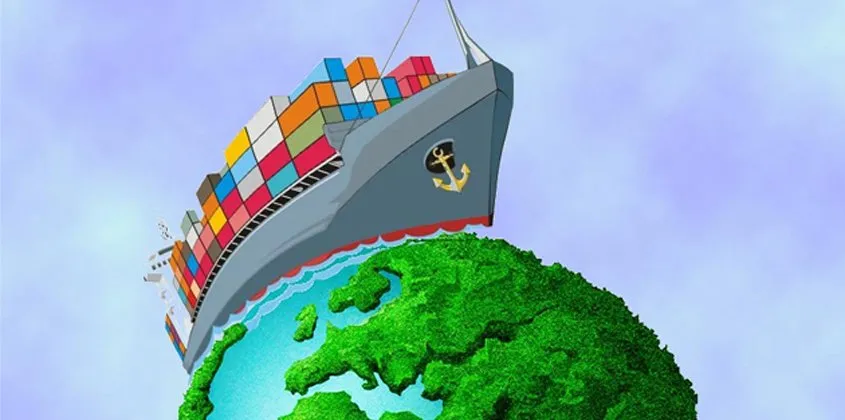
NEW DELHI : The Union Minister of Ports, Shipping, and Waterways, Shri Sarbananda Sonowal, informed in a written reply to the Lok Sabha that, the major Ports have undertaken several initiatives such as implementation of the Green Tug Transition Programme (GTTP) for transition from conventional diesel-powered tugs to electric/hybrid tugs, adoption of renewable energy at ports, electrification of port equipment, vehicles and railway tracks, deployment of zero-emission trucks, and installation of Onshore Power Supply system under “Harit Sagar” Green Port Guidelines which resulted in reduction of carbon intensity at major ports. Under GTTP, four Major Ports i.e. Deendayal Port, Jawaharlal Nehru Port, Visakhapatnam Port and V.O. Chidambaranar Port has placed a work order for electric tugs.

The Ministry of New and Renewable Energy (MNRE) has recognised three Major Ports i.e. Deendayal Port Authority in Gujarat, Paradip Port Authority in Odisha, and V.O. Chidambaranar Port Authority in Tamil Nadu as Green Hydrogen Hubs to support the development of the green hydrogen ecosystem in the country under National Green Hydrogen Mission. The details of initiatives taken by these ports to be developed as Green Hydrogen Hubs are at Annexure. All major ports are providing ‘Shore to Ship Power’ facilities to smaller crafts like port crafts. Under the Hong Kong International Convention for the Safe and Environmentally Sound Recycling of Ships, incentives amounting to Rs. 53.39 Crore have been provided to 109 ship recycling yards through the Ferrous Scrap Development Fund (FSDF) upto 2026.

Annexure

The details of initiatives taken by three Major Ports for developing as Green Hydrogen Hubs are as below:

(i)  Deendayal Port Authority:

Commissioned 1 MW electrolyser-based Green Hydrogen (GH2) plant.
Obtained the Port Readiness Level (PRL) of 6 (progressing to 7) for Kandla Port for bio methanol bunkering operations.
Allotted 3,400 acres of land to developers for development of Green Hydrogen/Green Ammonia Projects.
Deendayal Port has developed a jetty with capacity of 3.5 million tonne per annum which is also compatible for handling Green Ammonia at the Port.
(ii)  V.O. Chidambaranar Port Authority:

The port has allotted 205.72 acres of land for the development of Green Hydrogen/Green Ammonia Projects.
Port has commissioned a 10 Nm3 capacity pilot green hydrogen plant in April 2025.
The port is also developing a Green Methanol Bunkering Facility with a capacity of 2x750cubic meters.
(iii) Paradip Port Authority:

The government has approved development of Green Hydrogen / GreenAmmonia handling jetty through Public Private Partnership mode at Paradip Port Authority. The estimated cost of the project is Rs. 797.17 crore, having a cargo handling capacity of 4 million tonnes per annum.

Consensus-based decision-making is the bedrock of WTO’s legitimacy : Piyush Goyal in WTO MC-14

CAMEROON : On the second day of WTO MC14, which is currently underway in Yaounde, Cameroon, Trade Ministers of WTO member countries deliberated on WTO reform issues. Hon’ble Commerce and Industries Minister, Shri Piyush Goyal is leading the Indian delegation for MC 14.

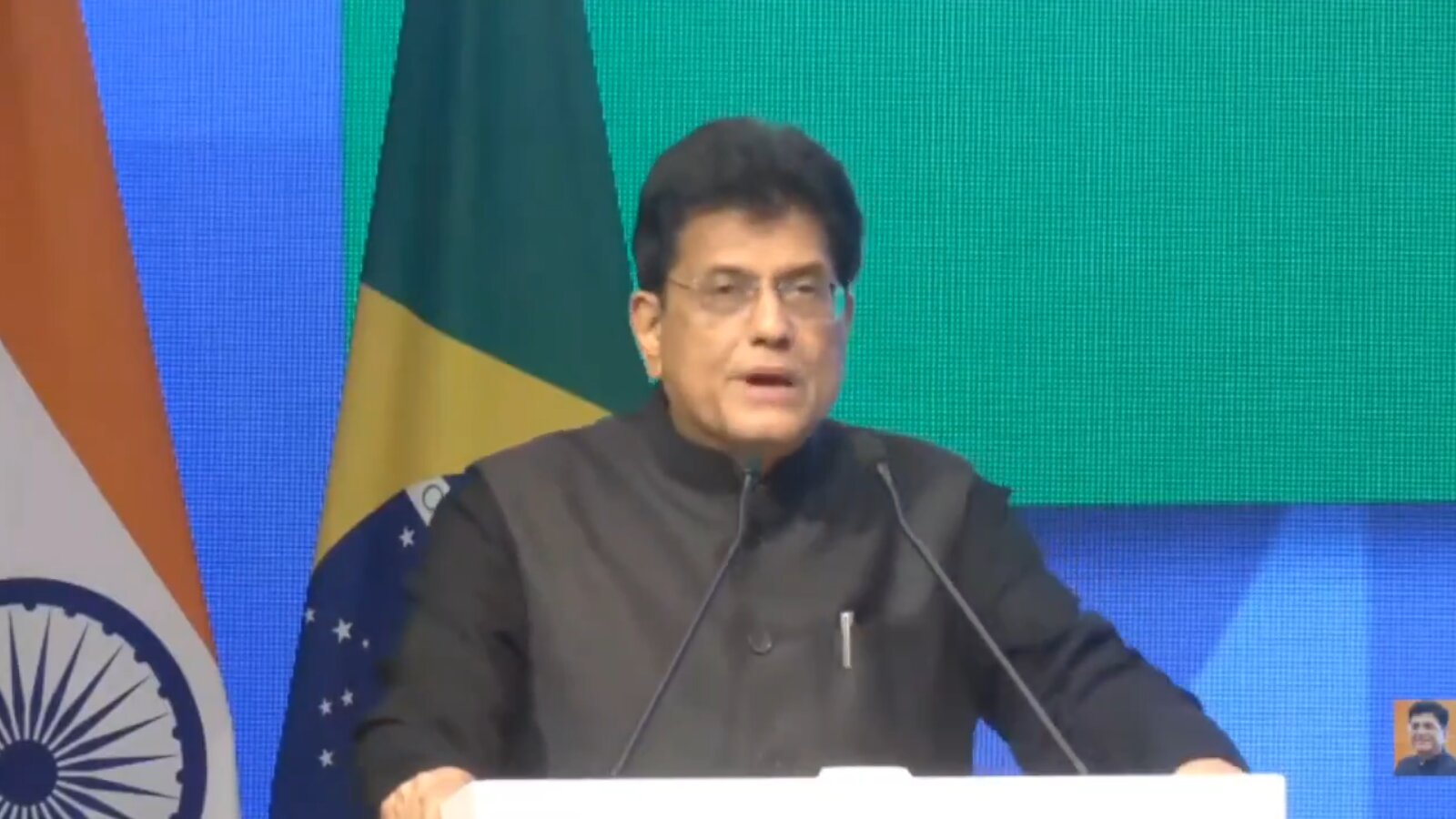
Speaking on the issue of ‘Decision making including past mandates’, Shri Goyal emphasised that consensus-based decision-making is the bedrock of the WTO’s legitimacy, and it is important for the WTO not to ignore the sovereign right of each member to not bind itself to rules which they do not agree to. While underlining the importance of rebuilding trust for overcoming challenges in reaching decisions through consensus, India stressed on the importance of the WTO to undertake a careful stock-take of the current impasse and its underlying causes, while ensuring discussions remain transparent, inclusive and Member-driven. India also highlighted that an integrated multilateral trading system cannot thrive alongside fragmentation within its own institutional framework.

On the ‘Level playing field issues’, Shri. Goyal emphasised that discussions must take into account the asymmetries from the Uruguay Round. India focused on the need for long pending issues like food security, PSH, SSM on Cotton to be prioritised while taking up new issues to address the structural asymmetries. Highlighting the continued dysfunction of the dispute settlement system, India emphasised that without effective adjudication, rules lose their enforceability, thereby disproportionately disadvantaging smaller economies. India also cautioned against weaponising transparency to justify trade retaliation or challenge legitimate domestic policies. Instead, it should be accompanied by meaningful and sustained capacity-building support, ensuring that all Members can meet obligations fairly and effectively. India also stressed on the importance of all Members to have a fair opportunity to build productive capacity, create employment, and participate meaningfully in global trade.

The day concluded with a Ministerial Plenary Session on WTO Reform Transparency. Speaking during this session, Commerce Secretary, Shri Rajesh Agrawal, extended India’s support for a time-bound restart of reform efforts with milestones, based on a more robust evidentiary analysis and through engagement with submissions and Ministerial Decisions. India unequivocally called for eschewing cherry-picking issues and proliferating preconceived and prejudged positions. India also highlighted the need to give greater importance to the role of WTO Committees, which, through their lived and learned experiences, can contribute to an exhaustive stocktake through a bottom-up approach. While cautioning against plurilaterals fragmenting the multilateral trading system, Shri Agrawal called for the consensus process to be premised on the principles of openness, transparency, inclusivity, participative and member-driven.

On the sidelines of the second day of the MC14 meetings, Shri Goyal held bilateral meetings with his counterparts from US, China, Korea, Switzerland, New Zealand, Canada, Morocco and Oman. Discussions were focused on the MC 14 agenda as well as on matters related to deepening bilateral trade ties.

Piyush Goyal holds bilateral meeting with EU Trade Commissioner on the sidelines of WTO MC-14 in Yaounde

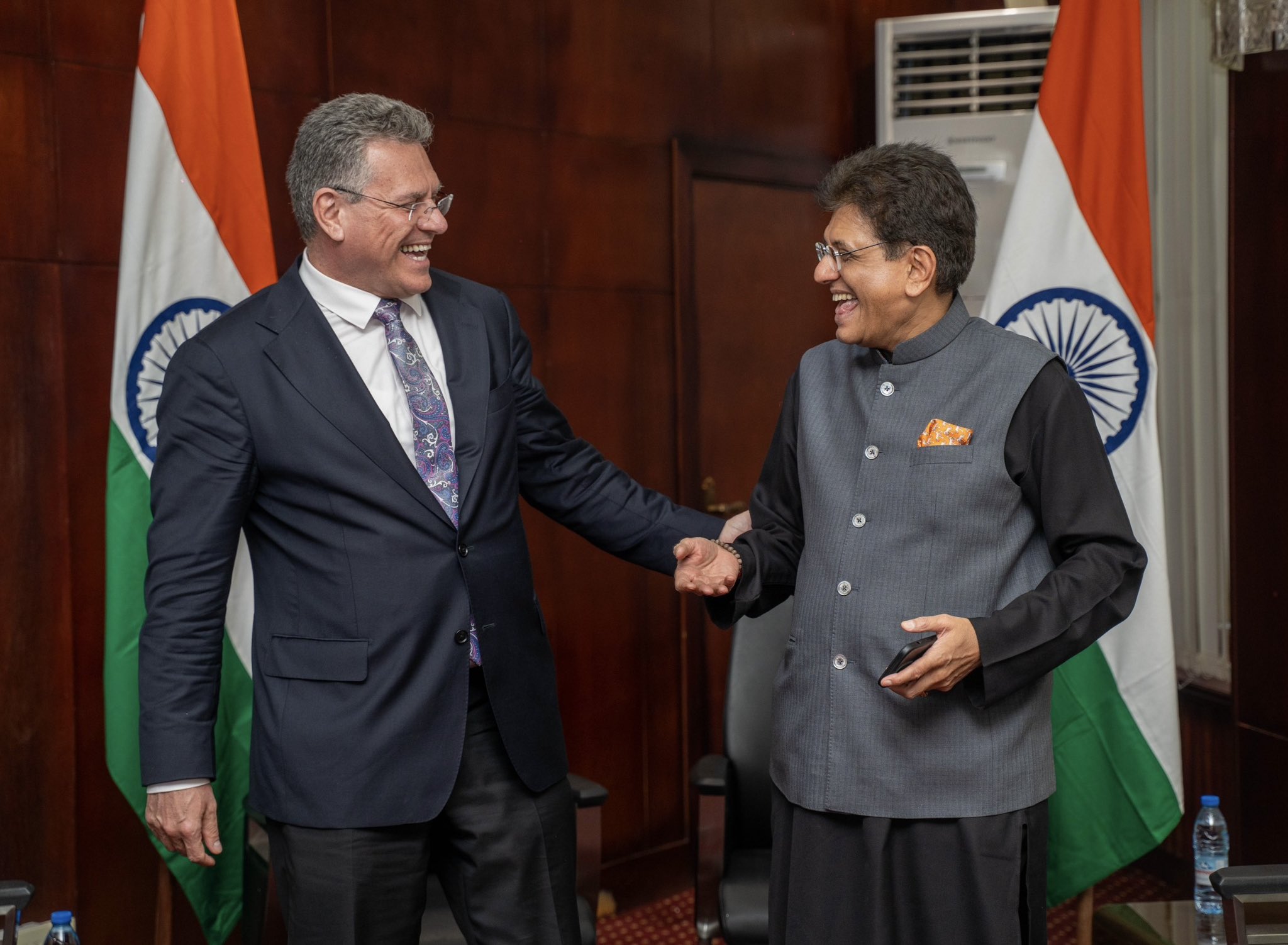
YAOUNDE : On the sidelines of the 14th WTO Ministerial Conference held in Yaounde, Cameroon, Union Minister of Commerce and Industry, Shri Piyush Goyal held a bilateral meeting with EU Trade Commissioner, Mr. Maros Sefcovic. Both sides exchanged views on MC-14 agenda, reviewed progress of the work underway on the signing of the recently concluded India-EU FTA as well as explored options for further enhancing bilateral trade & economic cooperation.

On the MC-14 agenda, Shri Goyal and Mr Sefcovic agreed on the necessity of WTO reforms. Shri Goyal emphasised to his EU counterpart that the WTO reforms agenda should remain strictly member-driven. Shri Goyal and Mr Sefcovic also exchanged views on the issue of moratorium on customs duties on electronic transmission as well as incorporation of the Investment Facilitation for Development Agreement.

Reviewing the progress of the work underway towards signing of the recently concluded India-EU FTA, Shri Goyal appreciated the pragmatic approach taken by both sides which resulted in concluding the India-EU FTA negotiations in a timely and mutually beneficial manner. Both Shri Goyal and Mr Sefcovic agreed that both sides should strive towards completing the necessary processes that can facilitate the signing of the India-EU FTA at the earliest, so that expected benefits from this FTA can be realised by businesses and citizens of India and EU.

Prior to the Ministerial bilateral, Commerce Secretary, Shri Rajesh Agrawal also held a bilateral meeting with his EU counterpart, Ms Sebine Weyand, DG-Trade, on the sidelines of MC-14.