Home Blog Page 379

Finance Ministry flags rising external risks as trade deficit and CAD expand

NEW DELHI: External sector pressures are building up for the Indian economy amid a volatile global backdrop, with recent data from the Finance Ministry’s Monthly Economic Review for March 2026 pointing to a deterioration in trade dynamics, widening imbalances, and emerging stress from capital flows and commodity prices.

According to the review, India’s merchandise trade performance has weakened at the margin even as import demand has surged sharply. The report noted that “merchandise exports declined marginally by 0.8 per cent (YoY),” reflecting subdued external demand conditions and the impact of global uncertainties. In contrast, import growth has been significantly stronger, with the review highlighting that “imports have increased by 24.1 per cent (YoY), widening the merchandise trade deficit considerably.”

A key driver of this surge in imports has been precious metals. The Ministry observed that “this increase in merchandise imports was primarily driven by a rise in gold and silver imports,” which recorded exceptionally high growth rates. This trend has added to pressures on the trade balance at a time when export momentum remains fragile.

The combined effect of declining exports and rising imports has translated into a sharp worsening of the trade deficit. As per the review, “the merchandise trade deficit… widened to USD 27.1 billion in February 2026 from USD 14.4 billion in February 2025,” marking a substantial increase and signalling growing external imbalances.

These pressures are also reflected in the broader balance of payments position. The report stated that “India’s current account deficit widened to 1.3 per cent of GDP in Q3 of FY26, from 1.1 per cent of GDP in Q3 FY25,” driven largely by a higher merchandise trade deficit despite continued strength in services exports. The widening deficit implies increased dependence on external financing at a time of heightened global uncertainty.

On the capital account side, the situation has become more challenging, with global risk aversion weighing on investor sentiment. The review pointed out that “increased geopolitical uncertainty has dampened global risk appetite; as a result, the portfolio flows remained negative in March 2026.” This trend of portfolio outflows has contributed to financial market volatility and added pressure on the external sector.

At the same time, rising global crude oil prices have compounded the strain. The Ministry flagged that “rising tensions in West Asia have driven global crude oil prices higher, posing a growing risk to India’s merchandise trade balance.” Given that crude oil constitutes a significant share of India’s import basket, elevated prices are expected to further widen the trade deficit and increase the import bill.

These developments have also begun to reflect in currency movements. The review noted that “portfolio capital outflows… have contributed to depreciation pressures on the Indian Rupee,” underscoring the combined impact of capital flow volatility and trade-related pressures.

Source: ANI

CBIC holds outreach programme on Duty Deferment Scheme for manufacturer importers in New Delhi

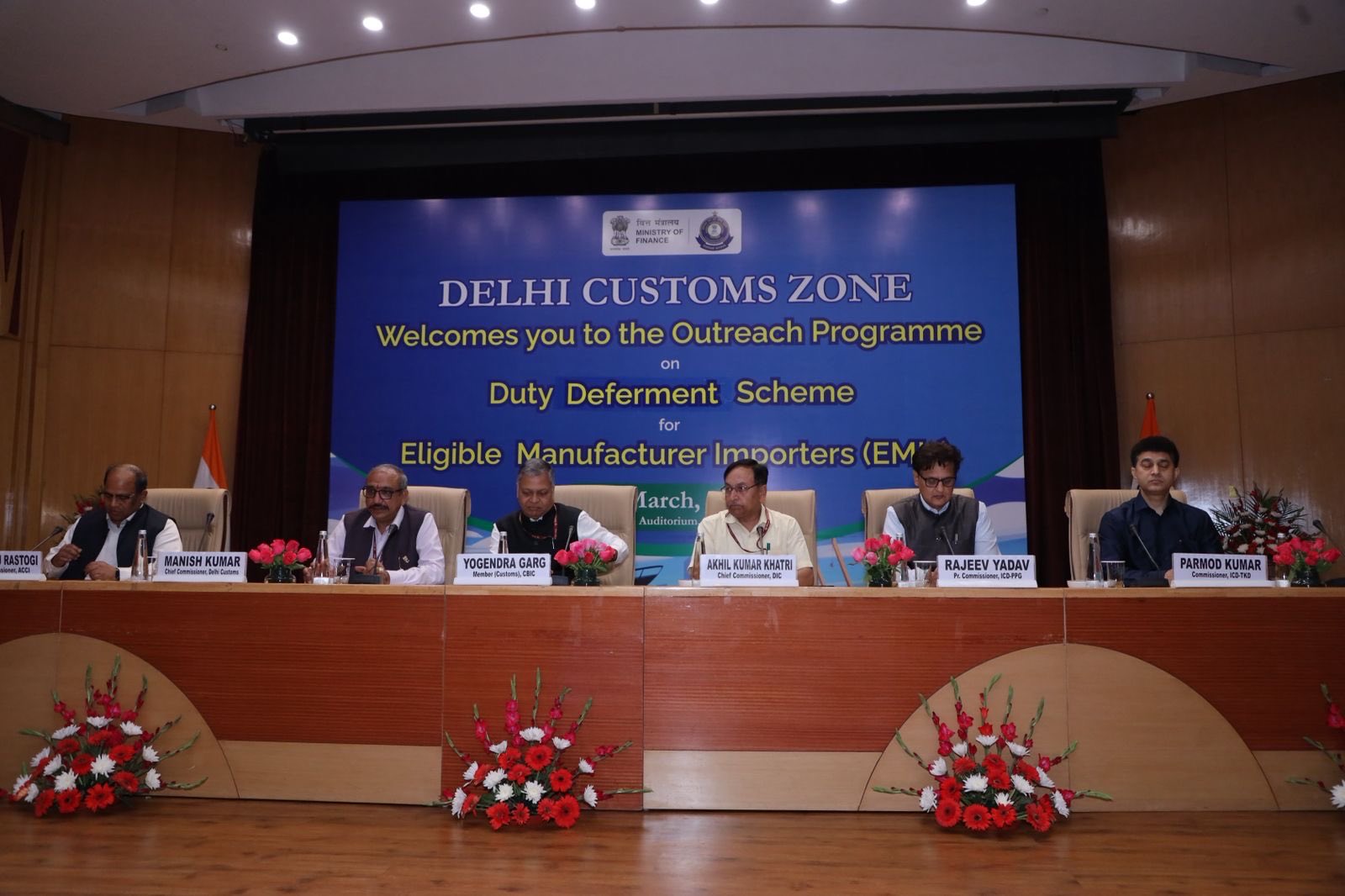
NEW DELHI: In pursuance of the key trade facilitation initiative announced in the Union Budget 2026-27, the Central Board of Indirect Taxes & Customs (CBIC) organised a hybrid outreach programme in New Delhi on the Duty Deferment Scheme for Eligible Manufacturer Importers (EMI) in New Delhi, on Saturday, according to a statement by the Ministry of Finance.

Yogendra Garg, Member (Customs), CBIC; Manish Kumar, Chief Commissioner, Delhi Customs; Sanjay Gupta, Chief Commissioner, Delhi Customs (Preventive) Zone; Akhil Kumar Khatri, Chief Commissioner, DIC; representatives from trade bodies, industry, and key stakeholders also participated and deliberated upon the benefits and modalities of the EMI Scheme.

The session included a detailed presentation followed by an interactive segment to address the queries from trade and industry.
Addressing the participants, Yogendra Garg stated that the scheme adopts a trust-based approach aimed at facilitating faster clearances and reducing dwell time. He emphasised that the initiative seeks to minimise the trust deficit and promote a more efficient and collaborative compliance environment. Garg also encouraged stakeholders to avail the benefits of the scheme and provide feedback.

Manish Kumar highlighted that the scheme enhances the commercial viability of manufacturer importers by enabling better import scheduling and more efficient working capital management.

The EMI Scheme enables deferred payment of import duties, allowing eligible manufacturer importers to clear goods without upfront duty payment. Duties are to be paid on a monthly basis.

The scheme is inclusive and extends to MSMEs. It aligns with the Government’s Make in India initiative and aims to strengthen domestic manufacturing by improving liquidity and expediting cargo clearance.

Some of the key benefits of the scheme include improved liquidity for manufacturers, faster clearance and reduced dwell time, better import planning and inventory management, strengthened payment discipline, enhanced global competitiveness and improved supply chain efficiency.

The eligibility criteria for this scheme is that the manufacturer importer should have a valid Import-Export Code (IEC).

The other criterion is to have a minimum of 25 Export-Import Bank (EXIM) documents filed in the preceding financial year (10 for MSMEs)

The manufacturer should also be GST compliant with no pending returns and must have a demonstrated financial solvency, along with a clean compliance track record.

Applications can be submitted online through the AEO portal (http://www.aeoindia.gov.in), operational since March 1 2026. The process is fully digital and does not require any physical interface.

Approved applicants may avail the scheme across all Customs formations from April 1 2026. The scheme will remain valid for a period of two years, up to March 31 2028.

Source: ANI

India’s coffee and tea exports climb on global demand for premium products

NEW DELHI : India is strengthening its position in global coffee and tea markets, driven by rising demand for value-added products such as instant coffee and packaged teas. Between April and February FY26, coffee exports rose 20% year-on-year to $1.86 billion from $1.54 billion, while tea exports grew 11% to $934.9 million from $842.5 million, according to commerce ministry data.

The growth builds on a strong rebound last year, when coffee exports crossed $1.8 billion—a record. “We have consistently recorded over $1 billion in coffee exports for the past four years, and this year marks the fifth. By February itself, we have already surpassed last year’s export level of around $1.8 billion, which is a very positive sign,” said Kurma Rao M., chief executive and secretary, Coffee Board of India.

A closer look at the data reveals that between April and January FY26, coffee exports rose from $1.36 billion to $1.62 billion, with instant coffee contributing $498 million, highlighting the growing role of value-added segments.

“Indian coffee is grown under shade, is hand-picked, and follows sustainable practices, which ensures high quality and differentiates it in global markets,” Rao added.

Tea exports also maintained steady growth, rising from $768 million to $865 million during April-January. Bulk black tea and larger pack formats drove the expansion, while retail packs and tea bags saw stable demand.

Key export destinations for coffee included Italy (16% share, $251 million), Germany (9%, $144 million), and Russia (8%, $137 million), with additional demand from the United Arab Emirates, the US, Belgium, and West Asian markets such as Jordan, Libya, and Turkey.

For tea, UAE remained the largest market (20%, $173 million), followed by Iraq (12%, $100 million), with steady demand from the US (7%), Russia (6%), UK (6%), Iran (5%), China (5%), and Germany (4%).

“India’s tea exports performed exceptionally well in 2025, reaching a record 280 million kg with export earnings of about ₹8,488 crore, supported mainly by strong demand from Iran, Iraq, the UAE and China,” said P. K. Bhattacharjee, secretary general, Tea Association of India.

Bhattacharjee added that orthodox tea exports rose about 20% to 128.47 million kg. However, he cautioned, “Any disruption in these traditional markets may affect export volumes, logistics, payment cycles and price realizations,” referring to geopolitical concerns around the Strait of Hormuz.

Data from the India Brand Equity Foundation (IBEF) shows coffee export earnings have trended upward in recent years despite a brief pandemic-led dip, reflecting steady global demand. India was the world’s seventh-largest coffee grower in FY24, with robusta accounting for about 72% of total production. The sector provides direct employment to more than two million people.

“India’s coffee and tea sectors stand at a critical inflection point,” said Said Vinod Kumar, president, India SME Forum, noting that despite producing some of the finest varieties globally, exports remain constrained by reliance on bulk commodity trade rather than value-added, branded offerings.

He added that while Geographical Indication (GI) products such as Darjeeling, Nilgiri, Araku and Coorg can command a premium globally, their potential remains underutilized due to fragmented marketing, limited visibility and weak international enforcement.

Source : Mint

Union Budget 2026–27: Strengthening SEZs for Global Competitiveness & Growth

NEW DELHI : The Union Budget 2026-27 proposed a special one-time measure to facilitate sale in domestic tariff area at concessional rate of duty by eligible manufacturing units of Special Economic Zones (SEZs). The quantity of such sales will be limited to a prescribed proportion of their exports.

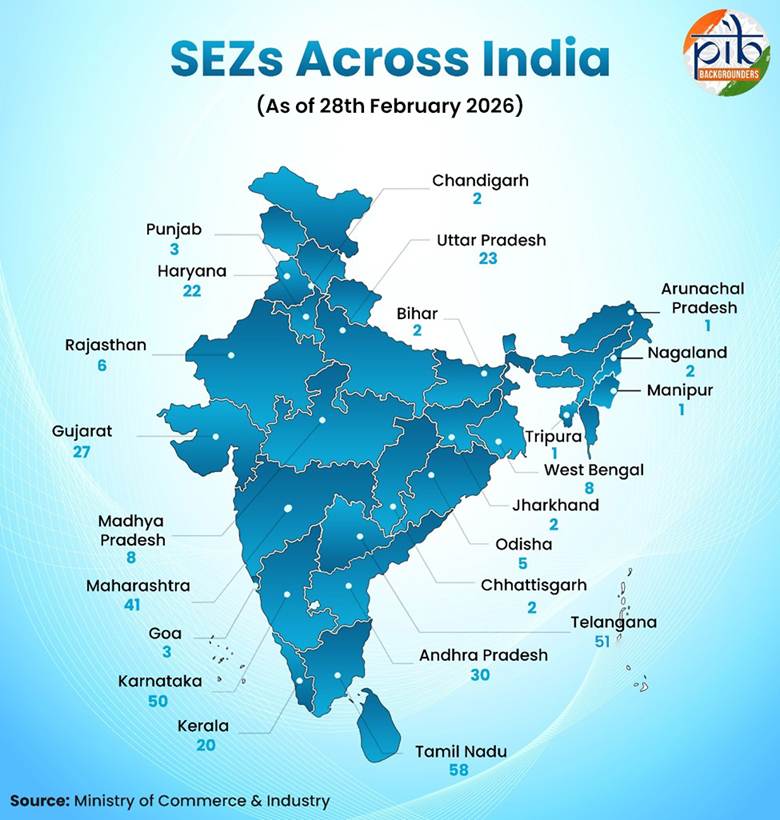
·There are 368 notified SEZs in India, as of 28th February, 2026.

·Exports from the operational SEZs totaled over 11.70 lakh crores in 2025-26 (till December, 2025), a 32.02% increase from the corresponding period in 2024-25.

Special Economic Zones: Pillars of India’s Trade & Investment Ecosystem

SEZ is a specifically delineated duty-free enclave and deemed to be a territory outside the customs territory of India for authorized operations. SEZ units are set up for the manufacture of goods, for rendering of services and providing warehousing services through Free Trade Warehousing Zones.

Special Economic Zones (SEZs) are designated areas within a country that operate under a distinct regulatory and fiscal framework to promote trade and investment. Established with the objectives of generating additional economic activity, boosting exports, attracting domestic and foreign investment, creating employment opportunities, and developing world-class infrastructure, SEZs serve as engines of export-led growth.

In India, SEZs have played a transformative role in strengthening the economic landscape. Since the enactment of the SEZ Act in May 2005, these zones have significantly accelerated export growth while fostering industrial expansion across sectors. Beyond earning foreign exchange and building infrastructure, SEZs have contributed to the holistic development of local economies through direct and indirect employment generation, the emergence of new business ecosystems, and improved socio-economic outcomes.

Currently, there are 368 notified SEZs across India as of 28th February, 2026. By offering fiscal incentives, streamlined regulatory processes, and modern infrastructure, SEZs have enhanced India’s global competitiveness. They have facilitated the growth of specialized industrial clusters, encouraged innovation and technological advancement, and positioned India as an attractive and reliable investment destination in the global market.

Union Budget 2026–27 Focus on SEZ [6]

Recognizing exports as a key driver of employment generation, industrial advancement, foreign exchange earnings, and integration into global value chains, the Budget has announced a comprehensive set of measures, including targeted reforms for SEZs affected by global trade disruptions.

One-Time Concessional DTA Sales: A Strategic Boost to SEZ Manufacturing Units

Domestic Tariff Area (DTA) means the whole of India (including the territorial waters and continental shelf) but does not include the areas of the SEZs. Section 30 of the SEZ Act, 2005 stipulates that , goods and services cleared from SEZ to DTA are treated as imports into the country and attracts all applicable duties and levies. Moreover, as per Section 2(m) of SEZ Act, 2005, supplies from DTA to SEZ are treated as exports to SEZ and are eligible for applicable export benefits.

As a special one-time measure, it has been proposed that eligible SEZ manufacturing units will be permitted to sell a prescribed proportion of their output in the Domestic Tariff Area (DTA) at concessional duty rates instead of standard customs duties. The quantity of such sales will be limited to a prescribed proportion of their exports. Necessary regulatory amendments will be undertaken to operationalize this provision while ensuring a level playing field for units operating in the DTA.

These reforms are aimed at improving capacity utilisation and achieving economies of scale without diluting the export-oriented character of SEZs, reduce export costs, and enhance the overall resilience of the SEZ ecosystem and boost global investor confidence. Additionally, the extension of tax incentives for cloud and data-centre operations within SEZs is poised to attract global manufacturers and technology firms, further strengthening India’s investment ecosystem.

India’s SEZ Performance Snapshot

India’s SEZs continue to demonstrate strong performance as key drivers of exports, investment, and employment generation.

Employment has been on rise, with SEZs employing over 31.73 lakh people as of December 2025.
Total investment amounted to ₹ 7.86 lakh crores (as of December 2025).
Exports from the operational SEZs totaled over 11.70 lakh crores in 2025-26 (till December, 2025), a 32.02% increase from the corresponding period in 2024-25.

Evolution & Policy Framework of SEZs in India

India was among the first Asian countries to adopt the Export Processing Zone (EPZ) model to promote exports, establishing Asia’s first EPZ at Kandla in 1965. However, challenges such as multiple regulatory controls, procedural delays, inadequate infrastructure, and an unstable fiscal regime limited its effectiveness. To address these shortcomings and attract greater foreign investment, the Government announced the SEZ Policy in April 2000.

The SEZ policy aimed to transform these zones into engines of economic growth by providing world-class infrastructure, an attractive fiscal framework at both Central and State levels, and a simplified regulatory environment. SEZs operated under the provisions of the Foreign Trade Policy from November 2000 to February 2006, with fiscal incentives implemented through relevant statutory provisions. To build investor confidence and demonstrate the Government’s commitment to a stable SEZ policy framework, The SEZ Act, 2005 and SEZ Rules, 2006 were brought into force.

SEZ Act, 2005 and SEZ Rules, 2006

The Special Economic Zones Act, 2005 came into effect in 2005. Following extensive consultations, the Act, along with the SEZ Rules, 2006, came into force on 10 February 2006. This ushered a simplified regulatory framework with single-window clearances for matters relating to both Central and State Governments.

The Act lays down clear guiding principles for SEZs- generation of economic activity, infrastructure development, and employment creation. It also incorporates specific provisions and guidelines to ensure environmental compliance by all SEZ developers and units.

The performance and impact of SEZs are regularly monitored under the framework of the SEZ Act and Rules, with the Government evaluating outcomes based on monthly reports submitted by Development Commissioners, who are appointed by the Government to oversee the functioning, approval, and compliance of SEZ units. Further strengthening the policy framework, the SEZ Rules, 2006 were amended in June 2025 to facilitate the establishment of SEZs exclusively for the manufacturing of semiconductors and electronic components.

SEZ for Manufacturing of Semiconductors & Electronic Components

In June 2025, the Government notified two new SEZs- one at Sanand, Gujarat, and another at Dharwad, Karnataka- for the manufacturing of semiconductors and electronic components, respectively.

Semiconductors & Electronic Component sectors are capital-intensive in nature and often witness longer gestation periods before achieving profitability. To this accord, necessary amendments of setting up SEZs exclusively for manufacturing of semiconductors and electronics components have been introduced to encourage pioneering investments and strengthen policy support.

The amendments of the SEZ Rules have been made with respect to minimum land requirement to set up an SEZ exclusively for manufacturing of semiconductors and electronics components, relaxation in encumbrance norms allowing area mortgaged or leased to Government entity to be eligible for establishment of an SEZ, to enable DTA supply of semiconductor products and inclusion of value of goods received free of cost in Net Foreign Exchange (NFE) calculations, respectively.

Collectively, these measures aim to generate high-skilled employment, expand domestic manufacturing capacity in critical high-technology sectors, and reduce India’s dependence on semiconductor and electronic component imports.

Key SEZ Incentives & Facilities to Attract Domestic & Foreign Investment

SEZs offer a competitive and investor-friendly policy framework designed to promote exports, attract domestic and foreign investment, and enhance ease of doing business. Through a combination of fiscal incentives, tax benefits, and streamlined regulatory approvals, SEZs provide a conducive environment for businesses to scale operations efficiently while maintaining global competitiveness.

The incentives and facilities offered to the units in SEZs for attracting investments include-

Duty free import/domestic procurement of goods for development, operation and maintenance of SEZ units.
Exemption from Central Sales Tax, Service Tax and State sales tax. These have now subsumed into GST and supplies to SEZs are zero rated under IGST Act, 2017.
Other levies, if exempted by the respective State Governments.
Single window clearance for Central and State level approvals.
SEZs: Gateways to India’s Next Wave of Growth

Over the decades, SEZs in India have evolved into powerful gateways to one of the world’s fastest-growing and opportunity-rich economies. From port-led hubs such as Mundra Port and Kandla Port to sector-focused ecosystems like Sri City and GIFT City, each SEZ offers a distinct value proposition for global and domestic investors alike.

With world-class infrastructure, stable policy support, and seamless access to domestic and international markets, SEZs create a strong foundation for sustainable, long-term growth. They ease market entry, accelerate operationalization, and integrate businesses into India’s expanding trade and industrial networks.

As India sharpens its focus on exports, advanced manufacturing, and financial leadership, the SEZ framework stands out as a strategic pillar- poised to drive the next wave of investment and reinforce the country’s global economic stature.

DP World Renews Delhi Capitals partnership, Reinforcing Long-Term commitment

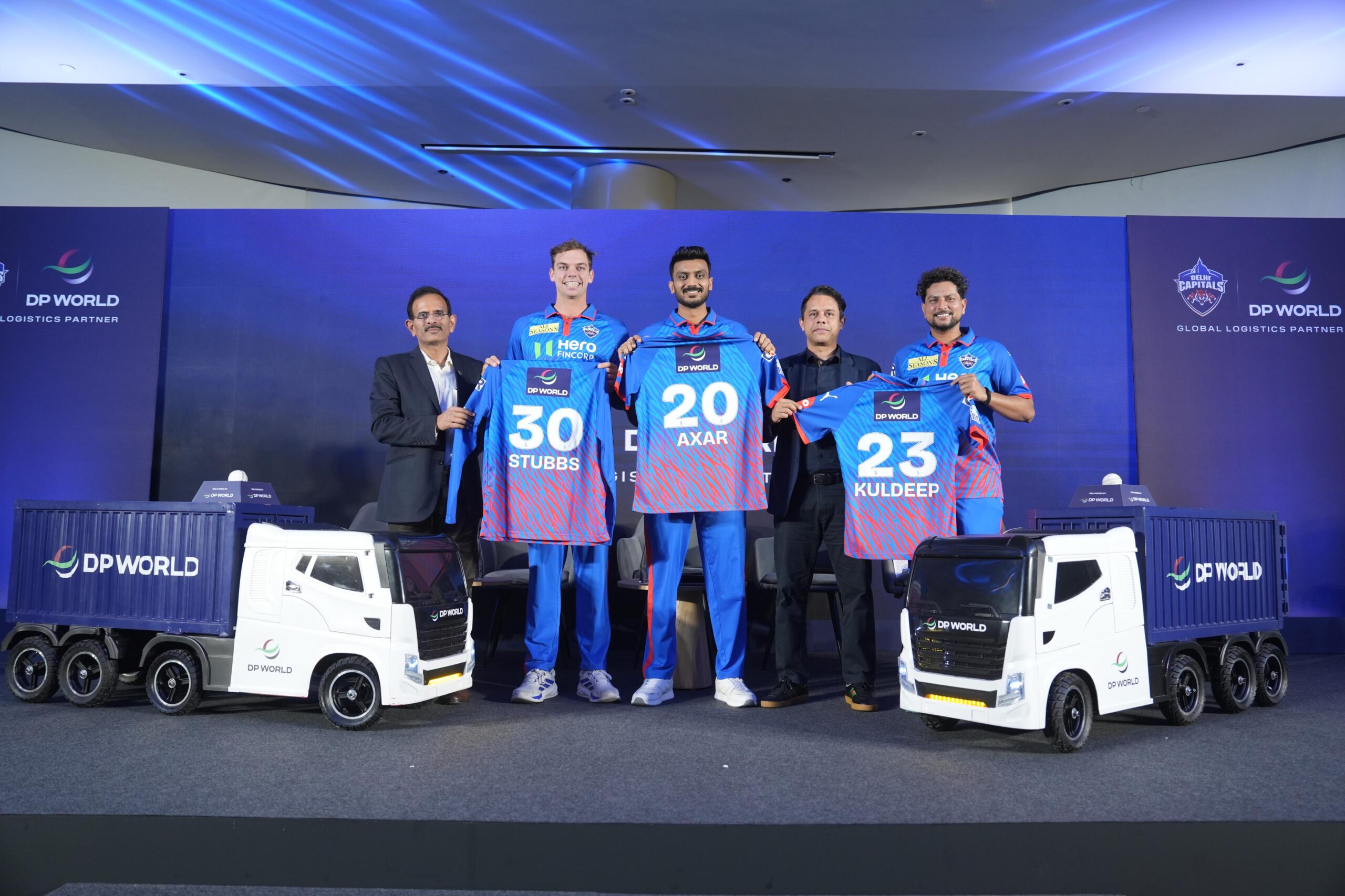
DELHI: DP World on Saturday announced the renewal and expansion of its partnership with Delhi Capitals, reinforcing its role as the franchise’s Global Logistics Partner delivering seamless access for the team, while advancing access to grassroots cricket across India.

The renewed partnership builds on a successful three-year collaboration, combining high-performance logistics for the team with community-driven initiatives.

Since the launch of the Beyond Boundaries Initiative in 2023, DP World has supported grassroots cricket talent by delivering 13 repurposed shipping containers and 3,300 cricket kits across eight countries. In India, communities in Mumbai, Ahmedabad, Guwahati, Lucknow and Chennai have already benefited from the program.

In Delhi NCR, DP World delivered two repurposed shipping containers, transformed into fully equipped, multi-purpose pavilions, along with more than 500 cricket kits, helping provide essential infrastructure and equipment to nurture emerging talent.

Hemant Kumar Ruia, Country Manager, DP World, Subcontinent (India), said: “This partnership reflects DP World’s commitment to enabling performance, both on and off the field. Over the past three years, DP World has supported grassroots cricket through repurposed container pavilions, kits, and masterclasses with cricketing legends. As we renew our association with Delhi Capitals, we are proud to deliver seamless logistics that allow the team to perform at its best, while expanding access to the game in communities across India.”

Sunil Gupta, CEO, Delhi Capitals, added: “DP World has brought a clear focus on purpose and community to this partnership. Their commitment to expanding access to cricket and supporting grassroots initiatives has added an important dimension to our collaboration. We look forward to continuing this journey together.”

As part of the partnership, DP World has opened the DP World Delhi Capitals Arena in Gurugram, offering 1,000 free play hours to the community. Accessible to fans, aspiring cricketers and the wider public, the arena will give more people the opportunity to step onto the field and experience the game firsthand. Aspiring players and fans can find out more information through Delhi Capitals’ social channels.

The renewed partnership further strengthens the relationship between Delhi Capitals and DP World, building on DP World’s association as the Title Partner of the Delhi Capitals Women’s Team since 2024.

Maritime partnerships strengthen as Indian Navy showcases operational synergy at sea

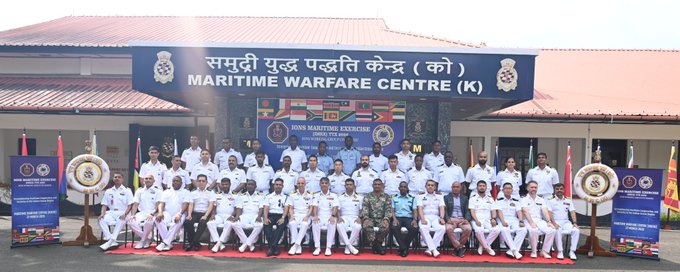
KOCHI : Maritime cooperation and regional camaraderie were on full display as the Indian Navy conducted a dynamic ‘Day at Sea’ for international delegates participating in the IONS Maritime Exercise (IMEX) TTX 26 under the aegis of the Indian Ocean Naval Symposium (IONS).

INS SAGAR 1 Maritime partnerships strengthen as Indian Navy showcases operational synergy at sea

Aboard INS SAGAR, the crew demonstrated exceptional professionalism, seamless integration, and spirited teamwork, offering delegates a firsthand experience of coordinated maritime operations. The high-tempo exercise featured a series of advanced combat drills, synchronized air operations, and precision manoeuvres, highlighting the operational readiness and interoperability among participating navies.

The ‘Day at Sea’ served as a vital platform for fostering mutual understanding and strengthening maritime partnerships. Delegates from IONS member nations observed complex naval evolutions, showcasing how collaborative strategies and shared expertise can enhance collective maritime security in the region.

Through such engagements, the Indian Navy continues to reinforce its commitment to building trust, promoting stability, and ensuring a rules-based maritime order in the Indian Ocean Region. The exercise also facilitated the exchange of best practices, operational insights, and strategic perspectives among partner navies.

By bringing together regional maritime stakeholders, IONS IMEX TTX 26 underscores the importance of cooperation, coordination, and capacity building in addressing evolving maritime challenges. The successful conduct of the ‘Day at Sea’ stands as a testament to the growing synergy and enduring partnerships among IONS nations.

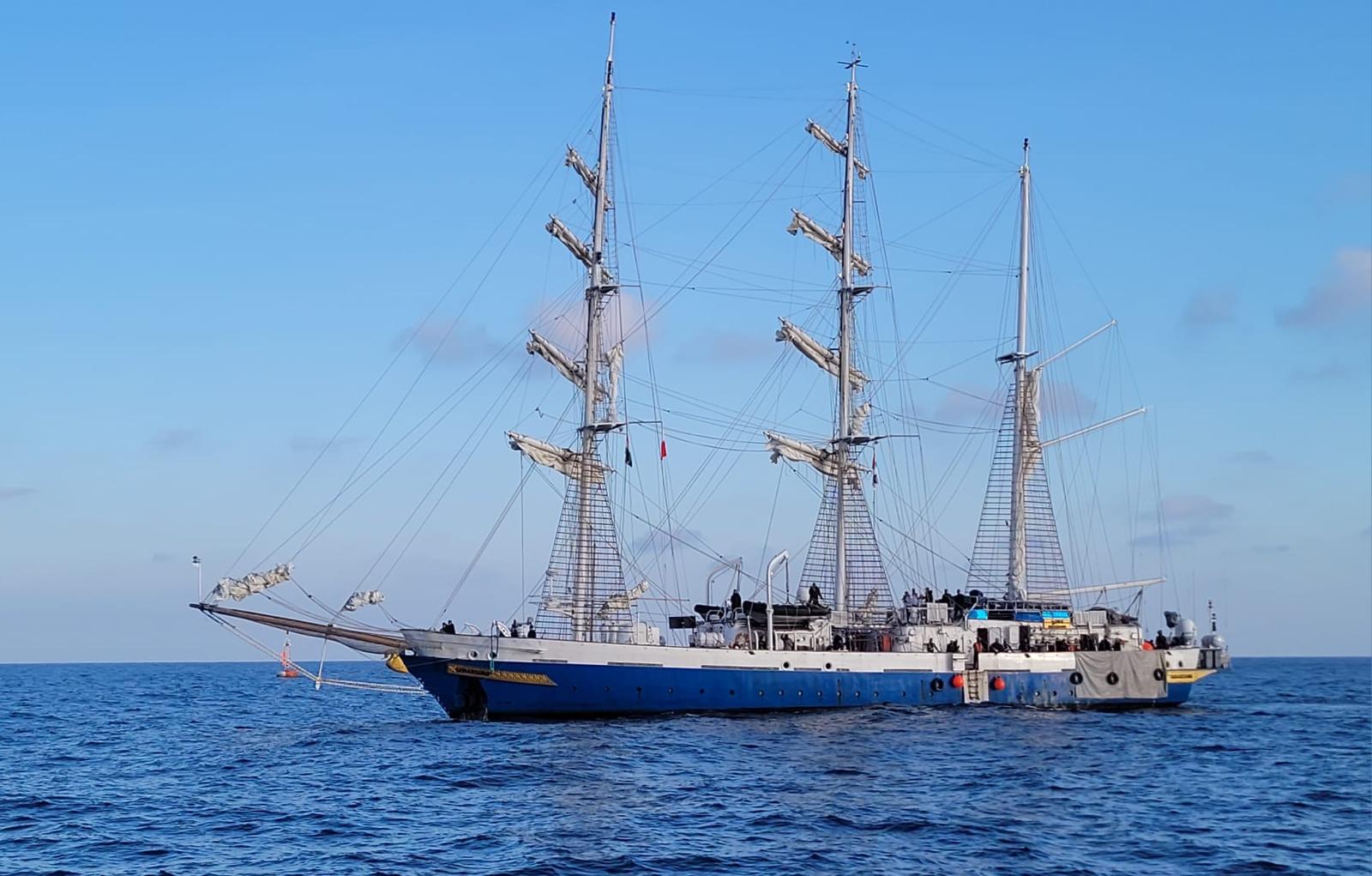
INS Sudarshini arrives at Sète, France, as part of ongoing landmark transoceanic expedition Lokayan-26

Sète : Indian Naval Ship Sudarshini arrived at Sète, France, as part of the ongoing landmark transoceanic expedition Lokayan-26. The Ministry of Defence said that the visit marks a significant milestone in the ship’s journey and underscores India’s commitment to maritime cooperation and cultural diplomacy.

During its stay, INS Sudarshini will participate in the Escale à Sète’, a gathering of traditional tall ships and seafaring communities in Europe. Prior to its arrival in Sète, INS Sudarshini successfully completed port calls in Oman, Egypt and Malta, covering five thousand five hundred nautical miles. Throughout its voyage, the ship has served as the Floating Ambassador, showcasing the nation’s rich maritime heritage whilst engaging with the global community.

Potential Houthi threat to Red Sea shipping could further damage global economy

The Houthis held their fire for the first four weeks of the war, despite their affiliation with and backing from Iran.

Now, the movement that still holds the Yemeni capital, Sanaa, and the north and other areas of the country, has made its first move, firing missiles towards Israel.

The Houthis say they were targeting “sensitive Israeli military sites”.

It is true that the threat the Houthis pose to Israel through its missile fire is far less than that of Iran.

The group fired towards Israel many times in support of Hamas after war erupted in Gaza, following the Hamas-led attacks on Israel on 7 October 2023.

But those attacks – which had come to an end many months ago – did little real damage to Israel.

Where the Houthis pose a much bigger threat is off the coast of Yemen.As part of their support for Hamas, the group targeted shipping coming through the Bab al-Mandab strait at the southern end of the Red Sea, between Yemen and the Horn of Africa.

Their action then endangered that key commercial maritime route.

Were they to do so again, it would be another big blow to the global economy.

Coupled with Iran’s near-closure of the Strait of Hormuz, two of the main strategic waterways in the world for trade and energy supplies could potentially be cut off.

The Houthis could also target energy and military infrastructure in its Gulf Arab neighbours, such as Saudi Arabia and the United Arab Emirates – as it has done before.

When the Houthis carried out such actions before, they faced intense air strikes from the US and Israel, aimed at its leadership and military capacity.

But the Houthis appear to have weathered that. The question now is how far the movement is prepared to go.

When it carried out attacks in support of Hamas and the Palestinians, it received some domestic and regional approbation.Doing so for Iran may be a different matter.

There is also the issue of Yemen itself, which has been relatively calm for some time after years of turbulence and war.

Deepening military involvement by the Houthis in the war between the US, Israel and Iran could trigger a new outbreak in that internal conflict.

There is little doubt that, if the Houthis do continue – and intensify their attacks – it will mark a new escalation and widening of the war.

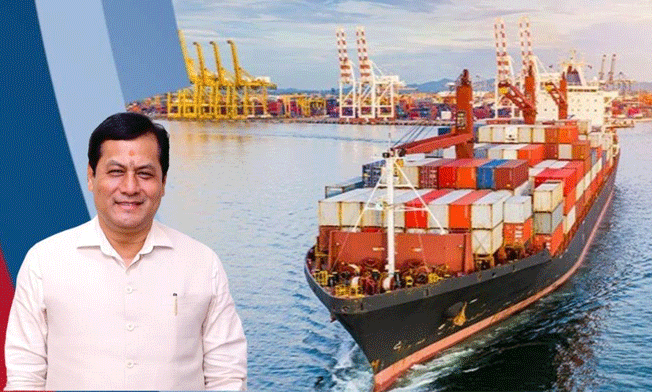
GBFS reaches Pandu Port in Guwahati from Kolkata via India-Bangladesh Protocol Route: Sarbananda Sonowal

KOLKATA : The Union Minister for Ports, Shipping and Waterways Shri Sarbananda Sonowal recently said that a consignment of bulk granulated blast furnace slag (GBFS) has reached Pandu Port in Guwahati from Kolkata via the India-Bangladesh Protocol Route.

In a social media post, He said that the Brahmaputra is rapidly transforming into a vibrant trade and logistics corridor under the Prime Minister Shri Narendra Modi. He said that the government is ensuring seamless cargo movement on National Waterway-2 to power the growth of Assam and the Northeast.

GBFS is used as a high-performance, eco-friendly partial replacement for cement in concrete, improving durability and reducing carbon emissions.

APSEZ sets up India’s first Port of Refuge to boost maritime safety

1.Adani Ports and Special Economic Zone Ltd. (APSEZ) operationalises India’s first Port of Refuge, addressing a long-standing gap in maritime emergency infrastructure.

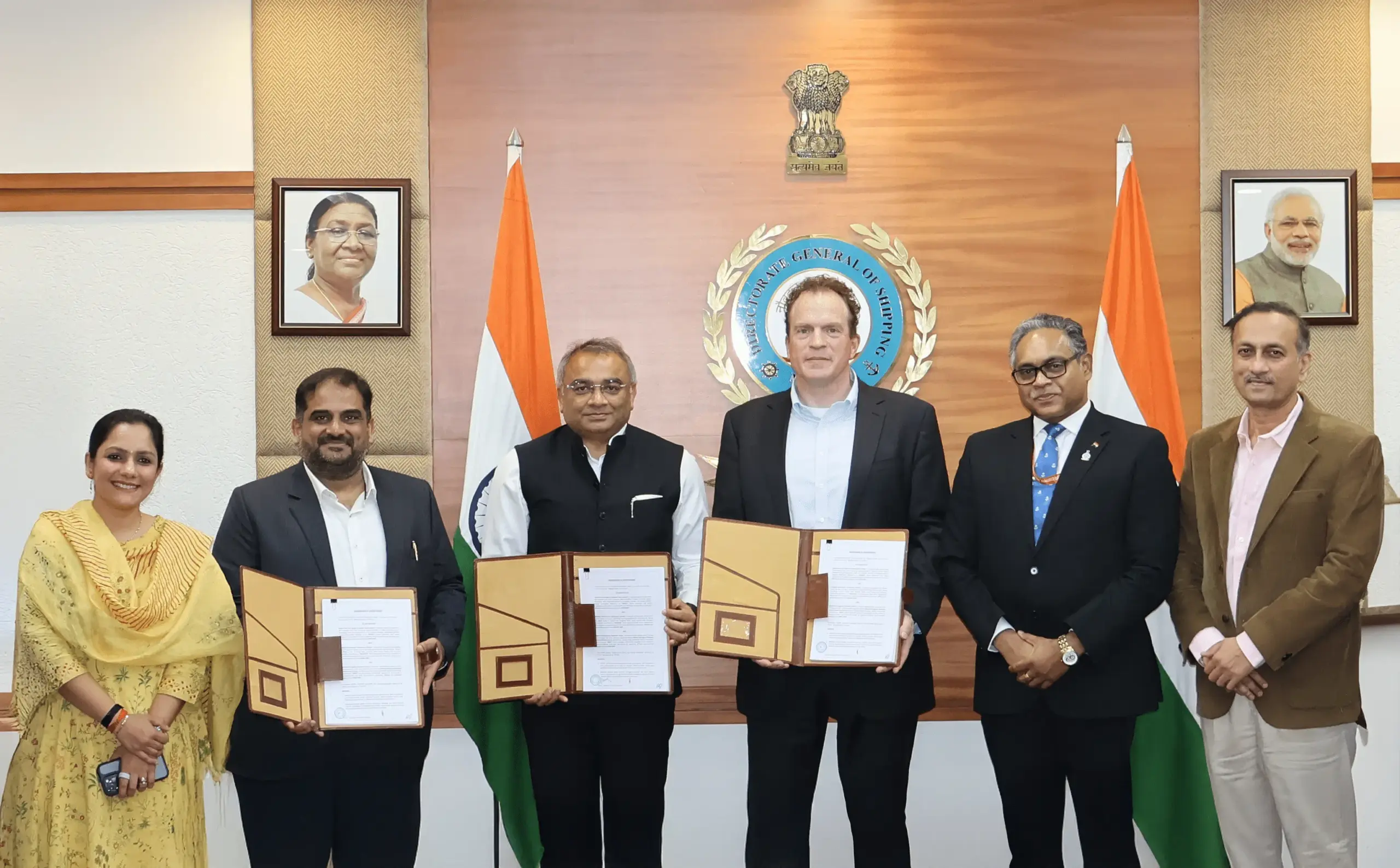
2.Tripartite MoU with SMIT Salvage, the salvage and emergency response division of Royal Boskalis Westminster NV (Boskalis) and the Marine Emergency Response Centre (MERC), brings global expertise and coordinated response capability.


3.Aligned with international maritime conventions, the initiative enhances safety, environmental protection and India’s role in global shipping corridors.


AHMEDABAD : Adani Ports and Special Economic Zone Ltd (APSEZ), India’s largest and the world’s fastest-growing integrated transport utility which handles nearly 27 per cent of India’s port cargo volumes, has operationalised India’s first Port of Refuge (PoR), addressing a long-standing gap in maritime emergency infrastructure, creating a structured mechanism to handle maritime emergencies and vessels in distress.

A PoR, as defined by the International Maritime Organization, is a designated location where ships can seek shelter to stabilise conditions, protect life and limit environmental damage. While such frameworks are standard in major maritime economies, India had not formalised one until now. The move comes as India, with a coastline of over 11,000 kilometres and located along key global shipping routes, seeks to strengthen its emergency response capabilities.

APSEZ will designate two sites as PoR: Dighi Port on the west coast, supporting traffic across the Arabian Sea and routes to the Persian Gulf and Gopalpur Port on the east coast, serving vessels in the Bay of Bengal and routes towards the Malacca Strait, one of the world’s busiest maritime trade corridors. The facilities will provide salvage and wreck removal, firefighting, pollution containment and emergency coordination services through specialised equipment and trained response teams.

The initiative is backed by a tripartite memorandum of Understanding (MoU) with SMIT Salvage, the salvage and emergency response division of Royal Boskalis Westminster N.V. (Boskalis) and the Marine Emergency Response Centre (MERC), bringing global expertise and coordinated response capability. The capability will support vessels insured under the International Group of Protection and Indemnity (P&I) Clubs, aligning with global maritime risk and liability frameworks.

“This milestone marks a significant step in strengthening India’s maritime safety ecosystem,” said Mr Ashwani Gupta, Whole-time Director and Chief Executive Officer (CEO), APSEZ. “Ports connect economies—but a Port of Refuge protects lives. By establishing dedicated PoR infrastructure, we are elevating India’s maritime preparedness and setting a new benchmark for world-class coastal safety. At APSEZ, we believe world-class infrastructure must be matched by world-class responsibility.

“The initiative marks an important step in strengthening India’s maritime preparedness and emergency response capacity. The adoption of a standardized Port of Refuge framework will enable more coordinated and timely action during maritime incidents, ensuring effective protection of life, cargo, and the coastal environment. I commend all stakeholders for their collaborative efforts in operationalising this important capability,” said Shri Shyam Jagannathan, IAS, Director General (DG) of Shipping.

“We are strengthening maritime safety and care for the marine environment where it matters most, and in doing so jointly protect India’s coastline and society. Providing a Port of Refuge to a casualty is critical in a salvage operation to ensure that the vessel and her cargo are dealt with swiftly and professionally and that the affected cargo and fire- fighting water is treated and disposed of in accordance with the applicable legislation. SMIT Salvage is pleased to bring global best-in-class salvage capability and experience to ensure faster, safer, and coordinated emergency response along India’s key shipping routes,” said Mr Richard Janssen, Managing Director (MD), SMIT Salvage (Boskalis).

The initiative is aligned with international maritime conventions, enhancing safety, environmental protection and India’s role in global shipping corridors. By establishing a formal PoR framework, APSEZ aims to improve emergency response readiness and strengthen India’s position in global maritime trade.

About SMIT (Boskalis Group)

SMIT Salvage provides emergency response, salvage and wreck removal services to shipowners, cargo owners, insurance companies, O&G and renewables companies and authorities. The overarching objective is to minimise disruption for owners and ensure the free flow of traffic whilst taking care of the environment. The company has an unparalleled track record responding to ships in distress anywhere in the world from four strategic locations – Rotterdam, Houston, Cape Town and Singapore, supported by response centers in Brasil and India as well as by a vast network of partners. The company also has extensive experience in realizing a wide variety of demanding and complex salvage and wreck removal projects – where, for example, wrecks threaten the environment, safe navigation or obstruct port access. In addition, SMIT delivers a full range of environmental care services, such as the safe removal and disposal of hazardous cargoes, contaminated firefighting water and hydrocarbons from sunken vessels or offshore subsea structures.

About MERC

The Marine Emergency Response Centre (MERC) is part of the Vishwakarma Group, established in Porbandar in 1935. MERC is a leading specialized maritime emergency coordination entity that enables rapid and structured response to vessels in distress. Working closely with ports, shipowners, insurers, and global salvage operators, MERC facilitates real-time decision-making, risk assessment, and the deployment of emergency resources. Its integrated approach supports salvage operations, pollution response, and wreck removal, while aligning with international maritime conventions and best practices to enhance safety and environmental protection across key shipping corridors.

MERC is currently undertaking one of India’s largest shoreline clean-up operations, spanning two states and five districts. In addition, MERC has successfully carried out major waste management operations related to wreck removal projects.