Home Blog Page 388

PM Modi speaks with Iran President, flags attacks on energy infra, shipping lanes

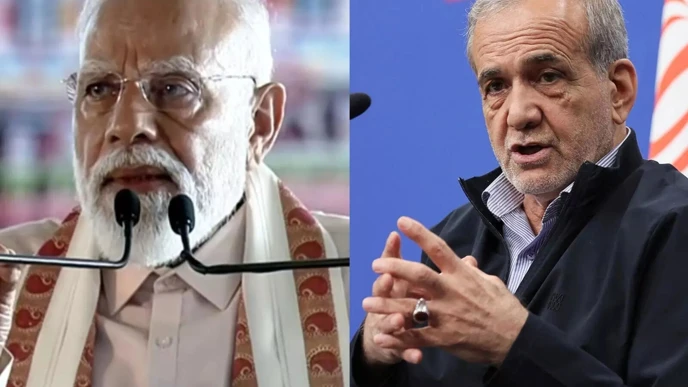
NEW DELHI : As the war in West Asia entered its fourth week with no signs of a let-up, Prime Minister Shri Narendra Modi spoke to Iranian President Masoud Pezeshkian on Saturday, flagging growing concerns over attacks on “critical infrastructure” and the importance of “safeguarding freedom of navigation.”

Tehran, for its part, made it clear that an “immediate cessation of aggressions” by US and Israel was a “pre-requisite for ending the war.”

In the call, Modi’s second with Pezeshkian since the war erupted on February 28, the PM’s reference to “critical infrastructure” pointed to the ongoing attacks on oil and gas facilities while “freedom of navigation” alluded to the Strait of Hormuz, currently under Iranian chokehold.

After the conversation, Modi wrote on X: “Spoke with President Dr Masoud Pezeshkian and conveyed Eid and Nowruz greetings. We expressed hope that this festive season brings peace, stability and prosperity to West Asia. Condemned attacks on critical infrastructure in the region, which threaten regional stability and disrupt global supply chains. Reiterated the importance of safeguarding freedom of navigation and ensuring that shipping lanes remain open and secure.” He also acknowledged Tehran’s cooperation on “the safety and security of Indian nationals in Iran.”

Of the estimated 9,000 Indians in Iran before the war began, the Indian Embassy has facilitated the evacuation of 913 nationals — 793 to Armenia and 120 to Azerbaijan. All 284 Indian pilgrims stranded in Iran have since returned home safely.

The Iranian readout of the call said that President Pezeshkian outlined what he described as the “dimensions of the aggression, unlawful attacks, and crimes committed by the US and the Zionist regime,” stressing that “Iran did not initiate the war.”

According to the readout, he said the aggressor had, “without any justification, logic or legal basis, launched military attacks against Iran during ongoing nuclear negotiations, resulting in the martyrdom of the Supreme Leader of the Islamic Revolution, senior military commanders, and a number of defenceless civilians, including innocent schoolchildren.”

Iran specifically accused the US of targeting a school in Minab “from bases located in neighbouring countries hosting US military installations, leading to the tragic martyrdom of 168 innocent schoolchildren.”

On the nuclear question — cited by Washington as justification for its military action — Pezeshkian pushed back, according to the statement.

He stressed that in multiple meetings, the Supreme Leader had “firmly opposed nuclear weapons and had issued both administrative and religious directives prohibiting any move toward their development.” The reference was to a fatwa issued by former Supreme Leader Ayatollah Ali Khamenei against developing nuclear weapons.

Pezeshkian also reiterated Iran’s “consistent readiness to engage in both telephone and in-person dialogues with world leaders… for the purpose of verification and acceptance of oversight over its peaceful nuclear activities.”

Looking ahead, the Iranian president proposed “the establishment of a regional security framework composed of countries of West Asia, aimed at ensuring peace and stability in the region through regional cooperation without foreign interference.” He added: “A prerequisite for ending the war and conflict in the region is the immediate cessation of aggressions by the US and Israel, along with guarantees against their recurrence in the future.”

Pezeshkian also called on India, as current chair of BRICS, to use the grouping’s platform to push back against the attacks on Iran. New Delhi, however, has been unable to secure a consensus BRICS statement given that Iran, the UAE and Saudi Arabia are all members of the bloc.

External Affairs Minister S. Jaishankar, meanwhile, held his fifth conversation with Iranian Foreign Minister Seyed Abbas Araghchi since the war began, keeping the diplomatic channel warm even as the conflict deepens.

So far, Prime Minister has personally spoken to: President of UAE Mohamed bin Zayed al Nahyan; Amir of Qatar Tamim bin Hamad bin Khalifa Al Thani; Crown Prince of Saudi Arabia Mohammed bin Salman; Crown Prince of Kuwait Sabah Al-Khalid Al-Sabah; King of Bahrain Hamad Bin Isa Al Khalifa; Sultan of Oman Haitham bin Tariq Al Said; King of Jordan Abdullah II and Prime Minister of Israel Benjamin Netanyahu. He condemned attacks by Iran on these countries.

In his first conversation on March 12 with Pezeshkian since the war began, Modi had discussed the “serious situation” in the region and expressed “deep concern” over the escalation of tension and the loss of civilian lives as well as damage to civilian infrastructure. He had urged for dialogue and diplomacy and had raised concerns over security of Indian nationals and the movement of maritime traffic.

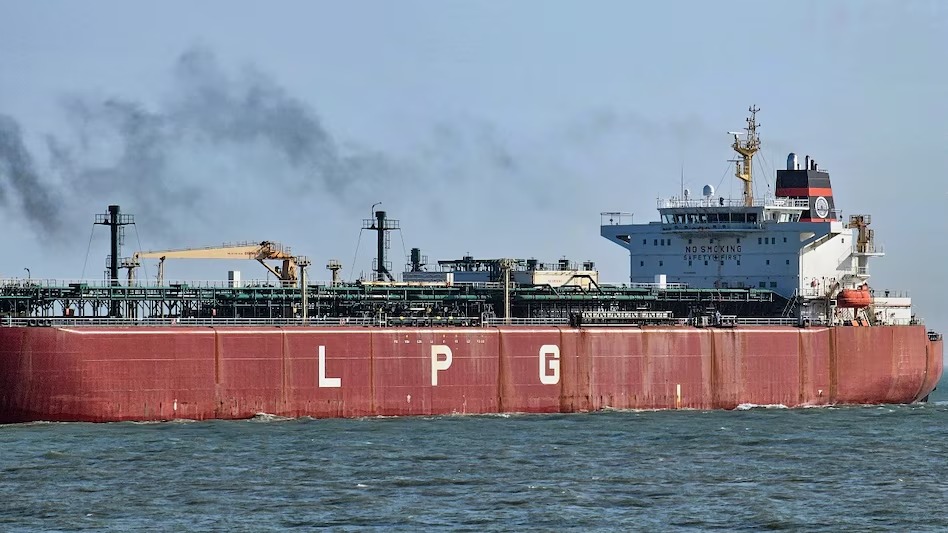
India has been engaged with Iran at the diplomatic level for the safe passage of Indian ships through the Strait of Hormuz, which helped its two LPG tankers — Shivalik and Nanda Devi —to transit the strait. It currently has 22 merchant vessels stuck in the Persian Gulf, and a majority of those are oil and gas tankers.

These conversations frame the diplomatic tightrope that Delhi has been navigating since the war started. Dependent on Israel for defence and security partnership and with a 1-crore diaspora in the Gulf, it’s drawing on its strategic partnerships with many Gulf countries and historical ties with Iran to secure its interests in the region.

Source : Indian Express
Middle East conflict disrupting supply chains, energy flows; Indian economy resilient: CII

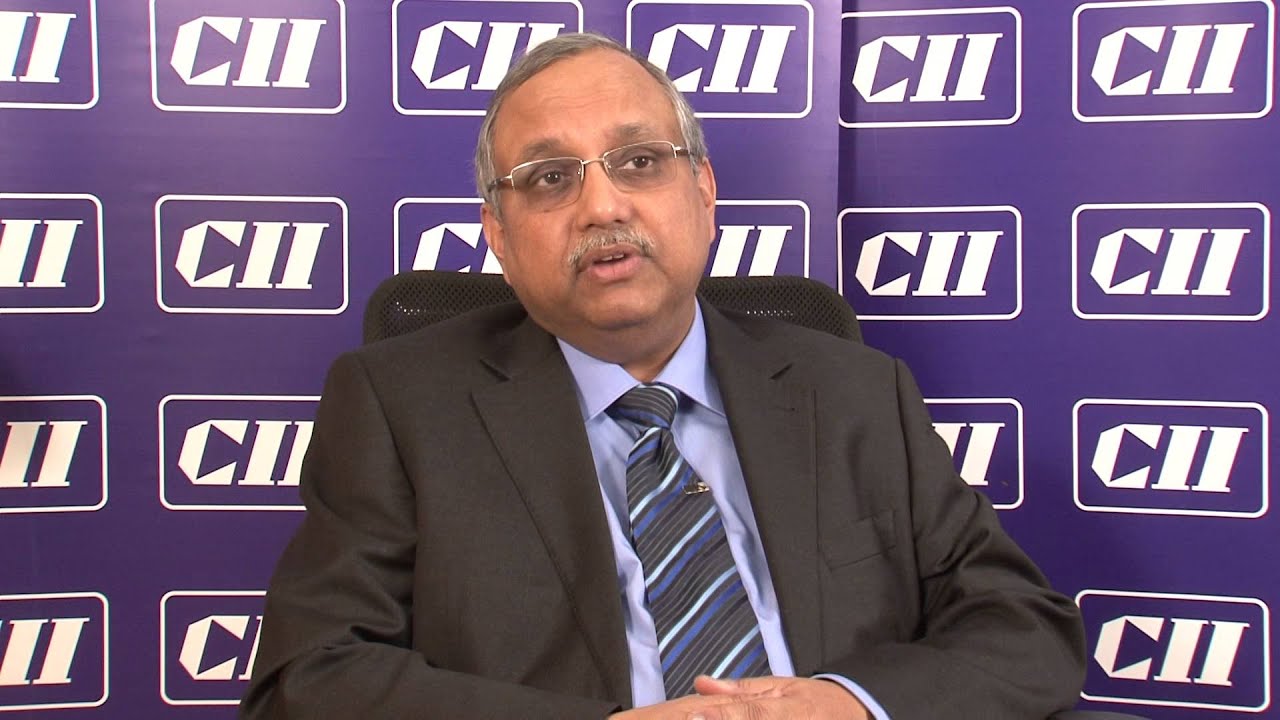
NEW DELHI: The ongoing conflict in West Asia is disrupting global supply chains and putting pressure on energy markets, affecting imports and exports worldwide, according to the Confederation of Indian Industry (CII).

In a statement, Mr.Chandrajit Banerjee, Director General of CII, said the tensions in the region have impacted critical maritime routes and created ripple effects across industries.

“The conflict in the Middle East has disrupted critical maritime routes and placed pressure on global supply chains, energy markets, and both imports and exports,” Mr.Banerjee said.

He added that Indian companies are already witnessing operational challenges due to delays and shortages in key inputs.

“Indian companies are experiencing downstream effects, from shipment delays to constraints in key energy inputs, as well as emerging shortages in essential raw materials and intermediates across several sectors that rely heavily on timely cross border flows,” he said.

Despite the challenges, Mr. Banerjee noted that India entered the current situation from a strong position due to reforms and the government’s push for self-reliance.

“India, however, entered this period from a position of strength, supported by sustained reforms and the Government’s emphasis on Atmanirbharta, which have significantly enhanced the economy’s self-resilience,” he said.

According to him, the government and industry have responded quickly to manage the evolving situation.

“The response from Indian Government and Indian industry has been quick, calibrated and continuous as we move along,” Mr.Banerjee said.

He highlighted several measures taken by the government to address the impact of the crisis.

“The Government has moved decisively on several fronts — crude diversification, LPG production maximisation, export facilitation and currency stabilisation,” he said.

Mr. Banerjee said the situation also underscores the importance of accelerating India’s shift towards sustainable energy.

“This situation reinforces the strategic importance of accelerating India’s transition towards sustainable and self-reliant energy systems,” he said.

He added that investments in renewable energy and alternative fuels will help reduce vulnerability to geopolitical shocks.

“India’s ongoing investments in renewable energy, green hydrogen, biofuels, and energy efficiency are not only climate commitments but also strategic imperatives that reduce exposure to geopolitical energy shocks, Mr. Banerjee said.

The CII Director General said Indian industry is actively adapting to the challenges by diversifying energy sources and strengthening supply chains.

“Indian Industry is not a passive recipient of these shocks. It is actively accelerating energy diversification, optimising supply chains and protecting jobs,” he said.

He also welcomed the government’s industry support measures aimed at helping companies manage operational pressures.

“The Government’s industry-supportive measures, such as RELIEF to help companies manage operational pressures, is very timely,” Mr. Banerjee said.

CII said it is working closely with the government and industry stakeholders to monitor the situation and address supply chain vulnerabilities.

“CII continues to work closely with the Government and industry to monitor supply chain vulnerabilities, address raw material and intermediate shortages, and provide real time feedback from affected sectors,” Mr.Banerjee said.

Expressing confidence in India’s ability to manage the crisis, he said the country’s coordinated response would help sustain economic momentum.

“While the situation remains challenging, we are confident that the Government’s whole of government approach, combined with its partnership driven engagement with all stakeholders, will help India withstand this shock and preserve its forward economic momentum,” he added.

Source: ANI

New Mangalore Port Reinforces India’s Energy Security with Arrival of Key Fuel Vessels

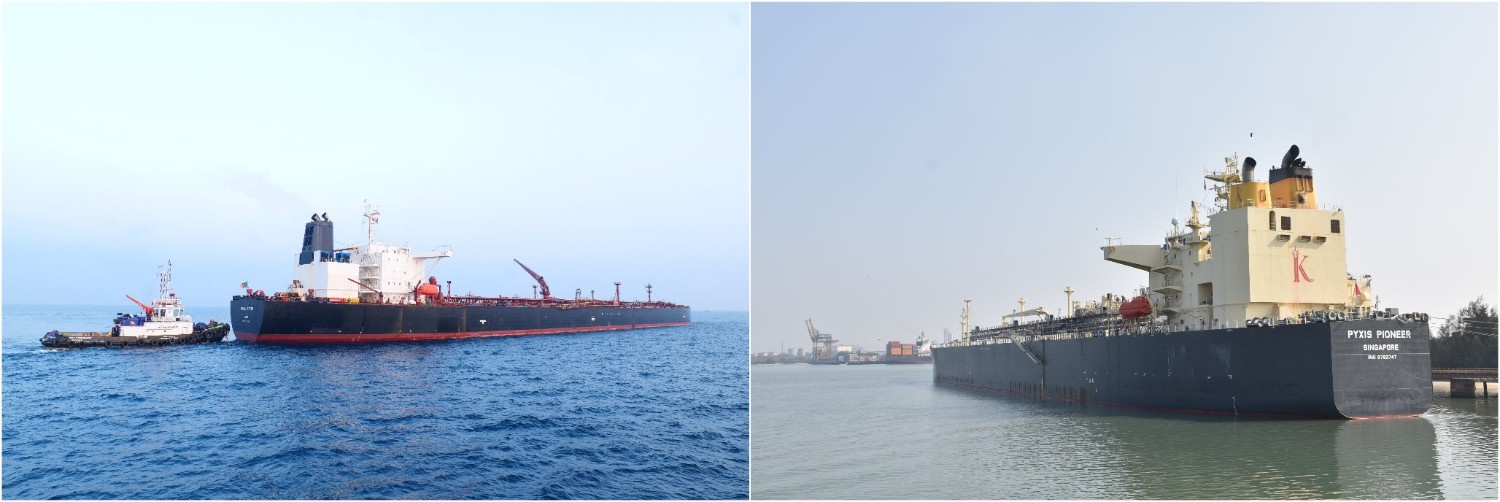
NEW MANGALORE: The New Mangalore Port Authority (NMPA) has reaffirmed its critical role in supporting India’s energy security with the recent arrival of two major energy carriers at the port, underscoring the nation’s preparedness amid evolving global uncertainties.

The oil tanker Aqua Titan docked at the port carrying a substantial consignment of 96,099 tonnes of crude oil, while Pysix Pioneer brought in 16,714 tonnes of liquefied petroleum gas (LPG). These strategic arrivals come at a time when global energy markets are witnessing volatility due to geopolitical tensions and shifting supply dynamics.

Port officials highlighted that such steady inflows of essential energy cargo reflect the proactive approach of the Government of India in ensuring uninterrupted fuel supply and maintaining stability in domestic energy availability. The timely handling of crude oil and LPG shipments is vital for sustaining industrial operations, transportation networks, and household energy needs across the country.

NMPA continues to strengthen its operational capabilities to efficiently manage critical cargo, positioning itself as a key maritime gateway on India’s western coast. Its ability to seamlessly handle large-scale energy shipments not only enhances supply chain resilience but also contributes significantly to the nation’s broader economic stability.

Amid ongoing global challenges, the port’s performance reflects its commitment to reliability, efficiency, and national service—living up to its vision of “Powering the Nation, Securing the Future.”

Iran warns Strait of Hormuz will be “completely closed” if US targets power plants

TEHRAN: Iran on Sunday warned that the strategic Strait of Hormuz would be “completely closed” and the energy infrastructure of Israel and the Gulf countries in the region that host American bases would be “legitimate targets” if the US hits the country’s power plants.

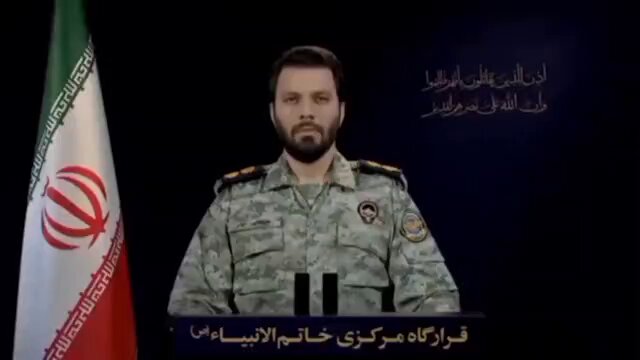
In a statement quoted by Iran’s state media, Press TV, Khatam al-Anbiya Central Headquarters spokesperson Ebrahim Zolfaghari, said the Strait of Hormuz is “closed only to the enemy” but will be “completely” closed if the “terrorist” American President acts on his threats.

The Khatam al-Anbiya Central Headquarters is Iran’s highest operational command unit that coordinates operations between the Army and the Islamic Revolution Guards Corps (IRGC).

“The terrorist American President, continuing his aggressive behaviour and efforts to destabilise the world, has threatened that if Iran does not open the Strait of Hormuz, he will target Iran’s power plants. We have said repeatedly that the Strait of Hormuz is closed only to the enemy and to harmful traffic, and it has not yet been fully closed. It remains under our intelligent control, and harmless passage occurs under specific regulations that ensure our security and interests,” Zolfaghari said.

“The Strait of Hormuz will be completely closed, and it will not be reopened until our destroyed power plants are rebuilt,” the spokesperson said as quoted by Press TV.

He further warned that “All power plants, energy infrastructure, and information technology (ICT) infrastructure of the Zionist regime will be extensively targeted,” and added that “the power plants of countries in the region that host American bases will be legitimate targets for us.”

Zolfaghari also warned that “All similar companies in the region that have American shareholders will be completely destroyed,” as quoted by Press TV.

He added, ” Everything is ready for the great struggle aimed at the complete destruction of all American economic interests in the West Asia region.”

Emphasising that Iran does not seek conflict, the spokesperson said, “We were not the initiators of war, nor will we be now. However, if the enemy damages our power plants, we will do whatever it takes to defend our country and the interests of our nation. “

“The relentless process of destroying the specified targets will begin, and nothing will be able to stop the continuation of our operations to destroy the energy, oil, and industrial infrastructure of America and its allies in the region,” Zolfaghari added, according to Press TV.

Earlier, US President Donald Trump warned Iran of obliterating its power plants if it fails to open the Strait of Hormuz. Trump gave Iran precisely 48 hours for the job.

“If Iran doesn’t FULLY OPEN, WITHOUT THREAT, the Strait of Hormuz, within 48 HOURS from this exact point in time, the United States of America will hit and obliterate their various POWER PLANTS, STARTING WITH THE BIGGEST ONE FIRST! Thank you for your attention to this matter. President DONALD J. TRUMP,” he said in a post on Truth Social.

Dredging Corp aiming to more than double turnover to ₹3,000 cr : CEO

NEW DELHI : Dredging Corporation of India is looking to more than double its topline to Rs 3,000 crore in the next five years, the company’s MD & CEO Capt S Divakar said, adding that the company is looking to explore new markets and areas to achieve this goal.

Visakhapatnam-based Dredging Corporation of India Ltd (DCIL) is the country’s premier dredging company with around five decades of experience in dredging operations, maritime infrastructure and inland waterways.

“We are one of the oldest dredging companies in the country. Growing consistently, DCIL reached Rs 1,148 crore topline 2024-25 which is around double of Rs 550 crore in 2015. We are eyeing to double it again. We are eyeing a Rs 3,000 crore topline in the next 5-6 years,” the official said in a video interview to PTI ahead of the Golden Jubilee event of the company scheduled for March 29.

To achieve the goal, Divakar said DCIL is looking to participate in new maintenance dredging tenders, reclamation projects and preparing to enter markets with strategic partners. The company is also gearing up to diversify into new business areas such as dams and reservoirs.

Commenting on the golden jubilee, he said the Minister of Ports Shipping and Waterways Shri Sarbananda Sonowal will grace the occasion as chief guest, along with Minister of State Shri Shantanu Thakur and Shipping Secretary Vijay Kumar and Visakhapatnam Port Authority Chairman Madhaiyaan Angamuthu.

On the factors that would contribute to the company’s growth, the CEO said the scope of dredging activity in the country is bound to grow significantly, as maritime sector is a focus area of Prime Minister Narendra Modi, who aims to make India a global hub of the shipping industry.easures like Sagarmala programme and Coastal Economic Zones are unlocking opportunities for coastal shipping, port-driven industrialisation, development of transshipment hubs and integration of inland waterways.

Speaking further, Divakar said the company is eyeing new dredging work opportunities at several mega port projects coming up in the country such as Rs 15,000 crore outer harbour at VoC Port in Tuticorin, Cochin Port Authority outer harbour works, Syama Prasad Mookerjee Port Authority in Palta (West Bengal), Paradip Port Authority (Odisha), among others.

It is also looking to carry out more dredging activities of Inland Waterways Authority of India (IWAI).

Various states are coming up with de-siltation of rivers, dams and reservoirs in Kerala, Maharashtra, Odisha, Assam, and Tripura.

“We are also scaling up our dredging capacity by adding another 39,000 CuM in a phased manner,” he added.

Looking ahead, DCIL is focused on modernising its dredging fleet, adopting advanced technologies and expanding its dredging capabilities to meet the growing requirements of the maritime sector.

Piyush Goyal, Mexico’s Economy Secretary discuss boosting India-Mexico trade and investment ties

NEW DELHI: Union Commerce and Industry Minister Shri Piyush Goyal held a virtual meeting with the Mexican Secretary of Economy, Marcelo Ebrard, on Saturday. The discussion focused on deepening the economic ties between the two nations and unlocking new avenues of business opportunities.

“A productive interaction with Mr. Marcelo Ebrard (@M_Ebrard), Secretary of Economy, Mexico. Discussed avenues to deepen India-Mexico economic engagement, boost trade and investment, and promote industry collaboration to unlock new business opportunities in both countries,” Goyal said on X.

Piyush Goyal Lily InternationalUSA Piyush Goyal, Mexico's Economy Secretary discuss boosting India-Mexico trade and investment ties

Earlier on Saturday, Goyal also held a meeting with Patrik Jonsson, Executive Vice President and President of Lilly International, discussing India’s growth trajectory and the company’s expanding presence in the country.

Sharing details of the meeting on X, Goyal said on Friday that the discussions focused on Eli Lilly and Company’s increasing operations and investments in India and ways to further strengthen the ‘Make in India for the world’ initiative.

“Held a meeting with Patrik Jonsson, Executive VP and President, Lilly International, USA. We discussed the India growth story, Eli Lilly & Company’s expanding operations and investments in India, and the steps to further strengthen Make in India for the world,” the post read.

Piyush Goyal Harry Theoharis India Greece Piyush Goyal, Mexico's Economy Secretary discuss boosting India-Mexico trade and investment ties

During the same day, Piyush Goyal held another virtual meeting with Harry Theoharis, Greece’s Deputy Minister of Foreign Affairs. He highlighted that the discussions revolved around deepening cooperation between India and Greece.

“Held a virtual meeting with Mr. Harry Theoharis, Deputy Minister of Foreign Affairs, Greece. Discussed ways to further deepen India-Greece cooperation in trade, investment, tourism, maritime connectivity and other areas of mutual interest. India values its growing partnership with Greece and looks forward to advancing this engagement further,” Piyush Goyal said on X.


FIEO welcomes Government’s RELIEF Initiative to support exporters amid West Asia disruptions

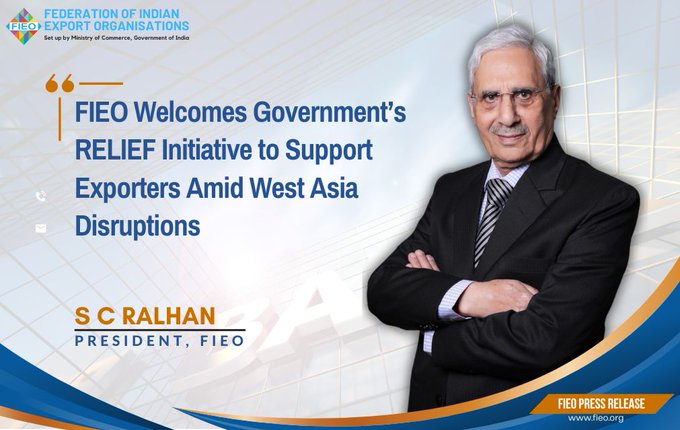
NEW DELHI : Mr S C Ralhan, President, Federation of Indian Export Organisations (FIEO) has warmly welcomed the Government’s timely and proactive announcement of the RELIEF (Resilience & Logistics Intervention for Export Facilitation) initiative under the Export Promotion Mission, aimed at supporting exporters impacted by the ongoing disruptions in West Asia maritime trade routes.

FIEO noted that the recent developments around the Strait of Hormuz and the wider Gulf region have led to significant challenges including vessel diversions, increased transit time, congestion at transshipment hubs and steep increases in freight and insurance costs. These disruptions have created considerable uncertainty for Indian exporters, particularly those with exposure to the region.

Welcoming the intervention, FIEO stated that the Government’s swift response reflects its strong commitment to safeguarding India’s export interests and ensuring continuity of trade flows in the face of global uncertainties.

FIEO particularly appreciated the comprehensive design of the RELIEF package, which addresses the needs of exporters across different stages of the export cycle:

Enhanced Risk Protection: Exporters who had already obtained cover from the Export Credit Guarantee Corporation of India during the disruption period will benefit from up to 100% risk coverage, providing complete financial security without additional cost.
Support for Upcoming Shipments: For consignments planned over the next three months, exporters are encouraged to obtain ECGC cover with Government-supported risk coverage of up to 95%, which will significantly enhance confidence in undertaking exports despite prevailing uncertainties.
Relief for MSME Exporters: Recognising the challenges faced by smaller exporters, the provision of up to 50% reimbursement of extraordinary freight and insurance costs for eligible MSMEs who were not covered under ECGC is a highly commendable step, ensuring inclusive support.

The provision for a dedicated financial outlay and a real-time monitoring mechanism is expected to ensure transparency and timely disbursement of benefits.

President FIEO stated that the RELIEF initiative will go a long way in somewhat mitigating the immediate impact of logistics disruptions. FIEO reaffirmed its commitment to work closely with the Government and stakeholders to ensure effective dissemination and smooth implementation of the scheme, and to continue providing feedback from the exporting community.

How FDI can transform India’s gold and jewellery export ecosystem

NEW DELHI : India’s gold and jewellery sector is a storied titan—employing over 4.6 million artisans and contributing nearly 7 per cent to total merchandise exports. Yet, despite this cultural legacy, India’s share in the global fine jewellery market remains modest relative to its craftsmanship depth. The missing catalyst is sustained, strategic Foreign Direct Investment (FDI).

FDI in this sector is not merely a capital story; it is a structural transformation story. As global supply chains seek a “China + 1” alternative, India stands at a crossroads. Targeted investment can rewire supply chains and reposition the industry from a fragmented cottage industry to a technologically sophisticated manufacturing hub.

The infrastructure and connectivity imperative
India’s jewellery hubs—Surat, Mumbai, Jaipur and Thrissur—punch above their weight but remain constrained by fragmented infrastructure. The next decade requires FDI-backed integrated jewellery parks that combine assaying labs, cold-chain logistics and design studios under one roof.

Beyond physical assets, FDI acts as a strategic bridge for the natural diamond trade. It facilitates the convergence of global miners, luxury retailers and institutional traders within Indian bourses. By attracting international majors, India transforms from a back-end processing center into a global networking hub where the world’s diamond players meet to fulfill global demand.

Technology: Traceability and the LGD revolution
A significant barrier to capturing premium markets like the US and EU is traceability. Discerning buyers demand proof of ethical sourcing. FDI from global luxury conglomerates can fast-track digital transformation—from blockchain-enabled provenance to AI-assisted quality grading.

The surge in Lab-Grown Diamonds (LGDs) also presents a frontier. By attracting foreign investment in MPCVD technology, India can lead the sustainable luxury movement. Joint ventures pairing India’s manufacturing scale with international compliance will ensure domestic players meet the EU’s upcoming supply chain due diligence regulations, turning potential non-tariff barriers into a competitive advantage.

Regulatory predictability and skilling
While the Duty Drawback system is automated via ICEGATE, the fixed-rate nature often leaves a gap in duty neutralisation during price spikes. Strategic FDI thrives on predictability; integrating an ad-valorem (value-based) mechanism and ensuring seamless liquidity through faster GST refunds would shift investor confidence from “cautious” to “committed.”

Furthermore, FDI’s multiplier effect upgrades human capital. International investors bring global design sensibilities and market access networks. Structured FDI partnerships that include mandatory skilling—CAD/CAM training and advanced finishing techniques—will build a workforce capable of producing jewellery that commands global premium pricing, rather than just volume margins.

The strategic window
India is currently negotiating Free Trade Agreements (FTAs) with the UK, EU and GCC—markets representing the world’s highest per-capita jewellery spending. FDI inflows today will determine whether Indian exporters enter these agreements as price-takers or value-creators.

The government’s mandate for hallmarking and the recent rationalisation of import duties are encouraging signals. However, to truly globalise, the sector must bridge the gap between traditional artistry and industrial scale. The gold is already in our hands; strategic FDI is the tool that will turn it into a global crown.

Mawani continues its initiative to support liner vessels in the Arabian Gulf

RIYADH : The Saudi Ports Authority (Mawani) continues its support for vessels operating in the Arabian Gulf by launching an initiative through which it leverages its capabilities across ports in the Eastern Region to deliver integrated services that meet vessel needs efficiently and promptly.

The available services include the provision of food supplies, medical supplies, crew change services, as well as bunkering and water supply services, in addition to any other operational requirements that ensure the smooth and efficient continuity of maritime voyages.

To facilitate access to these services, Mawani will provide an updated list of approved ship suppliers and bunkering service providers, enabling ship owners and operators to communicate directly with them and coordinate their needs promptly.

Mawani’s Knowledge and Service Hub also continues to operate around the clock, receiving inquiries and directing requests to ensure fast response times and high-quality service.

Iranian Navy guided Indian Tanker through Hormuz, crew member says

HORMUZ : The Iranian Navy guided an Indian liquefied petroleum gas tanker through the Strait of Hormuz last week, allowing the vessel to pass on a pre-approved route following diplomatic engagement by New Delhi, a senior officer onboard the ship told Bloomberg.

The unnamed officer said that his ship was one of two Indian vessels that made the crossing. His account suggests Tehran is operating what amounts to a selective traffic control system through the strait- permitting safe passage for vessels from friendly nations while leaving others at risk of attack.

During the crossing, the ship was in radio contact with the Iranian Navy throughout. Iranian officials took details of the ship’s flag, name, origin and destination ports and the nationality of crew members- all of whom were Indian- before guiding the vessel on an agreed course.

Before entering the strait, sailors onboard the LPG tanker prepared their life rafts. The ship had been anchored in the Persian Gulf for around 10 days when crew were informed on the morning of March 13 that permission had been granted to make the transit that night.

The vessel traveled with its Automatic Identification System switched off, according to the officer, turning it back on only after reaching the safety of the Gulf of Oman. GPS navigation was also unavailable due to widespread signal interference in the region since the start of the conflict, which meant the crossing took significantly longer than usual.

On the far side of the strait, Indian Navy ships were waiting to escort them, with the national flag flying higher than usual, the officer said. The vessel has since sailed on to India.

Over the past week, several ships have transited through a narrow gap between the Iranian islands of Larak and Qeshm, tracking close to the Iranian coastline. These include two bulk carriers that had previously called at Iranian ports and a Pakistani-flagged vessel, the Karachi.

Iran’s grip on the strait gives Tehran significant leverage over global energy markets. Around a fifth of the world’s oil normally passes through the channel. Since the beginning of the conflict, several ships have been struck by missiles or drones in the strait, at least two seafarers have been killed, insurance costs have soared and there have been reports that Iran has mined the waterway.