Home Blog Page 391

President Trump temporarily waives maritime shipping law to ease energy costs

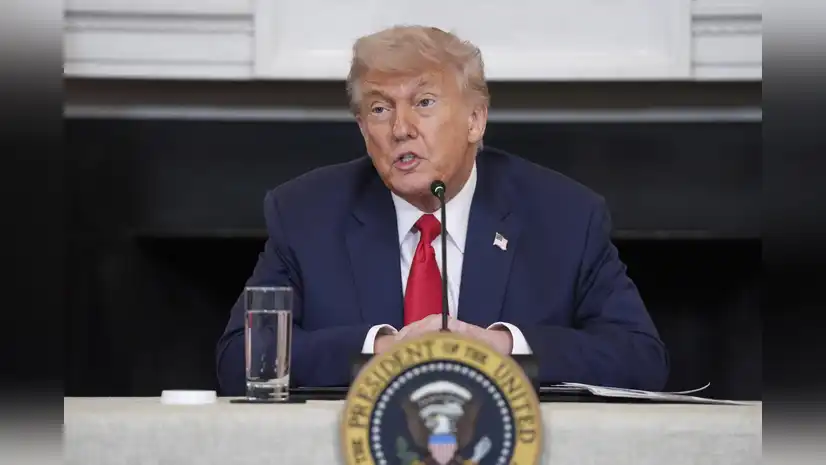
WASHINGTON : U.S. President Donald Trump on Wednesday (March 18, 2026) temporarily waived a century-old shipping law to help ease energy costs that have surged since U.S.-Israeli strikes on Iran plunged the West Asia into war. Mr. Trump’s move to issue a 60-day Jones Act waiver would lift a ban on foreign-flagged vessels transporting cargo between U.S. ports over this period.

The 1920 law was aimed at promoting American shipbuilding, but critics argue that it hampers free trade and has raised costs for consumers.

Mr. Trump’s latest move is “just another step to mitigate the short-term disruptions to the oil market as the U.S. military continues meeting the objectives of Operation Epic Fury,” said White House Press Secretary Karoline Leavitt in a statement.

She was referring to the joint U.S.-Israeli offensive launched against Iran on February 28.”This action will allow vital resources like oil, natural gas, fertilizer and coal to flow freely to U.S. ports for sixty days,” Ms. Leavitt added.

She vowed that the Trump administration “remains committed to continuing to strengthen our critical supply chains.” According to AAA motor group data, U.S. gasoline prices have risen more than 27% since the start of the war.

Source : The Hindu

Iran may let more Indian vessels pass Hormuz Strait: Lloyds List

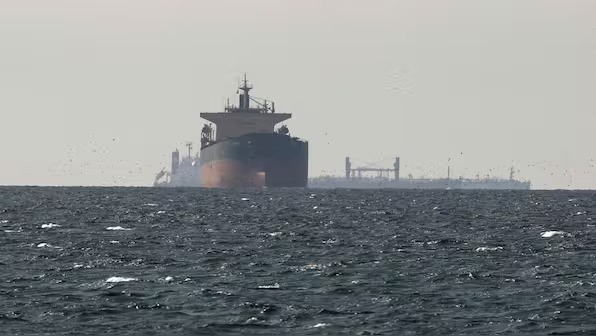
NEW DELHI : Iran is putting together an approval process for allowing safe passage of ships through the Strait of Hormuz, according to Lloyds List Intelligence (LLI), a maritime data and intelligence company.India, which has been in direct talks with Tehran, has earmarked 22 India-bound vessels for evacuation including 20 ships assessed as critical to India’s energy security.

India, which has been in direct talks with Iran for the safe passage of its ships, has earmarked 22 vessels for evacuation. Earlier, two Indian vessels — Shivalik and Nanda Devi — arrived in India after crossing the war-hit strait.

“Automatic Identification System data, while sparse, suggests India’s LPG carrier took an unusual route around Iran’s Larak Island and through Iranian territorial waters so IRGC Navy and port authority could assess visual confirmation of the identity of the vessel,” Richard Meade, the editor-in-chief of Lloyd’s List Intelligence, told The Hindu.

According to LLI, nine ships have passed through Iran’s supposedly safe corridor and at least one tanker was allowed to exit in exchange for payment of USD 2 million to Tehran.

Sources in India have said Indian ships stranded in the Strait of Hormuz for more than two weeks have been asked to “stay put” for now, given the escalating conflict in West Asia, The Hindu reports.

The process for Indian ships and others has been halted after the Israeli forces conducted strikes on Iran’s largest gas field at South Pars, they said.

Last week on March 12, after Prime Minister Shri Narendra Modi spoke to Iran’s President Masoud Pezeshkian, officials said discussions began on on 24 ships, then stranded to the west of Hormuz.

Iran said they would allow two Indian ships along with those of a few other countries to pass the strait.

Strait Of Hormuz Operational But…

Iran’s Foreign Minister Abbas Araghchi had said earlier that the Strait of Hormuz remains operational but Tehran would not allow the passage of vessels linked to the United States and Israel.

The Strait of Hormuz, which accounts for nearly one-fifth of the world’s global and oil trade, came to a near-standstill following the West Asia war.

BAR Technology warns fuel strategy has shifted from decarbonisation to commercial survival

PORTSMOUTH: Fuel strategy in global shipping is increasingly being shaped by immediate commercial realities rather than long-term decarbonisation targets, according to BAR Technology, as volatility in energy markets pushes operators to rethink how they power their fleets.

A combination of infrastructure disruption, geopolitical risk and persistent uncertainty around key maritime corridors is exposing the fragility of single-fuel strategies. At the same time, constraints around the availability of alternative fuels are limiting the industry’s ability to follow a linear transition pathway.

The result, BAR Technology argues, is a decisive shift towards fuel flexibility as a core commercial requirement rather than a sustainability preference.

“Let’s be clear – the current situation is exposing the commercial risk of relying too heavily on fossil fuels. The direction of travel is towards a more stable and ultimately more profitable model, where not all of your energy is bought on the market” said John Cooper, CEO of BAR Technology.

Dual-fuel vessels, once positioned primarily as a bridge to lower emissions, are increasingly being treated as a hedge against volatility. Fleet deployment decisions are being shaped as much by fuel availability as by demand, while shifting trade flows continue to alter cost dynamics across key routes.

Alongside this, there is renewed attention on the role of wind-assisted propulsion within the fuel mix. While not a standalone solution, wind offers a distinct advantage in a volatile market: it is not exposed to fuel pricing and, with advances in weather routing and voyage planning, can be forecast and integrated into operations with increasing precision.

“Wind won’t replace fuel, but it changes the risk profile,” Cooper added. “If part of your energy input isn’t bought on the market, you’re less exposed. That starts to matter when volatility becomes the norm, not the exception.”

According to BAR Technology, this marks a structural change rather than a temporary adjustment. Energy markets are becoming less predictable, and operators are responding by building resilience into how they power and deploy their fleets.

“Everyone talks about transition as if it’s a straight line,” Cooper said. “It isn’t. It’s uneven, and it’s being shaped by real-world constraints. The companies that build flexibility into their operations will be the ones that come through this strongest.”

While decarbonisation remains a long-term objective, the immediate priority is managing uncertainty. In that environment, optionality, across fuels, routes and technologies, is increasingly defining commercial performance.

BAR Technology continues to support clients with insight into fuel strategy, fleet deployment and trade flow dynamics as the industry adapts to a more complex operating landscape.

Sarbananda Sonowal, MoPSW, chaired a review and consultation meeting with Port and Maritime Stakeholders

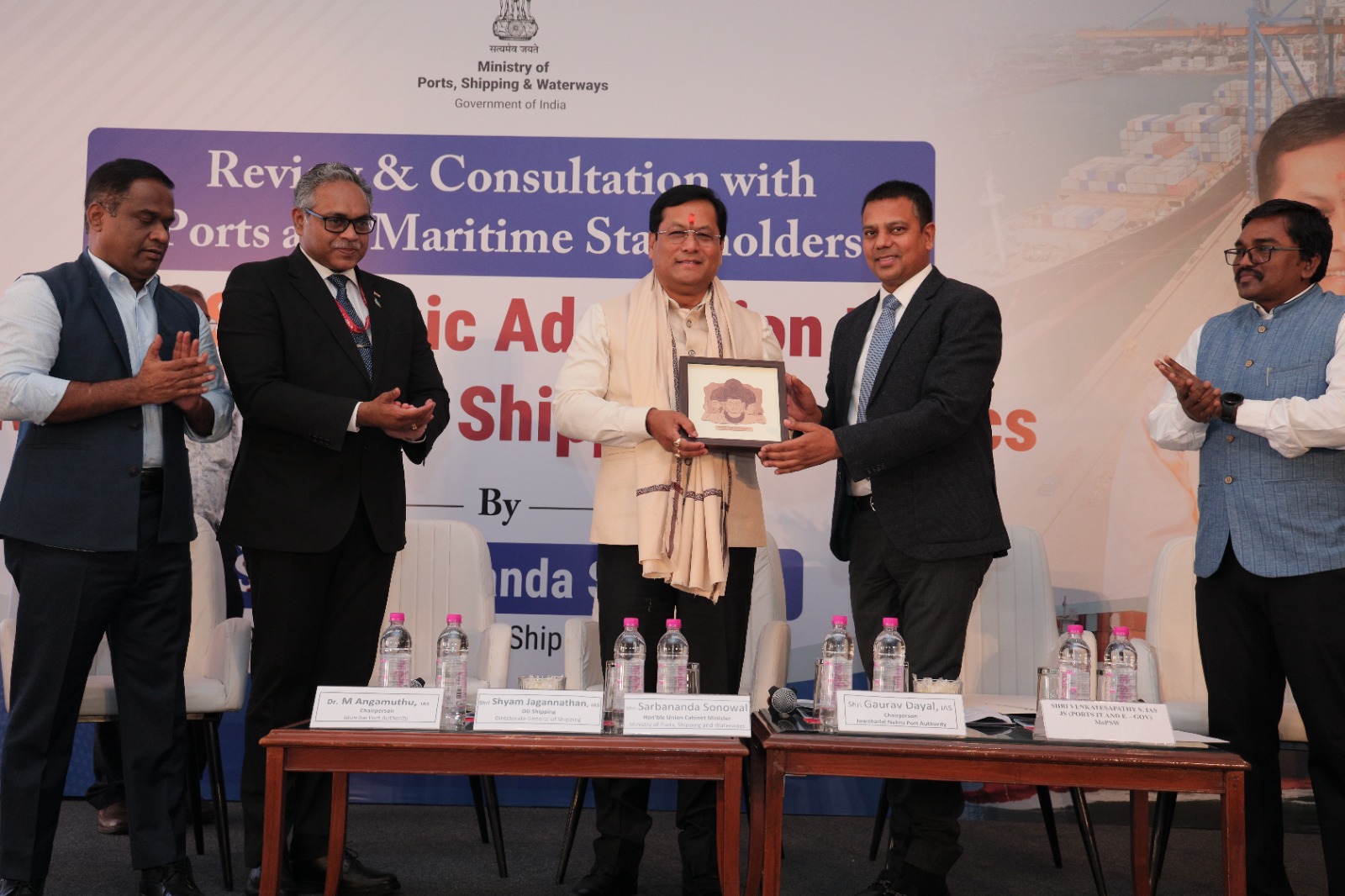
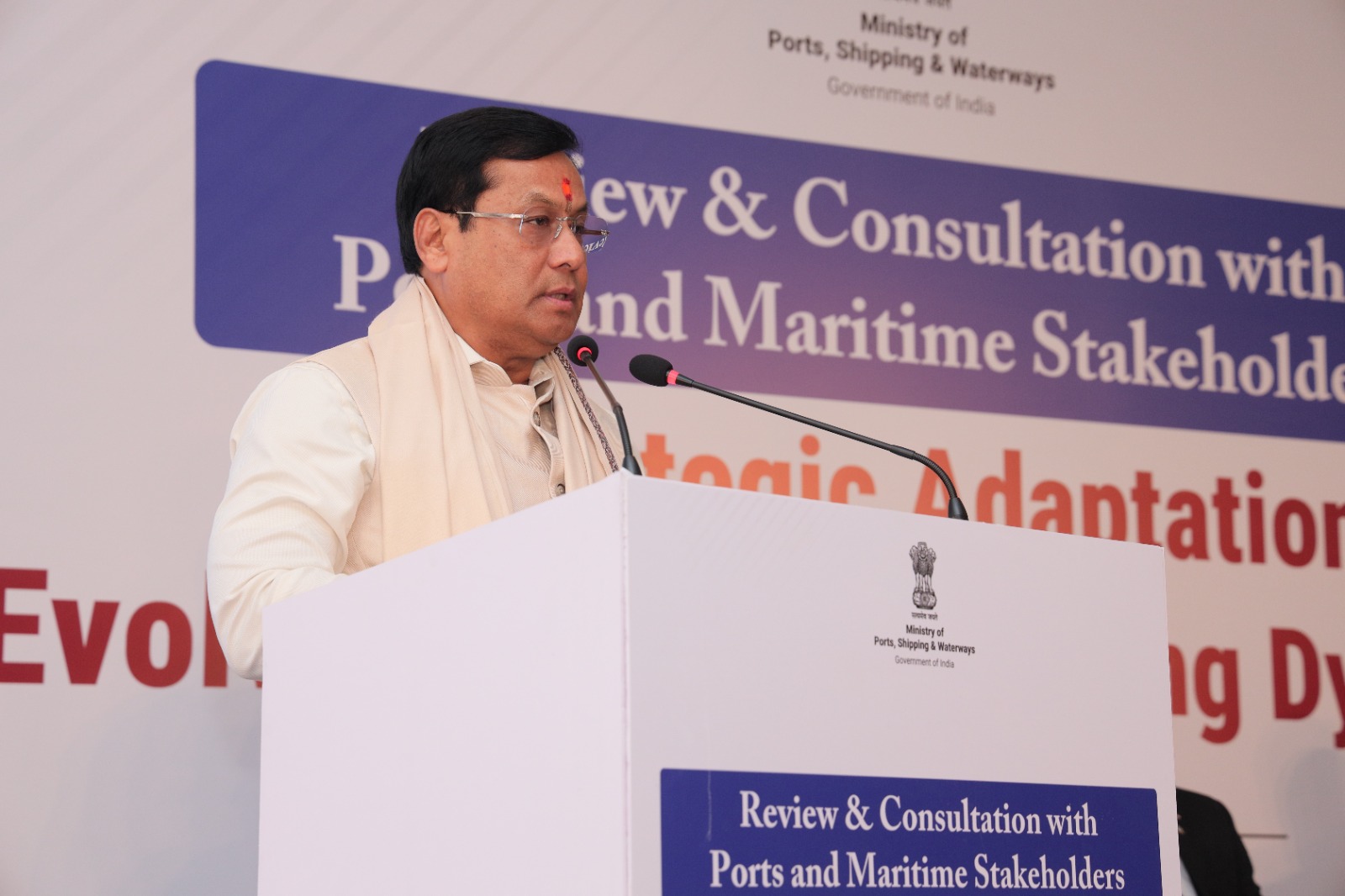
MUMBAI : Hon’ble Union Minister for Port, Shipping and Waterways, Shri Sarbananda Sonowal, chaired a review and consultation meeting with port and maritime stakeholders on Thursday, March 19th, 2026. The meeting focused on strategic adaptation to the evolving dynamics of global shipping.

The meeting brought together representatives from shipping lines, terminal operators, and trade bodies to deliberate on emerging challenges, including potential disruptions in shipping routes, vessel schedules, and cargo flows. Discussions focused on ensuring continuity of operations, minimizing delays, and maintaining supply chain resilience.

Stakeholders shared on-ground insights and highlighted the measures being undertaken to manage evolving conditions, particularly with respect to export-import cargo movements to and from Middle East destinations. Stakeholders shared on-ground insights and highlighted the measures being undertaken to manage evolving conditions, particularly with respect to export-import cargo movements to and from Middle East destinations.

In his address, Hon’ble Union Minister for Port, Shipping and Waterways, Shri Sarbananda Sonowal, stated, “Under the visionary leadership of Hon’ble Prime Minister Shri Narendra Modi, the Government of India, and the Ministry of Ports, Shipping and Waterways, has taken swift and coordinated measures to safeguard the nation’s maritime trade amid the evolving situation in the Middle East. Our ports have demonstrated resilience and capability in responding to emerging challenges—whether through efficient handling of diverted vessels along the western coast, humanitarian assistance extended to international crew, or proactive trade facilitation measures implemented at key ports such as Jawaharlal Nehru Port Authority.”

He further added, “We remain in constant coordination with all stakeholders, ensuring real-time monitoring, seamless cargo movement, and minimal disruption to supply chains. India’s maritime sector continues to stand strong, responsive, and fully equipped to handle global uncertainties while supporting the nation’s economic momentum.”
India has sought to reassure global markets that its maritime trade remains stable and resilient despite ongoing tensions in the Middle East. Backed by strong infrastructure and coordinated efforts, the country’s ports continue to operate efficiently, positioning India as a dependable trade partner amid evolving global uncertainties.

Shri Gaurav Dayal, IAS, Chairperson, JNPA, along with Shri Ravish Kumar Singh, IRTS, Dy. Chairperson, JNPA, highlighted the initiatives taken by JNPA over last 20 days and how those measures are proving effective. JN Port first constituted a task force comprising the Joint DGFT, Addl Commissioner Customs, CGM (Traffic) JNPA, and Dy. Nautical Advisor, for all coordination and communications related to trade disruptions arising from the evolving geopolitical situation in the Middle East.

JNPA has implemented several facilitation measures, including Temporary transshipment storage for Middle East-bound cargo; Allocation of additional storage areas at terminals where required; Facilitation of ad-hoc vessel calls for moving Middle East cargo to Middle East ports which are on eastern side of the strait Hormuz mainly Fujairah and Khor Fakkan in the UAE and Sohar, Muscat, and Salalah in Oman, and priority handling for perishable cargo and export cargo returning from the Middle East.

An important facilitation measure has been taken by Customs authorities at JNCH, enabling BTT movement of export cargo even in cases where the Export General Manifest (EGM) has not been filed. Where container seals are intact, permission will be granted after basic verification. Containers at CPP require only e-seal verification, while those at Container Freight Stations undergo limited inspection linked to the shipping bill. The usual detailed physical examination has been waived, and any BTT-related fees or penalties have also been waived.

Further, JNPA has facilitated 100% waiver on ground rent/dwell time charges for up to 15 days (Feb 28–Mar 14) for eligible containers, along with 80% waiver on reefer plug-in charges for stranded reefer containers carrying perishable cargo. This is in addition to JNPA’s anchorage which is free for vessels waiting for transit to Middle East.
Jawaharlal Nehru Port Authority currently has adequate storage capacity available, with only around 50% of the port’s container holding space presently occupied.

Over the past 20 days, approximately 16,000 TEUs containers have been dispatched from the port to Middle East destinations, and around 1,700 TEUs have been taken back to town. During this period, the number of vessels at anchorage has significantly reduced from 9 to 4, indicating improved vessel clearance and operational efficiency. As of March 18th, there are approximately 25,000 TEUs of transshipment containers unloaded for temporary storage at the port. The number of stranded containers at JNPA has reduced from around 5000 TEUs on 1st March to nearly 2,500 TEUs of export containers and perishable cargo has reduced from 2000 TEUs to around 800 TEUs as of March 16th.

About Jawaharlal Nehru Port Authority (JNPA)
Jawaharlal Nehru Port Authority (JNPA), commissioned in 1989, is India’s largest container port and a key gateway for the country’s international trade. The port operates five container terminals and handles a significant share of India’s containerised EXIM cargo. JNPA also manages a multi-product Special Economic Zone (SEZ) aimed at boosting export-led industrial growth. In addition, JNPA is developing the Vadhvan Port in Maharashtra, envisioned to be among the largest deep-draft ports in the world and India’s first green port of its scale.

Union Minister Sarbananda Sonowal urges proactive measures for shipping stability amid global shifts

MUMBAI: Union Minister for Ports, Shipping and Waterways Shri Sarbananda Sonowal emphasized the importance of addressing industry concerns promptly to ensure comfort and stability, citing the successful handling of past situations like the retrieval of LPG vessels.

Speaking at a review and consultation event with ports and marine stakeholders on ‘Strategic Adaptation to Evolving Global Shipping Dynamics,’ Sonowal underlined the government’s commitment to maintaining a secure maritime environment despite shifting global conditions.

The Minister noted that the current geopolitical climate required a unified response from all sectors of the trade economy.

“Considering the present geopolitical situation in West Asia, we are all very much concerned and particularly the ministry with the help of the stakeholder involved in the shipping line, port import, will have to jointly overcome the present situation by way of this kind of meaningful interactive session,” Sonowal stated.

He explained that the session was designed specifically to listen to the difficulties faced by the industry to ensure the continuity of trade.

Addressing the specific anxieties raised by exporters and shipping lines, Sonowal assured the gathering that the ministry was already taking action. “Today whatever difficulties you have expressed as a matter of concern, it’s very, very important,” he said.

The Minister confirmed that while “some numbers have already been addressed by our concerned agencies of the ministry,” other issues would be “immediately addressed soon” because “we will have to make you comfortable.” He stressed that providing this stability was a priority under the current leadership.

To instill confidence, Sonowal referenced recent successful operations where the government intervened to secure essential energy supplies. “In the recent past you might have come to know how the two vessels carrying the LPG from the difficult situation we were able to bring to the country,” he remarked.

He told stakeholders that “as we have handled this kind of situation earlier also,” they should remain steadfast in their operations. “I believe we should always keep confidence within ourselves,” the Minister added.

The consultation involved high-level officials, including Secretary Venkatesapathy, Joint Secretary (Shipping), Ministry Ports, Shipping & Waterways.

Shri Sonowal noted that the authorities were “working hard day and night just to meet your important needs.” He explained that his presence was intended to gather “deliberation, suggestion, observation, and experiences” to refine the government’s response to the evolving shipping dynamics.

The Minister reiterated that the stakes of maritime stability extended to the entire nation. “Ultimately I have come to know that yes, we have to be alert and careful all the time, alert and careful and proactive to overcome the situation,” Shri Sonowal said.

He emphasized that these efforts were being undertaken in the “interest of the country” and for the benefit of “more than 140 crores of population in the country.”

Source: ANI

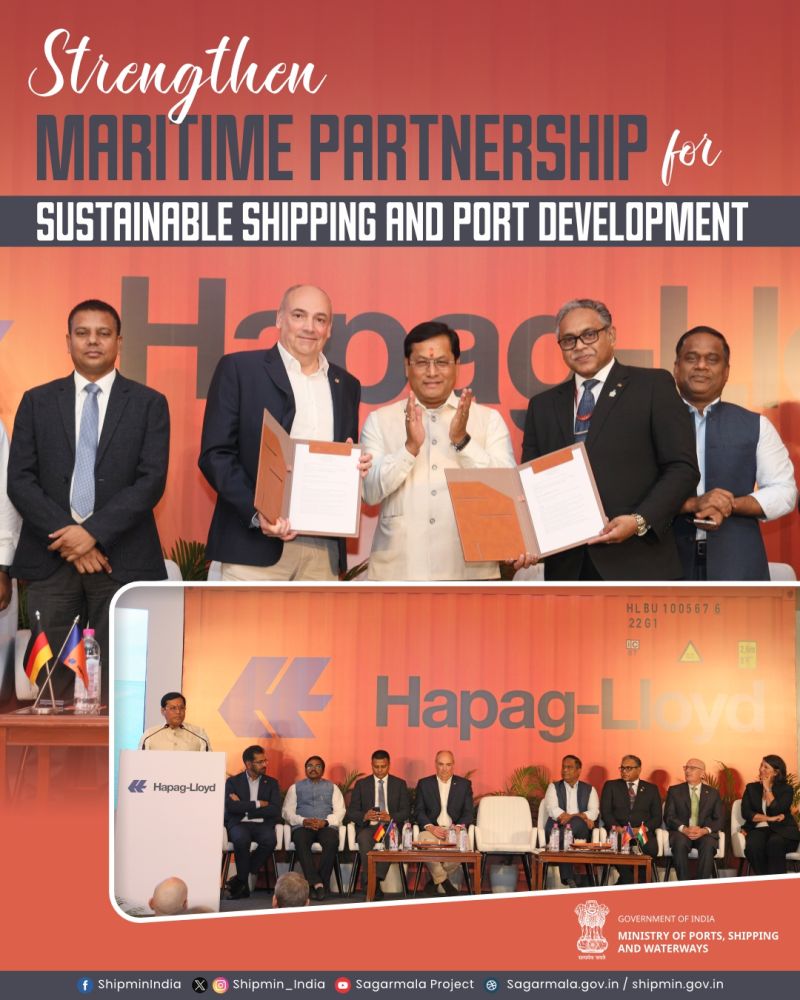
India strengthens Global Maritime Partnerships with Hapag-Lloyd

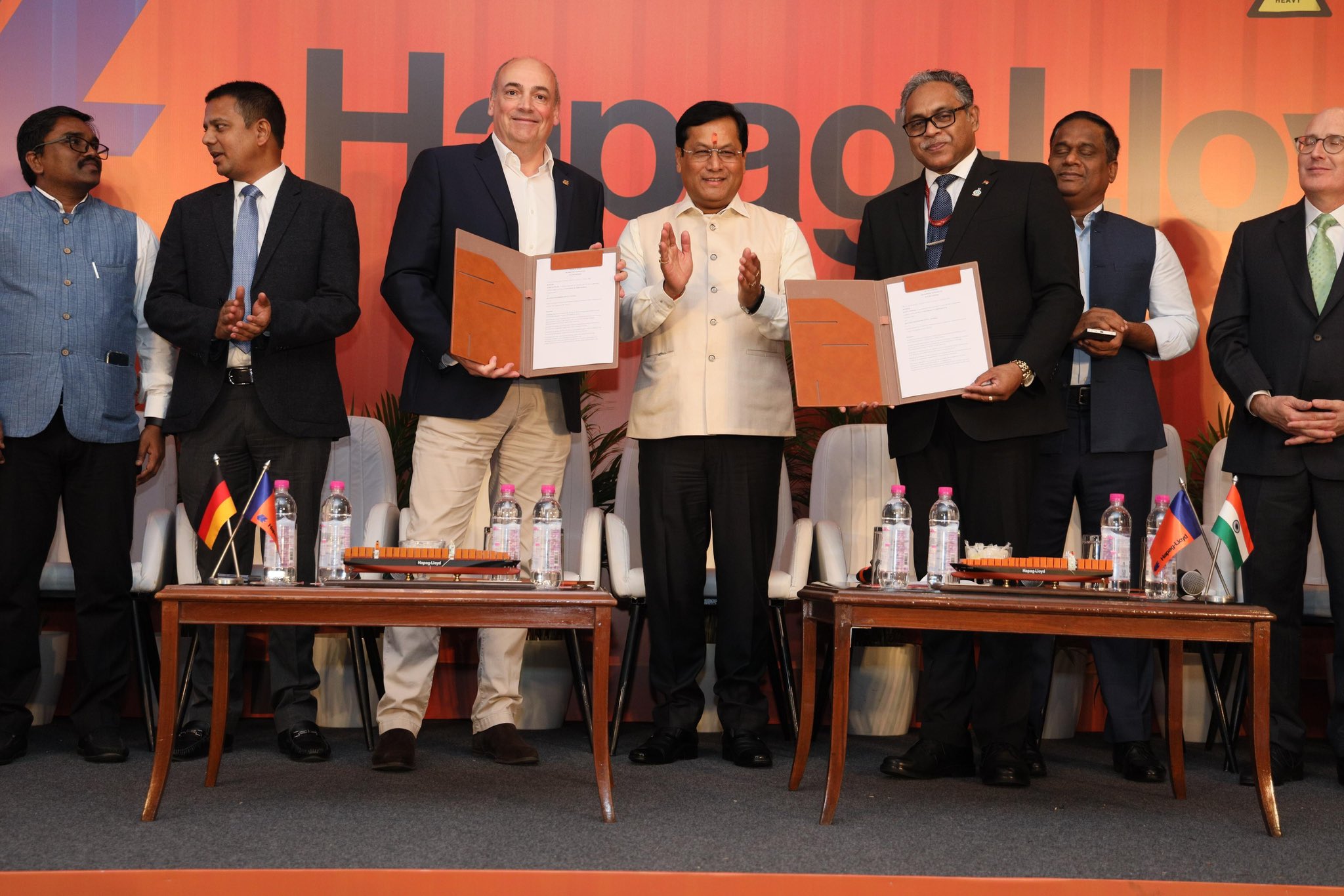
MUMBAI : The Directorate General of Shipping, Government of India, marked a significant milestone in international maritime cooperation with the signing of two Memoranda of Understanding (MoUs) with Hapag-Lloyd AG, Germany, at Trident, Nariman Point, Mumbai.

The event was graced by the Hon’ble Minister of Ports, Shipping and Waterways, Shri Sarbananda Sonowal, and witnessed the presence of senior dignitaries from Government and industry.

The MoUs were signed between the Directorate General of Shipping and M/s Hapag-Lloyd AG for:Reflagging of Hapag-Lloyd vessels under the Indian flag
Investment in safe and sustainable ship recycling infrastructure in India

The MoUs were signed by Shri Shyam Jagannathan, IAS, Director General of Shipping, on behalf of the Government of India, and Mr Lars Sorensen, Sr. Managing Director (Middle East), Hapag-Lloyd AG, on behalf of the company.

These agreements mark a significant step towards strengthening India’s position in global shipping, enhancing the national fleet and advancing environmentally sound ship recycling practices aligned with international standards.

The event was attended by senior dignitaries from Government and industry, including: Shri Shyam Jagannathan, IAS, Director General of Shipping, Shri Dr M Angamuthu, IAS, Chairperson, Mumbai Port Authority, Shri Gaurav Dayal, IAS, Chairperson, JNPA, His Excellency Christoph Hallier, Consul General of Germany in Mumbai, Mr Rolf Habben Jansen, Global CEO, Hapag-Lloyd AG.

Senior officials from DGS including Shri Shirish Kumar, Dy Chief Surveyor-cum-Sr DDG (Tech), Shri Gopikrishna C, Engineer & Ship Surveyor-cum-DDG(Tech), Shri Ash Mohd, DDG, Shri P L Muthu, ADG and Shri Jitendra Jadhav, ADG were also present.

The collaboration reflects growing global confidence in India’s maritime ecosystem and aligns with national initiatives under Maritime India Vision 2030 and Maritime Amrit Kaal Vision 2047, particularly in areas of fleet expansion, port-led development and green ship recycling.

Hapag-Lloyd and Government of India sign Letter of Intent on maritime cooperation

Hapag-Lloyd reflagging of up to four vessels under Indian flag

Cooperation to support development of a sustainable ship recycling ecosystem

Hapag-Lloyd to invest in infrastructure development at port of Vadhavan

MUMBAI: Hapag-Lloyd and representatives of the Government of India have signed a Letter of Intent (LOI) to deepen maritime cooperation and support the continued development of India’s shipping and logistics sector.The agreement outlines areas of potential cooperation including ship reflagging, the development of sustainable ship recycling capacity, and strategic collaboration related to the development of Vadhavan Port.

“India is one of the most important growth markets in global trade and a key strategic partner for Hapag-Lloyd,” said Rolf Habben Jansen, CEO of Hapag-Lloyd. “Through this Letter of Intent, we want to further strengthen our long-standing relationships with India and support the country’s ambitions to expand its maritime capabilities, enhance global connectivity and advance sustainable shipping.”

As part of the LOI, Hapag-Lloyd intends to explore the reflagging of up to four vessels under the Indian registry. At this stage, no specific timeline, vessel profile or capacity range has been defined. Any reflagging would remain subject to further discussions, internal assessments, commercial considerations and applicable legal and regulatory requirements.

The LOI also includes cooperation on the development of a ship recycling ecosystem in India. Hapag-Lloyd is committed to ensuring that end-of-life vessels are recycled safely and responsibly in facilities that meet the highest environmental and safety standards. The intended cooperation aims to support the development of recycling capacity in India aligned with the EU Ship Recycling Regulation (SRR), currently regarded as the leading international standard. The envisioned ecosystem could provide capacity for recycling up to 100 vessels.

In addition, the LOI foresees discussions on a strategic cooperation framework related to the development of Vadhavan Port in collaboration with the Jawaharlal Nehru Port Authority. As one of India’s major upcoming infrastructure projects, Vadhavan Port is expected to play an important role in strengthening the country’s maritime logistics network. Hapag-Lloyd intends to contribute its global shipping and terminal expertise to support this development.

“India’s port and logistics infrastructure is developing at remarkable speed and scale,” said Dheeraj Bhatia, CEO of Hanseatic Global Terminals and member of the Hapag-Lloyd Executive Board. “Projects such as Vadhavan Port have the potential to significantly strengthen India’s role in global supply chains. We look forward to help developing an efficient, future-ready port infrastructure in India.”

Hapag-Lloyd has maintained strong ties with India for decades and connects the country with global markets through dedicated liner services and an extensive worldwide network. The company continues to expand its presence in India through investments, operational growth and strategic partnerships across the maritime and logistics sector.

Hapag-Lloyd India at a glance

•            More than 2,800 employees in India across four business units, making Indians one of the largest nationalities within Hapag-Lloyd

•            17 offices nationwide, supporting customers and operations across the country

•            6 dedicated liner services connecting India to major global trade lanes

•            Strategic investment in J M Baxi Ports & Logistics Limited, a leading private terminal and inland transport service provider in India

•            J M Baxi operates container terminals, inland container depots, container freight stations and rail services across the country, employing around 7,000 people and handling approximately 3.2 million TEU annually.

•            As part of its Strategy 2030, Hapag-Lloyd aims to grow volumes handled in the India area
to around 3 million TEU by 2030

Source: Hapag Lloyd

All Indian Ships Safe in Persian Gulf; Government Steps Up Maritime Coordination and Port Support

NEW DELHI: In a reassuring update amid heightened geopolitical sensitivities in the Persian Gulf region, the Government of India has confirmed that all Indian-flagged vessels operating in the area, including through the strategically vital Strait of Hormuz, remain safe and secure.

According to Mr. Rajesh Kumar Sinha, Special Secretary at the Ministry of Ports, Shipping & Waterways, a total of 611 Indian ships are currently accounted for in the region, with no incidents reported so far. The Directorate General of Shipping (DG Shipping) has been actively coordinating with ship owners, maritime agencies, and Indian diplomatic missions to ensure continuous monitoring and support.

Over the past 24 hours, the DG Shipping control room has demonstrated heightened responsiveness, handling approximately 150 calls and 225 emails related to vessel movements and safety concerns. In a coordinated effort, 16 Indian ships have successfully navigated back from the region, reflecting the effectiveness of the government’s proactive approach.

On the domestic front, the Ministry remains in close coordination with ports and maritime authorities across key coastal states including Gujarat, Maharashtra, Goa, Kerala, Andhra Pradesh, and the Union Territory of Puducherry. Officials have confirmed that there have been no adverse reports from any Indian ports.

Key ports such as Jawaharlal Nehru Port, VO Chidambaranar Port, Visakhapatnam Port Authority, Mundra Port, and Deendayal Port Authority have undertaken proactive measures to ensure seamless cargo handling and trade continuity. Notably, Deendayal Port has expanded its storage capacity by approximately 54 acres and introduced operational waivers to ease logistics pressure.

In addition, several ports are offering concessions of up to 50 percent on select services to facilitate smoother cargo movement during this period. These initiatives aim to mitigate potential disruptions and maintain the steady flow of trade.

The Ministry of Ports, Shipping & Waterways continues to closely monitor the evolving situation, prioritizing the safety of Indian seafarers while ensuring that the country’s maritime trade remains uninterrupted.

Government approves RELIEF (Resilience & Logistics Intervention for Export Facilitation) – an intervention under Export Promotion Mission to support exporters amid West Asia logistics disruptions

NEW DELHI : Recent developments, including heightened security concerns around the Strait of Hormuz, have led to vessel diversions, longer sailing routes, congestion at transshipment hubs and emergency conflict-linked surcharges. These developments have increased logistics costs and created operational uncertainty for export consignments moving to or through the region.

In view of the evolving geopolitical situation in West Asia and its impact on maritime logistics across the Gulf region, the Government has approved a time-bound and targeted intervention called RELIEF – Resilience & Logistics Intervention for Export Facilitation under the Export Promotion Mission (EPM). The intervention is aimed at supporting Indian exporters affected by extraordinary freight escalation, heightened insurance premia and war-related export risks arising from disruptions in the Gulf and wider West Asia maritime corridor.

The approval of RELIEF reflects the Government’s commitment to respond swiftly to external disruptions affecting India’s trade flows.

As part of the coordinated whole-of-government response to the crisis situation, an Inter-Ministerial Group (IMG) on Supply Chain Resilience is operationalised on March 02, 2026 to monitor the situation and coordinate facilitation measures. The IMG commenced daily review meetings from March 03, 2026, bringing together multiple Ministries/Departments, financial institutions, logistics stakeholders and exporter associations. Based on IMG deliberations, several operational measures were implemented, including procedural relaxations for stranded cargo movement, enhanced coordination at ports, waivers of storage and dwell time charges for affected cargo at the ports, advisories to promote transparency in shipping line pricing, and strengthened monitoring of insurance risk developments and inland logistics movement. These coordinated efforts helped ensure real-time assessment of ground-level challenges and supported the design of a targeted financial-risk mitigation intervention.

RELIEF has been structured to provide support across the export cycle by covering the shipments already left during the disruption period as well as prospective exports planned to the affected region.

Under the approved framework, ECGC Ltd. (Formerly Export Credit Guarantee Corporation of India Ltd.), wholly owned by Government of India (Ministry of Commerce & Industry), has been designated as the nodal and implementing agency responsible for verification, claim processing, disbursement and monitoring. ECGC’s established experience in providing export credit risk cover against commercial and political risks, including war-related contingencies, is expected to ensure credible and timely delivery of assistance.

The RELIEF intervention comprises the following 3 complementary components covering consignments destined to countries in the region such as United Arab Emirates, Saudi Arabia, Kuwait, Israel, Qatar, Oman, Bahrain, Iraq, Iran and Yemen, meant either for delivery or for transshipment:

First, exporters who have already obtained ECGC credit insurance cover for eligible consignments will benefit from upto 100% risk coverage, over and above the existing ECGC cover, during the eligible period (February 14, 2026 till March 15, 2026), thereby ensuring enhanced protection without additional financial burden.

Second, exporters planning upcoming consignments, during the next three months (March 16, 2026 till June 15, 2026), will be encouraged to obtain ECGC cover with Government support for upto 95% risk coverage, over and above the existing ECGC cover, which will help sustain exporter confidence and facilitate continued shipment flows despite logistics uncertainties.

Third, recognising that some MSME exporters may not have availed credit insurance (February 14, 2026 till March 15, 2026), but are facing extraordinary freight and insurance surcharge burdens, RELIEF includes a partial reimbursement (upto 50%) mechanism for eligible non-ECGC-insured MSME exporters. This support will be extended subject to prescribed conditions, documentary verification and notified ceilings (upto Rs. 50 lakhs per exporter), and is intended to provide timely relief against conflict-related logistics cost escalation.

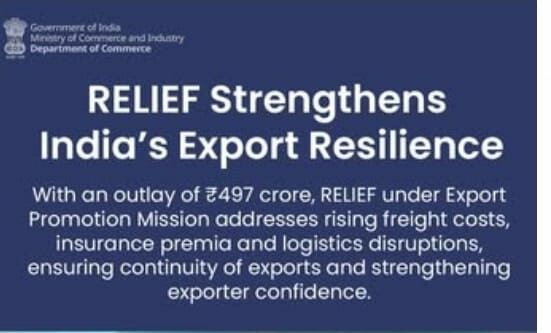
Implementation of RELIEF under Export Promotion Mission will be undertaken with an approved financial outlay of Rs. 497 Crores under the Mission. ECGC will maintain a dashboard-based monitoring system to enable real-time tracking of claims and fund utilisation. The EPM Steering Committee will periodically review the operation of the intervention in light of evolving geopolitical conditions and may recommend calibrated modification, continuation or withdrawal as necessary.

Through RELIEF, the Government aims to mitigate the immediate impact of logistics disruptions, protect exporter confidence, prevent order cancellations and safeguard employment in export-linked sectors. The intervention also reinforces India’s commitment to maintaining resilience and competitiveness in global trade during periods of uncertainty.

Key Highlights of RELIEF under EPM

  • Government has approved RELIEF – Resilience & Logistics Intervention for Export Facilitation under the Export Promotion Mission.
  • Intervention responds to logistics disruptions and cost escalation in the Gulf and West Asia maritime corridor.
  • ECGC will act as nodal implementing agency for risk coverage and reimbursement mechanism.
  • RELIEF covers both eligible past shipments and prospective exports, with a strong focus on MSME support.
  • Intervention will be funded under EPM and reviewed periodically based on geopolitical developments.

Targeted, time-limited scheme to stabilise India’s export flows: Directorate General of Foreign Trade on RELIEF scheme

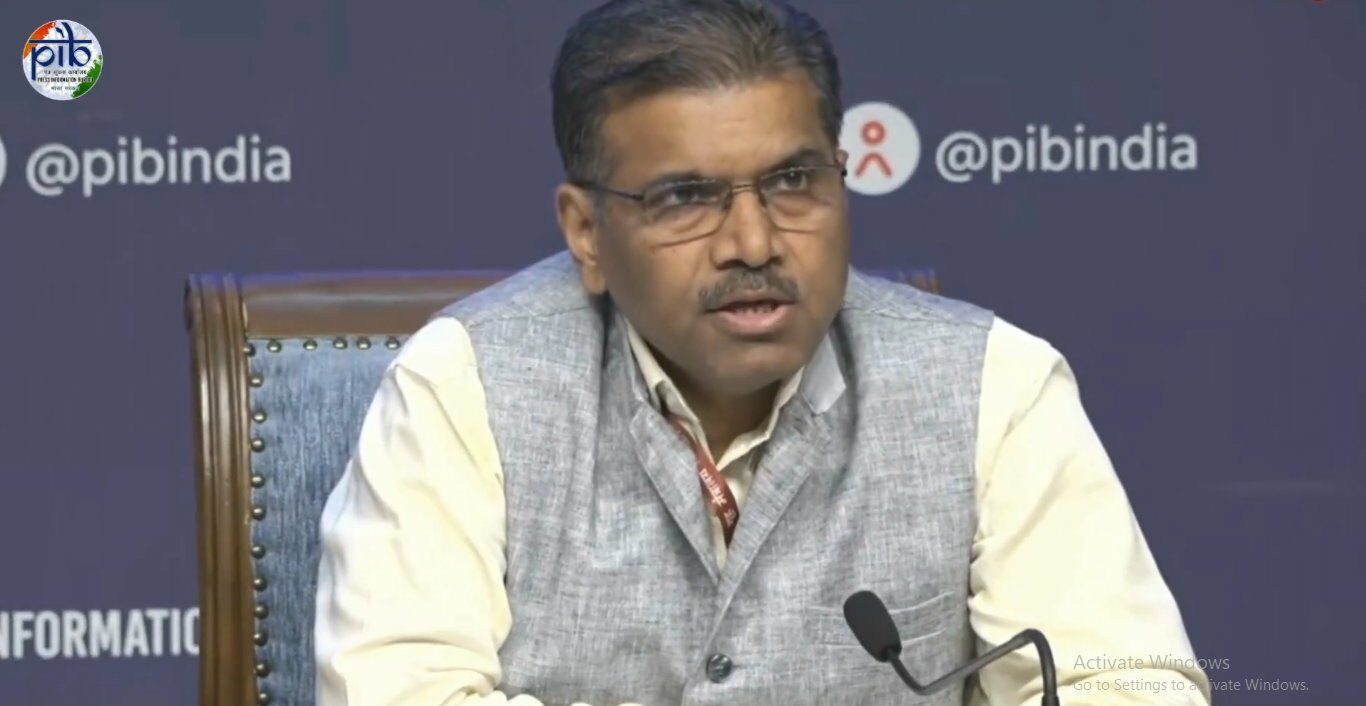
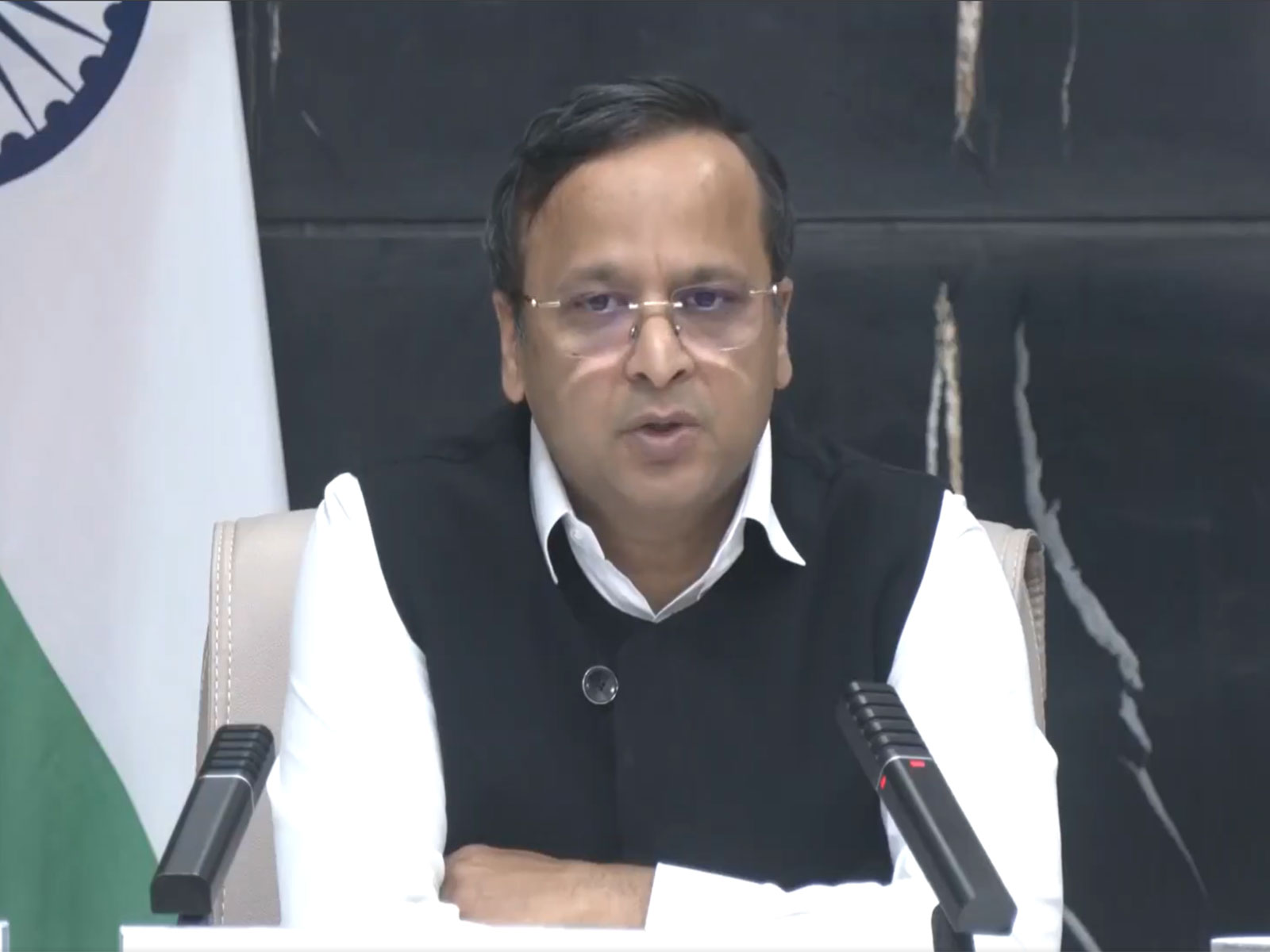
NEW DELHI: The Centre on Thursday announced the Resilience & Logistic Intervention for Export promotion (RELIEF) scheme to support Indian exporters impacted by the ongoing conflict in West Asia. “The Export Promotion Mission has introduced a targeted, time-limited scheme to stabilise India’s export flows through a corridor that accounts for nearly 15% of global trade,” said Chief of the Directorate General of Foreign Trade (DGFT), Mr. Lav Agarwal, detailing the intervention during a press briefing.

“The intervention is necessary because this corridor matters for India, for our industry, and for our bilateral trade,” Agarwal said. He noted that, “Trade through this corridor amounts to around USD 178 billion, of which approximately USD 56 billion is with the GCC area, and about USD 36 billion is with the UK.”

The scheme was launched to address challenges such as maritime logistics disruptions due to the closure of the Strait of Hormuz and increased war-risk premiums imposed by shipping lines and insurers.

“Persian Gulf port geography and the Strait of Hormuz created certain challenges. Hormuz is the exit corridor for Gulf cargo and energy flows. Similarly, Jebel Ali, Hamad, Bandar Abbas and Fujairah were disrupted in parallel. This also impacted Europe- and US-bound cargo, primarily because of the long rerouting that might be required. There were challenges related to Hormuz transit, which was suspended. Similarly, flights from the Middle East were either suspended or severely curtailed. Issues related to diversion were what the trade had to contend with. This was a dual shock, as both air cargo and maritime cargo were affected,” Agarwal said.

This initiative aimed to provide a calibrated support package to stabilise export flows and protect India’s market share during the crisis period. The scheme focused on mitigating the sharp rise in logistics costs and insurance premiums for shipments heading to the Gulf and West Asia.

The Commerce Secretary also informed that “the government has come together to set up two inter-ministerial group in the Department of Commerce. We are meeting daily to assess the challenges. We are trying to listen to them and respond to them.”

The RELIEF scheme is structured under the Export Promotion Mission (EPM) with a total financial outlay of Rs 497 crore. The Secretary explained that the government is “trying to build an export package” and that “in this conflict we are trying to help export keep going.”

The support is divided into three distinct components to address different segments of the exporting community, with the Export Credit Guarantee Corporation of India (ECGC) acting as the nodal and implementing agency.

The urgency for intervention stems from crisis dynamics in the shipping corridor, particularly around the Strait of Hormuz.
Maritime logistics have faced disruption, leading to the introduction of Additional War Risk Premiums and Emergency Conflict Surcharges.

According to the briefing data, freight rates on key routes rose by nearly 90 to 100 per cent within a short period during the Red Sea crisis of 2023-24. Outbound logistics costs increased due to vessel diversions and congestion at trans-shipment hubs, placing immense pressure on Micro, Small, and Medium Enterprises (MSMEs) with limited working capital.

Component I of the scheme provides export credit support for exporters already insured by ECGC for consignments issued between February 14 and March 15, 2026. The government will top up compensation for war and political risk losses beyond ordinary policy cover while keeping premiums at pre-disruption levels. The estimated support for Component I is Rs 56 crore.

Component II targets upcoming exports from March 16 to June 15, 2026, offering stable premiums and enhanced cover of up to 95 per cent for fresh shipments into the affected region. The consignments destined for countries include the UAE, Saudi Arabia, Kuwait, Qatar, Oman, Bahrain, Iraq, Iran, Israel, and Yemen. The estimated support for Component II is Rs 159 crore.

Component III provides the largest share of support, with an estimated outlay of Rs 282 crore dedicated to non-ECGC-insured MSME exporters. This segment offers reimbursement of up to 50 per cent of the additional freight and insurance burden for consignments destined for countries including the UAE, Saudi Arabia, Kuwait, Qatar, Oman, Bahrain, Iraq, Iran, Israel, and Yemen.

The Secretary emphasized the importance of these markets, noting, “There is a dependence on our exports in these countries, and we are trying to see that even in these difficult circumstances, whatever exports we are able to do, we are trying to support that also.”

To ensure transparency, ECGC will maintain a real-time monitoring dashboard for claims processing and fund utilization. An EPM Steering Committee will oversee the scheme, holding the authority to reallocate funds based on evolving conditions. The government expects these measures to prevent order cancellations and support export-oriented sectors that depend on uninterrupted regional trade.